In what is shaping up to be a landmark case in France, the multinational cement giant Lafarge, along with several former senior executives are set to go on trial on Tuesday, accused of paying off jihadist groups – including the so-called Islamic State – to keep a Syrian cement plant running at the height of the country’s civil war.
Issued on: 04/11/2025 - RFI
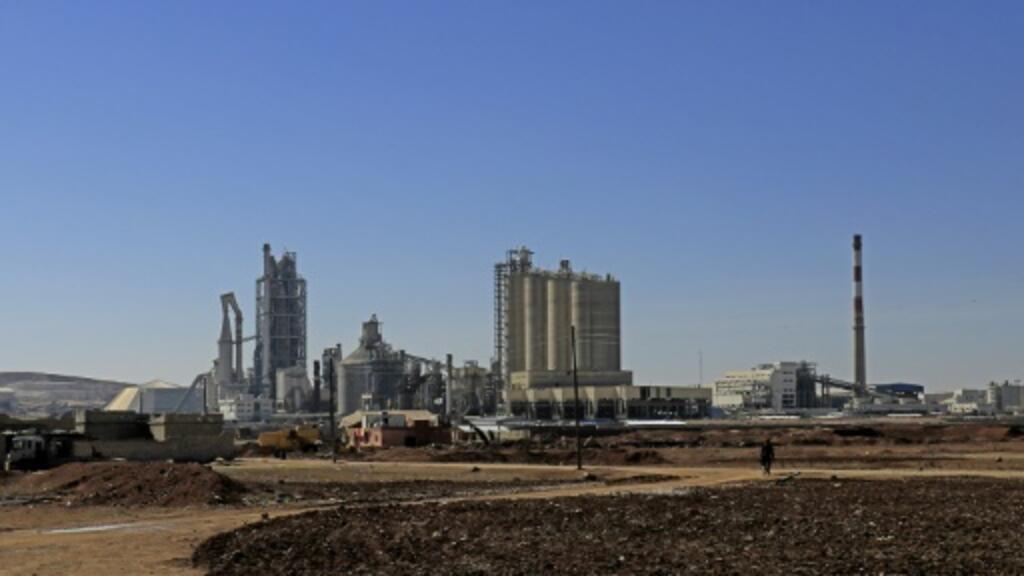
The Lafarge Cement Syria (LCS) cement plant in Jalabiya, some 30 kms from Ain Issa in northern Syria, pictured on 19 February 2018 AFP/File
The case, which opens on Tuesday at the Paris criminal court, marks the first time a French company has faced trial on terrorism financing charges.
Alongside the company, which was absorbed in 2015 by the Swiss group Holcim, stand ex-CEO Bruno Lafont, five former managers from the operations and security teams, and two Syrian intermediaries – one of whom remains at large under an international arrest warrant.
Prosecutors allege that between 2013 and 2014, Lafarge’s Syrian subsidiary – Lafarge Cement Syria (LCS) – funnelled several million euros to armed factions in northern Syria, including the Islamic State armed group and Jabhat al-Nusra, both classed as terrorist organisations.
The goal, investigators say, was to maintain operations at its €680 million (€584 million) cement plant in Jalabiya, completed just a few years earlier in 2010.
While most multinationals pulled out of Syria by 2012 as violence escalated, Lafarge only evacuated its foreign staff that year – keeping hundreds of Syrian employees on the job until September 2014, when IS finally seized control of the plant.
During that perilous period, Lafarge’s local subsidiary allegedly paid middlemen to buy raw materials from jihadist groups and to secure safe passage for workers and goods through rebel checkpoints.
The affair first came to light in 2016 through media investigations and two formal complaints – one filed by the French economy ministry for breaching sanctions, and another by NGOs including Sherpa, the European Center for Constitutional and Human Rights (ECCHR), and eleven former Syrian employees. A full judicial inquiry was opened in 2017.
By then, Lafarge had merged with Holcim and the new group was quick to distance itself from the scandal, stressing it had “no connection” with events prior to the merger.
It even commissioned an internal probe by law firms Baker McKenzie and Darrois Villey, which in 2017 confirmed “serious breaches” of Lafarge’s own code of conduct.
Across the Atlantic, things moved faster. In October 2022, Lafarge SA pleaded guilty in a US court to conspiring to provide material support to terrorist organisations.
The company admitted paying nearly $6 million (€5.1 million) to IS and Jabhat al-Nusra, and agreed to a $778 million fine (€662 million) – a deal that angered several of the French defendants.
'Shadows to be cleared up'
Former CEO Bruno Lafont, who denies ever knowing about the payments, has denounced the American plea deal as a “blatant attack on the presumption of innocence.” His lawyers argue that it unfairly scapegoats former executives to protect corporate interests, and say the Paris trial will finally help “clear up the shadows” – notably around what role, if any, French intelligence services might have played.
Investigating judges have acknowledged that information was shared between Lafarge’s security officers and French intelligence about the situation on the ground. However, they concluded this did not amount to any “approval by the French state” of Lafarge’s alleged financing of terrorist entities.
More than 240 civil parties have joined the case – among them former Syrian employees eager to tell their stories at last. “Over ten years later, they will finally be able to describe what they endured – the checkpoints, the kidnappings, and the constant threat to their lives,” said Anna Kiefer of Sherpa.
If convicted of financing terrorism, Lafarge could face a fine of around €1 billion, while the penalties for violating the international embargo are potentially far higher – up to ten times the value of the illicit transactions.
This comes as a separate investigation remains open into complicity in crimes against humanity, examining whether Lafarge’s actions indirectly supported atrocities committed by jihadist groups in Syria and Iraq.
(with newswires)
The case, which opens on Tuesday at the Paris criminal court, marks the first time a French company has faced trial on terrorism financing charges.
Alongside the company, which was absorbed in 2015 by the Swiss group Holcim, stand ex-CEO Bruno Lafont, five former managers from the operations and security teams, and two Syrian intermediaries – one of whom remains at large under an international arrest warrant.
Prosecutors allege that between 2013 and 2014, Lafarge’s Syrian subsidiary – Lafarge Cement Syria (LCS) – funnelled several million euros to armed factions in northern Syria, including the Islamic State armed group and Jabhat al-Nusra, both classed as terrorist organisations.
The goal, investigators say, was to maintain operations at its €680 million (€584 million) cement plant in Jalabiya, completed just a few years earlier in 2010.
While most multinationals pulled out of Syria by 2012 as violence escalated, Lafarge only evacuated its foreign staff that year – keeping hundreds of Syrian employees on the job until September 2014, when IS finally seized control of the plant.
During that perilous period, Lafarge’s local subsidiary allegedly paid middlemen to buy raw materials from jihadist groups and to secure safe passage for workers and goods through rebel checkpoints.
The affair first came to light in 2016 through media investigations and two formal complaints – one filed by the French economy ministry for breaching sanctions, and another by NGOs including Sherpa, the European Center for Constitutional and Human Rights (ECCHR), and eleven former Syrian employees. A full judicial inquiry was opened in 2017.
By then, Lafarge had merged with Holcim and the new group was quick to distance itself from the scandal, stressing it had “no connection” with events prior to the merger.
It even commissioned an internal probe by law firms Baker McKenzie and Darrois Villey, which in 2017 confirmed “serious breaches” of Lafarge’s own code of conduct.
Across the Atlantic, things moved faster. In October 2022, Lafarge SA pleaded guilty in a US court to conspiring to provide material support to terrorist organisations.
The company admitted paying nearly $6 million (€5.1 million) to IS and Jabhat al-Nusra, and agreed to a $778 million fine (€662 million) – a deal that angered several of the French defendants.
'Shadows to be cleared up'
Former CEO Bruno Lafont, who denies ever knowing about the payments, has denounced the American plea deal as a “blatant attack on the presumption of innocence.” His lawyers argue that it unfairly scapegoats former executives to protect corporate interests, and say the Paris trial will finally help “clear up the shadows” – notably around what role, if any, French intelligence services might have played.
Investigating judges have acknowledged that information was shared between Lafarge’s security officers and French intelligence about the situation on the ground. However, they concluded this did not amount to any “approval by the French state” of Lafarge’s alleged financing of terrorist entities.
More than 240 civil parties have joined the case – among them former Syrian employees eager to tell their stories at last. “Over ten years later, they will finally be able to describe what they endured – the checkpoints, the kidnappings, and the constant threat to their lives,” said Anna Kiefer of Sherpa.
If convicted of financing terrorism, Lafarge could face a fine of around €1 billion, while the penalties for violating the international embargo are potentially far higher – up to ten times the value of the illicit transactions.
This comes as a separate investigation remains open into complicity in crimes against humanity, examining whether Lafarge’s actions indirectly supported atrocities committed by jihadist groups in Syria and Iraq.
(with newswires)
Cement giant Lafarge goes on trial in France over alleged payments to jihadist groups in Syria
Cement maker Lafarge goes on trial in France on Tuesday, accused of paying the Islamic State group and other jihadists to keep its operations running in war-torn Syria. The French firm earlier pleaded guilty in the United States to providing material support to terrorists and paid a $778 million fine.
Issued on: 04/11/2025 -
By: FRANCE 24
Video by: Solange MOUGIN
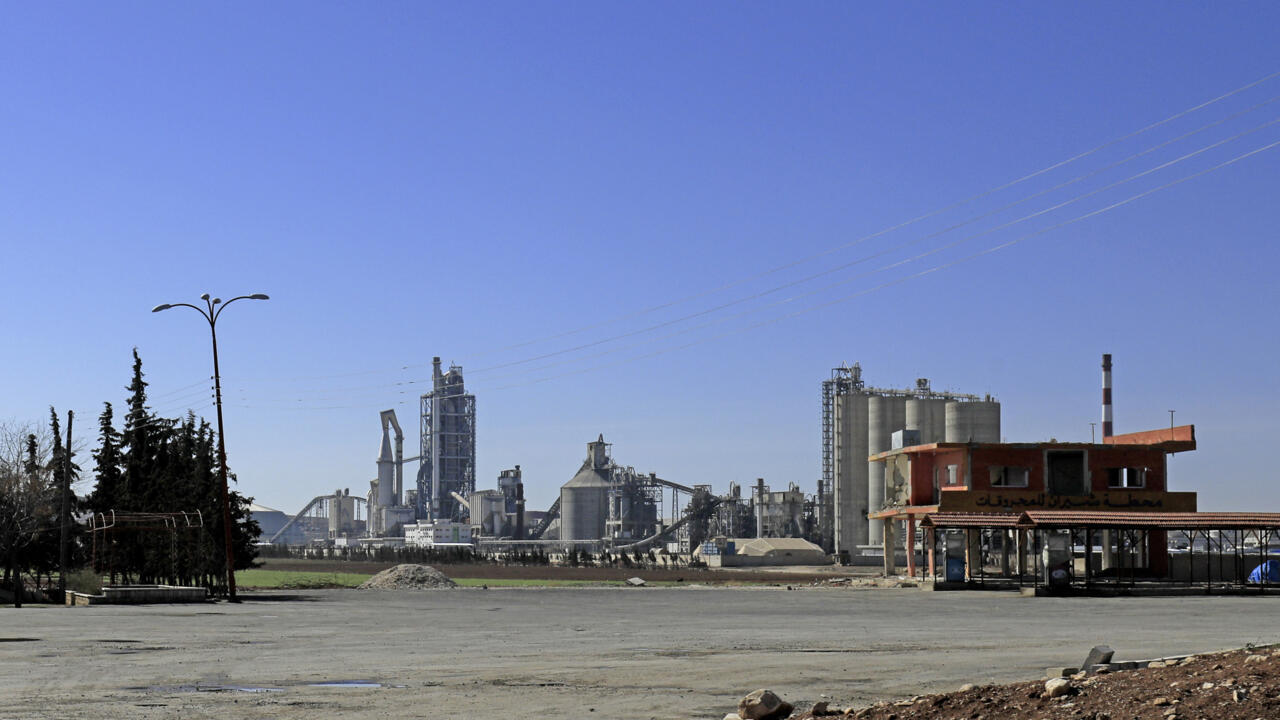 Lafarge finished constructing its $680-million factory in northern Syria in 2010, before civil war broke out © Delil SOULEIMAN, AFP
01:46
Cement group Lafarge goes on trial in France Tuesday, accused of paying the Islamic State group and other jihadists protection money to build its business in war-torn Syria.
In a similar case in the United States, the French firm pleaded guilty of conspiring to provide material support to US-designated foreign "terrorist" organisations and agreed to pay a $778-million fine, in the first case of such a charge against a corporation.
In the French trial, Lafarge – which has since been acquired by Swiss conglomerate Holcim – stands accused of paying millions of dollars in 2013 and 2014, via its subsidiary Lafarge Cement Syria (LCS), to jihadist groups and intermediaries to keep its plant operating in northern Syria.
An inquiry was opened in France in 2017 after several media reports and two legal complaints in 2016, one from the finance ministry for the alleged breaching of an economic sanction and another from non-governmental groups and 11 former LCS staff members over alleged "funding of terrorism".
The trial in Paris is scheduled to last until mid-December.
In the US case, the Justice Department said Lafarge sought IS group's help to squeeze out competitors, operating an effective "revenue sharing agreement" with them.
Lafont, who was chief executive from 2007 to 2015 when Lafarge merged with Holcim, at the time denounced the inquiry as "biased".
Another French investigation into Lafarge's alleged complicity with crimes against humanity is still ongoing.
In the United States, some 430 Americans of Yazidi background and Nobel laureate Nadia Murad have filed a civil suit accusing it of supporting brutal attacks on the population through a conspiracy with IS.
(FRANCE 24 with AFP)
Cement maker Lafarge goes on trial in France on Tuesday, accused of paying the Islamic State group and other jihadists to keep its operations running in war-torn Syria. The French firm earlier pleaded guilty in the United States to providing material support to terrorists and paid a $778 million fine.
Issued on: 04/11/2025 -
By: FRANCE 24
Video by: Solange MOUGIN
Lafarge finished constructing its $680-million factory in northern Syria in 2010, before civil war broke out © Delil SOULEIMAN, AFP01:46
Cement group Lafarge goes on trial in France Tuesday, accused of paying the Islamic State group and other jihadists protection money to build its business in war-torn Syria.
In a similar case in the United States, the French firm pleaded guilty of conspiring to provide material support to US-designated foreign "terrorist" organisations and agreed to pay a $778-million fine, in the first case of such a charge against a corporation.
In the French trial, Lafarge – which has since been acquired by Swiss conglomerate Holcim – stands accused of paying millions of dollars in 2013 and 2014, via its subsidiary Lafarge Cement Syria (LCS), to jihadist groups and intermediaries to keep its plant operating in northern Syria.
Behind the story: French cement firm Lafarge in the dock, accused of funding terrorism
PERSPECTIVE © FRANCE 24
12:23
Groups it allegedly paid include the Islamic State group (IS) and Syria's then Al-Qaeda affiliate Jabhat al-Nusra.
Defendants include Lafarge, its former director Bruno Lafont, five ex-members of operational and security staff, and two Syrian intermediaries. One of the Syrians is subject to an international arrest warrant and is expected to be absent.
They have been accused of "funding terrorism" and violating international sanctions.
Lafarge could face a fine of up to $1.2 million if found guilty of "funding terrorism" and much more if found to have breached sanctions.
Holcim, which took over Lafarge in 2015, has said it had no knowledge of the Syria business dealings.
12:23
Groups it allegedly paid include the Islamic State group (IS) and Syria's then Al-Qaeda affiliate Jabhat al-Nusra.
Defendants include Lafarge, its former director Bruno Lafont, five ex-members of operational and security staff, and two Syrian intermediaries. One of the Syrians is subject to an international arrest warrant and is expected to be absent.
They have been accused of "funding terrorism" and violating international sanctions.
Lafarge could face a fine of up to $1.2 million if found guilty of "funding terrorism" and much more if found to have breached sanctions.
Holcim, which took over Lafarge in 2015, has said it had no knowledge of the Syria business dealings.
French court confirms Lafarge ‘complicity in crimes against humanity’ charges
Syrian staff left behind
Lafarge finished building its $680-million factory in Jalabiya in 2010, before civil war broke out in Syria in March the following year.
The conflict erupted with then-president Bashar al-Assad's brutal repression of anti-government protests and evolved to include a multitude of armed groups and foreign powers.
Among them, IS jihadists who had already operated in northern Syria from 2013 seized large swaths of the country and neighbouring Iraq in 2014, declaring a so-called cross-border "caliphate".
They implemented their brutal interpretation of Islamic law, carrying out public executions, cutting off the hands of thieves, and selling women from the Yazidi minority as sex slaves.
While other multinational companies left Syria in 2012, Lafarge only evacuated its expatriate employees and left its Syrian staff in place until September 2014, when IS seized control of the factory.
In 2013 and 2014, LCS allegedly paid intermediaries to access raw materials from the IS group and other groups and to allow free movement for the company's trucks and employees.
Kurdish-led Syrian fighters, backed by the air power of a US-led coalition, defeated IS group and its proto-state in 2019.
Lafarge finished building its $680-million factory in Jalabiya in 2010, before civil war broke out in Syria in March the following year.
The conflict erupted with then-president Bashar al-Assad's brutal repression of anti-government protests and evolved to include a multitude of armed groups and foreign powers.
Among them, IS jihadists who had already operated in northern Syria from 2013 seized large swaths of the country and neighbouring Iraq in 2014, declaring a so-called cross-border "caliphate".
They implemented their brutal interpretation of Islamic law, carrying out public executions, cutting off the hands of thieves, and selling women from the Yazidi minority as sex slaves.
While other multinational companies left Syria in 2012, Lafarge only evacuated its expatriate employees and left its Syrian staff in place until September 2014, when IS seized control of the factory.
In 2013 and 2014, LCS allegedly paid intermediaries to access raw materials from the IS group and other groups and to allow free movement for the company's trucks and employees.
Kurdish-led Syrian fighters, backed by the air power of a US-led coalition, defeated IS group and its proto-state in 2019.
An inquiry was opened in France in 2017 after several media reports and two legal complaints in 2016, one from the finance ministry for the alleged breaching of an economic sanction and another from non-governmental groups and 11 former LCS staff members over alleged "funding of terrorism".
The trial in Paris is scheduled to last until mid-December.
In the US case, the Justice Department said Lafarge sought IS group's help to squeeze out competitors, operating an effective "revenue sharing agreement" with them.
Lafont, who was chief executive from 2007 to 2015 when Lafarge merged with Holcim, at the time denounced the inquiry as "biased".
Another French investigation into Lafarge's alleged complicity with crimes against humanity is still ongoing.
In the United States, some 430 Americans of Yazidi background and Nobel laureate Nadia Murad have filed a civil suit accusing it of supporting brutal attacks on the population through a conspiracy with IS.
(FRANCE 24 with AFP)
Behind the story: French cement firm Lafarge in the dock, accused of funding terrorism
Issued on: 04/11/2025
12:23 min

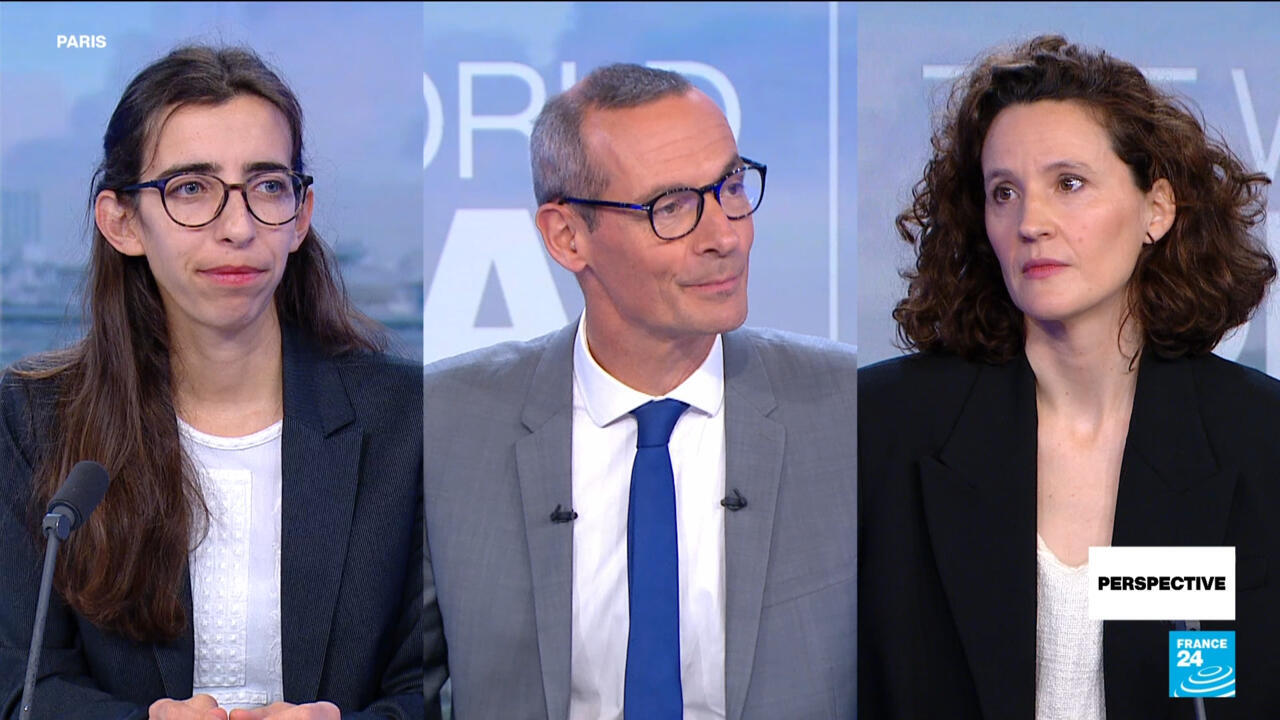
Some of the leading figures behind the trial of a huge multinational getting underway in Paris have spoken to FRANCE 24 about how the French cement company Lafarge put its own economic interests above any other considerations. Lafarge stands accused of making payments to the Islamic State group and other terrorist groups in northern Syria to keep its cement factory operating and protected during the country's civil war.
Suspicions that Lafarge was paying millions of euros to terrorists in Syria were first revealed by a French journalist, with her reports broadcast on FRANCE 24.
Those taking the legal action spoke to us in Perspective, telling us that it's the scandal of how a multinational can put its own private economic interests above any other considerations, be those human rights or the risks to employees.
We spoke to Claire Tixeire from the European Center for Constitutional and Human Rights (ECCHR) and Anna Kiefer from the NGO Sherpa.
Issued on: 04/11/2025
12:23 min
Some of the leading figures behind the trial of a huge multinational getting underway in Paris have spoken to FRANCE 24 about how the French cement company Lafarge put its own economic interests above any other considerations. Lafarge stands accused of making payments to the Islamic State group and other terrorist groups in northern Syria to keep its cement factory operating and protected during the country's civil war.
Suspicions that Lafarge was paying millions of euros to terrorists in Syria were first revealed by a French journalist, with her reports broadcast on FRANCE 24.
Those taking the legal action spoke to us in Perspective, telling us that it's the scandal of how a multinational can put its own private economic interests above any other considerations, be those human rights or the risks to employees.
We spoke to Claire Tixeire from the European Center for Constitutional and Human Rights (ECCHR) and Anna Kiefer from the NGO Sherpa.

No comments:
Post a Comment