
Copyright Euronews
By Inês Trindade Pereira & Mert Can Yilmaz
Published on 04/11/2025 - EURONEWS
EU citizens tend to think the bloc is as competitive as US companies when it comes to AI, despite criticism growing among experts.
Most EU respondents in France, Germany, Italy, the Netherlands, Poland, Romania, and Spain think that effective regulation of AI is a greater priority than encouraging its development, according to a recent YouGov survey.
Spain is the country most in favour of greater AI regulation among the seven member states, at 73%.
On the other hand, only between 11% and 20% take the opposing view that "it is more important that new technology, such as AI, can be developed freely, even if this means that the industry is less regulated"
Half of the Spanish and 48% of the Romanian respondents think AI will have a generally positive impact on economic growth in Europe.
Meanwhile, only 22% of French respondents agree, making them the most sceptical among the seven countries.
However, this does not stop them from using it.
Across these seven countries, almost half say they have used AI for leisure or personal activities at some point, with the Dutch and Spaniards most likely to do so, at 64% and 61%, respectively.
Yet, they claim not to use it frequently, with up to 12% using AI daily and only between 27% and 43% using it weekly.
Is Europe competitive in AI tech compared to big economies?
Debates about Europe's preparedness and competitiveness in developing a strong AI industry are becoming more pronounced, with most observers not being hopeful for the continent.
In June, Nvidia's CEO, Jensen Huang, during an exclusive dinner at the Élysée Palace held by French President Emmanuel Macron, stated that Europe is too slow on AI development.
Last month, one of the winners of this year's Nobel Prize in economics, France's Philippe Aghion, also warned that Europe is losing the tech race to China and the US.
However, the public opinion of these seven EU countries seems to show an overall more positive trend.
EU citizens tend to think that tech companies in Europe are competitive with those in the US, with those in the Netherlands and Spain making up the highest share, both at 43%.
However, respondents think that tech companies in Europe are inferior to those in China.
This is especially true among respondents in Spain, Germany, and Italy.
Polish to be the most effective language for prompting AI, new study reveals
A group of researchers studied which language is best understood by artificial intelligence, with Polish in the lead and English only ranking at sixth place.
Out of 26 different languages, Polish proved to be the most effective for prompting artificial intelligence (AI) models, with English only ranking sixth, a study by The University of Maryland (UMD) and Microsoft revealed.
"Our experiment yielded some surprising and unintuitive findings. Firstly, English did not perform best across all models, in fact it came sixth out of 26 languages when long texts were assessed, while Polish proved to be the leading language," the authors of the report wrote.
A team of researchers tested how well several major AI language models, including OpenAI, Google Gemini, Qwen, Llama and DeepSeek, responded to identical inputs in 26 different languages.
The results showed that Polish had an average accuracy of 88% in completing the tasks.
"As the analysis shows, it is the most precise in terms of giving commands to artificial intelligence. Until now, Polish was widely regarded as one of the most difficult languages to learn. As it turns out, humans have trouble with it, but not AI," the Polish Patent Office wrote in a Facebook post.
Interestingly, AI systems demonstrated a strong understanding of Polish, even though the amount of Polish-language data available for training is far smaller than that for English or Chinese.
In comparison, Chinese performed notably poorly, ranking fourth from the bottom out of the 26 languages tested.
The top 10 most effective languages for conversational AI were as follows:
- Polish 88%
- French 87%
- Italian 86%
- Spanish 85%
- Russian 84%
- English 83.9%
- Ukrainian 83.5%
- Portuguese 82%
- German 81%
- Dutch 80%
This AI is combating money laundering and
keeping out Russian oligarchs

Copyright Canva
Roselyne Mi 03/11/2025 EURONEWS
In a demonstration, Strise showed a company portfolio where warning signs flashed over a possible Russian oligarch ownership.
Banks and financial institutions are facing a rising tide of fraud and money laundering, and a growing pressure to keep up with tightening financial regulations.
Despite increasing spending by up to 10 per cent a year in some advanced markets between 2015 and 2022, the financial industry detects only about 2 per cent of global financial crime flows, according to Interpol.
Now, some believe artificial intelligence (AI) could help relieve the burden.
In Norway, the fintech start-up Strise has built an AI platform that scans public registries and media reports to flag potential money-laundering risks in real time.
The AI agent is designed to vet new applications for opening accounts at financial institutions subject to the European anti-money laundering legislation, such as banks, insurance companies, and payment services
Replacing a time-consuming and labour-intensive process
If you’ve ever opened an online bank account, you’ll have been asked to fill in details such as your address and occupation and update them once a year. This is part of the Know Your Customer (KYC) process, a legal requirement designed to verify who clients are and where their money comes from.
Traditionally, KYC checks have relied on teams of compliance analysts sifting through databases, corporate filings and news reports to confirm ownership, trace connections, and spot potential risks.
These checks are meant to stop criminals from using legitimate banks to move dirty money.
But they are slow and expensive.
“Now you can have AI that retrieves information and puts it together in a whole new way,” Marit Rødevand, Strise co-founder and CEO, told Euronews Next.
“If you can spot a shady company at the point of onboarding, you can prevent them from getting a bank account, being onboarded to financial solutions,” she added.
Strise’s AI system automatically identifies warning signs such as links to sanctioned individuals, high-risk jurisdictions, or politically connected figures who may be vulnerable to corruption.
For example, analysts who use this system can see warning signs on individuals on sanction lists and politicians who may be “highly influential” or “more susceptible to corruption” and “money laundering,” according to Robin Lycka, a solution architect at Strise.
Russian oligarchs
Strise says financial institutions using its platform have been able to identify and decline high-risk companies more efficiently, increasing their case-handling capacity up to tenfold without adding staff.
In a demonstration, Strise showed a company portfolio where warning signs flashed over a possible Russian oligarch ownership.
“Once you have that information, you can choose from a portfolio level whether or not you want to complete that onboarding with the calculated risk classification,” Lycka said.
In another portfolio, the system flagged an Estonian-based company associated with two individuals who had been convicted for one of the largest cryptocurrency frauds in history, amounting to $560 million (480 euros).
The platform can also generate reports and summaries of its findings, using large language models (LLMs) to compile risk narratives for regulatory filings, a task that previously required hours of manual writing.
“What makes me hopeful is that we can really make an impact, moving away from just checkbox compliance to actually freeing up resources to really help stop financial crime and really get into preventing fraud,” Rødevand said.
“There are so many cases in the media and personal stories about lives being devastated by these types of crimes. And I truly want us to help change that,” she added.
The European Union is currently finalising a sweeping Anti-Money Laundering Authority (AMLA) in Frankfurt and an EU-wide directive due to take effect in 2027 “to combat money laundering and the financing of terrorism”.
Stanislaw Tosza, an associate professor in Compliance and Law Enforcement at the University of Luxembourg, told Euronews Next that the reform brings in a “new area of responsibility”.
“The ever-expanding scope of anti-money laundering (AML) obligations, combined with the increasing risk of sanctions for non-compliance, makes AI an attractive tool for obliged entities seeking to manage these growing responsibilities,” Tosza said.
He added that under EU data protection law, some degree of human oversight is required “when automated systems make decisions that significantly affect people”.
Strise says its customers have been able to reduce false positives, which is when a system flags something as suspicious even though it’s completely legitimate, by “30 to 40 per cent with automated customer monitoring”.
“This means far less manual work for analysts who would otherwise spend hours reviewing unnecessary risk alerts rather than catching real risk and fighting financial crime,” Lars Lunde Birkeland, Strise CMO, told Euronews Next in a statement.
But experts caution that while automation may reduce the number of false positives, it can also make errors harder to detect or contest.
“The integration of AI into these decision-making processes further reduces transparency: it may become even more difficult for affected individuals to understand the basis for such evaluations or to challenge them effectively,” Tosza said.
For more on this story, watch the video:
This AI is combating money laundering and keeping out Russian oligarchs | Euronews
Personal finance and AI: Should you trust ChatGPT’s investment advice?

Retail investors keep flocking to publicly-available online AI tools such as ChatGPT to help with their financial decisions, despite clear warnings about risks. But how capable are simple AI models of providing reliable and trustworthy investment advice?
They ask, “Should I buy?” — and ChatGPT answers. Across the world, retail investors are letting AI chatbots into their portfolios, despite regulators insisting these tools aren't yet ready to replace professional advice.
Regulation around AI-assisted investing is still evolving, but nearly one in five retail investors already use such tools to make or adjust portfolio decisions, according to a recent report by trading platform eToro. The report, based on a survey of 11,000 retail investors across 13 countries, did not specify which AI tools were used.
According to experts, the key question is whether AI interfaces are employed as research aids to support decision-making or whether they are providing direct investment advice. The latter is a regulated activity in the EU under the Markets in Financial Instruments Directive (MiFID), and no publicly-available AI tool is currently authorised to do so, according to the European Securities and Markets Authority (ESMA).
Nevertheless, many retail investors see ChatGPT-like tools as a way to save time on research and reduce the cost of professional fund management. In some cases, the results can be striking.
In 2023, comparison website Finder launched an investment fund designed and almost entirely managed (99%) by ChatGPT. Two and a half years later, the 38-stock portfolio is up nearly 55% — outperforming the average of the UK’s ten most popular funds by more than 18 percentage points.
Despite this success, many signs suggest that complex, unpredictable financial market moves may rattle the otherwise good results of the likes of ChatGPT and Gemini, as they may not accurately predict outcomes, leading to financial losses.
OpenAI didn't respond to Euronews' request for comment. In their absence, our journalists asked ChatGPT to reply.
“While OpenAI hasn’t explicitly said ‘Don’t use ChatGPT for investing,’ the signals indicate that this AI tool should be used as a support rather than a replacement for professional financial advice, as it can generate plausible-sounding but incorrect answers (so-called ‘hallucinations’),” said the bot.
According to current European regulations, firms may use AI tools to analyse a client’s knowledge and experience, financial situation (including risk tolerance), and investment objectives (including sustainability preferences). This is in cases where companies are providing personalised investment recommendations or managing and rebalancing client portfolios, among other tasks.
When using AI tools in the context of financial advice, ESMA also stresses that transparency, governance, auditability, and human oversight must be prioritised.
AI's role in the financial sector
Artificial intelligence is increasingly reshaping finance, powering everything from customer service and fraud detection to portfolio management and personalised advice.
Behind the scenes, thousands of sophisticated AI models crunch vast amounts of data — market trends, historical prices, and even news headlines — to forecast movements and spot investment opportunities.
A 2025 study in Nature compared ChatGPT with other AI tools used in finance. It found that the chatbot's ability to process unstructured data, such as financial reports and user queries, makes it particularly effective in tasks like financial planning and risk analysis. But the study also highlighted a major concern: if the data fed into these systems is biased or inaccurate, AI can produce misleading results — a phenomenon known as “hallucination”.
Investment platform BridgeWise, which provides AI-powered research and analysis and investment recommendations on over 50,000 assets, offered a clear example of why tools like ChatGPT can be risky if not used correctly.
“If you ask a question about a company that is not very well-known, this is where hallucination will come because the chat will try to please you [by providing an answer],” warned Gaby Diamant, BridgeWise's co-founder and CEO. He advised against general prompts such as “Should I invest in X?”, noting they can produce highly misleading results.
BridgeWise emphasises that qualification and compliance with regulation are key. The company delivers AI-driven research and analysis over specific assets — including stocks, ETFs, and funds — and partners with stock exchanges in Switzerland, Israel, Japan, and Brazil.
The firm uses an advanced algorithm designed to interpret market movements. “We offer a decision-support tool — we don’t make decisions for our clients,” said Diamant.
When asked whether AI can entirely replace financial advisors, Diamant was clear: “Never.” He believes human judgment remains essential to understanding client needs and navigating the complexities of financial advice — something AI cannot yet replicate.
Still, he sees AI as a powerful enabler: “Our mission since founding BridgeWise in 2019 has been to make capital markets accessible to everyone.”
The future of AI in our finances
It seems clear that the technology must develop further before ChatGPT can take on the role of guiding retail investors through the often turbulent landscape of financial markets.
According to Kieran Garvey, AI research lead at Cambridge Centre for Alternative Finance, though AI machine learning is very advanced in lots of different areas within financial services, the technology to provide financial advice is “nowhere near reliable” at the moment.
To address these limitations, Garvey pointed to a major emerging development: “The big trend that’s happening in AI, both generally and within financial services, is agentic AI.”
This refers to technology that enables AI systems to operate with increasing levels of automation — allowing them to plan and execute complex processes using a range of tools, becoming more self-directed in the process.
“So, we as humans can instruct them to complete a particular task,” he continued, “and they are then able to determine what needs to be done, plan the process, and interact with different tools to carry it out.”
Customers could enable AI agents to make payments on their behalf, meaning they could book a holiday or do the shopping, he added.
Despite limitations, automated financial advisors with little to no human intervention are becoming more popular, and experts expect this so-called robo-advisory market to boom over the next five years.
According to global market research and consulting firm The Business Research Company, this market is forecast to expand to over $471 billion (€405bn) by 2029, a sizeable jump from nearly $62bn (€53bn) in 2024. The market value is the sum of the total revenues businesses gain from the sale of goods and services in this field.
Disclaimer: This information does not constitute financial advice, always do your own research to ensure investments are right for your specific circumstances. We are a journalistic website and aim to provide the best guidance from experts. If you rely on the information on this page, then you do so entirely at your own risk.
OpenAI and Amazon sign $38 billion deal for AI computing power

OpenAI and Amazon have signed a $38 billion agreement enabling the ChatGPT creator to run its artificial intelligence systems on Amazon’s data centres in the US.
OpenAI and Amazon have signed a $38 billion (€33bn) deal that enables the ChatGPT maker to run its artificial intelligence systems on Amazon's data centres in the US.
As part of the deal, announced on Monday, OpenAI will be able to power its AI tools using “hundreds of thousands” of Nvidia’s specialised AI chips through Amazon Web Services (AWS).
Amazon shares rose 4% following the announcement.
The agreement comes less than a week after OpenAI altered its partnership with longtime backer Microsoft, which until earlier this year had been the start-up’s exclusive cloud computing provider.
California and Delaware regulators also last week approved San Francisco-based OpenAI, originally founded as a non-profit, to move forward with plans to form a new business structure designed to raise capital more easily and operate for profit.
“The rapid advancement of AI technology has created unprecedented demand for computing power,” Amazon said in a statement on Monday. It added that OpenAI “will immediately start utilising AWS compute as part of this partnership, with all capacity expected to be deployed before the end of 2026, and the potential to expand further into 2027 and beyond.”
AI development requires enormous amounts of energy and computing capacity. OpenAI has long indicated that it needs more infrastructure both to develop new AI systems and to keep existing products, such as ChatGPT, running for its hundreds of millions of users.
The company has recently committed over $1 trillion (€870bn) to AI-related spending, including data centre projects with Oracle and SoftBank and semiconductor supply agreements with Nvidia, AMD and Broadcom.
Some of these deals have raised investor concerns about their “circular” nature, since OpenAI is not yet profitable and cannot currently pay for all the infrastructure its cloud partners provide, relying instead on expectations of future returns. OpenAI CEO Sam Altman dismissed these concerns last week, describing them as “breathless” speculation.
“Revenue is growing steeply. We are taking a forward bet that it’s going to continue to grow,” Altman said on a podcast appearance alongside Microsoft CEO Satya Nadella.
Amazon is already the primary cloud provider for AI start-up Anthropic, a rival of OpenAI that is developing the Claude chatbot.
Can Edi Rama’s AI minister propel Albania on path to EU membership?
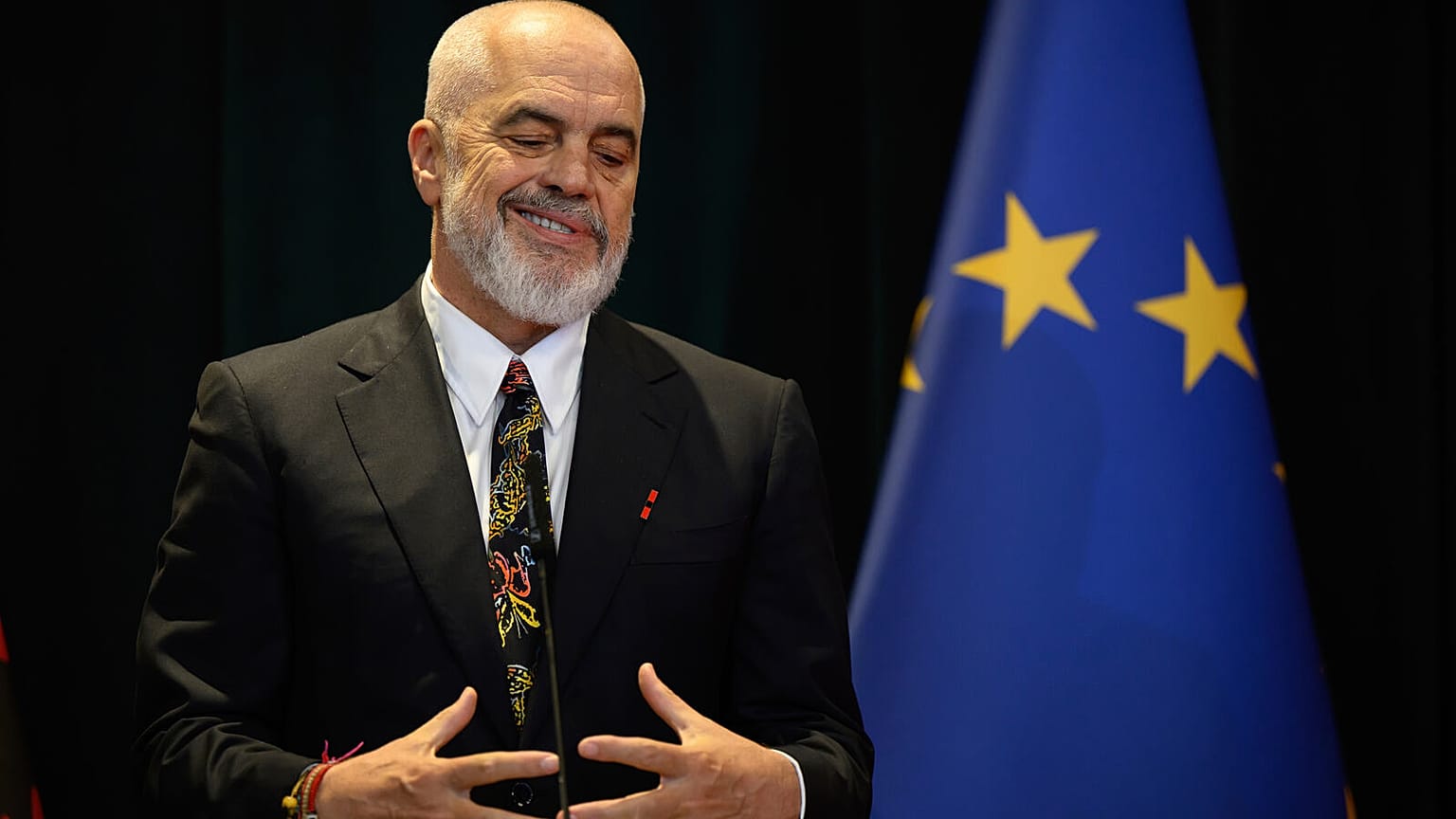
Albania is betting an AI minister can help the country accelerate its path towards joining the European Union. While the political audacity behind the plan has gathered international attention, experts have raised concerns.
Albanian Prime Minister Edi Rama believes he has found the secret recipe for bringing his country closer to the European Union faster: Artificial intelligence.
Facing a push for reforms to accelerate the country's entry to the EU, Rama's government is using AI-powered technology in the hopes of aligning Albanian laws with the EU quicker and more effectively. The move is embodied by an AI-generated avatar named ‘Diella’, who serves as a "virtual minister" tasked with improving public procurement and eliminating corruption. While the plan has gathered international attention for its audacious nature, it has also raised a host of questions.
Diella, whose name means ‘sun’ in Albanian, appears as a woman dressed in traditional Albanian attire and started government life as a chatbot helping Albanians navigate online government services. Rama, who secured a fourth consecutive term in May, argues she can make Albania "a country where public tenders are 100% free of corruption” and accelerate its accession to the EU.
Andreas Schieder, the European Parliament’s rapporteur on Albania, told Euronews the country is quickly progressing on its path to EU membership, including through digitalisation reforms, and could be in a position to close talks by the first half of 2027.
“Diella is about changing the perception of public administration and public procurement. It sends a strong signal to foreign investors, who are seeing a push for fairer and more accountable processes in Albania,“ Schieder told Euronews after returning from Albania on Friday, adding that Diella had been discussed “very intensely” during his talks on EU accession with Albanian representatives.
The Albanian government said Diella will be operated with human oversight. And for some, it could be a game-changer in how government bureaucracy is done.
“AI has been successfully tested by a number of international bodies to make procurement more transparent and test for any irregularities that could lead to corruption,” Andi Hoxhaj, a Balkan expert at King’s College London, told Euronews.
“This is also about sending a message: Albania is taking corruption very seriously and trying something new. If the old methods aren't working, it's time for new ones."
Concerns over legitimacy, security and sovereignty
But a host of concerns over Diella have also emerged, with experts questioning her legitimacy and objectivity.
“An algorithm always includes biases,” Clotilde Bômont, Senior Policy Analyst for cyber and digital technologies at the European Union Institute for Security Studies (EUISS), told Euronews.
“The social, industrial, economic and scientific background in which an AI model is developed influences the algorithm and therefore has an impact on the outcomes.”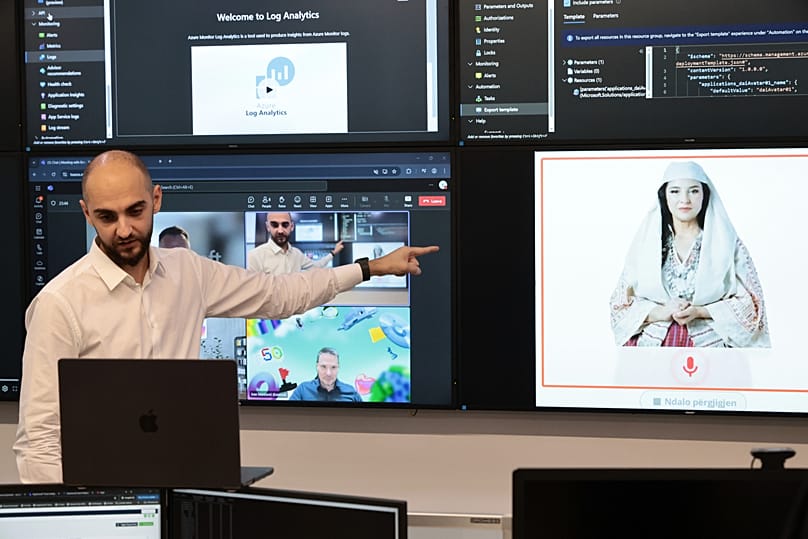
Enio Kaso, head of the Department of Artificial Intelligence and Cryptocurrency Licensing shows the AI "minister" Diella, during a conference AP Photo
While not confirmed by the government, experts believe Diella is most likely based on US company OpenAI’s algorithm and hosted on Microsoft's Azure cloud. Prime Minister Rama has a history of collaboration with Albanian-American tech executive Mira Murati, the former Chief Technology Officer of OpenAI and CEO of Thinking Machines Lab.
Facing US dominance in the digital space and China's rapid expansion, the European Union is seeking to strengthen its own digital sovereignty by reducing its reliance on non-European actors and foreign companies, including AI and cloud computing systems.
The EU has also expressed concerned about the US government’s CLOUD Act, which could allow it to snoop on European data stored by American companies. A minister operating based on foreign AI models could be problematic, experts warn.
“Would this allow Microsoft or the US government to access the data? This is a big debate," Clotilde Bômont explained.
"Even if the US provider manages to implement all possible technical safeguards, there will still be residual geopolitical and legal risks in the end, as two jurisdictions are effectively in competition here, the European and the American ones."
The publicity Rama has gained with Diella could also lure hackers and cyber-attacks.
Albania taking anti-corruption reforms ‘seriously’
Despite the concerns, Rama has received international attention - and applause - for his audacious approach to bolster transparency, a key request from the EU.
"Of course I have criticism, and doubts," said Andreas Schieder, "but the drive to fight corruption outweighs them."
Public tenders have been at the center of corruption scandals in Albania in the past. Stamping out irregularities involving the public administration is one of Brussels’ core demands when to comes to Albania's accession process to the EU.
The European Commission noted in its most recent report on the country’s application that “overall, corruption remains a serious concern,” adding that public procurement was one of the most “vulnerable sectors.”
The country has struggled to fix its international image, often connected to organised crime. Prime Minister Rama has denounced these as "outdated stereotypes."
Following a sweeping judicial and constitutional reform in 2016, Rama's administration introduced a special anti-corruption body known as SPAK to tackle corruption and organised crime at the highest level of government.
The agency has since become the country’s most trusted institution with more than half of Albanians saying they have confidence in the institution according to a Euronews Albania poll. Prior to its establishment, few cases of corruption were prosecuted due to bribery and political pressure.


No comments:
Post a Comment