It’s possible that I shall make an ass of myself. But in that case one can always get out of it with a little dialectic. I have, of course, so worded my proposition as to be right either way (K.Marx, Letter to F.Engels on the Indian Mutiny)
Thursday, December 25, 2025
The message of my favorite Christmas movie has never been more urgent
James Stewart in It's a Wonderful Life. Picture: Screenshot
For me, the real lesson of Frank Capra’s delightful holiday film It’s a Wonderful Life was never as powerful as it is this year. That lesson: it’s our choice.
We can wallow in despair at the hell that Trump and his sycophants have created, as in the fictional “Pottersville.” Or we can actively and purposefully generate kindness and decency — as in “Bedford Falls.”
Today, I want to share with you a short video I did with my young and talented colleagues who somehow put me into “It’s a Wonderful Life.” (I’m hardly “starring,” as they entitled this video; they’ve given me a bit part).
Running time — 3 minutes, 52 seconds. Enjoy!
Robert Reich is a professor of public policy at Berkeley and former secretary of labor. His writings can be found at https://robertreich.substack.com/.
Robert Reich's new memoir, Coming Up Short, can be found wherever you buy books. You can also support local bookstores nationally by ordering the book at bookshop.org
‘Carol of the Bells': Christmas, Ukraine’s resistance and the fight for freedom’
Christmas is a time for carols, music, happiness and goodwill to all people.
One of the most beautiful of all the Christmas songs is the Carol of the Bells which has become internationally popular. It symbolically resonates the sound of the church bells of Eastern orthodox churches.
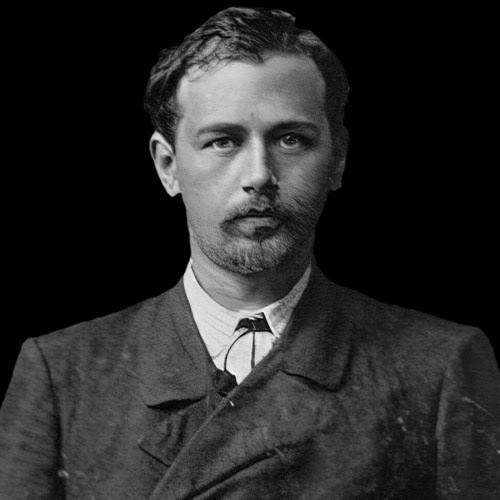
December is also the 150th birthday of its Ukrainian composer Mykola Leontovych. He adapted an ancient Ukrainian folk song about a New Year’s Eve swallow flying into a house and wishing the family good will and prosperity. The song’s original name is “Schedryk” which means generosity. Leontovych composed the song whilst living and working in Pokrovsk in the Donetsk oblast of Ukraine.
This December Ukrainians will be celebrating Christmas for the third time during the war started by Putin’s illegal invasion. Pokrovsk has become symbolic of their resistance to Russia and their struggle for independence, freedom and democracy.
Each night, Russia attacks civilian targets. As temperatures plummet often to below 20 degrees centigrade it launches inter ballistic missiles and Shahid drones to attack energy infrastructure in an attempt to terrorise the population into submission.
Pokrovsk is all but destroyed. A fortnight ago Putin announced that Ukraine was losing the “three day special military operation” and that he had captured the key Ukrainian city of Pokrovsk. Of course this was Russian propaganda being used to influence purported peace discussions between Trump and Ukraine. A week later Ukrainian forces expelled the Russian infiltrators capturing hundreds of Russian prisoners.
As the Russian economy stagnates, Putin is desperate to try and portray Ukraine as losing the war. The reality is different.
After almost three years of war they control only half the territory captured when they invaded in February 2022. They throw mainly ethnic minority soldiers, conscripted from the extremities of the Russian Federation, into the frontline known as the meatgrinder. To date they have lost around one million two hundred thousand soldiers who have been killed or wounded. Ukraine, which has a very limited navy, has destroyed one third of the famed Black Sea Fleet. Just the other week naval drones destroyed a Russian submarine. In the extremities of the Russian Federation, Ukraine is destroying its financial lifeline, its oil and gas production facilities which have lost up to an estimated 37 per cent capacity. Inflation, arrears of wages and economic stagnation increases month by month in Russia.
For Ukrainians the situation is also incredibly difficult. The cold; erratic energy supply; continual air raid warnings; daily attacks on schools, hospital and civilian accommodation; children attending school in underground bunkers.
Earlier this week I had messages from friends and family in various parts of Ukraine. From the Eastern city of Pavlograd they report drone attacks near where we stayed and loss of electricity. From Kyiv regular losses of electricity and hundreds of drone attacks. From the East fighting and losses on the front line.
Yet all carry the same message. They curse the Russians, but declare that they will never give up. They will not submit to becoming part of a Russian empire.
A family member of mine on the front line tells me how he lost his best friend and it took three days to recover the body because of Russian shelling and drones. In October our Senedd cross party group Friends of Ukraine delivered a four by four pick up vehicle to his unit with medical supplies and power banks. He thanked us. He said it is the support from abroad that raises their morale and gives them the inspiration to carry on fighting, knowing they are not alone.
So in February we will drive to Kyiv to deliver another six vehicles and supplies bringing our total to 55 and over a million pounds of humanitarian supplies.
It is difficult to describe in words the Ukrainian’s bravery and determination. But for them, this is a war of survival.
For Europe they are the front line defenders of democracy. We all watch and listen carefully to the ‘peace’ discussions taking place and Trump’s betrayal and realignment with Russia with disbelief. It is now up to Europe to stand alone and defend European democracy. Were Ukraine to fail, then the next in line will be the Baltic states, Moldova, Poland. Europe may at last have woken up to the fact that America can no longer be relied upon and that there is a new and aggressive fascism that has arisen in Russia that owes no allegiance to democracy, human rights or the rule of law.
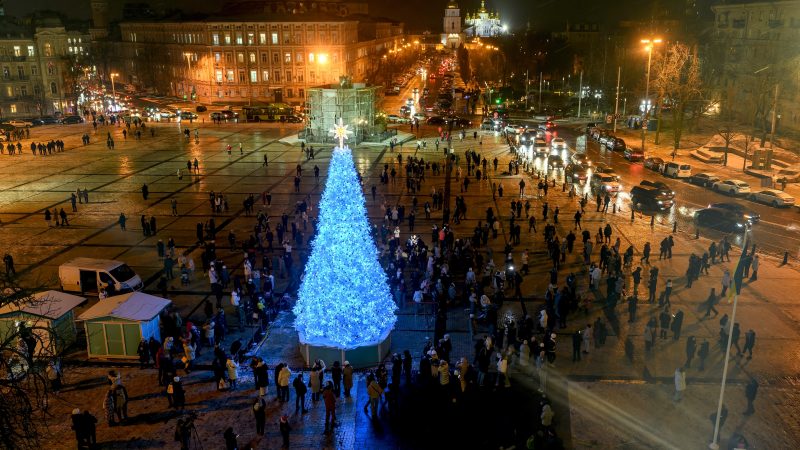
All over Ukraine, despite the missiles, bombs and drones, there are Christmas trees, Christmas lights (when energy supplies allow) and the sort of celebrations we see all over Europe. Ukrainians have a tradition of going from house to house, carrying a Yule star singing carols old and new. Among the songs they sing will be Mykola Leontovich’s “Schedryk”.
So as we in Wales and the rest of the UK celebrate Christmas in the warmth of our homes and listen to ‘Carol of the Bells’ on our televisions and radio, give a thought to those Ukrainians in the freezing cold fighting to defend Pokrovsk, praying for peace but determined not to become slaves to Russia.
Mick Antoniw
Mick Antoniw is a second generation Ukrainian Senedd member for Pontypridd, former counsel general for Wales and former minister for the constitution.@MickAntoniw1
The Ukrainian “Shchedryk”: How “Carol of the Bells” Became a Song of Resistance
Image: t2.gstatic.com
Every December, millions of people around the world hear the familiar melody of Carol of the Bells. Few know that this iconic tune is not American, not Western European—and not even originally a Christmas song.
Its true name is Shchedryk, a Ukrainian folk melody arranged over a century ago by composer Mykola Leontovych.
Photo: Ukrainer.net
A Song Older Than the 20th Century
“Shchedryk” dates back more than 100 years and is rooted in Ukraine’s ancient folk traditions. The song tells a simple but powerful story: the turning of the seasons, the end of winter, and the arrival of spring. It is about renewal, abundance, and hope—the reassurance that light will ultimately defeat darkness.
Despite its modern association with Christmas, “Shchedryk” was never meant to celebrate the holiday. It was a song about survival, continuity, and faith in the future.
Those themes would later become tragically prophetic.
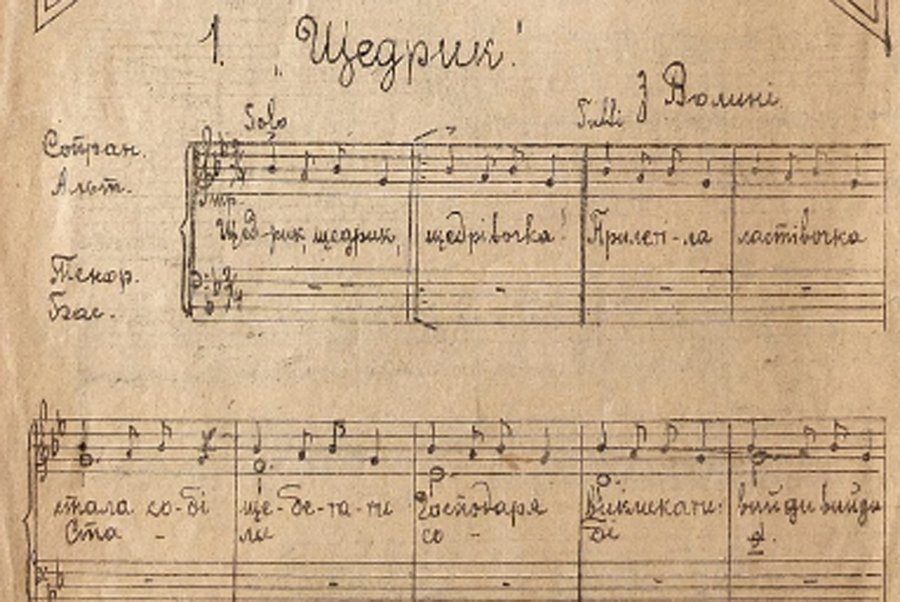
Photo: Ukrainer.net Fragment of the page of the first edition of “Shchedryk” by Mykola Leontovych, 1918
From Ukrainian Folk Song to Global Phenomenon
In the early 20th century, Ukrainian choirs toured Europe and North America, introducing “Shchedryk” to the world. In 1936, English lyrics were added, transforming the song into “Carol of the Bells.” The melody spread rapidly through films, concerts, and holiday traditions—often stripped of its Ukrainian origin.
While the tune became globally famous, its creator would not live to see its lasting legacy.
Photo: Ukrainer.net Extract from the catalogue of the United States Copyright Office, 1937
Murdered for His Culture
On January 23, 1921, Mykola Leontovych was murdered by an agent of the Soviet Union. He was just 43 years old.
His death was not an isolated crime. It was part of a broader campaign to eliminate Ukrainian cultural elites after Ukraine lost its independence in 1919. Composers, writers, poets, scientists, and artists were systematically targeted because Ukrainian culture itself was seen as a threat.
Imperial ideology dismissed Ukrainians as a “nation of peasants” incapable of producing high culture. “Shchedryk”—beloved, refined, and unmistakably Ukrainian—directly contradicted that myth.
A Genocide That Did Not End
The destruction of Ukrainian culture did not stop in the 1920s.
Today, history is repeating itself. In territories occupied by Russia, Ukrainian writers, actors, musicians, and cultural figures have been detained, tortured, or executed. Libraries and theaters are destroyed. Ukrainian language and identity are suppressed.
Many artists have laid down their instruments and taken up weapons—not because they want war, but because they refuse to let genocide happen again.
Why Ukrainians Fight
Ukrainians fight not only for land or borders, but for memory, dignity, and the right to exist as a people with a culture of their own.
That is why “Shchedryk” matters.
The next time you hear “Carol of the Bells,” remember: this melody was born in Ukraine. It is a song about light defeating darkness. And its story is still being written.
An appeal by the International Federation of Iraqi Refugees to refugee rights organizations, human rights institutions, and international advocacy bodies.
The International Federation of Iraqi Refugees (IFIR) issues this urgent appeal regarding the imminent deportation of Iraqi Kurdish refugees currently held in UK detention centres. Many of these individuals have resided in the UK for over two decades, establishing deep-rooted lives, raising families, and contributing to their communities.
We strongly condemn the recent bilateral agreement between the United Kingdom and the Government of Iraq, which facilitates forced returns. We contend that these actions constitute a clear violation of international law and binding human rights treaties, specifically:
– The 1951 Refugee Convention: Violating the principle of non-refoulement by returning individuals to environments where they face credible threats of harm. – The ECHR (Article 3): Risking the exposure of individuals to torture or inhuman and degrading treatment. – The ECHR (Article 8): Systematically dismantling family units and violating the right to private life.
Iraq remains a landscape defined by political instability and security threats. Deporting long-term residents who lack support networks in Iraq is not only a breach of legal duty but a profound humanitarian failure.
Our Demands:
– Immediate Annulment: We call for the cancellation of all agreements facilitating forced deportations to Iraq. – Political Pressure: We urge Iraqi and Kurdish regional authorities to reject these agreements and refuse to accept forced returnees. – Civil Society Mobilization: We call upon UK trade unions and human rights groups to publicly oppose these inhumane policies.
Protection is a legal obligation, not a political choice. We urge you to act now to uphold the principles of human dignity.For more information about the International Federation of Iraqi Refugees, see https://www.federationifir.com/en/
Iraq's political future in limbo as factions vie for power
BAGHDAD (AP) — The November election didn't produce a bloc with a decisive majority, opening the door to a prolonged period of negotiations.
BAGHDAD (AP) — Political factions in Iraq have been maneuvering since the parliamentary election more than a month ago to form alliances that will shape the next government.
The November election didn’t produce a bloc with a decisive majority, opening the door to a prolonged period of negotiations.
The government that eventually emerges will be inheriting a security situation that has stabilized in recent years, but it will also face a fragmented parliament, growing political influence by armed factions, a fragile economy, and often conflicting international and regional pressures, including the future of Iran-backed armed groups.
Uncertain prospects
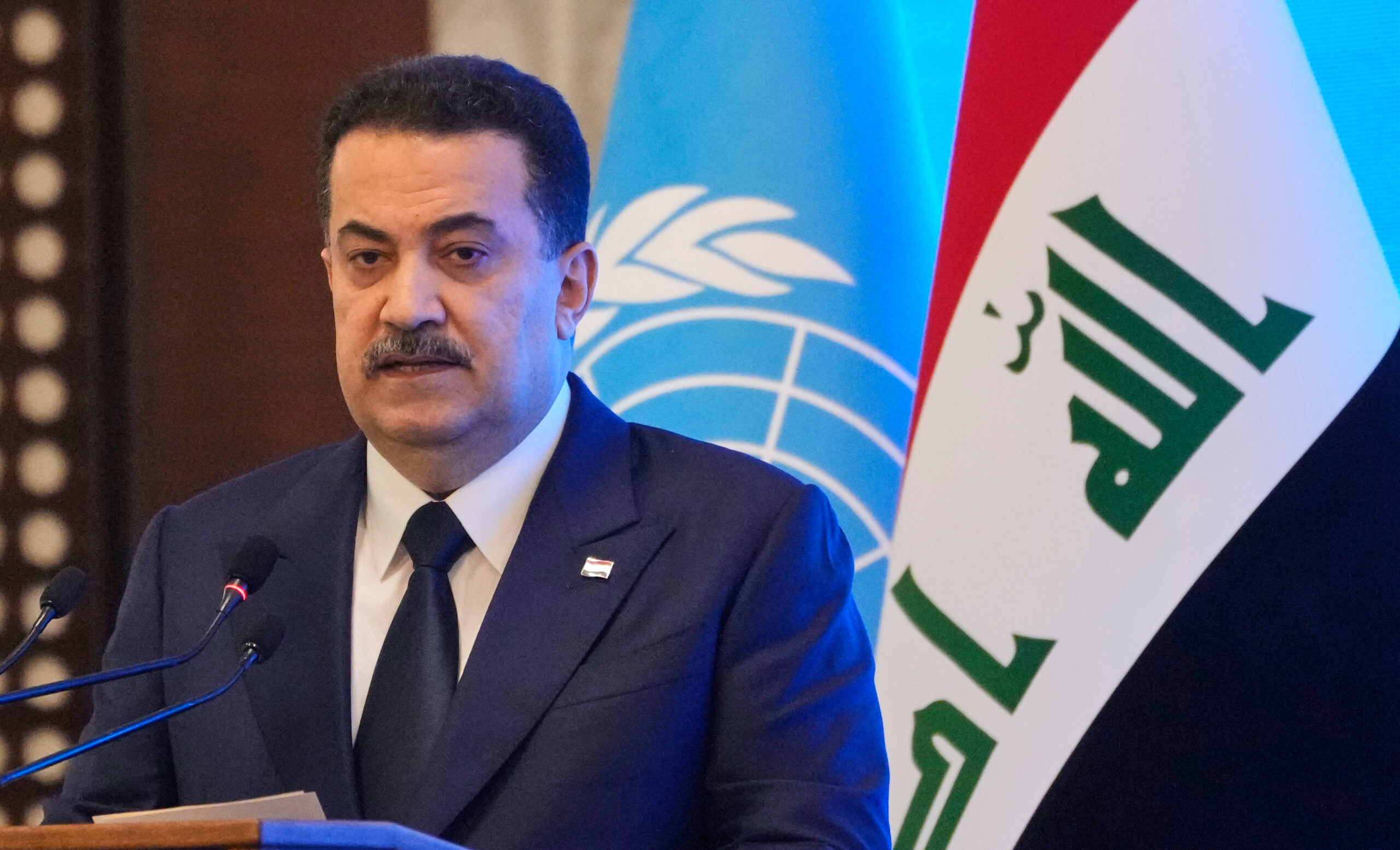
Prime Minister Mohammed Shia al-Sudani’s party took the largest number of seats in the election. Al-Sudani positioned himself in his first term as a pragmatist focused on improving public services and managed to keep Iraq on the sidelines of regional conflicts.
While his party is nominally part of the Coordination Framework, a coalition of Iran-backed Shiite parties that became the largest parliamentary bloc, observers say it’s unlikely that the Coordination Framework will support al-Sudani’s reelection bid.
“The choice for prime minister has to be someone the Framework believes they can control and doesn’t have his own political ambitions,” said Sajad Jiyad, an Iraqi political analyst and fellow at The Century Foundation think tank.
Al-Sudani came to power in 2022 with the backing of the Framework, but Jiyad said that he believes now the coalition “will not give al-Sudani a second term as he has become a powerful competitor.”
The only Iraqi prime minister to serve a second term since 2003 was Nouri al-Maliki, first elected in 2006. His bid for a third term failed after being criticized for monopolizing power and alienating Sunnis and Kurds.
Jiyad said that the Coordination Framework drew a lesson from Maliki “that an ambitious prime minister will seek to consolidate power at the expense of others.”
He said that the figure selected as Iraq’s prime minister must generally be seen as acceptable to Iran and the United States — two countries with huge influence over Iraq — and to Iraq’s top Shiite cleric, Grand Ayatollah Ali al-Sistani.
Al-Sudani in a bind
In the election, Shiite alliances and lists — dominated by the Coordination Framework parties — secured 187 seats, Sunni groups 77 seats, Kurdish groups 56 seats, in addition to nine seats reserved for members of minority groups.
The Reconstruction and Development Coalition, led by al-Sudani, dominated in Baghdad and in several other provinces, winning 46 seats.
Al-Sudani’s results, while strong, don’t allow him to form a government without the support of a coalition, forcing him to align the Coordination Framework to preserve his political prospects.
Some saw this dynamic at play earlier this month when al-Sudani’s government retracted a terror designation that Iraq had imposed on the Lebanese Hezbollah militant group and Yemen’s Houthi rebels — Iran-aligned groups that are allied with Iraqi armed factions — just weeks after imposing the measure, saying it was a mistake.
The Coalition Framework saw its hand strengthened by the absence from the election of the powerful Sadrist movement led by Shiite cleric Muqtada Sadr, which has been boycotting the political system since being unable to form a government after winning the most seats in the 2021 election.
Hamed Al-Sayed, a political activist and official with the National Line Movement, an independent party that boycotted the election, said that Sadr’s absence had a “central impact.”
“It reduced participation in areas that were traditionally within his sphere of influence, such as Baghdad and the southern governorates, leaving an electoral vacuum that was exploited by rival militia groups,” he said, referring to several parties within the Coordination Framework that also have armed wings.
Groups with affiliated armed wings won more than 100 parliamentary seats, the largest showing since 2003.
Other political actors
Sunni forces, meanwhile, sought to reorganize under a new coalition called the National Political Council, aiming to regain influence lost since the 2018 and 2021 elections.
The Kurdish political scene remained dominated by the traditional split between the Kurdistan Democratic Party and Patriotic Union of Kurdistan parties, with ongoing negotiations between the two over the presidency.
By convention, Iraq’s president is always a Kurd, while the more powerful prime minister is Shiite and the parliamentary speaker Sunni.
Parliament is required to elect a speaker within 15 days of the Federal Supreme Court’s ratification of the election result, which occurred on Dec. 14.
The parliament should elect a president within 30 days of its first session, and the prime minister should be appointed within 15 days of the president’s election, with 30 days allotted to form the new government.
Washington steps in
The incoming government will face major economic and political challenges.
They include a high level of public debt — more than 90 trillion Iraqi dinars ($69 billion) — and a state budget that remains reliant on oil for about 90% of revenues, despite attempts to diversify, as well as entrenched corruption.
But perhaps the most delicate question will be the future of the Popular Mobilization Forces, a coalition of militias that formed to fight the Islamic State group as it rampaged across Iraq more than a decade ago.
It was formally placed under the control of the Iraqi military in 2016, but in practice still operates with significant autonomy. After the Hamas-led attack in southern Israel on Oct. 7, 2023 sparked the devastating war in Gaza, some armed groups within the PMF launched attacks on U.S. bases in the region in retaliation for Washington’s backing of Israel.
The U.S. has been pushing for Iraq to disarm Iran-backed groups — a difficult proposition, given the political power that many of them hold and Iran’s likely opposition to such a step.
Two senior Iraqi political officials, who spoke on condition of anonymity because they weren’t authorized to comment publicly, said that the United States had warned against selecting any candidate for prime minister who controls an armed faction and also cautioned against letting figures associated with militias control key ministries or hold significant security posts.
“The biggest issue will be how to deal with the pro-Iran parties with armed wings, particularly those… which have been designated by the United States as terrorist entities,” Jiyad said.
Kataib Hezbollah, one of the most powerful militias in Iraq, designated by the U.S. as a terrorist organization, issued a statement Saturday rejecting the possibility of giving up its weapons.
The statement said the group’s “weapons will remain in the hands of its fighters, and no discussions with the government can take place before the departure of all occupation forces, NATO troops, and Turkish forces, and before ensuring the protection of the people and the sacred sites from extremist groups.”
Associated Press religion coverage receives support through the AP’s collaboration with The Conversation US, with funding from Lilly Endowment Inc. The AP is solely responsible for this content
Iraq on Tuesday announced a complete suspension of natural gas imports from Iran, a move the electricity ministry said immediately knocked between 4,000 and 4,500 megawatts off the national power grid.
On its face, the decision sounds dramatic. In practical terms, it is but the final step in a process that was already well underway. Iraqi officials have spent the past year declaring victory over fuel imports, first halting shipments of gasoline, diesel, and kerosene while pitching a broader narrative of energy self-sufficiency. Gas was the remaining—and most politically sensitive—piece of that puzzle.
Iranian supplies had been covering roughly 30 to 40 percent of Iraq’s power generation needs. Of course, those volumes had already been diminishing due to payment disputes, U.S. sanctions pressure, and Iran’s own domestic shortages. The “complete suspension” isn’t the sudden cutoff that it appears. Baghdad is merely taking the next logical step in the breakup with Iran through partial import reductions and unreliable flows.
Washington has been steadily pushing Iraq to unwind its dependence on Tehran, and Baghdad has been eager to show compliance without triggering a full-blown electricity crisis. The fallback plan—burning locally produced alternative fuels—is not new, nor is it ideal. It keeps the lights on at a higher cost and with greater strain on infrastructure, but it buys political breathing room.
More importantly, this announcement fits into a much larger strategic shift. Western-backed energy projects are finally moving from paper to production. BP’s $25 billion, five-field development in Kirkuk is now active, with a heavy emphasis on capturing associated gas that would otherwise be flared. TotalEnergies’ multi-billion-dollar integrated gas project in southern Iraq is designed to feed power plants directly, cutting Iran out of the loop altogether.
None of this means that Iraq has solved its power problem. Summer demand still dwarfs the country’s installed capacity, and gas capture takes time. Still, Baghdad wants to send the appropriate message, to Washington, to Tehran, and to investors, that Iranian gas is no longer a pillar of its energy system. Whether the grid can tolerate that ambition is the real test still ahead.
"The great dividers want you to think the problems in society are caused by migrants and refugees. They’re wrong."
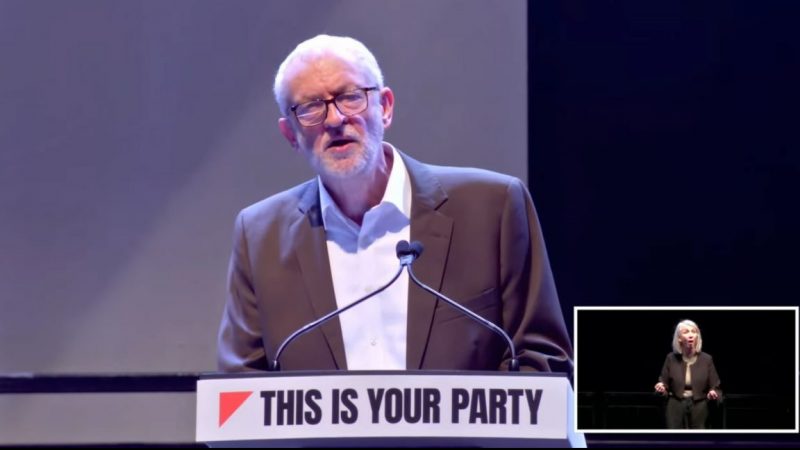
Jeremy Corbyn, the Independent MP for Islington North, has warned that the UK is at a “critical juncture” and said the country needs “an alternative voice” to the anti-migrant rhetoric that has gained ground this year.
Speaking to Left Foot Forward, the co-founder of Your Party said “we need an alternative voice” and added that “to build this alternative, we need to unite our many communities in fierce opposition to hatred, racism and fear”.
Corbyn encouraged people to keep turning up at demonstrations, “and bringing together people of all backgrounds and languages.”
“That means going out into our communities, engaging with people, and mobilising support for a more hopeful alternative. One based on inclusion, respect and humanity,” he added.
He said that in the New Year, he will undertake a constituency-wide consultation to hear from “the many people who are terrified by the recent planned changes to asylum and immigration policies”.
He highlighted the concerns of carers, teachers, cleaners, and others, noting that “people who have come to this country and contributed so much are fearful for their future in this country.”
Corbyn added: “We don’t just have a message to Reform. We have a message to the Labour government who have emboldened them.
“Shabana Mahmood’s latest assault on asylum seekers is utterly appalling. Labour needs to wake up and realise that you won’t defeat Reform by imitating them. You will embolden them.”
The former Labour leader called the scapegoating of migrants and refugees “a deliberate ploy by governments to distract from their own domestic failures”.
In closing, Corbyn said: “The great dividers want you to think the problems in society are caused by migrants and refugees. They’re wrong. They’re caused by an economic system that protects the interests of the super-rich.” Olivia Barber is a reporter at Left Foot Forward
We asked progressives from across the political spectrum about what lessons they think we need to learn and how to fight back in the year ahead.
As the year draws to a close, there are lots of lessons for progressives to learn from 2025. The snake oil populism offered by Reform UK will not deliver for ordinary Britons and yet Nigel Farage’s party continues to surge in the polls.
A Reform government would be a disaster for the country, just look at how their councils are being run, plagued by incompetence, broken promises, and scandal. The policies Reform offer such as tax cuts for the rich, austerity and privatisation of the NHS will only harm working families.
We asked progressives from across the political spectrum about what lessons they think we need to learn and how to fight back in the year ahead.
Mike Tapp, Labour MP for Dover and Deal, Parliamentary Under-Secretary of State for Migration and Citizenship:
“We are delivering a firm but fair immigration system to restore order and control. We are firm by making it less attractive to come here – to stop asylum shopping, by making it easier to deport and remove people and by introducing Counter Terror powers to take on the criminal gangs.
‘And we are fair, by helping those that need it and introducing viable safe and legal routes. It is important that we play our part as a compassionate nation. That’s British values – the nasty politics of Reform that uses division and cynicism is not what we stand for as a country. We beat them by being strong and by being decent.”
Cat Hobbs, founder and director of We Own It:
“In 2025, we’re really proud to have been part of some huge wins for public ownership – not least winning public control of South Yorkshire’s buses; galvanising people to challenge Thames Water’s outrageous request to pollute illegally for 15 years; and shining a spotlight on this government’s plans to introduce new PFI into our NHS.
“This wouldn’t have been possible without the unrelenting commitment, campaigning and dedication of the many of us out there who want to see the services that we use; rely upon and pay for in public hands.
“We win or we build. Through our campaigning this year we have built formidable networks and coalitions – as well as a huge amount of knowledge – which we’ll take with us into 2026 to continue the fight against privatisation.”
Tom Griffiths from Keep Our NHS Public:
“As the NHS enters yet another annual winter crisis–and the second under this Labour Government–it’s clear that for all the talk of 10 Year Plans, AI, or bold new genetics programmes, the reality is this new administration does not represent the kind of break from previous Conservative Governments voters hoped for. Wes Streeting, like his boss Starmer, is now in the process of finding a scapegoat for his own failings. While Starmer flirts with far-right populism and mimics Enoch Powell blaming migrants for broken Britain, Streeting is targeting Resident Doctors in the BMA who have rejected a below inflation pay offer and are taking strike action. Streeting says ‘he can’t guarantee’ no one will come to harm this winter, but this surely must be taken as an admission of his own failure. The truth is, health experts, patients, healthcare workers and campaigners all know that what the NHS must have urgently; proper funding to put it right and an end to privatisation. While we will do all we can to fight for those things, in the meantime, we hope the Health Minister will take responsibility for the duties he was elected to carry out.”
Zack Polanski, leader of the Green Party:
“It’s been an amazing year for the Green Party. Over 120,000 new members, record high polling and campaigns right across the country ready to win.
“There’s not a shred of complacency though about the scale of the challenge ahead. This year has been grim for so many people and the racist rhetoric of the right – being fuelled by Labour – is a dangerous warning of the path ahead.
“In 2026, something has to give. The status quo cannot maintain – let’s make sure we collectively weave the path towards reducing bills, taxing billionaires and creating a liveable future.”
CRIMINAL CAPITALI$M
Ontario’s real estate regulator CEO to resign amid iPro Realty scandal
Brenda Buchanan is shown in this supplied photo. (CNW Group/Real Estate Council of Ontario) (Hand-out/Real Estate Council of Ontario)
The CEO of Ontario’s real estate regulator is stepping down, just weeks after the province appointed an administrator to assume control of the organization amid concerns about its handling of the iPro Realty scandal.
Real Estate Council of Ontario (RECO) Administrator Jean Lépine released a statement on Thursday afternoon confirming that Brenda Buchanan will step aside as CEO effective Dec. 31.
In the statement, Lépine said that Buchanan will continue to provide support during the transition while he assumes the responsibilities of the CEO.
“I want to thank Brenda for her commitment and her contributions to RECO and wish her well in the future,” he said. “Looking ahead to 2026, we have an ambitious agenda for RECO in 2026. I’m eager to continue working with the team and all our stakeholders to deliver on our mandate and rebuild trust with stakeholders.”
Lépine formally took over the responsibility for RECO on Dec. 1.
At the time, Minister of Public and Business Service Delivery and Procurement Stephen Crawford said the move was necessary to restore confidence in the regulator after an audit found “significant issues” with its practices, processes and procedures.
“Over the past three months, I’ve heard from consumers, boards, realtors & brokers who’ve lost confidence in Ontario’s real estate regulator,” Crawford said. “Our government is taking action to restore trust and to protect Ontarians.”
A sign outside an iPro Realty office. (CTV News)
RECO found on May 19 that the co-founders of iPro Realty allegedly used about $8 million from trust accounts that were meant to be used for down payments and realtor commissions and instead set aside the funds for operating expenses and payments to investors.
An audit, which was undertaken after the scandal came to light, found the board was not notified of the iPro issues until Aug. 10, two days after an agreement with its principals was executed.
Buchanan was appointed to the CEO role in July after what RECO said was a “national search.”
She formally served as RECO’s Chief Operations Officer. Chris Fox
Managing Digital Producer, CP24.com & CTVNewsToronto.ca
Investor Louis Bacon wins defamation case against ex-fashion mogul Peter Nygard
Canadian fashion mogul Peter Nygard is shown in this courtroom sketch in Toronto on Jan. 19, 2022. (THE CANADIAN PRESS/Alexandra Newbould)
Billionaire hedge fund manager Louis Bacon has won his long-running defamation lawsuit alleging that former fashion mogul and convicted sex offender Peter Nygard spread lies about him during a public spat over their adjacent properties in the Bahamas.
Justice Richard Latin in Manhattan said in an order on Monday that Nygard had admitted he had no evidence to back up his claims against Bacon, including that he was a murderer, narcotics trafficker and white supremacist. Bacon said in his lawsuit that Nygard’s claims were “brazen lies.”
Nygard’s lawyer, Peter Sverd, said in a statement on Tuesday that Nygard will continue to fight the case and expects to appeal.
Lawyers for Bacon, the founder of Moore Capital Management LP, did not immediately respond to emails seeking comment on Tuesday.
Nygard, the founder of Nygard International, who was once one of Canada’s richest men, is serving an 11-year prison sentence in Canada for sexual assault.
Bacon and Nygard were neighbors in an exclusive gated community in the Bahamas and became embroiled in a bitter dispute over Nygard’s efforts to expand his property, which Bacon opposed.
In his lawsuit filed in 2015, Bacon accused Nygard of orchestrating an obsessive and malicious smear campaign to falsely link Bacon to arson, bribery, drug smuggling, the Ku Klux Klan and murder.
Nygard was found guilty by a Toronto jury on four counts of sexual assault in 2023. He was acquitted of a fifth count of sexual assault and one count of forcible confinement. Nygard has denied the allegations against him.
(Reporting by Jack Queen in New York
Editing by Rod Nickel and Noeleen Walder)
Canada partners with tech firm to boost government efficiency
Canada is actively integrating technology to drive a major shift in the way it delivers services to the public.
The federal government aims to modernize digital workflows and reduce the load of heavy paperwork across its departments by capitalizing on artificial intelligence.
“I think it’s a real railroad moment, the way I say it, for Canada,” Louis Têtu, executive chairman of the board at Coveo told BNN Bloomberg in an interview. “I’m certainly pleased to see the current government be so intentional and moving fairly quickly.”
The government signed a five-year memorandum of understanding with Montreal Que.-based Coveo Solutions Inc. on Dec. 17 to assist with its work. The government said the partnership prioritizes Canadian-made software to ensure that federal data and innovation stay under domestic control while improving how services reach the public.
The Shared Services Canada and Innovation, Science and Economic Development Canada are spearheading the charge by exploring advanced search and agentic AI systems that can plan and complete complex tasks on their own.
The strategic focus for the feds is to use technology to reduce administrative burdens to maximize staff capacity, time and taxpayer value. Tetu said there is a significant opportunity for the government to use AI technology.
“It can help government workers obtain better information to serve Canadians,” said Têtu. “That is a key low-hanging fruit that potentially is a billion dollar plus cost savings opportunity for the government and frankly give back time to Canadians.”
By identifying practical uses for generative and agentic AI, Ottawa intends to make the federal workforce more responsive.
“By working with a leading Canadian company through this memorandum of understanding, we are exploring how homegrown AI solutions can help modernize government operations, strengthen digital sovereignty, and improve how services are delivered to people and businesses across the country,” Minister of Artificial Intelligence and Digital Innovation Evan Solomon said.
The commitment to domestic technology fits into the broader AI Strategy for the Federal Public Service 2025 to 2027, enforcing Canada’s goal of leading in responsible AI use while ensuring that automation leads to better experiences for all Canadians. Joshua Santos Journalist, BNNBloomberg.ca
MERRY FUCKING XMAS
Canadian retailer drops Canada Post as its carrier ahead of holiday season
People make their way from a Canada Post Office during the holiday season in Ottawa on Tuesday, Dec. 19, 2023. (The Canadian Press)
This holiday season, one Canadian retailer says its using alternative carriers after relying on Canada Post for more than 10 years to deliver their products to their clients.
Province of Canada co-founder Julie Brown says with all their merchandise made in Canada, and with most of their clients in Canada, it made sense to use Canada Post as their carrier.
Although Canada Post and the union representing postal workers reached a tentative agreement for a new contract on Monday, it follows two years of negotiations that has led to labour disputes and strikes, causing major disruptions for businesses that rely on the Crown service.
Because of this, Brown says it was best to switch carriers.
“After last year’s strike and then this September, we just didn’t feel we had the confidence to go into the holiday season with them again, which saddened us because we’ve used them for the last 11 years,” Brown told CTV News Channel on Tuesday. “But we had to go a different route this holiday season. We just couldn’t afford to have the disruptions we had last year.”
“We had to replace them with four to five other carriers to make it work this year, but at least we didn’t have to deal with the strike,” she added.
The postal service has recognized that continued unresolved negotiations between it and its union, the Canadian Union of Postal Workers (CUPW), significantly impacted its business.
Butterpot Designs in Kitchener, Ont., and Lemon & Lavender in Toronto are among the other businesses who have also opted to go with other carriers this holiday season, due to lack of trust in Canada Post to deliver.
Canada Post trucks are seen in a distribution centre in Montreal on Dec. 13, 2024. THE CANADIAN PRESS/Christinne Muschi (Christinne Muschi)
The Canadian Federation of Independent Business (CFIB) says many Canadian businesses have expressed similar concerns.
“Businesses have learned the hard way that Canada Post is an increasingly unreliable provider of delivery services - and so many have made decisions to permanently move away from Canada Post,” Dan Kelly, CFIB President, told CTVNews.ca last month.
For Brown, she says last year’s holiday strike made her think twice about using Canada Post this time around.
“Last Christmas was really challenging on so many levels,” she said. “I felt like our entire staff, we were just dealing with it, trying to figure out what was going to happen everyday.
“We were spending more time on logistics than we were on customers and marketing,” she added.
A Canada Post worker delivers mail in Barrie, Ont., after a large snowstorm blanketed the region one day before Christmas, Tuesday, Dec. 24, 2024. THE CANADIAN PRESS/Christopher Drost (Christopher Drost)
The tentative agreement would be in effect until Jan. 31, 2029, which includes a 6.5 per cent wage increase in the first year and a three per cent increase in the second. The agreement also covers both the Urban and Rural and Suburban Mail Carrier (RSMC) bargaining units.
However, while Brown has always loved the service Canada Post provided, she says there is still too much instability to switch back right now.
“We were in quite a pickle last year, which is why this year we were like, ‘this is out of the question, we just can’t go down this path again without real certainty that we can rely on Canada Post,’” she said.
Brown adds that if Canada Post and the union are able to sort things out, they would reconsider going back to them next Christmas.
The Bay Street Financial District is shown with the Canadian flag in Toronto on Friday, August 5, 2022. THE CANADIAN PRESS/Nathan Denette (Nathan Denette)
TORONTO — The Canada Pension Plan Investment Board says it has acquired a minority stake in lubricants company Castrol alongside private investment firm Stonepeak.
Stonepeak is acquiring a majority controlling stake in Castrol from BP plc in a deal that values Castrol at an enterprise value of about US$10.1 billion.
The pension fund says it will invest up to US$1.05 billion in the deal.
CPP Investments managing director and head of sustainable energies Bill Rogers says the investment aligns with its strategy of backing businesses that are essential to the energy system.
Castrol is known for its lubricants, such as engine oils, industrial fluids and greases for automobiles and airlines.
The transaction is expected to close by the end of 2026.
This report by The Canadian Press was first published Dec. 24, 2025.
ALL CAPITALI$M IS STATE CAPITALI$M
Canadian Government intervenes with $115M to protect Northwest Territories’ mining hub
The Ekati Diamond Mine in the Northwest Territories is shown in this undated handout photo. THE CANADIAN PRESS/Handout — Burgundy Diamond Mines Limited, Dave Brosha Photography (Mandatory Credit) (HO)
OTTAWA — The owner of a mine in Northwest Territories will receive a $115 million loan from the federal government to keep operations running as U.S. tariffs depress the global diamond market.
Arctic Canadian Diamond Company Ltd., a subsidiary of Australia’s Burgundy Diamond Mines Ltd., operates the Ekati mine in the Lac de Gras region of Northwest Territories, roughly 300 km northeast of Yellowknife.
Finance Canada says Ekati employs more than 600 workers and hundreds of additional contractors, more than 200 of them Indigenous. The department estimates the diamond sector is responsible for nearly 20 per cent of the territory’s economy.
Ottawa is extending the relief through its large tariff enterprise loan program, a $10-billion fund set up in March to help companies and workers affected by U.S. President Donald Trump’s global trade disruption.
Burgundy announced in July it had laid off employees at its Point Lake open pit mine because the operation wouldn’t be profitable in the tariff-stricken diamond market. Mining has continued at the underground Misery site, Ekati’s main production centre.
In a filing to the Australia Securities Exchange in September, the company said the United States’ 50 per cent tariffs on gem and jewelry imports from India — a hub for diamond refining — have driven down global prices.
The International Diamond Exchange’s price index shows sharp declines in diamond prices since 2022, which many analysts correlate with flagging demand and the rising popularity of lab-grown gems. But Burgundy said the imposition of tariffs has compounded declines over the past year.
“A further drop in rough diamond prices can be directly attributed to the imposition of the U.S. tariffs applicable to the global diamond trade,” Burgundy’s filing read.
“These tariff measures have placed additional downward pressure on rough diamond prices and materially impacted the company’s revenues.”
Burgundy previously asked to have its trading suspended on the Australian exchange until it could secure external financing.
The company said in July it would maintain its Point Lake site to resume mining if market conditions improved.
In a media statement, Finance Minister François-Philippe Champagne said the loan to Burgundy will offer “stability” and support jobs in the key northern mining industry.
Ottawa made changes to the loan facility in September to open the financing up to a broader range of firms and to require employers to prioritize worker retention.
The federal government gave Sault Ste. Marie, Ont.-based Algoma Steel $400 million via the large enterprise tariff loan facility in September, alongside $100 million from the Ontario government.
That company announced last month it would lay off more than 1,000 employees as part of its transition away from blast furnaces and toward a greener, more efficient process for steelmaking.
This report by The Canadian Press was first published Dec. 18, 2025. Craig Lord, The Canadian Press
Feds, Ontario to sign deal reducing regulatory burden on Ring of Fire, other projects
A helicopter moves equipment fuel between work sites near the Ring of Fire mineral deposit in the James Bay lowlands of northern Ontario, Friday, Oct. 24, 2025. THE CANADIAN PRESS/Christopher Katsarov (Christopher Katsarov)
Ottawa and Ontario are set to finalize a deal Thursday that will reduce the regulatory burden on large projects, including the road to the Ring of Fire, The Canadian Press has learned.
Provincial and federal government sources who are not allowed to speak publicly say Ottawa has agreed to eliminate any duplicative work on its impact assessments on large projects.
A draft agreement posted on the Impact Assessment Agency of Canada’s website says the goal is to work together to implement the “One Project, One Review and One Decision” approach.
Ontario Premier Doug Ford was asked if this would be the final piece of the puzzle in order to begin building the roads to the Ring of Fire next year.
“I believe so,” he said.
Webequie First Nation and Marten Falls First Nation are leading environmental assessments on three roads that would connect the provincial highway system to their communities and mining activities in the mineral-rich Ring of Fire region in northern Ontario.
In a side deal on the Ring of Fire roads, the federal government has committed to completing its impact assessment on the same timeline as the province’s environmental assessment, as both First Nations say they are set to begin building the roads in 2026.
The province has also signed a deal with Aroland First Nation further south at the foot of the roads to the Ring of Fire that will see an old nearby logging road upgraded.
“This is about bringing them prosperity, bringing Ontario prosperity, making sure that we work with the communities up there,” Ford said.
Ontario Indigenous Affairs Minister Greg Rickford called the upcoming deal “good public policy” that will help the First Nations the province has partnered with to build the roads and other badly needed infrastructure in those communities.
“It need not be smothered in regulatory processes that just serve to make the development of this infrastructure and the penultimate goal of bringing the world its critical minerals longer than it should,” he said.
Energy and Mines Minister Stephen Lecce said they need to get on with building.
“I think part of this agreement that (Ford) has landed is really about securing a path to delivering the roads and ultimately delivering prosperity and more self reliance for Canada,” he said.
Prime Minister Mark Carney and Ford will sign the deal at a ceremony in Ottawa on Thursday. Carney’s office did not respond to a request for comment.
The Canadian Press learned about the details during a recent trip to the Ring of Fire region as part of a reporting project supported by the Pulitzer Centre.
A source in Ford’s office who is not allowed to speak publicly about the yet-to-be-announced deal says the changes will dramatically speed up big projects across the province, including roads, highways and mines.
“This is huge, not just for the Ring of Fire, but for mining in general, and building roads and highways,” the premier’s office source says. “It will be 10 times more transformational than any major project.”
A senior federal government source, who likewise was not authorized to speak publicly about the deal, says it is all about eliminating duplication. The environmental standards will remain stringent and rights and protections will be upheld, the source promises, including for the roads to the Ring of Fire.
The federal government has launched a regional assessment working group to better understand the impacts of development, but the province and Webequie and Marten Falls say it will not affect the road.
The two governments aim to work together on assessments of navigable waters, species at risk and migratory birds, all long in the federal purview.
With these deals in place, the province is no longer expected to use controversial new powers to designate the road to the Ring of Fire a special economic zone. That provision would have allowed the province to suspend provincial and municipal laws with the goal of speeding up construction of a proposed mine in the Ring of Fire.
The area is said to be replete with critical minerals, but many other First Nations are against development in the region — including the roads and the mine they would lead to.
Wyloo, the Australian mining giant, is nearing completion of its feasibility study on two proposed, connected underground mines at its Eagle’s Nest site.
Wyloo and Juno Corp., a Canadian junior mining company formed in 2019, own the vast majority of the more than 40,000 claims staked in the Ring of Fire. Two other companies, Teck Resources (which recently merged with Anglo American) and Canada Chrome Corporation, also hold a significant number of claims.
The companies say they’ve found a wide variety of critical mineral and base metal deposits, including nickel, copper, chromite, titanium, platinum, vanadium, iron and gold. They are used to make all types of batteries, cellphones, stainless steel, semi-conductors, drones, satellites, data centres and computers.
Meanwhile, Ontario has finalized its regulations to allow for the designation of special economic zones, which will come into force on Jan. 1, 2026.
That was a key component in Ontario’s Bill 5 omnibus package that passed into law last spring. The province gave itself the power to suspend any and all provincial and municipal laws in an effort to speed up the construction of large projects, particularly mines.
Ford has mused about using it for his proposed traffic and transit tunnel under Highway 401.
The special economic zone idea sparked outrage among the majority of First Nations in the province, who saw it as a threat to their way of life.
The new regulations give Economic Development Minister Vic Fedeli the power to choose which areas could be deemed a special economic zone, which company or individual can be deemed a trusted proponent and which projects would be part of the designation.
Those decisions will pass through cabinet first.
“Special economic zones will bolster Ontario’s economic advantage by cutting red tape, accelerating approvals and protecting the jobs and industries that keep our province resilient and competitive,” Fedeli said in a statement. This report by The Canadian Press was first published Dec. 17, 2025. Liam Casey, The Canadian Press