Wednesday, September 01, 2021

THE PLEASURE PRINCIPLE

Beyond dopamine: New reward circuitry discovered


In a paper published in Nature Neuroscience, researchers pushed the science forward on our reward pathways

Peer-Reviewed Publication

UNIVERSITY OF WASHINGTON SCHOOL OF MEDICINE/UW MEDICINE

The key to overcoming addictions and psychiatric disorders lives deep inside the netherworld of our brains and the circuitry that causes us to feel good.

Just like space, this region of the brain needs more exploration.

The oldest and most known reward pathway is the mesolimbic dopamine system, which is composed of neurons projecting from the ventral tegmental area (VTA) to the nucleus accumbens -- a key structure in mediating emotional and motivation processing,

Dopamine is a neurotransmitter that is released when the brain is expecting rewardA spike in dopamine could come be from eating pizza, dancing, shopping, and sex. But it can also come from drugs and lead to substance abuse.

In search of ways of treating addiction and psychiatric illness, researchers are looking for pathways beyond dopamine that could play a key role in rewards and reinforcement.

In a paper published in Nature Neuroscience, researchers from the Bruchas Lab at the University of Washington School of Medicine pushed the science forward on our reward pathways and found there is another pathway beyond dopamine. The Bruchas Lab is expanding knowledge of the inner workings of the brain and identifying treatments for psychiatric diseases.

“This study opens new avenues to understanding reward circuitry that might be altered in abuse of nicotine, opiates, or other drugs as well as neuropsychiatric diseases that affect reward processing including depression,” said corresponding author Dr. Michael Bruchas, professor of anesthesiology and pain medicine at the University of Washington School of Medicine who runs the Bruchas Lab. The Bruchas Lab is expanding knowledge of the inner workings of the brain and identifying treatments for psychiatric diseases.

In this study, researchers found that approximately 30% of cells in the VTA are GABA neurons. VTA GABA neurons have increasingly been recognized as players in reward and aversion, as well as potential targets for the treatment of addiction, depression, and other stress-linked disorders. 

Neurons are the fundamental units of the brain and nervous system, the cells responsible for receiving sensory input from the external world, for sending motor commands to our muscles, and for transforming and relaying the electrical signals at every step in between.

“What we found are unique GABAergic cells that project broadly to the nucleus accumbens, but projections only to a specific portion contribute to reward reinforcement,” said co-lead author Raajaram Gowrishankar, a postdoctoral scholar working in the Bruchas Lab and the Center for the Neurobiology of Addiction, Pain and Emotion.

In both male and female mice, researchers showed that long-range GABA neurons from the VTA to the ventral, but not the dorsal, nucleus accumben shell are engaged in reward and reinforcement behavior. They showed that this GABAergic projection inhibit cholinergic interneurons -- key players in reward-related learning. 

As the researchers wrote: These findings “further our understanding of neuronal circuits that are directly implicated in neuropsychiatric conditions such as depression and addiction.”

Co-lead author Ream Al-Hasani with the Center for Clinical Pharmacology and Washington University likened the findings to building with Legos and figuring out how one piece connects to another.

Each piece of the puzzle can take multiple years.

Gowrishankar said the findings are allowing scientists to understand subregions of the brain and to visualize how specific neuromodulators are released during reward processing.

In science terms, the researchers are able to highlight heterogeneity in the brain -- or differences in the brain.

“It’s really important that we don’t think of structures in the brain as monolithic,” said Gowrishankar. “There’s lots of little nuance in brain. How plastic it is. How it’s wired. This finding is showing one way how differences can play out.”

###

When humans play in competition with a humanoid robot, they delay their decisions when the robot looks at them


Researchers at Istituto Italiano di Tecnologia (IIT) investigated whether a humanoid robot’s gaze influences the way people reason in a social decision-making context. The study published in Science Robotics is supported by the European Research Council.

Peer-Reviewed Publication

ISTITUTO ITALIANO DI TECNOLOGIA - IIT

Human-robot competitive game and EEG methods 

IMAGE: ILLUSTRATION OF A HUMAN AND A HUMANOID ROBOT ENGAGED IN A COMPETITIVE GAME, AS REPORTED IN BELKAID ET AL. “MUTUAL GAZE WITH A ROBOT AFFECTS HUMAN NEURAL ACTIVITY AND DELAYS DECISION-MAKING PROCESSES” (SCIENCE ROBOTICS). THE HUMAN IS PLAYING AGAINST THE ROBOT WHILE HER BRAIN ACTIVITY IS BEING MEASURED WITH ELECTROENCEPHALOGRAM (EEG). view more 

CREDIT: IIT-ISTITUTO ITALIANO DI TECNOLOGIA

Genova (Italy), September 1st, 2021 - Gaze is an extremely powerful and important signal during human-human communication and interaction, conveying intentions and informing about other’s decisions. What happens when a robot and a human interact looking at each other? Researchers at IIT-Istituto Italiano di Tecnologia (Italian Institute of Technology) investigated whether a humanoid robot’s gaze influences the way people reason in a social decision-making context. What they found is that a mutual gaze with a robot affects human neural activity, influencing decision-making processes, in particular delaying  them. Thus, a robot gaze brings humans to perceive it as a social signal. These findings have strong implications for contexts where humanoids may find applications such as co-workers, clinical support or domestic assistants.

The study, published in Science Robotics today, has been conceived within the framework of a larger overarching project led by Agnieszka Wykowska, coordinator of IIT’s lab “Social Cognition in Human-Robot Interaction”, and funded by the European Research Council (ERC). The project, called “InStance”, addresses the question of when and under what conditions people treat robots as intentional beings. That is, whether, in order to explain and interpret robot’s behaviour, people refer to mental states such as beliefs or desires.

The research paper’s authors are Marwen Belkaid, Kyveli Kompatsiari, Davide de Tommaso, Ingrid Zablith, and Agnieszka Wykowska.

In most everyday life situations, the human brain needs to engage not only in making decisions, but also in anticipating and predicting the behaviour of others. In such contexts, gaze can be highly informative about others’ intentions, goals and upcoming decisions. Humans pay attention to the eyes of others, and the brain reacts very strongly when someone looks at them or directs gaze to a certain event or location in the environment. Researchers investigated this kind of interaction with a robot.

“Robots will be more and more present in our everyday life” comments Agnieszka Wykowska, Principal Investigator at IIT and senior author of the paper. “That is why it is important to understand not only the technological aspects of robot design, but also the human side of the human-robot interaction. Specifically, it is important to understand how the human brain processes behavioral signals conveyed by robots”.

Wykowska and her research group, asked a group of 40 participants to play a strategic game – the Chicken game - with the robot iCub while they measured the participants’ behaviour and neural activity, the latter by means of electroencephalography (EEG). The game is a strategic one, depicting a situation in which two drivers of simulated cars move towards each other on a collision course and the outcome depends on whether the players yield or keep going straight.

Researchers found that participants were slower to respond when iCub established mutual gaze during decision making, relative to averted gaze. The delayed responses may suggest that mutual gaze entailed a higher cognitive effort, for example by eliciting more reasoning about iCub’s choices or higher degree of suppression of the potentially distracting gaze stimulus, which was irrelevant to the task.

“Think of playing poker with a robot. If the robot looks at you during the moment you need to make a decision on the next move, you will have a more difficult time in making a decision, relative to a situation when the robot gazes away. Your brain will also need to employ effortful and costly processes to try to “ignore” that gaze of the robot” explains further Wykowska.

These results suggest that the robot’s gaze “hijacks” the “socio-cognitive” mechanisms of the human brain – making the brain respond to the robot as if it was a social agent. In this sense, “being social” for a robot could be not always beneficial for the humans, interfering with their performance and speed of decision making, even if their reciprocal interaction is enjoyable and engaging.

Wykowska and her research group hope that these findings would help roboticists design robots that exhibit the behaviour that is most appropriate for a specific context of application. Humanoids with social behaviours may be helpful in assisting in care elderly or childcare, as in the case of the iCub robot, being part of experimental therapy in the treatment of autismOn the other hand, when focus on the task is needed, as in factory settings or in air traffic control, presence of a robot with social signals might be distracting.


CAPTION

The research paper’s authors are Marwen Belkaid, Kyveli Kompatsiari, Davide de Tommaso, Ingrid Zablith, and Agnieszka Wykowska (team leader) from IIT’s lab “Social Cognition in Human-Robot Interaction”.

CREDIT

IIT-Istituto Italiano di Tecnologia

Study: Crowds can wise up to fake news


Experiment with Facebook-flagged content shows groups of laypeople reliably rate stories as effectively as fact-checkers do.

FACT CHECKERS ARE LAYPEOPLE THEY HAVE NO SPECIAL SKILL SET

Peer-Reviewed Publication

MASSACHUSETTS INSTITUTE OF TECHNOLOGY

In the face of grave concerns about misinformation, social media networks and news organizations often employ fact-checkers to sort the real from the false. But fact-checkers can only assess a small portion of the stories floating around online.

A new study by MIT researchers suggests an alternate approach: Crowdsourced accuracy judgements from groups of normal readers can be virtually as effective as the work of professional fact-checkers.

“One problem with fact-checking is that there is just way too much content for professional fact-checkers to be able to cover, especially within a reasonable time frame,” says Jennifer Allen, a PhD student at the MIT Sloan School of Management and co-author of a newly published paper detailing the study.

But the current study, examining over 200 news stories that Facebook’s algorithms had flagged for further scrutiny, may have found a way to address that problem, by using relatively small, politically balanced groups of lay readers to evaluate the headlines and lead sentences of news stories.

“We found it to be encouraging,” says Allen. “The average rating of a crowd of 10 to 15 people correlated as well with the fact-checkers’ judgments as the fact-checkers correlated with each other. This helps with the scalability problem because these raters were regular people without fact-checking training, and they just read the headlines and lead sentences without spending the time to do any research.”

That means the crowdsourcing method could be deployed widely — and cheaply. The study estimates that the cost of having readers evaluate news this way is about $0.90 per story.

“There’s no one thing that solves the problem of false news online,” says David Rand, a professor at MIT Sloan and senior co-author of the study. “But we’re working to add promising approaches to the anti-misinformation tool kit.”

The paper, “Scaling up Fact-Checking Using the Wisdom of Crowds,” is being published today in Science Advances. The co-authors are Allen; Antonio A. Arechar, a research scientist at the MIT Human Cooperation Lab; Gordon Pennycook, an assistant professor of behavioral science at University of Regina’s Hill/Levene Schools of Business; and Rand, who is the Erwin H. Schell Professor and a professor of management science and brain and cognitive sciences at MIT, and director of MIT’s Applied Cooperation Lab.

A critical mass of readers

To conduct the study, the researchers used 207 news articles that an internal Facebook algorithm identified as being in need of fact-checking, either because there was reason to believe they were problematic or simply because they were being widely shared or were about important topics like health. The experiment deployed 1,128 U.S. residents using Amazon’s Mechanical Turk platform.

Those participants were given the headline and lead sentence of 20 news stories and were asked seven questions — how much the story was “accurate,” “true,” “reliable,” “trustworthy,” “objective,” “unbiased,” and “describ[ing] an event that actually happened” — to generate an overall accuracy score about each news item.

At the same time, three professional fact-checkers were given all 207 stories —asked to evaluate the stories after researching them. In line with other studies on fact-checking, although the ratings of the fact-checkers were highly correlated with each other, their agreement was far from perfect. In about 49 percent of cases, all three fact-checkers agreed on the proper verdict about a story’s facticity; around 42 percent of the time, two of the three fact-checkers agreed; and about 9 percent of the time, the three fact-checkers each had different ratings.

Intriguingly, when the regular readers recruited for the study were sorted into groups with the same number of Democrats and Republicans, their average ratings were highly correlated with the professional fact-checkers’ ratings — and with at least a double-digit number of readers involved, the crowd’s ratings correlated as strongly with the fact-checkers as the fact-checkers’ did with each other.

“These readers weren’t trained in fact-checking, and they were only reading the headlines and lead sentences, and even so they were able to match the performance of the fact-checkers,” Allen says.

While it might seem initially surprising that a crowd of 12 to 20 readers could match the performance of professional fact-checkers, this is another example of a classic phenomenon: the wisdom of crowds. Across a wide range of applications, groups of laypeople have been found to match or exceed the performance of expert judgments. The current study shows this can occur even in the highly polarizing context of misinformation identification.

The experiment’s participants also took a political knowledge test and a test of their tendency to think analytically. Overall, the ratings of people who were better informed about civic issues and engaged in more analytical thinking were more closely aligned with the fact-checkers.

“People that engaged in more reasoning and were more knowledgeable agreed more with the fact-checkers,” Rand says. “And that was true regardless of whether they were Democrats or Republicans.”


Participation mechanisms

The scholars say the finding could be applied in many ways — and note that some social media behemoths are actively trying to make crowdsourcing work. Facebook has a program, called Community Review, where laypeople are hired to assess news content; Twitter has its own project, Birdwatch, soliciting reader input about the veracity of tweets. The wisdom of crowds can be used either to help apply public-facing labels to content, or to inform ranking algorithms and what content people are shown in the first place.

To be sure, the authors note, any organization using crowdsourcing needs to find a good mechanism for participation by readers. If participation is open to everyone, it is possible the crowdsourcing process could be unfairly influenced by partisans.

“We haven’t yet tested this in an environment where anyone can opt in,” Allen notes. “Platforms shouldn’t necessarily expect that other crowdsourcing strategies would produce equally positive results.”

On the other hand, Rand says, news and social media organizations would have to find ways to get a large enough groups of people actively evaluating news items, in order to make the crowdsourcing work.

“Most people don’t care about politics and care enough to try to influence things,” Rand says. “But the concern is that if you let people rate any content they want, then the only people doing it will be the ones who want to game the system. Still, to me, a bigger concern than being swamped by zealots is the problem that no one would do it. It is a classic public goods problem: Society at large benefits from people identifying misinformation, but why should users bother to invest the time and effort to give ratings?”

The study was supported, in part, by the William and Flora Hewlett Foundation, the John Templeton Foundation, and the Reset project of Omidyar Group’s Luminate Project Limited. Allen is a former Facebook employee who still has a financial interest in Facebook; other studies by Rand are supported, in part, by Google.

###


Written by Peter Dizikes, MIT News

Coastal grape growers can use less water during drought


Study finds using less doesn’t compromise quality

Peer-Reviewed Publication

UNIVERSITY OF CALIFORNIA - DAVIS

Photo of wine grapes 

IMAGE: A NEW STUDY FROM UC DAVIS RESEARCHERS SHEDS NEW LIGHT ON HOW VINEYARDS CAN MITIGATE DROUGHT EFFECTS AT A TIME WHEN CALIFORNIA IS EXPERIENCING A SEVERE WATER SHORTAGE. view more 

CREDIT: GREG URQUIAGA / UC DAVIS

California grape growers in coastal areas can use less water during times of drought and cut irrigation levels without affecting crop yields or quality, according to a new study out of the University of California, Davis.

The findings, published today (Sept. 1) in the journal Frontiers in Plant Science, show that vineyards can use 50% of the irrigation water normally used by grape crops without compromising flavor, color and sugar content.

It sheds new light on how vineyards can mitigate drought effects at a time when California is experiencing a severe water shortage and facing more extreme weather brought on by climate change, according to lead author Kaan Kurtural, professor of viticulture and enology and an extension specialist at UC Davis.

“It is a significant finding,” Kurtural said. “We don’t necessarily have to increase the amount of water supplied to grape vines.”

Growers will also be able to use this information to plan for the next growing season. “Everybody’s worried about what’s going to happen next year,” he said.

Kurtural and others from his lab studied irrigation and cabernet sauvignon grape quality at a research vineyard in Napa Valley over two growing seasons, a rainy one in 2019 and a hyper-arid one in 2020.

They focused on crop evapotranspiration, which was the amount of water lost to the atmosphere from the vineyard system based on canopy size. The weekly tests used irrigation to replace 25%, 50% and 100% of what had been lost by the crop to evapotranspiration.

Researchers found that replacing 50% of the water was the most beneficial in maintaining the grape’s flavor profile and yield. The level of symbiotic arbuscular mycorrhizal fungi, which help grapevines overcome stresses such as water deficits, was also not compromised. And the water used to dilute nitrogen application was also reduced, making the process more environmentally friendly. 

The water footprint for growing grapes also decreased. For both the 25% and 50% replacement levels, water use efficiency increased between 18.6% and 29.2% in the 2019 growing season and by 29.2% and 42.9% in the following dry year. 

While focused on cabernet sauvignon, most red grapes will respond similarly, he said.  

“In the end, drought is not coming for wine,” Kurtural said. “There doesn’t need to be a tremendous amount of water for grapes. If you over irrigate in times like these, you’re just going to ruin quality for little gain.”

###

Members of Kurtural’s lab — Nazareth Torres, Runze Yu, Johann Martinez-Lüscher and Evmorefia Kostaki — are also credited as authors. 

University of California Agriculture and Natural Resources provided partial funding.

 I FEEL A REGGAE SONG COMING ON

Palm tree disease in Florida transmitted by traveling bug from Jamaica


Peer-Reviewed Publication

AMERICAN PHYTOPATHOLOGICAL SOCIETY

Brian W. Bahder doing fieldwork 

IMAGE: BRIAN W. BAHDER DOING FIELDWORK view more 

CREDIT: BRIAN W. BAHDER

What began as a curious survey of an insect in Florida revealed a much larger network of movement across the Caribbean basin. Haplaxius crudus, commonly known as the American palm cixiid, transmits phytoplasmas (bacteria that cause plant diseases) in palm. The American palm cixiid is known to transmit lethal yellowing disease and lethal bronzing disease, both of which are lethal to a variety of palm species, especially coconut and date palms. 

While many scientists have assumed these pathogens migrated to Florida in infected plants, Brian Bahder at the University of Florida wondered if the real culprits were the insects themselves. To test this suspicion, Bahder and his colleagues began by categorizing the insect’s DNA in Florida, where they found four distinct groups.

Next they looked beyond the United States and tested populations in Costa Rica, Colombia, and Jamaica, three places that were distinct and relatively isolated. They found different insect DNA in Costa Rica and Colombia. In Jamaica, however, they found an exact match to one of the groups in Florida. ​

“This told us that either the bugs in Jamaica got there from Florida or the bugs from Jamaica got introduced to Florida,” explained Bahder. “We followed up by looking at historical data from shipping records and reference insect collections and determined that the insects from Jamaica likely got introduced into Florida and brought the pathogen that causes lethal yellowing in coconut with it.”

Their research marks the first time the epidemiology of palm phytoplasmas has been studied in the context of the transmitting insect. “I hope our approach stimulates more integrated studies between entomology and plant pathology and combines historical record-keeping, molecular work, and fieldwork to better understand the epidemiology of certain diseases.”

Additionally, the authors generated a lot of new molecular data that others can use to look at this species in their area and compare. So far, the American palm cixiid has been discovered as far north as the southern part of South Carolina. To learn more, read “Genetic Variability of Haplaxius crudus, Based on the 5′ Region of the Cytochrome c Oxidase Subunit I Gene, Sheds Light on Epidemiology of Palm Lethal Decline Phytoplasmas” published in the open access PhytoFrontiers™.

###


Nitrogen-efficient wheats can provide more food with fewer greenhouse gas emissions, new study shows


Widespread use of the new technology could lower global use of fertilizers for wheat crops

Peer-Reviewed Publication

INTERNATIONAL MAIZE AND WHEAT IMPROVEMENT CENTER (CIMMYT)

BNI-enabled crops 

IMAGE: BNI-ENABLED CROPS. (GRAPH: SCIENCE MANGA STUDIO) view more 

CREDIT: SCIENCE MANGA STUDIO

An international collaboration has discovered and transferred to elite wheat varieties a wild-grass chromosome segment that causes roots to secrete natural inhibitors of nitrification, offering a way to dial back on heavy fertilizer use for wheat and to reduce the crop’s nitrogen leakage into waterways and air, while maintaining or raising its productivity and grain quality, says a new report in the Proceedings of the National Academy of Sciences of the United States of America.

Growing wheat varieties endowed with the biological nitrification inhibition (BNI) trait could increase yields in both well-fertilized and nitrogen-poor soils, according to G.V. Subbarao, researcher at the Japan International Research Center for Agricultural Sciences (JIRCAS) and first author of the new report.

“Use of wheat varieties that feature BNI opens the possibility for a more balanced and productive mix of nitrogen nutrients for wheat fields, which are currently dominated by highly-reactive nitrogen compounds that derive in large part from synthetic fertilizers and can harm the environment,” Subbarao said.

The most widely grown food crop on the planet, wheat is consumed by over 2.5 billion people in 89 countries. Nearly a fifth of the world’s nitrogen-based fertilizer is deployed each year to grow wheat but, similar to other major cereals, vegetables, and fruits, the crop takes up less than half of the nitrogen applied.

Much of the remainder is either washed away, contaminating ground waters with nitrate and contributing to algae blooms in lakes and seas, or released into the air, often as nitrous oxide, a greenhouse gas 300 times more potent than carbon dioxide.

The study team first homed in on the chromosome region associated with the strong BNI capacity in the perennial grass species Leymus racemosus and moved it from the grass, using “wide crossing” techniques, into the cultivar Chinese Spring, a wheat landrace often used in genetic studies. From there, they transferred the BNI chromosome sequence into several elite, high-yielding wheat varieties, leading to a near doubling of their BNI capacity, as measured through lab analyses of soil near their roots.

The new wheats — elite varieties from the International Maize and Wheat Improvement Center (CIMMYT) into which the BNI trait was cross-bred — greatly reduced the action of soil microbes that usually convert fertilizer and organic nitrogen substances into ecologically-harmful compounds such as nitrous oxide gas, according to Hannes Karwat, a CIMMYT post-doctoral fellow and study co-author.

“The altered soil nitrogen cycle was even reflected in the plants’ metabolism,” Karwat said, “resulting in several responses indicative of a more balanced nitrogen uptake in the plants.”

The scientists involved said BNI-converted wheats in this study also showed greater overall biomass and grain yield, with no negative effects on grain protein levels or breadmaking quality.

“This points the way for farmers to feed future wheat consumers using lower fertilizer dosages and lowering nitrous oxide emissions,” said Masahiro Kishii, a CIMMYT wheat cytogeneticist who contributed to the research. “If we can find new BNI sources, we can develop a second generation of elite wheat varieties that require even less fertilizer and that better deter nitrous oxide emissions.”

recent PNAS paper by Subbarao and Princeton University scientist Timothy D. Searchinger mentions BNI as a technology that can help foster soils featuring a more even mix of nitrogen sources, including more of the less-chemically-reactive compound ammonium, a condition that can raise crop yields and reduce nitrous oxide emissions.

CAPTION

CIMMYT researcher Masahiro Kishii examines wheat plants in a greenhouse. (Photo: CIMMYT)

CREDIT

CIMMYT

Scale out to slow global warming?

The present study comes just as the Intergovernmental Panel on Climate Change (IPCC) has released its Sixth Assessment Report, which among other things states that “… limiting human-induced global warming … requires limiting cumulative CO2 emissions … along with strong reductions in other greenhouse gas emissions.”  

Globally, 30% of greenhouse gas emissions come from agriculture. BNI-enabled wheat cultivars can play an important role to reduce that footprint. Wheat-growing nations that have committed to the Paris Climate Accord, whose provisions include reducing greenhouse gas emissions 30% by 2050, could be early adopters of the BNI technology, together with China and India, the world’s top two wheat producers, according to Subbarao.

“This work has demonstrated the feasibility of introducing BNI-controlling chromosome segments into modern wheats, without disrupting their yields or quality,” said Subbarao. “To realize the technology’s full potential, we need to transfer the BNI feature into many elite varieties adapted to diverse wheat growing areas and to assess their yield in many farm settings and with varying levels of soil pH, fertilization and water use.”

A project to establish nitrogen-efficient wheat production systems in the Indo-Gangetic Plains using BNI has recently been approved by Japan and is under way, with the collaboration of JIRCAS, the Indian Council of Agricultural Research (ICAR), and the Borlaug Institute of South Asia (BISA). Under the project, BNI-converted wheat lines developed from JIRCAS-CIMMYT partnerships will be tested in India and the BNI trait transferred to popular national wheat varieties.

“The BNI-technology is also featured in Green Technology, a Japanese government policy document for moving towards a zero-carbon economy,” said Osamu Koyama, President of JIRCAS, which has also posted a note about the new PNAS study.

“Adaptation and mitigation solutions such as BNI, which help lessen the footprint of food production systems, will play a large role in CGIAR research-for-development, as part of One CGIAR Initiatives starting in 2022,” said Bram Govaerts, CIMMYT Director General.

###

FNORD

Doubling the number of species of hand-standing spotted skunks

Doubling the number of species of hand-standing spotted skunks
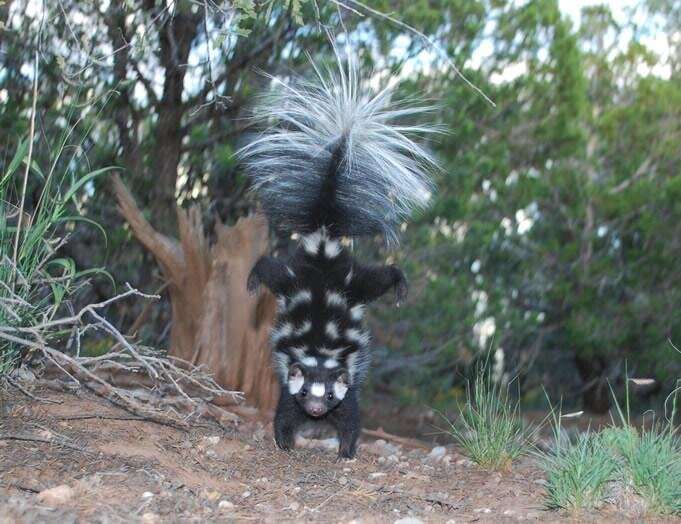
A spotted skunk doing its signature handstand. Credit: (c) Jerry W. Dragoo

Picture a skunk. You're probably thinking of a stocky animal, around the size of a housecat, black with white stripes, like Pepé Le Pew. That describes North America's most common skunk, the striped skunk, but they also have smaller, spotted cousins. Scientists still have a lot to learn about spotted skunks, starting with how many kinds of them even exist—over the years, the number of recognized species has ranged from two to fourteen, and lately, scientists have agreed there are four. But in a new paper in Molecular Phylogenetics and Evolution, researchers analyzed skunk DNA and found that there aren't four species of spotted skunk after all: there are seven.

"North America is one of the most-studied continents in terms of mammals, and carnivores are one of the most-studied groups," says Adam Ferguson, one of the paper's authors and the Negaunee collections manager of mammals at Chicago's Field Museum. "Everyone thinks we know everything about mammalian carnivore systematics, so being able to redraw the skunk family tree is very exciting."

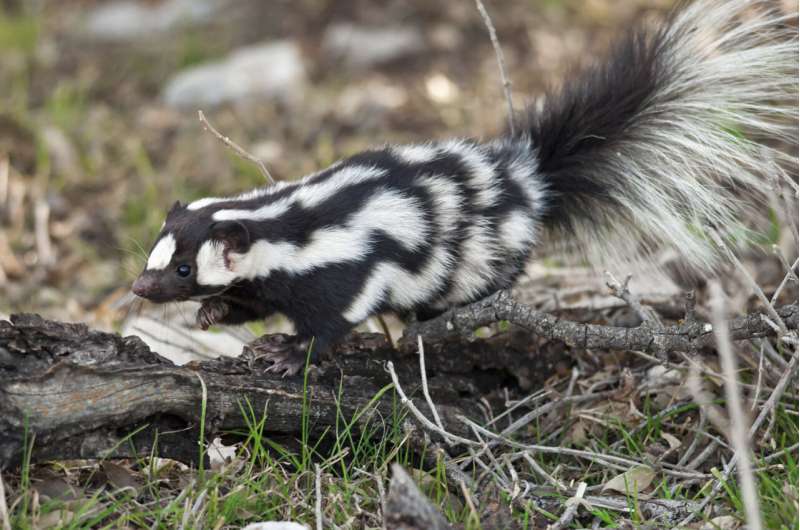
Skunks, like raccoons, otters, and weasels, are part of the Carnivora order of mammals (they're omnivores, though). They're distantly related to dogs, and even more distantly related to cats. Spotted skunks are found throughout North America, but they haven't made themselves at home in urban areas the way their striped cousins have. Most spotted skunks weigh less than two pounds, whereas striped skunks can tip the scales at over ten. Like their name suggests, they have spots instead of stripes (although technically they're just broken stripes). And while all skunks produce a nasty-smelling spray to deter predators, spotted skunks have the flashiest means of deploying it: they do a hand-stand on their front legs as an extra warning before they spray. "Spotted skunks are sometimes called the acrobats of the skunk world," says Ferguson.

Doubling the number of species of hand-standing spotted skunks
A wanted poster asking for roadkill skunk specimens to be used in research. 
Credit: (c) Adam Ferguson

Scientists have been interested in spotted skunks for a long time—the first  formally recognized by Western science was described in 1758 by Carl Linnaeus, the inventor of the biological naming system still used today. Over the years, as many as fourteen species were recognized, though in recent decades that number's been condensed to four. However, Ferguson suspected that there might be more, due to the lack of genetic sequence data from morphologically distinct or geographically isolated populations of this wide-ranging genus. "We figured there had to be some surprises when it came to spotted skunk diversity, because the genus as a whole had never been properly analyzed using ," says Ferguson.

Even though North American carnivores are by and large well-known, skunks are often understudied, in part because catching skunks is a good way to get sprayed. On top of that, spotted skunks are lithe and good at climbing trees, and they're usually found in remote areas. To acquire the specimens needed for the study, the researchers had to get creative.

"We made wanted posters that we distributed across Texas in case people trapped them or found them as roadkill," says Ferguson, who began collecting specimens used in this project while working on his MSc at Angelo State University. "People recognize spotted skunks as something special, because you don't see them every day, so they're not the kind of roadkill that people just paint over."

Doubling the number of species of hand-standing spotted skunks
Spotted skunk. Credit: (c) Robby Fleischman

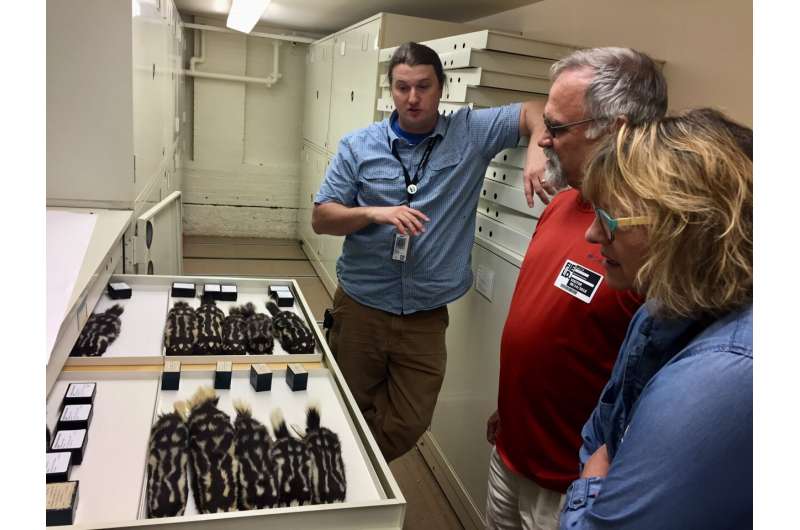
In addition to modern specimens, the scientists used skunks in museum collections. "If we're trying to tell the full story of skunk evolution we need as many samples as we can," says Ferguson. "For example, we didn't have any modern tissues from Central America or the Yucatan. We were able to use  to fill those holes." All in all, the researchers amassed a collection of 203 spotted skunk specimens.

The researchers took tissue samples from the skunks and analyzed their DNA. Comparing the DNA sequences revealed that some of the skunks that had previously been considered the same species were substantially different. These genetic differences led the researchers to regroup some of the skunks and resurrect several species names that haven't been used in centuries.

"I was able to extract DNA from century-old museum samples and it was really exciting to see who those individuals were related to. It turns out that one of those was a currently unrecognized, endemic species in the Yucatan,'' says Molly McDonough, a biology professor at Chicago State University, research associate at the Field Museum, and the paper's first author.

Doubling the number of species of hand-standing spotted skunks
Adam Ferguson in the Field Museum's collections with spotted skunk specimens. 
Credit: Courtesy of Adam Ferguson

Among the new species described are the Yucatan spotted skunk, a squirrel-sized skunk found only in the Yucatan Peninsula, and the Plains spotted skunk. Plains spotted skunks have been in decline for the past century, and conservationists have petitioned for them to be listed as an endangered subspecies. "If a subspecies is in trouble, there's sometimes less emphasis on protecting it because it's not as distinct an evolutionary lineage as a species," says Ferguson. "We've shown that the Plains spotted skunks are distinct at the species level, which means they've been evolving independently of the other skunks for a long time. Once something has a species name, it's easier to conserve and protect."

The revised skunk family tree could also be a tool for scientists looking to understand  reproductive biology. "Besides the fact that they do handstands, the coolest thing about spotted skunks is that some of them practice delayed egg implantation—they breed in the fall, but they don't give birth until the spring. They delay implanting the egg in the uterus, it just sits in suspension for a while," says Ferguson. "We want to know why some species have delayed implantation and others don't, and figuring out how these different species of skunks evolved can help us do that."

And while skunks aren't always the most popular animals, the researchers say that understanding how they evolved and protecting them from extinction is important to our whole ecosystem.

"By analyzing the genome of spotted skunks, we've been able to learn that their evolution and splitting into different species was driven by climate change during the Ice Age," says Ferguson. "The different lineages we found might help us find different conservation angles for protecting them in the future."

Ice Age climate change played a bigger role in skunk genetics than geological barriers
More information: Phylogenomic systematics of the spotted skunks (Carnivora, Mephitidae, Spilogale): Additional species diversity and Pleistocene climate change as a major driver of diversification, Molecular Phylogenetics and Evolution, 2021.
Journal information: Molecular Phylogenetics and Evolution 
Provided by Field Museum