Thursday, September 23, 2021

THIS FLEET OF AUTONOMOUS ‘SAILDRONES’ USE SOLAR AND WIND POWER TO COLLECT DATA DURING A HURRICANE!
09/21/2021


Saildrone, a maritime research company and “world leader in oceangoing autonomous surface vehicles,” has launched a fleet of saildrones to collect first-of-its-kind hurricane data via advanced sensors and AI technology.

It’s been said we know more about outer space than we know about the ocean. In the grand scheme of Earth, we might not know too much about the deep blue that surrounds us, but that doesn’t mean it can’t tell us about the rest of our world. Earlier this summer, a fleet of five autonomous saildrones has been launched from Florida and the Virgin Islands by Saildrone, a maritime research company, to collect data on hurricanes, spending three months at sea where the fleet will compile the first hurricane research of its kind completed by ‘uncrewed’ surface vehicles (USVs).




With news regarding climate change and tropical storms flooding our timelines, our eyes and ears are more tuned in than ever in anticipation of news regarding our world. For decades, the ocean has provided scientists with the data necessary to understand climate change, hurricanes, carbon cycling, and maritime security.



The fleet of saildrones is comprised of solar and wind-powered USVs that acquire data on climate change and weather conditions through AI technology and over 20 advanced sensors, leaving a minimal carbon footprint while exploring international ocean waters. Amounting to around 1,500 pounds, each saildrone comes equipped with a photovoltaic sail that’s designed to keep each saildrone powered up as it sails right into the eye of a hurricane.

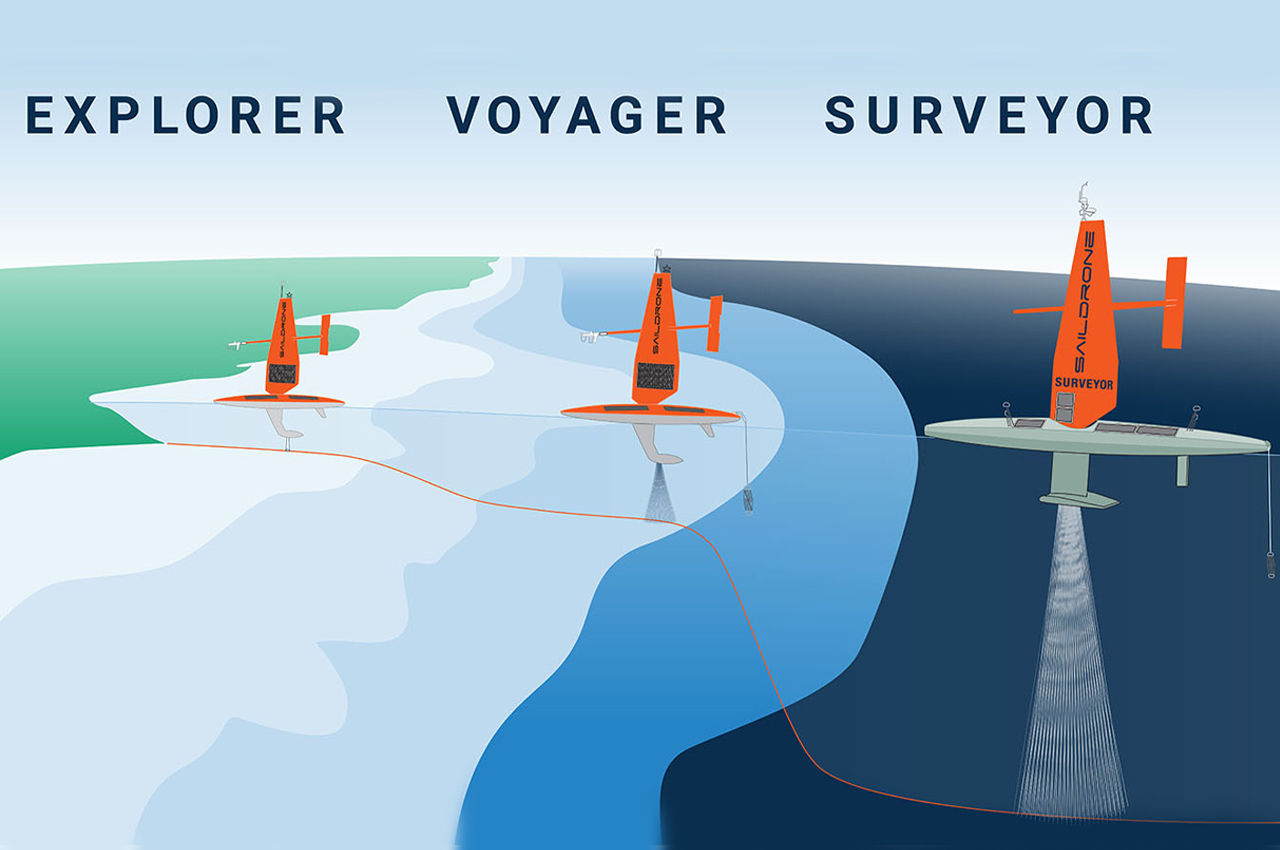


All in an effort to understand hurricanes and global weather events, for years Saildrone has been developing the technology necessary to map the ocean floor while measuring water temperature, salinity, and chemical composition. Once programmed for navigation, the saildrones can sail autonomously from waypoint to waypoint.



During their voyage, the USVs remain within a user-defined safety corridor and are monitored by a Saildrone Mission Control operator. Spanning from Arctic waters to the Atlantic Ocean, saildrones have collected data on weather and climate science from waters all over the globe.

Designer: Saildrone


Canada’s Tory party left reeling after dismal performance in federal election

The results raise questions about the future of Erin O’Toole’s party, which has lost ground under conservative and liberal candidates

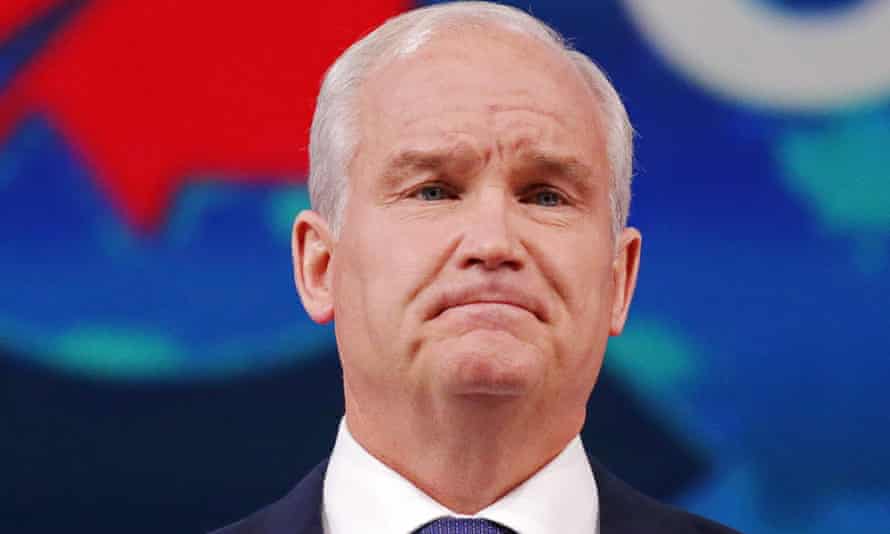
‘We didn’t get the results we had hoped for,’ Erin O’Toole lamented after Monday’s election. Photograph: Chris Helgren/Reuters


Leyland Cecco in Toronto
THE GUARDIAN
Wed 22 Sep 2021 

The head of Canada’s Conservatives has ordered a review of the party’s dismal performance in Monday’s federal election amid growing questions over the future direction of the party – and his future as its leader.

A chastened Erin O’Toole has said that he and his team were “clearly disappointed” by the outcome of Monday’s vote.

“While we didn’t get the results we had hoped for, I am proud of our team for holding the Liberals to a minority in this pandemic election,” he said, adding that the review would look at how the party could “win the trust next time”.

The loss marks the Conservative’s third straight loss to the Liberals in a federal election, with a pronounced failure to make headway in large cities.

“We need to determine why we lost major ground in the [Greater Toronto Area] and Metro Vancouver. We owe it [to] our party volunteers, donors, members and activists to critically examine every aspect of the campaign,” Mark Strahl, a re-elected Conservative in British Columbia wrote on Twitter, adding that the party “lost a solid, diverse group” of lawmakers on Monday.

Only weeks before, polling had suggested the Conservatives were pulling ahead of the Liberals and even had a shot at forming a government.

The campaign was soon put on the defensive, however, over O’Toole’s unclear stance on banning assault-style rifles. He also faced growing criticism and questions after not requiring Conservative candidates to be vaccinated – even as he promised to increase vaccine rates across the country to 90%.

“One of the problems that Mr O’Toole faces is the problem of authenticity. This is true for Canadians who are paying attention – but it’s particularly true for his base,” said Stéphanie Chouinard, a professor of political science at the Royal Military College of Canada.

RED TORY AKA 'PROGRESSIVE' CONSERVATIVE

O’Toole, a former air force navigator, ran as a “true blue” conservative during the 2020 leadership election, hoping to appeal to more socially conservative factions of the party.

But he quickly pivoted to the centre, advertising himself as a moderate leader, an ally to the LGBTQ community who was pro-choice on abortion and often highlighted the need to fight the climate crisis. Much to the frustration of his base, he also put a price on emissions, though repeatedly refused to call it a “carbon tax”.


“We’re not your dad’s Conservative party any more,” he often told supporters.

“This was a good strategy in order to gain the Conservative leadership. And I know why he tried to pull his party towards the centre during this campaign. Some of the ideological leanings of a sizable part of his party – on abortion, LGBTQ rights, the environment and gun control – are just not palatable to the average Canadian,” said Chouinard.

But the results raise broader questions about the future of O’Toole’s party, which has seen consecutive losses under socially conservative and socially progressive candidates.

If the party opts to turf out O’Toole and hold a leadership race, Chouinard suspects a rightwing candidate would probably win.

“But a shift to the right means totally alienating urban voters, as well as the vast majority of Quebec,” she said. “This is becoming a real problem for the conservatives.”

While the party had success in the Prairies and made inroads in the Atlantic provinces, the vast majority of electoral districts – and the path to a parliamentary majority – lie in Quebec and Ontario.

Greater Toronto has far more electoral seats up for grabs than the provinces of Nova Scotia, New Brunswick, Prince Edward Island and Newfoundland and Labrador combined. And as of Monday, the Liberals swept virtually all races in the region.

In his concession speech on Monday, O’Toole said he remained committed to the party’s goals – and repeatedly warned that another election was on the horizon.

“That speech, brandishing the threat of another election, was really him pleading to get a second shot,” said Chouinard. “Whether he’ll be able to sell that idea to a fringe of his party, a group that’s rather mad at the campaign that he ran … is going to be a tough sell.”

 Saskatchewan

JUST LIKE ALBERTA

'Stop giving lip service' and make National Day for Truth and Reconciliation provincial holiday: Sask. NDP MLA

Provincial employees who aren’t federally regulated won’t get a paid holiday on Sept. 30

Betty Nippi-Albright, the NDP MLA for Saskatoon Centre, says Canadians will miss out if they don't get a chance to learn and reflect on the National Day for Truth and Reconciliation. (Kirk Fraser/CBC)

Residential school survivor and Opposition MLA Betty Nippi-Albright is calling on the Saskatchewan government to recognize Sept. 30, which is now recognized as the National Day for Truth and Reconciliation, as a provincial holiday. 

Not everyone in the province will get a paid day off next week for the newly created holiday.

Federal employees will get paid time off for the day, as will City of Saskatoon and City of Regina workers. Employees at some organizations, such as the University of Saskatchewan, will also receive paid time off.

However, provincial employees in Saskatchewan who aren't federally regulated won't receive a paid day off.

Nippi-Albright, the NDP MLA for Saskatoon Centre, wants the provincial government to ensure that the day will be a day off for everyone. 

"It is my hope that the province will walk its talk about reconciliation and stop giving lip service to reconciliation, and actually make this day a provincial holiday," she said. 

Earlier this year, the federal government officially created the statutory holiday for Sept. 30 — known in the past as Orange Shirt Day — to honour the lost children and survivors of residential schools.

The national holiday was first proposed years ago, but passage of the bill to create the holiday was fast-tracked after the discovery of more than 200 unmarked graves at the former residential school site in Kamloops, B.C.

Following that, Cowessess First Nation in Saskatchewan announced it had found what are believed to be more than 700 unmarked graves at a cemetery near the former Marieval Indian Residential School.

Nippi-Albright — who is the Opposition critic for First Nations and Métis relations, truth and reconciliation — says Canadians were woken up by the discovery of the graves. If they don't have a chance to learn and reflect on Sept. 30, they will be missing out, she said.

"They are not going to hear, they are not going to learn more about what actually happened to us — how many of our babies didn't come home in this province."

Nippi-Albright says she's not surprised that the day isn't already a provincial holiday, because systemic racism still lingers within the province.

There are many residential school survivors still alive in Saskatchewan and many of them were triggered after the discovery of the unmarked graves, she said.

"We've cried a lot. We are still going to keep crying because there's so much more that society doesn't know about, that Saskatchewan doesn't know about."

She said people need to hold the Saskatchewan Party government accountable.

In an emailed statement, the provincial government said it understands that the federal government created the statutory holiday in response to the call to action 80 of the Truth and Reconciliation Commission of Canada. The report outlined 94 calls to action and calls on all levels of government to work together in advancing reconciliation. 

The government said it accepts the calls to action put toward the province, and that while creating the statutory holiday in Saskatchewan wasn't included in them, it will continue to act on the other tasks in the commission's report. 

The statement also said that flags will be lowered to half mast on Sept. 30 on all provincial government buildings and establishments. The government said Saskatchewan offers 10 statutory holidays, the most among provinces.

The province announced earlier this year that it will build a permanent monument to honour residential school survivors at Government House in Regina, but Nippi-Albright says monuments alone aren't enough.

Reconciliation needs to involve repairing the harm that's been done to Indigenous people, she said.

A legislative change would be required to make the day a provincial holiday for everyone, and Nippi-Albright said she is willing to work with the government to amend The Saskatchewan Employment Act to make it happen. 

Why aren’t more big bike firms tracking their environmental impact?

Trek’s sustainability report appears to be the first of its kind in a sector that has had a free ride on the issue


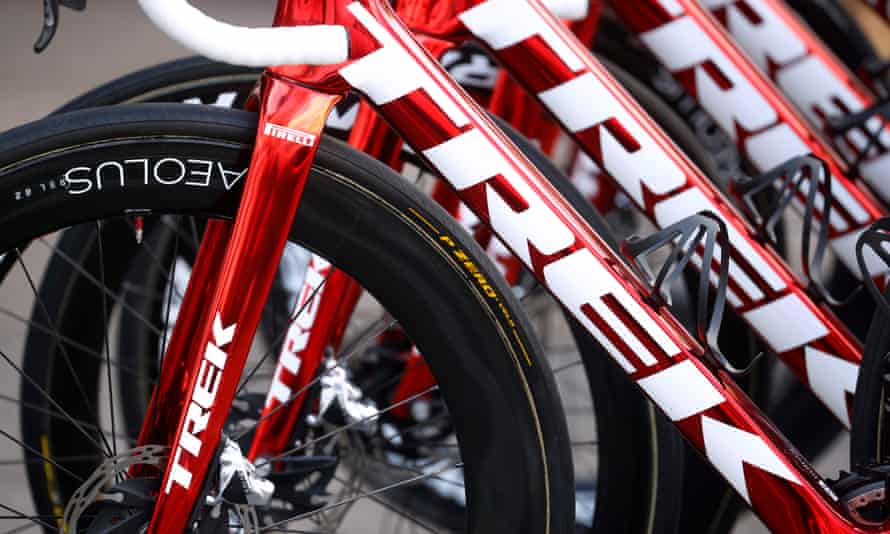
Team Trek-Segafredo bikes at the Tour de France this year. 
Photograph: Chris Graythen/Getty Images


Bernhard Isopp
Thu 23 Sep 2021


Trek, one of the world’s biggest bicycle brands, recently released its sustainability report for 2021. Remarkably, this appears to be the first time a major bike company has published such a document.

While some other manufacturers make broad sustainability pledges or tout their success in reducing packaging waste, Trek’s report offers an ambitious array of concrete environmental commitments and a comprehensive analysis of the carbon footprint of its bikes.

This fills in an important gap in data. But many companies in other sectors have been releasing such environmental impact assessments for years. Why is this the first time we are seeing such a report from a major bicycle company, especially given that cycling is so widely touted as green?

That perception is a big part of the answer. Bike manufacturers have had a free ride in terms of tracking their own environmental impacts largely because of the assumption that biking is inherently environmentally friendly.

To be sure, cycling is one of the least environmentally impactful forms of transportation. Trek mentions this in its report, claiming, “If you ride about 430 miles you would have otherwise driven, you’ve saved the carbon equivalent of what it took to make your bike.” And Trek is right: in comparison with cars there is no contest.

An older and widely cited figure (based on a Dutch study and used by the European Cycling Federation) for the manufacturing footprint of bicycles is 96kg of carbon dioxide equivalent (CO2e). According to Trek, the production of a basic model of its bestselling bike – an entry-level mountain bike – emits about 100kg of CO2e.

The report provides a new figure for e-bikes. While the ECF estimates a manufacturing carbon footprint of 134kg, Trek’s figures show that electrifying any bike adds about 65kg of CO2e to production emissions. Making a basic commuter e-bike would therefore produce about 165kg of CO2e.

But compared with the manufacturing impact of a car, the differences between a conventional bike and an electric one are marginal. Making a small hatchback produces about 5.5 tonnes of CO2e. An electric version adds another 2-4 tonnes owing to the battery and electric motor. And manufacturing an SUV produces up to 13 tonnes.

A lifecycle analysis makes the disparities even starker. Assuming a lifetime travel of 19,200km, a bicycle’s emissions come out at about 25-35g CO2e/km (depending on food footprint, which can be highly variable). With Trek’s updated figure and assuming an EU average electricity mix, e-bikes come in at 21-25g CO2e/km (yes, e-bikes can be less carbon intensive than conventional bikes, assuming the rider is doing less work).
Advertisement


A typical car produces about 220g CO2e/km over 180,000 lifetime kilometres. Electric vehicles are better, averaging about 160g CO2e/km (depending on a country’s electricity emissions). There is little data on the lifecycles of e-scooters, but an estimate of a typical case in Germany is about the same as an electric car, at 165g CO2e/km.

Trek boxes in a bike workshop. 
Photograph: Mark Hertzberg/Zuma/Rex/Shutterstock

However you cut it, compared with other forms of transportation, bikes have a much smaller carbon footprint. But does such a comparison always make sense? In addition to its entry-level mountain bike, Trek provides footprints for full-suspension mountain bikes, carbon-fibre electric mountain bikes, and its top-of-the-line aero road bikes.

While it markets its bikes as playing a critical role in decarbonising transportation systems, a lot of these models aren’t intended as alternatives to cars. In fact, some of them might be driven to the place where they are used.

This is the issue: in some cases, bikes are not transportation alternatives at all. They are a means of recreation, even a form of luxury goods. Of course, many people do use bikes for everyday transport. But as well as comparing bikes to cars, it can be illuminating to compare one bike to another.

Trek compared the aluminium and carbon-fibre versions of its bikes and consistently found that making the latter produces nearly three times the emissions. The same goes for wheels.


The report also shows that each technological “advancement” that is added to a bike – carbon wheels, electronic shifting, the addition of a motor – comes with an environmental cost. This culminates in a £10,000 electric mountain bike with a 320kg manufacturing carbon footprint.

Some might say that in relative terms even the most extravagant bike has a low carbon footprint. A car-free person who rides their carbon-fibre road bike for fun on the weekend will have a much lower personal footprint than a person who drives their car out of the city to go hiking. This is what makes one-to-one comparisons difficult.

The bigger picture makes things even more complicated. A single article of clothing, for example, has a tiny carbon footprint. But you also need to consider the wider system of clothing production, one that depends on exploited labour, a fast-fashion ethos and destroying unsold goods.

From this perspective, the bicycle industry doesn’t look that different. It is built around a yearly production cycle, with “new” models often amounting to little more than a different colour of paint. It uses a strategy of forced obsolescence; standards are routinely updated, making it hard to find replacement parts for older bikes. A model that was, of course, perfected by the car industry.

There are many smaller bicycle companies that buck this trend, that are focused on perfecting a limited range of durable products. But unfortunately they make up only a small segment of the cycling industry.

The climate crisis is correctly understood as a systemic problem. Our personal transportation emissions, making up a sixth of total emissions in Europe, stem from a system based on the car. Bicycle manufacturers will play a crucial role in changing this. But simply replacing most cars with bikes is not enough.

Achieving the necessary level of decarbonisation – that is, complete decarbonisation – requires rethinking all of our socio-technical systems: an energy system based on fossil fuels; a manufacturing system based on overseas labour and global shipping; a food system based on energy-intensive meat production; and an economic system based on relentless consumption and growth.

Bicycle companies, despite making a useful product, are still fully entrenched in these other systems. To Trek’s credit, keeping track of its environmental impacts is a critical first step to understanding its role in them, and it is doing more than most in terms of making changes to its manufacturing practices. Hopefully more companies follow suit. But pursuing sustainability by accounting for the carbon emissions of a £10,000 mountain bike seems to miss the forest for the trees.

Bernhard Isopp is a lecturer and researcher in the department of science, technology and society at the Technical University of Munich, where he works on questions of sustainable mobility.

Cavers find snakes but no genies in Yemen's 'Well of Hell'


by Dana Moukhallati
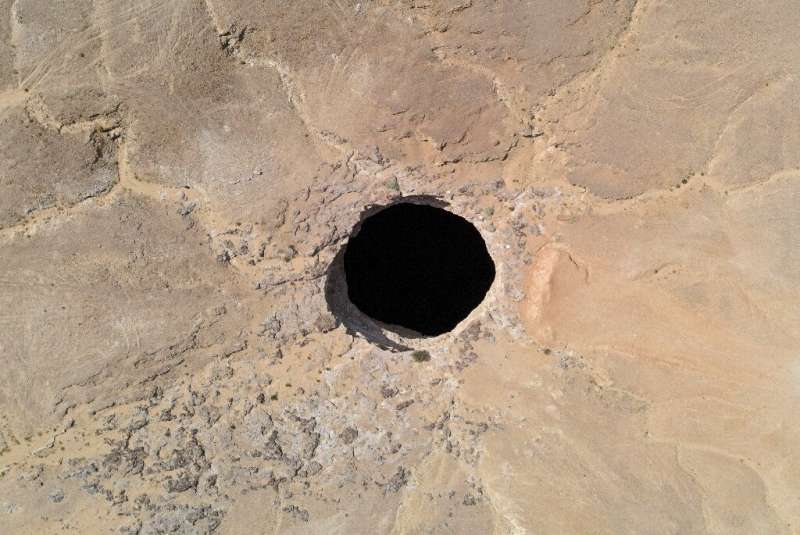
Yemen's Well of Barhout, a 112-metre deep sinkhole in the desert which locals call the 'Well of Hell', had been largely unexplored until a team of Omani cavers reached the bottom last week.

A team of Omani cavers has made what is believed to be the first descent to the bottom of Yemen's fabled Well of Barhout—a natural wonder shunned by many locals, who believe it is a prison for genies.

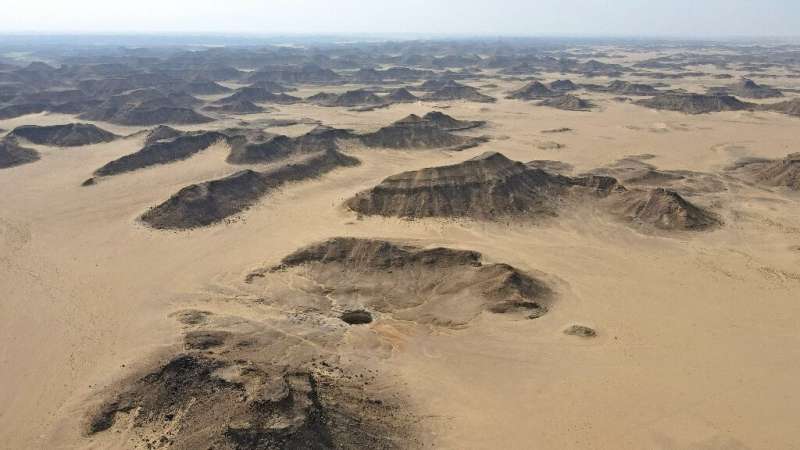
The forbidding 'Well of Hell', whose dark, round aperture creates a 30-metre (100 foot) wide hole in the desert floor of Yemen's eastern province of Al-Mahra, plunges approximately 112 metres (367 feet) below the surface and, according to some accounts, gives off strange odours.


Inside, the Oman Cave Exploration Team (OCET) found snakes, dead animals and cave pearls—but no signs of the supernatural.

"There were snakes, but they won't bother you unless you bother them," Mohammed al-Kindi, a geology professor at the German University of Technology in Oman, told AFP.

Kindi was among eight experienced cavers who rappelled down last week, while two colleagues remained at the surface.

Footage provided to AFP showed cave formations and grey and lime-green cave pearls, formed by dripping water.

"Passion drove us to do this, and we felt that this is something that will reveal a new wonder and part of Yemeni history," said Kindi, who also owns a mining and petroleum consultancy firm.

"We collected samples of water, rocks, soil and some dead animals but have yet to have them analysed," he said, adding that a report will soon be made public.
Despite the sinkhole's reputation as a prison for genies, the cavers found no demons, only snakes, dead animals and cave pearls.

"There were dead birds, which does create some bad odours, but there was no overwhelming bad smell."

Yemeni officials told AFP in June that they did not know what lay in the depths of the pit, which they estimated to be "millions and millions" of years old, adding that they had never reached the bottom.

"We have gone to visit the area and entered the well, reaching more than 50-60 metres down," Salah Babhair, director general of Mahra's geological survey and mineral resources authority, said at the time.

"We noticed strange things inside. We also smelled something strange... It's a mysterious situation."

Over the centuries, stories have circulated of malign figures known as jinns or genies living in the well, which some regard as the gate of hell.

Many residents of the area are uneasy about visiting the vast pit or even talking about it, for fear of ill fortune.

Yemenis have had enough bad luck as it is.

The country has been embroiled in a devastating civil war since 2014 that has triggered what the United Nations describes as the world's worst humanitarian crisis, with two-thirds of its 30-million population dependent on some form of aid.

Explore further   Danger and demons: Yemen's mysterious 'Well of Hell'


© 2021 AFP

Myanmar military kidnapping relatives to lure fugitives, U.N. expert says
By Zarrin Ahmed

Junta soldiers stand guard in downtown Yangon, Myanmar, on February 2, 
one day after a military coup overthrew the civilian government. 
File Photo by Xiao Long/UPI | License Photo

Sept. 23 (UPI) -- A United Nations authority to Myanmar says that military forces that have taken over the Asian nation are abducting family members -- including young children -- as a tactic to compel fugitives to give themselves up.

Tom Andrews, U.N. special rapporteur to Myanmar, made the remarks Wednesday during testimony to the Human Rights Council.

The military junta took power in February and overthrew leader Aung San Suu Kyi and other civilian leaders, arguing that the election last fall that kept them in power was fraudulent.

Since the coup, Myanmar's military has charged the former leaders and targeted various others for arrest. And Andrews said that "systematically" kidnapping relatives has increasingly become a tactic by the junta to persuade certain targets to surrender.

"I am afraid that the crisis in Myanmar has become even graver, with the continuing commission of mass atrocity crimes and a deadly escalation of armed conflict," he told the HRC. "The results have been catastrophic.

"Now the junta is increasingly relying on another depraved tactic, the use of collective punishment, including the abduction of family members of those who have been issued arrest warrants, but who police and military forces are unable to locate."

Andrews said that nearly 200 people have been abducted, including some children as young as 20 weeks old.

Andrews' testimony was part of an update he gave the HRC on the humanitarian status in Myanmar, which has been under harsh military rule for nearly eight months now.

"The junta has, in sum, directed its forces to engage in widespread and systematic attacks against the people of Myanmar," he said.

"There is therefore a compelling case that the military junta is committing crimes against humanity."

Earlier this month, the main opposition movement in Myanmar called for a "resistance war" by the people against the military junta. Andrews said the move reflects the military's escalating violence in the country.

"The escalating violence in Myanmar, including reports of the killing of those accused of collaborating with the junta and members of their families, including young children, are deeply disturbing," he said. "I appeal to everyone to respect and abide by international human rights standards and humanitarian principles.

"What are we waiting for? The longer we delay, the more people die."
Great migration of tarantulas is underway in Colorado

By Mark Puleo, Accuweather.com

During the spiders' annual mating season, thousands of the hairy, brown creatures can be found scurrying across the rocky surface of La Junta, Colo., located about three hours south of Denver. File Photo by Steve Bower/Shutterstock/UPI

Sept. 23 -- AccuWeather National Reporter Tony Laubach has chased hundreds of tornadoes over dozens of years in numerous locations throughout the United States. But the veteran storm chaser had a new adventure on his plate this week -- chasing down tarantulas.

Laubach was in southeastern Colorado on Tuesday for a unique vermin event that has begun drawing large crowds. During the spiders' annual mating season, thousands of the hairy, brown creatures can be found scurrying across the rocky surface of La Junta, Colo., located about three hours south of Denver.

What are those tarantulas on the hunt for? Not storms, but rather mates. And Laubach said there's one specific reason they come out this time of the year.

"It's a lot to do with the weather," Laubach told meteorologist Adam Del Rosso during a segment on AccuWeather Prime. "The male spiders, the ones that you're seeing, are actually looking to mate. So this isn't as much of a migration as it is a mate-gration."

The annual showcase of mate-hunting tarantulas has become a tourist attraction in the small Colorado city. Pamela Denahy, the tourist director of Visit La Junta, told Laubach the spiders are "docile creatures."


Image by Tony Laubach/AccuWeather

But as Laubach has learned from his decades of storm coverage, the age-old warning with storm chasing is to avoid becoming the chased yourself, meaning it's important to keep a safe distance from danger. It can be hard to tell in video footage and still images how big the spiders are, but Laubach said they're about the size of an iPhone.

While the spiders are venomous, and their bites can cause a bit of pain and could even cause rashes to form on the skin, Denahy said the fear most people have of the creatures is unfounded because of their size.

"There are a lot of people who are afraid of spiders, so their first reaction is to be scared of them. But they're almost like gentle giants," she told The Denver Post. "They're not fast-moving creatures, but it's quite a sight because they are not just tiny spiders."

While their venom can be fatal to small animals such as mice, it has not yet shown to be fatal to humans.

If you yourself are an arachnid fanatic but missed this year's spectacle, Laubach said not to worry -- they will certainly be back next year.

"The spiders really aren't going anywhere they're just out in search of their love," Laubach said. "The cooler weather in September and into October tends to help with that."

As long as it's not too cold. A cooler-than-normal period was tied to a delay in the spiders' emergence in Mount Diablo State Park, Calif., in 2019.

The monsoon season can also have an effect -- Arizona tarantulas prefer humid weather for their eggs, News 13 in Tucson reported.

Report: Global warming is causing 'unprecedented changes' to oceans

Artic ice levels have decreased about 13% a decade since 1979, according
 to a new report released Wednesday. 
NASA Photo by Norwegian Polar Institute/UPI | License Photo

Sept. 23 (UPI) -- Human-induced global warming is "causing unprecedented changes" to the oceans including warming waters, decreasing ice levels and rising seas, according to a recently published report by more than 150 scientists.

Published Wednesday, the annual Ocean State Report 5 by the Copernicus Marine Service and Mercator Ocean International is a far-reaching analysis of the health of the world's oceans.

The report published in the Journal of Operational Oceanography said that globally, sea temperatures have been rising at a rate of 0.015 degrees Celsius a year since 1993. Meanwhile, Artic ice levels have decreased nearly 13% per decade since 1979 with record lows recorded in the last two years.

This warming of the oceans and the melting of ice have caused sea levels to rise by 3.1 mm a year with the Baltic Sea seeing the largest annual growth at 4.5 mm a year.


RELATED Missing wind data cause models to underestimate climate change, study says

"Climate change, pollution and overexploitation have created unprecedented pressure on the ocean, which not only makes up 71% of the Earth's surface but it is also responsible for regulating Earth's climate and sustaining life," Karina von Schuckmann, oceanographer at the Copernicus Marine Service and chair of the report, said in a press release.

The report continued that the Artic Ocean was responsible for an estimated 4% of the warming of the world's oceans.

This global warning, it said, is causing most marine species to move deeper toward the poles while warm water species are spreading to new areas and becoming invasive.

RELATED Biden holds 2nd climate summit with aim of cutting emissions 30% by 2030

"As a result of climate change, ocean warming is one of the major factors affecting marine species, through migration, causing changing conditions for fisheries with societal and economic implications," the report's summary said. "The migration of hundreds of species moving to higher altitudes and greater depths with warming has been recorded. "

Concerning the impacts of the world's changing oceans the report focused on Venice, Italy, which in November of 2019 suffered from four successive extreme water events, mainly caused by a higher than average sea level.

The report documented on Nov. 12 of that year water levels rose to 6.2 feet, the highest on record since 1966, leaving the city unprepared.

The Copernicus Marine Service, funded by the EU, is designed to serve EU policies, it said on its website, and seeks to provide scientific information for ocean governance while developing new tracking and forecasting tools.
California Gov. Gavin Newsom signs into law bill to protect warehouse workers


The Strategic Organizing Center has said Amazon has an injury rate 80% higher than other similar warehouse companies. On Wednesday, California Gov. Gavin Newsom signed into law legislation aimed at protecting warehouse workers. File Photo by Friedemann Vogel/EPA-EFE


Sept. 23 (UPI) -- California Gov. Gavin Newsom has signed into law legislation to protect warehouse workers from injury by barring production quotas that limit breaks.

The Democratic governor signed Assembly Bill 701 on Wednesday, saying it gives warehouse workers "the dignity, respect and safety they deserve."

"We cannot allow corporations to put profit over people," Newsom said in a statement. "The hardworking warehouse employees who have helped sustain us during these unprecedented times should not have to risk injury or face punishment as a result of exploitative quotas that violate basic health and safety."

The bill, which the Senate passed early this month in a 26-11 vote, forces warehouse companies, such as Amazon, to disclose production quotas by Jan. 1, while prohibiting them from using algorithms that limit workers from taking mandated bathroom or other breaks.

According to the governor's office, the law also protects workers from being fired or punished for failure to meet unsafe working quotas while allowing them to seek relief if they are. The bill also allows the labor commissioner to issue citations and access data to identify facilities with high rates of injury due to potentially unsafe working environments.

California Assemblywoman Lorena Gonzalez, the author of the bill, said it was the nation's first such law that demands transparency requirements and worker protections against warehouse production quotas.

In a statement Wednesday, the Democrat named e-commerce behemoth Amazon as the leader in the decline of warehouse working conditions in its push to shorten delivery times of its goods.

RELATED Google to expand NYC campus with $2.1B Manhattan building

"Amazon's business model relies on enforcing inhumane work speeds that are injuring and churning through workers at a faster rate than we've ever seen. Workers aren't machines," she said. "We're not going to allow a corporation that puts profits over workers' bodies to set labor standards back decades just for 'same-day delivery.'"

The bill was signed into law amid criticism directed at Amazon over its controversial use of production quotas.

According to a report from the Strategic Organizing Center, for every 100 Amazon warehouse workers last year there were 5.9 serious injuries, a rate 80% higher than that experienced at other warehouse employers.

RELATED  Amazon lists 125,000 new jobs in U.S. with average pay of $18 per hour

Last week, Sen. Kirsten Gillibrand sent a letter to the Equal Employment Opportunity Commission urging Chair Charlotte Burrows to investigation allegations that Amazon denies accommodations for pregnant employees.

The Democratic New York senator, a critic of the company, in May also called on Amazon to release information concerning reports about the firing of employees who have raised concerns about safety conditions in warehouses during the coronavirus pandemic.

In her statement Wednesday, Gonzalez said that while AB 701 is about "empowering" workers to keep themselves safe, more still needs to be done.

"As workers are increasingly surveilled on the job and supervised by algorithms, AB 701 is just the beginning of our work to regulate dangerous quotas and keep employers that have operated about the law in check," she said.
AMERIKA DAS WHITE VOLK
US snubs UN commitment to stamp out racism


The US was not present when global leaders pledged to double down on racism. 

Meanwhile, the Honduran president publicly denied drugs trafficking allegations.


The US did not take part in the anti-racism push


World leaders at the UN General Assembly in New York on Wednesday recommitted efforts to stamp out racism. The commitment marked the anniversary of a 2001 South African anti-racism conference

UN member countries said that while progress had been made, there had been a rise in discrimination and violence against people of African heritage, Roma and refugees.
What did the UN say about racism?

The assembly called for national institutions to adopt "adequate reparation or satisfaction" for people with African heritage in a meeting on racial justice.

"Millions of the descendants of Africans who were sold into slavery remain trapped in lives of underdevelopment, disadvantage, discrimination and poverty,'' South African President Cyril Ramaphosa said in a video message.

Ramaphosa called the years of slavery "one of the darkest periods in the history of humankind and a crime of unparalleled barbarity.''

President Felix Tshisekedi of Congo asked the UN to look into the reparations for the "the scars of racial inequality, subordination and discrimination, which were built under slavery, apartheid and colonialism."

Tshisekedi added that this discrimination was still apparent in the lack of vaccines available to African people, with only 1 in 1,000 people having got at least a shot so far in the Democratic Republic of the Congo.

The assembly also called for an end to religious and disability discrimination.
Why was there disagreement?

The US and Israel were two of 19 nations that did not attend Wednesday's meeting because the UN anti-racism conference in 2001 had decided to include Palestinians as a discriminated people.

The UN only adopted the 2001 anti-racism declaration, called the DDPA for short, when the US and Israel walked out during the meeting in Durban, South Africa.

In a separate meeting, the Israeli ambassador called the 2001 accord "radical antisemitism" while US ambassador to the UN Linda Thomas-Greenfield said the Biden administration would look for more inclusive ways of fighting racism.

Jamil Dakwar of the American Civil Liberties Union criticized the US no show at the meeting saying it "sends the wrong to the global community regarding the US commitment to fight all forms of racism and racial injustice everywhere."

Jamaica attended the meeting but said there were not enough slavery reparations in a new UN document being drafted against racism.
What other matters were raised?

US President Joe Biden pledged to increase COVID-19 vaccine donations to 500 million shots, just a day after China announced its decision to give 2 billion shots to poor countries.

Kenyan President Uhuru Kenyatta said he wanted to introduce fair, inclusive and effective multilateral systems during his presidency of the UN Security Council next month.

He said he will push for more women peacekeepers and look at the impact of illicit small arms on global peacekeeping missions.

Turkish President Recep Tayyip Erdogan said "the US is failing to meet its obligations" on helping refugees from Afghanistan after 20 years of war.

After taking on nearly 4 million refugees, mainly from Syria, and more recently, 300,000 Afghans, he said he could not allow any more migrants into Turkey.

Honduras President Juan Orlando Hernandez defended himself against allegations he took bribes from drug traffickers. A Manhattan federal court imprisoned his brother, Juan Antonio "Tony" Hernandez, for life last March for being part of one the biggest drug conspiracies.

He said he was "implacable on organized crime" and accused criminals of perjury for implicating him in drug trafficking.

jc/aw (AP, Reuters, dpa)