Thursday, September 23, 2021

EPA finalizes rule for first time to place limits on global-warming HFCs


Hydrofluorocarbons are commonly found in air conditioners and refrigerators and often leak from piping and can be thousands of times more harmful to the climate than carbon dioxide. 
File Photo by Stephen Shaver/UPI | License Photo

Sept. 23 (UPI) -- The Environmental Protection Agency will finalize its first new climate rule on Thursday, which restricts the production and use of hydrofluorocarbons -- a global-warming chemical used commonly in air conditioners and refrigerators.

The White House announced the rule and said it takes aim at what it calls a "super-pollutant."

The EPA's move will mark the first time the federal government has ever tried to place limits on the use of hydrofluorocarbons.

In addition to curbing hydrofluorocarbons, or HFCs, the rule takes other interagency actions that "together represent one of the most impactful federal efforts to reduce climate pollution in decades," the White House said in a statement.

RELATED EPA rates Lucid electric vehicle at 520 miles, further than any other EV

Officials said the rule has the potential to curb 85% of HFCs over the next 15 years. The EPA first made the HFC rule proposal in May.

In its announcement on Thursday, the White House said pollutants from HFCs have a significant impact on global warming and can be thousands of times more harmful to the climate than carbon dioxide.

"HFCs are exacerbating climate change and extreme weather events and the corresponding public health threats, physical damage and economic costs," the administration added.

RELATED  EPA to restore protections for Alaska's Bristol Bay

The White House said the new rule, along with the bipartisan American Innovation and Manufacturing Act passed last year, could reduce more than 4.5 billion metric tons of carbon dioxide equivalent from the environment by 2050.

The announcement said the rule will "bolster competitiveness of American industries" and "maintain and create hundreds of thousands of good-paying, union jobs" nationwide.

The EPA rule follows through on a law passed by Congress last year, the bipartisan American Innovation and Manufacturing Act, which addresses HFCs by phasing down production and consumption, managing the chemical and substitutes and encouraging transition to cleaner technologies.

RELATED EPA bans most uses of pesticide linked to health issues in children

Biden has previously pledged support for a global agreement reached in 2016 -- the Kigali Amendment to the Montreal Protocol -- to cut HFCs worldwide.

EPA completes rule to phase out gases used as refrigerants


WASHINGTON (AP) — In what officials call a key step to combat climate change, the Environmental Protection Agency is sharply limiting domestic production and use of hydrofluorocarbons, highly potent greenhouse gases commonly used in refrigerators and air conditioners
.
© Provided by The Canadian Press

The new rule, which follows through on a law Congress passed last year, is intended to decrease U.S. production and use of HFCs by 85% over the next 15 years, part of a global phaseout designed to slow global warming.

HFCs are greenhouse gases that are thousands of times more powerful than carbon dioxide. They often leak through pipes or appliances that use compressed refrigerants and are considered a major driver of global warming. President Joe Biden has pledged to embrace a 2016 global agreement to greatly reduce HFCs by 2036.

White House climate adviser Gina McCarthy, a former EPA administrator, said the new rule was “a win on climate and a win on jobs and American competitiveness.''

The rule is expected to reduce harmful emissions by the equivalent of 4.5 billion metric tons of carbon dioxide by 2050, McCarthy said, a total similar to three years of emissions from the U.S. power sector.

EPA Administrator Michael Regan said the phasedown is backed by a coalition of industry groups that see it as an opportunity to “supercharge” American leadership on domestic manufacturing and production of alternative refrigerants. The industry has long been shifting to the use of alternative refrigerants and pushed for a federal standard to avoid a patchwork of state laws and regulations.

"This action reaffirms what President Biden always says — that when he thinks about climate, he thinks about jobs,'' Regan said, echoing a Biden refrain about climate change. Transitioning to safer alternatives and more energy-efficient cooling technologies is expected to generate more than $270 billion in cost savings and public health benefits over the next 30 years, Regan said.

A pandemic relief and spending bill passed by Congress last December directs the EPA to sharply reduce production and use of HFCs. The measure won wide support and was hailed as the most significant climate change law in at least a decade.

Besides targeting HFCs, the American Innovation and Manufacturing, or AIM, Act also promotes technologies to capture and store carbon dioxide produced by power and manufacturing plants and calls for reductions in diesel emissions by buses and other vehicles.

Sen. Tom Carper, D-Del., who is chairman of the Senate Environment and Public Works Committee, was an influential backer of the law, along with Sen. John Kennedy, R-La. Both represent states that are home to chemical companies that produce alternative refrigerants and sought regulatory certainty through federal action.

The HFC provision was supported by an unusual coalition that included major environmental and business groups, including the National Association of Manufacturers, American Chemistry Council and the Air-Conditioning, Heating and Refrigeration Institute. The chemistry council represents major companies including Dow, DuPont, Honeywell, Chemours and Arkema.

The administration said it also is taking other steps to ensure reductions in HFCs, including creation of an interagency task force to prevent illegal trade, production, use or sale of the climate-damaging gases. The task force will be led by the Department of Homeland Security, and EPA’s offices of Air and Radiation and Enforcement and Compliance Assurance.

Working with the departments of Justice, State and Defense, the task force will "detect, deter and disrupt any attempt to illegally import or produce HFCs in the United States,'' the White House said in a fact sheet.

Joseph Goffman, a top official with EPA's air and radiation office, said the experience of the European Union shows that enforcement is an important part of an HFC crackdown.

“Unfortunately, (the EU) has experienced a lot of illegal activity” on HFC imports and other issues, Goffman said. “We're going to be vigorous and proactive" in trying to stop illegal imports, he said.

Biden issued an executive order in January that embraces a 2016 amendment to the 1987 Montreal Protocol on ozone pollution. That amendment calls for the United States and other large industrialized countries to reduce HFCs by 85% by 2036. The State Department has prepared documents for formal ratification of the amendment, but the White House has not submitted them to the Senate.

McCarthy insisted "there is no hold up'' on the amendment, but said she did not know when Biden would submit the matter to the Senate.

Matthew Daly, The Associated Press

Hawks to hummingbirds: Study finds roads quieted by COVID-19 fill with birdsong

New research shows that roads and runways quieted by COVID-19 are filling with birdsong instead.

© Provided by The Canadian Press

University of Manitoba scientists led a study drawing on millions of sightings by amateur birders across North America that looked at how reduced travel in response to the pandemic has affected birds from hawks to hummingbirds.

"We're focusing on where birds were seen during the pandemic compared to where they were seen in previous years," said lead author Nicola Koper.

"We saw quite strong changes in where birds were seen relative to ... traffic before the pandemic compared with during the pandemic."

To find answers, Koper and her colleagues looked to eBird, an online collaboration managed by Cornell University that brings together and organizes observations by hundreds of thousands of amateur birdwatchers.

The team crunched through 4.3 million individual bird sightings made between March and May from 2017 to 2020 across Canada and the United States. They located those sightings relative to major roadways, airports, and dense urban environments, compensating statistically for how the pandemic may have affected the behaviour of the birders themselves.

They then correlated those sightings with data on COVID-19 restrictions in each county for which they could get information. Koper said that the method ensures any changes were due to pandemic measures.

"If the effects are actually due to lockdowns, then we should see the biggest changes in behaviour in the places that have the biggest changes in traffic — close to major roads, airports and in counties that had the strongest lockdowns."

That's exactly what they found. Of the 82 bird species in the study, 80 per cent of them changed their behaviour in places where the pandemic had altered circumstances.

"Almost all the species we studied did change their location," Koper said.

Almost always, bird sightings were more abundant post-pandemic. Species were 14 times more likely to show increased rather than decreased counts.

The observation held even with birds that are most commonly seen in built environments — robins, for example.

"Even those species that we think of as being well-adapted to human landscapes are much more sensitive to them than we think," said Koper. "These common species have been much more impacted by humans than we recognized."

Some species sightings declined. Coots, a white-billed water bird common to sloughs and wetlands, were seen less often.

And some species went both up and down, depending on where you looked. Red-tailed hawks were seen more often along urban-rural margins, but less often near busy roadways.

"Maybe it had to do with less roadkill," Koper suggested.

The lesson from the research is that human-impacted environments — even asphalt-covered ones — are not necessarily avian dead zones. Given a little consideration, Koper said birds will live there.

"There's quite a lot of things we can do to reduce traffic," she said.

Public transit would cut cars on the roads. So would working from home. Electric vehicles would at least cut the noise.

"There's habitat out there that isn't being fully utilized by birds," said Koper. "It's suitable except for the presence of traffic."

Previous studies have found that the number of birds in Canada and the U.S. has declined by 29 per cent over the past 50 years. Habitat loss is the biggest reason and anything that would give birds more room to live would help, Koper said.

"Habitat loss is the most significant problem that birds are facing today."

This report by The Canadian Press was first published Sept. 22, 2021.

— Follow Bob Weber on Twitter at @row1960

Bob Weber, The Canadian Press

Canadian consumption of cannabis is on the rise: Study

A new study from the Agri‑Food Analytics Lab at Dalhousie University took a look at how the Canadian public's sentiments towards marijuana have changed since the legalization in 2018. The study shows that there has been a major positive shift in attitude towards the consumption of cannabis. BNN Bloomberg's David George-Cosh has more.


TWO AUSSIES 
Mining magnate parrying BHP bid expands stake in nickel miner

Bloomberg News | September 22, 2021 |

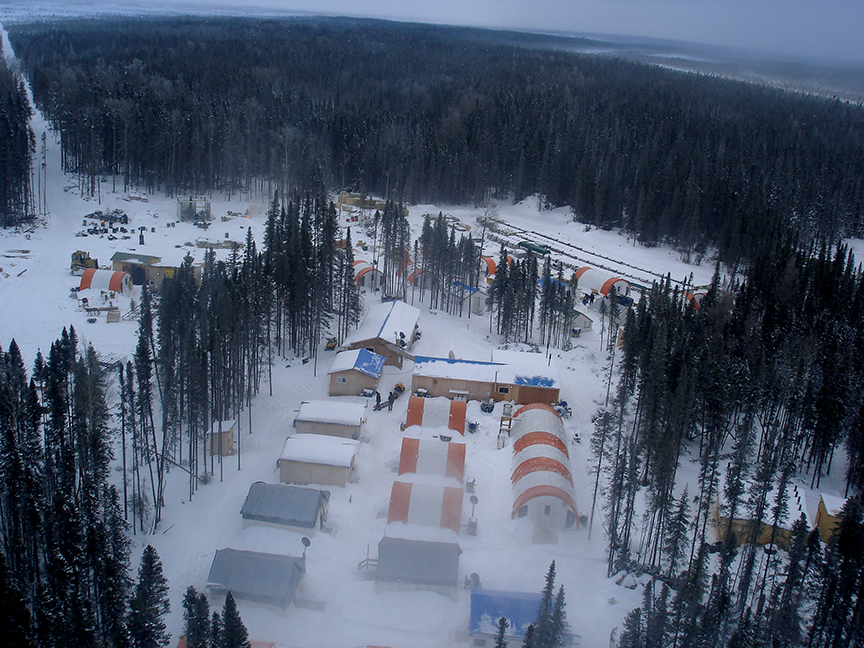
Noront Resources Esker camp. (Credit: Noront)

A bidding war for a small Canadian nickel miner is showing no signs of cooling as its largest shareholder, Australian mining magnate Andrew Forrest, took a formal step to increase ownership.


Forrest’s Wyloo Metals Pty Ltd. said it notified Noront Resources Ltd. to swap its $15 million convertible loan for common shares of Noront. That will increase Wyloo’s equity ownership to about 37.3% from 24.2%, according to a statement Wednesday.

Wyloo has offered to buy Noront for C$0.70 per share, beating the C$0.55 offer made by BHP Group in July that Noront’s board agreed to support. Wyloo said last month its proposal is more likely to succeed because it owns a chunk of Noront’s shares and doesn’t intend to support BHP’s offer.

Mining heavyweight are racing to control more supplies of raw materials that are key to the transition to low-carbon energy sources. Noront has been developing one of Canada’s largest potential mineral reserves, in a largely untapped northern Ontario region dubbed the Ring of Fire.

Nickel is one of the key metals used in batteries for electric vehicles.

(By Yvonne Yue Li)
CRIMINAL CAPITALI$M

2 former SNC-Lavalin execs arrested, charged with fraud and forgery

CBC/Radio-Canada 2 hrs ago
© Paul Chiasson/The Canadian Press Two former executives with Montreal engineering firm SNC-Lavalin have been charged with various counts of fraud and forgery. The charges are related to bribes that were allegedly paid in exchange for SNC-Lavalin…

Two former executives at SNC-Lavalin have been charged with fraud and forgery by the RCMP as part of an ongoing criminal investigation into the Montreal-based engineering company.

Known as Project Agrafe, the investigation into various SNC subsidiaries and employees is related to bribes that RCMP allege were paid in exchange for obtaining contracts.

On September 23, the RCMP arrested Normand Morin, a former vice-president of SNC-Lavalin, and Kamal Francis, a former vice-president at SNC-Lavalin International Inc.

The men were arrested in the Montreal area, where they both live. They, along with their former companies, have been charged under the Criminal Code of Canada with the following offences:
Forgery.
Conspiracy to commit forgery.
Fraud.
Conspiracy to commit fraud.
Fraud against the government.
Conspiracy to commit fraud against the government.

"We remain committed to disrupting, deterring and preventing both domestic and foreign corruption, and aim to bring individuals and companies involved in these types of crimes to justice, regardless of when they were committed," Inspector Denis Beaudoin of the National Division RCMP Sensitive and International Investigations section said in a release.

Both men were released from custody and are scheduled to appear in a Montreal court on Sept. 27, along with representatives for SNC-Lavalin Inc. and SNC-Lavalin International Inc.

None of the charges against the men or the companies has been proven or tested in court.


SNC-Lavalin saga resurfaces after election with filing of new bribery charges

The SNC-Lavalin legal saga was thrust back into the spotlight Thursday after the RCMP announced they've charged two former executives and the engineering company itself for allegedly paying bribes to obtain a Montreal bridge repair contract.

  
© Provided by The Canadian Press

Former SNC-Lavalin vice-president Normand Morin and former SNC-Lavalin International Inc. vice-president Kamal Francis, along with SNC-Lavalin and its subsidiary, have each been charged with forgery, conspiracy to commit forgery, fraud, conspiracy to commit fraud, fraud against the government, and conspiracy to commit fraud against the government.

The charges are the result of a long and complex investigation that saw evidence gathered over a number of years, RCMP Inspector Denis Beaudoin said in a statement.

The charges date back to events that took place between 1997 and 2004. Michel Fournier, former president and CEO of the Federal Bridge Corp., admitted to receiving bribes from SNC-Lavalin worth $2.23 million related to a $128-million Jacques-Cartier Bridge repair project. Fournier was sentenced to five-and-a-half years in prison in 2017.

The two former executives have been released from custody and are due to appear in a Montreal court on Sept. 27 along with representatives from SNC-Lavalin and SNC-Lavalin International.

The Director of Criminal and Penal Prosecutions (DPCP) has agreed to send an invitation to negotiate a remedial agreement with SNC-Lavalin and SNC-Lavalin International Inc. The invitation went out on Thursday morning. The offer was not made to both executives.

An agreement will allow SNC-Lavalin to continue doing business with the governments of Quebec, Canada and abroad.

"It also reduces the negative consequences on employees, retirees, customers and shareholders of organizations," said the DPCP in a statement.

SNC-Lavalin said it has read the documents related to the announcement and expects to respond later.

SNC-Lavalin was previously charged with bribery and fraud in relation to its past work in Libya, which was at the centre of the high-profile 2019 battle between Prime Minister Justin Trudeau and then-attorney general Jody Wilson-Raybould.

In December 2019, the company reached an agreement in which its construction division pleaded guilty to a single count of fraud while other charges related to acts committed in Libya between 2001 and 2011 were set aside. This was accompanied by a $280-million fine. The company was able to retain the right to bid on federal government contracts.

SNC-Lavalin was an issue during the 2019 federal election and surfaced again in the 2021 election after Wilson-Raybould wrote a tell-all book that touched on the criminal prosecution of the company and her testimony that senior party leaders wanted her to stop the case for political reasons.

Trudeau said during the recent campaign that the matter had been thoroughly dissected in parliamentary committee hearings, newspaper articles and other testimony prior to the last federal election. He said the RCMP had never contacted him regarding the SNC affair.

The Liberals went on to win another minority government on Sept. 20.

SNC-Lavalin shares lost 93 cents or 2.5 per cent at $36 in late morning trading on the Toronto Stock Exchange.

This report by The Canadian Press was first published Sept. 23, 2021.

Companies in this story: (TSX:SNC)

Ross Marowits, The Canadian Press

Waterloo teen's eye-care project wows at international science fair

Speculor is designed for use in places where eye care is hard to access

Hardit Singh wowed judges at the European Union Contest for Young Scientists with his project: a platform that aims to make it easier and less expensive to diagnose diseases of the eye. (Submitted by Hardit Singh)

15-year-old student from Waterloo, Ont., has impressed judges at a prestigious international science fair with his project: a telehealth platform that he hopes will make eye care cheaper and more accessible. 

Hardit Singh's platform, called Speculor, won second prize at the European Union Contest for Young Scientists. Countries from around the world send their best science-fair projects to the competition, which was held earlier this month in Salamanca, Spain. 

"There are so many great projects, and to be recognized among them, I feel honoured and proud," said Singh, who is a Grade 10 student at Cameron Heights Collegiate and attended the competition remotely.

Speculor uses a portable imager to take photos of the eye and artificial intelligence (AI) to screen for disease. It costs about $300 — far less than the closest comparable medical device, a fundus camera, which can cost up to $5,000. 

Inspired by a friend

Singh said he became interested in ophthalmology after a friend's detached retina went misdiagnosed for a long time. 

"That really got me interested — like, if this can happen in a richer and more developed area like Waterloo, what could the conditions be like in other areas which don't have as much access?" said Singh. 

The first two prototypes of Singh's eye-care platform Speculor, which recently won second prize at the European Union Contest for Young Scientists. (Submitted by Hardit Singh)

Singh said the technology could be particularly useful for field workers with international non-governmental organizations, who could bring it to remote villages and quickly test many different patients at once. 

"Then the AI would be able to classify and see which patients need extra help," said Singh.

"That would be the idea — of bringing the care to the patient — instead of the patient having to go to some tertiary expensive hospital to get the same care." 

Singh said the tool could also be useful in rural and remote parts of Canada, where eye care is inaccessible. 

Screening for glaucoma

At this point, Singh said the technology is mainly intended to diagnose glaucoma — the second-leading cause of blindness worldwide, according to the World Health Organization — but down the road he believes it could also be used for conditions like retinal detachment and macular degeneration. 

The word Speculor is drawn from a Latin term that means "to watch" or "to explore," which Singh said also summed up the main thrust of his project.  

"I'm trying to help people have the ability to see," he said. 

"And when I was developing my project, I did a lot of exploration, so I thought that word really summed up ... the entire process of science as well."

Singh said he hopes to soon create his own company and get Speculor out in the real world. He's using the €5,000  (C$7,500) in prize money from the competition for that purpose — and is saving some for university. 

He also hopes to continue competing, with the Canadian Physics Olympiad next on his to-do list. 

"I've become a lot more interested in physics … so I think that's what my next goal is for the future," he said. 


After Monday's vote, the federal Conservative caucus will be 95 per cent white

Conservative Leader Erin O'Toole's push to make the party more diverse fell short

Conservative Leader Erin O'Toole, right, speaks with London Muslim Mosque imam Abd Alfatah Twakkal at a vigil for the victims of the deadly vehicle attack on five members of the Canadian Muslim community in London, Ont., on Tuesday, June 8, 2021. The party has little diverse representation in its Commons caucus after Monday's vote. (Nathan Denette/Canadian Press)

Only seven of the Conservative candidates leading or elected in 119 ridings across the country are Black, Indigenous or a person of colour (BIPOC) — a share of the total that's even lower now than it was before the election because some Conservative incumbents lost their seats.

A CBC News analysis of the preliminary results shows the vast majority of the MPs making up the new Conservative caucus — nearly 95 per cent — are white, even as the country's racial makeup is diversifying. Before this election, nine per cent of Tory MPs were BIPOC.

The Conservatives retained seats in rural areas and picked up some support in Atlantic Canada — parts of the country that are, generally speaking, whiter than others. But the party struggled in Canada's urban and suburban areas, regions where racial demographics have changed dramatically over the last 40 years due to waves of non-white immigration.

The Tory caucus will be less diverse than the class of 2019 because at least five Conservative MPs — Kenny Chiu, Nelly Shin and Alice Wong from Vancouver-area ridings, Bob Saroya from the riding of Markham-Unionville (a suburb of Toronto) and Calgary's Jag Sahota — are on track to lose to Liberal or NDP candidates.

A Liberal spokesperson said the party is still awaiting final results, with special ballots still left to be counted in some ridings. The spokesperson said that, based on preliminary results, more than 30 per cent of the Liberal caucus will be MPs who identify as Black, Indigenous or a person of colour.

A spokesperson for the NDP said of the four new NDP MPs elected in Monday's vote, two are Indigenous.

Conservative MP Alice Wong speaks during question period in the House of Commons on Parliament Hill in Ottawa on June 14, 2018. Wong lost her seat in the election. (David Kawai/Canadian Press)

Under Prime Minister Justin Trudeau, the Liberal Party has had a lock on many of the country's urban and suburban ridings and there's some NDP representation in cities like Edmonton, Hamilton, Winnipeg and Vancouver.

Over the past three election cycles, the Conservatives have struggled to reach the high-water mark set in 2011 when former prime minister Stephen Harper cruised to victory thanks in part to strong suburban support in the Toronto and Vancouver areas.

The seven racially diverse Conservative candidates who were elected on Monday are Leslyn Lewis in Haldimand—Norfolk and Michael Chong in Wellington—Halton Hills (two more rural parts of Ontario), Jasraj Singh Hallan in Calgary Forest Lawn, Ziad Aboultaif and Tim Uppal in Edmonton-area seats, Alain Rayes from Richmond—Arthabaska in Quebec and Marc Dalton, who identifies as Métis, in the B.C. riding of Pitt Meadows—Maple Ridge.

It's a disappointing result for Conservative Leader Erin O'Toole, who sought to bring more BIPOC Canadians into the Conservative fold as part of a push to unseat the governing Liberals.

O'Toole stressed the importance of diversity in his Monday concession speech after it became clear that the party was poised to lose some of the diversity in its caucus.

Conservative MP Bob Saroya rises during question period in the House of Commons on March 22, 2021 in Ottawa. Saroya lost his Markham-Unionville seat in the election. (Adrian Wyld/Canadian Press)

"We will continue to put in the time showing more Canadians that they are welcome in the Conservative Party of Canada," O'Toole said at his event in Oshawa, Ont.

"Above all, we must continue to show Canadians, whether you're black, white, brown or from any race or creed, whether you're LGBTQ or straight, whether you are an Indigenous Canadian or came to Canada five weeks ago or five generations ago ... you have a place in the Conservative Party."

Some racialized voters 'nervous' about voting Conservative: activist

Sukhi Sandhu is a former Liberal voter from Surrey, B.C. who backed the Conservatives in this campaign. He's also co-founder of Wake Up Surrey, a grassroots anti-gang violence group.

He said he has soured on what he calls Liberal "lip-service" and "performative politics" on issues that matter to his South Asian community, such as crime and gang violence, immigration fraud and international student exploitation.

Sandhu said many racialized Canadians are frustrated with the Liberal government's record in office — and O'Toole and his team failed to capitalize on their disillusionment.

He said that, based on conversations with his neighbours, some Canadians from diverse backgrounds are still skeptical of the Conservatives.

The party's platform made no mention of racism or systemic discrimination — a red flag for some would-be Conservative voters, Sandhu said. During the campaign, O'Toole faced pointed questions about why "Canada's recovery plan" had more to say about dogs and animal welfare than marginalized communities.

Sukhi Sandhu, an organizer with Wake Up Surrey, an anti-gang group, says he's supported Liberals in the past but voted Conservative in this election. He said some racialized Canadians are reluctant to back the Tories. (Sukhi Sandhu/Facebook)

"People were still nervous about what the Conservative brand stood for. They were asking, 'Do they actually value inclusion and equity?' I'm sure many second- and third-generation immigrants were looking for a political home and the Conservative approach wasn't compelling enough," Sandhu told CBC News.

"The issues of systemic racism, inequity and social justice — those issues have to be paramount in every party. There's a responsibility for the Conservative Party to engage with these issues. It's not just about star candidates from an immigrant background. It's not about tokenism. You've got to understand what your potential voter pool really cares about.

"If you're out to lunch on this or if you have your head in the sand, then you're going to lose at the ballot box. On systemic racism, the Conservatives need to wrap their heads around it. It's about setting the foundation and building trusting relationships, not hollow words."

Sandhu said he's not surprised to hear the Conservative caucus in the Commons will be 95 per cent white. He said the party hasn't built strong relationships with racial and ethnic community leaders in the swing ridings that often decide which party will be in power in Ottawa.

"It tells me the Conservative Party is struggling. You need to develop a pipeline of activists from marginalized communities — and there's still some concern that this party does not respect or understand our unique identity as racialized Canadians," he said.

New Royal Canadian Mint One-Dollar Circulation Coin tells the Shared History of the Klondike Gold Rush 


NEWS PROVIDED BY Royal Canadian Mint

Sep 22, 2021, 09:00 ET


OTTAWA, ON, Sept. 22, 2021 /CNW/ - The popular narrative of the Klondike Gold Rush is well known: Keish (Skookum Jim Mason) and his partners discover gold in Bonanza Creek; local prospectors become wealthy "Klondike Kings"; adventurers with dreams of striking it rich pour into the Yukon Territory by the thousands; Dawson City becomes a legendary boomtown; fortunes are made and lost. On the 125th anniversary of the discovery of gold in the Klondike, the Mint is issuing a commemorative one-dollar circulation coin to remind Canadians that there is a more complete story to tell: one that speaks to the impact on the Indigenous people who have inhabited the land for millennia. Their displacement, the disruption of their culture and traditional ways of life and the damage on the environment are also legacies of the "last great gold rush", as is the resilience of the Yukon First Nations who are reclaiming their traditional territory and who remain strong stewards and leaders in the Yukon today. This is the story being shared on a new commemorative one-dollar coin that starts circulating today.

The Royal Canadian Mint's uncoloured version of the $1 circulation coin is issued on the occasion of the 125th anniversary of the Klondike Gold Rush (CNW Group/Royal Canadian Mint)

The Royal Canadian Mint's coloured version of the $1 circulation coin is issued on the occasion of the 125th anniversary of the Klondike Gold Rush (CNW Group/Royal Canadian Mint)


"The Mint is thankful to the Tr'ondëk Hwëch'in and Carcross/Tagish First Nations, as well as the Dawson City Museum for helping us tell a complete, shared story of the Klondike Gold Rush," said Marie Lemay, President and CEO of the Royal Canadian Mint. "As this new coin circulates from coast to coast to coast, we hope that the social and environmental impacts of the Klondike discovery will become as well understood as its role developing the Yukon and transforming the Canadian economy."


"As central as the Klondike Gold Rush is to the Yukon's fame and history, its portrayal has often been one-sided and reductive," said Sandy Silver, Premier of the Yukon. "The incorporation of the Carcross/Tagish and Tr'ondëk Hwëch'in First Nations perspectives in the design and spirit of this coin represents a meaningful step in acknowledging a truth long missing from the Gold Rush story."

The reverse of the one-dollar circulation coin commemorating the 125th anniversary of the Klondike gold discovery is designed by Vancouver artist Jori van der Linde. It depicts the four people credited with the discovery of gold on Rabbit Creek that started the Klondike Gold Rush in August 1896: Keish (Skookum Jim Mason), K̲áa Goox̱ (Dawson Charlie), Shaaw Tláa (Kate Carmack) and her husband, George Carmack. On a hillside appears an image representing the Moosehide Gathering place, where the Tr'ondëk Hwëch'in First Nation relocated when it was displaced by the influx of gold rushers. It has become a critical symbol representing the community's experience. The word "KLONDIKE" and the dates "1896" and "2021" also accompany the design.

"Skookum Jim was of the Daklaweidi Clan, and his relatives Kate Carmack, Patsy Henderson and Dawson Charlie were co-discoverers of the Gold Rush. We still use the Chilkoot Trail today and have Citizens that work there and look after it," said Maria Benoit, Deputy Chief of the Carcross/Tagish First Nation. "Skookum Jim was a very prominent member of our First Nation and family member to many Citizens here. We're very proud of his contributions and those of many of our Citizens during that period. We look at them as the first Carcross/Tagish First Nation entrepreneurs."

While the Klondike Gold Rush transformed Yukon's development and the Canadian economy as a whole, the flood of prospectors and adventurers also forever altered the land, uprooting and repressing the traditional ways of living of the Indigenous peoples who lived in the area for millennia prior to the arrival of settlers. Indigenous communities living in what became Yukon still grapple with this legacy today. More information on the shared history of the Klondike is available at www.mint.ca/klondike.

"The Klondike Gold Rush was a world-changing event, and with it came more than a century of challenges for our First Nation. With the vision and foresight of our past leader, Chief Isaac, we were able to survive the decades of upheaval. He assured that we remained a resilient people," said Roberta Joseph, Chief of the Tr'ondëk Hwëch'in First Nation. "Today, we are proud to be a self-governing, First Nation government and leaders in our community and territory."

In all, two million coloured versions and one million uncoloured versions of the coin will begin circulating as of today. Coloured coins will show the Moosehide Gathering place icon in red. The obverse features the effigy of Her Majesty Queen Elizabeth II, designed by Canadian artist Susanna Blunt in 2003.

The Mint is adding to this commemoration with a collector keepsake set featuring both versions of the commemorative circulation coin, packaged with uncirculated versions of our classic 2021 circulation coins (5-cent to $2). It retails for $24.95 and its mintage is set at 100,000. There are also 10,000 limited-edition special wrap rolls of coloured and uncoloured coins containing 25 uncirculated coins each, available for $79.95. Finally, an exclusive $200 pure gold coin featuring a large-scale version of circulation coin's reverse design is available for $3,999.95 and limited to 450 coins worldwide.

These collectibles may be ordered as of today by contacting the Mint at 1-800-267-1871 in Canada, 1-800-268-6468 in the US, or online at www.mint.ca. They are also available at the Royal Canadian Mint's Ottawa and Winnipeg boutiques, as well as through the Mint's global network of dealers and distributors, including participating Canada Post outlets.

About the Royal Canadian Mint
The Royal Canadian Mint is the Crown corporation responsible for the minting and distribution of Canada's circulation coins. The Mint is one of the largest and most versatile mints in the world, offering a wide range of specialized, high quality coinage products and related services on an international scale. For more information on the Mint, its products and services, visit www.mint.ca. Follow the Mint on Twitter, Facebook and Instagram.

Images of the circulation coin and collector products are available here.

SOURCE Royal Canadian Mint

For further information: media are asked to contact: Alex Reeves, Senior Manager, Public Affairs, Telephone: 613-884-6370, reeves@mint.ca
Related Links

https://www.mint.ca/
MORE RED TORIES THAN PROGRESSIVES
Green Party in tatters, with glimmers of hope, after disappointing election finish


OTTAWA — The Green Party faces a self-reckoning after a federal election that dashed hopes of growth following a year marred by internal strife, say Green officials past and present

.
© Provided by The Canadian Press

Leader Annamie Paul finished fourth in her riding of Toronto Centre, and as of Wednesday the party had two candidates elected — one fewer than in 2019.

It also endured a drop in its share of the popular vote to 2.3 per cent from 6.55 per cent last time around.

Paul supporters say a dearth of resources and staff layoffs hampered any attempt at a co-ordinated countrywide campaign, which lacked a national director during all five weeks. Meanwhile the leader barely left her riding as she tried to compensate for funding that was earmarked for her local campaign but nixed by party executives.

A bitter power struggle between Paul and members of the federal council — the Greens' main governing body — dragged on for months ahead of the election, culminating in attempts to oust Paul that served up snapshots of a party in disarray.

The turmoil resulted in only 252 candidates being nominated, rather than a full slate of 338, the first time the party's fallen significantly short of that benchmark in more than two decades.

However, a glimmer of hope emerged Monday when Green candidate Mike Morrice cruised to victory in Kitchener Centre, a new beachhead for the 38-year-old party.

More than 7,000 mail-in ballots are also still being counted in Nanaimo—Ladysmith, where Green incumbent Paul Manly trails a New Democrat and a Conservative in a tight three-way race.

The party now confronts alternate visions of how to move forward, with ex-interim executive director Anik Lajoie saying it needs to rebrand and shore up power in the leader's office, while others stress reconnection with the grassroots in a more bottom-up revival effort.

"They need to have a leader and not a spokesperson," Lajoie said, referring to how the leaders' role is viewed by many Greens.

"Right now all the power is in the federal council. I understand that this party is based on members and membership, but at one point when you have a leader, you need to let them lead."

Lajoie is also calling for a more extensive ground game and professional approach to communications.

"They don't even know how to set up a press conference, have the right flags, have the right angle," she said, recollecting an event in Quebec in 2019.

"Where's the Facebook Live? Where's the camera? Where's that? 'I don't know. We don't have that. Oh, we need that?'" she recalled. "It was ridiculous … It's like they don't want to play the game."

Other Green stalwarts say the problem lies in harnessing the energy of the base, not in the party's decentralized structure or unvarnished branding.

"This Green Party can rebuild and become relevant again by becoming a movement from coast to coast to coast. This will require reconnecting with our grassroots and unleashing it effectively," former federal councillor Samuel Moisan-Domm said in a text, adding that the leader should be sensitive to both the libertarian and eco-socialist streaks in the party culture.

"Think and act like a movement!"

He and Lajoie agree, however, that the party narrative and platform need to evolve, and that greater unity is essential. "The party needs a spokesperson (or two) that can unify different factions," he said.

For now, many Greens remain dispirited after a shattering defeat.

“We’re all still wrapping our head around last night," said Corey Shefman, Paul's campaign manager in Toronto Centre.

"It's an absolute shame," said Phil Desrosiers, who served as deputy campaign manager. "It breaks my heart."

Nonetheless, he sees reason for hope.

"There is definitely a path to rebuilding because of Mike Morrice," he said, adding that the federal party's first Ontario beachhead bodes well for provincial Greens as well, who have a seat nearby in Guelph under leader Mike Schreiner.

"I think that that's where a lot of people will put their efforts … It's a real opportunity. And if this is done correctly I think that it can lead to a lot more seats in Ontario."

The Greens lost their foothold in Atlantic Canada after Jenica Atwin, who snagged Fredericton in 2019, defected to the Liberals in June and clung on to the riding in a nail-biter this week.

On top of morale, money remains an issue. The Green party shelled out hundreds of thousands of dollars on legal battles with Paul over the summer, worsening an already rough financial situation.

Douglas Tingey, then president of the Green Party of Canada Fund, stated in a July report that the "current financial situation is not sustainable."

The party did secure a $1.3-million loan for its national campaign, according to three sources who were not authorized to speak publicly on the matter.

This report by The Canadian Press was first published Sept. 22, 2021.

Christopher Reynolds, The Canadian Press
Prince George bylaw targeting homeless people 'scapegoats' the poor, says expert

PRINCE GEORGE — A northern British Columbia city is enacting new restrictions meant to erase the homeless from its core, intensifying the grief that COVID-19 and the overdose crisis have already inflicted on those with nowhere to live, an expert says.

© Provided by The Canadian Press

The bylaw recently passed by Prince George council has tight restrictions on the homeless and is another example of how municipalities are increasingly using harsh regulations to force street people from public spaces, critics said.

It is now an offence to solicit within 10 metres of a restaurant, daycare, liquor store or a vehicle at a traffic stop, among other places. Open air burning in a park or a street is also among prohibited activities.

Joe Hermer, associate professor and chair of the department of sociology at the University of Toronto, Scarborough, said the Prince George bylaw targets the presence and means of survival for homeless people.

Hermer has studied homelessness, street policing and municipal bylaws in Canada, England and Scotland for about 20 years. Such regulations have become "incredibly popular" over the past decade, he said, although the Prince George safe streets bylaw stands out as being "particularly severe" and "particularly discriminatory."

Vagrancy-type of laws have been around for the past 700 years since first being introduced in England and usually "scapegoat" the poor, Hermer said.

"But I think that was essentially given a new form 20 years ago in terms of municipalities realizing that they could pass these bylaws themselves."

His research has mapped more than 200 cities and municipalities in Canada with such laws including Surrey, B.C., Toronto, Edmonton, Halifax and Montreal.

Terry Teegee, regional chief of the British Columbia Assembly of First Nations, said the bylaw is unethical.

Indigenous people make up about 80 per cent of the homeless population in Prince George, and it's punishing those who have mental health and addiction issues, he said in an interview.

"So really the bylaw is discriminatory in nature and it's punishing the poor, you know, and especially now during a pandemic when there's limited capacity for indoor space and for allowing people to go to drop-in places," Teegee said.

"There's no place to go to except in the streets, so if you're loitering then potentially by the bylaw you can get fined."

Hermer said the resurgence of such bylaws coincides with the shrinking of social services and housing. He added that those who live, sleep and use public space as a home, especially Indigenous and people of colour, are associated with high crime rates.

"There's no direct connection whatsoever, but it is a very powerful metaphor to start these nuisance bylaws particularly against homeless people."

Policing is a dangerous substitute for the provision of appropriate shelter, medical care, and social support, he wrote in a letter to the Prince George city council in opposition of the bylaw.

When looked at as a whole, the Prince George bylaws against loitering, sitting, sleeping and panhandling, prohibit homeless people from being in a public space at all, Hermer said.

"Is it possible that homeless people can exist at all in downtown Prince George?" he asked.

"The answer is no. Because whatever they do, no matter what they do, it is going to be illegal, right?"


Both Hermer and Teegee question the timing of the bylaw at the confluence of the pandemic and overdose crisis.

Hermer said the bylaw would drive people into using their drugs alone, which might increase overdose deaths.

“It seems very wrong-headed and severe that they would pass this type of bylaw at this particular moment.”

Coun. Kyle Sampson was one of the five who supported the bylaw during the council meeting, saying living in a community means following rules even for people who face addiction issues.

"It means we should help them understand the law," he said while the bylaw was under discussion at the council meeting.

"And if we can't help them, then we do need to enforce the law to whatever extent that looks like. I don't think that's an unfair expectation."

Sampson said he is "a middle-aged young male" who felt unsafe walking downtown.

Downtown is "a crisis of crime and of drug addiction, mental illness and homelessness," which need to be addressed, he said adding that the bylaw will speak to these issues.

Coun. Cori Ramsay voted against the regulation saying she researched similar bylaws in other cities and found that they were not effective.

"It really doesn't seem to make a difference," she said in an interview. "It really seems to be, you know, a Band-Aid solution."

She questioned the ripple effect of fining people for simply sitting on the street.

"What are they going to have to resort to pay that fine?" Ramsay asked.

"Is it going to increase theft? Is it actually going to have the opposite effect of the intended behavioural changes this bylaw is really striving to create?"

Samson said he is open to revisiting the bylaw if evidence shows that it is causing harm.

"I'm not saying that we should repeal this, I'm saying that if there's evidence later that shows that it's not having the intended outcome, then we can revisit it."

Hermer said sleeping on a sidewalk because someone has no other place to go is not a crime.

The main harm from this bylaw is that it brings isolation to people living on the streets by breaking their social connections in public space that for some of them is a last resort, he said.

"And there is a level of safety in being in public. Visibility is important, and in the fact that they're not alone."

— By Hina Alam in Vancouver

This report by The Canadian Press was first published Sept. 23, 2021.

The Canadian Press