Thursday, September 23, 2021

Colorado's Lake Powell may not generate hydropower in 2023 due to drought

Colorado River water is released at the Glen Canyon Dam in 2004. 
File Photo by Will Powers/UPI | License Photo

Sept. 23 (UPI) -- Drought conditions have led to falling water levels at the second-largest man-made reservoir in the nation and could result in a loss of hydropower as soon as next year.

New projections released by the U.S. Bureau of Reclamation show that there is a 3% chance that Lake Powell could drop below a minimum level needed to generate hydroelectricity next year.

In June, the probability for Lake Powell -- which powers the Glen Canyon Dam -- to fall less than 3,490 feet was 0% in 2022 and 5% in 2023. That increased in August to 3% in 2022 and 34% in 2023.

From 2024 to 2026, chances of low levels range from 25% to 34%.

The projections also show that Lake Mead has a 12% chance of falling less than 1,000 feet in 2024. The probability increases to 22% in 2025 and 2026.

Falling water levels could affect 5.8 million homes and businesses that rely on Lake Powell for hydropower and 25 million people in the west who rely on Lake Mead's Hoover Dam.

A study in 2020 found that 2000-2018 was the driest 19-year stretch since the 1500s.

Colorado River water is released at the Glen Canyon Dam in 2004. File Photo by Will Powers/UPI
Colorado River water is released at the Glen Canyon Dam in 2004. File Photo by Will Powers/UPI | License Photo

Cuban president calls on United Nations to help end U.S. sanctions


Cuban President Miguel Mario Díaz-Canal Bermúdez speaks via video link at the 76th session of the United Nations General Assembly at United Nations headquarters on Thursday. 
Photo by Spencer Platt/UPI | License Photo

Sept. 23 (UPI) -- Cuban President Miguel Mario Díaz-Canel called on the United Nations to help it end long-running sanctions applied against it by the United States, saying the actions have a "marked racist influence."

Canal, who delivered a prerecorded message to the 76th United Nations General Assembly Thursday morning, said the United States has bullied other countries in joining them in sanctions and other economic penalties against his country and others like Venezuela.

"Under the leadership and ongoing [policies] of the United States, we see a serious international riff being promoted with the harmful use and abuse of economic measures, which has become a central instrument of U.S. foreign policy," Canal said in his speech.

"The government of that country is threatening, extorting and pressuring sovereign states to take a stand and act against those who they identify as their adversaries. They demand that their allies build coalitions to overthrow legitimate governments. They default on trade commitments. They ban certain technologies and they apply unjustified judicial measures against citizens of countries who don't bend to their will."


The communist country leader said Cuba "does not fit" into the United States' definition of "international community."

"It is a behavior that is associated with cultural and ideological intolerance with a marked racist influence and with hegemonic aims," Canal said.

The United States' comprehensive, long history of sanctions against Cuba dating back to the 1960s after Fidel Castro was swept into power.


Iraqi President Barham Salih, speaking at the close of the morning session, looked ahead to his country's upcoming elections, saying they'll impact the entire region. He said peace in the region won't be achieved without a secure and stable Iraq.

Salih said Iraq was facing a "national battle" against corruption.

He also called attention to the effects of climate change on Iraq.

"Iraq is going through difficult climatic conditions of desertification and a scarcity of water resources that made the country the fifth most vulnerable to climate changes," he said.

Panamanian President Laurentino Cortizo, meanwhile, called on the international community's help dealing with an increase in migrants. He said 30,000 people entered the country in August, up from 800 in January. Some 80,000 have passed through the country this year.

Panama does its part. Now, we appeal to the international community to, as soon as possible, make a joint effort, with coordinated strategies and resources," Cortizo said.

The first two days featured addresses from U.S. President Joe Biden, British Prime Minister Boris Johnson, Iran President Ebrahim Raisi, Chinese President Xi Jinping and South Korean President Moon Jae-in.

World leaders assemble at United Nations


Cuba's President Miguel Mario Díaz-Canel Bermúdez speaks via video link at the 76th session of the United Nations General Assembly at the United Nations headquarters on Thursday. 
Pool photo by Spencer Platt/UPI | License Photo
WAS ABOUT TO BE DEPORTED TO GERMANY
Ex-Nazi interpreter Helmut Oberlander has died in Waterloo, Ont., family says

Maintaining he was 17 when forced to join Nazi death squad, he'd been in long battle to stay in Canada

CBC News · Posted: Sep 23, 2021

The federal government has been in a legal battle with Helmut Oberlander since 1995 to strip the former Nazi interpreter of his citizenship. Oberlander died on Wednesday at his home in Waterloo, Ont., his family said in a statement. (CIJA)


Helmut Oberlander, the former interpreter for a Nazi death squad during the Second World War, has died in Waterloo, Ont., according to his family.

Oberlander, 97, died in his home on Wednesday. A statement from his family said he was "surrounded by loved ones."

"Notwithstanding the challenges in his life, he remained strong in his faith," read the statement sent to CBC News by Oberlander's lawyer, Ronald Poulton. "He took comfort in his family and the support of many in his community. He gave generously to charity, supported his church and was a loving family man. He will be dearly missed."

Oberlander had been in a legal battle with the federal government to maintain his citizenship since 1995.

Earlier this month, Oberlander faced an admissibility hearing by the Immigration and Refugee Board of Canada about whether he could remain in Canada.

The federal government argued Oberlander lied to Canadian authorities about his wartime activities despite no evidence he took part in any atrocities.

Oberlander was born in Halbstadt, Ukraine, in 1924. He has steadfastly maintained he was just 17 when he was forced on pain of execution to join the Nazi death squad Einsatzkommando 10a, known as Ek 10a.

The squad was responsible for killing close to 100,000 people who were mostly Jewish. Oberlander was not accused of taking part in any executions.

He came to Canada in 1954 and became a citizen six years later.

WATCH | Jewish residents of Rostov-on-Don in Russia express outrage about Oberlander


Former Nazi interpreter living in Canada tries to stop deportation proceedings
6 months ago News
Jewish residents of Rostov-on-Don in southern Russia are outraged that the former Nazi interpreter whose unit almost wiped out their community is 'living a quiet life' in Canada. WARNING: Some of the images in this story may be disturbing to some viewers. 6:17


Calls for accountability


In the summer of 1942, the Nazi death squads Oberlander worked for went to the Russian city of Rostov-on-Don, about 1,000 kilometres south of Moscow, and over a year and a half reportedly killed 27,000 people.

Chaim Danzinger, the rabbi in Rostov-on-Don who continues work to rebuild the community, told CBC News earlier this year that he has struggled to explain to the community how Canada handled Oberlander's case.

Oberlander himself has not been accused of carrying out the executions in Rostov-on-Don, but Danzinger said he should have been held accountable for his part in the massacre as a member of the unit responsible.

"[Oberlander] will certainly not be missed by the individuals and families who remember him for his role in the massacre in Rostov during the war," he said in an email to CBC.

"It is outrageous for them to hear that he died 'peacefully' when their relatives died horrifically in that mass killing, which he was never held accountable for. I do believe in divine justice and know that the ultimate judge will now mete out the consequences he deserves, but it's unfortunate society did not seek justice in this world."

Shimon Koffler Fogel, president and CEO of the Centre for Israel and Jewish Affairs, said in a statement that Oberlander "should have been deported decades ago to face justice in Germany."

"To honour Canadians' collective commitment to 'never again,' we call for a thorough review of the immigration and refugee system as it pertains to suspected war criminals, so that those alleged to have committed the most atrocious of crimes cannot evade judgment. This travesty of justice should never be allowed to occur again in Canada."
B'nai Brith issues statement

B'nai Brith Canada, an independent Jewish human rights organization, issued a statement Thursday saying the group was frustrated by Canada's failure to deport Oberlander.

"The peaceful demise of Helmut Oberlander on Canadian soil is a stain on our national conscience," said the group's chief executive officer, Michael Mostyn.

"The fact is that this country slammed its doors on Jewish refugees fleeing the Nazis, then allowed some of their tormentors into Canada and failed to deport them," Mostyn continued.

"We at B'nai Brith are proud of our decades-long fight on the Oberlander file and will continue the struggle to ensure that those who have attacked Jews and lied about it in order to enter Canada cannot remain in this country."

Nazi war crimes suspect in Canada dies before extradition to Germany

Helmut Oberlander, an ex-Nazi interpreter, had been fighting to stay in Canada for nearly 26 years. Before his death, he had argued that he was forcibly conscripted by the Nazis.


Officials tried to expel Helmut Oberlander, saying that he had hidden his role as a Nazi interpreter

An ex-Nazi interpreter, the last in Canada to face allegations connected to Nazi war crimes, has died at the age of 97, local media reported on Wednesday.

Helmut Oberlander, who was facing extradition, had been fighting to stay in Canada for nearly 26 years since police launched an investigation into his links to atrocities committed during World War II.

Oberlander died on Monday, just as the Canadian government was concluding the process for his extradition, The Globe and Mail newspaper reported.

Canadian officials tried to expel him on the basis that he had hidden his role as an interpreter for a Nazi death squad during Germany's invasion of the Soviet Union.

The Ukrainian-born immigrant died in his home on Monday. His family described him as a man of both faith and community. However, his critics and investigators saw him as a war criminal.


"Notwithstanding the challenges in his life, he remained strong in his faith. He took comfort in his family and the support of many in his community," the Oberlander family said in a statement.

Several expulsion attempts dodged


In December 2019, Canada's top court declined to review a decision to strip him of his citizenship for alleged ties to the Nazis in World War II. A federal court found that he had "significantly misrepresented his wartime activities to Canadian immigration and citizenship officials when he applied to enter Canada" in 1952, according to a legal summary of the case.

He was admitted in 1954 as a permanent resident, and obtained Canadian citizenship in 1960.

Immigration officials had tried to revoke his citizenship on several occasions. In 2001, 2007 and 2012, Canadian courts fought to take away his citizenship, but the decisions were set aside on appeal.

Each time, Oberlander argued that he was forcibly conscripted by the Nazis and that he had acted as an interpreter for the Einsatzkommando 10a death squad.

Critics call out flaws in justice system


Critics of the case have said the failure to revoke Oberlander's citizenship revealed flaws in the Canadian justice system.

"We need to revisit the whole process of bringing war criminals to justice," former justice minister and ex-Liberal MP Irwin Cotler told The Globe and Mail.

"We have war criminals residing in Canada from different killing fields," he added. "We have neither the investigative capacity nor the legal remedial approach to do what has to be done as effectively as possible."

DW


'YOU JUST HAVEN'T MET THE RIGHT MAN YET'

Bisexual women more likely to report 'non-voluntary, forced' intercourse, CDC says


Bisexual women are more likely to report non-consensual vaginal intercourse than heterosexual women, according to new CDC data. 
Photo by Sasint/Pixabay

Sept. 23 (UPI) -- Bisexual women are more likely to report experiencing male-perpetrated, "non-voluntary" or "forced" vaginal intercourse in their lifetime than heterosexual women, according to survey findings released Thursday by the Centers for Disease Control and Prevention.

Among respondents, 36% of bisexual women reported instances of non-voluntary or forced sex, compared with just under 18% of heterosexual women and 18% of women who identified as lesbian or gay, the data showed.

Nearly 19% of the more than 14,000 women surveyed indicated they experienced non-voluntary or forced sex at some point, the researchers said.

"Understanding harmful attitudes toward bisexual women in relation to sexual victimization and perpetration might help explain this higher prevalence ratio for bisexual women," the CDC researchers wrote.

RELATEDTwo-thirds of romantic couples started as friends, study finds

"These findings underscore the need for comprehensive prevention approaches tailored for sexual minority women," they said.

For this study, the CDC researchers used data from the National Survey of Family Growth, which interviewed women between 2011 and 2017.

The researchers defined "non-voluntary sex" as instances in which a woman indicated that they did not choose to have first vaginal intercourse "of [their] own free will." Sex was considered "forced" when a woman was "forced by a male to have vaginal intercourse against your will

RELATEDMore U.S. teens identifying as gay, lesbian, bisexual, study says

Women who said they were unsure of their sexual attraction were nearly four times more likely than those only attracted to the opposite sex to report non-voluntary first vaginal intercourse, the data showed.

Those who identified as lesbian or bisexual and women who reported attraction to the same sex only were more likely to have endured non-voluntary first vaginal intercourse.

In addition, non-heterosexual women were also more likely to have experienced non-voluntary or forced sex at an earlier age, according to the researchers.

RELATEDGender-affirming surgeries improve mental health in young, study says

On average, lesbian and bisexual women reported their earliest instance of non-voluntary or forced sex at just under age 13 and just under age 16.

Meanwhile the average earliest age of non-voluntary or forced sex for heterosexual women was age 17, the researchers said.

"Compared with sexual majority, or heterosexual, women, nonvoluntary first vaginal intercourse was more common among sexual minority women, and the first experience of forced sex occurred at younger ages for sexual minority women," the CDC said in a press release.

"Comprehensive approaches to preventing sexual violence and child sexual abuse should be tailored to meet the needs of sexual minority women and ensure intervention effectiveness," they said.

#FGM

Fighting female genital mutilation with a fairy tale

A mutilation every 11 seconds

Ntailan Lolkoki was subjected to the gruesome practice of female genital mutilation when she was a child. She is now fighting this deep-rooted tradition with the help of a story.


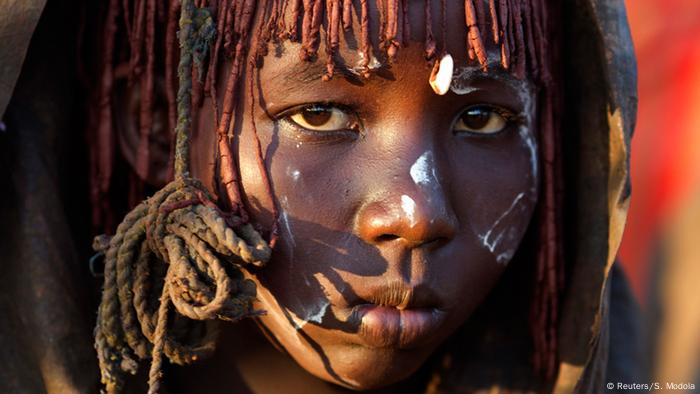
This girl, belonging to the Pokot tribe in Kenya, was also circumcised following tribal tradition

Ntailan Lolkoki and her sisters enjoyed an idyllic childhood in the north of her native Kenya. They herded goats, bathed in the river and returned home to their manyatta — the traditional dwelling — at nightfall. This carefree, beautiful life ended abruptly when Lolkoki turned 12. According to the tradition of her tribes — she is half Masai, half Samburu — she and her sisters were circumcised. It was a traumatic experience that mutilated not only her body, but also her soul.


A mutilation every 11 seconds

Like Lolkoki, many girls suffer this same fate every day. Female genital mutilation or cutting (or FGM/C) is practiced in a total of 28 countries in Africa, on the Arabian Peninsula and in parts of Asia. However, with migration, the number of women subjected to FGM/C is also increasing in Europe.

Worldwide, around 200 million women live with mutilated or circumcised genitals. In many cultures, circumcision symbolizes a girl's transition to womanhood. She is then "pure" and ready for marriage. But with increasingly stringent laws against the practice, there is a growing tendency to perform this ritual on infants, since a crying baby is less likely to raise suspicions than a child complaining of pain.


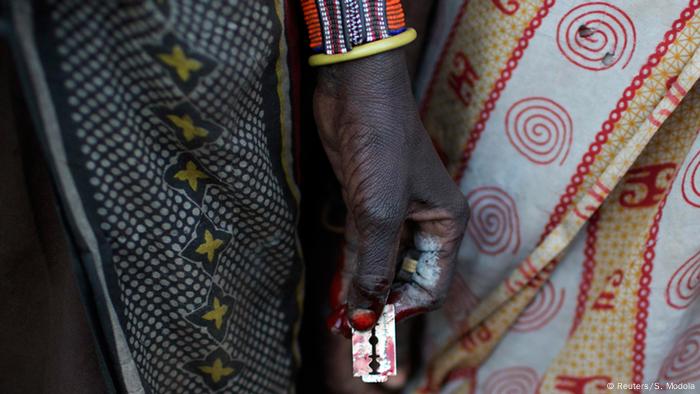
Circumcisions are often done without proper or sterilized equipment

In Lolkoki's home country of Kenya, FGM/C has been banned since 2011. But as in many other African countries, girls continue to be circumcised, especially in rural areas, and mostly without sterile tools — just knives, razor blades or shards — and without anesthesia. The World Health Organization (WHO) estimates that 25% of girls die during circumcision or from its consequences. It's a tradition that causes trauma and lifelong physical and psychological suffering for survivors.
Fighting against deep-rooted tradition

Now a Berlin-based artist, Ntailan Lolkoki wants to save girls and women from this terrible fate. To this end, she has written an African fairy tale titled The Kingdom of Watetu and Songaland. It tells the story of two tribes who live in peace with each other until the princess of the Watetu rebels against the tradition of circumcision practiced by her tribe and escapes her own circumcision. She is helped by the prince of Songaland, who rejects this practice. This pits the tribes against each other.


Breaker of taboos: Ntailan Lolkoki speaks openly about her circumcision


"I chose to tell the story in this narrative form, because I wanted to preserve the African cultural setup," Lolkoki told DW in an interview, explaining that her book reflects the reality in Africa, where many tribes with differing traditions live together. "And as I was growing up as a child with the Samburu tribe, the Samburu hated the Turkana. Why? Because they [the Turkana] didn't mutilate [the girls]."

Lolkoki's story bears strong biographical overtones. Although, unlike her female protagonist she was unable to prevent her own circumcision, she too initially turned her back on her country and culture because of that traumatic experience. After meeting a British soldier in Nairobi and marrying him, she first moved to England and later to the German town of Dülmen in the 1980s.

It was an unhappy marriage. This was mainly because Lolkoki couldn't relate to her own body due to her circumcision. Having had her clitoris removed as a child, she was unable to experience sexual pleasure, and this physical numbness also affected her emotional balance.

Reconciling with one's own culture

The marriage ended in divorce and Lolkoki moved to the German capital. Having been discovered as a model in Dülmen, she entered the Berlin fashion industry with the help of industry contacts. But she remained unhappy.

"In my early 20s, I realized in 1989 that I had to return to Kenya in search of myself and the meaning of life," Lolkoki wrote in her autobiography and first book, Wings for the Butterfly. It would take years and several trips between her original home in Kenya and her adopted city of Berlin for Lolkoki to reconcile with her own culture.

"I believe that a human being is strong in their natural sense and when they are connected with their cultural roots," explained Lolkoki. She values many aspects about her culture: the dances, the community, the connection with nature. And what she can do to fight against the cruel part of her culture. Her goal is to have her second book, The Kingdom of Watetu and Songaland, included in the African school curriculum.

With the support of the Kenyan Embassy, she is currently planning a trip across the East African country to speak to schoolchildren about her book. She rejects the argument that talking alone will not reverse a centuries-old, deep-rooted tradition.

"But if we stopped talking about it, it would be a waste of the pain that I went through or that many other people go through. It's something that needs to be talked about over and over again," she said.

In her autobiography, she talks openly about how much she suffered from her own circumcision and its consequences. She describes, for instance, how she underwent reconstructive surgery on her clitoris at the Waldfriede Hospital in Berlin and was finally able to discover and enjoy her sexuality at the age of almost 50.

A happy end for all women?


But she still hasn't completely overcome her trauma, having been alienated from her own body and identity for far too long, and blanking out the memory of her circumcision. Writing was a healing process for her.

"It would take a miracle to bring about change," she writes in her African fairy tale.

And although her own story has a happy ending, much remains to be done for other circumcised women and those at risk of being circumcised given the tradition's deep-rooted nature.

"It's about meeting with people in the villages and having a conversation with them and reaching their hearts," said Lolkoki, adding that this is what will transform people. So far, she has been able to save her nieces from FGM/C. She still plans to save many more girls.

The Kingdom of Watetu and Songaland is currently available only in English. Wings for the Butterfly has been published by the German publisher Droemer Knaur.

This article has been translated from German
WAR IS RAPE
Study finds sexual assault can lead to dementia

Women who have experienced sexual violence are more likely to develop disruptions to blood flow in the brain, which may contribute to disorders such as dementia and strokes.


Women who have been sexually assaulted often struggle with shame and mental health consequences. They're also at a higher risk for stroke and dementia.


More than one in three women in North America experience sexual violence at least once over the course of their lives. That's according to statistics published by the US Centers for Disease Control and Prevention (CDC).

Globally, the number is roughly the same: An estimated 736 million women across the world "have been subjected to intimate partner violence, non-partner sexual violence, or both at least once in their life," writes the United Nations body UN Women. It cites a study by the World Health Organization.

That amounts to 30% of all girls and women aged 15 years and older.

So, the problem is pervasive. And now, a US study has found that women who experience sexual violence might be confronted with more than the injuries sustained during the attacks, as well as the mental health consequences like post-traumatic stress disorder, anxiety, or depression. They may also have a higher risk of a certain type of brain disease that's a precursor for dementia and stroke.

"Sexual assault is an unfortunate, yet all-too-common, experience for women," says Rebecca Thurston from the University of Pittsburgh, lead author of the study.

"This distressing experience is not only important for women's mental health, but also their brain health. This work is a major step toward identifying a novel risk factor for stroke and dementia among women," says Thurston.
Trauma can disrupt blood flow in the brain

Thurston is a professor of psychiatry and the director of the Women's Biobehavioral Health Laboratory at the University of Pittsburgh. She presented the results of the study at the 2021 meeting of the North American Menopause Society. It will be published in the journal Brain Imaging and Behavior.

For the study, Thurston and her team examined 145 women of "midlife" age in the US. Of the participants, 68% reported having had at least one trauma, with the most common trauma being sexual assault reported by 23% of the women.


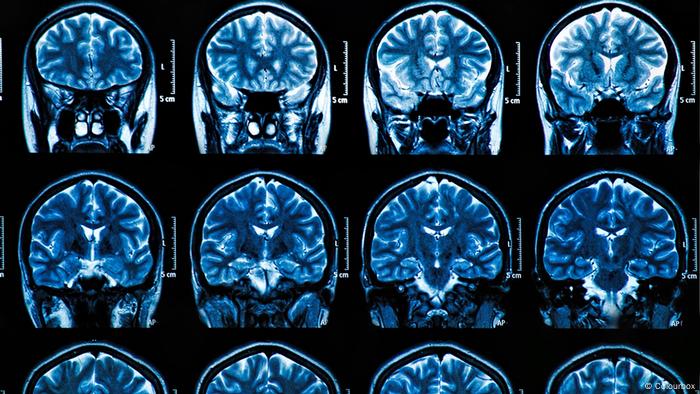
MRI scans are one method to determine a person's risk for brain conditions like dementia or stroke

The researchers wanted to find out whether there was a connection between trauma and white matter hyperintensities, which are signs of disruptions in blood flow and can leave damage in the brain.

White matter hyperintensities show up as small white spots on brain scans. They are early indications of dementia, risk of stroke or similar disorders. And they can be detected decades before the onset of those conditions.

Brain scans of the study participants showed that the women who had experienced a trauma had more white matter hyperintensities than women without trauma ― and that the specific traumatic experience associated with the white matter hyperintensities was sexual assault.

Crucial data to detect high-risk early

In an earlier study in 2018, Thurston had found that women who had experienced sexual assault had significantly higher chances of developing depression or anxiety, and of sleeping more poorly than women who had not been assaulted.

Depression, anxiety and sleep disorders have all been linked to poor overall health.

Mental health disorders can be linked to heart disease, for example, and a lack of sleep can be linked to high blood pressure, type 2 diabetes and obesity.

Thurston says the new study builds on those earlier results. Even when the researchers had accounted for mental or other health conditions in the new study, they found that women who had been assaulted still had more white matter hyperintensity — irrespective of whether they had developed other health problems, like depression or PTSD after an assault.

The bottom line is that those early signs of dementia can be directly linked to the assault, according to the study.

Thurston says the research shows there's a need for better sexual assault prevention, but that it also shows doctors there's another indicator to consider when they assess a female patient's risk for stroke and dementia later in life.

Stephanie Faubion, a medical director of the North American Menopause Society, says the new study can play an important role in preventative healthcare.

"Identifying early warning signs of stroke and dementia is critical to providing effective intervention," says Faubion.

"Studies like this one provide important information about the long-term effects of traumatic experiences on a woman's overall well-being and mental health."

TIGRAY: WAR AT THE EXPENSE OF WOMEN
Hundreds of thousands on the run
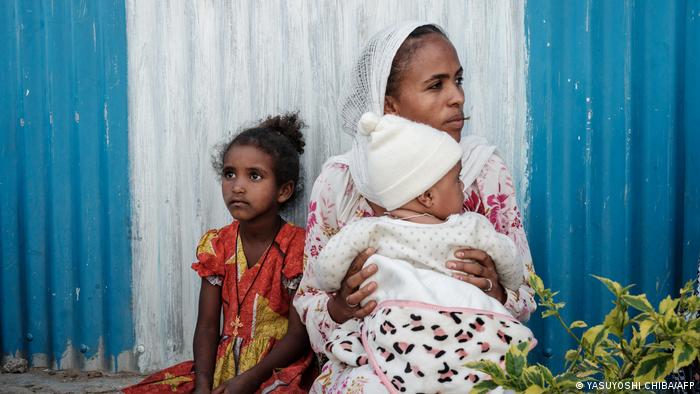
The civil war between the Tigray regional government and the central government of Ethiopia under Prime Minister Abiy Ahmed continues to escalate. Hundreds of thousands are now on the run, living in hunger and threatened by war crimes. After the self-proclaimed Tigray Defense Forces (TDF) recaptured Tigray's regional capital Mekele, many are fleeing from the contested areas to Mekele.


Opinion: Small-scale farmers must control our food system

The global food system is being hijacked by multinationals, warns farmer Paula Gioia. She says that industrial farming interests marginalize the rights and solutions of small-scale farmers.


Small and medium scale farmers produce some 30 percent of global food.

The Food Systems Summit in New York is supposed to come up with a global strategy to fight hunger and feed a rapidly growing world population.

But it's focused too much on the big agro-industry. Corporate interests are taking center stage and expanding their influence in the UN system to an alarming extent, undermining democratic decisions. The concerns of peasant farmers like myself, who produce over 70% of the world’s food, are sidelined even though we provide a vital contribution to the food agenda through ecological and fair farming methods.

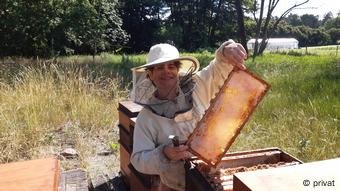
Paula Gioia taking out a honeycomb from one of her beehives.

Paula Gioia is a farmer in Germany active in the international peasants movement.

We face increasing problems all over the world. Land rights are neglected; land grabbing remains rampant, and big industrial players and their production methods harm biodiversity and livelihoods. And it's not just the Global South facing these threats. Small farms in Germany and other European countries are struggling to survive. Thousands have shut down in recent years. In the EU alone we lost about 4.2 million farms between 2005 and 2016, most of them under 5 hectares (12 acres).

At the same time, the land policies of the German government and others have lead to a sharp rise in land prices. That makes it almost impossible for young farmers to access land and get involved in farming even though rural startups can generate new jobs and explore innovative and sustainable farming methods.

Preserving our livelihood and identities

Our community farm is one example. On our 2.5 hectares, we cultivate over 100 different vegetable varieties; use horses to work the land; compost the manure of our goats, horses and cows; keep bees, and promote exchanges with our regional consumers and actively engage with the community around us. Rural areas don't just provide profits, they are our livelihoods and part of our culture and identities.

No doubt the global food system needs radical transformation. But the methods to achieve these goals can't just be the old recipe of increased production, food aid and technical solutions for industrial agriculture. The pesticide and seed companies that get so much of a say now are chiefly responsible for many of the problems.


Multinational companies increasingly push their own agendas on international food policy, Gioia argues

After the last major global food crisis, 15 years ago, the UN reformed the process on how decisions on food and agriculture are made. That’s why organizations like mine, the global grassroots movement La Via Campesina, along with many others are now acknowledged consultants of the UN's intergovernmental Committee on World Food Security (CFS).

But this committee and several international civil society organizations were sidelined ahead of the food summit. Instead, a partnership with the World Economic Forum and its powerful allies from the big agro-industry was formed. And they are the ones setting the rules and influencing the outcome of the summit. That defies the UN's democratic practices and raises questions about accountability and legitimacy. 

Transformation needed

In protest, the global peasants movement has been co-organizing a "People's Autonomous Response to the UN Food System Summit" along with numerous other NGOs, academics and food experts. 

Critics of the status quo  have voiced their concerns, including several UN member states who fear the emergence of parallel, illegitimate governance structures instead of international cooperation.

Although human rights references now appear in some documents, the summit's core agenda remains firmly rooted in corporate interests.

Faced with the challenges of a growing population, climate change and the current COVID-19 crisis, we are convinced that a transformation of our global food system is necessary.

We are therefore calling on the UN and its member states to ensure inclusive, coherent and coordinated global food and agriculture policymaking grounded in human rights.

Paula Gioia is a small-scale farmer and beekeeper in the Brandenburg region near Berlin. As a member of the Arbeitsgemeinschaft bäuerliche Landwirtschaft (AbL), Gioia is part of the International Coordination Committee of the global peasants movement La Via Campesina. The movement campaigns for food sovereignty for small farmers and their control over their land, seeds and other resources. La Via Campesina is part of the Civil Society Mechanism (CSM) and acts as consultant to the UN Committee on World Food Security

Cambodia: Climate change, Mekong dams threaten world's biggest inland fishery

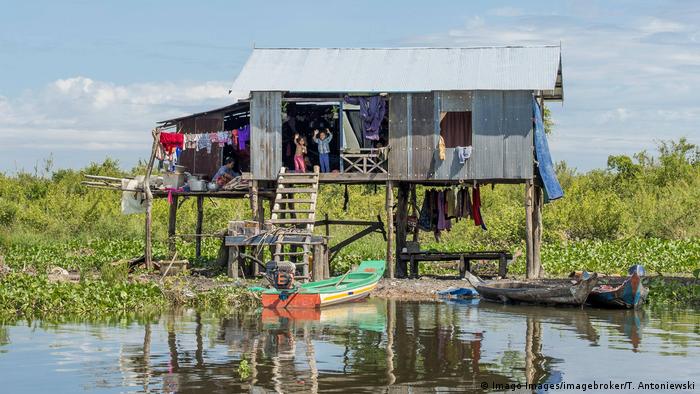
One of the world's richest inland fishing grounds, Tonle Sap lake nourishes tens of millions of people. But climate change and dam construction are threatening livelihoods at the lake, as well as regional food security.


Cambodians get around 70% of their animal protein intake from Tonle Sap lake


Water levels in Cambodia's Tonle Sap hit historic lows for the third year in a row at the end of August, according to the Mekong Dam Monitor, a cooperative effort by the Washington-based Stimson Center and Eyes on Earth.

Though levels have started to creep up in the past week, they remain far below what they should be at this time of the year. Tonle Sap — Southeast Asia's largest fresh water lake — ought to be full of water and fish.

"Once again, the Mekong's wet season is experiencing anomalously low levels of rainfall," Brian Eyler, director of the Southeast Asia program at the Stimson Center, told DW.

"To make things worse, data shows upstream dams are restricting as much water as they would hold back during a normal wet season," Eyler said.

"Regardless of how much rain falls during the wet season, upstream dam restrictions are devastating for the Mekong's ecological processes and the natural resources that come from the river upon which tens of millions rely," he added.

Since early July, over 12 billion cubic meters (420 billion cubic feet) of water have been withheld by 45 upstream dams, according to the Mekong Dam Monitor.
Climate change 'disrupting' Mekong

Every year during the June-October monsoon season, the Mekong river floods and reverses the flow of the Tonle Sap, replenishing the lake and drawing bountiful fish stocks into the lake system.

But lately this natural cycle has been delayed, hampering local farming and destroying fisheries.

Cambodia's Tonle Sap lake threatened by climate change

"The recurring pattern of record lows in the Tonle Sap and parts of the Mekong basin over the past few years shows that Mekong is in crisis," Pianporn Deetes, campaigns director at International Rivers, a conservation NGO, told DW.

"Climate change and large-scale dams are disrupting the timing and size of floods during the wet seasons, which are critical to sustaining the health of the Tonle Sap and the Mekong basin and the lives and livelihoods of millions of people," she added.

Marc Goichot, WWF's lead for freshwater in the Asia-Pacific region, attributes the cause of record-low water levels to several factors, including changes of land use and changes in rainfall patterns brought about by the climate crisis. He also said the riverbed of the Mekong is losing elevation due to the combined effect of reservoirs behind dams trapping sediment and sand mining.

Regional food security at risk


Experts are concerned about the critical situation of an ecosystem vital to the lower Mekong river basin.

Seasonal inundations influenced by the Mekong River play a major role in Tonle Sap's fisheries, Taber Hand, director of the NGO Wetlands Work, told DW. They bring sediment-rich water which boosts microbial and fish production, as well as help reset the ecological system and maintains overall fish levels.

"The Mekong's flood pulse brings water that inundates the huge floodplain making it a 'wetland bouillabaisse,'" he said. "It is all about the flood pulse. Change it and everything else changes."

According to Eyler, the annual flood pulse is needed to keep Tonle Sap functioning as the world's largest inland fishery and to keep it providing nourishment to Cambodians, who derive up to 70% of their animal protein intake from the lake.

Without the wet season's high water levels, the lake's fish population drastically decreases and so does the annual catch.

"Many of those fish leave the lake at various times of the year to migrate to other parts of the Mekong in Thailand, Laos and Vietnam, so a weak Tonle Sap is bad for regional food security outcomes," Eyler said.

Watch video03:18 Mekong River threatened by dams and climate change


Impact of Chinese dams


Though rapidly shifting climate conditions play a major role in Tonle Sap's hardships, Deetes says dams built across the Mekong bear major responsibility for low water levels.

"Large-scale dams on the Upper Mekong in China and key tributaries in the Lower Mekong are a main cause of the damage," Deetes said.

"They withhold much-needed water during the wet season, reduce the flow of vital sediments and nutrients, and are cutting and isolating the Mekong into multiple pieces, which is having major detrimental impacts on the health of the Mekong and Tonle Sap," she added.

Susanne Schmeier, an associate professor of Water Law and Diplomacy at IHE Delft, said that, though the dams have contributed to the problem, their limited storage capacity — and the fact that less than a fifth of the water in the Mekong lower basin comes from China — means that Tonle Sap's low water levels cannot "exclusively" be blamed on Chinese dams.

Though Beijing has pledged to share more water data, river campaigners are demanding more action to address the crisis, both from China and downstream countries, which have also been accused of taking insufficient action.

"We see that there are agreements and promises from China to share information, but this is insufficient," Deetes said.

"Someone telling us they're turning on or off the tap is not helpful. The Mekong and its people need natural and ecological flow in order to sustain the natural services," she added.

IT WAS RUSSIAN PROVACATUERS

MH17 families suffer continuing loss and anger

Seven years after the MH17 disaster, victims' families are having their days — and say — in court. The fact that none of the accused are present has caused added pain, Teri Schultz reports.


Families and friends of those killed in the downing have found little healing over time

Family member after family member describes agony so excruciating it seems as if Malaysia Airlines Flight 17 has just been shot out of the sky today — not back on July 17, 2014, when it fell to the ground in pieces across eastern Ukraine. For many, the years have been an entirely insufficient healer.

Braving an emotional battlefield

Cecile Brouwer is one of those people. Her sister Therese, brother-in-law Charles and their two children were on board MH17. "If I tell you that it is an emotional battle that still drags on today," Brouwer says, "believe me, I'm understating it." She describes being "inconsolable" over the loss and says her marriage and other relationships have suffered, admitting that she snaps at her own children just for calling "Mama." She was angry, she says, to receive Christmas cards with cheery messages and to see people celebrating New Year's Eve.
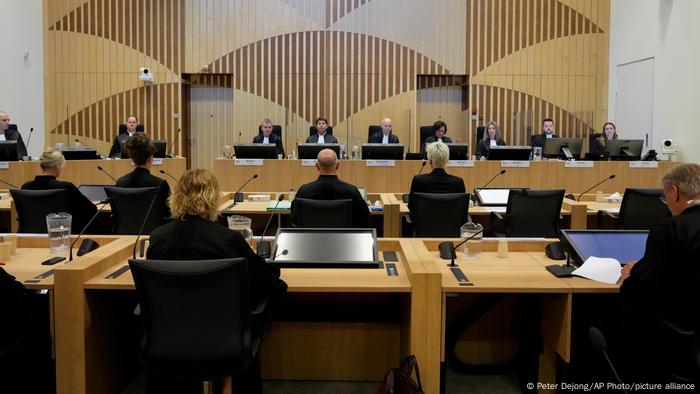

Judges have heard three weeks of testimony from relatives of victims of MH17

Brouwer was one of about 90 relatives of the 298 victims, most of them Dutch, to use the right afforded by the Netherlands' legal system to speak in court. Three weeks of presentations wrap up Friday, with one more date in November.

'I think of them every day'

"It's now seven years later and those emotions are less powerful," Brouwer told the panel of judges in the high-security court in Amsterdam. "But what happened does not become less awful. I think of them every day, all four of them, they're still everywhere I go and wherever I am." She spoke of how painful it still is, however, to hear or read that "everything's been said that can be said" [about the case] or "move on with your life" or "bad things happen all the time," or even "there they go again, the relatives." 

Lidwina Niewold, whose brother Tallander died in the crash at age 22, described how for years afterward she suffered fears that would have previously seemed irrational, such as moving quickly or even going grocery shopping. "I was afraid of open spaces, of explosions, assaults, terrorist attacks," she said. One of her other brothers, Olduf, spoke of mourning not just Tallander but all the "innocent, beloved people, babies, teenagers, mommies and daddies, grannies and granddads — so many families torn apart, scarred for life."

Everybody hurts

The scale of the tragedy was so massive for the country of 17.3 million people, that almost no one remained untouched, near or far. Even one of the victims' attorneys, Peter Langstraat from the Moree Gelderblom law firm tells DW he, too, was surprised by how deeply he has been affected. "I should be, after 30 years, perhaps a hard and cynical lawyer, having seen almost everything," he said. "But there is a thick — very thick — emotional layer when you enter the court room. I had to control myself while speaking for my clients."

But it didn't just feel like the entire Dutch society experienced sorrow, by chance science proved the impact was in fact widespread and measurable. Researchers happened to be conducting a study at the time of the crash gauging the physical impact of events on people who didn't personally witness them or have a personal connection. 
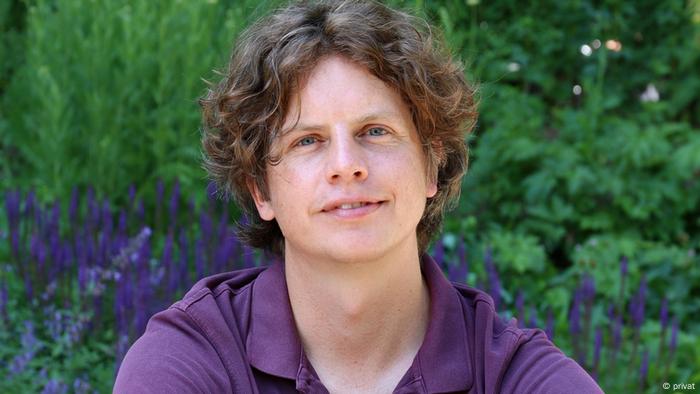

Dutch researcher Bertus Jeronimus found people were physically impacted by 

the MH17 crash even if they had no links to victims.

The University of Groningen's Bertus Jeronimus, the project's lead researcher, explained what the team found when analyzing data from 141 subjects who recorded their sentiments three times per day over 30 days, including July 17, 2014. Despite the MH17 crash being something that happened "thousands of kilometers, to people we don't know," he said, subjects reported "more negative emotions or that they were more sad, had much less positive emotions … more headaches, more stomach pain, those kind of somatic complaints."

The sense of "acute stress" lasted approximately three days before subsiding. "[It's] a fascinating example of how we're all socially connected," Jeronimus said. "Stories and information communicated in the media — we respond to that." He says this isn't the only conclusion of this kind, noting that similar studies after 9/11 found even women who lived in Sweden or elsewhere in Europe and were in no way involved in 9/11," showed physical effects in terms of, for example, how their pregnancy unfolded or these kind of experiences. So these are really significant things."

Anguish and anger

Back in the courtroom, relatives are expressing another source of frustration: The fact that while they must suffer enduring loss, the four men charged with responsibility for launching what investigators believe was a BUK missile supplied by Russia, are free to enjoy their lives. At least three of them, Russian citizens, are believed to be in Russia and the fourth, a Ukrainian citizen, has appointed defense attorneys to be present but will not attend himself. The Kremlin denies involvement and rejects extradition of the accused.

The attorney for relatives of Australian victims Michael and Carol Clancy delivered an angry demand. "I want every one of those people — from the person 'just following orders' to those issuing the orders — to be held accountable for the wreckage of our lives," she told the court. "I want to know why they thought it was a good idea to shoot and blow to pieces a commercial flight and then deny they did it; I want the Russian president to stop lying and admit that the shooting down of the plane and I want him to tell the Russian people what he has done."

Russian suspects live it up

Instead, as attorney Langstraat points out, "you see pictures of those [defendants] having vodka on their boats. And again, they are suspects, so we have to wait for the sentence, but maybe they're responsible for the death of almost 300 people, and the attitude of the Russian Federation remains one of denial, creating their own reality, misinformation."

MH17 investigators continue to add to their case. They've just launched their latest appeal for help from the public, this time asking Russians from the town believed to be the origin of the missile, Kursk, to come forward with information. One victim's mother, Vera Oreshkin, pleaded for their help in Russian.

FASCIST ANTI PROGRESS ANTI SJ

Hungary: Leaders slam migration, LGBTQ at 'family values' summit

Viktor Orban and Mike Pence are among the conservative leaders and thinkers from around the world meeting in Budapest to "defend" the notion of the nuclear family from "left-wing" attacks.


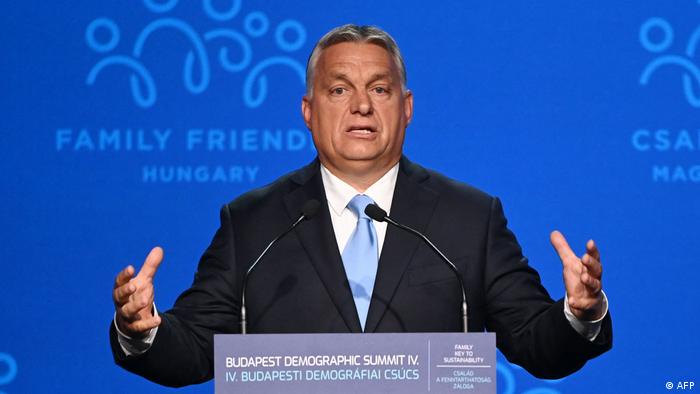
Hungarian PM Viktor Orban has been embraced by social conservatives around the world

Conservative leaders and thinkers from across the globe met in Budapest on Thursday to give speeches on demographic change and "family values."

Some of the attendees at the Budapest Demographic Summit included Hungarian Prime Minister Viktor Orban, former US Vice President Mike Pence and French far-right commentator Eric Zemmour.

What did the right-wing figures say during the summit?

Speakers at the two-day conference railed against migration and LGBTQ people, and called for Christian couples to have more children.

"Hungary must defend itself because the Western left wing is attacking," Orban said at the summit. "It is trying to relativize the notion of family. Its tools for doing so are gender ideology and the LGBTQ lobby, which are attacking our children."

Pence, a Republican who served under President Donald Trump, urged governments to "put families first."

"We see a crisis that brings us here today, a crisis that strikes at the very heart of civilization itself. The erosion of the nuclear family, marked by declining marriage rates, rising divorce, widespread abortion and plummeting birthrates," he said.

Pence said he wished that the conservative-majority Supreme Court in the US would soon overturn abortion rights.

French polemicist Eric Zemmour, a possible challenger to President Emmanuel Macron during next year's election, praised Orban before the conference. He told French news station CNews on Tuesday that Orban "defends the identity of his country and therefore that of Europe."

Central European leaders sign statement on migration

Orban, along with the prime ministers of Poland, the Czech Republic and Slovenia, endorsed a joint declaration on Thursday saying immigration is not the solution to a falling birth rate in the EU.

"Increasing the number of European children is essential to preserving Europe's Christian culture and other religious traditions for future generations," the statement said, while adding that "migration should not be seen as the main tool to tackle demographic challenges."

The summit in Budapest comes amid high tensions between the Hungarian government and EU authorities in Brussels.

The UK-based Financial Times newspaper reported Wednesday that the EU could withdraw "cohesion funds" from Hungary and Poland due to human rights abuses.

Hungary implemented a controversial law in July that banned the depiction of LGBTQ people in school material and television programs for people under 18. European Commission President Ursula von der Leyen has called the law "shameful."