Dom Phillips, right, and Brazilian tribal expert Bruno Araújo Pereira have gone missing in the Javari Valley. (AP Photo/Joao Laet)
A British journalist and a Brazilian Indigenous expert have gone missing in a remote and dangerous part of the Amazon rainforest that is home to the world's largest population of uncontacted tribes.
An association representing the region's Indigenous peoples said Dom Phillips and Bruno Araújo Pereira had been threatened during a two-day reporting trip to the Javari Valley, in western Brazil near the country's border with Peru.
Brazil's navy has sent a search and rescue team to look for the pair and authorities are investigating their disappearance.
Who are the two men missing in the Amazon?
Mr Phillips, 57, is a British freelance journalist who has written for The Guardian, The Washington Post, The New York Times and other outlets.
He has written extensively about the Amazon and is currently writing a book about the rainforest's preservation with support from the Alicia Patterson Foundation, which awarded him a year-long fellowship for environmental reporting.
He has lived in Brazil for more than a decade and currently lives in Salvador in the state of Bahia.
An association representing the region's Indigenous peoples said Dom Phillips and Bruno Araújo Pereira had been threatened during a two-day reporting trip to the Javari Valley, in western Brazil near the country's border with Peru.
Brazil's navy has sent a search and rescue team to look for the pair and authorities are investigating their disappearance.
Who are the two men missing in the Amazon?
Mr Phillips, 57, is a British freelance journalist who has written for The Guardian, The Washington Post, The New York Times and other outlets.
He has written extensively about the Amazon and is currently writing a book about the rainforest's preservation with support from the Alicia Patterson Foundation, which awarded him a year-long fellowship for environmental reporting.
He has lived in Brazil for more than a decade and currently lives in Salvador in the state of Bahia.
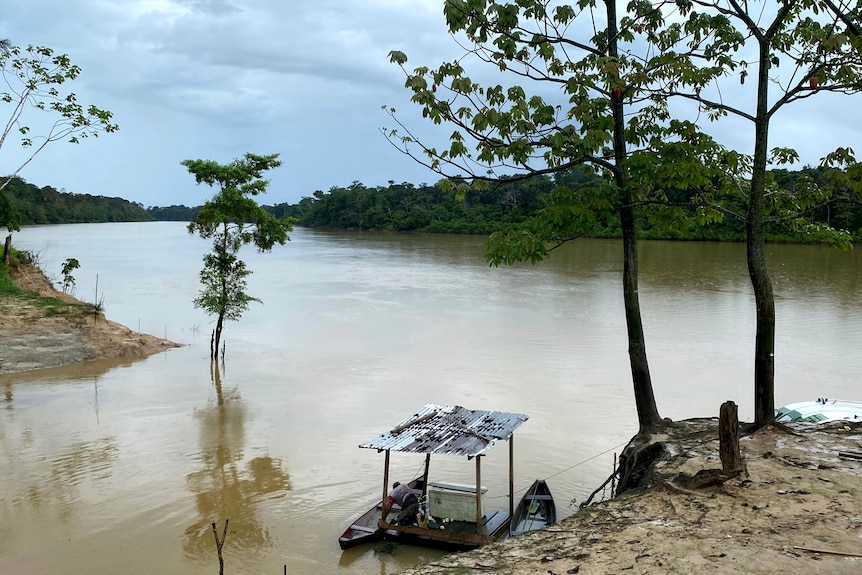
The men were expected to arrive on Atalaia do Norte on a small boat.(AP Photo/Fabiano Maisonnave)
Mr Pereira is one of Brazil's most knowledgeable experts on isolated and uncontacted tribes.
He is a previous advisor for the Union of Indigenous Peoples of the Javari Valley (UNIVAJA) and is currently on leave from a post with Brazil's Indigenous affairs agency.
The men disappeared while returning from their reporting trip in the Javari Valley, in Brazil's Amazonas state.
They were last seen at 7am on Sunday in the Sao Rafael community.
They were expected to travel from the area to the city of Atalaia do Norte, about an hour away, on a small boat, but did not show up.
The UNIVAJA said the two men were the only two people who would have been travelling on the boat.
Mr Pereira is one of Brazil's most knowledgeable experts on isolated and uncontacted tribes.
He is a previous advisor for the Union of Indigenous Peoples of the Javari Valley (UNIVAJA) and is currently on leave from a post with Brazil's Indigenous affairs agency.
The men disappeared while returning from their reporting trip in the Javari Valley, in Brazil's Amazonas state.
They were last seen at 7am on Sunday in the Sao Rafael community.
They were expected to travel from the area to the city of Atalaia do Norte, about an hour away, on a small boat, but did not show up.
The UNIVAJA said the two men were the only two people who would have been travelling on the boat.
What's the Javari Valley? Is it dangerous?
The Javari Valley or Vale do Javari is a region about the size of Ireland which is home to the highest number of uncontacted Indigenous people in the world.
Several thousand Indigenous people live in the area in dozens of villages.
The area is under threat from a range of groups, including illegal miners, loggers, hunters and groups that grow coca, the plants that provide the raw material for cocaine.
It has been the site of multiple shootouts between hunters, fishers and government agents and is also a major route for the smuggling of cocaine from Peru into Brazil.
Journalists from regional media outlets have been murdered in the Amazon in recent years and reports of threats against reporters have resulted in limited access to some areas dominated by criminal activity.
Were there any warnings? Were the pair threatened?
UNIVAJA has said Mr Phillips and Mr Pereira received threats in recent days, but it isn't yet clear what kind of threats were made against them.
Mr Pereira has previously been threatened by illegal fishermen and poachers and is in the habit of carrying a gun.
Survival International, an NGO responsible for defending tribal peoples, said threats had been directed at Mr Pereira because of his years of work with Indigenous tribes.
They said those threats "[make] the need for immediate action to locate him and Dom all the more pressing".
Who's looking for them?
Brazil's federal police, Amazonas state civil police, the national guard and the navy have all been mobilised to search for the men, with the effort to be coordinated by the navy.
The navy's 10-person search and rescue team is expected to arrive at Atalaia do Norte around 7pm local time before heading to the area the pair were last seen.
The UNIVAJA has also dispatched two search parties to look for the men.
However, federal police have said there is no information at the moment on their whereabouts or even a theory about what might have happened.
An indigenous Brazilian group trying to protect the Amazon rainforest from logging releases footage of an uncontacted tribesman, who sniffs a machete before running off into thick forest.
WATCH
Duration: 44 minutes 30 seconds
Bruno Pereira: the dedicated defender of Indigenous rights missing in Brazil
Indigenous expert last seen travelling with British journalist Dom Phillips was ousted from official role after Bolsonaro took office
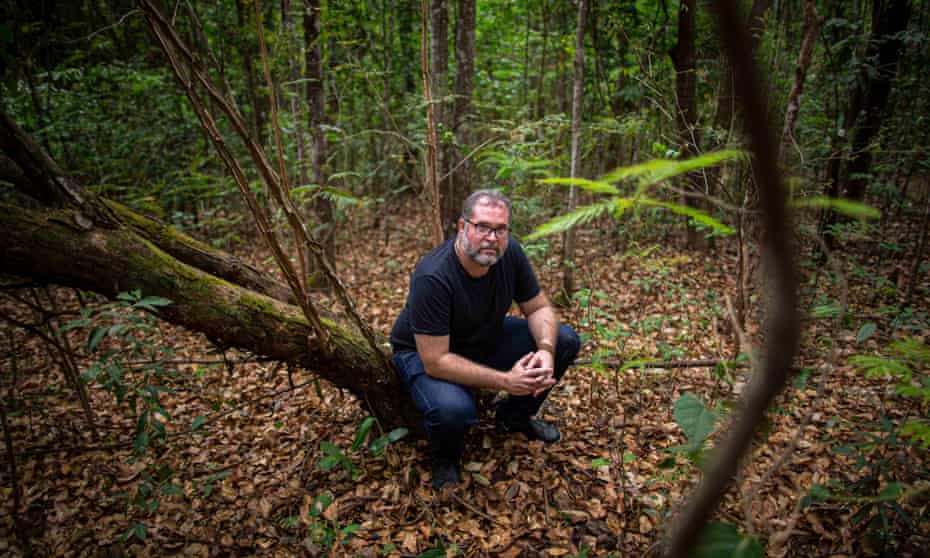
Indigenous expert last seen travelling with British journalist Dom Phillips was ousted from official role after Bolsonaro took office
Bruno Pereira ‘is a great ally of the indigenous movement and that is why he came to work with these organisations,’ one colleague said.
Photograph: Daniel Marenco/Agência O Globo
Andrew Downie in São Paulo and Caio Barretto Briso in Rio de JaneiroWed 8 Jun 2022 14.52 BST
There’s an unwritten rule among Amazonian explorers that says the image of a lone swashbuckler, pack on their back and machete in hand, is something to be avoided at all costs. Bruno Pereira agreed 100%.
Pereira, 41, is the indigenous expert who disappeared on Sunday after travelling into a remote corner of the Amazon jungle with the British journalist Dom Phillips. The two men have not been seen since Sunday morning.
A former colleague of Pereira’s at the government’s Indigenous agency Funai described him as caring, dedicated – and totally committed to the traditional peoples of the Amazon.
“The Funai explorers don’t like to be called heroes,” said his friend, who spoke on condition of anonymity.
“But there’s no way to agree with that modesty. These people are heroes and Bruno is one of them. Whether Bruno is alive or dead, his bravery lives in every single person who has accompanied his case since he disappeared. It’s there in every Brazilian who clamours for justice.”
Pereira was removed from his position as Funai’s point man for uncontacted tribes in what was seen as a politically motivated move soon after far-right president Jair Bolsonaro came to power. His firing in late 2019 came shortly after his team had helped make one of the biggest illegal mines in the Amazon region inoperable.
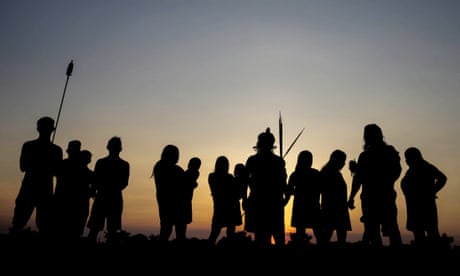
Brazil’s uncontacted tribes face 'genocide' under Bolsonaro, experts warn
Bolsonaro wants development at all costs and soon after he came to power progressives like Pereira, who put Indigenous peoples’ traditional ways ahead of the loggers, hunters and miners who covet their land, were ousted from the agency.
Bolsonaro also slashed budgets and staff, “there was no more gas, police protection, absolutely nothing left,” said Antenor Vaz, the former Funai leader in the area where the pair are missing.
“The dismantling meant transferring committed people to other areas away from the field and appointing people that had no connection with Indigenous issues. An evangelical pastor came in to coordinate the work that Bruno used to do.”
The turmoil at Funai marked the end of Pereira’s government career and Pereira went on to work with the Observatory for the Human Rights of Isolated and Recent Contact Indigenous Peoples (OPI), an umbrella organisation of the 26 Indigenous groups in the Vale do Javari, a remote area on Brazil’s western border with Peru.
The area is almost as vast as Ireland and Wales combined and is home to one of the biggest concentrations of uncontacted tribes in the world.
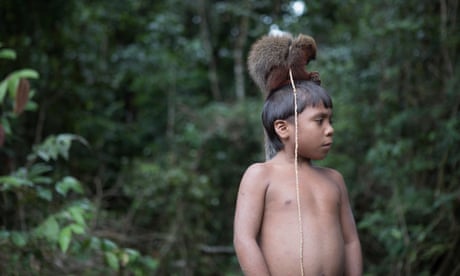
Lost tribes: the 1,000km rainforest mission to protect an Amazon village
Pereira’s work there has consisted in helping Indigenous communities organise and monitor their land. The pristine forest area is targeted by illegal hunters and fishers, miners and drug traffickers who covet its natural resources.
In addition to fundraising, the father of three has also run workshops in communities under threat.
Any invasions are reported to Funai and law enforcement agencies in the hope they will take action to rebuff the invaders. It is a job that has become more difficult since Bolsonaro began weakening state funding and oversight.
“Indigenous organisations and their allies such as Bruno are doing what Funai isn’t able to do: defend isolated Indians,” said Maria Emilia Coelho, a friend and colleague of Pereira’s at OPI. “Bruno is a great ally of the Indigenous movement and that is why he came to work with these organisations.”
Throughout his career Pereira has advocated a policy of non-contact with isolated tribes, following in the footsteps of celebrated anthropologists and explorers such as Orlando Villas Boas and Sydney Possuelo.
The policy dates from the 1980s and aims to leave uncontacted tribes in peace, unless they face imminent danger. If threats from invaders such as loggers or miners become too serious to ignore, attempts are made to secure their land and protect the reservations from outsiders.
Andrew Downie in São Paulo and Caio Barretto Briso in Rio de JaneiroWed 8 Jun 2022 14.52 BST
There’s an unwritten rule among Amazonian explorers that says the image of a lone swashbuckler, pack on their back and machete in hand, is something to be avoided at all costs. Bruno Pereira agreed 100%.
Pereira, 41, is the indigenous expert who disappeared on Sunday after travelling into a remote corner of the Amazon jungle with the British journalist Dom Phillips. The two men have not been seen since Sunday morning.
A former colleague of Pereira’s at the government’s Indigenous agency Funai described him as caring, dedicated – and totally committed to the traditional peoples of the Amazon.
“The Funai explorers don’t like to be called heroes,” said his friend, who spoke on condition of anonymity.
“But there’s no way to agree with that modesty. These people are heroes and Bruno is one of them. Whether Bruno is alive or dead, his bravery lives in every single person who has accompanied his case since he disappeared. It’s there in every Brazilian who clamours for justice.”
Pereira was removed from his position as Funai’s point man for uncontacted tribes in what was seen as a politically motivated move soon after far-right president Jair Bolsonaro came to power. His firing in late 2019 came shortly after his team had helped make one of the biggest illegal mines in the Amazon region inoperable.
Brazil’s uncontacted tribes face 'genocide' under Bolsonaro, experts warn
Bolsonaro wants development at all costs and soon after he came to power progressives like Pereira, who put Indigenous peoples’ traditional ways ahead of the loggers, hunters and miners who covet their land, were ousted from the agency.
Bolsonaro also slashed budgets and staff, “there was no more gas, police protection, absolutely nothing left,” said Antenor Vaz, the former Funai leader in the area where the pair are missing.
“The dismantling meant transferring committed people to other areas away from the field and appointing people that had no connection with Indigenous issues. An evangelical pastor came in to coordinate the work that Bruno used to do.”
The turmoil at Funai marked the end of Pereira’s government career and Pereira went on to work with the Observatory for the Human Rights of Isolated and Recent Contact Indigenous Peoples (OPI), an umbrella organisation of the 26 Indigenous groups in the Vale do Javari, a remote area on Brazil’s western border with Peru.
The area is almost as vast as Ireland and Wales combined and is home to one of the biggest concentrations of uncontacted tribes in the world.
Lost tribes: the 1,000km rainforest mission to protect an Amazon village
Pereira’s work there has consisted in helping Indigenous communities organise and monitor their land. The pristine forest area is targeted by illegal hunters and fishers, miners and drug traffickers who covet its natural resources.
In addition to fundraising, the father of three has also run workshops in communities under threat.
Any invasions are reported to Funai and law enforcement agencies in the hope they will take action to rebuff the invaders. It is a job that has become more difficult since Bolsonaro began weakening state funding and oversight.
“Indigenous organisations and their allies such as Bruno are doing what Funai isn’t able to do: defend isolated Indians,” said Maria Emilia Coelho, a friend and colleague of Pereira’s at OPI. “Bruno is a great ally of the Indigenous movement and that is why he came to work with these organisations.”
Throughout his career Pereira has advocated a policy of non-contact with isolated tribes, following in the footsteps of celebrated anthropologists and explorers such as Orlando Villas Boas and Sydney Possuelo.
The policy dates from the 1980s and aims to leave uncontacted tribes in peace, unless they face imminent danger. If threats from invaders such as loggers or miners become too serious to ignore, attempts are made to secure their land and protect the reservations from outsiders.
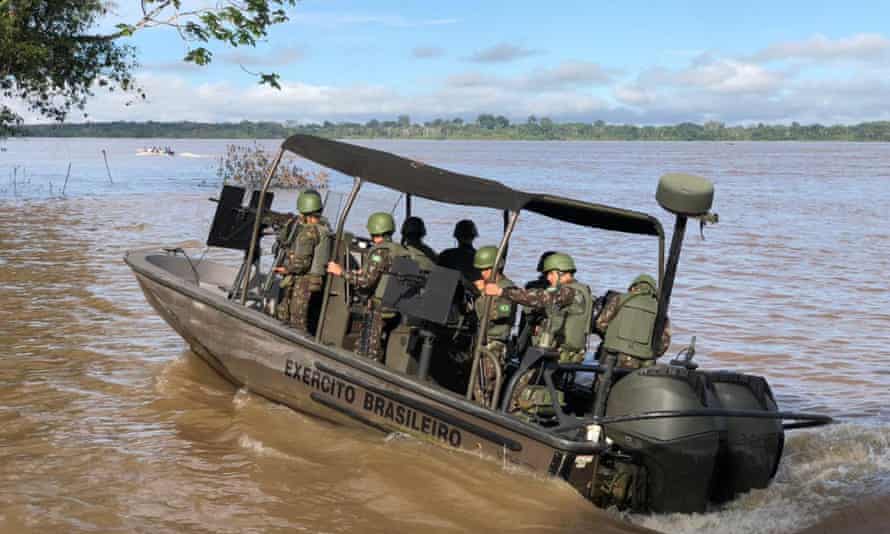
A Brazilian military rescue team searches for Bruno Pereira and Dom Phillips on the Javari river, Brazil, on Tuesday.
Photograph: Amazon Military Command/AFP/Getty Images
“The atmosphere has got so much worse in recent years because you have a president who foments violence,” said Fábio Ribeiro, OPI’s executive coordinator. “People who use these tactics gain in confidence with a government like this one. Bolsonaro has supported illegal mines and the impunity has grown massively. We can see that happening in front of our eyes. The number of invasions has increased hugely.”
Pereira has faced regular threats but with a serenity based in the knowledge he was doing crucial work for peoples he loved and respected. He has expressed pessimism about Brazil’s political direction – but knew how to shift the focus away from himself and on to the people that mattered, said Ribeiro.
“He’d see this as a situation that calls the world’s attention to what is going on in Indigenous land; the impunity, the violence, the government’s disregard for basic rights,” Ribeiro said. “And, of course for a new policy to protect isolated groups and their land.”
He would also reject any attempts to portray himself as a martyr or even a successor to the sertanistas – early explorers – who wrote their names into Brazilian history by dedicating their lives to protecting vulnerable tribes.
“If you say he is the heir to these people it makes it about an individual and it diminishes everyone else’s role,” said Ribeiro. “He is all about putting institutional policies in place. It’s not about person A or person B, it’s about complying with laws and regulations. There are no Indiana Joneses here.”
“The atmosphere has got so much worse in recent years because you have a president who foments violence,” said Fábio Ribeiro, OPI’s executive coordinator. “People who use these tactics gain in confidence with a government like this one. Bolsonaro has supported illegal mines and the impunity has grown massively. We can see that happening in front of our eyes. The number of invasions has increased hugely.”
Pereira has faced regular threats but with a serenity based in the knowledge he was doing crucial work for peoples he loved and respected. He has expressed pessimism about Brazil’s political direction – but knew how to shift the focus away from himself and on to the people that mattered, said Ribeiro.
“He’d see this as a situation that calls the world’s attention to what is going on in Indigenous land; the impunity, the violence, the government’s disregard for basic rights,” Ribeiro said. “And, of course for a new policy to protect isolated groups and their land.”
He would also reject any attempts to portray himself as a martyr or even a successor to the sertanistas – early explorers – who wrote their names into Brazilian history by dedicating their lives to protecting vulnerable tribes.
“If you say he is the heir to these people it makes it about an individual and it diminishes everyone else’s role,” said Ribeiro. “He is all about putting institutional policies in place. It’s not about person A or person B, it’s about complying with laws and regulations. There are no Indiana Joneses here.”
Threats, Then Guns: A Journalist and an Expert Vanish in the Amazon
Dom Phillips, a British journalist, and Bruno Pereira, a Brazilian expert on Indigenous groups, have not been seen since Sunday. They faced threats before they disappeared.

Mr. Phillips, who also wrote regularly for The New York Times in 2017, has dedicated much of his career to documenting the struggle between the people who want to protect the Amazon and those who want to exploit it. Mr. Pereira has spent years defending Indigenous groups under the resulting threat. Now fears are growing that their latest journey deep into the rainforest could end up as one of the grimmest illustrations of that conflict.
Univaja said that Mr. Pereira “has profound knowledge of the region,” and local officials said that if the men had gotten lost or faced mechanical issues, they likely would have already been found by search crews. Univaja said Mr. Pereira had faced threats in the region for years.
Violence has long been common in the Amazon, but it has largely been between locals. From 2009 through 2020, there were 139 killings of environmental activists and defenders in the Amazon, according to data compiled by a journalism project called Tierra de Resistentes. But hardly any of those attacks were against Brazilian government officials or journalists who were outsiders in the region.
In 2019, a Brazilian government worker was shot and killed in apparent retaliation for his work combating illegal activity in the Javari Valley.
The 1988 murder of Chico Mendes, Brazil’s most famous conservationist at the time, helped spark an environmental movement in the country to protect the Amazon. That movement has faced significant headwinds lately, particularly under Mr. Bolsonaro, who has vowed to open the Amazon to mining, logging and other industry.

Jack Nicas is the Brazil bureau chief, covering Brazil, Argentina, Chile, Paraguay and Uruguay. He previously reported on technology from San Francisco and, before joining The Times in 2018, spent seven years at The Wall Street Journal. @jacknicas • Facebook
Violence in the Amazon
British Journalist and Indigenous Expert Are Missing in Amazon After Threats
June 6, 2022
As Bolsonaro Keeps Amazon Vows, Brazil’s Indigenous Fear ‘Ethnocide’
April 19, 2020
‘Guardian’ of the Amazon Killed in Brazil by Illegal Loggers
Nov. 4, 2019
The Lasting Legacy of a Fighter for the Amazon
Nov. 27, 2016
Dom Phillips, a British journalist, and Bruno Pereira, a Brazilian expert on Indigenous groups, have not been seen since Sunday. They faced threats before they disappeared.
The journalist Dom Phillips taking notes as he talks with Indigenous people in
Roraima State, Brazil, in 2019.Credit...Joao Laet/Agence France-Presse — Getty Images
By Jack Nicas, Ana Ionova and André Spigariol
June 8, 2022
RIO DE JANEIRO — The Javari Valley in the Amazon rainforest is one of the most isolated places on the planet. It is a densely forested Indigenous reserve the size of Maine where there are virtually no roads, trips can take a week by boat and at least 19 Indigenous groups are believed to still live without outside contact.
The reserve is also plagued by illegal fishing, hunting and mining, a problem exacerbated by government budget cuts under President Jair Bolsonaro. Now local Indigenous people have started formally patrolling the forest and rivers themselves, and the men who exploit the land for a living have responded with increasingly dire threats.
That tension was the kind of story that has long attracted Dom Phillips, a British journalist in Brazil for the past 15 years, most recently as a regular contributor to The Guardian. Last week, Mr. Phillips arrived in the Javari Valley to interview the Indigenous patrols for a book. He was accompanied by Bruno Araújo Pereira, an expert on Indigenous groups who had recently taken leave from the Brazilian government in order to aid the patrols.
About 6 a.m. Saturday, the two men were with a patrol, stopped along a snaking river, when another boat approached, according to officials at Univaja, a Javari Valley Indigenous association that helps organize the patrols. The approaching vessel carried three men known to be illegal fishermen, Univaja said, and as it passed, the men showed the patrol boat their guns. It was the kind of threat that Univaja had been recently reporting to authorities.
The following morning, Mr. Phillips, 57, and Mr. Pereira, 41, began their journey home, traveling on the Itaquí River in a new boat with a 40-horsepower engine and enough fuel for the trip. They were scheduled to arrive in Atalaia do Norte, a small city on the border with Peru, at about 8 a.m. Sunday.
The men and their boat have not been seen since.
Over the past three days, various search crews, from Indigenous groups to the Brazilian Navy, have scoured the area; Brazilian politicians and celebrities have called for more action to find the men; and their disappearance has led the morning newspapers and nightly news across the country.
On Wednesday, state police officials said they were questioning a suspect and had seized a boat and illegal ammunition from him. Officials said the suspect’s green speedboat with a visible Nike symbol was seen traveling behind Mr. Phillips and Mr. Pereira’s boat Sunday morning.
The suspect was one of the fishermen who showed the patrol their guns on Saturday, according to Soraya Zaiden, an activist who helps lead Univaja, and Elieseo Marubo, Univaja’s legal director. They said the man had shot at a Univaja patrol boat months earlier.
“We will continue the search,” Ms. Zaiden said. “But we also know that something serious, very serious, may have happened.”
By Jack Nicas, Ana Ionova and André Spigariol
June 8, 2022
RIO DE JANEIRO — The Javari Valley in the Amazon rainforest is one of the most isolated places on the planet. It is a densely forested Indigenous reserve the size of Maine where there are virtually no roads, trips can take a week by boat and at least 19 Indigenous groups are believed to still live without outside contact.
The reserve is also plagued by illegal fishing, hunting and mining, a problem exacerbated by government budget cuts under President Jair Bolsonaro. Now local Indigenous people have started formally patrolling the forest and rivers themselves, and the men who exploit the land for a living have responded with increasingly dire threats.
That tension was the kind of story that has long attracted Dom Phillips, a British journalist in Brazil for the past 15 years, most recently as a regular contributor to The Guardian. Last week, Mr. Phillips arrived in the Javari Valley to interview the Indigenous patrols for a book. He was accompanied by Bruno Araújo Pereira, an expert on Indigenous groups who had recently taken leave from the Brazilian government in order to aid the patrols.
About 6 a.m. Saturday, the two men were with a patrol, stopped along a snaking river, when another boat approached, according to officials at Univaja, a Javari Valley Indigenous association that helps organize the patrols. The approaching vessel carried three men known to be illegal fishermen, Univaja said, and as it passed, the men showed the patrol boat their guns. It was the kind of threat that Univaja had been recently reporting to authorities.
The following morning, Mr. Phillips, 57, and Mr. Pereira, 41, began their journey home, traveling on the Itaquí River in a new boat with a 40-horsepower engine and enough fuel for the trip. They were scheduled to arrive in Atalaia do Norte, a small city on the border with Peru, at about 8 a.m. Sunday.
The men and their boat have not been seen since.
Over the past three days, various search crews, from Indigenous groups to the Brazilian Navy, have scoured the area; Brazilian politicians and celebrities have called for more action to find the men; and their disappearance has led the morning newspapers and nightly news across the country.
On Wednesday, state police officials said they were questioning a suspect and had seized a boat and illegal ammunition from him. Officials said the suspect’s green speedboat with a visible Nike symbol was seen traveling behind Mr. Phillips and Mr. Pereira’s boat Sunday morning.
The suspect was one of the fishermen who showed the patrol their guns on Saturday, according to Soraya Zaiden, an activist who helps lead Univaja, and Elieseo Marubo, Univaja’s legal director. They said the man had shot at a Univaja patrol boat months earlier.
“We will continue the search,” Ms. Zaiden said. “But we also know that something serious, very serious, may have happened.”
Mr. Phillips, who also wrote regularly for The New York Times in 2017, has dedicated much of his career to documenting the struggle between the people who want to protect the Amazon and those who want to exploit it. Mr. Pereira has spent years defending Indigenous groups under the resulting threat. Now fears are growing that their latest journey deep into the rainforest could end up as one of the grimmest illustrations of that conflict.
Univaja said that Mr. Pereira “has profound knowledge of the region,” and local officials said that if the men had gotten lost or faced mechanical issues, they likely would have already been found by search crews. Univaja said Mr. Pereira had faced threats in the region for years.
Violence has long been common in the Amazon, but it has largely been between locals. From 2009 through 2020, there were 139 killings of environmental activists and defenders in the Amazon, according to data compiled by a journalism project called Tierra de Resistentes. But hardly any of those attacks were against Brazilian government officials or journalists who were outsiders in the region.
In 2019, a Brazilian government worker was shot and killed in apparent retaliation for his work combating illegal activity in the Javari Valley.
The 1988 murder of Chico Mendes, Brazil’s most famous conservationist at the time, helped spark an environmental movement in the country to protect the Amazon. That movement has faced significant headwinds lately, particularly under Mr. Bolsonaro, who has vowed to open the Amazon to mining, logging and other industry.
Chico Mendes in 1988. He was killed that same year for his conservation work. Credit...Associated Press
Deforestation has increased during his presidency, as his government has weakened many of the institutions designed to protect the forest.
On Tuesday, Mr. Bolsonaro said he prayed that Mr. Phillips and Mr. Pereira would be found. He also questioned their journey. “Two people in a boat, in a completely wild region like this, is an adventure that isn’t recommendable,” he said. “An accident could happen, they could have been executed, anything.”
Politics also cast a shadow over the government’s response, which many politicians, journalists and other public figures widely criticized as inadequate and slow.
Ms. Zaiden said that Univaja alerted federal authorities to the men’s disappearance midday Sunday. It then took a full day for Brazil’s Navy to send a search team, which consisted of a single boat, when an aircraft would have been far more effective and efficient for searching such a vast, remote area.
By Monday evening, the army said it was still awaiting authorization from the “upper echelons” of the Brazilian government to join the search, before eventually saying it was sending a team.
Alessandra Sampaio, Mr. Phillips’s wife, pleaded with authorities to intensify the search in a video posted online Tuesday morning.
“We still have some hope,” she said. “Even if we don’t find the love of my life alive, they have to be found, please. Intensify these searches.”
On Tuesday, the navy and army said they had deployed aircraft, as well as additional boats in the search. The Ministry of Defense said that the armed forces started assisting the search “as soon as the first information about the disappearance was released.” On Wednesday, a Brazilian judge ruled that the government had failed to protect the reserve and must use aircraft and boats to search for the missing men.
Mr. Phillips and Mr. Pereira knew each other well. In 2018, Mr. Phillips joined a 17-day journey led by Mr. Pereira deep into the Javari Valley — 590 miles by boat and 45 miles on foot — for a story about the Brazilian government’s search for signs of isolated Indigenous groups. “Wearing just shorts and flip-flop as he squats in the mud by a fire,” Mr. Phillips wrote in The Guardian, Mr. Pereira “cracks open the boiled skull of a monkey with a spoon and eats its brains for breakfast as he discusses policy.”
Image

Deforestation has increased during his presidency, as his government has weakened many of the institutions designed to protect the forest.
On Tuesday, Mr. Bolsonaro said he prayed that Mr. Phillips and Mr. Pereira would be found. He also questioned their journey. “Two people in a boat, in a completely wild region like this, is an adventure that isn’t recommendable,” he said. “An accident could happen, they could have been executed, anything.”
Politics also cast a shadow over the government’s response, which many politicians, journalists and other public figures widely criticized as inadequate and slow.
Ms. Zaiden said that Univaja alerted federal authorities to the men’s disappearance midday Sunday. It then took a full day for Brazil’s Navy to send a search team, which consisted of a single boat, when an aircraft would have been far more effective and efficient for searching such a vast, remote area.
By Monday evening, the army said it was still awaiting authorization from the “upper echelons” of the Brazilian government to join the search, before eventually saying it was sending a team.
Alessandra Sampaio, Mr. Phillips’s wife, pleaded with authorities to intensify the search in a video posted online Tuesday morning.
“We still have some hope,” she said. “Even if we don’t find the love of my life alive, they have to be found, please. Intensify these searches.”
On Tuesday, the navy and army said they had deployed aircraft, as well as additional boats in the search. The Ministry of Defense said that the armed forces started assisting the search “as soon as the first information about the disappearance was released.” On Wednesday, a Brazilian judge ruled that the government had failed to protect the reserve and must use aircraft and boats to search for the missing men.
Mr. Phillips and Mr. Pereira knew each other well. In 2018, Mr. Phillips joined a 17-day journey led by Mr. Pereira deep into the Javari Valley — 590 miles by boat and 45 miles on foot — for a story about the Brazilian government’s search for signs of isolated Indigenous groups. “Wearing just shorts and flip-flop as he squats in the mud by a fire,” Mr. Phillips wrote in The Guardian, Mr. Pereira “cracks open the boiled skull of a monkey with a spoon and eats its brains for breakfast as he discusses policy.”
Image
A photo released by the Brazilian military shows an aerial search. On Tuesday, the navy and army said they had deployed aircraft, as well as additional boats in the search. Credit...Amazon Military Command, via Agence France-Presse — Getty Images
At the time, Mr. Pereira helped lead the government’s efforts to identify and protect such groups. After Mr. Bolsonaro became president in 2019, Mr. Pereira’s department faced cuts and shifting orders from the top, said Antenor Vaz, a former official in the department, stopping them from carrying out the expeditions once critical to protecting the reserve.
“It is a region that is extremely dangerous, especially since 2019 when the illegal actions of loggers, prospectors, fishermen and hunters surged,” Mr. Vaz said.
Mr. Pereira eventually took a leave from his post to help Indigenous groups in the Javari Valley fill the vacuum of enforcement. Those patrols have focused in part on documenting and reporting fishermen who illegally catch pirarucu, a freshwater fish that can weigh as much as 440 pounds and is considered endangered in Brazil.
As the Indigenous patrols organized by Univaja became a front line of enforcement in the Javari Valley, they began to face threats. In April, one man accosted several Univaja workers, telling one that if he didn’t stop reporting illegal activity, “he’d put a bullet in his face,” according to a police report that Univaja filed with local authorities.
Ms. Zaiden shared a letter Univaja received that threatened Mr. Pereira by name, accusing him of sending Indigenous people to “seize our engines and take our fish.” The letter added, “I’m just going to warn you once that if it continues like this, it will get worse for you.”
She said the organization had reported many of the threats to local authorities, asking for help. Marcelo Ramos, a congressman from the region, said that he had confirmed with federal authorities that the group had reported threats within the past week.
“We’ve been demanding action, but unfortunately there’s been no reaction,” Ms. Zaiden said. “Now our greatest fear is that this is the reason for Bruno and Dom’s disappearance.”
Leonardo Coelho contributed reporting from Rio de Janeiro.
At the time, Mr. Pereira helped lead the government’s efforts to identify and protect such groups. After Mr. Bolsonaro became president in 2019, Mr. Pereira’s department faced cuts and shifting orders from the top, said Antenor Vaz, a former official in the department, stopping them from carrying out the expeditions once critical to protecting the reserve.
“It is a region that is extremely dangerous, especially since 2019 when the illegal actions of loggers, prospectors, fishermen and hunters surged,” Mr. Vaz said.
Mr. Pereira eventually took a leave from his post to help Indigenous groups in the Javari Valley fill the vacuum of enforcement. Those patrols have focused in part on documenting and reporting fishermen who illegally catch pirarucu, a freshwater fish that can weigh as much as 440 pounds and is considered endangered in Brazil.
As the Indigenous patrols organized by Univaja became a front line of enforcement in the Javari Valley, they began to face threats. In April, one man accosted several Univaja workers, telling one that if he didn’t stop reporting illegal activity, “he’d put a bullet in his face,” according to a police report that Univaja filed with local authorities.
Ms. Zaiden shared a letter Univaja received that threatened Mr. Pereira by name, accusing him of sending Indigenous people to “seize our engines and take our fish.” The letter added, “I’m just going to warn you once that if it continues like this, it will get worse for you.”
She said the organization had reported many of the threats to local authorities, asking for help. Marcelo Ramos, a congressman from the region, said that he had confirmed with federal authorities that the group had reported threats within the past week.
“We’ve been demanding action, but unfortunately there’s been no reaction,” Ms. Zaiden said. “Now our greatest fear is that this is the reason for Bruno and Dom’s disappearance.”
Leonardo Coelho contributed reporting from Rio de Janeiro.
Jack Nicas is the Brazil bureau chief, covering Brazil, Argentina, Chile, Paraguay and Uruguay. He previously reported on technology from San Francisco and, before joining The Times in 2018, spent seven years at The Wall Street Journal. @jacknicas • Facebook
Violence in the Amazon
British Journalist and Indigenous Expert Are Missing in Amazon After Threats
June 6, 2022
As Bolsonaro Keeps Amazon Vows, Brazil’s Indigenous Fear ‘Ethnocide’
April 19, 2020
‘Guardian’ of the Amazon Killed in Brazil by Illegal Loggers
Nov. 4, 2019
The Lasting Legacy of a Fighter for the Amazon
Nov. 27, 2016


 Researchers say their findings add a new element to consider when making tsunami predictions. Photograph: Patrick T Fallon/AFP/Getty Images