Thursday, June 09, 2022

Australia planned to buy US nuclear subs, says ex minister

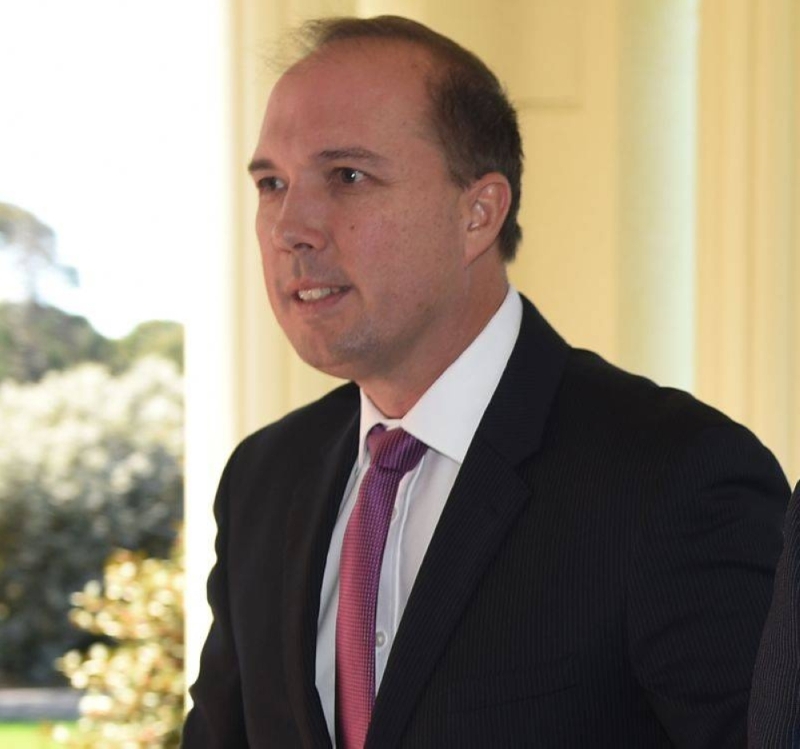
Former defence minister Peter Dutton said he had planned to buy two Virginia-class submarines from the United States by 2030 and build another eight to bring the total fleet strength to 10. — AFP pic

SYDNEY, June 9 — Australia planned to acquire US nuclear-powered submarines over their rival British vessels, the former defence minister said Thursday, revealing usually secretive deliberations on the multi-billion dollar deal.

Peter Dutton said he had planned to buy two Virginia-class submarines from the United States by 2030 and build another eight to bring the total fleet strength to 10.

The project is the centrepiece of Australian efforts to toughen its defences in the face of a more belligerent China under President Xi Jinping.

The choice of contractor — Britain or the US — will have a significant economic impact and would closely immesh the Australian navy with that of the winning nation.

Dutton, who leads the opposition after his conservative coalition lost May elections, said it became “obvious” to him as defence minister that the US submarines were a better choice.

Dutton’s disclosure in an article for The Australian appeared to be aimed at pushing the new government into following his plan.

Australia’s former government had agreed to acquire either US or British nuclear-powered but conventionally armed submarines as part of a three-way defence alliance sealed last September, known as Aukus.

Australia is still conducting an 18-month study of its nuclear-powered submarine options as part of the Aukus deal.

The cost of building even a smaller fleet of eight — Australia’s original plan — has been estimated at A$70 billion (RM220 billion) at an “absolute minimum” and before accounting for inflation, by the Australian Strategic Policy Institute think-tank.

‘Very unusual’

“Clearly these were confidential discussions that he had with the Americans which he was not prepared to disclose while he was in office, and yet he did so afterwards,” said Sam Roggeveen, director of the Lowy Institute’s international security programme.

“It’s very unusual.”

The US submarines were capable of launching missiles vertically and were based on a “mature design”, Dutton wrote.

The British Astute-class option, however, involved a new design with “inevitable” cost blowouts and design faults, he said.

Dutton said nuclear-powered submarines are needed to compete with China because they are stealthier than Australia’s diesel-electric vessels, with no need to surface to recharge batteries.

To avoid a gap in replacing Australia’s ageing fleet of six Collins-class submarines, Dutton said he had planned to directly buy two of the US submarines “this decade”.

The purchase would avoid having to wait until 2038 for the first US-designed submarines to be built in Australia, as the government had promised, he said.

Under the plan, another eight of the US submarines would be built in South Australia, however, bringing the total fleet strength to 10, Dutton said.

To “honour and respect” the losing British side, Dutton said he would have ordered more Hunter-class frigates or other defence material from Britain.

Dutton said he feared the new government was “on the cusp of making a very dangerous decision” such as building a new class of diesel-electric submarines.

Australia’s defence ministry has been asked to comment. — AFP

Thailand makes marijuana legal, but those smoking it in public still could still be fined


Tassanee Vejpongsa
June 09 2022 


Marijuana cultivation and possession in Thailand has decriminalised, but smoking it is still being discouraged, with the development of the medical cannabis industry the aim of new laws.

The stated intention of the country’s public health minister to distribute 1 million marijuana seedlings for cultivation has added to the impression that Thailand is turning into a weed wonderland.

But for the time being, would-be marijuana tourists will be disappointed. Thailand has become the first nation in Asia to decriminalize marijuana — also known as cannabis, or ganja in the local lingo — but it is not following the examples of Uruguay and Canada, the only two countries so far that have legalized recreational marijuana on a national basis.

The government has said it is promoting cannabis for medical use only, warning those eager to light up for fun that smoking in public could still considered to be a nuisance subject to a potential 3-month sentence and 25,000 Thai baht (€675) fine. And extracted content remains illegal if it contains more than 0.2% of tetrahydrocannabinol, or THC, the chemical that makes people high.

That’s roughly the same amount that might be found in hemp, a cannabis variety mostly grown for fibres that are used for industrial purposes.

Thailand is seeking to make a splash in the market for medical marijuana, whose benefits are generally derived from other cannabinol chemicals the plant contains. Thailand already has a well developed medical tourism industry, and its climate is ideal for growing cannabis.

“We should know how to use cannabis,” Public Health Minister Anutin Charnvirakul, the country’s biggest marijuana booster, said recently. “If we have the right awareness, cannabis is like gold, something valuable, and should be promoted.”

But he added, “We will have additional Ministry of Health Notifications, by the Department of Health. If it causes nuisances, we can use that law (to stop people from smoking)."

He said the government prefers to “build an awareness" that would be better than patrolling to check on people and using the law to punish them.

“Everything should be on the middle path,” Anutin said during a news conference ahead of the decriminalization Thursday.


Daily Digest Newsletter


Thailand legalises cultivation and possession of marijuana

9 June 2022
Thailand Marijuana. Picture: PA

The status of marijuana is still in considerable legal limbo because Thai legislators have yet to pass legislation to regulate its trade.

Thailand has made it legal to cultivate and possess marijuana.

The stated intention of the country’s public health minister to distribute one million marijuana seedlings, beginning on Friday, has added to the impression that Thailand is turning into a weed wonderland.

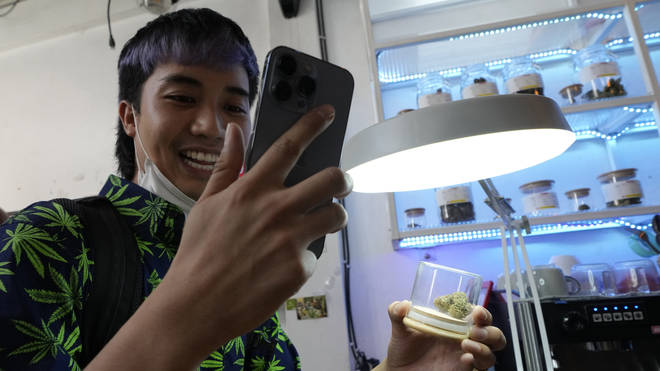
Some Thai advocates celebrated on Thursday morning by buying marijuana at a cafe that had previously been limited to selling products made from the parts of the plant that do not get people high.

The dozen or so people who turned up at the Highland Cafe in Bangkok were able to choose from a variety of buds with names such as Sugarcane, Bubblegum, Purple Afghani, and UFO.

A staff member at the Highland Cafe selects portions of marijuana for a customer in Bangkok, Thailand (Sakchai Lalit/AP)

“I can say it out loud that I am a cannabis smoker. I don’t need to hide like in the past when it was branded as an illegal drug,” said 24-year-old Rittipong Bachkul, the day’s first customer.

So far, it appears there would be no effort to police what people can grow and smoke at home, aside from registering to do so, and declaring it is for medical purposes.

For the time being, however, would-be marijuana tourists might want to proceed with caution.

Thailand’s government has said it is promoting cannabis for medical use only, warning those eager to light up for fun that smoking in public could still be considered a nuisance, subject to a potential three-month sentence and 25,000 Thai baht (£580) fine.

And extracted content, such as oil, remains illegal if it contains more than 0.2% of tetrahydrocannabinol (THC), the chemical that makes people high.

The status of marijuana is still in considerable legal limbo because while it is no longer treated as a dangerous drug, Thai legislators have yet to pass legislation to regulate its trade.

Thailand has become the first nation in Asia to decriminalise marijuana – also known as cannabis, or ganja in the local lingo – but it is not following the examples of Uruguay and Canada, the only two countries so far that have legalised recreational marijuana on a national basis.  

A customer views an array of paraphernalia used to smoke marijuana at the Highland Cafe (Sakchai Lalit/AP)

Thailand mainly wants to make a splash in the market for medical marijuana.

It already has a well developed medical tourism industry and its tropical climate is ideal for growing cannabis.


“We should know how to use cannabis,” public health minister Anutin Charnvirakul, the country’s biggest marijuana booster, said recently.

“If we have the right awareness, cannabis is like gold, something valuable, and should be promoted.”

But he added: “We will have additional Ministry of Health notifications, by the Department of Health. If it causes nuisances, we can use that law (to stop people from smoking).”

The minister said the government prefers to “build an awareness” that would be better than patrolling to check on people and using the law to punish them.

Some immediate beneficiaries of the change are people who have been locked up for breaking the old law.

The first customer of the day celebrates after buying legal marijuana at the Highland Cafe (Sakchai Lalit/AP)

“From our perspective, a major positive outcome of the legal changes is that at least 4,000 people imprisoned for offences relating to cannabis will be released,” Gloria Lai, Asia regional director of the International Drug Policy Consortium, said.


“People facing cannabis-related charges will see them dropped, and money and cannabis seized from people charged with cannabis-related offences will be returned to their owners.”

Her organisation is a network of civil society organisations worldwide advocating drug policies “grounded in principles of human rights, health and development”.

However, economic benefits are at the heart of the marijuana reforms, projected to boost everything from national income to small farmers’ livelihoods.

There is concern over whether the benefits will be distributed equitably.

Containers of marijuana flower buds are displayed at the Highland Cafe (Sakchai Lalit/AP)

One fear is that giant corporations could be unfairly served by proposed regulations involving complicated licensing processes and expensive fees for commercial use that would handicap small producers.

“We have seen what happened with the alcohol business in Thailand. Only large-scale producers are allowed to monopolise the market,” said Taopiphop Limjittrakorn, a legislator from the opposition Move Forward party.

“We are worried the similar thing will happen to the cannabis industry if the rules are in favour of big business.”

His party wants laws now being drafted to tackle the problem.

Small operators are keen to move into the marijuana sector anyway.

On a hot afternoon in eastern Thailand’s Sri Racha district, Ittisug Hanjichan, owner of Goldenleaf Hemp, a cannabis farm, led his fifth training course for 40 entrepreneurs, farmers, and retirees.

Workers tend to cannabis plants at a farm in Chonburi province, eastern Thailand (Sakchai Lalit/AP)

They each paid about 150 dollars (£120) to learn tips on nicking seed coats and tending the plants to get quality yields.

One of the attendees was 18-year-old Chanadech Sonboon, who said his parents used to scold him for trying to secretly grow marijuana plants.

He said his father has changed his mind and now sees marijuana as a medication rather than something to be abused.

The family runs a small homestay and cafe and hopes to one day provide cannabis to its guests.


By Press Association

Faced With Donbass Defeat, US & UK Up the Ante in Ukraine

As Russia presses victory in the Donbass, U.S. and U.K. missiles threaten a new stage in the conflict, writes Christopher Nineham.


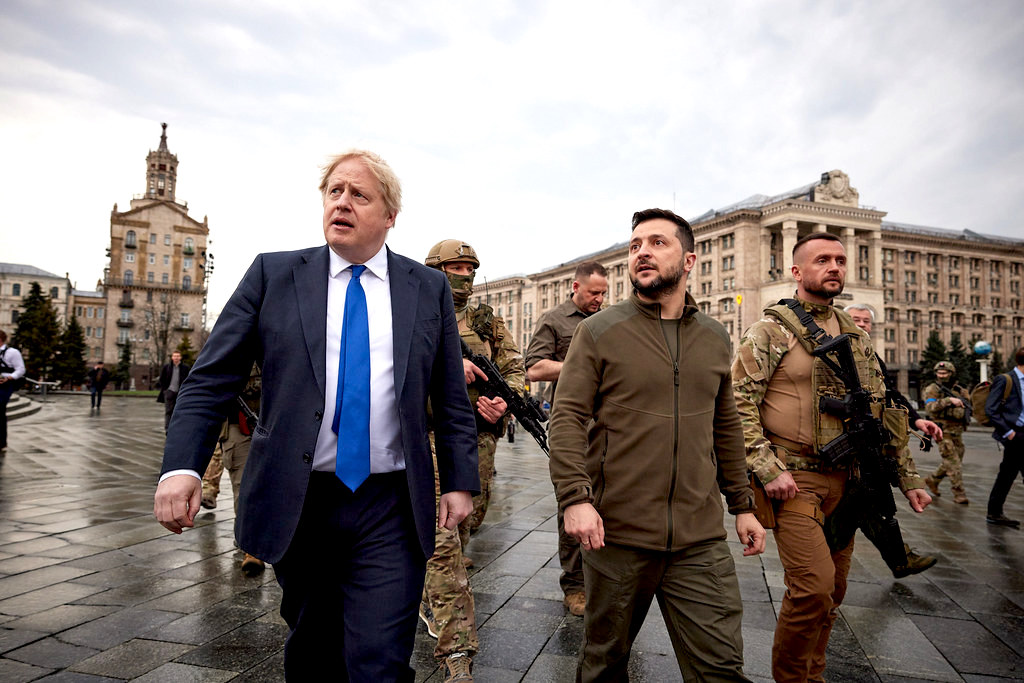
U.K. Prime Minister Boris Johnson, left, meeting Urkaine’s President Volodymyr Zelensky in Kiev, April 9. (Ukraine government)

By Christopher Nineham
Stop the War
June 8, 2022

The British government, as ever following the U.S. lead, is sending longer range missile systems to Ukraine for the first time. The government described the M270 weapon system they are despatching as a “cutting edge” military asset which can strike targets up to 80 kilometres away “with pinpoint accuracy.” Ukrainian soldiers are due to be brought to Britain for training in how to use the missiles.

As even some of the mainstream media point out, on top of the four precision-guided, medium-range rocket systems sent by the U.S. last week, this decision marks a new stage in the war in which the West is prepared to provide the Ukrainian military with the capacity to strike deep in to Russian territory, something they previously carefully avoided.

This is one in a series of escalations on the part of the Western powers. It provoked immediate retaliation in words and deeds from Russian President Vladimir Putin — including the first bombardment of Kiev for five weeks — as Western leaders must have known it would.

It underlines the fact that the West is still pushing for nothing less than the complete defeat of Russia while Russian troops continue their offensive.

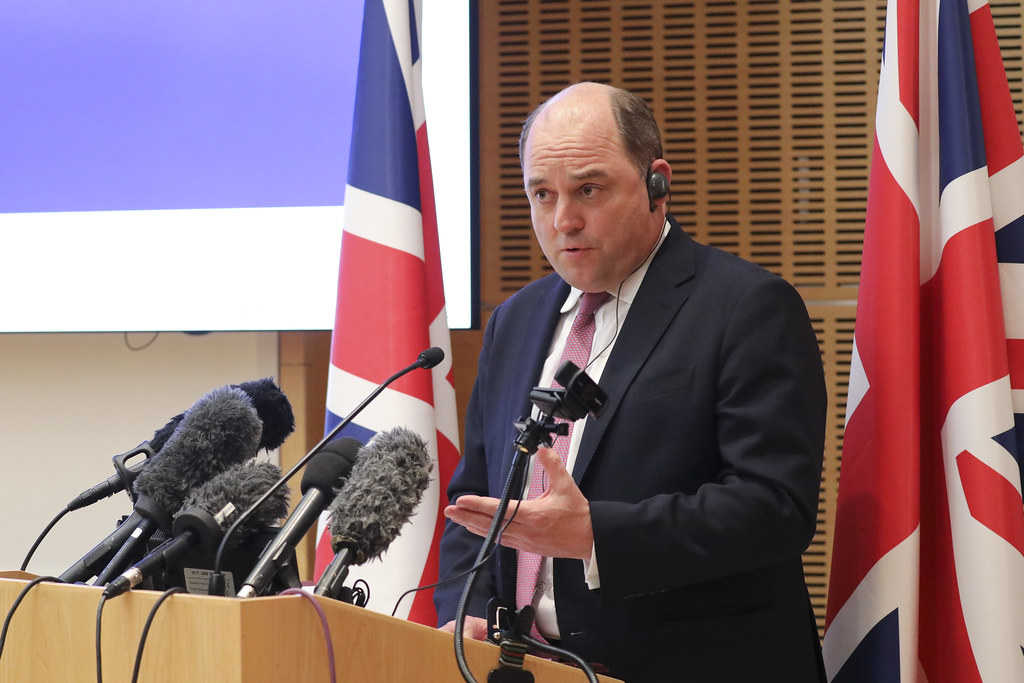
As British Defence Secretary Ben Wallace said in a statement announcing the new weapons shipment, “If the international community continues its support, I believe Ukraine can win.”


U.K. Defence Secretary Ben Wallace during a press conference at the British Embassy in Moscow on Feb. 11. (U.K. government)

As part of this policy of proxy war, the West has been deliberately trying to head off moves towards serious negotiations. The leading pro–Western Ukrainian newspaper Ukrayinska Pravda reported recently that U.K. Prime Minister Boris Johnson himself appeared in Kiev early in May almost without warning, urging Ukraine’s President Volodymyr Zelensky not to negotiate with Putin.

“If you are ready to sign some guarantee agreements with him, we are not,” Johnson said, insisting it was instead the time to “press him.” Johnson later confirmed to French President Emmanuel Macron that he had “urged against any negotiations with Russia on terms that gave credence to the Kremlin’s false narrative for the invasion.”

It is first and foremost the Ukrainians who will suffer from this approach, as the conflict turns into a terrible war of attrition. But the war has global implications and the risks of a frightening military clash between nuclear armed great powers are higher than at any time for half a century.

To understand this situation and to be able to challenge it, we have to see beyond the West’s simplistic story that this is a war between the Western values of freedom and democracy and Russian despotism.

The anti-war movement opposed the Russian invasion from the start. But the West bears a heavy responsibility for this disaster. Senior U.S. foreign policy figures from Henry Kissinger to Madeline Albright and from George Kennan to William J. Burns, the current head of the C.I.A., have advised that the eastward expansion of NATO up to the Russian borders would be deeply provocative to the Russian ruling class. NATO decision makers knew this, but carried on regardless.

Last minute diplomacy might well have averted the war. Many senior former U.S. diplomats and Russia experts urged the U.S. to accept Vladimir Putin’s offer of talks before the invasion took place in January. The advice was rejected. As Ivan Katchanovski, a Ukrainian professor of political studies at the University of Ottawa argues, “The U.S. and U.K. governments show no efforts or desire to achieve peaceful settlement of the armed conflict between Russia and Ukraine.”

Now Britain and the U.S. appear to have abandoned even the limited military restraint they showed early on in the war. Their policy of pumping in the weapons and pushing for outright victory risks disaster.


Christopher Mark Nineham is a British political activist and founder member of the Stop the War Coalition serving as national officer and deputy chair of the Stop the War Coalition in the U.K. He served under Jeremy Corbyn from 2011 to 2015.

The views expressed are solely those of the author and may or may not reflect those of Consortium News.

Zelensky: Fate of Donbas rests in battleground Ukraine city

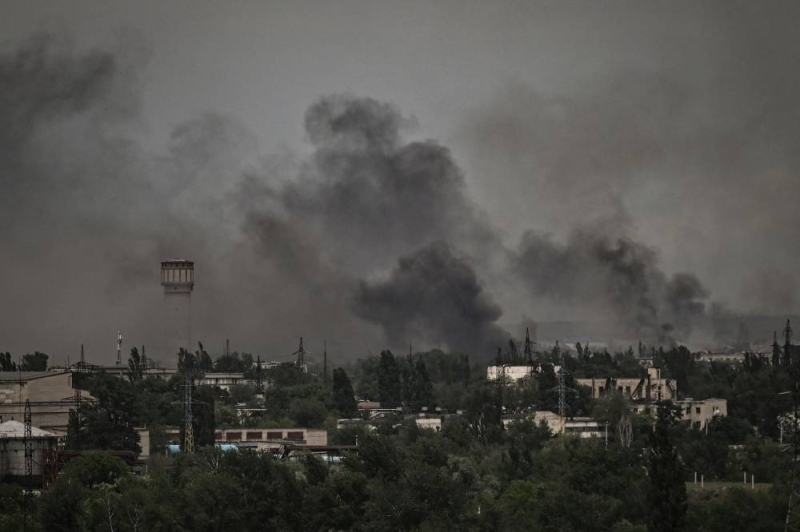
Smoke and dirt rise in the city of Severodonetsk during fighting between Ukrainian and Russian troops at the eastern Ukrainian region of Donbas on June 2, 2022. — AFP pic

LYSYCHANSK, June 9 — Ukrainian soldiers in Severodonetsk are fighting “one of the most difficult” battles against Russian troops since the start of the war, President Volodymyr Zelensky said, adding the fate of the whole Donbas region rests in the eastern city.

Moscow’s forces are concentrating their firepower on the strategically important industrial hub as part of efforts to capture a swathe of eastern Ukraine.

After days of raging street battles, Ukrainian officials conceded that Russian troops control a large part of Severodonetsk, and that their forces might have to pull back due to constant shelling.

In his evening address to the nation, Zelensky said the battle for the city was “very fierce... very difficult. Probably one of the most difficult throughout this war.

“In many ways, the fate of our Donbas is being decided there.”

After being repelled from Kyiv and other parts of Ukraine following their February invasion, Russian President Vladimir Putin’s troops have refocused their offensive on the Donbas region, comprising Lugansk and Donetsk.

The cities of Severodonetsk and Lysychansk, which are separated by a river, were the last areas still under Ukrainian control in Lugansk.

Lysychansk is still in Ukrainian hands but under fierce Russian bombardment.

At the United Nations, Secretary-General Antonio Guterres added his voice to increasingly dire warnings about the conflict’s impact.

“For people around the world, the war is threatening to unleash an unprecedented wave of hunger and destitution, leaving social and economic chaos in its wake,” he said.

Little progress on grain

At talks in Ankara, Russia and Turkey made little headway in striking a deal to secure safe passage for grain exports stuck in Ukraine due to a Russian sea blockade.

At the request of the United Nations, Turkey has offered its services to escort maritime convoys from Ukrainian ports, despite the presence of mines — some of which have been detected near the Turkish coast.

“We are ready to do this in cooperation with our Turkish colleagues,” Russian Foreign Minister Sergei Lavrov told reporters in Ankara.

Kyiv said it would not demine waters around the Black Sea port of Odessa to allow grain exports, citing the threat of Russian attacks on the city.

Lavrov’s Turkish counterpart Mevlut Cavusoglu called Russian demands for an end to sanctions to help grain onto the world market “legitimate”.

“If we need to open up the international market to Ukrainian grain, we see the removal of obstacles standing in the way of Russia’s exports as a legitimate demand,” he said.

But Kyiv, which was not represented at the Ankara talks, pushed back against claims that Western sanctions on Moscow had sent prices soaring.

“We have been actively communicating, the president and myself, about the true cause of this crisis: it is Russian aggression, not sanctions,” Ukraine’s Foreign Minister Dmytro Kuleba said.

Before the war, Ukraine was a major exporter of wheat, corn and sunflower oil. Russia’s blockade has been blamed for contributing to soaring prices, stoking fears of a looming food crisis in poor countries.

As he hosted Mediterranean ministers for talks on the global food crisis, Italian Foreign Minister Luigi Di Maio warned “millions” could die unless Russia unblocked Ukraine’s ports.

But Kremlin spokesman Dmitry Peskov rejected suggestions that grain stuck in Ukrainian ports was fuelling the problem.

“As far as we know, there is much less grain than the Ukrainians say. There is no need to exaggerate the importance of these grain reserves,” he told reporters.

‘Bombings every day’

Severodonetsk appeared close to being captured just days ago but Ukrainian forces launched counterattacks and managed to hold out, despite warnings they were outnumbered by superior forces.

About 800 civilians trapped by the fighting have taken refuge in the city’s Azot chemical factory in the city, according to the lawyer of a Ukrainian tycoon whose company owns the facility.

Ukrainian authorities have yet to confirm the report.

The situation was also increasingly desperate in other parts of the Donbas.

In the city of Bakhmut, an unoccupied school building was reduced to a smouldering wreck after being shelled Wednesday, with burnt books visible among the rubble, according to AFP journalists. No injuries or deaths were reported.

In Severodonetsk’s twin city Lysychansk, residents who had chosen to stay were facing fierce Russian bombardments.

“Every day there are bombings and every day something burns. A house, a flat... And there is nobody to help me,” 70-year-old Yuriy Krasnikov told AFP.

“I tried to go to the city authorities, but nobody’s there, everyone has run away.”

There was some rare good news for Ukraine, as their football side clinched a 1-0 Nations League victory over the Republic of Ireland on Wednesday.

The victory — thanks to a free kick from Viktor Tsygankov — lifted the country’s spirits after their painful failure to qualify for the World Cup. — AFP

Ukraine’s neo-Nazi Azov Battalion attempts rebranding

Jason Melanovski
3 June 2022
WSWS.ORG

Following the surrender of hundreds of its members to Russian forces in the city of Mariupol, Ukraine’s Azov Battalion has undertaken a PR rebranding effort to distance itself from its neo-Nazi background by introducing a new chevron which Azov refers to as “Three Swords,” or a golden trident. The symbol will be used by the newly created Azov Special Forces Unit based in Kharkov.

The “Three Swords” refers specifically to a monument installed at the Azov Regiment’s base in Mariupol. Oleksyi Reins, a member of the Azov Battalion described it as a “symbol of military glory and promise of revenge on its enemies.”

Previously, Azov forces used a Nazi-linked Wolfsangel symbol that Azov claims represents the “idea of the nation,” and which unites the letters “I” and “N” in old cyrillic script. In reality, the insignia is a blatant copy of the Wolfsangel symbol, which was widely used by various Nazi military formations, including several SS divisions that committed massacres during World War II.

Azov Battalion fighters with Nazi flag (WikiCommons)

While Mariupol was the main headquarters of the original Azov Battalion, various forces operating under the Azov umbrella exist in several other major Ukrainian cities, namely Kharkov and Kiev.

The logo swap was first reported widely in English by The Times in an article entitled “Azov Battalion drops neo-Nazi symbol exploited by Russian propagandists,” suggesting the use of neo-Nazi imagery by a Western-backed military organization is only of note due to ubiquitous “Russian disinformation.”

The article tried to deny that the Ukrainian government is attempting any conspicuous rebranding effort by pointing out that the new logo was unveiled for the Azov Special Forces Kharkov and is supposedly separate from the Azov Battalion formerly based in Mariupol.

However, in reality, as Azov member Oleksyi Reins acknowledged, Azov Special Forces Kharkov was “founded by veterans of the Azov Battalion.”

Furthermore, during the unveiling of the new “Three Swords” logo in Kharkov, the commander of the new unit, Maksym Zhorin, stated, “On the same principles and ideological basis as the legendary Azov Battalion, we form new divisions. Every day they become more numerous and professional.”

According to the Ukrainian government, the supposedly new “Azov” was formed as part of the Territorial Defense Forces on February 24, 2022—the day of the Russian invasion of Ukraine—and is now part of the Ukrainian Special Forces.

The various shifts in Azov’s naming, logos and official status within the Ukrainian state are an obvious attempt to obfuscate its neo-Nazi ties.

These efforts are no doubt coordinated with Washington as part of an attempt at “damage control” amid growing suspicion and wariness about Western propaganda on the war in Ukraine and the “democratic” pretenses of the imperialist powers, in particular. The imperialist powers, with the US taking the lead, have been funding these neo-Nazi militias with billions of dollars as COVID-relief measures have been scrapped and inflation at home is tearing away at basic living standards.

As for Azov’s history and ideology, it is clearly a fascist organization that traces its heritage back both to Nazism and far-right Ukrainian nationalist organizations such as Organization of Ukrainian Nationalists (OUN-B) and the Ukrainian Insurgency Army (UPA), which were responsible for the massacres of tens of thousands of Jews, Poles as well as Ukrainians during World War II.

Its founder Andriy Biletsky, previously the leader of the fascist paramilitary Patriot of Ukraine organization, is an outright white supremacist who in 2010 stated that the mission of Ukraine is to “lead the white races of the world in a final crusade … against Semite-led Untermenschen[subhumans].”

In 2014, far-right thugs, including many future members of Azov, helped carry out a US-backed coup against the elected, pro-Russian President Viktor Yanukovych. The Azov Battalion was formed right after the coup. Following the outbreak of civil war in the eastern Donbass region, it was systematically built up and supported with military aid and training primarily coming from the United States, Canada and the United Kingdom.

In November of 2014, with the official Ukrainian Army in shambles and plagued by mass desertions, Azov was incorporated into the newly created National Guard of Ukraine. In the following years, Ukraine received billions in funding and training from Western military officers and played an essential role in carrying out the war against pro-Russian separatists in the east, often with notoriously brutal tactics.

Between 2015 and 2016, the Office of the United Nations High Commissioner for Human Rights connected Azov with war crimes, including mass looting, unlawful detention and torture.

Despite its minimal electoral support within Ukraine, Azov became so powerful within the Ukrainian state that in October 2019 Azov effectively shut down the recently elected President Voldymyr Zelensky’s initial attempts to withdraw Ukrainian forces from the frontlines in the Donbass and implement the 2015 Minsk peace accords.

During a visit to the demarcation line near the village of Zolotoye, Zelensky was confronted by Azov veterans who warned him against withdrawing troops and continuing the peace process as outlined by the Minsk accords. Azov’s leader, Biletsky ominously threatened at the time, “If the President and the Government do not fulfill their direct duty to protect every inch of the Ukrainian land, then we, the volunteer veterans, will do it again.”

Zelensky, originally elected in 2019due to widespread disillusionment with the war and widespread poverty, would subsequently go on to adopt increasingly pro-war nationalist policies in agreement with Washington and the far-right, helping create the conditions that led to the current disastrous war that has already killed tens of thousands and ruined the lives of millions.

Following the initial Russian invasion of Ukraine in February, Azov soldiers were shown carrying out war crimes using cruel tactics in line with their neo-Nazi ideology and history.

Despite a massive propaganda campaign aimed at legitimizing the Azov Battalion in the Western media, more and more reports have surfaced, including in the bourgeois media, that clearly show Azov’s fascist orientation, and explode the “democratic” pretenses of imperialist propaganda over the war.

In Mariupol, civilians have accused Azov forces of deliberately shooting at fleeing cars and kidnapping residents in order to have them serve as human shields while they bunkered within the Azovstal plant and hid from Russian forces.

According to the French newspaper Le Monde, in a video recently shared on social media, Azov members can be identified shooting the knees of defenseless Russian soldiers. Former French soldier Adrien Bocquet, who traveled to Ukraine to serve as a volunteer medic with the Azov Battalion in Kiev and then Lviv, has said that he witnessed Azov troops shelling civilian areas in Bucha, where Russian forces have been accused of killing ordinary people.

Kiev’s half-hearted efforts to rebrand Azov make clear that the Ukrainian government will continue to heavily rely on these fascist forces as it functions as a proxy for an ever more direct war by the imperialist powers with Russia.

Wednesday, June 08, 2022

Mapping the complexities of Turkey's new Syria offensive

Analysis: Driven by domestic concerns and shifting geopolitics, any large-scale Turkish military operation in Syria comes with risks and complications.


James Snell
08 June, 2022

For months, even years, Turkish President Recep Tayyip Erdogan has threatened that Turkey's armed forces and their Syrian rebel allies will launch a new attack on areas currently controlled by the Syrian Democratic Forces (SDF).

The group is dominated by the Kurdish People's Protection Units (YPG), the armed forces of the Democratic Union Party (PYD) Syrian branch of the Kurdistan Workers' Party (PKK).

The PKK is locked in an armed struggle with Turkey, and for Erdogan, the existence of any PKK enclave in Syria is a threat to Turkey and to his government.

Similarly, within Turkey, domestic politics is affected by the continued presence of Syrian refugees, who live in Turkey in their millions.

"Erdogan has announced a policy of securing and developing rebel-held parts of Idlib, Hama, and Aleppo provinces in Syria's northwest, with the intention of deporting Syrians resident in Turkey there"

Domestic opponents of the ruling Justice and Development Party (AKP) blame the government's Syria policy for the continued presence of refugees, who are targets for harassment and attacks within Turkey.

Erdogan has announced a policy of securing and developing rebel-held parts of Idlib, Hama, and Aleppo provinces in Syria's northwest, with the intention of deporting Syrians resident in Turkey there.

Millions of displaced Syrians from other parts of the country now controlled by the regime of Bashar al-Assad already inhabit Idlib.

These areas are not safe, with an Islamic State (IS) insurgency and resistance from YPG-affiliated groups. Similarly, the residents of Turkish-occupied Syria have in recent weeks protested against the presence of Turkish troops, poor governance, and high food and fuel prices, which affect all of Syria.

Turkish military planners believe that the Kurdish-occupied northwest is the wellspring of some of these tensions and that increasing the Turkish buffer zone within Syria will pacify its border, and provide more territory into which Syrians currently resident in Turkey can be sent.

As a measure of the pressure on both northwest and northeast Syria on refugee movement, in January, the SDF administration attempted to expel Syrian Arabs from portions of its territory, if they did not have a card vouching for their presence.

RELATED
Analysis
James Snell

“Some AKP supporters are trying to square the circle by framing an operation on Tel Rifaat as creating space for the refugees to go home, but you only have to look at a map to see how small the area is; this is rationalisation, not reasoning,” Kyle Orton, an independent analyst, told The New Arab.

“Turkey has had chronic problems establishing governance in the areas of Syria it holds, and it seems unlikely adding to them will help that. The hopes from supporters of the Syrian revolution that this is a ‘first step’ towards restarting the anti-Assad war are, of course, delusion. Turkey ended its anti-Assad policy in 2016, and the ‘SNA’ will continue to be banned from engaging in offensive operations against the regime,” he added.

According to Suhail al-Ghazi, a Syrian researcher in Turkey, this is mainly happening because of internal Turkish politics.

“It helps with the Turkish plan to send refugees back and reduce the attack on TSK [Turkish armed forces]. Also, no political party except HDP doesn't support an operation against PKK\YPG elements,” al-Ghazi told TNA.

“However, Turkey and Russia didn't include their disagreements on other issues (Libya and Azerbaijan-Armenia) when discussing Syria so I don't think now there's a deal of Syria for Ukraine.”

Geopolitics have also created an opening for new Turkish movement. With Syria balanced between the forces and proxies of Russia, Iran, and Turkey, the country's civil war had largely frozen in place.


Turkey's armed forces have launched previous interventions against the YPG in Syria. [Getty]

But with Russia's invasion of Ukraine, and the defeating and bogging down of its forces, the Russian leg of the stool has weakened and sagged. Russian forces have reportedly been withdrawn from Syria to fight in Ukraine, as have its allied mercenaries of the Wagner Group and other private military companies.

With Russia less able to resist and with no power to renegotiate, Turkey is freer to pursue an armed solution to what its leaders consider intractable problems.

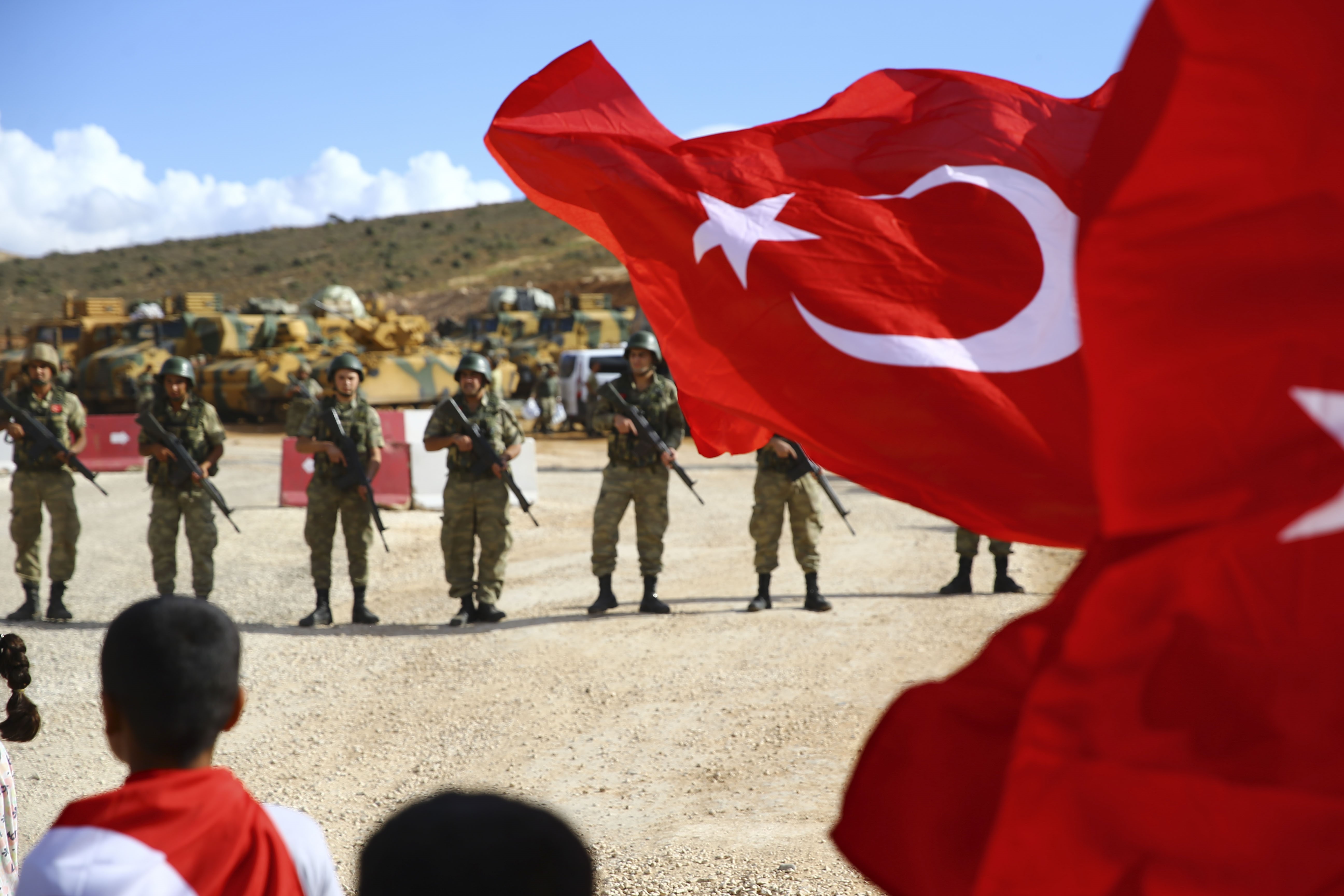
Turkey's armed forces have launched previous interventions against the YPG in Syria. In 2018, Turkey launched an operation in Afrin canton, followed in the year after by an operation into YPG-controlled northern Syria which established Turkish and allied control of a buffer zone south of the Turkish border.

Overt hostilities have decreased since, but low-level violence is constant. In parts of the region which remain YPG-ruled, including Manbij, Arab residents have protested and fought with authorities. Peace has never reigned.

Because Erdogan's threats to mount further military operations have been near-constant, it has been possible for the possible targets of a new offensive to believe that one might not come.

"Despite the scope of the Turkish operation apparently being mapped out by Erdogan, in practice, confusion predominates - not least geographically"

But now, after a formal announcement of a new Turkish attack on Manbij and Tel Rifaat in the northeast, Kurdish forces are scrambling to arm themselves and to court further international support.

The military leader of the SDF, the YPG general Mazloum Abdi, has claimed that the SDF would willingly ally with the Assad regime against any Turkish encroachment. This alignment has been possible for years; it is now more than likely.

Despite the scope of the Turkish operation apparently being mapped out by Erdogan, in practice, confusion predominates - not least geographically.

“I think this operation will only include Tel Rifaat where most of the attacks against the Turkish army are happening. Whether it will include Manbij it's still unlikely to happen,” al-Ghazi said.

Similarly unpredictable is the nature of resistance which may be offered by the YPG.

“The YPG doesn't have a big chance to resist because of the terrain and the available weapons and military resources. And the YPG-affiliated resistance is not going to have a chance because it doesn't have a base or big support in the Arab-majority areas,” al-Ghazi said.

The populations in Manbij and Tel Rifaat are unhappy amid rising prices and what they consider unrepresentative rule. But that does not mean they would welcome new conflict.

RELATED
Analysis
Mohammad Salami

Militarily, the involvement of the coalition fighting on the Assad regime's behalf also complicates matters. Militias like Lebanese Hezbollah have long fought Turkish-backed rebels in northern Syria.

If they were to support the YPG against a Turkish and rebel advance, these groups may not turn back the advance, but they could complicate it.

“But TSK and SNA [Syrian National Army - a Turkish-backed Syrian rebel army] will be on the frontlines with Hezbollah-backed militias in Nubul and Zahraa towns and it may cause a few incidents like in Erbil where Turkish base has been shelled by IRGC-affiliated militias,” said al-Ghazi.

But the situation remains uncertain.

“With Erdogan all things are possible, and he has previously undertaken incursions into Syria after saying he would - despite a broad analytical consensus that this was hot air. So perhaps we are at such a moment again,” said Orton.

“The factors that make one doubt the Turks are about to launch another Syrian operation are: most fundamentally, the Turks have no actual interest in acquiring more Syrian territory - had they wanted Tel Rifaat, for example, they could have taken it at any time over the last half-decade - and with the Syrian issue flaring up in Turkish politics, especially over the refugees, drawing more attention to it is a risky business.”


"Erdogan's bet if he does this is on a swift demonstration of force, for an internal boost as the elections approach and to burnish himself internationally - with the Americans, with NATO [...] and even, more quietly and indirectly, with the Russians"

Any gains could be felt only in domestic politics, and also short-lived. Turkey is mired in other geopolitical controversies, including the request from Sweden and Finland to join NATO due to Russia's invasion of Ukraine.

Turkey has indicated it will oppose those states' membership because of Swedish bans on exporting weapons to Turkey, and Swedish support for the YPG.

“Erdogan's bet if he does this is on a swift demonstration of force, for an internal boost as the elections approach and to burnish himself internationally - with the Americans, with NATO during this showdown with the Swedes and Finns, and even, more quietly and indirectly, with the Russians,” Orton said.

“But in war things can easily go wrong, and if it bogs down or there is some terrible incident leading to a significant loss of life for Turkish soldiers, then it will backfire spectacularly. And, again, given that the benefits of this are minimal, these are high risks.”

James Snell is a writer whose work has appeared in numerous international publications including The Telegraph, Prospect, National Review, NOW News, Middle East Eye and History Today.
Follow him on Twitter: @James_P_Snell
Facebook Inaction: Whistleblower Documents Name BJP MP Vinod Sonkar in 'Fake Account' Controversy

The second pro-BJP network, on which Facebook allegedly took no action, had 54 inauthentic accounts and is one which whistleblower Sophie Zhang believes was associated with the personal account of Sonkar.
THE WIRE
06/JUN/2022

New Delhi: Internal company documents provided by Facebook whistleblower Sophie Zhang to India’s parliamentary committee on information technology have specifically named BJP MP Vinod Kumar Sonkar as having benefited from a network of fake and inauthentic accounts that were not taken down by the social media giant despite being red-flagged.

Zhang has been waiting for nearly six months for Lok Sabha speaker Om Birla to grant permission for her to depose before the parliamentary panel.

In 2019, the former Facebook (now Meta) data scientist found four networks of inauthentic accounts, two helping the Congress and two others benefiting the ruling Bharatiya Janata Party. The two pro-Congress networks had 51 accounts and 526 accounts. The network with 526 accounts had around 100 active accounts per day and was helping amplify the party’s agenda in Punjab elections.

The first pro-BJP network had 65 accounts, and it, along with the two pro-Congress networks, was taken down by the Facebook team a few weeks later on December 19, 2019.

The second pro-BJP network which Zhang identified had 54 inauthentic accounts and is one in which she believes was associated with the personal account of Vinod Kumar Sonkar, a BJP MP from Kaushambi (UP) and current chairperson of the parliamentary committee on Ethics.

This one, Zhang alleges, was never taken down by Facebook and was allowed to operate even after five repeated requests from her.

An inauthentic account (often referred to as a fake account) is an account run by someone who isn’t whom the account purports to represent. These accounts can either belong to a person that doesn’t exist or are being managed and manipulated by a network of volunteers often called an IT Cell. Locating a network of inauthentic accounts is a technical task that requires specialised internal tools.

However, many accounts in such a network show some basic signs like sharing a device or an IP address to perform similar actions, unusual activity patterns during the standard working hours and unavailability of any real information like profile picture, birthday, location etc.

Inability to act countered by contradictory claims from Facebook

In the months following the discovery of a network of inauthentic accounts associated with BJP MP Sonkar, documents show that Zhang raised the issue several times with her colleagues at Facebook, including two other Threat investigators and Facebook India public policy manager.

After documenting (conversation screenshots attached below) her findings on Facebook’s internal collaboration tool – Workplace, she triple-verified her findings given the individual’s stature and suggested ways to act.

On January 28, 2020, she recommended the Facebook India Public Policy Manager to “take some actor-level action against MP Sonkar given the clear evidence between his own account and inauthentic activity benefiting himself – e.g. a warning, a temporary feed limiting as a punitive discouraging measure”.

Appendix 1 – Conversation W… by The Wire

After thanking Zhang for flagging this network, the Facebook team didn’t act on Sonkar’s network of inauthentic accounts. On the contrary, Facebook was quick to take action against the two Congress networks, one of which was removed within eight hours.

Zhang, however, didn’t give up, repeatedly demanding action against the BJP MP’s network. In one of the messages she wrote to Facebook India Public Policy Manager, she says, “To avoid bias through selective responses, I strongly recommend also acting at the same time against the separate inauthentic amplification network identified in Kaushambi.”

Appendix 3 – Conversation W… by The Wire

Nine months later, on August 7, 2020, she reminded her Facebook team of the task by commenting, “The remaining followup here in the task regarded an apparent inauthentic cluster of inauthentic accounts focused on MP Vinod Sonkar (BJP-Kaushambi), which were run out of a network associated with the account of MP Vinod Sonkar and family members. Given the close ties to a sitting member of the Lok Sabha, we sought policy approval for a takedown, which we did not receive; and the situation was not deemed to be a focus of prioritisation.”

Appendix 4 – Post-election … by The Wire

A month later, Zhang was fired from Facebook on the grounds of poor performance after allegedly being asked by her manager to stop conducting her civic work, including in India, on the rationale that it is not valuable to Facebook.

India Fake Account (2019-20… by The Wire

Facebook response


During this process, Facebook tried to save its face to providing contradictory statements to different media organisations.

In an initial claim, Facebook said to The Guardian that Vinod Sonkar IT cell was taken down without delays. They partially retracted this claim upon being confronted with Zhang’s documents attached above.

The Wire contacted the public policy team of Facebook on their final stand on the matter, however, they are yet to respond to our email. We will update this story when we receive the response.

The delaying tactic to suffocate democracy

On November 5, 2021, Sophie Zhang submitted these documents to the Parliamentary Standing Committee on Communication and Information & Technology.

While members of the panel voted for Zhang to come and depose, parliamentary rules require that foreign nationals first get permission from the Lok Sabha speaker before doing so. However, after more than six months, Zhang is still waiting for a response from Lok Sabha speaker Om Birla who has refused to respond to the request.

These new revelations add to earlier allegations that Facebook’s content moderation policies in India have been influenced in part by its fear of angering the ruling BJP party. In August 2020, The Wall Street Journal reported how the platform hesitated in applying the company’s hate speech rules to BJP MLA T. Raja Singh from Hyderabad.

Earlier in January this year, Sophie wrote an Op-Ed for The Wire, strongly suggesting that democracy cannot function if a swarm of fictitious voices drowns out the voices of the people. Unfortunately, the inaction by Facebook, followed by the delay at Lok Sabha to testify her findings, creates a situation where millions of online Indian citizens are blinded by propaganda fueled by hate machinery run by IT Cells of various political parties.

Devesh Kumar is an independent data analyst and Senior Data Visualizer with The Wire.


BREXIT BITES HIM IN THE ASS
As if things could not get any worse for Boris Johnson: Govt faces humiliating defeat in Lords over immigration


BY:MICHIEL WILLEMS
CITY AM


Woes for Boris Johnson deepened last night as the Government suffered a heavy defeat by peers critical of a move to scrap the option of physical proof of immigration status in favour of a digital-only approach.

Members of the House of Lords voted by 159 to 96, majority 63, in a so-called Motion of Regret over new regulations surrounding proof of right to live and work in the UK.


While those with EU settled status are already using a digital-only system, the Government plans to extend this to almost all migrants and phase out physical documents by the end of 2024.

This is despite a 2020 nationwide survey on the experience of the EU Settlement Scheme by Northumbria University, which found that almost 96% were unhappy with not having a physical document.


Independent crossbench peer the Earl of Clancarty, who moved the regret motion, told the upper chamber: “I am not against a digital system; we live in a digital world.

“But a digital-only for immigration status ignores real life, it ignores real experience, it ignores real people.”


The vote came as peers discussed concerns over glitches and system errors that have reportedly caused inconvenience and distress for those requiring digital proof.

Concerns were also raised over accessibility of a digital-only approach for the most vulnerable including older people, those with disabilities and those without access to a smartphone, computer or internet.

Lord Clancarty argued that the Government pressed ahead with the legislation, despite its own 2018 pilot scheme expressly advising against it.

He added that the move also “removes dignity and independence” for survivors of human trafficking and modern slavery.

The lord concluded: “By removing the physical document, you are not just taking away something without which there are significant practical problems anyway, that in itself is insensitive.

“You are depriving citizens of that piece of card or paper that they can hold up and show to anyone ‒ the same sense that our own passport gives ‒ that allows me, a Ukrainian citizen for instance, the right to be resident in this country, the right to work here, the right to find a place to live here.

“And that piece of card or paper I am holding in my hand is a fundamental thing, it is a part of who I am at this moment in time.

“My lords, that is hugely important in itself. To deny that is surely a cruelty and for that reason alone the Government should revoke this legislation.”lancarty

Home Office minister Baroness Williams of Trafford defended the Government’s position, claiming that the digital method is “more secure” as it cannot be lost, stolen or tempered with.

She added that it was the “converse of the Windrush issue” because it is “ensuring that everyone who had a status can prove that status”, and that it will always be up to date.

Baroness Williams told peers: “I am very much a minister of the 21st century and that is the way the Government is going: digital by default.”

The minister quoted user satisfaction of the digital portal at 80%, with 84% satisfaction for landlords and tenants, arguing: “Those figures don’t give me the impression of a system difficult to use.”

However, Lord Clancarty flipped those figures on their heads.

He said: “Now 80% for right to work, 84% for right to work sounds wonderful, but 80% means that 20% of people are struggling with the system.

“And if you think about the millions who will be using the system you are talking about huge numbers of people, so looked at it that way, that is not good at all.”
Ignoring warnings

Liberal Democrat peer Lord Oates accused the Government of being “determined to ignore all the warnings it has been given and all the actual cases of hardship that have been reported to it”.

He quotes multiple errors people have received when trying to access the digital system including “you’re already logged in”, “your details don’t match our records”, “service currently unavailable” and “we can’t find your status”.

This has led to problems with employment, travel, and accessing loans, among other issues.

He highlighted the case of one person who was denied boarding by an airline in Spain when trying to return to the UK, because they had a Romanian passport and were asked for additional photo ID to prove their immigration status.

He also described the case of someone who applied for a job as a carer, but due to an error on the Home Office’s side, were unable to prove their immigration status for weeks.

Lord Oates asked: “Does the Government have any understanding of how distressing these sorts of incidents are to those concerned?

“Will ministers at least try and walk at least a little distance in the shoes of others and try to understand the impact that this policy is having?”

Telling the House that it makes his “blood boil”, he asserted: “It is time, well past time, that our country’s Government stopped acting with such callous disregard for those who have chosen to make their home among us.

“It is time for them to act and reverse this policy.”

Baroness Williams told peers that a full equality impact assessment completed back in October last year will be made available on gov.uk website
India opposes environmental index ranking

Jacob Koshy
NEW DELHI:
JUNE 09, 2022 

2022 EPI Framework

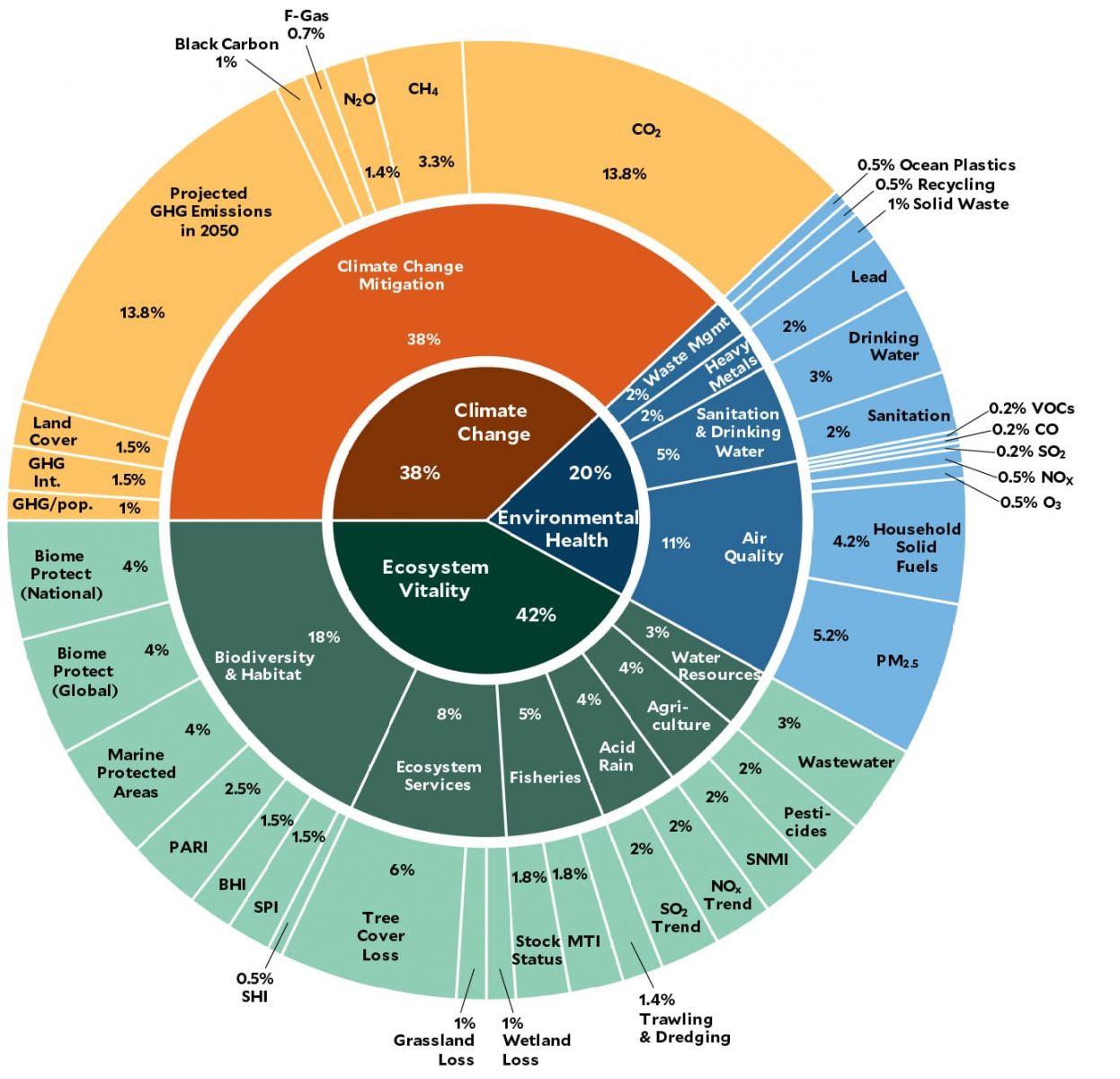
The framework organizes 40 indicators into 11 issue categories and three policy objectives, with weights shown at each level as a percentage of the total score.


The the Environmental Performance Index is prepared by researchers at the Yale and Columbia universities in the United States.

India has objected to a report, called the Environmental Performance Index (EPI), 2022, that places India last in a list of 180 countries on managing climate change, environmental health, and ecosystem vitality. The report is prepared by researchers at the Yale and Columbia universities in the United States.

“These indicators provide a gauge at a national scale of how close countries are to the established environmental policy targets. The EPI offers a scorecard that highlights leaders and laggards in environmental performance and provides practical guidance for countries that aspire to move towards a sustainable future,” says the report that places Denmark, United Kingdom and Finland at the top of the list. “High-scoring countries exhibit longstanding and continuing investments in policies that protect environmental health, preserve biodiversity and habitat, conserve natural resources, and decouple greenhouse gas emissions from economic growth.”

India ranked at the bottom of all countries in the 2022 EPI, with low scores across a range of critical issues with “deteriorating air quality and rapidly rising greenhouse gas emissions” posing major challenges, according to the report.

In a detailed rebuttal, the Union Environment Ministry said that it “does not accept the EPI analysis” and pointed out several parameters, which according to it, were incorrectly weighed by the EPI authors.


Thus “Projected Emission levels in 2050,” which carries a weight of 36% in the ‘Climate Change’ sub-category, calculates trends in emissions from 2010-2019 and extrapolates it to 2050.

India being a developing country and the second largest population will have the increasing trend of GHG (greenhouse gas emissions) and so the correct method, the Environment Ministry said, would be to calculate GHG emissions per capita and have a model with the coefficients taking into account the effect of policies to reduce emissions like increase in use of renewable energy, electric vehicles, creation of carbon sink, etc., to project the values for future years.


The use of “biased metrics and biased weights” caused India’s low rank as it didn’t account for the fact that India had one of the lowest emission trajectories. The index also didn’t account for the fact that developed nations past emissions are responsible for the climate crisis.

Per capita GHG emissions contributed only a “miniscule” 2.6% weight overall in the index. India was a party to Paris Agreement and has given a goal of achieving net zero emissions by 2070 and hence comparing it to countries with Projected 2050 emissions level in 2050 equal to or below zero receiving the maximum score is against the principle of Equity as enshrined in the United Nations Framework Convention on Climate Change agreements.
UN climate chief says 'much more is needed' to combat global warming

Since signing the 2015 Paris climate accord, most countries have stepped up their efforts to reduce greenhouse gas

Nations must not lose hope and focus in tackling global warming despite the many obstacles to international co-operation, the UN climate chief said on Monday at the start of a 10-day meeting in Bonn, Germany.

Patricia Espinosa, whose second term as head of the UN climate office ends this year, spoke in front of diplomats from around the world who will try, during the international gathering, to lay the foundations for this year’s international climate summit in Egypt.

“I appeal to all of you, especially in these difficult and challenging times, not to lose hope, not to lose focus, but to use our united efforts against climate change as the ultimate act of unity between nations,” she said.

Since signing the 2015 Paris climate accord, most countries have stepped up their efforts to reduce greenhouse gases responsible for human-made global warming.

But, collectively, those pledges still fall far short of what is needed to limit global warming to 1.5ºC above pre-industrial levels by the end of the century.

While Ms Espinosa said that “much more” is needed, she noted that the commitments so far were made during a time of international turmoil — from former US president Donald Trump's decision to pull his country out of the Paris accord, later reversed by the Biden administration, to the first years of the coronavirus pandemic.

“We must never give in to despair,” she said, joining a chorus of scientists and policymakers who reject climate doomism. “We must continue to move forward. Look at what we have accomplished in the last six years.”

Many of the key issues delegates will try to resolve in the coming days centre on financial aid to poor countries struggling to cope with the impact of climate change.

Ms Espinosa made it clear that she expected leaders to provide their delegates with the necessary backing to agree upon what she described as a “balanced package” soon.

“We must understand that climate change is moving exponentially. We can no longer afford to make just incremental progress,” she said. “We must move these negotiations along more quickly. The world expects it.”

Representatives of the group of 46 Least Developed Countries demanded that big polluters such as China and the US cut their emissions more strongly and pay for the damage that is already resulting from climate change.

“Countries with much greater responsibility and capabilities than ours must close the funding gap so that when the impacts of climate change hit — when houses and hospitals are washed away, when crops are destroyed, when islands sink and when whole communities are displaced — the costs don’t land on the already vulnerable households,” said the group’s chairperson, Madeleine Diouf Sarr from Senegal.

SAWA LAKE IRAQ

Sawa Lake is now dry due to years of drought.
 
AFP


NOBODY WANTS A GREEN BOURSE
MEPs vote down key part of climate plan in 'bad day for European Parliament'


Wed, 8 June 2022


The European Parliament voted Wednesday to reject a reform of the EU carbon trading system, in a surprise setback to the bloc's Green Deal climate plan.

The EU has vowed to cut greenhouse emissions by 55 percent by 2030, but Green and socialist MEPs judged the plan to expand carbon trading insufficiently ambitious.

The plan to expand the EU Emissions Trading System (ETS) to include carbon from transport and construction is a keystone of Brussels' entire climate package.

It also legislated the abolition of exceptions to the carbon trading scheme for European industry in exchange for a carbon tax on imports at the EU's borders.

The text will now go back to the parliament's environmental committee to be re-negotiated, in a severe blow to the European Commission's key legislative projectl, "A European Green Deal," first proposed in December 2019.

There were fierce recriminations following the vote, with conservative and liberal members accusing the socialists of allying with extremists to defeat the measure by 340 votes to 265.

The left in turn accused the right of watering down the plan in committee, forcing those seeking a more ambitious goal to make a stand.

"You can't seek support from the far-right to lower the level of ambition and then complain that we voted with them. You need to be coherent," declared socialist group leader Iratxe Garcia.

But Peter Liese, the centre-right MEP charged with steering the ETS reform, warned that MEPs had ceded the legislative initiative to EU member state capitals.

"It is a bad day for the European Parliament," he said.

In mid-May, the parliament's environment committee approved expanding the ETS after lengthy negotiations between the political blocs.

At the time the plan came to a vote, it stipulated that companies would have to pay for the CO2 emissions of their buildings and vehicles by 2030.

It also provided for a 63 percent reduction in emissions from sectors subject to the European carbon market by 2030 compared to 2005.

This was better than the target proposed by the European Commission, but a clear step backwards compared to the 67 percent voted in the environment committee.

(With agencies)
Microplastics found in freshly fallen Antarctic snow for first time


New Zealand researchers identified tiny plastics, which can be toxic to plants and animals, in 19 snow samples


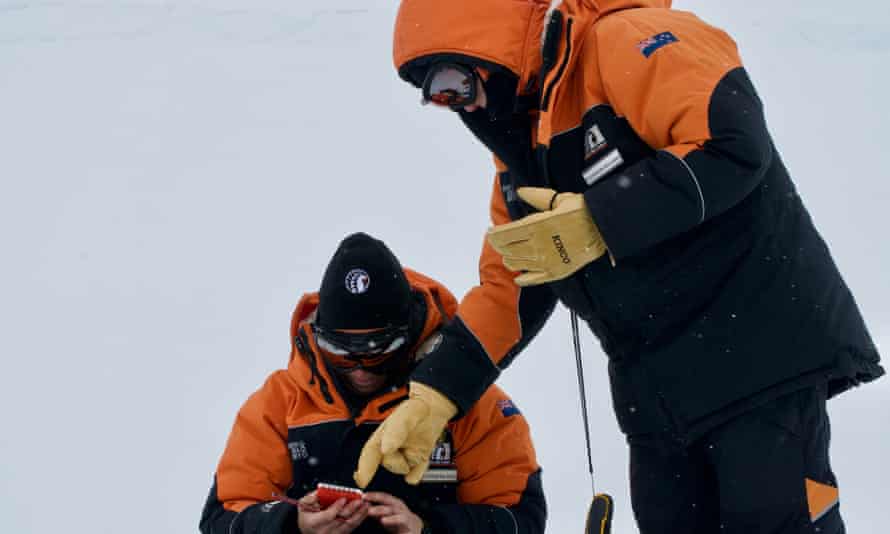
Research published in The Cryosphere journal identified microplastics in freshly fallen snow in Antarctica for the first time. Photograph: Alex Aves


Eva Corlett in Wellington
THE GUARDIAN
Wed 8 Jun 2022


Microplastics have been found in freshly fallen snow in Antarctica for the first time, which could accelerate snow and ice melting and pose a threat to the health of the continent’s unique ecosystems.

The tiny plastics – smaller than a grain of rice - have previously been found in Antarctic sea ice and surface water but this is the first time it has been reported in fresh snowfall, the researchers say.

The research, conducted by University of Canterbury PhD student, Alex Aves, and supervised by Dr Laura Revell has been published in the scientific journal The Cryosphere.


Microplastics found deep in lungs of living people for first time


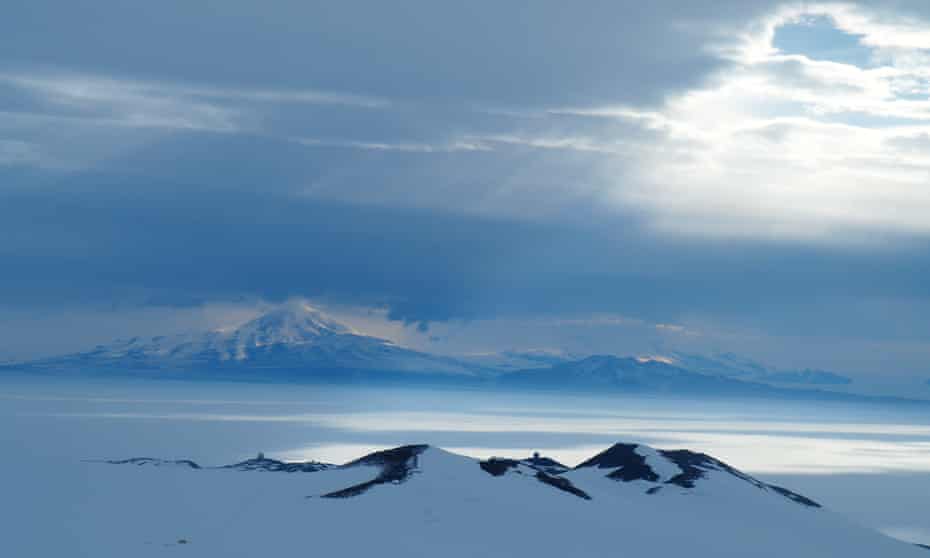
Aves collected snow samples from the Ross Ice Shelf in late 2019 to determine whether microplastics had been transferred from the atmosphere into the snow. Up until then, there had been few studies on this in Antarctica.
Advertisement


“We were optimistic that she wouldn’t find any microplastics in such a pristine and remote location,” Revell said. She instructed Aves to also collect samples from Scott Base and the McMurdo Station roadways – where microplastics had previously been detected - so “she’d have at least some microplastics to study,” Revell said.

But that was an unnecessary precaution – plastic particles were found in every one of the 19 samples from the Ross Ice Shelf.

“It’s incredibly sad but finding microplastics in fresh Antarctic snow highlights the extent of plastic pollution into even the most remote regions of the world,” Aves said.

Plastic pollution has been found from the summit of Mount Everest to the depths of the oceans. People are known to inadvertently eat and breathe microplastics and another recent study found that the particles cause damage to human cells. A study last year found that airborne microplastics are “spiraling around the globe”.

Aves found an average of 29 microplastic particles per litre of melted snow, which is higher than marine concentrations reported previously from the surrounding Ross Sea and in Antarctic sea ice.

Samples taken from immediately next to the scientific bases on Ross Island, Scott Base and McMurdo Station threw up larger concentrations – nearly three times that of remote areas.

University of Canterbury researchers work in Antarctica in 2019.
 Photograph: Lucy Howell


There were 13 different types of plastic found, with the most common being PET – the plastic commonly used to make soft drink bottles and clothing.


Atmospheric modelling suggested they may have travelled thousands of kilometres through the air, however it is equally likely the presence of humans in Antarctica has established a microplastic ‘footprint’, Revell said.

“There was a photo we found of some marker flags that are put out for use for wayfinding around the base…those colors matched the most commonly colored microplastics that we found in the environment.”


Revell’s prior research has shown that microplastics in the atmosphere can trap radiation emitted by the Earth and contribute to climate change. Dark microplastics in icy surfaces could absorb sunlight and lead to localised warming, she said. The plastics can also be toxic for animals and plant life.

“We’re still learning a lot about the impacts, but from what we know so far, it’s not very good.”