Friday, October 14, 2022

MS.FLIP FLOP
Prime Minister Liz Truss commits to taking action to get rid of no-fault evictions

It follows warnings that backtracking on the promise would be a ‘betrayal’ of private renters

Liz Truss speaks to the House of Commons during Prime Minister’s Questions 
/ PRU/AFP via Getty Images

ByJemma Crew
Miriam Burrell
2 days ago

The Prime Minister has doubled down on a Tory manifesto pledge to scrap so-called “no-fault” evictions of private renters in England.

Liz Truss pledged a ban on Section 21 notices -which allow landlords to evict a tenant without having to give a reason - after reports earlier this week that the Government might throw out the Conservative Party’s 2019 manifesto commitment.

It follows warnings from charities on Tuesday that backtracking on the pledge would be a “betrayal” of private renters across the country, and would fuel homelessness.

Going back on the commitment to end no-fault evictions is an act of extreme callousness

Labour MP Graham Stringer told the Commons on Wednesday: “Spooking the markets and increasing the cost of borrowing and increasing the cost of mortgages was almost certainly an act of gross incompetence rather than malevolence.

“But going back on the commitment to end no-fault evictions is an act of extreme callousness,” he said during Prime Minister’s Questions.


“Can the Prime Minister reassure the 11 million private renters in this country that she will carry out her commitment to get rid of no-fault evictions?”

Ms Truss replied: “I can.”

On Tuesday, Downing Street said no decisions had been made on whether to pause a promised ban on Section 21 notices, which allow landlords to evict a tenant without having to give a reason.

The Tories first pledged to scrap no-fault evictions in 2019 in the election manifesto.

In May, the Queen’s Speech confirmed that no-fault evictions would be abolished in a new Renters Reform Bill, which would also introduce an ombudsman to manage disputes and extend the Decent Homes Standard to privately renting households.

No-one should be needlessly evicted from their home as we head into what will be an extremely challenging winter for thousands

Kiran Ramchandani, director of policy and external affairs at homelessness charity Crisis, said: “After an anxious 24 hours, renters will be breathing a sigh of relief to hear the Prime Minister reconfirm the Government’s commitment to ending no-fault evictions.

“No-one should be needlessly evicted from their home as we head into what will be an extremely challenging winter for thousands.

“The Government must now confirm they will bring forward the Renters Reform Bill in this Parliament so that renters can be given the stability they are crying out for.”

If you are a private tenant, a landlord can ask you to move out by issuing a Section 21 or Section 8 notice.

A Section 8 notice can be issued if a landlord already has a reason to evict a tenant, such as rent arrears, damage to the property or if there have been neighbour complaints.

A Section 21 notice is commonly referred to as a “no-fault eviction” as landlords don’t need to give a reason for the eviction.

The Government published its plans to end no-fault evictions in a white paper on June 16.

Proposed legislation for the Renters Reform Bill also includes an end to blanket bans on benefit claimants or families with children, doubling notice periods for rent increases and giving tenants stronger powers to challenge unjustified hikes.
U$
Rising rates push more homebuyers to riskier adjustable-rate mortgages


Mortgage rates climbed in the first week of October, 
with the 30-year conforming rate reaching 6.81%, 
the Mortgage Bankers association reported Wednesday. 
Alexis C. Glenn/UPI | License Photo

Oct. 12 (UPI) -- Mortgage applications dropped last week as interest rates continued to climb, pushing more homebuyers toward risky adjustable-rate mortgages.

Mortgage application volume for the week ending Friday fell 2% from the prior week, the Mortgage Bankers Association reported Wednesday.

"Mortgage rates moved higher once again during the first week of the fourth quarter of 2022, with the 30-year conforming rate reaching 6.81 percent, the highest level since 2006," Mike Fratantoni, MBA's senior vice president and chief economist, said in a news release. Last week's 30-year-conforming rate was 6.75%.

All mortgage types saw rate increases, with five-year adjustable-rate loans seeing the biggest hike at 20 basis points to 5.56%. ARMs made up 11.7% of all mortgages, up from about 3% early in the year, CNBC noted.

ARMs are considered riskier because they start out at a lower rate for a period of time, but eventually adjust to market rate, which can lead to higher monthly mortgage bills if rates increase.

The volume of applications fell for purchases and refinancing, with refinancing holding its 29% share of mortgage activity. Applications for purchases were 39% below a year ago.

"The news that job growth and wage growth continued in September is positive for the housing market, as higher incomes support housing demand," Fratantoni said. "However, it also pushed off the possibility of any near-term pivot from the federal Reserve on its plans for additional rate hikes."

U.S. employers added 263,000 hires in September, the Labor Department reported Friday.

Mortgage rates have more than doubled since the Fed began raising its benchmark federal funds rate to fight inflation.

Loans insured by the Federal Housing Administration made up 13.5% of all mortgages, up from 13.2% the week before. Veterans Affairs-backed loans increased to 10.9% of all applications, up from 10.7%, while USDA loans fell to 0.5% from 0.6%.


Yesterday, we released our Industrial Blueprint for Job Creation and Prosperity – a plan to re-tool our economy and invest in the stability, opportunity, and good standard of living that workers need to build a better future here. It outlines exactly how Alberta can attract new industries and create stable, well-paying jobs for all of the hard-working people that call our province home.

Will you share it with your MLA? Click here to automatically send an email calling on them to listen to workers and follow the Blueprint.

Because here’s the thing. Hard-working Albertans are the engine of our economy. Getting the economy back on track starts with respecting and supporting the workers who built this province—not driving them away. We can build a better future, but we need to start now or we’ll be left behind.

We need your help to make sure our politicians focus on our future and follow our lead. Click the link below to automatically share it with your MLA.

https://action.afl.org/action-pages/industrial-blueprint-email/

In solidarity,

Gil

Gil McGowan
President
Alberta Federation of Labour

Facebook Twitter Instagram
AFL.org

Alberta Federation of Labour
10408 124 St, #300, Edmonton,
AB T5N 1R5, Canada

AFL logo
Record-low water levels expose volcanic ash in Lake Mead


The growing "bathtub ring" around Lake Mead, is seen near Hoover Dam, where water levels have declined dramatically in Boulder City, Ariz., on May 22. 
File Photo by Jim Ruymen/UPI | License Photo

Oct. 12 (UPI) -- Record-low water levels in Lake Mead in Nevada and Arizona have exposed volcanic ash from eruptions 12 million years ago as far away as Idaho, Wyoming and Colorado.

The discovery may help investigators better understand future ashfall risks, researchers at the University of Nevada-Las Vegas said in a recent study.

"Ash from even moderately explosive eruptions can travel hundreds of miles from the source, blanketing entire areas with anywhere from a centimeter to several meters of the heavy material," Eugene Smith, a UNLV emeritus professor of geology, said in a news release.

"Although the Las Vegas Valley is currently very far away from any active volcanoes, we can and will have ash from these volcanoes fall over Southern Nevada in the future."

Even small amounts of ash can become heavy enough when wet to take down power lines and block roadways, he said, and inhaling tiny, sharp ash can cause significant lung damage.

Using geographic mapping, researcher at UNLV's Cryptotephra Laboratory for Archeological and Geological Research located ash layers in Lake Mead and collected samples.

Scientists determined that the ash layers were mostly between 6 million and 12 million years old with some dating to only 32,000 years ago.

They found distinctive ash from four possible sources: the Snake River Plain-Yellowstone hotspot track, which is a chain of volcanic centers in the Yellowstone National Park area; the Southwest Nevada volcanic field northwest of Las Vegas; the volcanoes of Walker Lane in western Nevada and southeaster California; and the Ancestral Cascades, which extend from northern California into British Columbia.

"Studying the past can help you plan for the future," CLAGR lab manager Rachael Johnsen said in the new release.

"The ash layers we study come from volcanoes long extinct. However, studying them has helped us determine just how often the Law Vegas area was inundated with ash over time and may help us prepare for future events from active volcanoes far from us."

The volcanic ash is just one relic uncovered as the water levels have receded.

Severe drought has exposed everything from previously sunken boats to human remains in Lake Mead, which has fallen to about 27% of full capacity as of September, according to CNN.

"We knew that these ash units existed, but we were surprised to find so many as the Lake Mead water level lowered," Smith said.


World Health Organization works to contain Ebola outbreak in Uganda


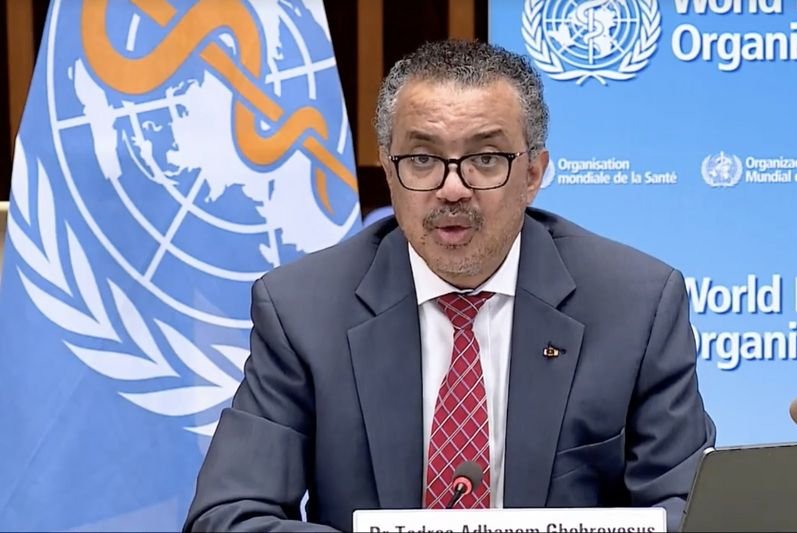
World Health Organization Director General Tedros Adhanom Ghebreyesus said Wednesday that it was working with Uganda to prevent the spread of Ebola to other nations.
Photo by World Health Organization/Twitter

Oct. 12 (UPI) -- The World Health Organization said Wednesday that it was working with Uganda to prevent the country's Ebola outbreak from spreading to other nations.

Health authorities in Uganda have identified 74 confirmed and probable cases of Ebola. At least 39 people have died and 14 others have recovered from the disease.

"Our primary focus now is to support the government Uganda now to rapidly control and contain this outbreak, to stop it from spreading to neighboring districts and neighboring countries," WHO Director General Tedros Adhanom Ghebreyesus said during a global health update in Geneva, according to CNBC.

The East African nation declared an Ebola outbreak in late September after a person from a village in the central part of the country tested positive for the virus.


According to experts, Ebolavirus does not spread through airborne transmission. 

People catch the disease through direct contact with body fluids of a person who has fallen ill or died from the virus. It can also spread through contact with contaminated materials and infected animals.

Ebola is not contagious until symptoms appear, which can take 2 to 21 days. On average, it takes about 8 to 10 days for symptoms to show up.

Ebola symptoms include unexplained hemorrhaging, bleeding or bruising as well as fever, severe headaches, muscle and joint pain, weakness and fatigue, sore throat, loss of appetite, stomach pain, diarrhea and vomiting, according to the Centers for Disease Control and Prevention.

While there are currently no Ebola cases in the United States, the CDC has issued a Level 2 alert, which stipulates enhanced precautions, for travel to Uganda.

"Travelers should avoid contact with sick people and avoid contact with blood or body fluids from all people," the CDC said.
Ultrasound treatment may blast away kidney stones without pain

By Alan Mozes, HealthDay News

A non-surgical and minimally painful treatment enlists two types of ultrasound to zap "ureteral stones," causing them to break up, dislodge and reposition in order to make passing the stones easier and faster. Photo by Africa Studio/Shutterstock


A new ultrasound treatment for kidney stones might provide pain-free relief while the patient is awake, researchers say.

Kidney stones are often excruciatingly painful. In most cases, patients are told to just ride it out, sometimes for weeks, in the hope the stone will eventually pass through the urinary tract -- from kidney to bladder -- on its own. But for roughly one in four patients that never happens, triggering surgical intervention.

However, a small new study suggests there may be another way: a non-surgical and minimally painful treatment that enlists two types of ultrasound to zap "ureteral stones," causing them to break up, dislodge and reposition in order to make passing the stones easier and faster.

"The two-pronged approach is to first break the stone into fragments and then move the fragments toward the exit so they will pass," explained study author Dr. M. Kennedy Hall. He is a professor in the emergency medicine department at the University of Washington School of Medicine, in Seattle.

The goal, said Hall, is "to remove the stone right away, when you first come to the doctor, so you don't sit home in pain and anxiety," unsure if invasive surgery -- complete with anesthesia -- is in the offing.

In the study, Hall's team focused on the potential of combining two different ultrasound tools: ultrasonic propulsion (UP) and burst wave lithotripsy (BWL).

The idea stemmed from a NASA-led effort to develop a non-sedation approach to kidney stones for astronauts on long-haul trips.

RELATED Change of diet may reduce chance of kidney stones, study shows

Ultrasonic propulsion is designed to help move and reposition the problem stone, while BWL is deployed to break up the stone into smaller pieces.

The authors pointed out that a third procedure -- called shock wave lithotripsy -- is already a go-to when surgery is called for. But it requires sedation, and is decidedly not pain-free.

Dr. Arash Akhavein is a urologist with Cedars-Sinai Medical Center in Los Angeles. He said the shockwave approach is essentially an invasive way to "pulverize the stone and allow passage."

RELATED  Ultrasound 'bursts' may treat kidney stones in a doctor's office

Other standard treatments include the insertion of "a special endoscope through the urethra and urinary channels to find and break the stones with a laser, and/or to remove stone fragments with a special basket through the scope," added Akhavein, who was not involved in the study.

And for particularly large stones, "we puncture a small hole in the back into the kidney to break the stone and remove the pieces," he noted.

"Each method has indications and is suitable for certain cases. All require a trip to the operating room, almost always with general anesthesia," Akhavein explained.

By contrast, ultrasonic propulsion and BWL can be performed while patients are awake, whether in an emergency room or a clinic setting. And according to Hall and his associates, both techniques are essentially "painless."

To see how well the dual ultrasound approach might work, the investigators enlisted 29 patients in 2018, treating 16 with propulsion alone and 13 with it and BWL.

Both techniques utilize different buttons on the same ultrasound machine, Hall noted.

In the new study, ultrasonic propulsion triggered stone movement in 19 of 29 patients. In two cases, the stones were actually pushed out of the urinary tract all the way into the bladder, providing immediate relief in one patient.

The team also found that BWL had effectively broken stones up in seven out of 13 UP/BWL patients, typically in 10 minutes or less, Hall noted.

And over two weeks following ultrasound treatment, stones passed out of the body in 18 out of 21 patients, all of whom had stones closer to their bladder than to their kidney. For this group, on average, full stone passage took four days post-procedure.

No serious side effects were observed, and pain levels were markedly lower after ultrasound, overall. Those who did not get the desired result went in for standard surgery.

The team cautioned that the findings are preliminary, and more study will be needed with a larger group of patients.

Hall said if all goes well, he could see the two techniques becoming a viable patient option within two to three years.

And that will likely be of help for kidney stone patients, Akhavein said, particularly for those with relatively small stones.

The findings were published in the November issue of The Journal of Urology.

More information

There's more on kidney stones at the National Kidney Foundation.

Copyright © 2022 HealthDay. All rights reserved.


Cholera protection gaps in U.S.: No new vaccine supply, no national stockpile


1/5
Vaccine expert Dr. Peter Hotez calls it "shortsighted" of the U.S. government not to keep a national cholera vaccine stockpile.
Photo courtesy of Dr. Peter Hotez

WASHINGTON, Oct. 13 (UPI) -- Shortages of U.S. cholera vaccine have raised concerns among some of the nation's top infectious disease doctors, who fear Americans could become highly vulnerable to a public health threat that can spread and kill quickly.

"We got caught flat-footed with monkeypox. This is a wake-up call -- we can't get caught flat-footed again with cholera," Dr. Peter Hotez, co-director of Texas Children's Hospital Center for Vaccine Development, told UPI in a phone interview.

Right now, only one Food and Drug Administration-approved cholera vaccine exists. The U.S. government wants to expand this travel vaccine's use to include children, as well as adults, who head to cholera hotspots.

But it sits on the U.S. drug shortages list and has been unavailable for nearly two years. And no federal vaccine supply exists as backup in case of a disaster-related mass cholera outbreak in this country.

Rising poverty, urbanization, political instability and conflict, along with climate change that spurs natural disasters, are 21st century influences that contribute to cholera outbreaks in other parts of the world, including most recently in Haiti, said Hotez, dean of the National School of Tropical Medicine at Baylor College of Medicine.

"We'll see more cases of cholera, monkeypox and coronavirus-like illnesses" globally, Hotez said, citing his 2021 book, Preventing the Next Pandemic.

He added: "When epidemics occur, they're quite explosive, and a lot of people can perish very quickly. You can't wait six months for a company to gear up. ... This is the problem with not adequately stockpiling this [cholera vaccine in the United States], and nobody is looking [at the issue from] an aerial view."


Surges during disasters


Cholera, a severe diarrheal illness caused by the bacterium Vibiro cholerae, may surge in the wake of man-made or natural disasters in areas that lack clean water, adequate hygiene and proper sanitation.

Worldwide, about 1.3 million to 4 million people develop cholera annually, and 21,000 to 143,000 die from it, according to the Centers for Disease Control and Prevention.

RELATEDWater shortage threatens thousands affected by volcanic eruption in DRC

The CDC says cholera rarely occurs in the United States, though it was common in the 1800s, because its spread was basically eliminated by modern water and sewage treatment systems.

Yet, the United States is not immune to a problem that constantly ravages so many countries, Hotez said. He noted, for example, that the Texas Gulf Coast, where he lives, could be vulnerable to a cholera outbreak after a hurricane.

"So," Hotez said, "I think it's shortsighted the U.S. government doesn't provide stockpiling [of cholera vaccine]. ... The U.S. needs to catch up with more stockpiling than it currently does."

Nearly all cholera cases reported in the United States arise from international travel, according to the CDC. But when outbreaks occurred in countries near the United States, such as Haiti in 2010, the number of U.S. cholera cases increased. Imported, contaminated seafood also has caused infections.

Globally, an emergency stockpile of oral cholera vaccine was established in 2013 by the World Health Organization's International Coordinating Group and partners.

Since the stockpile's creation, WHO spokeswoman Amna Smailbegovic told UPI, more that 123 million doses have been shipped to 23 countries -- from Bangladesh to Zimbabwe.

After a production increase, the amount of cholera vaccine shipped from the global stockpile rose to 27 million doses in 2021, up from 200,000 doses in 2013, according to WHO.

"All countries are eligible to request vaccines from the global stockpile. However, the risk of a cholera outbreak in high-income countries is very low, so we do not expect this to be the case," WHO said in an emailed statement.

Not tested in U.S.

However, Shanchol and Euvichol-Plus, the two-dose cholera vaccines currently available for mass vaccination campaigns through WHO's global stockpile, were not tested or made in the United States, which experts say the FDA prefers.

CDC spokeswoman Candice Hoffmann underscored the United States' "strong and reliable drinking water systems, adequate sanitation, hygiene and sewage infrastructures" in an emailed statement to UPI on Wednesday.

"In the unlikely event such an outbreak [of cholera] were to occur, CDC would work closely with FDA to seek emergency use licensing for Shanchol and Euvichol-Plus cholera vaccines using data from its usage overseas," Hoffman said.

To allow emergency use authorization, the FDA said it thoroughly evaluates available safety, effectiveness and manufacturing quality information -- a process that may hamper fast response to a public health emergency.

When Pfizer Inc. sought permission for emergency use of its COVID-19 vaccine at the end of 2020, for example, the process took three weeks.

To date this year, 23.5 million doses of cholera vaccine have shipped from the global stockpile, another 8 million doses required for the second dose of the two-dose regimen are pending shipment and more requests are under review, WHO said.

No vaccine in stockpile


By contrast, there isn't a single dose of cholera vaccine in the U.S. Strategic National Stockpile in case of outbreaks, spokeswoman Dawn Young told UPI in an email. This stockpile distributed ventilators and personal protective equipment at the peak of COVID-19, and stores two types of monkeypox vaccine.

The only cholera vaccine approved by the FDA, Vaxchora, has been on the FDA's national drug shortage list for well over a year. And until 2016, when Vaxchora received FDA's go-ahead for use in adults ages 18 through 64, no cholera vaccine had been available for decades for U.S. travelers are risk.


Maryland-based Emergent BioSolutions, which manufactures Vaxchora, told UPI its last batch of the one-dose oral cholera vaccine for U.S. international travelers had been shipped in December 2020.

"Given the unprecedented impact and halt in global travel during the pandemic, we proactively decided to discontinue production of Vaxchora ... [but] continued to diligently monitor travel health trends in preparation for production ramp-up," Jonathan Wong, Emergent Travel Health's general manager and global vice president, said in an email.

Emergent told UPI it resumed Vaxchora's production "in third quarter 2022," but won't have more supply available until early 2023. The vaccine, which costs about $300 per dose, is made at Emergent's plant in Bern, Switzerland.

Emergent -- the target of a congressional probe into the manufacture of COVID-19 vaccines -- said it plans to produce a supply of cholera vaccine "that will meet full year (2023) forecasted demand."

The call for storing a cholera vaccine In the United States dates back more than a decade.


Humanitarian resource

In 2010, Hotez, Dr. Matthew Waldor and Dr. John D. Clemens co-authored a New England Journal of Medicine article that urged creation of a national cholera vaccine stockpile as a "humanitarian and diplomatic resource."

That never materialized, though WHO's global stockpile began a few years later.

Waldor, a professor of medicine at Brigham and Women's Hospital and Harvard Medical School, told UPI in a telephone interview that cholera remains problematic in many parts of the world, but there's been "just the occasional imported case" domestically over the past 20 years that hasn't led to outbreaks.

Cholera is "usually treatable" with fluids and antibiotics, he said, describing the risk to most U.S. international travelers as "very low," aside from aid and healthcare workers, "so it's not a disaster there's not enough cholera vaccine for travelers."

But Waldor said "it's OK [for U.S.-based international travelers] to be super safe and get it [cholera vaccine], and conceded he may be "overly sanguine" about the U.S. cholera vaccine gap.

"Out of an abundance of caution, it might be good to have some in the stockpile, but I don't think there's a major risk for cholera in the United States," he said.

Waldor underscored the overall importance of cholera vaccines, noting that his laboratory plans to begin a phase 1 clinical trial of its own vaccine candidate, probably in November in Boston.

He said he anticipates his vaccine, if proven safe and effective, will join the global stockpile -- and be distributed and manufactured in countries that need it the most.
Canada would back 'economically viable' new LNG terminals -Finance Minister

By Steve Scherer

Canada's Finance Minister Chrystia Freeland holds a 
news conference before delivering the 2022-23 budget, in Ottawa
© Reuters/BLAIR GABLE

OTTAWA (Reuters) -Canada will look at supporting more liquefied natural gas (LNG) terminals as long as they are economically feasible because they are needed to keep the world from burning coal again amid the current energy crunch, Finance Minister Chrystia Freeland said on Friday.

LNG "is an important transition fuel," Freeland told reporters in Washington at the end of annual IMF and World Bank meetings. "We will always be looking at economically viable LNG projects."

German Chancellor Olaf Scholz visited in August, looking for Canada - the world's fifth largest producer of natural gas - to play a "major role" in filling the shortfall brought on by Russia's invasion of Ukraine, but went home with no promises.

When Scholz was in Canada, Prime Minister Justin Trudeau said "there has never been a strong business case" for LNG on the country's east coast.

On Friday, Freeland appeared to leave the door open to the possibility, as has Natural Resources Minister Jonathan Wilkinson, saying that she had heard finance ministers in Washington this week say they were having to burn more coal because of the soaring cost of LNG.

"'I want to burn less coal,' one minister said quite movingly," Freeland said, but cannot because "LNG is too expensive right now."

Two east coast projects being discussed are Repsol's intake facility in New Brunswick, which could be retooled for exports, and Pieridae Energy's proposed Goldboro LNG facility in Nova Scotia.

Separately, Freeland indicated that Canada would need to spend far more to compete to become the "best and fastest" at creating green-transition industries after the U.S. passage of the Inflation Reduction Act.

When asked if Canada was increasing its incentives to scale up green technologies in order to match the United States, she responded: "It is something we are very, very focused on."

"We need to act even more energetically and aggressively than we have hitherto," she said. "We need to find ways to attract even more private capital."

(Reporting by Steve Scherer, with additional reporting by Julie GordonEditing by Chris Reese and Marguerita Choy)
Gazprom CEO says big part of Nord Stream may need to be replaced

Reuters


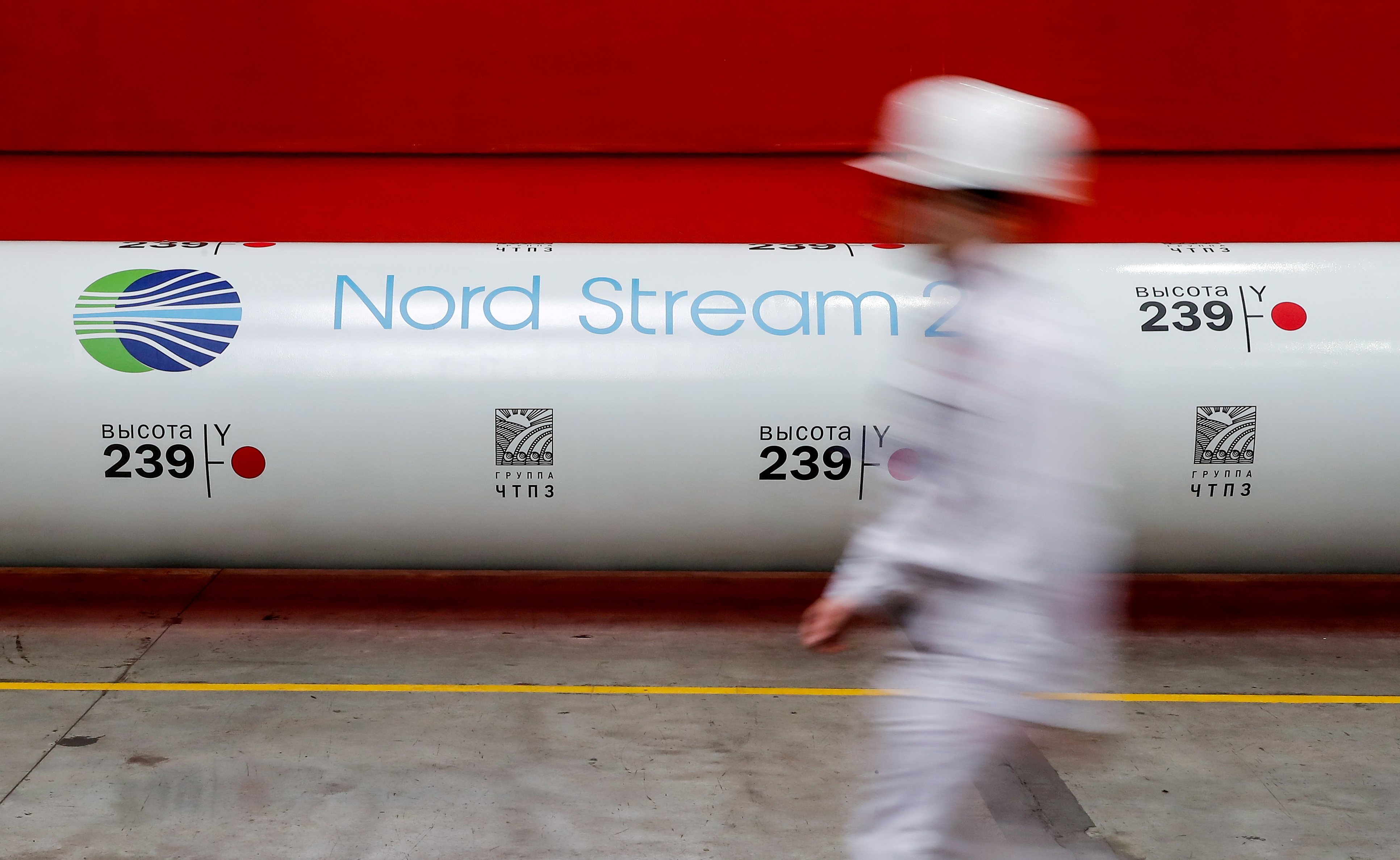
The logo of the Nord Stream 2 gas pipeline project is seen on a pipe at the Chelyabinsk pipe rolling plant in Chelyabinsk, Russia, February 26, 2020. REUTERS/Maxim Shemetov/File Photo

MOSCOW, Oct 14 (Reuters) - Gazprom CEO (GAZP.MM) Alexei Miller told Russia's State TV Channel One late on Thursday that a big section of the damaged Nord Stream pipelines might need to be replaced, while Russia plans boosting gas exports via the Black Sea and Turkey.

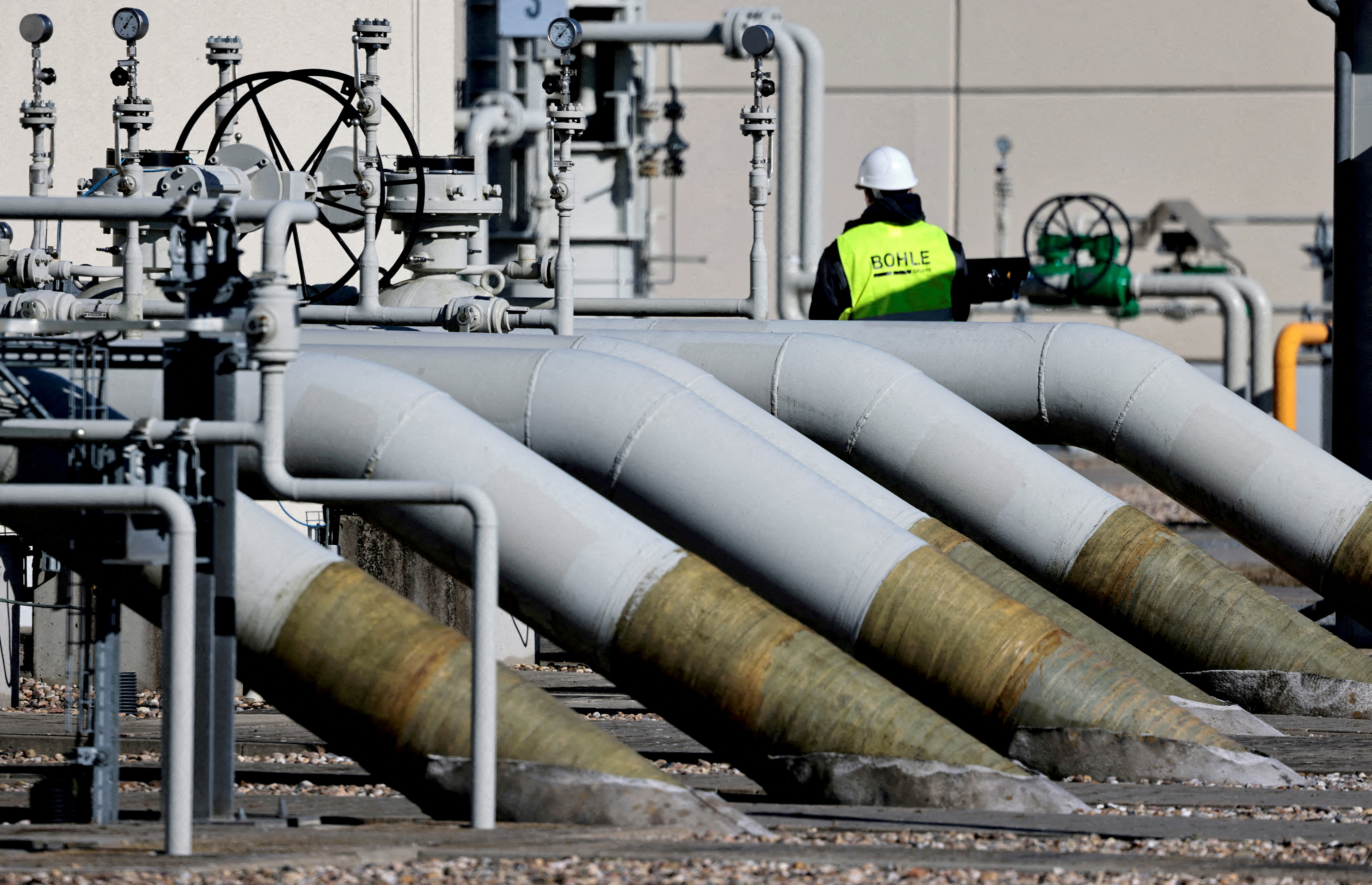
Both Nord Stream 1 and Nord Stream 2 gas pipelines, which were built to transport gas from Russia to Germany via the bed of the Baltic Sea, were damaged last month, spewing out a large amount of gas.

Investigation into the incidents is under way. Russia called it an "act of international terrorism", pointing the finger at the West, while the European Union called it a "sabotage".

Both pipelines, stretching more than 1,000 km (620 miles) under the sea, were idle at the time of the ruptures.

"Experts say that in order to restore work after such a terrorist act, it is necessary to actually cut off a very large piece of pipe, at a great distance, and in fact build a new section on this section," Miller told the TV station.
"And in order to restore integrity, it must be raised, this pipe. And you understand, it is one thing when the pipe is hollow, yes, and another thing when it is filled with sea water for hundreds of kilometres."

On Wednesday, Miller, head of the Russian state-controlled natural gas monopoly, said repairs to the damaged Nord Stream pipelines would take more than one year.

TURKEY HUB


Russian President Vladimir Putin touted Turkey earlier this week as the best route for redirecting gas supplies to the European Union after Nord Stream pipeline leaks. He proposed to set up a gas hub in Turkey.

Miller said that Russia will start "concrete" talks with Turkey next week on the proposals.

He said Russia could boost gas supplies to Turkey by constructing new pipelines in parallel to the currently operational TurkStream pipeline via the Black Sea, adding that the project design documentation has already been prepared.

Miller said the gas supplies via the Black Sea may reach 63 billion cubic metres (bcm) per year. That's compared to 55 bcm of each of Nord Stream's capabilities and 31.5 bcm of TurkStream's transport capacity.
CRIMINAL CAPITALI$M
Elon Musk is under federal investigations, Twitter says in court filing


By Tom Hals and Sheila Dang

WILMINGTON, Del., Oct 13 (Reuters) - Elon Musk is being investigated by federal authorities over his conduct in his $44 billion takeover deal for Twitter Inc (TWTR.N), the social media company said in a court filing released on Thursday.

While the filing said he was under investigations, it did not say what the exact focus of the probes was and which federal authorities are conducting them.

Twitter, which sued Musk in July to force him to close the deal, said attorneys for the Tesla Inc (TSLA.O) CEO had claimed "investigative privilege" when refusing to hand over documents it had sought.

In late September, Musk's attorneys had provided a "privilege log" identifying documents to be withheld, Twitter said. The log referenced drafts of a May 13 email to the U.S. Securities and Exchange Commission (SEC) and a slide presentation to the Federal Trade Commission (FTC).

"This game of 'hide the ball' must end," the company said in the court filing.

The court filing, which asked Delaware judge Kathaleen McCormick to order Musk's attorneys to provide the documents, was made on Oct. 6 - the same day that McCormick paused litigation between the two sides after Musk reversed course and said he would proceed with the deal.

Alex Spiro, an attorney for Musk, told Reuters that Twitter's court filing was a "misdirection" and asserted: "It is Twitter's executives that are under federal investigation."

Twitter declined to comment on Spiro's statement. It also declined comment when asked by Reuters about its understanding of any investigation into Musk.
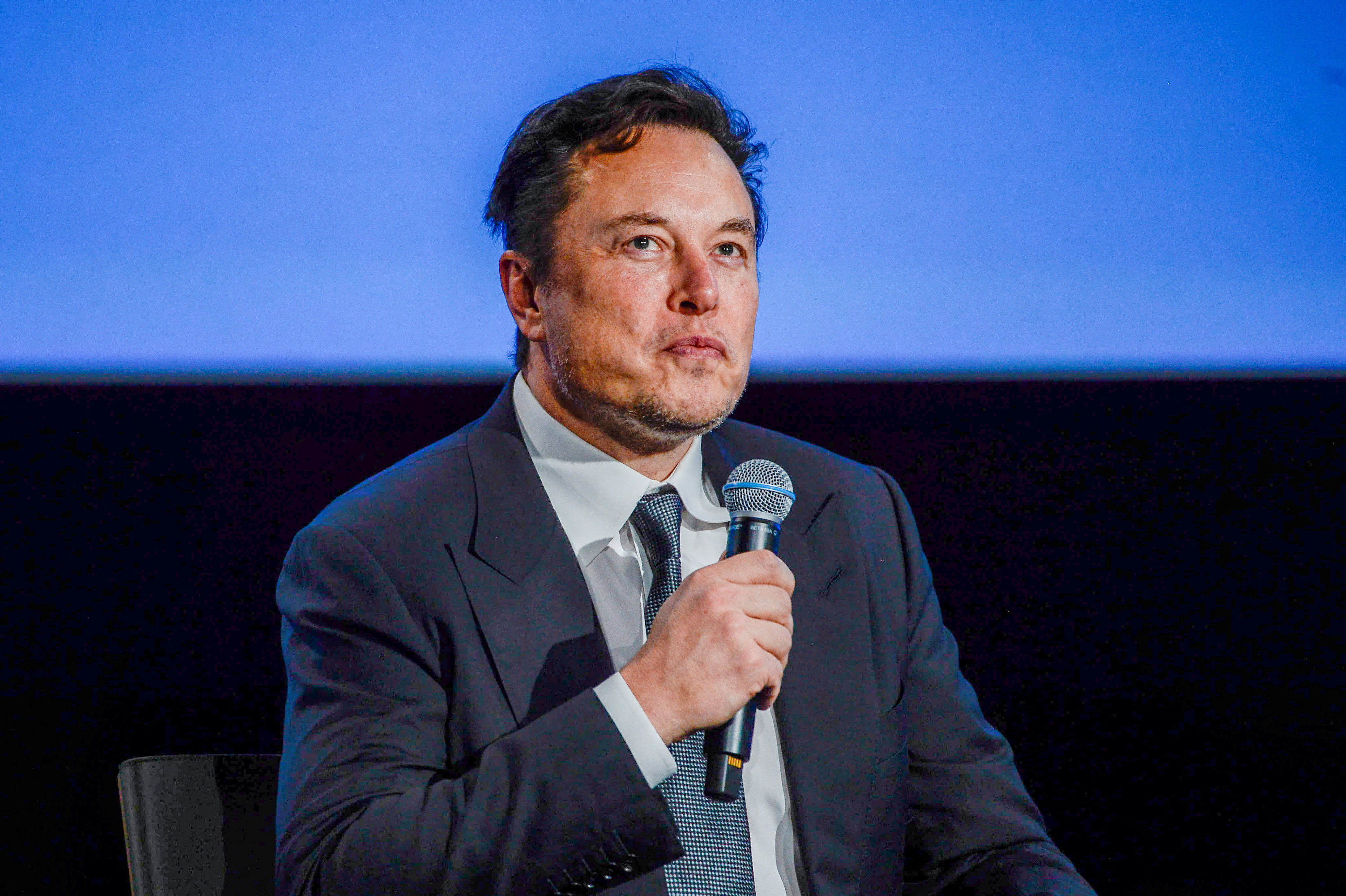
Tesla founder Elon Musk attends Offshore Northern Seas 2022
 in Stavanger, Norway August 29, 2022. 
NTB/Carina Johansen via REUTERS/File Photo

The SEC did not immediately respond to a request for comment and the FTC declined to comment.

The SEC has questioned Musk's comments about the Twitter acquisition, including whether a 9% stake he had built up before announcing his bid had been disclosed late and why it indicated that he intended to be a passive shareholder. Musk later refiled the disclosure to indicate he was an active investor.

In June, the SEC asked Musk in a letter whether he should have amended his public filing to reflect his intention to suspend or abandon the deal.

The Information, a tech news site, reported in April that the FTC was scrutinizing whether Musk failed to comply with the antitrust reporting requirement relating to an investor's intentions of being a passive or active shareholder.

Twitter said in June, however, that the takeover deal with Musk had cleared an antitrust waiting period for review by the FTC and U.S. Justice Department. read more

McCormick has given Musk until Oct. 28 to close the acquisition. If the deal does not get done by then, a trial date will be set for November.