Sunday, November 20, 2022

What Darwin would discover today

Peer-Reviewed Publication

UNIVERSITY OF KONSTANZ

Captain Darwin 

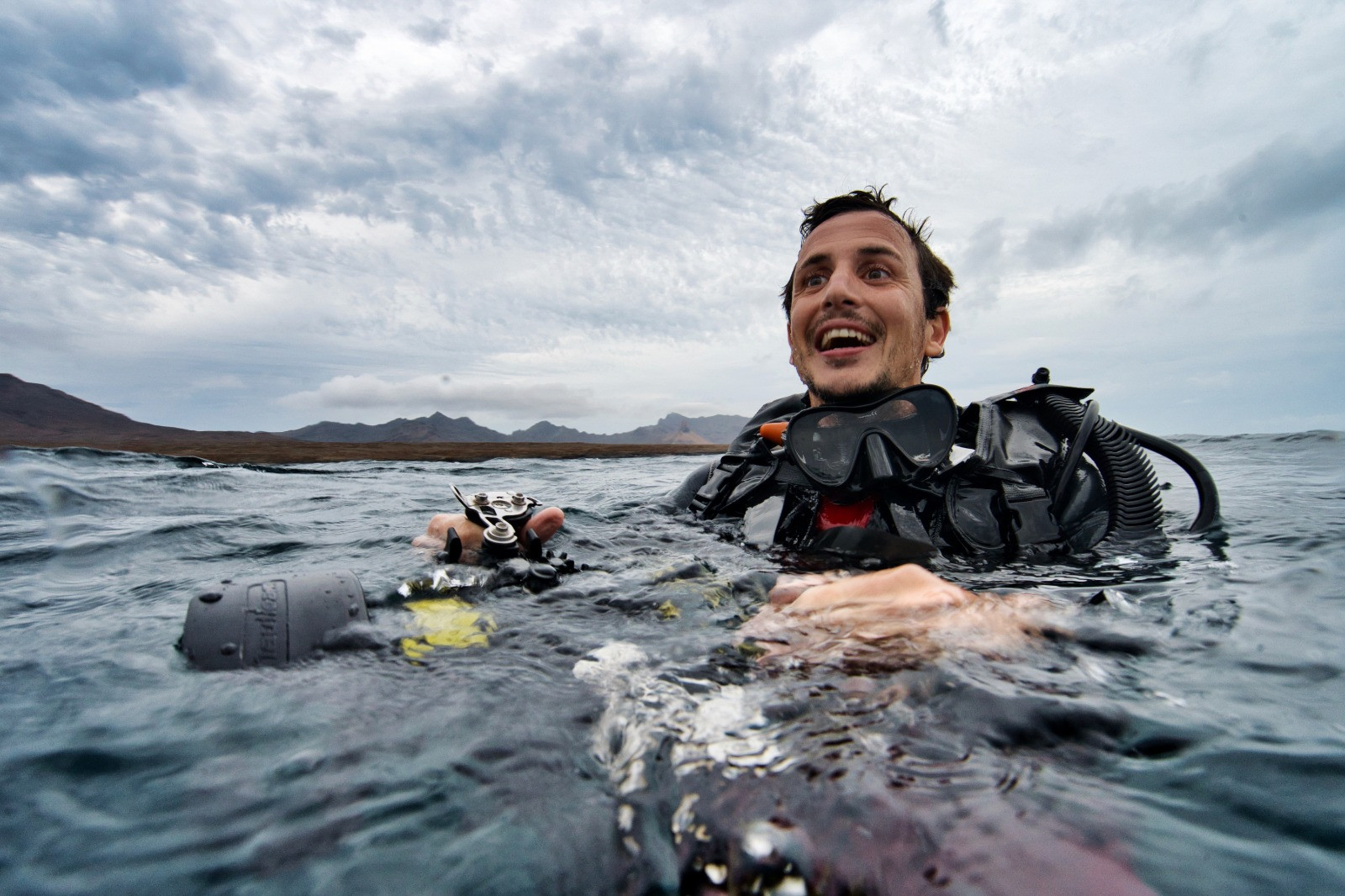
IMAGE: FILMMAKER VICTOR RAULT SET SAIL FROM PLYMOUTH ON THE CAPTAIN DARWIN IN 2021, FOLLOWING IN THE FOOTSTEPS OF DARWIN'S HMS BEAGLE. HE WANTS TO EXPLORE HOW THE ECOSYSTEM HAS CHANGED SINCE DARWIN'S VOYAGE IN 1832. view more 

CREDIT: VICTOR RAULT / CAPTAIN DARWIN

"If Charles Darwin had had the opportunity to dive off the Cape Verde Islands, he would have been completely thrilled", Eduardo Sampaio is convinced, because Darwin would have seen a fascinating, species-rich landscape. But he lacked the diving equipment. Thus, in his notes The Voyage of the Beagle, Darwin described Cape Verde as a barren landscape.

Eduardo Sampaio, affiliate member of the Cluster of Excellence "Centre for the Advanced Study of Collective Behaviour" (CASCB) at the University of Konstanz, had quite the opposite experience. He was invited on board the ship Captain Darwin by filmmaker Victor Rault to continue his octopus research.

Victor Rault, 30, set sail from Plymouth on the Captain Darwin in 2021, following in the footsteps of Darwin's HMS Beagle. He wants to explore how the ecosystem has changed since Darwin's voyage on the HMS Beagle in 1832. Researchers and citizens have been invited to travel along and conduct experiments in the spirit of Darwin. "When Victor told me about his project, I was baffled", recalls biologist Eduardo Sampaio from Portugal. He says: "It was immediately clear to me that it's an excellent idea to retrace the path of Charles Darwin. I was more than keen to jump on board!"

What do octopuses see in a mirror image?
Eduardo Sampaio spent ten days on the Captain Darwin. The focus was on the dives: The biologist, who works with the Max Planck Institute of Animal Behavior, actually wanted to observe the joint hunting behaviour of octopuses and fish. However, as it was mating season, the animals rarely showed themselves. If they came out, they wanted to interact with other octopuses and did not hunt at all.

So, he spontaneously changed his research project and conducted a mirror test instead: "We wanted to determine whether the octopuses could realize that they were seeing another individual in the mirror." In the evening on board, the crew watched the video footage: "When the octopus approached the mirror, it changed colour – but only the side facing the mirror changed. That was very fascinating to watch", says Eduardo Sampaio. In a further experiment, the researcher now wants to test whether the octopuses can even recognize themselves.

Bringing Darwin's research style up to date
In the evenings, Eduardo Sampaio read Darwin's The Origin of Species, because "it inspired me". Often, he wondered: "How can we update Darwin's kind of scientific work with the new methods we have today, like machine learning and computer vision, to better understand how animals move in their natural habitats or use different strategies to exploit social information?" He does not have an answer yet, but may find it the next time he sails on the Captain Darwin.

Great support for scientists who do not have the necessary resources
Eduardo Sampaio will be back on board the Captain Darwin: "This trip, launched as a Citizen Science project, is a great support for researchers who don't have the means to do this kind of field research, especially for researchers from disadvantaged areas and in countries where research structures are not so well equipped." Much of the work that researchers usually have to handle themselves was taken over, such as obtaining permits, purchasing equipment and raising funds. "I also realized that citizens can play a much more active role in science than just collecting data", says Eduardo Sampaio, who hopes that this sailing trip will be a prelude to more exciting Citizen Science expeditions. Eduardo Sampaio and Victor Rault also wrote a report about the collaboration published in PLOS Biology on 15 November 2022.


Key facts

  • Dr Eduardo Sampaio from the Cluster of Excellence "Centre for the Advanced Study of Collective Behaviour" and researcher at the Max Planck Institute of Animal Behavior participated in a Citizen Science-led expedition
  • Publication on the benefits of such research projects in PLOS Biology: Sampaio E, Rault V (2022) Citizen-led expeditions can generate scientific knowledge and prospects for researchers. PLoS Biol 20(11):e3001872. https://doi.org/10.1371/journal.pbio.3001872


What do octopuses see in a mirror image? “When the octopus approached the mirror, it changed colour – but only the side facing the mirror changed", says Eduardo Sampaio.

CREDIT

Victor Rault / Captain Darwin


Dr Eduardo Sampaio from the Cluster of Excellence "Centre for the Advanced Study of Collective Behaviour" and researcher at the Max Planck Institute of Animal Behavior

CREDIT

Copyright: Victor Rault / Captain Darwin

Note to editors:
You can download photos here:

Photo 1: https://www.uni-konstanz.de/fileadmin/pi/fileserver/2022_EXSTRA/was_darwin_heute.jpg
Caption: Filmmaker Victor Rault set sail from Plymouth on the Captain Darwin in 2021, following in the footsteps of Darwin's HMS Beagle. He wants to explore how the ecosystem has changed since Darwin's voyage in 1832.
Copyright: Victor Rault / Captain Darwin

Photo 2: https://www.uni-konstanz.de/fileadmin/pi/fileserver/2022_EXSTRA/was_darwin_heute_2.jpg
Caption: Dr Eduardo Sampaio from the Cluster of Excellence "Centre for the Advanced Study of Collective Behaviour" and researcher at the Max Planck Institute of Animal Behavior
Copyright: Victor Rault / Captain Darwin

Photo 3: https://www.uni-konstanz.de/fileadmin/pi/fileserver/2022_EXSTRA/was_darwin_heute_3.jpg
Caption: What do octopuses see in a mirror image? “When the octopus approached the mirror, it changed colour – but only the side facing the mirror changed", says Eduardo Sampaio.
Copyright: Victor Rault / Captain Darwin

Lab grown 'mini eyes’ unlock understanding of blindness in rare genetic condition


Peer-Reviewed Publication

UNIVERSITY COLLEGE LONDON

Researchers at UCL Great Ormond Street Institute of Child Health (UCL GOS ICH) have grown ‘mini eyes', which make it possible to study and better understand the development of blindness in a rare genetic disease called Usher syndrome for the first time.

The 3D ‘mini eyes’, known as organoids, were grown from stem cells generated from skin samples donated by patients at Great Ormond Street Hospital for Children (GOSH). In a healthy eye, rod cells - the cells which detect light - are arranged in the back of the eye in an important region responsible for processing images called the retina. In this research, published in Stem Cell Reports1, the team found that they could get rod cells to organise themselves into layers that mimic their organisation in the retina, producing a ‘mini eye’.

These ‘mini eyes’ are an important step forward because previous research using animal cells couldn’t mimic the same sort of sight loss as that seen in Usher syndrome.

Usher syndrome is the most common genetic cause of combined deafness and blindness, affecting approximately three to ten in 100,000 people worldwide. Children with Type 1 Usher syndrome are often born profoundly deaf, while their sight slowly deteriorates until they are blind by adulthood.

Although cochlear implants can help with hearing loss, there are currently no treatments for retinitis pigmentosa, which causes vision loss in Usher syndrome. While this research is in early stages, these steps towards understanding the condition and how to design a future treatment could give hope to those who are due to lose their sight.

The ‘mini eyes’ developed in this research allow scientists to study light-sensing cells from the human eye at an individual level, and in more detail than ever before. For example, using powerful single cell RNA-sequencing, it is the first time researchers have been able to view the tiny molecular changes in rod cells before they die. Using the ‘mini eyes’, the team discovered that Müller cells, responsible for metabolic and structural support of the retina, are also involved in Usher syndrome. They found that cells from people with Usher syndrome abnormally have genes turned on for stress responses and protein breakdown. Reversing these could be the key to preventing how the disease progresses and worsens.

As the ‘mini eyes’ are grown from cells donated by patients with and without the genetic ‘fault’ that causes Usher syndrome, the team can compare healthy cells and those that will lead to blindness.

Understanding these differences could provide clues to changes that happen in the eye before a child’s vision begins to deteriorate. In turn, this could provide clues to the best targets for early treatment - crucial to providing the best outcome.

Dr Yeh Chwan Leong, Research Associate at UCL GOS ICH and first author said: “It’s difficult to study the inaccessible tiny nerve cells of the patient’s retina as they are so intricately connected and delicately positioned at the back of the eye. By using a small biopsy of skin, we now have the technology to reprogramme the cells into stem cells and then create lab-grown retina with the same DNA, and therefore same genetic conditions, as our patients.”

Professor Jane Sowden, Professor of Developmental Biology & Genetics at UCL, and senior author, said: “We are very grateful to patients and families who donate these samples to research so that, together, we can further our understanding of genetic eye conditions, like Usher syndrome.

Although a while off, we hope that these models can help us to one day develop treatments that could save the sight of children and young people with Usher syndrome."

The ‘mini eye’ model for eye diseases could also help teams understand other inherited conditions in which there is the death of rod cells in the eye, such as forms of retinitis pigmentosa without deafness. Additionally, the technology used to grow faithful models of disease from human skin cells can be used for a number of other diseases - this is an area of expertise at the Zayed Centre for Research into Rare Disease in Children at UCL GOS ICH.

Future research will create ‘mini eyes’ from more patient samples, and use them to identify treatments, for example by testing different drugs. In the future, it may be possible to edit a patient’s DNA in specific cells in their eyes to avoid blindness.

This research was funded by National Institute for Health and Care Research Great Ormond Street Hospital Biomedical Research Centre, Medical Research Council, GOSH Children's Charity and Newlife the Charity for Disabled Children.

Moral behavior pays off

Coupling two approaches of game theory can shed light on how moral norms evolve

Peer-Reviewed Publication

MAX-PLANCK-GESELLSCHAFT

Selfless behaviour and cooperation cannot be taken for granted. Mohammad Salahshour of the Max Planck Institute for Mathematics in the Sciences (now at Max Planck Institute of Animal Behavior), has used a game theory-based approach to show why it can be worthwhile for individuals to set self-interests aside.

One of the most fundamental questions facing humanity is: why do we behave morally? Because it is by no means self-evident that under certain circumstances we set our self-interest aside and put ourselves in the service of a group – sometimes to the point of self-sacrifice. Many theories have been developed to get to the bottom of this moral conundrum. There are two well-known proposed solutions: that individuals help their relatives so that the common genes survive (kin selection), and that the principle of "you scratch my back and I'll scratch yours" applies. If people help each other, everyone benefits in the end (principle of reciprocity).

Prisoner’s dilemma combined with a coordination game

Mathematician Mohammad Salahshour of the Max Planck Institute for Mathematics in the Sciences in Leipzig, Germany, has used the tools of game theory to explain the emergence of moral norms – because game theory studies how people make rational decisions in conflict situations. For Salahshour, the question at the outset was: why do moral norms exist in the first place? And why do we have different, or even contrasting moral norms? For example, while some norms such as “help others”, promote self-sacrificing behaviour, others, such as dress codes, appear not to have much to do with curbing selfishness. To answer these questions, Salahshour coupled two games: first, the classic prisoner's dilemma, in which two players must decide whether to cooperate for a small reward or betray themselves for a much larger reward (social dilemma). This game can be a typical example of a social dilemma, where success of a group as a whole requires individuals to behave selflessly. In this game everybody loses out if too many members of a group behave selfishly, compared to a scenario in which everybody acts altruistically. However, if only a few individuals behave selfishly, they can receive a better outcome than their altruistic team members. .Second, a game that focuses on typical decisions within groups, such as a coordination task, distribution of resources, choice of a leader, or conflict resolution. Many of these problems can be ultimately categorized as coordination or anticoordination problems.

Without coupling the two games, it is clear that in the Prisoner's Dilemma, cooperation does not pay off, and self-interested behaviour is the best choice from the individual’s perspective if there are enough people who act selflessly. But individuals who act selfishly are not able to solve coordination problems efficiently and lose a lot of resources due to failing to coordinate their activity. The situation can be completely different when the results of the two games are considered as a whole and there are moral norms at work which favour cooperation: now cooperation in the prisoner's dilemma can suddenly pay off because the gain in the second game more than compensates for the loss in the first game.  

Out of self-interest to coordination and cooperation

As a result of this process, not only cooperative behaviour emerges, but also a social order. All individuals benefit from it – and for this reason, moral behaviour pay off for them. "In my evolutionary model, there were no selfless behaviours at the beginning, but more and more moral norms emerged as a result of the coupling of the two games," Salahshour reports. "Then I observed a sudden transition to a system where there is a lot of cooperation." In this “moral state”, a set of norms of coordination evolve which help individuals to better coordinate their activity, and it is precisely through this that social norms and moral standards can emerge. However, coordination norms favour cooperation: cooperation turns out to be a rewarding behaviour for the individual as well. Mahammad Salahshour: “A moral system behaves like a Trojan horse: once established out of the individuals’ self-interest to promote order and organization, it also brings self-sacrificing cooperation”.

Through his work, Salahshour hopes to better understand social systems. "This can help improve people's lives in the future," he explains. "But you can also use my game-theoretic approach to explain the emergence of social norms in social media. There, people exchange information and make strategic decisions at the same time – for example, who to support or what cause to support." Again, he said, two dynamics are at work at once: the exchange of information and the emergence of cooperative strategies. Their interplay is not yet well understood – but perhaps game theory will soon shed new light on this topical issue as well.

Research suggests that children who doubt their gender identity enter puberty earlier

A new study from Aarhus University shows that children who have expressed a desire at the age of 11 to be a different gender enter puberty earlier than their peers. However, more research is required, says the researchers behind the study.

Peer-Reviewed Publication

AARHUS UNIVERSITY

A new study from Aarhus University shows that children who have expressed a desire at the age of 11 to be a different gender enter puberty earlier than their peers. However, more research is required, says the researchers behind the study.

The transition to puberty can be difficult for children who are afflicted by doubt about their own gender identity. New research from the Department of Public Health at Aarhus University suggests that these children also enter puberty earlier than children who are not in doubt about their gender identity. Master’s programme student Anne Hjorth Thomsen and Professor Cecilia Ramlau-Hansen are behind the study.

The study, which is one of the first in the world to examine the correlation between children’s desire to be the opposite gender and their development in puberty, was undertaken as part of the research project “Better Health for Generations” (BSIG), which has monitored 100,000 Danish women’s pregnancies and births, as well as the growth and development of their children, since 1996.

In the study, the children were asked at the age of 11 about a possible desire to be the opposite gender. This information was then combined with data in which, every six months, the children reported their current stage in various puberty milestones. At age 11, around 5% of the children in the study reported either a partial or a full desire to be the opposite gender.

“The results indicate that children who at age 11 reported a desire to be the opposite gender tended to go into puberty before children who had not expressed a desire to change their gender. In the study, both birth-assigned boys and girls with a previous expressed desire to change gender entered puberty around two months earlier than their peers,” says Anne Hjorth Thomsen.

Anne Hjorth Thomsen stresses that more research is needed before any final conclusions can be drawn, but that it is important that health staff are aware of children’s previous puberty development.

“Health professionals may encounter a desire to slow down puberty, because the child may not feel comfortable in their own body, or able to identify with it. It is therefore important that the healthcare professionals possess basic knowledge about the puberty development of the children, so that treatment can be applied at the right time.”

Anne Hjorth Thomsen and Professor Cecilia Ramlau-Hansen recommend that the research results be followed up by new studies.

“In this study, we see earlier puberty development among children who wish to be the opposite gender, compared to children who do not wish to be the opposite gender. But we do not know whether the children’s own gender perception affects their puberty development, or whether there may be other explanations. We do not know the underlying causes,” says Anne Hjorth Thomsen.


Behind the research results:

Read more about 'Better health for Generations' here: https://www.bsig.dk

Black holes in eccentric orbit

Researchers from Friedrich Schiller University Jena (Germany) and the Istituto Nazionale di Fisica Nucleare in Turin (Italy) decipher gravitational wave signal GW190521

Peer-Reviewed Publication

FRIEDRICH-SCHILLER-UNIVERSITAET JENA

Rossella Gamba 

IMAGE: ROSSELLA GAMBA, PHD STUDENT AT THE GERMAN UNIVERSITY OF JENA, IS FIRST AUTHOR OF THE PUBLICATION. view more 

CREDIT: (IMAGE: ANNE GÜNTHER/UNIVERSITY OF JENA)

Jena/Turin (18.11.2022) When black holes collide in the universe, the clash shakes up space and time: the amount of energy released during the merger is so great that it causes space-time to oscillate, similar to waves on the surface of water. These gravitational waves spread out through the entire universe and can still be measured thousands of light years away, as was the case on 21 May 2019, when the two gravitational wave observatories LIGO (USA) and Virgo (Italy) captured such a signal. Named GW190521 after the date of its discovery, the gravitational wave event has since provoked discussion among experts because it differs markedly from previously measured signals.

The signal had initially been interpreted to mean that the collision involved two black holes moving in near-circular orbits around each other. “Such binary systems can be created by a number of astrophysical processes,” explains Prof. Sebastiano Bernuzzi, a theoretical physicist from the University of Jena, Germany. Most of the black holes discovered by LIGO and Virgo, for example, are of stellar origin. “That means they are the remnants of massive stars in binary star systems,” adds Bernuzzi, who led the current study. Such black holes orbit each other in quasi-circular orbits, just as the original stars did previously.

One black hole captures a second

“GW190521 behaves significantly differently, however,” explains Rossella Gamba. The lead author of the publication is doing her doctorate in Jena Research Training Group 2522 and is part of Bernuzzi’s team. “Its morphology and explosion-like structure are very different from previous observations.” So, Rossella Gamba and her colleagues set out to find an alternative explanation for the unusual gravitational wave signal. Using a combination of state-of-the-art analytical methods and numerical simulations on supercomputers, they calculated different models for the cosmic collision. They came to the conclusion that it must have occurred on a strongly eccentric path instead of a quasi-circular one. A black hole initially moves freely in an environment that is relatively densely filled with matter and, as soon as it gets close to another black hole, it can be “captured” by the other’s gravitational field. This also leads to the formation of a binary system, but here the two black holes do not orbit in a circle, but move eccentrically, in tumbling motions around each other.

“Such a scenario explains the observations much better than any other hypothesis presented so far. The probability is 1:4300,” says Matteo Breschi, doctoral student and co-author of the study, who developed the infrastructure for the analysis. And postdoctoral researcher Dr Gregorio Carullo adds: “Even though we don’t currently know exactly how common such dynamic movements by black holes are, we don’t expect them to be a frequent occurrence.” This makes the current results all the more exciting, he adds. Nevertheless, more research is needed to clarify beyond doubt the processes that created GW190521.

Teamwork in the Research Training Group

For the current project, the teams in Turin and Jena (as part of the German Research Foundation-funded Jena Research Training Group 2522 “Dynamics and Criticality in Quantum and Gravitational Systems”) developed a general relativistic framework for the eccentric merger of black holes and verified the analytical predictions using simulations of Einstein’s equations. For the first time, models of dynamic encounters were used in the analysis of gravitational wave observation data.

Cultural heritage may influence choice of tools by capuchin monkeys, study suggests

The tools are pieces of quartzite and sandstone found in places referred to as processing sites. The animals frequent these sites solely to look for these stones for use as hammers and anvils.

Peer-Reviewed Publication

FUNDAÇÃO DE AMPARO À PESQUISA DO ESTADO DE SÃO PAULO

Capuchin monkey eating fruit of babassu palm (Attalea speciosa) 

IMAGE: THE COCONUT-LIKE SHELL CONTAINING THE EDIBLE KERNELS IS VERY HARD AND HAS TO BE CRACKED OPEN WITH A STONE TOOL. NOT ALL CAPUCHIN POPULATIONS HAVE ADOPTED THIS INNOVATION view more 

CREDIT: TIAGO FALÓTICO/EACH-USP)

Capuchin monkeys (Sapajus spp.) are among only a few primates that use tools in day-to-day activities. In the Cerrado and Caatinga, they use stones as hammers and anvils to crack open cashew nuts, seed pods of Hymenaea courbaril (West Indian locust; jatobá in Brazil) and other hard foods. 

In an article published in Scientific Reports, Brazilian researchers show that food hardness and tool size do not always correlate as closely as has been thought. 

In their study, the researchers observed three populations of bearded capuchin monkeys (Sapajus libidinosus), measuring food hardness, tool size and weight, and local availability of stones. They concluded that culture, defined as information passed on from one generation to the next by social learning, can also influence behavior in this regard. 

“In one of the populations we analyzed, even when they have stones that are suitable for use on a particular food resource, they may use disproportionately heavy tools, possibly evidencing a cultural trait of that group,” said Tiago Falótico, a researcher at the University of São Paulo's School of Arts, Sciences and Humanities (EACH-USP) supported by FAPESP.

The population to which he referred lives in Chapada dos Veadeiros National Park in Goiás, a state in Brazil’s Center-West region. In the study, this population was compared with capuchins living in Serra das Confusões National Park, in Piauí, a state in the Northeast region, and another population that lives in Serra da Capivara National Park, about 100 km away in the same state. 

The tools are pieces of quartzite and sandstone found in places referred to as processing sites. The animals frequent these sites solely to look for these stones for use as hammers and anvils. One stone is used to pound a nut or seed resting on another stone used as an anvil. 

“In Serra das Confusões, they use smaller tools to open smaller and softer fruit but use large, heavy hammers to crack coconut shells, which are very hard. In Chapada dos Veadeiros, where there are stones of varying sizes to choose from, they use the heaviest ones even for fragile foods,” Falótico said.

Not by chance, it was in this latter park that the researchers recorded the heaviest stone lifted by capuchins. An adult male weighs 3.5 kg on average, and they filmed an individual lifting a hammer stone that was later found to weigh 4.65 kg. “They’re champion weightlifters,” he chuckled.

Measurements

The findings were the result of a great deal of hard work. The researchers documented the kinds of food most frequently found in the processing sites, such as babassu (Attalea speciosa), West Indian locust, cashew, and wild cassava (Manihot spp). They also documented the stones available, as well as the sizes and weights of the tools they found, measured the hardness of each type of food using a special device, and observed and filmed tool usage in each study area.

“We expected to find a very close correlation between the type of food and the size and weight of the tool, but the population in Chapada dos Veadeiros mainly used the larger ones even though stones of all sizes are plentiful and they can choose a smaller size. They probably inherited this habit from their ancestors. It’s a cultural difference compared with the other populations,” Falótico said.

The cultural learning hypothesis is reinforced by the fact that studies in other areas, such as Serra de Itabaiana in Sergipe and Chapada Diamantina in Bahia (both states in the Northeast), involving Sapajus capuchins, stones and the same kinds of fruit and seed have not found processing sites or the use of stone tools for this purpose. In Serra das Confusões, the capuchins use tools to crack open several kinds of food except cashew nuts, which are nevertheless abundant.

“Their behavior isn’t due to the availability of resources but to cultural heritage,” Falótico said.

The researchers are now analyzing the genomes of all three populations to see if the cultural differences can be linked to genetic differences.

The study was also supported by FAPESP via a scholarship awarded to Tatiane Valença, a PhD candidate at EACH-USP.

Human evolution

A paper by Falótico and a team of archeologists from Germany, Spain and the United Kingdom, published in the Journal of Human Evolution, reports the results of field experiments conducted to test the potential for accidental flake production during nut cracking by capuchins using various types of rock as anvils.

Some capuchins ingest or anoint themselves with powder produced by pounding stones. They may also rub the powder on their teeth. Their reasons for doing so are unknown, but the researchers believe one aim may be to combat parasites. In the experiments, flakes were also produced by fragmentation of anvils comprising homogeneous material.

The monkeys did not use the flakes, which closely resembled the lithic tools found by archeologists at digs around the world. The researchers believe the earliest hominins obtained flakes accidentally before their deliberate production for use as tools.

“Capuchins may also use flakes as tools in future if an innovative individual starts doing so, and others learn by observing. These primates can therefore serve as a model to help us understand human evolution,” Falótico said.

A previous study by the same group of researchers showed how lithic tools used by the capuchin population in Serra da Capivara displayed different patterns of wear marks depending on the activities involved (read more at: agencia.fapesp.br/35251). 

Comparisons of the use-wear marks on tools used by monkeys and hominins could reveal how our earliest ancestors used lithic tools. It may therefore be possible to find out more about human evolution from the study of Brazilian capuchin monkeys.

The article “Stone tools differences across three capuchin monkey populations: food’s physical properties, ecology, and culture” is at: www.nature.com/articles/s41598-022-18661-3

About São Paulo Research Foundation (FAPESP)

The São Paulo Research Foundation (FAPESP) is a public institution with the mission of supporting scientific research in all fields of knowledge by awarding scholarships, fellowships and grants to investigators linked with higher education and research institutions in the State of São Paulo, Brazil. FAPESP is aware that the very best research can only be done by working with the best researchers internationally. Therefore, it has established partnerships with funding agencies, higher education, private companies, and research organizations in other countries known for the quality of their research and has been encouraging scientists funded by its grants to further develop their international collaboration. You can learn more about FAPESP at www.fapesp.br/en and visit FAPESP news agency at www.agencia.fapesp.br/en to keep updated with the latest scientific breakthroughs FAPESP helps achieve through its many programs, awards and research centers. You may also subscribe to FAPESP news agency at http://agencia.fapesp.br/subscribe

Food marketing and research on kids lacks government oversight

Lax industry self-regulation and no rules on research leave children vulnerable to marketing of unhealthy food, according to a new analysis

Peer-Reviewed Publication

NEW YORK UNIVERSITY

Federal regulations ban tobacco companies from advertising to kids and prohibit profanity on television before 10 p.m. But what is protecting children from predatory advertising of junk food, especially with sneaky online marketing tactics like the use of influencers?

Very little, thanks to outdated and weakened government oversight, according to a new legal analysis published in the Journal of Law, Medicine & Ethics by researchers at the NYU School of Global Public Health and the Friedman School of Nutrition Science and Policy at Tufts University.

“The U.S. overwhelmingly relies on industry self-regulation, which has not kept pace with modern marketing practices,” says study author Jennifer Pomeranz, assistant professor of public health policy and management at NYU School of Global Public Health.

Self-regulation falls short in today’s marketing landscape

Commercial speech, including advertising, is largely protected by the First Amendment. The Federal Trade Commission (FTC), which protects consumers from deceptive and unfair business practices, has limited authority over advertising directed at kids. While the FTC gathers and reports data on food advertising to youth and brings cases against food companies for specific unfair and deceptive practices, Congress stripped the agency of its authority to regulate marketing directed at children considered unfair in 1980, after the FTC tried to limit sugary food and drinks in commercials during children’s television. The FTC has not attempted to use its authority over deceptive acts and practices, in part out of concern over similar backlash.

Instead, the U.S. largely relies on food and beverage companies to self-regulate. The industry-created Children’s Food and Advertising Initiative (CFBAI) includes voluntary—and sometimes lax—nutritional standards for marketing to kids. However, the researchers say gaps in CFBAI allows for questionable marketing that makes the nutrition standards irrelevant: the initiative only applies to children under 12 and media directed at young kids, it does not apply to packaging or stores, and allows companies to market their brands by showing somewhat healthier products that introduce kids to unhealthy brand lines.

Importantly, today’s marketing to children goes well beyond the traditional television commercial. Companies employ a variety of tactics to reach kids online, especially on YouTube. Products are often promoted using influencers and “host-selling,” where a program character delivers a commercial adjacent to children’s programming featuring the character, a practice that the Federal Communications Commission (FCC) prohibits on television but lacks a similar rule for online marketing.

“Modern marketing practices are intended to blur the distinction between an ad and entertainment,” says study author Dariush Mozaffarian, dean for policy of the Friedman School at Tufts. “Research indicates that even adults have difficulty identifying sponsored content online, so children surely need some protection from these predatory practices.”

The authors encourage Congress to reinstate the FTC’s authority to regulate unfair marketing targeting children and the FTC to examine online marketing of food and drinks, including using its authority over deceptive practices.

Studying kids with no rules

When universities want to do research involving human subjects, the studies must be reviewed and approved by an Institutional Review Board to protect the participants, especially vulnerable populations like children. This is required by a federal policy called the Common Rule and applies to researchers receiving federal funds.

However, there are no similar requirements for commercial research on children. For instance, a food company can have a child psychologist test tactics and messages on children to determine how to best persuade kids to want products and to influence their parents to buy them—without any oversight. This is particularly problematic when companies target their unhealthy products to racial and ethnic minority youth.

“The disparity in rules for academic institutions seeking to engage in marketing research, who must obtain children’s assent and parental consent, versus no requirements for for-profit entities engaging in the same activity, is striking,” Pomeranz and Mozaffarian write.

The researchers note that food companies, which receive millions in tax subsidies, would meet the criteria for research on children set out by the Common Rule—if the Internal Revenue Service (IRS) had signed on to the Common Rule like 20 other federal agencies have. In light of the spirit and purpose of the Common Rule to protect research subjects, the authors urge the federal government and state attorneys general to take a closer look at companies’ research on children.

What about parents?

In many aspects of life, parents are expected to act as gatekeepers for their children. Opponents of government regulation of marketing to children argue that government action undermines parental control.

“While this might have made sense when children were primarily watching television and parents had more control over what their children watched, parental oversight has become less feasible in the face of covert online marketing practices such as host-selling and the use of influencers. In today’s media landscape, parents have little ability to act as the sole deciding factor in what types of food are shown to their kids,” says Pomeranz. “The U.S. needs to move away from voluntary industry self-regulation to effective policies that account for current marketing practices.”

The research was supported by the National Institutes of Health (2R01HL115189-06A1).

About the NYU School of Global Public Health

At the NYU School of Global Public Health (NYU GPH), we are preparing the next generation of public health pioneers with the critical thinking skills, acumen, and entrepreneurial approaches necessary to reinvent the public health paradigm. Devoted to employing a nontraditional, interdisciplinary model, NYU GPH aims to improve health worldwide through a unique blend of global public health studies, research, and practice. The School is located in the heart of New York City and extends to NYU's global network on six continents. Innovation is at the core of our ambitious approach, thinking and teaching. For more, visit: publichealth.nyu.edu