Tuesday, November 29, 2022

An AI Found an Unknown 'Ghost' Ancestor in The Human Genome

Story by Peter Dockrill • Yesterday 

Nobody knows who she was, just that she was different: A teenage girl from over 50,000 years ago of such odd uniqueness she appeared to be a 'hybrid' ancestor to modern humans that scientists hadn't seen before.


An entrance to a cave in Siberia.© Provided by ScienceAlert

Only recently, researchers have uncovered evidence she wasn't alone. In a 2019 study analyzing the tangled mess of humanity's prehistory, scientists used artificial intelligence (AI) to identify an unknown human ancestor species that modern humans encountered – and shared dalliances with – on the long trek out of Africa millennia ago.

"About 80,000 years ago, the so-called Out of Africa occurred, when part of the human population, which already consisted of modern humans, abandoned the African continent and migrated to other continents, giving rise to all the current populations," explained evolutionary biologist Jaume Bertranpetit from the Universitat Pompeu Fabra in Spain.

As modern humans forged this path into the landmass of Eurasia, they forged some other things too – breeding with ancient and extinct hominids from other species.

Up until recently, these occasional sexual partners were thought to include Neanderthals and Denisovans, the latter of which were unknown until 2010.

But in this study, a third ex from long ago was isolated in Eurasian DNA, thanks to deep learning algorithms sifting through a complex mass of ancient and modern human genetic code.

Using a statistical technique called Bayesian inference, the researchers found evidence of what they call a "third introgression" – a 'ghost' archaic population that modern humans interbred with during the African exodus.

"This population is either related to the Neanderthal-Denisova clade or diverged early from the Denisova lineage," the researchers wrote in their paper, meaning that it's possible this third population in humanity's sexual history was possibly a mix themselves of Neanderthals and Denisovans.

In a sense, from the vantage point of deep learning, it's a hypothetical corroboration of sorts of the teenage girl 'hybrid fossil' identified in 2018; although there's still more work to be done, and the research projects themselves aren't directly linked.

"Our theory coincides with the hybrid specimen discovered recently in Denisova, although as yet we cannot rule out other possibilities," one of the team, genomicist Mayukh Mondal from the University of Tartu in Estonia, said in a press statement at the time of discovery.

That being said, the discoveries being made in this area of science are coming thick and fast.

Also in 2018, another team of researchers identified evidence of what they called a "definite third interbreeding event" alongside Denisovans and Neanderthals, and a pair of papers published in early 2019 traced the timeline of how those extinct species intersected and interbred in clearer detail than ever before.

There's a lot more research to be done here yet. Applying this kind of AI analysis is a decidedly new technique in the field of human ancestry, and the known fossil evidence we're dealing with is amazingly scant.

But according to the research, what the team has found explains not only a long-forgotten process of introgression – it's a dalliance that, in its own way, informs part of who we are today.

"We thought we'd try to find these places of high divergence in the genome, see which are Neanderthal and which are Denisovan, and then see whether these explain the whole picture," Bertranpetit told Smithsonian.

"As it happens, if you subtract the Neanderthal and Denisovan parts, there is still something in the genome that is highly divergent."

The findings were published in Nature Communications.

Inequality is literally killing us: The most unequal societies suffer most in public health metrics

Story by Stephen Bezruchka • Sunday, Nov. 27, 2022

ER Patient© Provided by Salon

Patients rest in a hallway in the overloaded Emergency Room area at Providence St. Mary Medical Center on January 27, 2021 in Apple Valley, California. Mario Tama/Getty ImagesAdapted from "Inequality Kills Us All: Covid-19’s Health Lessons for the World," by Stephen Bezruchka, M.D., M.P.H.

In 1992, a publication appeared in the British Medical Journal written by Richard Wilkinson, featuring a simple graph of life expectancy in 1981 among nine rich nations, along with the percentage of income received by the poorest 70% of families for each country. It showed how greater inequality in a country was associated with lower life expectancy, with only a weak link between national incomes and mortality rates. Richer countries were not necessarily healthier than less rich ones, at least among developed nations. Increases in income inequality over time were linked to higher death rates. But were the results valid?

Depending on a single study as definitive evidence is a shaky way to stake a claim. Knowledge progresses by conjectures, critical commentary, discussions, and either general acceptance or rejection. Yet five previous studies, beginning in 1979, demonstrate similar findings. In 1996, two studies from University of California and Harvard reported the same finding within the United States: more unequal states had higher mortality. Later research showed the same result for large U.S. cities.

Even a small rise in inequality gives rise to a substantial increase in COVID-19 deaths.

That same year, a landmark book, "Unhealthy Societies: The Afflictions of Inequality," by Wilkinson appeared, which expounded on these concepts. My own heavily annotated copy reflects the importance of this book as a huge step toward recognizing the effect of the social environment on health, while more recently, COVID-19 has highlighted the critical role social policies play in human survival. Similar studies link U.S. state and county death rates associated with COVID-19 with income inequality. The first paper found that more unequal states had higher COVID-19 death rates. In June 2021, a study showed U.S. counties with higher income inequality had higher rates of COVID cases and deaths.

While the British media, with a July 2021 article in The Economist, pinpointed these studies, the U.S. media has mostly been silent. One subsequent study of 84 countries found more COVID-19 deaths associated with increasing economic inequality. Even a small rise in inequality gives rise to a substantial increase in COVID-19 deaths.

Income inequality has soared with the pandemic providing other incriminating evidence that it kills. Still, correlation doesn't imply causation. How do we know that something causes something else?

The U.S. Surgeon General's 1964 report, Smoking and Health, outlined the criteria for inferring that something, in this case, cigarettes, caused something, in this case, worse health. The criteria were straightforward. First, there had to be many studies demonstrating the relationship, by different investigators, on different populations, over different time periods. Then the chicken and egg problem had to be addressed: did people start smoking and then their health worsened, or was it the other way around—their health got worse so they started smoking? Third, were there other better explanations for the association? Finally, was there some type of biological plausibility, namely, a mechanism through which smoking produced worse health?

By 1964, we had conclusive evidence that all these conditions were met for tobacco as damaging to health. Today, using the same criteria, we can state that inequality in a population causes worse health.

Demonstrating the association between more economic inequality and worse health depends on multiple factors. One needs a threshold of income inequality—it must be greater than a certain magnitude before the relationship is observed. For relatively equal nations, the health effects aren't apparent. There may be a lag between increases in income inequality and associated health outcomes. For small geographic groups, a small neighborhood, for example, people tend to live among others like themselves, so it would be unlikely that inequality and health would be associated there. Nevertheless, science shows that inequality is bad for health.

Related
Billionaires "had a terrific pandemic" — as inequality killed millions

Richard Wilkinson had nudged the inequality-health field into academic prominence after his 1992 paper. Working with Kate Pickett, in 2009 they wrote, "The Spirit Level: Why Greater Equality Makes Societies Stronger"—a popular book linking a variety of health and social problems to income inequality among 23 rich nations, in which they lay out the evidence that inequality kills. They found that the United States had the most income inequality and the worst outcomes for the index. This seminal book has been translated into many languages and has sold close to a million copies.

We are heading in the direction of even more concentrated political power, while the rest of us are facing an epidemic of disempowerment.

In their book "Social Inequality," Professors Ichiro Kawachi and S.V. Subramanian of Harvard University address the income inequality health question by presenting three key arguments. First there are "diminishing returns" to health with increasing income. Inequality's second impact is through its psychosocial effects, showing that inequality causes stress and frustration leading to worse health. Third, there is a contextual effect of inequality. The rich increasingly control the political process and enjoy policies that benefit them, at the expense of every- one else. Let's explore.

Diminishing Returns


Richer people have better health, as measured by mortality rates, than poorer people. However, adding an additional ten thousand dollars, say, to the income of a very rich person does little or nothing to improve their health, while adding that amount to a poor person's income has substantial health benefits. Such a relationship is observed in nearly all societies.

Psychosocial Effects


Their second link is the psychosocial stress produced by inequality. People may have enough resources to provide for basic needs, which typically include food, water, shelter, and security, but may not have enough to support the more lavish lifestyle that they see others enjoying. With a large income and wealth gap, they recognize what they don't have and compete for higher status. Such an unequal society engenders stress and frustration. We recognize the need to "be nice" to our superiors if we are to keep our job or look good in society.

Status anxiety, the inevitable outcome of income inequality, is found at all levels of income. The very rich often don't want to talk about their wealth. In her book "Uneasy Street: The Anxieties of Affluence," Rachel Sherman finds that many of the rich don't admit to being more than middle-class, despite having several homes and other trappings of wealth. Though objectively very wealthy, they think of those who have even more than they do as "affluent."

There is less status anxiety where there are smaller income gaps. One study asked respondents to agree or disagree with the statement, "Some people look down on me because of my job situation or income." Those in more unequal societies were found to have greater status anxiety at any income level than people in places with less inequality.

Inequality also leads to self-medicating with drugs. Three quarters of the world's opioid consumption takes place in the United States, where we have the highest rates of use. Opioid overdose death rates here have risen markedly since 1994, in contrast to those in other rich countries. Might the high use of opioids here reflect the increasing inequality and status anxiety? Studies show common forms of drug use, including opioids, cocaine, amphetamines, cannabis, and ecstasy, are higher in more unequal countries and more drug deaths occur in more unequal U.S. states.

The Contextual Effect of Inequality: The Rich Control Politics

With a large income gap, the well-off pull away from the rest of society. Call it the secession of the rich. Consider the lifestyles of those on top of the unequal wealth distribution, the so-called one percent. They are actually the 0.1 or 0.01%. They live in gated communities, send their children to private schools, and have staff to clean their homes, do the gardening, and prepare meals. They enjoy private security services and receive concierge medical care from doctors and other service personnel who are at their beck and call. Since they pay for these benefits with their high incomes, they don't see a need to support others who have considerably less. They often say, "We worked hard so that we can pay for these benefits ourselves why should we help others who didn't?" They essentially secede from the rest of society.

Most rich argue for less government intervention, less regulation, lower taxes, and letting the so-called free market dictate how society fares. While the rest of us work for wages or salaries, the rich get most of their income from what economists call rents or unearned income, for example, through investments in property or stocks—thus from means other than showing up at work.

We are heading in the direction of even more concentrated political power, while the rest of us are facing an epidemic of disempowerment. Government funding for education decreases, the quality of public schools declines, and college students have to assume massive debt for an undergraduate degree. Public transportation and other social services are weakened. The deterioration in highway, bridge, and transportation systems, especially compared to other rich nations, shows the decline of infrastructure here. Stories of U.S. bridges and apartment buildings collapsing due to delayed maintenance or not heeding or delaying acting upon structural engineering reports are another example of the contextual effect of inequality. Access to healthcare is considered a privilege, not a fundamental human right as it is in many other nations. As the poor become disempowered and the wealthy gain power, societal relationships overall become less healthy.

Providing healthcare to all is necessary, but it is only the first step. We will only achieve a truly healthy society when by redistributing a little from the rich to the poor. In an era of staggering inequality, we can easily afford it.


Read more

about inequality and health
COVID's pre-existing condition: Pandemic has been devastating for the poor
In America's cities, inequality is engrained in the trees
The health gap: The rich enjoy ten more years of good health compared to poor


The EU, NATO and the Libya Crisis (2): Scaling Ambitions Down


November 28, 2022
Stefano Marcuzzi

The EU and the limits of soft power

The organization that stepped forward to help stabilize Libya after the war was the EU, under the direction of a UN Support Mission in Libya. The EU promised to provide an “essential and a clear contribution to promoting peace in our immediate neighborhood.”

Initially, the EU resorted to its classic soft power toolkit of assistance, financial, training, and development programs. To date, the union has invested €44.5 million in humanitarian assistance in Libya; it is contributing to twenty-three projects worth €70 million in bilateral support and has financed the Covid-19 response in Libya with €66 million. Additionally, €408 million have been mobilized under the EU Emergency Trust Fund for Africa to help Libya cope with the migration challenge.

These programs have been suffering from two main problems. One was technical. Under Qaddafi, Libyans drew a state salary that did not imply actual work but rather loyalty to the regime. Since salaries were not connected to any constructive output, “there was no incentive to create an even moderately functional government bureaucracy.” For EU funding mechanisms, Libya was “like a plug without a socket.”

This was aggravated by the inconsistencies and duplication of efforts in EU financial schemes. The result was that “Libyans simply didn’t know where to look to get the money for any given activity.” A second problem was the lack of security, which hampered the implementation of any development program.

The EU delegation to Libya assessed the need for stronger measures in the security field as early as late 2011. Over the years, a number of options were debated in EU circles, including a 5,000–strong EU force to be deployed in and around Tripoli to oversee “arrangements for the withdrawal of armed groups … and the cantonment of heavy weapons” preparatory to “a number of civilian CSDP [Common Security and Defence Policy] policing and Rule of Law (RoL)/SSR [Security Sector Reform] related Missions.”

These schemes were never implemented due to a combination of issues: a deeply ingrained normative culture in the EU, which was seen as incompatible with the use of hard power; the inconsistencies among those EU member states more involved in Libya—especially Italy and France, which ended up siding with different Libyan factions; and the lack of an invitation by the transitional Libyan authorities.

Instead, an EU Border Assistance Mission was established, which proved too weak to make a difference. The EU hoped that an elected Libyan government would feel more legitimized to invite a stabilization force, but the opposite happened. Without stability and security, the 2012 Libyan elections saw a crescendo of political violence and human rights violations.

The EU, which was monitoring the elections, took no action. In the years that followed, militia infighting derailed Libya’s democratization process to the point that the subsequent 2014 elections ignited another civil war in the country, with two governments, one based in Tripoli and the other in Bayda and each supported by a different assembly and by a different coalition of militias, competing for power.

From 2015 onwards the EU began to scale down its own ambitions and tried to address some specific aspects of the Libyan crisis, namely the migration problem and the smuggling of weapons into the country.

It did so through two naval operations, European Union Naval Force Mediterranean Sophia and Irini (the latter launched in March 2020 and still ongoing). Both operations remained chronically under-resourced—at its peak, Sophia had seven ships and seven air assets, while Irini had four and six, respectively—and suffered from self-imposed limitations that impeded a strategic impact.

The most serious limitation for Sophia was the EU decision to refrain from pressing the new Libyan Government of National Accord established at Skhirat, to allow the operation into Libya’s territorial waters.

That was crucial to dismantling the human smugglers networks, which was Sophia’s priority. Without Tripoli’s consent, the operation could never move beyond phase two (out of four planned phases).

The EU tried to compensate bytraining the Libyan Coast Guard, but that was seen by Libyans as an attempt at “dump[ing] the dirty job to us,” and also favored a number of human rights violations against the migrants.

Irini’s main handicap lay in the mandate of the operation itself, which flew from UNSCR 2292. The latter was based on the concept of “compliant boarding,” which Russia and China insisted be included in the resolution.

As a consequence, Irini ships can inspect vessels suspected of transporting war-related material to Libya only if granted permission from the ships’ flag nations. Naturally, this limits Irini’s enforcement and deterrent potential. In some cases, Turkish cargos approached the Libyan coast with a military escort that threatened to open fire on the European ships if they attempted to stop the convoy. The Europeans withdrew.

The EU’s inability to use hard power to supplement its soft power tools led to a progressive loss of leverage in the region, evidenced by the establishment of a strongly pro-Turkish government in Tripoli under Abdulhamid Dabaiba in March 2021, while a parallel, Russia-recognized government was established in Sirte under Fathi Bashagha a year later.

Relaunching crisis management, or scaling down ambition?


The Libyan crisis is revealing of a trend of “bold commitment but compromised means” common to both NATO and the EU. NATO’s half-hearted 2011 intervention left a power vacuum from which a number of threats to NATO member states emerged; that vacuum eventually provided Russia—NATO’s main rival—with a foothold on a strategic region, rich in hydrocarbon resources.

For the EU, the Libyan crisis is the story of a short circuit between the EU’s foreign policy paradigm based on soft power, and the needs of a hard security crisis. Both organizations failed to fulfill their promises to the Libyan people, and lost leverage in the region as a result. This calls into question the rationale and future of Western/liberal crisis management.

A first takeaway from Libya is that half measures hardly work. Although it is impossible to ultimately prove or disprove a counterfactual, there is much evidence that the collapse of Libya was not inevitable.

A peacekeeping force in the aftermath of the 2011 operation; prompt reaction against the first disruptors of Libya’s peaceful transition in 2012; stronger enforcement mechanisms attached to subsequent UN-orchestrated political agreements among rival Libyan factions in 2015 and 2020; and punitive measures against Libyan and international spoilers of those agreements may have prevented or at least contained the spiral of violence that engulfed the country.

A second lesson is that a stronger EU and NATO political role is needed. Both organizations tended to operate through technical tools in Libya, leaving the political leadership to other international forums—the Libya Contact Group and the UN. Though understandable, this has proved increasingly problematic.

The UNSC became paralyzed by actors, chiefly Russia, but increasingly China too, which grasped the possibility to impede or hamper Western action in Libya by formulating UN resolutions that disempowered the mandates of Western-led operations. Subsequent failure of Western initiatives contributed to delivering a message to local and international players that unilateralism in open violation of UN resolutions could be pursued with impunity in Libya.

If NATO, the EU, and their member states are not prepared to address these problems and “change step” in their future crisis management, they may have to scale down their expectations but also revise their rhetoric.

Hyperbolic statements and promises of cathartic interventions by either organization are recipes for reputational damage when they are not matched by positive results. In an increasingly militarized world, a lower profile may be insufficient to secure Western interests and promote peace and stability, but it would at least prevent accusations of hypocrisy and hubris.

***

Stefano marcuzzi – University College Dublin, Libya Analysis Llc, Nato Defense College Foundation


Libya’s Electoral Impasse (4)


November 28, 2022
Jalel Herchaoui


1.5 The Libyan Political Dialogue Forum is born

Keen to exploit the cooldown ushered in by concerted Turco-Russian cohabitation, the U.N. intensified its diplomatic efforts in the summer of 2020. This began by first insisting that relevant parties make formal ceasefire declarations.

From there, the U.N. returned to a playbook developed as part of an earlier mediation effort, January 2020’s Berlin Summit. There, the primary takeaway had been plans for the establishment of a new Presidential Council and the formation of a new interim government.

The latter was to be tasked with reunifying the institutions first, and, then, “paving the way to end the transitional period through [the holding of] parliamentary and presidential elections.”

As part of its bid to implement the Berlin outcomes, the U.N. launched the Libyan Political Dialogue Forum (LPDF) in late October 2020. Seventy-five Libyan delegates were handpicked for participation. And having learned from the failure of Macron’s attempt at delivering elections in 2018, U.N. planners sought to protect the new peace process from the quagmires of institutional partition:

Rather than fully depend on the willingness of the HoR and the HSC to agree on a common constitutional arrangement for elections, the U.N. assigned the seventy-five delegates invited to take part in the LPDF ultimate responsibility over the matter in case the two chambers failed to agree by February 2021.

1.6 The Final Rough Stretch Before the December 2021 Deadline

Soon after the LPDF’s in-person meetings started in Tunis on November 9, 2020, delegates came together around the idea of announcing an election date. After a vote, the LPDF decreed that elections for both the parliament and presidency would be held on December 24, 2021, the 70th anniversary of Libyan independence.

Notably, the highly symbolic deadline was six months in advance of what the LPDF roadmap had specified at first. Truncating the timeline in this way unnecessarily added to the difficulty of an already-difficult agenda.

If that seemed to settle the question of electoral timetable, the next issue to be handled was that of appointing a new interim government. A favorite in this context was Fathi Bashagha, the Minister of Interior in the Tripoli government and a top leader in the Turkish-backed armed resistance against Haftar’s aggression on the capital.

Soon after that offensive on Tripoli collapsed in 2020, Bashagha struck a political deal with Haftar ally Saleh. By doing so, Bashagha and the HoR Speaker hoped to become prime minister and president, respectively, in February 2021. But the LPDF delegates elected Abdulhamid Dabaiba prime minister — as well as a three-person Presidential Council led by Mohammed al-Menfi, an eastern-Libyan native like the scorned Saleh — surprising most observers.

The following month, the HoR endorsed Dabaiba’s cabinet with a vote of confidence. In doing so, the parallel eastern executive branch came to a peaceful end. Importantly, however, the HoR did not recognize the new Presidential Council, nor did it formally acknowledge the legal status of the seventy-fivemember LPDF.

Moreover, Haftar’s armed coalition did not recognize Prime Minister Dabaiba. The last matter to resolve was the legal framework for the elections themselves. When deliberations on the constitutional basis eventually came before the LPDF, paralysis took hold amongst the seventyfive delegates.

At the root of this were debates around the Presidency. The first centered on whether presidential elections should indeed be held in synchrony with the parliamentary elections of 2021. The second concerned the eligibility of dual-nationals and active-duty military officers for the presidential contest.

As the LPDF grappled with its internal divisions, HSC president Khaled alMeshri embarked upon a campaign which consisted in advocating for the holding of a constitutional referendum in lieu of the sought-after elections.

This arguably was a disguised means of stonewalling and boosting the probability of indefinite postponement. Only muddying things further, in July 2021, The New York Times Magazine published the first picture in years of Saif al-Qadhafi — the most famous among Muammar’s still-alive sons — amid rumors he might himself have eyes on the presidency.

Then in September 2021, after the LPDF had failed to reach a final decision on the electoral process, Aqila Saleh — without holding a proper vote in the HoR — unilaterally issued a “presidential electoral law.” The text disregarded the LPA, which the LPDF roadmap leaned upon, and imposed a sequence wherein the presidential elections had to happen first, violating another fundamental tenet of the LPDF roadmap.

For reasons that will be discussed later, the law was also structured in such a manner as to allow both Haftar and Saleh to run for president without running the chance of losing their existing positions. One month later, Saleh then had his right-hand man Fawzi alNawri issue a “parliamentary electoral law” — again without any vote in the HoR.

Amongst other things, the law dictated that legislative elections could only occur in February 2022, at the earliest. In November 2021, Saif al-Islam Qadhafi, Khalifa Haftar, Aqila Saleh, Abdulhamid Dabaiba, Fathi Bashagha, and more than another 90 hopefuls submitted their paperwork to the High National Election Commission to run for president. The three most popular candidates were also the most controversial and divisive.

Nevertheless, after a few days of legal armed stared-downs and legal confutations, almost all contentious candidates ended up being approved by the courts. With election-day just weeks away, the tensions elicited across Libya by the most visible presidential candidates proved far too much to manage.

Facing an atmosphere more charged than ever, the High National Election Commission stopped short of publishing the final list of authorized candidates in time for the designated two-week campaign season to commence. The standstill meant that the much-touted deadline of December 24, 2021 was going to be missed.

To the sadness of a great many, Libya’s general elections were postponed indefinitely

***

Jalel Harchaoui is a political scientist specialising in North Africa, with a specific focus on Libya. He worked on the same topics previously at The Global Initiative Against Transnational Organised Crime, a Geneva-based NGO, as well as at the Clingendael Institute, based in The Hague. His research has concentrated on Libya’s security landscape and political economy. A frequent commentator on Libya and Algeria in the international press, he has published in Foreign Affairs, Lawfare, Politique Étrangère, Foreign Policy, and Small Arms Survey. An engineer by trade, Jalel holds a master’s degree in Geopolitics from Paris 8 University.
EMOTIONAL PLAGUE 
U.S. records over 600 mass shootings for 3rd straight year

CGTN

According to the Gun Violence Archive (GVA), the United States recorded 611 mass shootings in 2022 as of November 26, the third year in a row the country experienced at least 600 multiple shootings.

The archive, a non-profit independent data collection organization, calls mass shootings an "American phenomenon," and defines the incidents as any attack in which there are at least four victims shot, injured or killed by a gun, excluding the perpetrator.

The GVA recorded 610 multiple victim shootings in 2020 and 690 last year, when the COVID-19 pandemic abated.

Very recently, a massacre took place at a Walmart in Chesapeake, Virginia, which left six people dead and four more with injuries. That was only three days after five people died in a shooting rampage in a Colorado Springs nightclub.

Following the Colorado shooting, President Joe Biden condemned the "senseless attack," and urged the country to "address the public health epidemic of gun violence in all of its forms."

Read more:

Graphics: A run on guns in the U.S.


US Navy Member Who Helped Stop Colorado Gunman ‘Wanted to Save the Family I Found'

“Your family is out there. You are loved and valued," Thomas James said in a statement urging young members of the LGBTQ community to be brave. “So when you come out of the closet, come out swinging.”

By The Associated Press 
U.S. Navy via AP
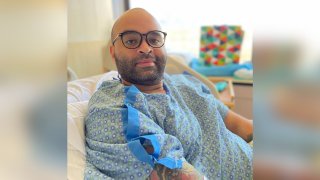
This photo provided by the U.S. Navy shows U.S. Navy Petty Officer 2nd Class Thomas James in Centura Penrose Hospital on Saturday, Nov. 26, 2022, in Colorado Springs, Colo.

A member of the U.S. Navy who was injured while helping prevent further harm during a shooting at a gay nightclub in Colorado last weekend said Sunday that he “simply wanted to save the family that I found.”

Petty Officer 2nd Class Thomas James made his first public comments on the shooting in a statement issued through Centura Penrose Hospital in Colorado Springs, where James is recovering from undisclosed injuries suffered during the attack.

Colorado Springs Police Chief Adrian Vasquez said that James was one of two men who helped to stop the shooter who walked into Club Q late on Nov. 19 with multiple firearms, including a semiautomatic rifle, and killed five people. At least 17 others were injured when a drag queen's birthday celebration turned into a massacre.

1:17
U.S. Army veteran Richard Fierro spoke during a news conference outside his Colorado home about his efforts to subdue the gunman in Saturday’s shooting at Club Q.

James reportedly pushed a rifle out of the shooter's reach while Army veteran Rich Fierro repeatedly struck the shooter with a handgun the shooter brought into the bar, officials have said.

“If I had my way, I would shield everyone I could from the nonsensical acts of hate in the world, but I am only one person," James said in a statement. “Thankfully, we are a family and family looks after one another."

Patrons of Club Q have said the bar offered them a community where they felt celebrated, but that the shooting shook their sense of safety.

“I want to support everyone who has known the pain and loss that have been all too common these past few years," James said. “My thoughts are with those we lost on Nov. 19, and those who are still recovering from their injuries.”


0:52
There have been 523 mass killings since 2006 resulting in 2,727 deaths as of Nov. 19

Colorado Gov. Jared Polis, the first openly gay man elected governor in the United States, appeared on two Sunday morning TV shows saying he would support increasing licensing requirements for semiautomatic weapons, improving mental health services and better use of red flag laws that allow courts to remove weapons from people having mental health crises and who may be a danger to themselves and others. He also urged the toning down of anti-LGBTQ political rhetoric.

“We know that when people are saying incendiary things, somebody who’s not well-balanced can hear those things, and think that what they’re doing is heroic when it’s actually a horrific crime that kills innocent people,” Polis said on NBC's ‘Meet the Press.’

James ended the statement by urging young members of the LGBTQ community to be brave.

“Your family is out there. You are loved and valued," James said. “So when you come out of the closet, come out swinging.”
Anti-Defamation League CEO Makes Blistering Tweak To Trump's Campaign Slogan

ADL's Jonathan Greenblatt said Trump is "running the most unapologetic white nationalist campaign that we’ve ever seen."


Josephine Harvey
Nov 27, 2022, 09:21 PM EST

Anti-Defamation League CEO Jonathan Greenblatt said Donald Trump is “trying to make America hate again” after the former president admitted to having dinner with a prominent white supremacist days after announcing his 2024 presidential campaign.

“For Donald Trump to dine with notorious white supremacists and unrepentant bigots ― I think, at a minimum, it’s clarifying,” Greenblatt said on CNN. “He’s trying to make America hate again and running arguably the most unapologetic white nationalist presidential campaign that we’ve ever seen.”


Trump hosted a dinner on Tuesday at his Mar-a-Lago resort with white nationalist activist Nick Fuentes and Ye, the rapper formerly known as Kanye West, whose professional empire has been upended by a series of recent antisemitic tirades and subsequent allegations of workplace misconduct.

Amid furious backlash over the meeting, including from some Republicans, Trump has distanced himself from Ye and insisted he did not know who Fuentes was. According to Trump, the dinner was supposed to be with Ye, who brought Fuentes as his guest.

Greenblatt said it “makes no difference” that Trump claimed not to know Fuentes.

“It’s demonstrably unpresidential when you can’t demonstrate a basic knowledge of people in public life,” he said, noting that in 2016, Trump claimed not to know “anything about” David Duke and refused to condemn the former KKK leader after getting his endorsement.

Ye, who has been accused by former employees of praising Adolf Hitler and Nazis in business meetings, posted several videos on Thursday claiming that Trump was “really impressed” with Fuentes. Sources also told The New York Times and Axios that Trump praised Fuentes at the dinner and at one point said, “he gets me.”

Fuentes has ties to key allies of Trump, such as Reps. Marjorie Taylor Greene (R-Ga.) and Paul Gosar (R-Ariz.). Both lawmakers attracted furious backlash earlier this year after they spoke at a white nationalist conference organized by Fuentes.

In January, Fuentes was subpoenaed by the House committee investigating the Jan. 6, 2021, attack on the U.S. Capitol by Trump supporters seeking to overturn the 2020 election. At least seven people with connections to Fuentes’ America First movement were charged with federal crimes relating to the insurrection.
Hyundai Motor, SK On sign EV battery supply pact for N. America

Heekyong Yang and Joyce Lee
Tue, November 29, 2022 


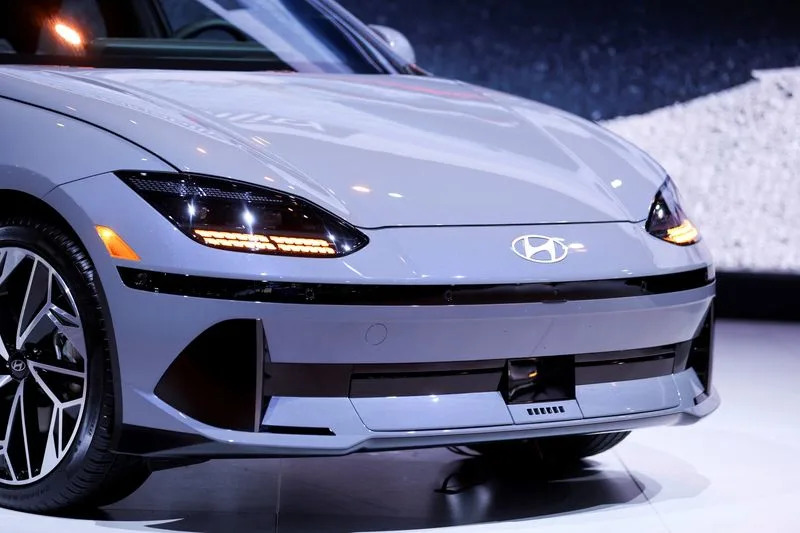
 Press day at the Los Angeles Auto Show

By Heekyong Yang and Joyce Lee

SEOUL (Reuters) - South Korea's Hyundai Motor Group has signed an agreement to source electric vehicle (EV) batteries in North America from battery maker SK On, the companies said on Tuesday.

The partnership follows the signing in August of the U.S. Inflation Reduction Act, which will require automakers to source a certain percentage of critical minerals for their EV batteries from the United States or a U.S. free-trade partner to qualify for new U.S. EV tax credits.

In a statement, SK Innovation Ltd's battery unit SK On said that under the terms of the memorandum of understanding (MOU), it will provide its batteries to the auto group's plants in the United States after 2025 for electric vehicle production.

It said the partnership will allow the two firms to better meet the U.S. tax credit qualifications required by the Inflation Reduction Act.

From next year at least 40% of the value of critical minerals for batteries will have to come from the United States or a U.S. free-trade partner in order to receive U.S. EV tax credits of up to $7,500 per vehicle, a threshold set to rise to 80% in 2027.

"We expect the stable supply of EV batteries from SK On will also enable us to contribute to emissions reduction and meet climate goals in the market," Hyundai said in a statement.

As the new law requires EVs to be assembled in North America to qualify for the tax credits, Hyundai Motor Co and its affiliate Kia Corp, as well as major European automakers, were excluded from the subsidies as they do not yet make the vehicles there.

South Korea's trade ministry said on Tuesday that Hyundai Motor was considering building EVs at its existing factories in the United States to qualify for U.S. federal EV tax credits.

In October the auto group broke ground on a new EV and battery plant in Georgia, aiming to begin commercial production in the first half of 2025 with an annual capacity of 300,000 units.

(Reporting by Heekyong Yang and Joyce Lee; Editing by Clarence Fernandez and Jan Harvey)
ANTI-CHINA SPACE PROGRAM
U.S. to Launch Regional Space Force Command in Korea

By Roh Suk-jo
November 28, 2022 

The U.S. Space Force will set up a regional command at U.S. Forces Korea headquarters this year.

A USFK spokesman told the Chosun Ilbo on Sunday that the first regional command was launched under the U.S. Indo-Pacific Command in Hawaii on Nov. 22, and more regional commands will be established here and at U.S. Central Command this year.

The announcement comes after North Korea escalated missile provocations and launched an intercontinental ballistic missile capable of hitting the U.S. mainland.

According to the South Korean Defense Ministry, the space command here will have about 20 staff.

"This suggests that the U.S. military regards the security situation on the Korean Peninsula and in Northeast Asia including the nuclear missile threat from the North as serious," a military source said. "The regional space command will have a small staff initially but will expand over time."
 
It will be tasked with detecting and track flying objects like North Korean missiles that pose a threat to the U.S. and its allies. In recent strategy documents, the U.S. military disclosed plans to launch regional space commands in all parts of the world.

/AFP-Yonhap

The regional command will also serve as a hub for sharing information between South Korea, the U.S. and Japan. At their summit on Nov. 13, President Yoon Suk-yeol, President Joe Biden and Prime Minister Fumio Kishida pledged to share missile information in real time.

Seoul and Washington are strengthening military cooperation in preparation for various kinds of provocations from the North, including possibilities of a fresh nuclear test.

South Korea is expected to send marine troops to take part in a drill with the U.S. Marines in San Diego, California next year for the first time.

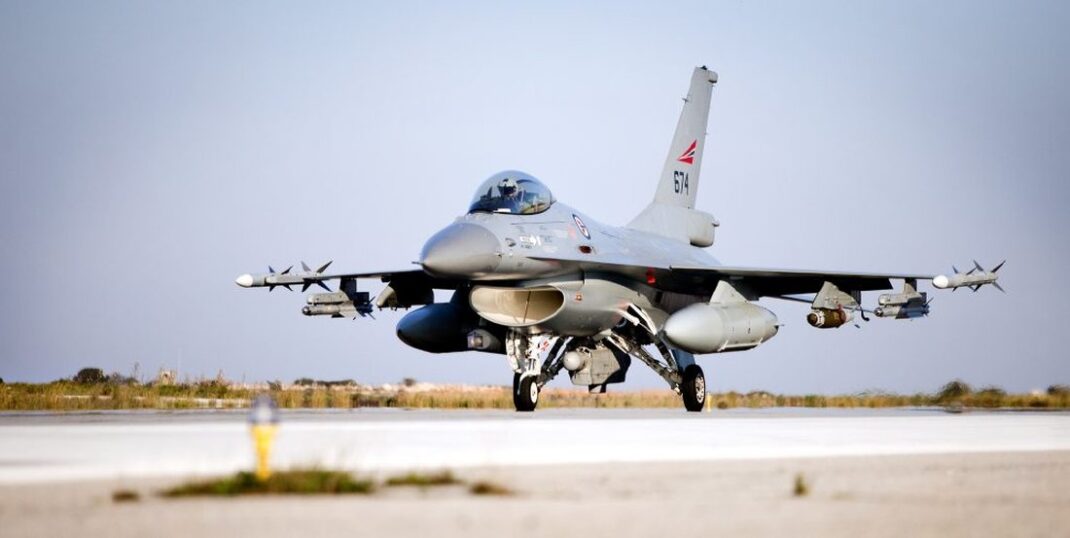
Meanwhile, the U.S. Air Force executed a B-2 Spirit "elephant walk" and fly-off to conclude annual exercises at Whiteman Air Force Base in Missouri. "This routine training ensures our airmen are always ready to execute nuclear operations and global strike anytime, anywhere," according to the base in Missouri.

A researcher at the RAND Corporation told Voice of America the B-2 is a serious threat to the North Korean regime "in terms of its ability to get to targets and destroy them without the North Korean knowing it's coming."

© Digital Chosun Inc.
Belshazzar’s Feast


By Mark Tooley on November 27, 2022

Street protests are sweeping China against its disastrously draconian “zero COVID” policies that close cities rather than accept effective foreign vaccines. Protests in Iran against the ruling clerics also endure, provoked by the death of a woman in police custody for insufficiently wearing a mandatory headscarf. And Russia simmers as Putin’s failing and costly Ukraine invasion persuades hundreds of thousands to leave Russia to escape military conscription or the failing economy under Western sanctions.

These turmoils won’t likely of themselves topple these regimes, which have vast coercive resources to protect their rule. State propaganda will labor to deceive these populations into complicity and passivity. Police state apparatus will intimidate, arrest, torture, imprison or kill the most feared opponents. Economic revenge will be enacted against any perceived dissenters, who will lose jobs, business and livelihoods. The education system will brainwash students with regime mythology. Artificial intelligence, especially in China, will carefully surveil all protesters, with future repercussions.

And yet, with all their nearly unlimited powers, these despots cannot ever entirely sleep serenely at night. In societies and in governments where all must at least pretend to agree, there’s no way to know the real truth about who is friend or foe. Public opinion cannot be accurately measured. And there’s no way, behind countless placid facial masks, to know who will remain loyal in times of true challenge.

Police states, staffed by millions of obsequious collaborators, motivated more by self interest than conviction, can persist for decades if the regime remains feared. But if vulnerability appears, loyal minions can melt away quickly. This sudden collapse happened to the Shah’s regime that Iran’s mullahs replaced. It happened to Chiang Kai-shek whom the Chinese communists replaced. It happened to the Soviet Union, which Putin tries to recreate. During the last weeks of 1989, the Soviet client regimes of Eastern Europe suddenly dissolved. Romania’s dictator was one day addressing an initially compliant crowd from his balcony. A few days later, on Christmas Day (for Western Christianity), they faced a firing squad. Two years later the Soviet Union was quietly dissolved with barely a whimper.

Xi, Putin and Khamenei, despite their powers, can never be completely confident about their regimes or their personal futures. So they overreact against even minor challenges. And they will murder many thousands if deemed necessary. But downfalls can be sudden, often unfolding before strong defense can be organized.

Recently a talented musician friend shared his rendition of “The Handwriting On The Wall,” an old hymn about the abrupt downfall of Babylonian de facto King Belshazzar. As told in the Book of Daniel, he is blasphemously feasting with his decadent court upon the vessels stolen from the Jewish temple, when an inscription from a detached phantom hand ominously appears on the wall: “You have been weighed and found wanting.”

Belshazzar’s counselors cannot explain the inscription so the imprisoned Hebrew exile, Daniel, is summoned, who pronounces the doom of the king and his court, after which Belshazzar perishes and his kingdom falls to Darius, who honors Daniel. Great pride and self-indulgence precede the seemingly powerful regime’s collapse. The warning of impending implosion is not understood by the clueless ruler, who cannot construe how he could lose seemingly insurmountable control. He listens only to his lackeys who benefit from his corruption and must heed his pretensions. Only a discerning and persecuted outsider, who understands the foolishness of the ruler’s self-deception, can accurately interpret the inscriptive warning.


Here are part of the hymn’s lyrics:

At the feast of Belshazzar
And a thousand of his lords,
While they drank from golden vessels,
As the Book of Truth records,
In the night, as they reveled
In the royal palace hall,
They were seized with consternation—
’Twas the Hand upon the wall!

Refrain

’Tis the hand of God on the wall!
Shall the record be “Found wanting!”
Or shall it be “Found trusting!”
While that hand is writing on the wall?

See the brave captive, Daniel,
As he stood before the throng,
And rebuked the haughty monarch
For his mighty deeds of wrong;
As he read out the writing—
’Twas the doom of one and all,
For the kingdom now was finished—
Said the Hand upon the wall!

And here’s a powerful rendition of another version from one vocalist.

It’s a warning that applies to all tyrants who blasphemously appropriate to themselves what rightly belongs only to God: “You have been weighed in the balance and found wanting.” Every regime that claims an absolute power for its own self-aggrandizement offends God. Xi suppresses religion. Khameinei claims to serve God. Putin with the Russian Orthox Church’s compliance claims to serve Christianity. There is for each one a figurative hand inscribing his providential doom on the wall. But they do not understand, and they will not even summon a Daniel, whom they would ignore anyway.

Whether in days, months, years or decades, the regimes in China, Russia and Iran will tumble. Their successors may be more just, or even worse. But judgment will be rendered. The unfolding protests and tumults there may seemingly recede. But they evince a providential hand that is warning, however unheeded, that the scales of righteousness and justice will be balanced at their expense.


Mark Tooley is IRD’s president and editor of IRD’s foreign policy and national security journal, Providence. Prior to joining the IRD in 1994, Mark worked eight years for the Central Intelligence Agency. He is a graduate of Georgetown University and is a native of Arlington, Virginia. He is the author of Taking Back The United Methodist Church, published in 2008; Methodism and Politics in the 20th Century, published in 2012; and The Peace That Almost Was: The Forgotten Story of the 1861 Washington Peace Conference and the Final Attempt to Avert the Civil War, published in 2015.

Follow Mark on Twitter: @markdtooley


How scientists use wastewater to track the spread of COVID