Friday, January 20, 2023

Majority of Scots want greyhound racing to be 'phased out'

Ross Hunter
Thu, 19 January 2023

New polling has found that a majority of Scots want greyhound racing to be phased out

A MAJORITY of Scots are opposed to greyhound racing, according to new poll.


Analysis carried out by Panelbase on behalf of an American organisation opposed to the sport found that six in ten people want the Scottish Parliament to phase out greyhound racing.

The welfare of the dogs was raised as the biggest concern among respondents, with most believing that dogs bred for racing have a bad quality of life.

There are no active licenced tracks in Scotland with the last remaining site, Shawfield in Rutherglen, hosting no races since 2020.

However, one unlicenced operational greyhound track in Scotland located in Thornton, Fife remains in business.

The Scottish Government is currently undertaking research into the sport with MSPs expected to reach a conclusion about its future next month.

Bob Elliot, Director of Scottish animal welfare charity OneKind, said the “outdated” sport had no place in a contemporary Scotland:

"The statistics are clear; the majority of people in Scotland want to see a greyhound racing ban.

"Time and time again, we’ve seen doping scandals, horrifyingly high numbers of injuries and deaths – over 1,000 dogs killed on the Greyhound Board of Great Britain’s regulated tracks across a five-year period – and the abysmal treatment of raced greyhounds.

“We’ve also heard heart-breaking accounts of traumatised greyhounds during parliamentary debates, and inspirational accounts of the incredible people who rehabilitate them. These dogs are the lucky ones. Others will be killed when they no longer make money for their ‘trainers’.

READ MORE: 'Absolute disgrace': Alister Jack snubs Holyrood committee invite

"How much more does the Scottish Government need to hear? Greyhound racing is a cruel and outdated ‘sport’ which has no place in a modern Scotland. These sensitive, lazy and loving dogs, affectionately known as ‘couch potatoes’ by their families, deserve so much better. Nothing short of a complete ban on greyhound racing will suffice."

Last year, a Holyrood committee looking at the subject heard that some dogs in Scotland were given cocaine and that some racers as old as 10 “seldom” see daylight.
New research reveals the chilling reason why a Hawaiian town has 500 earthquakes a week

Graeme Massie
Thu, 19 January 2023 


Scientists say they have worked out why a small town in Hawaii has been hit by around 500 earthquakes a week.

Researchers say that Pahala on the island of Hawaii sits above an “interconnected feature” between 22 and 26 miles underground that is slowly swelling with molten rock, according to research published in Science.

Pahala has experienced swarms of earthquakes for decades. By 2015, the number had increased from around seven a week to 34.

Experts say that after the eruption of the Kilauea volcano on the island in 2018, the number dramatically shot up to hundreds per week -- around 192,000 in all.

Scientists say in their research that as pulses of magma, which is molten or semi-molten rock found deep beneath the Earth’s surface, enter the “sills” a string of earthquakes travel along their length.

“We were freaking out,” John Wilding, a graduate researcher at the California Institute of Technology and lead author of a study into the earthquakes, told National Geographic. “No one had ever directly observed magmatic activity at this scale before.”

The researchers used machine learning algorithms to dig through seismic data picked up by a network of sensors and found earthquakes so small they had previously been missed.

The quakes are located between the planet’s crust and core and reportedly so tiny that most of them are never felt on the surface.

Experts think that the town sits above a column of rock called a “hotspot” that helped build the Hawaiian islands, which have 15 volcanoes.

Kilauea, one of the world’s most active volcanoes, is erupting again earlier this month, creating lava fountains and lava “waves.”

Kilauea last erupted for 16 months starting in September 2021. For about two weeks starting last November, Hawaii had two volcanoes spewing lava side-by-side when Mauna Loa erupted for the first time in 38 years
Transgender men can get pregnant. Here's what they wish more people understood.

David Artavia
Thu, 19 January 2023 

Though trans dads like Danny Wakefield, left, and Kayden Coleman are open about their pregnancy and birth stories, a lack of cultural awareness continues to fuel misinformation and stigma. (Danny Wakefield via Instagram/Kayden X Coleman via Instagram)

When Danny Wakefield gave birth to their first child in 2020, it brought to light a string of issues faced by transgender parents in the health care system.

“I had a really hard pregnancy,” Wakefield, 36, who is transgender but also uses they/them pronouns, tells Yahoo Life. During emergency room visits, Wakefield says they were met with “snickers” from nurses, as well as “doubt, disbelief and a lack of knowledge” from physicians ill-equipped to handle their needs.

“In one instance, it took an hour and a half to get them to treat me because they didn't believe I was pregnant,” Wakefield says. “The doctors and nurses would talk quietly among themselves, asking each other questions about me, instead of asking me directly — the patient who's sitting right in front of them.”


Stories like Wakefield’s are not uncommon, says Dr. Juno Obedin-Maliver, assistant professor in the Department of Obstetrics and Gynecology at Stanford University School of Medicine. That’s mainly because the medical establishment — and society at large — has little knowledge about pregnancy in the trans male population.


“We grow up in a world with books, from preschool on up, that until very recently have not imagined or really represented the diversity of communities as they are,” Obedin-Maliver tells Yahoo Life. “None of our systems have been designed to delineate the difference between somebody's gender and somebody's pregnancy capacity.”

That’s slowly changing, Obedin-Maliver points out, due to a growing demand from transgender patients — and because more and more are sharing their stories, as with a recently trending New York Times Op-Doc about a trans man giving birth in a small town in Mexico.

But, Obedin-Maliver argues, until society acknowledges the basic truth that “anyone born with a uterus, ovaries and tubes” has the capacity to become pregnant, there will always be a lack of accurate research and data, leaving trans parents at a disadvantage.
Trans men can — and do — give birth.

Transgender men — people born with female anatomy who live and identify as men, sometimes undergoing gender-affirming care through surgeries and/or testosterone and sometimes not — can get pregnant in the same way anyone with reproductive organs can, explains Obedin-Maliver. That includes penetrative sex with someone with sperm as well as through assistive reproductive technology (ART), such as intrauterine insemination (IUI) or in vitro fertilization (IVF).

Due to the fact that trans male pregnancies are vastly under-researched — not to mention their lack of visibility — the process is clouded with misconceptions. One of the biggest, Obedin-Maliver says, is the notion that trans men on testosterone are unable to conceive. Though more studies need to be done on how testosterone influences ovulation in general, taking the hormone does not negate one’s capacity to get pregnant.

“There is a difference between having a period, or not, and ovulating, or not,” she explains. “Those are actually related but distinct processes in the body.” So it’s possible that somebody on testosterone might have stopped menstruating but is still ovulating or producing eggs. “That's true for anyone [with female reproductive organs],” she adds, “and that sometimes makes it difficult for folks to know if they are pregnant, because they're having sex with sperm involved and we don't know how much testosterone diminishes ovulation.”

That message often doesn’t translate to the population that needs it most.

Kayden Coleman, a gay transgender man — meaning his gender is trans male and his sexual orientation, something separate and different, is gay — is father to two daughters, 9 and 2, and has been on testosterone for 14 years. He went off during both pregnancies at the advice of his doctor but was still taking doses of the hormone when he discovered he was pregnant — both times unplanned.


"There are a lot of doctors prescribing testosterone to transgender men and selling them this dream that they'll somehow be infertile or not be able to get pregnant,” Coleman tells Yahoo Life. "As long as you're having relations with anyone who produces semen, you can get pregnant."

Wakefield had a similar experience. When they first started taking testosterone 10 years ago, they were told they "would not be able to conceive or carry a child because it would act as a natural birth control." Wakefield wound up having an unplanned pregnancy.

Sonny Witt, a trans father in Australia who gave birth in 2022, planned his pregnancy through IVF. At the advice of his doctors, he went off testosterone during the egg-retrieval process (as well as during the pregnancy itself). He started up again "about three months" after giving birth.

In some cases, trans men may choose to pause their hormone treatments in an effort to get pregnant, but this step is sometimes unnecessary — and those considering it should consult with their doctor beforehand. And again, not all transgender men use testosterone, just as not all keep their uteruses.

As for Witt, 30, he says he had no idea pregnancy was an option until he started seeing other trans dads sharing their journeys online. That's when he decided to make his dream of fatherhood a reality by reaching out to a "rainbow clinic,” specializing in LGBTQ family planning.

"I had no idea that this was available to a trans person," he tells Yahoo Life, "which is why I have publicly shared my own journey. I want more people to be aware that this is a possibility."


Shon McCloud, a Virginia-based U.S. Army vet who identifies as trans, is currently pregnant with his first child, conceived naturally with his male partner. His doctors considered the pregnancy "high risk" because he was on testosterone during conception, which is partly why he has paused taking the hormone until after giving birth.

"So many of us feel judged, or that we don't have the support we need," McCloud tells Yahoo Life. "So, I'm excited to provide that for [my son]."


Obedin-Maliver, who co-authored a 2019 study about the effects of testosterone during pregnancy, recommends that trans men pause their hormones while pregnant as a precaution — simply because there’s still more research to be done.

“It is not precisely clear for how long before pregnancy or for how long after the pregnancy to restart if, for example, they are chest or breastfeeding," she explains. (The abilities of a trans man to produce milk after having top surgery, which is a removal of the breasts, varies by individual.) "So that is a conversation that each individual should have with their health care provider.”

The truth is, no matter what gender a birth parent identifies as, their basic pregnancy needs are all the same. And no pregnancy is a one-size-fits-all, which is why Obedin-Maliver says ob-gyns ought to approach trans pregnancies in much the same way as they would any other.

"I often get asked, 'What's the experience of a trans man giving birth?' And I say, 'Well, what's the experience of a cis woman giving birth?'" she says. "For example, as a queer woman, I had a terrible time in my pregnancy. That was really different than friends of mine who loved being pregnant and had a wonderful time."
The information gap

According to the Human Rights Campaign’s 2021 survey, more than 1% (close to 2 million) of Americans identify as transgender. While there is no comprehensive data on how many give birth, Obedin-Maliver says the numbers are likely higher than most would expect. Similarly, data is lacking on the number of trans men who want to conceive children through IVF — though a 2019 Family Equality Council report showed that 63% of LGBTQ people planning families are looking into foster care, adoption and some form of ART.

So why is there such a lack of data? One of the reasons, Obedin-Maliver notes, is that most medical systems have a protocol of tracking the birth parent’s gender as “female” when that’s not always accurate, making it difficult to have a full picture.

Such was the case for Wakefield, Coleman and Witt, all of whom were misgendered on their babies' birth certificate and now worry about the real-life implications it might have.

"I had to be labeled as the mother," says Witt, who is concerned that "it's going to cause further complications when enrolling him into school."

Wakefield was also labeled as the "mother" on his son's birth certificate (and sole parent), which contradicts Wakefield's own personal ID documents that label him as "male." Already, he says, it's brought an array of issues, such as difficulties around getting his son a U.S. passport.

As noted by Lambda Legal, accurate documents for trans parents are vital in a variety of life events, such as "enrolling a child in school, authorizing medical care, establishing eligibility for government benefits or child support, and to authorize a parent to pick up a child from day care or school."

Another reason for the lack of data is that there simply aren’t enough people who care to make trans health a priority, adds Obedin-Maliver, who has led many studies — including PrideStudy.org, the first large-scale long-term national health study of LGBTQ people — in efforts to find solutions for queer communities that are disproportionately impacted by a lack of research. Still, that is slowly changing.

The Society for Maternal Fetal Medicine, for example, issued a statement last year about the importance of gender inclusively. Additionally, the American College of Obstetrics and Gynecology, the premier organization for ob-gyns in the U.S., started including the experiences of trans and nonbinary folks in its published work. In 2020, the Yale Journal of Biology and Medicine published a narrative review on trans male pregnancies while giving an overview of the literature’s contributions.

"Not all people who need pregnancy-related care are women," Dr. Devon Ojeda, senior national organizer for National Center for Transgender Equality, tells Yahoo Life. "The research is out there. To uplift this work means that the health care system has to completely change the way they see preventative care beyond the gender binary.”
'I've fallen in love with myself'

For many trans dads, sharing their stories online — including with the hashtag #seahorsedad (which has upwards of 344 million posts on TikTok) — is a radical act that can not only change the way people feel about trans health care but also be a beacon for other trans men who want to start a family.

"I need it to be normalized that transgender people exist, that we give birth," says Coleman, adding that telling stories of Black transgender men is especially important because it challenges both transphobia and racism. "They think we all are transitioning to date women," he adds of the many misconceptions, "and they think that our transition means doing away with all things feminine and all things that have to do with women in the societal sense," including pregnancy and giving birth.


Starting a family, McCloud adds, is a personal choice that shouldn't be dissuaded because of a lack of understanding.

"Birth is part of life," he says. "People are ignorant and cruel when it comes to 'new' information or realities. If it's not seen, we all question it regardless of the truth that male identifying people can and do give birth. Birthing a child doesn't change my identity."

Wakefield, who has been sharing their parenting journey on the blog Danny the Trans Dad for the past two years, adds, "To be public about my pregnancy and my journey to parenthood, because visibility is so important, I wanted other trans and nonbinary people to know that we can, and do, create really beautiful and amazing families — and there are many different avenues to doing that."

The larger message many visible trans dads hope people receive isn't necessarily about the trans experience — but, rather, the joys of being a parent.

"I've fallen in love with myself," Wakefield says of fatherhood. "I never imagined that I would heal so much, just from being a parent. I want to heal my own trauma so that I don't continue the cycles. Especially as a trans person, I've had this struggle, this internal struggle for so much of my life. To be able to see those struggles starting to turn into self-love is really beautiful. I owe all of that to my child."


FIRST PREDICTED:

https://en.wikipedia.org/wiki/Triton_(novel)

Trouble on Triton: An Ambiguous Heterotopia (1976) is a science fiction novel by American writer Samuel R. Delany. It was nominated for the 1976 Nebula ...


What happened at Scottish gender reform protest at UK Government's Edinburgh HQ
19th January


By Craig Meighan@CraigyMeighan
Multimedia Journalist


People take part in a demonstration for trans rights outside the 
UK Government Office at Queen Elizabeth House in Edinburgh
(Image: PA)

HUNDREDS of protesters gathered outside the UK Government's hub in Edinburgh on Thursday calling on Westminster to reverse its decision to block Scotland’s gender reform legislation.

Campaigners turned the street pink, white and blue as they accused the Tories of a twin attack on trans rights and democracy.

Activists held placards reading “the Scottish Parliament has spoken”, “trans rights are human rights” and “hit the road Jack” – a reference to Scottish Secretary Alister Jack, who invoked Section 35 of the Scotland Act to block the bill.

Politicians from across Scotland's political parties, including Scottish Green MSPs Patrick Harvie, Gillian Mackay and Ross Greer gave speeches at the event outside Queen Elizabeth House on Thursday.


Scottish LibDem leader Alex Cole-Hamilton told the crowd that the Gender Recognition Reform (Scotland) Act simply extended human rights to trans people.

“We are removing the medicalisation and the trauma of the current process which means you have to submit the final judgement about your identity to a group of strangers you will never meet with no right to appeal," he told a roaring crowd in Scotland's capital.

“I am proud to stand with the majority of MSPs in [Holyrood]”

The GRR bill aims to make it easier for transgender people to change their legally recognised gender and was passed overwhelmingly in the Scottish Parliament by 86-39.

Some women’s groups have said the bill is a threat to women’s rights and women-only spaces, such as bathrooms.


Protesters said the UK Government has launched a twin attack on trans rights and democracy (Image: Newsquest)

There have also been concerns raised by the Tories and Labour leader Keir Starmer over a provision in the bill which lowers the age someone can legally change their gender from 18 to 16.

But protesters in Edinburgh said women’s rights and trans rights need not conflict.

One protester told The National: “Myself and my friend are queer creatives. We have our businesses. We work in the tattoo industry. There is a ridiculous outbalance or outweighing favour for cis, white, hetero men and we are so fed up with it.

“We are sick to the back teeth of people using stuff that isn’t even relevant to try and basically infringe on other people’s human rights.”

Asked if they agreed with the UK Government’s decision to block Holyrood’s gender reform bill, the demonstrator said: “Absolutely not. It’s just ridiculous. It’s just further micromanaging."

And, when asked for the message they wanted to share with Scottish Secretary Jack and Prime Minister Rishi Sunak, they said: “Stop embarrassing yourself and educate yourself.”

The SNP have raised concerns that the use of a Section 35 order could set a precedent for Westminster to bypass Holyrood.

Beth Douglas, Rainbow Greens co-convener, told The National that the Tories using Section 35 on the GRR bill was just the start.

She said: “The reason why we are here today is because the Scottish Government passed the GRA reforms and the UK Government blocked it.

“We are here to say that that is wrong, that this just isn’t an attack on trans rights, it’s an attack on democracy itself.

“It concerns all of us now and we all need to come together to fight it because if Section 35's become the new normal the Tories will not stop with us, they’ll come after other marginalised groups as well and we all need to stand together against it.”


Protesters want the UK Government to revert its decision to block Scotland gender reform bill (Image: PA)

Douglas said the gender recognition reform bill doesn’t impact women’s rights but merely makes the process simpler for trans people to obtain a birth certificate which represents who they truly are.

“A GRC, a gender recognition certificate, does three things: it lets you pay taxes in the right gender, it lets you get married in the right gender and it lets you die with dignity," she said.

“Without a GRC, if a trans person dies they’ll get buried under the wrong gender. If they get married, they’ll get married under the wrong gender."

Douglas said asking for these reforms was an “incredibly low line”.


“The fact the Tories can’t stomach such a small piece of legislation just shows you how intolerant they are,” she said.

“We have an unelected Tory government issuing orders over what we can do over clearly devolved matters.

“So do I trust what they say that this will be a once-in-a-lifetime thing? No I don’t - I think they’re lying.

“So Alister Jack: scrap Section 35, just like we made your government scrap Section 28.”

A UK Government spokesperson said: “The UK Government raised a number of concerns relating to the impact of the Scottish Government’s proposals with Scottish Ministers, as part of our constructive approach, in advance of the legislation passing.

“The Secretary of State for Scotland has made an order under section 35 of the Scotland Act 1998, preventing the Scottish Parliament’s Gender Recognition Reform (Scotland) Bill from proceeding to Royal Assent.

“This was done after thorough and careful consideration of all the relevant advice and the policy implications. This legislation would have an adverse impact on the operation of Great Britain-wide equalities legislation.

“Transgender people deserve our respect, support and understanding. Our decision is about the legislation’s consequences for the operation of GB-wide equalities protections and other reserved matters.”

SHE IS CORRECT
Labour’s Lisa Nandy suggests 13-year-olds should be 'taken seriously' if they want to change gender


Daniel Martin
Thu, 19 January 2023 

The Wigan MP has said she wants the Government to 'get rid of the hurdles' which prevent a 13-year-old in her constituency from transitioning - Eddie Mulholland

Labour was split on trans issues on Thursday after Lisa Nandy suggested that children as young as 13 should be "taken seriously" if they want to change their gender.

It comes just days after Sir Keir Starmer said he thought that 16 was too young to legally change

In an interview with Times Radio on Thursday, the shadow levelling-up secretary said 13-year-olds should be “taken seriously” if they want to self-identify as another gender and obtain a legal certificate to do so.

The Wigan MP said she wanted the Government to “get rid of the hurdles” which prevented a 13-year-old in her constituency from transitioning.

'Wooing the woke Labour MPs'

A Whitehall source said on Thursday: “Nandy is wooing woke Labour MPs while Keir desperately pretends he cares about women’s rights - it’s time for Labour to come clean on where it stands on protecting women and girls.”

Ms Nandy said: “When I talk to teenagers in my constituency, I've got someone who's been going through this process, since the age of 13, is now 19, and has only just been able to access treatment.

“We've got to get rid of the bureaucracy, get rid of the hurdles. We're failing an entire generation of people.

“And I think when we look back on this moment, we'll be thoroughly ashamed of the way that we treated some of the most marginalised people in this country. We've got to get serious about fixing the system.”

Ms Nandy said children in some cases are judged to be able to take their own decisions, citing the fact that children become criminally responsible a 12.


Asked whether she thought a 13-year-old should be able to self-certificate their gender, she said: “No. I think they deserve to be taken seriously.

“Eighteen is largely the age where we believe that young people become adults and can make decisions for themselves.

“But we do have inconsistencies in the law in this country. We believe, for example, that there are certain things that you can do at the age of 12, like the age of criminal responsibility.”
Starmer's concerns

At the weekend, the Labour leader told the BBC’s Sunday with Laura Kuenssberg: “I have concerns about the provision in Scotland, in particular the age reduction to 16 and, in particular, the rejection of our amendment in relation to the Equalities Act.”

Pressed on whether he believed people are old enough at 16 to decide to change gender, he replied: “No, I don’t think you are.”

It also emerged on Thursday that four Labour MPs attended a trans rights rally attended by a violent ex-criminal.

Nadia Whittome, Olivia Blake, Lloyd Russell-Moyle and Angela Eagle attended the event on Wednesday evening.

Also pictured at the rally was Sarah-Jane Baker, who has the distinction of being Britain’s longest-serving trans prisoner.

She spent 30 years in jail for attempting to murder another inmate, after being imprisoned for kidnapping and torturing her stepmother’s brother.

Ms Baker also made a “Kill JK Rowling” sign for a Pride march two years ago.

The four MPs said on Thursday night they only attended the rally for a few minutes and were not aware of Ms Baker or her previous comments, while a Labour spokesman insisted Ms Nandy agreed with her leader that the age at which someone should be able to legally change gender should be kept at 18.
US abortion laws: Faith leaders file lawsuit against Missouri's strict stance on abortion

Sarah Palmer
Thu, 19 January 2023
THE MOST IMPORTANT AMENDMENT WHICH IS WHY IT IS FIRST

A lawsuit filed on behalf of several Missouri faith leaders on the 50th anniversary of the landmark Roe v. Wade Supreme Court decision is asking a court to throw out the state's abortion law, alleging that lawmakers openly invoked their personal religious beliefs while drafting the measure.

The lawsuit, filed on Thursday in St. Louis, is the latest of many to challenge restrictive abortion laws enacted by conservative states after the Supreme Court overturned Roe v. Wade in June 2022. That landmark ruling left abortion rights up to each state to decide.

Since then, religious abortion rights supporters have increasingly used religious freedom lawsuits in seeking to protect abortion access. The religious freedom complaints are among nearly three dozen post-Roe lawsuits that have been filed against 19 states’ abortion bans, according to the Brennan Centre for Justice.

The Missouri lawsuit seeks a permanent injunction barring the state from enforcing its abortion law and a declaration that provisions of its law violate the Missouri Constitution. Plaintiffs include 12 Christian and Jewish leaders.

“What the lawsuit says is that when you legislate your religious beliefs into law, you impose your beliefs on everyone else and force all of us to live by your own narrow beliefs,” said Michelle Banker of the National Women’s Law Center, lead attorney in the case.

“And that hurts us. That denies our basic human rights.”

Within minutes of last year's Supreme Court decision, then-Attorney General Eric Schmitt and Gov. Mike Parson, both Republicans, filed paperwork to immediately enact a 2019 law prohibiting abortions “except in cases of medical emergency.” That law contained a provision making it effective only if Roe v. Wade was overturned.

The law makes it a felony punishable by five to 15 years in prison to perform or induce an abortion. Medical professionals who do so also could lose their licenses. The law says that women who undergo abortions cannot be prosecuted.

Missouri already had some of the nation’s more restrictive abortion laws and had seen a significant decline in the number of abortions performed, with residents instead traveling to clinics just across the state line in Illinois and Kansas.

The lawsuit said sponsors and supporters of the Missouri measure “repeatedly emphasized their religious intent in enacting the legislation."

It quotes the bill's sponsor, Republican Rep. Nick Schroer, as saying that “as a Catholic I do believe life begins at conception and that is built into our legislative findings.” A co-sponsor, Republican state Rep. Barry Hovis, said he was motivated “from the Biblical side of it," according to the lawsuit.

Lawsuits in several other states are taking similar approaches.

In Indiana, lawyers for five anonymous women - who are Jewish, Muslim and spiritual - and advocacy group Hoosier Jews for Choice have argued that state’s ban infringes on their beliefs. Their lawsuit specifically highlights the Jewish teaching that a fetus becomes a living person at birth and that Jewish law prioritises the mother’s life and health.

A court ruling siding with the women was appealed by the Indiana attorney general's office, which is asking the state Supreme Court to consider the case.

In Kentucky, three Jewish women sued, claiming the state’s ban violates their religious rights under the state’s constitution and religious freedom law. They allege that Kentucky’s Republican-dominated legislature “imposed sectarian theology” by prohibiting nearly all abortions. The ban remains in effect while the Kentucky Supreme Court considers a separate case challenging the law.

But Banker said Missouri’s lawsuit is unique because while plaintiffs in other states claimed harm, “we are saying that the whole law violates separation of church and state and we’re seeking to get everything struck down.”


Right-wing party calls referendum against Swiss climate bill


Thu, 19 January 2023 

 Swiss People's Party President Chiesa delivers a speech after his election

ZURICH (Reuters) - Switzerland's right-wing Swiss People's Party (SVP) on Thursday called a referendum aimed at blocking a draft law to cut greenhouse gas emissions.

The SVP, a member of the ruling coalition in Bern, said it had garnered more than 103,000 signatures in support of its campaign against the law, which aims to make Switzerland carbon-neutral by 2050.

"(This) law is expensive, mendacious and dangerous," the SVP said in a statement. "Even though we already have too little power it wants to outlaw heating oil, gas, diesel and petrol as energy sources."

The party, which also favours tighter curbs on immigration, is the biggest in Switzerland's 200-member federal parliament.


No other party has supported its referendum against the proposed legislation on climate change, which would accelerate CO2 emissions cuts and the roll-out of renewable energy, notably solar energy, backed by 2 billion Swiss francs ($2.2 billion) of funding.

Greenpeace Switzerland said prior to the referendum's activation that it stood in stark opposition to the broad base of support for the climate law within parliament as a whole, and showed how "short-termist and divorced from reality" the SVP’s climate policies were.

In Switzerland, proposed referendums require 50,000 signatures to be activated.

World Wildlife Fund Switzerland said the law mapped out a path to "secure and independent energy provision" for the country.

"The climate crisis and biodiversity are closely linked," it added in a statement. ".... We are all subject to its impact, which will become ever more devastating unless we act resolutely to halt its progression."

The SVP argues that imposing further curbs would be counterproductive during Europe's current energy crisis.

The new draft on carbon emissions meanwhile also faces hurdles.

It too will require approval in a referendum to become law and is itself a watered-down version of a draft that failed to pass in 2021.

(Reporting by John Stonestreet; Edtiing by Tomasz Janowski)
King Charles redirects £1bn windfarm profits towards ‘public good’

Energy agreements have generated windfall that would normally go towards monarchy


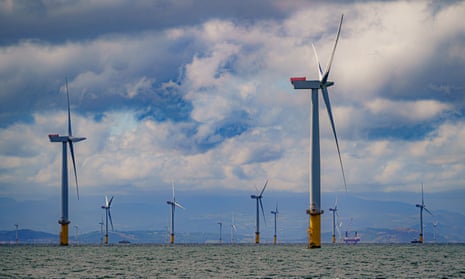
An RWE windfarm off the coast of north Wales. Photograph: Ben Birchall/PA

Alex Lawson and agencies
Thu 19 Jan 2023 

King Charles has asked for profits from a £1bn-a-year crown estate windfarm deal to be used for the “wider public good” rather than as extra funding for the monarchy.

Under the taxpayer-funded sovereign grant, which is now £86.3m a year, the king receives 25% of the crown estate’s annual surplus, which includes an extra 10% for the refurbishment of Buckingham Palace.

Six new offshore wind energy lease agreements, announced by the crown estate on Thursday, have generated a major windfall for the estate, which would usually lead to a jump in the monarchy’s official funding.


How the Queen came to own the seabed around Britain


The monarch’s right to collect royalties from wind and wave power was granted by Tony Blair’s Labour government in a 2004 act of parliament. The approach is in contrast to the job of setting royalties and assigning drilling rights for oil and gas, which rests with the government.

But the king, who highlighted the cost of living crisis in his Christmas message, has requested that the extra funds “be directed for wider public good”, instead of to the sovereign grant, at a time when many are facing financial hardship.

It is not clear as to the exact amount of taxpayer funding the king has passed up, but it is likely to be many millions.

The crown estate – an ancient portfolio of land and property – belongs to the reigning monarch “in right of the crown” but it is not their private property.

Profits for the crown estate jumped by £43.4m to £312.7m in the year to the end of March, with the value of its seabed portfolio swelling to £5bn.

The portfolio also includes chunks of central London – the monarch is one of the largest property owners in the West End, including St James’s and Regent Street – as well as farmland, offices and retail parks from Southampton to Newcastle.

The crown estate is also responsible for managing the Windsor estate, which spans nearly 16,000 acres (6,500 hectares) and includes parkland and ancient woodland, as well as the Ascot racecourse.

The total value of the crown estate’s properties was estimated at £15.6bn in the most recent annual accounts.

The monarch surrenders the revenue from the estate – more than £312m a year – to the Treasury each year for the benefit of the nation’s finances, in exchange for the sovereign grant.

The king’s keeper of the privy purse, Sir Michael Stevens, who manages the royal household’s finances, has contacted the prime minister, Rishi Sunak, and the chancellor, Jeremy Hunt – his fellow royal trustees – to ask for “an appropriate reduction” in the percentage of crown estate profits used for the sovereign grant.

A Buckingham Palace spokesperson said: “In view of the offshore energy windfall, the keeper of the privy purse has written to the prime minister and the chancellor to share the king’s wish that this windfall be directed for wider public good, rather than to the sovereign grant, through an appropriate reduction in the proportion of crown estate surplus that funds the sovereign grant.”

The sovereign grant is based on funds two years in arrears, so any boost in crown estate profits and new percentage arrangements would not affect the grant until 2024-2025.

The sovereign grant covers the running costs of the royal household and events such as official receptions, investitures and garden parties.

The percentage increased from 15% to 25% in 2017 to cover the cost of a 10-year programme of £369m’s worth of repairs at the palace.

The grant goes up if crown estate profits increase, but it does not fall when they decrease.

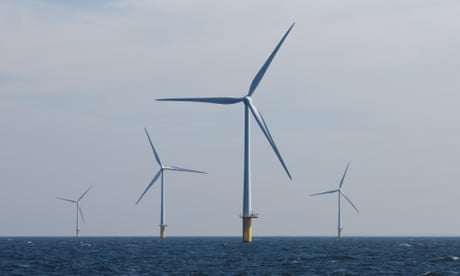
The crown estate confirmed on Thursday it had signed lease agreements for six offshore wind projects that have the potential to power more than 7m homes.

Three of the six projects are located off the north Wales, Cumbria and Lancashire coast, and three are located in the North Sea off the Yorkshire and Lincolnshire coast.

Together they will pay about £1bn to the crown estate every year.

The successful bidders, which were announced last year, included Germany’s RWE Renewables, which won two licences at Dogger Bank, off the Yorkshire coast, and two from a consortium that includes the oil company BP.

The sovereign and the wider royal family have three main sources of income – the crown estate, the Duchy of Lancaster and the Duchy of Cornwall, with combined assets of more than £17bn.

King Charles grants us a windfall from wind: now it is crucial we question ownership of the seabed

Molly Scott Cato
THE GUARDIAN
Thu, 19 January 2023 

Photograph: Steve Trewhella/Alamy

So the new king has reversed a thousand years of feudal convention and accepted that the value of the seabed rightfully belongs to his “subjects” rather than himself. That is the implication of the decision announced today saying King Charles will support handing over more of the crown’s share of revenues from the offshore wind boom to the Treasury, so the money can be spent in the public interest rather than for his private interest.


Given his green reputation and his coming to power in the midst of the worst cost of living crisis in living memory, the new king was perhaps embarrassed that the expansion of windfarms would bring a large £1bn a year windfall to the crown estate, 25% of which would, under the current arrangements, have gone directly to the royal household as part of the annual sovereign grant.

It does feel rather strange to be welcoming this, as though we were forelock-tugging peasants rather than 21st-century citizens.

I have long been critical of the weird anachronism that means the crown estate, the monarch’s property portfolio, owns, and has the right to lease, the whole of the seabed around our coast.

Green party policy is that the crown estate should be considered as part of the national commonwealth and the value accruing from its leasing should be channelled into a green sovereign wealth fund.

As a Green economist I am keenly focused on the risk that the sources of revenue in the green economy are rapidly becoming enclosed. Since our future energy supply will rely heavily on wind and marine resources we need to ensure that the sustainability transition is a just one; questioning the ownership of the land on which these new windfarms are built is a crucial aspect of that.

The transition is an opportunity to build a fairer economy as well as a greener one. But more immediately, how should we spend this unexpected windfall for the public good?

I should tell you not to get too excited: we are talking about several billions, so nothing like enough to solve the problems with our transport or health systems, but still a useful sum to suddenly find down the back of the national sofa.

My own choice would be to invest it in some landmark rewilding projects, on land and in our marine environments, to symbolise the transformation of our relationship with nature that is so urgently needed, and that the king himself supports. Part of the deal might be requiring those whose land was restored and regenerated to agree to forego their ownership rights and vest that land to the public in perpetuity as commonwealth.

Such rewilding is urgently necessary in a country that has lost nearly half of its biodiversity since the Industrial Revolution and is the one of the most nature-depleted countries in the world.

The regeneration of just one species – marine sea kelp – could bring extraordinary benefits. Due to invasive fishing techniques and coastal development, about 90% of seagrass has disappeared over the past 30 years. Seagrass colonies provide habitats for a huge range of marine wildlife; they also act as carbon sinks. Using the windfall to fund their restoration could help to repair the damage done by the crown estate in delaying permission for such work in recent years.

In 2015 I was lucky enough to visit one of our few remaining seagrass meadows, off Studland Bay, in Dorset. I was supporting Dorset Wildlife Trust’s application for this wonderful habitat on the Isle of Purbeck to become a Marine Conservation Zone, an application that was being resisted by local developers. Thehaven it provided to two of our native species of precious seahorse was under threat.

While the money from windfarm leases might not be able to solve the climate crisis, it would make a huge difference to organisations like the Wildlife Trusts that protect our natural heritage on a shoestring.

While a few flagship rewilding projects would cheer our spirits and act as inspiration they would be only a drop in the ocean of the biodiversity crisis. More powerful by far would be to use the action taken by the king to raise more wide-reaching questions about the ownership of our land and seas.

After all, if we actually owned our natural world as a commonwealth, wouldn’t we be more willing and able to protect it?

Molly Scott Cato is professor of green economics at Roehampton University, and a former Green MEP
Fresh talks taking place amid dispute over teachers’ pay in Scotland

Katrine Bussey, PA Scotland Political Editor
Fri, 20 January 2023 

Fresh talks are taking place in a bid to end strike action by teachers over pay in Scotland.

The Scottish Negotiating Committee for Teachers, which brings together the Scottish Government, local authority leaders in Cosla and trades unions, is meeting on Friday.

However the EIS, Scotland’s largest teaching union, has insisted its action will continue until a “substantially improved” pay offer is received.

First Minister Nicola Sturgeon conceded there is a ‘gap’ between teachers’ pay demands and ‘what is affordable’ (Jane Barlow/PA)

Unions have already rejected a deal that would see most teachers receive a 5% pay rise, though some lower earners would get a 6.85% increase.

Instead, teachers, who are striking in Angus and East Dunbartonshire on Friday, are demanding a 10% wage hike.

EIS general secretary Andrea Bradley said: “The reality is that our members are not prepared to accept the sub-inflation 5% that has repeatedly been offered, and only a substantially improved offer from the Scottish Government and Cosla can end this dispute.

“Strike action will continue until that improved offer is on the table for our members.”


Her comments came after First Minister Nicola Sturgeon called for “further compromise” to end the dispute.

Ms Sturgeon conceded there “does still remain a gap” between the unions’ demands and “what is affordable”.

But she insisted: “This is a Government that values public sector workers and seeks to negotiate fair pay deals.

“To that end, we continue to work closely with trade unions and local government partners to reach a deal that is fair and affordable.”

Education unions in six-hour talks with Government officials to avert strikes

Aine Fox, PA
Fri, 20 January 2023 


Education unions are meeting Government officials for a marathon six-hour round of talks in a bid to avert teacher walkouts in the coming weeks.

Friday’s meeting comes after union leaders said there had been “no progress” after discussions with Education Secretary Gillian Keegan on Wednesday.

The National Education Union (NEU) plans seven days of strike action in England and Wales in a dispute over pay – with the first on February 1 coinciding with walkouts by staff at universities, on the rail network and in Whitehall.

The union has said strike action could affect more than 23,000 schools.

The planned length of Friday’s meeting was described as a “step forward” by Geoff Barton, general secretary of the Association of School and College Leaders (ASCL).

ASCL is not part of strike action, but Mr Barton, who said he will be at the talks, said there is anger among his members over a range of issues, including education funding and problems with recruitment and retention as well as pay.

He told Sky News: “In particular, we want to see teaching become a more high profile, high status profession.

“Pay and conditions are part of that. I’m hoping that what we get from today is a sense of talking about those real and genuine issues rather than skirting around them, and not thinking that this is purely a post-Covid thing.

“This has been a decade in the making.”

Of Friday’s talks, he said: “It’s good in one sense that we’ve got six hours of talks.

“That’s a long time, I have to say, six hours of talks where pay is the number one issue on the agenda. That feels to me like it is a step forward.”

He said there has been a reluctance in England to talk about pay compared with Wales, where there is a Labour government in power.

He said: “I think what we got with the Education Secretary was someone who I think tribally sees unions as part of the problem and was reluctant to talk about what we think is the key issue, which is pay – how do you recruit great graduates to choose this profession?

“And what we saw, I think, in Wales, with the cabinet secretary, was somebody who opened by saying ‘this is the beginning of a negotiation around pay’.

“It was much more direct because of the social partnership between the Government there.”

Schools minister Nick Gibb said the Government understands the pressures facing teachers and is willing to negotiate, but warned against “inflation-busting pay settlements”.

He told BBC Breakfast: “Officials in the department today are spending six hours with the four unions discussing the issues that we discussed on Wednesday, and the secretary of state said they could start discussing issues like pay but also other issues such as workload and the conditions of teachers in schools.

“So you know, we do understand the pressures that teachers are under.”

He said the Government does not want to give “inflation-busting pay settlements that mean that we end up embedding inflation into our economy for the longer term which has a hugely damaging effect”.

He added: “We are negotiating with teachers and all the public service unions across Whitehall, across the economy, to discuss issues like pay, to discuss issues such as workload.

“There is an independent pay review body in place to determine pay levels for teachers.”

Updated guidance from the Department for Education suggests agency staff and volunteers could be used to cover classes on strike days, with schools expected to remain open where possible, although remote learning is an option and the most vulnerable pupils are to be given priority.

But the guidance has been called “at best naive” by the general secretary of the National Association of Head Teachers, who said schools could have to shut during walkouts if “staffing numbers are dangerously low”.
UK
Union Announces 10 New Ambulance Strikes


Ned Simons
Fri, 20 January 2023


A series of fresh strikes by ambulance workers has been announced by Unite in an escalation of the bitter dispute over pay and staffing.

The union said its members across England, Wales and Northern Ireland will stage 10 further strikes over the coming weeks, warning that additional dates could be announced soon.

Unite’s ambulance workers are already set to walk out next Monday as the bitter row with the government remains deadlocked.

Unite general secretary Sharon Graham said: “Rather than act to protect the NHS and negotiate an end to the dispute, the government has disgracefully chosen to demonise ambulance workers.

“Ministers are deliberately misleading the public about the life and limb cover and who is to blame for excessive deaths.

“Our members faithfully provide life and limb cover on strike days and it’s not the unions who are not providing minimum service levels.

“It’s this government’s disastrous handling of the NHS that has brought it to breaking point, and as crisis piles on crisis, the prime minister is seen to be washing his hands of the dispute. What a disgrace. What an abdication of leadership.”

The newly-announced strike action will involve Unite’s members in the North West, North East, East Midlands, West Midlands, Wales and Northern Ireland.

Unite said that as with previous strikes, its representatives will be working at regional level to agree derogations to ensure that emergency life and limb cover will be in place during the action.

Other derogations will ensure that patients needing lifesaving treatment, such as renal care and cancer treatment, will be transported to their appointments, said the union.

Unite official Onay Kasab said: “The resolution to this dispute is in the government’s hands.

“This dispute will only be resolved when it enters into proper negotiations about the current pay dispute.

“The government’s constant attempts to kick the can down the road and its talk about one off payments, or slightly increased pay awards in the future, is simply not good enough to resolve this dispute.”

Unite gave details of when its members employed by different ambulance trusts will be striking.

West Midlands: 6 and 17 February and 6 and 20 March. North East: 6 and 20 February and 6 and 20 March. East Midlands: 6 and 20 February and 6 and 20 March. Wales: 6 and 20 February and 6 and 20 March. North West: 6 and 22 February and 6 March and March 20. Northern Ireland: 26 January and 16, 17, 23 and 24 February.

Members of the Royal College of Nursing and ambulance workers in the GMB are striking on February 6, while the GMB has also called strikes on February 20 as well as March 6 and 20.
Related...

Patients Overwhelmingly Back Striking NHS Key Workers – New Poll


'Pricing Out An Entire Generation!' This Is Why Junior Doctors May Strike
UK
RMT has received new pay offer from train operators, union says


Gwyn Topham Transport correspondent
Thu, 19 January 2023 


Train operators have made a fresh offer to the RMT union of a 9% rise over two years for onboard crew and station staff, raising hopes of a breakthrough in the long-running pay dispute.

The increased pay package has watered down controversial clauses that resulted in the RMT immediately rejecting a deal from the Rail Delivery Group (RDG), representing train operators, in December.

The RMT leader Mick Lynch said he would put the proposed deal to the union’s executive committee. However, the union warned that some of the reforms could lead to widespread ticket office closures, which it did not support.

Talks have been ongoing in London this week between the RMT and RDG as well as separately with Network Rail.

The RDG said it had made a “best and final offer” including a pay rise of 4% from this January and 5% (or a minimum £1,750 rise) backdated to January 2022.

A two-year 8% offer was rejected in December and followed by almost four weeks of further strikes and industrial action.

The RMT accused the government of sabotaging the prospective deal by demanding more driver-only operation of trains (DOO), regarded as a red line by the union.

As well as offering slightly higher pay, the new package has withdrawn the critical DOO demand.

However, the deal stipulates mandatory Sunday working when rostered, more flexible working, the ability to move staff between nearby stations when needed, and paves the way for other reforms that the union has strongly resisted – not least, the potential wholesale closure of ticket offices.

Ticket office staff would be redesignated under a new multi-skilled grade – allowing station ticket offices to be closed or repurposed, subject to public consultation.

Steve Montgomery, chair of the Rail Delivery Group, said: “This is a fair offer that gives RMT members a significant uplift over the next two years – weighted particularly for those on lower incomes who we know are most feeling the squeeze – while allowing the railway to innovate and adapt to new travel patterns. It also means we can offer our people more varied, rewarding careers.

“With taxpayers still funding up to an extra £175m a month to make up the shortfall in revenue post-Covid, we urge the RMT to put this offer to its members so we can bring an end to this damaging dispute for our people, our passengers and the long-term future of Britain’s railways.”

Staff will also be guaranteed no compulsory redundancies until the end of 2024, an improvement to the previous offer of 1 April 2024.

The RDG said it would also offer retraining and an apprenticeship scheme, while a voluntary redundancy scheme would be made available for staff who wished to leave the industry.

The RMT general secretary, Mick Lynch, said: “The national executive committee will be considering this matter and has made no decision on the proposals nor any of the elements within them.

“We will give an update on our next steps in due course.”

The union’s NEC is expected to meet from Monday.

Network Rail has said it will not increase the overall financial package proposed in its offer to the RMT, which is also 9%. However, negotiations are continuing over what a Network Rail source called the “unappreciated benefits” of the deal, and addressing other issues, after it was rejected in a referendum in December.

Further rail strikes by train drivers are scheduled for 1 and 3 February, after Aslef members rejected an 8% two-year deal earlier this week.