Friday, January 20, 2023

French MPs vote to block deep-sea mining and back international ban

RFI
Thu, 19 January 2023 

AP - Dita Alangkara, File

France's parliament has called for the country to join the international fight to ban deep-sea mining, starting by outlawing the practice in its own vast marine territory.

The French National Assembly voted on Tuesday in favour of banning deep-sea mining in its waters, with 215 votes in favour and 56 against.

The resolution calls for a moratorium on the process "until it has been demonstrated by independent scientific groups with certainty that this extractive activity can be undertaken without degrading marine ecosystems and without loss of marine biodiversity".

In the meantime, the MPs called on France to block the adoption of any deep-sea mining regulations by the International Seabed Authority (ISA), the intergovernmental body that regulates mining in international waters.

They also urged the French government to oppose the granting of any provisional mining licences, and called for a reform of the ISA to make its workings more transparent.

Risks to vulnerable ecosystems


The deep seabed, which absorbs large quantities of carbon dioxide, contains coveted deposits of rare metals – including copper, nickel and manganese – that can be used in industry, batteries and other electronics.

Environmentalists and scientists are concerned about the risks that deep-sea mining poses to vulnerable underwater ecosystems.

He welcomed the vote as a "victory for the seabed and environmentalists".
Regulatory deadline approaching

Read also:
France to map genes of underwater species to help protect its vast sea life
Tara sails back to France after global voyage checking plankton and pollution
UN pushes for sea change to save oceans in crisis
This is an era of plentiful, cheap, renewable energy, but the fossil fuel dinosaurs can’t admit it

Zoe Williams
Thu, 19 January 2023 

Photograph: Lindsey Parnaby/AFP/Getty Images

I remember the first time wind energy emerged as a serious contender in the UK’s energy provision. It was 6 November 2012, and the country’s electricity use from wind hit an all-time high in the middle of the afternoon, at 9.3%. The casual observer wouldn’t have noticed, and the expert wouldn’t have been surprised, but for people between those poles, it was astonishing. Windfarms were then perceived as a nascent technology, so infant and speculative they needed endless subsidy, intervention, special pleading.

To this day, it remains a mystery how a reputation for well-meant inadequacy clings to renewable energy sources: it can’t all be the result of lobbying by the fossil fuel industry. Sometimes, it feels like we just don’t want good news.

Related: Why net zero tsar’s review is a damning indictment of Tory government

Last week, for two days straight, wind power hit a peak of supplying over half of all the UK’s electricity use. For five months last year, low-carbon electricity sources (solar, wind, hydrogen and nuclear) constituted more than 50% of the country’s energy use. And unbelievably, the National Grid spends hundreds of millions to billions a year constraining energy supplies, that is, paying renewable suppliers when they’re generating too much power for the grid to handle.

It’s one triumph after another in green energy, but you wouldn’t know it to look at our bills, nor to examine our short- and medium-term policy framework. UK energy unit prices are the highest in the world. Without the government price cap intervention, businesses would already be bankrupt, schools probably shut down and people freezing in their homes. Jeremy Hunt’s pledge to withdraw the price cap from next April looks fanciful: sure, the words coming out of his mouth make sense – prices can’t be held down forever because it wouldn’t be “responsible”. But there’s no imaginable reality in which the “unlimited volatility in international gas prices” he refers to can be weathered by the average household.

Meanwhile, research by Nesta, the innovation foundation, has shown that if we meet the offshore wind target set by the government’s energy security strategy – 50GW by 2030 – then on an ideal windy day, that alone would provide almost twice as much energy as we use, before you even factor in onshore and solar. There is a real prospect of limitless cheap energy, some of the time, with windless days covered by, ideally, nuclear as an alternative.


‘UK energy unit prices are the highest in the world.’ Photograph: Just Jus/Alamy

The only brake on this bright future is in storage, grid capacity and interconnectivity. Research and investment are urgently needed into ways to store renewables, as well as viable exchange between us and mainland Europe and the island of Ireland. It is no longer wild to imagine a time when all the weather conditions of the continent can be pooled so that we benefit from one another’s surpluses; and this is before you factor in the development in hydrogen, which is hoped to provide 10GW by 2030. Green energy insiders liken it to the vaccine quest: these things take a decade when you give them a decade. Greater urgency sharpens the senses, and can accelerate the most arduous discovery process to a fraction of that.

The ramifications of this abundance are immense. The promise of going into the 2030s with net zero assured reshapes every sector, every ambition. Then there are the immediate, concrete impacts: households and businesses that can afford their bills; geopolitics no longer held hostage by oil and gas-rich autocrats.

So the question is, how have we allowed a sense of hardship and doom to define our energy debate, when we’re on the brink of an entirely new future? We’re partly suffering from collapsing faith in institutions and government. It’s genuinely hard to imagine constructive, farsighted decisions coming out of an administration whose core priority is stamping out wokery in higher education. Perhaps even suggesting limitless cheap energy sounds woke to Rishi Sunak.

Yet the more proximal cause of our malaise is that the advances in renewables aren’t reflected in our energy prices, which are set by the gas price. A UCL report noted that fossil fuels set the electricity price most of the time, at levels that are now much higher than the green sources that constitute at least half of the load: so renewables can get ever cheaper and more efficient, and we won’t feel it in our bills. Energy markets must be broken up into clean power and fossil power.

Finally, there is a drumbeat of despair that even when inflation has subsided, even after the war in Ukraine comes to an end, high energy prices are here to stay. Oil and gas companies, bemoaning the windfall taxes and green investments required of them, predict prices that are elevated, if less volatile, for ever. “We need to treat energy as something that is not abundant,” said Anders Opedal, chief executive of Norway’s state oil producer, Equinor, this week.

The cynicism is jaw-dropping: the fossil fuel industry situates its problems in the green investments that are, in fact, our only salvation. And Conservative politicians and commentators parrot them, through some combination of lobbying and lack of imagination which would be unedifying to pick apart. We will not grasp the scale and plenty of the green revolution until we treat vested interests who naysay it with the scepticism they deserve: and we need to grasp it, if we’re going to make it happen.

Zoe Williams is a Guardian columnist
Qantas, Origin and other Australian companies urged to check effectiveness of overseas rainforest carbon credits

Graham Readfearn
 Guardian Australia
Thu, 19 January 2023 

Photograph: Loren Elliott/Reuters

Some of Australia’s best known companies – including Qantas, Origin and Zoos Victoria – are being urged to check the effectiveness of overseas rainforest carbon credits used to underpin carbon neutral claims made through a federal government program.

This week the Guardian revealed more than 90% of the rainforest credits issued through a leading global verification organisation, Verra, were likely worthless and could make global heating worse.

The investigation raises questions about claims of carbon neutrality made through the federal government’s Climate Active program, which allows companies to use Verra credits to claim carbon neutrality.

It has also prompted calls for businesses in Australia to carry out their own due diligence on Verra rainforest carbon credits they have bought.

Polly Hemming, a climate researcher at the Australia Institute, said the investigation was another to cast doubt on the effectiveness of carbon credits.

“Whether you think offsetting is the right thing to do or not, most companies are buying these credits in good faith and are trying to do the right thing,” she said.

“There’s a significant number of Australian businesses that have bought these Verra forest credits and used them to underpin a claim of carbon neutrality through the Australian government’s Climate Active program.”

The Guardian’s investigation raises further questions about the use of carbon credits in Australia, with outstanding questions that some Australia-based carbon offsets had not delivered the emissions reductions that had been claimed.

The Guardian’s nine-month investigation analysed studies of the Verra rainforest schemes, as well as independent analysis and interviews with scientists, industry insiders and Indigenous communities.

The emissions reductions certified at most projects to protect rainforests from clearing were vastly inflated, the investigation claimed.

Verra strongly disputes the studies’ conclusions, has strenuously defended the projects and challenged the methods used to undermine their credibility, saying the methods the scientists used cannot capture the true impact on the ground, which explains the difference between the credits it approves and the emission reductions estimated by scientists.

Many Australian companies have turned to the federal government’s Climate Active program to gain carbon neutral certification, and often buy and then retire different carbon credits – some overseas and some domestic – which they disclose to Climate Active.

Verra rainforest credits are among those used by Qantas that allow customers to offset emissions from flights, and by Origin when customers want to offset emissions from electricity and LPG use.

Zoos Victoria and cosmetics brand Aesop also bought and retired Verra rainforest carbon credits to underpin applications for carbon neutral status through Climate Active.

John Connor, the chief executive of the Carbon Market Institute, which represents companies and organisations working in or taking part in the carbon offset industry, said: “I’m noting that Verra has challenged these findings, but companies should be looking at these concerns [raised in the investigation] as they should with any aspects of their investment portfolio.

“They should make their own investigations for their own due diligence.”

A review of carbon credits by former chief scientist Ian Chubb in late 2022 recommended removing a requirement, set to come into force later this year, that carbon neutral claims made through Climate Active should include at least 20% of Australian credits. The government accepted the recommendation.

Hemming claimed Climate Active did not carry out any of its own due diligence on credits to check they actually delivered real cuts in greenhouse gas emissions.

Related: Revealed: more than 90% of rainforest carbon offsets by biggest provider are worthless, analysis shows

“Companies can’t ultimately know what they’re getting unless they visit the projects themselves,” she said.

“The public should look with scepticism at any net zero or carbon neutral claims because we’re just seeing more and more that there is no real assurance that these products are actually carbon neutral.”

The Guardian has sent questions to several companies that have bought Verra rainforest credits and declared them through Climate Active.

A statement from the Department of Climate Change, Energy, the Environment and Water, which oversees the Climate Active program, said 320,000 tonnes of offsets from avoided deforestation had been used since 2019, which was 1.95% of all offsets used in that period.

The statement said carbon credits eligible to be used under the program had been assessed against integrity principles “at the scheme level” and that a Climate Change Authority (CCA) review of international offsets last year recommended no changes to which offset schemes should be included.

“The CCA recommended a further review of the use of international offsets in Australia, including the types eligible for use, by 2025. The Australian government is currently considering the recommendations of the CCA Review.”
Shetland sends short-film plea to Norway over oil field plans

Lucy Garcia
Thu, 19 January 2023 

Dear Norway calls on Shetland's 'neighbours across the sea' to stop work on an offshore oilfield

SHETLANDERS have sent a “message in a bottle” plea to Norway to oppose development of a controversial oil field.

The short film by campaigners, titled Dear Norway, calls on their “siblings across the sea” to halt work on the Rosebank oil field, 80 miles off Shetland’s coast.

Rosebank is thought to hold the equivalent of 500 million barrels, making it the largest undeveloped oil and gas field in the North Sea.

It would be operated by the Norwegian state-owned oil company Equinor, and the UK Government is set to make a decision on whether the development will go ahead.

The film is shot around Shetland and sees a local boy send a message in a bottle to Norway about the environmental harm from the project and asks it to stop Rosebank. The letter begins “Dear Norway, this is Shetland, your sibling across the sea. We need to talk.”

Laura Bisset, a young climate campaigner from Shetland who features in the film, said: “Drilling at Rosebank is another step backwards in a race against the climate crisis which we are already losing. Now has to be the time to take action before it is too late.

“Our little Island is more than a vessel for oil, and it is important for others to know we are being affected by Rosebank and that we care about the impact.”

The film aims to highlight historical and cultural ties between Shetland and Norway to bolster its message – and warns that burning Rosebank’s oil and gas reserves would create more CO2 than the combined annual emissions of all 28 low-income countries in the world.

Instead, Norway is urged to “lead the transformation” away from oil and gas, and that “together, we can supply clean energy across Europe”.

Alex Armitage, a Green Councillor on Shetland Islands Council who is also in the film, said: “We all know that climate breakdown is threatening our future, yet still we continue to burn fossil fuels.

“In this age of delusion, the world needs leadership on climate. As enlightened societies, the UK and Norway must take a stand and make the choice to leave our fossil fuels in the ground and lead the global energy transition.”

There are also fears over the impact of Rosebank on marine life, with the potential installation of a pipe through the protected area of the Faroe-Shetland Sponge Belt.

The decision of whether to proceed with the oil field development lies with Westminster, rather than Holyrood.

The UK Government has repeatedly been urged by activists to put a stop to the plans.

Scottish Greens energy and environment spokesperson, Mark Ruskell has described Rosebank as “a climate disaster waiting to happen”.

He said: “We are already way past the point when we should have been moving away from oil and gas, yet Westminster is doubling down on it.”
Policy levers that can push decarbonisation into overdrive

Marlowe HOOD
Thu, 19 January 2023 


Government measures to boost electric vehicle sales, the share of green ammonia in fertiliser, and public purchasing of plant proteins could help shift the decarbonisation of the global economy into high gear, researchers said Friday.

Strategic support through regulation and subsidies in these three areas would have knock-on effects, accelerating the transition away from planet-warming fossil fuels across nearly a dozen high-emitting sectors, they said in a report released as business and political leaders meet at the World Economic Forum in Davos.

"We need to find and trigger positive economic tipping points if we are to limit the risk from damaging climate tipping points," said University of Exeter professor Tim Lenton, one of the first scientists to quantify the danger of such thresholds in Earth's climate system.

A world two degrees Celsius warmer than preindustrial levels, for example, could push the melting of polar ice sheets past a point of no return, resulting in many metres of sea level rise.

Other climate change tipping points could see the Amazon basin turn from tropical forest to savannah, and billions of tonnes of carbon leech from Siberia's permafrost into the atmosphere.

In a mirror image, economic tipping points are small interventions that can drive large positive effects in society.

"This non-linear way of thinking about the climate problem gives plausible ground for hope," said Lenton, co-lead author of the report, "The Breakthrough Effect: How to Trigger a Cascade of Tipping Points to Accelerate the Net Zero Transition".

"The more that gets invested in socioeconomic transformations, the faster it will unfold," he said.

- 'Super leverage points' -


A decade ago, for example, electric vehicles barely registered in terms of market share and a rapid phase-out of the internal combustion engine seemed highly improbably.

But a mix of subsidies and deadlines for phasing out the sale of new combustion-engine vehicles had catapulted the EV revolution into overdrive far more quickly than even boosters had expected.

France, Spain, California and other countries or states have banned the sale of new combustion engine cars and vans starting in 2035, and the European Union is well on its way to doing the same.

"By rapidly increasing the production of batteries, prompting technological and cost improvements, electric vehicles could support the transition to clean power and the decarbonisation of other sectors that need cheap and clean energy," the report said.

Mandates that require the use of green ammonia -- made from hydrogen using renewable energy -- to produce fertilisers could kick-start the hydrogen economy, the report found.

This would not only replace fossil fuels in fertiliser, but also bring down the costs of green hydrogen, paving the way to their use as fuels in shipping and steel production, two sectors where decarbonisation is especially difficult.

The third "super leverage point" assessed in the report is alternative sources of protein, especially plant-based, which are already cheaper than most meats.

Requiring their use in schools, hospitals and government offices could spark a more widespread shift towards non-meat protein sources, leading to reduced emissions from livestock and freeing up an estimated 400 to 800 million hectares (one to two billion acres) -- equivalent to seven to 15 percent of global agricultural land today.

This, in turn, would reduce incentives for deforestation and leave more land available to support biodiversity and carbon storage in trees and soil.

"High-emitting sectors of the economy do not exist in isolation, they are deeply inter-connected," said co-lead author Simon Sharpe, a senior fellow at the World Resources Institute in Washington.

mh/smw
Man leads police on slow-speed chase with stolen tractor in North Carolina

Gloria Oladipo
Thu, 19 January 2023


Call it a low-speed chase.

“What a day,” wrote Andy LeBeau, the police chief of Boone, North Carolina, in a Facebook post. “So, many of you have heard, or have seen the videos, that we got in a pursuit with a tractor.”

Indeed, on Tuesday morning, Boone county police received several calls about a man who was erratically driving a John Deere tractor.

Ronnie Hicks, 43, was driving the stolen tractor in a parking lot, attempting to hit pedestrians and several vehicles, police said.

When officers attempted to stop Hicks, he drove the tractor down US Highway 421 south, leading police down several interstates and highways.

The pursuit reached blistering speeds of 20mph (32 km/h), according to the Watauga Online.

Soon other police vehicles joined in, with Watauga sheriff’s deputies and North Carolina state highway patrol troopers assisting Boone police in chasing down Hicks.

At one point, tire deflation devices were deployed in an attempt to stop Hicks, but “were not terribly effective on the tractor”, said LeBeau, blowing out the tractor’s front tires but failing to stop him.

Along the way, Hicks struck a Boone county police car, a dumpster, a church and several vehicles, though no injuries were sustained.

Eventually he pulled into a private drive, abandoned the stolen tractor, fled on foot, turned, brandished a knife, was Tased by officers and arrested.

Videos of the pursuit were posted across social media. “How many Units does it take to track a Deere?” asked one Facebook user.

“I was like, ‘What is this guy doing? It’s not safe. There’s kids who play up here. There’s a little school right here,’” local resident Mark Denny, who witnessed the chase, told WSOC-TV 9. “Why, why are you going to steal a tractor and drive it on the back roads? It didn’t make any sense to me.”

Hicks, whom police said they were “very familiar with”, was arrested on several charges including reckless driving and driving while impaired.
UK
More than 7m captive birds have died or been culled for bird flu disease control


Ben Hatton, PA Political Staff
Thu, 19 January 2023 

More than seven million captive birds have died of bird flu or been culled for disease control since an outbreak started in October 2021, the Government said.

Labour said the figures show the equivalent of 17,000 birds died or were culled every day and claimed the Government has “failed to grip this crisis”.

There have been 279 cases of H5N1, avian influenza, in England since the outbreak started in October 2021, according to figures released this week by the Department for Environment, Food and Rural Affairs (Defra).

Farming minister Mark Spencer told MPs: “To prevent further spread of avian influenza, birds on an infected premises are humanely culled.


Farming minister Mark Spencer (James Manning/PA)

“During the current highly pathogenic avian influenza (HPAI) H5N1 outbreak (October 26 2021 to January 10 2023) 7.48 million birds have died or been culled for avian influenza disease control purposes, including 4.59 million chickens, 1.79 million turkeys, 980,000 ducks, 48,000 geese, 31,000 quail, 35,000 gamebirds and 7,000 other captive birds.”

Defra said the figures are UK-wide and showed both captive birds that died of avian influenza and those that were culled for disease control, but could not provide a breakdown of the number of captive birds that died as a result of the disease.

The latest statistics were released in response to a written parliamentary question from Labour’s shadow environment secretary Jim McMahon.

Mr McMahon told the PA news agency: “The Government has just admitted that 7.48 million birds have died or been culled for avian influenza disease control purposes between October 26 2021 to January 10 2023. That’s the equivalent of 17,000 every day.

“Labour has been pressing the Government for over a year on its preparedness to deal with an avian flu outbreak, and the figures announced show the Conservatives have failed to grip this crisis.


Shadow environment secretary Jim McMahon (Peter Byrne/PA)

“The Secretary of State should come to Parliament urgently to give our farmers the clarity they need that the Government has a plan and a strong response in place to protect our farms and support all those affected.”

The Government said in November that 3.2 million birds died or were culled for avian influenza disease control purposes between October 2021 and September 2022, and that the figure was 2.8 million between October 2022 and November.

The Government said in November the figures represent a “small proportion”, then 0.6%, of overall yearly poultry production, which Mr Spencer said was “circa 20 million birds slaughtered for human consumption per week”.

Currently, in England, all poultry and captive birds must be housed indoors.

In October last year the Government said it introduced strengthened biosecurity measures that were brought in as part of an avian influenza prevention zone.

NFU poultry board chairman James Mottershead said: “The British poultry sector has experienced an unprecedented year with record levels of avian influenza, which is devastating family farm businesses across the country.

“We have seen how stringent biosecurity measures can help reduce the risk of avian influenza and we urge all bird keepers to remain vigilant, whether you are a professional poultry farmer or someone who keeps a small number of hens in their garden.

“Alongside poultry farmers doing all they can to minimise disease risk, it’s crucial for the government and industry to work together to develop a vaccine as quickly as possible. This will enable much needed additional protection for the national poultry flock, wild birds and farm businesses.”
German parliament recognises Yazidi 'genocide' in Iraq

Deborah COLE
Thu, 19 January 2023 


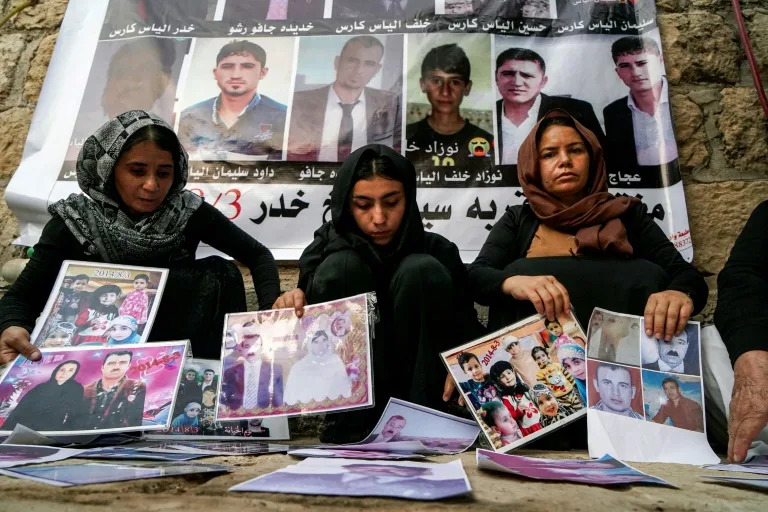
Germany's lower house of parliament recognised on Thursday the 2014 massacre of Yazidis by Islamic State group jihadists in Iraq as a "genocide", and called for measures to assist the besieged minority.

In a move hailed by Yazidi community representatives, deputies in the Bundestag unanimously passed the motion by the three parliamentary groups in Germany's ruling centre-left-led coalition and conservative MPs.

Thursday's vote followed similar moves by countries including Australia, Belgium and the Netherlands.

The chamber "recognises the crimes against the Yazidi community as genocide, following the legal evaluations of investigators from the United Nations", the resolution said.

The text condemns "indescribable atrocities" and "tyrannical injustice" carried out by IS fighters "with the intention of completely wiping out the Yazidi community".

It urges the German judicial system to pursue further criminal cases against suspects in Germany. And it calls on the government to increase financial support to collect evidence of crimes in Iraq and boost funding to help rebuild shattered Yazidi communities.

It also calls for Germany to establish a documentation centre for crimes against Yazidis to ensure a historical record, and to press Baghdad to protect the minority group's rights.

Nobel Peace Prize laureate Nadia Murad, an Iraqi Yazidi rights activist, said she hoped the resolution would inspire other countries to follow suit. "Survivors deserve no less."

- 'Prevent future genocides' -

Islamic State jihadists in August 2014 massacred more than 1,200 Yazidis, members of a Kurdish-speaking community in northwest Iraq that follows an ancient religion rooted in Zoroastrianism. IS sees them as "devil worshippers".

The Yazidi minority has been particularly persecuted by the jihadist group, which has also forced its women and girls into sexual slavery and enlisted boys as child soldiers.

A special UN investigation team said in May 2021 that it had collected "clear and convincing evidence" that IS had committed genocide against the Yazidis.

Foreign Minister Annalena Baerbock recalled speaking to Yazidi women in Iraq who had been raped and held captive by IS fighters. The motion was being passed for them and "in the name of humanity", she said.

"We must call out these crimes by their name," she told the chamber. "We must ask what we can do to prevent future genocides."

Around two dozen Yazidi community representatives attended the debate at the glass-domed Reichstag parliament building in central Berlin.

Mirza Dinnayi, head of NGO Air Bridge Iraq which assists Yazidis, told AFP the measure was "pioneering" for addressing "the consequences of the genocide".

He welcomed the inclusion of "practical steps the German government can take to support the Yazidi community in Iraq as well as the diaspora".

A Yazidi MP in the Iraqi parliament, Nayef Khalaf Sido, called it a "historic turning point" that would bring "positive effects for Yazidis" on the ground.

Kurdish regional president Nechirvan Barzani thanked Germany for its "continued support" and encouraged other nations to take similar steps.

- 'Silence cost lives' -


Green lawmaker Max Lucks said Germany was home to what is believed to be the world's largest Yazidi diaspora of about 150,000 people, meaning the country had a particular responsibility to the community.

"Their pain will never go away," he told the Bundestag.

"We owe this to the Yazidis because we did not take action (in 2014) when we were needed. Our silence cost lives."

Derya Turk-Nachbaur, a Social Democrat and one of the sponsors of the measure, noted there was "no statute of limitations on genocide.

"It was impossible for us to close our eyes any longer to their suffering," she said of the Yazidis.

"The indescribable atrocities of IS militias must not go unpunished -- not in Iraq and not in Germany."

While the Bundestag motion on genocide has no bearing on criminal trials, human rights advocates say it carries important symbolic and political weight.

Germany is one of the few countries to have taken legal action against IS.

In November 2021, a German court convicted an Iraqi jihadist of genocide against the Yazidi, a first in the world that Murad hailed as a victory in the fight for recognition of the abuses committed by IS.

And last week, a German woman went on trial in the southwestern city of Koblenz accused of aiding and abetting war crimes and genocide with IS in Syria by "enslaving" a Yazidi woman.

dlc/hmn/jj

http://photos1.blogger.com/x/blogger/4319/673/1600/236151/taus4.jpg

Yezidism is syncretistic: it combines elements of many faiths. Like Hindus, they believe in reincarnation. Like ancient Mithraists, they sacrifice bulls. They practise baptism, like Christians. When they pray they face the sun, like Zoroastrians. They profess to revile Islam, but there are strong links with Sufism, the mystical branch of Islam.

The slow death of Ireland’s fishing industry

Irish fishermen say they are being “sacrificed” for the post-Brexit trade deal between the United Kingdom and the European Union.

Known as the Trade and Cooperation Agreement, it came into force in 2021, and obliges European vessels to progressively transfer to the UK part of their quota shares for certain fish stocks in the Atlantic Ocean and the North Sea.

For Ireland’s fishing industry, this means a 15% cut to its quotas by 2025, and a projected annual loss of €43 million, making Ireland one of the worst affected countries by this deal.

Fisherman’s co-op Castletownbere - Patrick Cronin

“It’s a death blow," says John Nolan, the manager of the fisherman’s co-op in the southwest village of Castletownbere.

He reckons that 25% to 30% of his staff will be made redundant as a result over the next two years.

Decommissioning of vessels

Dubbed the ‘whitefish capital’ of Ireland, Castletownbere could see 19 of its ships decommissioned, as part of a plan approved in the summer of 2022, by the Irish government, with the help of the EU.

According to Charlie McConalogue, Minister of the Marine, the scheme will help “restore balance between fishing fleet capacity and available quotas, following the reductions in quotas for stocks arising from the EU/UK Trade and Cooperation Agreement.”

Of the country’s 180 whitefish vessels, 64 have reportedly applied for decommissioning.

Skipper Daniel Healy is one of the applicants, but he has yet to receive the government’s offer for his boat, the Robyn R.J., which is named after his three children. After a life at sea and years of promising catches, Daniel tells Euronews that his industry “just isn't in a very good place at the moment. It's on a slippery slope and we just don't know where it's going to stop.”

“Quotas have been cut year on year, there's very little increase in quotas, it's just down and down and down, especially since Brexit,” Daniel adds, wondering if he’ll ever take his boat out again.

Skipper Daniel Healy and his family - Patrick Cronin

Impact on local business

The feeling is echoed across Castletownbere, where many worry about the negative impact that the decommissioning scheme will have on local businesses and on this small community of less than 2,000 residents.

“We’re going to suffer in our coastal communities. We’re going to see people devastated over this. Generations and generations of people who have fished for maybe a hundred years now, there'll be nobody left of that family fishing. Forced out of the industry that they love. It's just a crime against us, to be honest," says Patrick Murphy, CEO of the Irish South & West Fish Producer’s Organisation.

Castletownbere - Patrick Cronin

Despite several protests in Ireland, and appeals at the European level, the fate of Castletownbere and other fishing villages in Ireland seem inextricably tied to Brexit politics and to the Common Fisheries Policy, which allocates fishing quotas to each EU member state.

Nevertheless, John Nolan says the Irish “have to be given some hope by the European Union. And I implore our leaders, our politicians in Ireland and in Europe to treat Ireland more fairly.”

ITS ABOUT THE GUN NOT THE DISABILITY
Family says six-year-old boy who shot Virginia teacher has ‘acute disability’

Gustaf Kilander
Thu, 19 January 2023 


The family of the six-year-old boy who shot his teacher in Newport News, Virginia has said that he suffers from an “acute disability”.

It’s the first statement the family has made since the shooting took place just after 2pm on 6 January at Richneck Elementary School.

The student pulled out a firearm from his backpack and shot Abigail Zwerner, a 25-year-old first-grade teacher, during a lesson. The bullet went through her hand and struck her in the chest.

In the statement released by the family’s lawyer James Ellenson, the family shared their sympathy for Ms Zwerner and said that the gun that investigators say the child brought from home and used during the shooting “was secured,” according to The Washington Post.

“Our heart goes out to our son’s teacher and we pray for her healing in the aftermath of such an unimaginable tragedy as she selflessly served our son and the children in the school,” the family statement said. “She has worked diligently and compassionately to support our family as we sought the best education and learning environment for our son. We thank her for her courage, grace and sacrifice.”

The family statement didn’t outline any details or specifics about the shooting and didn’t include an explanation as to how the six-year-old managed to get ahold of the firearm.

Police previously revealed that the gun had been bought legally by the boy’s mother.

The authorities said that they are continuing to probe how the child retrieved the gun and they’re reviewing if charges should be filed against anyone for failing to store the gun safely.

The family statement went on to say that they’re working with local and federal agencies “to understand how this could have happened”.


Abby Zwerner was critically injured after allegedly being shot by a 6-year-old student (Abby Zwerner/Facebook)

The six-year-old had a care plan at the school, part of which was one of his parents coming to school with him and being in classes alongside him every day until the week that the shooting occurred, the statement revealed.

“The week of the shooting was the first week when we were not in class with him,” the family said. “We will regret our absence on this day for the rest of our lives.”

The family added that the student has been in hospital treatment since the shooting.

While the authorities have said that the shooting was intentional, they’re still looking into the motive. The six-year-old hasn’t been charged with a criminal offence and legal analysts say that it will likely stay that way because Virginia state law states that children under the age of seven are unable to form the intent to commit a crime, The Post noted.

On Wednesday, Newport News Police Chief Steve Drew said that the probe is moving forward, but that investigators still need to speak to some of the other students in the class and retrieve school records and other documents and materials.

Chief Drew said Ms Zwerner is still in recovery after being taken to hospital following the shooting.

Hundreds of parents appeared at a school board meeting earlier this week to share their concerns about school safety in the district where three school ground shootings have taken place since 2021, according to The Post.

Several parents also criticised how the school acted ahead of the shooting.

Last week, Newport News schools Superintendent George Parker III said that school staff had been tipped off that the six-year-old had a firearm and that his bag had been searched, but that no gun was found.

Police said previously that they were not made aware of the tip and parents have questioned how the child was able to hide a gun from school staff.