Tuesday, August 22, 2023

Charles Schwab slashing jobs, offices to streamline operations

Breck Dumas
Mon, August 21, 2023

Charles Schwab says it is preparing to reduce both its headcount and real estate footprint in a series of cost-cutting measures aimed at streamlining operations.

The brokerage giant reported in a Securities and Exchange Commission filing the moves were "directly related to the integration of TD Ameritrade," which Schwab acquired in 2020.


Charles Schwab logo displayed at a location in the financial district in New York, Mar. 20, 2023. The company announced in an SEC filing Monday it plans to slash jobs and its real estate footprint as part of a plan to streamline operations.

Schwab said the company is looking to close or downsize some of its corporate offices, and "plans to reduce its operating costs primarily through lower headcount and professional services."


REMOTE WORKERS ARE LOSING LEVERAGE GAINED FROM COVID PANDEMIC: KEN COLEMAN

"We have said, we intend to take a series of actions this year and into 2024 aimed at removing cost and complexity from the firm, including reducing our expense base and streamlining our operating model," the company told FOX Business in a statement.


TD Ameritrade logo seen in San Francisco. Charles Schwab acquired the discount brokerage in 2020 for $26 billion.

Schwab did not say how many jobs might be impacted by the move, but added, "This will result in eliminating some positions in the coming months, mostly in non-client facing areas. We don’t yet have specifics to offer on how many positions will be eliminated."

According to the filing, the company expects to save at least $500 million a year through these cuts, but expects to pay as much as that in employee compensation benefits and facility exit costs when they occur.

The layoffs will likely happen before the end of the year, the filing said, while the real estate exit costs will likely carry into 2024.

Citigroup mulls plan to remove leadership layer at its largest unit - source

By Tatiana Bautzer and Saeed Azhar

Updated Mon, August 21, 2023

NEW YORK (Reuters) -Citigroup is considering plans to eliminate the role atop the bank's biggest division when its leader, Paco Ybarra, leaves next year and have its three segment chiefs report directly to Citi's CEO, according to a source familiar with the situation.

Ybarra, who has been at Citi for 36 years, is head of its Institutional Clients Group (ICG), and that position would no longer exist under the reorganization, the source said on Monday. Instead, the leaders of investment banking, global markets and transaction services would report to CEO Jane Fraser.

The plans, reported earlier by the Financial Times, are under consideration and not finalized, the source said. Citigroup declined to comment.

Citi has been working to simplify its structure. Analysts debated if such a move would add risk to Citi's revamp, or conversely provide Fraser with more control over the bank's direction.

Fraser, who inherited a litany of problems when she took over in 2021, including demands from U.S. regulators to overhaul its risk management systems, has been trying to boost Citi's share price, in part by shedding overseas retail businesses.

"It does make you wonder (whether) having that extra layer of management was indeed unnecessary, or it may raise the odds of execution risk if having that extra set of eyes on the whole unit was indeed valuable," said Eric Compton, banking analyst at Morningstar.

"It goes to show that Citi is still figuring out pieces of this as they go along."

The ICG unit provides financial services to institutional investors and governments. It generated more than half of Citi's $19.4 billion revenue in the second quarter.

The division's leaders include Shahmir Khaliq, who runs treasury and trade solutions, Andy Morton, who leads markets, and Tyler Dickson and Manuel Falco, who jointly lead corporate and investment banking.

"The possibility of a reorg introduces some uncertainty into what is already a complex turnaround," R. Scott Siefers, an analyst at Piper Sandler, wrote in a note.

The change in reporting lines directly to the CEO "would preserve strategic continuity, streamline layers, and presumably eliminate the possibility of a new head who might want to pivot the unit’s direction," he wrote.

Ybarra is set to depart in the first half of 2024, according to an internal memo seen by Reuters earlier this month. The company also said at the time it was determining how to pass on his responsibilities while simplifying its organizational structure in the coming months.

Its shares fell 0.4% while the broader S&P bank index was largely steady in Monday afternoon trading.

Citi trades at 0.41 times 12-month forward price-to-book ratio, below an industry median of 1.77, according to Refinitiv Eikon data.

(Reporting by Tatiana Bautzer and Saeed Azhar in New York, Lavanya Ahire in Bengaluru; Editing by Dhanya Ann Thoppil, Lananh Nguyen, Megan Davies, Hugh Lawson, Mark Potter and Cynthia Osterman)


DeSantis’ tourism district wants to end Disney ‘perks’ for workers

Skyler Swisher, Orlando Sentinel
Mon, August 21, 2023 

Joe Burbank/Orlando Sentinel/TNS

ORLANDO, Fla. — Officials with Gov. Ron DeSantis’ tourism oversight district are asking Florida’s inspector general to investigate theme park passes, discounts and other Disney “perks” they say were given to employees and board members for years.

The Central Florida Tourism Oversight District is moving to eliminate those benefits provided to employees of the district that provides government services to Disney World, according to a news release.

The previous Disney-run Reedy Creek Improvement District used taxpayer funds to provide season passes to employees and their family members, cover the costs of Disney discounts and provide “VIP” entrance passes for board members, costing $2.5 million in 2022 alone, the release said.

“In addition to constituting unethical benefits and perks, the scheme raises significant questions regarding self-dealing as the board members were only permitted a maximum of $100 per month in compensation per the Reedy Creek Improvement District Act,” the district said in an unsigned statement.

Disney and a Central Florida Tourism Oversight District spokesman did not immediately respond to a request for comment.

District officials released a Disney invoice they found including a charge of $492,382.96 for “Q1 FY22 Tickets.” Other line items included $16,837 in merchandise discounts, $4,969 in food and beverage discounts and $3,764 in water park discounts.

Other line items deal with employee hotel room discounts at the Disney Yacht Club Resort, Disney Caribbean Beach Resort and Disney Coronado Springs Resort.

The special district employs about 400 people. Disney and its affiliates are the main taxpayers in the district, accounting for about 86% of the property tax revenue.

Employees will continue to have access to Disney properties for official duties, district officials said.

Jon Shirey, president of the Reedy Creek Professional Firefighters, said his union is preparing remarks but didn’t have a comment Monday night.

For decades, Disney controlled the Reedy Creek Improvement District, which provides fire protection, utilities and other government services for Disney World. As the main landowner, Disney elected the district’s five supervisors, giving it effective control over the special taxing district.

Earlier this year, the Florida Legislature upended Disney’s arrangement, put the governor in charge of picking board members and renamed Reedy Creek the Central Florida Tourism Oversight District. DeSantis replaced the Disney-friendly board members with five Republican allies.

The tourism oversight district’s move comes after DeSantis said in an interview with CNBC he had “basically moved on” from his dispute with Disney and urged the entertainment giant to drop its lawsuit against the state.

Disney sued DeSantis, the tourism district and other state officials in federal court, alleging a “targeted campaign of government retaliation.” DeSantis’ tourism district has a lawsuit pending in state court accusing Disney and the previous Disney-run board of improperly approving development agreements ahead of the state takeover.

The feud started last year after Disney opposed legislation critics called the “don’t say gay” law, which limited classroom instruction on sexual orientation and gender identity in public schools.

Are salaried workers required to cross a picket line during a labor strike? What happens.

Phoebe Wall Howard, Detroit Free Press
Mon, August 21, 2023 

Amid talk of labor strikes, many salaried white-collar workers are wondering whether they have the right to not cross a picket line, in support of lower-paid colleagues.


The Detroit Free Press reported that Ford Motor Co. has been preparing its salaried workers to assume jobs in parts depots in case of a strike.

So the issue of what is — and isn't allowed — in a strike situation is top of mind.

Can a company require salaried workers to cross a picket line?


"Generally speaking, if the salaried worker is not represented by a union, and most aren’t, yes," said Michelle Kaminski, an associate professor of labor relations at Michigan State University.

If white-collar workers are unionized, and they have a clause in their contract that allows for not crossing a picket line, then they should be fine, said Erik Gordon, a professor at the Ross School of Business at the University of Michigan.

What are the consequence of not crossing a picket line during a strike?


"Nonunion workers who refuse to cross picket lines generally can be terminated," Gordon said. "If they genuinely are intimidated by picketers, the company can allege a violation of labor law, but unless picketers block access to the premises or there is a credible threat of violence, picketers have a lot of latitude to make noise and hurl personal insults."

"If (nonunion workers) refuse to follow the direction they’ve been given by management, they could potentially lose their job if the company wanted to take such drastic measures," Kaminski said. "They could be fired for refusing to accept an assignment."

Is it good strategy for companies to train salaried workers to do the jobs of blue-collar workers during a strike?


"I think it’s smart of Ford management to have done this" in 2023, Kaminski said.

"It’s clear that (UAW) negotiations are more contentious this year than they’ve been in awhile. It's clear that the union side is really working to mobilize its membership to focus on solidarity and commitment in the event of a strike," she said. "Of course, it makes sense for management, too. I believe they’re capable of both negotiating and preparing for the possibility of a strike. It's not the same people sitting at the table and preparing alternate plans."

Earlier this summer, UPS expected nonunion managers to try to do work Teamsters did if the union had gone on strike, Gordon said.
What about salaried workers who don't want to cross picket lines?

A number of salaried workers still do their work from home, which removes the physical requirement of crossing a picket line to report to do the job. The Free Press asked the Detroit Three automakers for their input

GM spokesman David Barnas told the Free Press: "The safety and security of our employees is the guiding principle during any business continuity plan. For competitive reasons, we don’t share specific details of our business continuity planning.”


Ford spokeswoman Jessica Enoch declined to comment.

Stellantis spokeswoman Jodie Tinson declined to comment


What is the downside to prepping salaried workers to do UAW jobs?


"You’re going to have people drive forklift trucks who are now designing fuel injection systems," said Harley Shaiken, professor emeritus at the University of California, Berkeley, and an expert on automotive labor. "This is an ill-considered move. And then assume you’re going to be able to keep it secret when it carries this kind of emotional charge for many workers? The odds of a leak are 100%."

If a company like Ford wanted to protect its supply flow to emergency responders for vehicle parts, for example, company leaders can sit down with the union and negotiate an exception for one parts depot and have UPS drivers pick up parts for transport, Shaiken said. This would likely be a far cheaper alternative than flying salaried workers around the country.

"This (Plan B strategy) challenges the good relationship that Ford has had with the UAW in recent years," he said. "That didn’t drop out of the sky. It was built by both sides knowing that there can be sharp differences but you resolve them through bargaining. Ford has the best relationship of any of the Detroit automakers. You can destroy that very easily when you're in critical negotiations. That's not trivial."

Labor experts, including Shaiken, whose grandfather worked for Ford at the Rouge plant, questioned why Ford was starting to make a contingency plan two months before the contract deadline of Sept. 14.


Picket signs burn outside of Flint Assembly after UAW ratified their contract with General Motors marking the end of the strike on Friday, Oct. 25, 2019.

Unquestionably, we have seen that these are unusually tense negotiations, but we’re looking at the opening weeks, Shaiken said. "Look at what happened with the Teamsters and UPS, they broke off negotiations and they couldn't even agree who walked away from the table. Then eight or nine days before the deadline, (Teamsters General President) Sean O'Brien said, 'I see a straight line to the picket line.' A few days later, the CEO of UPS sends an email with a real proposal, O'Brien looks at it and says, 'We can talk.' They both go back to the table and in one day they settle a contract that both sides are applauding now. It still needs to be ratified."

More: UAW President Shawn Fain responds to workers worried about pay loss during a strike

Early weeks of contract negotiations always involve both sides pushing hard and loudly, Shaiken said. "Am I saying there's no chance of a strike? No, not at all. There's a lot of ground the union is seeking to recover and companies are having their own sets of issues. But we are a long way from an inevitable strike."

Putting together a contingency plan now seems premature, he said. "This may have been an idea that someone had that, 'Well look, this is where we’re heading. We don’t see a way out.' The fallout they’re getting from it is very real and damaging."
Is there any risk to redeploying white-collar workers during a strike?

"They sometimes try to fill in for absent strikers, sometimes successfully and sometimes comically," Gordon said.

For families with white-collar and blue-collar workers, the conflict can be serious.

"In some blue-collar families, crossing a picket line can be a mortal sin," Shaiken said. "The strike is viewed as the ultimate weapon workers have. To violate that breaks solidarity. That is something that is the very soul of the union, particularly the UAW."

On the other hand, families with striking workers may need the paycheck that a salaried worker is providing during the work stoppage, so the family dynamic can be complicated, Kaminski said.

Why do union members refuse to cross other picket lines?


In most cases, union members consider refusing to cross another union’s picket line a matter of solidarity, Gordon said. "Beyond solidarity, there is practicality. The next time it might be the members’ own union that is on strike, and they hope for reciprocity — that the union they helped will return the favor."

When a company’s workers are members of different unions, the effect of honoring picket lines is greater than the effect of just one union striking, Gordon said. "The effect is a powerful tool on the union side of labor negotiation."

If a union’s bargaining agreement included a no-strike clause, it cannot encourage its members to refuse to cross another union’s picket line — that would be a sympathy strike banned in the agreement, Gordon said. The Screen Actors Guild – American Federation of Television and Radio Artists (SAG-AFTRA) had a no-strike clause and told its members that crossing the Writers Guild of America (WGA) picket lines was solely an individual decision, Gordon said. "SAG-AFTRA later went on strike after its agreement expired."

Teamsters contracts say they don’t have to cross a picket line where they deliver anything anywhere, Kaminski noted.


This article originally appeared on Detroit Free Press: Are salaried workers required to cross a picket line during a strike?
US economy holds its breath ahead of UPS Teamsters contract vote


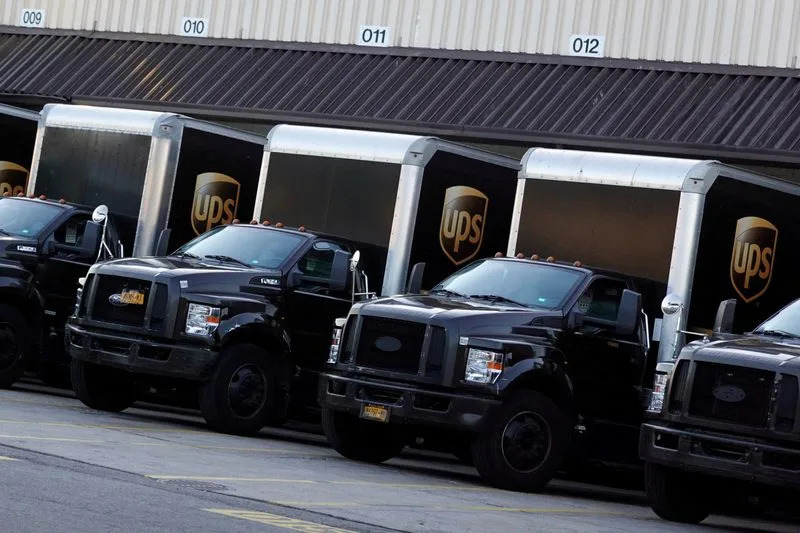
UPS vehicles are seen at a facility in Brooklyn, New York City

By Lisa Baertlein and Priyamvada C

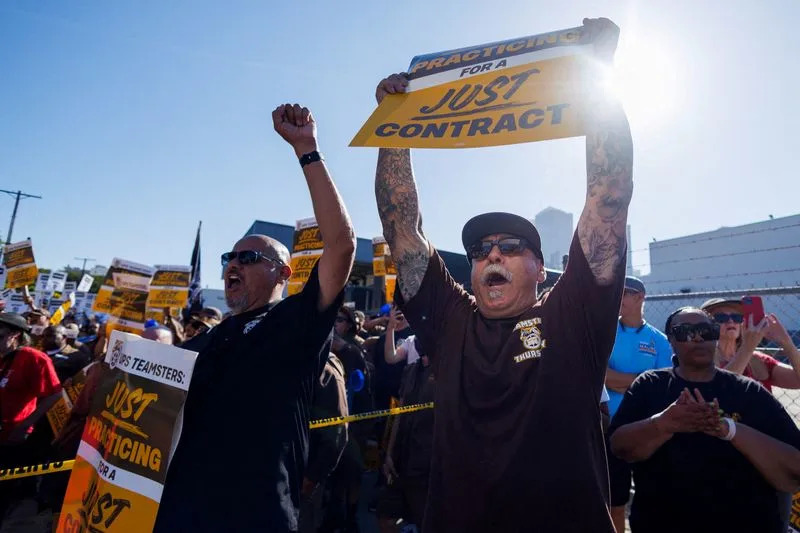
(Reuters) - The U.S. economy will face a key test on Tuesday when the Teamsters union is expected to release the results of a contract ratification vote at United Parcel Service, which, if rejected, could open the door to a damaging strike, threaten Christmas deliveries and send shipping costs soaring.

Atlanta-based UPS, the world's largest package delivery company, handles about a quarter of U.S. parcel deliveries and serves virtually every city and town in the nation.

Rejection of the tentative five-year deal hammered out by the International Brotherhood of Teamsters and UPS in July could trigger a strike that costs the U.S. economy billions of dollars, overwhelms rival shippers with unexpected demand and sends delivery costs sharply higher.

It also could throw a wrench into the upcoming holiday shopping season that is a make-or-break period for retailers, including Amazon.com, the largest UPS customer.

If approved, the deal would raise pay for 340,000 UPS workers and eliminate a two-tier wage system for drivers. It also would provide another paid holiday, end forced overtime and add air conditioning to new models of the company's ubiquitous brown trucks starting next year.

Ending seniority-based wage tiers that pay new hires less than veteran workers is also a central issue for the UAW-Detroit Three labor talks. UPS is the nation's largest private-sector employer of unionized workers and ending the labor cost-saving scheme there could be a big win for unions and a possible blow to companies.

Unions representing "essential" transportation workers including pilots, port workers and delivery drivers are enjoying enhanced bargaining power due to the tight labor market and stronger public support for unions.

The ratification voting closes on Tuesday. Results will be released some time after 3 p.m. EDT.

Pilots at UPS rival FedEx rejected their tentative contract in July.

UPS cut its full-year revenue and profitability targets earlier this month, citing higher-than-expected labor costs and business lost during the tumultuous contract talks with the Teamsters.

Under the contract deal, current full- and part-time workers will get $2.75 more per hour in 2023, and $7.50 more per hour over the length of the contract, according to the Teamsters.

General wage increases for part-time workers will be double the amount obtained in the previous UPS Teamsters contract - and existing part-time workers will receive a 48% average total wage bump, addressing a key sticking point in talks, the union said.

(Reporting by Lisa Baertlein in Los Angeles and Priyamvada C in Bengaluru; Editing by Paul Simao)
5 wins for UPS workers that could influence pay and standards for others


Lauren Kaori Gurley, 
(c) 2023, The Washington Post
Sun, August 20, 2023 

After a tense few months of negotiations and the looming possibility of a strike that threatened the U.S. economy, UPS and the International Brotherhood of Teamsters, the union that represents UPS workers reached a tentative agreement on a new contract, which sets pay and work standards at UPS for the next five years.

The deal, which the Teamsters have said will cost UPS $30 billion to implement, includes major gains for workers from the creation of thousands of new full-time positions to the end of forced overtime on scheduled days off. Teamsters President Sean O'Brien has said it "sets a new standard in the labor movement and raises the bar for all workers." Carol Tomé, UPS's chief executive, also has also praised the deal, saying that it "continues to reward UPS's full- and part-time employees with industry-leading pay and benefits."

Those workers who have spoken publicly about the new deal have expressed a mix of reactions, positive and negative. On Aug. 22, the union will announce that result of workers' vote on whether to ratify the deal. If workers vote down the contract, labor leaders have said that the union would go on strike.

Despite pockets of strong opposition, it's likely that the agreement will pass a vote from workers, as 161 out of 162 local Teamsters unions, who have significant sway over their membership, endorsed the agreement, and union leadership is busy selling the deal to workers.

The UPS contract is important, labor experts say, because it has the potential to influence what other workers around the country, both union and nonunion, are able to get from their employers in the future.

"If you can show that workers at other companies . . . are getting something, it helps your argument to get the same thing," said Art Wheaton, the director of labor studies at Cornell University. "A rising tide lifts all boats."

Here are five key wins in the deal that UPS workers are voting on that could shape the future of work in America:

- - -

1. Big raises

All 340,000 UPS employees represented by the union, including part-timers, would see healthy pay raises, including an across-the-board $7.50 an hour increase over the next five years. It's an important gain, because, until recently, wages in the United States had not kept up with inflation. The top rate for full-time delivery drivers would jump to $49 an hour. Currently, full-time drivers make an average of $42 an hour after four years on the job.


Teamsters leader O'Brien has said that they hope the union can use the gains in the contract to inspire nonunion workers to unionize - in particular at Amazon, the country's second largest employer, which has opposed internal organizing efforts. The average pay for Amazon delivery drivers, who are third-party contractors, is roughly $18 an hour, according to the jobs site ZipRecruiter. (Amazon founder Jeff Bezos owns The Washington Post. Interim chief executive Patty Stonesifer sits on Amazon's board.)

The biggest pay bumps, by percentage, though, will go to part-time UPS employees, who make up more than half of UPS's 340,000 union workforce and sort packages into warehouses. Under the new contract, part-timers will receive longevity increases, the same raises as delivery drivers, and their minimum pay would immediately jump to $21 an hour, and rise to $23 an hour over the next five years. (Currently part-timers start at $16.20 an hour.)

With this and other gains, Teamsters say current part-timers will receive an average total wage increase of 48 percent over the next five years, a pay bump that labor experts say that would have been unthinkable several years ago, when workers had less leverage in the labor market.

Still, some Teamsters members had hoped for a starting wage of $25 an hour for part-timers - given the soaring cost of rent in cities like New York and Los Angeles, where many of these workers live. A vocal group of workers within the union says that they'll oppose the contract for this reason.

- - -

2. Air conditioning and heat safety

Currently, the signature brown vans that UPS delivery drivers operate are not outfitted with air-conditioning. In one of the biggest concessions that will cost the company billions of dollars, UPS has agreed to install air-conditioning in newly purchased delivery vans beginning in 2024, while also retrofitting older vans with heat shields and fans.

More than 140 UPS employees have been injured in heat- or dehydration-related incidents since 2015, according to data reported to the federal government by UPS. And last year, a 24-year-old UPS delivery driver in Southern California died on his route on a scorching summer day.

Heat safety is not isolated to UPS delivery drivers - and this win could inspire other workers to demand similar protections. This summer has seen some of the Earth's hottest days on record. And most U.S. workers who toil in the heat - from roofers to farmworkers - have few legal protections from extreme heat on the job.

- - -

3. Ending of lower-paid class of worker

In a major win for workers, UPS has also agreed to end a two-tier wage program for its delivery drivers - first established in 2018 - which resulted in some delivery drivers earning about $5 per hour less over time than other drivers for doing essentially the same job.

Two-tier employment that undercuts pay and benefits for newer workers has become a common feature of many workplaces since the 1980s, as companies have pushed to cut costs. These systems sow resentment inside workplaces by rewarding employees differently for the same job.

The UPS agreement to abolish two-tier pay for package delivery drivers could embolden other workers to demand the same. Already, the United Auto Workers, the union representing workers at the Big Three Detroit automakers - Ford, General Motors and Stellantis - is demanding the end of its tiered employment structure that offers lower compensation to many new autoworkers. The union with its 150,000 members has threatened to strike over this and other issues as soon as mid-September.

"UPS is not a director competitor of the auto industry, but the autoworkers union can go ask for what UPS workers got in their contract and say, 'This is what other unionized workplaces have received in the same economic environment,'" said Wheaton, the labor professor at Cornell University.

- - -

4. Thousands of new full-time jobs

In another win for part-timers, UPS has also promised to create 7,500 full-time positions by combining 15,000 part-time jobs. The creation of full-time jobs is important because part-timers are only guaranteed three-and-a-half hour shifts and many would prefer full-time work.

It's the largest number of full-time jobs that workers have won in decades, although less than the 10,000 jobs won when UPS workers went on strike in 1997.

Research shows that part-time workers earn less per hour worked than other workers in the same industry and face less schedule predictability.

- - -

5. Ban on driver-facing cameras

In a victory against the seep of surveillance technology into the American workplace, UPS drivers won a landmark agreement for UPS to eliminate driver-facing cameras installed in delivery vans and promise not to discipline drivers using other cameras in vans. Amazon delivery drivers currently are subject to discipline from similar surveillance cameras in their vans.

Also, UPS and the union have also agreed to contract language that prevents UPS from using driverless vehicles or drones without negotiating with the union.

Across the country, workers are using their unions to fight back against the use of new technologies that they say invade their privacy, threaten their jobs and punish them. The demand for guardrails on the use of artificial intelligence by production studios is one of the principal demands for actors and screenwriters in ongoing strikes that have paralyzed Hollywood.
AI unlikely to destroy most jobs, but clerical workers at risk, ILO says

Reuters
Mon, August 21, 2023 


GENEVA (Reuters) - Generative AI probably will not take over most people's jobs entirely but will instead automate a portion of their duties, freeing them up to do other tasks, a U.N. study said on Monday.

It warned, however, that clerical work would likely be the hardest hit, potentially hitting female employment harder, given women's over-representation in this sector, especially in wealthier countries.

An explosion of interest in generative AI and its chatbot applications has sparked fears over job destruction, similar to those that emerged when the moving assembly line was introduced in the early 1900s and after mainframe computers in the 1950s.

However, the study produced by the International Labour Organization concludes that: "Most jobs and industries are only partially exposed to automation and are thus more likely to be complemented rather than substituted by AI."

This means that "the most important impact of the technology is likely to be of augmenting work", it adds.

The occupation likely to be most affected by GenAI - capable of generating text, images, sounds, animation, 3D models and other data - is clerical work, where about a quarter of tasks are highly exposed to potential automation, the study says.

But most other professions, like managers and sales workers, are only marginally exposed, it said.

Still, the U.N. agency's report warned that the impact of generative AI on affected workers could still be "brutal".

"Therefore, for policymakers, our study should not read as a calming voice, but rather as a call for harnessing policy to address the technological changes that are upon us," it said.

(Reporting by Emma Farge; Editing by Alison Williams)


Sen. John Fetterman, local leaders appear Monday at Erie UE rally attended by hundreds

Jim Martin, Erie Times-News
Mon, August 21, 2023 

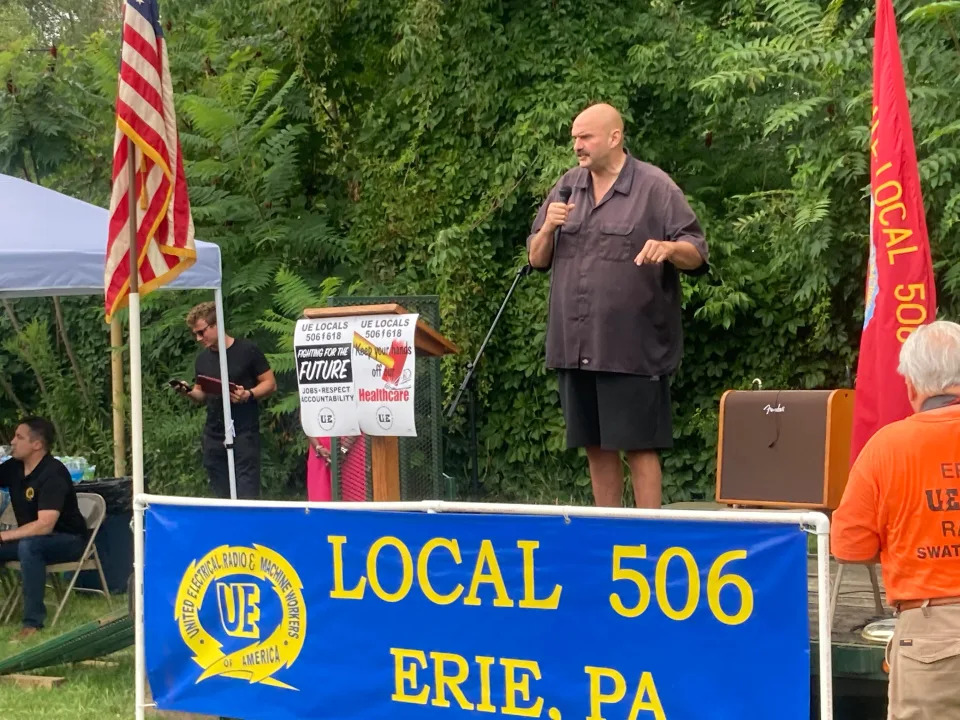
The planned appearance of U.S. Sen. John Fetterman seemed to be the spark that drew hundreds of striking union members at Wabtec to Napier Park in Lawrence Park shortly before noon on Monday.

But members of the United Electrical Radio and Machine Workers of America, who have been on strike since June 22, didn't seem to need Fetterman to summon enthusiasm for their cause.

Many of the nearly 1,400 striking union members, who carried signs and wore a variety of strike-themed T-shirts, made a dramatic entrance after walking to the park from their respective picket locations along Franklin Avenue, East Lake Road and Water Street.


A procession of members of the United Electrical, Radio and Machine Workers of America began to arrive late Monday morning at Napier Park in Lawrence Park Township, where the UE was holding a rally as its strike against Wabtec continues.

Union members, who called out loudly: 'Who are We? UE,' filled the right lane of East Lake Road as their numbers grew louder as they marched to the park.

The union membership also repeatedly chanted: "One day longer, one day stronger."


Fetterman, who wore his signature dark-colored shorts and T-shirt, sported a fresh look Monday after recently shaving his familiar goatee, leaving behind a moustache.


U.S. Sen. John Fetterman speaks Monday afternoon at a rally for the United Electrical, Radio and Machine Workers at Wabtec Corp. in Erie. The union has been on strike since June 22.

Fetterman, who concluded the rally with brief remarks, continued to display signs of the stroke he had in May of 2022. Some words came out haltingly and not necessarily in the order that the first-term senator might have intended.

But Fetterman received a warm welcome from a friendly crowd as he pledged his continued support for their efforts.

Fetterman, who has worked to raise money for the union strike fund, said "One of the most amazing and powerful things ever invented is called a union."

UE 506 President Scott Slawson said Monday's crowd "speaks to the power of a U.S. senator." He also praised Fetterman for his support of the union at a time when he's working to overcome his own health challenges.

A substantial list of other speakers spoke at Monday's rally, including numerous local union leaders and political figures, including Erie County Council Chairman Brian Shank and Jasmine Flores and Susannah Faulkner of Erie City Council.

Flores praised the union for taking a tough stance.

"You are all setting the agenda for whatever we deserve," Faulkner said, adding that the union is working to ensure that the "rising tide lifts all boats, not just the yachts."

Other speakers included Jim Wertz, chairman of the Erie County Democratic Party, and Jenny Tompkins of the environmental group PennFuture.

Bargaining between Wabtec and its union workforce is expected to continue Tuesday and Wednesday.

Contact Jim Martin at jmartin@timesnews.com.

This article originally appeared on Erie Times-News: Sen. Fetterman appears at UE rally Monday as Wabtec strike continues
‘We are burned out’: UAW ready to take on automakers in contract negotiations

Michael Sainato
Mon, August 21, 2023 

Photograph: Jeff Kowalsky/AFP/Getty Images

For decades, the head of the powerful United Auto Workers (UAW) union has started negotiations with the CEOs of the US’s top auto executives with a ceremonial handshake. Those days are over.

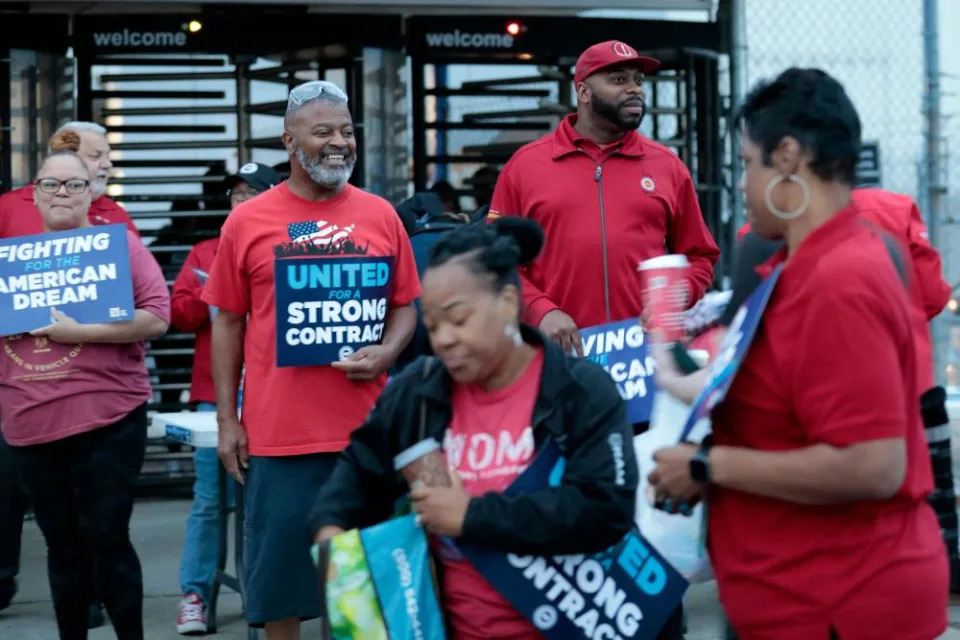
As UAW members become the latest American workers to consider a massive strike over their union contract, newly elected UAW president Shawn Fain chose to mark the start of the talks by shaking hands with workers instead. “There’s no point in having a big pomp and ceremony where we act like we’re friends, and we’re working together, when we’re not,” said Fain, while meeting with workers at a Ram truck factory in Sterling Heights, Michigan. “The membership comes first. That’s our job.”

Related: Los Angeles: hotel workers’ strike ignites backlash among academics

It was an aggressive move – ending a tradition that goes back to the 1960s – as the UAW’s 150,000 workers at Ford, Stellantis and General Motors push for new union contracts ahead of the expiration of the current contracts on 14 September.

Tough talk has worked recently. The Teamsters threat to call a strike at UPS led to major concessions in their contract negotiation last month. And Fain has taken a combative approach toward the automakers, emphasizing the immense profits of the corporations, multimillion-dollar executive salaries and the concessions workers took due to the 2008 economic recession that have yet to be repaid in subsequent contracts.

During a Facebook live stream on 8 August, Fain threw a contract proposal from Stellantis in the trash, accusing the company of seeking concessions from workers. He has expressed the willingness of the union to strike if the automakers don’t offer acceptable proposals to the union, though a strike authorization vote by members has yet to be called.

The UAW has outlined numerous demands ahead of negotiations, including eliminating a two-tiered wage system in which new hires have been paid significantly lower wages for doing the same work, and significant wage increases, with the union citing automaker CEOs who have received on average 40% pay increases over the last four years.

Charles Mitchell, a Stellantis worker for 11 years in Detroit, Michigan, said the ongoing contract negotiations reflected worsening wealth inequality between workers and corporate executives and shareholders.

Companies are becoming more profitable and making shareholders richer while forcing mandatory 60- to 70-hour work weeks  
Stellantis worker Charles Mitchell


“The ability for an autoworker to provide for a family or even oneself has been more and more difficult. All the while companies are becoming more profitable and making shareholders richer while forcing mandatory 60- to 70-hour work weeks in assembly plants,” said Mitchell.

He also criticized the recent rigid attendance policies and mandatory overtime, issues that workers are pushing to address in the contract.

The union has also called for restoring cost-of-living adjustment pay that ties wages to inflation, medical benefits for retirees, a defined pension for all workers rather than 401(k) plans, increases to retiree pay, more paid time off, providing the right to strike to workers over plant closures, enacting a program to protect and support workers who lose their jobs due to plant shutdowns, and strong job security protections amid a transition to electric vehicle production.

Recent high-profile new union contract negotiations have successfully eliminated two-tier wage systems at other companies, including a tentative agreement at UPS that members are currently voting on and an agreement at Caterpillar reached earlier this year.

Long hours and broken promises

Since 2006, Dawnya Fernandinsen has worked for General Motors. But because she worked for a parts supplier subsidiary, Delphi, when she rolled over her employment to work directly for General Motors in 2016, she lost 10 years of seniority and her entire pension, an issue facing many Delphi workers that the UAW is seeking to address in bargaining.

“I ended up with no pension, I ended up losing all of my seniority, I ended up with nothing. So I ended up transferring to the General Motors plant that I’m in now in Toledo, Ohio, and had to start all over,” said Fernandinsen. “General Motors has been coming out and saying they don’t want to replace pensions lost or seniority loss, or whatever. But they owe that to us. We were deceived. We were lied to and somebody owes us to return that to us and make us whole again.”


UAW supporters and members outside the Stellantis assembly plant in Sterling Heights, Michigan, on 12 July 2023. 
Photograph: Jeff Kowalsky/AFP/Getty Images

She explained that all workers took concessions after the 2008 economic recession after being assured by General Motors that the takeaways were temporary until the company returned to profitability after bankruptcy, which it did, reaching record profits in 2012.

The UAW noted in a video that the big three automakers have reported collective profits of nearly $250bn between 2013 and 2022 and a combined profit of $21bn in the first six months of 2023. The union also cited recent salaries of GM CEO Mary Barra of $29m in 2022, Ford CEO Jim Farley of $21m in 2022 and Stellantis CEO Carlos Tavares of $24m in 2022, contrasting the high executive pay to the lagging wages autoworkers have received since the 2009 concessionary contract.

Behind these immense profits, Fernandinsen argued, is a workforce that is being overworked with mandatory forced overtime and divided along different pay tiers and temporary statuses.

“The forced overtime – we are working to death. We are working 12-hour shifts, seven days a week, every day, week after week, month after month, year after year. We are burned out,” added Fernandinsen. “These companies are profiting the way that they are and trying to convince the American people that they’re hurting, but in the same breath coming out and bragging about it, and then telling us they can’t afford everything that we’re putting out there. They’re forcing our hand to strike. It is not going to be on the UAW. What we’re asking for is everything that we lost, everything that they’ve taken from us, everything that they betrayed us with. That’s all we’re asking for and they have the means to give it back.”

Big three retirees are hurting

Autoworker retirees are one group that is pushing hard for a new contract. There are currently more than 300,000 retirees at the big three automakers who rely on retirement benefits.
Tony Candela, a retired autoworker since 2011 after working for decades at Chrysler (now Stellantis), served in various roles in union leadership, including as president of UAW Local 136 in Missouri.

In 2009, Candela’s Chrysler plant in Missouri was shut down as part of bankruptcy restructuring during the 2008 economic recession.

Amid the recession and in subsequent contracts, the UAW agreed to numerous concessions for retirees including the elimination of inflation protection pay for retirees that provided lump sum payments at the end of the year to workers or widows based on inflation rates, elimination of healthcare for retirees and the takeaway of pensions for many workers, as they were replaced with 401(k)s for autoworkers in agreements in the wake of the 2008 recession.

[Automakers] are making money hand over fist off the backs of the workers and it’s time that workers get their fair share
Retired autoworker Tony Candela

“The word ‘suspended’ does not mean permanent. It’s a temporary situation, but as we speak, it has never been brought back from the big three automakers to membership. They’re still working without a cost-of-living adjustment and retirees still have no protection from inflation,” said Candela. “These people cannot live in this world without any type of protection from inflation. These people can’t survive. They’re living month to month barely on their pension without any protection from inflation and nobody seems to give a damn.”

Current employees also made concessions during the 2008 financial crisis that have yet to be reversed, including the elimination of cost-of-living adjustment raises, changes that limited overtime compensation and the enactment of a two-tiered wage system. Candela also criticized the use of bonuses and profit sharing that aren’t negotiated with the union, but often used in lieu of wage increases.

Candela noted that in the 1980s, the UAW granted Chrysler concessions during financial turmoil, but those were returned in later contracts. In the case of the 2008 economic recession, however, those losses to workers have yet to be remedied despite the immense profits US automakers have reported in recent years.

“The union has bent over backwards to make these companies successful. They can no longer cry ‘Well, we can’t afford it, we can’t afford this.’ They are making money hand over fist off the backs of the workers and it’s time that workers get their fair share,” added Candela. “It’s time somebody cares. It’s time somebody takes the bull by the horns and starts negotiating a living wage contract for all members, active and retirees.”

In response to the contract demands issued by the UAW, a spokesperson for General Motors said the “breadth and scope” of the UAW’s demands, “at face value, would threaten our ability to do what’s right for the long-term benefit of the team. A fair agreement rewards our employees and also enables GM to maintain our momentum now and into the future.”

A spokesperson for Ford added: “We look forward to working with the UAW on creative solutions during this time when our dramatically changing industry needs a skilled and competitive workforce more than ever.”

In a statement, Stellantis criticized Fain and claimed the union’s demands were not feasible: “The theatrics and personal insults will not help us reach an agreement that continues our proud history of providing good wages and benefits to our employees and maintaining Stellantis’ ability to be competitive in the market … We are committed to working with the UAW to reach an agreement based on economic realism, one that supports the long-term health and viability of our operations while responsibly rewarding your contributions.”
Stellantis has threatened to move Ram 1500 production to Mexico, union leader says

Miranda Nazzaro
Mon, August 21, 2023

Stellantis has threatened to move Ram 1500 production to Mexico, union leader says

Automaker Stellantis has threatened to move the production of Ram 1500 pickup trucks from suburban Detroit to Mexico, a union leader said Sunday.

“Then it said they want to take their Ram 1500 [internal combustion engine] and send it to Mexico,” said United Auto Workers (UAW) vice president Rich Boyer at a “Sunday Solidarity” rally in Warren, Mich., on Sunday with hundreds of union members.

Boyer, who leads the union’s Stellantis unit, said the automaker had discussed the move during the ongoing contract negotiations between UAW and the Big Three: Ford, General Motors and Stellantis.

Negotiations began in early July over pay increases, pensions, career security and concerns over the industry’s shift to electric vehicles (EVs), which require fewer workers to make.


The possibility of moving production of the current Ram 1500 to Mexico fuels automakers’ concerns that the push for EVs will risk their jobs and compensation.

“That’s an American product, it’s going to stay here in America,” Boyer said, calling for the support of union members.

He said Stellantis discussed producing a new all-electric Ram pickup truck at the Sterling Heights Assembly Plant in Sterling, Mich., which currently makes most of the Ram light-duty pickups, according to CNBC.

Boyer called out Stellantis CEO Carlos Tavares, arguing he does not care about U.S. autoworkers.

“These companies have no respect for us,” Boyer said. “These companies think that you’re overpaid and underworked.”

In a statement shared with The Hill on Monday, Stellantis said, “Product allocation for our U.S. plants will depend on the outcome of these negotiations as well as a plant’s ability to meet specific performance metrics including improving quality, reducing absenteeism and addressing overall cost.

“As these decisions are fluid and part of the discussions at the bargaining table, we will not comment further,” the statement added.

The White House has pushed for accelerated electric vehicle production, fueling the concerns of automaker union members. Under a new proposal released by the Environmental Protection Agency (EPA) in April, two-thirds of new cars could be electric by 2032.

Last week, the Biden Administration released a statement in response to the contract negotiations, arguing a clean energy economy “should provide win-win opportunities for auto companies and unionized workers.”

“Companies should use their process to make sure they enlist their workers in the next chapter of the industry by offering them good paying jobs and a say in the future of their workplace,” the statement said.

The current contract between UAW and the Big Three expires at 11:59 p.m. on Sept. 14, giving the two parties less than a month to come to an agreement. Boyer told CNBC that the ongoing negotiations have been “slow and confrontational
.”

Former Ford CEO warns UAW members its leader is 'playing a dangerous game'

If the union goes on strike, an
alysts expect the economic losses to exceed $5 billion over the course of just 10 days.

IAN KRIETZBERG
20 HOURS AGO

United Auto Workers members will decide this week whether to authorize their new leader, Shawn Fain, to call a strike against Detroit automakers when the union's contract expires in September. If the strike goes through, analysts at Anderson Economic Group (AEG) said, the result might be a total economic hit of around $5 billion over the course of 10 days.

The union's previous six-week strike against General Motors (GM) - in 2019 instigated a single-quarter recession in Michigan, according to AEG's CEO Patrick Anderson. That strike involved 48,000 workers at around 50 plants; the pending strike, however, could implicate more workers (143,000) at more companies and more plants.


"Even a short strike would impact economies throughout Michigan and across the nation,” Anderson said.

The union is looking for 40% raises, as well as the reinstatement of cost-of-living adjustments and greater stability for temporary workers. The new push comes amid concerns over lower employment numbers at new EV factories compared to traditional ones.

Mark Fields, the former Ford (F)  president and CEO, thinks that there is a "much higher probability" that the strike will go through this time due in large part to the union's bold new leader. Fain's leadership comes at a time when automakers are going through a "once in a century changeover in propulsion systems," which have them dealing with issues of higher costs and lower margins.

"It's a setup for a very contentious set of discussions," he told CNBC.

Fields, noting that this is Fain's first national negotiation, said that the UAW leader has been very transparent to members about his expectations. But Fields said that might end up backfiring.

"That may paint him into a corner. He may get expectations so high that it might be very difficult when he brings a contract back for the rank and file to ratify it," Fields said, adding that Fain was only elected by a margin of around 500 votes. "He's playing a bit of a dangerous game here, but at the same token, he feels he has a mandate. As one of the past union leaders said, it's easy to take a union out on strike but it takes a leader to bring them back to work."

The negotiations come just a few weeks after UPS and the Teamsters union narrowly avoided a strike in a deal worth about $30 billion.

"The UAW has always felt that they were the benchmark in the union world. They're looking at things like the UPS agreement, but there's a big difference: those businesses are business-to-business businesses," Fields said. "In the automotive world, consumers have many choices. If he decides to win the battle over this negotiation but lose the war over time in terms of competitiveness, that means less workers for them.

"Wages don't matter much if you don't have jobs."

American Airlines pilots approve new contract that boosts compensation by more than 46%

Reuters
Mon, August 21, 2023 

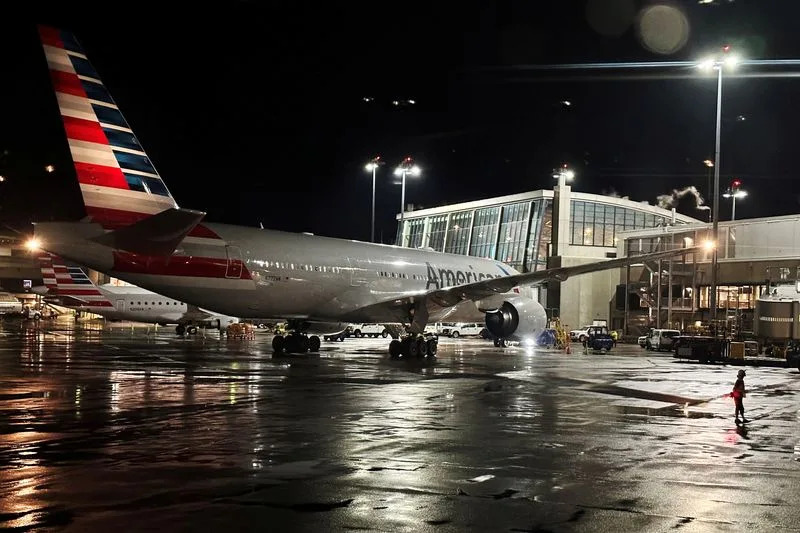
An American Airlines plane sits at a gate at Logan Airport ahead of the July 4th holiday in Boston


CHICAGO (Reuters) -American Airlines pilots have approved a new contract that includes more than $9.6 billion in total pay and benefits increases over four years, reflecting the bargaining power held by pilots in an era of airline staff shortages.

The Allied Pilots Association (APA), which represents 15,000 pilots at the Texas-based carrier, said on Monday that 72.7% of the pilots voted for the deal which will result in an immediate pay raise of more than 21%.

Overall, compensation for pilots at the airline will rise by more than 46% during the contract's duration.


"It's unprecedented and historic," the Allied Pilots Association's president, Captain Ed Sicher, told Reuters on Monday.

"For pilots the biggest victory is not just the wages but the work-life stuff."

Analysts at Jefferies estimate that the U.S. airline industry has a shortage of about 10,000 pilots. This supply-demand gap is projected to last until 2027.

With no letup in travel demand, airlines are in a rush to staff up, bolstering the bargaining power of pilots.

Rival United Airlines last month announced a preliminary deal for a new four-year contract that would give its pilots a cumulative increase of 34.5%-40.2% in pay.

American's contract includes about $1.1 billion in immediate, one-time payments and ratification bonuses.

Quality-of-life improvements represent nearly 20% of the increased value of the new contract, the union said. For example, pilots would get premium pay if the company reassigns them from a trip they bid on, or have asked to fly, Sicher said.

(Reporting by Rajesh Kumar Singh in Chicago and Allison Lampert in Montreal; Editing by Matthew Lewis)


American Airlines pilots ratify a new contract that includes big pay raises and bonuses

DAVID KOENIG
Mon, August 21, 2023 

FILE - American Airlines planes are parked at Pittsburgh International Airport on March 31, 2020, in Imperial, Pa. Pilots at American Airlines have approved a new contract that will raise their pay 41% over four years. Their union, the Allied Pilots Association, said Monday, Aug. 21, 2023 that the vote was 73% in favor of ratifying the contract. 
(AP Photo/Gene J. Puskar, file) 

DALLAS (AP) — American Airlines pilots have approved a new contract that will raise their pay by more than 40% over four years and increase company contributions to retirement plans, their union said Monday.

The Allied Pilots Association said that 73% of pilots who took part voted in favor of the four-year contract, which it valued at $9.6 billion.

“This contract is a big first step toward restoring the wages, benefits, and work rules that were lost during the past two decades while our profession was under continuous assault," said union President Ed Sicher. He said pilots deserved to be compensated in line with the “tremendous amount of responsibility” they take with every flight.

CEO Robert Isom said the agreement will help American immediately expand its pilot training and provide pilots with more opportunities for career advancement.

American has about 15,000 pilots.

Airline unions are enjoying leverage to get big pay raises because a boom in travel is lifting airline revenue. Texas-based American earned $1.3 billion in the second quarter alone, helped by strong ticket sales, record revenue, and a drop in the price of jet fuel. Pilot unions have been in particularly strong position because of a shortage that is being felt most keenly at smaller carriers.

Pilots at American rejected an offer last November. They reached another agreement in late July, which was renegotiated again after United Airlines approved a tentative deal with its pilots. Pilots at Delta Air Lines won big pay raises earlier this year.

Pilots at Southwest Airlines are still in negotiations.


Wage rates for American pilots will rise at least 41% and perhaps more if United pilots ratify their agreement, according to a spokesman for the Allied Pilots Association.


The union said its new contract with American includes $1.1 billion in one-time payments and ratification bonuses and immediate pay raises averaging 21%. Annual raises, plus increased company contributions to retirement plans, will raise the value of total compensation by more than 46% over four years, according to the union.

It also includes more vacation benefits and changes designed to give pilots more predictable schedules, the union said.

Airline industry labor contracts do not expire — that's part of a federal law designed to make strikes nearly impossible. Rather, they become open for change or “amendable” at their conclusion. Bargaining on the next contract for American's pilots could begin as soon as November 2026.

American Airlines warns of higher third-quarter cost from new pilot contract

Reuters
Tue, August 22, 2023 

An American Airlines Airbus A321 plane takes off from Los Angeles International airport

(Reuters) -American Airlines warned on Tuesday it was expecting higher costs in the third quarter following a new labor deal with its pilots that included more than $9.6 billion in total pay and benefits increases over four years.

The company's pilots approved a new contract on Monday that also had provisions for retroactive pay for the first four months of 2023, leading to $230 million in added expense that will be reflected in the third-quarter results.

Continued strength in travel demand has provided pilots an upper hand in contract talks and bolstered their bargaining power as airlines rush to staff up and expand capacity.

Rival United Airlines too had last month announced a preliminary deal for a new four-year contract that would give its pilots a cumulative increase of 34.5%-40.2% in pay.

American Airlines now expects its cost per available seat mile excluding fuel and net special items to rise about 4% to 6%, compared with a prior forecast of about 2% to 4% growth.

Its contract includes about $1.1 billion in immediate, one-time payments and ratification bonuses.

The company reaffirmed its annual cost outlook, mainly due to changes in the anticipated timing of other expenses.

(Reporting by Shivansh Tiwary in Bengaluru; Editing by Anil D'Silva and Arun Koyyur)