Thursday, December 07, 2023

Who are the Houthis and why hasn’t the US retaliated for their attacks on ships in the Middle East?

LOLITA C. BALDOR
Wed, 6 December 2023 


This Nov. 12, 2018 photo shows The USS Carney in the Mediterranean Sea. The American warship and multiple commercial ships came under attack Sunday, Dec. 3, 2023 in the Red Sea, the Pentagon said, potentially marking a major escalation in a series of maritime attacks in the Mideast linked to the Israel-Hamas war. "We're aware of reports regarding attacks on the USS Carney and commercial vessels in the Red Sea and will provide information as it becomes available," the Pentagon said. 
(Mass Communication Specialist 1st Class Ryan U. Kledzik/U.S. Navy via AP)

WASHINGTON (AP) — When Iranian-backed Houthi rebels in Yemen launched missiles and hit three commercial ships in the southern Red Sea last weekend, it triggered an immediate question: Will the U.S. military strike back?

The Houthis have sharply escalated their attacks against ships as they sail toward the narrow Bab el-Mandeb Strait. And U.S. Navy ships have shot down an array of drones headed their way and believed to have been launched by the militant group from territory it controls in Yemen.

But so far, the U.S. has avoided military retaliation — a marked difference from its multiple strikes against Iran-backed militias in Iraq and Syria that have fired rockets, missiles and drones at bases housing American forces in both countries.

No one has been reported hurt in the Houthi incidents, although the commercial ships suffered some damage. And U.S. officials argue that the Houthis haven't technically targeted U.S. vessels or forces — a subtlety that Navy ship captains watching the incoming drones may question.

Here’s a look at the Houthis and their increasing attacks, and why the U.S. believes it is more acceptable to bomb some Iranian-linked targets than others.

WHO ARE THE HOUTHIS AND WHAT'S GOING ON IN YEMEN

Houthi rebels swept down from their northern stronghold in Yemen and seized the capital, Sanaa, in 2014, launching a grinding war. A Saudi-led coalition intervened in 2015 to try to restore Yemen's exiled, internationally recognized government to power.

Years of bloody, inconclusive fighting against the Saudi-led coalition settled into a stalemated proxy war between Saudi Arabia and Iran, causing widespread hunger and misery in Yemen, the Arab world’s poorest country. The war has killed more than 150,000 people, including fighters and civilians, and created one of the world’s worst humanitarian disasters, killing tens of thousands more.

A cease-fire that technically ended more than a year ago is still largely being honored. Saudi Arabia and the rebels have done some prisoner swaps, and a Houthi delegation was invited to high-level peace talks in Riyadh in September as part of a wider détente the kingdom has reached with Iran. While they reported “positive results,” there is still no permanent peace.

ATTACKS ON SHIPS


The Houthis have sporadically targeted ships in the region over time, but the attacks have increased since the start of the war between Israel and Hamas and spiked after an explosion Oct. 17 at a hospital in Gaza killed and injured many. Houthi leaders have insisted Israel is their target.

After the weekend attacks, Houthi military spokesman Brig. Gen. Yahya Saree said the group wants to "prevent Israeli ships from navigating the Red Sea (and Gulf of Aden) until the Israeli aggression against our steadfast brothers in the Gaza Strip stops.”

One of the commercial ships hit on Sunday — the Unity Explorer — has a tenuous Israeli link. It is owned by a British firm that includes Dan David Ungar, who lives in Israel, as one of its officers. Israeli media identified Ungar as being the son of Israeli shipping billionaire Abraham “Rami” Ungar. But any Israel connections to other ships are unclear.

Sunday's flurry of attacks included missiles that hit the Unity Explorer, the Number 9 and the Sophie II, all bulk carriers. And throughout that day, the USS Carney, a Navy destroyer, shot down three drones that were headed toward the ship and also went to the aid of the commercial vessels. On Wednesday, the USS Mason shot down a drone heading in its direction.

In a statement, U.S. Central Command said, “We cannot assess at this time whether the Carney was a target” of the drones.

THE US CALCULUS

While the U.S. has carried out airstrikes on Iranian-back militias in Iraq and Syria that have targeted American troops in 77 different attacks since Oct. 17, the military has not yet retaliated against the Houthis.

That reluctance reflects political sensitivities and stems largely from broader Biden administration concerns about upending the shaky truce in Yemen and triggering a wider conflict in the region. The White House wants to preserve the truce and is wary of taking action that could open up another war front.

U.S. officials warn that military action is an option and they haven't taken it off the table. But both publicly and privately, officials stress that there is a difference between the Iraq and Syria bombings and the Houthi attacks.

Iran-backed militia have launched one-way attack drones, rockets or close-range ballistic missiles at bases in Iraq 37 times and in Syria 40 times. Dozens of troops have suffered minor injuries — in most cases traumatic brain injuries. In all instances so far, the personnel have returned to work.

In response, the U.S. has retaliated with airstrikes three times in Syria since Oct. 17, targeting weapons depots and other facilities linked directly to Iran's Revolutionary Guard Corps and the militias. And it struck multiple sites in Iraq late last month after a militia group for the first time fired short-range ballistic missiles at U.S. forces at al Asad air base.

The Houthis, meanwhile, have fired missiles at vessels in the Red Sea, launched drones and missiles targeting Israel and sent drones in the direction of Navy ships. Also, last month, Houthis seized a vehicle transport ship linked to Israel in the Red Sea off Yemen, and still hold the vessel. And Houthi missiles landed near another U.S. warship after it assisted a vessel linked to Israel that had briefly been seized by gunmen.

Defending the lack of retaliation for those attacks has forced U.S. officials to dance on the head of a pin.

In one breath, the Pentagon officials say the Navy ships shot down the Houthi drones heading toward them because they were deemed “a threat.” But in the next breath officials say the U.S. assesses that the ships were not the target. That determination often comes later after intelligence assessments review telemetry and other data.

That, however, is certainly no comfort to sailors on the ships who watch the radar track of incoming drones and must make rapid decisions about whether it represents a threat to the ship.

At the same time, the U.S. has consistently said it wants to protect free navigation of the seas. But the Houthi actions have prompted the International Maritime Security Construct to issue a warning for ships transiting the Red Sea and Bab el-Mandeb. It says ships should choose routes as far from Yemeni waters as possible, travel at night and not stop, because that makes them an easier target.

This week the U.S. said it was talking with allies about using a naval task force to escort commercial ships in the Red Sea. About 38 countries participate in a similar task force in the region — largely to battle piracy off the coast of Somalia. Officials have to discuss the issue with allies to see who wants to be involved in a new effort.

ESCALATION?


The Biden administration has talked persistently about the need to avoid escalating the Israel-Hamas war into a broader regional conflict. So far, strikes on the Iranian-backed groups in Iraq and Syria have not broadened the conflict, said Maj. Gen. Pat Ryder, Pentagon press secretary.

So it's not clear if targeted strikes against Houthi weapons depots or similar sites — which also have Iranian support — would cross a line and trigger a wider war.

“We will continue to consult with international allies and partners on an appropriate way to protect commercial shipping going through that region, and at the same time ensuring we do what we need to do to protect our forces,” said Ryder.

___

Associated Press writer Jon Gambrell in Dubai, United Arab Emirates, contributed to this report.
Indiana's appeals court hears arguments challenging abortion ban under a state religious freedom law


ISABELLA VOLMERT
Wed, 6 December 2023 

INDIANAPOLIS (AP) — Indiana's Court of Appeals questioned attorneys this week on exceptions to the state's abortion ban in a case involving residents who are suing on grounds that it violates a state religious freedom law.

The class action lawsuit, filed by the American Civil Liberties Union of Indiana on behalf of five anonymous residents and the group Hoosier Jews for Choice, argues Indiana’s abortion ban violates the state's Religious Freedom Restoration Act that was approved by Republican lawmakers in 2015.

The suit was originally filed in September 2022 and a county judge sided with the residents last December.

Indiana later appealed the decision. The court heard arguments Wednesday at the Indiana Statehouse, but did not indicate when it would rule on the appeal.

The lawsuit argues the ban violates Jewish teachings that “a fetus attains the status of a living person only at birth” and that “Jewish law stresses the necessity of protecting the life and physical and mental health of the mother prior to birth as the fetus is not yet deemed to be a person.” It also cites theological teachings allowing abortion in at least some circumstances by Islamic, Episcopal, Unitarian Universalist and Pagan faiths.


Solicitor General James Barta argued in court that the ban does not violate the law because “the unborn are persons entitled to protections." Three judges hearing arguments peppered him with questions about current exemptions to the abortion ban, including in limited cases of rape and incest.

“Aren't religious beliefs just as important as those concerns?” Judge Leanna K. Weissmann asked.

The judges also questioned ACLU of Indiana’s legal director Ken Falk about the state Supreme Court's decision earlier this year to uphold the ban. Falk said at least some of the residents have changed their sexual practices because of the ban despite of their religion's teaching on abortion.

A spokesperson for the Indiana Attorney General’s office said in a written statement it looks forward to the court’s ruling. “We once again stood up for the rights of the most vulnerable today,” the statement said.

The suit is one of many across the country wherein religious freedom is cited as a reason to overturn a state's abortion ban, including one in Missouri and one in Kentucky.


In the Missouri case, 13 Christian, Jewish and Unitarian leaders are seeking a permanent injunction barring the state’s abortion ban. The lawyers for the plaintiffs said at a court hearing state lawmakers intended to “impose their religious beliefs on everyone” in the state.


The lawsuit will likely to go to the state Supreme Court. Indiana’s near total abortion ban went into effect in August after the Indiana Supreme Court upheld it in the face of a separate legal challenge from the ACLU.

The ACLU of Indiana revamped its efforts impede the ban in November. In a separate and amended complaint, abortion providers are seeking a preliminary injunction on the ban in order to expand its medical exemptions and block the requirement that abortions be performed at a hospital.

Indiana became the first state to enact tighter abortion restrictions after the U.S. Supreme Court ended federal abortion protections by overturning Roe v. Wade in June 2022. The near total ban makes exceptions for abortions at hospitals in cases of rape or incest and to protect the life and physical health of the mother or if a fetus is diagnosed with a lethal anomaly.

Muddy Waters is short Blackstone Mortgage Trust REIT


Nell Mackenzie
Wed, 6 December 2023 

Signage is seen outside the Blackstone Group headquarters in New York City

By Nell Mackenzie

LONDON (Reuters) - Blackstone's Mortgage Trust shares fell as much as 9% on Wednesday after short-selling hedge fund Muddy Waters said that it had taken out a short position in Blackstone's real estate investment trust.

Carson Block, the CEO of Muddy Waters, told attendees at the Sohn Conference in London that Blackstone's real estate investment trust (REIT) faced issues of over supply, under-funded loan commitments, expiring leases and that its net operating income was compromised.

"It is at a good risk of a liquidity crisis," said Block.

Blackstone said in a statement that it believed the report was "self-interested and misleading" designed at negatively impacting BXMT’s share price. It said it had "a conservative liquidity posture".

The trust which is publicly traded, borrows money and lends it onward to commercial mortgage borrowers. Because these are interest-only loans, this model relies on borrowers being able to refinance to repay the loans, explained a report which accompanied the short presentation that Block made at the conference.

Blackstone's REIT will likely significantly cut its dividend as soon as the second half of next year, the shortseller said.

Even considering rate cuts, the Blackstone Mortgage Trusts losses on the book value of its loans could reach between $2.5-4.5 billion of the almost $4 billion market cap of the REIT, said Muddy Waters.

The losses would be in addition to BXMT's existing loss provisions, the shortseller said.

"This is not a story where bad people have done bad things, they are just unlucky," he said, talking about problems in the property sector which has meant less income to service debt.

Block said that next year large numbers of borrowers would be unable to refinance and repay the mortgages and loans that Blackstone's trust oversees.

Even if Blackstone tried to modify them to make them weather economic troubles, the company would not be successful, he said.

"Blackstone may modify the loans but it's such a big number of loans terminating next year that (they) will not be able to be swept under the rug," said Block.

Its shares at 1846 GMT were down almost 7%.

The statement from Blackstone said: "We will respond in greater detail – however the steps we have taken on both sides of our balance sheet, including proactive asset management, a conservative liquidity posture, and a patient approach to new investments, leave us well positioned to navigate this environment."

The company also said that liquidity on the REIT was at record levels and pointed to its recent third quarter results, where it said it covered its dividend by 126%.

(Reporting by Nell Mackenzie; Editing by Dhara Ranasinghe, Alexandra Hudson and Alison Williams)

China's battered economy suffers another blow as Moody's slashes its credit outlook


George Glover
Tue, 5 December 2023 

China's President Xi Jinping.
Lintao Zhang

Moody's Investors Service slashed its outlook for Chinese government bonds to negative on Tuesday.

The credit-rating agency cited stagnant growth and the country's ongoing property crisis.

Beijing has rolled out stimulus packages and ramped up borrowing in a bid to support the embattled Chinese economy in 2023.


Moody's Investors Service slashed its outlook for China's credit rating on Tuesday, dealing a fresh blow to the world's second-largest economy.

The credit-rating agency said in a statement that it would maintain its A1 grade for Chinese government bonds, but cut its outlook from "stable" to "negative."

Moody's cited stagnant growth and a seemingly never-ending property crisis as factors that could hamper Beijing's ability to repay its debts.

"The outlook change also reflects the increased risks related to structurally and persistently lower medium-term economic growth and the ongoing downsizing of the property sector," the ratings agency said.

China has struggled to kickstart its economy in 2023 after three years of harsh zero-COVID lockdowns, with growth figures coming in below forecasters' expectations.

Moody's said it expects the country's Gross Domestic Product (GDP) to expand just 4% in 2024 and 2025, and then to rise by 3.8% on average the rest of the decade.

Policymakers have also struggled to contain a property crisis that's left two massive real-estate developers – Evergrande and Country Garden – on the brink of collapse after they failed to make bond repayments.

Read more: Real estate made China rich. Now it's looking more like kryptonite.

Beijing has responded to those crises by rolling out fiscal-stimulus packages and upping its borrowing, with its budget deficits now at the highest level in more than 30 years, while local governments have also taken on more debt.

China's Ministry of Finance hit back at Moody's. It said in a statement that it was "disappointed" about the grader cutting its outlook, adding that the economy "will be highly resilient and has large potential," per translations from Bloomberg.

The Chinese yuan traded flat against the dollar Tuesday. It's fallen by over 3% against the greenback this year.

Meanwhile, China's flagship stock-market index, the CSI 300, had dropped just under 2% by the closing bell, extending its total losses for 2023 to over 12%.
Chinese navy ships are first to dock at new pier at Cambodian naval base linked to Beijing

FACTORIES FOR THE WEST, BASES FOR CHINA

SOPHENG CHEANG
Thu, 7 December 2023 

This satellite image provided by Planet Labs PBC shows what appear to be two Chinese warships docked the Ream Naval Base in Cambodia on Dec. 3, 2023.
 (Planet Labs PBC via AP)

PHNOM PENH, Cambodia (AP) — Chinese naval vessels have become the first ships to dock at a new pier at a Cambodian naval base that the United States and some international security analysts say is destined to serve as a strategic outpost for Beijing’s navy.

The docking of the two ships, which received little publicity, coincided with an official visit to Cambodia this week by China’s top defense official, Vice Chairman of the Central Military Commission He Weidong.

News of at least two Chinese ships docking at the Ream Naval Base on the Gulf of Thailand came out indirectly, through a Facebook post on Sunday by Cambodian Defense Minister Tea Seiha. It said he visited the base to see preparations for Cambodian navy training and to inspect progress on infrastructure construction, but did not mention China by name.

He also posted photos showing Cambodian officials with Chinese Ambassador Wang Wentian, and reviewing Chinese sailors. At least two warships could be seen in the photos, one whose gangway identified it as the Chinese navy corvette Wenshan.

Satellite photos taken Sunday by Planet Labs PBC analyzed by The Associated Press show what appear to be two Chinese warships docked at the base. They correspond to the images shared online by Tea Seiha.

The AP analysis, comparing the ship’s measurements and the images released by the minister, suggest they may both be Type 56 Chinese corvettes.

Controversy over Ream Naval Base initially arose in 2019 when The Wall Street Journal reported that an early draft of a reputed agreement seen by U.S. officials would allow China 30-year use of the base, where it would be able to post military personnel, store weapons and berth warships.

Cambodia’s then-Prime Minister Hun Sen denied there was such an agreement. He pointed out that Cambodia’s constitution does not allow foreign military bases to be established on its soil, but said visiting ships from all nations are welcome.

The base is situated on the Gulf of Thailand, adjacent to the South China Sea, where China has aggressively asserted its claim to virtually the entire strategic waterway. The U.S. has refused to recognize China’s sweeping claim and routinely conducts military maneuvers there to reinforce that they are international waters.

A Chinese base in Cambodia could become a chokepoint in the Gulf of Thailand close to the strategically important Malacca Strait.

Basing rights in Cambodia would extend Beijing’s strategic military profile considerably, and tilt the regional balance of power in a way that would pressure adjacent Southeast Asian countries whose security concerns traditionally have been aligned more closely with the United States.

Washington has repeatedly made known its concerns about the base’s intended use. When China and Cambodia broke ground on its naval port expansion project in June last year, the U.S. Embassy in Phnom Penh reiterated Washington's position that a Chinese “military presence at Ream could threaten Cambodia’s autonomy and undermine regional security.”

“The U.S. and countries in the region have expressed concern about the lack of transparency on the intent, nature, and scope of this project as well as the role the PRC (Chinese) military is playing in its construction and in post-construction use of the facility,” said an embassy statement sent to the AP.

China is Cambodia’s biggest investor and closest political partner. Beijing’s support allows Cambodia to disregard Western concerns about its poor record in human and political rights, and in turn Cambodia generally supports Beijing’s geopolitical positions on issues such as its territorial claims in the South China Sea.

Prime Minister Hun Manet, who succeeded his father Hun Sen in the leadership position earlier this year, said in a post Monday on the Telegram messaging platform that he and China’s visiting official He discussed the continuation of military cooperation through agreements between their respective defense ministries on human resource training and demining operations.

Hun Manet also recalled how, when he was serving as Cambodia’s army commander, he took the initiative to strengthen cooperation between the two countries’ armed forces, collaborating on a memorandum of understanding that led to improving unit-to-unit relationships and training exchanges that enhanced the ability of the Cambodian army.

Hun Manet’s first official trip abroad after becoming prime minister was to Beijing, reflecting his country’s warm relations with China.

——-

Associated Press correspondent Jon Gambrell in Dubai, United Arab Emirates, contributed to this report.

UKRAINIANS PULL AN 'ODDBALL'
Ukraine is using its advanced Leopard tanks like long-range artillery instead of penetrating battle vehicles, report says

Sinéad Baker
Updated Tue, 5 December 2023 

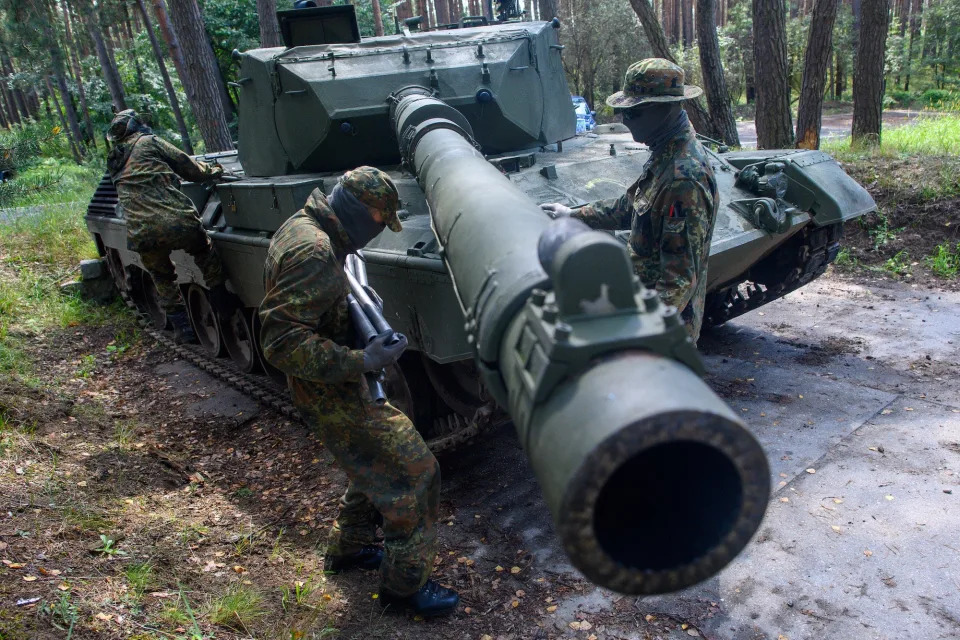
Ukrainian soldiers with a Leopard 1 A5 tank at the Klietz training area in Germany in August.Klaus-Dietmar Gabbert/picture alliance via Getty Images

Ukraine is using Leopard tanks more like long-range artillery than attack vehicles, AFP has reported.

The report said the tanks were being used defensively to hold Ukraine's line rather than to punch through.

The change is reported to have taken place over the past few weeks.

Ukraine is using the advanced Leopard tanks it received from its Western allies defensively rather than as penetrative offensive weapons, the news agency Agence France-Presse has reported.

The change is reported to have taken place over the past few weeks, as Ukraine's long-awaited counteroffensive against Russia turned into a more defensive effort of trying to hold positions against escalating attacks.

AFP reported that the tanks, positioned along the front lines, were now being used more like long-range artillery than attack vehicles that would lead efforts to punch through into Russia-held areas.

One soldier in Ukraine's 21st Mechanised Brigade told AFP that his brigade's tanks were "not being used in the same way as during the counteroffensive."

He said the Strv 122 tank, a Swedish variant of the Leopard 2A5, was now being used to target infantry groups or ammunition depots.

But tanks have nothing close to the range of standard artillery. A Leopard tank's 120mm cannon has an effective range of about 2.4 miles, while an M777 howitzer has a 13-mile range, more than 5 times as far.

Ukraine started its counteroffensive in June but has not made any major breakthroughs in pushing Russian forces back and retaking territory.

Ukraine's efforts are now expected to slow with the onset of winter conditions, and Russia has started to escalate attacks in some parts of Ukraine, including at Kupiansk and Avdiivka.

Ukraine's allies agreed to give it Leopard tanks in January, after months of Ukrainian requests and after pressure from its smaller allies that didn't have any of their own to give.

Ukrainian President Volodymyr Zelenskyy said in August that he wanted the counteroffensive to start "much earlier," but he felt he had to wait for more Western weapons to arrive.

Waiting allowed Russia to build defenses that then "slowed down" Ukraine, he said.

Analysts previously told Business Insider that Western delays in giving Ukraine weapons probably hindered its counteroffensive efforts by giving Russia more time to prepare its defenses.

While Ukraine waited, Russia built formidable defenses and turned Ukraine into the world's most heavily mined country.

ODDBALL
TANK COMMANDER KELLY'S HERO'S


UPDATED
PUTIN'S PET FASCIST
European leaders try to stop Orbán derailing Ukraine’s EU accession bid


Shaun Walker, Lisa O'Carroll and Lili Bayer
Wed, 6 December 2023 

Photograph: Johanna Geron/Reuters

European leaders are scrambling to rescue a plan to begin European Union accession negotiations for Ukraine, as Hungary’s prime minister, Viktor Orbán, vows to block the decision at a summit of EU leaders next week.

The French president, Emmanuel Macron, is due to host Orbán for dinner in Paris on Thursday, while the European Council president, Charles Michel, was in Budapest last week looking for a way out of the impasse.

Orbán, widely seen as the EU’s most pro-Russian leader, has said repeatedly that he will not support Ukraine’s path to accession at this point. On Monday, he sent a letter to Michel demanding to take the issue off the agenda at the leaders’ meeting next Thursday and Friday.

“The obvious lack of consensus would inevitably lead to failure,” if the issue remains on the table, Orbán wrote in the letter, a copy of which has been seen by the Guardian.

Many in Brussels believe Orbán is repeating a favoured tactic of playing hardball to seek gains from EU partners, before eventually falling into line. However, political and diplomatic sources in Budapest said they did not believe the Hungarian leader was likely to relent this time.

“After he sent the letter saying that we shouldn’t discuss the issue at all I don’t see a sudden backtracking,” said Ágoston Mraz, director of Nézőpont, a thinktank close to Orbán’s Fidesz party. “In politics you can never say never, but as far as I see it, there is no chance.”

The European Commission recommended in November that formal EU membership negotiations with Ukraine and Moldova should begin, which its president, Ursula von der Leyen, described as a response to “the call of history”.

The decision to recommend proceeding with Ukraine’s candidacy was a rare bright spot for Kyiv, coming at a time when the situation on the battlefield looks increasingly intractable and with the Biden administration’s ability to continue sending funds to Ukraine looking increasingly shaky.

If agreed, the move would be just the first step in a long journey. Michel has spoken about accepting Ukraine into the EU by the end of the decade, though the process usually takes longer.

Related: EU must not ‘appease’ Viktor Orbán by unfreezing billions earmarked for Hungary

Orbán has long been at loggerheads with Brussels over various issues, including democratic backsliding and the erosion of judicial independence in Hungary, which led to the freezing of tens of billions of euros of funding for Budapest. There are signs that some of that money may soon begin to flow, which may help to win Orbán’s grudging approval for a big EU financial aid package for Ukraine, something he has also spoken against. But the funds alone are unlikely to prompt movement on the accession issue, sources said.

For years, Orbán has said Hungary’s main issue with Ukraine is that it wants Kyiv to provide more rights to its Hungarian minority community. Ukraine’s parliament is due to consider a bill that answers most of Budapest’s concerns on Friday, but Orbán has now moved the goalposts, criticising Ukraine in more general terms.

Dmytro Tuzhansky, director of the Institute of Central European Strategy in the Ukrainian city of Uzhhorod, said: “Since 2017, Orbán and his team have used minority rights as a pretext. Now, suddenly, he is not putting the link there any more, and he’s saying it’s because Ukraine is not ready, Ukraine is not democratic. It’s pure political blackmail.”

Orbán has often pursued a rogue foreign policy at odds with Hungary’s status as a Nato member, frequently criticising Ukraine while maintaining economic ties with Russia. In October, he was the only EU leader to travel to a summit in China, where he met Putin, drawing sharp criticism from other EU leaders. He is one of the few European leaders not to have travelled to Kyiv since the beginning of the full-scale invasion and is widely disliked in the Ukrainian capital.

“If a member of an alliance breaks the rules and tries to publicly demean the decisions taken by this alliance and subject them to doubt, this is an internal EU discussion to be had privately,” said Mykhailo Podolyak, an adviser to Volodymyr Zelenskiy, in an interview in Kyiv. “If you are a member of a community you should share the values of the community, and if you don’t, you should leave this community.”

Orbán has a long history of pushing the EU to the brink before eventually folding, and a last-minute U-turn cannot be ruled out, but the signs so far are not positive. On Wednesday, Orbán’s Fidesz party submitted a resolution to parliament calling on the government not to support the start of talks on Ukraine’s accession.

A senior European official said: “I think this time nobody really knows how it will all end and the possibility of no agreement is 50/50. The behaviour and positioning of Orbán is worse than ever before and there is a risk that he is not bluffing and in fact is aiming at collective failure.

“The question is also if the EU or key member states have any sufficient leverage to change the situation. We will see how tomorrow’s meeting in Paris goes.”

There is hope that even if Orbán blocks accession in December, he will acquiesce later on, but another senior official said if the decision does not come now, it might be harder to push it through next year as attention turns to the election campaign for the European parliament. “Political windows don’t stay open for ever,” they said.

Additionally, with every passing month, amid elections in various EU member states, the memory of the first days of the war and the firm desire to help Ukraine may fade. “You have people at the table who were not there when Zelenskiy was beamed into the European Council [just after the Russian invasion last February] and said: ‘This may be the last time you will see me alive.’ This had a big psychological impact and these memories are now fading,” said the official.

Cracks in Western support pose new challenge for Ukraine


Delphine TOUITOU
Wed, 6 December 2023 

President Volodymyr Zelensky cancelled a speech to the US Congress at the last minute Tuesday (Handout)

Ukraine faces growing diplomatic headwinds after its summer counter-offensive against Russia's forces faltered, with aid from vital backers in the United States and EU being increasingly called into question.

The latest sign of tensions came when President Volodymyr Zelensky cancelled at the last minute a Tuesday video address to the US Congress, which he hoped would help unblock vital further billions in funding.

No reason was named publicly for the no-show.

In Europe, eyes were on Hungarian Prime Minister Viktor Orban, a staunch sceptic of EU backing for Ukraine's war effort.

While the bloc was looking to open membership talks with Kyiv and is proposing a 50-billion-euro ($54 billion) financial lifeline, Orban suggested dropping these matters from an upcoming Brussels summit.

French President Emmanuel Macron has invited Orban for dinner in Paris on Thursday, hoping to bring him around.

Hopes that Ukraine could win back occupied territory in its south and east from Russian President Vladimir Putin's forces were dashed in summer.

Western allies, who had supplied more and heavier weapon systems in the preceding months, now appear to be questioning how strongly to keep up their aid.

Ukrainian leaders insist they can make advances at the front if support keeps coming.

Kyiv can point to some recent military gains on the Black Sea, allowing it to successfully export cargoes of agricultural products.

- 'About European security' -


"Even receiving continuing infusions from the West, Ukraine lacks manpower, where Russia doesn't have that problem," one senior European military officer at NATO told AFP.

Among Kyiv's soldiers sent for training with NATO troops, "these days there are older people, less experienced, who are coming forward."

"Now is the time to manage Zelensky, to reel him in from his somewhat die-hard position. No-one's saying it officially, but I think that's what's in the pipes," the NATO source added.

A French diplomatic source countered that Ukraine still has "a very low rate of mobilisation" among its population, while Russia's "statistics are being fiddled with".

While national morale may have been tested, Ukrainian troops at the front still appear determined to see the fight through.

And while the war is costly, "the Europeans won't cast Ukraine aside because they know if Putin takes Ukraine, it would be a very dangerous precedent" with risks for EU members like the Baltic states and Poland, said Tatiana Kastoueva-Jean of the French Institute for International Relations (IFRI).

That was backed up by the French diplomat.

"Backing Ukraine is about European and French security," the diplomat, asking not to be named, told a group of reporters.

Leaders must "counter the idea that one crisis pushes another aside," the diplomat added, in reference to fears in Ukraine that Israel's fight with Hamas militants could distract Europe.

- 'Don't see defeatism' -

"Everyone knows that it's a risky time, but I don't see any defeatism in Brussels or at NATO," the diplomatic source said -- while acknowledging that questions would inevitably be asked after two years of war.

Analyst Kastoueva-Jean said that while "every factor is working towards stasis" at the front, it was vital for European leaders to minimise dissent about their continuing support.

Staying the course is all the more important for Europe with US presidential elections in November 2024 where Donald Trump and his America-first programme have a real chance of returning to office.

Reassurance from outside was also needed, Kastoueva-Jean said, as "squabbling among the elites is showing up" in Kyiv, where the relationship between Zelensky and his military chief of staff Valery Zaluzhny has grown fraught.

"Could this be the end of national unity behind Zelensky, or is it just an interlude tied to the challenges at the front?" she asked.

French diplomats have been trying to convince allies that aid must be kept up as a signal to Putin that "he can't count on support wearing out" for Kyiv.

For Europe, that would mean accelerating the build-up of its defence industry and improving interoperability of equipment.

Kyiv's forces are currently using more than 200 different weapons systems pieced together from various sources, Ukraine's ambassador to NATO Natalia Galibarenko highlighted recently.

Dt-dab/tgb/sjw/jm


Umerov responds to Klitschko’s statements on ‘authoritarianism in Ukraine’

The New Voice of Ukraine
Wed, 6 December 2023 

Rustem Umerov

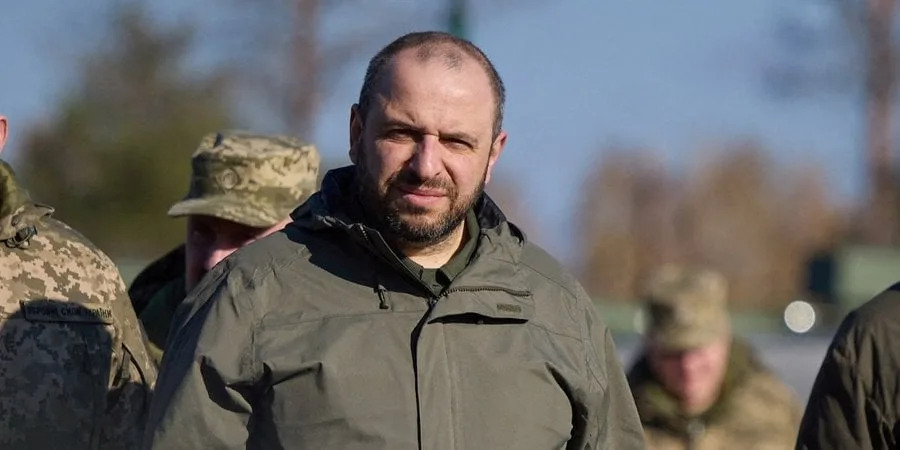
In response to Kyiv Mayor Vitalii Klitschko’s recent comments on “authoritarianism in Ukraine,” Defense Minister Rustem Umerov defended President Volodymyr Zelenskyy in an interview with U.S. entertainment network Fox News on Dec. 5, praising him as “visionary and courageous for remaining in Ukraine and fighting.”

“I believe the mayor’s comments indicate the beginning of the political season,” he added, likely referring to the “pause” in Ukrainian political in-fighting that started following Russia’s full-scale invasion of the country.

Klitschko’s comments came in a recent interview with German newspaper Der Spiegel, where the mayor of Kyiv expressed concerns about Ukraine’s trajectory — warning that the nation is “moving towards authoritarianism” and risks resembling Russia.

Read also:

Defense Minister Umerov refutes rumors of attempting to sack Zaluzhnyi

Ukraine coul lose the war without US aid — Zelenskyy’s Chief-of-Staff

“At some point, we will stop distinguishing ourselves from Russia, where everything depends on the whim of one person,” Klitschko claimed.

“Currently, there is only one independent institution, but it is under tremendous pressure: local self-government.”


Read also: Servant of the People party responds to MP Bezuhla’s call for Zaluzhnyi’s resignation

During the initial months of the war, mayors played a pivotal role in managing chaos, defending cities, and aiding the military, Klitschko added.


Scots react to 'upsettingly accurate' clip from Simpsons episode set in Scotland

James Walker
Tue, 5 December 2023 

The episode AE Bonny Romance is the eighth in the 35th series of the Simpsons (Image: X/Twitter)

SCOTS have reacted with a mix of glee and amusement to a clip from a forthcoming episode of the Simpsons set in Scotland.

The episode AE Bonny Romance is the eighth in the 35th series of the Simpsons. It aired in the US on December 3 and is due to be shown in the UK in the new year, but clips have been leaked to social media as Scots react to how the country is being portrayed.

Writer Daniel Jackson shared a clip of Lisa on X/Twitter walking up the Royal Mile in Edinburgh as she visited the Fringe Festival. He called it “upsettingly accurate”, with Lisa calling the festival a “celebration of theatrical irony and self-awareness”, going on to call one of the acts “so clever without being good”.


Another social media user called the latter quote the “most accurate assessment of 90% of the Edinburgh Fringe I’ve ever heard”, while another added: “Absolutely skewered - love it.”

The upcoming episode from season 35 of the smash-hit American animated sitcom will see Homer, Marge, Bart, Lisa, and Maggie cross the Atlantic to visit Scotland.

It will feature a storyline with Groundskeeper Willie – the Scottish character who came out in support of independence in a 2014 video.

READ MORE: Scottish stars join The Simpsons cast for episode based in Scotland

The Simpson family follows Willie to Scotland amid concerns that he has been “kidnapped”, but finds that it was all a ruse to have them attend his wedding to a girl named Maisie.

Maisie is voiced by the first of the major Scottish stars in the show – the Inverness-born Karen Gillan.

The Avengers actress is joined by Dr Who star David Tennant and Paul Higgins, known for his appearances in hit shows including The Thick of It and Line of Duty.

And the Scottish band Belle and Sebastian have also been immortalised as Simpsons characters for the episode.
GB
XL bully owners race to send dogs to Scotland ahead of ban


Mark Macaskill
Wed, 6 December 2023 

Some XL bully dogs have already been sent to Scotland

American XL bully dogs are being rehomed in Scotland ahead of a ban on breeding and selling the animals in England and Wales.

Social media posts suggested that several of the dogs have been transported north of the border as owners seek to escape a new law that comes into force within weeks.

Campaigners fear that early reports of cross-border traffic involving XL bully dogs add weight to concerns that many breeders will relocate their entire operations to Scotland and Northern Ireland.


Images of the animals being transported in cages emerged on TikTok, the social media platform. One photograph was captioned: “We found safe homes for them all in Scotland.”

The dogs are being sent to Scotland in cages

On Facebook, Bedlay Gardens, a dog boarding company based in Chryston, Lanarkshire, shared a post on Monday revealing that the first pick-up of XL bully dogs had taken place with the “pups” set to be “behaviourally assessed” before meeting their new families.

It showed images of six dogs in the back of a van as they were transported from Manchester.

There are estimated to be at least 10,000 XL bullies in the UK and rescue centres have been inundated with requests to take in unwanted pets since Rishi Sunak, the Prime Minister, announced plans to clamp down on the breed.

From Dec 31 it will be illegal to breed, sell or rehome XL bully dogs in England and Wales while owning one without an exemption certificate will be outlawed from Feb 1.

The ban will not apply in Scotland after SNP ministers argued that the move was premature, despite a spate of dog attacks.

SNP ministers have been warned that Scotland could be a 'dumping ground for dangerous dogs'

Doug Smith, of the campaign group Bully Watch, warned that Holyrood’s failure to follow Westminster’s lead would result in an influx of the dogs north of the border, adding that there were “significant concerns about Scotland’s divergence on the ban”.

It follows a string of fatal attacks linked to XL bully dogs in recent years including the deaths of David Price, 52, in Staffordshire and Ian Langley, 54, in Sunderland.

In Scotland, Adam Watts, 55, was killed by an XL bully at his kennels business in Angus in Dec 2021.

A six-month-old XL bully savaged its teenage owner in Motherwell in October, leaving him needing surgery. The same month, a court heard how another XL bully mauled three children in Forfar.
‘Threat to public safety’

Michael Gove, the Levelling Up Secretary, had pleaded with SNP ministers to join the ban “in light of the threat to public safety”.

In a letter to Shona Robison, the Deputy First Minister, he argued that “it is vital we agree a shared solution which minimises the risk of creating a potential ‘dumping ground’ for dangerous dogs that are moved from England and Wales to Scotland”.

In November, Siobhan Brown, the SNP community safety minister, wrote to the UK Government formally rejecting the request. She said it would not be introduced in Scotland at the same time as “relevant evidence in this area” was still being assessed.

Ms Brown also sought assurances that English XL bully owners trying to get rid of their dogs would not be allowed to sell them in Scotland.

The Tories accused the SNP of “gambling with lives” by rejecting the invitation and claimed they were “yet again picking a constitutional fight with the UK Government”.
‘Dragging their heels’

The Tory MSP Jamie Greene told the Scottish Sun: “This is the inevitable and potentially dangerous consequence of the SNP dragging their heels over what action to take. They need to recognise the impact that dogs being [taken] north of the border to avoid restrictions might have on public safety.”

The Scottish Government said it was not given prior notice of the UK Government’s intention to implement the ban.

“We expect the UK Government to act responsibly and ensure there is no impact on Scotland of its decision,” it added.

“Any change to rules must be evidenced-based, and we are moving swiftly to carefully consider the evidence so we can make the right decision for Scotland.”
Opinion
The Guardian view on Tory ideology: Thatcherism isn’t working – it never did

Editorial
Wed, 6 December 2023 

Photograph: John Redman/AP

A spectre is haunting British politics. Its outline is instantly recognisable to every Briton of a certain age: hair coiffed into a halo, shoulders firmed up with pads and, jutting out from the left wrist, the inevitable handbag.

More than three decades after she was driven out of No 10, and a decade after her death, Margaret Thatcher still casts a long shadow over the country she once ruled, and her party. Rishi Sunak sat in her old Rover (and tweeted about it, naturally) and Liz Truss copied her wardrobe. She influenced the Labour party under Tony Blair, though this admiration was first tempered by Labour under Ed Miliband and even more under Jeremy Corbyn. Sir Keir Starmer’s praise for Mrs Thatcher is perhaps more about internal Labour politics than about the Tories’ “leaderene”.

For some, however, she remained the country’s “saviour”. As the UK became the sick man of Europe, along came its first woman prime minister – closing down industries and cutting spending. Supporters acknowledge this hurt, but say it worked. History has not been kind about such judgments. Her emphasis on monetarism proved wrong. She bequeathed a dismal legacy of greed and inequality.

At its very outset in 1979, her government claimed public spending “lay at the heart of Britain’s economic difficulties”. Yet over her 11 years in power, while tax rates fell, especially for top earners, national insurance contributions and VAT rose. The result, as the economists Kevin Albertson and Paul Stepney observe, is that by her forced departure in 1990, central government took more of national income than it did in 1979. They also point out that in cash terms, the state spent more by the end of Thatcher’s time in Downing Street than it did at the start. Measured against GDP, the state did shrink in the late 1980s – but as soon as recession returned under her successor, John Major, it grew again.

Consider too her other big boasts. Property-owning democracy? More than 1.5m council homes were flogged off at a vast discount, and hardly any built to replace them. Today the state pays vast sums to landlords to house tenants. Popular share ownership? Even after all the “Tell Sid” campaigns, individual ownership of shares slumped in the 198os – and today is less than half what it was in 1981. The state sell-offs have not been successes: witness the mess at Thames Water.

There was no Thatcher miracle, only a myth manufactured by the Iron Lady herself. Politicians and their admirers enjoy the idea of a visionary leader engineering a sensational transformation, which is why Westminster thrills to the sound of a “northern powerhouse” or a “green new deal”. But, in a mature economy with an ageing population, it is both economically implausible and damaging to democracy. If Westminster keeps telling the people of Blyth or Blaenau Gwent that they are living through some golden age, despite all the evidence in their payslips and on their high streets, then the established tribes of SW1 will eventually be ignored altogether. And to a large degree this is the story of British electoral politics over the past few years. Myths can cost a country dear.