Sunday, January 14, 2024

Euroviews. Africa needs a unified voice on climate change

Worker levels the ground at a solar plant in Soroti about 300 kilometers east of Uganda capital Kampala, June 2016
By Hassanein Hiridjee
The opinions expressed in this article are those of the author and do not represent in any way the editorial position of Euronews.

A unified voice on the international stage can help Africa achieve a sustainable future, Hassanein Hiridjee writes.

Last month’s COP 28, and the preceding inaugural Africa Climate Summit, which delivered the Nairobi Declaration, signalled Africa’s growing importance and influence on the international stage. 

In the new year, more needs to be done to promote an equitable energy transition, underpinned by green technologies and prioritising both rural and urban communities.

These are important issues for Africa and more widely for the Global South. 

At COP 28, I was enthused by the commitment shown by heads of state and business leaders to help the Global South and its increasingly central role in discussions. 

However, the time has come for a more unified voice from the continent which demands developed nations to not only fulfil their current commitments, and address past deficiencies, but also significantly enhance their financial contributions to Africa’s climate action efforts.

I commend African leaders for their role in securing greater commitments to climate financing and delivering the loss and damage fund. But the weight of Africa’s voice is greater than the sum of its parts. 

And the continent’s views and needs have focused on specific, albeit important, overarching issues such as phasing out vs phasing down fossil fuels.

Our needs are vast, but the potential to meet them is incredible

The EU, G77 plus China, and the Alliance of Small Island States were some of the unified negotiating blocs representing the views and priorities of its countries. Beyond nation states, global industries have also come together to protect their interests.

Africans understand the continent’s challenges better than anyone else. We know that a one-size-fits-all approach will leave behind our rural communities and urban poor if the right partnerships and infrastructure are not in place. 
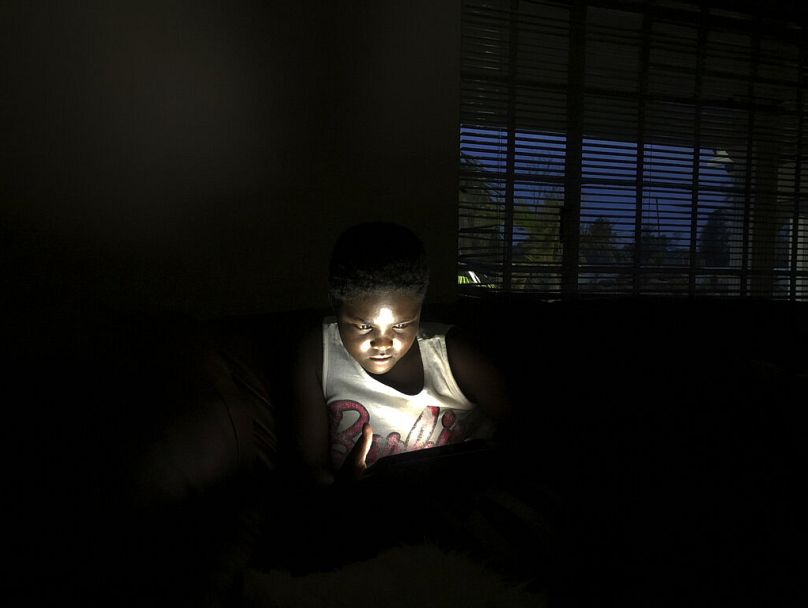

A young girl uses her mobile phone while charging it using solar power at a house in Harare

Across the Global South, this is a critical commonality: our infrastructure needs are vast and there is incredible potential to meet them by harnessing the domestic and international private sector.

And when challenged, African private-public partnerships have defined ingenuity. 

During the COVID-19 vaccine roll-out, Nigeria’s public health agency teamed up with local dry ice producers and UPS to deliver vaccines to rural communities. At home in Madagascar, AXIAN Energy provides rural communities with solar mini-grids, providing rural villages across the country with accessible clean energy.

Legitimate steps taken elsewhere are much needed in Africa

A unified voice from Africa can drive the international community to provide more concrete commitments for the continent. Companies like mine understand that Africa is brimming with untapped potential. 

We can showcase the power of homegrown businesses and partners, who have the ambition and entrepreneurship to bring the green revolution to rural and urban communities. 
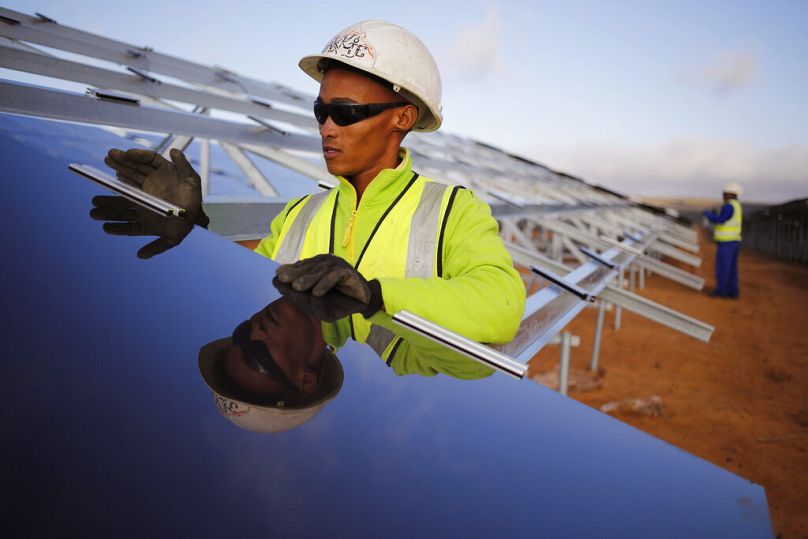
A worker installs a solar panel at a photovoltaic solar park situated on the outskirts of the coastal town of Lamberts Bay, South Africa
Schalk van Zuydam/AP

We can help the international community rethink and reconfigure its approach to investing in African projects and businesses.

But we also need the international community to set out a clearer roadmap that addresses the structural issues which prevent renewable projects from coming to fruition. 

This can include developing mechanisms that mitigate risks borne by businesses and unlock investment, such as payment protection, support with upfront costs, and more flexible financing terms — all legitimate steps taken in developed countries — but missing from the international agenda when it comes to Africa.

African businesses can and want to do more

The need to promote a more equitable energy transition is vital now more than ever. 

Rapid population and economic growth will result in 90 million additional people across Africa requiring access to affordable electricity every year by 2030, triple the rate of today. 

African private-public partnerships are best placed to implement the key projects needed to meet this demand while keeping countries on track to meet their global climate objectives.

Africa’s businesses can and want to do more — a commitment shown by my peers in the Africa Business Leaders Coalition, when we recently signed a policy blueprint at COP28 calling for interventions that enable Africa’s private sector. 

A more unified voice for Africa can ensure the role of its businesses as a major catalyst for change is at the top of the international agenda.

Hassanein Hiridjee is the CEO of AXIAN Group, and Africa CEO Forum’s 2022 CEO of the Year.

At Euronews, we believe all views matter. Contact us at view@euronews.com to send pitches or submissions and be part of the conversati

Yedioth Ahronoth: ‘South Africa presented detailed case of facts’

January 13, 2024

Public hearings in South Africa’s genocide case against Israel began on Thursday at the International Court of Justice (ICJ) in The Hague, Netherlands on January 11, 2024
[Dursun Aydemir – Anadolu Agency]

Israeli writer for Israel’s Yedioth Ahronoth, Nadav Eyal, has reported that South Africa submitted “a detailed, organised case full of facts and quotes against Israel” to the International Court of Justice (ICJ).

Eyal added in his article: “There is no point in denying this. It was a harsh day for the State of Israel in The Hague. One of the harshest days, diplomatically, since the outbreak of the war.”

He said: “There is no point in denying this either: in a certain sense, Israel has already lost in this situation, as soon as it began, even if Aharon Barak (Israel’s representative at the International Court of Justice) succeeds in convincing the rest of the judges not to issue a temporary order. The damage was done as soon as the international discussion and attention started, and as soon as the international media started discussing the question of whether Israel committed genocide in Gaza or not.”

On Friday, the ICJ resumed its sessions to try Israel on charges of committing acts of genocide in the Gaza Strip, based on a lawsuit filed by the state of South Africa and supported by dozens of countries, in a historical precedent.

READ: Germany rejects genocide charges brought against Israel by South Africa

During Friday’s session, the court heard the response by Israel, the occupying power, to the lawsuit filed against it by South Africa.

In the first session on Thursday, South Africa submitted a detailed 84-page file to the court in which it collected evidence, noting: “The acts in question include killing Palestinians in Gaza, causing them serious bodily and mental harm, and inflicting on them conditions of life calculated to bring about their physical destruction.”

The lawsuit filed by South Africa before the ICJ against Israel received Arab and international support.

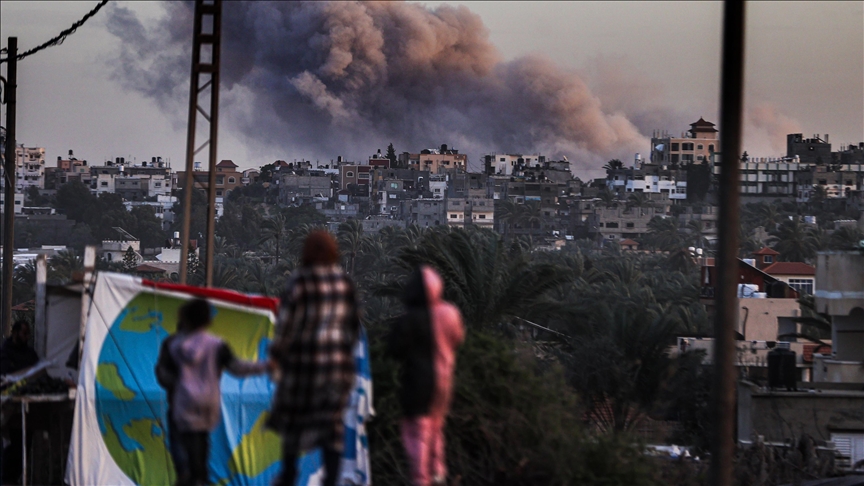
Since 7 October, the Israeli occupation has continued its genocidal aggression against the Gaza Strip, with US and European support, as its planes bomb hospitals, buildings, towers and homes of Palestinian civilians, destroying them over the heads of their residents.

The occupation has also prevented the entry of water, food, medicine and fuel, which led to the deaths of 23,469 martyrs and the wounding of 60,005, most of whom are women and children. It also caused the massive destruction of infrastructure and an unprecedented humanitarian catastrophe, according to the Ministry of Health in Gaza and international organisations and bodies.


'South Africans now see Israel as an apartheid state'

'What's been happening in Palestine, It's been happening for a very long time. I think maybe South Africans are like, 'this looks a bit familiar'.' As South Africa's proceedings enter their second day, where Israel put forward its rebuttal to charges of genocide in Gaza, MEMO speaks to pro-Palestine demonstrators outside the International Court of Justice in the Netherlands who express their hope that this trial will encourage other countries and peoples to come forward if they are experiencing something similar to Palestinians.


South Africa president: ‘I’ve never felt as proud as today’

January 13, 2024

South African President Cyril Ramaphosa speaks during a press conference at Luthuli House in Johannesburg on December 18, 2023 
[ROBERTA CIUCCIO/AFP via Getty Images]

South Africa’s president, Cyril Ramaphosa, commented on his country’s genocide case against Israel before the International Court of Justice (ICJ), expressing: “I have never felt as proud as I felt today when our legal team was arguing our case in The Hague.”

In his speech before the Women’s League of his ruling African National Congress (ANC) party, Ramaphosa said that his country’s goal in filing a lawsuit against Israel at the ICJ is to stop the genocide in the Gaza Strip.

Ramaphosa added: “When our lawyers were defending our case in The Hague, when I saw Ronald Lamola, a son of this land, presenting our case in court, I have never felt as proud as I do today.”

Regarding what his country might be subjected to because of the case, President Ramaphosa explained: “Some people say that the step we are taking is risky. We are a small country, and we have a small economy. They can attack us, but we will stand by our principles. As the father of our democracy taught us, we will not be truly free until the Palestinian people are free.”

The ICJ heard South Africa’s arguments on Thursday and Israel’s response on Friday.

On 29 December, South Africa submitted an 84-page lawsuit, presenting evidence of Israel – the occupying power – violating its obligations under the United Nations Charter and its involvement in committing acts of genocide against the Palestinian people in the Gaza Strip.

For the 100th day, the Israeli occupation continues its genocidal aggression against the Gaza Strip, with US and European support, as its planes bomb hospitals, buildings, towers and homes of Palestinian civilians, destroying them over the heads of their residents.

The occupation has also prevented the entry of water, food, medicine and fuel, which led to the deaths of 23,469 martyrs and the wounding of 60,005, most of whom are women and children. It also caused the massive destruction of infrastructure and an unprecedented humanitarian catastrophe, according to the Ministry of Health in Gaza and international organisations and bodies.

READ: Israel failed to disprove genocide case before World Court: South Africa


Israeli ambassador Dana Erlich criticises ICJ lawyer Blinne Ní Ghrálaigh for ‘ignoring’ role of Hamas in war

Palestine’s Irish ambassador has now lost 12 of her family in war

'Entire multigenerational families will be obliterated' - Irish lawyer Blinne Ni Ghralaigh at The Hague

Niamh Horan
Yesterday 

Dana Erlich, Israel’s ambassador to Ireland, said she “categorically rejects” an application made by Irish lawyer Blinne Ní Ghrálaigh and a South African legal team in the genocide case being brought against Israel at the International Court of Justice (ICJ) at The Hague.

Speaking to the Sunday Independent this weekend, Ms Erlich said the application made by Ms Ní Ghrálaigh and the South African delegation at the ICJ is “inherently false and biased” and “completely ignores” the role and responsibilities of Hamas for the war.

The diplomat also claimed South Africa has “publicly and shamelessly aligned itself with Hamas” and says it is “embracing a proscribed terror organisation” which is “calling for the destruction of Israel and the Jewish people across the globe”.

Last week, Ms Ní Ghrálaigh’s work as a top human rights barrister brought her to the ICJ, the UN’s highest court.

‘The fact that Ms Ní Ghrálaigh is from Ireland means a lot to me’

In a powerful address on Thursday, Ms Ní Ghrálaigh said the conflict in Gaza was the “first genocide in history” being broadcast in “real-time”.

Addressing the court in both English and French, which she studied at Cambridge University, she said her task was to convince the court of the urgent need for provisional measures to be imposed to protect the rights of Palestinians in Gaza.

In response to the application, Ms Erlich has described South Africa as “Hamas’s representatives in the court”.

She told the Sunday Independent that the South African team is “ignoring the fact that Hamas uses the civilian population in Gaza as human shields and operates from within hospitals, schools, UN shelters, mosques and churches, with the intention of endangering the lives of the residents of Gaza.”

She also welcomed statements from the Irish Government emphasising the role of Hamas in this war.

“As Taoiseach Varadkar stated, it is important to remember and understand the origin of the term genocide, and acknowledge the agenda of Hamas which openly declares its genocidal intents — as we’ve witnessed since October 7.”

Meanwhile, Palestine’s ambassador to Ireland, Dr Jilan Wahba Abdalmajid, described the opening statement by Ms Ní Ghrálaigh as “a landmark speech”. She also said “the fact that Ms Ní Ghrálaigh is from Ireland means a lot to me”.

“She is Irish. She knows the meaning of colonisation, starvation, occupation and oppression.”

Reacting to the ICJ case, Dr Abdalmajid said: “The whole world has witnessed this genocide online — live. You cannot say it isn’t happening. We see it. You cannot hide it or lie about it.”


‘We need to be strong to stand up for our cause, but we have no time to grieve’

The diplomat also revealed her family suffered further losses in Gaza as recently as 10 days ago, and added that she has not been able to process their deaths.

“We have had more tragedies. We have now lost 12 family members. For a period of time it was very, very difficult. Maybe when this war is over — and I hope it will be soon — we will have time to deal with our grief. But now we are trying to freeze our feelings.

“To be able to stand up for our cause we need to be strong — but it is not easy. We don’t have time to grieve.”

Ms Ní Ghrálaigh was brought up by her Dublin-born mother and Mayo-born father in London but has often travelled back to Ireland.

She only began training as a lawyer after completing an undergraduate degree in languages, working in the interim for a think-tank to save for the cost of a conversion course.

She took up a position at a human rights firm in London but turned down the offer of a solicitor’s training contract to work as a legal observer on the Bloody Sunday Inquiry in Northern Ireland.

She then spent a further year in Derry working for a solicitor’s firm representing many of the Bloody Sunday families.

The ICJ hearing is the latest in a long line of high-profile cases for Ms Ní Ghrálaigh.

She has presented to the ICJ before, on behalf of Croatia in a 2015 case against Serbia alleging genocide in the early 1990s.

She has also worked for the ‘Hooded Men’, a group of men interned in Northern Ireland in 1971 who last year received an apology from the PSNI for their treatment.

4,000 Israeli soldiers disabled in ongoing Gaza war
HOW MANY FROM FRIENDLY FIRE?!

January 13, 2024 

The Israeli army evacuates its soldiers who were wounded in battles in Gaza via a helicopter for medical treatment at Beilinson Hospital near Tel Aviv, Israel on December 18, 2023. [Nir Keidar – Anadolu Agency]

Hebrew news site, Walla, said late Friday that 4,000 Israeli soldiers have become disabled since the beginning of the war against the Gaza Strip in October, with estimations suggesting that the number could rise to 30,000, Anadolu Agency reports.

“The country is preparing to receive a large number of disabled Israeli soldiers, and after 100 days of the war, around 4,000 soldiers have already been acknowledged as having disabilities,” it said.

The site considered Hamas’ attack on Oct. 7 as having “led Israel into a war that it had not previously experienced in terms of the number of soldier injuries, but more importantly, the injuries are extremely severe.”

“Thanks to the devoted and high-quality care provided by rescue teams and medical teams, those with severe injuries survive,” it said.

The site added that the Israeli army “does not provide all data about the wounded to the public, for fear that it will lower people’s morale.”

“Currently, about 4,000 soldiers (with disabilities) have been recognized according to classification 3, meaning they are entitled to all treatments and rights enjoyed by a disabled person in the Israeli army without being officially recognized in this way,” said Walla.

It noted that salaries are being paid to injured soldiers and their treatment without the need to prove anything and that the rehabilitation process “will begin soon to reintegrate them into life.”

The site quoted Idan Kaliman, chairman of the Israel Defense Forces Organization for the Disables, who said: “I have been in the organization for 30 years, and I have never encountered such a large number of severely wounded individuals. There are many wounded with amputated limbs, blindness, or paralysis.”

Kaliman pointed out that there are “many wounded who have had their limbs amputated, as well as those who were blinded and paralyzed.”

The Israeli army announced the conscription of 360,000 reservists in the ongoing war against the Gaza Strip since Oct. 7, while the ground operation began Oct. 27.

As of early Friday, the number of officers and soldiers killed in the ranks of the army since the beginning of the war hit 520, including 186 since the start of the ground war in Gaza.
The one state reality
Pro-Palestinian protestors rally in support of Palestinians in Gaza
by Ann Garrison
January 13, 2024


On Dec. 8, the UN Security Council voted 13 to 1 for a resolution calling for a ceasefire in Gaza. The US cast the only no vote, exercising its veto power, while the United Kingdom abstained. All of those present, excepting the Israeli ambassador, called for a two-state solution, but more and more scholars and activists are now saying that a two-state solution is no longer possible. It’s been under discussion for 57 years without any progress, so it’s time for a paradigm shift.  

That paradigm shift is, put simply, acknowledging that Israel is the only functioning state between the Jordan River and the Mediterranean Sea and that it’s a hugely unjust state keeping half its population, the Palestinian people, in miserable conditions, and all but 20 percent without citizenship and the rights that citizenship entails. 

Half of those, as we’re all now acutely aware, live in the concentration camp called Gaza that Israel has bombed for decades, more mercilessly than ever since Oct. 7, 2023. The one-state reality is ugly, but continuing to imagine that there will finally be a two-state solution doesn’t make it any less so.

One hundred thirty-nine of the world’s 193 nations recognize the state of Palestine, but this is moral recognition, recognition of what should be, not of what is. Israel controls all the state apparatus, including the monopoly of force, and the Palestine Authority essentially plays the role of colonial administrator. 

The One State Reality” is an anthology of essays devoted to this paradigm shift, its history and its implications. Its subheading is, “What Is Israel/Palestine?” Its authors are scrupulously careful to say that they are trying to describe what is, not what should be, and that the Palestinian and Israeli people must ultimately make their decisions about moving forward. 

The book is edited by George Washington University Professors Michael Barnett, Nathan J. Brown, and Marc Lynch, and University of Maryland Professor Shibley Telhami. It’s written by political scientists who use language and concepts specific to their academic discipline that are often difficult for the layperson to parse, but it’s full of insight for those with patience. As a layperson, I found it easiest to digest by reading the introduction and conclusion, then flipping through pages to chapter heads and subheads that particularly piqued my interest, and reading several every day rather than starting from page one and reading to the end.

Several chapters I found of particular interest were “What is Israel Palestine?” (the introduction), “Israel/Palestine: Toward Decolonization,” “Delegation Domination: Indirect Rule in the West Bank,” “American Jewry and the One State Reality,” and the concluding chapter, “Recognizing a One State Reality.” 

I also found it helpful to search the index for key terms like “apartheid,” “settler colonialism,” “Oslo Accords,” “Security Council,” “West Bank” and “Gaza.” To the layperson, this book may serve as an encyclopedia as much as a page-to-page read. 

One of the central themes I found most important is that, as Marc Lynch wrote in his conclusion, “Negotiations toward two states were never sincere in this analysis, but merely cover for an ongoing process of colonization.”  Another co-editor speaking at a book talk at the Middle East Institute’s Oman Library called the two-state solution an “opioid for the diplomatic classes.” 

Speaking on C-SPAN’s Washington Journal , co-editor Shibley Telhamis said: “The reality of it is that you have in Israel a government that doesn’t really accept the idea of two states. You have ministers in that government who say: ‘All of the land belongs to us. Palestinians have to accept what they have, not equal rights, or at worst leave.’”

What are some of the implications of the paradigm shift from the two-state solution to the one-state reality? The academic authors of this book might be disturbed by my oversimplifications, but these are the most basic implications that I derived from this book:

  1. Accepting the paradigm shift would mean giving up on both the idea of a Jewish state and the idea of a Palestinian state, which some members of both communities might embrace while others would be alarmed. Palestinian demands for full citizenship and equal rights might then supersede the now unrealistic demands for an independent Palestine. 
  2. If policymakers and institutions, including the UN Security Council and the General Assembly, were to accept the paradigm shift, they would be compelled to confront and deliberate the ugly one-state reality which Amnesty International, Human Rights Watch and the Israeli NGO B’Tselem have all labeled apartheid, a crime against humanity. (This of course motivates policymakers – including the US president – who have enabled Israel’s injustices and atrocities not to accept the paradigm shift.) 

In his concluding essay, Marc Lynch considers “Prospects for Ideational and Material Change” (a subhead of his chapter titled “Recognizing a One State Reality”). Here he describes three possible consequences of accepting the description of Israel as an apartheid state:

“First, naming Israel’s system as ‘apartheid’ might trigger such revulsion at home [in Israel] that it leads to a domestic demand for change.” This, he says, “seems highly unlikely, given the rightward trend in Israeli politics.”

Second, “it could trigger some form of international response by states or international organizations.” This he also describes as unlikely.  

“Third,” he writes, “naming Israel’s system as ‘apartheid’ could trigger global normative action at the societal and individual, rather than at the state, level. This effort to link the apartheid label to the production of a global cultural boycott comparable to that faced by South Africa is both the most plausible theory of change and the primary objective of the BDS movement.” 

He goes on to praise BDS for shifting the terms of the debate about Israel and Palestine by “effectively invoking norms against colonialism and analogies to the cultural boycott of apartheid South Africa.” He also says it could be “one of the most widespread instances of solidarity politics in the world.”

I believe he was saying that the paradigm shift and all its implications are rising from the grassroots.

Ann Garrison is a Black Agenda Report Contributing Editor and independent journalist based in the San Francisco Bay Area. In 2014, she received the Victoire Ingabire Umuhoza Democracy and Peace Prize for her reporting on conflict in the African Great Lakes region. Please support her independent journalism on Patreon. She can be reached at ann@anngarrison.com. 


Gazans cannot be forcibly displaced: UN Security Council

January 13, 2024

Palestinians trying to carry on with their daily work even as the Israeli attacks continue, in Rafah, Gaza on January 09, 2024. [Abed Zagout – Anadolu Agency]

The UN Security Council said Friday that Palestinians in the Gaza Strip cannot be forcibly displaced and must be able to return to their homes, Anadolu Agency reports.

Amar Bendjama, permanent representative of Algeria to the UN, said what is happening in Gaza will remain a “disgrace.”

“A disgrace on the conscience of humanity,” he said at a Council meeting on the humanitarian situation in Israel and the Occupied Palestinian Territory.

The “barbaric” bombardment of Gaza and the destruction of its infrastructure and the targeting of all signs of life in Gaza clearly is making Gaza “uninhabitable,” said Bendjama.

“In addition, it seeks to kill the hope of returning home in the hearts and minds of the Palestinians in order to facilitate and implement the strategy of displacing the Palestinians outside their land,” he said, adding that it is a policy that enjoys a lot of support among the officials of the “occupying power.”

Bendjama said forced displacement of Palestinians must be rejected.

“Plan of forced displacement is unfolding now throughout the Palestinian territory, through bombardment and destruction, and through settlement and annexation,” he said. “Everyone must understand that there is no place for Palestinians except on their land.”

Bendjama also urged the international community, in particular the Security Council, to speak with one strong voice against the displacement of the Palestinians.

“No one inside this chamber can remain silent. As such plans unfold, silence is complicity,” he added.

READ: Gaza children still face unrelenting war: UN children’s agency

‘Gazans should not be subject to forcible displacement’

Linda Thomas-Greenfield, US envoy to the UN, said the situation is “heartbreaking and untenable.”

“The United States’ position has been clear and consistent: Palestinian civilians in Gaza must be able to return home as soon as conditions allow,” she said.

Washington has made it clear that civilians must not be pressed to leave Gaza under any circumstances, said the ambassador.

“We unequivocally reject statements by some Israeli ministers and lawmakers calling for a resettlement of Palestinians outside of Gaza. These statements, along with statements by Israeli officials calling for the mistreatment of Palestinian detainees or the destruction of Gaza, are irresponsible, inflammatory, and only make it harder to secure a lasting peace,” she added.

Permanent Representative of the UK to the UN, Barbara Woodward, said her country firmly rejects any proposal that Palestinians should be resettled outside Gaza, including proposals from the Israeli government.

“Our views and concerns are shared by our allies and partners that Gazans should not be subject to forcible displacement or relocation from Gaza,” said Woodward.

She encouraged Israel to immediately cease all settlement activities in Occupied Palestinian Territories.

READ: Israel’s defence: ‘Many civilian deaths in Gaza are caused by Hamas’

Israel ‘deliberately’ destroy everything

Also addressing the Council, Palestine’s UN envoy Riyad Mansour said in 100 days virtually every Palestinian in Gaza has been displaced multiple times.

“From a home to a UN shelter, to a tent. Searching for safety, everywhere. Finding safety nowhere. Searching for life anywhere, met by death everywhere,” said Mansour.

He said Israel has “deliberately” destroyed everything.

“Palestinians in Gaza today mourn their loved ones, and mourn their homes,” he said. “They mourn the Gaza Strip as all its landmarks have been destroyed. Every place people had happy memories in has been disfigured.

For his part, Israeli envoy to the UN Gilad Erdan, said this is the 21st Council meeting since Oct. 7, and not a single resolution has condemned Hamas for killing 1,300 Israelis and taking 240 hostages..

“Let me be very clear, there is no force displacement. As Israel’s Prime Minister (Benjamin Netanyahu) has said two days ago, Israel has no intention of displacing the population in Gaza.

“Israel is solely fighting Hamas terrorists, whose core strategy is to use guys and civilians as human shields, and who have converted every inch of Gaza to a terror war machine,” he said.

At least 23,708 Palestinians have since been killed, mostly women and children, and 60,050 injured, according to Palestinian health authorities.

According to the UN, 85% of the population of Gaza is already internally displaced amid acute shortages of food, clean water and medicine, while 60% of the enclave’s infrastructure is damaged or destroyed.


180 women give birth daily in Gaza amid Israeli restrictions, says Palestinian Red Crescent

'Many of them are unable to reach hospitals due to being in besieged areas, with Israeli forces preventing ambulances from reaching them,' says humanitarian group

Ahmet Dursun |14.01.2024 


ANKARA

The Palestinian Red Crescent said Saturday that 180 women give birth every day in Gaza under "dangerous" and "inhumane" conditions due to Israeli attacks and occupation.

"In Gaza, 180 women give birth daily under dangerous and inhumane conditions. Many of them are unable to reach hospitals due to being in besieged areas, with the Israeli forces preventing ambulances from reaching them," it said in a statement.

To emphasize the severity of the situation, the humanitarian organization shared recordings on X.

The recordings documented telephone conversations between health teams and the family of a pregnant woman who could not reach a hospital in time to give birth in the Gaza Strip.

A Palestinian Red Crescent doctor guides and assists the family in the audio recordings, aiming to facilitate a safe home delivery for the woman who was in conversation with her sister.

UN Population Fund (UNFPA) Representative for Palestine, Dominic Allen, said in a virtual news conference Saturday from Jerusalem that 18,000 births occurred in Gaza in the last 100 days.

He noted that UNFPA could not provide sufficient supplies and the situation in hospitals is dire.

Allen highlighted that 5,500 women are expected to give birth in the coming months and he expressed concern for their struggles with water scarcity, food shortages and limited access to treatment.

He emphasized the deadly risks involved and underscored the urgency of preventing such tragedies.

-45,000 pregnant, 68,000 lactating women in Gaza face death

UNFPA announced Dec. 17, that 45,000 pregnant and 68,000 lactating women in Gaza are at risk of anemia, bleeding and even death.

Health Ministry spokesman in Gaza, Ashraf al-Qudra, said in a Jan. 1 statement that due to not meeting the needs of 50,000 pregnant women in centers accommodating those displaced by attacks in the Gaza Strip, patients are facing inadequate nutrition and health problems.

Al-Qudra urgently called on UN-affiliated agencies to intervene to rescue children and pregnant women from the situation.


Israel continues night raids in occupied West Bank

January 13, 2024

Israeli forces raid Nur Shams refugee camp in the city of Tulkarm, West Bank on January 04, 2024. [Nedal Eshtayah – Anadolu Agency]


The Israeli army reportedly continued night raids Saturday in parts of the occupied West Bank, Anadolu Agency reports.

According to the Palestinian news agency, WAFA, the targets of the raids were the cities of Hebron, Nablus, Bethlehem and Qalqilya.

Following the announcement by the army that “three armed Palestinians trying to infiltrate the Adora Jewish settlement near Hebron were killed,” raids were conducted in parts of the city.

The army claimed that an armed group of Palestinians attempting to infiltrate the settlement opened fire on Israeli security forces, resulting in the killing of three individuals.

Israeli Army Radio announced earlier that an Israeli was injured and taken to the hospital in the incident.

The military, accompanied by military vehicles, focused on the towns of Idhna and Surif near Hebron.

There is no information regarding casualties or detentions during the raids.

The army also entered two towns and one village south of Nablus, conducting raids on houses.

Separately, in another raid in Qalqilya, youngsters set car tires on fire in an act of resistance against the army.

Since the start of the Gaza war on Oct. 7, the Israeli army has intensified its military operations in the West Bank, increasing attacks and raids on cities, towns and camps.


Unprecedented surge' in settlement activity in West Bank since war on Gaza


January 10, 2024

Israeli troops enter Nablus during a raid on the occupied West Bank city on January 10, 2024 [ZAIN JAAFAR/AFP via Getty Images]

In the three months since the war on Gaza was launched there has been an “unprecedented surge in settlement activities, including the construction of outposts, roads, fences, and roadblocks initiated by settlers”, Israeli rights group Peace Now has said.

In a report published last week, the group said: “Settlers persist in seizing control of Area C in the West Bank, further marginalising the Palestinian presence.”

This, along with roadblocks “prevent Palestinians from accessing main roads in the West Bank, and barriers are erected along these roads to impede Palestinian movement and presence in various buffer zones.”

“The permissive military and political environment allow the reckless construction and land seizure almost unchecked, with minimal adherence to the law. The result is not only physical harm to Palestinians and their lands but also a significant political shift in the West Bank,” the rights group added.

Since 7 October, Peace Now has documented the establishment of nine new illegal outposts, 18 illegal roads paved or authorised by settlers, the return of settlers to Amona, an illegal outpost which was evacuated in 2017 after the Supreme Court ruled it had been built illegally and without Israeli government authorisation on privately-owned Palestinian land in 1995.

Peace Now added that “a significant portion of the outposts and roads are located on private Palestinian land.”

All outposts and settlement activity in the occupied West Bank and East Jerusalem is illegal under international law and has been deemed an impediment to peace.


Map of new outposts, roads, and land taken over by the Settlers since 7 October [PeaceNow]


Israel settlers burn olive trees in West Ban

January 11, 2024 


Palestinian farmers inspect the damage done to their olive trees that were cut down by Israeli settlers [Issam Rimawi/Anadolu Agency]

Settlers yesterday set fire to olive trees owned by Palestinian Najeh Harb from the village of Kafr Ad Dik, west of occupied Salfit.

Harb reported that the settlers also set fire to an agricultural room in the Jufa area in the northern part of the village, and burned several mature olive trees nearby.

He added that this was the fifth assault by the settlers on his land, in an attempt to force him out and occupy


‘Nobody Can Stop Israel’: Benjamin Netanyahu As Gaza War Reaches 100 Day Mark

Israel argues that ending the war means victory for Hamas, the Islamic militant group that has ruled Gaza since 2007 and is bent on Israel's destruction.

Palestinians mourn deaths of their relatives. AP

Outlook Web Desk
UPDATED: 14 JAN 2024 

Israeli Prime Minister Benjamin Netanyahu has said no one will be able to stop Israel from pursuing its war against Hamas until its victory.

Netanyahu’s speech came as the war between Israel and Hamas which left Gaza ravaged approached the 100-day mark, AP reported.

His remarks also came after the International Court of Justice(ICJ) at The Hague held two days of hearings on South Africa's allegations that Israel is committing genocide against Palestinians, a charge Israel has rejected as libelous and hypocritical.

What has South Africa urged ICJ on Palestinian killings?

South Africa has asked the ICJ to order Israel to halt its blistering air and ground offensive in an interim step.

South Africa cited the soaring death toll and hardships among Gaza civilians, along with inflammatory comments from Israeli leaders presented, as proof of what it called genocidal intent.

In counter arguments on Friday, Israel asked for the case to be dismissed as meritless.

What Netanyahu said?


"No one will stop us, not The Hague, not the axis of evil and not anyone else," Netanyahu was quoted as saying.

Case before ICJ to continue for years:

The case before the world court is expected to go on for years but a ruling on interim steps could come within weeks, AP reported.

Court rulings are binding but difficult to enforce. Netanyahu made clear that Israel would ignore orders to halt the fighting, potentially deepening its isolation.

World bats for ceasefire in Gaza:

Israel has been under growing international pressure to end the war, which has killed more than 23,000 Palestinians in Gaza and led to widespread suffering in the besieged enclave but has so far been shielded by US diplomatic and military support.

Israel argues that ending the war means victory for Hamas, the Islamic militant group that has ruled Gaza since 2007 and is bent on Israel's destruction.

The war was triggered by a deadly October 7 attack in which Hamas and other militants killed some 1,200 people in Israel, mostly civilians. About 250 more were taken hostage, and while some have been released or confirmed dead, more than half are believed to still be in captivity. Sunday marks 100 days of fighting.

Wider Middle East Conflagration:


Fears of a wider conflagration have been palpable since the start of the war. New fronts quickly opened, with Iran-backed groups -- Houthi rebels in Yemen, Hezbollah in Lebanon and Iran-backed militias in Iraq and Syria -- carrying out a range of attacks. From the start, the US increased its military presence in the region to deter an escalation.

Following a Houthi campaign of drone and missile attacks on commercial ships in the Red Sea, the US and Britain launched multiple airstrikes against the rebels on Friday, and the US hit another site Saturday.

In more fallout from the war, the world court this week heard arguments on South Africa's complaint against Israel.

Israel has no immediate plans of returning from Gaza:

Netanyahu and his army chief, Herzl Halevi, said they have no immediate plans to allow the return of displaced Palestinians to northern Gaza, the initial focus of Israel's offensive.

Netanyahu said the issue had been raised by US Secretary of State Antony Blinken during his visit earlier this week.

The Israeli leader said he told Blinken that "we will not return residents (to their homes) when there is fighting".

Israel mulling to close Egypt border with Gaza:


At the same time, Netanyahu said Israel would eventually need to close what he said were breaches along Gaza's border with Egypt.

However, the border area, particularly the city of Rafah in southern Gaza, is packed with hundreds of thousands of Palestinians who had fled northern Gaza, and their presence would complicate any plans to widen Israel's ground offensive.

"We will not end the war until we close this breach," Netanyahu said on Saturday, adding that the government has not yet decided how to do that.

Mounting causalities in Gaza:

In Gaza, where Hamas has put up stiff resistance to Israel's blistering air and ground campaign, the war continued unabated.

The Gaza Health Ministry said on Saturday that 135 Palestinians had been killed in the last 24 hours, bringing the overall toll of the war to 23,843. The count does not differentiate between combatants and civilians, but the ministry has said about two-thirds of the dead are women and children. The ministry said the total number of war-wounded surpassed 60,000.

Since the start of Israel's ground operation in late October, 187 Israeli soldiers have been killed and another 1,099 injured in Gaza, according to the military.

More than 85 per cent of Gaza's population of 2.3 million has been displaced as a result of Israel's air and ground offensive, and vast swathes of the territory have been levelled.

Only 15 of the territory's 36 hospitals are still partially functional, according to OCHA, the United Nations' humanitarian affairs agency.

Shortage of essentials lurks in Gaza:

Amid already severe shortages of food, clean water and fuel in Gaza, OCHA said in its daily report that Israel's severe constraints on humanitarian missions and outright denials had increased since the start of the year.

The agency said only 21 per cent of planned deliveries of food, medicine, water and other supplies have been successfully reaching northern Gaza.


40 Israeli commanders named for Gaza war crimes probe

TEHRAN, Jan. 13 (MNA) – Democracy for the Arab World Now (DAWN), founded by the late Saudi journalist Jamal Khashoggi, released a list of 40 Israeli military commanders deemed "prime suspects" for an international war crimes investigation.

In late December, DAWN submitted a dossier to the International Criminal Court (ICC) outlining the roles of these commanders in executing Israel's war on Gaza.

"These 40 IDF (Israeli military) commanders who have been responsible for planning, ordering, and executing Israel's indiscriminate bombardment, wanton destruction, and mass killing of civilians in Gaza should be prime suspects in any ICC investigation," DAWN executive director Sarah Leah Whitson stated. "While Israel has done its best to conceal the identities of many of its officers, they should be put on notice that they face individual criminal liability for the crimes underway in Gaza."

While Israel is not an ICC signatory, the court's jurisdiction covers Palestine, subjecting individuals committing war crimes there to prosecution.

Israeli minister Yoav Gallant tops the list, accused of ordering a complete siege on Gaza City and cutting off essential supplies. Maj. Gen. Ghassan Alian, head of COGAT, responsible for Gaza's siege, is also included. DAWN alleges intentional war crimes, including targeting civilians and vital facilities.

The list includes only Israeli officers "from the rank of lieutenant-general and up who command units no smaller than battalion level forces."

The list of officers submitted by DAWN for an international war crimes investigation includes Brig. Gen. Dan Goldfuss, Maj. Gen. Oded Basyuk, Lt. Col. Almog Rotem, Lt. Col. David Cohen, Maj. Gen. Aharon Haliva, Maj. Gen. Tomer Bar, Lt. Col. Daniel Ella, Lt. Col. Or Klasser, Col. Ehud Bibi, Rear Admiral Daniel Hagari, Col. Elad Tzuri, Col. Edo Kass, Lt. Gen. Herzi Halevi, Lt. Col. Dvir Edri, Lt. Col. Katy Perry, Lt. Col. Adoniram Sharabi, Yoav Gallant, Brig. Gen. Gilad Keinan.

The group published individual "Prime Suspect" cards identifying each officer on its website.

MNA/TSNM


Thousands Rally in Tel Aviv Against Israeli Government


TEHRAN (FNA)- Israeli protesters closed a major street Saturday in Tel Aviv to demand the resignation of Prime Minister Benjamin Netanyahu and the return of Israeli prisoners from the Gaza Strip, according to Israeli media.

“Protesters calling for the dismissal of the Israeli government led by Benjamin Netanyahu and the return of hostages from Gaza closed Ayalon Street as part of their protest actions,” said private Channel 12.

It noted that the closure of the street was an unusual step. Police reportedly arrested eight Israelis on charges of participating in the street closure.

The closure coincided with thousands of Israelis demonstrating in the center of Tel Aviv to demand the release of the hostages held in Gaza, according to Channel 12.​​​​​​​

Hundreds also reportedly demonstrated in the city of Haifa to demand the immediate resignation of the Netanyahu government, accusing it of failing to manage the war in Gaza.

This comes as the Al-Qassam Brigades, Hamas’ armed wing, announced Saturday that it lost connection with a group holding four Israeli hostages detained in Gaza since 2014.

Hamas links the negotiation for the release of Israeli hostages it holds to “a complete cessation of the war on the Gaza Strip”, a demand Israel has repeatedly rejected, stating its “understanding for temporary humanitarian pauses”.

Egypt and Qatar, along with the United States, are spearheading efforts to reach a second temporary pause in Gaza.

The first pause was reached in November that resulted in the release of 105 detainees held by Hamas, including 81 Israelis, 23 Thai citizens, and one from the Philippines. There were 240 Palestinian prisoners who were released by Israel.

On October 7, 2023, Hamas carried out an attack on Israeli settlements near Gaza, resulting in the death of 1,200 Israelis, injury to 5,431 and the capture of at least 239 hostages.

Israel estimates the presence of “137 hostages still held in the Gaza Strip”, according to media reports and statements from Israeli officials.
IRELAND

Thousands join pro-Palestinian march in central Dublin


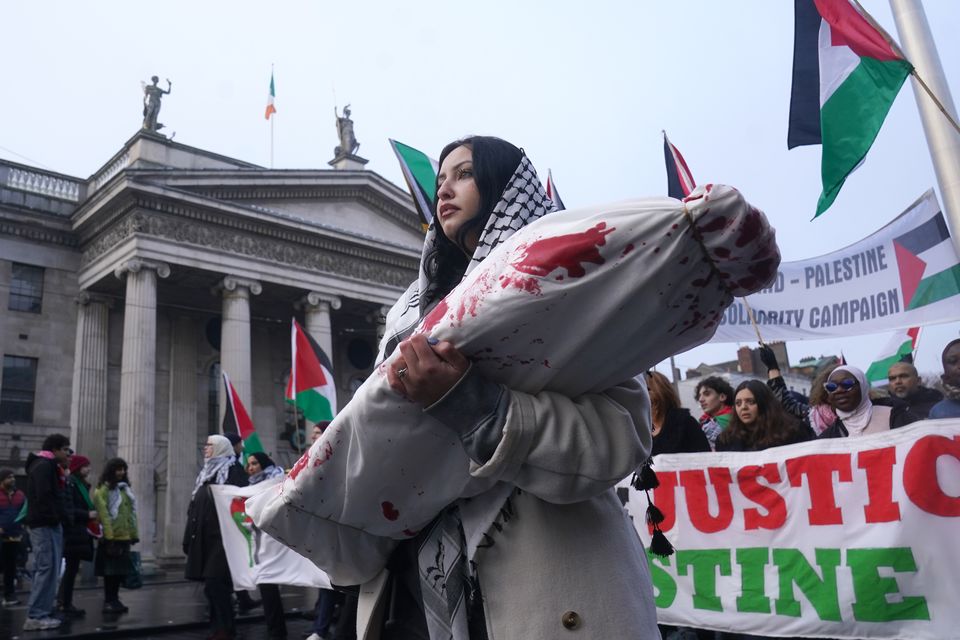
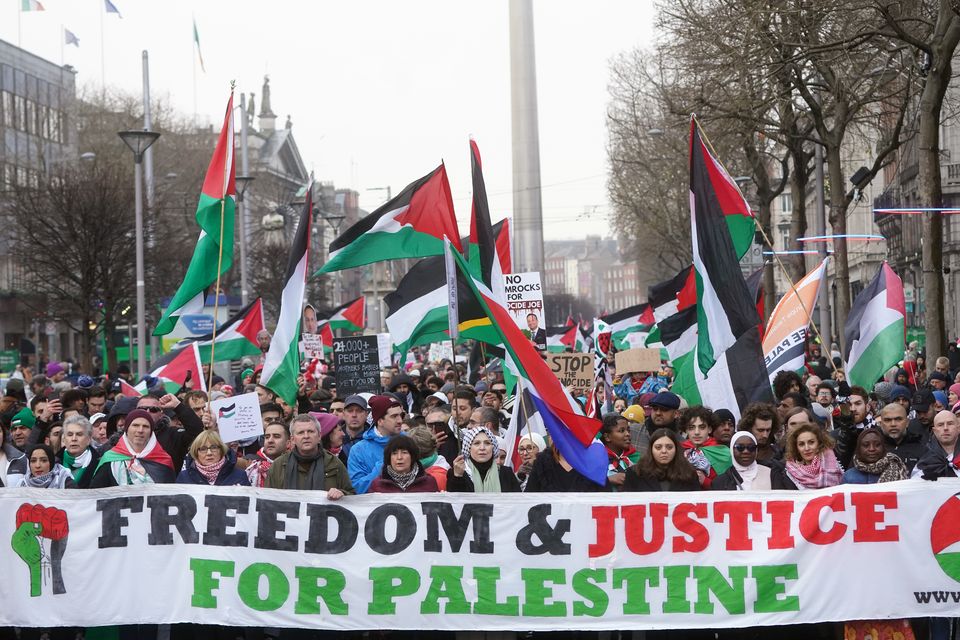
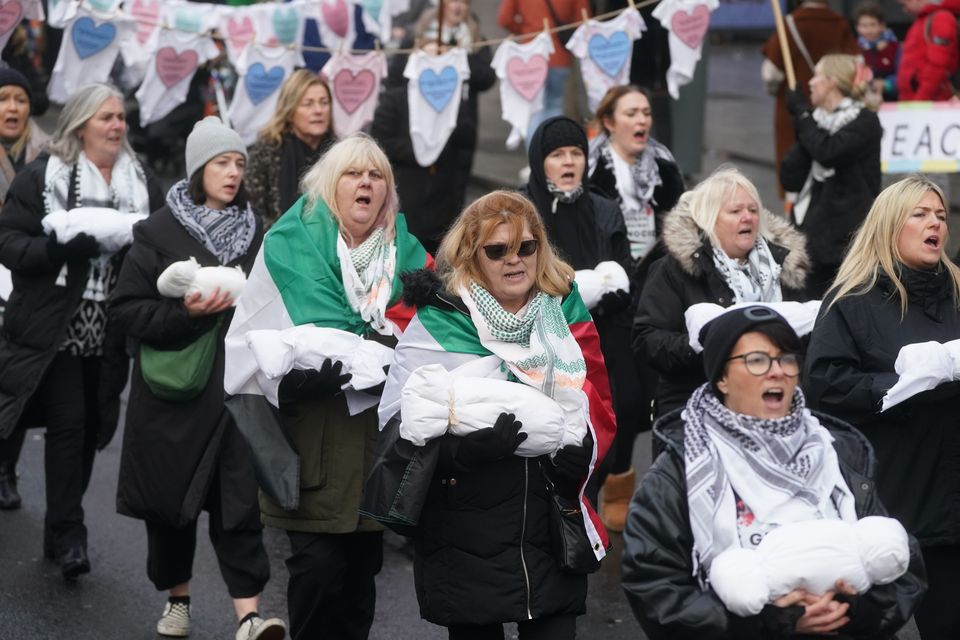
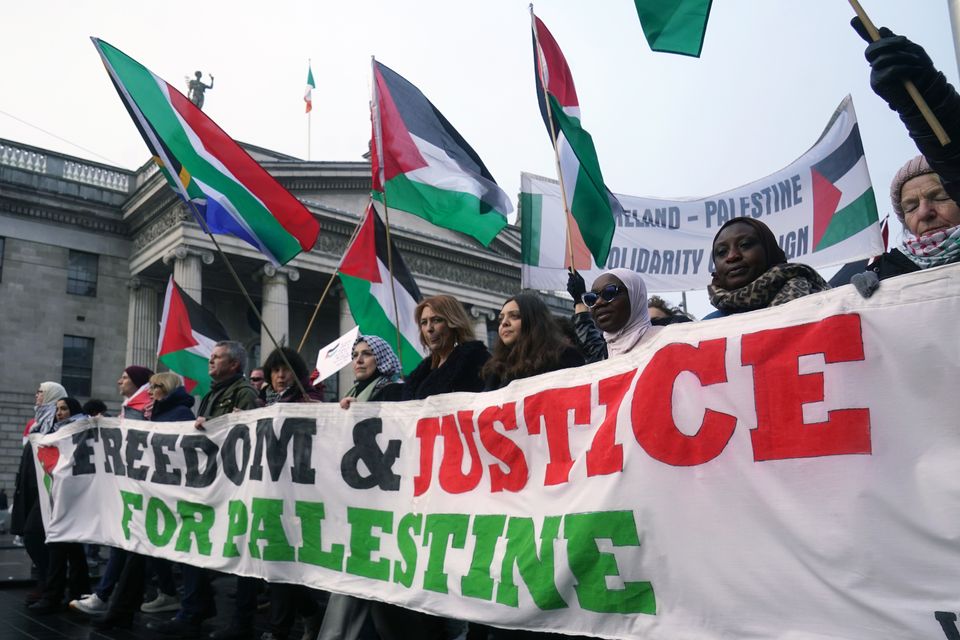
Protesters from the Ireland-Palestine Solidarity Campaign during a march in O’Connell Street, Dublin (Brian Lawless/PA)

By Cillian Sherlock, PA
Today 


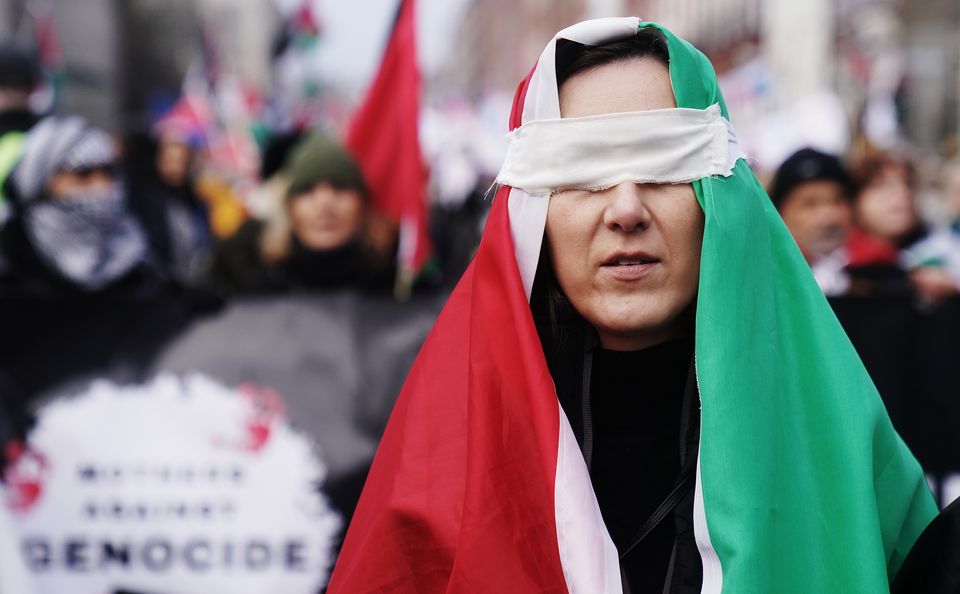
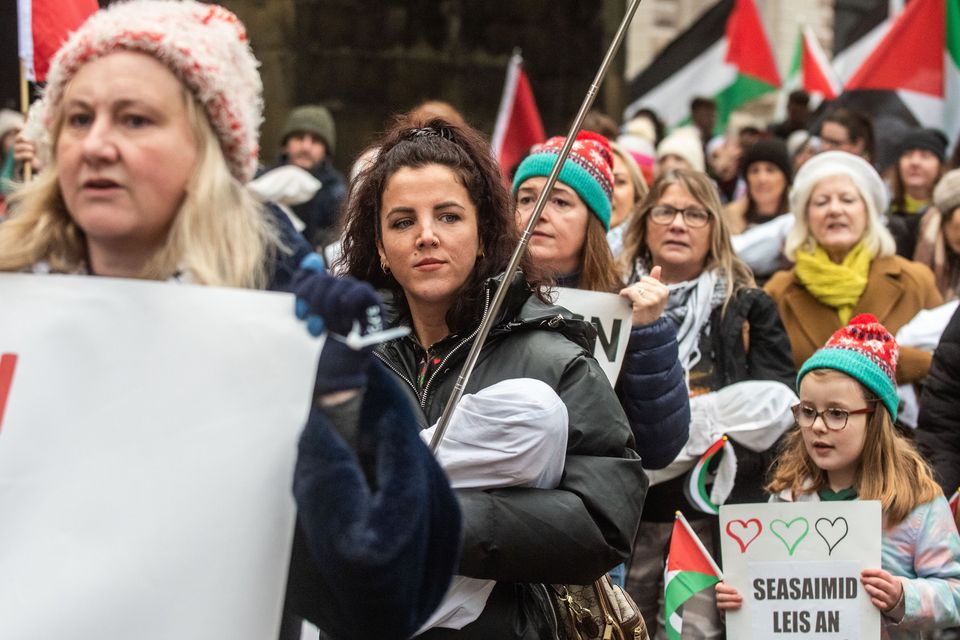
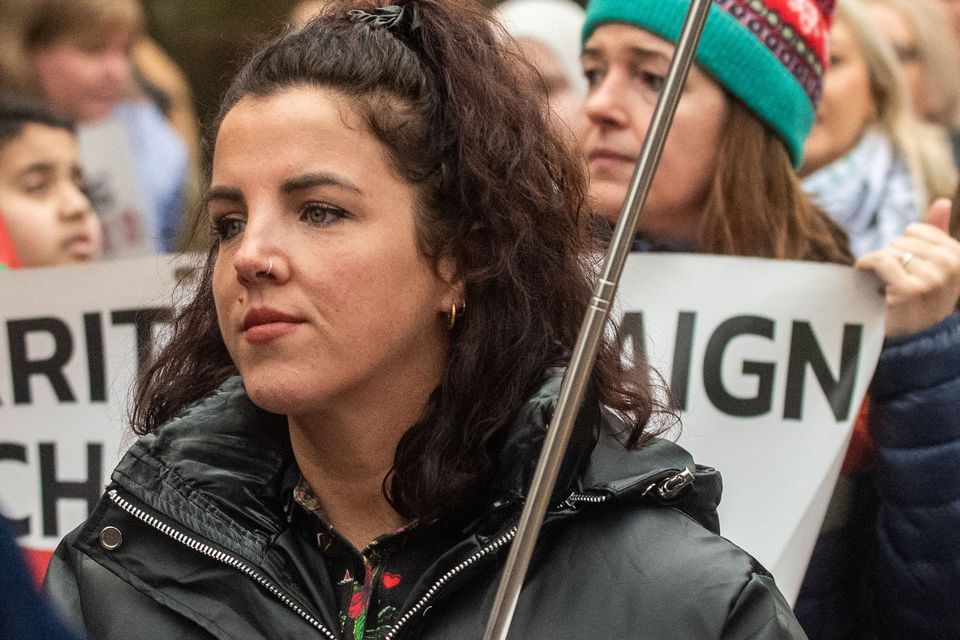
Thousands of people have marched through Dublin city centre in a protest against Israel’s military operations in Gaza.


The Pro-Palestinian march began at around 1.30pm from the Garden of Remembrance and proceeded along the city’s main thoroughfare O’Connell Street before arriving outside the Department of Foreign Affairs.

Protesters waved Palestinian flags and held placards critical of the Irish, US and Israeli governments.


Protesters from the Ireland-Palestine Solidarity Campaign (Brian Lawless/PA)

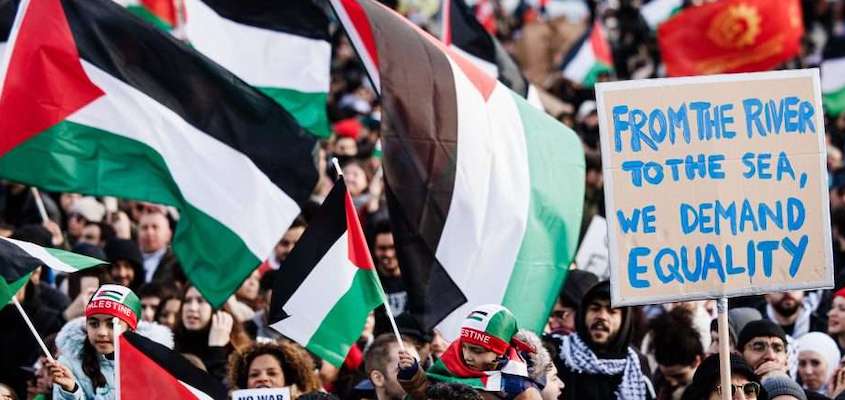
Demonstrators accused Israel of committing genocide as they chanted “free, free Palestine” and “from the river to the sea, Palestine will be free”.

Participants variously called for a ceasefire in Gaza, the expulsion of the Israeli ambassador to Ireland and for the Irish government to support South Africa’s case at the International Court of Justice (ICJ) alleging that Israel is committing genocide.

It is almost 100 days since Hamas gunmen launched an assault on Israel from the Gaza Strip on October 7, killing 1,200 and taking about 240 hostages, to which Israeli military responded with air strikes and a ground offensive on Palestinian territory.

Ireland’s main opposition parties, including Sinn Fein, Labour and the Social Democrats, have called on the Government to endorse South Africa’s action.


Protesters during a march in O’Connell Street (Brian Lawless/PA)

However, the Irish premier Leo Varadkar has said the Government does not intend to join the case.

The Ireland-Palestine Solidarity Campaign, which organised the rally, said the demonstration was part of an international day of action calling for an end to Israel’s operations in Gaza.

The march is endorsed by dozens of Irish civil society organisations including trade unions, political parties and community groups.


Protesters in Dublin (Brian Lawless/PA)

Spokeswoman Betty Purcell told the PA news agency: “It’s a huge demonstration, it is the biggest one we’ve had so far. We’ve been marching every Saturday.


“We need a ceasefire now but most of all we want to call out the Irish Government for its disgraceful refusal to support the South African case at the ICJ.

“They don’t speak for the Irish people, not by any means.”


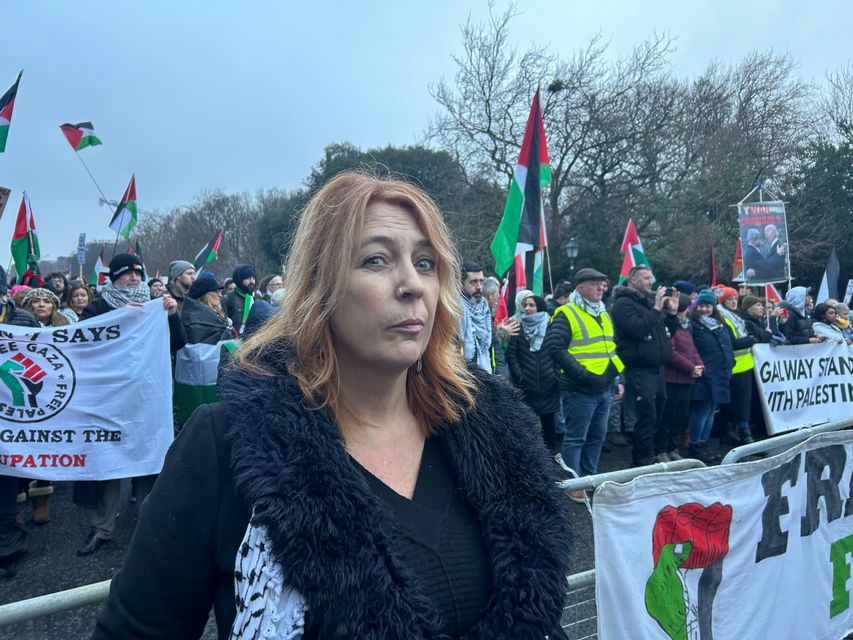
Ireland-Palestine Solidarity Campaign chairwoman Zoe Lawlor (Cillian Sherlock/PA)

IPSC chairwoman Zoe Lawlor said the demonstration was a “total and utter rejection of Israel’s genocide”.

Ms Lawlor said: “We are here today to express our outrage that this has been allowed, that world leaders have enabled, funded and green-lighted genocide and our Government has done absolutely nothing to stop it.”

The crowd booed and shouted “shame” at the Government while others joined chants calling for support of boycott, divestment and sanction (BDS) actions against Israel.


She added: “The Palestinian people should be able to exist in a world without violence and oppression, to live in the ordinary, to live in freedom.”


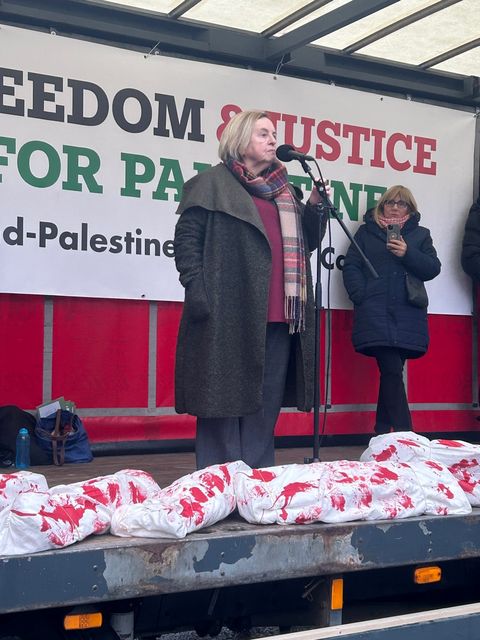
Bernadette McAliskey addressing the demonstration (Cillian Sherlock/PA)

Veteran Northern Irish civil rights campaigner Bernadette McAliskey told the crowd that “Palestine is the litmus test of our humanity”.

The 76-year-old activist said she had been standing up for the rights of Palestinians for more than 50 years.

She called on Irish premier Leo Varadkar and deputy premier Micheal Martin, as well as Sinn Fein leader Mary Lou McDonald to boycott traditional St Patrick’s Day visits to Washington as she accused US president Joe Biden of “enabling genocide”.

“Who in their right mind and conscience, on the national day of a country that freed itself from oppression, would go to America and give the bastard a bunch of fecking shamrock?


“It is not much to ask. Weigh up the corpses of Gaza against a jolly in the United States.”

To applause, Ms McAliskey also encouraged the demonstrators not to give any preference vote to politicians who do travel to Washington.


Protesters take part in a march organised by the Ireland-Palestine Solidarity Campaign on O’Connell Street (Brian Lawless/PA)

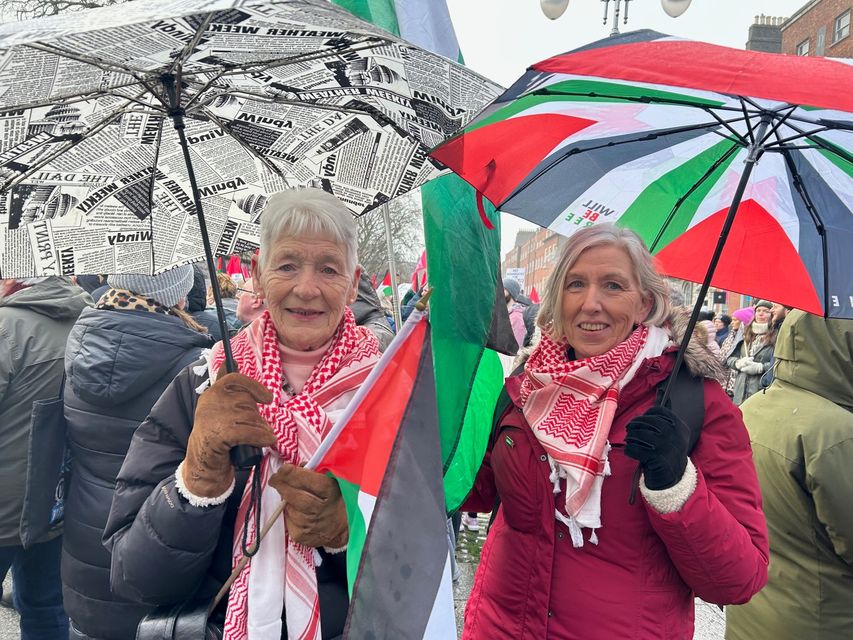
Protesters of all ages, some wearing keffiyehs or waving South African flags, took part in the march through drizzly conditions in Dublin.

Among them, Fiona Sullivan and Geraldine Lee travelled from Belfast in Northern Ireland to participate.

Ms Sullivan said: “It’s an absolute disgrace what’s going on, the world needs to show that we’re not going to accept it


Geraldine Lee and Fiona Sullivan (right) travelled from Belfast to participate in the Dublin rally (Cillian Sherlock/PA)

“This is the little that we can do to show the people of Gaza and Palestine that the Irish people are 100% behind them whether our government is behind them or not – we are.”

Ms Lee added: “They’re not in line with the public at all. The public have completely different ideas.

“The Government must not watch anything or see the children dying in Palestine. They don’t understand what’s going on – I can’t sleep thinking about it.”

Derry Girls’ Jamie-Lee O’Donnell takes to the streets for pro-Palestine rally


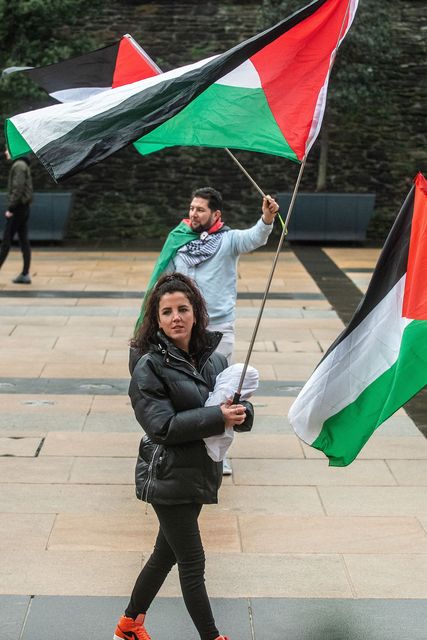
Actress Jamie-Lee O’Donnell joins pro-Palestine march in Derry on Saturday. 

Pic by Martin McKeown.

Derry Girls star Jamie-Lee O’Donnell joined hundreds of Pro-Palestine protestors in the Maiden City during an international day of action.

Saturday’s rally was organised by the Derry Irish Palestine Solidarity Campaign (DIPSC) which is calling for the "immediate end to the Israeli war on Gaza".

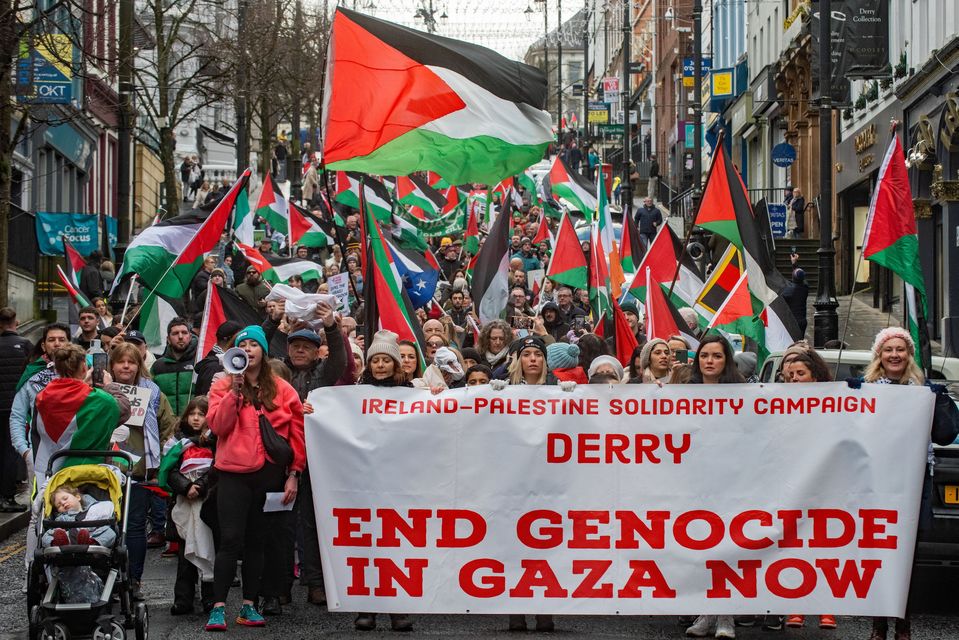
The actress joined demonstrators who retraced the steps of the historic civil rights route of 1968 from the Waterside to the Guildhall.

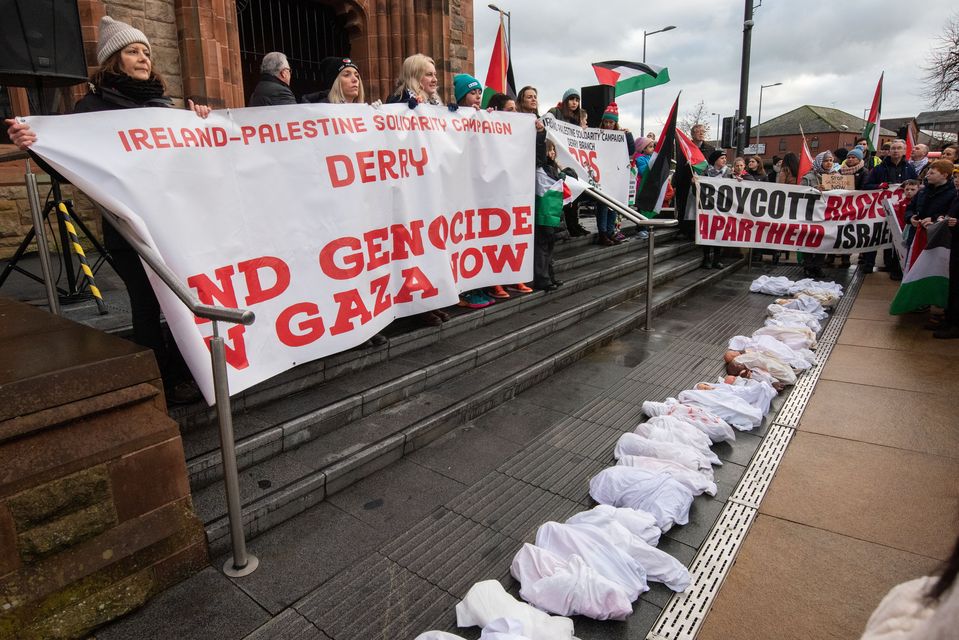
Some of those taking part carried a banner which read “end genocide in Gaza now”.

O’Donnell was carrying a baby doll wrapped in a white cloth to represent a dead infant – dozens of them were laid out on the ground in the city centre.


Pro-Palestine march in Derry on Saturday. Pic by Martin McKeown.

The star of the hit Channel 4 comedy series also carried a Palestinian flag during one of many marches which took place in 30 countries around the world.

It comes after local People Before Profit councillor Shaun Harkin urged the Irish government to back South Africa's case against Israel at the United Nations' International Court of Justice (ICJ) which formally accuses Israel of committing war crimes.

A final judgement could take years, however South Africa is pursuing an emergency order meaning an interim sentence could be reached in weeks.

Mr Harkin said: "Israel has used terror to drive Palestinians from their homes - and is using terror now to drive Palestinians out of Gaza.

"Israel must be held accountable for its barbaric actions in Gaza.”

Israel has denied the claims and accused South Africa of ignoring the Hamas terror attack on October 7, 2023 during which 1,200 people were murdered. Another 240 were kidnapped and held as hostages.

Meanwhile Sinn Fein leader Mary Lou McDonald addressed thousands of protesters who took to the streets of London telling the crowd that Palestinian freedom is possible.

"When I say this, standing in London, in common cause with you, (having) walked our own journey out of conflict, building peace for 25 years, this can happen," she said.

"This must happen and we will ensure that it does."


Pro-Palestine march in Derry on Saturday. Pic by Martin McKeown.

Thousands of people also marched through Dublin city centre making their way from the Garden of Remembrance along O'Connell Street to the Department of Foreign Affairs.


Fiona Sullivan and Geraldine Lee travelled from Belfast to take part.

"It's an absolute disgrace what's going, the world needs to show that we're not going to accept it,” Ms Sullivan said.

"This is the little that we can do to show the people of Gaza and Palestine that the Irish people are 100% behind them whether our government is behind them or not - we are."

Ms Lee added: "They're not in line with the public at all. The public have completely different ideas.

"The Government must not watch anything or see the children dying in Palestine. They don't understand what's going on - I can't sleep thinking about it."

Demonstrators carried placards criticising the Irish, US and Israeli governments as many chanted "from the river to the sea, Palestine will be free".

They demanded a ceasefire in Gaza, the expulsion of the Israeli ambassador to Ireland, and for the Irish government to support South Africa's case at the ICJ.


Ireland's main opposition parties, including Sinn Fein, Labour and the Social Democrats, have called on the Government to endorse South Africa's action.

But Taoiseach Leo Varadkar has said the Government does not intend to join the case.


Actress Jamie-Lee O’Donnell joins pro-Palestine march in Derry on Saturday. Pic by Martin McKeown.

Ireland-Palestine Solidarity Campaign spokesperson Betty Purcell hailed the “biggest” demonstration held so far.

"We need a ceasefire now but most of all we want to call out the Irish Government for its disgraceful refusal to support the South African case at the ICJ," she said.

"They don't speak for the Irish people, not by any means."

More than 30 Palestinians, including children, were killed in two Israeli air strikes overnight into Saturday in the Gaza Strip.

Video provided by Gaza's civil defence department showed rescue workers searching through the rubble of a home in Gaza City by flashlight early on Saturday after it was hit by an Israeli attack.

The footage also showed a young girl wrapped in blankets with injuries to her face and at least two other children who appeared dead.

A boy covered in dust winced as he was loaded into an ambulance.

According to the Health Ministry in Hamas-run Gaza, 23,843 Palestinians have died in the conflict.