Wednesday, February 21, 2024


3D Printing is Saving the U.S. Coast Guard Serious Money
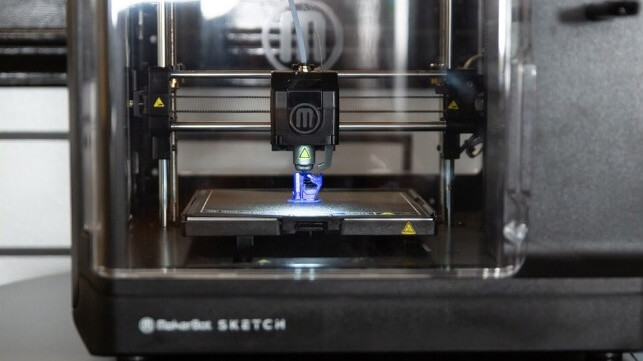
A 3D printer at Fort Sill, Oklahoma (USCG file image)

PUBLISHED FEB 19, 2024 9:18 PM BY U.S. COAST GUARD NEWS


[By Jamie Rand, Consultant C5ISC]

Just as traffic lights and road signs inform drivers and warn them about upcoming hazards, aids to navigation, such as lighthouses, buoys, and radio beacons help mariners navigate waters and identify potential risks.  

The Coast Guard is responsible for maintaining aids to navigation in waters under Federal jurisdiction, and that maintenance comes with an increasingly large price tag: according to a 2020 Government Accountability Office Report, “the overall costs to repair and replace aids to navigation increased from $12 million in Fiscal Year (FY) 2014 to about $20 million in 2018,” with “a collective replacement value of about $1.6 billion.”  

The partnership between the USCG’s Shore Infrastructure Logistics Center’s Waterways Operations Product Line (SILC-WOPL) and the Command, Control, Communications, Computers, Cyber and Intelligence Service Center’s Electronics Repair Facility (C5ISC-ERF) has facilitated new techniques and helped lower the cost to repair and replace ATON – and in so doing, laid the groundwork for Additive Manufacturing (AM) to meet future needs of the USCG.

AM, also known as 3D-printing, enables the generation of tangible, three-dimensional objects directly from digital design files. Just as conventional desktop printers use ink and paper to create prints, 3D printers use an array of materials, including polymer composites, metals, and ceramics to create objects layer by layer. Using AM, C5ISC-ERF can create or recreate parts that are no longer commercially available, enabling personnel to salvage degraded or damaged equipment and return it to serviceable condition.  

One successful example of this is the VRB-25 optical system, a standard 12-volt rotating light beacon with an incandescent bulb, used in lighthouses along the United States coastline. The Coast Guard began replacing the VRB-25s with light-emitting diode (LED) systems in the early 2010s, but despite the improved energy efficiency, the LED systems had higher repair costs and lacked the traditional appearance — the rotating beacon and glow — of the VRB-25, causing navigation complications for civilian mariners, the military, and the shipping industry.

Coast Guard technical authorities elected to reinstall the VRB-25 in lighthouses, which specifically require rotating beacons. SILC-WOPL, which serves as the focal point for implementing engineering and logistics solutions for the USCG’s ATON enterprise, found that the decommissioned VRB-25 systems had been sitting unused at Coast Guard units in various states of disrepair — or even discarded entirely — and could not always be used to replace the LED systems. SILC-WOPL then contacted C5ISC-ERF to see which broken systems could be brought back to serviceable condition.  

Led by Mr. Guy Stewart (retired), C5ISC-ERF began the complicated and unique restoration process in late 2019, disassembling all hardware components and replacing wiring, motor bearings, and other parts, in addition to performing extensive corrosion mitigation procedures. For Original Equipment Manufacturer (OEM) components that were no longer available, such as the base foundation for the VRB-25 hanger plate, C5ISC-ERF used in-house 3D printing technology and recreated them to exact dimensions, with ET2 Kyle Perez developing the design and prototypes, and Mr. Stewart performing the verification and validation via engineering analysis and destructive testing to ensure that the 3D-printed parts could successfully replace the alloy parts. SILC-WOPL determined that the 3D printed part was good for the use case, and C5ISC-ERF was able to produce 18 VRB-25s for reinstallation.  

Even at this early stage, AM is already enabling quick solutions and making a difference. Following a recent Command Cyber Readiness Inspection (CCRI) at C5ISC, some areas risked failing cyber-compliance due to missing simple emergency shut-off switch covers. Instead of procuring the covers through regular orders and waiting for them to arrive, C5ISC-ERF 3D printed the covers and shipped them overnight. And in just the last two fiscal years, AM has saved SILC-WOPL over $650,000 in acquisition costs and put 164 repaired pieces of equipment back into inventory.  

To help better leverage this emerging technology, the AM Working Group will soon send personnel to a four-month industry training and a six-week training with the Navy. The Working Group is also beginning to coordinate with the USCG Force Readiness Command (FORCECOM) to find unique and expensive aids or prototypes that could be printed more economically, with some twenty to thirty parts under consideration, ranging from obsolete parts to safety covers. Low-risk parts such as switchboard or radio knobs and breaker blanks will help the USCG develop an organic understanding of AM capabilities before moving into production of higher-risk parts.    

“The Coast Guard is not slow to follow suit with AM,” said LCDR Armstrong. “Mostly we’re just going about it logically and as engineering-sound as we can. There is some phenomenal work going on around the country, like flight-critical parts already approved by the Army and Air Force. We want to bring this solution space to everybody.” 

This article appears courtesy of Coast Guard Compass and may be found in its original form here


Bulker With Explosive Cargo Has Been Hit by Houthi Missile and Abandoned

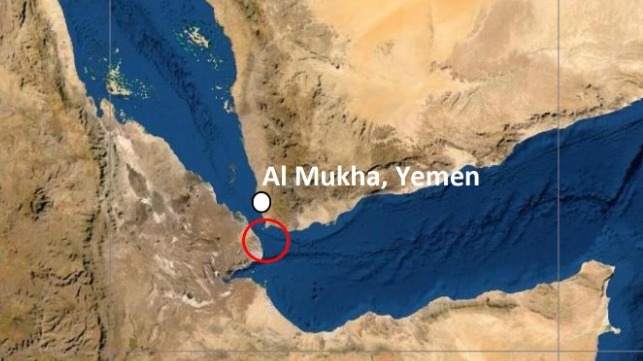
Location of the reported attack in the Strait of Bab el-Mandeb (UKMTO)

PUBLISHED FEB 19, 2024 4:18 PM BY THE MARITIME EXECUTIVE


[Updated] Yemen's Houthi rebels attacked and damaged a merchant ship in the Strait of Bab el-Mandeb late Sunday, prompting the crew to abandon ship. The UK Maritime Trade Organization (UKMTO) reported the incident, and a spokesman for the Houthi group claimed responsibility for the attack later Monday. 

UKMTO initially received a report of an incident 35 nm south of Al Mukha, Yemen, at about 2000 hours UTC on Sunday. The vessel's master reported "an explosion in close proximity to the vessel resulting in damage." The crew were unharmed.

In a follow-on update released in the early hours of Monday morning (local time), UKMTO advised that the crew had abandoned ship, and that unnamed military responders were on scene assisting. 

The target vessel has been identified as the bulker Rubymar, a British-owned, Lebanese-operated bulker flagged in Belize. Houthi rebels fired two missiles at the ship over the course of an hour, and one missile found its target. The operator told Bloomberg that the bulker had been hit in the engine room, and that it is now resting at anchor. The crew was rescued by a good samaritan vessel and taken to the nearby port of Djibouti. 

In a statement, the Djibouti Port Authority said that Rubymar was carrying an explosive cargo of 22,000 tonnes of fertilizer. The exact composition was not described, but the agency said that it was an IMDG 5.1 cargo. Ammonium nitrate-based fertilizers have caused serious accidents before, especially when carried or stored in large quantities, and are classed as IMDG 5.1. 

The authority said that it had transported the Rubymar's crewmembers to shore with its own harbor tug and was making arrangements for their safe repatriation. The 24-member crew included 11 Syrians, six Egyptians, four Philippine nationals and three Indians.

Since the beginning of Israel's operation against terrorist group Hamas in Gaza, the Houthis have launched dozens of missile and drone attacks on merchant shipping in the Red Sea. They have also captured and held an Israeli-linked car carrier, the Galaxy Leader, and are still holding the vessel's crew. 

So far, no seafarers have been reported injured by Houthi strikes, thanks in part to an American-led maritime security campaign in the Red Sea. U.S. Navy destroyers and carrier-based fighters have shot down countless inbound Houthi munitions, preventing them from reaching their intended targets, and have destroyed dozens more on the ground. There have also been no further hijackings since the increased U.S. Navy presence began


Developing Onboard Carbon Capture and Storage for the Maritime Industry

LCO2 carrier
Courtesy ABS

PUBLISHED FEB 21, 2024 2:00 PM BY HAMID DAIYAN


Technology to enable the reduction of emissions from ships is emerging with support from class, writes Hamid Daiyan, Sustainability Manager, ABS.

The potential of onboard carbon capture and storage (CCS) to reduce emissions from shipping is subject to ever-growing interest from the shipping industry. As vessel operators seek to comply with current and future regulations and achieve long-term climate goals, carbon capture promises to play a key role.

One of the key drivers to this is the presently limited availability of low-carbon fuels, which is pushing the industry to consider all options for lower emissions beyond energy efficiency measures.

Regulation continues to shape the process. Recent International Maritime Organization (IMO) meetings have considered submissions on this topic and an Intercessional Working Group (IWG) has been established to consider these proposals.

ABS is currently working with vendors and shipowners to understand how this emerging technology can be adapted and absorbed into the maritime industry, its implications for vessel design and operations and its likely impact on carbon emission reduction.

Technology

Existing CCS technologies are largely employed in shore-based applications. These technology platforms need to be marinised for shipboard application and in such a way that balances effective performance against capex and opex and additional fuel consumption.

Onboard CCS reduces greenhouse gas emissions from ships by capturing and storing the carbon dioxide produced onboard. This can be done either before or after the combustion process, using different methods and the captured carbon can be stored onboard in different ways, depending on the technology used.

Two potential onboard carbon storage methodologies are:

Liquefaction: The CO2 is compressed and cooled to form a liquid, which can be stored in tanks or cylinders onboard and can be transferred to shore facilities or other vessels.

Mineralization: CO2 is reacted with minerals to form solid carbonates, which can be stored in containers.

Supply Chain

The evolution of the carbon value chain to include carbon capture and storage onboard ship – as well as its transport at scale for sequestration – will have a large and sustained impact on the shipping industry’s stakeholders, including ports, bunker suppliers and fuel producers.

The capture of carbon dioxide from the vessel propulsion system will require a storage arrangement that can be connected to port facilities for ‘de-bunkering’ or transfer of the captured carbon to portside storage.

This may include direct connections at the berth or could feature the development of a new class of small, dedicated vessels similar to today’s bunker fleet built to handle the shipping of liquefied CO2 to storage or processing facilities.

What is not clear is which ports or marine locations will become centers for carbon storage and how they will manage this process. Ports will need to be intimately involved in the development of the supply chain as they could be the site both of storage and fuel production from LCO2.

Other factors that vessel operators need to consider are that vessels with CCS onboard may need to have offtake agreements in place for the LCO2, including facility certification and a legal framework covering the transfer of responsibilities.

Application Challenges

There are several challenges associated with onboard CCS, which include the high cost and complexity of the value chain which involves multiple actors and stages such as capture, storage, transport, injection, and monitoring of CO2. Each stage has its own technical, operational, and safety requirements that require attention.

The value chain that will handle and store ever larger volumes of carbon is still in the development phase; large-scale storage and processing capacity will be required. For onboard CCS to scale sufficiently, the shipping industry will need to collaborate with other stakeholders in order to establish the required infrastructure and agreements.

Stronger regulation is needed to create a long-term pathway against which owners can invest. Additionally, the public's perception and acceptance of CCS are influenced by their awareness and understanding of the benefits and risks of the technology.

ABS Activities

ABS has been working with global shipping organizations on joint development projects (JDPs) to showcase the safety and feasibility of using onboard CCS. We take a technology-neutral approach - working with vendors and stakeholders across the supply chain to provide Approvals in Principle and New Technology Qualifications to validate concepts and encourage full-scale pilots. We expect the first systems to be potentially available next year.

Additionally, ABS is collaborating with universities and research institutes to explore the potential of various carbon capture technologies for marine and offshore applications. ABS is dedicated to supporting the decarbonization of the shipping industry and advancing the development of onboard carbon capture as one of the potential solutions.

ABS has established a set of guidelines to direct the maritime industry on how to apply carbon capture technology. These guidelines also comprise an optional ‘CCS-Ready’ notation for vessels, based on their level of preparation or readiness for future installations.

The Future

The 81st meeting of the Marine Environment Protection Committee next March will see the topic of carbon capture for shipping on the agenda, with debate likely on the application of systems in retrofits to existing vessels.

The deliberations of the IWG should be considered during this meeting and by this stage it is possible that results from full-scale industry projects will also be available as a commentary on the regulatory development process.

As noted, though the technology is still in development for maritime applications, the demand from shipping for applicable and certified systems means that widespread adoption is possible by 2030.

This adoption path assumes that the storage and processing ecosystem expands at a similar rate. Both these milestones depend on the speed of regulatory development. To achieve the IMO’s stated aim of net zero carbon emissions by 2050, uptake of onboard carbon capture technology will need to be consistent, with rules governing its application in place to drive rapid adoption.

Hamid Daiyan is the Sustainability Manager at ABS.

The opinions expressed herein are the author's and not necessarily those of The Maritime Executive.