It’s possible that I shall make an ass of myself. But in that case one can always get out of it with a little dialectic. I have, of course, so worded my proposition as to be right either way (K.Marx, Letter to F.Engels on the Indian Mutiny)
Saturday, April 27, 2024
Daimler Truck reaches deal with United Auto Workers, averts U.S. strike
Updated Fri, April 26, 2024 IAA truck show in Hanover
By Nathan Gomes and Ben Klayman
(Reuters) -Daimler Truck agreed to a new labor contract on Friday with over 7,300 hourly workers represented by the United Auto Workers (UAW) at six facilities in the U.S. South, averting a strike at the 11th hour.
"For months, we said that record profits should mean a record contract with no concessions," UAW President Shawn Fain said in a late-night appearance on YouTube from Charlotte, North Carolina, near where the company has plants.
"Our determination and solidarity has delivered," he said of the tentative deal, which workers still must ratify.
Daimler Truck, which makes Freightliner and Western Star trucks and Thomas Built buses, had faced the possibility of a strike beginning at midnight ET (0400 GMT on Saturday).
Daimler Truck said in a statement: "The UAW members... will now be asked to vote on the new contracts, and we hope to finalize them soon, for the mutual benefit of all parties."
The deal at the German truck maker, which was spun off from what is now automaker Mercedes, comes just three weeks before votes on whether to join the UAW will be tallied at a Mercedes assembly plant in Alabama.
Fain's speech on Friday started almost an hour later than scheduled as Daimler Truck made late concessions, Fain explained. Several times during the talks last fall with the Detroit Three automakers - General Motors, Ford and Stellantis - the threat of a deadline led the companies to make concessions to avoid the strike's expansion.
Under Friday's deal, Daimler Truck workers will receive a minimum 25% general wage increase over the four-year contract, Fain said. That would match what workers at the Detroit Three received.
When the deal is ratified, Fain said members will receive an immediate 10% pay raise, followed by 3% increases six months and 12 months later.
They also will receive cost-of-living adjustments to offset inflation and profit-sharing, both for the first time at Daimler Truck, as well as the end of wage tiers that paid those building buses less than those building heavy trucks, he said.
The lowest paid workers at Thomas Built will see raises of more than $8 an hour and some skilled trades workers at that unit will see increases of more than $17 an hour, Fain said.
The deal also includes increased job security and improved health and safety benefits, he said.
About 96% of the Daimler Truck workers at four factories in North Carolina, and parts warehouses in Georgia and Tennessee had voted in March to authorize a strike.
The union had also filed unfair labor practice charges with the U.S. National Labor Relations Board against the company, citing violation of workers' rights and federal labor laws, and for failing to bargain in good faith.
Since the deals last fall with the Detroit Three, the UAW has turned its efforts to organizing non-union U.S. plants of more than a dozen automakers.
The UAW clinched a historic victory at a Volkswagen plant in Chattanooga, Tennessee, last week, and workers at a Mercedes factory in Vance, Alabama, are going to vote on whether to join the union during the week of May 13.
(Reporting by Nathan Gomes in Bengaluru and Ben Klayman in Detroit; Editing by Shinjini Ganguli and William Mallard)
Western University and striking teaching assistants reach tentative deal
The Canadian Press Fri, April 26, 2024
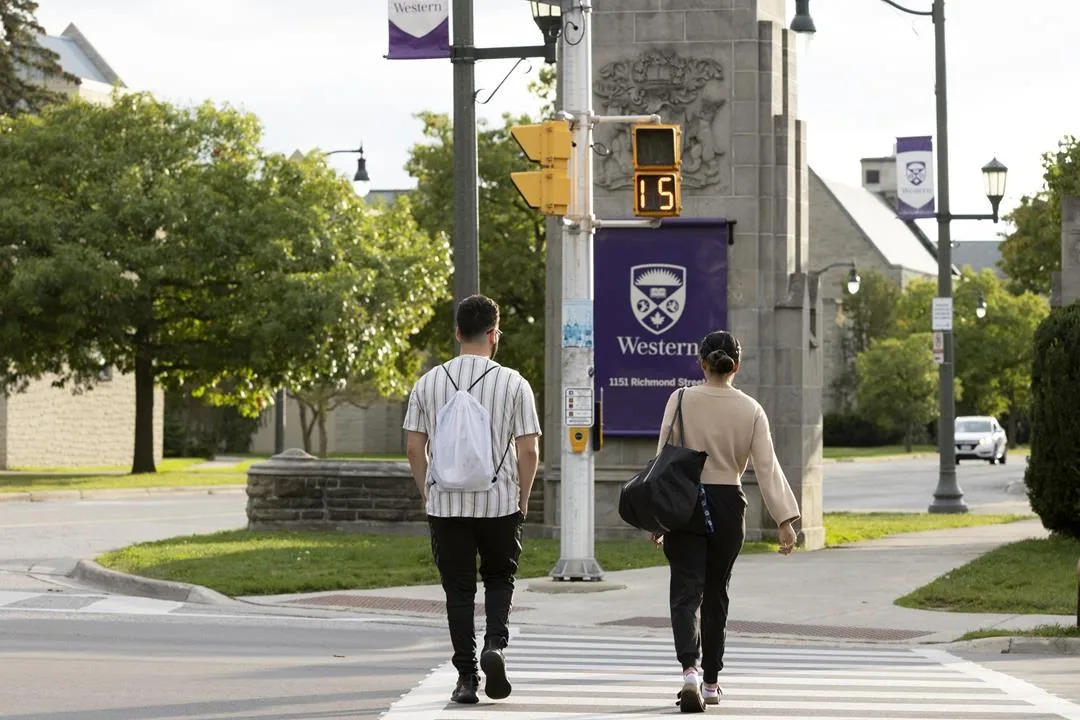
LONDON, Ont. — Western University and picketing graduate teaching assistants have reached a tentative deal after a two-week strike.
The university says the tentative agreement with Public Service Alliance Local 610 will now go before Western's board of governors and members of the union for ratification.
About 2,000 graduate teaching assistants at the London, Ont., university went on strike earlier this month as the spring exam season got underway.
The union had said wage increases, housing support and what they describe as funding clawbacks were among the issues at play.
In a post to social media, Public Service Alliance says the tentative agreement is "positive news" but advised members to stay on the picket line and watch for ratification vote details.
The tentative agreement comes after striking York University academic workers ratified a deal with that post-secondary institution earlier this month after a nearly two-month labour disruption.
This report by The Canadian Press was first published April 26, 2024.
The Canadian Press
N.S. teachers to vote on tentative agreement next month
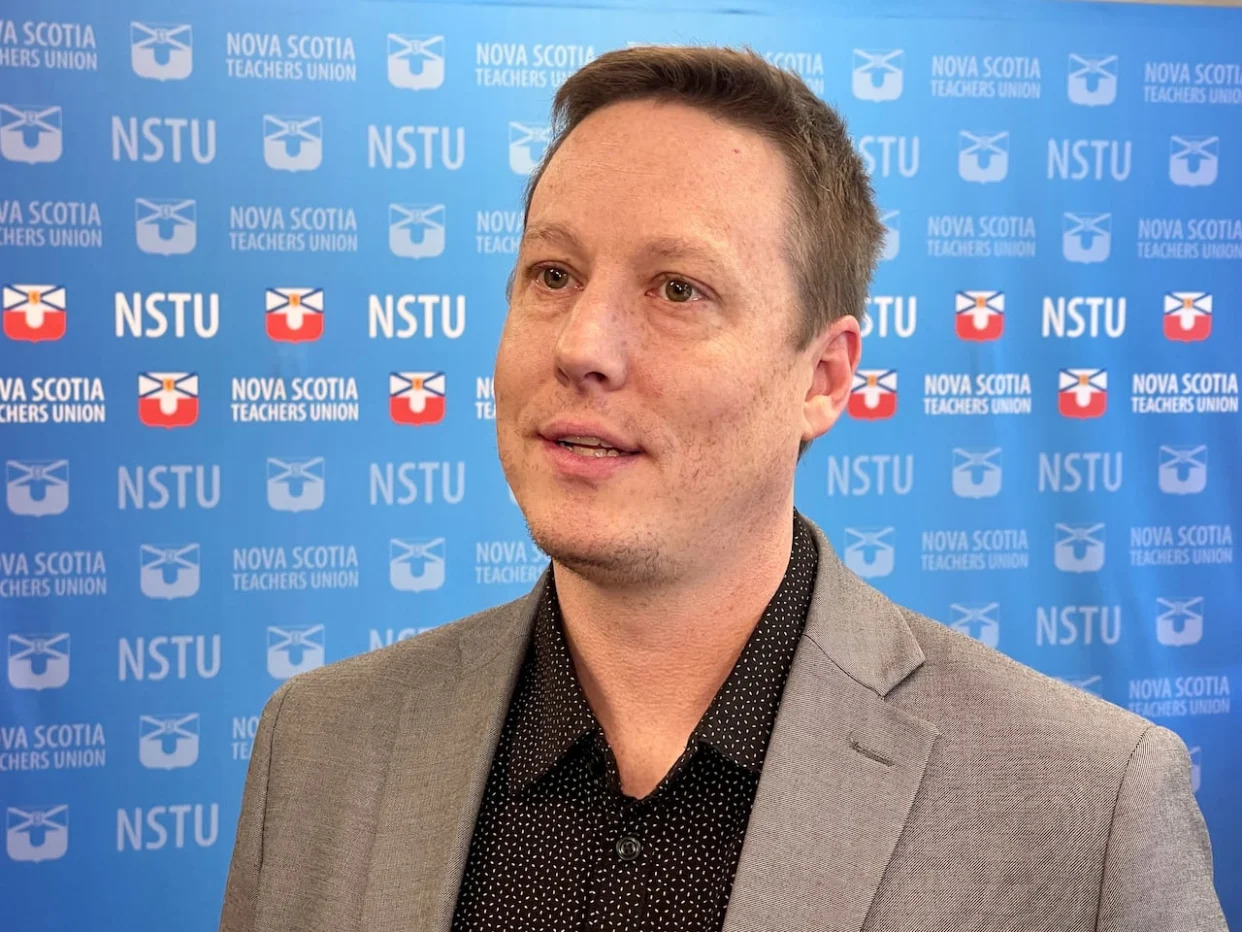
CBC Fri, April 26, 2024 Nova Scotia Teachers Union president Ryan Lutes told members Friday that a ratification vote has been set for May 22. (Robert Short/CBC - image credit)
A tentative contract agreement for Nova Scotia teachers will go to a vote at the end of next month.
Ryan Lutes, president of the Nova Scotia Teachers Union, told members in an email Friday that details of the deal will be shared following a meeting with local presidents and regional representative council chairs on May 1.
Information sessions will follow later next month, with the ratification vote set for May 22.
"I'm very happy the bargaining teams were able to arrive at a tentative agreement that is fair to teachers and ensures improved classroom conditions for students and teachers," Houston said in a statement Friday.
Full details on the agreement won't be released until it's been ratified.
Lutes said last week the agreement includes improvements related to workload, classroom conditions and compensation, although he declined to offer specifics until it's been presented to teachers.
The Nova Scotia Teachers Union represents 10,000 teachers in the province. Their last collective agreement expired in July 2023
Canadian First Nation declares emergency after INEOS chemical release in Ontario
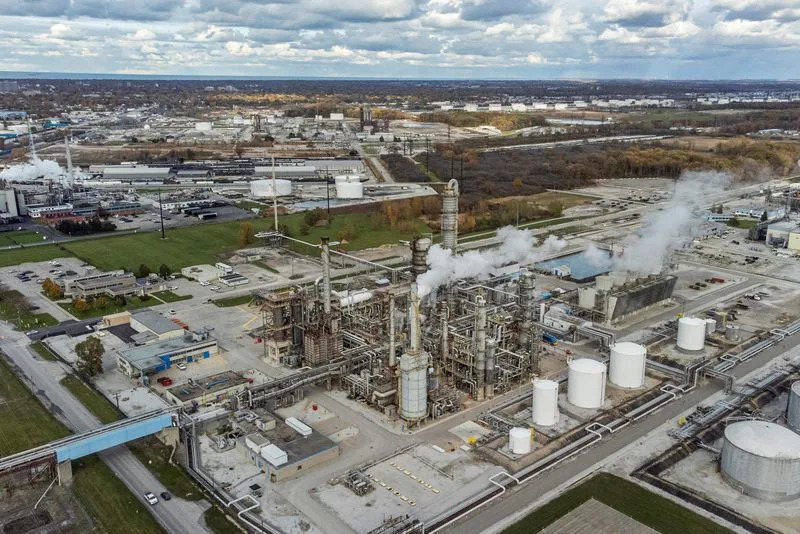
Updated Sat, April 27, 2024 INEOS Styrolution Canada Ltd in Canada's "Chemical Valley" in Sarnia
By Wa Lone
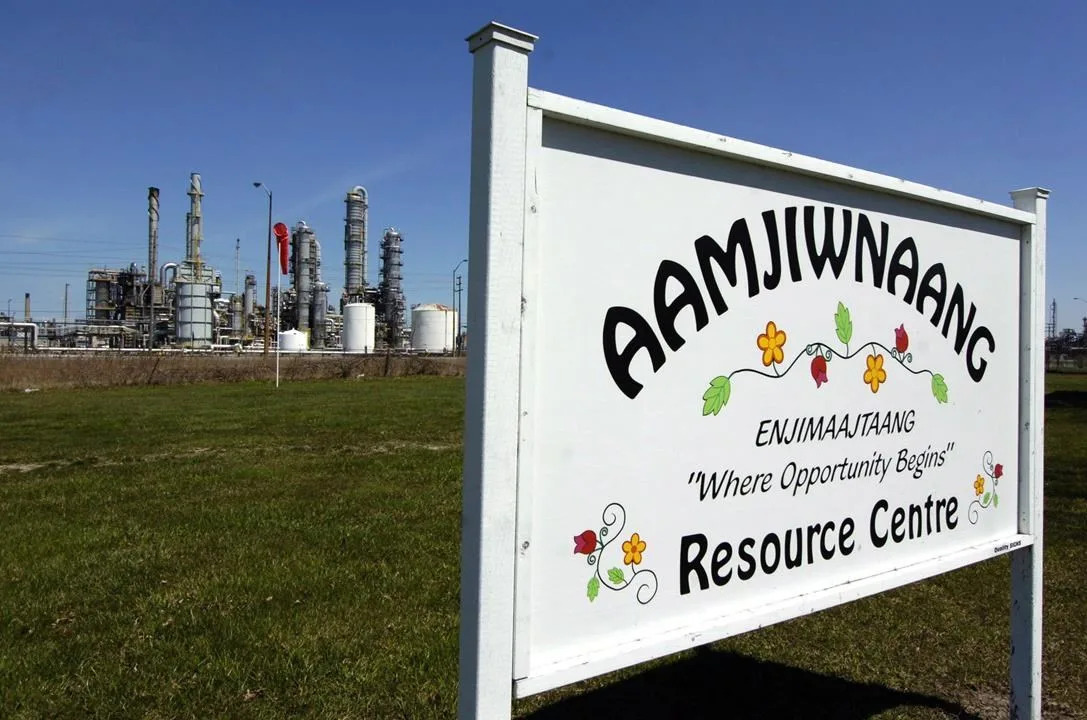
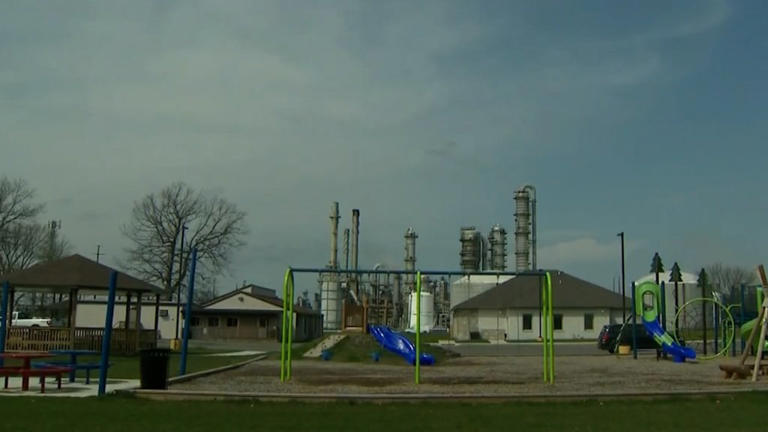
(Reuters) -Canada's Aamjiwnaang First Nation declared a state of emergency due to a chemical release from INEOS Styrolution's plastic manufacturing plant in Sarnia, Ontario, the Indigenous group said.
The Frankfurt-based company, a unit of privately owned INEOS Group was issued a compliance order by the provincial environment ministry on April 18 to investigate the cause of the leak at its Ontario factory, which began earlier in April. The state of emergency will stay in place unless the discharge of benzene drops to acceptable levels, the First Nation said late Thursday.
The company shut down its facility on April 20 and the Ontario government is working with the First Nation to ensure public safety, the provincial environment ministry said.
INEOS confirmed in a statement on Saturday that it had shut down the Sarnia plant for maintenance and to address an unspecified mechanical issue. It did not address the extent or cause of the chemical release.
The plant produces raw material for products used in medical devices, automotive components and toys, according to its website.
Ontario's environment department said it is investigating the elevated benzene emission.
Aamjiwnaang First Nation, which has 1,000 residents, is surrounded by industrial facilities.
The state of emergency will allow the community to acquire more resources to tackle the situation, Aamjiwnaang Chief Christopher Plain said in a Facebook post.
Darren Henry, an Aamjiwnaang First Nation councillor, told Reuters that at least 10 people have visited hospital in the past two weeks with scratchy eyes, breathing troubles and headaches.
The emergency declaration comes as thousands of delegates gathered in Ottawa this week to attend United Nations talks to rein in soaring plastic pollution.
Janelle Nahmabin, an Aamjiwnaang councillor who is attending the talks, said the incident underscores why some countries and environmental groups want to make sure the treaty also addresses how plastics are made.
"I'm hopeful that us being here and this unfortunate example opens the eyes of the decision-makers in the room, as well as all global citizens," she said.
(Reporting by Wa Lone; Additional reporting by Valerie Volcovici; Editing by Diane Craft and Chris Reese) Aamjiwnaang First Nation declares state of emergency over industry benzene leak
The Canadian Press Fri, April 26, 2024
OTTAWA — Aamjiwnaang First Nation is declaring a state of emergency over a benzene leak linked to a neighbouring petrochemical facility.
The community near Sarnia, Ont., which is surrounded by industrial facilities, raised the alarm last week as citizens fell ill and closed its offices to limit exposure to the cancer-causing substance.
Leaders from the First Nation and international environment advocates also wrote to the federal environment minister on Thursday asking him to take immediate steps to ensure the Ineos Styrolution plant remains closed until Aamjiwnaang deems it safe to reopen.
The plant began a shutdown on April 20, two days after a provincial compliance order demanded the company take steps to fix the benzene pollution problem.
The company described the shutdown in one media report as temporary, calling the health and safety of staff and the community "paramount," adding the plant would reopen once a "mechanical issue" was addressed.
Janelle Nahmabin, an elected councillor with the First Nation, says high levels of benzene have thrown the community into peril with no end in sight.
This report by The Canadian Press was first published April 26, 2024.
The Canadian Press
Ontario First Nation declares state of emergency amid skyrocketing benzene levels
Hourly benzene readings as high as 191.3 ug/m3 were detected at noon on April 25, by a real-time air monitor on the First Nation’s northern border. Wind direction indicated the high levels appeared to be connected to a plant shutdown underway at INEOS Styrolution, a chemical manufacturer. The manufacturer is addressing a mechanical issue, it told Global News last week.
The data from the air monitor has not yet been verified. Ontario’s environment ministry has set the annual average limit for benzene at 0.45 ug/m3. The province has not set an hourly limit.
In a press release, Chief Christopher Plain urged any community members who feel unsafe at home “due to the ongoing and excessive discharge” from the facility to contact the band office. An administrator will help members to arrange alternative housing, according to the statement.
On social media late Thursday, many community members expressed concern and confusion as to whether they needed to evacuate.
"While declaring a local state of emergency is a serious measure, Aamjiwnaang is doing so in order to … ensure we have adequate resources at our disposal in the event that further action is required," according to the notice.
Jada Henry, a resident of Aamjiwnaang First Nation, said she helped a friend on the north side of the community evacuate their home tonight.
Her family is also wrestling with the difficult decision to leave the home she shares with her family, which include her young niece and nine-year old nephew.
“My heart is really hurting for my community,” Henry told Global News. “We've considered maybe tomorrow night we should evacuate our home, to keep them safe.”
Global News
Ontario takes action against chemical plant after First Nation members fall ill
Aamjiwnaang residents Jason Plain and Samantha Bressette evacuated to a Best Western hotel in the Village of Point Edward, a roughly 10-minute drive north from their First Nation.
“It feels like an attack on our community," Plain said. "It's sad.”
Bressette said the hotel rooms and hallways are filled with residents from Aamjiwnaang, seeking shelter from the toxic air
While it’s unclear how many residents are staying at the hotel, Bressette said there could be up to 100 people from the First Nation.
“I posted on Facebook asking any of my friends if they would take in me, my boyfriend, and my dog and two cats so we could get out of that air,” she said. “I started freaking out in a way, because that's a high (Benzene) level.”
Global News
Residents of Ontario First Nation sickened after high benzene levels detected
The state of emergency followed a community-wide alert from INEOS earlier on Wednesday, warning that there could be “temporary spikes” in benzene levels during some stages of the plant’s shutdown.
“Ensuring the health and safety of our employees and community is paramount,” the company stated in a community alert issued April 20, adding that operations will resume after it addresses the issue.
The company did not specify whether the shutdown is related to spikes in benzene levels detected last week, reaching 115 ug/m3 (micrograms per cubic metre) on April 16, according to unverified real-time data. Dozens of the First Nation’s residents reported feeling ill, and an unknown number were hospitalized.
Multiple sources within the First Nation told Global News they were not aware of any planned shutdown scheduled for this month.
Before declaring the state of emergency, the First Nation’s leadership issued alerts to its members earlier on Wednesday afternoon to stay away from the northern border. For the past three weeks, air monitors between the First Nation and the INEOS plant have been detecting spikes as high as 150 ug/m3 per hou
Global News
Ontario health review links Sarnia-area air pollution to increased cancer risk
Ontario’s Ministry of the Environment, Conservation and Parks issued a provincial order last Thursday against INEOS, giving the chemical manufacturer a week to create a written plan to address the high levels, two weeks to implement new procedures to warn the public about high levels of these toxic emissions, and less than a month to complete an investigation into the apparent source of the chemical leak.
In the order, the province stated that INEOS is a “primary source” of the high benzene levels.
At the federal level, Environment Canada has an open enforcement file related to the INEOS facility under the Environmental Emergencies regulations, Global News has learned.
David R. MacDonald, the operations manager and interim site director for INEOS Styrolution, stated on April 18 that the company was “carefully reviewing” concerns raised by Aamjiwnaang First Nation regarding benzene readings from the INEOS site.
“The site works closely with the (Ministry of the Environment, Conservation and Parks) to ensure we stay within the prescribed emissions limits,” MacDonald wrote in an email.
INEOS did not immediately respond to Global News’ request for comment on the state of emergency, nor did Ontario’s Ministry of the Environment.
Charge dropped for man accused of flying 'terrorist flag'
CBC Fri, April 26, 2024 Demonstrators march as part of a rally in support of Palestinians in downtown Toronto on Dec. 23, 2023. A hate-motivated charge against a man who allegedly held a flag of the Popular Front for the Liberation of Palestine in a rally in January was dropped on Friday, according to court documents. (Christopher Katsarov/The Canadian Press - image credit)
A charge against a Toronto man accused of flying what police called a "terrorist flag" at a pro-Palestinian demonstration earlier this year has been withdrawn.
A 41-year-old man was charged with publicly inciting hatred after marching down Queen Street W. and Bay Street on Jan. 7, allegedly waving the flag of the Popular Front for the Liberation of Palestine.
The organization is listed as a terrorist group by Public Safety Canada, which says it seeks "the destruction of the State of Israel and the establishment of a communist government in Palestine."
The man's lawyer, Shane Martínez, said the charge was withdrawn by assistant Crown Attorney Patrick Clement because there was "no reasonable prospect of conviction." CBC Toronto reviewed court documents indicating the charge was dropped Friday.
Martínez says the force's case hinged on the flag belonging to a group listed by the federal government as a terrorist group, which in and of itself isn't enough evidence for a conviction.
"It shows that the police acted not on a legal basis but on a political basis," he told CBC Toronto.
"Those who are attending protests in solidarity with Palestine and in solidarity with the people of Gaza come from many different backgrounds. And what we see is a very troubling trend in the city of the police treating these demonstrators in a different manner than they would treat demonstrators in other circumstances."
Police will continue 'enforcing hate crime laws'
In an email statement, Toronto police said it respects and supports decisions by the Crown, but said its ruling "in no way means that police did not have reasonable grounds to lay the charge or that the allegations against this individual were "unfounded.""
"The Toronto Police Service investigates hate crimes and pursues charges where appropriate and where the grounds exist," police said. "We will persist in enforcing hate crime laws and laying charges when justified, ensuring the safety and security of our communities."
Police also provided part of the Crown's reasons for withdrawing the charge, which said there was a lack of reasonable prospect of conviction because it "cannot prove the mental element of this offence, namely the intent to incite hatred against any one or group by displaying this flag nor that it occurred to [the accused] that it might incite hatred."
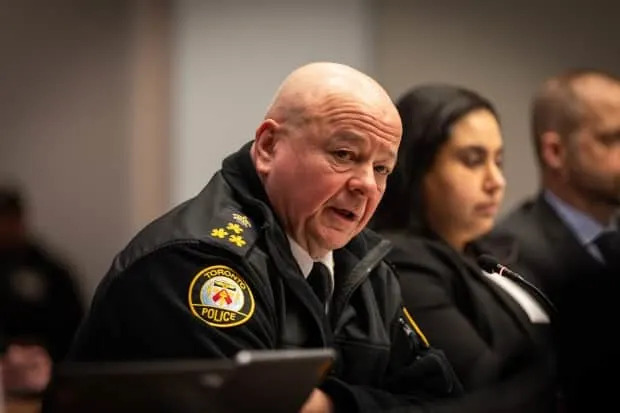
LISTEN | Toronto police Chief Myron Demkiw identifies 'terrorist flag':
Crown warns of possible further arrests
However, Clement did say Torontonians should be "put on notice" that flying this flag, or one of any terrorist or hate group, may "very well be met with further arrests" depending on the context.
"Whether intended or not by the person carrying the flag or symbol, the reality is that these symbols can incite hatred against the group that the particular terrorist organization or hate group has targeted either currently or in the past. In the end, words and symbols can have ugly and illegal consequences."
Toronto police Chief Myron Demkiw previously called the charge "unprecedented," noting the "very high threshold" to charge anyone with a hate propaganda offence. Experts previously told CBC News the incident would be difficult to prosecute as a hate crime.
Toronto Police Service handout
Martínez said his client, a single father, was the subject of "racism and online abuse" as a result of the charge and police not revealing what the flag was right away, leading the public to speculate.
"There was no reasonable prospect of conviction, but [the accused] was left to suffer the consequences," Martínez said.
Martínez said he's working on other cases that have risen out of similar protests. He said moving forward, the dropped charge serves as a reminder that people can't take what police say at "face value."
"We need to make sure that what is given the most attention and the most prioritization is the presumption of innocence," he said.
Ontario NDP will defy keffiyeh ban if Ford doesn't step in: Stiles
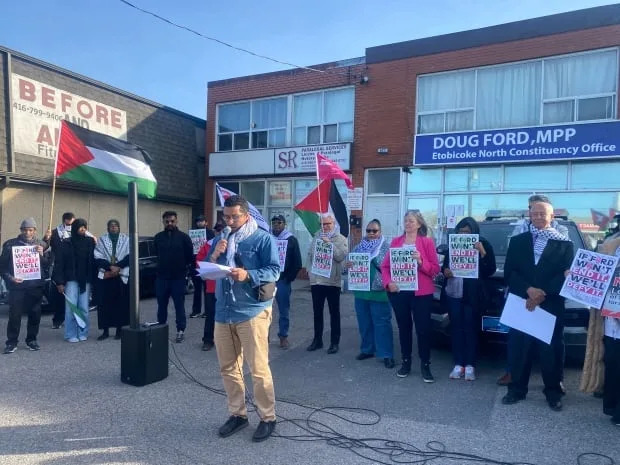
CBC Fri, April 26, 2024 More than 100 people gathered outside the Etobicoke constituency office of Ontario Premier Doug Ford on Friday afternoon to protest the ban on keffiyehs at Queen's Park. (Olivia Bowden/CBC - image credit)
Ontario NDP Leader Marit Stiles has given Premier Doug Ford a deadline to step in and reverse the ban on the wearing of keffiyehs at the provincial legislature or else she says the NDP will defy the ban.
In a video posted on X, formerly Twitter, Stiles said Ford has until May 6 to reverse the ban. That date is when the legislature is scheduled to resume sitting.
"We've been working to reverse the keffiyeh ban inside the walls of Queen's Park, but Doug Ford's MPPs keep blocking us," Stiles said in the video posted on Friday. "So we decided to give the government until May 6 to reverse this unjust rule or expect us and the community to defy the ban."
A keffiyeh is a checkered scarf typically worn in Arab cultures that has come to symbolize solidarity with Palestinian people.
Speaker Ted Arnott banned the scarf in March after a complaint, saying it was being worn to make a political statement, contrary to the rules of the assembly. All four party leaders, including Ford, have called on the speaker to reverse the ban.
Stiles's statement came as more than 100 people gathered outside Ford's constituency office in Etobicoke to express their opposition to the ban. Also on Friday, the Canadian Civil Liberties Association said the speaker's upholding of the ban was "undemocratic," calling the ban "discriminatory towards Arab communities" and a "direct attack on freedom of expression."
Speaker using powers in 'anti-democratic' way: CCLA
On Friday afternoon, demonstrators gathered to express their opposition to the ban, waving Palestinian flags, carrying placards and chanting slogans. Many were wearing keffiyehs.
Ahmad Gaied, a protest organizer and secretary-treasurer of the Ontario Federation of Labour (OFL), said Ford could get his caucus to support a reversal of the ban.
"If Mr. Ford is going to say that he supports the wearing of the keffiyeh, we have some expectations of him, like to talk to his caucus and reverse the ban on the keffiyeh," Gaied said.
OFL President Laura Walton said in a news release that the ban is an attack on Palestinian, Arab and Muslim communities.
"To target a cultural community like this, in 2024, is simply unconscionable," Walton said. "As labour leaders, we won't stand for it. If Ford won't end this racist ban, we'll defy it."
Olivia Bowden/CBC
The Canadian Civil Liberties Association's director of fundamental freedoms, Anaïs Bussières McNicoll, called the ban divisive in a news release on Friday.
"Labeling a culturally significant piece of clothing such as the keffiyeh as a political prop, and banning it as a result, is discriminatory towards Arab communities and is a direct attack on freedom of expression," McNicoll said.
"As made clear by the Legislative Assembly Act, the Speaker is guardian of the rights of the Assembly's members. He should not be using parliamentary privilege as an excuse to adopt orders that undermine some of the most basic human rights of its members and with it, those of any individual who wishes to enter the legislative building," McNicoll continued.
"By upholding his ban despite the unanimous request made by leaders of all political parties in the legislature that it be lifted, the Speaker is exercising his powers in a profoundly anti-democratic way."
Ford could bring motion to end ban, opposition says
According to the opposition, Ford could introduce a government motion to reverse the ban. The NDP has brought forth two unanimous consent motions to end the ban but both have failed.
"It's time for us to come together as one community and fight anti-Palestinian racism, hate and division," Stiles said.
Liberal MPP John Fraser has said the government has to bring the matter to a vote, rather than opposition parties moving unanimous consent motions that will invariably fail because Progressive Conservatives MPPs will vote against them.
"It needs to be brought to a vote on the floor of the legislature," Fraser said. "It can't be one or two or three people who say no. We live in a democracy."
Ford reiterated this week that he does not support the ban, but that it's up to members of Parliament to make their decision,
"It's very divisive, in my opinion ... It's a very sensitive topic for certain people," he said Tuesday.
Camille Gris Roy/Radio Canada
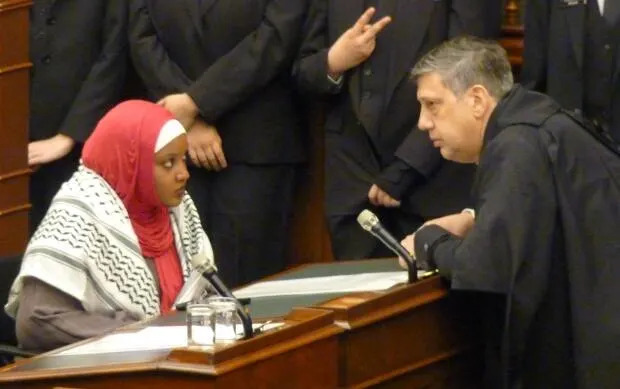
On Thursday, Independent MPP Sarah Jama refused to remove her keffiyeh at Queen's Park and was subsequently banned from returning to the chamber for the rest of the day.
Arnott ordered Jama to leave the chamber, but she refused.
Legislative security did not physically remove her from question period. Arnott said he was not prepared to remove Jama by force.
In an email, Arnott has argued that the wearing of keffiyehs is intended to make an "overt political statement," which is against the legislature's rule that prohibits MPPs from wearing "props, signage or accessories" intended to express a political message.
Jama told reporters in a scrum that the keffiyeh ban is racist and arbitrary and she has pledged to continue wearing the scarf. She said the keffiyeh is a "cultural" piece of clothing in support of Palestinian people.
"This is a political issue, my job is to be political, and so I will continue to wear this garment," Jama said.
‘I think Palestinians deserve an apology’: Canadian educator ‘shocked’ at blatant racism of Ontario legislature's keffiyeh ban What seemed like a 'flash-in-the-pan' issue has turned into a controversial debate that's divided Ontario Premier Doug Ford, the House Speaker, and political parties
It’s been days since a surprise announcement from the speaker of the Legislative Assembly in Ontario banned the keffiyeh, citing it as a political statement. The scarf is a part of the identity of the Palestinian community and has left many in the community reeling over the news.
“I was shocked. It feels obvious that they’re saying to us Palestinians that we’re not welcome. Usually, racism and discrimination are much more subtle,” said Beisan Zubi, a Palestinian-Canadian anti-racism and equity educator.
The keffiyeh symbolizes different parts of Palestinian heritage, from the trade routes through Palestine to the fishnets representing its ties to the sea and the curved lines representing olive trees.
“It’s extremely politically sensitive, obviously. But procedurally, I believe I’ve made the right decision in the sense of past rulings of speakers, precedents and traditions. And in my opinion, having done the research, it appeared to me that the keffiyeh is being worn to make a political statement,” said Arnott.
Is Ontario legislature keffiyeh ban a violation of Charter rights?
Beisan Zubi, Palestinian-Canadian equity and antiracism educator launched https://www.antipalestinianracism.com/ for educational resources on how to combat discrimination against Palestinian people.
Zubi has created educational resources and teaches about anti-Palestinian racism. Zubi said that when she heard the announcement, her first inclination was thinking about her Charter of Rights and Freedoms being violated for discrimination based on ethnic origin.
“I was completely horrified, and the conversations I’ve had with different lawyers, they all feel...confident that this would not pass the legal test in any Ontario Human Rights tribunal,” she said.
I think it needs to be struck down; I think it needs to be apologized for, and I think Palestinians deserve an apology for this.Beisan Zubi, equity and anti-racism educator
MPPs have worn kilts, kirpans, vyshyvankas, and chubas in the legislature, and none of the attire has been considered political symbols in need of suppression.
“There's nothing offensive or untoward about our cultural dress, and we should be allowed to have the same rights as any other Ontarian when it comes to accessing the House of Representatives and observing what happens there,” Zubi said.
She’s not alone in her thoughts. Ontario Premier Doug Ford called for a reversal of the keffiyeh ban in a statement issued Wednesday. Ford said the speaker, and nobody else, made the decision.
"I do not support his decision as it needlessly divides the people of our province. I call on the Speaker to reverse his decision immediately," Ford said.
Speaking at Queen's Park last week, Arnott said he would reconsider the ban with unanimous consent from MPPs.
"If the House believes that the wearing of the keffiyeh in this House, at present, is not a political statement, I would certainly and unequivocally accept the express will of the house with no ifs, ands or buts," he said.
Two motions which required unanimous consent to strike down the ban did not pass. Sources say several Progressive Conservative MPPs voiced their opposition. PC Party MPP Robin Martin, who represents Eglinton–Lawrence, voted against last week's unanimous consent motion.
"We have to follow the rules of the legislature; otherwise, we politicize the entire debate inside the legislature, and that's not what it's about. What it's about is we come there and use our words to persuade, not items of clothing."
When asked if she had defied a directive from the premier, Martin said, "It has nothing to do with the premier; it's a decision of the speaker of the legislative assembly."
Ontario leaders pressure Ford to push overturning of ban
Ontario Liberal Leader Bonnie Crombie and NDP leader Marit Stiles have called for a reversal of the keffiyeh ban. Zubi said she thought everything would be fixed following Doug Ford’s statement, citing his opposition and wanting to reverse the speaker’s ban on the keffiyeh. She was stunned to learn that it wasn’t the case.
“I was honestly hoping it would just be a flash-in-the-pan and it would be over, so now we’re in a position where people have doubled down and continue to polarize this issue and us as a community,” she said.
Zubi, who frequents the legislature, has worn her keffiyeh a handful of times, along with other staffers. Earlier this week, Hamilton Centre MPP Sarah Jama was kicked out of the legislature for defying the ban, and wearing a keffiyeh.
Zubi admitted that she doesn’t accept or believe the ban is legally enforceable.
“I don't accept it, to be quite honest. I think it's unjust. I think that a cultural dress in a society like Canada, where they speak of it as a cultural mosaic, should be allowed,” she said.
'Anti-Palestinian racism has always been a facet of our lives...'
During the 2021 federal election, Zubi ran with the New Democratic Party in Kitchener Centre, where she said she experienced a great deal of xenophobia and anti-Palestinian racism to her face. It didn’t discourage her then, but she said being inundated with hate for celebrating their culture could significantly impact a younger person.
“I see so many young Palestinians right now who are trying to navigate a world that they see hates their identity and hates their culture and hates their community,” she said. “I think Palestinians kind of grow up recognizing that anti-Palestinian racism has always been a facet of our lives in Western society.”
The last keffiyeh manufacturer in Palestine, Hibrawi has had backorders, and is almost always sold out. To Zubi, that, coupled with the fact that she sees more and more keffiyehs daily, clearly indicates that things are changing in society. She added that while some are committed to making Palestinian people seem like the bad guys, it is clear to her that the tides have turned over the past six months.
close-up of a Palestinian headscarf or kufiya. The traditional black and white headscarf of the Arab man (Keffiyeh). The weave forms a diagonal path
“When I wear my keffiyeh, I get looks or comments. What has changed, though, is the solidarity,” she said.
As for the political situation, Zubi noted that in her discussions with other groups, many agreed the ban was a tough pill to swallow — and they would test the strength of the ban in a legal setting.
“I think this is a case in which you cannot put the toothpaste back in the tube. This furthered the silencing, the erasure and racism against Palestinians from Conservatives,” she said.
As for Arnott, Martin, and other PC MPPs who have kept the keffiyeh ban in place, Zubi said she hopes they will come to terms with the harm they are perpetuating and the fear they’re mongering.
If a scarf is causing such consternation, you need to look in the mirror and reflect on why that is, not discriminate against an entire group of people.Beisan Zubi, equity and anti-racism educator
Zubi noted that she intends to wear her keffiyeh to the Ontario legislature the next time she is there.
“I think that there will be pushback, and Palestinians and those who support us will continue wearing their keffiyehs, I know that,” she said.
TECHNOLOGY CAN DETECT WILDFIRES DO HUMANS NEED TO?
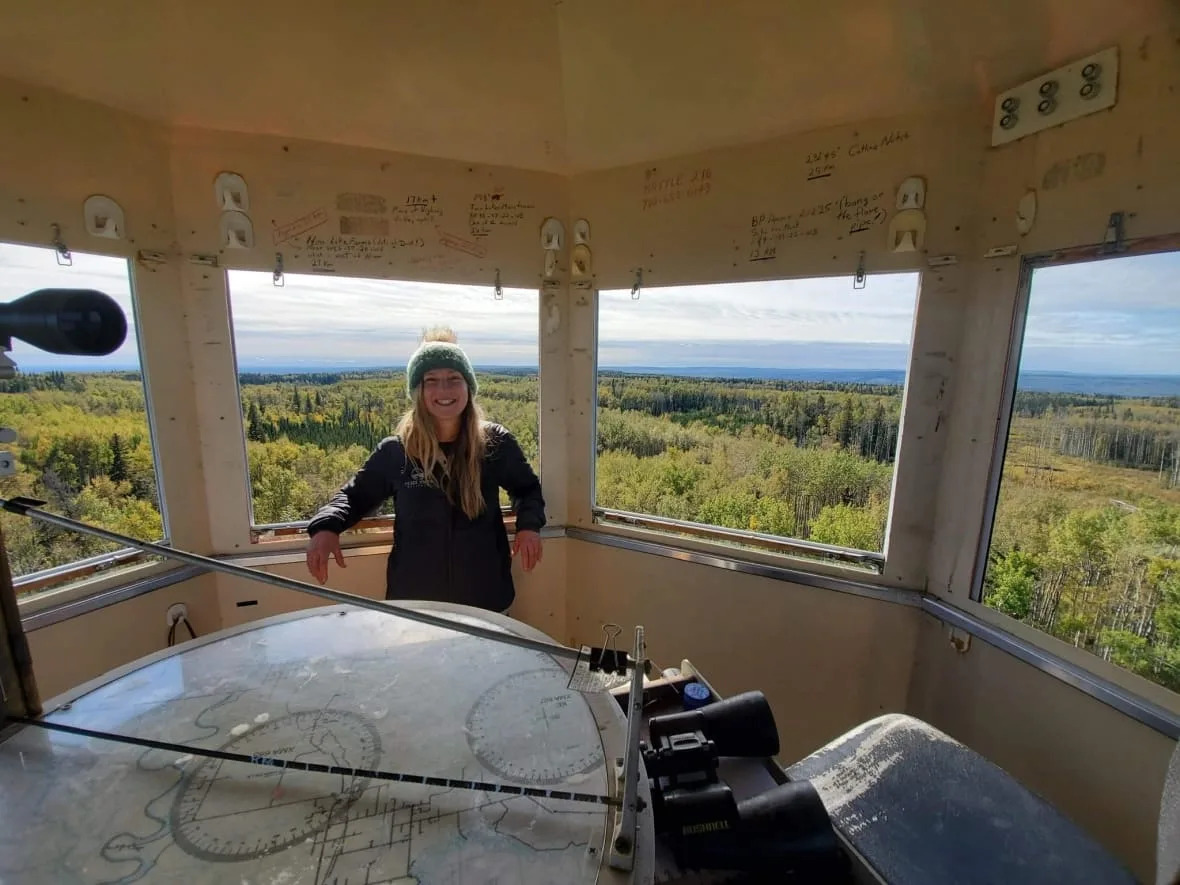
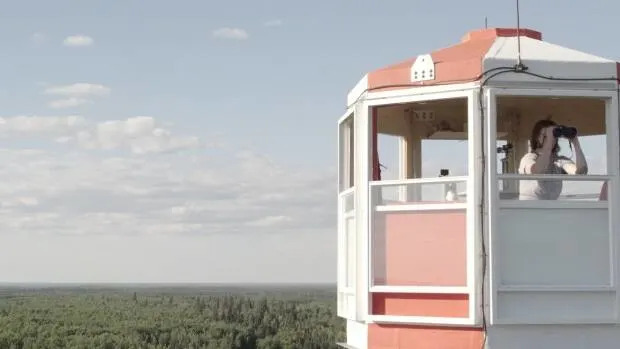
CBC Sat, April 27, 2024 Trina Moyles in her lookout tower. (Submitted by Trina Moyles - image credit)
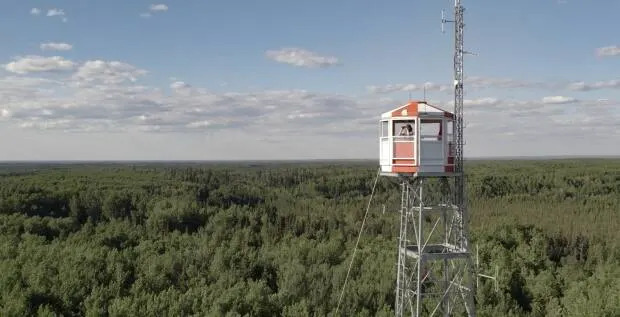
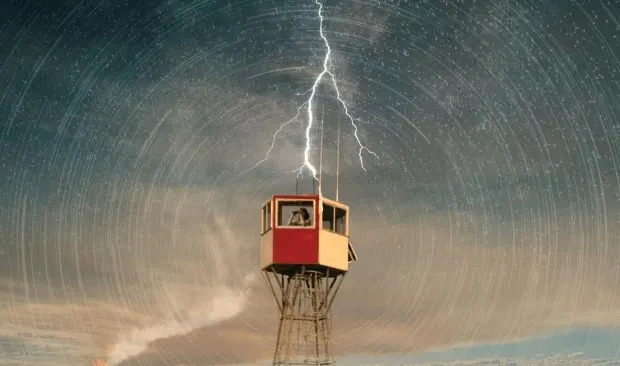
After seven seasons working as a fire lookout — someone who watches for wildfires from a tower — near Peace River, Alta., Trina Moyles has witnessed some of the worst wildfire seasons Canada has seen.
"It's especially stressful when communities are threatened by fires and you can visibly see the wall of fire advancing," said Moyles. She's a journalist, photographer and creative producer who has published a memoir about her experience there, titled Lookout.
"It's a very helpless feeling, but all you can do is watch the fire and the wind conditions and do your job."
Meanwhile, new technologies to combat the blazes earned renewed, widespread coverage. Alberta and New Brunswick's work with AI and the Canadian Space Agency's dedicated fire-monitoring satellite were just a few of the newsworthy plans.
Technological developments have been on Moyles's mind throughout her career.
If it takes humans out of towers, advanced technology like drones could eliminate the risk and cost of the job. But Moyles argues that technology can't entirely replace human lookouts like her, and the focus on the "sexy" tech means they aren't getting the support they need.
"There is a fear [among lookouts] that these jobs are not being invested in or upheld in the way that they should," she said.
Submitted by Tova Krentzman
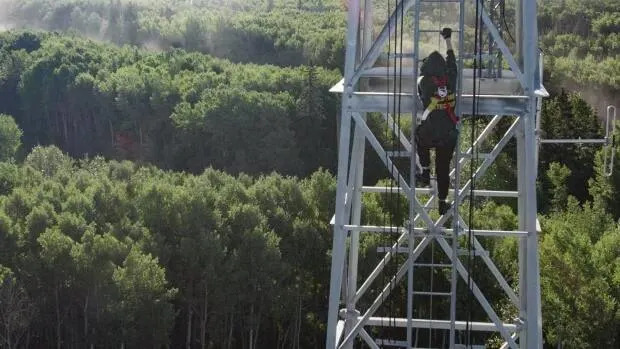
Tova Krentzman is the director of Fire Tower, a documentary premiering at HotDocs on April 29. It follows six lookouts' experiences in this unique line of work. She's been getting to know lookouts since she worked as a cook at a "wildfire fighting camp" in 2020, and she could also see their concern.
Krentzman pointed out that most of Canada doesn't use human lookouts anymore, and "in the world today, AI and technology, that's a big topic in general. I think it's on everyone's mind, right?"
Why do we still hire humans to watch for wildfires?
Fire lookouts are responsible for observing the first inklings of a wildfire and reporting it. They spend four to six months (the length of the wildfire season) living alone in remote places and watching the horizon.
According to Krentzman, Alberta has 100 fire towers manned with lookouts. Yukon has five, the Northwest Territories have three and British Columbia has one.
Between 2006 and 2021, lookouts such as Moyles detected about 30 per cent of the wildfires in Alberta. Ground patrols detected 17 per cent and air patrols detected 11 per cent. The only type that beat lookouts was "unplanned" detection (phone calls from the public, for example), with 42 per cent.
The key to the job is sharp eyes. Moyles said lookouts can detect wildfires when they're only 0.01 hectares in size, and catching them early is "critical" to wildfire response.
The lookout's job doesn't stop once they've reported a fire; they're also instrumental in helping to co-ordinate the response. Lookouts can communicate with other towers to triangulate a location or keep in touch with the fire manager about the weather conditions or fire growth, for example.
Submitted by Tova Krentzman.
After a whole season watching the horizon, you're bound to pick up things that other people wouldn't notice, Moyles explained. Those who come back to the program year after year are known as "lifers."
Krentzman, the director, recalled how one lookout in Yukon was "so serious and diligent about looking for smoke."
"Everyone knows in Dawson City [that] he's out there, and they feel safer because of it," she said.
How drones and sensors compare to humans
Alberta has the most remaining lookouts of any province — about 100 altogether, according to Kretzman.
But Alberta's most recent Wildfire Review (2019) recommended searching for alternatives to the lookout network due to cost and safety concerns.
Drones and sensors detect a wildfire "basically, just like a human," said Youmin Zhang, an engineering professor at Concordia University researching how to use drones for wildfire management.
According to Zhang, drones are an appealing solution because they're mobile, low cost, respond quickly and require no pilot. A human doesn't even need to control them, Zhang said, because AI can be trained to do it automatically.
Moyles appreciates the way that new technology complements a lookout's job. But she said many people make the "assumption that [lookouts] will be out of work" as new technologies come out.
In some cases, even if we wanted to replace all lookouts, the technology isn't good enough yet.
Zhang said there are still some challenges with drones, too. Their battery life is limited, they need better night detection sensors and the AI isn't advanced enough to make them as smart as a person.
However, he said it's developing at a fast pace because people are feeling pressured by the onset of climate change. If that continues, he suspects it will eventually be much better than humans.
Researchers in a different part of the wildfire response system found AI could already compare to the people.
Still, Erickson always anticipated it would operate alongside humans, "not replace humans."
"Human intuition goes into understanding context," Erickson said. "[The AI] lacks a lot of context, but that's partially on purpose. We don't want the programs making all of the decisions."
To Moyles, that's for the best.
"Technology has a role to play, but technology is a tool and, at the end of the day, it's a person who's making the decision how to use that technology," she said. "So we really do need to invest in personnel and people."


 Global News