Monday, July 22, 2024


Advanced HIV Disease Threatens To Wither Away The Gains Made In Fight Against AIDS – OpEd

Photo Credit: Citizen News Service


By 

No one needs to die of AIDS because, thanks to science, lifesaving antiretroviral therapy and viral suppression can gift all people living with HIV a healthy and fulfilling life. But, unfortunately, many a slip between the cup and the lip. “Even one AIDS death is a death too many. Despite having the tools and scientific know-how to avert AIDS deaths, 630,000 people died of AIDS in 2022. Governments, donors, pharmaceutical and medical device manufacturing companies, HIV and health advocates and activists, and all other stakeholders could have done better if we were to avert AIDS-related deaths,” said firebrand health and human rights activist Loon Gangte who leads Delhi Network of People living with HIV (DNP Plus) and International Treatment Preparedness Coalition (ITPC) in South Asian region.


Looming threat of advanced HIV disease

According to the World Health Organization (WHO), people with advanced HIV disease are at a very high risk of opportunistic infections and deaths. About one fifth of people living with HIV admitted to hospital do not survive their hospital admission, and of those who survive, nearly a third die or are readmitted to hospital within a year.

People with advanced HIV disease are dying. It is time to hold governments to account, said Loon. He was speaking at a pre-conference of 25th International AIDS Conference (AIDS 2024) in Munich, Germany.

WHO defines advanced HIV disease as CD4 cell count less than 200cells/mm3 (or WHO stage 3 or 4 in adults and adolescents). All children younger than five years of age are considered to have advanced HIV disease, given their heightened risk of disease progression and mortality.

People with advanced HIV disease are at high risk of death, even after starting antiretroviral therapy; this risk increases with decreasing CD4 cell count. The most common causes of severe illness and death are TB, severe bacterial infections and cryptococcal meningitis.

“20 years ago, we all had advanced HIV disease. My CD4 cell count was 98 before I started taking antiretroviral therapy,” said Loon Gangte. His words are also a reminder that India began the free rollout of antiretroviral therapy as part of government-run programme on 7th April 2004.


“There is some good news as a lot of people have been put on lifesaving antiretroviral therapy and are virally suppressed – and live healthy normal lives,” said Loon. According to Indian government’s Sankalak report 2023, 1.68 million people are on antiretroviral therapy (out of an estimated 2.46 million people living with HIV in India). However, out of every 1000 people who were put on the therapy in India, 107 were reported as lost to follow up in 2022.

“A year ago, the organisation I am a part of (DNP Plus) began an advanced HIV disease outreach project because as an HIV advocacy network, we felt we had been neglecting this population with or at risk of advanced HIV disease. We reached out to more than 1100 people and more than 400 of them had advanced HIV disease. This is why it is so important to focus on advanced HIV disease,” said Loon.

He added: “About 30% of people living with HIV have CD4 counts below 200 (in a project of DNP Plus). These are the people who may develop advanced HIV disease. Why is this still happening? Governments, funders and even networks of people living with HIV have forgotten that advanced HIV disease is still killing people.”

To reduce morbidity and mortality in people with advanced HIV disease, WHO recommends offering a package of interventions including screening, treatment and preventive treatment (prophylaxis) for major opportunistic infections, initiating antiretroviral therapy as soon as possible, and a much robust set of adherence support interventions.

Inaccessible diagnostics is the leading cause of death for people with HIV

WHO’s package for advanced HIV disease intends to widen access to key medicines and diagnostics to manage the most common causes of illness and death. But both, medicines and diagnostics – remain inaccessible for so many in need.

If we do not have the diagnostic tools accessible to people living with HIV in a rights-based, people-centred and gender transformative manner then how will we monitor their viral suppression, or manage life-threatening diseases like TB or cryptococcal meningitis?

“The leading cause of death for people living with HIV is inaccessible diagnostics” rightly said Loon.

“Most of us have forgotten what AIDS looks like (as people with HIV who are receiving treatment and are virally suppressed remain healthy fulfilling lives. No one should develop AIDS or die of AIDS). Many countries hardly do CD4 tests anymore and manufacturers have stopped making the tests because they say they are not profitable enough. Without CD4 tests how will we manage advanced HIV disease?” asks Loon.

“The people who are developing advanced HIV disease (or AHD), have not been able to access treatment and do not have the opportunity to achieve undetectable equals untransmittable (or #UequalsU). Some of them have TB, or drug-resistant forms of TB and some develop cryptococcal meningitis,” he added. U equals U refers to the WHO backed evidence that there is zero risk of HIV transmission from people with HIV whose viral load remains undetectable. So, undetectable equals untransmittable and HIV treatment is prevention.

“Most experts will tell you the leading cause of death for people with advanced HIV disease is TB. They are wrong – the leading cause of death for people living with HIV is inaccessible diagnostics. We have developed very cheap, effective TB diagnostics, such as TB LAM that only cost about US$ 3, but in many countries including my own, we cannot access it,” questions Loon.

Loon is right: it is 9 years now since WHO guidelines recommended TB LAM test as it has better sensitivity for diagnosing TB among people with HIV. Its sensitivity is even greater for those with lower CD4 counts. There should be no delay between the time when scientific breakthroughs happen (like TB LAM test) and by the time they reach the people and are deployed equitably to fully yield the public health gains. TB LAM point-of-care test is based on the detection of mycobacterial lipo-arabino-mannan (LAM) antigen in urine.

We have progressed but major gaps remain

In India, as per government’s Sankalak report, in 2022, a little over 1.2 million viral load tests and 930,000 CD4 tests were done (when number of people on antiretroviral therapy was 1.68 million in 2022).

In India, TB screening for people living with HIV is done verbally for 4 classic symptoms of TB of the lungs. Even in general population, government’s TB prevalence survey shows that over half of people with active TB disease were asymptomatic (and found only when x-ray screening was done and all those found with presumptive TB were offered a confirmatory TB test). So, why are we not finding TB with best of science and technology (such as artificial intelligence-backed ultraportable handheld x-rays that can be used by community health workers to screen people for TB) among those who are a heightened risk of TB (such as people with HIV)? Risk of extrapulmonary TB is also higher which will warrant stronger action to find all TB, treat all TB and prevent all TB among people with HIV.

Cryptococcal meningitis: one of the most horrific ways to die

“As mortal human beings (with or without HIV), we all have to confront the reality that we are going to die eventually, but people with advanced HIV disease often develop cryptococcal meningitis. It is the most horrific ways to die. You cannot see, you cannot hear… It is a very painful disease,” shared Loon.

“We must ask ourselves who we are advocating for. Do our organisations only represent healthy people living with HIV or are we working where we are needed most, for people with advanced HIV disease? We must ensure that everyone benefits from the scientific advances we have access to, but the reality is that we seem to have forgotten these people,” said Loon.

“We will talk about advanced HIV disease at this conference (#AIDS2024) but when we go home, we need to remember that advanced HIV disease is real, and it is killing our friends. We need to advocate for the diagnostics required for advanced HIV disease, cryptococcal meningitis and drug-resistant forms of TB – along with equitable access to latest treatment regimens – and full cascade of care,” summed up Loon.


Shobha Shukla  co-leads the editorial content of CNS (Citizen News Service) and is on the governing board of Global Antimicrobial Resistance Media Alliance (GAMA) and Asia Pacific Media Alliance for Health and Development (APCAT Media).

 

Russia-Africa Cooperation: Current Outlook And Future Perspectives – OpEd

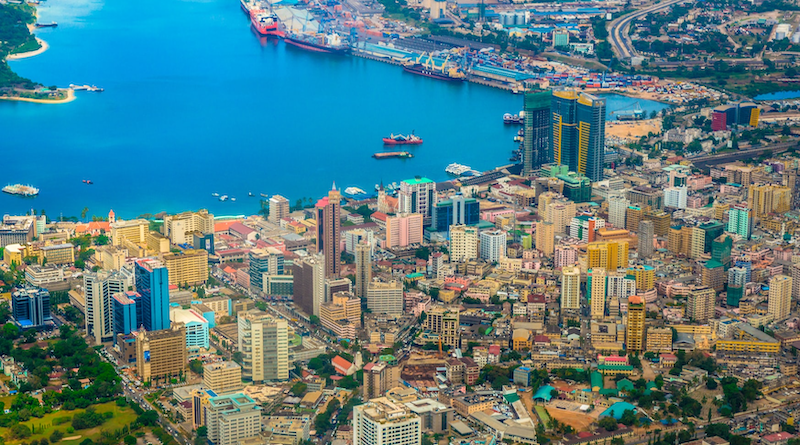
Dar es Salaam, Tanzania. Photo Credit: Peter Mitchell/Unsplash


With a wide scope of its academic and research operations, encompassing the United States through Europe down to entire Asian-Pacific region, the reputable and world-known Russia’s Valdai Club has moved down to Africa, which currently becomes the battle field for key global players and constitutes a significant part of the Global South. Worth to note that Valdai Club has previously wrapped up several aspects of policy reports on Africa and its future position in the global system.


The Valdai Club has intensified and broadened, over the past decade, its analytical studies through meetings, seminars and conferences on the geopolitical changes and, at periodic times, issued policy reports predicting the future. The Valdai Club does these within the context of emerging evolutionary processes of what is often referred to the ‘end of unipolarity’ and the ‘new multipolarity’ of this 21st century.

According to authentic reports, the Valdai Club, with a glimmer of stainless hope, plans to engage well-experienced experts, academic researchers, diplomats, entrepreneurs and regional stakeholders in Dar es Salaam, capital of Tanzania in East Africa. As expected, participants will converge on 24th July 2024 to thoroughly review, at this critical moment for the continent, the template of the multifaceted relations between Russia and Africa, particularly significant issues arising from the late July 2023 summit held in St. Petersburg and also consider some aspect of outstanding joint agreements reached at the first Russia-Africa summit in October 2019.  

Undoubtedly these enthusiastic participants would step forward to take a critical look at how Russia has to leverage with its technology and innovation unto African landscape while focusing on areas such as energy, agriculture, industrialization and infrastructure development. Already African leaders appreciate the fact, as it was during the Soviet times, that Russia is currently training specialists for Africa.

During the discussions, participants would definitely bring fresh perspectives and innovative ideas essential for tackling long-standing issues relating the challenges of economic development across Africa. Notwithstanding, one thing for sure, experts have suggested a number of strategic ways, including a more inclusive approach towards realizing policy issues that could become visible and symbolic achievements in the continent.

With current geopolitical trends at the background, Valdai Club titled its discussion theme: Russia – Africa: Strategy for Cooperation in a Multipolar World. According to confirmed sources, its partners in organizing the conference are the Embassy of the Russian Federation in Tanzania and the Russian House in Dar es Salaam. It is Valdai’s second conference, and would probably take more than 40 experts from Russia and East African countries. The conference will compare positions on the entire cycle of roadblocks and challenges, and bring them to where Russia and African countries can apply well-refined approaches and implement the paths of development in practical politics. 


As the organizers told this article author, this conference would allow experts to prepare preliminary notes and begin planning for the third Russia-Africa summit – 2026, which would be held in Africa. Andrey Bystritskiy, Chairman of the Board of the Foundation for Development and Support of the Valdai Discussion Club, Andrei Avetisyan, Ambassador Extraordinary and Plenipotentiary of the Russian Federation to the United Republic of Tanzania, both will moderate the conference along the following themes: (i) A year after the Russia-Africa summit: political dialogue between Russia and African countries at the present stage; (ii) Cooperation for development: economics and technology; (iii) Russian and African approaches to climate change; and (v) Shared values ​​and cultural cooperation.

An international team of authors has prepared a new Valdai Club report especially for the conference, titled “Prospects and tasks of Russian-African cooperation”, which summarizes the first results of decisions made and agreements signed a year after the Russia-Africa summit in St. Petersburg, as well as a Valdai Paper: “Tanzanian virgin soil for Russian business. Prospects for cooperation in the agricultural sector.” 

Among the foreign guests who will take part in the conference are: Nourhan ElSheikh, Professor of Political Science at Cairo University (Egypt); Dareskedar Taye, leading researcher at the Institute of International Relations of the Ministry of Foreign Affairs of Ethiopia (Ethiopia); Mikatekiso Kubayi, Institute for Pan African Thought and Conversation, Doctoral Candidate, Political Studies, University of Johannesburg (South Africa); Binilit Mahenge, Chairman of the Tanzania Investment Centre  (Tanzania); Yvonne Msemembo, international news editor for ITV/Capital TV at IPP media company  (Tanzania);  Aldin Kai Mutembei, Professor of the University of Dar Es Salaam (Tanzania);  Petro Pesha, Professor of the Dar es Salaam Institute of Technology (Tanzania) and many others.

Participating on the Russian side are: Andrey Avetisyan,  Ambassador Extraordinary and Plenipotentiary of Russia to Tanzania; Irina Abramova, Director of the Institute of African Studies of the Russian Academy of Sciences; Viktoria Panova, Vice-Rector of the National Research University Higher School of Economics, Sherpa of the Russian Federation in the Women’s Twenty (W20); Anastasia Likhacheva, Dean of the Faculty of World Economy and International Politics at the National Research University Higher School of Economics; Yuri Korobov, member of the General Council of the all-Russian public organisation “Business Russia”, president, chairman of the board of directors of JSC “Berega”; Andrey Maslov, Director of the Centre for African Studies at the National Research University Higher School of Economics; Maya Nikolskaya, researcher at the Centre for Middle Eastern and African Studies at MGIMO; Andrey Bystritskiy, Chairman of the Board of the Foundation for Development and Support of the Valdai Discussion Club; Fyodor Lukyanov, research director of the Valdai Discussion Club; Oleg Barabanov,  programme director of the Valdai Discussion Club and others.

In this author’s pragmatic assessment, the Russia-Africa relations have become more substantive, and it is steadfastly strengthening over the past few years. Russia’s efforts to reinforce its positions in Africa creates new opportunities for the continent. The same holds the other way around. In dealing with future perspectives there is the necessity to underscore one strong point here that the multipolar is fast opening new opportunities, and we have to show much enthusiasm and passion to celebrate the death of ‘authoritarianism and exceptionalism’ of the collective west and the United States.

The Valdai Club has also echoed this trend based on on the results of the conference events, with participation of both Russian and foreign experts, since the first Russia-Africa Summit. In a wrap up to this discussion, Russia and Africa are balancing their relationships in the geopolitical power theatre and Valdai Club, among others, has made tremendous impact by shaping aspects of the bilateral relations and the foreign policy. The Valdai Discussion Club, a Russian think tank, was established in 2004. 


Kester Kenn Klomegah is an independent researcher and a policy consultant on African affairs in the Russian Federation and Eurasian Union. He has won media awards for highlighting economic diplomacy in the region with Africa. Currently, Klomegah is a Special Representative for Africa on the Board of the Russian Trade and Economic Development Council. He enjoys travelling and visiting historical places in Eastern and Central Europe. Klomegah is a frequent and passionate contributor to Eurasia Review.

By 

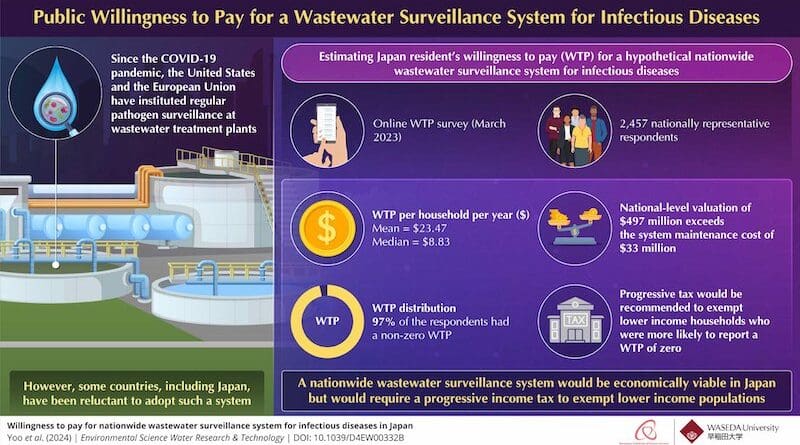
The COVID-19 pandemic motivated several countries to establish wastewater surveillance systems for infectious diseases, but many countries, including Japan, are reluctant to adopt such a system. To provide the much-needed economic information to support this system, researchers conducted a survey-based contingent valuation study to estimate people’s willingness to pay (WTP) for such a system. WTP was found to be around $8.83/year per household, which aggregates to $497 million nationally, enough to easily fund the system.


Globally, the COVID-19 pandemic and the increased likelihood of other such outbreaks in the future warrant the strengthening of epidemic surveillance systems. Among these, continuous wastewater surveillance at wastewater treatment plants is considered more advantageous for understanding the community-level disease dynamics, as compared to clinical surveillance. This is because such a continuous system captures the epidemic status of a larger population without any selection bias and provides higher testing capacity even during an outbreak. Moreover, such a system is relatively inexpensive. Consequently, the USA and most countries in the European Union have established regular wastewater surveillance in their cities after the beginning of COVID-19 pandemic. However, many other countries, including Japan—where less than 20 cities implement wastewater monitoring for epidemic data—are still reluctant to adopt this system nationally.

This raises the question of whether a nationwide wastewater surveillance system for infectious diseases would be economically worthwhile in Japan. While cost-benefit analysis or return over investment (ROI) can help evaluate the system’s economic efficiency, it is also important to understand the population’s willingness to pay (WTP) for such a system in order to determine the budget allocations. Understanding the public’s WTP can also provide much-needed economic information for spearheading future discussions from a policy perspective. Consequently, a survey-based study led by Professor Byung-Kwang Yoo, from the Faculty of Human Sciences at Waseda University and the Graduate School of Health Innovation at Kanagawa University of Human Services, estimated Japan resident’s WTP for a hypothetical nationwide wastewater surveillance system for infectious diseases.

Explaining the rationale further, Prof. Yoo says, “Providing economic information to stakeholders can support the rationale behind implementing or continuing large-scale pathogen surveillance at wastewater treatment plants. For a potential future epidemic with uncertain risks, accurately simulating or predicting the wastewater surveillance system’s ROI tends to be challenging. However, estimating the WTP elicited from taxpayers can overcome this challenge.” The findings of this study were published in Environmental Science: Water Research & Technology. The article was co-authored by Professor Rei Goto from Keio University, Professor Masaaki Kitajima from the University of Tokyo, Dr. Tomoko Sasaki, an independent consultant, and Dr. Sebastian Himmler from the Technical University of Munich.

For their study, the researchers conducted a large-scale online survey with a nationally representative sample of 2,457 people in Japan and gauged their WTP using the contingent valuation method.

The results of the survey suggested that around 97% of the respondents replied with a non-zero WTP. While the mean WTP was estimated to be USD ($) 23.47, the median was $8.83 per household per year for establishing and maintaining a regularized nationwide wastewater surveillance system. Using the median value, the national monetary valuation aggregate was $497 million, which was more than the estimated potential costs for system maintenance ($33 million). In fact, the aggregated WTP would also be able to support broader applications of wastewater surveillance at major international airports in Japan.


Moreover, the survey revealed that the major predictors for WTP were income, education, age, and higher levels of awareness of disease outbreaks. Specifically, lower-income individuals/households were more likely to report a WTP of zero, and people over the age of 47 were more likely to report a higher WTP.

All in all, these results imply that most residents in Japan value a nationwide wastewater surveillance system and are willing to pay an additional annual tax of $8.83 for it, making the system economically justified for the country. To fund such a system and ease the burden off lower-income individuals/households, the researchers recommend a progressive income tax that exempts them from payments.

Concluding with the potential implications of these findings, Prof. Yoo says, “Our findings can inform and encourage Japan and other countries to launch or expand wastewater surveillance systems for infectious diseases. Governments can use our study as a guidance for policy decision and budget allocations for such a system. Moreover, even the USA and the EU can leverage our WTP study to justify the operations of their wastewater surveillance systems to their citizens.”


Wetland Wonders Unfold: Aerial Systems Shed Light On Ecosystem Services

wetland swamp marsh


By 

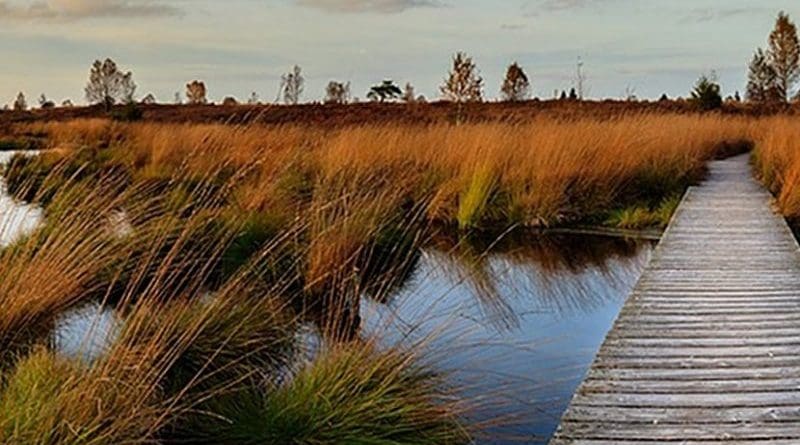
Coastal wetlands, situated at the junction of land and water, are vital ecosystems known for their high productivity. They play a key role in carbon sequestration, storm buffering, and providing habitats for diverse species. However, these critical areas are increasingly threatened by human activities and climate change. The dynamic nature and periodic flooding of wetlands pose significant challenges for traditional monitoring methods. Based on these issues, there is a pressing need for advanced remote sensing techniques to ensure effective conservation and management of these valuable ecosystems.


A team of researchers from Mississippi State University and the University of North Carolina Wilmington conducted a study published in the Journal of Remote Sensing. The study focuses on the precision mapping of coastal wetlands using UASs equipped with light detection and ranging (LiDAR) and multispectral sensors. By surveying eight diverse wetland sites in North Carolina, the research aimed to enhance the accuracy and efficiency of wetland classification and mapping.

Using UASs equipped with LiDAR and multispectral sensors, the researchers collected high-resolution elevation data and detailed vegetation imagery across eight diverse wetland sites in North Carolina. Sophisticated machine learning algorithms enabled highly precise classifications of wetland types. Estuarine intertidal emergent wetlands exhibited the highest classification accuracy due to distinct vegetation structures and spectral signatures. Palustrine forested and scrub-shrub wetlands, with their dense and complex vegetation, presented more challenges. The integration of LiDAR and multispectral data proved scalable, efficient, and cost-effective for wetland mapping. This approach significantly advances conservation efforts and informs policy-making for coastal resilience, highlighting the transformative potential of combining advanced remote sensing technologies in environmental monitoring.

Dr. Narcisa Gabriela Pricope, the lead researcher, stated, “Our integrated approach using UAS-derived LiDAR and multispectral data significantly improves the accuracy of wetland mapping. This method not only enhances our understanding of these critical ecosystems but also supports the development of effective conservation strategies.”

The innovative use of UASs for wetland mapping has far-reaching implications for conservation and policy-making. The precise data collected can inform strategies to protect coastal wetlands, mitigate climate change impacts, and enhance biodiversity. This research highlights the transformative potential of merging advanced remote sensing technologies in environmental monitoring, paving the way for sustainable management of natural habitats.

The end and the beginning of history

By Branko Milanovic - 22 July 2024
GLOBAL GOVERNANCE


Free: Coming of Age at the End of History. Lea Ypi. Penguin. 2021

It is not often that one in the process of learning of, or reading, a book develops three different opinions about the book. I have heard of Lea Ypi’s Free after it became an international bestseller. I was even then somewhat intrigued by the topic, an autobiographical story of growing up in Albania at “the end of history”, given that Albania was somewhat of a black box (because of the isolationist policies followed by its long-time president Enver Hoxha). Yet since I had a uniform negative view about any personal reminiscences coming out of Eastern Europe, I was almost sure not to read the book? Why such mistrust?

The reason is as follows. Ich bien ein Easterner: I do not need to be told how it was. Most of what I would be offered to read in English, was, I though, fake. The personal memoirs that, I thought, had a chance to appeal to Western readers, and particularly to become best-sellers, were such as to reinforce the Western views or prejudices what the life behind the Iron Curtain looked like. It was composed only of political trials, executions of former Bolsheviks, exiles of dissidents, long queues for meat and toilet paper, parading tanks and dour bureaucrats. Everybody wore a fur hat and lived in permafrost. Indeed some of these things were true, but for different countries and different periods. But practically none of them was true in my life experience and I would say for 90% of other people living in Eastern Europe in the 1970-90s. But writing about how life really was for my generation and those a generation younger, what we and others around us really believed and thought, would not get published nor read by the Western audience. The Eastern stories that would become bestsellers would be, I thought, invariably made-up or would deal with minor special cases. I had no interest in them.

But I was also aware of Ypi’s extraordinarily engaging writings on philosophy and current affairs that I read at the same time. It did not take me long to see that her views, her thinking, were not of the kind that the French called la pensée unique and that became so ubiquitous among the intellectuals from the former Communist countries. (I intentionally do not use the term “Soviet bloc” because Albania was not part of the Soviet bloc.)

So when I met Lea Ypi, we had a most pleasant conversation, and when she kindly gifted me Free I was already ready to move a bit away from my first approach. On the way back to the hotel, I sat on the bench in a park in London and randomly opened the book composed of 22 short stories about Ypi’s growing up in Albania, from her pre-school days, under a quasi-Stalinist regime, until the post-transition times of democracy and chaos. I read one of the stories “Brigatista”, which introduced me to the family: father’s solicitous approach towards all those who had less than him, belief in people being essentially good, and poverty resulting from external circumstances over which we have no control; and mother who took a more realistic view that most of the poor, and especially so in a socialist country, are poor because they do not want to work.

As I read the stories in the first part of the book, I thought of Anna Akhmatova’s famous words from Requiem, when she was asked by a woman standing in a queue for delivery of packages to the inmates, and who recognizing Anna, said to her: "Can you describe this?” And Anna’s confident reply: "I can."

Although Albania in the 1980s was a far cry from Moscow of the 1930s (as I already said in the introduction), I thought of Anna’s reply because I found Ypi’s description of the life in an intentionally, and proudly (from the point of view of the rulers) autarkic socialist society both truthful and full of insights that were only hinted at and never forced upon the reader. The children of Ypi’s age were growing up in an orderly country where personal hygiene (checking whether your fingernails were cut and clean every Monday) and adoration of the Party (one does not need to preface it with “Communist”, so omni-present the Party—the only party—was) were instilled in an equal measure. Coca-cola cans were used as signs of relative prosperity, but all houses had TV sets. There was not much to watch on the local one- or two-channels that oscillated between reports of harvests and political speeches, but if the antenna is only slightly readjusted, one can watch Serie A soccer games and Yugoslav basketball, and on most days Italian evening news. The father discusses all international events, celebrates Mandela’s release from jail and Italian leftists—indeed perhaps as a way to not get engaged into Albanian politics, yet it also shows how a dogmatically rigid regime but with internationalist pretensions has awakened among its population interest into the rest of the world. In my many travels, I was often surprised how limited the knowledge of the world (even if you measure it by the simple knowledge of the events taking place elsewhere) was in some countries where access to information was free. Here with controlled access to information and heavy propaganda, Ypi’s family, and we are led to believe those of her schoolmates too, were very interested in the rest of the world, from San Remo to Ronald Reagan.

In describing, through short vignettes, her own ideological education and relating it now to the people who had no experience and no idea of multiple contradictions of life in a Communist country, and then describing the shock of transition to capitalism Ypi is, somewhat counter-intuitively, helped by the specific features of Albania. First, the relative isolation of Albania that followed policies independent of the West since 1945, independent of the Soviet Union since 1956, and finally independent of China since 1978, meant that the abruptness of the transition to capitalism was sharper than elsewhere. The change was more dramatic, from almost full closeness to openness, from everything being done through “collectives” to everything being privatized, from single voice of the Party and “uncle Enver” to the cacophony of parties and “civil society”.

There is an additional element that made Albania unique. It is, with Cuba (and to some extent) Vietnam, the only county that experienced a genuine domestic communist revolution and did not contain different ethnicities. This turned out very important in retrospect. The domestic nature of the revolution made the explanation of communism and everything that went badly with it as being solely due to the Soviet occupation (while totally ignoring the domestic bases of communist regimes), impossible in the Albanian case. Similarly, the orgy of accusations and recriminations, and wars, that followed the dissolutions of the Soviet Union and Yugoslavia was also impossible because of ethnic homogeneity of Albania. One thus had to look at communism with much greater objectivity and with clear eyes. All the negatives could not be, as in most of Central Europe, blamed on the Soviet Union, which has by now morphed into Russia; nor could they be blamed by Ukrainians on Russians, by Russians on non-Russian Bolsheviks, by Serbs on Tito, by Croats on Serbs and so on, forever. In the case of Albania, communism was Albanian-produced, and the exit from communism was also Albanian-produced.

The exit begins slowly: demonstrators (or were they just “hooligans” trying to destroy “people’s property”?) fill the streets in the far-away capital. The news spreads slowly and unevenly. Then things appears to peter out. It is not clear if, in the school or at home, the “protests” should be mentioned at all. For if protests are mentioned, one must define himself or herself to be either in favor or against. Perhaps it is better to ignore them. One evening Ypi surprises her parents (who thought she has gone to bed) listening, at very low volume, with worried—or perhaps hopeful, who knows?-- faces, about the news of spreading protests. Even when the multi-party elections take place, and Socialist party (the renamed Communists) wins, the outcome is not assured. We witness all of this not by following the politicians, dissidents, or through historical description of events, but through how these events are seen at the family’s kitchen table and in the classroom. Because this is how Ypi, a twelve or thirteen year-old, somewhat of a Tom-boy, girl lives them.

Then the chaos takes over. Ideologically, schools make a 180-degree reversal, attendance plummets, everybody wants to leave the country (as one of the vignettes is entitled), the drug dealer, the prostitute, the human trafficker, the money-launderer, the usurious lender become normal, moreover highly desirable occupations because they pay the most. The world simply does a volte-face. Family conversations become open: a cousin who is released from jail is no longer refereed to as having just “graduated”, or those who were killed in camps as having given up on their education—the entire language of concealing the truth, of which particularly the parents are aware when speaking in front of their children who do not know what can and what cannot be said in public—flies out of window. Many old stories of which Ypi, and we too as we read the book, are unaware suddenly come out of nowhere. The book has an almost Agatha Christie-like plot that we slowly discover, first in pieces which may or may not be true, to find out more as the vignettes succeed each other, and to never find out the full denouement.


As we near the end, with thousands of people who without knowing where they are going, board the ships that crisscross the Adriatic, some of them sinking in the sea, with Western nations introducing the cordon sanitaire upon the people whose former government they have bitterly criticized for not letting people leave the country, and NATO sending a military mission to stop the looting, I moved to the third level of thinking about the book. Neighborhood solidarity in helping each other with hard-to-obtain goods evaporates; money which was much less important than food coupons obtained at one’s workplace, becomes the king; attending the afternoon mathematics club makes no longer any sense when one can jump on a ship, travel to Italy and smuggle cigarettes and cocaine. I then realized that this is not an autobiographical book. Indeed, it is based on one person’s life and experience, but at that points it transcends it. It becomes a book about the human condition. Communism and capitalism, East and West are just the settings, the theater coulisses where the drama takes place.

Ypi’s book has by then left the plane of relating the events and moved to become a work of fiction. In the same way that we know that Proust’s À la recherche was almost entirely autobiographical, but we treat it as a work of art, we should, I came to think, treat Ypi’s as a work of art. Herself, her family, her friends, have by now become characters in a novel, they have moved out of a reality to a different, higher, plane. We know that Macondo is not a real place, existing under such a name, even if it was based on many similar places that did exist. Here too Albania, the transition, Ypi’s family are all metaphors. They are both true, and they transcend what they were in reality.

If I meet Lea in person again, I had firmly decided to not ask her what has become of characters in her book (her grandmother to whom the book is dedicated, family, her first platonic love): I have decided we should talk of them as how we talk of what might have reasonably happened to Elizabeth Bennett after she married Mr Darcy, or whether Rastignac conquered Paris. And perhaps we can speculate on what might have happened to the young woman who in the late 1990s travelled with thousands of refugees across the Adriatic to Southern Italy...


This first appeared on Branko's blog.
Why Nigerians are praying for the success of a new oil refinery

By Mansur Abubakar, BBC News, Kano, Nigeria
Getty Images
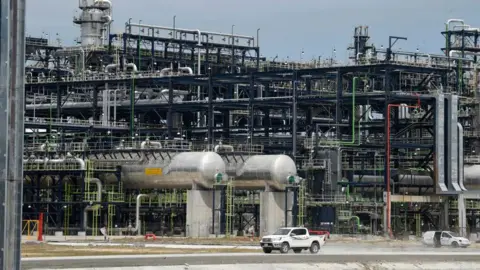
The vast Dangote Petroleum Refinery is almost the size of 4,000 football pitches

A prayer was held a few months ago in Kano, a very religious city in northern Nigeria.

It was organised to pray for the success of a huge new Nigerian oil refinery that next month is due to start producing petrol for the first time.

Praying for such an industrial facility might seem incongruous, but many Nigerians are hopeful that the Dangote Petroleum Refinery will lead to both a big increase in the availability of petrol, and a subsequent drop in prices.

The $19bn (£15bn) refinery, based along the coast from Nigeria’s commercial hub Lagos, in the south of the country, is the size of almost 4,000 football pitches.

Its construction began back in 2016, and it started production of diesel and an aviation fuel in January of this year. Petrol is now set to follow.

The hope is that the facility will end Nigeria’s dependence on imports of these fuels.

While Nigeria is Africa’s largest producer of crude oil, and the world’s 15th biggest, none of its existing government-owned refineries are operational.

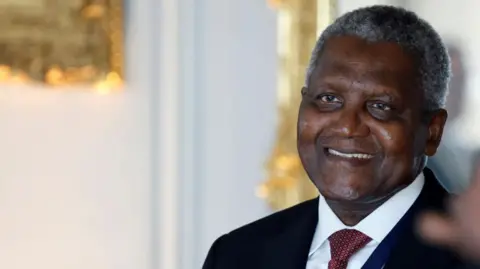
The privately-owned Dangote refinery has been built by Africa’s richest man, Aliko Dangote.

Born in Kano, the 67-year-old has a net worth of $12.6bn (£9.7bn), according to Forbes magazine.

Via his company, Dangote Group, he made his fortune in cement and sugar before taking on what many say is his biggest challenge yet when he launched the refinery.


Aliko Dangote made his fortune in cement and sugar

The recent prayer session in Kano was organised by shop owner Lado Danladi, and held at a nearby mosque. He was joined by some of his neighbouring shopkeepers.

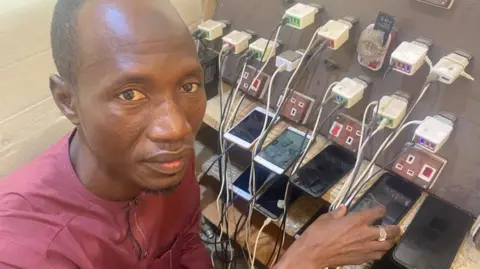
“I run a small phone charging shop, and every day I buy $5 petrol for my small generator as there’s no stable electricity,” says Mr Danladi. “But since I heard about the Dangote Refinery I have been praying for its success.

“I can't estimate the hours I have lost trying to get fuel in the past during shortages, so hopefully the refinery will end the suffering, and help small businesses like mine get cheap and easy fuel.”

Mr Danladi’s fellow shop owners, a meat seller, and a drinks vendor all have similar complaints of buying “expensive” fuel to power generators.

For decades Nigerians enjoyed subsidised petrol prices. But last year incoming President Bola Tinubu stopped the subsidies, saying that they were no longer affordable. This led to prices surging by as much as four-fold.

Then this spring and early summer, shortages of petrol led to queues outside petrol stations, and the state-owned Nigerian National Petroleum Company warned against people panic buying.

The situation is not helped by Nigeria's corruption problem. According to the closely-watched global corruption index, from non-governmental organisation Transparency International, Nigeria ranks 145th out of 180 countries.

The higher the placing, the more corrupt a country is deemed to be.


Lado Danladi wants to see petrol prices fall

The Dangote refinery will have the capacity to produce 650,000 barrels of fuel per day once fully operational.

Devakumar Edwin, vice president of Dangote Group says the refinery will be producing 500,000 before the end of August, which will exceed the country’s 480,000 barrels per day usage. The aim is to export the surplus.

Abubakar Maigandi, the president of Nigeria’s independent petrol marketers, who has been in the oil business for 30 years, says the Dangote refinery will solve their longstanding logistics problem.

“I foresee Dangote refinery solving the logistics issue we face at the moment trying to get hold of imported petrol for consumers, since this will be refined here in Nigeria,” he says.

“This will also mean cheaper petrol for Nigerians since importation costs have been removed. My hope is also that Dangote refinery deal with us directly without middlemen who will complicate things.”

Nigerian public affairs analyst Sani Bala says the Dangote refinery needs to “crash the price of petrol” for its impact to be felt across the country.

He adds: “Personally, I also think we shouldn’t be solely relying on the Dangote refinery for our energy needs. What if something happens to it? We go back to drawing board. There should be another working refinery.

“Also, as an environmental activist it also concerns me the level of emissions, we’ll be seeing from this mammoth oil refining facility not forgetting the impact on those communities nearby.”

Speaking about the impact of the facility on local people, a dialogue was held to discuss concerns last year.

Youth leader Arepo Azeez says there are numerous issues, such as “vibrations” from the refinery. "We also worry over possible accidental discharges of crude oil into the waters, incidences of mishandling of equipment, which will result in the spilling of crude oil, and even refined products when the refinery fully comes on stream."

Yet for Mr Lado back in Kano, he is really looking forward to the prospect of much cheaper petrol.

Additional reporting by Nkechi Ogbonna.