Thursday, October 03, 2024

ANTI-HUMAN RIGHTS

Georgian parliament speaker signs anti-LGBTQ+ bill into law after president refuses

Alim Kheraj
Thu 3 October 2024 

An anti-LGBTQ+ protest in the Georgian capital Tbilisi in 2021 
(Image: Wikimedia Commons)


The speaker of the Georgian parliament has today (3 October) signed a controversial anti-LGBTQ+ bill into law only 24 hours after the country’s president refused to do so.

The so-called ‘Protection of Family Values and Minors’ bill, which was first introduced by the governing Georgian Dream party and approved by parliament last month, bans marriage equality, LGBTQ+ adoption, the depiction and promotion of LGBTQ+ relationships and people in the media, gender affirming care, and the ability for individuals to change their gender identity on official documents.

Yesterday (2 October), Georgian President Salome Zourabichvili, whose role is mostly ceremonial, decided not to sign the bill into legislation, with a spokesperson telling the news agency AFP that she had returned it to parliament, where the speaker then signed it into law.
“The law…does not reflect current, temporary, changing ideas and ideologies” – Shalva Papuashvili, Georgian parliament speaker


According to Aljazeera, the Georgian Prime Minister, Irakli Kobakhidze, told local media that Zourabichvili had failed families and children.

He said: “The fact that Salome Zourabichvili did not stand on the side of protecting traditional and family values, not on the side of protecting the interests of minors, but on the side of pseudo-liberal propaganda, once again shows what political choice this person made and what forces [she] is governed by.”

In a post on Facebook, Shalva Papuashvili, the parliament speaker, also criticised Zourabichvili’s decision, adding: “The law, which I am signing, does not reflect current, temporary, changing ideas and ideologies, but is based on common sense, historical experience, and centuries-old Christian, Georgian and European values.”

“This law protects the rights of all citizens, including freedom of expression, so that the rights of others are not violated, which is the essence and idea of ​​true democracy,” he wrote.


The new law, which will come into play in 60 days, has been compared to similar legislation enacted in Russia, with LGBTQ+ activist groups arguing that it further marginalises the country’s queer community.

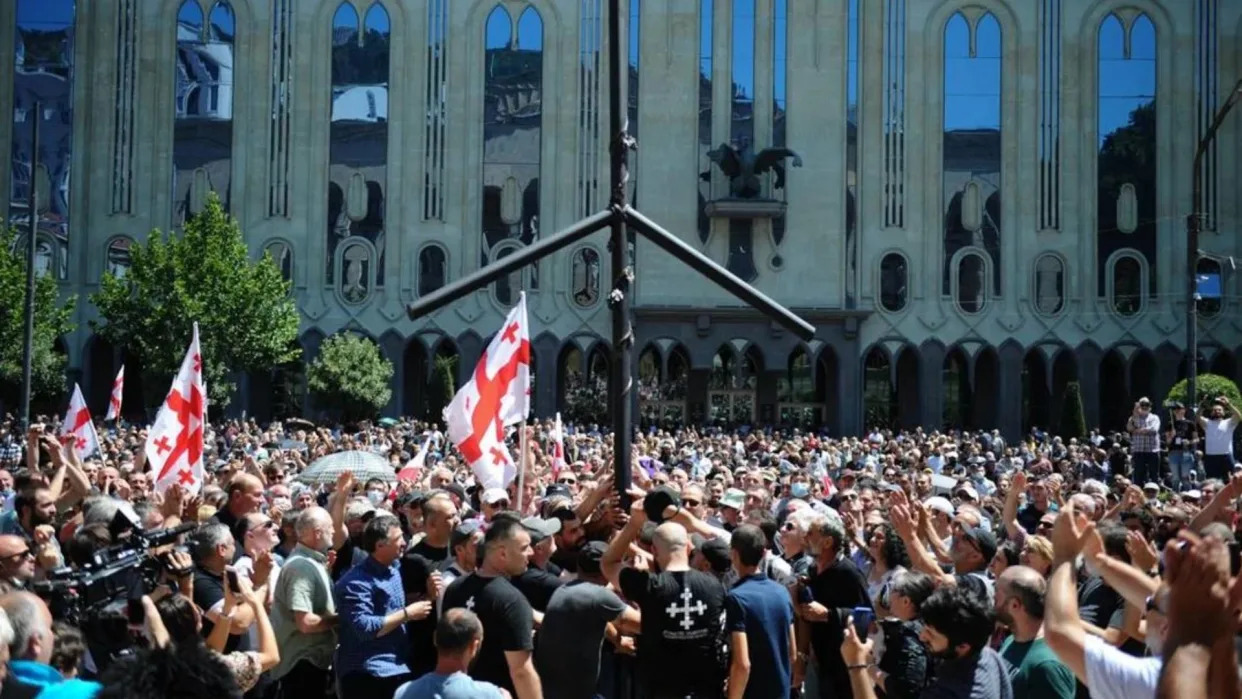
It comes amid rising violence against the country’s LGBTQ+ community. In 2021, a Pride parade in the capital Tbilisi was cancelled following a targeted attack against organisers, activists and journalists. A similar violent anti-LGBTQ+ protest took place during the city’s Pride event last year.

Likewise, the day after the bill was initially approved by the Georgian parliament, a 37-year-old trans woman, Kesaria Abramidze, was murdered in her home.

In a statement released after Abramidze’s murder, the Social Justice Center, a Tbilisi-based human rights group, said: “There is a direct correlation between the use of hate speech in politics and hate crimes.”

Image: Wikimedia Commons/Silveresc

The post Georgian parliament speaker signs anti-LGBTQ+ bill into law after president refuses appeared first on Attitude.


Georgian parliament approves anti-LGBTQ+ law despite president’s refusal to sign

Alice Linehan
Thu 3 October 2024 a

This article is about a new Georgian anti-LGBTQ+ bill. The image is of the Georgian flag. Dmitry Limonov via Pexels

Georgian parliamentary speaker, Shalva Papuashvili, has signed an anti-LGBTQ+ bill into law after the country’s president refused to do so. The Russian-style legislation includes bans on same-sex marriage, gender-affirming care and depictions of LGBTQ+ identities in media, while also providing a legal basis for authorities to outlaw Pride events and displays of the rainbow flag.

In a Facebook post published on Thursday, October 3, Papuashvili confirmed that he signed the bill, saying that it does “not reflect current, temporary, changing ideas and ideologies, but is based on common sense, historical experience and centuries-old Christian, Georgian and European values.” He also claimed that the law “protects the rights of all citizens, including freedom of expression, so that the rights of others are not violated, which is the essence and idea of true democracy.”

Meanwhile, speaking about the legislation last month, Director of Tbilisi Pride Tamara Jakeli told Reuters it “is the most terrible thing to happen to the LGBT community”.


She added: “We will most likely have to shut down. There is no way for us to continue functioning.”

The bill was first introduced by the ruling party, Georgian Dream, earlier this year and passed by parliament on September 17 with 84 out of 150 members voting in favour. It was then sent to President Salome Zourabichvili for approval, but as someone who is critical of the ruling party and has a pro-EU stance, she refused to sign it. Thus, the bill was returned to parliament, where the ruling party and its allies have enough seats to override her, as the president’s powers are mostly ceremonial.

The passing of this anti-LGBTQ+ law comes ahead of October’s elections, where Georgian Dream is seeking a fourth term in office. The party’s campaign has heavily focused on cracking down on LGBTQ+ rights in a supposed effort to protect “traditional values”, a strategy which many suspect aims to increase support among conservative voters.

It is also reminiscent of methods used in Russia, as Georgian Dream continues to deepen its ties with the Kremlin. Earlier this year, an anti-NGO law on “foreign agents” was passed, triggering mass anti-government protests around the country.

The post Georgian parliament approves anti-LGBTQ+ law despite president’s refusal to sign appeared first on GCN.

Georgian president refuses to sign anti-LGBTQ+ bill into law

Beatrice Fanucci
Wed 2 October 2024 

Georgian president Salome Zourabichvili has reportedly refused to sign off on an anti-LGBTQ+ bill that is reminiscent of measures adopted in neighbouring Russia.

Passed in Parliament on September 17 with 84 out of 150 votes in favour, the bill includes bans on same-sex marriage, adoption by same-sex couples, gender-affirming care and depictions of LGBTQ+ identities in the media. It also provides a legal basis for authorities to outlaw Pride events and displays of the rainbow flag.

The anti-LGBTQ+ bill was introduced by the ruling party Georgian Dream earlier this year ahead of October’s elections, where the party is seeking a fourth term in office. Activists have stated that the proposed legislation aims to boost their conservative support.

The ruling party’s election campaign has heavily focused on cracking down on LGBTQ+ rights in a supposed effort to protect “traditional values”, a strategy reminiscent of the anti-LGBTQ+ rhetoric employed by the Kremlin. In recent months, Georgian Dream has deepened its ties with the Kremlin, also passing an anti-NGO law on “foreign agents” earlier this year, which triggered mass anti-government protests around the country.

To become law, the anti-LGBTQ+ bill needs to be signed by the President of Georgia, who has been a vocal critic of Georgian Dream and has a pro-EU stance. As reported on Wednesday, October 2, President Zourabichvili has declined to sign the bill.

“The president did not sign the bill into law. Nor did she veto the measure. She just refused to sign the bill and returned it to parliament. Our laws provide for such a procedure,” a presidential administration official told TASS.

However, the ruling party and its allies have enough seats in Parliament to override her, and the President’s powers are mostly ceremonial. It is thus expected that the bill will be signed into law by parliament’s speaker and its co-sponsor Shalva Papuashvili.

Georgia is currently a candidate for EU membership, but Brussels has repeatedly warned the nation that such legislation demonstrates a lack of commitment to its stated ambition of joining the Union. Commenting on the anti-LGBTQ+ bill last month, the EU stated that it “undermines fundamental rights of Georgians and risks further stigmatisation and discrimination of part of the population”.

The statement added that adopting such measures would have “important repercussions” on Georgia’s European integration path and “place further strain on EU-Georgia relations.”

The post Georgian president refuses to sign anti-LGBTQ+ bill into law appeared first on GCN.


EU is taking Hungary to court. It says a law targeting foreign influence really targets basic rights

Associated Press
Thu, October 3, 2024 

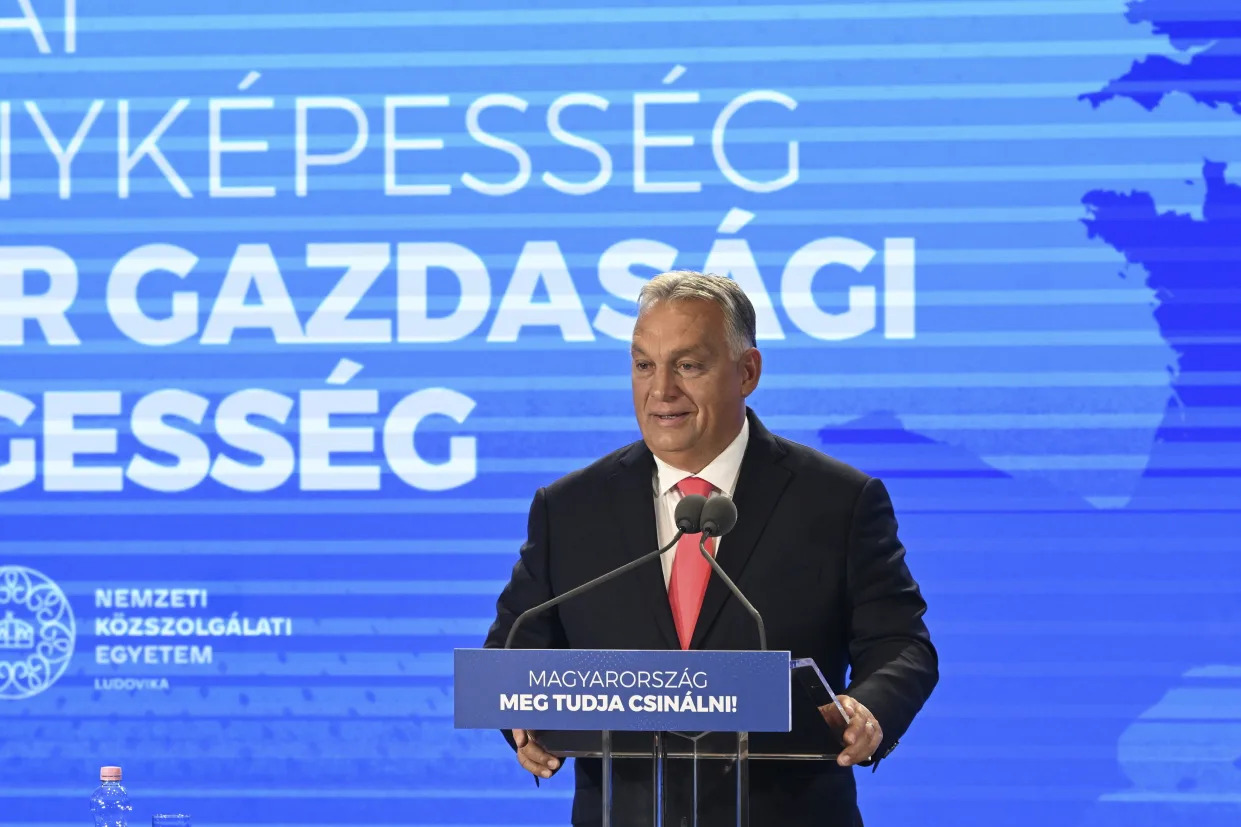
Hungarian Prime Minister Viktor Orban speaks during a conference at the Ludovika University of Public Service, in Budapest, Hungary, Wednesday, Sept. 25, 2024. (Szilard Koszticsak/MTI via AP)


BRUSSELS (AP) — The European Union announced on Thursday that it is taking Hungary’s right-wing government to court over laws that could allow the authorities to investigate and prosecute people accused of undermining the country’s sovereignty.

The “ sovereignty protection act ″ took effect in December. It created a government authority with the power to gather information on any groups or individuals that benefit from foreign funding and influence public debate. Hungary’s secret services can assist in the authority’s investigations.

Hungarian Prime Minister Viktor Orbán’s government maintains that the act is designed to prevent political parties from receiving funding from abroad for election campaigns.


But opponents have compared it to Russia’s “foreign agent” law, which considers anyone receiving financial support from abroad, including journalists and advocacy groups, to be an agent of another country.

They believe the broad language of the Hungarian law can be used to arbitrarily target government critics including non-governmental organizations and journalists. Anyone convicted of a violation can face prison terms of up to three years.

The EU’s executive branch, the European Commission, said that it was referring Hungary to the Court of Justice because it had failed to address concerns over likely breaches of the bloc’s fundamental rights, including the right to privacy and to freedom of expression and association.

In June, the authority tasked with defending against foreign influence launched an investigation into the Hungarian branch of anti-corruption organization Transparency International. Media have also been targeted.

The commission said the sovereignty protection office has such broad powers that it can “intervene in an intrusive manner in investigations.” Its probes and findings must be given extensive publicity, which is likely to have “a stigmatizing effect” on those targeted.

“The broad powers and discretion of the office will affect a wide range of persons and entities, including civil society organizations, media outlets and journalists in a disproportionate manner,” it said.

The court action is just the latest salvo in a long-running battle between Brussels and Budapest.

In 2022, the commission blocked substantial amounts of money out of concern that democratic backsliding by Orbán’s government could put the bloc’s common budget at risk.

Hungary currently holds the EU’s rotating presidency, until the end of December. Right at the start of its term, Orbán visited Moscow to discuss prospects for a peaceful settlement in Ukraine with Russian President Vladimir Putin, deeply angering his EU partners.

Many countries are protesting by only sending lower-level officials to meetings held in Hungary.

Brussels takes Hungary to court over its controversial 'national sovereignty' law

Jorge Liboreiro
DPA
Thu, October 3, 2024 

Brussels takes Hungary to court over its controversial 'national sovereignty' law


The European Commission has taken Hungary to court over a highly controversial law Budapest says is necessary to protect "national sovereignty," but that NGOs have denounced as a dangerous tool to target and eventually silence opposition voices.

The lawsuit, announced on Thursday afternoon, represents the next step in the legal action the Commission launched in February and comes in reaction to the "unsatisfactory" answers provided by Budapest.

The decision effectively transfers the matter from Brussels to Luxembourg, where the EU's top court is based. Notably, the executive does not ask the judges to impose any interim measures, such as the temporary suspension of the law that some civil organisations had requested. A ruling is expected in the coming years.

"After carefully assessing the reply of the Hungarian authorities, the Commission maintains most of the grievances identified, which have still not been addressed," the Commission said on Thursday.

The contentious act, approved in December thanks to the backing of Viktor Orbán's ruling party, establishes the so-called Sovereignty Protection Office (SPO) to investigate people and organisations suspected of undermining the country's "national sovereignty" and "constitutional identity."

The SPO can collect information on individuals or groups that receive funding from abroad and are perceived to influence the democratic debate and electoral processes "in the interest of another state" or "foreign organ." Hungary's secret services are compelled to assist the office, which is entitled to access classified documents.

Once its investigation is concluded, the SPO publishes its conclusions. The law does not foresee any remedial measures to contest the findings.

Orbán, who frequently lashes out against his detractors as Western-paid agents, says the act is necessary to shield Hungary from undue political interference.

But the act's broad mandate, vague definitions and lack of judicial oversight have sparked serious concerns among civil society and independent journalists, who fear they will be unfairly name-shamed for refusing to follow Orbán's political dogma and left powerless to challenge the SPO's public conclusions.

Transparency International Hungary and Átlátszó, an investigative non-profit supported by international donations, have already been targeted by the office.

The Commission echoed these considerations when it launched the legal action in February, saying the law violates a wide range of fundamental values and legal guarantees, such as the principle of democracy, the right to private life, the protection of personal data, freedom of expression, information and association, and the presumption of innocence, among others.

The United States has also censured the "draconian" law, saying "the Hungarian government's attempt to harass, intimidate, and punish independent organizations runs counter to the principles of democratic governance rooted in the rule of law."

Further criticism has been voiced by the European Parliament, the Venice Commission, Amnesty International and the Hungarian Helsinki Committee, as well as dozens of civil society organisations and independent media outlets.

The latest development comes amid an extremely fraught chapter in the decade-long showdown between Brussels and Budapest. In recent weeks, Hungary has been under fire for refusing to pay a €200 million fine, threatening to bus migrants to Belgium and easing work permits for Russian and Belarusian citizens.

Orbán is scheduled to address the European Parliament next week as part of Hungary's six-month presidency of the EU Council, which is under a boycott in response to the prime minister's meeting with Vladimir Putin in July.


EU Commission sues Hungary over alleged fundamental rights breach

DPA
Thu, October 3, 2024 

A general view of the weekly meeting of the EU Commission in Brussels. Christophe Licoppe/European Commission/dpa


The European Commission decided on Thursday to take Hungary to court over an alleged breach of the European Union's fundamental rights.

The move comes after Budapest failed to dispel concerns over a relatively new Hungarian law intended to restrict foreign funding for political campaigns, a press release said.

The announcement is the latest in a series of reprimands for Hungary, where the nationalist government of Prime Minister Viktor Orbán has often been criticized by the commission for its restrictive policies.

The commission suspects that the law violates the freedom of expression, the presumption of innocence, and several principles of the EU's internal market.

The bill extends an existing ban on foreign funding for political parties to associations and other organisations. Offences are punishable by up to three years in prison.

If the European Court of Justice (ECJ) sides with the commission, Hungary could again face a heavy fine.

German EU lawmaker Daniel Freund welcomed the commission's decision, which he called "the right step and long overdue."

"This law is straight out of [Russian President] Vladimir Putin's textbook and is being used very specifically against civil society in Hungary," Freund said.

The ECJ already imposed a €200 million ($221 million) fine in June over a breach of EU asylum law. As Budapest has missed the deadline to pay the fine, the commission decided to deduct the sum from Hungary's EU funds.

The commission, charged with proposing and enforcing EU legislation, is currently conducting more than 70 investigations into Hungary for alleged breaches of EU law.
View comments
CHEEKY BUGGERS

Prepare for attack, with best regards: Houthis issue email alert to shipping fleets


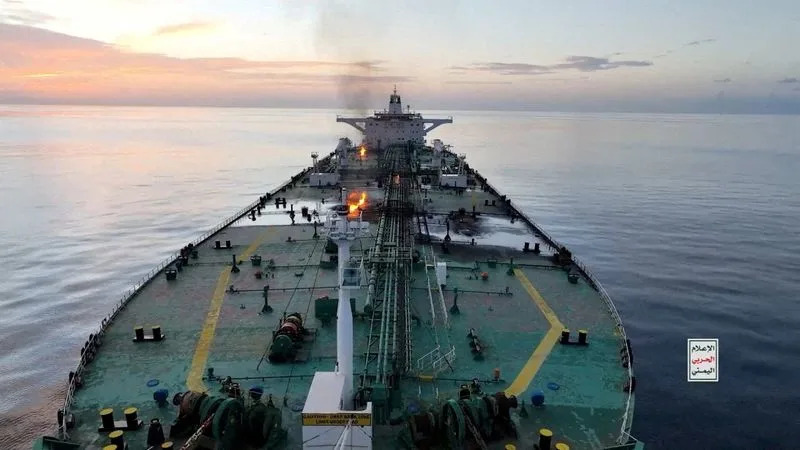
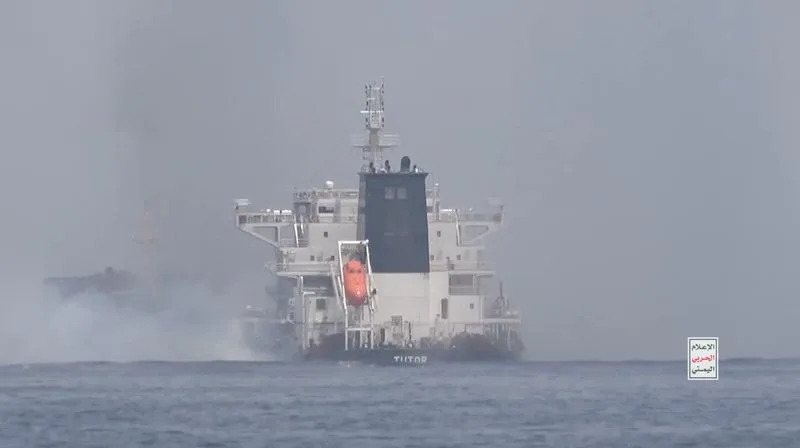
Smoke rises after an explosion on a ship that Houthis say is an attack by them on Greek-owned MV Tutor in the Red Sea


By Renee Maltezou, Jonathan Saul

Updated Thu, October 3, 2024 

ATHENS/LONDON (Reuters) -On a warm spring night in Athens, shortly before midnight, a senior executive at a Greek shipping company noticed an unusual email had landed in his personal inbox.

The message, which was also sent to the manager's business email address, warned that one of the company's vessels travelling through the Red Sea was at risk of being attacked by Yemen's Iranian-backed Houthi militia.

The Greek-managed ship had violated a Houthi-imposed transit ban by docking at an Israeli port and would be "directly targeted by the Yemeni Armed Forces in any area they deem appropriate," read the message, written in English and reviewed by Reuters.

"You bear the responsibility and consequences of including the vessel in the ban list," said the email, signed by the Yemen-based Humanitarian Operations Coordination Center (HOCC), a body set up in February to liaise between Houthi forces and commercial shipping operators.

The Houthis have carried out nearly 100 attacks on ships crossing the Red Sea since November, acting in solidarity with Palestinians in Israel's year-long war in Gaza. They have sunk two vessels, seized another and killed at least four seafarers.

The email, received at the end of May, warned of "sanctions" for the entire company's fleet if the vessel continued "to violate the ban criteria and enter the ports of the usurping Israeli entity".

The executive and the company declined to be named for safety reasons.

The warning message was the first of more than a dozen increasingly menacing emails sent to at least six Greek shipping companies since May amid rising geopolitical tension in the Middle East, according to six industry sources with direct knowledge of the emails and two with indirect knowledge.

Since last year, the Houthis have been firing missiles, sending armed drones and launching boats laden with explosives at commercial ships with ties to Israeli, U.S. and UK entities.

The email campaign, which has not been previously reported, indicates that Houthi rebels are casting their net wider and targeting Greek merchant ships with little or no connection to Israel.

The threats were also, for the first time in recent months, directed at entire fleets, increasing the risks for those vessels still trying to cross the Red Sea.

"Your ships breached the decision of Yemen Armed Forces," read a separate email sent in June from a Yemeni government web domain to the first company weeks later and to another Greek shipping company, which also declined to be named. "Therefore, punishments will be imposed on all vessels of your company ... Best Regards, Yemen Navy."

Yemen, which lies at the entrance to the Red Sea, has been embroiled in years of civil war. In 2014, the Houthis took control of the capital, Sanaa, and ousted the internationally recognized government. In January, the United States put the Houthis back on its list of terrorist groups.

Contacted by Reuters, Houthi officials declined to confirm they had sent the emails or provide any additional comment, saying that was classified military information.

Reuters could not determine whether the emails had been also sent to other foreign shipping companies.

Greek-owned ships, which represent one of the largest fleets in the world, comprise nearly 30% of the attacks carried out by Houthi forces to early September, according to Lloyd's List Intelligence data that did not specify whether those ships had any ties with Israel.

In August, the Houthi militia - which is part of Iran's Axis of Resistance alliance of anti-Israel irregular armed groups - attacked the Sounion tanker leaving it on fire for weeks before it could be towed to a safer area.

The strikes have prompted many cargoes to take a much longer route around Africa. Traffic through the Suez Canal has fallen from around 2,000 transits per month before November 2023 to around 800 in August, Lloyd's List Intelligence data showed.

Tensions in the Middle East reached a new peak on Tuesday as Iran hit Israel with more than 180 missiles in retaliation for the killing of militant leaders in Lebanon, including Hezbollah leader Sayyed Hassan Nasrallah on Friday.

NEW PHASE

The European Union's naval force Aspides, which has helped more than 200 ships to sail safely through the Red Sea, confirmed the evolution of Houthis' tactics in a closed door meeting with shipping companies in early September, according to a document reviewed by Reuters.

In the document, shared with shipping companies, Aspides said the Houthis' decision to extend warnings to entire fleets marked the beginning of the "fourth phase" of their military campaign in the Red Sea.

Aspides also urged ship owners to switch off their Automatic Identification System (AIS) transponders, which shows a vessel's position and acts as a navigational aid to nearby ships, saying they had to "shut it off or be shot".

Aspides said the Houthis' missile strikes had 75% accuracy when aimed at vessels operating with the AIS tracking system on. But 96% of attacks missed when AIS was off, according to the same briefing.

"Aspides are aware of those emails," its operational commander, Rear Admiral Vasileios Gryparis, told Reuters, adding that any response should be carefully considered and that companies are strongly advised to alert their security experts if contacted before sailing.

"In particular, for the HOCC, the advice or guidance is not to respond to VHF calls and e-mails from “Yemeni Navy” or the “Humanitarian Operations Command Center” (HOCC)."

The Houthis' email campaign began in February with messages sent to shipowners, insurance companies and the main seafarers union from HOCC.

These initial emails, two of which were seen by Reuters, alerted the industry the Houthis had imposed a Red Sea travel ban on certain vessels, although they did not explicitly warn companies of an imminent attack.

The messages sent after May were more menacing.

At least two Greek-operated shipping companies that received email threats have decided to end such journeys via the Red Sea, two sources with direct knowledge told Reuters, declining to identify the companies for security reasons.

An executive at a third shipping company, which has also received a letter, said they decided to end business with Israel in order to be able to continue to use the Red Sea route.

"If safe transit through the Red Sea cannot be guaranteed, companies have a duty to act – even if that means delaying their delivery windows," said Stephen Cotton, General Secretary of the International Transport Workers' Federation, the leading union organisation for seafarers, which received an email from HOCC in February. "The lives of the seafarers depend on it."

The email campaign has increased alarm among shipping companies. Insurance costs for Western ship owners' have already jumped because of the Houthi's attacks, with some insurers suspending cover altogether, the sources told Reuters.

Greece-based Conbulk Shipmanagement Corporation stopped Red Sea voyages after its vessel MV Groton was attacked twice in August.

"No (Conbulk) vessel is trading in the Red Sea. It mainly has to do with the crew safety. Once the crew is in danger, all the discussion stops," Conbulk Shipmanagement CEO Dimitris Dalakouras told a Capital Link shipping conference in London on Sept. 10.

Torben Kolln, managing director of German-based container shipping group Leonhardt & Blumberg, said the Red Sea and wider Gulf of Aden was a "no go" area for their fleet.

Contacted by Reuters, the companies did not respond to a request for comment on whether they had been targeted by the Houthi email campaign.

Some companies continue to cross the Red Sea due to binding long-term agreements with charterers or because they need to transfer goods in that particular area. The Red Sea remains the fastest way to bring goods to consumers in Europe and Asia.

The Houthis have not stopped all traffic and the majority of Chinese and Russian-owned ships - which they do not see as affiliated with Israel - are able to sail through unhindered with lower insurance costs.

"We are re-assuring the ships belonging to companies that have no connection with the Israeli enemy that they are safe and have freedom (of movement) and (to) keep the AIS devices going on all the time," according to an audio recording of a Houthi message broadcast to ships in the Red Sea in September shared with Reuters.

"Thank you for your cooperation. Out."

(Reporting by Renee Maltezou and Jonathan Saul; Additional reporting Yannis Souliotis in Athens and Mohamed Ghobari in Aden; Editing by Lisa Jucca)

PERMANENT ARMS ECONOMY

More US and European defense companies are setting up operations in Ukraine as the war rages on

Sinéad Baker
Thu, October 3, 2024

Western defense companies are increasingly setting up operations on Ukrainian soil.


Two companies announced this week that they are starting new projects based in Ukraine.


They add to a growing Western defense presence in the country.


US and European defense companies are increasingly setting up operations in Ukraine, with the brutal war raging on and presenting plenty of opportunities.

Two companies said this week that they will work more on key weapons in Ukraine, adding to what has been a growing presence of Western defense manufacturers in the country since Russia launched its full-scale invasion in February 2022.

KNDS, a French-German defense group, announced on Tuesday that it had opened a subsidiary in Kyiv, Ukraine's capital, where one of its aims is to "carry out maintenance, repair and overhaul work" on some of its systems that Ukraine's military is using.

This includes the Leopard 1 and 2 main battle tanks, the CAESAR artillery gun, the AMX10 RC armored fighting vehicle, the PzH 2000 armored howitzer, and the Gepard self-propelled antiaircraft gun.

The company said in a press statement that the new subsidiary "will support the cooperation between Ukrainian government institutions, the Ukrainian armaments industry and KNDS."

Meanwhile, AeroVironment, an American defense contractor headquartered in Virginia, signed an agreement with an undisclosed Ukrainian company to make the Switchblade 600, a loitering munition, in Ukraine, the Kyiv Independent reported.

The moves build on a growing Western defense industry presence in Ukraine.

Ukraine's defense minister, Rustem Umerov, said in December that his country had signed "dozens of new contracts" that included joint production agreements with Western partners.

German arms maker Rheinmetall has opened a plant in Ukraine and its CEO said in May that the company will open a new air defense facility in the country.

It also said that it would produce Lynx armored vehicles in Ukraine.

BAE, a major British defense firm, meanwhile, announced last year that it was opening a new base in Ukraine to "ramp up" its support for the country's armed forces.

And an unnamed US State Department official told Defense One that more American defense companies seem interested in establishing themselves in Ukraine.

But the official also warned of the dangers involved, saying no company wants their facilities targeted or employees hurt.

The efforts are part of a wider push to integrate Western and Ukrainian defense efforts, including by sharing technologies, Ukrainian weapons specialists working in the West, and Western countries repairing and storing Ukrainian weaponry.

These efforts will "allow Ukraine to become self-sufficient over time and integrate Ukraine into the broader Western security network," Washington DC-based think tank the Institute for the Study of War said in January.

Most of Ukraine's weaponry comes from its allies, but it has also dramatically increased its own production. This includes making its own howitzers, glide bombs, and drones.

Russia is also ramping up its own production, sparking concerns in the West.

Russia's invasion of Ukraine has been a major boost for Western defense companies, with many nations increasing their defense spending.

Countries have increased their orders, and many companies have increased their production, including equipment that had stopped being made — not only to aid Ukraine but to prepare for any future Russian conflict with the West.

The benefit has been huge for US companies: Of the $113 billion pledged by Congress up until April 2024 in relation to the war, as much as $68 billion was destined to be invested in domestic companies, according to the Center for Strategic and International Studies think tank.


Ukraine ramps up arms production, can produce 4 million drones a year, Zelenskiy says

Olena Harmash
Wed, October 2, 2024 

FILE PHOTO: Ukrainian service members attend military drills near a frontline in Donetsk region


By Olena Harmash

KYIV (Reuters) - Ukraine can produce four million drones annually and is quickly ramping up its production of other weapons, President Volodymyr Zelenskiy said in comments authorised for publication on Wednesday.

Speaking on Tuesday to executives from dozens of foreign arms manufacturers in Kyiv, Zelenskiy said Ukraine had already contracted to produce 1.5 million drones this year.


Drone production was virtually non-existent in Ukraine before Russia's invasion in February 2022.

"In extremely difficult conditions of the full-scale war under constant Russian strikes, Ukrainians were able to build a virtually new defence industry," said Zelenskiy.

Ukraine tripled its overall domestic weapons production in 2023 and then doubled that volume again in just the first eight months of this year, Prime Minister Denys Shmyhal told the same gathering. Ukrainian officials gave no absolute figures.

More than 31 months into its war with invading Russian forces, and with no end in sight, Ukraine now spends roughly half of its state budget - or about $40 billion - on defence.

Ukraine also receives large amounts of military as well as financial support from its Western allies.

Russia, which is much larger and richer than its southern neighbour, is expected to hike its own military spending by 25% next year from its 2024 level, to about $145 billion.

INCREASE IN DOMESTIC PRODUCTION

Ukrainian officials say they expect foreign funding to steadily diminish while its defence needs continue to balloon. Kyiv is increasingly focused on producing as much as possible domestically.

Shmyhal said the government plans to increase spending to help bolster growth in domestic weapon production in 2025.

"Next year's budget envisages a 65% increase in funds for weapon purchases. This is an increase of almost $7 billion," Shmyhal told the forum.

He said Ukraine's strategic task was to increase its domestic long-range capabilities and create conditions to have a technological advantage over Russian forces.

Moscow forces have been steadily advancing in Ukraine's eastern Donetsk region and on Wednesday claimed complete control of the small mining town of Vuhledar.

The ability to strike deep inside Russia is a priority for Ukraine. Zelenskiy has been seeking permission to use Western long-range missiles for strikes inside Russia, so far without any agreement.

"Among our strategic tasks is to strengthen the long-range capability of Ukrainian weapons, so that there is no safe place in the European part of Russia where the "debris" of our drones and missiles could not reach," Shmyhal said.

During Tuesday's event, several agreements were signed between Ukrainian and foreign companies to produce ammunition, different types of drones and also to repair Western equipment in Ukraine.

Franco-German defence group KNDS, which produces heavily armoured wheeled and tracked vehicles, announced it had opened a subsidiary in Kyiv.

(Reporting by Olena Harmash; Editing by Gareth Jones)
Bottled up in the Black Sea: Russia is having a dreadful naval war, hindering its great power ambitions

Colin Flint, Utah State University
Thu, October 3, 2024
THE CONVERSATION

The ongoing conflict between Russia and Ukraine has played out largely on land and in the air. It is a bitterly contested, grueling ground war, accompanied by brutal Russian aerial attacks on civilian infrastructure and a slow but increasing Ukrainian response.

But a less appreciated but vital focus of the war is happening on water, too. There, a contest for control of the Black Sea has seen Russia stunningly defeated.

And this loss has potentially far-reaching consequences. Not only does it constrain Moscow’s ability to project power across the globe through naval means, it has also resulted in Russia’s growing cooperation with China, where Moscow is emerging as a junior party to Beijing on the high seas.

Battle over the Black Sea

The tradition of geopolitical theory has tended to paint an oversimplification of global politics. Theories harkening back to the late 19th century categorized countries as either land powers or maritime powers.

Thinkers such as the British geopolitician Sir Halford Mackinder or the U.S. theorist Alfred Thayer Mahan characterized maritime powers as countries that possessed traits of democratic liberalism and free trade. In contrast, land powers were often portrayed as despotic and militaristic.

While such generalizations have historically been used to demonize enemies, there is still a contrived tendency to divide the world into land and sea powers. An accompanying view that naval and army warfare is somewhat separate has continued.

And this division gives us a false impression of Russia’s progress in the war with Ukraine. While Moscow has certainly seen some successes on land and in the air, that should not draw attention away from Russia’s stunning defeat in the Black Sea that has seen Russia have to retreat from the Ukrainian shoreline and keep its ships far away from the battlefront.

As I describe in my recent book, “Near and Far Waters: The Geopolitics of Seapower,” maritime countries have two concerns: They must attempt to control the parts of the sea relatively close to their coastlines, or their “near waters”; meanwhile, those with the ability and desire to do so try to project power and influence into “far waters” across oceans, which are the near waters of other countries.

The Black Sea is a tightly enclosed and relatively small sea comprising the near waters of the countries that surround it: Turkey to the south, Bulgaria and Romania to the east, Georgia to the west, and Ukraine and Russia to the north.


Control of the Black Sea’s near waters has been contested throughout the centuries and has played a role in the current Russian-Ukraine war.

Russia’s seizure of the Crimean Peninsula in 2014 allowed it to control the naval port of Sevastopol. What were near waters of Ukraine became de facto near waters for Russia.

Controlling these near waters allowed Russia to disrupt Ukraine’s trade, especially the export of grain to African far waters.

But Russia’s actions were thwarted through the collaboration of Romania, Bulgaria and Turkey to allow passage of cargo ships through their near waters, then through the Bosporus into the Mediterranean Sea.

Ukraine’s use of these other countries’ near waters allowed it to export between 5.2 million and 5.8 million tons of grain per month in the first quarter of 2024. To be sure, this was a decline from Ukraine’s exports of about 6.5 million tons per month prior to the war, which then dropped to just 2 million tons in the summer of 2023 because of Russian attacks and threats.

But efforts to constrain Russia’s control of Ukraine’s near waters in the Black Sea, and Russia’s unwillingness to face the consequences of attacking ships in NATO countries’ near waters, meant Ukraine was still able to access far waters for economic gain and keep the Ukrainian economy afloat.
For Putin, that sinking feeling

Alongside being thwarted in its ability to disrupt Ukrainian exports, Russia has also come under direct naval attack from Ukraine. Since February 2022, using unmanned attack drones, Ukraine has successfully sunk or damaged Russian ships and whittled away at Russia’s Black sea fleet, sinking about 15 of its prewar fleet of about 36 warships and damaging many others.

Russia has been forced to limit its use of Sevastopol and station its ships in the eastern part of the Black Sea. It cannot effectively function in the near waters it gained through the seizure of Crimea.

Russia’s naval setbacks against Ukraine are only the latest in its historical difficulties in projecting sea power and its resulting tendency to mainly focus on the defense of near waters.

In 1905, Russia was shocked by a dramatic naval loss to Japan. Yet even in cases where it was not outright defeated, Russian sea power has been continually constrained historically. In World War I, Russia cooperated with the British Royal Navy to limit German merchant activity in the Baltic Sea and Turkish trade and military reach in the Black Sea.

In World War II, Russia relied on material support from the Allies and was largely blockaded within its Baltic Sea and Black Sea ports. Many ships were brought close to home or stripped of their guns as artillery or offshore support for the territorial struggle with Germany.

During the Cold War, meanwhile, though the Soviet Union built fast-moving missile boats and some aircraft carriers, its reach into far waters relied on submarines. The main purpose of the Soviet Mediterranean fleet was to prevent NATO penetration into the Black Sea.

And now, Russia has lost control of the Black Sea. It cannot operate in these once secure near waters. These losses reduce its ability to project naval power from the Black Sea and into the Mediterranean Sea.
Ceding captaincy to China

Faced with a glaring loss in its backyard and put in a weak position in its near waters, Russia as a result can project power to far waters only through cooperation with a China that is itself investing heavily in a far-water naval capacity.

Joint naval exercises in the South China Sea in July 2024 are evidence of this cooperation. Wang Guangzheng of the Chinese People’s Liberation Army Navy’s Southern Theater said of the drill that “the China-Russia joint patrol has promoted the deepening and practical cooperation between the two in multiple directions and fields.” And looking forward, he claimed the exercise “effectively enhanced the ability to the two sides to jointly respond to maritime security threats.”

Warships of the Chinese and Russian navies take part in a joint naval exercise in the East China Sea. Li Yun/Xinhua via Getty Images

This cooperation makes sense in purely military terms for Russia, a mutually beneficial project of sea power projection. But it is largely to China’s benefit.

Russia can help China’s defense of its northern near waters and secure access to far waters through the Arctic Ocean – an increasingly important arena as global climate change reduces the hindrance posed by sea ice. But Russia remains very much the junior partner.

Moscow’s strategic interests will be supported only if they match Chinese interests. More to the point, sea power is about power projection for economic gain. China will likely use Russia to help protect its ongoing economic reach into African, Pacific, European and South American far waters. But it is unlikely to jeopardize these interests for Russian goals.

To be sure, Russia has far-water economic interests, especially in the Sahel and sub-Saharan Africa. And securing Russian interests in Africa complements China’s growing naval presence in the Indian Ocean to secure its own, and greater, global economic interests. But cooperation will still be at China’s behest.

Bottled up in Black Sea near waters as a result of its war in Ukraine, Russia’s only current avenue for projecting its naval power is access to Africa and Indian Ocean far waters as a junior partner with China, which will dictate the terms and conditions. Even if Russia achieves victory on land in its war against Ukraine, it will not compensate for its ongoing inability to project power across the oceans on its own.

This article is republished from The Conversation, a nonprofit, independent news organization bringing you facts and trustworthy analysis to help you make sense of our complex world. It was written by: Colin FlintUtah State University

Read more:


Chinese warships off Alaska and Cambodia highlight the role of near and far waters in sea power dominance


The US is about to blow up a fake warship in the South China Sea – but naval rivalry with Beijing is very real and growing


Russia’s new ideological battlefield: The militarization of young minds


Russia's strike on a merchant ship in the Black Sea was likely down to poor targeting and aged ammo: UK intel

Mia Jankowicz
Thu, October 3, 2024 


A missile hit the MV Aya, which was carrying grain from Ukraine to Egypt, on September 11.


The strike led to fears of a potential escalation in Russian attacks on the Black Sea grain corridor.


But according to the UK MOD, it was likely an error caused by poor procedures and aging munition.

A strike last month on a merchant ship in the Black Sea was almost certainly the result of a bungled Russian bomber attack using outdated ammunition, according to the UK Ministry of Defence.

On September 11, the Saint Kitts and Nevis-flagged vessel MV Aya was loaded with grain bound for Egypt from Ukraine's port of Odesa when it was struck by what was widely assumed to be a Russian missile.

There were no casualties reported at the time.

The ship was damaged, but managed to reach Romania's coast under its own steam, where it received help, according to Ambrey, a marine insurer.

The strike led to fears of a potential escalation in Russian attacks on the Black Sea grain corridor. But according to UK intelligence, it was likely not meant for the Aya at all but happened "due to poor targeting procedures from Russian pilots using an aging munition."

According to its assessment, the strike was almost certainly an AS-4 anti-ship missile fired from a Russian Tu-22M3 bomber.

It's possible that the bomber misidentified the Aya, it said, fired "in haste," and then rushed away from the scene "for fear of being targeted by a Ukrainian surface-to-air missile."


"It is a realistic possibility a detonation failure avoided catastrophic damage," the UK MOD added.

It also said that Ukraine shot down a Russian Tu-22, also known as a BACKFIRE, in April this year, which would explain why Russian pilots have been "more wary with their strike operations in the Black Sea."

Using long-range missile strikes and naval drones, Ukraine has managed to push much of Russia's Black Sea Fleet from its base at Sevastopol, in occupied Crimea, to the safer Russian waters of Novorossiysk.

Since its exit from the Black Sea grain initiative, Russia's attacks on Ukrainian naval export abilities have been largely limited to striking ports, and — it's widely believed — dropping naval mines.

The September 11 incident was the first direct strike on a merchant ship in the grain corridor since November 2023.

"A direct attack" like this would mark "a significant escalation," Ambrey said, adding: "Until Russian officials provide an explanation, the threat to vessels calling Ukraine remains high."

Ukraine's economy is heavily dependent on maritime exports. Before 2022, it accounted for 10% of the global grain market, with 90% of that heading out to the world via the Black Sea, according to the Council on Foreign Relations.

Despite the potential for economic warfare, Russia has good reason to avoid escalating the threat to shipping in the Black Sea, Ambrey wrote.

Any escalation would have a knock-on effect on naval insurance premiums, which "would make trade with both Russia and Ukraine significantly more costly," it said.

The UK MOD was scathing about the apparent accidental attack on the Aya.

"Launching a supersonic cruise missile on an incorrect heading against a likely erroneous target in international waters demonstrates extremely poor and irresponsible aviation practice," it said.


Russian bomber pilots hit Black Sea grain ship 'by mistake' as they raced off to avoid air defences, says UK

Nicholas Cecil
Thu, October 3, 2024 

Russian bomber pilots hit Black Sea grain ship 'by mistake' as they raced off to avoid air defences, says UK


Russian bomber pilots hit a grain ship in the Black Sea by mistake as they “targeted it in haste” and wanted to fly away quickly to avoid Ukrainian air defences, say British defence chiefs.

The Ministry of Defence in London believes that the merchant vessel Aya may only have escaped catastrophic damage because of a “detonation failure” in the “aging munition” fired at it.

In its latest intelligence update, the MoD said: “On 11 September 2024, the merchant vessel Aya was struck by a missile in the Black Sea as it transited south from the Ukrainian port of Odesa having been loaded with more than 26 thousand tons of grain bound for Egypt.

“It is almost certain that the missile was an AS-4 KITCHEN anti-ship missile launched by a Tu-22M3 BACKFIRE Russian bomber that was operating in the area at the time. It is a realistic possibility that a detonation failure avoided catastrophic damage.”

Russian and Ukrainian forces have fought a series of battles along the Black Sea coastline, and out at sea, including over Snake Island, which was captured by Vladimir Putin’s forces before being seized back, and the sinking of the flagship Moskva warship.

The Russian navy was forced to retreat from the Black Sea after the port of Sevastopol in Crimea was targeted.

But the British military chiefs do not believe that the grain vessel was hit on purpose and instead that it was “likely struck due to poor targeting procedures from Russian pilots using an aging munition”.

They added: “Following the loss of a BACKFIRE in April this year, Russia has almost certainly been more wary with their strike operations in the Black Sea.

“It is a realistic possibility this incident occurred due to pilots incorrectly identifying Aya as their target in haste, wanting to depart the area immediately after launch for fear of being targeted by a Ukrainian surface to air missile.

“The KITCHEN missile has consistently underperformed in the Ukraine conflict. Launching a supersonic cruise missile on an incorrect heading against a likely erroneous target in international waters demonstrates extremely poor and irresponsible aviation practice.”

Britain, the US, Ukraine and its allies have been fighting an information war, alongside the battlefield conflict, against Russia so their briefings need to be treated with caution.

However, they are far more believable than the propaganda issued by the Kremlin.

Meanwhile, Ukraine's armed forces commander General Oleksandr Syrskyi said on Thursday he had ordered defences to be strengthened in the eastern Donetsk region, a day after Kyiv forces announced they had withdrawn from the town of Vuhledar.

Russian troops are steadily inching forward in different sectors in eastern Ukraine despite Kyiv's surprise incursion into Russia's western Kursk region in August that it was hoped would slow the advances.

Syrskyi said on social media he was working on "one of the hottest front sectors" with the 25th Sicheslav Airborne Brigade.

He gave no details on the exact location but the brigade operates in the Pokrovsk front, an area of intensified Russian assaults.

"While working in the brigade, I made a number of decisions aimed at strengthening stability and effectiveness of our defence," Syrskyi said.

Russian forces launched a major drone attack overnight on 15 Ukrainian regions, causing damage to commercial and residential buildings, local authorities said on Thursday, though there were no immediate reports of any casualties.

The Ukrainian air force said it had shot down 78 out of 105 Russian drones during the assault, with 23 more likely impacted by active electronic jamming.

Authorities in the Ukrainian capital Kyiv said the air force had downed around 15 drones over the city and its surroundings during an air alert that lasted more than five hours.

A Russian drone targeted a truck delivering gas in Ukraine's northern Chernihiv region on Thursday, killing two adults and a child, police said.

Ukrainian drones attacked the "Borisoglebsk" military airfield and warehouses for fuel and guided bombs in Russia's Voronezh region overnight, according to a Ukrainian security source.

The security source said Ukraine's SBU security service was continuing actions to reduce the ability of Russian troops to use fighter jets with guided bombs to strike Ukrainian cities, and that attacks on Russian airfields would continue.

The drones attacked warehouses, parking lots for Russian Sukhoi Su-35 and Su-34 jets and aviation fuel storage facilities at the Borisoglebsk airfield, the source said.

"From there, the enemy actively bombards Ukrainian territories with guided bombs," he said.

Pictures on the attack and a short video clip showing fires could not be independently verified and the extent of the damage was not immediately clear.

Alexander Gusev, the governor of Russia's Voronezh region, said Russian air defence had shot down 10 drones over the region. He did not report any damage.
POSTMODERN MANICHAEISM

Influential prophesizing pastors believe reelecting Trump is a win in the war of angels and demons

PETER SMITH
Thu, October 3, 2024 


Election 2024-Spiritual Warfare
Pastor Hank Kunneman of Lord of Hosts Church in Omaha, Nebraska, is projected on a large screen as he speaks at the Opening the Heavens conference on Friday, Sept. 13, 2024, at the Mid-America Center in Council Bluffs, Iowa. 
(AP Photo/Peter Smith)

COUNCIL BLUFFS, Iowa (AP) — Thousands sang, cheered and prayed as multiple preachers declared Donald Trump to be God’s favored candidate to defeat what one called the “forces of darkness.”

Headliners denounced Democrat Kamala Harris — Trump's campaign rival — as influenced by demons and the spirit of the wicked biblical queen Jezebel.

Attendees stood and recited in unison a “Watchman Decree,” invoking a government that honors God and has “righteous” laws and “biblical” judicial rulings. They pledged to “take back and permanently control” positions of leadership in sectors such as government, business and culture.


“We break every curse against Donald Trump — we break every satanic incantation against his presidency,” declared the host preacher, Hank Kunneman, at the annual Opening the Heavens conference, held in mid-September at the Mid-America Center arena in Council Bluffs.

The conference is one of several of its type around the country this election year, featuring exuberant worship and speeches by influential preachers. It represents a highly politicized wing of charismatic Christianity, a larger movement that emphasizes spiritual gifts such as healings, prophecy and speaking in tongues.

As a sign of this movement's influence, Republican vice presidential nominee JD Vance appeared recently at a similar conference, called the Courage Tour, in Pennsylvania.

Goals for the conference included getting out the vote for Trump and his allies, and mobilizing believers to pray and take part in what’s proclaimed to be a literal spiritual war surrounding the election.

“Get your butt out there and vote. Get your voice and raise it!" declared Kunneman, who pastors Lord of Hosts Church in nearby Omaha, Nebraska, with his wife, Brenda. "Let every devil fall. ... We push back any attempt to steal the executive office."

The conference emerges from a movement that emphasizes authoritative direction from leaders considered to be modern-day apostles and prophets. It also incorporated Christian nationalism, a fusion of American and Christian identity.

Critics view the movement with alarm, seeing it as anti-democratic and supporting a candidate with authoritarian ambitions and incendiary rhetoric. Many of its leaders rallied behind Trump’s claims that the 2020 election was stolen despite overwhelming evidence to the contrary.

“The attitude coming into 2024 is, ‘The demons are probably going to try to steal this election again, and so we need to do spiritual warfare in advance to prevent that,’” said Matthew Taylor, author of the new book on the movement, “The Violent Take It By Force: The Christian Movement That Is Threatening Our Democracy.”

“It’s very hard to have a pluralistic democracy," Taylor said, when many distrust the electoral system.

Several leaders in this movement were present at rallies in Washington protesting Biden’s presidential victory before and on Jan. 6, 2021, said Taylor.

Leaders weren’t among the Capitol rioters, but some issued decrees and prayers that the certification of Biden's win be blocked and Trump returned for a second term.

Such ideology “is one of those golden threads” in the social media feeds of many participants of the Jan. 6 rallies, said Taylor, Protestant scholar at the Baltimore-based Institute for Islamic, Christian, and Jewish Studies.

Headliners at the Council Bluffs conference repeatedly spoke of being in a true spiritual war, merging decrees of political victory and Christian revival.

The “favor of the Lord” is on Trump, said one preacher, Dutch Sheets. “America is going to be saved, and I believe this election is a part of it."

His brother and fellow preacher, Tim Sheets, recounted seeing a vision of a warrior angel firing an arrow that landed in front of the White House, claiming the territory for God.

“We must move into battle for the Lord,” he said. “The drums of spiritual war are beating.”

Preachers repeatedly denounced abortion — one described it as an outpouring of blood craved by demons — and the “mutilation” of children, as they depicted gender-affirming treatment for transgender youths.

The arena appeared a little more than half full, with thousands of attendees from multiple states. Many wore T-shirts with slogans like, “Defender of Territory” and “We the People Trust Jesus,” while several bundled up with American flag-themed fleece blankets amid chilly air conditioning.

Participants at the Council Bluffs conference, mostly but not exclusively white, aligned with the larger evangelical Christian support of Trump.

About 8 in 10 white evangelicals supported Trump in 2020, according to AP VoteCast. Pew Research Center’s validated voter survey found similar support levels in 2016.

This year, about 7 in 10 white evangelical Protestants view the Republican nominee favorably, an AP-NORC Center for Public Affairs Research survey found.

Behind that supermajority is a diverse evangelicalism. The charismatic exuberance and focus on the supernatural contrast in tone with the relatively restrained approach of groups such as Southern Baptists, though they have allied in their political conservatism and opposition to abortion and LGBTQ+ rights.

And the charismatic movement has its own diversity. This heavily politicized branch teaches that in the present day, God has re-established the ancient biblical roles of apostle — an authoritative leader — and prophet, someone issuing divine proclamations.

The movement isn’t a denomination. Churches and ministries largely operate independently, even as its leaders speak at each others’ conferences, endorse each others’ books and appear on each others’ broadcasts.

As one example of the overlap: The Opening the Heavens conference in Council Bluffs featured one segment called FlashPoint Live — an in-person version of a television show that mixes charismatic Christianity and conservative politics. It’s one of several such FlashPoint Live conferences this year, hosted by pastor Gene Bailey — whose recent interview with Trump demonstrated the close ties between the movement and the former president.

The ReAwaken America tour, started by Trump’s former national security advisor Michael Flynn, has similarly blended the political with revival-like rallies and featured members of Trump's family.

While a range of evangelicals served as Trump’s faith-based advisors during his administration, charismatic leaders were especially prominent.

The apostles-and-prophets movement overlaps with two related, popular ideas: dominionism, which says Christians are to be in charge of society, and the “Seven Mountain Mandate,” which specifies seven areas where Christians are to lead — politics, religion, media, business, family, education and the arts and entertainment.

Bailey led in the reciting of the Watchman Decree at Council Bluffs, which included a pledge to “permanently control positions of influence and leadership in each of the seven mountains.”

Bailey and Kunneman declined interview requests through a media representative.

Taylor said that according to this strand of charismatic theology, Holy Spirit-filled Christians have the power not just to ask God for results but to speak them into being.

“It’s not just spouting off or praying prayers,” he said. “They believe that they are changing reality with these Watchman Decrees.”

He added: "It looks wild when you encounter it, but it is very popular, and it’s very dangerous."

Separate from the Council Bluffs conference organizers, but with an overlapping cast of speakers, is the Courage Tour. It’s led by Lance Wallnau, who popularized the Seven Mountain concept and was an early booster of Trump’s 2016 candidacy.

The tour has been held in crucial battleground states, mixing worship, prayers for miraculous healings and overt politics — including a call for Christians to become election workers or poll watchers to “fight the fraud” in swing states.

Taylor said this appears to lay groundwork for a campaign to delegitimize the 2024 election results if Harris wins.

While movement leaders speak of spiritual warfare — that is, angel vs. demon rather than human vs. human — Taylor said such rhetoric can stoke some people into taking matters into their own hands.

He said it’s no surprise that some rioters at the Capitol in 2021 were loudly praying and displaying Christian symbols.

“I really do worry that we could see a lot more political violence,” he said.

___

Associated Press religion coverage receives support through the AP’s collaboration with The Conversation US, with funding from Lilly Endowment Inc. The AP is solely responsible for this content.

\