Thursday, October 03, 2024

Popular TV Host Announces Her Own Death at 67 in Moving Social Media Post: ‘See You Again on the Other Side’

Becca Longmire
Thu, October 3, 2024 
 People.

Australian TV host Fiona MacDonald announced her death in an Instagram statement posted by her sister on Thursday, Oct. 3


Fiona MacDonald/InstagramFiona MacDonald

Australian TV host Fiona MacDonald has died at age 67 after being diagnosed with motor neurone disease (MND) in 2021


"Farewell my friends. My sister Kylie is posting this because I have left the building — Hopefully I’m looking down from a cloud," she wrote alongside some family photos on Instagram


"Let’s not call it goodbye as I hope to see you again on the other side," MacDonald added in the touching post

Australian TV host Fiona MacDonald has announced her own death at age 67 almost three years after being diagnosed with motor neurone disease (MND).

On Thursday, Oct. 3, an Instagram post written by the former It's a Knockout game show host, and shared by her sister Kylie, confirmed she'd died the night before.

"Farewell my friends. My sister Kylie is posting this because I have left the building — Hopefully I’m looking down from a cloud," the post read.

"Last night brought an end to a very tough few months. Was very peaceful the boys [sons Harry and Rafe] and Kylie stayed with me to say goodbye. While I’ve never wanted to die, the thought of leaving my tortured body was a relief," the message, which was shared alongside two family photographs, added.


MacDonald continued, "The last few months have been tough. Unable to swallow normal food, the tube feeding that should have sustained me didn’t work because my gut couldn’t tolerate any of the multiple brands of protein drinks. It went straight in and straight out."

The TV personality — best known for starring on the Australian children's TV series Wombat between 1983 and 1984, as well as being the host of It's a Knockout between 1985-1987 — explained how she'd been "slowly starving" and "growing weaker and weaker" following the diagnosis.

"I’ve also developed terrible back pain because my muscles aren’t supporting my frame," she explained.

"The black humor that served me well through the first years of this journey turned to despair. I made the decision after much soul searching to cease all medical supports and finally go into hospital for end of life palliative care. When you love life as much as I do, it takes a great deal of courage to make choices that lead to farewell," MacDonald continued.


Fiona MacDonald/Instagram Fiona MacDonald

She wrote, "So let’s not call it goodbye as I hope to see you again on the other side. Until then: 'May the wind be always at your back, May the sun shine warm upon your face, May the rain fall softly upon your fields until we meet again, And may God hold you in the hollow of His hand.' "

"I carry your love and laughter with me and hope you’ll remember mine," MacDonald concluded.

Per the MND association website, the disease "affects the nerves known as motor neurones. These nerves are found in the brain and spinal cord and they help tell your muscles what to do."

The late star is survived by her two sons Harry and Rafe, as well as sisters Kylie and Jacki MacDonald. The latter was also a former TV host on shows including Hey Hey It's Saturday.


Fiona MacDonald/InstagramFiona MacDonald

Never miss a story — sign up for PEOPLE's free daily newsletter to stay up-to-date on the best of what PEOPLE has to offer​​, from celebrity news to compelling human interest stories.

MacDonald devoted her time to raising money to help find a cure for the disease after being diagnosed in 2021. On her "I Am Making a Difference" fundraising page, she explained that, along with family and friends, she'd managed to raise over $223,000 AUD (almost $153,000 USD) after completing multiple challenges.

"All funds raised go directly to Macquarie University research and trials to find a cure for MND," MacDonald wrote in the description, explaining how she'd started her "Big Lap" challenge with a 15,500km drive around Australia.

MacDonald recently spoke about her MND diagnosis and how she'd been driving around Australia to raise money to help fund research on a 2023 episode of Australian Story, titled The Big Lap - Fiona MacDonald.

Per the Australia Broadcasting Corporation, MacDonald — who grew up in the outback of Queensland — used a computerized voice to communicate before her death. "Stealing the power of all muscles inch by inch until you can't walk, can't hold hands, can't talk, swallow or breathe," she said of the diagnosis on the moving episode.

"Then you die. There is no treatment, no cure," MacDonald added at the time, according to the ABC.

Wilmer Valderrama. Rosario Dawson. America Ferrera. Star-led drive aims to get Latinos to vote

FERNANDA FIGUEROA
Tue, October 1, 2024 

 Wilmer Valderrama attends a screening of "NCIS" during PaleyFest on Sunday, April 10, 2022, at the Dolby Theater in Los Angeles. (Photo by Richard Shotwell/Invision/AP, File)

With a star-studded cast of celebrities and influencers, the Voto Latino Foundation launched a $5 million initiative Tuesday to encourage Latinos to vote in the upcoming election.

The “Vota Con Ganas” (’Vote with Enthusiasm”) campaign will feature personal stories and messages from the Latino community, voter registration drives and workshops, social media outreach campaigns along with public service announcement-type videos from celebrities and influencers, highlighting the importance of voting and the impact the Latino vote can have in this election.

Notable celebrities participating in the campaign so far include Wilmer Valderrama, Rosario Dawson, America Ferrera, Danny Lux, Jessica Alba, Gina Torres and Xochitl Gomez.


Valderrama, who directed and produced the campaign videos, said in a statement that Latinos have been a vital part of the country and that it is time for them to have a seat at the table.

“The Ganas campaign aims to reinvite our Latino community to vote for their future,” he said. “Every decade the Latino community continues to grow in so many aspects of our country. We contribute in so many different ways and It’s critical that we own and celebrate our contributions to what’s possible for us here.”

As part of the campaign, the foundation also partnered with more than 170 college campus organizations to host voter registration events and digital activations during Hispanic Heritage Month, which ends Oct. 15. The campaign's efforts will also be amplified by over 300 organizations partnering with the foundation, including the NFL, Universal Music and Sony.

As the nation’s largest minority group — 19.5% of the total population, according to the 2020 census — Latinos form a key voting bloc in what’s shaping up to be a tight presidential election.

Latinos have grown at the second-fastest rate, behind Asian Americans, of any major racial and ethnic group in the U.S. since the last presidential election, according to a Pew Research Center analysis, and are projected to account for 14.7%, or 36.2 million, of all eligible voters in this presidential election, a new high.

They are a growing share of the electorate in several presidential and congressional battleground states, including Arizona, California and Nevada, and are being heavily courted by Republicans and Democrats.

Voto Latino Foundation president Maria Teresa Kumar said including everyday Latinos in the videos is a way to give them power and make their voices heard. In a statement, Kumar described the campaign as “a movement to harness the power of the Latino community.”

Kumar said ensuring every Latino voter is registered is vital, as Latinos have the power to shape the future of the country only if they cast their ballot this election.

Dawson, who is a board member of the foundation, said Latinos must mobilize their community, especially youths, as there will be many first-time voters.

“We have the power to decide. We could literally change the tide,” Dawson said in a statement. “'Vota con Ganas’ means to register, vote, volunteer, and own this election, because it is yours to take.”
Opinion

"Pro-life" identity politics: GOP's sudden support of abortion shows it was never about policy

Amanda Marcotte
Thu, October 3, 2024 
SALON

JD Vance Chip Somodevilla/Getty Images


Before Dobbs v. Jackson Women's Health, the Supreme Court decision that ended abortion rights, it was a truism in the Beltway press that Americans were "bitterly divided" on abortion. Driven by polls that mostly asked people if they are "pro-life" or "pro-choice," journalists portrayed Republican voters as strongly opposed to abortion for moral and religious reasons. So it's quite the shocker to see recent polls show that a plurality — and in many cases, the majority — of Republicans plan to vote for abortion rights in various state ballot initiatives this November.

Polls show "GOP support for abortion rights measures outpacing states that had similar ballot measures in recent years," Aaron Blake of the Washington Post wrote Monday. Just a couple of years ago, state polls showed Republicans only backing abortion rights by 14-18%, he reports. Now "2024 ballot measures show Republican support between 28 and 54 percent" supporting abortion rights.

It turns out that "pro-life" conviction was only an inch deep.


What's going on here isn't especially confusing. Prior to Dobbs, calling yourself "pro-life" was a low-cost way for Republican voters to tell a story where they are morally upright heroes while casting feminists, urban liberals, college kids, and racial minorities as oversexed heathens. When abortion is legal, it's easy to condemn other people's abortions as a matter of "convenience" or say they're "using it for birth control" or employ other euphemisms for promiscuity, while quietly believing the abortions you and your friends get are justified.

We saw this shell game in action during Tuesday night's vice presidential debate, when Donald Trump's running mate, Sen. JD Vance of Ohio, talked about a friend who had an abortion. "She felt like if she hadn't had that abortion, that it would have destroyed her life because she was in an abusive relationship," he said, falsely implying that he is fine with keeping these kinds of abortions legal. In reality, as the fact-checkers lamely noted, both current and proposed abortion bans, which Vance has backed wholeheartedly, do not make exceptions based on the reason a patient seeks an abortion.

Want more Amanda Marcotte on politics? Subscribe to her newsletter Standing Room Only.

It was an outrageous lie by insinuation, but why he lied is not mysterious. Vance understands that his voters want to hear a pretty story where people like themselves will get to have abortions, but those other people — imagined to be "sluts" and "welfare queens" — will not. The problem for him and Trump, as this polling shows, is that the cold, hard reality of abortion bans is hard to ignore, now that they're law and not just an abstraction. Post-Dobbs, "abortion" isn't just a way for MAGA voters to gloat about their self-defined moral superiority. Instead, they realize that the bans apply to MAGA and non-MAGA alike. It's shifted from cheap identity politics to real-world impacts. As these polling changes demonstrate, their actual policy preference has started to eclipse what used to move them, which was culture war nonsense.

Republican politicians win by keeping their base voters focused on phantasms and symbolic, ego-driven identity politics, rather than real world issues. It's why Trump and Vance are laser-focused on immigration. It's not just that it has no material impact on their base voters, but because it doesn't. For the average MAGA voter, stories about Haitian immigrants eating cats feel like a low-stakes way to wallow in a sense of racial superiority. Many of them don't even pause to consider how these ego-fluffing lies harm real people. To them, "Haitians" are a largely imaginary group — like the "sluts" of anti-abortion mythology — that they can feel safe hating, without considering the consequences. But suppose Trump is successful in deporting millions of people from the workforce, which economists believe would trigger an economic depression. It's safe to say these voters would not enjoy that outcome.

We can see this tension playing out in the battle over union endorsements. Regarding the brass tacks of policy, the difference between Democrats and Republicans is vast. President Joe Biden has been regarded by experts as the most pro-worker president since FDR. He's aggressively defended unions, made organizing much easier, and sent law enforcement after companies for union-busting and other shady tactics. Trump, on the other, can barely conceal his contempt for workers, and especially for unions. He praised Elon Musk for firing workers for going on strike, which is illegal. He bragged about cheating workers out of overtime pay, which is also illegal. This is why United Auto Workers endorsed the Democratic ticket, with the president Shawn Fain calling Trump a "scab."

But while UAW did the right thing, the same cannot be said of the Teamsters, who refused to endorse this election. The Teamsters are whiter and more male than other unions, and subsequently 60% of their members are voting for Trump instead of Vice President Kamala Harris. It's easy for white, male union workers to live in the world of fantasy politics, where they're more focused on protecting their ego against admitting a Black woman could be president, rather than the real world, where the white male candidate is coming for their job protections. They are, in the internet parlance, in the "effing around" period. But if Trump gets elected and unleashes Project 2025's plans to dismantle organized labor in the U.S., it will be a finding-out season. But, as Republican women learned after the Dobbs decision, by the time you get there, it's too late to stop it.

Democrats are often accused by the pundits of being the ones who practice "identity politics," usually when they note the real world impacts of sexism, racism, and homophobia on real people. But what Republicans do is pure identity politics, a politics about ego and identity that is disconnected from material implications. Their propaganda apparatus encourages white people to wallow in sick urban legends about cat-eating immigrants, which creates the temporary thrill of feeling superior without doing anything substantive to improve their lives. Or to complain about imaginary "loose" women who use abortions as "birth control." Or to get mad about "cancel culture" or make-believe slights from liberals.

As long as they aren't feeling palpable consequences for their votes, it is more fun and satisfying for some voters to live in the constant ego-reinforcement chamber of GOP propaganda. It's a cheap thrill, to be told you're morally, intellectually, and physically superior to various "others," simply by being part of the MAGA tribe. On abortion, reality has eclipsed fantasy, as the polls show. Unfortunately, Trump's neck-in-neck race with Harris shows that far too many Republican voters have not yet received their wake-up call.


Why Some People Will Vote for Abortion Rights—and Trump

Melissa Gira Grant
Wed, October 2, 2024 
NEW REPUBLIC


Ever since voters in red states like Kansas and Ohio turned out in droves in 2022 and 2023 to protect abortion rights in their states, some in the Democratic Party have hoped abortion ballot measures in swing states might increase turnout and shift the course of this year’s election. Ten states have abortion measures on the ballot this year—including swing states like Florida and Arizona. But last month, a New York Times/Siena College poll from Arizona disrupted this narrative: Likely voters’ support for Harris, at 45 percent, seemed to be trailing support for the state’s abortion rights ballot measure, at 58 percent. These numbers may seem surprising to those who hoped ballot measures would boost Democratic turnout, but they reflect a broader reality: Legal abortion is more popular than Democrats are.

For those who research and run ballot measure campaigns, the Arizona polling is not an unusual finding. Since 2021, Benjamin Case has led ballot initiative research at the Center for Work and Democracy, a labor-funded research center at Arizona State University. “Pretty consistently, we see results where people will vote differently when they’re allowed to vote on a policy versus when they have to vote for a politician as a proxy for all their views on different policies,” said Case. “The conventional wisdom was that abortion was this polarizing issue that splits the country down the middle,” said Case. But “one of the things that allowed that misperception to survive was the fact that voters weren’t really asked very often directly.”

Kansas broke this dynamic open when anti-abortion groups working alongside the Republican-led state legislature rushed a ballot measure ending abortion rights in front of voters, months after Dobbs. Kansas voters rejected it firmly; and in some counties that Trump had won in 2020, though the ballot measure lost, the margins were much closer than Trump’s margin. Then came Ohio in 2023: Voters passed, 57 to 43 percent, a constitutional amendment to protect legal abortion. “The scope of the victory for the Yes side suggests that a significant number of Republicans voted in favor,” according to an AP analysis. It wasn’t universal: 44 counties Trump had won by 70 percent or more in 2020 voted against protecting abortion rights. But nine out of the 10 counties where Trump won by 60 percent or less in 2020 voted “yes” on the abortion rights measure. It appeared that some Trump voters were “flipping.”

Such results helped fuel the notion that abortion rights ballot measures were good for Democrats: They might increase Democratic turnout, benefiting not only the presidential race but downballot Democrats. The numbers looked strong after Ohio and heading into the 2024 election. “The abortion rights position has over-performed Democrats’ presidential vote share by an average of nine points since 1970,” noted a Washington Post story on a recent Ballotpedia analysis. “But in 5 of 7 cases post-Roe, it has over-performed by double digits.” Another way of looking at those figures is that abortion rights were more popular than some Democratic candidates for president.

“The very existence of my organization,” said Kelly Hall, executive director of the Fairness Project, “is evidence that there is a gap between people’s partisan affiliations and how they are willing to vote on specific issues when they’re brought to them as ballot measures.” The group is nonpartisan, and provides strategy and communications support to state-based ballot measure campaigns. Given what they have seen, Hall said she’s “pretty dubious of those turnout arguments” about the measures boosting Democrats. Those arguments get a lot of attention because the press focuses on the Republican and Democrat horse race, Hall said. “They try to fit everything in the political landscape into that box.”

The Arizona poll showing Harris at 45 percent and the state’s abortion rights ballot measure at 58 percent, while a good reality check, isn’t necessarily a reason for Harris supporters to panic: To start, the poll has a margin of error of 4.4 percent, meaning the Harris support might be nearer to the 50 percent support for Trump. It’s also just one poll; a new one released this week puts Harris just two points behind Trump in the state.

The Arizona case is particularly complex, and not easy to capture in polls. Overall, two-thirds of the state’s women voters say they support abortion until presumed fetal viability, as the ballot measure proposes, according to a KFF poll of women voters published in June. That includes 68 percent of independents in a state where voters who list no party affiliation have at times outnumbered those registered Republican or Democrat. Six in 10 Democratic women voters said they would be more motivated to vote with an abortion rights measure on the ballot, along with 52 percent of independent women voters—indicating some potential impact on turnout.

It’s not just independents; there’s substantial support for the ballot initiative among Republicans. About four in 10 Republican women voters in Arizona said they support the ballot initiative—perhaps not that surprising, since nationwide, about half of Republican women voters believe abortion should be legal in all or most cases. (The Harris campaign has also been courting Republicans, for example sending surrogates out to “Republicans for Harris” campaign events in Arizona, specifically on the issue of abortion rights.) What this reflects is that when voters are asked directly to vote on a policy, their votes don’t necessarily align with those of the politicians they also vote for.

But what should we make of the four in 10 women voters in Arizona who said they would vote for Kari Lake for Senate and yet also support the ballot measure? Lake has backed laws banning abortion over the course of her political career, has praised a near-total abortion ban, and still denies that she and Trump lost their last elections. At first, these numbers can seem shocking, or lend themselves to hopes that those Lake voters could be flipped if only they had the “right” information.

“The shocking thing to me,” Kelly Hall said, “is the number of Arizona voters who believe that Joe Biden was to blame for the fall of Roe, because it happened on his watch—the number of folks who do not pay attention to this for a living, who don’t fundamentally understand that there is a major difference between the parties on this issue.” In Arizona, according to a May 2024 Times/Siena poll, around 16 percent of registered voters said that Biden bears a lot or some responsibility “for the Supreme Court ending the constitutional right to abortion.” (Fifty-six percent said it was Trump’s responsibility.) On this question, the Arizona voters were in line with those in other swing states, where on average, 17 percent of voters blamed Biden for the end of Roe, including 12 percent of Democrats.

“There is actually not as deep and well-worn a connection between ‘Democrats are good on this issue and agree with me, and Republicans are not’ as folks in D.C. and the coast would like to believe,” Hall continued. And some Republican candidates, including Donald Trump, who claims he merely “returned abortion to the states,” are working to muddy that distinction. “It is the job of the Democratic Party, if they want to take it on, to draw that distinction,” Hall said.

The problem of voter information goes deeper than just what voters know or don’t know about where candidates stand on abortion, though. In a state like Arizona, where the legality of abortion has remained in flux—bans came into effect, and were blocked—many voters this year may not know if abortion is legal or not. (It is—up to 15 weeks.) Another KFF survey, conducted this spring, found that among women of reproductive age, only 21 percent knew that in their state abortion was legal, but only earlier in pregnancy. In light of this, the ballot measure campaigns might also serve as political education, and in a way that electoral campaigns do not. Abortion ballot measure campaigns are a way to let people know what the status quo is, and what would change if the measure passes.

Mobilizing voters for abortion rights is a different project from electing Democrats. In fact, ballot measures give voters an opportunity to divorce their vote for abortion rights from their votes for any particular candidate; that opportunity may be precisely what motivates them to turn out and vote in an election where they aren’t enthusiastic about their candidate options. Having both approaches open to voters—the ability both to elect candidates they hope will do right by them, and also the ability to directly vote for the policies they want—Hall said, is “a net positive—a very good thing.”


Your guide to the presidential candidates' views on abortion

Seema Mehta
Thu, October 3, 2024
LOS ANGELES TIMES

Abortion rights have become a crucial election issue since the Supreme Court overturned Roe vs. Wade two years ago. (Patrick Semansky / Associated Press)


Abortion rights, always a polarizing issue in American politics, became an electoral tinderbox in 2022 after the Supreme Court overturned Roe vs. Wade, the landmark decision to create a federal right to abortion access. Democrats have seized upon the issue of women’s bodily autonomy, notably in the 2024 presidential election, in part because it could motivate the critical bloc of suburban women voters in swing states.

The prospect of women not having access to abortion was theoretical in many voters' minds until the Supreme Court's decision in Dobbs vs. Jackson Women's Health Organization, which set in motion a domino effect of widely varying laws about abortion in the states. As of June, 14 states had enacted total bans on the medical procedure, according to the Guttmacher Institute, a nonprofit research organization that supports abortion access.

Read more: What's on the November ballot in California?

Other states have enacted restrictions at various stages in pregnancy. The end result of all of the laws is many American women traveling to receive reproductive care, more than 171,000 in 2023, according to the institute. ProPublica reported on Sept. 16 that two Georgia women died after being unable to access legal abortion and timely medical care there, including a 28-year-old single mother who traveled to another state to obtain a prescription for a medical abortion, but then had rare complications because the fetal tissue was not fully expelled from her body.

Care that is routinely provided in such situations was significantly delayed, resulting in Amber Nicole Thurman getting a sepsis infection that caused her blood pressure to plummet and her organs to fail, according to the ProPublica report. Twenty hours later, after doctors decided to operate, her heart stopped. A state committee focused on pregnancy-related fatalities concluded that her death was "preventable."

Democratic presidential nominee Kamala Harris weighed in the day after the report was published, saying that such tragedies are the direct result of former President Trump's Supreme Court appointees who voted to strike down Roe.

“This young mother should be alive, raising her son, and pursuing her dream of attending nursing school," the vice president said in a statement. "In more than 20 states, Trump Abortion Bans are preventing doctors from providing basic medical care. Women are bleeding out in parking lots, turned away from emergency rooms, losing their ability to ever have children again. Survivors of rape and incest are being told they cannot make decisions about what happens next to their bodies. And now women are dying. These are the consequences of Donald Trump’s actions."

There have also been multiple reports of woman suffering miscarriages and other medical emergencies who struggled to get care.
The 'execution' of babies

Republicans, including Trump, have claimed that Harris and running mate Tim Walz support allowing babies to be killed after they are born. Trump repeated that false assertion during the September presidential debate.

“It’s an execution,” Trump said, claiming that Democrats support allowing babies to be killed in the final months of pregnancy and after they are born.

Read more: Abortion quickly emerges as a flashpoint between Harris and Trump

It is illegal to kill babies after they are born in every state, and extremely rare late-term abortions typically occur because the baby's health is severely compromised and the baby is not viable, or because of threats to the health of the woman.

Abortions after 21 weeks, considered late-term pregnancies, account for less than 1% of abortions, according to the Centers for Disease Control and Prevention. More than 80% of abortions occur in the first nine weeks of pregnancy, and 6% occur during the second trimester.
A federal abortion ban

In the aftermath of the Supreme Court's Dobbs decision, questions immediately arose about whether Congress would enact legislation protecting abortion access across the nation or a federal measure prohibiting such rights.

Trump has vacillated on whether or not he would sign a federal abortion ban, but he has said that he would support a federal prohibition after a certain length of pregnancy. The former president has also stated that Americans broadly support the issue being decided by the states, which is decisively refuted by all reliable public polling.

“Look, this is an issue that’s torn our country apart for 52 years,” Trump said during the debate. “Every legal scholar, every Democrat, every Republican ... they all wanted this issue to be brought back to the states where the people could vote, and that’s what happened.

“Each individual state is voting. It’s the vote of the people,” Trump said.

Read more: Trump would veto legislation establishing a federal abortion ban, Vance says

Harris argues that Trump is untrustworthy on the issue, and she vocally supports federal legislation allowing abortions until a fetus could survive outside the uterus, and later if required for medical reasons. The first White House official to visit an abortion clinic, Harris has called Trump's actions on abortion “unconscionable.”

“It’s insulting to the women of America,” Harris said. “Understand what has been happening under Donald Trump’s abortion bans. Couples who pray and dream of having a family are being denied IVF treatments. What is happening in our country, working people, working women who are working one or two jobs who can barely afford child care as it is, have to travel to another state, to get on a plane, sitting next to strangers to go and get the healthcare she needs.”
The importance of Supreme Court appointees

A president's power to reshape the Supreme Court took on greater importance when Trump narrowly defeated Hillary Clinton in 2016. Senate Republicans refused to even consider President Obama's nomination of Merrick Garland to fill the seat of conservative Justice Antonin Scalia after Scalia died in February 2016 — nine months before the election.

That set the stage for Trump to fill Scalia's seat and two others — the last of his picks, Amy Coney Barrett, was confirmed just a week before the 2020 election — paving the path to Roe being overturned, which the former president frequently boasts about.

"Now it’s not tied up in the federal government,” Trump said. “I did a great service in doing it. It took courage to do it, and the Supreme Court had great courage in doing it, and I give tremendous credit to those six justices" who voted to overturn the landmark abortion ruling.

Read more: In her own words: Amy Coney Barrett on faith, precedent, abortion

Harris has lashed out at Trump for appointing the justices who supported overturning federal protection for abortion rights.

“Donald Trump hand-selected three members of the Supreme Court with the intention that they would undo the protections of Roe vs. Wade — and they did exactly as he intended,” she said.


TRUMP LIES!
Donald Trump Claims He Would Veto National Abortion Ban If Elected

Alanna Vagianos
Updated Wed, October 2, 2024 

Donald Trump said Tuesday that he would veto a federal abortion ban, after months of dodging questions on his abortion stance.

“Everyone knows I would not support a federal abortion ban, under any circumstances, and would, in fact, veto it, because it is up to the states to decide based on the will of their voters (the will of the people!),” Trump wrote in an all-caps post on social media.

This is the first time the GOP presidential nominee has fully and directly answered the question of whether he would support a national abortion ban since the Supreme Court repealed Roe v. Wade in 2022. During the presidential debate last month, Trump refused to say whether he would support a national ban despite being pressed several times by moderators and Vice President Kamala Harris.

In the social media post, Trump reiterated his support for exceptions to abortion bans including for rape, incest and life of the mother. He added that he does not support “the Democrats radical position of late term abortions” including in the “7th, 8th, or 9th month” and “the possibility of execution of the baby after birth.” Trump has repeated the false rhetoric that Democrats support murdering newborns; homicide is illegal in all 50 states and no Democrats are calling for that to change.

The former president posted the message as his running mate, Sen. JD Vance (R-Ohio), was asked about his stance on reproductive rights during the vice presidential debate Tuesday night. Vance straight-up lied about his record on abortion, telling moderators that he never supported a federal abortion ban, although he did as recently as 2022.

It’s hard to take Trump at his word when he has such a long history of extreme comments on abortion care. It was reported earlier this year that Trump would not support a total national abortion ban, but possibly a 16-week national abortion ban. He later denied the report and told a group of reporters that he would not sign a federal abortion ban.

But Trump has repeatedly boasted about his role in reversing federal abortion protections after nominating three of the conservative justices who were critical in overturning the historic 1973 Roe decision. The former president also once endorsed punishing women who get abortions with jail time. He’s surrounded himself with some of the most extreme anti-abortion advocates in politics, including Vance who has called for federal restrictions on traveling for abortion care and advocated for the surveillance of women’s menstrual cycles to prevent them from getting abortions.

“Donald Trump is scrambling to try and clean up his disastrous debate performance, when he refused three times in front of 67 million viewers to commit to vetoing a national abortion ban,” Sarafina Chitika, a spokesperson for the Harris-Walz campaign, said in a press statement.

“Trump clearly knows his record of ripping away women’s freedoms and his Project 2025 plans to ban abortion nationwide will cost him this November ― now he’s trying to rewrite his record, words and actions. It won’t work,” Chitika continued. “Women are living the consequences of the nightmare Trump created ― and too many are losing their lives to extreme Trump bans. They will hold him accountable this November.”

Project 2025, an extreme policy agenda for a possible second Trump term, includes several draconian anti-abortion policy proposals including enacting the Comstock Act, a 150-year-old anti-obscenity law that if enforced would criminalize sending abortion pills by mail and effectively create a backdoor national abortion ban. Although Trump has attempted to distance himself from the plan, many of his longtime allies are responsible for the 900-page document.
Bird flu kills 47 tigers, three lions and a panther at Vietnamese zoos

Sarah Newey
Thu 3 October 2024 

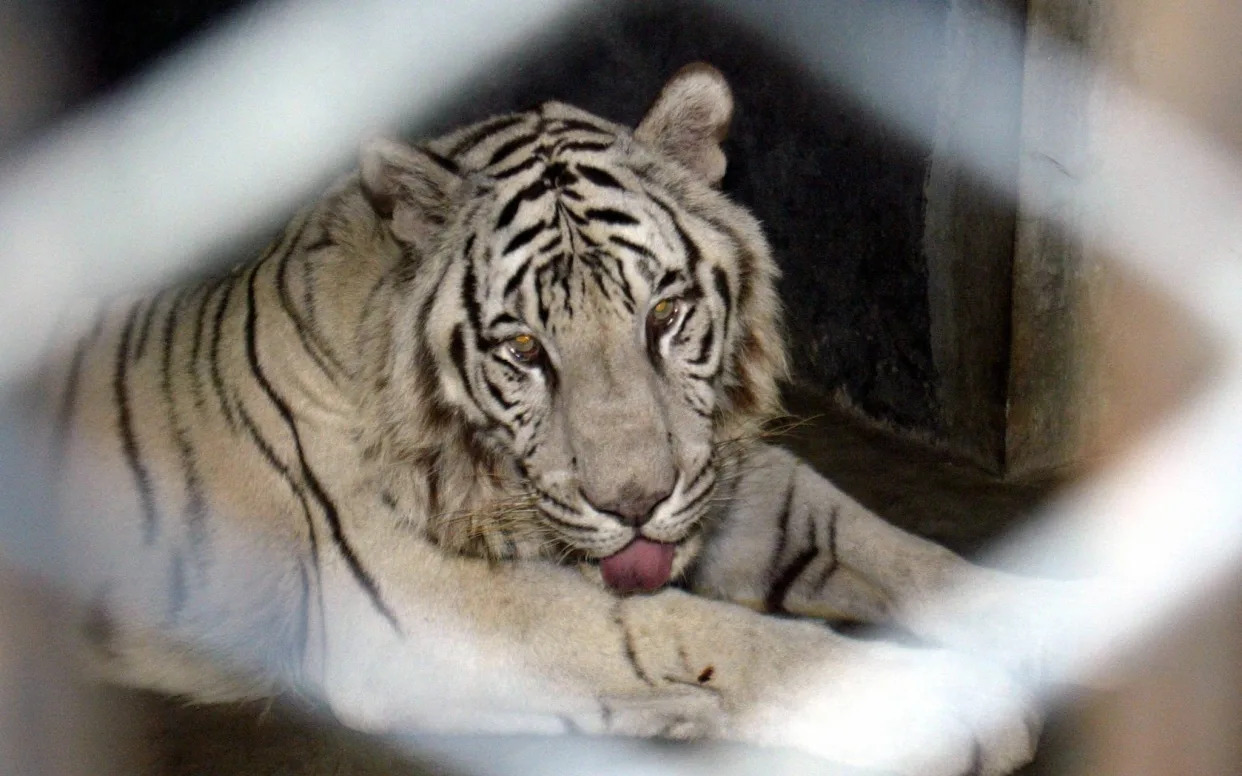
Test results confirmed that the big cats died ‘because of H5N1 type A virus’ - SAEED KHAN/AFP/Getty Images


A panther, three lions and 47 tigers have died from bird flu in zoos in southern Vietnam, further raising concerns about the potential for the virus to evolve to better infect humans.

The fatalities took place in two zoos in August and September near Ho Chi Minh City, state media has reported, and test results from the National Centre for Animal Health Diagnosis later confirmed that the big cats died “because of H5N1 type A virus”. No staff members displayed symptoms.

Experts said the animals likely caught the virus after eating meat from infected poultry.


“Immediate suspicion would be that the zoo animals were infected through whatever they have been given to eat, for example fed chickens that had H5N1,” said Prof Ben Cowling, an epidemiologist at the University of Hong Kong.

He added that this is not common, but that big cats have caught avian influenza before. As the pathogen spread across southeast Asia in 2003 and 2004 – fatally infecting 24 people – two tigers and two leopards also contracted H5N1 at a zoo in Thailand.

But the latest cases come amid mounting uneasiness as bird flu jumps into more and more mammals – including seals, red red foxes and bears – providing space for it to potentially evolve to better infect humans.

“Although avian influenza primarily affects poultry and wild birds, infections in mammals raise concerns about the virus’ potential to adapt and spread across species,” said Dr Bolortuya Purevsuren, a project officer at World Organisation for Animal Health’s southeast Asia office, adding that the Vietnam cross-species infections will be closely monitored.

On a global scale, experts are especially concerned about the seemingly unstoppable outbreak of bird flu in cattle in the United States, where 244 herds in 14 states have been infected – plus at least 14 people. Though these cases have so far been mild, scientists are racing to determine whether there has been human-to-human transmission.

In that outbreak, too, felines have been badly hit – the US Department of Agriculture has detected 43 cases in domestic cats so far this year, with many of them infected after drinking H5 contaminated cows milk.

“So definitely felines seem to be more susceptible to H5N1 than some other mammals,” said Prof Ian Barr, deputy director of the WHO Collaborating Centre for Reference and Research on Influenza in Melbourne.

Dr Charin Modchang, an specialist in disease modelling and epidemiology at Mahidol University in Bangkok, added that he was surprised to see tigers, leopards and panthers infected given the reports of H5 in domestic cats.

“But, from the evolutionary perspective, if the virus can infect and adapt to new mammalian hosts, this should be a concern, as infections in mammals can lead to adaptations that make the virus better suited for mammalian hosts, which are closer to humans than birds,” he said.

“As far as I know, most mammalian H5N1 cases are usually ‘dead-end’ infections with little onward transmission. So the important question is, is this also the case for these tiger infections? How did the tigers get infected, and were there any tiger-to-tiger transmission of the virus? I think we need to find out.”
Mystery behind Australia’s 100,000 year-old ‘warrior pillars’ of unknown origin finally unveiled

Vishwam Sankaran
Thu 3 October 2024 

The strange limestone formations standing in the middle of Western Australia’s Pinnacles Desert were formed 100,000 years ago, according to a new study that sheds more light on climate change in the continent.

Australia’s Aboriginal Yued people believe the spikes represents the hands of warriors swallowed by the sandy place “Kwong-kan” stretching 1000km across.

Now, researchers from Curtin University have found that the limestone pillars measuring about 5m high and 2m wide were formed 100,000 years ago during what was the wettest period in the area’s past half-million years.

“We found this period was locally the wettest in the past half-million years, distinct from other regions in Australia and far removed from Western Australia’s current Mediterranean climate,” study co-author Matej Lipar said.

Scientists found that an abundance of water during this time caused the limestone to dissolve, forming the distinctive iron-rich pillars.


Pinnacles at Nambung National Park (Matej Lipar)

Researchers say such landscapes are found globally along shorelines, including in the Mediterranean, Middle East, southern and southeastern coastal Africa, as well as the Indian subcontinent, Caribbean, Bermuda, and some Pacific islands.

They say the terrain can serve as sensitive indicators of environmental change but only now a method to study the changes of these formations in depth has been developed.

“Studying them within an accurate timeline helps us understand how Earth’s geological systems respond to climate shifts,” Dr Lipar explained.

The iron-rich nodules in the limestone formations act as geological clocks as they trap helium from the decay of small amounts of radioactive uranium and thorium in the soil.

“Measuring this helium provides a precise record of when the nodules formed,” Martin Danišík, another author of the study, said.

“The innovative dating techniques developed in this study reveal the nodules date back about one hundred thousand years, highlighting an exceptionally wet climate period,” Dr Danisik said.

Scientists hope the new method will allow accurate dating of the climate shifts in such landscapes and help provide a more refined timeline of past environmental changes.

“This research not only advances scientific knowledge but also offers practical insights into climate history and environmental change, relevant to anyone concerned about our planet’s present and future,” Milo Barham, another of the study’s authors said.
Newsom quashed bill. Now lawsuit aims to open UC jobs to undocumented students

Clara Harter
Tue, October 1, 2024 

UCLA student Daniela Valadez is among those rallying in May 2023 to demand that UC regents authorize the hiring of students who were brought to this country illegally as children and lack valid work permits. (Jay L. Clendenin / Los Angeles Times)

After Gov. Gavin Newsom vetoed a bill that would have allowed undocumented students to be hired on public universities, a legal effort has been launched to force open this doorway.

On Tuesday, a UCLA alumnus and a lecturer filed a lawsuit accusing the University of California system of discriminating against students based on their immigration status. They are seeking a court order requiring the system to consider undocumented students for on-campus jobs.

“As an undocumented undergraduate student at the University of California, I experienced firsthand the pain and difficulty of being denied the right to on-campus employment,” said petitioner and UCLA alumnus Jeffry Umaña Muñoz on Tuesday. “Losing these opportunities forced me to extremely precarious and dangerous living situations, always moments from housing and food insecurity."

The suit argues that federal law barring the hiring of undocumented people does not apply to public universities. A UC spokesperson said on Tuesday afternoon that the university system had yet to be served with the filing but will respond as appropriate when served.

The suit is being coordinated by the Opportunity4All campaign, which led the charge behind Assembly Bill 2486, or the Opportunity for All Act, this year.

Read more: Newsom vetoes 2nd bill to help undocumented immigrants, this one about hiring UC, CSU students

When vetoing the bill in September, Newsom cited concerns that state employees could be found in violation of federal laws for hiring undocumented people.

“Given the gravity of the potential consequences of this bill, which include potential criminal and civil liability for state employees, it is critical that the courts address the legality of such a policy and the novel legal theory behind this legislation before proceeding,” he said in his veto message.

UC regents, for their part, share Newsom's fear that offering jobs to undocumented students may run afoul of federal law.

In January, they shelved a plan to open jobs to students who lack legal work authorization, saying UC could be subject to civil fines, criminal penalties and the potential loss of billions of dollars in federal funding. The university system receives more than $12 billion in annual federal funding for research, student financial aid and healthcare.

The lawsuit, however, argues that although the Immigration Reform and Control Act of 1986 bars the hiring of people without legal status, this federal law does not apply to government employers such as the University of California.

"No court has ever interpreted IRCA the way the [UC] regents do," Jessica Bansal, counsel for the petitioner, said at a news conference announcing the lawsuit Tuesday. "To the contrary, the U.S. Supreme Court has consistently held that federal laws regulating hiring do not apply to state employers unless they clearly and unambiguously state they do."

Bansal said the UC hiring policy also violates California's Fair Employment and Housing Act, which prohibits state employers from discriminating in hiring based on immigration status.

Although the lawsuit is directed at the UC system, counsel Ahilan Arulanantham said he hoped a favorable ruling would prompt California State University to also open employment to such immigrant students.

California is home to one-fifth of the nation’s immigrant college students who are in the U.S. illegally, an estimated 55,500 of whom attend public colleges and universities.

"It's imperative for these students to have the opportunity to work and pursue career advancement," petitioner and UCLA lecturer Iliana Perez said Tuesday. "By unlocking their potential and enabling them to contribute fully, we can rectify the missed economic opportunity and create a more inclusive and prosperous society."

This story originally appeared in Los Angeles Times.

New California law bans Native American mascots at K-12 schools, strengthens Feather Alerts

Emma Hall
Wed, October 2, 2024 at 8:00 AM MDT·5 min read


Gov. Gavin Newsom signed bills focused on issues ranging from the Missing and Murdered Indigenous People crisis to banning the use of Native American slurs in athletic teams and mascots at K-12 schools.

Among the bills passed was Assembly Bill 3074, which will prohibit K-12 schools from using any derogatory term against Native people as a school or athletic team name by July 2026. These names include, but are not limited to, “Apaches, Big Red, Braves, Chiefs, Chieftains, Chippewa, Comanches, Indians, Savages, Squaw and Tribe.”

Existing law prohibited the term “Redskin” from being a school name or mascot.

“We can’t just let the state of California and local jurisdictions use offensive mascot names to continue that mentality that Indian people are somehow less than human. We are sitting right with people today,” said Assemblyman James Ramos, D-San Bernardino, who co-authored the bill.

Assemblywoman Pilar Schiavo, D-Chatsworth, spearheaded AB 3074 alongside Ramos and Assemblyman David Alvarez, D-Chula Vista.

Public schools operated by tribal nations or organizations will be exempted from this law. This law would take affect beginning July 1, 2026.

Newsom also signed the following bills related to Indian Country. The following legislation was written by Ramos, who is Serrano/Cahuilla and the first and only Native lawmaker in the Legislature:

▪ AB 1821, Pupil instruction of treatment of Native Americans: K-12 students will be taught historically accurate lessons on the mistreatment of Native Americans in California. Students will now learn about the California genocide during the Spanish colonization and the Gold Rush eras.

▪ AB 81, The California Indian Child Welfare Act: County welfare department or county probation department will have to inquire if a child is Native American when first contacted. This law seems to safeguard the Indian Child Welfare Act of 1978, which protects Native American from being removed from the custody of their parents or guardians.

▪ AB 2695, Law enforcement criminal statistics: To better understand where criminal incidents related to the Missing and Murdered Indigenous People crisis occur, the Department of Justice must align its records and date with the federal National Incident-Based reporting system. This law, focused on data collection, will be used to help law enforcement identify domestic violence incidents in Indian Country.

▪ AB 2108, The Luke Madrigal Act: Will require county social works and probation officers to notify local law enforcement and parents or guardians of a foster child’s disappearance. This report must be made no later than 24 hours of receiving information that they’re missing. This law will apply to all children in foster care, but will specifically address missing Native foster children. Native American children enter foster care at a rate 2.7 times higher than the general population. This rate is highest out of any ethnic group.

▪ AB 1284, Tribal ancestral lands and waters: The Natural Resources Agency will be encouraged to enter co-governance and co-management agreements alongside federally recognized tribes. This bill seeks to empower tribes in negotiations between the state, and prevent the negative impacts of climate change.

Other laws, authored by other assembly members, focused on topics like prescribed burns, transportation and tribal housing.
The Feather Alert and the Missing and Murdered Indigenous People crisis

The Missing and Murdered Indigenous People crisis was a primary focus for tribal-focus legislation this session. The epidemic refers to the disproportionate Missing and Murdered cases of Native people, California has the fifth most cases in the nation.

There are more than 150 unsolved cases in California. Across the state, these cases are seven times less likely to be solved compared to any other ethnic group, according to the Yurok Tribal Court.


Bernadette Smith sits with a red handprint painted across her face with her daughter Chishkaleh Flores, 2, at the Missing and Murdered Indigenous People vigil at the Capitol on Wednesday, May 1, 2024. She holds a sign of her sister, Nicole Smith, who was murdered in 2017 on the Manchester Rancheria. Her murder is now a cold case.


The Feather Alert, similar to an Amber Alert, has faced obstacles since its passing. The California Highway Patrol has rejected about 60% of Feather Alert requests, according to the Press Democrat.

Delays with the Feather Alert remains an issue for California tribal communities. In September, Amy Porter, a 43-year-old member of the Morongo Band of Mission Indians, went missing and found dead.

She was last seen on Sept. 15. Frustrated by a lack of urgency, her family began their own search after hearing reports that Porter was involved in a car crash.

Her body was found in the desert near Interstate 10 in Yucaipa in San Bernardino County, according to Native News Online. This was a day after the California Highway Patrol issued her Feather Alert.

Porter’s death is under investigation by the San Bernardino Sheriff’s Department, according to the Los Angeles Times.

To make the Feather Alert stronger, Ramos authored two amendments that would allow tribes to work directly with CHP and mandate they provide a explanation of why an alert is denied. The other amendment will require law enforcement agencies to respond to a Feather Alert request within 48 hours.

These amendments seek to prevent Feather Alerts requests from being delayed and to empower tribes to bring their loved ones home.

While several bills focused on the Missing and Murdered Indigenous People crisis passed, Newsom vetoed AB 2138. This legislation sought to kick start a program with the Department of Justice to give tribal police peace officer status.

Newsom wrote in his veto memo that the bill would create a “significant legal disparity between California peace officers and tribal police officers.”

Ramos said he plans to revisit AB 2138 in the future.

“Indian people in the state of California still feel invisible in many cases. Where is the justice in that?” Ramos said. “We will continue to work with the administration. We will continue to work on these areas and these policies that bring public safety to California’s First People.”
DRILL BABY, DRILL

JD Vance Made It Pretty Clear What A Trump Administration Would Mean For Federal Lands


Chris D'Angelo
Wed, October 2, 2024 


A back-and-forth about federal lands during Tuesday night’s vice presidential debate shined light on how a future Trump administration — much like the first — would treat publicly owned acres as little more than landscapes to be exploited and developed.

Asked about the Republican Party platform’s proposal to pawn off federal lands to address housing affordability, former President Donald Trump’s running mate, Sen. JD Vance (R-Ohio), effectively argued that undeveloped acres are serving little, if any, purpose.

“Well, what Donald Trump has said is we have a lot of federal lands that are not being used for anything,” he said. “They’re not being used for a national park … and they could be places where we build a lot of housing.”

“We have a lot of land that could be used,” he added.

To be clear, many of the landscapes Vance is talking about are being used — for hunting, fishing, recreation, habitat protection and grazing, among other things. Also, it’s important to point out that keeping natural landscapes intact provides myriad public benefits, from safeguarding clean air, water and wildlife habitat to mitigating the mounting impacts of global climate change, a threat that Trump has dismissed as a “hoax.”

Under Trump and Vance, safeguarding federal lands for what they provide naturally would be an afterthought. Their idea of “use” appears narrow and exploitative.

“What would immediately change the equation for American citizens? If you lower energy prices. As Donald Trump says, ‘Drill, baby, drill,’” Vance said Tuesday, going on to blame the Biden administration for fuel prices. “If we open up American energy, you will get immediate pricing relief for American citizens, not by the way just in housing, but in a whole host of other economic goods too.”

That argument — that boosting oil and gas production would immediately lower gas prices and inflation — is one that economists and industry experts have repeatedlychallenged. It conveniently ignores the fact that domestic gas prices are inherently tied to a global market, that oil companies have raked in record profits in recent years and that domestic oil and gas production are at record highs.

"What would immediately change the equation for American citizens? If you lower energy prices," Sen. JD Vance (R-Ohio) said during his vice presidential debate with Minnesota Gov. Tim Walz (D). The Washington Post via Getty Images

Minnesota Gov. Tim Walz, the Democratic vice presidential nominee, repeatedly reminded Vance about current U.S. fossil fuel production on Tuesday. And he pushed back on Vance’s development-first vision for federal public lands.

“I worry about this, as someone who cares deeply about our national parks and our federal lands,” Walz said. “Look, Minnesota, we protect these things. We’ve got about 20% of the world’s freshwater. These lands protect, they’re there for a reason, they belong to all of us.”

Addressing Vance’s suggestion of using federal lands to solve America’s housing crunch, Walz voiced concern about viewing housing as a commodity and thinking about federal lands for their potential for financial gain.

“Are we going to drill and build houses on the same federal land?” he asked, adding there isn’t a lot of federal land around Minneapolis and other urban centers where housing is in high demand.

Walz’s position is a notable departure from that of the Biden administration and his own running mate, Vice President Kamala Harris. In July, the Biden-Harris administration unveiled a housing plan that called for “repurposing public land sustainably to enable as many as 15,000 additional affordable housing units to be built in Nevada.” And in a press release announcing several actions a Harris-Walz administration would take in its first 100 days to bring down costs for American families, Harris’ campaign said it would “take action to make certain federal lands eligible to be repurposed for new housing developments that families can afford.”

One big champion of selling off federal lands to address housing shortages is William Perry Pendley, an anti-federal land attorney who served as Trump’s acting director of the Bureau of Land Management. In late June, Pendley published an op-edin the Washington Examiner titled, “Solve the housing crisis by selling government land,” in which he grumbled about the size of the federal estate and argued Westerners “find their way to a better future impeded unnecessarily by vast swaths of federal land largely unused, unnecessary, and exorbitantly expensive to maintain.”

Pendley authored the Interior Department chapter of Project 2025, a sweeping policy blueprint that right-wing operatives compiled to guide Trump and his team should he win in November. Pendley’s vision for the federal agency is for it to effectively hand the keys to public lands across the West over to fossil fuel and other extractive industries, as HuffPost previously reported.

Public land advocates and housing experts have warned that opening public lands for housing development would do little, if anything, to address home affordability, as well as possibly open the door for construction of vacation and luxury homes that would only further exacerbate the growing housing problem.

“They realized a wholesale sell-off [of federal lands] was a political third rail, so now they’re trying to frame it as a housing solution, but what they’re actually proposing is just more sprawl and McMansions,” Aaron Weiss, deputy director at the Colorado-based conservation group Center for Western Priorities, previously told HuffPost about the Republican Party proposal.

This Feb. 9, 2005, file photo shows the suburbs of Las Vegas from atop the Stratosphere tower looking west down Sahara Ave., toward the Spring Mountains. Despite drought, cities in the U.S. West expect their populations to grow considerably in the coming decades. via Associated Press

Trump is seemingly eyeing public lands for much more than additional housing.

In a Newsweek op-ed published Tuesday detailing his plans for driving economic growth, Trump vowed to “set up special zones on federal land with ultra-low taxes and regulations for American producers, to entice the relocation of entire industries from other countries.” He also promised to slash regulations and “seriously expedite environmental approvals so we can use the resources we have right here on American soil.”

It’s not entirely clear what Trump has in mind here, but it sounds like an extension of his first-term public lands agenda that consistently prioritized drilling, mining and other exploitation over conservation.

During Tuesday’s debate, Vance slammed the Biden-Harris administration’s “regulatory regime.”

“We are a country of builders. We’re a country of doers. We’re a country of explorers,” he said. “But we increasingly have a federal administration that makes it harder to develop our resources, makes it harder to build things, and wants to throw people in jail for not doing everything exactly as Kamala Harris says they have to do. And what that means is that you have a lot of people who would love to build homes who aren’t able to build homes.”

Vance did not elaborate on the people he claimed Harris is putting in jail.

Walz prodded Vance about which regulations he wants to see scrapped.

“I think whenever we talk regulations, people think we can get rid of them. I think you want to be able to get out of your house in a fire,” Walz said.

The two vice presidential contenders also sparred on the debate stage over climate change, a threat that is both wreaking havoc on public lands across the country and being driven in no small part by fossil fuel development across the United States.

Vance condemned the Biden administration’s energy and environmental agenda, arguing that if Harris and Democrats were serious about confronting climate change, they would push for more energy production in the U.S.

“Clearly, Kamala Harris doesn’t believe her own rhetoric on this,” he said. “If she did, she would actually agree with Donald Trump’s energy policies.”

Walz reminded Vance that the Biden administration’s climate and clean energy investments have led to a boom in domestic manufacturing. And he denounced Trump for reportedly soliciting $1 billion in fossil fuel industry campaign donations in exchange for dismantling many of Biden’s green energy policies.

“To call it a ‘hoax’ and to take the oil company executives to Mar-a-Lago, say, ‘Give me money for my campaign and I’ll let you do whatever you want,’” Walz said. “We can be smarter about that, and an all-of-the-above energy policy is exactly what [Harris] is doing, creating those jobs right here.”

As much of the U.S. Southeast reels from the devastating impacts of Hurricane Helene, a deadly storm that researchers have already concluded was supercharged by climate change, Trump is traveling to Texas this week to solicit donations from oil and gas executives, Bloomberg reported.


Montana GOP Senate Hopeful Scrambles To Explain Public Lands Position

Chris D'Angelo
Tue, October 1, 2024

Montana Democratic Sen. Jon Tester and Republican challenger Tim Sheehy spent a full seven minutes of Monday night’s one-hour debate sparring over the issue of federal public lands.

Tester, who is running for a fourth term in a pivotal race that could ultimately decide which party controls the Senate next year, repeatedly painted Sheehy as a threat to America’s public lands and the Montana way of life.

He referred multiple times to HuffPost’s reporting that first revealed Sheehy called for federal lands to be “turned over” to states or counties; failed to disclose his post on the board of the Property and Environment Research Center, a Bozeman-based property rights and environmental research nonprofit with a history of advocating for privatizing federal lands; and appeared to doctor a recent TV ad to remove PERC’s logo from the shirt he was wearing.

Sheehy largely avoided engaging in the specifics of Tester’s attacks, instead continuing a muddled effort to rewrite his record on the issue and accusing Tester of trying to tear down any organization he has been affiliated with.

The extensive back-and-forth came after Montana PBS journalist John Twiggs asked the candidates which entities are best equipped to manage the approximately 27 million acres of federal lands in Montana while maintaining public access.

“Bottom line: Public lands belong in public hands,” Sheehy said.

Tester marveled at what he described as Sheehy’s “incredible transformation on this issue” while warning voters to “watch out what people say in back rooms.”

“What they say in back rooms, when they don’t think the recorder is going or the camera is running, is usually what they think,” he said. “And Tim said we need to turn our lands over to either his rich buddies or county government. That’s not protecting public lands.”

Montana Democratic Sen. Jon Tester speaks at a rally Sept. 5 in Bozeman, Montana. William Campbell via Getty Images

Tester was referring to comments Sheehy made to a ranching podcast last October, shortly after launching his Senate bid. As HuffPost first reported, Sheehy told the “Working Ranch Radio Show” that “local control has to be returned, whether that means, you know, some of these public lands get turned over to state agencies, or even counties, or whether those decisions are made by a local landlord instead of by, you know, federal fiat a few thousand miles away.”

While Sheehy has spent the past year doing damage control on this issue, claiming he opposes the sale or transfer of federal lands despite his own words to the contrary, his comments Monday make clear that when he says “public hands,” he means the hands of Montanans only.

“Public lands belong to the public, that’s you — the people of Montana,” Sheehy said. “Public lands belong to the people, especially those who live amongst them. And I believe that if you’re a Montanan and you share a fence line with National Forest property, if you’re a rancher who has a [Bureau of Land Management] grazing lease, if you live next to state trust land, you should have more input into what happens on that land than bureaucrats 3,000 miles away.”

Sheehy, a former Navy SEAL and multimillionaire businessman, owns a sprawling ranch in Martinsdale, Montana, that, notably, shares a fence line with Forest Service land and once offered high-dollar hunting excursions with what it called “private access to over 500,000 acres of National Forest.”

Sheehy’s position — that federal agencies are poor stewards of the federal estate and that locals know best how to manage federal lands — disregards the fact that federal lands, in Montana and everywhere else, are held in trust for all Americans, regardless of where they live, not just those who happen to live next door.

“I, absolutely, will every day advocate for more local control of those lands, because I believe they belong to you, not the government,” Sheehy said.

Montana Republican U.S. Senate candidate Tim Sheehy walks up to the stage during a rally for Republican presidential nominee and former President Donald Trump at the Brick Breeden Fieldhouse at Montana State University on Aug. 9 in Bozeman, Montana. Michael Ciaglo via Getty Images

Sheehy is walking the same fine line as many members of the GOP. Republicans in Western states have spent decades working to wrest control of federal lands from the federal government. But broad public support for protecting public lands has forced them to largely abandon calls for outright transfer and sale and instead advocate for giving states broad management authority — a move that would ultimately allow them to achieve many of the same industry-friendly goals that would come with stripping lands from federal control.

Again and again, Tester brought the conversation back to Sheehy’s record.

“Tim even served on a think tank, on their board of directors, that’s job was to privatize our public lands,” Tester said. “In Tim’s case, his view of turning these lands over to counties or opening ’em up for his rich friends to buy them, is just the wrong direction to go for Montana.”

Sheehy defended himself with a false claim about PERC: “No one, including myself, in that organization has ever advocated for selling our public lands — never have, never will.”

In fact, in a 1999 policy paper titled “How and Why to Privatize Federal Lands,” PERC’s then-director, Terry Anderson, and others laid out what they called “a blueprint for auctioning off all public lands over 20 to 40 years.” (PERC previously told HuffPost that that paper “is not representative of PERC’s current thinking.”)

“Tim, it’s time to be honest with the people of Montana,” Tester fired back. “You were on a board of an organization that wanted to privatize our public lands. In fact, you even dulled out a badge on one of your ads of a shirt that you wore that was promoting that group. When you found out that badge was on there you said, ‘Hey we can’t be doing that because these guys, I served on their board and they want to get rid of our public lands.’”

“You also didn’t even disclose to the public when you filed for this position that you belonged on that board,” Tester added. “Why? It wasn’t because they were a great organization doing great things for our public lands. It was because they wanted to get rid of our public lands and you were a part of that organization and you didn’t want anybody to know about it.”


As HuffPost first reported, Sheehy failed to include his post on PERC’s board in his Senate financial disclosure — a violation of Senate rules that Sheehy’s campaign chalked up to an “oversight.” Since its founding in 1980, PERC has called for privatizing federal lands, including national parks, and been a staunch opponent of Montana’s unique stream access laws, which provide anglers and recreationists virtually unlimited access to the state’s rivers and streams, including those that flow through private property.

Sheehy’s pro-transfer comments and ties to PERC have been a consistent thorn in the side of his campaign, which over the past year has run a damage-control effort aimed at recasting Sheehy as a champion of public lands. Sheehy’s campaign recently aired a public lands-focused TV ad that featured a current PERC board member, and last month sent out public land mailers to Montana voters that included a picture of Sheehy wearing a flannel shirt with the PERC logo clearly visible on one sleeve. More recently, Sheehy’s team doctored a TV advertisement to remove PERC’s logo from the shirt he was wearing.

At Monday’s debate, Sheehy said Tester’s attacks against PERC are part of a pattern.

“The reason that organization has been criticized by Jon Tester is simply because I was affiliated with it,” he said. “And this has been their plan this entire campaign. If Tim Sheehy is affiliated with anything, attack it, tear it down, smear it.”

If Monday’s debate shined light on anything, it’s that Sheehy has gotten an earful from Montana voters who support protecting and preserving federal public lands. But unlike Rep. Matt Rosendale (R-Mont.), who credited voters with changing his mind on transferring federal lands to states when he ran against Tester in 2018, Sheehy is refusing to acknowledge the reason for having walked back, or disguised, his anti-federal land views.

Whether Sheehy’s newfound opposition to pawning off public lands would survive a six-year Senate term remains to be seen — if he manages to defeat Tester in November.

During the debate, the Montana Republican Party took to X, formerly Twitter, to defend their candidate against Tester’s repeated swings.

@SheehyforMT will work to preserve and expand public access to your public lands and he will KEEP PUBLIC LANDS IN PUBLIC HANDS!” the party wrote.

Just three months ago, the Montana GOP — the party Sheehy is seeking a leadership role in — adopted a party platform that explicitly calls for the “granting of federally managed public lands to the state, and development of a transition plan for the timely and orderly transfer.”