Thursday, October 03, 2024

Ebola-like Marburg virus linked to 8 deaths in Rwanda

WHO assesses risk of outbreak as 'very high at the national level, high at the regional level'

An electron microscope photo of the Marburg virus.
An electron microscope photo of the Marburg virus. (Thomas Geisbert/University of Texas Medical Branch)

Rwanda says that eight people have died so far from the highly contagious Marburg virus.

The announcement comes just days after the country declared an outbreak of the deadly hemorrhagic fever that has no authorized vaccine or treatment.

Like Ebola, the Marburg virus originates in fruit bats and spreads between people through close contact with the bodily fluids of infected individuals.

Rwanda, a landlocked country in central Africa, declared an outbreak on Friday and a day later the first six deaths were reported.

Health Minister Sabin Nsanzimana said on Sunday night that so far, 26 cases have been confirmed, and eight of the sickened people have died.

"WHO assesses the risk of this outbreak as very high at the national level, high at the regional level and low at the global level," the WHO said on Monday. "Investigations are ongoing to determine the full extent of the outbreak and this risk assessment will be updated as more information is received."

With files from CBC News

Swedish foreign minister flees parliament hall after tomatoes, onions thrown at her during Palestine debate

Pro-Palestinian activists with red painted hands accuse recently-appointed minister of supporting genocide

Leila Nezirevic |03.10.2024 - TRT/AA

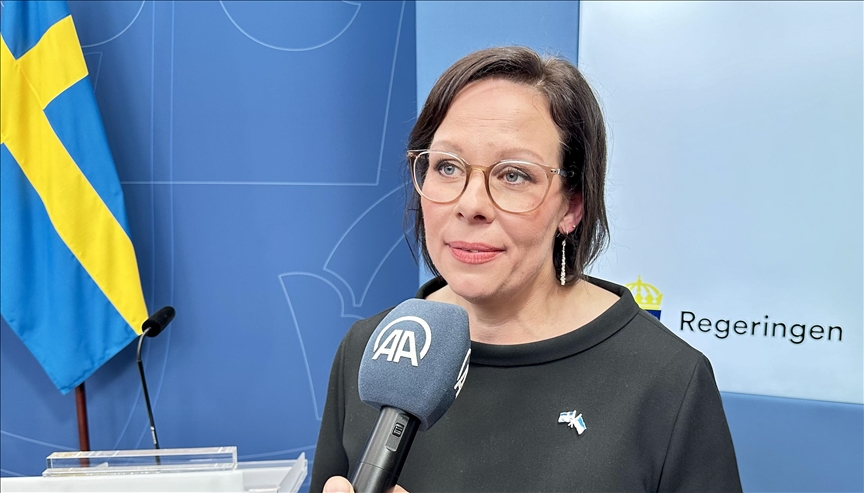
Sweden's newly appointed foreign minister Maria Malmer Stenergard

LONDON

Sweden's recently-appointed Foreign Minister Maria Malmer Stenergard was forced to flee parliament hall Thursday after tomatoes and red onions were thrown at her during a debate about how Sweden should vote on a UN referendum about Israel and the West Bank.

Stenergard fled when those in the stands suddenly started shouting and throwing the vegetables.

​​​​​​​The leader of the Riksdag, Ann-Sofie Malm, said it was pro-Palestinian activists with red-painted hands who threw the vegetables at the minister, the Dagens Nyheter (DN) newspaper reported.

The debate was interrupted shortly after Stenergard answered a question about the situation with Palestinians in the Middle East.

Those sitting in the audience shouted and accused the foreign minister of supporting genocide.

Police have so far arrested three people, the Riksdag administration was quoted by DN.

“You must be able to participate in a conversation during a debate without having things thrown at you. Especially, in the Riksdag hall, which is the room of the elected representatives,“ Stenergard told Dagens Nyheter.

The tomatoes and red onions were not detected in security checks at the Riksdag, even though visitors are only allowed to bring notepads into the hall, said DN.

Prime Minister Ulf Kristersson demanded stricter security measures after the incident.

“I expect a thorough analysis of how this could happen and stronger measures to maintain the safety of the elected representatives in the hall,” he said.


Tomatoes lobbed at Sweden’s foreign minister during parliamentary debate

Garden-variety attack comes during a discussion of Israeli settlements in the West Bank.


A bag containing the vegetables was thrown in Maria Malmer Stenergard's direction, landing two rows behind her. | Kenzo Tribouillard/Getty Images

October 3, 2024 
By Csongor Körömi

Protestors threw a bag of tomatoes and red onions at Sweden’s foreign minister during a debate on Stockholm’s position on Israeli settlements in the West Bank on Thursday, local media reported.

Foreign Minister Maria Malmer Stenergard was returning to her seat after speaking at a parliamentary debate on why Sweden had abstained in the United Nations General Assembly vote on the legal consequences of Israel’s occupation of the West Bank, when “a ruckus” started in the public gallery, lawmaker Ann-Sofie Alm told the AFP.

bag containing the vegetables was thrown in Stenergard’s direction, landing two rows behind her, the tabloid Aftonbladet reported.
Advertisement

The minister fled the chamber when she heard the noise, and the debate was temporarily suspended.

“It must be possible to have a parliamentary debate without having things thrown at you. It is fundamental to democratic discourse,” Stenergard wrote in a text message to Aftonbladet, thanking all those who had offered their support in the aftermath.

Prime Minister Ulf Kristersson condemned the incident: “I am proud that Sweden has a competent and upright foreign minister who represents the government’s line on the conflicts in the Middle East. No one should be allowed to threaten her or throw objects at her.”

“We have helped the security guards to remove people from the scene,” a police spokesperson said, adding that two women aged 45 and a man aged 35 were suspected of disrupting the debate.

Diamonds Brought Prosperity to Botswana. Women Workers Are Paying A Heavy Price.

(Illustration by Joanna Andreasson for New Lines Magazine)

by Louise Donovan
October 3, 2024
THE FULLER PROJECT
Co-published with New Lines Magazine


LONG READ


As Gofaone sat behind a polishing wheel for the first time, she wasn’t just bursting with happiness; she felt important. Not everyone in Botswana gets the chance to see a diamond with their own eyes, she thought. She looked at this delicate, expensive thing, almost as old as the Earth itself, and saw a lifeline.

At 25, she felt like she’d made it. Now 37, she is filled with regret.

After more than a decade spent cutting and polishing diamonds, Gofaone, a single mother, has little to show for her time and skills. She has no savings; Gofaone and her 8-year-old son share a rented home with a fellow polisher because neither of the women can afford to live alone. She endures chronic back pain, which she believes was caused by the work, and has been targeted for joining a union.

“[I feel] so sad,” she said. “Looking back, I feel like I’ve wasted my years.”

Gofaone, who asked to be identified only by her middle name out of fear of repercussions, is among thousands of mostly female workers employed in Botswana’s polishing factories. They work for companies known as “sightholders,” trusted partners hand-selected by global giant De Beers. In order to keep receiving rough diamonds from De Beers, the sightholders must adhere to its standards, put in place to ensure human rights and labor regulations are met. De Beers describes these as the strictest the industry has seen.

Yet in interviews with more than two dozen current and former employees across multiple factories, The Fuller Project and New Lines documented numerous violations of these standards.

Workers are often hired on precarious short-term contracts with few rights or benefits, and, like Gofaone, threatened or punished for unionizing. Some women said that the fine dust particles from diamond polishing cause coughing and sickness, while others handle corrosive chemicals with their bare hands. Many described wiping black dust off their faces at the end of shifts and a workplace infested with rats. One reported being repeatedly sexually assaulted, and others said they were sexually harassed.

“They treat us like slaves,” said one woman who worked for Sheetal Cutting Works, a company headquartered in India, until last year. “They don’t care about our lives.”

“We have serious issues in this sector,” said Letang Rakwadi, a labor relations officer at the Botswana Diamond Workers Union (BDWU). “It’s the same thing … every day, every year.”

Nearly all workers interviewed asked to remain anonymous due to security or job concerns

.
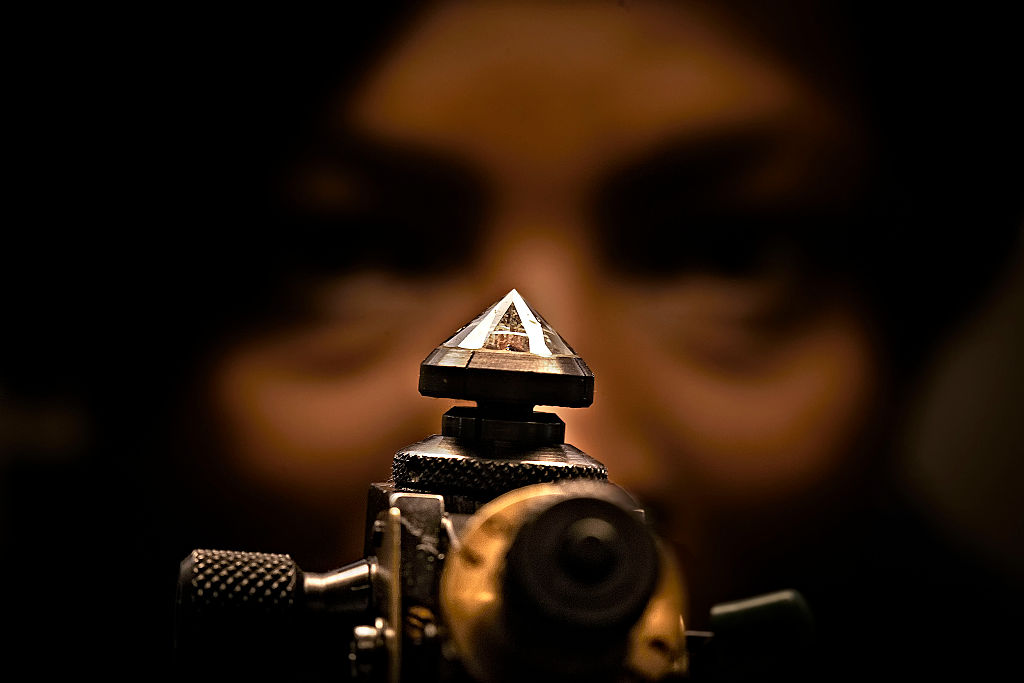
An employee at one of the many diamond polishing companies in Botswana (Photo by Olivier Polet/Corbis via Getty Images)

During the COVID-19 pandemic, shoppers stuck at home splurged on luxury purchases — like diamonds. But since then, demand has fallen, as consumers hit by inflation are spending less. Diamond prices have also dropped, and lab-grown gems are becoming cheaper and more popular.

Fifty-plus years ago, De Beers and the government of Botswana formed a lucrative partnership to run the country’s diamond mines, known as Debswana. Yet today, De Beers is reeling from its worst slump in sales in more than two decades. And as owner Anglo American prepares to sell the “world’s most important” diamond company, its future looks uncertain, leaving sightholders equally worried about theirs.

Although workers in the polishing sector technically earn above the minimum wage, it’s far from what is needed for a decent life, the women said. Botswana might be considered an upper-middle-income country, largely thanks to the diamond trade, but it’s also one of the most unequal.

And while media outlets around the world regularly report on issues in India’s polishing sector, including mistreated workers committing suicide, rights groups say that Botswana receives little scrutiny, leaving violations to fester in a country known for its so-called ethical gems.

“If you ask somebody to tell a positive story about diamonds, the first thing they will always say is Botswana,” said Hans Merket from the International Peace Information Service, a research institute based in Belgium. “It’s still often seen as this ‘good pupil’ in the class, and this has led to very limited attention for its problems with transparency, corruption issues and so on.”

A De Beers Group spokesperson, in emailed comments, said the company takes the allegations relating to sightholder businesses in Botswana “extremely seriously” and is carrying out “active measures” to review them. Independent audits are conducted to ensure compliance with their standards, the spokesperson added.

The government of Botswana did not respond to multiple requests for comment.


Polishing diamonds can be messy work. Back in the 1980s, when Antwerp in Belgium was the undisputed capital of the world’s diamond trade, workers dealt with what one described as the “black nose blower” problem. As they breathed in the carbon dust produced during the manufacturing process, their airways clogged with dirt. People fell sick. Under pressure from unions, and as technology improved, machines were gradually introduced that sucked the dust directly from the polishing wheel, or scaife.

Although the suction systems aren’t perfect, the air is clean enough to ensure that masks aren’t a protective clothing requirement inside Antwerp’s factories — just goggles. These days, it’s known that “diamond dust” can be harmful to workers’ health, said Annelies Deman, federal secretary of the General Labour Federation of Belgium, one of the country’s unions. As suction technology is now commonplace, there is scant new research into just how harmful the dust is, but one study from the early 1990s showed it reduced the lung volume of teenage polishers in India.

“We want to avoid that,” said Deman. “That is not the way people want to work in Belgium.”

In Botswana, some have little choice. Although most of the rough stones mined in the country are shipped to manufacturing hubs like Surat in India, the first sightholder factory opened in Botswana in 2003 as a way to support the country’s economy and provide jobs.

Today, roughly 3,500 workers, the major
ity of whom are women, are employed across 33 sightholders, according to Rakwadi.
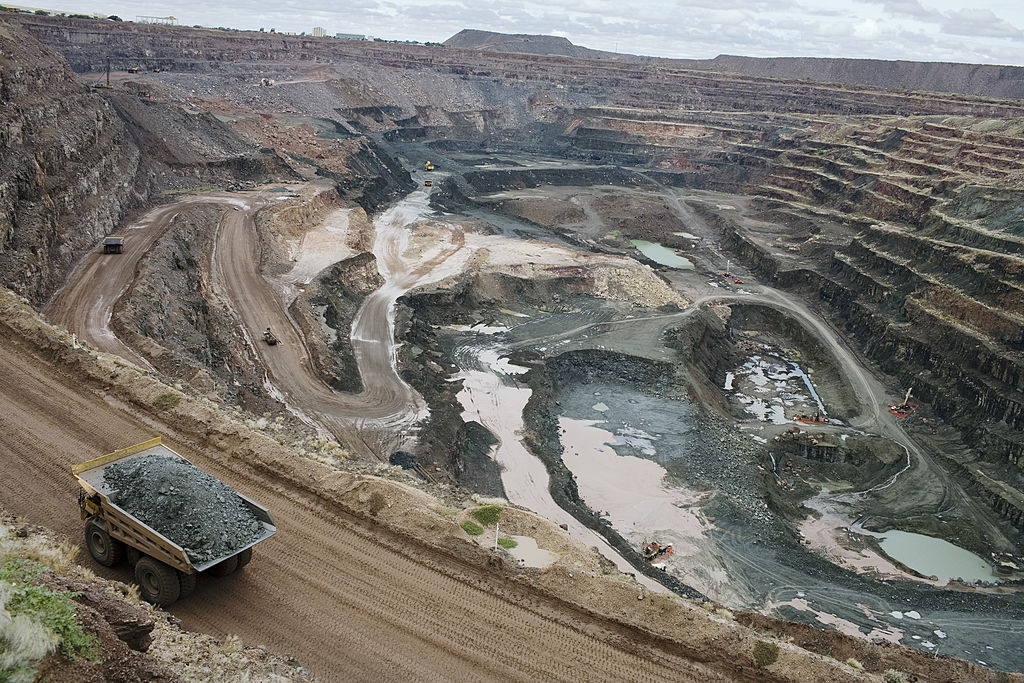
A mining truck hauls ore from the pit at Orapa mine, one of the largest diamond mines in the world owned by Debswana. (Photo by Per-Anders Pettersson via Getty Images)

At Sheetal, black dust lined the factory ceiling and walls, according to multiple former employees, including Gofaone, who worked there until last year. There was no suction whatsoever, they alleged. When Gofaone inquired about it, she was told by management that the air conditioning was “doing the magic” and removing the dust.

Their bosses provided surgical masks, but they were too thin and flimsy to be of any use, the women said. Several described wiping their faces or noses at the end of the day and throwing away black tissues. They were sick with flu, coughs, allergies and rashes.

In an email, Molatedi Tuwane, Sheetal’s human resources manager, said that there has been suction in the factory since it opened in 2022. He said labor inspections from last year stated that the factory features an “exhaust system” to reduce workers’ exposure to “airborne contaminants” such as mist, fumes, vapor and gas, which are captured “at source.” When asked to explain workers’ claims regarding dust and a lack of suction, including from one employee who left just a few months ago, Tuwane did not respond.

He added that management provides surgical masks and there have been no recorded incidents or complaints about diamond dust. Sheetal is “well aware” of the importance of supporting employees’ health, providing preemployment and annual medical checkups for staff.

Star Rays Diamonds Botswana, another Indian-headquartered company, was rife with rats, according to six current and former employees.

“Rats were everywhere,” said one woman who left last year. “It was not OK at all.”


They don’t care about our lives.

The factory often smelled of rat urine and excrement, she said. She described co-workers picking droppings, human hair and plastic out of their company-provided lunch of rice and vegetables. Another former employee sent The Fuller Project a video of an insect crawling across her lunch last year. “Every day someone finds something inside that food,” she said.

Like at Sheetal, workers also described dust lining the walls and wiping their faces only to be left with black tissues. “The dust is very dangerous to our health,” said one.

Women said they reported their issues to management but nothing changed.

In an email, a spokesperson for Star Rays Diamonds Botswana said that workers’ well-being, hygiene and safety are a “top priority,” that masks and extraction systems are provided for employees, and that the company has not received any complaints about dust internally. Star Rays claims to demand the “highest hygiene standards” from the external company that provides its catering. The company acknowledges that rats have been “an issue” in the area but said it has been “broadly successful” in managing the problem in the factory.

The issues alleged across the factories violate De Beers’ standards, which are laid out in their Best Practice Principles (BPP), a mandatory business conduct code that applies to all De Beers operations and sightholders. They state there should be “extraction or appropriate ventilation of dust” to minimize exposure to airborne particles and a working environment with “acceptable conditions” regarding cleanliness.


When Botswana gained independence from Britain in 1966, it was one of the world’s poorest countries, with little infrastructure and few paved roads. A year later, De Beers geologists stumbled on diamonds and mining revenues began pouring in. Today, many of the country’s 2.6 million people have access to free health care and education, and wide roads zigzag across one of the richest nations in Africa.

In the 1960s, Botswana mostly sold beef. Diamonds now account for over 90% of total exports and one-quarter of gross domestic product. Hailed as an African success story by the United Nations, the country is famous for swerving the corruption and conflict that ravaged its equally mineral-rich neighbors of Angola and Congo, and now produces more diamonds than any country in the world except Russia.

Yet openly criticizing the industry often makes people uneasy. Diamonds have been a welcome lifeline here, and their glittering fingerprints can be felt across Gaborone, the capital. You feel it in the smooth roads, hear it in the shouts emanating from the Debswana-funded soccer pitch. Dare say anything against this success story and citizens risk not just tarnishing the image of the country’s most important commodity but being branded unpatriotic, too.

“You see the catch-22?” said one union worker.
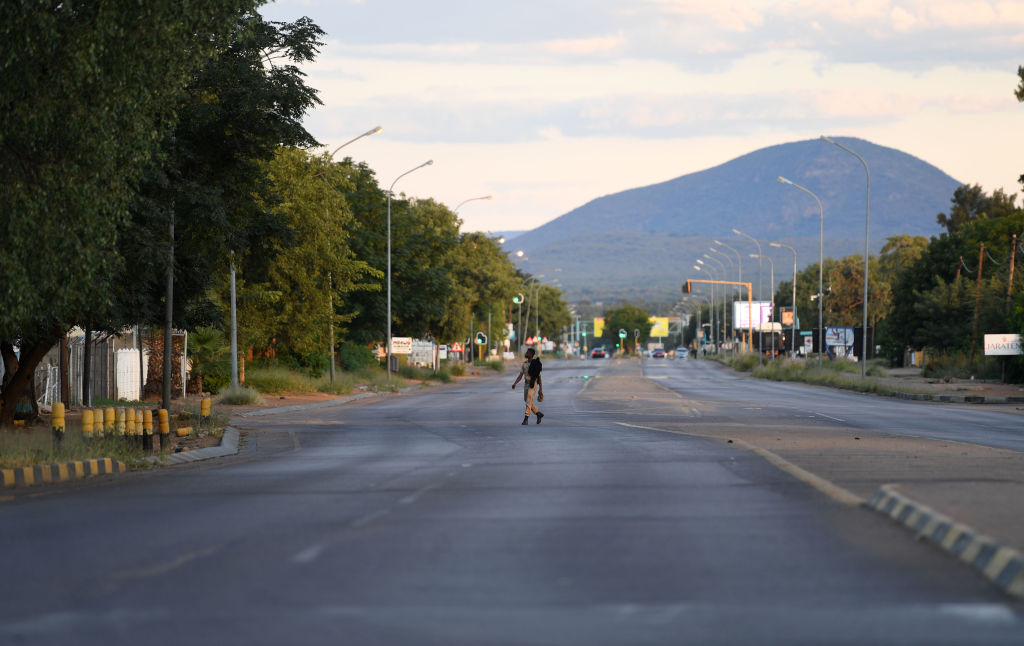
A pedestrian walks across wide roads in Gaborone, Botswana (Photo by Monirul Bhuiyan/AFP via Getty Images)

This might explain why issues inside the country’s polishing factories have not been dealt with adequately. From his office in Gaborone, Rakwadi flicks through thick folders, handing over copies of letters his union sent to the Botswana government as far back as 2011 regarding human rights violations and poor health and safety conditions. He’s described the industry as “rotten” to its core.

At Dharm Cutting Works, another sightholder in Gaborone, at least eight current and former staff have accused the company’s general manager, Kunal Shah, of sexual harassment and assault.

“He’s feared by everyone,” said one.

Shah tried to undress them in the factory toilets and touch their breasts, some said. He ordered female factory staff to clean his home and, once in private, forcibly kissed them and smacked their buttocks, others added.

One woman alleged that Shah repeatedly sexually assaulted her in his home. Her voice sounded distant, almost empty, as she described being turned over one day last summer, her torso resting on the armrest of his couch. “Eventually he pulls out,” she said. “I’m shaking. I can’t fathom what just happened. And afterwards … he goes, ‘Don’t overthink it.’”

She is hesitant to use the word rape but describes feeling too scared to say no to his requests. This was her first job, after all. As her mind unraveled, she turned to alcohol and started self-harming. “I was spiraling,” she said. “I was becoming something else.”

She is one of several workers who reported Shah to the labor department earlier this year over rape, assault and harassment allegations, along with nonpayment of bonuses stretching back months. In May, government labor inspectors interviewed nine current and former Dharm workers in Botswana and concluded there was a “clear case of sexual harassment” in a report from July viewed by The Fuller Project.

During this period, women felt that little changed and took the case to the police.

In an email, Mayank Sakadasariya, Dharm’s interim general manager, said Shah was “immediately” suspended after the company received formal complaints about his behavior.

Shah’s suspension happened in August, roughly four months after the government began their investigation based on workers’ complaints and one day before a newspaper in Botswana published the allegations.

The company has said it is now conducting an independent investigation into the allegations and will “thoroughly” address all concerns. Sakadasariya understands that the government revoked Shah’s visa and he was instructed to leave the country, though his current whereabouts are unknown.

Shah could not be reached, and the police did not respond to multiple requests for comment.

The De Beers Group spokesperson said that after recently becoming aware of the allegations at Dharm they “immediately” sought further information and “activated the appropriate BPP governance mechanisms.” They “continue to closely monitor the situation.”
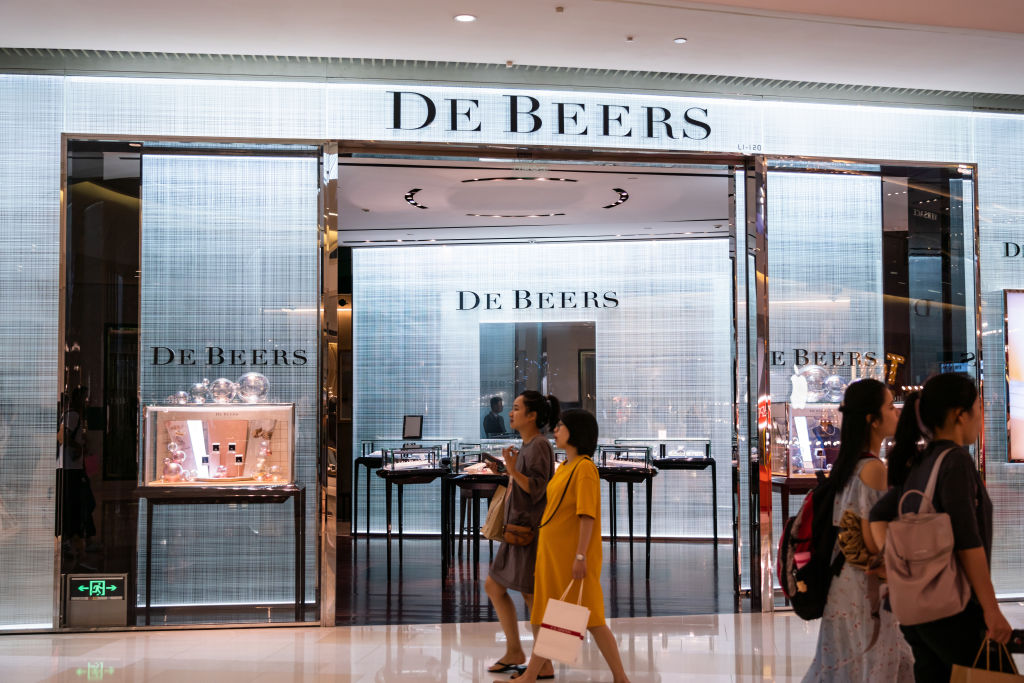
Pedestrians walk past De Beers store in Shanghai. (Photo by Alex Tai/Sopa Images/LightRocket via Getty Images)

Dharm was the only sightholder where workers made allegations of sexual assault and harassment. Yet staff there also expressed concerns regarding health and safety regulations, in line with complaints at other sightholders.

Some use highly corrosive chemicals, including nitric and sulfuric acid, to remove impurities from the diamonds, a process known as “boiling.” Because exposure can cause irritation to the eyes and skin, severe skin burns, or difficulty breathing if inhaled, appropriate protective equipment is recommended, according to the U.S. Centers for Disease Control and Prevention (CDC).

“We are not given anything to protect ourselves,” said one current employee at Dharm who directly handles these acids. “It’s very, very, very bad.”

Although the boiling process previously took place in a closed room, faulty vents pushed fumes into a neighboring company’s office, according to the employee. After the company complained to Dharm, this year management moved the boiling process to an open space next to the workers’ lunch area.

“I make sure that I close the entrances to the factory, but the fumes find a way to get inside. You hear everyone coughing inside. … So you can just imagine me, who’s outside doing the actual boiling.”

After a labor inspection last year, a report viewed by The Fuller Project showed that the government advised Dharm to provide workers with masks to protect them from the dust and material safety data sheets for the chemicals they are using. Over a year later, several of the women said they are still waiting for masks. Regarding the chemicals, the government wrote that the factory’s management described them as “low strength” and made no explicit protective clothing recommendations.


I was becoming something else.

Yet during government inspections, management has told staff to hide the fact that boiling takes place inside the factory, according to one worker directly involved in the process. “The day when inspectors came, we would lock the boiling room and hide the keys,” they said, adding that Dharm only mentioned using less harmful chemicals, such as acetone (for which the CDC still advises preventing skin and eye contact).

As recently as April this year, one employee who handles acetone said the human resources manager rushed into the office and told her to say that she wears gloves, masks and goggles. He thought the company was being audited. “And I’m sitting there like, I don’t wear such a thing,” she said. “This is scary. … Everything about them is for show.”

Again, this violates De Beers’ own standards, which state that chemical fumes need to be extracted and neutralized. In response to these allegations, Sakadasariya, Dharm’s interim general manager, said the company complies with “all” local labor and safety regulations.

“You could literally be dying a slow death,” added the woman. “And you wouldn’t even know.”


Buying gems from a country such as Botswana can buy one a clean conscience, claimed a 2015 Time magazine investigation into blood diamonds. In an industry historically beset by violence, smuggling and child labor problems, the country is known for its ethical diamonds. It’s even got the royal stamp of approval, with a Botswana-sourced crystal adorning Meghan Markle’s engagement ring from Prince Harry.

Yet behind the glittering exterior, it’s also one of the most unequal places, according to the World Bank, with high rates of poverty and unemployment. Over half of all people in Botswana experienced moderate to severe food insecurity in the period from 2021 to 2022. Debswana is the largest private sector employer, but outside of mining, there are so few jobs that economists pick up shifts driving taxis to make ends meet, according to a 2016 report by the African Network of Centres for Investigative Reporting and other nongovernmental organizations
.
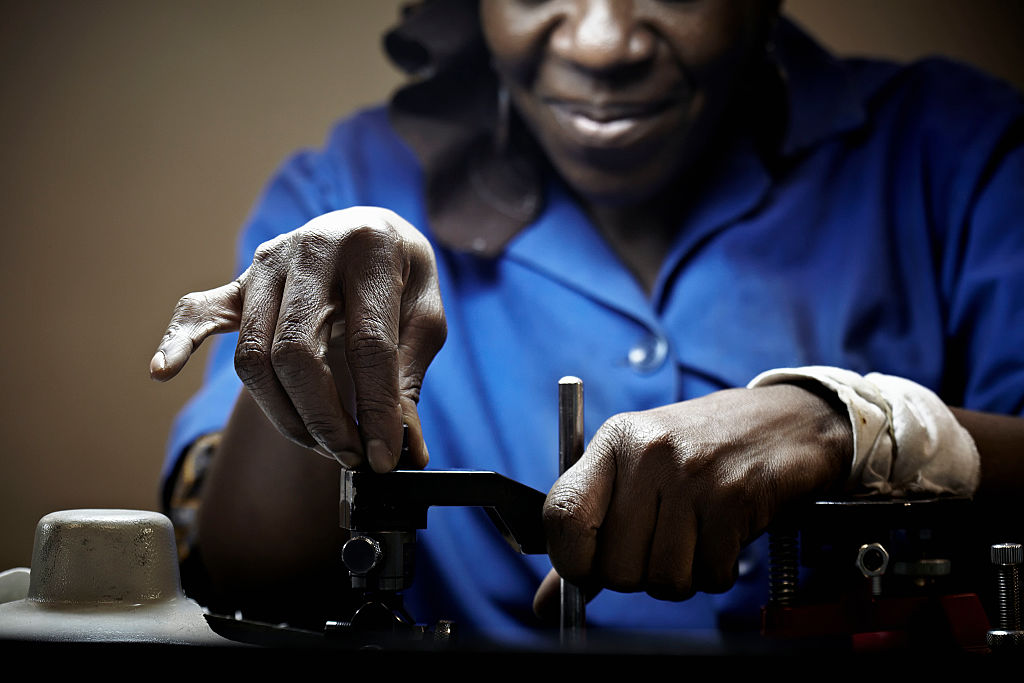
An employee at one of the many diamond polishing companies in Botswana (Photo by Olivier Polet/Corbis via Getty Images)

For years, low wages have pushed polishers into poverty, said Rakwadi, the BDWU union official. Their salaries cover food and rent but often little else. Many of the women are single mothers and often the main breadwinners, supporting extended families. Although companies boost employees’ wages with “incentives,” monthly extras to cover the cost of transport or reward punctuality, these are optional and were sometimes stopped or simply not paid, the women said.

Some of the lowest wages documented were at Dalumi, a global company with manufacturing facilities in Botswana. Several current and former polishers with more than 10 years in the industry earned a monthly base salary of between 1,900 and 2,500 pula (roughly $140-$190). The recommended living wage in Gaborone is 8,119 pula, according to The WageIndicator Foundation, a global nonprofit organization. Yet for many, it’s this or nothing.

“This company is going to kill us,” said one Dalumi employee, referring to the toll of low wages on workers’ physical and mental health.

In an email, Meir Dalumi, the company’s managing director, said that it works with the union to deal with employees’ issues in “good faith” and that the majority of them are “happy” and “love” the working environment.

Women dream of building their own homes, yet to access loans, banks in Botswana typically require a permanent contract — something most of the women interviewed did not have. Much like in the global garment sector, sightholder companies increasingly employ staff on temporary contracts, often for one year, said Rakwadi. He said this also makes it easier for companies to dismiss workers or target trade union members — a trend he’s watched play out across the sector.

At Sheetal, at least six former employees said their one-year contracts were not renewed or that they faced intimidation after engaging in union activity. All were members of the BDWU.

One former employee said that after she joined the union in December 2022, a manager advised her to withdraw because the bosses had “targeted” all members. “So I asked him what that means, [and] he said, ‘Obviously they are going to fire you. There is no choice.’ It didn’t take long.”

When her contract was up for renewal six months later, she found herself out of a job.

“We were standing up for ourselves,” said Gofaone, who also believes she was targeted. “We didn’t want oppression.”
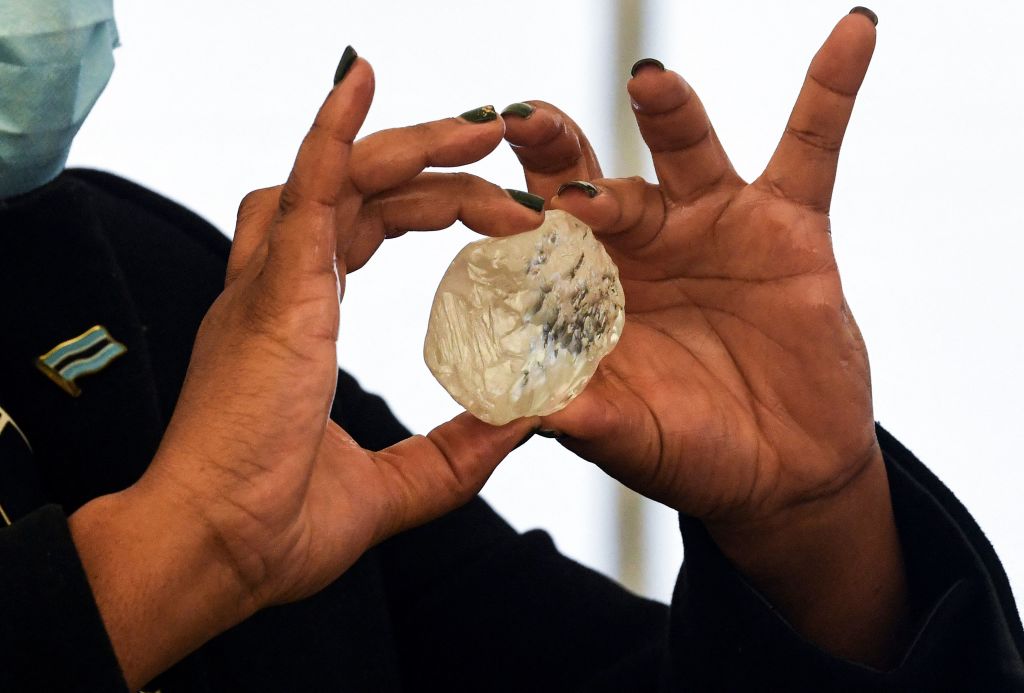
A Botswana member of cabinet holds a gem diamond in Gaborone (Photo by Monirul Bhuiyan/AFP via Getty Images)

Union busting violates Botswana’s labor laws and De Beers’ employment standards, which state that employers should “respect the right to freedom of association or collective bargaining” and that workers who do join a union should not be subjected to “any form of harassment, discrimination or discipline.”

There has always been freedom of association at Sheetal, said Tuwane, the human resources manager. No employees have been targeted or punished for being part of a union and the only rationale for terminating employment has been the expiry of fixed-term contracts or misconduct, he added.

“Diamond polishing in Botswana is terribly disempowering for women,” said Todd Majaye, who worked for Debswana in the 2000s and is now managing director at Afrimond, a consultancy based in Botswana and South Africa. “They are virtually disposable items.”

As the industry continues to battle a savage downturn, sightholders are also struggling. Several Dalumi employees lost their jobs in August, with the company citing the market situation, while Dharm’s management warned in letters seen by The Fuller Project they will need to do the same.

Where this leaves the workers isn’t clear. Some simply want permanent contracts and salaries they can survive on. A standard wage across all De Beers sightholders would help, said the union, though that looks unlikely.

“We want our government to fight for us,” said one former Sheetal employee. “We need people who can listen.”

Gofaone is tired of diamonds. Now, every morning from Monday to Saturday, she prepares an assortment of food — rice, salad, madombi (a type of dumpling) — and stands outside her local hair salon to catch the lunchtime trade. It’s not easy. Last month, she wasn’t able to pay her rent of 1,100 pula ($82).

But she’s determined to make something of herself. And people need to eat, she thinks. After 12 years, it feels like a safer bet than a gem that only disappoints.

Additional reporting by Joel Konopo.
In India, warming climate pressures scientists to keep developing tougher seeds

SIBI ARASU
Tue, October 1, 2024

PHOTO ESSAY


BENGALURU, India (AP) — Unpredictable rains and increasing heat aren't just making life more difficult for the people of Rayanpet, a village in India's arid south. They're also taking a toll on the thousands of acres of rice grown here.

“We used to know when it would rain and for how long and we sowed our seeds accordingly," said P. Ravinder Reddy, a former soldier who turned to farming on his family's land 16 years ago. “Now it’s so unpredictable and many times the seeds don’t sprout either because there’s too much rain or it’s completely dry.”

Fortunately for Reddy, agricultural research organizations in India have been working for years to engineer rice seeds that can better withstand the vagaries of climate. He's been experimenting with the new varieties for the past five years, and said they're giving better yields with less water and are more disease-resistant.


"I have planted them across a quarter of my 25-acre field because there’s still demand for older varieties but I think in a few years, we will use only these tougher seeds,” Reddy said.

India is one of the world’s largest producers and consumers of wheat and rice. Research organizations here, like their counterparts around the world, have long worked to produce seeds that increase yields, withstand drought or resist plant diseases. It's a growing need as a changing climate leads to more extreme and unpredictable weather.

According to a United Nations report released earlier this year, more than 700 million people went hungry last year and over a third of the global population is unable to afford a healthy diet, thus increasing the urgency for resilient seeds that can produce food reliably. Apart from India, other programs including a United States government program and privately funded projects are helping develop climate-resilient crops in Africa, Central America and other Asian countries.

As India is among the countries most vulnerable to climate impacts, these new seeds are essential in ensuring it produces enough food for its people as well as for export.

Defending against climate shocks

As climate change intensifies, India’s nearly 120 million farmers — most with less than 5 acres of land — are seeing their livelihoods threatened by erratic rainfall patterns, rising temperatures and increased pest infestations.

Some are taking to what is called natural farming — techniques like using natural fertilizers and planting crops alongside trees and other plants that can protect crops from wind, erosion and some extreme weather — to deal with climate change. But that can mean reduced yields, and India’s federal government is also promoting the use of climate-resilient seeds that don’t compromise yields.

Increasing salinity in groundwater, heavy rainfall over short periods, prolonged droughts and even increasing nighttime temperatures can affect rice seeds, experts say.

“We really need these seeds to deal with these multiple issues created by global warming,” said Ashok Kumar Singh, former director of New Delhi-based Indian Agriculture Research Institute and a scientist who specializes in plant genetics and breeding. Singh has overseen the creation of multiple successful rice varieties to withstand pests and various plant diseases. And his organization, with funding from the federal agriculture ministry, has released more than 2,000 climate-resilient seed varieties in the last decade.

Earlier this year, Prime Minister Narendra Modi released 109 climate-resilient seeds across crops that included cereals, pulses and oilseeds like peanuts. India’s federal government has announced plans to ensure at least 25% of land tilled for paddy in the country will be sowed with climate-resilient seeds in the coming “kharif” or winter crop season.

“We are breeding for multiple stressors, including heat and disease resistance,” said Janila Pasupuleti of International Crops Research Institute for the Semi-Arid Tropics, based in Hyderabad. Pasupuleti said that this approach not only stabilizes yields but also enhances the nutritional quality of crops, benefiting both farmers and consumers.

Logistical issues that need ironing out

Even as scientists are creating climate-resilient seeds regularly, making sure the seeds reach the maximum number of farmers is critical.

Ensuring that farmers know about such seeds, can afford them, and are trained to use them properly is as important as creating the seeds, said Aditi Mukherji, director for climate change adaptation and mitigation at the Consultative Group on International Agricultural Research and an author of several United Nations climate reports.

Mukherji noted that India’s green revolution in agriculture, which took place in the 1960s when agriculture was modernized to ensure food security and increase yields of food grains such as wheat and rice across the country, succeeded because such services were available and well-coordinated by state and federal governments at that time.

Agriculture scientists also say there's a need for more funding for research and development — equivalent to at least 1% of the agricultural gross domestic product, said Singh, the agriculture scientist.

In Rayanpet village, Reddy is preparing to sow rice seeds for the winter season in a few weeks, and says he hopes to expand the area that gets the climate-resilient seeds.

“It’s good to keep trying new seeds as after some time all of them will have some issue or the other. If the government can also make sure we get good prices for our crops after harvest, that would help farmers like us a great deal,” he said.


Climate India Resilient Seeds
P. Ravinder Reddy, a farmer, applies fungicide to peanut seeds before sowing in Rayanpet village of Telangana state, India, Wednesday, Sept. 25, 2024. (AP Photo/Mahesh Kumar A.)


___

Follow Sibi Arasu on X at @sibi123 ___

The Associated Press’ climate and environmental coverage receives financial support from multiple private foundations. AP is solely responsible for all content. Find AP’s standards for working with philanthropies, a list of supporters and funded coverage areas at AP.org.


Yazidi woman freed from Gaza in U.S.-led operation after decade in captivity

Timour Azhari
Updated Thu, October 3, 2024 

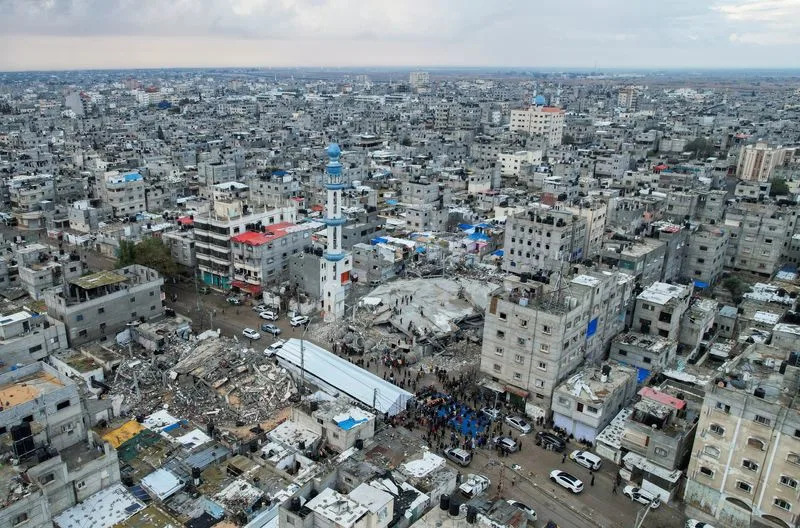
Palestinians hold Eid al-Fitr prayers by the ruins of al-Farouk mosque in Rafah

By Timour Azhari

BEIRUT (Reuters) -A 21-year-old woman kidnapped by Islamic State militants in Iraq more than a decade ago was freed from Gaza this week in an operation led by the United States, U.S. and Iraqi officials said.

The operation also involved Israel, Jordan and Iraq, according to officials.


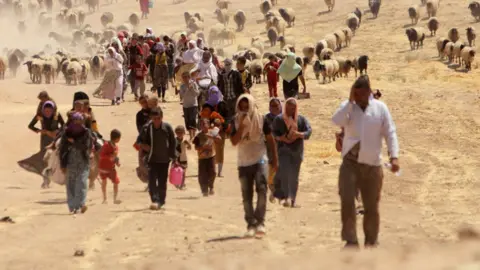
The woman is a member of the ancient Yazidi religious minority mostly found in Iraq and Syria which saw more than 5,000 members killed and thousands more kidnapped in a 2014 campaign that the U.N. has said constituted genocide.

She was freed after more than four months of efforts that involved several attempts that failed due to the difficult security situation resulting from Israel's military offensive in Gaza, Silwan Sinjaree, chief of staff of Iraq's foreign minister, told Reuters.

She has been identified as Fawzia Sido. Reuters could not reach the woman directly for comment.

Iraqi officials had been in contact with the woman for months and passed on her informaiton to U.S. officials, who arranged for her exit from Gaza with the help of Israel, according to a source familiar with the matter.

Officials did not provide details of how exactly she was eventually freed, and Jordanian and U.S. embassy officials in Baghdad did not immediately respond to requests for comment.

The director of the digital diplomacy bureau at Israel's foreign ministry, David Saranga, posted on X that "Fawzia, a Yazidi girl kidnapped by ISIS from Iraq and brought to Gaza at just 11 years old, has finally been rescued by the Israeli security forces."

There was no immediate comment from the Israeli military.

A State Department spokesperson said the United States on Oct. 1 "helped to safely evacuate from Gaza a young Yezidi woman to be reunited with her family in Iraq."

The spokesperson said she was kidnapped from her home in Iraq aged 11 and sold and trafficked to Gaza. Her captor was recently killed, allowing her to escape and seek repatriation, the spokesperson said.

Sinjaree said she was in good physical condition but was traumatized by her time in captivity and by the dire humanitarian situation in Gaza. She had since been reunited with family in northern Iraq, he added.

More than 6,000 Yazidis were captured by Islamic State militants from Sinjar region in Iraq in 2014, with many sold into sexual slavery or trained as child soldiers and taken across borders, including to Turkey and Syria.

Over the years, more than 3,500 have been rescued or freed, according to Iraqi authorities, with some 2,600 still missing.

Many are feared dead but Yazidi activists say they believe hundreds are still alive.

(Reporting by Timour Azhari; Editing by Angus MacSwan)

Yazidi woman rescued from Gaza after decade in captivity

Zahra Fatima
BBC News
Reuters
The Yazidis in northern Iraq were attacked by the Islamic State group in northern Iraq in 2014 (file picture)

A Yazidi woman who was kidnapped aged 11 in Iraq by the Islamic State group and subsequently taken to Gaza has been rescued after more than a decade in captivity there, officials from Israel, the US and Iraq said.

The Yazidis are a religious minority who mostly live in Iraq and Syria. In 2014 the Islamic State group overran the Yazidi community in Sinjar in northern Iraq, massacring thousands of men, and enslaving girls and women.

The Israeli military said the now 21-year-old's captor in Gaza had been killed during the ongoing war between Israel and the Palestinian armed group Hamas, probably as a result of an air strike.

The woman, identified as Fawzia Amin Sido, then fled to another place in Gaza.


The Israeli military said Ms Sido was eventually freed during a "complex operation coordinated between Israel, the United States, and other international actors" and taken to Iraq via Israel and Jordan.

Iraqi foreign ministry official Silwan Sinjaree told Reuters that several earlier attempts to rescue her over the course of about four months failed because of the security situation in Gaza.

Mr Sinjaree said Ms Silo was in good physical condition, but had been traumatised by her time in captivity and by the dire humanitarian situation in Gaza.

Video shared by Canadian philanthropist Steve Maman showed Ms Sido reuniting with her family in Iraq.

Posting on X, Mr Maman said: "I made a promise to Fawzia the Yazidi who was hostage of Hamas in Gaza that I would bring her back home to her mother in Sinjar.

"To her it seemed surreal and impossible but not to me, my only enemy was time. Our team reunited her moments ago with her mother and family in Sinjar."

Young women fear return to a broken land of rubble and brutality


The fight to free Yazidi women slaves held by IS


The Islamic State group once controlled 88,000 sq km (34,000 sq miles) of territory stretching from eastern Iraq to western Syria and imposed its brutal rule on almost eight million people.

In August 2014, IS militants swept through Iraq's north-western Sinjar region, which is the homeland of the Yazidi religious minority.

In numerous Yazidi villages, the population was rounded up. Men and boys over the age of 14 were separated from women and girls. The men were then led away and shot, while the women were abducted as the "spoils of war".

Some of the Yazidi girls and women who later escaped from captivity described being openly sold or handed over into sexual slavery as "gifts" to IS members.

The Islamic State group is believed to have killed more than 3,000 Yazidis and captured 6,000 others in total.

The UN said IS committed genocide as well as multiple crimes against humanity and war crimes against the Yazidis.

Iraqi authorities say more than 3,500 members of the community have been rescued or freed and about 2,600 people remain missing.

Authorities charge activists, students over mock referendum on Thailand’s Deep South

The police action over a 2023 event sparks concerns about civil liberties in the conflict-ridden region.
Mariyam Ahmad and Nontarat Phaicharoen
2024.10.03
Pattani, Thailand, and Bangkok

National Student Movement members march to commemorate International Human Rights Day at Prince of Songkla University, Pattani Campus, Pattani province, Thailand, Dec. 10, 2023.
National Student Movement

Pattani police in Thailand’s far south charged two activists and three students on Thursday with organizing an event last year where participants were asked to take part in a mock referendum on self-determination for the border region. 

The charges, which accused the five of threatening Thai national security, have reignited debate about free speech and freedom of assembly in the mainly Muslim Malay region, where a separatist insurgency has simmered for two decades.

On June 7, 2023, Thai activists and students organized an event at Prince of Songkla University’s Pattani campus. The event included a poll where participants were asked to vote whether they supported self-determination for the Patani region, a historical term for the southern provinces of Pattani, Yala, Narathiwat and parts of Songkhla.

“The police informed us that today they would transfer the case to the prosecutor and hand us over. We question whether the entire process has been hastily concluded,” said defendant Artef Sohko, president of The Patani, a political action group advocating for self-determination in the region.

Other defendants were identified as Hakim Pongtigor, a member of The Patani group, and three students from the Pelajar Bangsa (National Student Movement) – Irfan Uma, Sarif Saleman and Hussain Buenae. They face charges under Article 116 of the Thai Criminal Code, which prohibits acts deemed harmful to national security and carries a penalty of up to seven years in prison.

Hussain said the 2023 event was an academic exercise that should be protected under free speech.

“This case involves students’ freedom of expression. Academic spaces should be free. We’ve been campaigning for this in universities both within and outside Pattani, but there’s still constant suppression,” he told reporters.

Questioned about the delay in filing charges, authorities called the case “delicate.”

“This is another delicate matter that officials must handle carefully. All proceedings follow the legal justice process,” said police Maj. Gen. Nitinai Langyanai, deputy commander of Provincial Police Region 9.

The June 2023 event launched the student movement Pelajar Bangsa, which aims to promote peace in the Deep South. Representatives from political parties, academia and activist groups participated in the event.

Attendees were asked to complete a survey asking, “Do you agree with the right to self-determination that would allow Patani people to legally vote for independence in a referendum?”


RELATED STORIES

2 decades on, families of Tak Bai Incident victims seek justice

Two decades on from a watershed year, peace still eludes Thailand’s Deep South

Victims Cannot Forget Tak Bai Tragedy in Thailand


Following the event, Lt. Gen. Santi Sakuntanark, the army commander for the southern region, issued a statement urging people to understand that “a referendum for independence cannot be conducted as it violates the law, threatens territorial integrity and poses a risk to national security.”

Six months later, Santi directed military personnel to file charges against the forum’s organizers. 

Last month, the Pattani City Police Station issued summonses for the defendants to hear the charges against them, drawing new attention to the Deep South’s long-standing conflict.

This mainly Malay Muslim and heavily militarized region along the Malaysian border has grappled with complex insurgency-related challenges.

Ongoing insurgency

The region has seen over 7,500 deaths from 2004, when an insurgency ignited, through last year, to 2023, according to the Deep South Watch, a local monitoring group. It reported over 22,200 incidents of unrest that led to 14,000 injuries during that same period.

The Thai government has vowed to reduce casualties and violence in the region by as much as 80%. 

Peace talks in the Deep South, which began in 2013, have seen intermittent progress. The current phase, which resumed in 2020, involves negotiations between Thai government representatives and the Barisan Revolusi Nasional (BRN) group, the main insurgent group in the region.

TH-south-mock-referendum 2.jpg
The defendants and supporters from the National Student Movement gather in front of Pattani Provincial Prosecutor’s Office, Pattani province, Thailand, Oct. 3, 2024. [Mariyam Ahmad/BenarNews]

The new government charges against the five raise concerns about its commitment to end the conflict, observers said. 

Since 2017, at least 40 activists in the southern border provinces have faced criminal charges, according to the Cross-Cultural Foundation, a human rights group.

Previously human rights organizations criticized the legal actions faced by activists in the Deep South. In January, over 30 human rights groups in the region sent an open letter to the United Nations, requesting an investigation into whether a police summons violated freedom of rights.

Piyapong Pimpaluck, an assistant professor at Chiang Mai University’s Social Research Institute, warned law enforcers to be cautious in prosecuting activists or students, especially in cases involving peaceful discussions in academic settings.

“While the issue of separatism may be contentious, the government needs to better communicate its stance on this matter to society if it wishes to promote the peace process in the region,” he told BenarNews.

Defendant Artef expressed concern about the implications of the case for civil liberties. 

“The police seem to stand in opposition to rights and freedoms, against what we’re doing, which is legitimate both legally and politically,” he told reporters.

He and the others are to appear in court on Nov. 13 when the prosecutor is to decide whether to proceed with the case.


Why Kamala Harris says we need a national reserve for critical minerals

Ben Werschkul
·Washington Correspondent
YAHOO FINANCE
Thu, October 3, 2024 

Kamala Harris doesn’t just want to build more factories in the US if elected president. She also wants to help secure steady supplies of materials to fuel them.

A recent promise that embodies this approach is her proposed establishment of a "national reserve" of critical minerals such as cobalt, lithium, and nickel — the crucial building blocks in everything from electric vehicle batteries to jet engines to medical devices.

Such a new reserve could join existing government reserves like the Department of Energy's strategic petroleum reserve and put a Harris administration in competition with Chinese businesses that have long dominated the work of mining and refining these metals.

This idea, which was floated last week in a paper from the Harris campaign, is part of a larger reindustrialization strategy from the Democratic nominee that embraces a Joe Biden-led effort to reimagine the US government's relationship with manufacturers while also differing from the president’s approach in terms of tactics, incentives, and focus.


She described her overall vision in a recent speech as one that would "recommit the nation to global leadership in the sectors that will define the next century."

This shift, according to some Democratic policymakers, is necessary after the Biden years saw a surge in new factory construction but lingering worries about supply chains to feed them.

"I kind of liken our re-embrace of industrial policy as a three-act play," said Jennifer Harris, a top figure who helped lead industrial policy in the early years of the Biden administration.

She is hopeful a Harris presidency could usher in that new chapter, especially around these minerals. "A lot of AI technology buildout is going to involve a lot more rocks coming out of the ground," she said.

It's a vision that could, of course, take a radically different turn if Donald Trump prevails in November.

The GOP nominee laid out his own plan for manufacturing recently, focused on a very different approach of ratcheting up tariffs and then limiting government involvement in the sector itself with lower taxes and fewer regulations.

Read more: Trump vs. Harris: 4 ways the next president could impact your bank accounts

Trump has also been dismissive of Biden's efforts to bring back areas like semiconductors.

"Chips, we're really starting to go [down] with the chips," Trump said during a recent speech, completely overlooking the roughly $280 billion in new investments in the sector implemented during the Biden administration through the 2022 CHIPS and Science Act.

Critical minerals and supply chains

President Biden has indisputably reimagined the US government's relationship with manufacturers, with government efforts in recent years sending billions to semiconductor makers, green energy companies, and more to spur new factory building in recent years.

The Harris-Walz white paper released last week touted Biden's effort and signaled an expansion in different areas — from biomanufacturing to aerospace to quantum computing and more — as well as a section devoted to those critical minerals needed to fuel them.

A Harris-Walz administration would "build out domestic processing capacity of critical minerals necessary for our economic and national security, including by launching a national reserve for these resources," the plan promises.

The Defense Logistics Agency is a wing of the US government that currently gathers and stores some of these metals. Harris signaled a potential expansion of those efforts and a potentially wider focus than simply national security concerns.

Jennifer Harris added that it's part of a necessary second act for government in industry, focused on "the unsexy work of ... fixing a ton of supply-and-demand mismatches at each point of a usually pretty long-falling supply chain that are going to require new policy tools."

US effort to expand the mining of critical minerals has also run into local opposition including from Daranda Hinkey, a Fort McDermitt Paiute and Shoshone tribe member, who protested a Lithium mine near her Nevada home in 2023. (AP Photo/Rick Bowmer)

The potential need for a reserve was perhaps put into stark relief this week when Hurricane Helene disrupted mining operations in North Carolina for quartz, a primary ingredient in the silicon needed for semiconductor production.

Extensive damage to the area could impact access to the mines and the ability to transport for months, according to reports.

Much of how Harris said she would achieve these goals is via a new wave of tax credits dubbed "America Forward tax credits." The credits, the Harris campaign estimates, would cost approximately $100 billion and be paid for by international tax reforms.
Plenty of strings attached

These tax credits will also be designed, the Harris campaign promised, with significant strings attached.

This is much like the Biden administration efforts to link grants for industries like semiconductors with company behavior — everything from unionization, community investments, and prioritizing Made in America products.

On this front, Harris is signaling a continuation of Biden administration practices. One area that got particular focus in the rollout of the CHIPS and Science Act focused on semiconductors was government interest in company practices down to the level of childcare facilities provided.

"And if I had my druthers," added Jennifer Harris, "I would be making sure that there are no share buybacks above a certain level for corporations who are receiving grants or loans from the US government to do some of this rebuilding."

Democratic presidential nominee Vice President Kamala Harris speaks at Carnegie Mellon University on Sept. 25 in Pittsburgh. (AP Photo/Jacquelyn Martin)

And in her recent speech, Harris also outlined a significant carrot for manufacturers as well as for the miners of critical minerals: permitting reform to get projects off the ground quicker.

"Projects take too long to go from concept to reality," she said in her speech, adding, "I will tell you this: China is not moving slowly and we can't afford to either."

Ben Werschkul is Washington correspondent for Yahoo Finance.
Donald Trump Tells Unforgivable Whopper About 'Transgender' Classes In School


Ron Dicker
Tue, October 1, 2024 

Donald Trump on Monday suggested “transgender” is the principal subject now taught in schools. He had a sympathetic ear in Fox Nation host Kellyanne Conway, his former adviser who introduced the world to the concept of “alternative facts.”

“We want reading, writing and arithmetic,” Trump said in a conversation about his plans for education reform if he wins the election next month. “Right now, you have mostly transgender. Everything’s transgender.”

“Some of these school programs, I looked at it the other night ― they’re destroying our country,” the former president added.

Trump prefaced his outrageous assertion ― yet another salvo in the culture wars ― by alluding to his plan to close the Department of Education and turn over education completely to the states. “And they’ll do great,” he said.

The Republican nominee noted that the U.S. spends more money per pupil than any other developed nation ― a claim that the data somewhat supports ― and yet is underperforming globally.

“We want school choice, but we have to get out of this Washington thing,” he said. “We’re gonna move it back to the states.”

The president has leaned on transphobia to characterize public schools as a breeding ground for extreme ideology on gender ― and his online plan for education reflects that.

Cutting federal funding “for any school or program pushing Critical Race Theory, gender ideology, or other inappropriate racial, sexual, or political content on our children” is the top priority listed on that page.

The plan also lists “Keep men out of women’s sports” as a priority, another sign of the campaign’s embrace of transphobia.

Opinion

Trump Just Took His Project 2025 Promise a Step Further

Ellie Quinlan Houghtaling
Wed, October 2, 2024 


Donald Trump has fleshed out his Project 2025–inspired Department of Education plan, and it involves handing the reins and lofty responsibilities of public school administration over to a group of people with all the time in the world: parents.

“I figure we’ll have like one person plus a secretary,” the Republican presidential nominee told a crowd in Milwaukee Tuesday night. “You’ll have a secretary to a secretary. We’ll have one person plus a secretary, and all the person has to do is, ‘Are you teaching English? Are you teaching arithmetic? What are you doing? Reading, writing, and arithmetic. And are you not teaching woke?’

“Not teaching woke is a big factor,” Trump continued. “We’ll have a very small staff. We can occupy that staff right in this room, actually I think this room is too large. And all they’re going to do is they’re going to see that the basics are taken care of. You know, we don’t want someone to get crazy and start teaching a language that we don’t want them to teach.”

Not only do parents already have enough on their plates without trying to run the public school system, it’s likely that Trump has a specific group of parents in mind to direct education policy.

The goals he lays out are startlingly akin to the policy points of the far-right “parents’ rights” group Moms for Liberty, who hosted Trump as the keynote speaker at their annual conference in September. Moms for Liberty has recently ingratiated itself significantly into national politics and was listed as a member of Project 2025’s advisory board.

In the same speech, Trump also drew attention to the amount of real estate occupied in D.C. by Department of Education buildings, plotting that the dissolution of the federal agency would allow “somebody else to move in.”

“They’re run by the state, and run by the parents, because in Washington—you know half of the buildings, such a large number, every building you pass in Washington says Department of Education,” Trump said. “You’re gonna have a lot of vacant space. Now we can have maybe somebody else move in.”


Trump’s proposal to dismantle the Department of Education wholesale is nearly identical to Project 2025, despite his campaign spending months trying to distance itself from the 920-page Christian nationalist manifesto.


Project 2025 has also proposed revisiting federal approval of the abortion pill, banning pornography nationwide, placing the Justice Department under the control of the president, slashing federal funds for climate change research in an effort to sideline mitigation efforts, and increasing funding for the U.S.-Mexico border wall.
WAIT, WHAT?!

Virginia GOP Senate candidate suggests people who are tolerant of drag queens aren't tough enough for the military

Megan Lebowitz
Wed, October 2, 2024 

Hung Cao in Radford, Va., on July 22.


Hung Cao, the Republican Senate nominee in Virginia, disparaged drag queens and people who are tolerant of them by implying Wednesday that they are not tough enough to serve in the military.

Cao made the remarks in a televised debate against Democratic Sen. Tim Kaine when one of the moderators asked him about his previous comments tying what he called the White House's "growing obsession" with diversity, equity and inclusion, or DEI, to military recruitment issues. Cao, a Navy veteran, was asked to explain how he believes DEI could affect military recruitment.

"When you’re using a, you know, drag queen to recruit for the Navy, that’s not the people we want," Cao said after he was pressed about the issue following his initial response. "What we need is alpha males and alpha females who are going to rip out their own guts, eat them and ask for seconds. Those are young men and women that are going to win wars."


During the Biden administration, the Navy reportedly had a Digital Ambassador Pilot Program for recruitment that included a petty officer second class who also performed in drag, prompting Republican pushback. The program ended in April 2023 and was not continued, the undersecretary of the Navy wrote in a letter to Sen. Tommy Tuberville, R-Ala., who had objected to the program.

Reached for comment about the debate remarks, Cao's campaign responded with a statement from him saying, "I just said what everyone believes as fact."

He then reiterated his response from the debate and added that men and women who "rip out their own guts" are the ones who "are going to win wars. Not drag queens."

Cao has posted a clip of the exchange to his X account, threading a link for supporters to donate to his campaign.

According to his campaign website, Cao is a retired Navy captain who served with special operations in Iraq, Afghanistan and Somalia. He also had noncombat assignments in collaboration with the Navy, the Department of Homeland Security and the FBI.

He made the Wednesday during a discussion of the military's history of failure to meet its recruitment goals in recent years.

Kaine responded said that he "didn't understand my opponent's argument."


Sen. Tim Kaine is running for re-election against Republican Hung Cao.

Kaine, who was former Democratic presidential nominee Hillary Clinton's running mate in 2016, said the military needed to reach out to new constituencies and convince people about the benefits of military service.

"'DEI' is a red herring," he said.

Former President Donald Trump endorsed Cao in the Senate GOP primary; Cao later spoke at the Republican National Convention.

The Cook Political Report, which examines the competitiveness of congressional seats and the presidential race, characterizes the Virginia Senate seat as "solid" Democrat.

This article was originally published on NBCNews.com


Popular TV Host Announces Her Own Death at 67 in Moving Social Media Post: ‘See You Again on the Other Side’

Becca Longmire
Thu, October 3, 2024 
 People.

Australian TV host Fiona MacDonald announced her death in an Instagram statement posted by her sister on Thursday, Oct. 3


Fiona MacDonald/InstagramFiona MacDonald

Australian TV host Fiona MacDonald has died at age 67 after being diagnosed with motor neurone disease (MND) in 2021


"Farewell my friends. My sister Kylie is posting this because I have left the building — Hopefully I’m looking down from a cloud," she wrote alongside some family photos on Instagram


"Let’s not call it goodbye as I hope to see you again on the other side," MacDonald added in the touching post

Australian TV host Fiona MacDonald has announced her own death at age 67 almost three years after being diagnosed with motor neurone disease (MND).

On Thursday, Oct. 3, an Instagram post written by the former It's a Knockout game show host, and shared by her sister Kylie, confirmed she'd died the night before.

"Farewell my friends. My sister Kylie is posting this because I have left the building — Hopefully I’m looking down from a cloud," the post read.

"Last night brought an end to a very tough few months. Was very peaceful the boys [sons Harry and Rafe] and Kylie stayed with me to say goodbye. While I’ve never wanted to die, the thought of leaving my tortured body was a relief," the message, which was shared alongside two family photographs, added.


MacDonald continued, "The last few months have been tough. Unable to swallow normal food, the tube feeding that should have sustained me didn’t work because my gut couldn’t tolerate any of the multiple brands of protein drinks. It went straight in and straight out."

The TV personality — best known for starring on the Australian children's TV series Wombat between 1983 and 1984, as well as being the host of It's a Knockout between 1985-1987 — explained how she'd been "slowly starving" and "growing weaker and weaker" following the diagnosis.

"I’ve also developed terrible back pain because my muscles aren’t supporting my frame," she explained.

"The black humor that served me well through the first years of this journey turned to despair. I made the decision after much soul searching to cease all medical supports and finally go into hospital for end of life palliative care. When you love life as much as I do, it takes a great deal of courage to make choices that lead to farewell," MacDonald continued.


Fiona MacDonald/Instagram Fiona MacDonald

She wrote, "So let’s not call it goodbye as I hope to see you again on the other side. Until then: 'May the wind be always at your back, May the sun shine warm upon your face, May the rain fall softly upon your fields until we meet again, And may God hold you in the hollow of His hand.' "

"I carry your love and laughter with me and hope you’ll remember mine," MacDonald concluded.

Per the MND association website, the disease "affects the nerves known as motor neurones. These nerves are found in the brain and spinal cord and they help tell your muscles what to do."

The late star is survived by her two sons Harry and Rafe, as well as sisters Kylie and Jacki MacDonald. The latter was also a former TV host on shows including Hey Hey It's Saturday.


Fiona MacDonald/InstagramFiona MacDonald

Never miss a story — sign up for PEOPLE's free daily newsletter to stay up-to-date on the best of what PEOPLE has to offer​​, from celebrity news to compelling human interest stories.

MacDonald devoted her time to raising money to help find a cure for the disease after being diagnosed in 2021. On her "I Am Making a Difference" fundraising page, she explained that, along with family and friends, she'd managed to raise over $223,000 AUD (almost $153,000 USD) after completing multiple challenges.

"All funds raised go directly to Macquarie University research and trials to find a cure for MND," MacDonald wrote in the description, explaining how she'd started her "Big Lap" challenge with a 15,500km drive around Australia.

MacDonald recently spoke about her MND diagnosis and how she'd been driving around Australia to raise money to help fund research on a 2023 episode of Australian Story, titled The Big Lap - Fiona MacDonald.

Per the Australia Broadcasting Corporation, MacDonald — who grew up in the outback of Queensland — used a computerized voice to communicate before her death. "Stealing the power of all muscles inch by inch until you can't walk, can't hold hands, can't talk, swallow or breathe," she said of the diagnosis on the moving episode.

"Then you die. There is no treatment, no cure," MacDonald added at the time, according to the ABC.