Friday, November 29, 2024

 WIND POWER AT SEA REDUX

Startup Supported by Bill Gates Demonstrates Folding Floating Wind Platfom
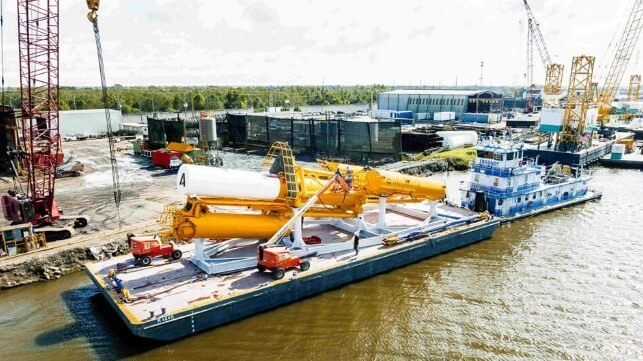
follding floating wind platform
Aikido One a prototype of the floating wind platform was completed and loaded for its demonstration tests (Aikido)

Published Nov 26, 2024 7:24 PM by The Maritime Executive


Startup floating wind technology company Aikido Technologies is ready to launch the first demonstration of its unique folding floating wind platform. The company promotes its technology as providing a faster and more cost-effective solution to the deployment of floating offshore wind turbines.

Aikido Technologies was founded in 2022 with the support of Breakthrough Energy Fellows an accelerator, incubator program launched in 2021. Bill Gates of Microsoft fame announced the program saying that unlike others it would focus on the particular needs of climate innovation. In September 2024, the effort reported it had surpassed 100 fellows as it welcomed its Fourth Cohort and opened applications for the fifth wave.

In June 2024, Aikido reported it had raised $4 million in seed financing as it continues to develop its technology and prepare for its first demonstration which is underwritten by the Gates initiative. New investors included Azolla Ventures which led the round along with participation from Propeller Ventures, Sabanci Climate Ventures, Cisco Foundation, and Anthropocene Ventures. The U.S. Department of Energy is also supporting the project.

Chet Morrison Contractors and Morrison Fabrication in Harvey, Louisiana were awarded in April 2024 the contract to build the first 1:4 scale 100 kW floating wind platform. Aikido reports the company completed the assignment in less than 40 working hours, which it says is a new standard in the industrialization of floating platforms.

Among the unique features of the design, Aikido highlights the platform uses pin joints that enable serialized production of its 13 major steel components. The design allows the structure to fold up during assembly and transport occupying two-thirds less space in a shipyard or port. The design was reviewed by the American Bureau of Shipping which granted the concept an Approval in Principle.

The platform’s unique design also permits it to be transported on traditional barges. The company highlights it is compact and can dramatically reduce construction times. They also note that the smaller size reduces the requirements for ports and makes it possible to employ smaller ports as the onshore base.

Aikido says the platform design is well suited for domestic U.S. production and especially in the U.S. Gulf Coast region, where there exists an ecosystem of supplying, building, and transporting offshore structure.

Port Pascagoula in Mississippi has signed a memorandum of understanding with Aikido to provide space for the testing of the Aikido One platform. The company has it will be off Singing River Island Pier. They report the project will prove the concept in realistic conditions and demonstrate the potential to open up the floating offshore wind sector. 


U-Ming to Add Anemoi’s Rotor Sails to Giant Ore Carrier
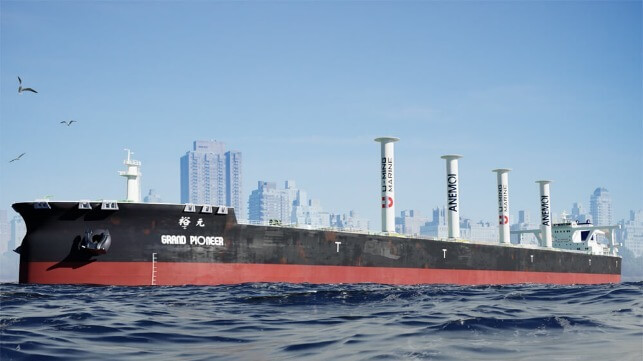
rotors on large bulker
Rendering of U-Ming's Grand Pioneer with Anemoi rotor sails installed (Anemoi Marine Technologies)

Published Nov 28, 2024 2:48 PM by The Maritime Executive


Taiwan’s U-Ming Marine is becoming the latest in a growing list of shipowners to adopt wind-assisted propulsion. Bulkers are a popular category for the technology which is now planned for a broad range of vessel sizes.

U-Ming plans to add rotors made by the UK’s Anemoi to one of the largest bulkers in the world. Under the agreement announced today, November 28, they plan to retrofit four of Anemoi’s rotors to one of the line’s largest bulk carriers. The illustration shows Grand Pioneer (324,963 dwt) fitted with rotors. The vessel was built in China in 2020 and is 1,115 feet (340) meters in length and registered in Singapore.

Each of the rotors will stand 115 feet (35 meters) off the deck with a diameter of approximately 16 feet (5 meters). The installation is to be completed at the end of 2025. Anemoi reports an anticipated 10 to 12 percent fuel savings for the vessel operating on deep-sea routes between China, Brazil, South Africa, and Australia.

The system includes Anemoi’s technology so that the rotors can be folded down when not in use. This addresses concerns for air draft and also ensures they do not interfere with port operations.
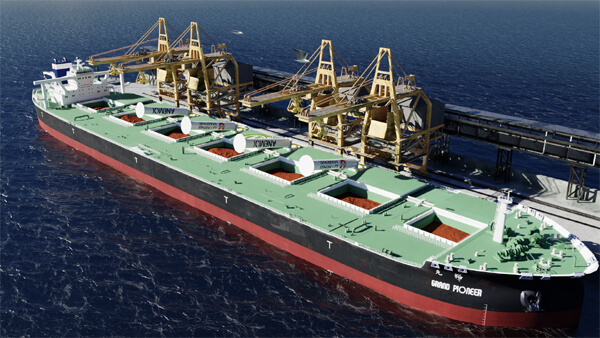
 

The rotors fold down to provide clearance for port operations (Anemoi Marine Technologies)


“These state-of-the-art rotor sails will play a key role in our decarbonization strategy and will complement our portfolio of existing emission-reducing technologies, including a fleet of LNG dual-fuel vessels,” said CK Ong, President of U-Ming. “In addition, we will continue to research other emission-lowering pathways such as carbon capture systems and retrofitting conventional vessels to Methanol dual-fuel.”

The first of the rotor installs on large bulkers was reported by Anemoi completed in June 2023 on the TR Lady (82,000 dwt) Kamsarmax bulker. The retrofit took place on the vessel operated by Tufton in China. It received three 24-meter (79-foot) rotors on rails so that they could be moved to permit cargo operations. Anemoi reported it expected more than 10 percent fuel savings.

Berge Bulk also worked with Anemoi on a retrofit adding four of the larger rotors to its Valemax ore carrier Berge Neblina (388,000 dwt). The vessel began its first voyages with the rotors in the summer of 2023.

The installations on the biggest bulker will be carried out with Vale. Last year the company agreed to install five of the large rotors on its 400,000 dwt Valemax ore carrier Sohar Max. It also reported in October 2024 that Vale along with NS United Kaiun Kaisha (NSU) agreed to install five Anemoi rotor sails on the 400,000 dwt VLOC NSU Tubarao. Built in 2020, the massive vessel is expected to complete its retrofit around September 2025.

The rotors are competing with other sail technologies that are also being fitted on bulkers. Japan’s Mitsui O.S.K. is proceeding with its rigid sail on bulkers. The company has also reported plans to combine the rigid sails and rotors on a vessel. The 62,900 dwt vessel they reported would be built by Oshima Shipbuilding and would be chartered by ENVIVA to transport wood pellets. By combining the two systems on one vessel they expected to increase the reduction in fuel consumption by up to 20 percent.


TotalEnergies Pauses US Offshore Wind Due to Political Uncertainties
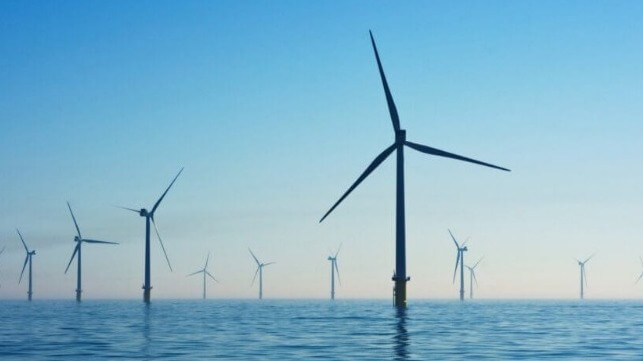
offshore wind farm
TotalEnergies' US partnership had been prosposing projects for New York and New Jersey (Attentive Energy)

Published Nov 26, 2024 4:25 PM by The Maritime Executive


TotalEnergies has reportedly decided to pause its U.S. offshore wind energy projects citing political uncertainties after the U.S. presidential election. The move comes as many in the industry are waiting for the new Trump administration’s policy toward wind energy and renewables.

Reuters is reporting that Patrick Pouyanne, Chairman and CEO of TotalEnergies announced the company’s position to the audience at the Energy Intelligence Forum taking place this week in London. On Tuesday they reported Pouyanne said, "In offshore wind, I decided to put the project on pause, because all the offshore wind projects are in Democratic states ... we'll see better in four years."

TotalEnergy has been active in the U.S. offshore wind market since 2018 and is in partnership with Corio Generation. They launched Attentive Energy and in February 2022 TotalEnergy was part of a winning bid of $795 million for a lease area in the New York Bight. The lease covers 132 square miles and is located up to 47 nautical miles from the coast south of New York and east of New Jersey.

Attentive Energy has said the site could have a capacity of at least 3 GW and subsequently split it into two projects. The company was selected in New York’s third-round solicitation, which was later canceled citing changes in the finances. Attentive Energy chose not to rebid the project in New York’s fifth solicitation round reporting in October 2024 that it had withdrawn a proposal.

In New Jersey, regulators awarded a contract for Attentive Energy Two, an offshore project that would provide up to 1,342 MW. The lease area is still in environmental review with the Bureau of Ocean Energy Management and Attentive Energy has not yet filed a Construction and Operations Plan for approval.

TotalEnergy’s pause comes as others in the industry wait for clarity on the new administration’s approach to renewable energy. Donald Trump has been a vocal critic of offshore wind energy but the industry has sought to lay the groundwork to continue its progress.

The American Clean Power Association issued a statement after the election saying that diverse energy sources are essential to national security and global power. They noted that the clean energy industry grew by double digits each year under the first Trump administration and said it is committed to working with the new administration and Congress. 

The Biden administration will end up having approved more than 15 GW of clean energy from ten offshore wind projects, enough to power nearly 5.25 million homes. It also held six offshore wind lease auctions, including the New York Bight and the first-ever sales offshore the Pacific and Gulf of Mexico coasts. The Department of Energy mapped a timeline for sales to continue at least till 2028.

 

Former New Zealand Port CEO Guilty in Relation to Dockworker’s Death

FINALLY A BOSS GETS JAIL

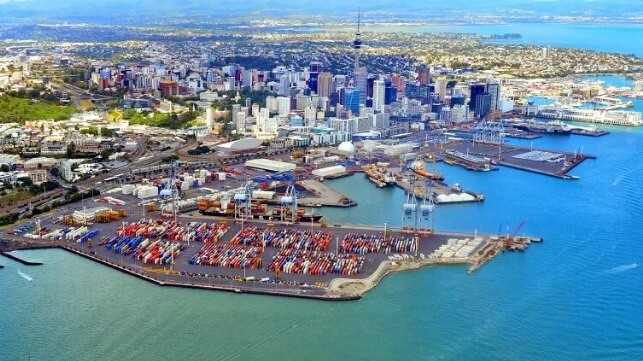
Port of Auckland
Former CEO was found guilty for failing in his responsibilities to protect the health and safety of a dockworker (file photo)

Published Nov 26, 2024 8:21 PM by The Maritime Executive


A judge in New Zealand announced the verdict in a first-of-its-kind case that sought to hold a senior executive responsible in their role for protecting the safety of workers. The former CEO of Ports of Auckland, Tony Gibson, was found guilty of failing to comply with his duty to exercise due diligence to ensure the port complied with its duties under New Zealand’s health and safety regulations.

According to media reports from New Zealand, this case is the first time a senior executive has been found to have a responsibility for a serious injury or fatality at their company. Gibson had been charged on two counts under New Zealand’s 2015 Health and Safety at Work Act. A lesser count was dismissed by the court.

The charges stemmed from an incident in August 2020. The Constantinos P (4,500 TEU) was docked in Auckland discharging containers. A 31-year-old dockworker and a colleague were working as lashers securing the containers to be lifted off the vessel. A lift went terribly wrong when two boxes were to be hoisted but a third was still partially attached. As they were hoisted, the third container detached crashing down and killing Pala’amo (Amo) Kalati, who had been working in the port for less than five months.

The judge announcing the verdict today, November 26, six months after the trial said they had found Gibson was aware of his duties and the lack of a timely response by the port to recommended improvements to health and safety accountability. In his role as CEO, he was responsible for monitoring and reporting efforts and supervising subordinates and the systems at the port.

The Maritime Union of New Zealand which had long been a critic of Gibson hailed the verdict saying it demonstrates that workers' lives mean something. They accused Gibson during his tenure of minimizing and downplaying health and safety concerns.

Gibson was forced from his position by his critics and resigned in 2021 after 10 years in the role. At the time he called the attacks personal in nature while critics pointed out there had been three deaths at the port in three years.

The union says new management has been more responsive and “took a positive approach to engaging with workers and the union.” They feel that safety issues are being addressed.

The new management of Port of Auckland said they hoped the case would provide some closure to the family. They said the case also demonstrated the importance of taking responsibility for the health and safety of workers.

Gibson and his lawyer did not comment on the verdict but it was noted that he could appeal. It was unclear what penalty if any he might receive from the verdict.

The Port of Auckland was also charged and sentenced in the case. A year ago, the company paid a fine of NZ$561,000 (approximately US$330,000).


Eating Fish Exposes Consumers to Microplastics, With Unknown Risk

Marine organisms bioaccumulate micro- and nano-plastics that humans discharge into the sea. Naja Bertolt Jensen/Unsplash, CC BY-NC-SA

Published Nov 27, 2024 8:02 PM by The Conversation


[By Prof. Amelie Chatel]

It’s no secret: when we savor a delicious piece of fish or a platter of seafood, we’re not just consuming valuable omega-3s and vitamin D. Alongside these benefits come less appetizing elements — countless micro- and nano-plastics.

These plastic particles, measuring less than 5 millimeters, enter our oceans through human waste and penetrate the food chain. According to an Ifremer study, around 24,400 billion microplastics are floating on the ocean’s surface. These particles are found in all marine organisms — from microalgae to fish, which occupy higher levels of the food chain. This phenomenon not only threatens marine ecosystems but also raises concerns about potential risks to human health.

What exactly do we know about the accumulation of these pollutants in marine life and the dangers they pose to human health?

Micro- and nano-plastics: an invisible threat

Since the 1950s, plastic production has grown exponentially, reaching 58 million tonnes in Europe in 2022 alone. This has led to massive amounts of waste.

Over time, wind, waves, sunlight and microorganisms break down larger plastic waste into microplastics (1–5 mm) and nanoplastics (smaller than 100 nanometers), which now contaminate all parts of the environment, including the air, soil and water.

The process by which these plastics accumulate in organisms across different levels of the food chain is known as “bioaccumulation”.

Research from our laboratory reveals that in aquatic environments, micro- and nano-plastics are ingested by a wide range of species — from microalgae at the base of the food chain to top predators like eels.

The impact on marine life

These ingestions have serious consequences. Studies show that microplastics can cause toxic effects in marine animals.

For instance, in mussels, microplastics can block digestive systems, activate immune responses, cause DNA damage and interfere with the expression of genes essential to various cellular functions.

The severity of these effects depends on the plastics’ size, composition, degree of degradation and any harmful chemical additives they may contain.

Plastics often contain high levels of phthalates, which are endocrine disruptors. These chemicals can interfere with hormonal systems, posing risks not just to marine life but potentially to humans as well.

Risks to human health

Plastics ingested by marine animals inevitably make their way into our food supply. Frequent seafood consumers are estimated to ingest thousands of microplastic particles annually. Although research on the precise health effects on humans is ongoing, some troubling hypotheses have emerged.

Once inside the human body, these particles may cause damage similar to that observed in fish. Studies on human cells indicate that micro- and nano-plastics can disrupt cellular functions in ways akin to the effects seen in marine organisms. Scientists are particularly concerned about the toxic impacts of plastic additives.

Additionally, micro- and nano-plastics can act as carriers for pathogens or bacteria, potentially increasing the risk of infectious diseases.

The urgency to tackle plastic bioaccumulation in the food chain cannot be overstated. By taking swift action to limit plastic usage and improve recycling technologies, we can slow the progression of this environmental and health crisis.

Prof. Amélie Chatel is Professor of Aquatic Ecotoxicology and director of the BOISSE laboratory at Université Catholique de l’Ouest.

This article appears courtesy of The Conversation and may be found in its original form here

The Conversation

The opinions expressed herein are the author's and not necessarily those of The Maritime Executive.


Forgotten Bulker Crew Stage Sit-In After Year of Detention in India

NO PRESUMPTION OF INNOCENCE IS NAPOLIONIC LAW 

Paradip port India
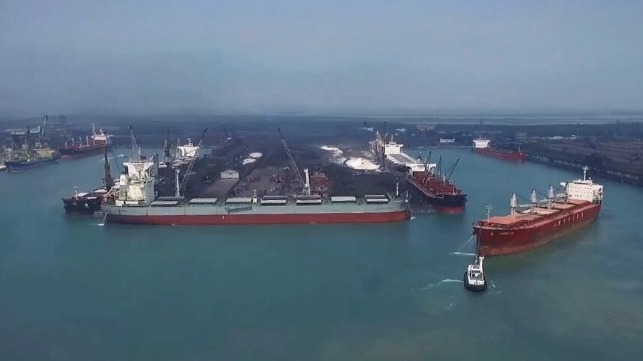
Crew has been detained in India for a year as a drug smuggling investigation proceeds (Paradip Port file photo)

Published Nov 27, 2024 4:43 PM by The Maritime Executive


After a year in detention, while charges of drug smuggling were being investigated, the 21 crewmembers of the bulker Debi (37,000 dwt) have staged a protest to call attention to their plight. They are demanding action by the Indian authorities to resolve their situation.

The vessel which is reported by Equasis to be managed by the Asia Pacific Shipping Co. of Hanoi, Vietnam, has been detained since the beginning of December 2023. It was officially placed under arrest by a court order in February 2024. The same court ordered the ship to be sold in September 2024.

The bulker was loaded with steel plate to be carried to Denmark and arrived at the Paradip Port in India on November 30 for a stopover. Reports indicate it had started its trip in Egypt and made a port stop in Indonesia before proceeding to India.

During port operations, a member of the shore crew spotted unknown packages in a concealed area of the ship’s cranes not fully visible from the deck. A search recovered 22 kg of cocaine with a street value of $26 million. The packages were attached to the top of the vessel’s cranes and secured with magnets according to the report. 

Indian authorities said they would be investigating to determine when the drugs were loaded onto the ship. They were also seeking to determine if any of the crewmembers had been involved in the smuggling operation.

The Debi which is registered in Panama has alternately been held on dock or in the port’s anchorage. Earlier in the week, the vessel was moved from the anchorage for fuel and water while alongside. Media reports said once on berth the crew began a sit-in refusing to work the vessel. Port officials said the ship was unable to return to the anchorage.

The port authorities are reported to have initiated efforts to resolve the issue through talks. The ship currently remains berthed at the Paradip International Cargo Terminal.

It is not the first time there have been concerns for the crew. In January 2024, one of the vessel’s engineers jumped overboard while the vessel was in the anchorage. The third engineer had been in an altercation on the ship and there was speculation it might have been a suicide attempt. Other crewmembers were able to save him, and he was taken to a hospital onshore.

Media reports said that the Indian authorities confiscated the crew’s cellphones and computers leaving them virtually isolated and unable to contact family at home in Vietnam.


Australian Wharfies to Expand Job Action at Bulker/General Cargo Terminals

Australia bulker terminal
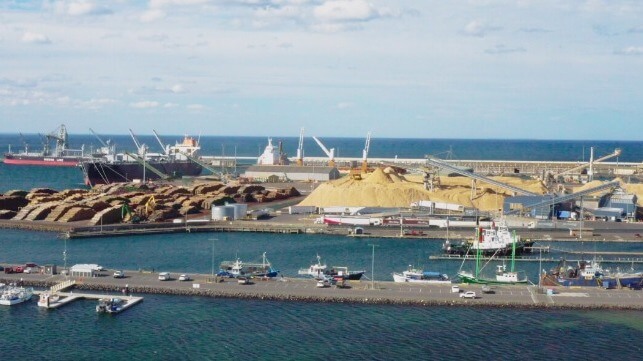
The labor dispute is with Qube which operates bulker and general cargo terminals in Australia (Qube)

Published Nov 27, 2024 2:35 PM by The Maritime Executive


Australian port terminal operator Qube becomes the latest in a long list of port operations to be facing potential strikes by dockworkers. The National Maritime Union of Australia anticipates that 10 Australian ports will be involved by late December as it seeks to expand its industrial action against the company.

The union like many others around the world is involved in a wage and work rules dispute with Qube. Recent weeks have seen actions in both Canada’s West Coast ports and Montreal as well as the U.S. East and Gulf Coast ports. Earlier in the year there were strikes in Germany as the individual unions were in protracted contract negotiations. The U.S. strike has the potential to resume in January 2025.

The NMU asserts that the real value of wages paid to its members by Qube has declined 14 percent due to inflation since the pandemic. The union’s demands include pay increases that catch up with inflation and protect dockworkers’ purchasing power. They cite the principle of “same job same pay,” demanding increases for all workers. They are also calling for “fatigue management rules to prevent the allocation of dangerous work patterns by company managers,” and want the delivery of work schedules advanced by four hours to noon the day before a shift. They are also seeking other benefits such as expanded domestic and family violence leave.

The union reported in September 2024 that members had authorized industrial actions in ports including Melbourne, Port Kembla, and Brisbane. The new announcement did not specify which ports would be targeted. Under Australian regulations, the union will have to file notices before starting any actions. The NMU says that Australian steel traders have already been complaining since October that shipments are delayed by the current industrial action.

The actions started in September at Qube’s bulk and general ports across Australia. As the dispute has stretched on, the NMU now says, “As a consequence, over ten of these ports will be in industrial action by Christmas time, as wharfies grow impatient.”

Qube provides port operations and logistics services including bulk and general handling facilities in over 40 Australian, New Zealand, and South East Asian ports. Its operations range from containers to bulk, automotive, and general cargo, and it also manages 25 sites for the forestry industry in Australia and New Zealand. It is also the leading provider of supply chain logistics services to the energy sector, supporting thousands of onshore wells and rig supply vessels, barges, and offshore construction vessels annually.

Nineteen agreements between Qube and the NMU expired in June 2024. The union alleges that the company ignored requests to start negotiations in October 2023. It contends that Qube’s position has been to delay or disrupt the negotiations to force an arbitration.

“We are calling on Industrial Relations Minister Murray Watt to remove the ability of employers to game the intractable bargaining laws so companies like Qube can avoid any form of genuine collective bargaining,” said Warren Smith, the Deputy National Secretary of the MUA.

The union highlights the protracted contract disputes with Svitzer Tugs and DP World stevedores while calling for efforts to reform the labor regulations. The contract dispute stretched over four years at Svitzer and went in front of the labor regulators on several occasions before a tentative settlement was announced in June 2023.
 

Commercial Fishing Vessel Sinks Off Galicia

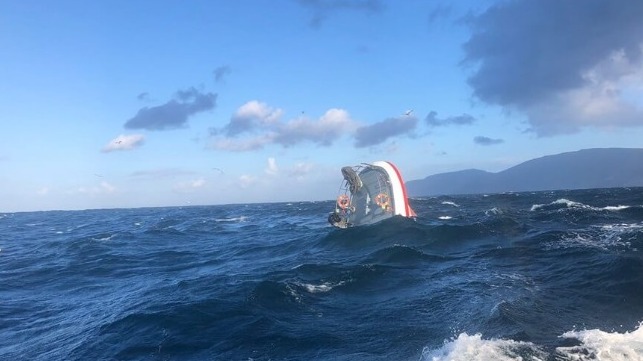
El Canavera going down (Salvamento Maritimo)

Published Nov 27, 2024 7:35 PM by The Maritime Executive

[Brief] On Monday, a commercial fishing vessel began taking on water and sank just off the coast of Galicia, according to local search and rescue authorities.

On Monday, the 2005-built fishing vessel El Cañavera reported that it was in danger of sinking just one nautical mile off Punta Candelaria, a cape just north of the port of Cedeira on Galicia's northwestern coast. The crew abandoned ship into a liferaft and their vessel sank by the stern about five minutes later.

SAR authorities responded to the call and dispatched a rescue helicopter, along with the rescue launches Salvamar Shaula and LS Pardo Bazan. The fishing vessel Brisas de Cedeira was nearby, and within 20 minutes, it reached the life raft and rescued all four crewmembers in it. All were delivered safely to Cedeira.

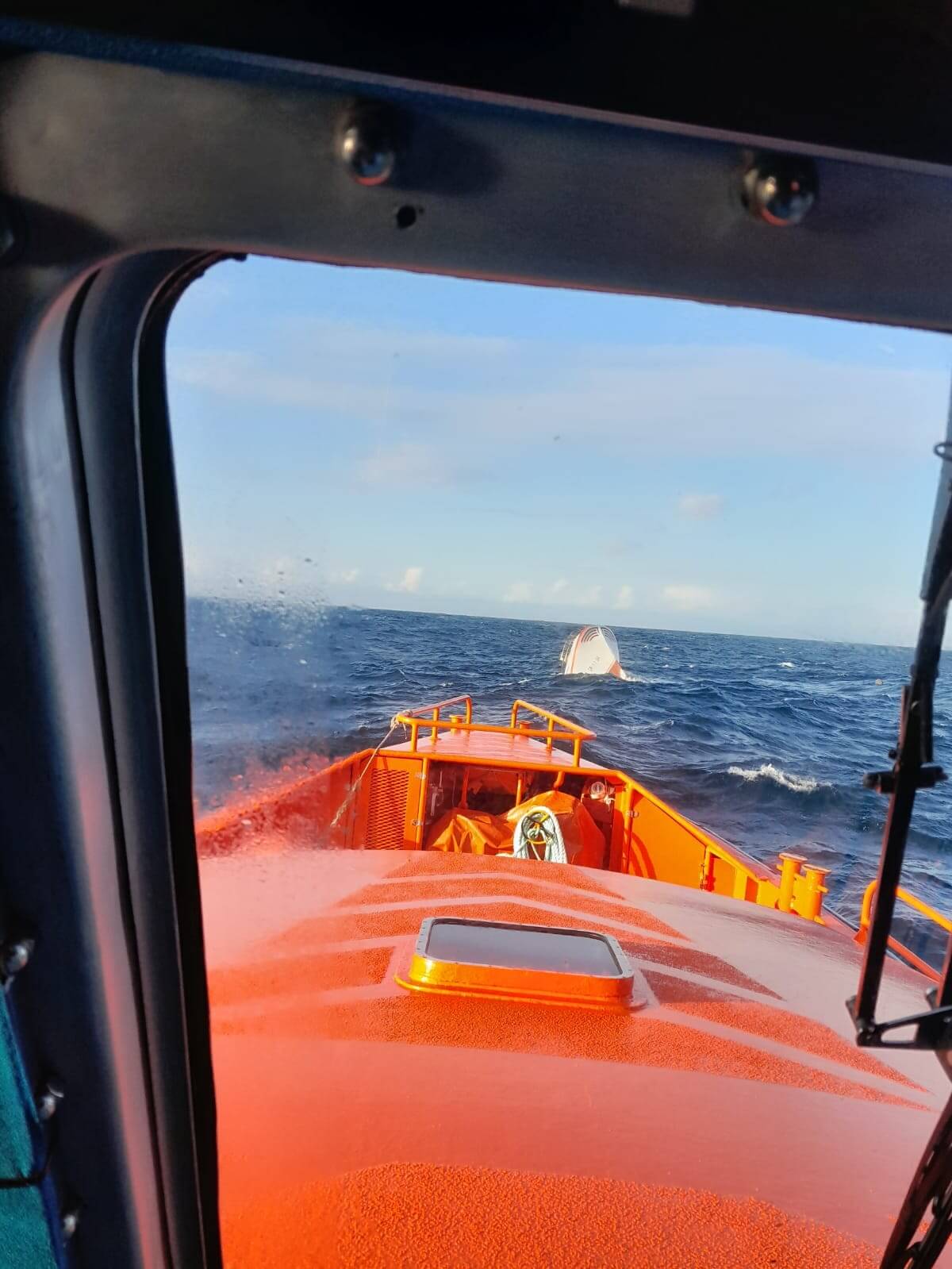
Courtesy Salvamento Maritimo

"They were asking for help and we had them practically in sight, we were ten minutes away from them," said the skipper of Brisas de Cedeira, Angel Gonzalez, speaking to La Voz de Galicia. "But after five minutes it disappeared."

The boat's bow remained in the air as of Monday, so the position of the wreck was marked and broadcast to reduce the risk to shipping. The cause of the casualty is under investigation.


Bulker Reports Explosion in Cargo Holds Off North Carolina Coast

bulker
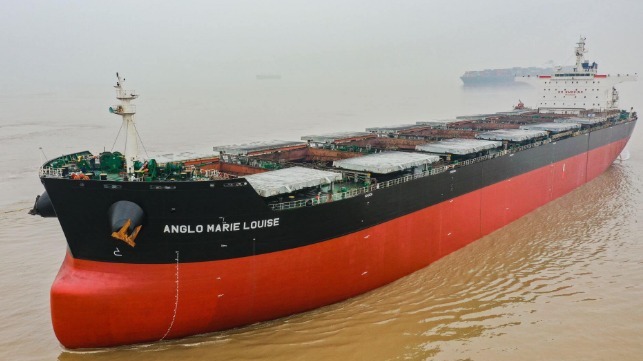
Explosions are reported to have damaged the forward cargo holds on the bulker (Anglo Shipping file photo)

Published Nov 28, 2024 11:28 AM by The Maritime Executive


The UK-flagged bulker Anglo Marie Louise (114,727 dwt) has returned to an anchorage off Virginia after reports that the bulker suffered an explosion on November 27. There are no indications of injuries to the crew and the vessel remained seaworthy, although according to the report it has suffered damage.

“It is reported that the vessel has sustained damage to the No.1 and No.2 cargo hatches as a result of the explosion,” writes claims consultant WK Webster in its report of the incident. 

The bulker, which was built in 2011 at China New Times Shipyard, departed Baltimore, Maryland on November 23. The explosion occurred while the vessel was approximately 150 nautical miles east of North Carolina on November 27. The vessel has now anchored off Virginia Beach near the entrance to Chesapeake Bay.

The same ship was also involved in an incident in March 2024 when it blacked out while maneuvering on the Mississippi River near New Orleans. A dispatcher from Moran tugboat company detailed the incident in a social media posting reporting the Anglo Marie Louise careened out of control on the river and was heading for the Nashville Avenue wharf. Two tugs were able to intercept the vessel before it hit another docked vessel or the wharf.

Previously, the ship was cited for issues during port state inspections in the early 2020s. Its most recent inspections however reflected no problems.

The vessel is registered in the UK and managed by Anglo Shipping in London. It is 837 feet (255 meters) in length. 


 ECOCIDE

Cleanup Under Way for Fuel Oil Spill in San Juan Harbor

Oil spill
Fuel oil on the dock, Puma Energy, San Juan (USCG)

Published Nov 28, 2024 6:53 PM by The Maritime Executive


On Thursday, the U.S. Coast Guard responded to a spill between a tanker and a fuel dock in San Juan, Puerto Rico. The spill was quickly shut off and contained, and cleanup is under way. 

At about 1930 hours on Wednesday, Sector San Juan received notice from the U.S. National Response Center that a spill had occurred at the Puma Energy fuel dock in San Juan Harbor. During a transfer of No. 3 fuel oil from the tanker Dubai Green to the pierside receiving facility, about 1,000 gallons spilled into the water. The crew detected the spill when they spotted a sheen on the water, and they shut down the transfer operation. Video from the scene shows fuel oil all over the receiving dock, including sections of the gantry above the pier.

The sheen covered an area of about 300 feet by 12 feet, and cleanup crews deployed about 1,000 feet of boom to prevent it from spreading. Puma Energy brought in Marine Spill Response Corporation to perform a cleanup, and Puma hired local subcontractor All Environmental Services to assist. The work to remove petroleum from the containment area and from small pockets in the harbor will likely take several days. 

Coast Guard environmental response officers are investigating the spill and overseeing the cleanup. In the meantime, the Coast Guard has advised local fishermen and members of the public to stay clear of the area and avoid touching contaminated materials. 

"We are investigating and overseeing clean-up efforts to ensure the right resources are brought into this response to remove this pollution threat and mitigate the marine environmental impacts in the affected area as best as possible," said Chief Warrant Officer Jamie Testa, Coast Guard Federal On-Scene Coordinator for the incident. "This incident highlights the importance of fuel facilities and vessels having updated response plans in place and that those plans are exercised frequently to ensure the quickest and most efficient response possible."

Freighter Runs Aground on Egypt's Red Sea Riviera, Spilling Fuel

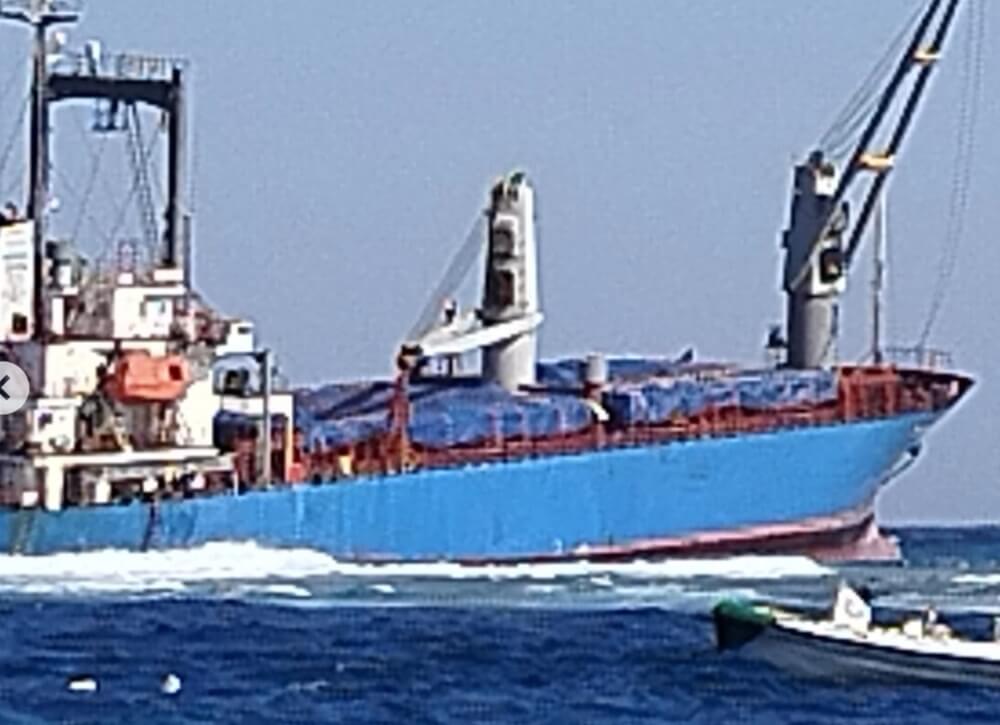
VSG Glory aground (HECLA)

Published Nov 26, 2024 10:10 PM by The Maritime Executive


On Friday, a coastal freighter ran aground on a reef off El Quseir on the Red Sea coast of Egypt, spilling an unknown quantity of fuel.

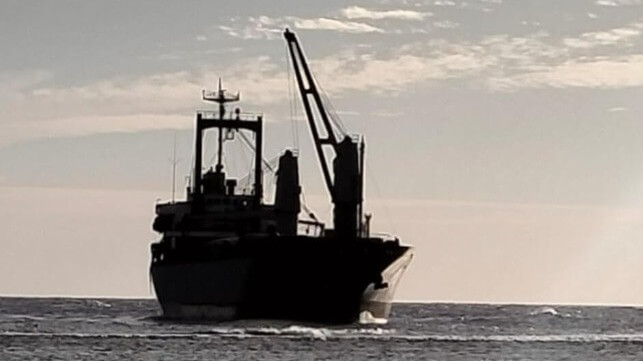
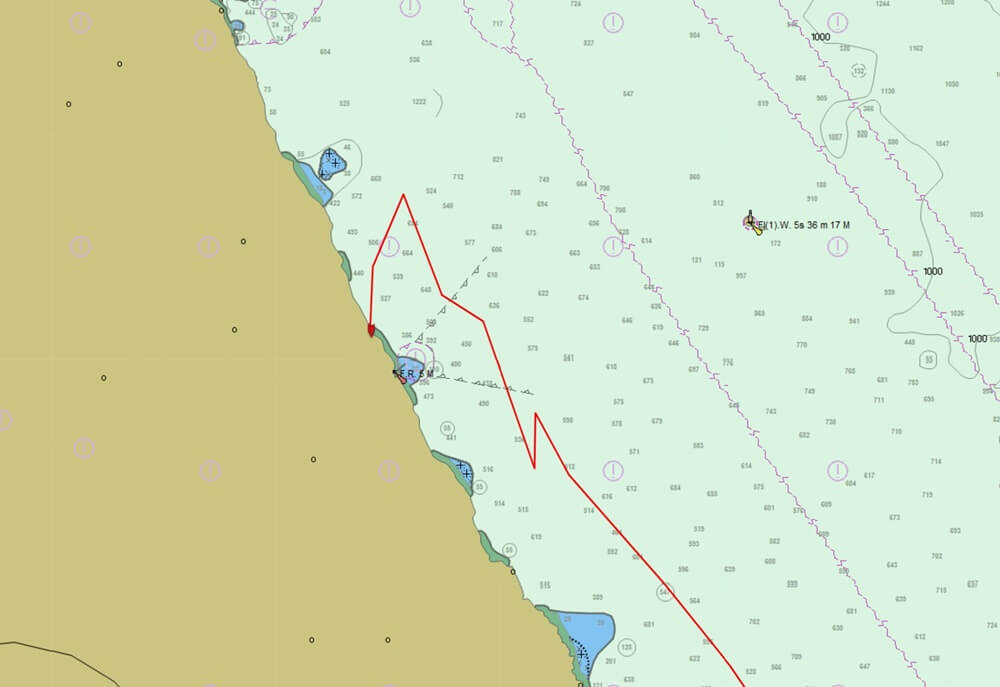
The 300-foot coastal freighter VSG Glory was under way on a slow voyage from the Houthi-controlled port of Hodeidah, Yemen to Port Tawfiq, Egypt, carrying 70 tonnes of fuel oil in her tanks. AIS data shows that she had been loitering in the Red Sea for more than a month, rarely making more than three knots and often doubling back on her course.  

Courtesy Pole Star

On Friday, after another low-speed dogleg just offshore, she drifted west and ran aground on a reef north of Al-Quseer (El Qosier), an ancient city and tourism destination on Egypt's Red Sea Riviera. The area is known for its near-shore diving attractions, including coral gardens and submerged caverns.  

According to Al Jazeera, all 21 crewmembers were safely evacuated. Local environmental conservation group HECLA reports that the vessel suffered flooding in way of the engine room, and photos from the scene show that the stern is low in the water.

Courtesy HECLA

Courtesy HECLA
 

The location of the grounding is right off the shore of two upscale resorts, and the spill lightly contaminated the beach.  First responders have installed about 600 feet of pollution control boom around the stricken vessel, HECLA reported.

VSG Glory is an 8,000 tonne freighter built in 1994, and her owners have used the Comoros flag registry since August 2023. She is owned and operated by a company in Basrah, Iraq, and has accumulated multiple deficiencies at every port state control inspection since 2019 (and more than 200 over her lifetime). Recently recorded issues include oil accumulation in the engine room, fire system maintenance, adequacy of food provisions, officer qualification documents, and various health-related issues in the accommodations. 


Supply Vessel Hits Leg of a Jackup Rig at North Sea Oilfield

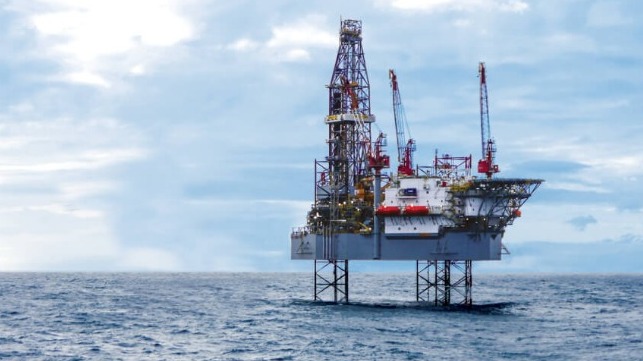
Valaris 120
Valaris 120 (Valaris)

Published Nov 25, 2024 4:07 PM by The Maritime Executive


On Sunday night, an offshore supply vessel hit a jackup rig at a position in the UK North Sea, forcing the rig operator to partially evacuate as a precautionary measure. 

At about 2215 hours on Sunday night, a PSV hit one of the legs of the rig Valaris 120, located at a platform about 150 miles to the east of Aberdeen, Scotland. About 128 workers were aboard the rig at the time of the allision, and 52 nonessential personnel were flown off to Aberdeen by helicopter. The partial evacuation took three flights, lease operator Harbour Energy said in a statement. 

"People are our priority, and everyone onboard the rig and the vessel is safe and well," Harbour Energy said. "Our incident response teams have been mobilized and are in liaison with the relevant authorities."

Valaris 120 is a heavy duty harsh environment jackup built in 2013, and it was part of the former Ensco fleet. It has a maximum drilling depth of 40,000 feet and can operate in up to 470 feet of water. At the time of the casualty, the jackup was in elevated position near Harbour Energy's Judy platform, a small manned production installation with output of about 34,000 barrels of oil equivalent per day. Its lifetime is being extended through subsea tieback developments to nearby prospects, including the Talbot field and the Jocelyn South exploration well. Harbour also planned for two infill wells at the Judy field and a rig-based well intervention campaign during 2024. 

Valaris 120 recently secured a three-year contract extension with Harbour Energy, running from 2025 through 2028. The day rate was not disclosed.  


More than 130 killed as Syrian rebels seize territory from army in Aleppo province


Syrian rebels on Wednesday launched a massive offensive against the Syrian regime in Aleppo province, making the first territorial gains since a ceasefire came into force in 2020, army and rebel sources said. More than 130 have been killed in the fighting, according to a Syrian war monitor.


Issued on: 28/11/2024 - 
By: NEWS WIRES
Fighters from Hayat Tahrir al-Sham (HTS) ride in military vehicles in the eastern outskirts of the town of Atarib, in Syria's northern province of Aleppo on November 27, 2024, during clashes with the Syrian army. 
© Abdulaziz Ketaz, AFP

TERRORISTS ARE TURKISH MERCENARIES 
WHO HAVE BEEN AT WAR WITH THE PKK/YPJ


A Syria war monitor on Thursday said clashes between the army and jihadists killed more than 130 combatants in the worst fighting in the country's northwest in years, as the government also reported fierce battles.

The Britain-based Syrian Observatory for Human Rights said jihadist group Hayat Tahrir al-Sham (HTS) and allied factions launched a surprise attack on the Syrian army in the northern province of Aleppo on Wednesday.

The toll "in battles ongoing for the past 24 hours has risen to 132, including 65 fighters from HTS", 18 from allied factions "and 49 members of regime forces", said the Observatory, which relies on a network of sources inside Syria.

Some of the clashes, in an area straddling Idlib and Aleppo provinces, are less than 10 kilometres (six miles) southwest of the outskirts of Aleppo city.

HTS, led by Al-Qaeda's former Syria branch, controls swathes of much of the northwest Idlib area and slivers of neighbouring Aleppo, Hama and Latakia provinces.

An AFP correspondent reported heavy, uninterrupted clashes east of the city of Idlib since Wednesday morning, including air strikes.

A military statement carried by state news agency SANA said that "armed terrorist organisations grouped under so-called 'Nusra terrorist front' present in Aleppo and Idlib provinces launched a large, broad-fronted attack" on Wednesday morning.

It said the attack with "medium and heavy weapons targeted safe villages and towns and our military sites in those areas".

The army "in cooperation with friendly forces" confronted the attack "which is still continuing", inflicting "heavy losses" on the armed groups, the military statement said, without reporting army losses.


Key highway


The Observatory said HTS was able to advance in Idlib province, taking control of Dadikh, Kafr Batikh and Sheikh Ali "after heavy clashes with the regime forces with Russian air cover".

"The villages have strategic importance due to their proximity to the M5 international highway", the monitor said, adding the factions, which already took control of two other locations, were "trying to cut the Aleppo-Damascus international highway".

The Observatory said that "Russian warplanes intensified air strikes", targeting the vicinity of Sarmin and other areas in Idlib province, alongside "heavy artillery shelling" and rocket fire.

Syria's conflict broke out after President Bashar al-Assad repressed anti-government protests in 2011, and spiralled into a complex conflict drawing in foreign armies and jihadists.

It has killed more than 500,000 people, displaced millions and battered the country's infrastructure and industry.

The Idlib region is subject to a ceasefire -- repeatedly violated but still largely holding -- brokered by Turkey and Damascus ally Russia after a Syrian government offensive in March 2020.

(AFP)
CLIMATE CRISIS; FIRST COCOA,

Coffee price heats up on tight Brazil crop fears

By AFP
November 27, 2024

Brazil, the world's largest coffee producer, faces a record-breaking drought this year - Copyright AFP/File Saul Loeb

The price of Arabica coffee hit the highest level since 1977 on Wednesday, approaching a record high as drought in top producer Brazil this year hits supplies.

A pound (453.6 grams) of Arabica beans listed in New York struck 320.10 US cents, extending the commodity’s rally over 2024.

The all-time high is 337.50 US cents, seen in 1977.


Brazil, the world’s largest coffee producer, faced a record-breaking drought this year which has raised significant concerns for 2025/2026 crops amid already tight supplies.

This is despite “significant rains” in October, leading to an “excellent flowering”, according to Guilherme Morya, senior analyst at Rabobank.

He added that farmers were selling less than was needed to meet demand.

Analysts said that price support came also from geopolitical factors such as disruptions to shipping in the Red Sea, potential US tariffs and future European Union regulation on deforestation.

“It is clearer and clearer that this (supply situation) is going to have a significant impact on the consumer,” John Plassard, senior asset specialist at Mirabaud group, told AFP.

Companies are preparing to negotiate their coffee contracts early next year, with food giants like Nestle set to pass on price increases to customers.

The Swiss group announced this month that it would increase prices and reduce the size of its coffee bags to protect margins.

– Keep on buying –

In London, some coffee drinkers approached by AFP on Wednesday vowed to keep on buying their beans, but owing to recent price hikes added that they had already begun to buy fewer cups in cafes.

“I’ve noticed that the prices have gone up,” said Julie, 34, as she held a cup of coffee not long purchased from a coffee shop.

“I prefer to buy packs and brew it at home. It’s rare for me to buy it in the shop, but it used to be more frequent.”

Nicky, 26, said she was not ready to give up purchasing cups of coffee in stores.

“I would still pay for it. Maybe that’s me being financially reckless.”

She described coffee drinking as “a lifestyle, it’s how people start their day”.

Vietnam has also faced supply concerns this year for its cheaper Robusta bean that is used for instant coffee, as the country faced dryness during the growing period.

Robusta, listed in London, is trading at around $5,200 per tonne, after reaching a record price of $5,829 in mid-September.


In Bosnia, the path to renewables runs through its coal mines


By AFP
November 28, 2024

Bosnia's coal-fired Kakanj power plant
 - Copyright AFP ANDY BUCHANAN
Rusmir SMAJILHODZIC

At 250 metres underground, the dust is thick and oxygen is in short supply at the Mramor mine in northeastern Bosnia.

The facility is the largest underground mine in the country and has long provided the fuel for the nearby Tuzla power station.

But its future — like that of mines across the country — is now all but settled, as the Balkan nation prepares to decarbonise the country by 2050.

Until then, mining continues to be done the old-fashioned way in Mramor — with picks, shovels and dynamite, veteran digger and union representative Senad Sejdic, 52, told AFP.

The work is backbreaking but Sejdic remains hopeful that the anticipated arrival of a modern excavator will make reaching the seam’s premium coal an easier task.

“It would allow us to increase the annual haul from 140,000 tonnes to nearly 400,000 and to work in better safety conditions,” said Sejdic.

Beyond the economic stakes, Sejdic has as emotional investment: his father was killed in a mining accident in the same area in 1990 that left 180 dead.

Yet the bid to harvest more coal at this site goes against the prevailing current, as the world seeks cleaner energy sources to limit pollution and global climate change caused by carbon emissions.

Coal remains the biggest polluter in Bosnia, where it fuels power plants and homes, with the country burning through approximately 13 million tonnes a year.

“Approximately 3,300 people die prematurely each year in Bosnia due to exposure to air pollution,” or nearly 10 percent of all deaths, according to a 2019 World Bank report.

The capital Sarajevo — where thousands of homes are heated by coal — was ranked as the most polluted city in the world on Tuesday by the air-quality data platform operated by Swiss company IQAir.


– Power exporter –


Despite its cost to public health, coal remains a lucrative industry in Bosnia.

The government estimates the country has around 2.6 billion tonnes of exploitable coal still underground.

Bosnia also remains the only net exporter of electricity in the Western Balkans.

Nearly 30 percent of its annual production of around 15,000 GWh is sent abroad, according to the national electricity distributor. This earned the country 430 million euros ($453 million) of revenue in 2023, the national statistics office said.

But, like other countries in the region, Bosnia has committed to fully decarbonising its energy sector in the next 25 years.

With the deadline inching closer, the challenge remains stark.

Thermal power plants produce between 55 and 70 percent of Bosnia’s electricity at any given time, according to the statistics office.

Hydroelectric plants churn out most of the remaining power used in Bosnia, while just four percent of electricity comes from solar or wind.

“To replace the 2,300 MW produced by thermal power plants, 5,000 MW would be needed from wind turbines or more than 10,000 MW from solar” costing billions of euros in investment, according to Edhem Bicakcic, an energy expert and investor in renewables.

“We very much hope to have access to European funds to carry out this transition,” Bicakcic added.


– ‘An opportunity’ –


To decarbonise the economy, a complex plan has been drawn up that will see the gradual phasing out of its carbon-intensive energy sources.

The public utility company Elektroprivreda BiH will shut two of the six production units on its two coal-powered plants by 2027, said the company’s executive director Fahrudin Tanovic.

To continue using its other four blocks from 2028, the company intends to invest more than 170 million euros to install desulphurisation and denitrification systems at its power stations.

“But by 2027 we must in the short term accelerate coal production to ensure sufficient quantities of electricity before acquiring larger renewable energy sites,” said Tanovic.

But some still question whether there is the political will to see through the transition process.

For Denis Zisko, an environmental activist with the association Aarhus Centar based in Bosnia, the country’s leaders still “lack the political courage” to say openly that mines do not have a future in the country.

“The energy transition is not a problem, it is an opportunity for development,” he told AFP.

He said the coal industry will suffer when the European Union introduces its carbon tax — which is set to be applied gradually to exports from non-EU member Bosnia and across the region in 2026.

But shuttering Bosnia’s coal mines and power plants is likely to come with painful costs.

In March, the closure of mining operations at the last functioning pit at the Zenica complex after 144 years left its 600 employees without an income.

To add to their woes, the employees’ pensions and taxes had not been covered by the mine for years.

According to official figures, mines across Bosnia face similar dilemmas.

“I have been working in the mine for twenty years,” one 47-year-old miner who did not want to give his name told AFP.

“But my contributions have only been paid for four years.”