Thursday, December 05, 2024

UK

Journalists strike over proposed sale of Observer newspaper

Up to 600 NUJ union members struck on Wednesday and Thursday—and plan further action next week


On the picket line outside the Guardian and Observer HQ


By Arthur Townend
Thursday 05 December 2024
SOCIALIST WORKER Issue


The proposed sale of the Observer newspaper has triggered the first journalists’ strike at the Guardian in over 50 years. The Guardian Media Group (GMG) bought the Observer in 1993, but bosses now want to sell it to Tortoise Media.

Up to 600 workers struck on Wednesday and Thursday because the sale threatens the Observer’s existence—and journalists’ jobs.

NUJ union members picketing outside the Guardian and Observer headquarters in London. NUJ organiser Andy Smith told Socialist Worker, “Observer staff fully understood that they were covered by the protection of the Scott Trust—until they found out they weren’t.”

The Scott Trust owns the Guardian and the Observer and is supposed to secure their existence “in perpetuity”.

“Staff were simply told at a meeting that they were going to be sold. But the details of that sale have still not become transparent,” he said.

As part of the deal, Tortoise Media will invest £20 million into the Observer over the next three years. “But in corporate terms, that’s not a lot of money,” Andy said. “What has been demonstrated is that workers at the Observer are not loved within the Guardian.”

Andy said that this is “primarily about security of employment”. “People are incredibly doubtful about whether the Observer can work as a standalone title behind a paywall—and that of course goes back to the job security aspect,” he said.

But Andy said, “We’ve been told the Scott Trust isn’t willing to invest in the Observer. But Guardian senior management go to the Scott Trust to ask for investment into the things they want.”

On the picket line, one striker held a placard that read “Yatch’s going on?”. It pointed to the friendship between GMG boss Anna Bateson and Tortoise Media co-founder James Harding.

Their longstanding friendship has seen the pair gallivant around on a £15 million superyacht owned by multimillionaire Charles Dunstone. But Bateson did not declare her relationship with Harding.

“We want them to stop, that’s our primary task right now. We want them to put a meaningful break on this while we consider other options and get them to reconsider that the Guardian and Observer are better off together,” Andy said.

Guardian journalist Simon Hattenstone told Socialist Worker, “We’re here on the pickets to try and save the Observer. It’s solidarity with colleagues. It’s one big family, and lots of Observer journalists work for the Guardian, and lots of Guardian journalists work for the Observer.

“In this country, there is not so much so-called liberal journalism, and we think it’s really important to protect it. And we feel that management isn’t doing it—and the Trust that was set up to do it isn’t doing it so we have to.

“We’ve had a vote of no confidence in the Scott Trust, and that is because we feel that the deal that it’s proposing is nonsense. I don’t think you’ll find one article saying that this deal makes sense.”

The deal makes no sense, Simon explained, because the “Scott Trust is sitting on a £1.3 billion fund”. “Meanwhile, they’re proposing selling the Observer to an organisation which had a turnover of £6 million and managed to lose £4 million,” he said.

“Tortoise media has had some really good journalists, but it is not in a position to enhance us or protect us. We believe that the Observer will end up disappearing really soon if it goes to Tortoise.

“That’s beyond being a shame—in journalistic terms it’s a tragedy. If the great journalist Paul Foot was able to be here today, he’d be standing with us.”Strikes are set to continue on Wednesday and Thursday of next week, Kings Place, 90 York Way, N1 9GU

UK

Millions will spend a fourth Christmas in Dickensian conditions


DECEMBER 5, 2024

New figures reveal that 16% of UK adults  – 8.8m people – live in cold damp homes, exposed to the health complications that come from living in fuel poverty, according to a new survey by Opinium.

While the Government has announced that a Warm Homes Plan will help improve people’s homes in years to come, this will come too late for the one in ten who have frequently experienced, dangerous levels of mould in their homes over the past twelve months.

People who live in poorly insulated homes risk seeing damp and mould spread and the NHS warns that people living in these conditions are more likely to have respiratory problems, respiratory infections, allergies or asthma. 

Damp and mould can also affect the immune system while living in such conditions can also increase the risk of heart disease, heart attacks or strokes.

Cold homes can cause and worsen respiratory conditions, cardiovascular diseases, poor mental health, dementia and hypothermia as well as cause and slow recovery from injury.

To tackle the problem, a large majority of people support a fully funded nationwide insulation and ventilation programme to create healthy, energy efficient homes that will slash excess deaths caused by cold, damp houses in winter. 

Nearly three-quarters (72%) agree the worst insulated homes should be the priority as almost half (47%) of those polled are worried about how they will stay warm this winter, with 46% worried if they have to rely on the NHS this winter, according to a survey by Opinium in October.

Simon Francis, coordinator of the End Fuel Poverty Coalition, commented: “The sheer numbers of people living in cold damp homes this winter should send alarm bells throughout Westminster. These shocking figures have hardly changed since last year and with energy bills heading upwards again in January, the situation is now critical for the Government.

“The Chancellor must take two immediate steps in the Comprehensive Spending Review. Firstly, she must fully support the Warm Homes Plan with £13.2bn of funding and a commitment to help the worst insulated homes get support first. Then Ministers must also bring in more support for vulnerable households this winter and speed up plans to bring in a social tariff for next winter – a move that is backed by the vast majority of voters.”

Following the findings of the poll, commissioned by campaign group Warm This Winter, organisations have signed an open letter sent to Darren Jones, the Chief Secretary to the Treasury calling for the Government to commit to the  £13.2 billion. 

Warm This Winter spokesperson Caroline Simpson said: “It is shocking that whilst people are looking forward to celebrating the festivities, too many are still living in true Dickensian conditions, where cold damp homes are making them ill.

“We need to see a Government that has the ambition to create the homes people deserve and banish these appalling conditions to a bygone era where they belong.”

Image: File:Freeze Prices – Not the Poor. Source: Freeze Prices – Not the Poor. Author: Alisdare Hickson from Woolwich, United Kingdom, licensed under the Creative Commons Attribution-Share Alike 2.0 Generic license.

Irish voters buck the trend


DECEMBER 5,2024

Carol Coulter examines why the Irish general election is likely to result in more of the same government and what the left needs to do to have more impact.

The recent elections in Ireland, exceptionally in Europe and the US, resulted in the likely formation of the same government, with the exception of the Green Party, which had been the junior partner in the previous three-way coalition.

The other two parties are Fianna Fail (left-of-centre populist) and Fine Gael (a member of the Christian Democrat group in the European Parliament, but less right wing than most of its fellow-members). The programmes of both of them featured scatter-gun commitments to public spending on a variety of measures, as well as tax cuts, made possible by Ireland’s ongoing significant budget surplus.

Another striking feature of the Irish election was the failure of the far right to gain any traction, despite its attempts to stir up anti-immigrant sentiment over the past 12 months, including fomenting the Dublin riots of November 2023.

There were more than 60 far-right candidates in a number of micro-parties and running as independents. The six who won seats in local elections last July failed to be elected to the Dail (parliament) by huge margins. The highest share of the vote any of them obtained was six per cent, and most received votes in the low hundreds. A couple of sitting independent deputies who had expressed less extreme anti-immigration views did well, and a new rural-based conservative party, Independent Ireland, which argued for limitations on immigration, increased its TDs from three to four.

However, the likely new government will only have been supported by 42 per cent of the electorate. The rest of the vote, in a low poll of just under 60 per cent (though according to the Electoral Commission the size of the electorate is probably inflated by duplication) is fragmented across a variety of smaller parties and independents, with Sinn Fein taking 19 per cent of the first preference vote, resulting in 39 seats. This is a drop of 5.5 per cent on its vote share in the last election in 2020.

Six other parties, along with 17 independents, share the remaining seats, out of a Dail that will have 174 deputies. Of them, 26 or 27 can be regarded as left (including a few independents). Eighty-eight votes are needed to form a government, so there is no realistic prospect of a left government, and the most likely outcome is a Fianna Fail/Fine Gael coalition with the support of the small conservative party or a handful of independents. 

The fragmentation of political representation in the Dail is a growing feature of Irish politics. Before the financial crash of 2008 the two big parties regularly obtained the support of 80 per cent of the electorate, with the Labour Party coming a distant third. Their origins lie in the civil war fought between 1922 and 1923 over whether or not to accept the 1921 Treaty between Britain and Ireland which resulted in Partition. Their ideological differences were slight, though Fianna Fail favoured public expenditure on housing and education to a much greater degree than Fine Gael, and always enjoyed significant support among the working class and small farmers.

This ended with the 2008 crash and ensuing austerity, and Fianna Fail was decimated in the 2011 election, leading to a Fine Gael/Labour coalition. Since that election Sinn Fein has, until now, steadily increased its vote, and there has been a proliferation of smaller parties, including two with Trotskyist origins, People before Profit and Solidarity, which eventually merged.

Meanwhile, the Labour Party split in 2015, with the formation of the Social Democrats, which are untainted by the negative experience of the Labour Party in the Fine Gael-led austerity government of 2011. Successive elections have also seen the election of a plethora of independents, most of them standing on platforms related to issues specific to their constituencies.

This has been facilitated by the electoral system of proportional representation, or the single Transferable Vote (STV), along with multi-seat constituencies. The size of the poll in the constituency is divided by the number of seats (three, four or five), and this, plus one, is the quota of votes needed to be elected. Each voter can express their preference in order of their choice, and if their first choice is not elected, the candidate is eliminated, and their votes distributed according to the number twos on their ballot paper, then the number threes, and so on. If the candidate is elected with a surplus, that surplus is also distributed in the same way.

So a supporter of, say, People Before Profit/Solidarity might hope their candidate is elected, but in many constituencies this is not likely, so the voter can also vote for Sinn Fein and/or for the Labour Party or its estranged sibling, the Social Democrats, and it is likely that one of its favoured candidates will be elected. This is in contrast to the winner-takes-all, first-past-the-post system. While PR is more democratic, and allows for the representation of a wide range of political views in parliament, it also means that a decisive result is difficult to obtain.

In the recent election Fine Gael and Fianna Fail urged their supporters to transfer to each other, and this did happen resulting in a seat bonus, so together their 42 per cent vote share brought them very close to half the seats.

The left, including Sinn Fein, did not campaign for mutual transfers, but the votes tended to transfer left anyway (on the eve of the election Sinn Fein urged its voters to transfer to the Social Democrats, then People Before Profit/Solidarity). However, if there is to be a viable left alternative in Irish politics, the fragmentation needs to be overcome and alliances need to be forged outside of elections.

The biggest party on the left is Sinn Fein. Its defining policy is stressing the need to start planning now for Irish unity, while its other policies in the Republic have been broadly social democratic, though not always clear, and are subject to change when the wind blows against them. In the North, where it is already hampered by being in coalition with the conservative DUP, it also has the excuse that the purse-strings are controlled by Westminster, curtailing what the Northern Executive can do, meaning there is little radical change there.

In the Republic, the party has benefited from having had a very clear policy on the acute housing crisis and has also outlined coherent policies to address the crisis in the disability and health services. This remains the basis for its considerable support among young people and the working class, though in this election many of both groups stayed at home.

However, it has poor to no policy on climate change .It opposes carbon taxes on the basis that they increase the cost of living and refuses to challenge the model of intensive agriculture that has polluted the vast majority of Irish rivers and led to an alarming loss of biodiversity. It also remains silent on the exponential growth of data centres which threatens to overwhelm the rickety electricity grid.

It supported two ill-thought-out constitutional referenda proposed by the government, one to redefine the family away from that based solely on marriage, and the other replacing a reference to women’s role in the home by an acknowledgement of the importance of care in the home, but without the state having any obligation to support it. Both were resoundingly rejected, and Sinn Fein dropped an inexplicable prior commitment to re-run them if they were defeated.

To its credit, it opposed the ethno-nationalist rhetoric of the far right which opposes all immigration and is particularly toxic towards asylum seekers. The government deplorably mis-handled the influx of Ukrainian refugees and international protection applicants, mainly housing them (if at all) in commandeered hotels in small towns and villages, which relied on them for tourism revenue and as local facilities, and in industrial buildings in deprived urban areas. This, combined with no additional health or educational services in these areas, which were already under-resourced, squandered the widespread goodwill that had existed towards those fleeing war and persecution.

This led to a number of highly publicised protests, including the Dublin riots last November. Sinn Fein’s only initial response was to call for the resignation of the Minister for Justice and the Garda (police) Commissioner, subsequently adding the demand that asylum seekers be housed in areas with the services to support them, for a reduction in benefits to Ukrainian refugees and for more investment in the asylum-processing system.

All of this has chipped away at their previous support in the working class and among young people, who despair of the housing crisis, the worst in Europe, ever being solved, and which is driving thousands of highly educated young people to emigrate, at a time when the state is crying out for doctors, nurses and teachers. Undoubtedly this contributed to the low poll.

Some of that support went to the Labour Party and the Social Democrats. However, a pre-election pact among parties of the left based on an agreed basic platform – and the PR system favours election pacts – could have given the electorate a clear alternative to a continuation of the same.

It is undeniable that a substantial proportion of the population feel relatively satisfied with their lot, and are happy with the status quo. Real incomes have risen slightly over the past five years. Those who own their homes have seen their value rise dramatically. More than half the population has private health insurance, blunting the impact of the crisis in health services.

But major societal and structural problems remain. In 2022, according to Eurostat, 20.7 per cent of the Irish population were at risk of poverty and social exclusion, and areas of severe deprivation exist both in the major cities and some rural areas. Basic infrastructure lags 25 per cent behind the European average, with dismal public transport, an electricity grid stretched to the limits and years of under-investment in water supply and sewage treatment.

On top of, and linked to, this is the housing crisis which was the issue most identified by those interviewed in an exit poll on the evening of the election. Failure to reduce emissions is exposing Ireland to EÚ fines. The fact that few people mentioned the climate crisis does not mean Ireland will escape its effects, but with the Greens out of government it is unlikely to be a priority for the incoming government.

The policies of the parties which have been in power for over a decade are unlikely to solve these problems, which should create an opportunity for the parties of the left. It remains to be seen whether they can rise to the occasion.

Carol Coulter is former Legal Affairs Editor of the Irish Times and founder and executive director of the Child Law Project. She also campaigns on social and human rights issues.

Image: https://northwestbylines.co.uk/politics/local-elections-what-does-a-good-night-look-like-for-keir-starmers-labour-or-rishi-sunaks-conservatives/ Creator: rawpixel.com | Credit: rawpixel.com CC0 1.0 Universal CC0 1.0 Deed

‘Public Ownership & Control – Key to Tackling the Crises We Face’


Time for public ownership!

“Public ownership is the only way that we can provide a tangible difference to people’s lives.”
Cat Hobbs


 We Own It

Labour Outlook’s Sam Browse reports on the Arise Festival and Morning Star discussion on why we need public ownership to tackle the economic crisis.
WATCH: Public Ownership & Control – Key to Tackling the Crises We Face hosted by Arise Festival on 3 December 2024.

Arise Festival and the Morning Star hosted an event entitled ‘Public Ownership & Control – Key to Tackling the Crises We Face’.

Kicking off the discussion, Jon Trickett, highlighted that “our modern idea of public ownership is far away from the old fashioned top down nationalisation that some of us remember from the 60s and 70s.”

“Our idea is much more expansive – there are lots of models, which are dynamic, exciting and fit with the current zeitgeist which is very much against bureaucracy.”

“It’s time we got out of our defensive mode and went on the attack” to talk about the failures of privatisation.

He said, “Private ownership seeks to provide enhanced shareholder value. All private companies seek to exploit their employees because you can drive up profits by driving down pay and conditions.”

He also argued that private ownership “seeks to reduce services… and drive up prices at the cost of consumers”, and gave the key example of the water companies.

“Utilities like water, gas, and electricity were created and paid for by the British people, paying tax or rates. All of those facilities were then privatised cheaply… now owned by shareholders that live abroad” and have no stake in the services they provide.

“If Labour wants to renew its mandate, it could do no better than announce it will take water into public ownership”.

The next speaker, Cat Hobbs of We Own It, drew attention to the Chancellor’s latest remarks denouncing the fraudulent contracts given under covid and highlighted that you could make the same remarks about the privatisation of public services.

She emphasised that “this government is completely inconsistent on public ownership. They’re just in the process of passing the legislation to bring rail franchises into public ownership, but not rolling stock or freight”

“You have Steve Reed saying that we’re going to review regulation on water companies – but that won’t include bringing them into public ownership.”

“Great British Energy is a public company, but it won’t have a retail arm so they won’t be able to bring down bills.”

“On the NHS, Wes Streeting says one day he wants to bring in private contractors but then says the next ‘NHS privatisation over my dead body.”

She continued: “public ownership is the only way that we can provide a tangible difference to people’s lives: you can’t stop the sewage in rivers and seas; you can’t reduce NHS waiting lists; you cannot bring down energy bills; you can’t have a Royal Mail you can be proud of; and you can’t have the public transport we need.”

Tom Griffith from Keep Our NHS Public, started by insisting that “it is simply a fact that a fully funded NHS, funded to succeed, rather than a defunded health service, works. The NHS is not a failed model; it’s been failed by successive governments committed to a free market model. The founding model of the NHS works, and works incredibly well.”

“Since 2013 the amount siphoned off by the private sector has grown by 25%, by over 200 companies. Outsourcing to private companies is associated with lower quality care. These are facts”.

He also emphasised the importance of supporting workers in their industrial struggles against outsourcing.

Highlighting the centrality of taking action, he said “it’s seductive to think that if we’ve got all the facts, we think we can win. But there’s a layer of our political class which is ideologically committed to the privatised delivery of public services.”

“We need to build as much pressure on politicians. We need to keep building the campaigns, the strikes and each other’s work.”

“Get down to the picket lines, and let’s get involved with campaigning organisations that support ending privatisation, a properly funded NHS, and a fair deal for NHS workers. That’s what’s going to build the pressure.”

Ben Chacko of the Morning Star was the final speaker and said “despite the Thatcherite mantra, privatisation has not improved the delivery of services… Britain has the lowest level of private sector investment in the G7”.

He reinforced points made previously that public ownership was popular and set out how it would be mistaken to believe that because the Starmer leadership of the Labour Party had taken it off the menu, it was not still in demand.

“We know that the British people want change”, he said.

“We saw in the last decade that political momentum has been with whoever wanted to break with the status quo.”

“The 2024 election is a castle built on sand. Labour gained by default. Unlike the Blair government, it cannot continue to get more unpopular in government. It has to deliver better public services.”

He argued that championing public ownership of services would also take the fight to Reform, the leadership of which favours privatisation, while the base – as Hobbs highlighted previously – supports nationalisation.

So let’s build the movements for public ownership and take back our public services from the polluters and profiteers!

‘Public Ownership & Control – Key to Tackling the Crises We Face’ was hosted by Arise Festival on 3 December 2024. You can watch or listen back on the Arise podcast.


UK
Revealed: The first rail services to be brought back into public ownership


Olivia Barber 
Yesterday
Left Foot Forward 

“John Major’s decision to privatise British Rail in 1994 was foolish, ideologically-driven, and doomed to fail.”


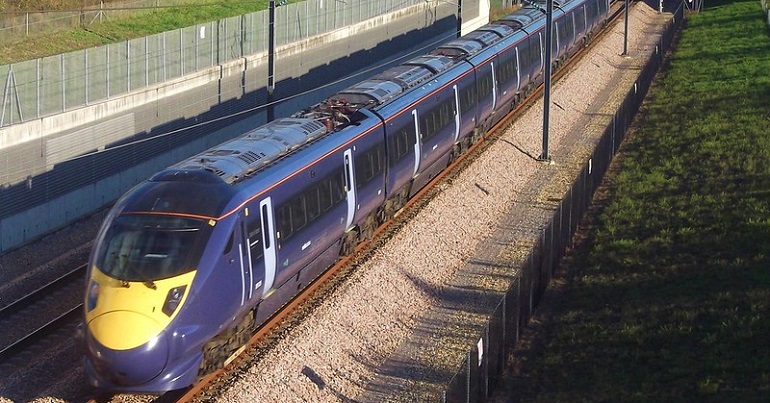
South Western Railway, C2C, and Greater Anglia will be the first rail operators to return to public ownership, the government has announced.

​​South Western Railways will be renationalised in May 2025, C2C in July 2025, and Greater Anglia in autumn 2025.

This comes after the Passenger Railway Services (Public Ownership) Act 2024 received royal assent on 29 November.

The services will initially be operated by DfT Operator Limited, with Great British Railways (GBR) taking over control once it has been set up.

“For too long, the British public has had to put up with rail services that simply don’t work”, the transport secretary, Heidi Alexander, said in a statement.

Alexander, who took over the role from former transport secretary Louise Haigh on Monday, said that starting with South Western Railway, “we’re switching tracks by bringing services back under public control to create a reliable rail network that puts customers first.”

She added: “Our broken railways are finally on the fast track to repairing and rebuilding a system that the British public can trust and be proud of again.”

The Department for Transport statement said that the move will “clamp down on unacceptable levels of delays, cancellations and waste seen under decades of failing franchise contracts”.

Commenting on the announcement, Mick Whelan, general secretary of ASLEF, said: ‘Keir Starmer, Louise Haigh, and Heidi Alexander have delivered on the Labour Party’s manifesto commitment by bringing Britain’s railways back into public ownership.”

Whelan stated: “This is the right decision, at the right time, to take the brakes off the UK economy and rebuild Britain.”

He described the prime minister John Major’s decision to privatise British Rail in 1994 as “foolish, ideologically-driven, and doomed to fail”.

“It was described even by that arch-privateer Margaret Thatcher as “a privatisation too far” and so it proved.

“The privateers have taken hundreds of millions of pounds from our railways and successive Conservative governments have pursued a policy of managed decline which has sold taxpayers, passengers, and staff short.

“Now we are going to see the wheels and the steel put back together, an end to the failed fragmentation of our network, and a railway brought back into the public sector, where it belongs, to be run as a public service, not for private profit.”

The RMT released data last year estimating that railway privatisation has drained at least £31 billion from the system over the past 30 years, which has mostly gone into shareholders pockets, while passengers are paying 8% more to travel.

Labour has not indicated whether it will renationalise lucrative freight services and rolling stock companies (ROSCOs), which own and lease trains to rail operators.

The three ROSCOs that the government created to privatise rail in 1993 – Angel Trains, Eversholt and Porterbrook – paid dividends of over £400m in 2022-23.

Olivia Barber is a reporter at Left Foot Forward

Britons favour proportional representation over First Past the Post, poll finds


Today
Left Foot Forward


It comes after MPs narrowly voted in favour of reforming the voter system, in what was a symbolic vote, unlikely to become law, earlier this week.


Britons favour a proportional representation voting system over the current First Past the Post system, a new poll has found.

The poll, carried out by YouGov, found that 44% of respondents said they prefer proportional representation, where the number of MPs parties win will more closely match their share of the vote, while just 23% backed the current First Past the Post voting system.

It comes after MPs narrowly voted in favour of reforming the voter system, in what was a symbolic vote, unlikely to become law, earlier this week.

The vote, on a Liberal Democrat 10-minute rule bill, calling for a PR system for UK parliamentary elections and for local elections in England was passed by 137 votes to 135. It is believed to be the first time the Westminster parliament has backed such a plan.

The Bill is unlikely to progress in its current form due to a lack of parliamentary time to consider it at second reading, with Downing Street also making clear that it has “no plans” to reform the voting system.

Last month, MPs from across the political divide came together to issue a cross-party call for Britain’s First Past the Post voting system to be scrapped.

The new All Party Parliamentary Group (APPG) for Fair Elections is calling on the government to establish a ‘National Commission for Electoral Reform’ to allow citizens, alongside experts, to recommend a fair and democratic replacement for First Past the Post.


MPs support proportional representation system for UK elections in symbolic vote

Basit Mahmood 
Yesterday
Left Foot Forward

Supporters of proportional representation received a boost yesterday after MPs narrowly voted in favour of reforming the voter system, in what was a symbolic vote, unlikely to become law.

The vote, on a Liberal Democrat 10-minute rule bill, calling for a PR system for UK parliamentary elections and for local elections in England was passed by 137 votes to 135. It is believed to be the first time the Westminster parliament has backed such a plan.

The Bill is unlikely to progress in its current form due to a lack of parliamentary time to consider it at second reading, with Downing Street also making clear that it has “no plans” to reform the voting system.

It comes after MPs from across the political divide came together last month to issue a cross-party call for Britain’s First Past the Post voting system to be scrapped.

The new All Party Parliamentary Group (APPG) for Fair Elections is calling on the government to establish a ‘National Commission for Electoral Reform’ to allow citizens, alongside experts, to recommend a fair and democratic replacement for First Past the Post.

Campaign group Labour for a New Democracy, which has been working closely with the APPG, says it is proud to be able to announce that a majority of the APPG’s over 100 members are Labour MPs, showing widespread support within the parliamentary party for major political reform.

As well as 62 Lib Dem MPs, 59 Labour backbenchers voted for yesterday’s bill, including a number of those first elected in 2024.

Basit Mahmood is editor of Left Foot Forward
Brexit cuts British food exports to the EU by nearly £3bn per year

Today
Left Foot Forward News


Exports to the EU have fallen by an average of 16% per year in the last three years


Exports of British food to the EU have decreased by an average of £2.8 billion per year since the Brexit transition period ended in January 2021.

New data from the Centre for Inclusive Trade Policy (CITP) reveals that nearly one-fifth (16%) of the UK’s food and agricultural exports to the EU have been lost post-Brexit.

The trade think tank reports that new requirements for physical, documentary, and identity checks have complicated agri-food trade between the UK and the EU since Brexit.

Food imports from the EU have also fallen by an average of £4.3 billion, or 8.7%, over the last three years.

While the fall in imports and exports of food has coincided with covid and the Russian invasion of Ukraine, the CITP has said “trade flows between the UK and EU, particularly exports, demonstrate no recent signs of regaining previous levels”.

The CITP’s report noted that “in most legislative areas, including pesticides and hazardous substances, the EU has introduced stricter standards, which the UK hasn’t matched”.

However, the UK has introduced stricter animal welfare standards.

Before Brexit, it was estimated that around 90% of UK food law and policy was made at an EU level.

This ‘regulatory harmonisation’ supported the UK’s reliance on EU food and helped develop highly integrated supply chains within and between UK and EU agri-food businesses.

In its election manifesto, Labour pledged to negotiate a new Sanitary and Phytosanitary (SPS) agreement with the EU, establishing standards for food safety, as well as animal and plant health.

Labour said the agreement would “prevent unnecessary border checks and help tackle the cost of food”.

Campaigners and industry groups are now urging the government to push ahead with making the SPS agreement in order to remove barriers to trade.

After three years of delays, the government introduced reciprocal health certification requirements for plant and animal goods imports in January, followed by physical checks in April.

Olivia Barber is a reporter at Left Foot Forward
Opinion

'Moana 2': Disney’s holiday gift from the gods

(RNS) — 'Moana 2,' which set a new record for Thanksgiving weekend box office receipts, is another step for Disney in broadening its faith palette.


A still from "Moana 2." (Image ©Disney)

Mark I. Pinsky
December 2, 2024

(RNS) — In the stormy skies above Oceania, an evil god and his demon minions battle a well-muscled, shape-shifting demi-god, while down below a plucky, bronze young woman rides the waves, cheering her sidekick on to help save her people, with clever lyrics, exuberant singing — and some not incidental theological insight.

“Moana 2,” which helped Hollywood set a new record for Thanksgiving weekend box office receipts, is another step for Disney in broadening its faith palette, probing deeper — and positively — into the Polynesian cosmology introduced in the original “Moana” in 2016.

Three years after the events of “Moana,” the young Polynesian woman’s quest is set by dead ancestors — her grandmother and a legendary navigator — to find and restore the island of Motufetu, once an idyllic meeting place that connected all of Polynesia’s navigators. These sailors from the far reaches of the southern seas — the predecessors of “wayfinders” like Moana — found on Motufetu a place to share their knowledge. But the island was “cursed by a power-hungry god,” Nalo, who sank the island to the bottom of the ocean to end the cooperation.

To ensure the authenticity of their dive into Polynesian traditions, Disney animators put together more than a dozen experts from throughout the Pacific Basin, called the Oceanic Cultural Trust, to advise them. (Members of the trust did not respond to repeated requests for comment on how their process worked.)

RELATED: Religious freedom was meant to protect not bludgeon. What happened?

Teaching tolerance and understanding never has been Disney’s primary goal of these full-length animated features: Since “Snow White” in 1937 began the parade of princesses, profits are. With the original release of “Moana” and others since then, the studio has found its golden mean: Doing well at the box office while doing good — in this case engaging young viewers in a different faith tradition.


“Moana 2” film poster. (Image ©Disney)

With both Moana films, it has achieved that goal.

Beating expectations of opening weekend ticket sales of just over $100 million, “Moana 2” grossed $221 million in the five days from Wednesday (Nov. 27) through the weekend, the most any movie has made in its first five days.

In 2020, at the height of the streaming phenomenon, Disney announced that “Moana 2” would be a limited television series. But the streaming landscape was soon overrun by content, diluting the audience, convincing Disney’s Bob Iger to switch to a full-length feature. (A live-action film is also in the works, but the studio hasn’t announced whether “Moana 2” will also follow other Disney animated features’ lucrative journeys to Broadway.)

“Moana 2” continues the evolution of Disney’s animated features away from the studio’s early template of white, passive (and implicitly Protestant) princesses rescued by handsome princes. Beginning in the 1990s, the studio began introducing story lines involving other faith traditions and concepts: Catholic, Muslim, Confucian, shaman, animist, Buddhist karma and African Voudun.

Recent Disney princess incarnations in full-length features and cable series — strong drivers of merchandise sales to little girls — have also been assertive young women of color, such as the Chinese warrior princess Mulan; Arab Jasmine in “Aladdin”; Native American “Pocahontas,” Disney’s first African American heroine in “The Princess and the Frog,” (now also a theme park ride in Disney World and Disneyland; Latina Princess Elena in the Disney cable series “Elena of Avalor”; and, after much speculation, Rebecca, Disney’s first Jewish princess, appeared in a series episode.

There are periodic throwback exceptions to this trend. Some traditional Christian messaging was part of “Frozen” in the altruistic character of Anna, and its animator, Mark Henn, once told the Christian Broadcasting Network that “Christian families can use (“Frozen”) to talk to their kids ultimately (about) honest, sacrificial love … (T)hey can just peel back the layers a little bit and … just have conversations about that.”


A still from “Moana 2.” (Image ©Disney)

“Moana 2” tracks what I have called “The Disney Gospel,” which is always undergirded by an irrepressible optimism, in which good is always rewarded, evil is always punished, and, with belief in some higher power — magic, a star, a fairy godmother — a happy ending is guaranteed.

In “Moana 2,” that happy ending takes the form of the arrival of a Black islander on the restored island of Motufetu, after the evil Nalo’s curse is lifted and the previous era of cooperation is revived. The traveler symbolizes the unification of the diverse peoples from Oceania, but for Disney, it does more: It expands Disney’s promise of an increasingly racially and religiously inclusive world.

(Mark I. Pinsky, a journalist in Durham, North Carolina, is author of “The Gospel According to Disney: Faith, Trust, and Pixie Dust.” The views expressed in this commentary do not necessarily reflect those of Religion News Service.)
'AI Jesus' avatar tests man's faith in machines and the divine

LUCERNE, Switzerland (AP) — Researchers and religious leaders released findings from a two-month experiment through art in a Catholic chapel in Switzerland, where an avatar of “Jesus” on a computer screen took questions by visitors on faith, morality and modern-day woes, and offered responses based on Scripture


An experimental art installation with an AI Jesus entitled, Deus in Machina, installed in a confessional in St. Peter's Chapel in the old town of Lucerne, Switzerland, Sunday, Aug. 25, 2024. (Urs Flueeler/Keystone via AP)


Jamey Keaten
December 2, 2024

LUCERNE, Switzerland (AP) — Would you trust an “AI Jesus” with your innermost thoughts and troubles?

Researchers and religious leaders on Wednesday released findings from a two-month experiment through art in a Catholic chapel in Switzerland, where an avatar of “Jesus” on a computer screen — tucked into a confessional — took questions by visitors on faith, morality and modern-day woes, and offered responses based on Scripture.

The idea, said the chapel’s theological assistant, was to recognize the growing importance of artificial intelligence in human lives, even when it comes to religion, and explore the limits of human trust in a machine

After the two-month run of the “Deus in Machina” exhibit at Peter’s Chapel starting in late August, some 900 conversations from visitors –- some came more than once –- were transcribed anonymously. Those behind the project said it was largely a success: Visitors often came out moved or deep in thought, and found it easy to use.

A small sign invited visitors to enter a confessional -– chosen for its intimacy –- and below a lattice screen across which penitent believers would usually speak with a priest, a green light signaled the visitor’s turn to speak, and a red one came on when “AI Jesus” on a computer screen on the other side was responding.

Often, a lag time was needed to wait for the response – a testament to the technical complexities. After exiting, nearly 300 visitors filled out questionnaires that informed the report released Wednesday.

Of love, war, suffering and solitude

Philipp Haslbauer, an IT specialist at the Lucerne University of Applied Sciences and Arts who pulled together the technical side of the project, said the AI responsible for taking the role of “AI Jesus” and generating responses was GPT-4o by OpenAI, and an open-source version of the company’s Whisper was used for speech comprehension.

An AI video generator from Heygen was used to produce voice and video from a real person, he said. Haslbauer said no specific safeguards were used “because we observed GPT-4o to respond fairly well to controversial topics.”

Visitors broached many topics, including true love, the afterlife, feelings of solitude, war and suffering in the world, the existence of God, plus issues like sexual abuse cases in the Catholic Church or its position on homosexuality.

Most visitors described themselves as Christians, though agnostics, atheists, Muslims, Buddhists and Taoists took part too, according to a recap of the project released by the Catholic parish of Lucerne.

About one-third were German speakers, but “AI Jesus” — which is conversant in about 100 languages — also had conversations in languages like Chinese, English, French, Hungarian, Italian, Russian and Spanish.

‘Work of the Devil’?

“What was really interesting (was) to see that the people really talked with him in a serious way. They didn’t come to make jokes,” said chapel theologian Marco Schmid, who spearheaded the project. Most visitors were aged 40 to 70, and more Catholics respondents found the experience stimulating than did Protestants, the report showed.

Schmid was quick to point out that the “AI Jesus” – billed as a “Jesus-like” persona – was an artistic experiment to get people thinking about the intersection between the digital and the divine, not substitute for human interaction or sacramental confessions with a priest, nor was it intended to save pastoral resources.

“For the people it was clear that it was a computer … It was clear it was not a confession,” Schmid said. “He wasn’t programmed to give absolutions or prayers. At the end, it was more summary of the conversation.”

The Catholic Church from the Vatican on down has been wrestling with the challenges –- and possible opportunities -– presented by the explosion in public interest in AI since generative artificial intelligence captured the world’s attention two years ago when OpenAI’s ChatGPT made its debut.

The Vatican has appointed a friar from a medieval Franciscan order as its top expert on AI, and a Lutheran church in Bavaria served up sermons delivered by a chatbot last year. Pope Francis, in his annual peace message for this year, pushed for an international treaty to ensure the ethical use of AI technology.

Chatbots like ChatGPT are powered by algorithmic models trained on vast pools of text and other data to mimic speech and generate seemingly unique and human-like responses.

Haslbauer is sensitive to public reaction and has noted chatter on social media saying the project is “blasphemous” or the “work of the devil.”

“If you read comments on the internet about it, some are very negative — which is scary,” Haslbauer, whose long-haired look featured as a basis for the image of the virtual Jesus.

In a demonstration of the technology in the chapel, Haslbauer queried “AI Jesus” about its message for a troubled world, and about whether AI could be helpful as a way for people to find God.

“All knowledge and wisdom ultimately come from God,” the chatbot said in a soothing voice, after a pause to respond, and the image briefly crackled. “If used wisely, AI can indeed be a tool to explore the wonders of creation, deepen our understanding of Scripture, and foster connections among people.”

“Yet it remains essential to seek God with all your heart and soul beyond any technology,” it added.

A good side, and downsides

Kenneth Cukier, a journalist, author and expert with the U.S.-based nonprofit group called “AI and Faith,” said if “AI Jesus” helps people connect deeper to themselves and the world, it “has to be a good thing.”

“It will lead to better individuals and a better world,” he said. “However — and there’s a big however — this does feel a little bit infantile, and pardon my pun, machine-like.”

“The risk is that it pulls people, ultimately, farther away from that which is more meaningful, deeper and authentic in spirituality,” said Cukier, co-author of “Big Data: A Revolution that Will Transform How We Work, Live and Think.”

For Schmid, the exhibit was a pilot project — and he doesn’t foresee a second coming of “AI Jesus” anytime soon.

“For us, it was also clear it was just a limited time that we will expose this Jesus,” he said, adding that any return would need to be done after deeper thought.

“We are discussing … how we could revive him again,” he said, noting interest from parishes, schoolteachers, researchers and others as the project got media attention in Switzerland and beyond. “They all are interested and would like to have this ‘AI Jesus’. So we have now a little bit to reflect on how we want to continue.”

___

Associated Press religion coverage receives support through the AP’s collaboration with The Conversation US, with funding from Lilly Endowment Inc. The AP is solely responsible for this content.

——

The Associated Press and OpenAI have a licensing and technology agreement that allows OpenAI access to part of AP’s text archives.


Religious elites oppose assisted suicide; the public, not so much

(RNS) — How come?


(Photo courtesy of Pixabay/Creative Commons)

Mark Silk
December 4, 2024

(RNS) — Last week, the British Parliament voted to permit assisted suicide for citizens of England and Wales over the objections of a wide spectrum of religious leaders.

Signing a letter against the “assisted dying” bill were clergy from the country’s top Christian (Church of England, Catholic, Protestant, Eastern Orthodox), Muslim, Jewish, Hindu, Sikh, Jain, Buddhist and Zoroastrian traditions. “Our pastoral roles make us deeply concerned about the impact the bill would have on the most vulnerable, opening up the possibility of life-threating abuse and coercion,” the letter read.

Before he resigned last month, Archbishop of Canterbury Justin Welby called the bill “dangerous.” Chief Rabbi Ephraim Mirvis declared it could “turn life into a commodity like any other.”

Nevertheless, 75% of the British public supports legalization of assisted suicide, with only 14% opposed, according to the latest polling data. Among self-identified Christians, support is running at 69%. Among the major British religious communities, only self-identified Muslims oppose legalization, 45% to 34%.

The gap between religious elites and the general public is hardly unique to Britain.

In the U.S., there’s a comparable phalanx of elite religious opponents of assisted suicide, broken only by the liberal United Church of Christ and Unitarian Universalist denominations, both of which support a right of self-determination in dying. Also comparably, according to Gallup, 71% of the American public supports allowing doctors to end a patient’s life by painless means (euthanasia), while 66% support allowing doctors to assist patients in committing suicide.

To be sure, Americans are not equally comfortable with the morality of doctor-assisted suicide, with just 53% saying it’s morally acceptable versus 40% saying it’s morally wrong. Where a small plurality of self-identified Christians consider it wrong, 77% of those with no religious affiliation consider it acceptable.

Yet, perhaps surprisingly, the level of support for legal euthanasia and assisted suicide has not been noticeably affected by the remarkable rise in disengagement from organized religion. Since Oregon became the first state to legalize assisted suicide in 1994, the religiously unaffiliated, also known as the nones, have quadrupled to nearly a third of the U.S. population. Yet a generation later the practices are only legal in nine other states, plus the District of Columbia.

So if the rise of the nones does not explain why religious leaders are out of step with public opinion on end-of-life matters, what does?

It does not seem coincidental that support for legalization of euthanasia and assisted suicide in the general public flipped from 37% in 1947, when Gallup first asked about euthanasia, to 53% in 1973, when it next polled on the issue. This shift occurred just as a range of life-extending medical techniques such as mechanical ventilation were introduced. It’s likely that it’s precisely this increased ability to keep people alive — sometimes regardless of their wishes — that led to increased support for euthanasia and assisted suicide.

Meanwhile, religious elites remained tied to their long-standing condemnations of suicide. These range from Catholicism, which considers suicide equivalent to murder, to Buddhism, for which it is a harmful action that only leads to another form of suffering.

In addition, as the British religious leaders’ letter suggests, there is among those who advocate for the most vulnerable a drumbeat of concern that society will euthanize those it considers too unproductive and expensive to keep alive. The increase in the number of assisted deaths where it’s been legalized, some argue, shows we’re already on a slippery slope in that direction.

Whether we are in fact on such a slope is far from clear. The most vulnerable patients are those suffering from dementia, and they constitute only a tiny percentage of those who die by either euthanasia or assisted suicide. By far the largest proportion of such deaths — over 60% — occur among cancer patients. They tend to be aware enough of what their disease holds in store for them and they want no part of it.

Those whose religious commitments compel them to oppose assisted death urge high-quality palliative care as the remedy. But, as a recent survey of the field puts it, “even the best available palliative care is not able to prevent a significant minority of patients from dying without unbearable pain.”


Bernice Silk (1927-2011)

The best way to lower rates of euthanasia and assisted suicide, in other words, would be to cure cancer.

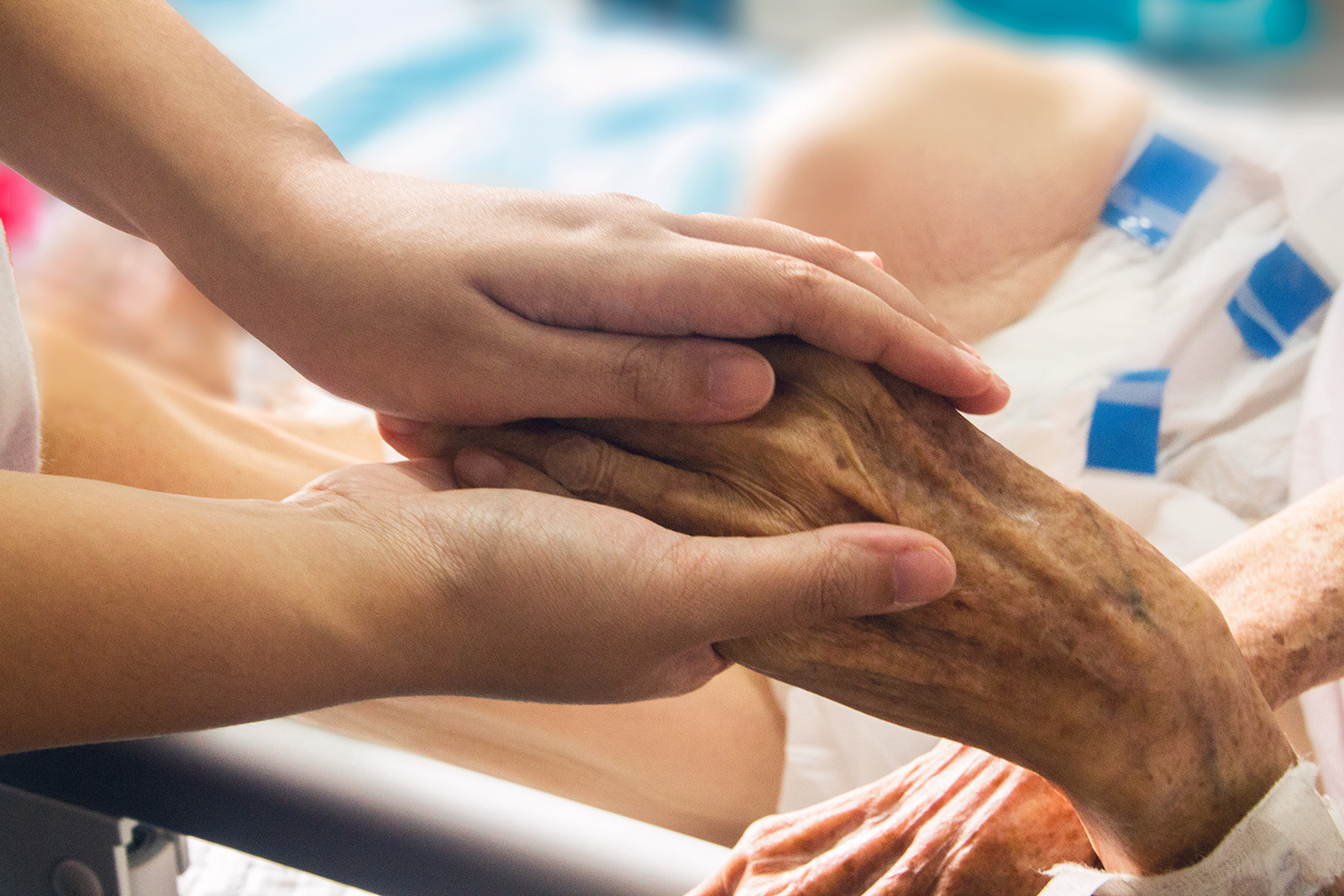
When my then-83-year-old mother experienced a recurrence of peritoneal cancer, she knew what was coming and decided she’d had enough. After consulting with her internist, she stopped eating. Over the next two weeks she planned her funeral, gave instructions to her children and grandchildren, answered questions about her past and said goodbye.

After two weeks, she passed into a coma, and then passed away. Hers was not, technically, an assisted suicide, but it was a suicide and we assisted her to the end. The Catholic hospice agency was troubled by it. It was, by my lights, the best of deaths.