Friday, December 06, 2024

 South Koreans on resort island Jeju march in call for President Yoon's resignation


The crowd waved flags, carried signs and chanted "Yoon Suk-yeol, step down. Arrest Yoon Suk-yeol."


 A woman holds up a sign during a demonstration calling for the resignation and arrest of South Korean President Yoon Suk-yeol on Friday night in Jeju City, Jeju Island, South Korea. Photo by Darryl Coote/UPI

JEJU ISLAND, South Korea, Dec. 6 (UPI) -- Hundreds of South Koreans on the southern resort island of Jeju converged on City Hall on Friday night to demand that embattled South Korean President Yoon Suk-yeol resign and be arrested over his failed attempt earlier this week to institute martial law.

Organized by local unions and non-governmental organizers, the protest began at 7 p.m. local time with speeches, followed by a march of an estimated 1,000 people through Jeju's downtown core, an area populated by restaurants and bars and a hot spot for university students.

The crowd waved flags, carried signs and chanted "Yoon Suk-yeol, step down. Arrest Yoon Suk-yeol."

"Protests are happening everywhere, because he is not the president of Seoul, he's the president of all Koreans," Kim Jeong-hee, one of the protest organizers from a local union, told UPI.

Like many South Koreans, those who took to the streets Friday night on Jeju were enraged by their president's late Tuesday declaration of martial law. Although it was rescinded by lawmakers after only a few hours, its declaration opened old wounds, unearthed buried trauma and ignited new fears.

The last time martial law was declared was in 1979, after the country's decades-long dictator, President Park Chung-hee, was assassinated. That event led to the rise of another military dictatorship under President Chun Doo-hwan, which lasted until democracy finally came to the southern half of the peninsula in 1987.

However, the the first declaration of martial law in South Korea occurred in October 1948, just two months after the country's founding, to suppress a rebellion in Suncheon and Yeosu ignited by soldiers who refused to be sent to Jeju to quell ongoing protests.

A month later, President Syngman Rhee again declared martial law, this time on Jeju. Under this order, and in the name of squelching a communist-led uprising, tens of thousands of islanders were slaughtered in what is now known as the Jeju Massacre, or the Jeju 4.3 Incident in Korean.

Kim Jung-hyun, 22, a Jeju native attending university in Seoul was among those marching in downtown Jeju Friday night. She told UPI that she was scared when she heard martial law had been declared.

"I couldn't believe this was happening in the 21st century. I feel like I am in North Korea," she said, adding that it is because of Jeju's history that so many people were voicing their anger.

Yoon's martial law declaration not only revived old fears on the island, but for some too young to remember the horrors of South Korea's previous regimes, it posed a threat they were struggling to understand.

As the protest was ending, Byun Ji-yun, a 17-year-old Jeju high school student, came up to UPI and demanded to be heard.

She said she should be studying for her final exams next week, but she and her friends had to join the protest, for what was at stake was nothing less than their future.

"I'm learning about Korean history and I never thought that would happen again," she said.

Byun said she was initially frightened after the declaration was made, but soon felt compelled to demonstrate against Yoon.

"It is my future," she said. "I have to live in this country for maybe 60, maybe 70 years. This situation is about my future."

The Democratic Party-led opposition has filed an impeachment vote against Yoon, which will be voted on Saturday evening.

Protest organizer Kim Jeong-hee stated that marches will continue nightly on Jeju until Yoon is impeached or resigns.

"Even if it doesn't work tomorrow, we will keep going until the president resigns," she said.

"Even though we are a small island, we are fighting to protect democracy."

Jeju Island is home to fewer than 700,000 people. The demonstrations here since Yoon's martial law are the largest the island has seen since Jeju residents came out on Dec. 3, 2016, in protest of then-President Park Geun-hye, who would be impeached on Dec. 9 of that year, according to local newspaper Jeju Sori.


South Korea's president a 'great danger' to citizens, his own party says
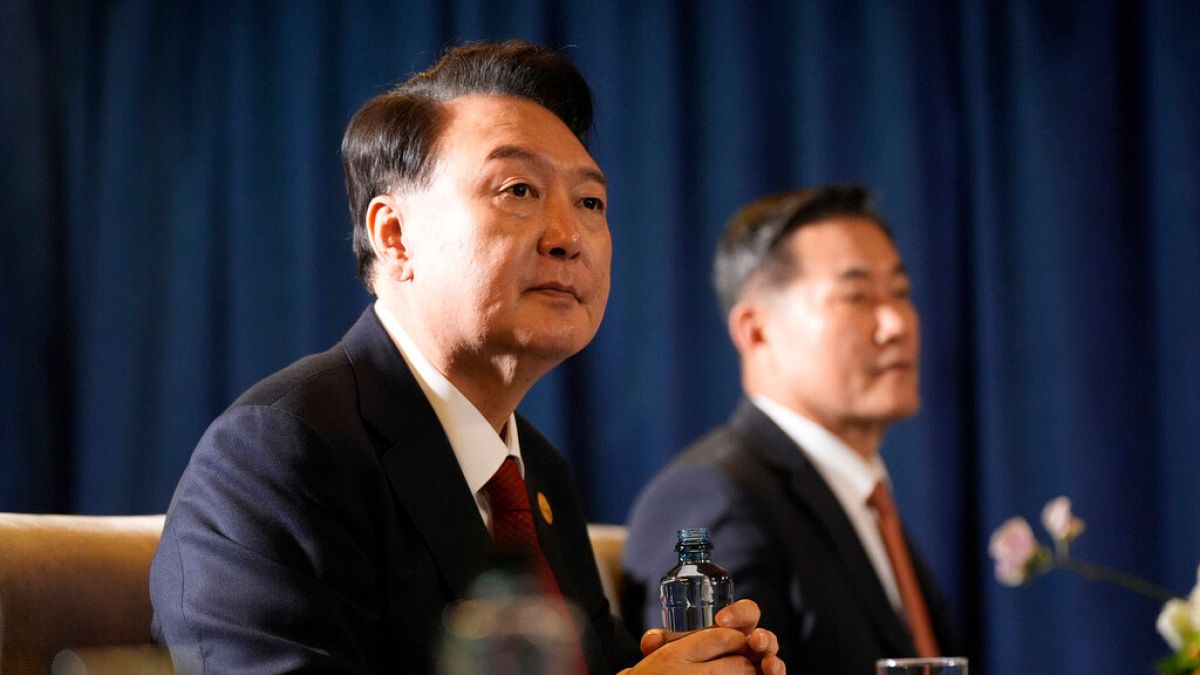
President of South Korea Yoon Suk Yeol listens during a trilateral meeting with President Joe Biden and the Prime Minister of Japan Shigeru Ishiba in Lima, Peru,Nov 2015.
Copyright AP Photo
By Tamsin Paternoster
Published on 

Yoon Suk-yeol appears to be losing his last remaining support after declaring a short-lived martial law order that shocked the country.

Members of South Korean President Yoon Suk-yeol's own People Power Party (PPP) said the leader posed a "significant risk" to South Korean citizens and called for his powers to be frozen during a party meeting on Friday.

Yoon was likely to engage in "extreme actions, like reattempting to impose martial law, which could potentially put the Republic of Korea and its citizens in great danger,” PPP's leader, Han Dong-hun, said.

“It’s my judgment that an immediate suspension of President Yoon Suk-yeol’s official duties is necessary to protect the Republic of Korea and its people,” Han added.

Han's comments spell trouble for Yoon, who is on the verge of losing power as opposition parties push for a parliamentary vote on his impeachment on Saturday.

Yoon briefly imposed a martial law order on South Korea this week, citing the need to "eliminate anti-state forces." As he announced martial law, he accused the country's opposition, the liberal Democratic Party, of sympathising with North Korea.

He reversed course only six hours later after 190 lawmakers forcibly entered the shuttered parliament to vote down the decree.

Opposition parties have called Yoon's martial law order “unconstitutional, illegal rebellion or coup.” They will need the support of two-thirds of the parliament to pass an impeachment motion and remove Yoon from power.

Elsewhere, Han said he received intelligence that Yoon had ordered one of the country's top intelligence commanders to arrest other politicians during the brief period he imposed a martial law order on the country.

His account was questioned by South Korea's spy agency director, Cho Tae-yong, who insisted that such an order would come to him and that he didn't receive any orders from Yoon to detain politicians.

Yoon under pressure

In addition to facing increasing cross-party support for his impeachment, Yoon's Defence Minister Kim Yong-hyun is under investigation for his role in Yoon's decision.

Opposition parties claim it was Kim who recommended Yoon take the step, and he has been replaced in the interim by Vice Defence Minister Kim Seon-ho — who has promised the ministry would be co-operating with prosecutors in an additional investigation into the military's role in Yoon's martial law order.

Thousands of protesters have taken to the streets in Seoul since Wednesday, calling for Yoon to resign.

Members of one of the country's biggest umbrella labour groups, the Korean Metal Worker's Union, have begun hourly strikes against Yoon, pledging to start indefinite strikes should the leader remain in power.

Events this week in Seoul have drawn international attention, with US President Joe Biden commenting he was "seriously concerned" about Yoon's martial law order and welcoming its removal.

Lawmakers began impeachment proceedings against Yoon just hours after the martial law order was lifted. They have set Saturday as the date parliament should vote to remove the president.

Opposition parties will need support from 200 members of the National Assembly's 300. They currently have 192 seats combined, with the PPP having 108 lawmakers.


Old boys’ club? S Korea plotters’ high

 school links in spotlight

ByAFP
December 6, 2024

South Korea President Yoon Suk Yeol declared martial law but it was swiftly overturned by parliament - 

Copyright AFP ANTHONY WALLACE

SHIM Kyu-Seok

Key figures in South Korea’s failed martial law bid share one key connection: they are all graduates of a prestigious, all-boys school in Seoul.

The coincidence has sparked wild online speculation and even forced the school — a respectable but not academically famous, fee-paying establishment — to issue a public rebuke of its infamous alumnus.

President Yoon Suk Yeol’s Tuesday declaration of South Korea’s first martial law in decades was swiftly overturned by parliament, and the conservative former prosecutor now faces impeachment and possible jail time.

South Koreans have been quick to point out that 63-year-old Yoon, his former defence minister, interior minister and head of the military’s intelligence all graduated from the Choongam High School.

There’s as yet no evidence that the connection played a role in their disastrous bid to shut down South Korea’s parliament.

But that hasn’t stopped many online from pointing fingers — leading the school’s superintendent Yoon Myung-hwa to quickly discredit her school’s infamous alumni.

She declared Yoon and ex-defence minister Kim Yong-hyun, 65, as “Choongam’s most embarrassing alumni a million times over”.

“They destroyed the reputation of the nation, as well as our school,” she wrote on Facebook.

– Class as usual –


Classes were on as usual at Choongam — a normal looking high-school in a peaceful leafy northwestern district of Seoul — on Friday, though administrators were clearly tense about the unwanted attention the school was getting.

The school is being bombarded by criticism from outsiders, with even bus drivers becoming the targets of bitter rants by citizens angry at current events.

Students have even been given special permission not to wear their school uniforms, local media reported, to prevent them from being targeted by angry members of the public.

When AFP toured the school Friday, students — who were not wearing uniforms — seemed confused to see reporters walking through their building, as they continued with lessons.

Superintendent Yoon told AFP the school was “distressed” to find itself associated with this week’s dark chapter in South Korean democracy.

“We at Choongam educate our students as democratic citizens, to value and treasure democracy,” she said.

“The acts perpetrated by those people are faults of the individual that do not reflect our ideals,” she added.

“As a school we feel uneasy and distressed about how our education is being faulted for these acts.”

– ‘Choongam clique’ –

Local media have run sensational stories decrying the group of schoolboy chums purportedly behind the dramatic events of Tuesday night, when heavily-armed soldiers were helicoptered into the parliament building with orders to “drag out” lawmakers.

Aided by determined staffers who blocked doors with office furniture to keep the soldiers out, enough MPs managed to gather to vote down the martial law declaration.

“The 12.3 martial law: behind the scenes lay the ‘Choongam clique'” wrote the magazine, Sisa Journal. “Was this a ‘Choongam clique’ coup?” asked the Segye Ilbo.

Interior minister Lee Sang-min denied the high school connection playing a role, saying there had been “no exclusive meeting between Choongam colleagues.”

But school networks occupy important roles in South Korean elite society — often seen as one of three key factors, alongside blood ties and regional background, that determine success.

And many pointed to parallels with another group of school graduates whose connection last pulled South Korea into martial law — former president Chun Doo-hwan’s “Hanahoe” army clique.

Chun’s circle of comrades from the Korea Military Academy, South Korea’s West Point, were instrumental in the 1979 coup — and bloody crackdowns — that followed the assassination of President Park Chung-hee.

The autocratic Chun later filled key posts with fellow alumni — even anointing fellow graduate Roh Tae-woo as his successor.

An online post three months before Yoon’s martial law declaration suggesting the so-called “Choongam connection” could try and exercise emergency powers has since gone viral.

“I don’t know if its coincidence or not, but there appears to been an almost premodern, one-dimensional connection between the orchestrators of this unconstitutional act,” Lee Joon-han, a politics professor at Incheon University, told AFP.

“Yoon is known to have a very narrow personnel pool based largely on his personal ties,” Lee said.

“This is a recipe for creating an army of yes-men,” he explained.

“There were few stop brakes in between that could have prevented this disaster.”


South Korean ruling party demands Yoon step down


By AFP
December 5, 2024

Protesters take part in a candlelight rally calling for the ouster of South Korea President Yoon 
Suk Yeol 
- Copyright AFP Philip FONG

Hailey Jo and Kang Jin-kyu

South Korea’s ruling party chief demanded Friday that President Yoon Suk Yeol stand down over his martial law attempt, warning he posed a great danger to the country.

The stunning comments from Han Dong-hoon, the head of Yoon’s People Power Party, almost guarantees enough lawmakers will vote to impeach the president on Saturday.

Han’s comments were a U-turn from Thursday, when he said he would block the impeachment, and another party leader insisted all 108 members of the PPP would unite to support Yoon in Saturday’s vote.

But Han said Friday that Yoon’s refusal to acknowledge he had done anything wrong in declaring martial law on Tuesday night had prompted his change of position.

“Considering the newly emerging facts, I believe that a swift suspension of President Yoon Suk Yeol’s duties is necessary to safeguard the Republic of Korea and its people,” Han said.

Han said Yoon had not taken any personnel actions against military officials who had “illegally intervened”.

“Furthermore, he does not acknowledge that this illegal martial law is wrong,” he said.

“Therefore, if President Yoon continues to hold the office of the presidency, there is a significant risk that extreme actions similar to the current state of emergency could be repeated, which could put the Republic of Korea and its citizens in great danger.”

Yoon suspended civilian rule late Tuesday and deployed troops and helicopters to parliament only for lawmakers to vote down the measure and force him into a U-turn in a night of protests and drama.

Seoul’s allies were alarmed — Washington said it found out via television — and the opposition quickly filed an impeachment motion saying Yoon “gravely violated the constitution and the law”. A vote is set for Saturday at around 7:00 pm (1000 GMT).

The opposition holds a large majority in the 300-member legislature and requires only a handful of defections from the PPP to secure the two-thirds majority needed for impeachment.

According to a poll issued Thursday by Realmeter, 73.6 percent of respondents supported the impeachment.

Thousands of protesters continued to rally in central Seoul and near the parliament on Thursday evening demanding the president step down.

If the impeachment motion passes, Yoon will be suspended pending a verdict by the Constitutional Court. If the judges give the nod, Yoon will be impeached and new elections must take place within 60 days.


– Bad memories –


Yoon, who has lurched from crisis to crisis since taking office in 2022, has not been seen in public since his televised address in the early hours of Wednesday.

On Thursday, his office said that Defence Minister Kim Yong-hyun had resigned, but other key allies, including Interior Minister Lee Sang-min, remain in office.

Prosecutors have also banned Kim from leaving the country, Yonhap news agency reported.

Lawmakers on Thursday grilled senior figures, including army chief of staff General Park An-su, who acted as Yoon’s martial law commander.

Park said he was kept in the dark until after the president had announced the imposition of martial law on live television late Tuesday.

It was the first such declaration in more than four decades in South Korea and brought back painful memories of its autocratic past.

The move was to “safeguard a liberal South Korea from the threats posed by North Korea’s communist forces and to eliminate anti-state elements plundering people’s freedom and happiness,” Yoon said.

Security forces sealed the National Assembly, helicopters landed on the roof and almost 300 soldiers tried to lock down the building.

But as parliamentary staffers blocked the soldiers with sofas and fire extinguishers. Enough MPs got inside and voted down Yoon’s move.

Lawmakers formally presented the impeachment motion in the early hours of Thursday, saying Yoon’s decision to impose martial law was intended to “evade imminent investigations… into alleged illegal acts involving himself and his family”.

“This is an unforgivable crime — one that cannot, should not and will not be pardoned,” MP Kim Seung-won said.


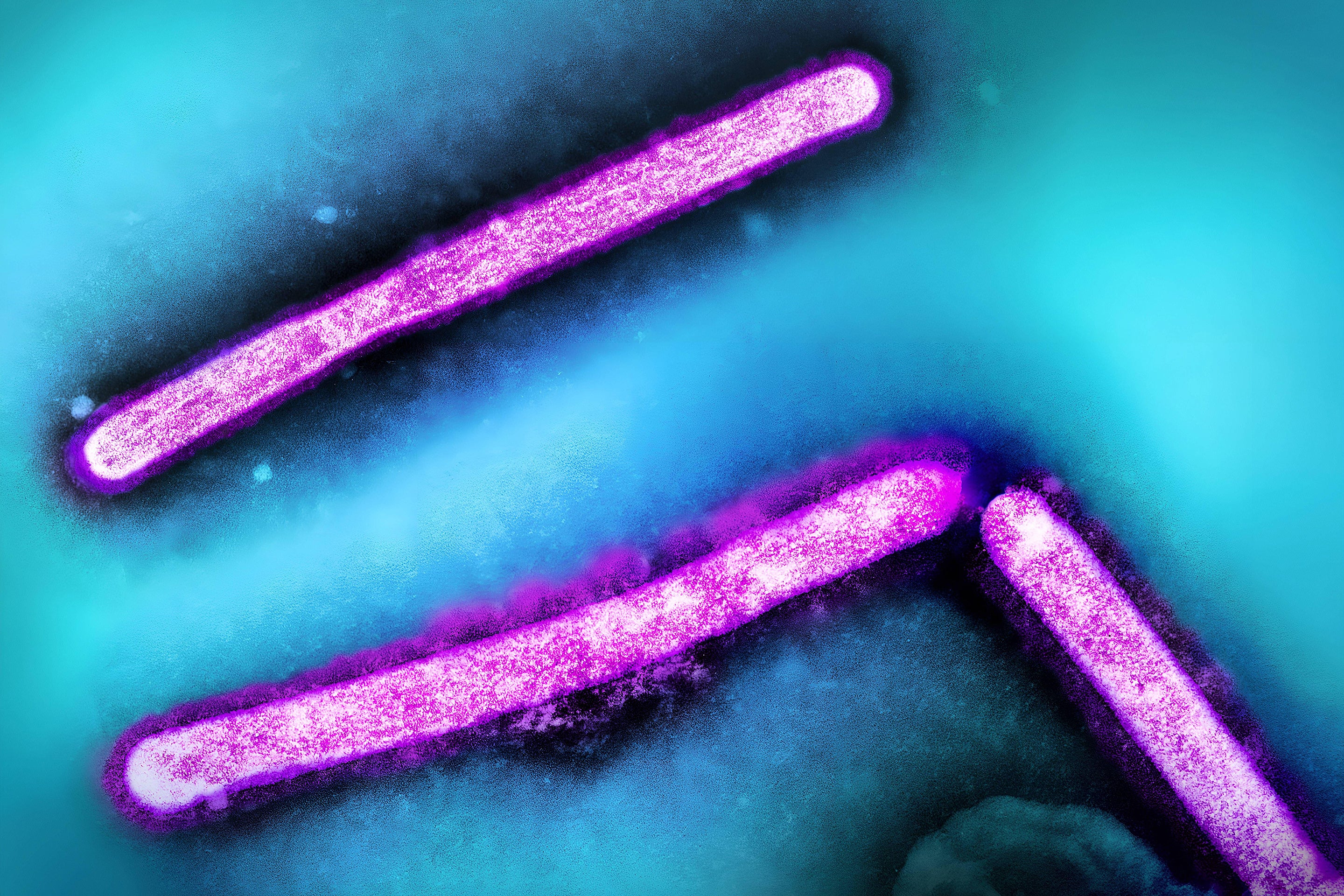
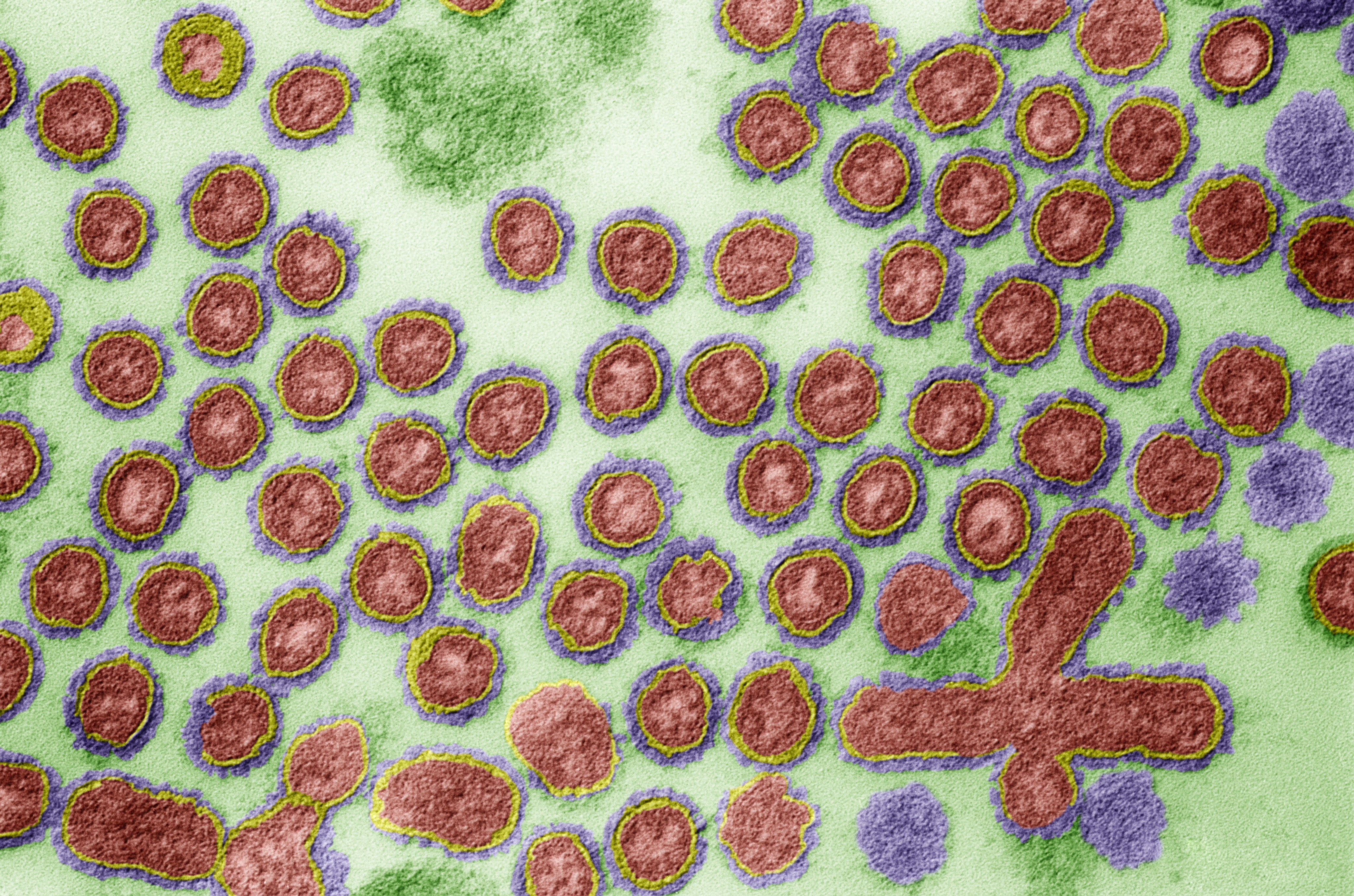
USDA announces new milk testing order for H5N1 bird flu


 The highly pathogenic avian influenza H5N1 was first found in dairy cattle in the United States in March 2024. File Photo by Ian Wagreich/UPI | License Photo

Dec. 6 (UPI) -- The U.S. Department of Agriculture Friday announced a new national milk testing order to check for H5N1 bird flu. It requires raw unpasteurized milk samples nationwide to be collected and shared with the USDA for testing.

Highly pathogenic avian influenza H5N1 was first found in dairy cattle in the United States in March 2024.

"Since the first HPAI detection in livestock, USDA has collaborated with our federal, state and industry partners to swiftly and diligently identify affected herds and respond accordingly," said Agriculture Secretary Tom Vilsak in a statement. "This new milk testing strategy will build on those steps to date and will provide a roadmap for states to protect the health of their dairy herds."

In April 2024, the USDA said the novel movement of H5N1 from wild birds to dairy cows required further testing.

Vilsack said the new federal order for milk testing, "will give farmers and farmworkers better confidence in the safety of their animals and ability to protect themselves, and it will put us on a path to quickly controlling and stopping the virus' spread nationwide."

The new federal order consists of three requirements.

Raw milk samples must be shared upon request from milk producing, dairy processing and transport entities.

Second, herd owners with positive cattle must provide epidemiological information that enables activities such as contact tracing and disease surveillance.

The final requirement is for private laboratories and state veterinarians to report positive results to USDA that come from tests done on raw milk samples drawn as part of the new milk testing order.

The new order is part of a multi-stage plan to work with states to stop the spread of H5N1 bird flu among U.S. dairy herds.

It includes nationwide testing of milk silos to monitor for bird flu, determining a state's H5N1 dairy cattle status and detecting and responding to rapidly respond to virus infections.

The fourth stage, after all dairy herds in a state are considered to be unaffected, is to continue regular sampling of farms' bulk tanks so the disease does not re-emerge.

And the final stage will be to demonstrate freedom from H5 for U.S. dairy cattle.

Health and Human Services Secretary Xavier Becerra said in a statement, "This testing strategy is a critical part of our ongoing efforts to protect the health and safety of individuals and communities nationwide."

He added, "Our primary responsibility at HHS is to protect public health and the safety of the food supply, and we continue to work closely with USDA and all stakeholders on continued testing for H5N1 in retail milk and dairy samples from across the country to ensure the safety of the commercial pasteurized milk supply."

The first six states in the milk testing program will be California, Colorado, Michigan, Mississippi, Oregon, and Pennsylvania.

Washington became the sixth state to identify a human infection of avian flu in October. Outbreaks have ben found in poultry, dairy, cattle and wildlife.

At least 31 human cases among workers in contact with animals have occurred in Washington, California, Texas, Michigan, Colorado and Missouri.

Bird Flu Virus Is One Mutation Away from Binding More Efficiently to Human Cells


A new study finds tweaking part of the H5N1 virus infecting dairy cows in a single spot could allow it to better attach to human cell receptors, raising concerns it could transmit more easily between people


By Lauren J. Young
SCIENTIFIC AMERISAN

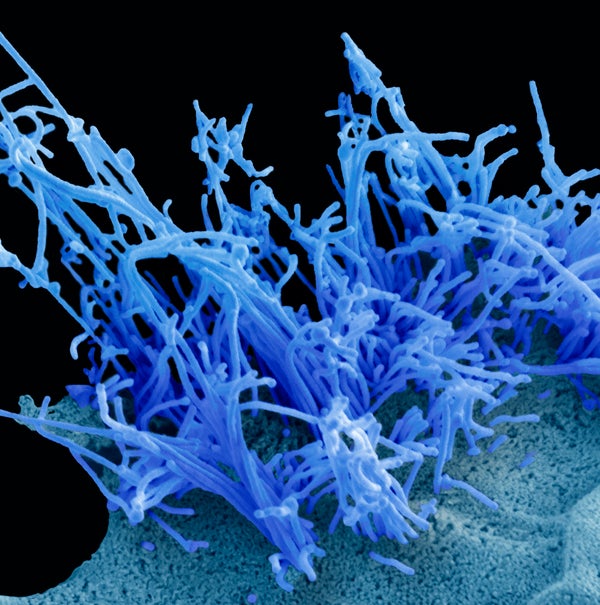
A human cell infected with the avian influenza virus H5N1 (blue filaments).
Steve Gschmeissner/Science Source Epidemiology

Scientists have discovered that H5N1, the strain of highly pathogenic avian influenza virus currently spreading in U.S. dairy cows, only needs a single mutation to readily latch on to human cells found in the upper airway. The findings, published today in Science, illustrate a potential one-step path for the virus to become more effective at human transmission—and could have major implications for a new pandemic if such a mutation were to become widespread in nature.

Avian influenza viruses are dotted with surface proteins that allow them to bind to bird cell receptors, which permit the virus to enter the cells. The cell receptors in birds are different from those in humans, but that variation is “very subtle,” says James Paulson, a study co-author and a biochemist at Scripps Research. “For a new pandemic H5N1 virus, we know that it has to switch receptor specificity from avian-type to human-type. So what will it take?” To his and his co-authors’ surprise, that switch only needed one genetic alteration.

The particular group, or clade, of H5N1 responsible for the current outbreak was first detected in North America in 2021 and has affected a wide range of animal populations, including wild birds, bears, foxes, a variety of marine mammals and, most recently, dairy cows. Since outbreaks of H5N1 in U.S. dairy herds began this spring, human cases have been mostly linked to sick poultry or cows, and the majority of human infections have been mild ones among farmworkers at high risk of exposure (with some notable exceptions). There haven’t been any signs of transmission between people—and the virus’s receptor binding preference is a key barrier to that.

“It’s obviously speculative, but the better the virus becomes at likely binding to human receptors—it’s not great because it’s going to probably lead to human-to-human transmission,” says Jenna Guthmiller, an immunologist at the University of Colorado Anschutz Medical Campus, who was not involved in the new research.

The study authors focused on altering one of H5N1’s surface proteins, hemagglutinin, which contains the binding site that allows the virus to latch onto host cell receptors and kick-start infection. The researchers generated viral proteins from genetic sequences of the virus isolated from the first human case in Texas, which occurred in a person who developed bird flu after exposure to an infected cow. No live virus was used in the experiment. Then the scientists engineered an assortment of different mutations into hemagglutinin’s chain of amino acids, or protein building blocks. A single mutation that swapped the 226th amino acid in the sequence for another allowed H5N1 to switch its binding affinity from receptors on bird cells to receptors on human cells in the upper respiratory tract.

Curated by Our Editors


Can Antarctic Wildlife Survive Another Deadly Bird Flu Season?

Meghan Bartels


Anthony Fauci Warns of Bird Flu Dangers—And How Public Division Could Make It Worse

Rachel Feltman, Tanya Lewis, Fonda Mwangi & Jeffery DelViscio


Bird Flu Has Infected Two Young People. Here’s Why Experts Are Concerned
Lauren J. Young


A Bird Flu Vaccine Might Come Too Late to Save Us from H5N1

Maggie Fox


Past research has shown that several influenza mutations, including the ones tested in the new paper, are important in human receptor binding, Guthmiller says. These genetic tweaks have been flagged in previous influenza virus subtypes that have caused human pandemics, such as those in 1918 and 2009. But past viruses typically required at least two mutations to successfully change their preference to human receptors, explains co-author Ian Wilson, a structural and computational biologist at Scripps. “This was surprising. It was just this single mutation [that] was sufficient to switch the receptor specificity,” he says.

Paulson adds that the particular mutation the scientists tested in the new study had previously been investigated during H5N1 outbreaks in poultry and some humans in 2010, but it didn’t affect the virus’s human receptor binding. “But the virus has subtly changed,” Paulson says. “Now that mutation does cause the change.”


Wilson and Paulson note the mutated H5N1 protein in their study bound weakly to human receptors but more strongly than the 2009 H1N1 virus, which caused the “swine flu” human pandemic. “The initial infection is what we’re concerned about to initiate a pandemic, and we believe that the weak binding that we see with this single mutation is at least equivalent to a known human pandemic virus,” Paulson says. The study did identify a second mutation in another area of hemagglutinin, the amino acid at position 224, that could further enhance the virus’s binding ability in combination with the 226 mutation.

Guthmiller isn’t surprised about the findings, given the 226 mutation’s known significance in flu receptor preference, but adds, “It’s never great when you see that it only really takes one mutation.” The study “also sort of provides us an idea of what we should be looking for and what sites of the hemagglutinin protein we should be focusing on to understand its potential to change and infect us better.”

A teenager in Canada was recently hospitalized in critical condition from bird flu with an unknown exposure. Genetic sequencing, which showed a strain of H5N1 that was similar to one circulating in Canadian poultry, detected mutations in two positions, one of which was at 226—the same position studied in the new paper. Scientists don’t know if either mutation was responsible for the teenager’s severe condition, but some expressed concern that the changes could be a sign of the virus potentially adapting to human cells.

Paulson says it’s too early to draw conclusions or parallels between the teenager’s case and the study findings. The amino acids the researchers tweaked in the study were not the same as those in the Canadian case’s viral sequence, for instance, he says. “There’s a lot of chatter that, ‘oh, my gosh, that amino acid is mutating,’ but there’s no evidence yet that that would actually give us the specificity that would be required for human transmission,” Paulson says. But he adds that the case is still significant.

Most bird flu cases in humans reported this year have been mild. In past outbreaks, H5N1 has caused severe respiratory disease because of its preference to bind to cells in the lower respiratory tract, Guthmiller explains. "You’re basically causing a viral pneumonia,” she says. “But if you increase binding to human receptors that are in the upper respiratory tract,” as this study did, “that’s more likely going to look more like your common cold–like symptoms.” That said, viruses that prefer the upper respiratory tract, including the nose and throat, are more likely to spread through coughing and sneezing, she says. That could lead to more spread through human contact.

Better receptor binding doesn’t necessarily cause disease on its own. Several other factors are important, such as the virus’s ability to replicate and proliferate in the body. But attaching to cells is an initial step, Paulson says. “The magic that we hope doesn’t happen is that all of those things come together so that we have that first [human-to-human] transmission and that becomes a pandemic virus,” he says.


Rights & Permissions

Lauren J. Young is an associate editor for health and medicine at Scientific American. She has edited and written stories that tackle a wide range of subjects, including the COVID pandemic, emerging diseases, evolutionary biology and health inequities. Young has nearly a decade of newsroom and science journalism experience. Before joining Scientific American in 2023, she was an associate editor at Popular Science and a digital producer at public radio’s Science Friday. She has appeared as a guest on radio shows, podcasts and stage events. Young has also spoken on panels for the Asian American Journalists Association, American Library Association, NOVA Science Studio and the New York Botanical Garden. Her work has appeared in Scholastic MATH, School Library Journal, IEEE Spectrum, Atlas Obscura and Smithsonian Magazine. Young studied biology at California Polytechnic State University, San Luis Obispo, before pursuing a master’s at New York University’s Science, Health & Environmental Reporting Program.

Shell, Equinor announce joint venture to become Britain's largest independent oil, gas venture


Shell and Equinor on Thursday announced they will join together to form Britain's largest independent oil and gas venture. File Photo by Terry Schmitt/UPI | License Photo

Dec. 5 (UPI) -- Petroleum giant Shell announced a plan to create a jointly owned energy company with Norway's Equinor on Thursday to build Britain's largest independent oil and gas venture.

The new joint company, which will be headquartered in Aberdeen, Scotland, will offer Shell's offshore oil and gas assets to sustain fossil fuel products and energy security for Britain, officials said.

Shell said it hopes the joint venture, which is expected to produce more than 140,000 barrels of oil per day late next year, should be completed by the end of 2025.

"Domestically produced oil and gas is expected to have a significant role to play in the future of the UK's energy system," Zoe Yujnovich, Shell's integrated gas and upstream director, said in a statement. "To achieve this in an already mature basin, we are combining forces with Equinor, a partner of many years.

"The new venture will help play a critical role in a balanced energy transition providing the heat for millions of U.K. homes, the power for industry, and the secure supply of fuels people rely on."

Equinor Executive Vice President for Exploration and Production International Philippe Mathieu said it has been a "reliable energy partner" in Britain for more than four decades, ranging from oil and gas exploration to developing the offshore wind industry.

"This transaction strengthens Equinor's near-term cash flow, and by combining Equinor's and Shell's long-standing expertise and competitive assets, this new entity will play a crucial role in securing the U.K. energy supply," Mathieu said in a statement.

Biraj Borkhataria, an analyst with RBC Capital Markets said the joint venture should be a victory for both companies in regard to resources and "tax synergies."

"In that vein, with the U.K. not seen as a major growth market, this combination appears to make strategic sense in that it allows two companies to pool resources and continue to grow while allocating less focus/capital to the region and follows recent moves by the likes of Eniin the country," Borkhataria said, according to CNBC.

US facing greater risk from inflation than labour market: Fed official

By AFP
December 6, 2024

Fed Governor Michelle Bowman said she still sees a 'greater risk' to price stability than to the jobs market - Copyright AFP Eitan ABRAMOVICH

The US continues to face a greater risk from underlying inflation than from any weaknesses in the labor market, despite recent progress, a senior Federal Reserve official said Friday.

The Federal Reserve has a dual mandate from Congress to keep both inflation and unemployment under control, and recently began rolling back high interest rates in order to better support the labor market.

After two rate cuts since September totalling three quarters of a percentage-point, the Fed’s benchmark lending rate now sits between 4.50 and 4.75 percent.

At least one policymaker on the Fed’s rate-setting committee has suggested cautious support for a quarter-point rate cut later this month, while others have maintained a wait-and-see approach, refusing to show their hand ahead of time.

“I continue to see greater risks to the price stability side of our mandate, especially when the labor market continues to be near full employment,” Fed governor Michelle Bowman told a virtual event hosted by the Missouri Bankers Association.

“I think we’re still seeing that the US economy is strong,” added Bowman, a permanent voting member of the Fed’s rate-setting committee.

“But core inflation continues to be elevated,” she said, referring to the underlying measure of inflation which strips out volatile food and energy costs.

The Fed’s favored inflation gauge ticked up slightly in October to 2.3 percent, slightly above the Fed’s long-term target of two percent.

But the so-called “core” inflation figure remained stubbornly high at 2.8 percent, indicating that underlying price pressures

“In my view, upside risks to inflation remain prominent due to possible disruptions in supply chains from labor strikes and from geopolitical tensions that we’re seeing more frequently around the world,” Bowman said.

She added that “increased trade tensions and expansionary government spending,” were also putting pressure on prices, and that fresh inflation data published next week would help support her decision at the rate decision on December 17 and 18.

Financial markets are pricing in a probability of more than 85 percent that the Fed will vote to cut instead of remaining on pause, according to data from CME Group.
U.S. creates a more-than-expected 227,000 jobs in November


The U.S. Bureau of Labor Statistics reported Friday that 227,000 jobs were created in November, beating expectations, as unemployment edged higher as expected to 4.2%. It was 4.1% in October. File Photo by Jim Ruymen/UPI | License Photo

Dec. 6 (UPI) -- The U.S. Bureau of Labor Statistics reported Friday that 227,000 jobs were created in November.

More jobs than expected were created, as the Dow Jones consensus estimate was for 214,000 jobs in November.

"Total nonfarm payroll employment rose by 227,000 in November, and the unemployment rate changed little at 4.2 %," the U.S. Bureau of Labor Statistics said in a statement. "Employment trended up in health care, leisure and hospitality, government, and social assistance. Retail trade lost jobs."

There were 28,000 fewer retail jobs, despite heading into the holiday shopping season.

Unemployment edged higher as expected at 4.2%. It was 4.1% in October.

"Both the unemployment rate, at 4.2%, and the number of unemployed people, at 7.1 million, changed little in November," the BLS said in a statement. "These measures are higher than a year earlier, when the jobless rate was 3.7%, and the number of unemployed people was 6.3 million."

Health care added 54,000, leisure and hospitality 53,000 and government added 33,000 jobs.

Transportation equipment manufacturing jobs increased by 32,000, reflecting workers in that industry coming back to work after a labor strike.

Social assistance added 19,000 jobs.

Average hourly earnings increased 13 cents to $35.61 per hour for nonfarm employees. Wages were up 4% over the past 12 months.

September's job creation numbers from the BLS were revised up by 32,000 to 255,000.

For October revised job creation up by 24,000 to 36,000.

"With these revisions, employment in September and October combined is 56,000 higher than previously reported," the BLS Friday statement said.


In a statement from the White House, President Joe Biden proclaimed, "America's comeback continues."

"Since I took office, the economy has created more than 16 million jobs, with jobs created every single month," he said. "Unemployment has been the lowest on average of any administration in 50 years. Incomes are up almost $4,000 more than prices. While there is more to do to lower costs, we've taken action to lower prescription drug prices, health insurance premiums, utility bills, and gas prices that will pay dividends for years to come."


224,000 file for unemployment benefits for first time


Thousands of job seekers stand at the site of Amazon's future headquarters at a "career day" in Crystal City, Virginia on September 17, 2019. The Labor Department said 224,000 filed for unemployment insurance for the first time last week. 
File Photo by Tasos Katopodis/UPI | License Photo


Dec. 5, 2024 

Dec. 5 (UPI) -- The number of people filing for weekly unemployment benefits for the first time rose 9,000 last week from the period before to a seasonally adjusted 224,000 as the key economic statistic continued its rollercoaster ride at the end of the year.

The new initial filing total for the week ending Nov. 30, was the highest total of people filing for unemployment insurance for the first time since the week ending Oct. 19 with 228,000 making their inaugural claims.

The key figure, watched by the Federal Reserve as a snapshot of workforce stability, reached its highest figure for first-time filers for the week ending Oct. 5 with 260,000. Weekly initial filings have continued to drop unevenly since then to an adjusted 215,000 for the week ending Nov. 16 and Nov. 23.

The four-week moving average for those making initial applications for unemployment insurance was 218,250 for the week ending Nov. 30, an increase of 750 from the previous week's revised average.

The overall number of those filing for weekly unemployment benefits for the week ending Nov. 23 was 1.871 million, according to the Labor Department, a decrease of 25,000 from the previous week's total.

The previous week's total was revised down by 11,000 to 1.896 million, the department said.

The four-week moving average of all workers filing for weekly jobless claims was 1,884,250, a drop of 3,250 from the previous week's revised average.
US Supreme Court Justice Gorsuch recuses himself from environmental case

ONLY AFTER BEING 'OUTED'


Supreme Court Justice Neil Gorsuch recused himself from an upcoming environmental case scheduled for next week after reviewing the current ethics code, according to a letter sent Wednesday to attorneys involved in the case. Some House Democrats had urged him to recuse. File Photo by Eric Lee/UPI | License Photo

Dec. 5 (UPI) -- Supreme Court Justice Neil Gorsuch recused himself from an upcoming environmental case scheduled for next week after reviewing the current ethics code, according to a letter sent to attorneys involved in the case.

The brief letter dated Wednesday from law clerk Scott S. Harris was posted on the Supreme Court website.

"I am writing to inform you that, consistent with the Code of Conduct for Justices of the Supreme Court of the United States, Justice Gorsuch has determined that he will not continue to participate in this case," Harris wrote.

The case is Seven County Infrastructure Coalition vs. Eagle County, Colo.

Rep. Hank Johnson, D-Ga., who wrote a letter signed by other House Democrats urging Gorsuch's recusal, hailed the decision to recuse.

"I applaud Justice Gorsuch for doing the right and honorable thing," Johnson said in a statement. "It is important that the court show the public that it is not in the pocket of billionaire benefactors."

Thirteen House Democrats signed the letter Johnson wrote Gorsuch on Nov. 20 urging him to recuse himself from the case.

"Recent reporting exposed that you have a serious and obvious conflict of interest that demands your recusal," the letter said. "In your prior career as a corporate lawyer, you were the long-time attorney for Denver-based billionaire Philip F. Anschutz and his network of companies for many years."

The Democratic House members said Anschutz "has a direct financial interest in the outcome of Seven County Infrastructure Coalition v. Eagle County, Colo."

The letter said Anschutz lobbied Congress and the George W. Bush administration for Gorsuch to be appointed to the United States Court of Appeals for the 10th Circuit.

Anschutz also bankrolls the right-wing special interest groups the Federalist Society and the Heritage Foundation, according to the Democrat House members who signed the letter.

It was the Federalist Society that put Gorsuch on a list used by then-president Donald Trump to elevate Gorsuch to the Supreme Court.

Anschutz Exploration Corp. filed a brief in the case in question.

Supreme Court Justice ethics came under scrutiny after Justice Clarence Thomas' acceptance of undisclosed valuable free vacations and trips from billionaire and GOP donor Harlan Crow were revealed by Pro Publica reporting.

Rep. Hank Johnson, D-Ga., who wrote the letter signed by other House Democrats urging Gorsuch's recusal, hailed the decision to recuse.

"I applaud Justice Gorsuch for doing the right and honorable thing," Johnson said in a statement. "It is important that the court show the public that it is not in the pocket of billionaire benefactors."

The other Supreme Court Justices will hear oral arguments in the case Tuesday.

At issue in the case is whether environmental impacts of oil production should be considered when deciding to build a railway line for oil transportation in Utah.
London police make 500 arrests using facial recognition tech


By AFP
December 6, 2024

London's Metropolitan Police force is using facial recognition technology
 - Copyright AFP Will EDWARDS

London’s Metropolitan Police force said on Friday that it had used facial recognition technology to make more than 500 arrests in 2024 for offences ranging from shoplifting to rape.

The force uses live facial recognition in specific areas of the UK capital, positioning a van equipped with cameras in a pre-agreed location.

The cameras capture live footage of passers-by and compare their faces against a pre-approved watchlist, generating an alert if a match is detected.

Civil liberties campaigners have criticised the use of such technology, and advocacy group Big Brother Watch has launched legal action to stop its expansion.

“The technology works by creating a ‘faceprint’ of everyone who passes in front of camera —- processing biometric data as sensitive as a fingerprint, often without our knowledge or consent,” the group says on is website.

“This dangerously authoritarian surveillance is a threat to our privacy and freedoms -— it has no place on the streets of Britain,” it adds.

The Met says it is a “forerunner” in using the technology, adding that it helps “make London safer” by helping detect “offenders who pose significant risks to our communities”.

Of the 540 arrests, more then 50 were for serious offences involving violence against women and girls, including offences such as strangulation, stalking, domestic abuse and rape.

More than 400 of those arrested have already been charged or cautioned.

“This technology is helping us protect our communities from harm,” said Lindsey Chiswick, the Met’s Director of Performance.

“It is a powerful tool that supports officers to identify and focus on people who present the highest risk that may otherwise have gone undetected,” she added.

Responding to privacy fears, police said that the biometric data of any passer-by not on a watchlist is “immediately and permanently deleted”.

TikTok loses appeal of US law ordering sale from Chinese owner

JUST NOT TIK TOK'S WEEK


By AFP
December 6, 2024


Social media app TikTok has come under scrutiny from the US government - Copyright AFP/File Antonin UTZ

TikTok faces a US ban after an appeals court on Friday rejected its challenge to a law requiring the video-sharing app to divest from its Chinese parent company by January 19.

The potential ban could strain US-China relations just as president-elect Donald Trump prepares to take office on January 20.

The US government alleges TikTok allows Beijing to collect data and spy on users. It also says TikTok is a conduit to spread propaganda, though China and app owner ByteDance strongly deny these claims.

But Trump has emerged as an unlikely ally, arguing that a ban would mainly benefit Meta’s platforms owned by Mark Zuckerberg.

The law, signed by President Joe Biden in April, would block TikTok from US app stores and web hosting services unless ByteDance sells the platform by January 19.

The case is now likely to go to the US Supreme Court.

In Friday’s legal ruling, a three-judge panel rejected TikTok’s main arguments that the US security concerns justifying the law were speculative.

They also disagreed that less drastic alternatives than a sale by ByteDance would solve the issues raised by the US government.

The judges also rejected the notion put forward by TikTok that the law was really about censoring content rather than security.

“This conclusion is supported by ample evidence that the Act is the least restrictive means of advancing the Government’s compelling national security interests,” the judges said in their opinion.

Trump’s stance reflects broader conservative criticism of Meta for allegedly suppressing right-wing content, including Trump’s ban from Facebook after the January 6, 2021 Capitol riot.

It marks a reversal from Trump’s first term, when he tried to ban TikTok over similar security concerns.

That effort got bogged down in the courts when a federal judge questioned how the move would affect free speech and blocked the initiative.

Trump’s newly nominated tech policy czar David Sacks also opposes the ban as government overreach.

Trump’s shift coincides with his connection to Jeff Yass, a major Republican donor with ByteDance investments.

The President-elect launched his own TikTok account in June, gaining 14.6 million followers, but hasn’t posted since Election Day.

The Wall Street Journal reported that Tiktok CEO Shou Zi Chew has sought support from Elon Musk, who has close ties with Trump.

Despite the uncertainty, TikTok’s US presence continues growing.

The platform reported $100 million in Black Friday sales for its new shopping venture, and Emarketer projects US ad revenue will reach $15.5 billion next year, accounting for 4.5 percent of total digital ad spending in the country.

Emarketer lead Analyst Jasmine Enberg warned a ban would significantly disrupt the social media landscape, benefiting Meta, YouTube, and Snap while harming content creators and small businesses dependent on TikTok.

How lead exposure became the Notre-Dame fire's toxic legacy


Analysis


As Paris watched flames consume its beloved Notre-Dame Cathedral five years ago, no one could have imagined just how toxic the smoke spewing from the disaster could be. The rising plume contained several billion particles of lead from the collapsing roof and spire. Now that the cathedral has been identically rebuilt, a group of associations is trying to break the silence on the danger posed by this metal.


Issued on: 05/12/2024 -
By: Cyrielle CABOT


Notre-Dame Cathedral a few days before its reopening, November 27, 2024. © AFP


Notre-Dame de Paris is preparing to open its doors to the public on December 8 after five years of rebuilding. From its iconic spire to its impressive roof, the cathedral is once again visible on the Paris skyline. But behind the scenes of this grand reopening lies a darker truth.

“It was the perfect opportunity to raise awareness of the dangers of lead,” said Mathé Toullier, who spearheads Notre-Dame Lead (collectif "plomb Notre-Dame" in French), a group of associations. “But we missed our chance.” Founded just after the fire that ravaged the cathedral in 2019, the group was created to sound the alarm on the dangers associated with the metal.

Touiller is also president of an organisation that supports victims of lead poisoning and their families. When she saw the huge yellow cloud rising from Notre-Dame five years ago, she quickly became concerned. “I immediately knew what was happening. Lead dust was spreading all across the capital,” she recalled.

As the flames engulfed the cathedral, a whopping 400 tonnes of lead from the roof and spire went up in smoke, according to French authorities. The cloud then continued its journey well beyond the city of light and travelled 16 kilometres east of Paris, according to the National Centre for Scientific Research (CNRS).

Dangers of lead

It has been widely documented that lead can be toxic, even in small doses. “However much a person is exposed, lead poisoning can cause neurological, renal or cardiovascular problems – especially in children but also in adults. It can also impact fertility, increase the risk of cancer or cause foetal abnormalities in pregnant women,” explained Annie Thébaud-Mony, a public health researcher at France's national institute of health and medical research (INSERM) and president of the Henri Pézérat association.

"There is no level of exposure to lead that is known to be without harmful effects," the World Health Organization reports in its lead poisoning fact-sheet. And according to a study published in 2023 by the Lancet Planetary Health journal, 5.5 million people worldwide died from lead-related cardiovascular illnesses in 2019.

Read moreNotre-Dame set for further restorations, thanks to generous donations

The day after Notre-Dame caught fire, Toullier and Thébaud-Mony launched their collective, immediately sounding the alarm on the dangers of lead. For weeks the two women, flanked by volunteers, handed out leaflets around the site of the cathedral – in bars, shops and near apartment buildings. They informed local residents of best practices like regular hand-washing, cleaning clothes at high temperatures and taking shoes off before walking into their homes, imploring them to avoid anything that could spread toxic lead dust.

In the meantime, the collective also called on authorities to take urgent action to confine the cathedral and decontaminate it immediately – but also inform those working or living near the site about the risks. “Nothing was done,” Toullier lamented.
A pause in construction

Lead pollution only became a topic of concern three months after the fire, in the summer of 2019. Faced with very high levels of the metal and no measures implemented to curb its presence, the French Labour Inspectorate warned of a “dangerous situation for workers” inside the stricken cathedral. The city of Paris was eventually forced to suspend the reconstruction of Notre-Dame and cordon off the square in front of it, a move widely covered by media at the time.

In the weeks that followed, drastic protection measures were put into practice. Workers were required to wear overalls and high-protection masks, and a mandatory shower and foot bath system was implemented. “Measures to prevent lead exposure are stricter than anywhere else,” French MP Sophie Mette stated in a 2022 parliamentary report on the site.

“But Notre-Dame was not the only location to be affected,” Toullier pointed out. “Lead levels were very high all around the cathedral, on metro platforms, in bookshops on the Place Saint-Michel and even in surrounding schools.”

At the end of summer 2019, Notre-Dame Lead reported levels of up to 123,000 μg/m², which represented 25 times the "standard" threshold of 5,000 µg/m² set by the regional health authority ARS, at the Place Saint-Michel, a 10-minute walk from the cathedral. “Yet no significant clean-up operation was carried out. It was as if the problem didn’t exist,” Toullier lamented.

Read moreForeign artisans rolled up their sleeves to help rebuild France's Notre-Dame Cathedral

Widely shared by the collective, the alarming figures pushed some artisans to action. “Some unionised workers demanded to exercise their right of withdrawal [from the works] or asked for lead tests to be carried out so they could measure the level of lead in their blood,” explained Benoît Martin, secretary of the Paris branch of the CGT trade union and member of the Notre-Dame Lead group. Some surrounding schools even decided to postpone the start of the new academic year in order to carry out a thorough clean-up.

In June 2021, the French Public Health agency concluded that the Notre-Dame fire had not caused a “significant” increase in blood lead levels for children living nearby. The public was reassured, but the collective remained sceptical. “We don’t know who had their blood tested or when,” Thébaud-Mony said. “But more importantly, the authorities waited far too long to carry out the tests. Once three weeks have passed it is no longer possible to detect lead in the bloodstream. It has either been evacuated or stored in the bones.”

Tired of not being heard, the collective eventually filed a complaint for endangering others in July 2021. The investigation is still ongoing.

For Judith Rainhorn, a historian specialised in lead pollution, the silence from authorities came as no surprise. For her, it is “yet another episode in the long history of denying the toxicity of lead”.

“We have been using lead on a massive scale since the 19th century. It is a familiar product and that is why we tend to play down the risks,” Rainhorn explained. “Unlike asbestos, it still has a fairly positive reputation. That is starting to change, but it is taking time.”

Rebuilding an identical structure - lead roof and all

The decision to rebuild the spire and roof of Notre-Dame exactly as they had been in the 19th century by covering them in lead deepened the anger already felt by the members of Notre-Dame Lead and raised the eyebrows of politicians, non-profits and local residents.

To justify the decision, the institution in charge of restoring the cathedral, Rebuilding Notre-Dame de Paris, ruled out any danger of direct exposure to the substance. “Covering the roof structures of the nave, the choir and two arms of the transept with lead does not expose any member of the public to lead, as they are located some forty metres from the ground and are inaccessible,” the institution told French daily newspaper La Croix in a December 2023 article, assuring it was taking the matter “very seriously”.

“But what about run-off water from the roof, which will be laden with lead?” asked Thébaud-Mony. In a notice published in January 2021, the French High Council for Public Health estimated that “the roof of Notre-Dame alone … would emit around 21kg of lead per year (about two tonnes per century) in run-off water”.

“And what will happen if there is another fire?” Thébaud-Mony insisted.

“We are obviously complying with the law and regulations in all areas concerned. No one’s health is being put at risk. In addition to new fire protection of the highest standard, including a misting system in the attic … we are going to innovate by installing a system that collects and filters rainwater running off the cathedral roof,” the institution told French daily Le Figaro in December 2023.

“Lead could have been replaced by another substance like zinc or copper,” said Thébaud-Mony. “When alternatives exist, why choose lead and risk human health?” This was the case for the Chartres cathedral, destroyed by a fire in 1836. The original structure had lead roofing, which was replaced by copper when it was rebuilt. Though perceived as less stable, copper is significantly less toxic.
Long-term monitoring

With just a few days to go before the grand reopening, the collective has decided not to give up. “I am worried because lead pollution, regardless of whether it is inside or outside, is still there – especially with the new spire and roof. We cannot give up,” Thébaud-Mony concluded.

“Sensors should be installed to measure lead levels inside the cathedral on a regular basis,” union representative Martin insisted. “We need to ensure there are no risks to visitors.”

For now, the collective is calling on authorities to ensure workers who helped rebuild Notre-Dame and local residents are monitored in the long-run. “What we fear is that people will fall ill without necessarily making the connection to lead,” Martin said. “Illness can creep in long after exposure and the link to lead can quickly be forgotten.”

(This article was originally published in French and translated into English by Lara Bullens)

Foreign artisans rolled up their sleeves to help rebuild France's Notre-Dame Cathedral

LIKE THE ORIGINAL


Explainer

Paris's Notre-Dame Cathedral reopens on December 7, five years after a devastating fire left it in tatters. As part of a monumental effort to restore the Gothic landmark to its former glory, artisans from all over the world stepped in to do their part. From a Belgian organ builder to an American timber framer, each contributed unique expertise.


Issued on: 02/12/2024 - 
By: Lara BULLENS
From left to right: glass painters Stephan Lübbers, Felix Busse, Elodie Schneider, Stefan Lücking and Sascha Aretz stand atop Notre-Dame. © Stefan Lücking


It was a day that would go down in history. As Parisians were streaming out of their work places on April 15, 2019 – joining the rush hour parade to scutter home or pick up their children from school – dark hues of reddish orange and plumes of smoke filled the sky. Notre-Dame de Paris, the landmark cathedral in the heart of the city, was burning.

Read moreWorld 'watches and weeps' as Notre-Dame burns

The blaze gutted the landmark, destroying the roof and causing the steeple to collapse. In the aftermath of the disaster, images from inside Notre-Dame showed its immense walls standing sturdily with statues still in place and a gleaming golden cross above the altar – and the floor covered in charred rubble from the fallen roof. Entire sections of vaulting at the top of the structure had collapsed. And although the bell towers and most of the iconic circular stained-glass windows remained intact, the damage left France reeling in shock.

What came next was a rocky five-year road to restoration that required monumental efforts. Around 250 companies and hundreds of artisans, architects and other experts got down to brass tacks to reconstruct Notre-Dame – with costs reaching into the hundreds of millions of euros. There was also the Covid-19 pandemic, which caused significant delays.


Works eventually resumed in 2021 with skilled carpenters, glassmakers and stonemasons rolling up their sleeves to toil across the cathedral site and workshops in France and beyond.

A masterpiece of Gothic architecture and a UNESCO World Heritage site, the iconic cathedral is now set to reopen its doors on December 7 and 8.

But this may not have been possible without the help of skilled craftsmen and -women from all over the world who pulled their weight in the reconstruction efforts.

Read moreNotre-Dame set for further restorations, thanks to generous donations
Johan Deblieck, the Belgian organ builder

Though the main organ of Notre-Dame was in large part spared by the flames, it was covered in soot and damaged by humidity. This was an “absolute miracle”, according to Olivier Latry, one of its main players.

It has now been fully cleaned but it will take six months of harmonisation before its 8,000 pipes recover their full sound potential.

In the meantime, the star of the show will get a little sibling, thanks to organ builder Johan Deblieck.

Read moreSpared from fire, Notre-Dame's organ set for lengthy restoration

Based in Lennik, a municipality southwest of Brussels, Belgium, Deblieck opened his workshop in 1993 and has become a global authority on “positives” – small pipe organs built to be more or less mobile. Hardly higher than a piano, these instruments have been used in religious functions since the Middle Ages.

In January 2023, he received a phone call that he said he would never forget. “I was asked if I would be interested in crafting a positive organ [for Notre-Dame] … and I was surprised by this question being asked on a simple phone call,” Deblieck recalled. He accepted the commission and was given a deadline for the end of October 2024.

Aside from being entrusted in 2020 with building an organ for the Bach-Archiv, a cultural institution in Germany dedicated to the composer Johann Sebastian Bach, Deblieck said the Notre-Dame order was “one of the most beautiful” he had received.

“There is nothing more prestigious than Notre-Dame de Paris,” Deblieck said. “I was shaken for three weeks.”
Johan Deblieck with one of his organs. © Courtesy of Johan Deblieck

The organ he crafted for Notre-Dame comprises just over 200 pipes and measures 1.25 by 1.15 metres. “It has wheels and can be moved around easily, but it is intended to be placed at the very front of the church where the choir is,” explained Deblieck. His instrument will join the great rood screen organ and the choir organ in the cathedral, serving its purpose by accompanying services and choirs for years to come.

When the positive organ sounds, Deblieck explained, “there is a sort of alchemy that occurs between the sounds that emanate from it and the person who plays it.” But he said the true magic happens when it is used for improvisation, a talent he believes Latry masters.

In two weeks time, Deblieck will travel down to Paris to deliver the organ himself. “I think it is going to be a strange and surreal moment,” he admitted.
Will Gusakov, the American timber framer

Will Gusakov found out about Notre-Dame catching fire in 2019 when a friend of his from Paris sent him a photo. “I was incredulous,” he recalled. “How could that possibly be happening?” he remembered asking himself.

Gusakov is a craftsman who runs a timber framing company in Vermont, USA. His journey to eventually joining in the effort to rebuild Notre-Dame began with Carpenters Without Borders, an organisation based in France made up of traditional woodworkers who volunteer to restore unique constructions like moat bridges in Normandy or vernacular houses in China.

The tight-knit community spoke about what was going to happen to this pivotal architectural heritage that had been lost and brainstormed on how they could contribute. Two French companies with knowledge of the centuries-old carpentry methods used to build Notre-Dame in the 13th century were eventually chosen to lead the project. Traditional carpenter Loïc Desmonts, based in Normandy, would rebuild the nave woodwork alongside Ateliers Perrault, a company in western France specialising in historical monuments.

But they couldn’t do it alone, so the tight-knit community from Carpenters Without Borders stepped in to help, including Gusakov. He packed up and moved to rural Normany for six months with his wife and two young children, ready to pause life in Vermont to take part in this mammoth task. More than 1,000 centuries-old oaks would have to be felled to build the nave and the choir, with another 800 for Notre-Dame’s spire alone. Each beam would be shaped by hand axe into its necessary rectangular form. “I was worried that I was being very selfish, but my wife was very supportive,” he admitted.

“It was better than a dream,” Gusakov remembered.

Will Gusakov at the workshop in Normandy. © Courtesy of Will Gusakov.

A dream that required a lot of hard work, he later admitted. For the last three months of his time at the Desmonts atelier, Gusakov was the shop lead for figuring out the principal trusses. “They are the roof triangles that hold up the roof and the principal ones really carry the loads. In the nave roof there is 11 of them and they are very cool. For a timber framer, they are very sexy,” he laughed.

“But the rebuild was incredibly complex because we were basically making a replica of the frame as it has been down to every single individual piece, of which there were hundreds slightly different than the next,” Gusakov explained. “We were reproducing all the idiosyncrasies.”

The final result stands as proof that these centuries-old techniques and manual tools have stood the test of time. But also that these methods are still efficient.

“How many kids staring at their iPads are even aware that they can grow up to be a stonecutter, a traditional carpenter, a mason?” Gusakov’s colleague Hank Silver told the New York Times in an interview.

Though he will not be attending the opening ceremony, Gusakov hopes to travel to France in March with his family to visit friends and see his work.

“There will be a kind of reconnection there,” he said of the trip. “I feel excited and proud that the building will be open to the public again.”
Stefan Lücking, the German glass painter

One of the treasures of the Notre-Dame cathedral was its stained-glass windows, which escaped significant damage. However, the fire blackened many of the windows, which required them to be dismantled and restored to their former glory. That is where Stefan Lücking stepped in.

He remembers watching TV at home with his family when news of the Notre-Dame fire came on. “My daughter said, ‘Oh, maybe you could work on fixing the windows?’” he recalled, laughing at the precision of her prophecy.

“I didn’t believe it at the time, but one or two years later, we got a call [asking if he could] work on Notre-Dame,” Lücking smiled.

Four stained-glass windows from the burnt landmark were shipped to Germany, two of which landed in the hands of Lücking and his partner Stephan Lübbers, both professional glass painters. Based in Borchen, the craftsmen spent between the summer of 2022 and September of 2024 restoring two 72-metre squared windows. They spent endless hours clearing off the charred glass and putting together the pieces that had been broken from the dismantlement.
From left to right: glass painters Stephan Lübbers, Felix Busse, Elodie Schneider, Stefan Lücking and Sascha Aretz stand atop Notre-Dame. © Courtesy of Stefan Lücking

“The windows were in a better condition than we thought they would be,” he said. But it was a lot of work. “We had to use silicone glue to put back the broken pieces that were all different shapes and sizes, between three and twenty centimetres.”

Along with two other glass workers from Cologne, Lücking and his partner travelled to Paris to install the window frames in January 2023. A few months later, they went back to install the windows and then again in September 2024 to remove the protection in front of the windows.

“It was very impressive to see the cathedral from those angles, to have those views, and to see everyone working. I think there were around 400 or 500 people at the cathedral [when we visited],” he recalled.

“It was overwhelming,” Lücking admitted, aware of this once-in-a-lifetime opportunity. “We were sure we would never see the cathedral like that again.”

He hopes to visit the cathedral when the crowds of tourists quell over time, perhaps in the summer of 2025.

The grand reopening is expected to bring 14 to 15 million visitors to Notre-Dame annually, surpassing the 12 million who visited in 2017.

Back to Iraqi Kurdistan with Christians of the East

12:17 REPORTERS © FRANCE 24


Issued on: 06/12/2024 -

Iraq, which has witnessed wars, embargoes and Islamic State rule, is a traumatised country with Eastern Christians among the first victims. Under Saddam Hussein, there were one and a half million of them in the country, but today only 150,000 remain. Many Chaldean Catholics in exil dream of returning. We meet members of the diaspora who have chosen to rebuild their lives in Iraqi Kurdistan.

Twenty years after the Gulf War and his forced departure from Iraq, Dilan Adamat, who fled with his family to Nantes in western France, has chosen to return. This Chaldean Catholic has left his job in a law firm to join a radio station in Ankawa, a suburb of Erbil in Kurdish-majority Iraqi Kurdistan. The radio station was founded by so-called “returnees”: members of the Christian diaspora who have also chosen to return home.

In this tormented Middle East, Erbil is a haven of peace. The official capital of Iraqi Kurdistan has become a small emirate, thanks to oil money and protection from the US army. Although not a land of rights, Iraqi Kurdistan remains a welcoming land for this Christian community.

Dilan on Radio Babylone, founded by Chaldean Catholics settled in Kurdistan. © Sébastien Daycard-Heid, FRANCE 24

The Chaldean Catholics speak a modern version of Aramaic. They are the descendants of the Assyrian civilisation that covered the whole of Mesopotamia. Members of this diaspora, exiled abroad in France, Sweden, Germany, North America and Australia, still dream of returning home.

With “Le retour” or “The Return”, the NGO he founded, Dilan has set himself a mission: to bring back other members of his community. This report tells the story of this return movement, which offers a glimmer of hope for Christians in the East.