Tuesday, December 31, 2024

FDA begins testing raw cheese for bird flu

Gustaf Kilander
Tue 31 December 2024 

FDA begins testing raw cheese for bird flu

The Food and Drug Administration (FDA) has started to test cheese for cases of bird flu.

Federal health officials have started to gather samples of aged raw cow’s milk cheese to test for the infectious disease, the FDA said Monday. The collection of the samples started toward the end of this month and is set to be finished by the end of March. The agency noted that it may extend the collection period if needed.

This comes after the Department of Agriculture issued a federal order earlier in December stating that samples of raw milk would be collected and shared with the FDA to be tested for the disease, according to ABC News.

The FDA has said that it’s set to gather 300 samples of raw cow’s milk cheese which has been aged for at least two months.

The samples will then be examined using a PCR test that searches for genetic material from the virus. The tests are set to be completed within a week of collection, the FDA has said. Samples that are found to have the virus will then be subjected to viability testing, which is conducted by injecting part of the virus into an embryonated egg and looking at whether it grows or multiplies, ABC noted.

Cheese with raw milk is made using unpasteurized milk. The FDA noted that in the U.S., raw milk cheese is allowed but it has to be aged for at least 60 days to lessen the risk of pathogens.

The FDA said that positive samples for viable viruses will be "evaluated on a case-by-case basis,” and that the agency may impose measures "such as a recall, follow-up inspection or other possible responses to protect public health."

Previously, the FDA has shared warnings regarding drinking raw milk, which is made without pasteurization, the process that removes viruses and bacteria.


A sign for the Food And Drug Administration is seen outside of the headquarters on July 20, 2020 in White Oak, Maryland. The FDA has started to test cheese for bird flu (Getty Images)

The agency views unpasteurized cheeses and other products made using raw milk as “high-risk.”

Previous studies by federal health officials have revealed that pasteurization kills the bird flu virus. About 99 percent of commercial milk produced on American dairy farms adheres to a pasteurization program.

"Because we have limited research and information on whether [highly pathogenic avian influenza] viruses can be transmitted through raw milk or raw milk products, such as cheese, the FDA recommends that industry does not manufacture or sell raw milk or raw/unpasteurized milk cheese products made with raw milk from cows showing symptoms of illness, including those infected with HPAI viruses or exposed to other cows infected with avian influenza viruses," the FDA told ABC.

Pasteurization kills bacteria by heating milk to a specific temperature and has been a practice in the U.S. for over a century.

The first human case of the bird flu in the U.S. was reported in April. Sixty-six human cases had been reported in seven states as of Tuesday, according to data from the CDC. California has the highest number of cases — 36. Nearly all of the cases have been in close contact with infected animals and most of the cases have been mild.

Up to 5 house cats sick after bird flu found in 2nd raw pet food brand: Health officials

YOURI BENADJAOUD
Updated Tue 31 December 2024 


PHOTO: Three influenza A (H5N1/bird flu) virus particles (rod-shaped). Note: Layout incorporates two CDC transmission electron micrographs that have been inverted, repositioned, and colorized by NIAID. Scale has been modified. (CDC and NIAID)

A second brand of raw pet food sold in farmers markets in California has been found to contain bird flu, according to Los Angeles County health officials. One house cat has been confirmed positive with the virus, and the four cats living in the same house are presumed to be sick, as well.

Last week health officials alerted consumers about a separate brand of raw pet food linked to the death of a cat in Oregon.

The most recent cases involve a brand called Monarch Raw Pet Food, LA County officials said in a press release Tuesday.

A list of locations where the raw pet food was sold was listed on the product website.


PHOTO: Three influenza A (H5N1/bird flu) virus particles (rod-shaped). Note: Layout incorporates two CDC transmission electron micrographs that have been inverted, repositioned, and colorized by NIAID. Scale has been modified. (CDC and NIAID)

MORE: FDA begins testing aged raw cow's milk cheese samples nationwide for bird flu

Health officials in L.A. warned against feeding pets raw food following the detection of bird flu in a raw pet food brand last week.

Earlier this month, officials confirmed bird flu in four house cats in another household. They consumed raw milk, became sick and died, officials said.

MORE: Oregon house cat died after eating pet food that tested positive for bird flu

Cats infected with H5 bird flu can develop severe illness that can include neurologic signs, respiratory signs or liver disease that can rapidly lead to death.

There have been no human cases of bird flu associated with house cats, L.A. officials said.

MORE: CDC confirms 1st case of severe bird flu in US

Health officials say the overall risk of H5 bird flu to the public remains low.

Most human cases of bird flu in the U.S. involve people who had direct contact with infected cattle or livestock.

Overall, there have been 66 confirmed cases of bird flu involving humans across 10 states, according to Centers for Disease Control and Prevention data. California has the highest number of cases with 37.

Most bird flu cases affecting humans in the U.S. have been mild, and patients have typically recovered after receiving antiviral medication.

Federal health officials have begun testing raw cow's milk cheese and raw milk nationwide to test for bird flu.


'We have no back road': Panic in tiny Kootenay towns as B.C. ferry strike escalates


Kokanee Glacier, right, is pictured shrouded by low cloud above Kootenay Lake north of Nelson, B.C., on Monday Jan. 17, 2011. THE CANADIAN PRESS/Darryl Dyck© The Canadian Press

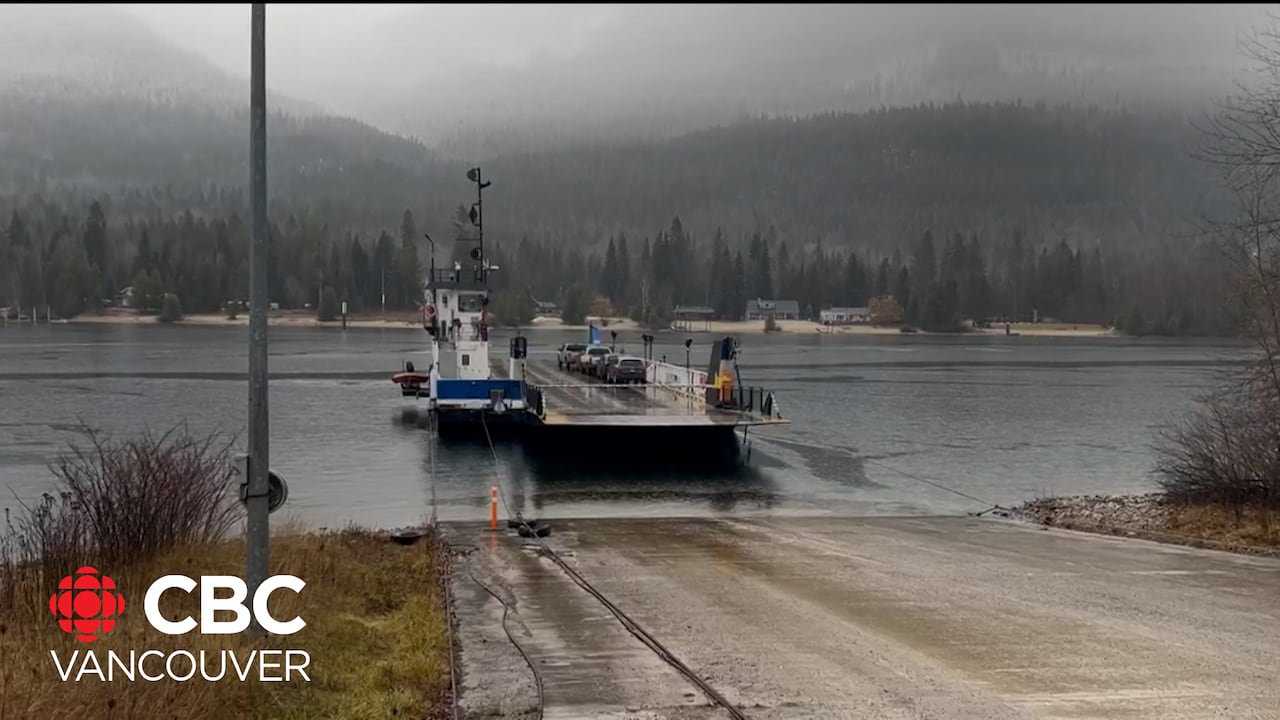
PROCTER, B.C. — A sense of panic is growing in tiny southeast British Columbia communities around Kootenay Lake over fears they will be cut off from their neighbours and jobs by an escalating ferry service labour dispute, says a local businesswoman.

The West Kootenay communities of Harrop, Procter and Glade could see their cable ferry service reduced after a B.C. Labour Relations Board ruling permitted expansion of a strike that has already limited sailings on the major Kootenay Lake routes

For some residents, the only alternative to the cable ferry routes that run a few hundred metres across the narrow lake is an hours-long drive, while other residents fear being cut off completely.

"Everybody's panicked here," said Melinda Foot, co-owner of the Procter General Store.

"It's a five-minute crossing that takes us over to all the rest of our communities, Nelson, Balfour," she said Monday. "The ferry we're taking here is our only exit. We have no back road. We have no logging road. We have nothing over here beyond this tiny little convenience store."

B.C. General Employees' Union workers have been on strike since Nov. 3, seeking wage increases, scheduling adjustments and extended benefits for auxiliary workers from employer Western Pacific Marine.

The labour board on Friday granted the union approval to reduce service of the Harrop-Procter ferry to eight round trips daily and 16 round trips for the Glade ferry, with the decision effective Monday.


Related video: Panic hits tiny Kootenay towns as local ferry strike escalates (cbc.ca)

cbc.ca  Kootenay residents worried as striking ferry workers propose to further restrict service  2:27


The Harrop ferry usually runs on a 24-hour on-demand schedule, while the Glade ferry's regular schedule is 5 a.m. to 2:20 a.m.

Western Pacific Marine says on its website that the ferries will run as usual until Jan. 2. A new schedule for the rest of January "and onwards" will be posted late Tuesday, it says.

"They keep telling us there will be a schedule of eight crossings but they won't tell us what that schedule is," Foot said. "People are in fear of losing their jobs. They're trying to put boats in the water and cross our water in the dark, in January."

About 600 people live in the Harrop-Procter area and about 300 people live in Glade, the labour board ruling said.

The decision to grant the union's application to "adjust" service levels and amend an essential service order for the cable ferries serving Harrop, Procter and Glade will have an impact on residents, but still maintains protection of community health and welfare, said labour board associate chair Andres Barker in the 15-page ruling.

"The amendments to the ESO contained in this decision will no doubt have some effect on the residents who rely on the ferry, and that may include some economic impacts and the inconvenience of planning set departure and arrival times like a typical ferry service despite previously being able to come and go at will," he said.

"However, I am satisfied that, based on the evidence currently before me, the levels established are those necessary or essential to prevent immediate and serious danger to the health, safety, and welfare of the residents of British Columbia."

-- By Dirk Meissner in Victoria

This report by The Canadian Press was first published Dec. 30, 2024.

The Canadian Press

Manitoba premier promises help for small businesses, eyes Trump fallout

By The Canadian Press
December 31, 2024 

WINNIPEG — Manitoba Premier Wab Kinew is leaving the door open to financial support for people affected by possible tariffs and other actions that may be taken by United States president-elect Donald Trump.

Kinew is also promising help for small businesses hit by his government's property tax increase.

In a year-end interview with The Canadian Press, Kinew said the provincial government is willing to consider aid if Trump enacts harmful policies after being sworn in on Jan. 20.

Trump's threats include 25 per cent tariffs on all imports from Canada and Mexico unless the two countries stop illegal border crossings and prevent illicit drugs from entering the U.S.

"If there is a need to help people with economic uncertainty in a post-Jan. 20 Manitoba, I would think that some affordability measures would make sense," Kinew said.


"I don't want to commit to any specific measures, but just to say that we are thinking about what is an affordability tool or maybe a few affordability announcements we could make if there is economic uncertainty for the average family."

Kinew has called on the federal government to respond to Trump's demands for tighter border security and has promised to have Manitoba conservation officers help as extra eyes and ears at the border.

Affordability has been a key issue for Kinew's New Democrats since they won the October 2023 election, although their efforts have, at times, been met with controversy.

They suspended the provincial fuel tax for a year to save motorists money and said it would help reduce grocery prices. Food prices in Manitoba, however, climbed faster than the national average during the tax holiday and led all other provinces in November, Statistics Canada data suggests.

The government promised a one-year freeze on electricity rates in 2025, even as Crown-owned Manitoba Hydro and the provincial government are both in the middle of consecutive deficits.

The government is also revamping the education property tax system as an affordability measure for people in lower-value homes, although the government would rake in more money overall due to increases on businesses, cottages and higher-value homes.

A new flat $1,500 tax credit on primary residences in 2025 is replacing a system of rebates and credits enacted by the former Progressive Conservative government.

As a result, people who own lower-value homes will pay less and owners of higher-value homes will pay more. Commercial property owners, who have been receiving 10 per cent rebates, are not eligible for the new credit.

Kinew is promising some sort of help in the new year for small businesses that are losing their rebates.

"I think some of what we'll probably look at are, again, some of the steps on tax credits and rebates and stuff like that," Kinew said.

"But some of them might also be targeting help for businesses in areas that they've been asking."

Help for security systems might be increased as part of the plan, Kinew said.

The government launched a rebate program in the summer, offering up to $300 for security cameras, motion detectors and other items. Some groups complained that it's a small portion of the cost of securing a business property.

"I think something in that space is interesting to us," Kinew said.

Any new provincial aid may be constrained by the government's ongoing deficits.

The province's recent mid-year fiscal update showed the deficit is running $513 million higher than originally forecast in the budget. The government has promised to balance the budget by 2027.

This report by The Canadian Press was first published Dec. 31, 2024.

Steve Lambert, The Canadian Press
Europe Set for End to Five Decades of Russian Gas Via Ukraine

By Anna Shiryaevskaya and Priscila Azevedo Rocha
December 31, 2024

(The Institute for the Study of W)

(Bloomberg) -- Russian gas flows to Europe via Ukraine appear set to stop as time runs out for a last-minute solution before a key transit deal expires, raising the stakes for the continent’s energy security as it draws heavily on reserves.

Benchmark prices jumped to the highest in over a year on Tuesday, as preliminary data for Jan. 1 showed no bookings had been registered for transit on the route — which for five decades has been a key avenue for gas into Europe, even during the nearly three years since Russia’s full-scale invasion of Ukraine.

If confirmed, the halt will mean a handful of central European countries that have relied on the flows will be forced to source more expensive gas elsewhere, adding to pressure on supplies at a time when the region is already depleting its winter storage at the fastest level in years.

For now, no alternative is in place for the five-year-old transit agreement, despite months of political wrangling. While the shipments across Ukraine account for only about 5% of Europe’s gas needs, the region is still feeling the aftershocks of an energy crisis triggered by the Kremlin’s full-scale invasion of its neighbor.

The looming end of the transit deal has highlighted Europe’s continued reliance on Russian gas via pipelines and shipments of liquefied fuel, as well as the cracks in the bloc’s approach to weaning itself off Russian supplies.


European Commission President Ursula von der Leyen has set a political objective of phasing out Russian fossil fuels by 2027 in the wake of the invasion, and has said the end of transit will have little impact on regional energy markets. Still, countries like Hungary and particularly Slovakia have waged an increasingly bitter campaign to keep the fuel flowing.

Europe is also facing an increasingly tight global gas market. The front-month contract rounded out the year with a 51% annual gain — the biggest since 2021.

Read: High Gas Prices Spell Tough Start to 2025 for European Consumers

Initial data for Wednesday indicate no orders for gas at the Sudzha intake station on the Russia-Ukraine border. The so-called nominations, which could still change in the coming hours, represent requests by Russia’s Gazprom PJSC to move gas ordered by its customers.

Data from Slovak grid operator Eustream show zero nominations for gas transit through the Velke Kapusany point, a key interconnection on the Slovakia-Ukraine border that has historically been a major route for Russian gas supplies to Europe.

Escalating Dispute

While traders remain on alert for indications that flows could somehow continue, an escalating public dispute between Ukraine and Slovakia has dampened optimism in recent weeks.

Ukrainian President Volodymyr Zelenskiy earlier this month rejected any arrangement that would ultimately send money to Russian coffers while the war continues. Meanwhile, Slovak Prime Minister Robert Fico has threatened Ukraine with a possible electricity cutoff, raising questions about broader energy security in the region.

In a last-ditch effort over the weekend, Fico urged the EU to address the looming halt of supplies via Ukraine, saying the economic effect on the bloc would outweigh the impact on Russia. He estimated that European consumers could face as much as €50 billion ($52 billion) in extra gas prices per year and another €70 billion in higher electricity costs.

Slovakia and some other Central European states have favored discounted gas from the east, and in recent months, key companies from the region have raced to build support for an alternative to the Russia-Ukraine deal.

Slovakia has said it can handle the loss of Russian gas, but other supplies would likely be costly to bring into the landlocked nation. Russian gas also used to flow from Slovakia into Austria and the Czech Republic, though the latter two nations no longer buy the fuel directly from Gazprom.


‘Expected Situation’

“The stop of flow via Ukraine on 1 January is the expected situation and the EU is prepared for it,” a European Commission spokesperson told Bloomberg News. The commission, the EU’s executive, has been working with member states for more than a year to prepare for such a scenario, she added.

The bloc has diversified its supplies since 2022, turning increasingly to imports of liquefied natural gas, notably from the US. There are “various options” for regulating gas transit to central and eastern Europe, including through another pipeline route and LNG terminals, the German economy ministry said Tuesday.

Officials from Poland, which assumes the rotating presidency of the EU on Wednesday, said the nation is in close contact with the commission and “ready to coordinate further steps with member states, if needed as from Jan. 1.”

Read: European Gas Faces a Raft of Challenges With Transit Deal Ending

Rows between Moscow and Kyiv have previously disrupted gas shipments to European customers in early January.

In 2009, Russian gas flows via Ukraine to Europe stopped for almost two weeks, with more than 20 nations affected during freezing temperatures, until the two nations signed a gas deal ending their dispute. A shorter disruption occurred in 2006. The expiring agreement, set in 2019, was also a result of last-minute negotiations.

However, the war makes a quick resolution unlikely for now. Russian President Vladimir Putin last week indicated there was no time left to conclude an agreement before the end of the year. Separately, he said a lawsuit from Ukraine’s Naftogaz — alleging that Gazprom hasn’t fully paid for transit services — is another barrier.

Some European nations have also warned against ideas that would brand Gazprom’s fuel as non-Russian. Energy companies in the region have previously floated options such as taking ownership of the fuel when it enters Ukraine, or resorting to a complex swap involving Azerbaijan’s energy company Socar as a mediator.

Russia still supplies gas to nations such as Serbia and Hungary via another pipeline, TurkStream, which bypasses Ukraine. But that link isn’t sufficient to fully compensate for the entire loss of the Ukraine route. Another pathway, across Poland, is now closed. The Nord Stream pipeline linking Germany to Russia was damaged in explosions in 2022, and the newer Nord Stream 2 link has never been authorized by Berlin.

--With assistance from Daryna Krasnolutska and Petra Sorge.

(Updates with additional information throughout.)

©2024 Bloomberg L.P.

Can U.S. LNG Exports Really Fill the Gap Left by Russian Gas in Europe?

By ZeroHedge - Dec 26, 2024

The US is already the largest LNG supplier to Europe, and could theoretically replace Russian LNG imports.

Replacing Russian LNG with US LNG could increase shipping costs and European prices.

Europe's decarbonization goals may limit its willingness to make long-term commitments to US LNG.


Samantha Dart, co-head of global commodities research at Goldman, published a note to clients outlining five key questions and answers about the US-EU liquefied natural gas trade. This comes just days after President-elect Donald Trump threatened the EU with a barrage of tariffs unless Brussels ramped up purchases of American LNG.

For context, last Friday, Trump wrote on Truth Social:

"I told the European Union that they must make up their tremendous deficit with the United States by the large-scale purchase of our oil and gas. Otherwise, it is TARIFFS all the way!!!"

Dart told clients that the US is already Europe's largest LNG supplier and a key source of supply growth. She said replacing Russian LNG with US LNG imports could raise shipping costs and European prices to incentivize re-routing cargoes.

She said such a shift would have minimal impact on US LNG export revenues, as total export capacity remains fixed, adding exporters with long-term contracts with proposed US LNG projects would benefit. However, Europe's decarbonization strategy may limit the willingness of European companies to make long-term NatGas commitments with US exporters.

Dart laid out key questions and answers about the US-EU LNG trade that help clients understand that US LNG Gulf exports can "theoretically" replace Russian NatGas flowing into the EU. How much US LNG is exported to Europe?

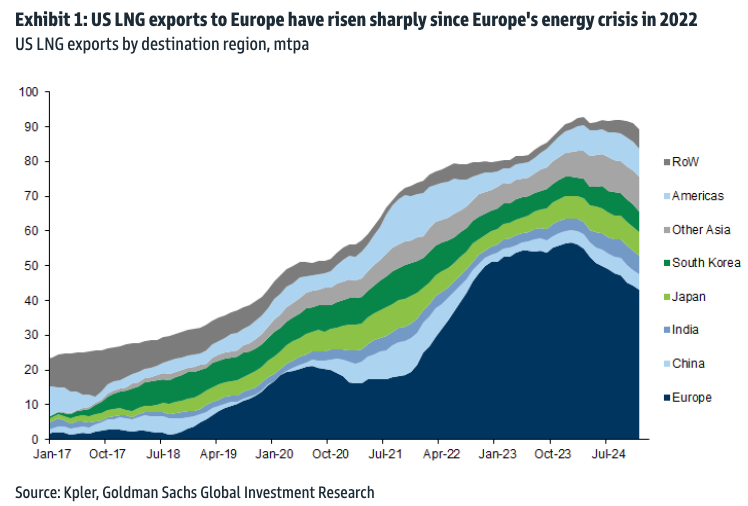
US LNG exports averaged 91 mt over the past year (Dec23-Nov24), of which 47 mt or 51% were delivered to Europe. US LNG exports to Europe have grown significantly in levels and as a share of total US LNG exports since the European energy crisis in 2022, peaking in 2023 (Exhibit 1).


Are US LNG volumes sold in the spot market or are they contracted?

The vast majority of US LNG sales are under contract. That said, US contracts typically have flexible destination ports, in that the buyer is not obligated to deliver to a particular location. This allows buyers of US LNG to re-sell or re-direct cargoes to higher-paying destinations. This was evident during the European energy crisis, when European gas prices increased sharply relative to the rest of the world. Even as total US LNG exports grew, this worked as an effective incentive for US LNG deliveries to non-European destinations to contract by 41%, while European deliveries increased by 197%[1], as seen in Exhibit 1.What portion of European LNG imports come from the US?

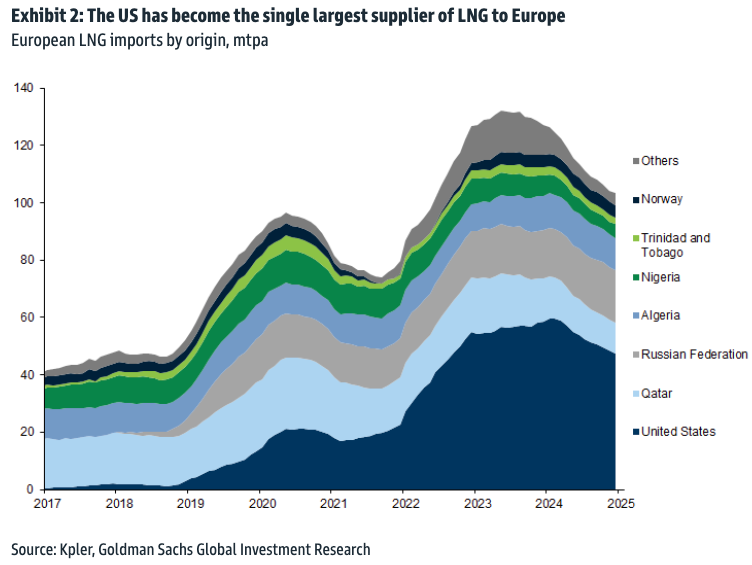
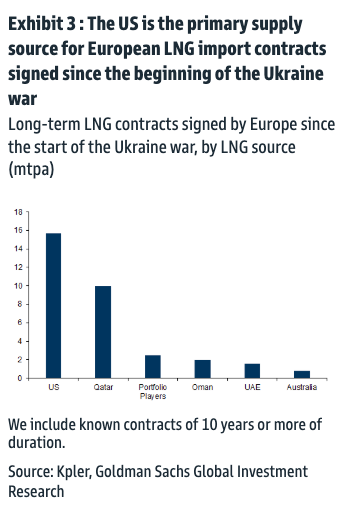
The US has become the single largest source of LNG to Europe, averaging 46% of imports into the region over the past 12 months (Exhibit 2). Most European LNG imports are sourced from Atlantic Basin suppliers to minimize shipping costs. Importantly, the US is also the primary source of likely European LNG import growth, based on long-term LNG contracts signed by European buyers since the start of the Ukraine war. US volumes contracted by European buyers in the period add to just under 16 mtpa, which is more than with any other single supplier globally (Exhibit 3).


Can US LNG replace Russian LNG imports into the EU?

Theoretically, yes. US LNG deliveries to non-EU countries are currently approximately 18 mtpa above the levels observed during the peak of the European energy crisis, suggesting there is enough flexibility in the market to replace Russia's current 17 mtpa of LNG exports to the region. However, such a reallocation of flows might offer little benefit, if any, to Europe or the US. Less optimal routes for LNG deliveries (for example, longer routes for Russian cargoes) would likely lead to higher freight costs. In addition, European import costs might go up in order to motivate the re-route of US cargoes that would have otherwise opted to deliver elsewhere.

Total US LNG exports would also not increase as a result of this reallocation, given that US LNG export capacity would not be impacted in the process.How could Europe support growing US LNG exports?

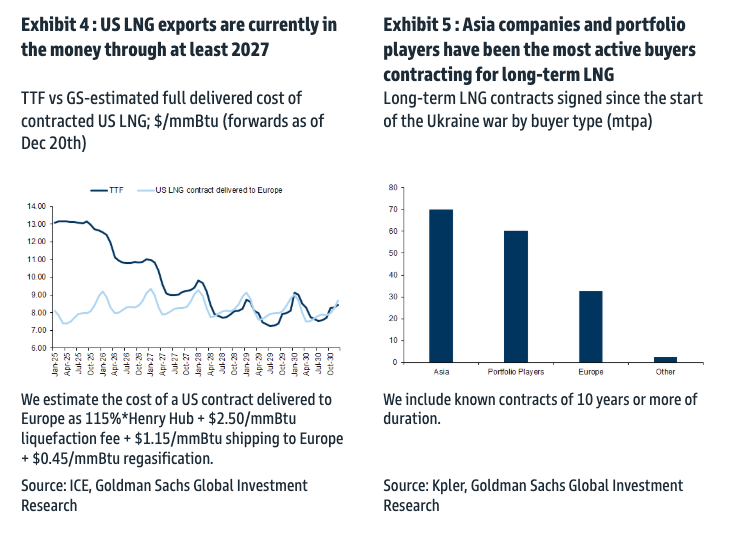
Additional long-term contracting by European buyers with proposed US LNG projects would be the most impactful measure the EU could take to support higher future US LNG exports, as this would increase the likelihood such contracted liquefaction projects reach a final investment decision (FID). As of now, the forward curve for European gas prices suggests new long-term US LNG export contracts are in the money through at least 2027 (Exhibit 4). That said, Europe's decarbonization goals might limit European companies' appetite for long-term commitments to grow natural gas use. In fact, when we look across all long-term LNG contracts signed since the start of the Ukraine war, European companies are far behind Portfolio player companies and Asia importers (Exhibit 5).


It appears that Goldman believes Trump's 'America First' policy of replacing Russian LNG to Europe with American LNG is "theoretically" possible.

By Zerohedge.com


ECOCIDE

India Keeps Coal Power at Full Throttle


By Julianne Geiger - Dec 27, 2024

India's government extended the mandate for coal-fired plants to run at full capacity until February 28.

India is on track to add a whopping 90 gigawatts of coal-fired capacity by 2032.

India’s growing population and industrial demand have kept coal firmly in the driver’s seat.


India’s commitment to coal remains stronger than ever, and the government’s latest move to extend the mandate for coal-fired plants to run at full capacity until February 28 is proof of that. In a world where renewables may be slowly gaining ground, coal continues to power over 70% of India’s electricity needs.

The mandate, which first kicked in this October, was meant to ensure the country didn’t fall into an energy crunch amid heatwaves and droughts that slashed hydropower generation. Now, its mandate been extended into the new year, keeping the coal-fueled machinery running full throttle for a little while longer.

This isn’t just a short-term ploy.


India is on track to add a whopping 90 gigawatts (GW) of coal-fired capacity by 2032, and it’s not slacking off in the meantime. In fact, 2024 marks the second consecutive year of hitting a 4 GW coal capacity installation rate—solid, if not spectacular, given the country’s hefty energy demands. And while the government is pushing hard to increase domestic coal production (surging by 32% in the first half of this fiscal year), it’s still relying on imports to fill in the gaps. In the first quarter of this year, imports ticked up by 0.9%, and the first half saw the country producing nearly 80 million tons of coal from captive and commercial mines.

Despite the push toward cleaner alternatives like wind and solar, India’s growing population and industrial demand have kept coal firmly in the driver’s seat. The International Energy Agency (IEA) has predicted that global coal demand will remain close to the 2024 record-high levels over the next three years, in large part fueled by India and China. India’s power needs are skyrocketing, and coal is still the reliable backbone for maintaining a stable energy grid in the face of unpredictable weather events.


By Julianne Geiger for Oilprice.com
The Fashion Industry's Fossil Fuel Footprint

By Felicity Bradstock - Dec 28, 2024


The fashion industry is heavily reliant on fossil fuels for textile production, contributing significantly to carbon emissions and pollution.

Synthetic fabrics, derived from fossil fuels, dominate the market due to their affordability and desirable properties, but their production is energy-intensive and environmentally damaging.

Despite growing awareness of sustainability concerns, the demand for fast fashion continues to rise, exacerbating the industry's environmental impact.


Several industries continue to rely on oil and gas to power operations and produce their products, using petrochemicals. One industry that is unlikely to move away from fossil fuels any time soon is fashion, which often uses oil derivatives to make materials for clothes, shoes and accessories. Despite the widespread consumer push for sustainability, fast fashion brands have become extremely popular around the globe and are now selling more than ever before, with no sign of slowing.

The fashion industry has been highly reliant on fossil fuels for several decades and while some brands are aiming to reduce their dependence on oil and gas, most are expected to continue using fossil fuels to power operations and produce textiles for decades more to come. By 2019, the fashion industry was producing an estimated 1.7 billion metric tonnes of CO2 per year or 10 percent of all man-made carbon emissions. This figure is expected to grow to almost 2.1 billion tonnes by the end of the decade. It is also the second-largest consumer of the global water supply.

This year, the global apparel market is expected to reach a valuation of $1.79 trillion, and estimates suggest it will grow at a CAGR of 2.65 percent between 2024 and 2029. In terms of individual clothing items, a volume growth of 1.3 percent is expected in 2025 to reach 198.4 billion pieces by 2029.

Currently, most fabrics are produced using fossil fuels, around 63 percent. Synthetic materials are compounds produced using synthetic fibres that originate from fossil-fuel-derived resources, such as crude oil and petrochemicals. Chemicals undergo polymerisation to form elongated, linear chemical chains before being transformed into fibres through a spinning process. The most common synthetic fabrics include polyester, nylon, and acrylic.

There are also semi-synthetic or cellulosic fabrics produced using renewable resources such as wood pulp from trees or bamboo, to produce materials such as viscose, modal, and lyocell. These have become more popular in recent years as brands look to improve their sustainability. Meanwhile, natural textiles are produced using natural fibres that come from living organisms, such as plants and animals, including cotton, wool, and silk.

Over the last half a century, many brands have gradually shifted away from natural fabrics to synthetic alternatives, as they have favourable properties such as being more stretchable, waterproof, and stain resistant. They are typically also cheaper to manufacture. In 2022, polyester contributed around 54 percent of global fibre production. The energy-intensive process of converting plastic fibres into textiles requires high volumes of petroleum and natural gas and emits volatile particulate matter and acids like hydrogen chloride.

Quantity is also a problem. Between 2000 and 2015, clothing consumption doubled, and consumption is speeding up even faster following the launch of “ultra-fast fashion” brands, such as the Chinese company Shein, which launches as many as 1.3 million new products a year, compared to Zara’s 25,000 and H&M’s 20,000. Shein’s revenue grew from a reported $10 billion a year in 2020 to at least $30 billion in 2023, although many speculate the figure is much higher. The shipping, transportation and packaging of clothing also require fossil fuel use and contribute to high levels of greenhouse gas emissions globally.

Microplastics are also a challenge. Synthetic fabrics decompose much slower than natural textiles, contributing to the accumulation of microplastics in oceans. A 2017 International Union for Conservation of Nature estimated that 35 percent of microplastics found in the world’s oceans come from the laundering of synthetic textiles.

This December, the climate group Stand.earth published a report accusing 107 fashion brands of being linked to oil and gas fracking in the Permian Basin in Texas, due to their sourcing of fossil-fuel-derived fibres. The report stated that 57 of these brands have explicit policies to phase out or reduce virgin polyester and several others have green transition policies in place, including Ralph Lauren, Puma, Levis Strauss & Co., H&M, Marks and Spencer, Lululemon, The Gap and Adidas. “As international fashion brands increasingly rely on these materials, the environmental and social toll of fracking becomes a critical concern,” Stand.earth said in a press release.

Synthetic fibres derived from fossil fuels are expected to contribute to 73 percent of global apparel production by 2030, according to a report by the Changing Markets Foundation. These fibres are linked to exacerbated climate change, health risks, and increased waste. Therefore, such widespread use of these materials in the fashion industry is expected to conflict with many brands’ aims to decarbonise operations and produce more sustainable products. A 2021 World Economic Forum report suggested that the fashion industry and related supply chains are the world’s third-largest polluter, a trend that is expected to worsen unless brands can reduce their reliance on oil and gas in the coming years.


By Felicity Bradstock for Oilprice.com
Eni Raises Oil and Gas Production Offshore Cote d’Ivoire


By Tsvetana Paraskova - Dec 30, 2024


Italian energy major Eni has started production from the second phase of its oil and gas development Baleine offshore Cote d’Ivoire, boosting output from the field in West Africa.


This weekend, Eni announced the successful start-up of Phase 2 at the Baleine field, which will raise production to 60,000 barrels of oil per day (bpd) and 70 million cubic feet of associated gas (equivalent to 2 million cubic meters).

Phase 2 is being developed via the Floating Production, Storage and Offloading Unit (FPSO) Petrojarl Kong which is deployed alongside the Floating Storage and Offloading Unit (FSO) Yamoussoukro for the export of oil. All processed natural gas will supply local energy demand through a connection with the pipeline built during the project’s Phase 1, the Italian company said.

Eni last year launched oil and gas production from the Baleine field, less than two years after the discovery. The Phase 1 development used a refurbished and upgraded FPSO unit capable of handling up to 15,000 barrels per day of oil and around 25 Mscf/d of associated gas.

The Italian major is currently studying the development of Phase 3 at Baleine. If approved and implemented, the third stage would boost the field’s production to 150,000 barrels of oil per day and 200 million cubic feet of associated gas.

This would further consolidate Cote d’Ivoire’s role “as a regional energy hub and strengthening strategic collaboration with the local partner,” Eni said.

Eni has been betting on international oil and gas developments offshore Africa in recent years and has recently strengthened its presence in Cote d’Ivoire.

In November, the Italian firm signed the contracts for the acquisition of four new exploration blocks offshore Cote d’Ivoire with the local Ministry of Mines, Oil and Energy. Under the agreements, Eni will be able to explore the area for up to 9 years.

The new blocks are close to the Calao discovery, which represents a strategic opportunity to create further synergies in the area, Eni says.

By Tsvetana Paraskova for Oilprice.com
Senegal’s First Oil Exports Push Economic Growth to Record High

By Charles Kennedy - Dec 30, 2024


Senegal is seeing a record jump in economic growth after its first oil project and oil exports were launched in the middle of 2024.

Senegal’s gross domestic product surged by 8.9% in the third quarter compared to the second quarter and soared by 11.5% compared to the same quarter of 2023, data from the National Agency of Statistics and Demography, ANSD, showed on Monday.

Non-oil GDP rose by 2.1% in Q3 compared to the second quarter, according to the official data.

Senegal’s record-high growth rates follow the start-up of the Sangomar oil field offshore the West African country in June. Six months ago, Australia-based Woodside achieved first oil at the project, which is the country’s first offshore oil project.

The Sangomar Field Development Phase 1 is a deepwater project including a stand-alone floating production storage and offloading (FPSO) facility with a nameplate capacity of 100,000 barrels per day (bpd) and subsea infrastructure that is designed to allow subsequent development phases, Woodside says.

“First oil from the Sangomar field marks a new era not only for our country's industry and economy, but most importantly for our people,” Thierno Ly, general manager of Senegal's national oil company Petrosen said in June, commenting on the milestone.

Senegal’s economy is set to receive another shot in the arm in early 2025 when the first LNG shipment from a major gas and LNG project operated by BP is expected to take place.

The Greater Tortue Ahmeyim LNG export project offshore Mauritania and Senegal is being developed by UK-based supermajor BP and has seen several delays in recent years. The latest timeline says start-up will take place in early 2025, and the companies look confident they would meet that deadline.

BP and project partner Kosmos are developing the Greater Tortue Ahmeyim Phase 1 project, which will use a floating liquefied natural gas (FLNG) vessel to produce LNG from the massive natural gas find offshore Mauritania and Senegal in West Africa made in 2015.

By Charles Kennedy for Oilprice.com
Carlos Slim Invested $1B In American Oil & Gas Companies In 2024

By Alex Kimani - Dec 30, 2024


Carlos Slim, Latin America’s richest man, boosted his stakes in American energy companies in the current year as the world’s leading tycoons continue betting on fossil fuels. Slim invested $602 million in Parsippany, New Jersey-based refiner PBF Energy Inc. (NYSE:PBF), boosting his stake to 25%, and also bought $326 million worth of shares in Houston-based oil producer Talos Energy Inc. (NYSE:TALO).


Last year, the Mexican billionaire’s Grupo Carso SAB agreed to acquire PetroBal SAPI’s stake in two oil fields in Campeche in southern Mexico for $530 million, expanding its bet on energy production. Under the deal, Grupo Carso will take a 50% stake in the Ichalkil and Pokoch oil field. According to the company, the fields produce about 16,350 barrels of crude oil equivalent per day. Carso shares jumped to record highs after the deal was announced. Mexican President Andres Manuel Lopez Obrador welcomed the deal despite earlier being critical of energy reforms that opened exploration to private investment, “Why do I celebrate this? Because it stays in the hands of Mexicans and I’m sure that they’re going to invest to extract crude. I consider that to be good news,” the president said at his daily news conference.

Obradors’ nationalist policies have seen the Mexican government become increasingly hostile to foreign companies. Last year, giant oil and commodities trading firm, Trafigura, was forced to scale back its oil trading business in Mexico thanks to shrinking margins. Trafigura has recorded margin compression due to fuel subsidies by the Mexican government.

Meanwhile, Warren Buffett’s Berkshire Hathaway (NYSE: BRK.A) (NYSE: BRK.B) has continued growing its oil and gas stakes. Two weeks ago, Berkshire Hathaway bought another 8.9 million shares of Occidental Petroleum (NYSE:OXY) with the company now owning 260 million shares of OXY. Berkshire Hathaway's OXY stake is currently worth $12 billion, making it the company’s sixth largest holding.

By Alex Kimani for Oilprice.com
Is The Iraqi Oil Export Embargo Set To Be Lifted After Landmark Legal Ruling?

By Simon Watkins - Dec 30, 2024, Oilprice.com

The Kurdistan region's efforts to achieve financial independence through oil exports have faced significant resistance from Iraq’s Federal Government.

The stand-off resulted in a years-long embargo on oil exports via the Iraq-Turkey Pipeline.

Despite a recent court ruling in favor of foreign oil contracts with the KRI, Baghdad isn't like to loosen the reins.


It is coming up to two years since oil exports from the semi-autonomous Kurdistan region of Iraq (KRI) through the Iraq-Turkey Pipeline (ITP) were halted by the Federal Government of Iraq (FGI). Billions of dollars in export revenues have been lost by both sides, in addition to the many foreign oil firms working in the region. However, according to local news sources, on 18 December the Karkh Court of Appeals in Baghdad reversed previous rulings favouring the FGI’s Oil Ministry. These had sought to permanently invalidate foreign firms’ oil exploration and development contracts directly with the KRI government based in Erbil. So does this mean that the costly, long-running embargo on oil exports is about to end?

The genesis of the current dispute does not begin in March 2023 when the ban was imposed by the FGI in Baghdad or in February 2022 when the Baghdad-based Federal Supreme Court of Iraq deemed such contracts unconstitutional -- it began instead on 23 April 2013. On that date, the regional parliament of the semi-autonomous Kurdistan region of Iraq – the KRG – passed a bill that would allow it to independently export crude oil from fields located in the region if the FGI failed to pay the KRI its share of oil revenues and exploration costs. A corollary bill to create an oil exploration and production company separate from the FGI and a sovereign wealth fund to take in all energy revenue was approved at the same time by the KRG’s cabinet under then-Prime Minister (and now President) Nechirvan Barzani. At that point, the KRI was producing around 350,000 barrels of oil per day (bpd) – with the rest of Iraq’s output standing at around 3.3 million bpd – and planned to increase this to 1 million bpd by the end of 2015. In short, it was intended by the KRG in Erbil to give the KRI complete financial independence from the FGI in Baghdad as a precursor to total political independence shortly thereafter, as analysed in my latest book on the new global oil market order. The next phase after independent oil sales were assured by the KRI was a planned referendum on independence. The FGI saw this existential threat to its future extremely seriously as this is what the U.S. and its allies had quietly promised the KRG in exchange for its providing the boots on the ground in the fight against Islamic State at that point, in the shape of the fearsome Kurdish Peshmerga army.

The FGI’s initial reaction was to bring legal action against independent oil exports from the KRG as and when the opportunities arose. July 2014 saw FGI government lawyers file a suit to impound the US$100 million cargo of Kurdish oil aboard the United Kalavryta tanker anchored in the Gulf of Mexico off the U.S. coast. The lawyers insisted that the KRI had sold the oil without the permission of the central government, and that only the FGI had the legal right to export oil from anywhere in Iraq, including the Kurdish region. The U.S. Federal magistrate said that because the tanker was outside U.S. territorial waters, she was unable to order the enforcement order against the tanker or its cargo by U.S. Marshals and that the matter should be settled in Iraq. The FGI took this, and similar rulings on similar cargoes, as evidence that the U.S. was still supportive of the idea of full independence for the KRI and allowing it the financial autonomy through oil exports that this would require. Following these legal setbacks, the FGI concluded a deal in November of that year with the KRI. This would see the central government pay the KRI 17% of the FGI’s budget after sovereign expenses (around US$500 million at that time) per month in exchange for the KRG organising the export up to 550,000 bpd of oil from the Iraqi Kurdistan oil fields and Kirkuk to the FGI’s State Oil Marketing Organization (SOMO).

Despite the agreement, neither side had shifted from their core positions relating to oil exports. The KRI wanted all the revenues from oil produced in their territory to lay the financial basis for independence, and the FGI wanted to give it neither. The legal position relating to the Iraqi oil indus­try and the distribution of its revenue sharing between the KRG area and the FGI did not help to clarify the impasse, with both sides claiming a right to the revenues from the disputed oil flows. According to the KRG, it has authority under Articles 112 and 115 of the Iraq Constitution to man­age oil and gas in the Kurdistan Region extracted from fields that were not in production in 2005 - the year that the Constitution was adopted by referendum. In addition, the KRG maintains that Article 115 states: “All powers not stipulated in the exclusive powers of the federal government belong to the authorities of the regions and governorates that are not organised in a region.” As such, the KRG maintains that, as relevant powers are not otherwise stipulated in the Constitution, it has the authority to sell and receive revenue from its oil and gas exports. Additionally, it argues the Con­stitution provides that, should a dispute arise, priority shall be given to the law of the regions and governorates. However, the FGI maintains that under Article 111 of the Constitution oil and gas are under the ownership of all the people of Iraq in all the regions and governorates.


It was little surprise, then, that the agreement had failed to function effectively within three months of its signing. The KRG accused the FGI of not paying the full amount promised, and the FGI accused the KRG of not supplying the full amount of oil agreed. Matters became even worse in 2017 in the wake of two major developments, detailed in full in my latest book on the new global oil market order. First, there was a huge vote in favour of Kurdish independence in September, following which FGI and Iranian forces took back control of the oilfields in Kurdistan, including the major oil sites around Kirkuk. Second, Russia effectively took over Iraqi Kurdistan’s oil sector due to three key deals also analysed in full in the book. Moscow sought to leverage this presence in the KRI into a similarly powerful position in the south of the country by casting itself as an intermediary in the ongoing budget disbursements-for-oil deal. Russia’s mischief-making in the country diminished in 2018, after an understanding was reached between it and China that Moscow would focus more on its interests in Iran and Syria, while Beijing would concentrate more fully on developing its assets in Iraq, in line with its ‘Belt and Road Initiative’ plan. The agreement between the two powers occurred as China was in the process of formulating its September 2019 ‘Oil for Reconstruction and Investment’ agreement signed with the FGI in Baghdad, which would be expanded in 2021 to the all-encompassing economic, political, and military ‘Iraq-China Framework Agreement’.

It remains the case that it is not in China’s or Russia’s interest to have a fractious breakaway region with previously strong ties to the U.S. Not only does it make the administration of Iraq’s massive oil and gas sector more difficult but also the granting of independence to the Iraqi Kurds might well make the sizeable Kurdish populations in the Middle East restless for the same. The endgame for China, Russia (and Iran) in Iraq is clearly delineated in the 3 August statement last year from Iraq Prime Minister, Mohammed Al-Sudani. He highlighted that the new unified oil law – run, in every way that matters, out of Baghdad - will govern all oil and gas production and investments in both Iraq and its autonomous Kurdistan region and will constitute “a strong factor for Iraq’s unity”. Destroying all financial independence for the region, which is reliant on ongoing independent oil supplies, is the key mechanism for achieving this aim. Once this has been done, then the region can simply be rolled back into one unified Iraq. Consequently, it would be extremely unwise to believe that the 18 December decision by the Karkh Court of Appeals against Iraq’s Oil Ministry marks a new dawn for the KRI. It might just be the twilight before the sun sets for good on its hopes for independence.