Friday, January 17, 2025

Sanctioning of global white supremacist terrorism group rattles U.S. extremist members

Jordan Green, Investigative Reporter
January 14, 2025
RAW STORY

(Roxanne Cooper/MidJourney)

The State Department has applied the “specially designated global terrorist” designation to the Terrorgram Collective in a groundbreaking move that for the first time sanctions a transnational white supremacist terrorist group with a significant presence in the United States.

The announcement on Monday — one week before President Biden leaves office — justified the designation based on the group “posing a significant risk of committing, or having participated in training to commit acts of terrorism, that threaten the security of United States nationals or national security, foreign policy, or economy of the United States.” Terrorgram is an amalgam of the words “terror” and “Telegram,” the latter of which is a social media platform used by members to distribute propaganda.

“This is the first time you’ve seen a white supremacist group that had members or supporters in the U.S. receive the designation,” Seamus Hughes, a researcher at the National Counterterrorism Innovation, Technology and Education Center at the University of Nebraska, told Raw Story.


Two of the group’s leaders, Dallas Erin Humber of California and Matthew Robert Allison of Idaho, were indicted last year on charges that included conspiracy, solicitation of hate crimes, solicitation of the murder of federal officials, and conspiracy to provide material support for terrorists. Two other individuals, Brandon Russell — founder of the neo-Nazi terror group Atomwaffen Division — and Andrew Takhistov, who each face federal charges related to plots to attack the power grid, are also linked to Terrorgram.

The indictment against Humber and Allison describes Terrorgram as “a network of channels, group chats, and users on Telegram that promote white supremacists accelerationism: an ideology centered on the belief that the white race is superior; that society is irreparably corrupt and cannot be saved by political action; and that violence and terrorism is necessary to ignite a race war and ‘accelerate’ the collapse of the government and the rise of a white ethnostate.”

Terrorgram is not the first transnational white supremacist terrorist group to be sanctioned by the State Department. In 2020, under the first Trump administration, the State Department applied the “specially designated global terrorist” identification to the Russian Imperial Movement, which was implicated in a series of bombings in 2016 and 2017 that targeted refugee shelters in Sweden. Nordic Resistance Movement, a group founded in Sweden, was added to the list last June.

The specific bans designated groups and individuals from holding property and financial interests in the United States, while also prohibiting U.S. citizens from engaging in financial transactions with them.

Following the 2017 white supremacist rally in Charlottesville, Va., the Russian Imperial Movement invited the organizers to visit its paramilitary training camps in St. Petersburg, according to Nathan Sales, a former Trump administration State Department counterterrorism official who testified before the Senate Homeland Security Committee. Sales said there is no evidence that the Charlottesville organizers accepted the invitation, but the following month, Russian Imperial Movement leaders traveled to the United States to network with white supremacists, and one posed for a photo with the group’s flag in front of the White House.

“What is most interesting for me is this represents the first time when a designation would have ramifications for U.S. prosecutors,” Hughes said. “There’s not a cadre of Russian Imperial Movement adherents in the U.S., whereas there is a good number of individuals that were drawn to Terrorgram in the U.S.”

Hughes said the designation will give prosecutors the ability to request terrorism enhancements during sentencing.

“It helps for them to tell the story to a jury that this is not just a bunch of angry people online, but an actual terrorist group,” he added.

The designation is also likely to make social media companies more reluctant to allow members and associates to organize on their platforms.


“Because tech companies can face legal risks if they provide services to designated groups or individuals, sanctions can prompt them to sever ties with those listed as terrorists,” Sales testified before the Senate Homeland Security Committee back in 2022.

The announcement about the State Department sanction against Terrorgram is already causing ripples of unease across Telegram.

Reacting to the announcement on Monday, a neo-Nazi channel that advertises itself as a source of “tradecraft to evade authorities online,” posted: “We all know we are operating on borrowed time here on Telegram. It is unfortunate, as it is a hell of an app.”


The post went on to say that users should not trust Pavel Durov, the Russian founder and CEO of Telegram, to protect their data.

“We don’t want any of our admins or subscribers to wind up in federal prison over ironically being part of a ‘terror group,’” the post continued. “With no publicly available criteria to determine guilt or association, the juice is not worth the squeeze. It doesn’t make sense to maintain a presence where the enemy has the advantage.”

Prior to the arrests of two American leaders last September, the Royal Canadian Mounted Police announced charges against two unnamed Ontario men “alleged to have participated in the creation of Terrorgram Collective manifestos and Atomwaffen Division recruiting videos.”


The Canadian arrests in December 2023 followed an 18-month investigation by the Royal Canadian Mounted Police. That timeframe puts the launch of the investigation roughly in June 2021, the time of the first Terrorgram publication Militant Accelerationism, according to a Southern Poverty Law Center investigation.

Federal prosecutors allege that Humber and Allison joined Terrorgram in 2019, and became leaders of the group in the summer of 2022, “after one previous leader was arrested and charged with terrorism offenses and another became aware that he was the subject of a terrorism related investigation.”

Following Humber and Allison’s arrests, three foreign nationals appear to have taken over leadership of Terrorgram. The State Department designation identifies Ciro Daniel Amorim Ferreira of Brazil, Noah Licul of Croatia and Hendrik Walh-Muller of South Africa as “leaders of the Terrorgram Collective” and “specially designated global terrorists.”


Terrorgram is linked to two other federal prosecutions in the United States beyond Humber and Allison. Russell, the Atomwaffen founder, was arrested in February 2023 and charged alongside codefendant Sarah Beth Clendaniel in an alleged plot to carry out a coordinated attack on electrical substations designed to create a widespread power outage in Baltimore.

While Terrorgram is not directly mentioned in charging documents for the case, a review of Russell’s Telegram chats by the Southern Poverty Law Center found that he forwarded a Terrorgram document called Make It Count to another Telegram user.

Court filings by the government also allege that Russell told an FBI confidential human source that they should use Mylar balloons to short out a power transformer. That tactic is recommended in another Terrorgram publication The Hard Reset, which is described by the government as including “detailed information on how to attack a substation, including the use of Mylar balloons.”

The State Department announcement references a planned energy facility attack by Andrew Takhistov in New Jersey last summer without directly naming him.


Takhistov’s charging documents allege that he “claimed to have taken a role in the publication of” The Hard Reset and that he sent a PDF of the document to an FBI undercover employee. Takhistov allegedly praised The Hard Reset as “the only thing you need” to plan a white supremacist terror attack.

Takhistov was active in the Terrorgram group chats, and Humber posted an Audiobook promoting white supremacist murder in January 2024 in response to a request from Takhistov, according to government court filings. Later, according to the government, Takhistov thanked a Terrorgram chat administrator for posting a video “with instructions for using Mylar balloons to commit an attack on an energy facility.”

Lawyers for Takhistov and Russell could not be reached for comment for this story prior to publication.


The State Department announcement listing Terrorgram as a terrorist entity cited the Biden administration’s National Strategy for Countering Domestic Terrorism, released in June 2021. The framework highlighted the government’s efforts to assess whether foreign entities could meet the criteria for the “specially designated global terrorist” designation.

“These designations are part of a broader U.S. government effort to address the transnational dimensions of the threat posed by [racially and ethnically motivated violent extremist] actors and reflect the Biden-Harris administration’s continued commitment to countering domestic terrorism, which includes REMVE and white identity terrorism,” the State Department said.

The emphasis on tackling white supremacist terrorism under the Biden administration has been embraced by an array of agencies in addition to State, including Homeland Security, the Office of the Director of National Intelligence and the FBI.


The commitment across the federal government to combating white supremacist terrorism under Biden’s leadership built on a growing consensus within the agencies that took hold during the first Trump administration. It remains unclear whether the second Trump administration will maintain the same course.

“In fact, we viewed it as such a critical threat that back in June of 2019, under my leadership, we elevated racially and ethnically motivated violent extremism to our highest threat priority, on the same level with ISIS and homegrown violent extremists, where it remains to this day,” FBI Director Christopher Wray testified before the Senate Judiciary Committee in March 2021.

Wray was appointed to lead the FBI by Trump in 2017.

Kash Patel, who has been named by Trump to replace Wray in the incoming administration, has expressed skepticism towards the government’s focus on “domestic terrorism.”

“Whistleblowers have revealed in multiple ways how the Deep State is continuing to weaponize the power of the state against internal dissidents,” he wrote in his book Government Gangsters. “To pump up public support for their attacks on conservative Americans, the FBI leadership has been reportedly pushing agents to artificially inflate data on domestic terrorism to make the problem seem much worse than it is.”

Asked for clarification on Patel’s views, a Trump transition spokesperson previously pledged to Raw Story that Patel will “protect Americans from terrorism as the agency’s director.”


Jordan Green is a North Carolina-based investigative reporter at Raw Story, covering domestic extremism, efforts to undermine U.S. elections and democracy, hate crimes and terrorism. Prior to joining the staff of Raw Story in March 2021, Green spent 16 years covering housing, policing, nonprofits and music as a reporter and editor at Triad City Beat in North Carolina and Yes Weekly. He can be reached at jordan@rawstory.com. More about Jordan Green.
Should US Federal Minimum Wage Be Raised Above $7.25? Trump's Treasury Pick: 'No Sir'

The annual wages of a worker making federal minimum wage is $15,080

"Trump and his billionaire Cabinet have their priorities backwards. Instead of focusing on lower costs and higher wages, they're only trying to line their own pockets while breaking promises to working families," said one critic.


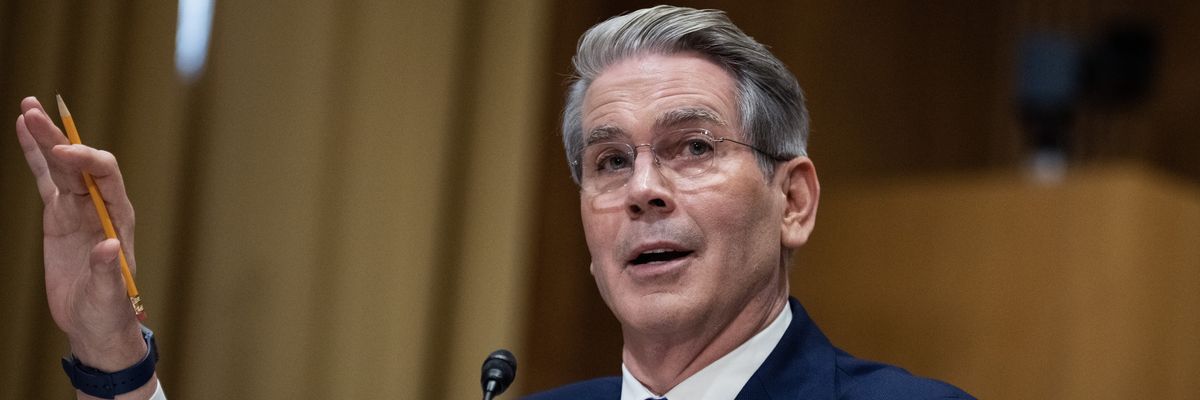
Scott Bessent, President-elect Donald Trump's nominee to be Treasury secretary, testifies during his Senate Finance Committee confirmation hearing in Washington, D.C. on Thursday, January 16, 2025.
(Photo: Tom Williams/CQ-Roll Call, Inc via Getty Images)


Eloise Goldsmith
Jan 16, 2025
COMMON DREAMS

Scott Bessent, a hedge fund manager and U.S. President-elect Donald Trump's pick for treasury secretary, indicated during his confirmation hearing before the Senate Finance Committee Thursday that he has no issue with the federal minimum wage remaining at $7.25 an hour, the wage floor that's been in place since 2009.

The admission was prompted by Sen. Bernie Sanders (I-Vt.), who asked Bessent, "Will you work with those of us who want to raise the federal minimum wage to a living wage to take millions of Americans out of poverty?"

Bessent replied, "Senator, I believe that the minimum wage is more of a statewide and regional issue."

Sanders then pressed him, asking, "So you don't think we should change the federal minimum wage of $7.25 an hour?"

"No, sir," said Bessent, who owns assets worth at least $500 million, according to The Washington Post.


The annual wages of a worker making federal minimum wage is $15,080.

In response to these comments, Alex Floyd, the rapid response director at the Democratic National Committee, said in a statement: "Donald Trump and Scott Bessent will give tax handouts to billionaires but oppose raising wages for the poorest Americans. Trump and his billionaire Cabinet have their priorities backwards. Instead of focusing on lower costs and higher wages, they're only trying to line their own pockets while breaking promises to working families."

Bessent has laid out an economic plan known as "3-3-3," which involves reducing the federal budget deficit down to 3% of gross domestic product, getting real GDP growth to 3%, and producing an additional 3 million barrels of oil a day by 2028. The progressive policy institute the Center for American Progress reports that Bessent's 3-3-3 goal would likely require massive cuts of anti-poverty programs and middle-class tax increases to be achieved, taking into account other priorities Bessent has identified, such as his commitment to extend Trump's 2017 tax cuts that benefited high-income households.

In a statement published Thursday, the government watchdog Accountable.US denounced Bessent's defense of Trump's tax cuts—under which "the top 1% saw benefits nearly three times larger than families in the bottom 60%"—and of the president-elect's proposed tariffs, which economists warn could boost inflation.

"Scott Bessent's nomination isn't about helping American families," said the group. "It's about lining the pockets of the ultrawealthy and doubling down on policies that hurt the middle class."


Trump Treasury Pick's Economic Plan Would 'Require Massive Cuts to Anti-Poverty Programs': Analysis

Scott Bessent's "3-3-3" agenda "requires brutal cuts to health and nutrition and higher costs for families at the grocery store," said analysts at the Center for American Progress.


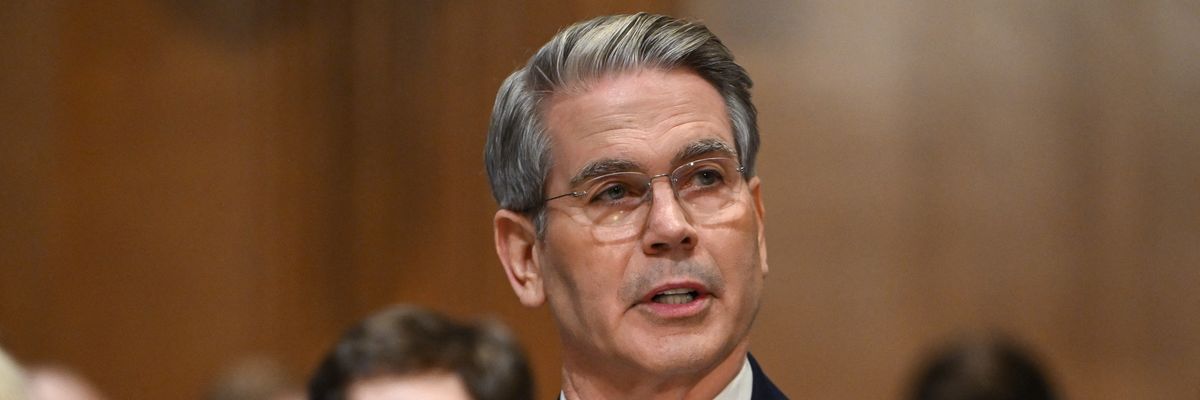
U.S. investor and hedge fund manager Scott Bessent delivers his opening statement during a Senate Finance Committee hearing on his nomination to be secretary of the treasury in Washington, D.C. on January 16, 2025.
(Photo: Andrew Caballero/Reynolds/AFP via Getty Images)

Julia Conley
Jan 16, 2025
COMMON DREAMS

At his confirmation hearing on Thursday, hedge fund manager and U.S. treasury secretary nominee Scott Bessent told the Senate Finance Committee that at the helm of the Treasury Department he would usher in an "economic golden age."

But a report by two policy analysts details how Bessent's signature "3-3-3" plan would only be achievable by gutting programs for some of the nation's most vulnerable households—extending the "golden age" only to wealthy people and corporations for whom the Trump administration plans to slash taxes.

At the Center for American Progress, senior director of economic policy Brendan Duke and senior director of federal budget policy Bobby Kogan completed "the accounting to determine what it would take to achieve" Bessent's 3-3-3 agenda, particularly his plan to cut the federal budget deficit down to 3% of the gross domestic product (GDP). The plan also calls for real GDP growth to reach 3% and the production of 3 million barrels of oil by 2028.

While reducing the budget deficit and simultaneously protecting programs American families rely on is a "laudable goal," wrote Duke and Kogan, Bessent has "explicitly stated that extending the expiring 2017 tax cuts is a priority, and he would likely rule out tax increases on the wealthy to pay for them"—suggesting that the Treasury nominee's 3-3-3 agenda would require new taxes on imported goods and "massive cuts to anti-poverty programs."

The Congressional Budget Office has projected that the budget deficit will represent 5.8% of the nation's GDP in 2028.

"The president-elect is stacking his cabinet with one goal in mind: more tax breaks for his billionaire boys club and major corporations."

With Bessent proposing an extension of the 2017 tax cuts—which are projected to grow the budget deficit by about $4 trillion over a decade—the elimination of Inflation Reduction Act energy investments, and a pause on nondefense discretionary spending increases, said Duke and Kogan, Bessent's plan would "actually increase the projected 2028 budget deficit from 5.8 to 6.0% of GDP, or $1 trillion above the 3% target.

Without any cuts to Medicare and Social Security—which Trump has said he would exempt from cuts—or defense spending, says the analysis, Bessent's deficit target would require both:A 20% tax on all imported goods and a 60% tax increase on imports from China, costing the average family between $2,200-$3,900, and
Cutting the federal budget by nearly $500 billion in 2028 alone, which couldn't be done without a 31% cut to spending including Medicaid, the Supplemental Nutrition Assistance Program (SNAP), and veterans' compensation and pensions—on top of Bessent's 6% cut to nondefense discretionary spending.

"The combination of policies that would deliver the deficit reduction proposed in Bessent's 3-3-3 economic plan would raise taxes on low- and middle-income families and gut healthcare, nutrition assistance, and veterans' programs while still cutting taxes for the wealthy," wrote Duke and Kogan. "Such a plan would hike families' costs both because broad-based tariffs would increase prices and because Americans would have to pay more for healthcare and food due to cuts to federal programs that help lower the cost of living."

With families across the U.S. facing "brutal cuts to health and nutrition" and higher prices at the grocery store under Bessent's plan, said Duke, the wealthiest households would still get "a net tax cut."


At The Washington Post, columnist Catherine Rampell wrote that "the magnitude of cuts required to make Bessent's arithmetic work is breathtaking."

"If you add up all the tax-cut promises Trump made during his campaign, the budget hole swells to almost $10 trillion," wrote Rampell. "To compensate, government programs would have to shrink by two-thirds. Alternatively, Trump could raise taxes on the middle class. Pick your poison."

On social media, government watchdog Accountable.US denounced Bessent's defense of Trump's tax cuts—under which "the top 1% saw benefits nearly three times larger than families in the bottom 60%"—and of the president-elect's proposed tariffs, which leading economists say would "reignite" inflation.

"Scott Bessent's nomination isn't about helping American families," said the group. "It's about lining the pockets of the ultra-wealthy and doubling down on policies that hurt the middle class."

Meanwhile, critics of Bessent on Thursday pointed to new reporting from Politico that Senate Democrats have accused the Treasury nominee of dodging $910,182 in Medicare taxesfor income he made through his hedge fund from 2021-23. A memo circulated by Democrats stated that Bessent argued that as a "limited partner" in his fund, he was not liable for taxes on certain income.

Sen. Ron Wyden (D-Ore.) addressed the memo at Bessent's hearing, saying: "Like a number of Wall Street fund managers, Mr. Bessent makes use of a tricky legal maneuver to opt out of paying into Medicare."


"The billionaire hedge fund manager Trump handpicked to oversee a massive tax giveaway for the ultra-wealthy doesn't pay his own taxes," said Lindsay Owens, executive director of Groundwork Collaborative. "It's almost too on the nose. The president-elect is stacking his cabinet with one goal in mind: more tax breaks for his billionaire boys club and major corporations."


Little-Noticed Hearing Lays Bare GOP Push for 'Massive New Giveaway to the Ultra-Wealthy'


"American families are set up to lose because President-elect Trump and his congressional allies are eager to raise our costs in order to help their wealthy donor friends."


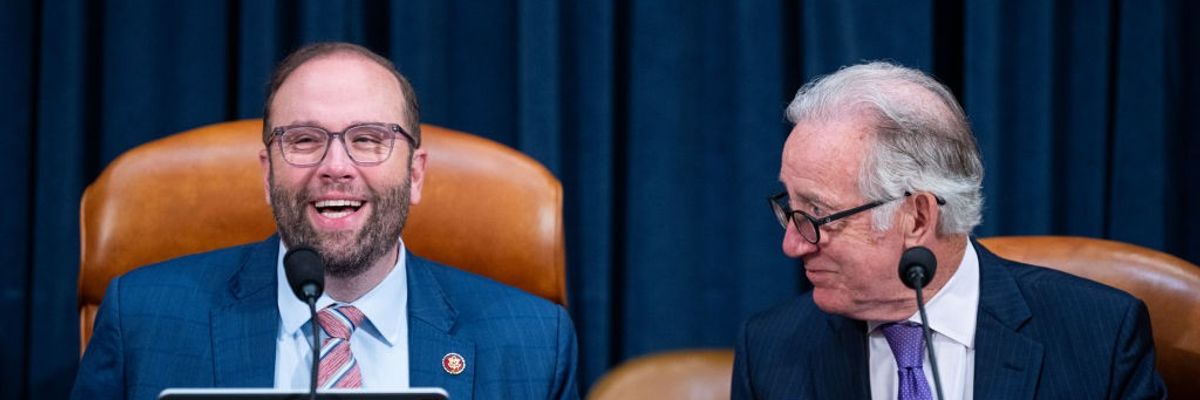
House Ways and Means Committee Chair Rep. Jason Smith (R-Mo.) speaks at a hearing on September 11, 2024.
(Photo: Bill Clark/CQ-Roll Call, Inc. via Getty Images)


Jake Johnson
Jan 15, 2025
COMMON DREAMS


Republicans on the House's chief tax-writing committee made clear during a hearing Tuesday that their top priority is making permanent the massive giveaway to the rich that Donald Trump and the GOP pushed through in 2017.

Rep. Jason Smith (R-Mo.), chairman of the House Ways and Means Committee, said during his opening remarks at Tuesday's hearing that "we must make the Trump tax cuts permanent as soon as possible."

While most of the corporate tax breaks in the 2017 law were made permanent from the start, provisions impacting individuals—including the cut to the top marginal tax rate—are set to expire at the end of this year without congressional action. Trump and Republicans have also called for a further reduction of the statutory corporate tax rate.

"As of today, we have only 142 legislative days before taxes will go up for every single American if Congress fails to act," Smith declared Tuesday.

Smith characterized the 2017 tax cuts as a boon for ordinary Americans, but the law's benefits were heavily skewed to the wealthiest.

The same would be true of an extension of the individual tax cuts, which is expected to be part of a sprawling party-line reconciliation bill. The Institute on Taxation and Economic Policy noted in a recent analysis that "Trump's plan to make most of the temporary provisions of his 2017 tax law permanent would disproportionately benefit the richest Americans."

"No amount of misinformation can hide the truth: This massive new giveaway to the ultra-wealthy and giant corporations comes at the expense of working and middle-class Americans."

Rep. Richard Neal (D-Mass.), the top Democrat on the committee, said at Tuesday's hearing that "when Republicans inevitably tell you that the GOP tax scam gave everyone in America a tax break, remember this one contextualized fact: Extending the law gives people making over $1 million a year a $78,717 average tax cut—288 times higher than the $273 those earning under $50,000 would receive."

"Those millionaires won't feel the effects of cuts to Medicare or Medicaid, or higher premium costs, but America's working families sure will," Neal added, referring to the GOP's plan to slash key aid programs to help offset the enormous cost of extending the 2017 tax breaks.

Tuesday's committee hearing was overshadowed by the closely watched Senate questioning of Trump's nominee to lead the Pentagon, but it confirmed that Republicans intend to waste no time delivering another round of tax cuts to rich Americans who saw their wealth explode under the 2017 law.

"Last time Trump and the GOP held a trifecta, they moved fast to create new tax breaks rewarding wealthy corporations for moving jobs overseas and harming hard-working families across the country," David Kass, executive director of the progressive advocacy group Americans for Tax Fairness, said in a statement Tuesday. "Now, they're working to pass new tax breaks that will allow these same powerful corporations to evade paying their fair share and eliminate American jobs."

"The disastrous effects of the Trump tax scam are not theoretical—they're reality," Kass added. "It didn't raise wages for everyday people or protect our jobs and it certainly didn't pay for itself. Instead, it doubled billionaire wealth and added over $1.5 trillion to the deficit. No amount of misinformation can hide the truth: This massive new giveaway to the ultra-wealthy and giant corporations comes at the expense of working and middle-class Americans."

Trump and the GOP's aggressive push for a new round of tax cuts received a boost from the deep-pocketed Koch network, which is pumping tens of millions of dollars into a nationwide campaign to build support for a proposal that would predominately reward a small sliver of the U.S. population.

"If asked to choose between healthcare and food for low-income kids or tax cuts for giant corporations, Chairman Jason Smith and the Republicans on the Ways and Means Committee are proving that ten times out of ten, they'll choose the corporate giants," said Tony Carrk, executive director of the watchdog group Accountable.US. "American families are set up to lose because President-elect Trump and his congressional allies are eager to raise our costs in order to help their wealthy donor friends."

100+ International Groups Decry Trump's Expected Revival of 'Deadly' Global Gag Rule

The policy, reinstated by every Republican president since Ronald Reagan, has led to "more unintended pregnancies, more unsafe abortions, and more deaths."


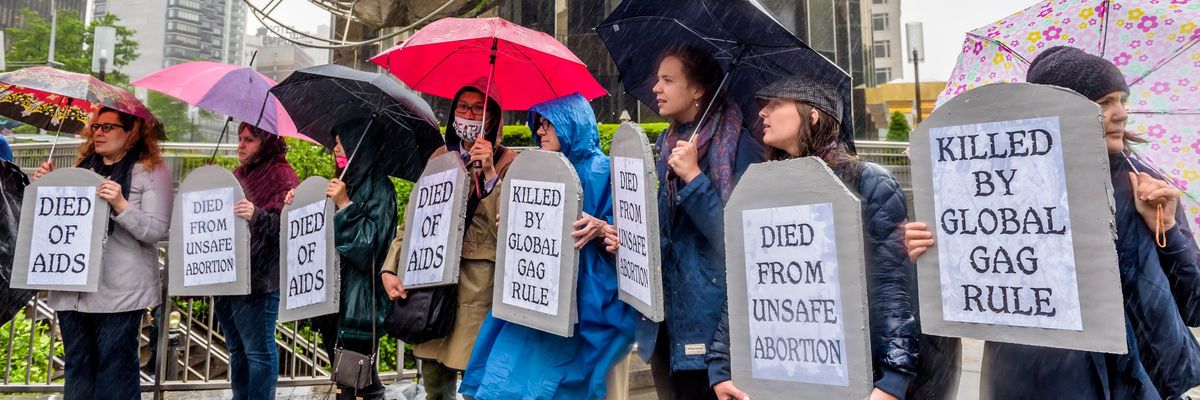
A coalition of physicians, AIDS activists, medical students, and women's health and rights advocates staged a protest outside Trump International Hotel on May 25, 2017.
(Photo: Erik McGregor/LightRocket via Getty Images)


Julia Conley
Jan 17, 2025
COMMON DREAMS

With President-elect Donald Trump expected to make curtailing global abortion access a "day one priority" after he takes office next week, as he did during his first term, more than 100 international rights organizations on Friday called for urgent action to end the global gag rule.

The rule, also known as the Mexico City Policy, has been imposed by every Republican president since Ronald Reagan and prohibits foreign non-governmental organizations from performing or "promoting" abortion care using funds from any source, if they receive U.S. family planning funding.

In 2017, one of the Trump's first acts as president was reinstating the ban and expanding it to apply to nearly all global healthcare funding, including the President's Emergency Plan for AIDS Relief (PEPFAR), malaria prevention, nutrition aid, and other programs.

With the global gag rule "leaving the health and lives of millions of people vulnerable to political whims" over the past four decades, said the groups, "lifesaving health services have been dismantled in communities around the world"—and Trump's expected reinstatement of the policy would continue the "destructive cycle of widespread fear and confusion."

In a video posted to social media, Samira Damavandi, senior policy associate for federal issues at the Guttmacher Institute, explained that "if you're a U.S. taxpayer, you should know about the global gag rule."

The policy "uses U.S. foreign aid—your taxpayer dollars—to undermine abortion rights and reproductive health around the world," said Damavandi.


The global gag rule is imposed even in countries where abortion care is legal, noted Damavandi, effectively silencing "all discussions about abortion," with groups that receive U.S. healthcare funding barred from providing abortions, informing patients about abortion care as an option, or lobby to change abortion laws.

"Clinics have been forced to close, outreach efforts to underserved populations have been eliminated, and people have lost access to contraception and many other essential health services, resulting in more unintended pregnancies, more unsafe abortions, and more deaths," said the groups in the statement, including Amnesty International, Planned Parenthood Federation of America, and Physicians for Human Rights.

The International Women's Health Coalition has tracked the effects of the global gag rule on civil society groups and health service providers in four countries—Kenya, Nepal, South Africa, and Nigeria—and has found that although the countries have divergent abortion laws, their communities have been impacted by the policy in similar ways.

Organizations in the countries reported that they stopped providing information to clients about abortion care during Trump's first term; in Kenya, two clients of one group died after seeking unsafe methods to end their pregnancies.


"Even when presidents lift the global gag rule immediately upon taking office, high-quality health partners face long delays in resuming participation in U.S. global health programs," said the groups on Friday. "Permanent repeal of the policy is urgently needed to promote sustainable progress in global health and to build and maintain long-term partnerships between the U.S. government, local organizations, and the communities that they serve."

Rights groups have previously called on Congress to pass the Global Health, Empowerment, and Rights (Global HER) Act, which would prevent presidents from unilaterally reinstating the global gag rule.

The Guttmacher Institute said it expects the Trump administration to reinstate the rule based on Trump's previous position and policies promoted within Project 2025, the right-wing agenda coauthored by at least 144 people who worked in the White House under the Republican leader.

Project 2025 also advocates for "blocking U.S. funding to the United Nations Population Fund and other organizations that promote sexual and reproductive health and rights" and redirecting international family planning funds to "faith-based organizations or organizations with limited experience in reproductive healthcare."

Guttmacher provided guidance on the likely reinstatement of the rule to international health NGOs, noting that:Reinstatement of the global gag rule will not affect existing contracts and will apply only to new funding agreements;
Organizations are under no obligation to adjust their programs or partnerships to comply with the gag rule before it has been reinstated; and
Organizations should avoid overinterpreting the policy restrictions and acting beyond what is required.

"Ending the global gag rule for good would lift the threat of reinstatement and allow U.S.-funded programs to reach their full potential," said the groups on Friday, "thus ensuring that the needs and rights of people around the world are fulfilled."
'Dark Chapter': Sanders Says American People Must 'Grapple' With Complicity in Gaza's Destruction


"Israel chose not to go to war simply against Hamas, but has instead waged an all-out war against the entire Palestinian people," Sanders wrote.


Sen. Bernie Sanders (I-Vt.) talks with reporters in the U.S. Capitol on November 28, 2023.
(Photo: Tom Williams/CQ-Roll Call, Inc. via Getty Images)

Eloise Goldsmith
Jan 17, 2025
COMMON DREAMS

With a cease-fire deal between Hamas and Israel set to go into effect as soon as Sunday, Senator Bernie Sanders released a statement Friday saying that he's please the Israeli security cabinet has signed off on the agreement, but highlighted the approved deal "is essentially the same agreement that Prime Minister [Benjamin] Netanyahu and his extremist government rejected in May of last year."

"More than 10,000 people have died since that proposal was presented, and the suffering of the hostages and innocent people in Gaza only deepened," he wrote.

On Wednesday, President Biden announced the breakthrough, saying “this is the ceasefire agreement I introduced last spring."

What's more, the independent senator from Vermont said that Americans must "grapple with our role in this dark chapter." The U.S. government, he said, "allowed this mass atrocity to continue by providing an endless supply of weapons to Netanyahu and failing to exert meaningful leverage."

The U.S. has provided Israel with at least $17.9 billion in military aid to its ally in the Middle East since October 2023, when Israel's military campaign in Gaza commenced following an attack by Hamas on Israel. In early January the State Department informed Congress of a planned $8 billion arms sale.

Local health officials in Gaza say the death toll in the enclave stands at over 46,000. However, a recently published peer-reviewed analysis estimates that Israel's assault on Gaza had actually killed 64,260 people—mostly civilian men, women, and children—have been killed between October 7, 2023 and June 30, 2024—a figure significantly higher than the official one reported by the enclave's health ministry.

Multiple human rights organizations have said that Israel's conduct in Gaza constitutes genocide or acts of genocide, and the International Criminal Court has issued arrest warrants for Israeli Prime Minister Benjamin Netanyahu and former Israeli defense chief Yoav Gallant for alleged war crimes in Gaza. The body has also issued an arrest warrant for Hamas leader Ibrahim Al-Masri for alleged crimes against humanity,

In his Friday remarks, Sanders called Hamas' October 7, 2023 attack on Israel "barbaric" and stated that Israel "clearly had the right to defend itself against Hamas."

However, he said, "Israel chose not to go to war simply against Hamas, but has instead waged an all-out war against the entire Palestinian people."


American Historical Association Slammed for 'Craven' Veto of Gaza Scholasticide Resolution

"Academics will make careers out of writing about past atrocities while ignoring the ones happening in real time," said one critic.


Children look through the ruins of a classroom in a school destroyed by Israeli forces in the al-Shati refugee camp in Gaza, Palestine on June 25, 2024.
(Photo: Mahmoud Issa/Anadolu via Getty Images)

Brett Wilkins
Jan 17, 2025
COMMON DREAMS

In what one observer decried as an "absolutely shameful" rebuff of American Historical Association members' overwhelming approval of a resolution condemning Israel's annihilation of education infrastructure in Gaza, the elected council of the nation's oldest learned society on Thursday vetoed the measure over a claimed technicality.

AHA members voted 428-88 earlier this month in favor of a resolution opposing Israeli scholasticide—defined by United Nations experts as the "systemic obliteration of education through the arrest, detention, or killing of teachers, students, and staff, and the destruction of educational infrastructure"—during the 15-month assault on the Gaza Strip.

However, the AHA's 16-member elected council voted 11-4 with one abstention to reject the measure, according toInside Higher Ed, which noted that the panel "could have accepted the resolution or sent it to the organization's roughly 10,450 members for a vote."


While the council said in a statement that it "deplores any intentional destruction of Palestinian educational institutions, libraries, universities, and archives in Gaza," it determined that the resolution does not comply with the AHA's constitution and bylaws "because it lies outside the scope of the association's mission and purpose."

Council member and University of Oklahoma history professor Anne Hyde told Inside Higher Ed that she voted to veto the resolution "to protect the AHA's reputation as an unbiased historical actor," adding that the Gaza war "is not settled history, so we're not clear what happened or who to blame or when it began even, so it isn't something that a professional organization should be commenting on yet."

However, Van Gosse, a co-chair and founder of Historians for Peace and Democracy—the resolution's author—told the outlet that "we are extremely shocked by this decision," which "overturns the democratic decision" of members' "landslide vote."

Lake Forest College history professor Rudi Batzell said on social media: "Shame on the AHA leadership for vetoing the scholasticide in Gaza resolution. Members voted overwhelmingly to support, and the resolution was written so narrowly and so carefully to meet exactly this kind of procedural objection. Craven."

The AHA council's veto follows last week's move by the Modern Language Association executive council, as Common Dreamsreported, to block members of the preeminent U.S. professional group for scholars of language and literature from voting on a resolution supporting the boycott, divestment, and sanctions movement for Palestinian rights.


ICC Prosecutor Says Israel Hasn't Tried to Probe Gaza War Crime Allegations

Prosecutor Karim Khan also said the threat of sanctions against the ICC "is a matter that should make all people of conscience be concerned."


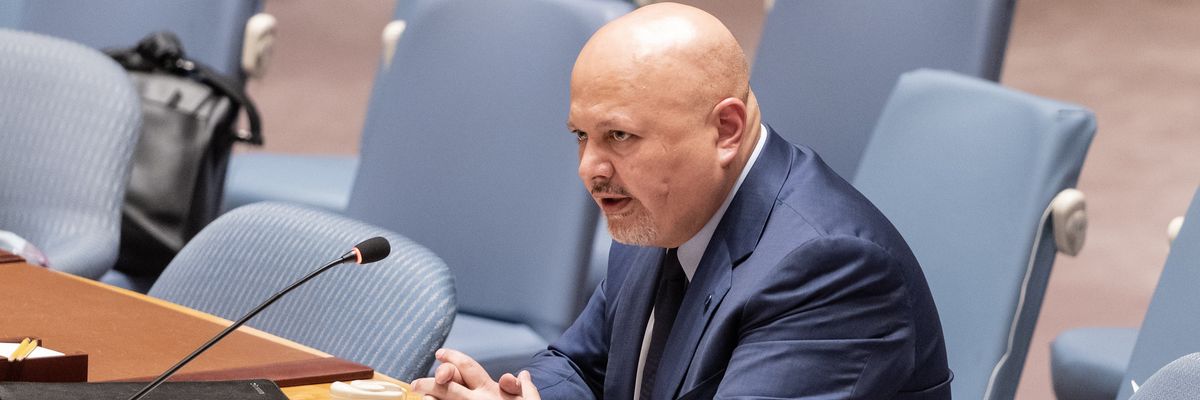
Karim Khan, prosecutor of the International Criminal Court speaks at a United Nations Security Council meeting on July 12, 2023.
(Photo: Lev Radin/Pacific Press/LightRocket via Getty Images)

Eloise Goldsmith
Jan 17, 2025
COMMON DREAMS

After International Criminal Court prosecutor Karim Khan brought allegations of war crimes against Israeli Prime Minister Benjamin Netanyahu, Israel could have probed the accusations itself, Khan told Reuters in a Thursday interview—but it has made "no real effort" to do so.

The conversation took place a day after Israel and Hamas reached a cease-fire and hostage deal that is expected to go into effect on Sunday, though Israeli airstrikes in the besieged Gaza strip have continued since the deal was announced.

Khan sought arrest warrants against Israeli Prime Minister Benjamin Netanyahu and former Israeli defense chief Yoav Gallant for alleged war crimes in Gaza, including starvation of civilians as a method of warfare and the directing of attacks against civilians. The warrants were granted by ICC judges in November. Israel rejects the charges.

Khan also successfully sought an arrest warrant for Hamas leader Ibrahim Al-Masri, who he accused of crimes against humanity including murder, extermination, torture, and rape.

Khan told Reuters that "we're here as a court of last resort and... as we speak right now, we haven't seen any real effort by the State of Israel to take action that would meet the established jurisprudence, which is investigations regarding the same suspects for the same conduct."

Khan added that an Israeli investigation could have led to the case being send to Israeli courts under what are called complementary principles. It's possible for Israel to demonstrate its willingness to investigate, even after warrants were issued, Khan told Reuters.

However, "the question is have those judges, have those prosecutors, have those legal instruments been used to properly scrutinize the allegations that we've seen in the occupied Palestinian territories, in the State of Palestine? And I think the answer to that was 'no'," he said.

Khan said he still felt firm in his decision regarding the arrest warrants despite the fact the U.S. House of Representatives last week voted to sanction the International Criminal Court (ICC) to protest the warrants.

The ICC is an international body with 125 member countries—a list that does not include the United States or Israel—that seeks to investigate and prosecute grave offenses such as war crimes and genocide.

The Republican-controlled House passed the "Illegitimate Court Counteraction Act," with the help of 45 Democrats, which would "impose sanctions with respect to the International Criminal Court (ICC) engaged in any effort to investigate, arrest, detain, or prosecute any protected person of the United States and its allies," including Israel.

Passage in the House sets the bill up for likely enactment, given Republican support for the measure and GOP control of both the Senate and the White House.

Khan told Reuters that the threat of sanctions against the ICC “is a matter that should make all people of conscience be concerned.”

Cease-Fire 'Only the First Step' for Gaza Plunged Into 'Horrifying Abyss' by Israel


Human Rights Watch warned that "continued weapons sales to Israel by its partners despite vast evidence of its unchecked atrocity crimes are putting those countries and officials at risk of direct complicity."


Children hold a Palestinian flag as they stand on rubble in the Bureij Refugee Camp in Gaza City, Palestine on January 17, 2025.
(Photo: Moiz Salhi/Anadolu via Getty Images)


Brett Wilkins
Jan 17, 2025
COMMON DREAMS

While people around the world welcomed Wednesday's announcement of an agreement to pause Israel's assault on the Gaza Strip and free the remaining hostages held by Hamas, human rights defenders stressed that the only way to truly end the suffering of Palestinians is to address the root causes of their oppression and for countries to stop arming Israel.

"The news that a cease-fire deal has been reached will bring some glimmer of relief to Palestinian victims of Israel's genocide. But it is bitterly overdue," Amnesty International secretary-general Agnès Callamard said Thursday. "For Palestinians—who have endured more than 15 months of devastating and relentless bombardment, have been displaced from their homes repeatedly, and are struggling to survive in makeshift tents without food, water, and basic supplies—the nightmare will not be over even if the bombs cease."

"Israel's continuous and deliberate denial and obstruction of humanitarian aid to Gaza has left civilians facing unprecedented levels of hunger and children have starved to death," Callamard continued. "The international community, which has thus far shamefully failed to persuade Israel to comply with its legal obligations, must ensure Israel immediately allows lifesaving supplies to urgently reach all parts of the occupied Gaza Strip to ensure the survival of the Palestinian population."

"Unless Israel's illegal blockade of Gaza is promptly lifted, this suffering will only continue," she added. "Israel must dismantle the brutal system of apartheid it imposes to dominate and oppress Palestinians and end its unlawful occupation... once and for all."

Human Rights Watch (HRW)—which highlighted Israel's alleged "unchecked crimes against humanity and war crimes" in its annual World Reportpublished Thursday— asserted that "all countries which provide weapons to Israel, including the United States, the United Kingdom, and Germany, should suspend weapons transfers due to the Israeli military's repeated, unlawful attacks on civilians."


HRW added that nations should defend the International Criminal Court—which last year issued arrest warrants for Israeli Prime Minister Benjamin Netanyahu and Yoav Gallant, his former defense chief—as well as the International Court of Justice, which is weighing a genocide case against Israel and has ordered its forces to prevent genocidal acts and allow the unimpeded flow of humanitarian aid into besieged Gaza. Critics have accused Israel of ignoring the ICJ orders.

"Israel's decadeslong systematic repression of Palestinians worsened dramatically and plunged civilians in Gaza into a horrifying abyss, but possibilities for international justice are emerging," HRW Middle East and North Africa director Lama Fakih said on Thursday. "Continued weapons sales to Israel by its partners despite vast evidence of its unchecked atrocity crimes are putting those countries and officials at risk of direct complicity."

The Israeli human rights group B'Tselem welcomed the cease-fire—which was approved by Israel's Security Cabinet on Friday and, if agreed upon by the country's full Cabinet as expected, is set to take effect Sunday—but stressed that "the catastrophe persists" in Gaza.

"Millions of people in Gaza remain destitute, starving, and homeless," the group said in a statement. "A cease-fire is only the first step, and one that should have happened long ago. There is a real concern that Israel will resume fighting after the first phase of the deal is complete."

As Common Dreams reported Thursday, Israeli forces killed scores of Palestinians in Gaza following Wednesday's cease-fire announcement.


"The international community must do everything in its power to demand Israel stop the war completely and permanently," B'Tselem said. "Beyond a lasting cease-fire that includes enough humanitarian aid for the entire Gaza Strip, its residents must be allowed to return to all parts of Gaza."

"Israeli decision-makers responsible for serious violations of the laws of war and for crimes against humanity must be held accountable, and all Israeli violence against the Palestinian people in the entire area between the Jordan [River] and the Mediterranean must cease," the group stated.

"The only way to break the cycle of bloodshed is to end the occupation, oppression, and apartheid regime and ensure the human rights of everyone living in this space," B'Tselem added.


Displaced Gazans awaiting truce so they can go home


By AFP
January 17, 2025


Most Gazans have been displaced at least once by the war

 - Copyright AFP/File Anthony Kwan

 Allison ROBBERT

In a sprawling tent city in central Gaza, Palestinians displaced by war to other parts of the territory are all waiting for one thing: a ceasefire so they can go home.

Most of Gaza’s 2.4 million people have been displaced at least once by the Israel-Hamas war to other parts of the territory.

With a long-awaited truce deal due to take effect on Sunday, they may finally be able to return to their neighbourhoods.

Umm Khalil Bakr has been living with her family in the Nuseirat camp, where displaced Palestinians have tried their hardest despite the war to lead a semblance of normal life.

There, they bake flatbread on clay ovens, play cards to pass the time when there are no bombings, and sweep the streets as an act of dignity.

If the ceasefire takes hold, people will start moving back to their neighbourhoods, though they are under no illusions as to what they might find.

“I will take my tent, remove the rubble from the house and place my tent on the rubble, where I will live with my 10 children,” Umm Khalil told AFP.

“We know the weather will be cold, and we won’t have blankets for the bedding, but what matters is that we return to our homeland.”

Around her, young children gathered to watch their mother speak, bouncing idly on the tent sides.

Her determination to rebuild her life despite the utter devastation from 15 months of war was shared by her fellow camp residents.

Whatever the state of their homes, the hardships of life in the camp were far worse, said Umm Mohamad al-Tawil.

“We will return, and whatever hardships we might face, we will return,” she said.

“This is not life, and it is not our life.”


– ‘Live in the tent’ –


A few kilometres (miles) to the south, in Deir el-Balah, the Moqat family were packing their few belongings into cardboard boxes, ready to go back to Beit Lahia in the north of the Gaza Strip.

The family were looking for a truck to take them home, said Fatima Moqat.

“We will take the tent with us… and live in it just as we stayed here inside the tent,” she said.

“There we will live in the tent until they find us a solution for reconstruction.”

With the truce not yet in effect, there has been no let-up in the violence.

On Friday, Gaza’s civil defence agency said at least 113 people had been killed by Israeli bombardment of the territory since Qatar and the United States announced the deal.

The scale of the destruction in Gaza wrought by month after month of air strikes, shelling and street-to-street fighting means reconstruction could last well into the next decade, international agencies have said.

The World Health Organization said rebuilding the territory’s health system alone would cost $10 billion and take five to seven years.

According to the UN, United Nations, by December 1, nearly 69 percent of buildings in the Gaza Strip had been destroyed or damaged, with the UN Development Programme estimating last year that it could take until 2040 to rebuild all destroyed homes.


– ‘Kiss my land’ –


The Gaza war began on October 7, 2023, when Hamas staged the deadliest attack in Israeli history.

The attack resulted in the deaths of 1,210 people, mostly civilians, according to an AFP tally of official Israeli figures.

Israel’s retaliatory campaign has left 46,876 people dead, the majority civilians, according to the health ministry in Hamas-run Gaza, figures the UN has described as reliable.

To Moqat, it was the grief over lives lost in the war that would be the hardest to overcome.

“Gaza was destroyed and rebuilt a hundred times before… Houses can be replaced, but people cannot be replaced,” she said.

Back in Nuseirat, reclining on the floor inside his carpet-lined tent, Nasr al-Gharabli could not wait to return to his home.

“I am waiting for Sunday morning when they will announce the ceasefire… I will go to kiss my land,” he said.

“If I die on my land it would be better than being here as a displaced person.”

Gaza Ceasefire Raises Hopes of Renewed Security in the Red Sea

 NO SUCH THING THE ZIONISTS WANT WAR

Houthi missiles on display at a parade, 2024 (Houthi Military Media)

Published Jan 16, 2025 10:07 PM by The Maritime Executive


On Thursday, Israeli Prime Minister Benjamin Netanyahu announced that an agreement for a ceasefire and hostage exchange had been reached with terrorist group Hamas, setting conditions for the end of hostilities in Gaza - though an unspecified last-minute issue has delayed an Israeli cabinet vote to finalize the deal. If approved, it appears to satisfy most of the demands of Yemen's Houthi rebels, who have attacked shipping in the Red Sea for more than a year in protest of Israeli operations in Gaza. 

In a response to Netanyahu's announcement early Friday, Houthi leader Malik Al-Houthi cast the ceasefire as a loss for Israel and America. He suggested that the group's "naval operations have reached a decisive result and a real victory," and contributed to a "failure" for Israel in the Gaza Strip. He cautioned that the group would monitor the situation for the next three days as the deal takes effect; notably, Al-Houthi did not pledge a halt to attacks on shipping, and he left open the possibility of renewed strikes. "At any stage in which the Israeli enemy returns to aggression and escalation, we will be ready to support [Hezbollah]," said Al-Houthi. 

Shipping and security analysts have given mixed predictions about the group's intentions going forward. Dimitris Maniatis, CEO of Marisks, told Reuters that the Houthis' capabilities have been significantly reduced by Israeli and American airstrikes over the past month, leaving the group eager for "a pretext to announce a ceasefire" and end their campaign. Multiple other sources told Reuters that shipping interests are already eyeing a return to the Red Sea route after a year of disruption, so long as sky-high war risk insurance rates come down. 

Others are less sure, especially since Houthi fighters have reportedly developed a revenue stream from their campaign. A UN panel on Yemen investigated their operations and spoke with regional shipbrokers and service providers; the panel heard multiple accounts that the group was extorting shipowners out of hundreds of thousands of dollars for each safe transit past Yemen, and estimated that the Houthis are earning about $2 billion per year from "security" fees. While the exact amount of the fee is debated, "there's clearly some deal-cutting," U.S. special envoy for Yemen Tim Lenderking told The Economist - and those deals may create a business incentive for Houthi fighters to continue launching attacks. 

Blue-chip carriers have signaled that they do not plan a quick return to the route. Maersk has predicted that the Red Sea will stay shut down for global container liners "well into 2025," and a spokesperson told Reuters on Thursday that it is "still too early to speculate about timing." Hapag-Lloyd concurred, saying that the "agreement has only just been reached."  

Others will be unaffected. The Russia-linked "shadow fleet" tankers that ferry Russian oil to buyers in India and China have consistently used the Suez-Red Sea route, without interruption, and will likely continue to do so after an eventual cessation of Houthi hostilities. Chinese shipping interests have also benefitted from a public nonaggression pact, and many continue to use the route.

Climate-Fueled Insurance Cost Hikes Putting American Dream 'Out of Reach'


"Policymakers across the country should see this data as a blaring warning that they can no longer ignore the alarm bells of a climate-driven financial crisis," said one advocate.


A State Farm insurance company sign sits amid the rubble of a building destroyed by the Palisades Fire on Sunset Boulevard in the Pacific Palisades neighborhood of Los Angeles on January 16, 2025.
(Photo: Frederic J. Brown/AFP via Getty Images)


Julia Conley
Jan 17, 2025
COMMON DREAMS

As communities across the Los Angeles area continued to grapple with catastrophic wildfires, the U.S. Treasury Department on Thursday released the most far-reaching report ever on the climate emergency's impact on home insurance—shedding light on how disasters like the one devastating Southern California this month could increasingly push U.S. families toward financial ruin.

More than three years after President Joe Biden issued an executive order directing the Federal Insurance Office to assess "the potential for major disruptions of private insurance coverage in regions of the country particularly vulnerable to climate change impacts," the FIO released an analysis showing that homeowner insurance costs are rapidly rising across the U.S.—8.7% faster than the rate of inflation in 2018-22.

During that period, homeowners in the 20% of ZIP codes in coastal areas and other regions vulnerable to climate disasters faced insurance premiums that averaged $2,321—82% higher than people in the ZIP codes with the lowest risk.

"Climate change is already increasing our cost of living—and it's only going to get worse," said Steven Rattner, an investor and New York Times opinion writer.


For a growing number of homeowners, rising insurance costs have led to a cost-benefit analysis that puts them at risk for financial ruin, as they have given up on keeping current with their payments.

Analyzing 246 million insurance policies issued by 330 insurers nationwide from 2018-22, the FIO found that insurers canceled at least 10% of policies in 2022 due to nonpayment. Cancellation rates were highest in hurricane-prone areas such as Hilton Head, Charleston, and Myrtle Beach, South Carolina, as well as places that are vulnerable to increasingly fast-moving wildfires like California and Arizona.

During the time period analyzed, five wildfires in the Southwest caused more than $100 million in damages, with homeowners claiming an average of $27,000.

"While insurance companies will no doubt find ways to profit from the crisis, households across the country cannot sustain rising costs indefinitely."

"Treasury's analysis comes at a time of devastating tragedy, loss of life, and destruction from the wildfires in the Los Angeles area," said Secretary of the Treasury Janet Yellen. "While it's far from clear what the exact financial costs of this disaster will be, it is a stark reminder of the impacts of the growing magnitude of natural disasters on the U.S. economy."

"This report identifies alarming trends of rising costs of insurance—to consumers and insurers themselves—as well as lack of availability of insurance, all of which threaten the long-term prosperity of American families," Yellen added.

In other words, said Carly Fabian, senior insurance policy advocate with Public Citizen's Climate Program, the climate-fueled insurance crisis is helping to push the American Dream of home ownership "out of reach" for a growing number of families.

"This report shows exactly what we feared: Climate change is creating an insurance crisis for households across the country. For many Americans, home ownership is a key part of the American Dream," said Fabian. "While insurance companies will no doubt find ways to profit from the crisis, households across the country cannot sustain rising costs indefinitely."

In 2022, Public Citizen joined more than 75 consumer advocacy and environmental justice groups in calling on the Treasury Department to promptly follow Biden's executive order and collect data on how the climate emergency is affecting homeowners.

"While this report is an essential step, it is only a first window into the data necessary to monitor this crisis," said Fabian. "The fact that the Federal Insurance Office had to be the first to propose collecting and now publishing this data shows the utter failure of the fragmented state regulatory system to protect the public. In the aftermath of the fires in Los Angeles and the devastation in Asheville [from Hurricane Helene], policymakers across the country should see this data as a blaring warning that they can no longer ignore the alarm bells of a climate-driven financial crisis."

The Los Angeles fires this month could ultimately cost as much as $275 billion, AccuWeatherreported this week, and the National Oceanic and Atmospheric Administration revealed this month that from 2018-22, 84 billion-dollar climate disasters—excluding floods, which are typically not covered by home insurance—cost more than $609 billion. The costs of such events have continued rising since 2022.


Climate reporter Kate Aronoff of The New Republic likened the burgeoning home insurance crisis to the for-profit health insurance industry, in which corporate consolidation is also pushing premiums higher and contributing to medical debt that's owed by about 20 million people.


"Everyone gets sick. Dealing with that's a nightmare even if you have good coverage," said Aronoff. "Not everyone's house will burn down or flood but [there are] some real parallels in terms of human tragedy and suffering being mediated through an infuriating for-profit bureaucracy with haphazard public backing."
Actuaries and Scientists Warn Climate Shocks Risk 'Planetary Insolvency'

A new report "shows a 50% GDP contraction between 2070 and 2090 unless an alternative course is chartered," said the lead author.


Gas company employees work in Malibu, California, after the Palisades Fire destroyed beach homes on January 12, 2025.
(Photo: Frederic J. Brown/AFP via Getty Images)


Jessica Corbett
Jan 16, 2025
COMMON DREAMS

U.K. actuaries and University of Exeter climate scientists on Thursday warned that "the risk of planetary insolvency looms unless we act decisively" and urged policymakers to "implement realistic and effective approaches to global risk management."

Actuaries have developed techniques that "underpin the functioning of the global pension market with $55 trillion of assets, and the global insurance market, collecting $8 trillion of premiums annually, to help us manage risk," Tim Lenton, University of Exeter's climate change and Earth system science chair, noted in the foreword of a report released Thursday.

Planetary Solvency—Finding Our Balance With Nature is the fourth report for which the Institute and Faculty of Actuaries (IFoA) has collaborated with climate scientists. In financial terms, solvency is the ability of people or companies to pay their long-term debts. Co-authors of one of the previous publications coined the phrase planetary solvency, "setting out the idea that financial risk management techniques could be adapted to help society manage climate change and other risks."

Three IFoA leaders—Kalpana Shah, Paul Sweeting, and Kartina Tahir Thomson—explained in their introduction to the latest report how "planetary solvency applies these techniques to the Earth system," writing:
The essentials that support our society and economy all flow from the Earth system, commodities such as food, water, energy, and raw materials. The Earth system regulates the climate and provides a breathable atmosphere, it is the foundation that underpins our society and economy. Planetary solvency assesses the Earth system's ability to continue supporting us, informed by planetary boundaries, tipping points in the Earth system, and other scientific discoveries to assess risks to this foundation—and thus to our society and the economy.

Our illustrative assessment of planetary solvency in this report shows a more fundamental, policy-led change of direction is required. Our current market-led approach to mitigating climate and nature risks is not delivering. There is an increasing risk of severe societal disruption (planetary insolvency), as our economic system drives further global warming and nature degradation.

"Impacts are already severe with unprecedented fires, floods, heatwaves, storms, and droughts," the document points out, emphasizing that human activity—particularly burning fossil fuels—drives climate change and biodiversity loss. "If unchecked they could become catastrophic, including loss of capacity to grow major staple crops, multimeter sea-level rise, altered climate patterns, and a further acceleration of global warming."

The report was released as wildfires ravage California and shortly after scientific bodies around the world concluded that 2024 was the hottest year on record and the first in which the average global temperature exceeded a key goal of the Paris agreement: 1.5°C above preindustrial levels. In the United States, experts identified 27 disasters with losses exceeding $1 billion.

"We risk triggering tipping points such as Greenland ice sheet melt, coral reef loss, Amazon forest dieback, and major ocean current disruption," the new publication warns, adding that "tipping points can trigger each other," and if multiple are triggered, "there may be a point of no return, after which it may be impossible to stabilize the climate."

Food system shocks and more frequent and devastating disasters increase the risk of mass mortality for humanity—including due to hunger and infectious diseases—along with mass migration and conflict, the report highlights.


"Climate change risk assessment methodologies understate economic impact, as they often exclude many of the most severe risks that are expected and do not recognize there is a risk of ruin," the document stresses. "They are precisely wrong, rather than being roughly right."

Specifically, lead author and IFoA council member Sandy Trust said in a statement, "widely used but deeply flawed assessments of the economic impact of climate change show a negligible impact" on gross domestic product (GDP).

However, Trust continued, "the risk-led methodology, set out in the report, shows a 50% GDP contraction between 2070 and 2090 unless an alternative course is chartered."

To mitigate the risk of planetary insolvency, the co-authors called on policymakers around the world to implement independent, annual assessments; set limits and thresholds that respect the planet's boundaries; enhance governance structures to support planetary solvency; and "enhance policymaker understanding of ecological interdependencies, tipping points, and systemic risks so they understand why these changes are needed."

They also underscored the need to limit global warming and avoid triggering tipping points with actions such as accelerating decarbonization, removing greenhouse gases from the atmosphere, restoring damaged ecosystems, and building resilience.

"You can't have an economy without a society, and a society needs somewhere to live," said Trust. "Nature is our foundation... Threats to the stability of this foundation are risks to future human prosperity which we must take action to avoid."