Friday, February 07, 2025

Philippine lawmakers to approve bill to ban ore exports

Bloomberg News | February 6, 2025 | 
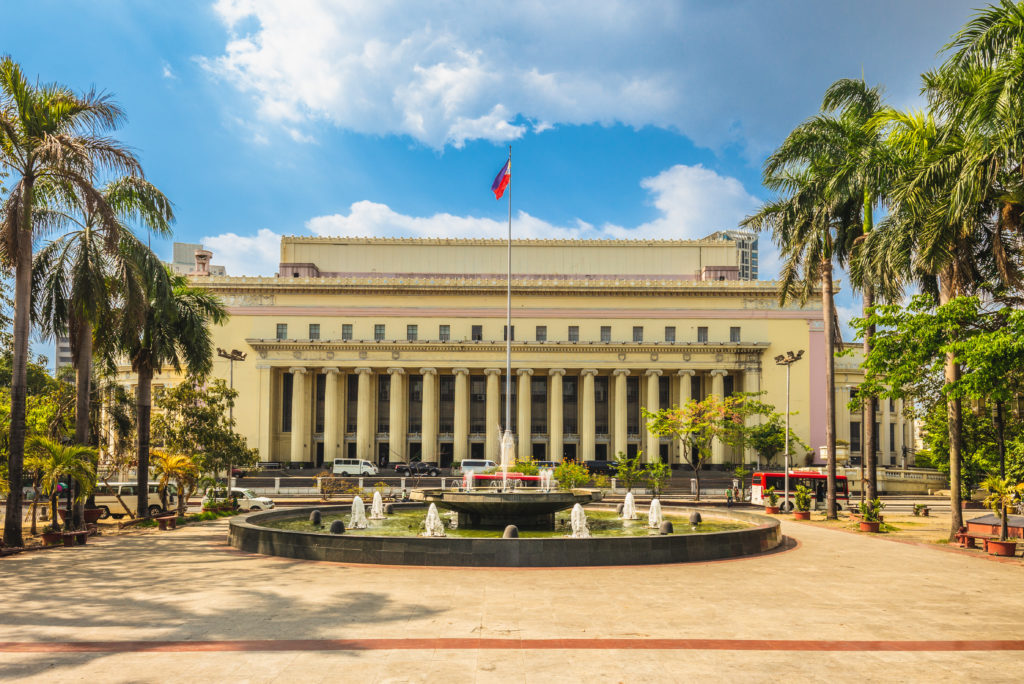
Manila, Philippines. Stock image.

The Philippine Congress could ratify a bill banning raw mineral exports as soon as June, the Senate leader said on Thursday, a plan that investors warn could lead to mine closures.


Congress is on a break after this week and sessions resume in June, but Senate President Francis Escudero hopes there would be a bicameral committee meeting with members from both the Senate and the House of Representatives to tackle the bill. “I’m hoping it will be done during the break so we can ratify it when sessions resume,” Escudero said in a briefing.


The bill aims to ban exports of raw ore in a bid to boost the downstream mining industry. It seeks to impose the ban five years after the law is signed to give miners time to build processing plants.

“If this is done, I believe this will be a game changer for our country if we will have processing finally here,” said Escudero, who authored the bill which the Senate passed on third and final reading on Monday. Previous efforts in Congress to introduce a ban in 2016 and 2014 failed due to lack of support.

The Philippines is the world’s second-largest nickel ore supplier with bulk of its shipments going to top market China. The government has been pushing miners to invest in processing facilities instead of just shipping out raw ore, hoping to replicate No. 1 nickel supplier Indonesia’s success in boosting mining revenue.

Indonesia’s ban on exports of metal ore in 2020 boosted the value of its nickel exports from $3 billion to $30 billion in two years as Chinese companies built refineries and smelters there. The Philippines can follow Indonesia’s lead, according to Escudero, an example of a resource-rich country pushing for more value from its minerals.

“Mineral-wise, the Philippines is a rich country pretending to be poor,” the senator said. Less than 3% of 9 million hectares (22 million acres) of land identified by the government as containing high mineral reserves is currently being mined.

The Chamber of Mines of the Philippines and the Philippine Nickel Industry Association said the proposed export ban “will lead to mine closures” that will “reduce government revenues and economic activities in mining communities.”

“The proposal will cause massive disruptions to existing supply chains; many mining companies have long-term contracts and established supply chains with international buyers,” they said in a statement.

(By Cliff Venzon and Neil Jerome Morales)

CRIMINAL CAPITALI$M

Suspended Exxaro CEO resigns following allegations

Bloomberg News | February 6, 2025 | 

Nombasa Tsengwa, CEO of Exxaro. Credit: Exxaro Resources via LinkedIn
HER OUTFIT BLENDS IN WITH THE CHAIR APOLSTERY 

The suspended chief executive officer of South African coal producer Exxaro Resources Ltd. resigned over the handling of a probe into allegations over her conduct.


Nombasa Tsengwa submitted her resignation in a Feb. 5 letter seen by Bloomberg News. The company accepted her move and will start an expedited process to appoint a new CEO, chairman Geoffrey Qhena said in a statement Thursday, adding that Finance Director Riaan Koppeschaar will remain as acting chief.

The company had placed her on precautionary suspension over claims related to “workplace conduct and governance practice” and appointed law firm ENS to undertake an independent investigation, it said in December.

In addition to accusations of bullying, Tsengwa received a charge sheet that accused her of conflict of interest and breaches of duty of good faith, she said in the letter.

The way the investigation was conducted and questioning at ENS offices “demonstrate that there is a predetermined outcome, which I refuse to subject myself further to,” she wrote.

Tsengwa took over as Exxaro’s first woman CEO in August 2022 after heading its coal business. The Minerals Council of South Africa elected her as its president in June.

The resignation comes as Exxaro looks to further diversify away from coal. After a failed attempt to buy a copper mine, the company is considering investing in manganese. It has discussed the potential acquisition of the Tshipi Borwa mine, people familiar with the matter said in December.

(By Paul Burkhardt and Loni Prinsloo)
Mining Indaba: From crime to catalyst – artisanal miners demand reform


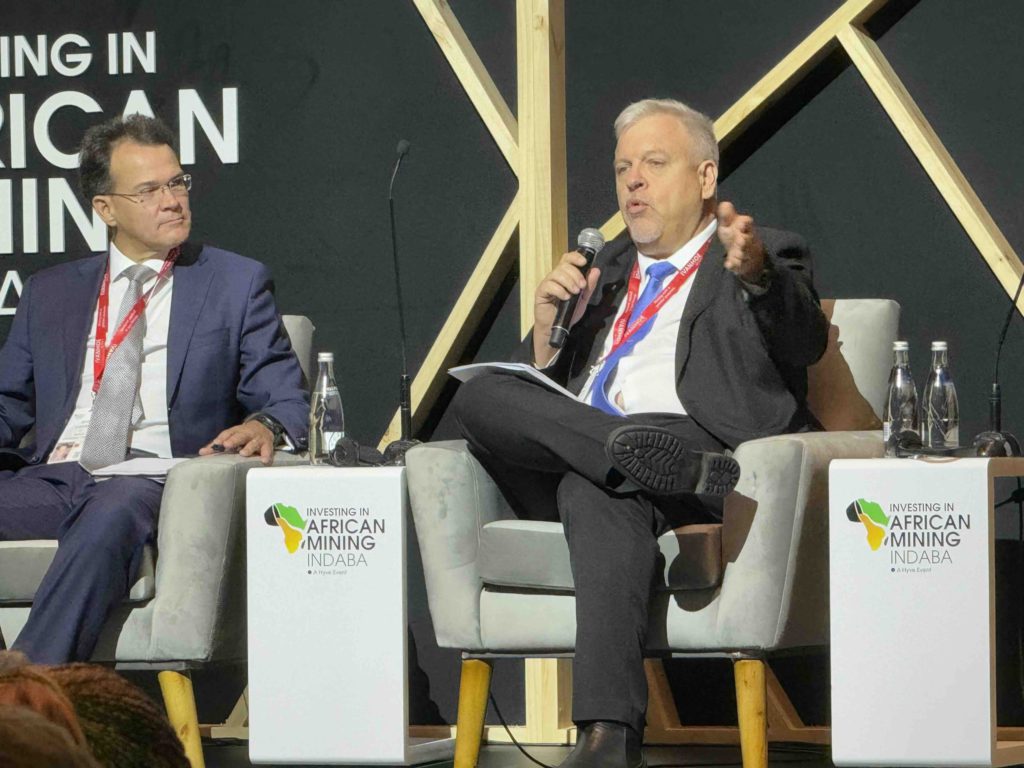
Rio-Tinto’s Werner Duvenhage, right, makes a point with Sean Gilbertson, CEO of Gemfields. Credit: Henry Lazenby

More can be done to transform artisanal and small‐scale mining (ASM) into a safe, transparent, investment-ready sector, according to an industry conference in Cape Town.


But experts warn that curbing endemic corruption comes first, the Investing in African Mining Indaba heard on Tuesday. Formalizing ASM and enforcing anti-corruption measures are two sides of the same coin.

“It’s about moving from crime to investing in a legitimate sector,” David Sturmes-Verbreek of global sustainability organization The Impact Facility said during a panel. It was considering what needs to change to harness the full potential of ASM.

Record-high gold prices attract more than 45 million informal miners across 80 countries to support families totalling 270 million people, according to Sturmes-Verbreek.

Corruption, lack of development and criminal gangs contribute to the rising trend throughout Africa, Central and South America and Asia. Some producers, such as Aris Mining (TSX: ARIS; NYSE-AM: ARMN), are trying to incorporate artisanal miners into the formal sector, but an uneasy relationship exists in most places where mines and the slums they attract interact.

By the numbers

The World Bank has chronicled 368 projects since 1980 to aid artisanal miners at a cost of nearly US$1 billion, with the bank contributing about a third, according to Rachel Perks, a senior mining specialist at the Washington-based institution.

In gold mining, ASM’s share of global supply surged from 4% in the 1990s to 20% today, while for cobalt it climbed from 5% to over 12%.

In South Africa last month, 78 gold diggers died in an underground rescue effort. The illegal miners, locally referred to as zamazama, were among hundreds that authorities had controversially locked in the mine, trying to root out criminal gangs and prevent a wider disaster.

Perks says regulated ASM reduces risks and environmental harm. It also opens big opportunities for wealth and rural development.

“By strengthening regulatory frameworks and ensuring government-led oversight, the sector can transform into a well-governed, investment-ready engine of sustainable development,” she said.

‘Professionalization’

Titus Sauerwein from the European Partnership for Responsible Minerals (EPRM) said pilot projects have shown ASM’s benefits. He warned that scaling these pilots will need sustained public and private investment and decisive government oversight.

In Zimbabwe, formalization transformed the life of Faith Mutete, the founder and CEO of Women in Mining Zimbabwe, who started mining at 15. She went on to earn a doctorate in public health in 2018. She says training and certification programs let her shift from informal work to a recognized profession in a country with 535,000 small-scale miners, 10% of whom are women.

“Professionalization changed my life,” Mutete told the conference.

Another success story is Kenyan entrepreneur Lawrence Ndago, the executive director of Multiflow Geoconsult and Services. He founded the firm dedicated to small-scale mining. Treating ASM as a business, not a nuisance, attracts investment for sustainable growth. His firm restructures ASM operations to reduce risk and boost profits. It also curbs illegal practices.

“When we operate like businesses, we can attract investment and create safe, lasting livelihoods for our communities,” he said.
Fighting corruption

Another panel contemplating why it’s difficult for miners to talk about and address corruption pointed out that ethical practices and anti-corruption measures were fundamental to improvements. The session was framed by the conviction of Singapore-based multinational commodities company Trafigura’s COO for corruption last week.

Werner Duvenhage, managing director of Rio Tinto’s (NYSE: RIO; LSE: RIO; ASX: RIO) Iron Titanium Africa unit, says that corruption taints every stage of mining. He urged companies to enforce strict ethical standards along every link in their supply chains.

“If your partners do not live by the same values, your project becomes compromised,” he said.

Ian Cameron from the Democratic Alliance, South Africa’s main opposition party, said the recent escape of a mining kingpin at Buffelsfontein mine shows how weak rules help criminals. They’re able to extort communities and promote bribery.

“Without a robust anti-extortion plan, criminal syndicates will continue to thrive,” he said in a Jan. 19 statement.
Doing better

If government, industry and communities unite under robust, enforceable frameworks, even entrenched problems like unsafe working conditions and corruption can be tackled, according to Mark Robinson. The executive director of Extractive Industries Transparency Initiative (EITI) gave examples of successful reform.

Ghana’s digital licensing system had exposed corruption last year, EITI said in a December news release. Meanwhile, Indonesia’s disclosure of ownership data flagged suspicious practices and stopped revenue leaks, Robinson said.

In Zambia, the ‘G-factor’ scoring system calculates the government’s share of mining revenue. It does this by dividing collected taxes, royalties and state income by total mine revenue. These metrics help hold the industry accountable, he said. They show what mineral value percentage reaches government coffers.
Minerals Council

Recent progress in South Africa’s broader mining sector offers a powerful lesson for ASM reform. The Minerals Council South Africa’s Zero Harm report, released Tuesday, shows that health and safety interventions reduced fatalities by 91% over three decades. They fell to 42 from 484 in 1994.

Last year, the industry reported 42 fatalities, down 24% from 55. Injuries fell to 1,841, a 16% drop from 2023. There were also fewer cases of occupational diseases. Injuries have fallen by 78% from 8,347 in 1994.

The EPRM’s Sauerwein says the industry has a unique opportunity to transform ASM from a high-risk, corruption-riddled activity into a catalyst for sustainable development.

“When governments, industry and communities stand together under strict ethical standards, we build not just mines, but futures,” Sauerwein said.
Trump says Japan’s Nippon Steel will invest in US Steel, not buy it

Reuters | February 7, 2025 | 

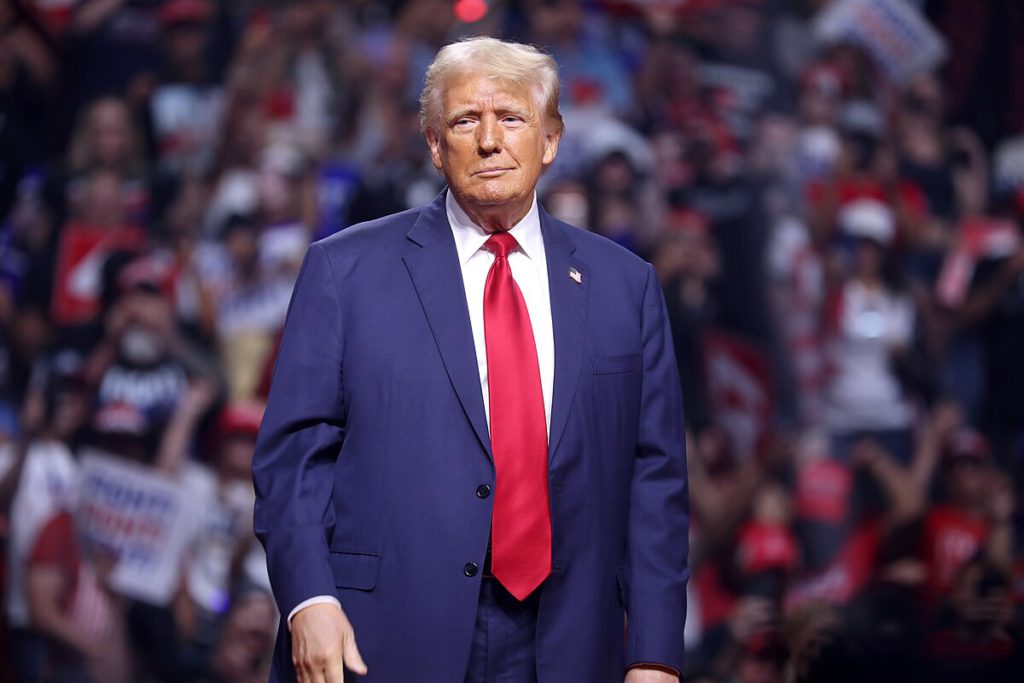
Donald Trump, 47th President of the United States. Credit: Wikimedia Commons

U.S. President Donald Trump said on Friday Japan’s Nippon Steel 5401.T will not buy U.S. Steel and would instead invest in the company, which would dramatically reshape the $15 billion merger bid that had been in negotiation for more than a year.


Trump did not give additional details. U.S. Steel did not immediately respond to a request for comment, while Nippon Steel declined comment.

Nippon Steel “is going to be doing something very exciting about U.S. Steel,” Trump said with Japanese Prime Minister Shigeru Ishiba by his side at the White House. “They’ll be looking at an investment rather than a purchase.”

The U.S. president mistakenly referred to Nippon Steel as “Nissan,” the Japanese automaker, during his remarks, a White House official said.

It was unclear what the details of the investment would be, but Trump said he would meet with the head of Nippon Steel next week and he would be involved “to mediate and arbitrate.”

Last year, Trump said “I am totally against the once great and powerful U.S. Steel being bought by a foreign company, in this case Nippon Steel of Japan.”

During separate remarks on Friday, Trump told reporters he hasn’t changed his mind on his opposition to the deal.

A $14.9 billion bid for U.S. Steel by Nippon Steel was blocked last month, by former President Joe Biden.

On Thursday, Trump met U.S. Steel Chief Executive David Burritt at the White House to discuss the deal, which is opposed by the United Steelworkers union.

The proposed merger became highly politicized ahead of November’s U.S. presidential election, with both Biden and Trump pledging to kill it. Nippon Steel put forth a series of concessions to try to sway public opinion in favor of the deal.

U.S. Steel shares ended down about 6% on Friday.

(Reporting by Trevor Hunnicutt, Nandita Bose, Alexandra Alper and Kanishka Singh in Washington; Editing by Anna Driver)


US Steel bid matches Trump goals, Nippon Steel says, no certainty deal will close


Reuters | February 6, 2025 | 


Credit: US Steel

Nippon Steel, Japan’s biggest steelmaker, said on Thursday its proposed acquisition of US Steel fits with President Donald Trump’s goal of a stronger United States as the leaders of the two allies prepared to meet.


Nippon Steel’s bid for US Steel, key to the Japanese company’s global expansion plan, was blocked last month by then-US President Joe Biden, citing national security. Together with US Steel, it filed a number of lawsuits challenging Biden’s decision.

The merger became highly politicized ahead of the November US presidential election, with both Democrat Biden and Republican Trump pledging to kill it off as they wooed voters in the swing state of Pennsylvania where US Steel is headquartered.

Nevertheless the bid “contributes to Trump’s goals of promoting US investment, creating US jobs, and strengthening US manufacturing through new investment and advanced technology transfer,” Nippon Steel said in a statement, while adding there was no guarantee that the transaction would be closed.

Cleveland-Cliffs teams up with Nucor in potential US Steel bid – report

“We are convinced that our acquisition plan is the best proposal for US Steel, and I hope that the (Japan Prime Minister Shigeru) Ishiba-Trump meeting will convey that to Trump and open the way for a deal,” Takahiro Mori, Nippon Steel’s vice chairman, told reporters on Thursday.

“If Trump fully understands that, I believe he might reconsider his position,” Mori said.

Trump and Ishiba are expected to meet at the White House on Friday. Mori said he visited the US last week but declined to say whether he met any members of Trump’s administration.

With the proposed deal, the world’s No.4 steelmaker would be aiming to boost its global crude steel output capacity to more than 100 million metric tons in the longer term.

Aside from the US where it is already present, Nippon Steel wants to expand further in India and Southeast Asia, where it expects demand for steel to grow and where some nations have tariff protection measures in place to limit imports, including from China.

Nippon Steel said on Thursday its April-December net profit dropped 18% to 362 billion yen ($2.4 billion) amid sluggish steel demand in Japan and overseas.

“Increases in exports due to the expanded structural supply/demand gap in China continues to cause global spreads weakness,” Nippon Steel said. “In Japan, while the pressure by imported materials is high, sluggish demand for steel is becoming more serious than expected.”

Nippon Steel also said it planned to sell all 10.7 million shares it holds in Kobe Steel, with the latter expected to do the same with the 6.7 million Nippon Steel shares it owns.

($1 = 152.4600 yen)

(By Katya Golubkova and Yuka Obayashi; Editing by Himani Sarkar, Muralikumar Anantharaman and Kate Mayberry)

Tungsten miner says clients in shock as China chokes supply

Bloomberg News | February 6, 2025 


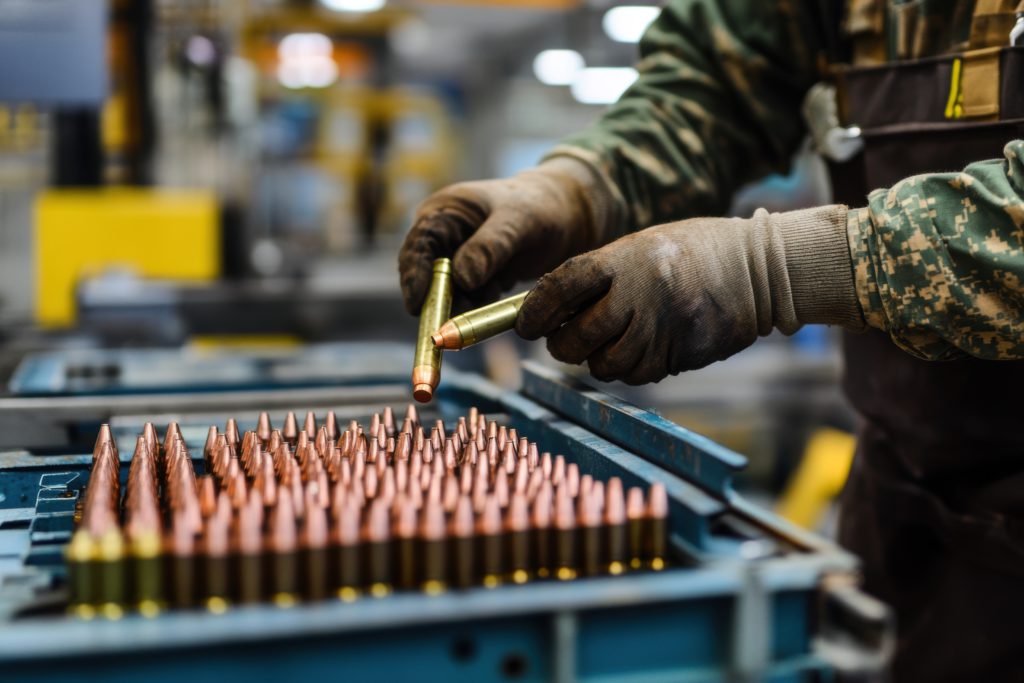
The phone has been ringing off the hook for Lewis Black after China imposed export controls on tungsten, a niche metal mined by his firm that’s crucial to weapons manufacturing.


The chief executive officer of North America’s Almonty Industries Inc. said his customers are in a “state of disbelief” following Beijing’s move on Tuesday, one of a suite of measures announced as a riposte to tariffs placed on Chinese goods by the Trump administration.

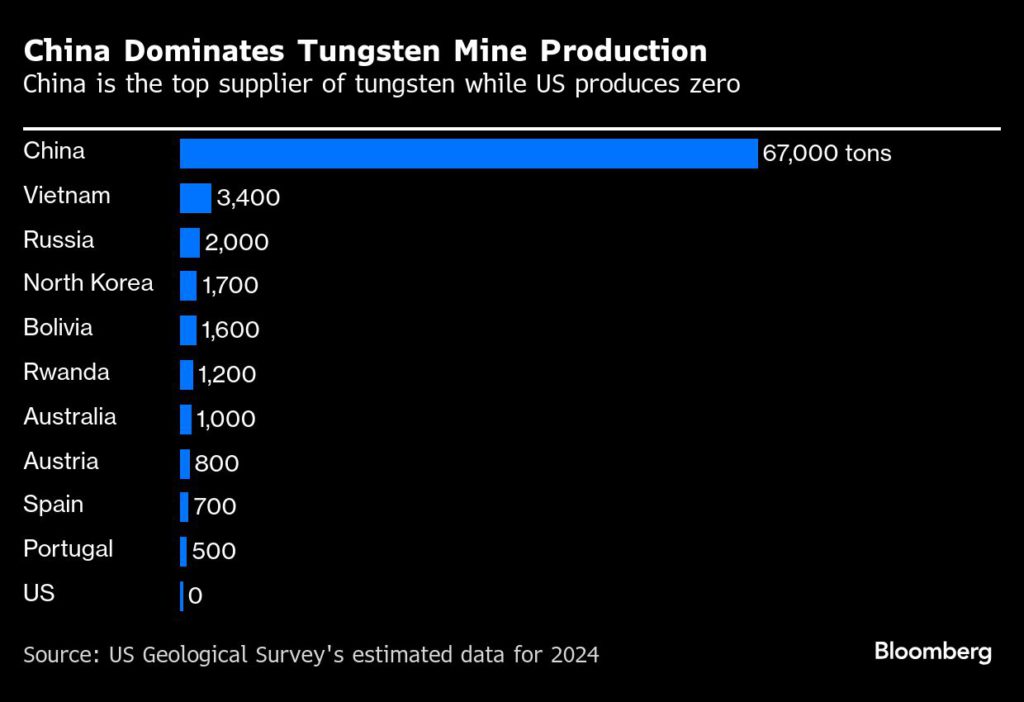
China accounts for about 80% of the world’s tungsten output, and there are concerns the government could add measures around tungsten scrap that would further constrict its availability. Almonty’s stock in Toronto has soared 41% over the last two days as investors price in scarcer supply of the super-dense material used in armor-piercing munitions, as well for engine parts and chip making.

“It’s the warning shot, because we cannot exist without it,” Black said in a phone interview from his base in New York on Thursday. “Our economy, manufacturing, defense, everything, is so dependent on it. And yet, Russia, China and North Korea have about 90% of the output.”


China has banned imports of tungsten scrap for a number of years, citing environmental concerns over how it’s processed. If it were to lift the embargo, it could suck in more supply and limit what’s left for other countries. That would create “a situation where it’s very difficult for my customers to compete with China,” said Black.

“The question is, how much will China tighten the screw to be heard?” he said. “I think the news was bad, but I think it’s going to get worse.”

The tungsten market is valued at roughly $5 billion, making it a relatively niche market compared with other major metals, such as copper at more than $200 billion, according to Bloomberg calculations.


China is the world’s biggest importer of the most heavily traded commodities like crude oil, soybeans and iron ore, leaving critical minerals as one of the few areas where its dominance over supply give it leverage. Its latest export controls affect four other minerals in addition to tungsten that have applications in high-tech industries.

Beijing’s willingness in recent years to impose trade restrictions on critical minerals has forced companies in the US and its allies to seek alternatives to Chinese output. Almonty, which has operations in Portugal, is currently switching its domicile from Canada to the US. The firm is focused on expanding in South Korea, where it’s set to open a new mine in about two months that should in its first phase yield 2,500 tons of tungsten a year.

In the US, tungsten hasn’t been mined commercially since 2015 and the nation has counted China as its biggest source of imports. Guardian Metal Resources Plc is developing a mine in Nevada and recently acquired another asset nearby. According to CEO Oliver Friesen, the Pilot Mountain project is expected to come online in three to three and a half years.

“It’s such a critical time right now, and really the US needs a domestic source,” Friesen said in an interview, adding that things could speed up if there are potential further tailwinds from the Trump administration. “We do believe we are in a strong position ultimately, at some point, to receive some type of funding to support the developments of our projects.”

China has already put export restrictions on gallium, germanium and antimony. That pushed up prices of the niche metals — which have crucial uses in many Western industries — and analysts also expect a similar price trend in the relatively small and concentrated market for tungsten.

“International prices should rise on that,” said Huang Yuting, an analyst at Mysteel Global, adding that while China consumes most of its tungsten output, exports have gone to countries such as Germany and Japan.

(By Annie Lee)
Trudeau tells CEOs Trump wants to annex Canada for critical minerals

Bloomberg News | February 7, 2025 |


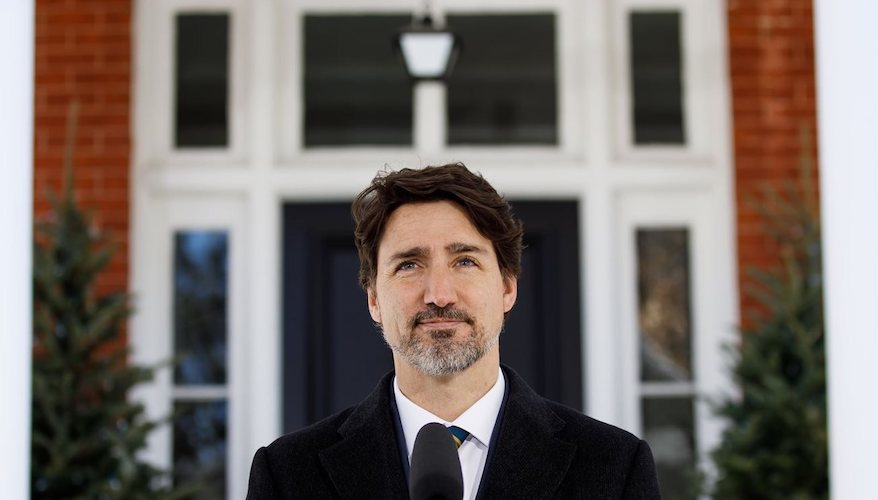
Justin Trudeau. (Image courtesy of Trudeau’s press team).

Canadian Prime Minister Justin Trudeau told executives gathered at an economic summit on Friday that he believes US President Donald Trump’s desire to annex the northern nation “is a real thing” due to its abundance of critical minerals.


Trudeau made the remarks to dozens of business leaders and policymakers gathered in Toronto to discuss how Canada can diversify trade away from the US given Trump’s tariff threats. The comments were confirmed by a senior government official who asked not to be identified discussing the closed-door meeting.

Since his election in November, Trump has repeatedly said Canada could avoid tariffs by becoming the 51st state. While the Trudeau government initially brushed off the comment as a joke, the jab took on a more menacing tone after Trump pledged in January to use “economic force” to compel the union and dismissed the border as an “artificially drawn line.”

Canada is rich in nearly three dozen critical minerals that are essential to modern technology, including mobile phones, electric vehicle batteries and defense applications. The country’s Natural Resources Minister Jonathan Wilkinson was in Washington, DC, this week, urging the US to partner with Canada on mining projects to erode China’s dominance in the sector.

The Toronto Star first reported on Trudeau’s remarks, which were made after media were asked to leave the room. “They’re very aware of our resources, of what we have and they very much want to be able to benefit from those,” Trudeau said in response to a question, according to the Star. “But Mr. Trump has it in mind that one of the easiest ways of doing that is absorbing our country. And it is a real thing.”


Canada is rich in nearly three dozen critical minerals that are essential to modern technology

Other political leaders in Canada have also said they are taking Trump’s annexation remarks seriously. British Columbia Premier David Eby said Monday that Trump is deploying a deliberate strategy to “destroy Canada’s economy” and drive it into becoming the 51st state. Federal New Democratic Party Leader Jagmeet Singh also views the sovereignty threat as real.

Trump signed an order Feb. 1 to put 25% tariffs on most of what Canada and Mexico sell to the US, upending the countries’ longstanding trade agreement. Trudeau’s government responded by pledging similar levies.

On Monday, the two countries agreed to delay the tariffs for 30 days. But the threat of a broader trade war remains, as one of Trump’s first executive orders after inauguration asked officials to investigate and report back on the state of US trade relationships by April 1.

“If those tariffs do end up coming in or the investigation into commerce tariffs that is scheduled for April moves forward, we need to be ready to respond robustly,” Trudeau said in public remarks at the economic summit, adding the country faces “what may be a more challenging long-term political situation with the United States.”

Executives attending Friday’s event included Kingsdale Advisors Chair Wes Hall, Linamar Corp. Executive Chair Linda Hasenfratz and Peter Tertzakian, an energy economist who is the founder of the ARC Energy Research Institute.

The summit, at a former brickworks factory-turned meeting space, underscores a broader concern in Canada that the country needs to urgently shift trade patterns and forge new international relationships in response to Trump’s policies.

“It should have happened 20 years ago, but the one thing that nobody in that room downstairs can build is a time machine. So we’re starting right now,” Flavio Volpe, president of the Automotive Parts Manufacturers’ Association, said on the sidelines of the summit.

Volpe said his industry, which supplies auto parts to the likes of Stellantis NV, General Motors Co. and others at assembly plants in Canada and the US, is unlikely to be able to diversify exports to Asia or Europe. Still, he said other industries should make a push to trade “east-west” rather than only shipping goods to the US.

“The best business case is always north-south,” he said, but shifting 5% to 10% of Canada’s exports to other markets is a way for the country to “get a win out of efforts like this.”

Transport Minister Anita Anand agreed.

“We have to make sure that we are trading with multiple partners in multiple locations,” she said. “Canada is the only G-7 country that has a free trade agreement with every other G-7 country.”


(By Geoffrey Morgan and Laura Dhillon Kane)


The Evolving Market for LNG Bunker Vessels

LNG bunker vessel
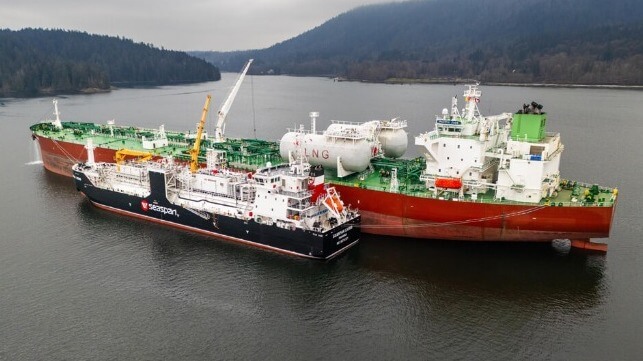
Seaspan completed the first ship-to-ship LNG bunkering in Canada at Vancouver on January 30 (Seaspan)

Published Feb 7, 2025 3:33 PM by Nicola Contessi


Entering 2025, the prospects for LNG as a marine fuel appear a bit brighter than the previous year thanks to an expanding demand. The global orderbook for this propulsion has found new buoyancy in 2024 after retrenching somewhat in 2023. DNV assessed the jump at 103 percent from the previous year for a total of 264 vessels. Some eight percent of the newbuilds on order opted for LNG propulsion, while alternative fuelled ships represented 50 percent of all new orders placed in 2024 according to Clarksons. The LNG-fuelled fleet reached 1,248 units, accounting for 84 percent of the overall dual-fuelled fleet, which itself now represents 7.4 percent of the global fleet.

Some of the main global hubs reached new records for LNG bunkering during the year. Preliminary data for Singapore highlighted a total of 1,096,807 cbm (463,948 mt). In Rotterdam, a tally of the first three quarters suggests sales upwards of 639,848 cbm for the year. Shanghai Yanshan reached deliveries of 444,000 cbm, Shenzhen Yantian of 300,000 cbm, and Ningbo Zhoushan of 60,000 cbm.

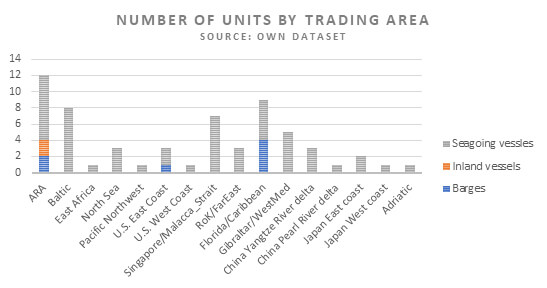
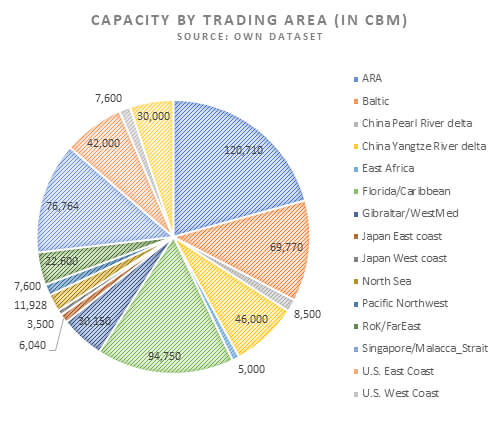
Against this backdrop, the niche shipping market for LNG bunker vessels (LNGBVs) has grown considerably reaching a fleet of 61 between seagoing vessels (52), barges (7), and inland vessels (2), with 60 percent of these units delivered between 2020 and 2024. Numerically, these units deployment at year’s end displayed a fair geographic distribution along the major sea lanes, though larger concentrations coalesced around five hotspots. The ARA-Baltic-North Sea continuum had the highest density, while also displaying the most diverse fleet with 23 between barges, seagoing, and inland vessels. Nine between barges and seagoing vessels traded in the Florida/Caribbean area, seven vessels in the Singapore/Malacca Strait, and five in Gibraltar and the Western Mediterranean.  

A few movements and redeployments signaled evolving demand and supply patterns. Noteworthy among these was the redeployment to the UAE of NYK’s Green Zeebrugge announced at the end of December. After spending time in East Africa, it will trade there under a charter with Monjasa. In Singapore, the MPA launched a call for expressions of interest (non-binding) to award an additional LNG bunkering license. Fratelli Cosulich took delivery of its second LNGBV which is currently trading in Malaysia, while energy company Edison put the Adriatic Sea on the map by performing the first ship-to-ship operation there at the port of Trieste. Lastly, Seaspan received two of the three LNGBVs it ordered with Nantong CIMC shipyard. One of these will serve in the Pacific Northwest out of Vancouver; the other was deployed to the US West Coast but is expected to proceed to Panama and start trading there in March 2025.

This budding fleet has a combined capacity of 582,912 cbm. Taking a closer look at how that capacity is distributed geographically can offer both commercial and operational cues, useful to asset managers, charterers, and voyage planners as well as LNG traders. To be sure, the distribution of volumetric capacity at year-end mirrors to a large extent the numerical one, highlighting heavier concentrations in the ARA / Baltic / North Sea space with 202,408 cbm combined (120,710; 69,770 and 11,928 respectively). This is followed by Florida/Caribbean with 94,750 cbm; and Singapore/Malacca with 76,764 cbm. China Yangtze with 46,000. Sizeable capacities can be found on the US East Coast with 42,000 cbm and, despite being served by a single unit, the Adriatic with 30,000 cbm. 

Looking ahead, the outlook for the LNGBV segment looks positive. Prices for the fuel have eased considerably overall, and, despite upward European spot prices on the heels of Ukraine’s pipeline embargo, appear set to remain subdued into 2026 thanks to a slew of liquefaction plants and gas field projects due to come online. Shipping rates for the large-scale distribution of LNG remain low, though they may start firming up again with the addition of liquefaction capacity. Such conditions are favorable to the further rollout of the propulsion, and so far, the orders for alternatively fuelled tonnage placed by shipowners early this year seem to confirm that. All this suggests LNG ship-to-ship bunkering can grow more.
 

Nicola Contessi is a marine transportation advisor and a member of the Institute of Chartered Shipbrokers

The opinions expressed herein are the author's and not necessarily those of The Maritime Executive.


Korean Shipbuilders Top Chinese in January After Return to Profits in 2024

shipbuilding
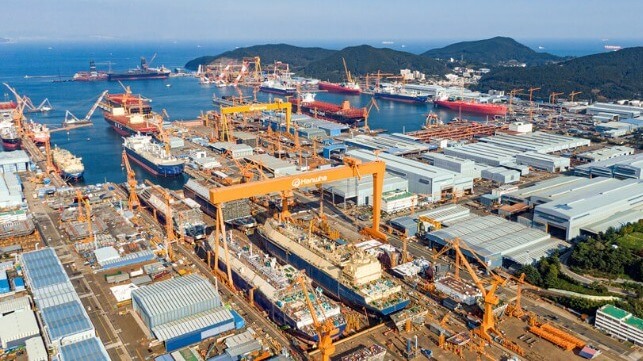
Hanwha Ocean reported its first profit in four years in 2024 as South Korea refines its strategy against China's shipbuilding industry (Hanwha Ocean)

Published Feb 7, 2025 5:28 PM by The Maritime Executive


The rivalry between China and South Korea’s shipbuilders continues to heat up. While there is growing concern due to China’s apparent domination of the market, South Korea’s shipbuilders achieved strong results in 2024 and continue to carve out the high-end market.

After posting a dismal new order performance in December booking only six percent of new orders versus 82 percent by the Chinese shipbuilders, South Korea’s industry rebounded to the leadership position in January 2025. It is the first time in several months South Korea received the largest percentage of new orders and it also demonstrated the success of the industry’s focus on higher-value projects and ships.

According to data from Clarkson Research the South Korean industry booked 62 percent of the global orders in January based on tonnage. It received orders for 900,000 CGT (compensated gross tons). That compared with the Chinese yards which received just 19 percent of the tonnage ordered or 270,000 CGT.

South Korea’s orders were led by 12 LNG carriers booked at HD Korean Shipbuilding & Offshore Engineering as well as an LNG carrier order for Samsung Heavy Industries. In addition to being higher-value orders, they are also large vessels. South Korea’s orders were for 13 vessels compared to 21 smaller, lower-value vessels ordered from Chinese shipbuilders in January.

China continues to still dominate the overall orderbook with a backlog of 91.51 million CGT or 58 percent of the vessels (by tonnage) on order. South Korea has 24 percent of the orders (by tonnage) or a total of just over 37 million CGT. Veson released a market analysis this week with its VesselsValue data highlighting that Chinese shipowners committed to $123 billion in newbuild orders in 2024. The orders were mostly for tankers followed by bulkers and then containerships. Chinese yards have just begun to break into the international market for LNG and other gas carriers.

South Korea’s companies have a positive outlook for 2025 with HD KSOE reporting it increased its forecast by 30 percent versus its 2024 target. It however represents a decline from the actual orders booked in 2024. Samsung Heavy Industries has not yet reported 2024 results and its forecast but commented that its outlook is slightly higher than last year. Hanwha Ocean has commented that it anticipates stable growth in 2025.

The positive outlook among the South Korean shipbuilders was in part driven by the strong financial performance recorded in 2024. Ship prices were approaching two-decade highs further contributing to the profitability of the sector. 

HD Hyundai Heavy Industry reported an overall nearly 50 percent increase in operating profit with a better than 10 percent increase in consolidated revenues for 2024. Specifically, within shipbuilding, HD Korea Shipbuilding and Offshore Engineering (KSOE) saw profits jump 400 percent to a profit of more than $960 million. Sales were up 20 percent to $17.5 billion.

Hanwha Ocean continued the turnaround from the former Daewoo Shipbuilding (DSME) achieving its first profitable year since 2020. It reported sales of nearly $7.5 billion with an operating profit of $166 million. 

The return to profitability was not limited to South Korea’s largest shipbuilders. Mid-sized HJ Shipbuilding reported an annual profit of $6.3 million. This was achieved despite a nearly 13 percent decline in revenues.

The Korean shipbuilders are refining their business strategy. KSOE for example continues to increase its focus on green technologies and automation while also booking orders for LNG carriers. The company plans to make its first bid next month for a U.S. Navy-related repair contract and is targeting two to three contracts in 2025. Hanwha Ocean won the first two U.S. Navy contracts in 2024 for repairs to an MSC dry cargo and ammunition ship and then an oiler. Hanwha is targeting six USN MRO contracts for 2025 in addition to the construction of LNG carriers, submarines, and LNG dual-fuel containerships. 

HD Heavy Industries and Hanwha Ocean reportedly have reached a partnership agreement for the export of naval ships as they continue to seek more international work. The companies were also encouraged by building relationships with the U.S. Navy in 2024 which Donald Trump has signaled he supports. Trump has said the U.S. could use the capabilities of the South Korean shipbuilders as he pursues a buildout for the U.S. Navy.


Iranian Naval Forces Make an Unusual Port Call to the UAE

Iranian ship in UAE
Arrival ceremony at Khalid Port/Sharjah on February 4 (Ministry of Defense of UAE)

Published Feb 7, 2025 5:59 PM by The Maritime Executive


In an unusual defense diplomatic development, ships of the IRGC Navy (Nesda) and regular Iranian Navy (Nejada) have commenced a joint port visit to the United Arab Emirates.

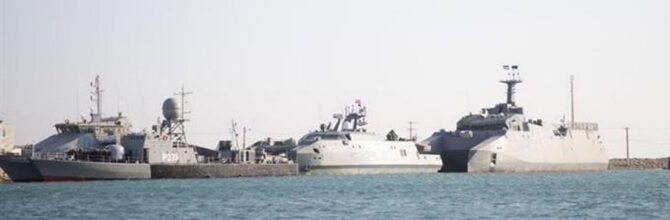
The UAE Ministry of Defense website showed a picture of the Shahid Soleimani Class missile corvette Shahid Rais Ali Delvari (FS313-04) being greeted at the dockside in Sharjah on arrival. The Shahid Rais Ali Delvari, the fourth ship in its class, was only unveiled as having joined the Nesda fleet in mid-January, so this will probably have been its first overseas port visit and operational deployment.


The Iranian naval visitors alongside in Sharjah’s Mina Khalid, February 3 (Iranian MoD)


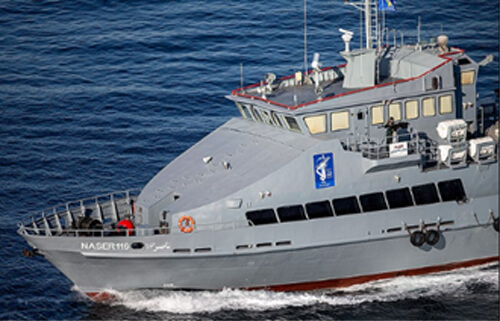
The other vessels taking part in the visit are the Nesda’s small missile corvette Abu Mahdi al-Muhandis (PC313-01) with the Nasser Class auxiliary Shahid Sattar Mahmoodi (Naser-116), and the Nedaja’s Sina Class fast attack craft IRINS Zereh (P235). It appears unlikely that the flotilla will undertake any joint training with the Emiratis.

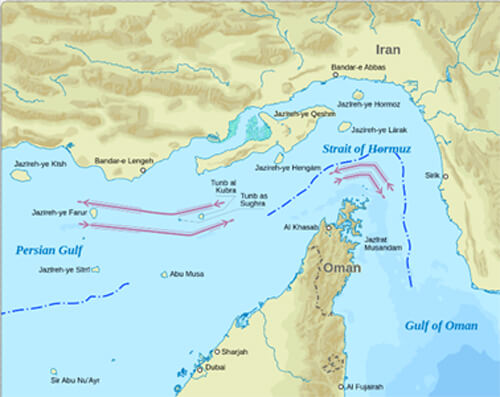
The choice of Sharjah as a port to host the Iranian visit has some significance. It is not an Emirati naval base, so docking the Iranian vessels in a civilian port will have protected Emirati – and allied – operational security. But of greater significance, Sharjah was the Emirate that was administering the island of Abu Musa when it was seized by Imperial Iranian forces on November 30, 1971. The seizure came a day after the Emirate of Sharjah had agreed to share sovereignty of the island with Iran, which the seizure then contravened. Sharjah continued thereafter to maintain civil administration and a small police presence on its portion of the island in support of the small residual Emirati population, despite increased restrictions imposed by Iran. Whereas Little Tunb and Greater Tunb islands which Iran also seized (from the Emirate of Ras Al Khaimah) at the same time lie close off the Iranian coast, Abu Musa sits midway in the middle of the Gulf. If Emirati sovereignty over the island was ever recovered, it would expand the Emirati sphere of influence in the Gulf significantly northwards.


The timing of this first Iranian naval visit is of significance. The Iranian security establishment is currently suffering a high degree of nervousness, fearing a further potential attack by Israel, uncertain about President Trump’s intentions, and worried by an increase of internal security issues both in border areas and in Tehran; following the assassination of two senior judges in Tehran recently, the Supreme Leader Ali Khamenei has even been seen to be wearing a flak jacket in a public appearance. However, regional instability which might follow upheavals in Iran would be bad for trade. Hence a naval exchange of this sort, supportive of maintaining the status quo, might in the Emirati calculation be in the UAE’s best interests.

Before the Iranian ships departing, the senior Nesda officer on board, Commander of the 5th IRGC Naval Region Rear Admiral Ramezan Abdollahi who is normally based in Bandar Lengeh, paid a visit to the UAE Naval Commander Major General Humaid Mohammed Al Rumaithi in his office in Abu Dhabi.


Nesda Auxiliary Shahid Sattar Mahmoodi (Naser-116) (FARS/Iranian Mod)


Abandoned Livestock Carrier in Croatia

Rasa Bay
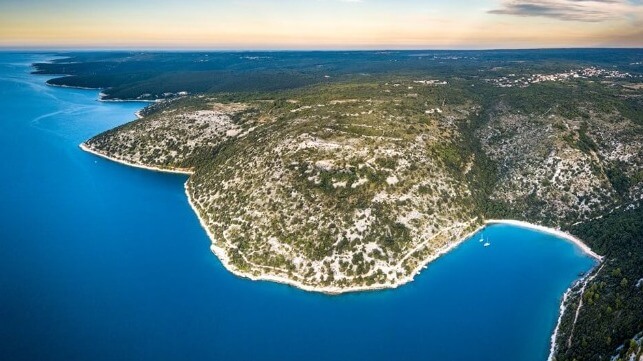
Rasa Bay, Croatia (iStock)

Published Feb 6, 2025 10:18 PM by The Maritime Executive


A livestock carrier that wrecked on the coast of Croatia last year is still aground 10 months later, and local communities are concerned about the lack of movement on a salvage operation. 

On April 16, 2024, the 1976-built livestock carrier Deala drifted in strong winds and grounded on a rocky shore at the entrance to Raska Bay, Croatia. Her 15 crewmembers managed to escaped without injury, but the ship suffered hull damage and the engine room flooded. Croatia's maritime affairs ministry expected that a refloat operation would remove the ship within a month of the grounding, but the owner walked away and the vessel remains on the rocks today, protected only by a pollution control boom. 

The bay is an environmentally-protected area and a tourist attraction, and local politicians are concerned about long-term ecological and economic damage from pollution from the ship. 

"We are fighting for this ship to finally be removed and for our sea, our environment and our tourism to be preserved," the mayors of the towns of  Marcana and Barban told Kleine Zeitung in a statement. 

Neven Ivesa, a professor at a nearby university, told local media that the best option would be to cut up the ship in place and remove it in sections to avoid potential harm from a refloat attempt. This would be costlier than a tow-away: the cost of a standard typical refloat operation for the small ship has been estimated at about $3 million. 

"Given months of inactivity, this issue is no longer just a local problem, but a threat that requires a national response. Residents and business entities in the areas of the municipalities of Marcana, Barbana and Rasa must not become victims of neglect of environmental and safety standards," said Marcana mayor Predrag Plisko in a statement.