Monday, February 24, 2025

ByteDance restructures AI division, hiring new expert from Google amid DeepSeek pressure


Posted : 2025-02-24 


In this photo illustration, the logo of ByteDance, the parent company of TikTok, is seen on a mobile phone in Chongqing, in southwest China, Feb. 14. AFP-Yonhap

TikTok owner ByteDance is restructuring its artificial intelligence (AI) department after having poached an expert from Google to lead foundation research, according to employees of the Chinese tech giant.

ByteDance's Seed department, founded in early 2023 following the success of OpenAI's ChatGPT, has recruited Wu Yonghui, a "Google Fellow" who worked at the American tech giant for 17 years. Instead of reporting to Seed head Zhu Wenjia, Wu will report directly to company CEO Liang Rubo.

At the same time, several team leaders within Seed, who used to report to Zhu, now report to Wu, including Li Hang, head of research and director of the AI Lab, and Xiang Liang, in charge of applied machine learning who led the development of the company's Doubao large language model, according to ByteDance employees who have access to internal reporting systems.

The changes come as ByteDance, China's most valuable unicorn, is under pressure from DeepSeek, which has triggered a nationwide frenzy over AI. In the consumer app space, DeepSeek has replaced Doubao as the most popular AI chatbot for Chinese consumers. DeepSeek's daily active users surpassed Doubao's in late January, according to QuestMobile.



Google Fellow Wu Yonghui has joined ByteDance / Courtesy of UC Riverside

After DeepSeek made headlines worldwide for its open source strategy, as well as low cost and high performance, its website and app have amassed 100 million combined visits in just a week. In comparison, it took ChatGPT two months and TikTok nine months to achieve that level of popularity, according to AI app tracker AIcpb.com.

Huang Wenhao, co-founder of AI start-up 01.ai, who joined ByteDance last year, now also reports to Wu, the internal company system showed. 01.ai was established by former Google China head Lee Kai-fu in 2023 amid an investment spree in generative AI technology.

Several Chinese media reported, citing a source close to ByteDance, that Zhu is still with Seed, focusing on the application of the technology, while Wu is mainly responsible for basic research.

Other departments at ByteDance are undergoing restructuring as well, including the trust and safety team, which is responsible for platform policy and content moderation. Starting Thursday, it began notifying employees in Asia, the US, Europe, Middle East and Africa, about pending job cuts, according to reports by Reuters and the Straits Times.

It is not clear how many people are affected. Some employees had their company accounts shut down just 1 hour after the notice was sent out, said a person familiar with the matter.

Neither ByteDance nor TikTok responded to a request for comment on the restructuring.

During an internal staff meeting last week, CEO Liang said that DeepSeek did not invent the "chain-of-thought" method used in reasoning models like DeepSeek-R1. In September 2024, OpenAI launched the OpenAI o1 model that performs a long internal chain of thought before responding to queries.

Liang said that ByteDance sensed the change in technical direction after the release of o1, but it was not fast enough in following up, according to Chinese media The Paper.

Read the full story at SCMP.
China’s Alibaba to invest $50b in AI, cloud computing


AFP
23 Feb, 2025

Alibaba plans to invest at least 380 billion yuan ($53 billion) over the next three years to advance its cloud computing and AI infrastructure.
 Photo / Getty Images

Alibaba will invest $53 billion in AI and cloud computing over the next three years.

The investment aims to advance Alibaba’s cloud computing and AI infrastructure and drive AI-driven growth.

Alibaba’s shares have soared following robust sales growth and Jack Ma’s meeting with Xi Jinping.


Chinese tech giant Alibaba said Monday it will spend more than $50 billion on artificial intelligence and cloud computing over the next three years, a week after co-founder Jack Ma was seen meeting with President Xi Jinping.

Alibaba plans to “invest at least 380 billion yuan (US$53 billion) over the next three years to advance its cloud computing and AI infrastructure”, a company statement said.

Investors have piled into Chinese technology stocks since the start of the year, with Alibaba – which runs some of the country’s biggest online shopping platforms – seeing its shares soar to three-year highs.

The gains have been boosted since the Hangzhou-based firm announced robust sales growth last week and after Ma was pictured with Xi following years out of the public eye.

Alibaba said on Monday that its strategy was aimed at “reinforcing (Alibaba’s) commitment to long-term technological innovation ... (and) underscores the company’s focus on AI-driven growth”.

The statement did not detail how the company would allocate the funds or what specific projects would be supported.

It did add that the investment would exceed its total AI and cloud spending over the past decade.

- Agence France-Presse
North Korea shows signs of ramping up ChatGPT use


A video released by a North Korean external propaganda outlet showed scholars in the North learning about ChatGPT.PHOTO: REUTERS

UPDATED Feb 24, 2025

SEOUL – North Korea is showing signs of incorporating ChatGPT into its operations, adding to concerns that artificial intelligence (AI) technology could be used to advance the reclusive regime’s cyber crimes.

A video released on Feb 22 by a North Korean external propaganda outlet showed scholars in the North learning about ChatGPT, a generative AI chatbot developed by US AI research organisation OpenAI.

The report by Voice of Korea showed members of an AI research institute at Kim Il Sung University, North Korea’s top institution of higher learning, using a program titled GPT-4 Real Case: Writing On Their Computers. The program demonstrated how ChatGPT produces text in response to user input.


Mr Han Chol-jin, a researcher at the institute, told the outlet that they were “teaching methods to deeply learn an advanced technology and ways to make it our own”.

As internet access is generally unavailable in North Korea, with some citizens having access only to the country’s national intranet called Kwangmyong, it is unknown whether the researchers had access to the actual ChatGPT site.

The Voice of Korea report came soon after OpenAI’s decision to ban user accounts from North Korea.

The ChatGPT maker claimed that several North Korea-linked accounts misused the chatbot program to create fake resumes, online job profiles and cover letters as part of the regime’s widely reported schemes to earn employment income from abroad.

“The activity we observed is consistent with the tactics, techniques and procedures Microsoft and Google attributed to an IT worker scheme potentially connected to North Korea,” OpenAI said in a recent report.

“While we cannot determine the locations or nationalities of the actors, the activity we disrupted shared characteristics publicly reported in relation to North Korean state efforts to funnel income through deceptive hiring schemes, where individuals fraudulently obtain positions at Western companies to support the regime’s financial network,” it added.

Pyongyang has been accused of running employment hiring schemes, in which North Korean IT workers use false identities to get hired and work remotely for US companies. The workers would then funnel their wages to support the development of their country’s nuclear weapons programme.

In January, Google’s Threat Intelligence Group – an intel squad within the US-based tech company – revealed that North Korean hackers were using Google’s Gemini chatbot to illegally gain access to information on the South Korean military and to steal cryptocurrency.

Experts expressed concerns about a spike in crypto thefts and other malicious cyber activities by North Korean hackers with their increased use of AI.

“With the use of generative AI, North Korea now faces a lower language barrier (when committing crimes) and needs significantly less money when plotting and carrying out schemes,” said Dr Kim Seung-joo, a professor at Korea University’s School of Cybersecurity.

North Korean hackers stole about US$659 million (S$880 million) worth of crypto assets in a series of cyber attacks in 2024, according to a joint statement released in January by the governments of South Korea, the US and Japan. 

THE KOREA HERALD/ASIA NEWS NETWORK


N. Korea tightens ideological control on nuclear researchers after executions

Specifically, authorities ordered thorough ideological "reinspections" of all researchers and stricter handling of documents related to nuclear power plant technology

By Jeong Seo-yeong
- February 24, 2025
“Comrade Kim Jong Un conducted on-the-spot guidance of a fissile material production site and nuclear weapon research institute,” the Rodong Sinmun reported on Jan. 29, noting that Kim had been accompanied by Hong Sung Mu, senior vice director of the Munitions Industry Department of the Workers’ Party of Korea. (Rodong Sinmun, News 1)

North Korea recently held a closed-door meeting to tighten ideological controls on nuclear researchers, following the execution of several key scientists working on nuclear power plant construction.

According to a Daily NK source in Pyongyang recently, officials from the Central Committee and Cabinet met on the morning of Feb. 7 to discuss the country’s nuclear power plant development strategy and strengthen ideological oversight of researchers. This followed earlier discussions prompted by last month’s executions, which primarily focused on addressing what authorities deemed ideological problems among researchers.

The meeting emphasized strict ideological screening of researchers and harsh penalties for research failures, aiming to eliminate what officials called “defeatist attitudes” in the scientific community. “The meeting criticized the lack of progress in nuclear power plant research, blaming defeatist mindsets for severely hampering economic development,” the source said. “Those who doubted North Korea’s ability to build nuclear plants independently were condemned as corrupt defeatists undermining the country’s progress.”

According to the source, officials declared that researchers citing technical limitations would not be tolerated, stating that only those with a “revolutionary spirit” capable of overcoming all obstacles were qualified for state projects. The meeting also called for additional ideological screening of current researchers and restructuring research organizations around party-trusted individuals.

The focus remained largely on strengthening ideological control rather than improving research conditions. As follow-up measures, authorities ordered thorough ideological “reinspections” of all researchers and stricter handling of documents related to nuclear power plant technology.

While the meeting considered plans to address technical limitations in nuclear plant construction, no concrete solutions emerged given the challenges of accessing foreign technology. “Researchers are demoralized by the threat of punishment, as authorities increasingly emphasize ideological control in the nuclear power plant initiative,” the source said, noting this observation was included in a report on researcher attitudes in related sectors.
Cold-blooded creatures grow in popularity as pets in China


ANN | China Daily Published February 24, 2025

A lizard accompanies its owner to a pet exhibition in Lanzhou, Gansu province.
—China Daily

Whenever Fu Jiajun returns home from college, the first place she rushes to is her balcony, where she’s greeted by her growing family of reptile companions.

A large white lizard lies lazily in a white container, while nearby a digitally controlled cabinet houses a range of creatures. Snakes, lizards and turtles all coexist in a temperature-controlled environment.

“I just love to spend time observing them,” said Fu, a college junior, who was born and raised in Shanghai.

Playing with her reptile friends was a daily routine during the recent Spring Festival holiday.

Fu’s fascination with exotic pets began when she stumbled upon an ad for a leopard gecko in an online pet enthusiasts’ group during her freshman year in 2022.

“It looked cute, and the price was right — just 200 yuan ($27.40). I couldn’t resist, so I brought it to my apartment and then introduced it to our college’s pet club,” she recalled with a smile.

Fu quickly realised how soothing it was to unwind by simply watching her new pet or holding it in her hands. “It’s quiet and needs very little maintenance. All I have to do is make sure it has enough food and water, and the right temperature,” she explained.

What started with one gecko soon grew into a menagerie of exotic creatures, thanks to pet shops, markets and online channels. “It’s easy to get hooked,” Fu said. The biggest expenses are the enclosures and heating equipment, which cost around 700 yuan, she said.

Unions, EFF want Tshwane labour relations head who ‘fed Joburg law firm R44m in legal work’ brought to book

Sunday Times reported that Ronald Oppelt, whom the public protector is already probing for an alleged conflict of interest, denies wrongdoing

24 February 2025 - 
Shonisani Tshikalange  Reporter
TIMES LIVE, SOUTH AFRICA

UNDER FIRE Ronald Oppelt is adamant he has done nothing wrong.
Image: LinkedIn

The EFF in Gauteng is demanding the immediate suspension of City of Tshwane labour relations management divisional head Ronald Oppelt after allegations that he channelled work to his previous employer, which raked in more than R44m from the city in just three years.

The EFF said an independent investigation into his conduct must be instituted.

The party has also called for a comprehensive audit of all contracts awarded under the previous administration to expose the full extent of financial mismanagement and ensure those responsible are held accountable.

According to a Sunday Times report, Oppelt, 62, regularly appoints Johannesburg-based law firm Lawtons Africa to work for Tshwane.

According to his CV, which the paper has seen, Oppelt had worked for the firm before joining the metro six years ago.

In his CV, Oppelt listed the former chair of Lawtons Africa (the company was then known as Hogan Lovells) as his first reference. The document also shows he chaired disciplinary hearings on behalf of the law firm before joining Tshwane.

Sunday Times reported that Oppelt, whom the public protector is already probing for an alleged conflict of interest, denies wrongdoing. He says he did “not form part of [Tshwane’s] recruitment process” and was unaware the firm had applied to the city’s legal panel.

Oppelt said he was not benefiting from briefs issued to the law firm.

Sunday Times said it had confirmation from the city that Oppelt and his manager were responsible for approving appointments.

Municipal Employees & Civil Servants Union (Mecsu) said it would be taking measures to ensure Oppelt is held to account.

Mecsu said Oppelt’s concern about where the Sunday Times obtained his CV deepened the crisis, “as it attributes that he, indeed, has a relationship with Lawtons Africa to which he channelled R44m, and he was always highly certain that his CV would not be uncovered to demonstrate his link with this service provider”.

“His denial of involvement in the approval of appointments of Lawtons Africa clearly demonstrates his level of dishonesty towards the City to shield his dealings. As Mecsu we find no reason underlying Oppelt’s failure to comply with the City’s Supply Chain Management Policy, Treasury Regulations, Municipal Finance Management Act and Municipal Systems Act, thus [he] failed to take reasonable care to avoid unnecessary spending and ensure rotation of service providers in the procurement of legal services,” the union said in a statement.

Mecsu said as a labour relations senior official with his primary focus on the management of discipline within the City of Tshwane, he should know better that acting against supply chain prescripts and failing to rotate service providers in the procurement of good or services was a serious misconduct, let alone procuring legal services from your former employer, without transparency.

The Independent Municipal and Allied Trade Union (Imatu) said it would once again request the city manager give an update on when Oppelt would be suspended and when he would suspend the firm of attorneys from providing any further services.

The union's Tshwane regional manager Lynette Burns-Coetzee said the union has on numerous occasions alerted top structures of the City of Tshwane (on administrative as well as political levels) about their disapproval of outsourcing of legal representation for disciplinary inquiries.


Video: Trump fumes over Taliban in over-the-top 'angry' rant

At CPAC in Maryland, Donald Trump grabbed attention with his exaggerated repetition of "angry" while lamenting US military equipment left in Afghanistan.

President Donald Trump speaks at the Conservative Political Action Conference, CPAC, at the Gaylord National Resort & Convention Center.

In Short

  • Trump's CPAC speech gained attention for his pronunciation of 'angry'
  • He expressed frustration over US military equipment left in Afghanistan
  • A viral clip showed Trump contradicting himself mid-speech, eliciting laughter

At the Conservative Political Action Conference (CPAC) in Maryland, US President Donald Trump once again made headlines-not just for his speech, but for his theatrical emphasis on the word "angry". A video of the speech, which has since gone viral, shows Trump repeatedly stressing the term in an exaggerated manner, even making unusual vocal inflections to express his frustration over US military equipment left behind in Afghanistan.


A video of the incident surfaced online, capturing the moment Trump expressed his ire over the Taliban's possession of American military vehicles. In the footage, he says, "It makes me angry when I see that. Angry. When I see that, I get angry," each repetition marked by a distinct and exaggerated enunciation.

At one point, he even seemed to give himself a pep talk mid-speech, muttering "Don't get angry" - only to immediately contradict himself by launching into another animated rant. The audience responded with laughter, and the clip quickly went viral.


The display has revived memories of Trump's past linguistic quirks, such as his infamous 'covfefe' tweet in 2017. While many speculated he had intended to type 'coverage', the tweet remained online for hours without clarification, fuelling endless internet jokes.

The White House later dismissed the controversy, with then-Press Secretary Sean Spicer insisting that "the president and a small group of people knew exactly what he meant". Similarly, his use of 'bigly' - which was widely thought to be a mispronunciation of 'big league' - became another meme-worthy addition to his unique rhetorical style.

Trump's speech at CPAC wasn't just about 'anger'. He also took to his platform, Truth Social, to urge Elon Musk to be "more aggressive" in his work. Musk, never one to ignore a public challenge, responded by announcing that all federal employees would receive an email asking what work they had done that week-or risk losing their job.

Reuters, however, reported that some agencies have asked their workers to not respond to Musk's email. 

INDIGENOUS PEOPLES STRUGGLE

Why a mega river-linking plan has sparked massive protests in India

Vishnukant Tiwari
BBC Hindi
Feb 24, 2025
BBC
Protesters say the project will destory their homes and livlihoods


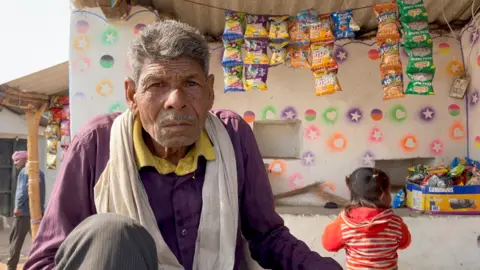
Thousands of villagers in the central Indian state of Madhya Pradesh are protesting against a multi-million-dollar river-linking project which, they say, will rob them of their homes and livelihoods.

The Ken-Betwa project, with a budget of 440bn rupees ($5.06bn; £4.05bn), will channel excess water from the Ken river in Madhya Pradesh to the Betwa river in the neighbouring Uttar Pradesh state through a network of tunnels, canals and a dam.

It is the first of 16 such river-linking projects earmarked under India's National Perspective Plan for water resource development in the 1980s. The plan faced multiple delays - mainly due to environmental concerns and political disputes - before the government cleared it in 2021.

Prime Minister Narendra Modi laid the foundation stone for its construction in December last year.

The project is supposed to help the drought-prone Bundelkhand region - which includes parts of Madhya Pradesh and Uttar Pradesh - where arid climate and unpredictable rainfall patterns have led to decades of poverty and underdevelopment.

The government says that once completed in 2030, it will help irrigate 1.06 million hectares of land, provide drinking water to 6.2 million people and generate 130MW of hydropower and solar energy.

But at least 10 villages, including vast swathes of precious forest land, will be submerged to build the dam's reservoir and 11 more villages will be displaced for constructing the canal, affecting more than 7,000 families, district officials say.

"Our livelihoods are tied to this land - we don't know what the future holds for us anymore," said Tulsi Adivasi, who is among the thousands of villagers protesting against the project.

Most of them belong to the indigenous Gond and Kol tribes, who live along the edge of forests and depend on farming for a living.


At least 21 villages, mostly inhabited by tribespeople, will be submerged by the project


Environmental experts warn the project will submerge nearly 98 sq km (38 sq miles) of the Panna Tiger Reserve, a 543 sq km sanctuary that successfully brought tigers back from local extinction in 2009.

This could undo years of conservation efforts. "It's unprecedented. We have never seen a core area of a national park being used for such a large-scale infrastructure project before," says environmentalist Amit Bhatnagar.

In 2019, a panel of experts constituted by India's top court had also raised concerns about the project, questioning its economic viability and impact on the region's wildlife. The government, it said, should explore alternative irrigation methods in the river basin.

Independent studies on river-linking projects in India have made similar observations.

A 2023 study published in the Nature Communications journal states that such endeavours "may worsen the water stress across the country, making these projects ineffective or possibly even counterproductive".

Baleshwar Thakur, who heads the National Water Development Agency, however, defended the project, saying authorities had conducted a thorough research and acquired all environmental clearances for the project.

"We have also designated additional land to offset the loss of tiger habitats and will rehabilitate other species affected by the project as well," he said.

The government official admitted that there would be a potential "challenge" to the biodiversity of the region, but said that "the benefits of the project outweigh the adverse impacts".


Thousands of villagers have been protesting against the project since December


The assurances have done little to comfort the villagers.

In the heart of Daudhan, 48-year-old Mahesh Adivasi sat with a group of men, who voiced their dissent in the form of a protest song.

"Ken-Betwa dam is built by the government, it gives others water but drowns us," they sang, the lyrics capturing their anguish.

The village is one of the poorest areas in the region, lacking basic facilities such as clean drinking water and electricity.

The bitter irony of the river project isn't lost on its people - they ask why they are being asked to abandon their homes to provide electricity in 13 other districts when their own village has never had power.

"We have seen generations pass without progress. Now, we are being asked to sacrifice our lives for others' progress. What about us?" Mahesh Adivasi said.

The government has offered villagers an optional compensation plan, where they can either opt for a piece of land along with 750,000 rupees ($8,655; £6,842) or a one-time payout of 1,250,000 rupees. For those who own land, an additional amount based on the land's value will also be given.
Advertisement


Anxious locals say they live in perpetual uncertainity about when they'd be asked to relocate


Mr Thakur said that about 90% of the people had chosen to take the lump sum amount. "In the meantime, the government has started looking for alternative government land to resettle the villagers," he added.

But locals say the amount being offered is insufficient. Tulsi Adivasi showed BBC Hindi a government notice which evaluated his house at 46,000 rupees.

"Can a house be built with this much money?" he asked.

Others complain they have not been informed when they must evacuate or where they'd be resettled, fuelling anxieties about their future.

"The project should have been a blessing for our village but, the truth is, it will plunge us further into darkness," said Lakshmi Adivasi, 20.

Questions have also been raised against the claim that the project is meant to channel excess water from the Ken river.

Critics point out that the government has relied on outdated data from 2003, without independent verification, to calculate the river's annual yield.

Mr Thakur denied the allegation and said authorities "have all the data to continue with the project".

Mr Bhatnagar, the environmentalist, said that by going ahead with the project, the government was setting "a dangerous precedent" for similar development programmes to be carried out in other geologically sensitive areas.

"And for those affected, it once again underscores how development in India often comes at the cost of the most marginalised," he added.
Why China may face 'scrutiny' over using police diplomacy to help developing world

24 Feb 2025 
South China Morning Post

Chinese nationals, who were taken from scam centres in Myawaddy town in Myanmar amid a mounting crackdown on scam centres operating along a porous border, are escorted by authorities as they board an airplane to China, at Mae Sot airport in Mae Sot district, Tak province, on Thursday. (Photo: Reuters)

On Thursday, 200 Chinese nationals rescued from online scam centres in Myanmar were repatriated to China, while hundreds more are expected to arrive in China in the coming days, according to Beijing's Ministry of Public Security.

The repatriation operation came after a flurry of visits to Thailand and Myanmar by Liu Zhongyi, China's assistant minister for public security. Liu is now coordinating with the two Southeast Asian countries on cyber fraud operations in the region that police and human rights groups have said are involved in human rights abuses and criminal activity.

Meanwhile, some 8,000 kilometres away in the southwestern Pacific, a group of Chinese liaison officers was wrapping up police tactical training for local officers in the Solomon Islands earlier this month.

China is expected to increase this type of police diplomacy to expand its influence and protect overseas interests as the world's second largest economy, as well as the second biggest outbound investor and largest source of international tourists.

These types of foreign exchanges on law and order may improve China's image as a security partner in developing countries, but it is also coming under increasing international scrutiny, according to a China-based analyst.

The Chinese embassy in Honiara, the Solomons' capital, said on social media on Feb 11 that 30 local officers took part in the training. The topics covered included DNA evidence identification, investigating telecoms fraud, and sexual assault and drug crime prevention, aimed at equipping officers "with skills and tactics to guide and to strengthen the safety concept and improve their operational capabilities".

This was the first Solomons' first police training of the year by Chinese liaison officers, under a mechanism launched in 2022. It came weeks after Australia - apparently with China in mind - announced a AHKcopy90million (815 million baht) package to support the archipelago's police force, "thereby reducing its reliance on external partners over time", according to a joint statement by Australian Prime Minister Anthony Albanese and his Solomons counterpart Jeremiah Manele.

Li Zhiyong, an international relations professor with the University of International Business and Economics in Beijing, said: "As China's overseas economic influence expands around the world, there is a stronger need to project China's overseas interest, as well as the safety of Chinese nationals abroad.

"In cases such as the telecoms scams, it usually involves not just technical cooperation between the police forces but also coordination at foreign policy levels because of the complexity and the huge interest behind, so I think this is a trend."

Considered a niche area of traditional foreign policy, policing diplomacy empowers law enforcement representatives with diplomatic functions. They work to share intelligence, resolve conflicts and foster security and stability.

It is less sensitive than military cooperation but usually involves training, joint patrols or exports, or the donation of technologies and equipment to economically underdeveloped countries, according to Li, who specialises in China's international policing cooperation.

"The police training is more in the form of foreign assistance from China, because this is something the recipient nations need, and I think that could also help improve China's image in the region," he said.

China's police diplomacy has been largely carried out under international mechanisms such as Interpol, as well as anti-terrorism cooperation with regional groups, including the Shanghai Cooperation Organisation, a Eurasian political and security organisation formed in 2001 by China and Russia with Central Asian nations.

Meanwhile, Chinese police officers have been deployed to its embassies in at least 48 countries, where they work with local law enforcement authorities in tackling crimes involving or targeted at Chinese nationals "to better protect the personal safety and rightful interest of the Chinese citizens and companies", according to China's public security ministry in 2023.

Amid worsening geopolitical tensions with the United States, China is moving to promote itself as a security partner - and policing diplomacy has appeared to play a larger role.

In 2022, President Xi Jinping announced the Global Security Initiative, which called for "indivisible security" - different from the "collective security" on which the US alliance network is based - while advocating for greater security cooperation in "areas such as counterterrorism, cybersecurity, biosecurity, emerging technologies and international policing".

In March last year, Beijing revised its Organic Law of the State Council, mandating that state councillors take more responsibility for diplomacy. Since then, Wang Xiaohong, state councillor and public security minister, has been increasingly active in international scenarios, meeting counterparts from countries such as New Zealand, Finland and Iran with calls to strengthen cooperation in law enforcement.

Addressing the Conference of the Global Public Security Cooperation Forum in eastern China last September, Wang said China had trained 2,700 foreign law enforcement officers in 2023 and the number would grow to 3,000, with consultants deployed to countries in need in 2025.

By providing training and police equipment, China could enhance its own security and diplomatic position while avoiding acting as a guarantor, according to a research paper by the International Institute for Strategic Studies think tank.

According to the paper published in October, China's police training is focused on fostering security relations with places of strategic importance, including Africa and Latin America where China has a large business presence.

In an apparent effort to maintain stability at the borders, China has also trained officers in neighbouring countries in recent years. In 2023, a delegation from the Kyrgyzstan interior ministry visited the public security department of Xinjiang, in China's far west, with the two sides agreeing to strengthen cooperation on border force training.

Chinese police forces have also carried out joint patrols with their counterparts from Laos, Myanmar, Thailand, Vietnam and Cambodia.

Still, China's policing diplomacy faces increasing scrutiny.

In December 2022, Italy said its police would stop joint patrols with Chinese counterparts in its territory after rights activists claimed Beijing was using 102 Chinese "service stations" to pressure some Chinese expatriates to return to China to face criminal charges.

In January last year, Papua New Guinea, a Pacific island country, said it had put China's offer to help its struggling police force on hold after objections from Australia. Two months later, Fiji, another Pacific nation, said it had amended a 2011 policing agreement and removed Chinese officers embedded in its police force.

According to Li in Beijing, as power rivalry intensifies, scrutiny from the West will increase, although he said those concerns were overblown.

"Policing requires technologies and experience, and this is also what the recipient nations need," Li said.

"If the West is not happy with China's offers, they can also offer what they have - and I think that will also be beneficial to local people."

Please credit and share this article with others using this link: https://www.bangkokpost.com/world/2966896/why-china-may-face-scrutiny-over-using-police-diplomacy-to-help-developing-world. View our policies at http://goo.gl/9HgTd and http://goo.gl/ou6Ip. 

© Bangkok Post PCL. All rights reserved.
German election 2025: The winners and losers

The CDU is celebrating (somewhat), the SPD is reeling, and the AfD is making history.


SPD WORST LOSS SINCE ENGELS DAYS


For months, Friedrich Merz has positioned himself as a kind of antidote to Olaf Scholz's left-leaning coalition, hammering the government over its policies on migration and the economy. 
| Odd Andersen/AFP via Getty Images

POLITICO EU
February 24, 2025 
By Chris Lunday


BERLIN ― Germany’s snap election, triggered by the collapse of Chancellor Olaf Scholz’s left-leaning coalition, has resulted in a sharp rightward shift. With results now in, the next government is almost certainly to be led by Sunday’s conservative victors — though the road to forming a coalition may be anything but smooth.

Here’s a breakdown of the biggest winners and losers of the night. Some have been easier to assess than others.

The Winners

Democracy

Germans turned out in force for what many believed to be the most consequential election in years. With voter participation reaching 83 percent, turnout surged compared to the 76.6 percent recorded in 2021. That’s the most intense public engagement in an election since the reunification of Germany.

Friedrich Merz and his conservative alliance

For months, Friedrich Merz has positioned himself as a kind of antidote to Scholz’s left-leaning coalition, hammering the government over its policies on migration and the economy. That strategy paid off, making them the dominant force in German politics once again.

The AfD

The far-right Alternative for Germany was in some ways the biggest winner of the night, recording double its 2021 result. The party’s relentless focus on immigration, economic grievances, and Russia-friendly positions struck a nerve with disillusioned voters, particularly in the East, where it has cemented itself as the strongest party.

The Left

After years of decline and an existential crisis sparked by star politician Sahra Wagenknecht’s defection, The Left has managed to pull off a stunning revival. The party, which traces some of its roots back to East Germany’s communist party, is doing particularly well at appealing to young voters across the country who are outraged by the rise of the far right

.
The Left has managed to pull off a stunning revival. 
| Massimo Di Nonno/Getty Images

The Losers

Friedrich Merz and his conservative alliance

We’re putting them in both sections. Although things aren’t too bad if you’re a clear victor and you become chancellor, it’s clear the vote-share wasn’t as high as opinion polls were suggesting just a few months ago. Merz will likely move to form a coalition with the center-left Social Democratic Party (SPD), leaving his conservatives exposed to attacks from the AfD — which is aiming to win the next national election.

Olaf Scholz and the SPD

This one’s categoric. The SPD, Germany’s oldest party, had the worst result in a national election in well over a century. After the results came in, Chancellor Olaf Scholz announced he will not serve a post in the next government. The party will try to reinvent itself in the next weeks with leadership changes. Despite the huge loss, the SPD is likely to remain in government in a two-party coalition with Merz’s conservatives.


The FDP

The fiscally conservative Free Democratic Party (FDP), led by former finance minister Christian Lindner, was the biggest loser of the night. Falling under the five-percent threshold needed to enter parliament, the party crashed out of the Bundestag, punished for its involvement in Scholz’s ill-fated, left-leaning coalition. After the result became clear, Lindner announced that he would retire from “active politics.”

Alliance Sahra Wagenknecht (BSW)


Leftist icon Sahra Wagenknecht suffered the most heartbreaking loss of the night. Her new populist-left party soared in polls last year — and performed very well in three state elections in eastern Germany. But as the national election approached, the party lost steam, while the party she had previously defected from, The Left, gained ground. With all constituencies counted in the early hours of Monday morning, BSW garnered 4.972 percent, just shy of the threshold needed to gain parliamentary seats.

The Greens (and the climate)

The once-soaring Greens took a beating, with a drop of three percentage points from the last national parliamentary election. High energy prices and disillusionment with Economy Minister Robert Habeck’s economic policies pushed voters elsewhere, though the party didn’t lose as badly as its other coalition partners, the SPD and FDP. With Merz likely to seek a coalition with the SPD, the Greens aren’t likely to be part of the next government. That means policies to slow climate change are likely to take a back seat in the next government.