Thursday, March 13, 2025

'Betrayed': Outrage grows across the globe as consumers vow to boycott US products


REUTERS/Kevin Lamarque/File Photo
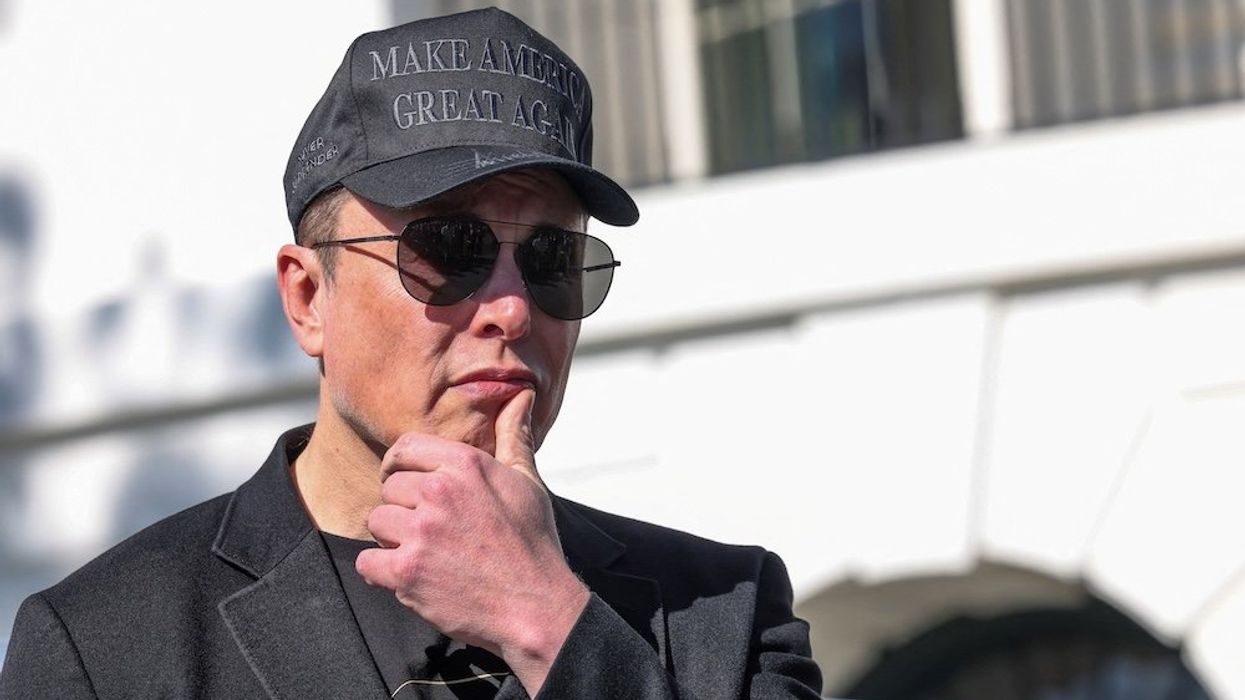
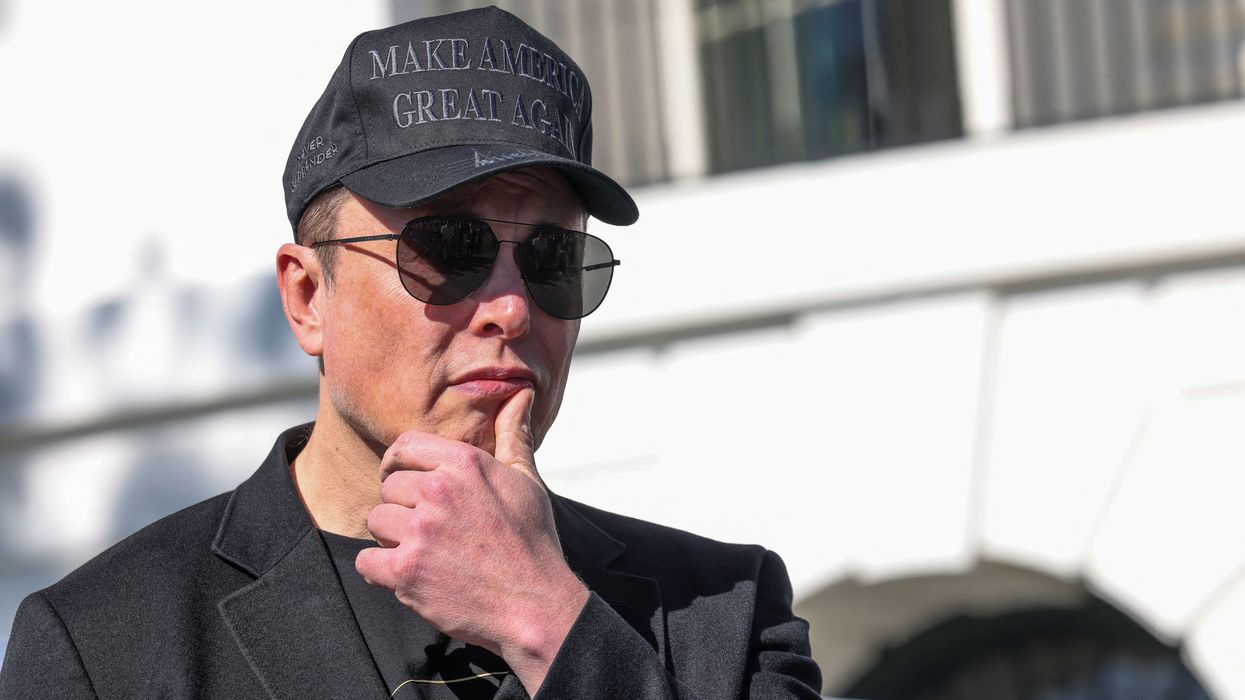
 Tesla CEO Elon Musk looks on next to U.S. President Donald Trump talking to the media, at the White House in Washington, D.C., U.S., March 11, 2025.

March 12, 2025
ALTERNET

With declining consumer interest in Tesla vehicles sending CEO and Trump administration ally Elon Musk into an apparent panic over the electric automaker's plummeting stock—spurring an impromptu car show on the White House lawn Tuesday with President Donald Trump scolding Americans for not buying Musk's products—recent reports from across Europe and Canada suggest the two right-wing leaders are pushing global consumers to reject not just Tesla, but a wide array of American goods.

As The Guardian reported Wednesday, numbers released this week by Statistics Canada showed waning enthusiasm for Canadians to visit their southern neighbor, with 23% fewer Canadians taking road trips into the U.S.—the most popular mode of cross-border travel—this year so far compared to February 2024.

With Trump initiating a trade war with Canada—falsely claiming the country is a major source of fentanyl flowing into the U.S.—by imposing 25% tariffs on all Canadian imports and threatening to take over the country as the "cherished Fifty First State," consumers have been downloading apps like "Maple Scan" and "Is This Canadian?" to avoid purchasing U.S.-made products.

"A lot of people feel betrayed by our closest ally," Emma Cochran, an Ottawa-based marketer, toldNBC News on Wednesday.

Cochrane partnered with a colleague to make hats and shirts emblazoned with the phrase, "Canada is not for sale," one of which was worn by Ontario Premier Doug Ford last week.

"This felt like a way that we could participate and just kind of say, 'We're going to stand up for Canada,'" she told NBC.

Canadian officials announced retaliatory tariffs on $21 billion in goods on Wednesday after Trump raised global steel and aluminum tariffs to 25%—backing off of an earlier threat of a 50% levy.

As some Canadian provinces began pulling U.S. liquor brands from government-run stores and replacing bottles with "Buy Canadian Instead" signs, the CEO of the Kentucky-based Brown-Forman, which makes Jack Daniel's, called the boycott "frustrating."

"That's worse than a tariff because it's literally taking your sales away," Whiting said on an earnings call last week.

Nick Talley, a physician-scientist in New South Wales, Australia, said Trump "presumably... thought everyone would just bow down" after he imposed tariffs and raised prices for consumers around the world.

Danish grocery company Salling Group has also taken action to oppose Trump's threat to take control of Greenland, an autonomous territory within the Danish kingdom.

The company is still carrying U.S.-made products but is marking European-made goods with a black star to identify them for shoppers.

A Verian/SVT survey in Sweden on Tuesday found that "the U.S.'s actions in world politics... have led many Swedes to hesitate in the face of American products."

Twenty-nine percent of Swedish residents said they had refrained from buying U.S. goods in the last month amid Trump's trade war, his temporary suspension of aid to Ukraine after publicly berating Ukrainian President Volodymyr Zelenskyy at the White House earlier this month, and Musk's meddling in European politics by expressing support for British right-wing extremist Tommy Robinson and German political party Alternative for Germany, which has embraced Nazi slogans and came in second in last month's elections.

Norwegian fuel company Haltbakk urged "all Norwegians and Europeans" to join in boycotting the U.S. after the confrontation between Trump and Zelenskyy, which the firm called "the biggest shit show ever presented 'live on TV' by the current American president and his vice president."

The company has provided fuel to U.S. ships in Norwegian ports but said it would no longer do so as the international community expressed shock over Trump's treatment of Zelenskyy and Ukrainian victims of Russia's invasion.

Meanwhile, European consumers have continued to make their views on Musk—a "special government employee" of Trump's who has spearheaded the slashing of federal jobs and spending and threatened to cut $700 billion from Social Security, Medicare, and Medicaid—by refusing to buy Tesla cars.

February sales were down 76% in Germany, 53% in Portugal, 55% in Italy, and 48% in Norway and Denmark—contributing the company's plummeting share price and loss of $800 billion in market cap.

Trump offered to buy a Tesla before staging a showing of five of the cars at the White House Tuesday, claiming American consumers are "illegally" boycotting the company, but as Channel 4 in the U.K. reported, "the company will have to find a lot more buyers to make up for a sharp decline in sales across Europe" as both boycotts and protests at Tesla dealerships spread.


'People are furious': US products 'less accepted by' other countries as Europeans join boycott
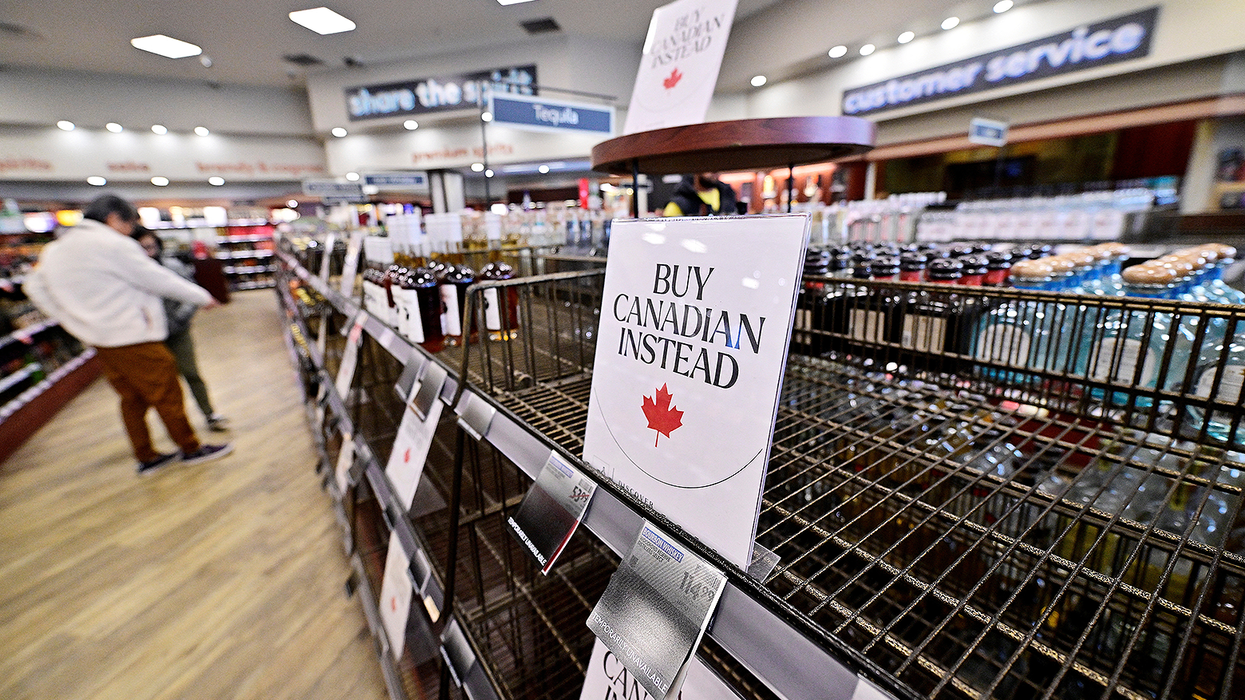

Empty shelves with Buy Canadian Instead signs are seen in the American Whiskey section of the BC Liquor in Vancouver, British Columbia, Canada March 10, 2025. REUTERS/Jennifer Gauthier

Jeff Lawrence
March 12, 2025
ALTERNET


As President Donald Trump targets Mexico and Canada in a growing trade war, the movement to boycott American products is spreading far beyond North America, The Guardian reports.

Canadian travel to the United States is down almost 25 percent since February 2024. Europeans are flagging American goods while identifying their own goods with black stars, giving consumers the option to buy local. In Germany, musicians are cancelling summer tours in the U.S.

Christian Tetzlaff, a German classical violinist was blunt while explaining his feelings to the Guardian. “There seems to be a quietness or denial about what’s going on,” Tetzlaff said.

“I feel utter anger,” he said. “I cannot go on with this feeling inside. I cannot just go and play a tour of beautiful concerts.”

Canada has pulled American liquor products from its shelves. Tesla sales in Europe have plummeted, with the company losing 15 percent of its value on Monday alone.

In Sweden, Facebook groups are promoting local products and boycotting American businesses, including Facebook itself. In Norway, an oil bunkering company, Haltbakk, said it will no longer supply U.S. Navy ships with fuel, citing Ukranian President Volodymyr Zelenskyy’s contentious visit to the White House. However, Norway’s Defense Minister clarified the government maintains "a close and strong defense cooperation" with the United States.

As The Guardian reported, “Takeshi Niinami, the chief executive of the Japanese multinational brewing and distilling group Suntory Holdings, which owns several major US brands, told the Financial Times international consumers were likely to shun American brands in the event of a trade war.”

“We laid out the strategic and budget plan for 2025 expecting that American products, including American whiskey, will be less accepted by those countries outside of the US because of first, tariffs and, second, emotion,” Niinami said in the interview.

The Guardian added, “Zoe Gardner, an organiser of the Stop Trump Coalition in the UK, is seeing rapidly increasing interest in the issue.”

“A lot of what we are seeing is coming about organically, people putting stuff on TikTok. People are so furious, and this is about taking back power,” Gardner said.


How Trump is making America sick with 'highly detrimental' policies


'Callous': Getting fired by Musk 'wasn't the kind of change' these Trump voters had in mind

March 12, 2025
ALTERNET

Liberal economist and former New York Times columnist Paul Krugman is warning that President Donald Trump's economic policies — from gutting the federal workforce to mass deportations to aggressive tariffs on U.S. allies — could trigger a painful economic downturn. And Krugman isn't alone in saying that: the Washington Post, on March 9, reported that some CEOs fear that putting so many government employees out of work will hurt the private sector.

The Post's article detailed the economic results of the mass layoffs of federal workers that are being carried out by the Trump Administration with the help of the Elon Musk-led Department of Government Efficiency (DOGE). But in an article published by Salon on March 12, Anthony Estreet — CEO of the National Association of Social Workers — emphasizes that the layoffs will also make the United States' "mental health crisis" even worse.

"Consider the human cost of the (Trump) Administration's mass culling of federal workers," Estreet explains. "Some experts estimate that nearly a half-million federal workers could be laid off within the next two years. That's roughly 20 percent of the federal workforce. It would represent the largest mass firing in American history."

Estreet continues, "Certain regions of the country — like the Washington, D.C., area — are especially vulnerable to economic disruption. But there are 35 states with at least one county where close to 5 percent of civilian employees are federal workers. By the time the long-term effects of these firings filter through our society, the Trump Administration will be long gone."

The National Association of Social Workers CEO goes on to describe the link between economic pain and mental health.

"Researchers have investigated just this kind of mass firing event, like a factory closure where an entire workforce is shown the door at the same time," Estreet notes. "Nearly allof those fired workers experienced mental health declines. The longer their unemployment lasts, the worse they fared. Even without serious financial strain — if a spouse, for example, has secure employment — losing a job can be highly detrimental to mental health."

Estreet adds, "Removing a person's daily routine as well as their sense of purpose and identity can seriously undermine their sense of self."

Estreet points out that the United States "is already experiencing a mental health crisis," from increasing "suicide rates" to alcoholism to "deaths by drug overdose" — and warns that Trump's economic policies will exacerbate these problems.

"Some 29 million people are struggling with alcohol use disorder," Estreet writes. "Putting hundreds of thousands of federal employees out of work will only make such mental health challenges more prevalent."

Anthony Estreet's full article for Salon is available at this link.
'Economic nationalism and techno-right': Expert details 3 'elements' guiding Trump’s erratic policies


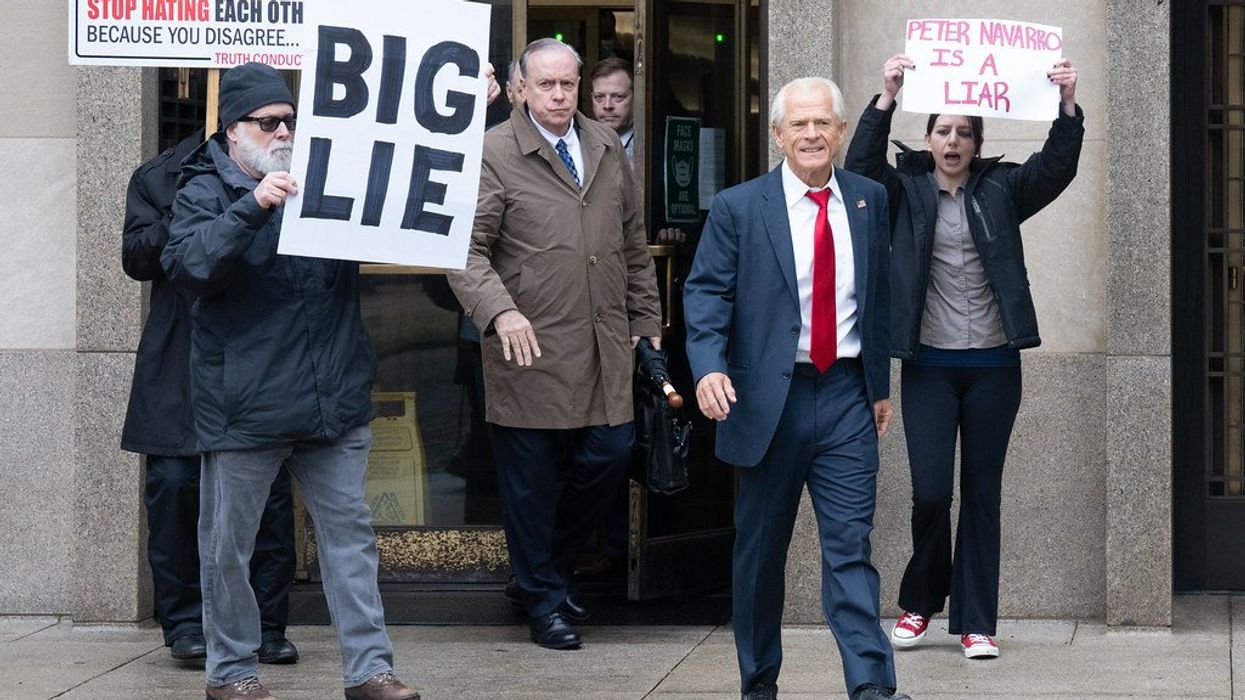
Peter Navarro coming out of court after his sentencing to four months for contempt of Congress, 1/25/24. Image via Victoria Pickering/Flickr.

Jeff Lawrence
March 12, 2025
ALTERNET

President Donald Trump’s and Elon Musk’s “Maganomics,” are a “dangerous combination of economic nationalism and the techno-right," economist Jonathon Portes wrote in The Guardian Thursday, citing a framework laid out by Harvard economist Dani Rodrik.

Portes, according to his bio, served as chief economist at the United Kingdom's Department for Work and Pensions from 2002 to 2008 and chief economist at the Cabinet Office from 2008 to 2011. He was also the director of the National Institute of Economic and Social Research.

For Portes, "economic nationalism" is exemplified by Trump advisers Peter Navarro and Steve Bannon – who, the economist wrote, want "to rebuild America’s traditional industrial strength behind tariff walls while deporting as many immigrants as possible." Elon Musk, meanwhile, represents the techno-right with his “AI-enabled libertarian future."

“Musk’s vision is essentially that of Ayn Rand – that human progress and prosperity depends on the selfish actions of heroic individuals, and the sole role of government is to protect the (economic) freedoms of such individuals,” Portes wrote.

According to Portes, there is a "third element" to the president's economic framework: the Trump administration's participation in a massive transfer of wealth that benefits elite investors.

Portes described this element as the "use of state power to benefit Trump and his supporters," writing it "hardly qualifies as an economic ideology, but is too big to be ignored."

Portes pointed to Musk's attempted takeover of a "lucrative" contract with the Federal Aviation Administration" and "Trump’s proposal of a sizable strategic crypto reserve" as examples of this "gigantic wealth transfer."

As Portes explained, there's little appetite among those in power to keep Trump's economic framework in check.

"There is little or no sign that elected Republican officials will push back either on principled or self-interested grounds," the economist wrote.

'Catastrophic': Experts warn DOGE cuts could mean national parks end up in private hands


Tesla CEO Elon Musk looks on next to U.S. President Donald Trump talking to the media, at the White House in Washington, D.C., U.S., March 11, 2025. REUTERS/Kevin Lamarque

Carl Gibson
March 12, 2025
ALTERNET


The ongoing effort by President Donald Trump's administration to lay off thousands of federal workers and slash agency budgets may pave the way to the privatization of the United States' national parks.

That's according to a Wednesday article in the Arizona Republic, which reported on the effect of Trump's cuts to the Department of the Interior (DOI) in particular. According to the Republic, many of the hundreds of millions of acres of public land could end up being purchased by private individuals and groups in the future. This includes land owned by the U.S. Forest Service, the National Park Service and the Bureau of Land Management.

Matthew Nelson, who is the executive director of the Arizona Scenic Trail Association, told the paper that he has lately been getting "ghosted" when reaching out to federal officials, and attributed that to severe staffing shortages and an atmosphere of chaos inside the DOI.

"When I look behind the veil, what I'm seeing is an attempt to make federal land management agency jobs even harder to fill, getting rid of people, and then being able to show that the agency is unable to care for these lands, and it would be better in the hands of private interests," Nelson said.

The Trump administration's agenda to shrink federal budgets is being spearheaded by centibillionaire South African tech CEO Elon Musk, who unofficially leads the Department of Government Efficiency (DOGE). Ethan Aumack, who is the executive director of the Grand Canyon Trust, told the Republic that the scope of DOGE's cuts could end up undermining the DOI's management of national parks. He added that this could provide an opening for privatization.

"It is entirely predictable that if you dismantle systems for responsibly managing public lands, causing a collapse in responsible land management, a case can and will be made to privatize those lands,” Aumack said. “Which would be catastrophic."

Advocates have warned against privatization of national parks in the past for various reasons. Chief among their concerns is that private ownership could make admission too pricey for the general public to enjoy. However, conservationists add that replacing federal park rangers with private employees could also endanger conservation efforts, as their replacements may not be as knowledgeable about how to preserve valuable ecosystems.

Click here to read the Republic's full report.
GOP 'can run' from vote on Trump tariffs — but 'can't hide from voters': WSJ editorial

Matthew Chapman
March 12, 2025 
RAW STORY


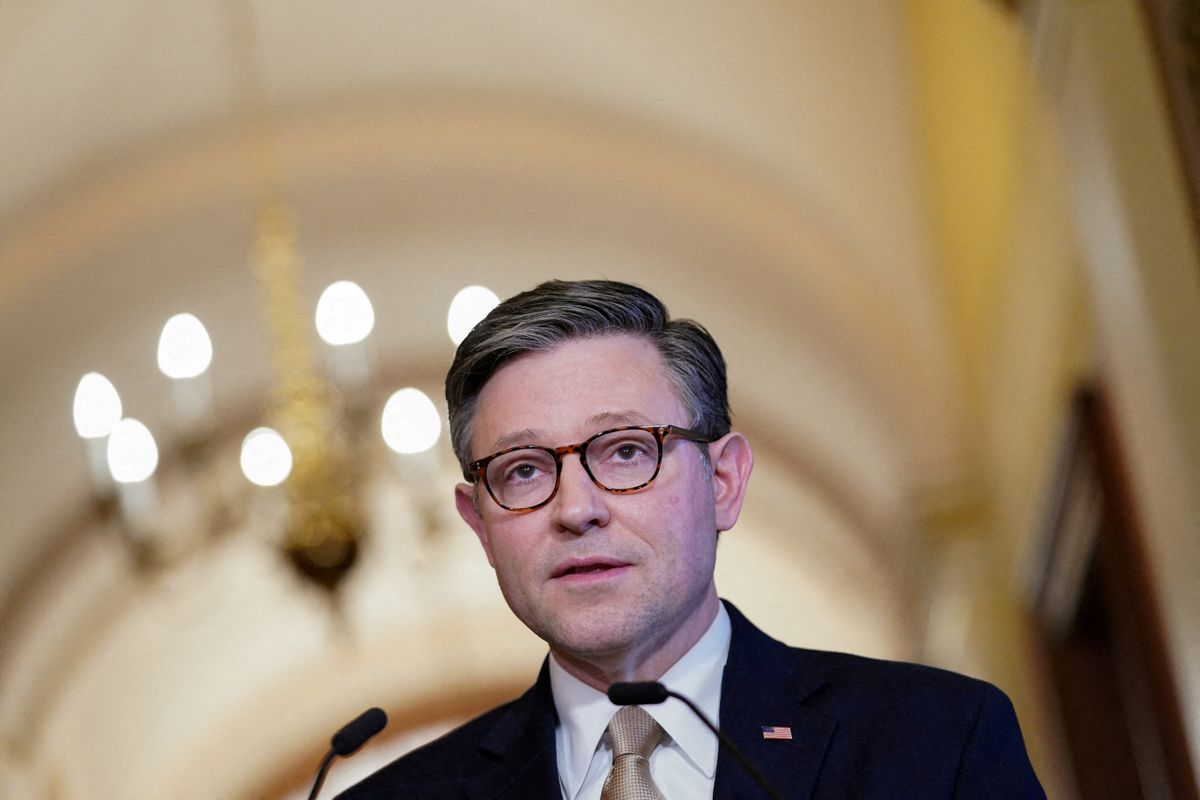
FILE PHOTO: U.S. House Speaker Mike Johnson (R-LA) speaks to reporters next to Israeli Prime Minister Benjamin Netanyahu (not pictured) at the U.S. Capitol in Washington, U.S., February 7, 2025. REUTERS/Nathan Howard/File Photo

House Republicans are hiding from anything that would force them to vote one way or the other on President Donald Trump's controversial tariffs, wrote the conservative Wall Street Journal editorial board in an analysis published on Wednesday.

Trump enacted the tariffs, which have caused a firestorm of economic uncertainty and selloffs, under wide-ranging powers granted by Congress to let presidents declare emergencies — and they have the power to pare that authority back. But GOP leaders have no interest in being put on the spot on that, the board wrote.

"The National Emergencies Act provides fast-track procedures for Congress to end a presidential emergency," wrote the board. "New York Democrat Gregory Meeks introduced a resolution to terminate Mr. Trump’s emergency on March 6 and he intended to force a floor vote this month. This would force Republicans to vote on the record for supporting Mr. Trump’s tariffs, which are a tax increase. However, Republicans inserted a provision in a rule governing debate on their government funding bill that would block consideration of Mr. Meeks’ resolution for the rest of the year."

The GOP, for their part, argue that Democratic lawmakers blocked another measure the GOP passed that would have ended an emergency declaration former President Joe Biden used to cancel student debt — but, the board noted, this isn't actually a stance on Trump's policy.

"GOP House leaders are no doubt trying to protect Members in swing districts where Mr. Trump’s tariffs are unpopular. An Emerson College poll this week reported that 53% of voters say Mr. Trump’s tariffs will hurt the economy, versus 37% who said they would help it. Hispanics by a margin of two-to-one said tariffs would hurt," wrote the board — a result in line with a new CNN poll showing even Trump voters growing skeptical. "Beyond the MAGA echo chamber, Mr. Trump’s tariffs are unpopular. But businesses don’t want to challenge them in court because they are afraid of retaliation. Nor do Democratic state Attorneys General, perhaps because they want to preserve a future Democratic President’s flexibility under the law to declare climate an emergency to impose carbon tariffs."

At the end of the day, the board concluded, "While House Republicans can run from a vote, they can’t hide from voters in 2026 who may not find Mr. Trump’s tariffs beautiful."


'Universal revulsion': CEOs of top American companies 'privately' disgusted with Trump

 AlterNet
March 12, 2025

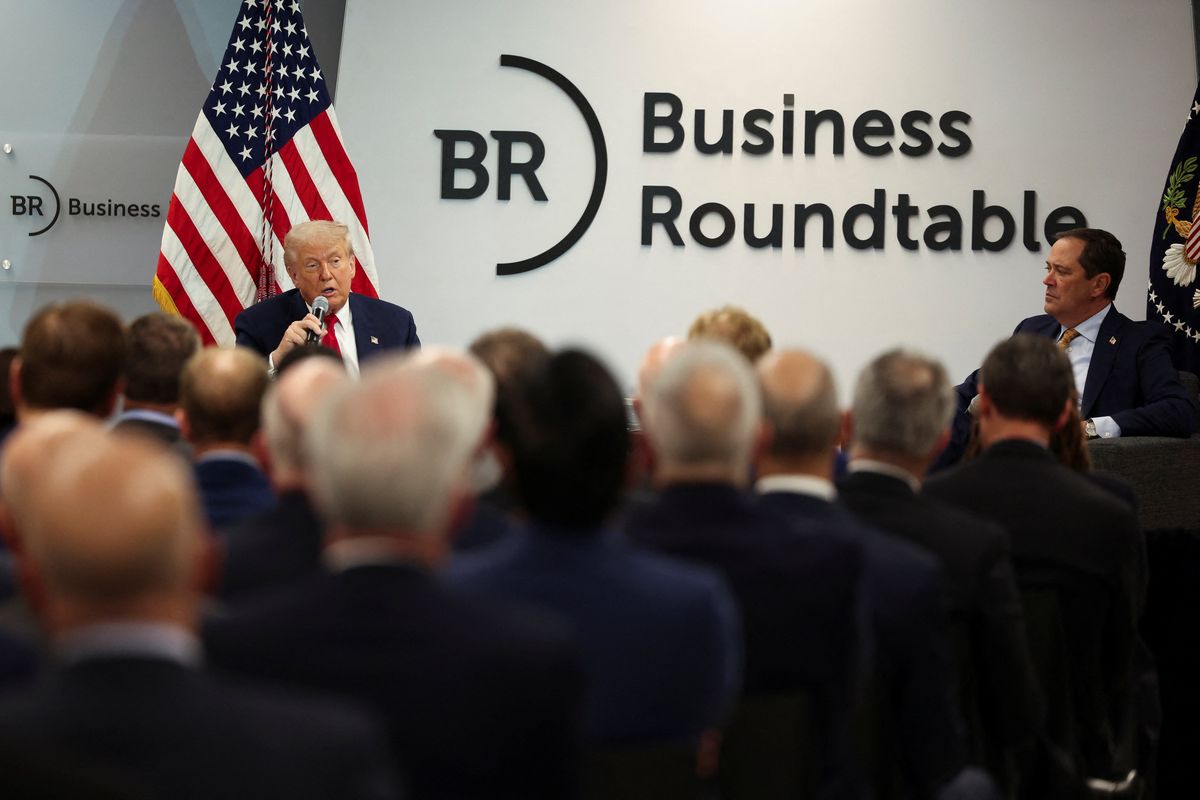
U.S. President Donald Trump speaks next to Chair and Chief Executive Officer of Cisco Chuck Robbins during a Business Roundtable event in Washington, D.C., U.S., March 11, 2025. REUTERS/Kevin Lamarque

Several top corporate CEOs recently confided that despite their public shows of fealty to President Donald Trump, they are less than flattering of him behind closed doors.

According to the Wall Street Journal, Trump was the main topic of conversation a gathering of corporate executives at the Yale CEO Caucus earlier this week. The economy has been on a roller coaster ride since Trump announced — and then almost immediately withdrew — punishing new tariffs on all goods imported from Canada and Mexico. 25% tariffs on Canadian imported steel and aluminum products went into effect Wednesday, however.

When Trump suggested doubling his steel and aluminum tariffs, the roomful of CEOs — which included JPMorgan CEO Jamie Dimon, Pfizer CEO Albert Boula and Dell CEO Michael Dell — the Journal reported that the room "responded with a mix of groans and shocked laughter."

"There was universal revulsion against the Trump economic policies," Yale School of Management professor Jeffrey Sonnenfeld, who organized the event, told the paper. "They’re also especially horrified about Canada."

Bill George, who is the former CEO of Medtronic, remarked that the corporate world has since learned to keep its criticisms of the 47th president of the United States under wraps out of fear of retribution. He said he was "struck by how fearful people are and how unwilling they are to speak out," adding that executives "don’t want to get on the wrong side of the president and his constituents."

He went on to lament the new uncertain economic climate that has taken hold in Trump's second term, which has lately seen financial markets dip precipitously this week as investors fear a trade war. He said companies are worried that outbursts from Trump could end up hurting their bottom line,, leading some to consider moves to curry favor with the regime in order to be spared from his wrath.

“The mood has totally changed,” George said. “What you’re hearing publicly is not what you’re going to hear privately.”

Click here to read the Journal's full article (subscription required).
‘What’s changed?’ NPR bars reporter from Pride event — but backtracks amid mass email flub

Erik De La Garza
March 12, 2025 

LGBT pride flags (Shutterstock)

A dramatic turnaround unfolded Wednesday at National Public Radio after the organization discouraged longtime anchor Ari Shapiro from continuing an annual tradition of attending a corporate LGBTQ Pride event – before quickly reversing course.

The fast-moving developments began after NPR’s managing editor for standards and practices, Tony Cavin, informed the “All Things Considered” host in an email exchange obtained by Semafor that “the guidance in our ethics handbook is to ‘avoid appearances at private industry or corporate functions.”’

“Because this is a closed corporate event I think it would be best to politely decline,” Cavin wrote Wednesday, as reported by Semafor.

But the internal email meant for Shapiro was inadvertently sent to several NPR journalists.

“Every year I’ve spoken at corporate pride events and you’ve personally signed off on them,” Shapiro shot back in a reply several minutes later, according to Semafor. “It has never been an issue before. I’m curious what’s changed.”

Shapiro also pointed out to Cavin that the message “went to pretty much everyone in the newsroom” since he had “mistakenly replied to newsdesk and international editors.”

After Semafor, a news website founded in 2022, reported on the email exchange, a spokesperson backtracked and told the outlet that Shapiro would be allowed to attend the event after all.

“This decision was made shortly after the original email thread,” the spokesperson said.

The dust-up at the public broadcaster comes as the Trump administration and congressional Republicans have increased pressure on it as they seek to strip federal funding from NPR, PBS and other member stations, Semafor noted.


'That's 70 percent for no': Republican's DOGE poll backfires

Matthew Chapman
March 12, 2025 8:09PM ET
RAW STORY

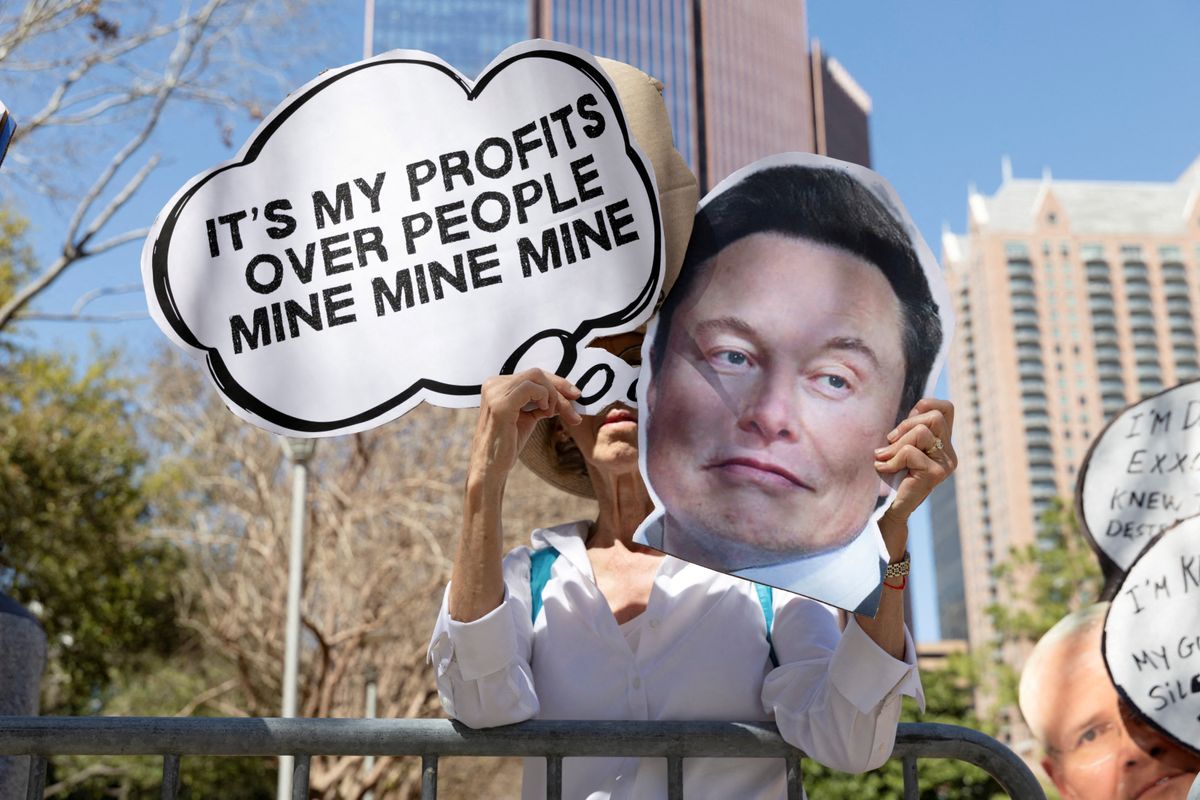
A woman holds a cutout of Elon Musk during a climate protest criticizing government officials, energy executives and developments outside of the CERAWeek venue in Houston, Texas, U.S., March 11, 2025. REUTERS/Kaylee Greenlee

Rep. Tom Barrett (R-MI) asked his constituents during a virtual town hall meeting whether they support tech billionaire Elon Musk's Department of Government Efficiency task force — and did not get the result he likely hoped for.

"Do you support the Department of Government Efficiency's mission to streamline the federal government and reduce spending?" his constituents were asked, in a clip obtained by the liberal media outfit Meidas Touch and later shared out by the Democratic Congressional Campaign Committee.

After the results came in, it was announced: "That's 70 percent for no, 30 percent for yes."

According to local station WKAR, Barrett — who was narrowly elected last year to a battleground district previously held by Democratic Sen. Elissa Slotkin — did his best to spin the result positively for the Trump administration.


ALSO READ: 'The Hard Reset': Here's how the U.S. is exporting terrorism around the world

“It seems like every single person prefaces a lot of their, even disagreement, by saying, ‘Hey, I know there's a lot of waste and fraud in federal spending, and we’ve got to rein that in, but this is wrong for this or that reason,’” said Barrett. “So, it seems like we've kind of accepted the premise that there's a lot of problems.”

He added: “It's up to [agency heads] to do the best implementation of achieving what every American should expect, that the tax dollars they send to Washington, D.C., are being used prudently for the right things, for the right purposes, and not being abused, wasted or spent on things that shouldn't be done.”

Republican lawmakers have faced a steady stream of fury at town halls over the last few weeks, not just in battleground districts but Republican-dominated areas, with lawmakers including Reps. Rich McCormick (R-GA) and Keith Self (R-TX) being shouted down by constituents when they tried to defend the Trump administration's moves to dismantle the federal government.

The situation has become so tense that National Republican Congressional Committee chair Richard Hudson (R-NC) has advised fellow House members to stop doing town halls altogether — which, when this message was leaked, put Democrats on the offensive, with suggestions some could travel to GOP districts to do town halls in their place.


Snorkel with me to understand climate change, Palau president tells Trump


By AFP
March 12, 2025


- Copyright AFP/File Philip FONG


Sara HUSSEIN

The leader of climate-vulnerable Palau wants US President Donald Trump to come snorkelling with him to understand the “slow death” caused by climate change, he told AFP in an interview on Wednesday.

“I think it’s good if we go snorkelling and look at things,” Surangel Whipps Jr said.

“The cost of not doing anything about it (climate change), it’s going to be even worse… we need to look at it in those terms,” he added.

“I hope I can talk to President Trump on the finance side.”

Palau is an archipelago of some 340 islands east of the Philippines, and is extremely vulnerable to rising seas, with Whipps acknowledging some of his country’s atolls could be lost in coming years.

But he warned “the threat is there for all of us,” and urged Trump to “think about his children and his children’s children”.

Trump has called climate change a scam, pulled Washington out of the key Paris Agreement for a second time, and ended US participation in leading climate initiatives and research.

“Everybody seems to be looking inwardly at their own pocketbooks, at their own people, at what’s best for them. But even the United States has a lot of low-lying areas,” Whipps said.


– ‘China is actually doing more’ –


The Melanesian microstate of some 20,000 people is a steadfast US supporter in a region where China has made inroads, but it has also felt the impact of Trump slashing international aid, with some ocean monitoring programmes now on hold.

Whipps warned that the US retreat risked ceding ground to China on the world stage.

“If Trump is concerned about leadership, this is where he’s going to lose serious ground,” he told AFP in Tokyo on the sidelines of an ocean summit.

“China is actually doing more for climate change these days than probably the US.”

The Baltimore-born leader was reelected last year after a first term that saw the swift expansion of US military interests across the Palauan archipelago.

His country is one of the few to maintain diplomatic links with Taiwan despite China’s retaliation, including an unofficial ban on its nationals visiting tourism-dependent Palau.

“They continue to pressure us in different ways,” Whipps said, insisting that would not sway Palau’s policy.

“All we want is the status quo, we want to maintain peace.”

Palau gained independence in 1994 but allows the US military to use its territory under a longstanding “Compact of Free Association” agreement.

In return, the United States gives Palau hundreds of millions of dollars in budgetary support and assumes responsibility for its national defence.


– ‘Destroying your future’ –


Palau has broken with some of its Pacific neighbours in urging a moratorium on deep-sea mining, and is trying to build consensus in the region ahead of a meeting that could finally set rules for mining in international waters.

“The science and the data are not there yet” on the potential impacts, said Whipps.

Scientists have warned scraping vast sections of the Pacific Ocean for metals such as nickel and cobalt — used in electric car batteries — could devastate poorly understood marine systems that play a crucial role in regulating the climate.

But several low-lying Pacific nations including Nauru, Tonga and the Cook Islands see deep-sea mining as a potential moneymaker for their struggling economies, particularly as climate change disrupts other industries.

Whipps said that was short-term thinking.

“You may think you’re saving your people now, but you’re really destroying their future,” he warned.

Climate-vulnerable nations like Palau have long sounded the alarm on global warming, with pleas for a quicker transition away from fossil fuels like coal, and calls for money to support countries most affected by climate disaster.

“When it was Covid everybody just mobilised because we’re going to die, now. Climate change is like the slow death,” he said.

“President Trump is now 78, he should also be thinking about his children and his children’s children. And I think when you put in that perspective then it’s easy.”
Greenland to get new government to lead independence process


By AFP
March 12, 2025


Nielsen said after Tuesday's election victory his party was 'open to talks with all parties' - Copyright AFP/File Philip FONG


Pierre-Henry DESHAYES, with Camille BAS-WOHLERT in Copenhagen

Talks to form a new Greenland government tasked with mapping a timeline for independence from Denmark were to begin Wednesday, a day after elections that saw support soar for a party seeking to cut ties swiftly.

Tuesday’s vote in the self-governing Danish territory came against the backdrop of US President Donald Trump’s threats to take over the resource-rich Arctic island, which have shined an unprecedented global spotlight on Greenlandic politics.

All of the territory’s main political parties, and the majority of the 57,000 inhabitants, back independence.

But the two parties that came out on top — the opposition centre-right Democrats and the nationalist Naleraq party — disagree on how quickly the process should go.

The Democrats, a “social liberal” party, unexpectedly tripled its score to win 29.9 percent of votes. They want Greenland to cut ties with Denmark only after it has secured its own financial independence.

Naleraq, which doubled its score to 24.5 percent, wants to break free as soon as possible.

The election dealt a heavy blow to the two parties in the outgoing government coalition, the left-green Inuit Ataqatigiit (IA) and social democratic Siumut.

Until now, they have dominated politics on the island since it was granted home rule in 1979.


– Setting a timetable –


As none of the parties won a majority of the 31 seats in parliament, Wednesday’s negotiations are expected to be about forming a ruling coalition.

If the Democrats “choose to form a government with Naleraq, they would have to speed up their platform on independence and state formation”, a specialist in the region at the University of Copenhagen, Lill Rastad Bjorst, told AFP.

With Naleraq, the Democrats “will likely face constant and explicit demands to outline a concrete plan for the process”, added professor Anne Merrild, an Arctic expert at the University of Aalborg.

Naleraq said it envisages independence within a few years.

“We can do it the same way we exited the European Union (in 1985). That (took) three years. Brexit was three years. Why take longer?” party leader Pele Broberg told AFP on Tuesday.

But some voters and experts have expressed concern that a hasty break from Denmark could fuel Trump’s insatiability.

The US president has insisted the US will get Greenland “one way or the other”, refusing to rule out the use of force and invoking US national security amid rising Chinese and Russian interest in the Arctic region.

If the Democrats were to form a government and devise an independence plan “with the other parties, they can stick to their own agenda and focus on building economic growth first,” said Rastad Bjorst.

The territory depends heavily on its fisheries sector, which accounts for almost all of its exports, and annual Danish subsidies of more than $565 million, equivalent to a fifth of its GDP.

Rastad Bjorst said politicians likely wanted to form a government quickly in order to begin negotiations with Denmark and the US, which could provide much-needed investments.


– Call for unity –


Since 2009, a law has enabled Greenland to unilaterally initiate the independence process. It stipulates that talks be held between the Danish and Greenlandic governments to reach an agreement.

That then has to be approved by the Greenlandic parliament, endorsed by a referendum on the island and voted on by the Danish parliament.

The head of the Democrats, 33-year-old Jens-Frederik Nielsen, said after Tuesday’s election victory that his party was “open to talks with all parties”.

“Greenland needs us to remain united, which will be the basis of our negotiations,” he told a televised roundtable.

He also recalled two priorities of his campaign: “a calm approach towards the United States”, and the building of a “foundation” to enable the creation of a Greenlandic state.

Ulrik Pram Gad, a researcher at the Danish Institute of International Affairs, said he expected the Democrats to follow a moderate path.

“They will continue to push Denmark for more equality, but might be more open to Danish investments,” he told AFP.

Now that “Trump’s embrace has been rejected”, he said — referring to the election results — the new government’s task will be “to channel his interest towards economic cooperation.”
Trump’s Canada fixation: an expansionist dream


By AFP
March 13, 2025


Mississauga, Ontario, Canada. — © Digital Journal
Aurélia END

A savvy negotiating tactic? A wild fantasy? A greed for natural resources?

US President Donald Trump’s fixation with annexing Canada is so singular as to defy any easy explanation.

“I think it’s one of those things where Trump thinks it would be nice to pull it off, but he understands that it is less than a remote possibility,” said Todd Belt, a political science professor at George Washington University.

“His rhetoric is mostly to take a tough and unpredictable bargaining stance.”

On Tuesday, the 78-year-old Republican who in recent weeks all but launched a global trade war made his expansionist desire known, once again, on his Truth Social network.

“The only thing that makes sense is for Canada to become our cherished Fifty First State,” Trump wrote, painting a bright future of lower taxes, no tariffs and security for Canadians.

– 33 percent support –

Citizens of Canada are appalled by Trump’s annexation talk.

“What he wants to see is a total collapse of the Canadian economy,” outgoing prime minister Justin Trudeau said last week shortly before leaving office, after Washington announced 25 percent tariffs on all products from Canada, before backtracking.

Trump’s statements have fueled strong anti-US hostility north of the border, where the American anthem now gets regularly booed at sports competitions.


The Canadian and US flags fly near the countries’ border in Blackpool, Quebec, Canada – Copyright AFP ANDREJ IVANOV

According to an opinion poll conducted by the Leger Institute this month, only 33 percent of Canadians have a positive opinion of the United States, compared to 52 percent in June 2024.

In the same poll, 77 percent of respondents said they have a positive view of the European Union.

In his Truth Social post Tuesday, Trump called the US-Canada border an “artificial line of separation drawn many years ago.”

Addressing Canadians, he said that when the border disappears, “we will have the safest and most beautiful Nation anywhere in the World — And your brilliant anthem, ‘O Canada,’ will continue to play, but now representing a GREAT and POWERFUL STATE within the greatest Nation that the World has ever seen!”


US President Donald Trump speaks after Tulsi Gabbard (R) was sworn in as director of national intelligence in the Oval Office, but an Associated Press reporter was barred from attending over the renaming issue of the Gulf of America. – © AFP ANDREW CABALLERO-REYNOLDS

Trump seems to have a fondness for cartography, as manifested by his order, issued shortly after his inauguration, that the Gulf of Mexico be renamed the Gulf of America.

He has also publicly threatened to lay claim to Greenland and said he wants to take back control of the Panama Canal.

“A lot of this territorial aggrandizement (Greenland, Panama, Canada) came after the election, and I think someone put it in his head that great presidents acquire territory as a legacy,” said Belt, the political scientist.

In his speech last week, Trudeau vowed that Canada would not be annexed.

“That is never going to happen,” he said. “We will never be the 51st state.”

– Water ways –

According to a New York Times report, Trump used the opportunity of talks with Trudeau last month to question the validity of a 1908 treaty that established the border between the two countries.

The US president, who is known to take a keen interest in water resources, also reportedly criticized the agreements regulating access to water between the two countries.

To the east, the US-Canada border runs through the Great Lakes. Westward toward the Pacific coast, the border crosses the Columbia River, whose waters are regulated by a detailed international treaty.

A trade war between the United States and Canada, which are closely linked economically, would represent “an existential threat” to Canadians, Ian Lee, an economics professor at Carleton University in Ottawa, told AFP.

“But no matter how much we scream or yell or express our anger, it doesn’t change the reality,” said Lee. “We are the mouse and they are the five-ton elephant. We must develop a compromise and deal with the demands of the United States.”

Canada’s Prime Minister-designate Mark Carney does not share that fatalism.

“Let the Americans make no mistake: in trade, as in hockey, Canada will win,” he said Sunday.

Ottawa on Wednesday announced new tariffs on certain American products, in response to what it called “unjustified and unreasonable” taxes on steel and aluminum imposed by Trump.