Monday, March 17, 2025

When the Earth Heats Up: Zunaira Baloch and the Human Cost of Climate Change in Balochistan
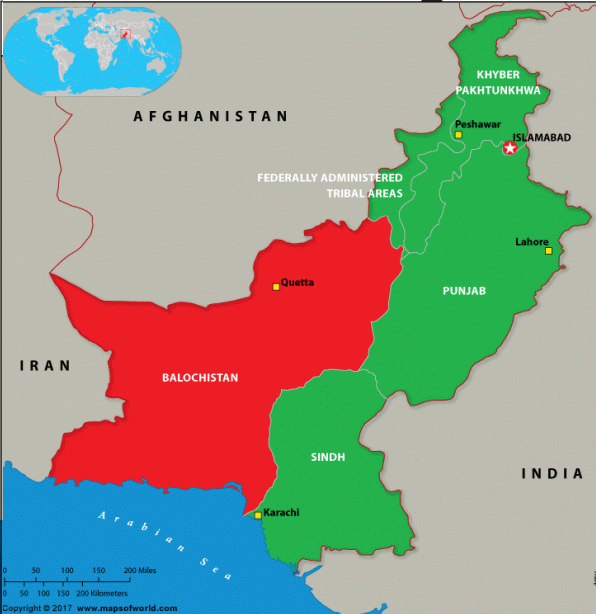

They say only bad news from Balochistan makes the headlines–Pakistan’s largest and most impoverished province marred in a decades long insurgency. The local newspapers are flooded with the news of people being killed in bomb blasts, target killings and the loss of lives in incidents of terrorism. However, amid this backdrop of turmoil, a problem that is just as terrible is subtly developing: climate change. Its perennial consequences are changing the lives of women and children, particularly in the remote and underprivileged parts of Balochistan.

Noora Ali, 14, was oblivious to the temperature shifts because she had grown up in Turbat, a city around 180 kilometres Southwest of Gwadar, the center of CPEC( China-Pakistan Economic Corridor)–a bilateral project to would facilitate trade between China and Pakistan valued at $46 billion. There was frequent flooding during the monsoon season and blazing heatwaves during the summer, with temperatures rising above 51 centigrade. Compared to other cities in Balochistan, Turbat experiences horrible summers and typical winters. As a result, the majority of wealthy families in the city travel to Gwadar, Quetta, or Karachi during the sweltering summers and return to Turbat during the winters. The Water and Power Development Authority (WAPDA) moved Noora’s father, who works there, to the neighboring Coastal city of Gwadar in 2022.

In February of 2022, the sea seemed calmed while boats of the fishermen busily dotted the waters of the Padi Zir (Gwadar’s West bay). It was a typical Thursday morning when rain started pouring down. The rain was so intense that the sea became wild. The roads were washed away, bridges collapsed, streets were inundated with flood water, and the port city became completely disconnected from the rest of the country. Back in Turbat, her ancestral hometown was also submerged under flood water.

Noora had also heard from her schoolmates that Gwadar and Turbat had never experienced such heavy and intense rainfall before. She knew and felt that the temperature of her native city was rising and that Gwadar beneath flood water didn’t seem normal. “This is due to climate change,” her elder brother tells her. At the age of 14, most youth in Pakistan’s Balochistan have no idea what climate change and global warming are, but they are already feeling it impacts.

Like Noora, thousands of children in South Asia, particularly Pakistan, Bangladesh, Nepal, India, and Afghanistan are at the risk of climate related disasters, as per the UNICEF 2021 Children’s Climate Risk Index. The report further reiterates that children in these countries have vigorously been exposed to devastating air pollution and aggressive heatwaves, with 6 million children confronting implacable floods that lashed across these countries in the July of 2024.

On November 11 and 22, 2024, over 20 youths urged the world leaders to come up with plans to mitigate the impacts of climate change on children at the 2024 United Nations Climate Change Conference (COP 29) held in Baku, Azerbaijan. Among those 20 resolute children was 14-years-old Zunaira Qayyum Baloch, representing the 241.5 million children and women of Pakistan.

Dressed in her traditional Balochi attire, with a radiant smile and resolute in her commitment, Zunaira Qayyum Baloch has startled everyone. Hailing from the far-flung district of Hub in the Southwest of the Pakistan’s Balochistan, Mrs. Baloch went to represent the children of a country whose carbon footprint is next to zero, yet suffering some of the worst climate-related disasters. Her message to world leaders was clear: step up and combat climate-induced inequalities, particularly those affecting women and children.

She had always remained conscious about the changing climate in her city, observing the floods of 2022 that had wrecked havoc in Hub Chowki, initiating awareness programmes and youth advocacy guide training in her home city to advocate for girls right to education and climate change.

“After my father passed away, my mother became the sole breadwinner. She helped us get an education and met all our requirements,” Zunaira explains. “During the catastrophic rains of 2022, an incident changed my perspective on climate change. Rain water had accumulated in the roof of our home and streets were flooded with water. The destruction was so overwhelming, and I realised that such events were no longer rare but increasing constantly.”

Zunaira Baloch basically hails from the Zehri town of the Khuzdar district. With her journey starting from the Zehri town of Balochistan, she became completely determined to make a difference–initiating awareness drives in her community and educating the people particularly children about climate resilience.

During the COP29, she expressed her concerns with the experts about how Pakistan, particularly Balochistan has been detrimentally affected by climate disasters like frequent floods, heatwaves, hurricanes, and droughts. Lamenting that climate change was a child-rights crisis, she told the world how changes in the climate had jeopardised the lives of millions of women and children throughout the world.

Asking the world leaders to join determined children like her to combat climate change, she addressed them in the COP29: “Climate change matters to me, and it should matter to you too.”

Both Noora and Zunaira are children’s of a backward region of the world, grappling with the harrowing reality of climate change. Given that Noora represents those children unaware of the technicalities of climate change, Zunaira is a resolute hope for Balochistan, leading children like Noora to recognize and combat the stark reality of climate crisis.

Stark Reality of the Past

Bibi Dureen, 80, is a witness of how climate is continuously transforming. With wrinkles on her face and a pointed nose, she hails from the outskirts of the Kech district in a town called Nasirabad.

“The seasons are changing,” she says, her voice laced with sorrow. “The heatwaves have become more aggressive and floods are common. It all started in 1998 in Turbat. Then in 2007, a devastating flood destroyed our homes, date palm trees, livestock–and worst of all, it took lives.” She pauses, her wrinkled hands trembling.

As she talks to me in front of her thatched cottage, through which sunlight streams in, tears well up in her eyes as she recalls a haunting childhood memory. “I was a small child at that time. It was a pitch-black night and the rain was pouring down mercilessly when a man came shouting that the flood water had reached the fields.” She exclaims, “My mother, desperate to save what little we had, sent her only son, Habib, 16–our family’s only breadwinner–to find the only cow we had in the fields. Neither the cow nor Habib came back. Later some men found his dead body in the jungle.”

In June 2007, when the Cyclone Yemyin hit the coast of Balochistan, it wrought unprecedented damage to the province, particularly Turbat, Pasni and Ormara. It rendered 50,000 homeless within 24 hours, including children. According to reports 800,000 were affected and 24 went missing.

The 2022 floods had a devastating impact across Pakistan, Balochistan being one of the hardest-hit. The Provincial Disaster Management Authority (PDMA) reported that 528 children had died nationwide, 336 from Balochistan.

Tragedy struck again in 2024 when torrential rains engulfed 32 districts of Balochistan, particularly the port city of Gwadar and Kech district. The PDMA put the death toll at 170, 55 of which were children.

These statistics highlight how urgently appropriate plans and proper strategies for disaster preparedness and loss mitigation in Balochistan must be developed. While extreme weather events such as floods become more common, the need to fight climate change has never been greater.

The Double Crisis Facing Girls: Heatwaves, period poverty

Regions in Balochistan have seen severe heatwaves in the past few decades. In May 2017, the mercury rose to a record breaking 53.5 centigrade in Turbat, making the district the second hottest locale in 2017 after Mitribah, Kuwait. During heatwaves, cases of fainting and health-related illness among residents, particularly among children are common. According to a 2023 report by the Pakistan Meteorological Department, Balochistan has seen a 1.8°C rise in average temperature over the past three decades, leading to longer and harsher heatwaves.

Dr Sammi Parvaz, a gynaecologist at the teaching hospital in Turbat, relates that rising temperatures in the district not only contribute to higher dropout rates among school-age girls, but their menstrual cycle is also affected.

“According to the recent research of the National Institute of Health (NIH), menstruation … is severely affected in countries which are vulnerable to climate change and Pakistan is one them,” she explains. “The menstruation in girl children living in extreme heat, such as in Turbat and Karachi, becomes very intense, painful and with cramps.”

Dr Sammi further elaborates that this phenomenon is linked to the increased release of cortisol and estrogen, the hormones which regulate the female reproductive cycle. “Girl children exposed to harsher environments such as severe heat or cold, experience hormonal imbalances leading to irregular periods and severe menstrual cramps. The hospitals in Turbat are frequented by patients suffering from intense cramps or irregular periods.”

Hygiene becomes another pressing issue during floods, especially for young girls. Research published by the International Journal of Environmental Research and Public Health states that floodwater contains lead, polychlorinated biphenyls (PCBs) and other chemicals which are cited as causes of irregular periods.

Overcoming the stigma around periods is a daunting task, particularly in small towns in Balochistan where cultural norms and practices have a strong hold on communities. During floods, thousands of girls struggle with menstruation amid the disasters and lack of menstruation products. For instance, after the 2022 floods, 650,000 pregnant women and girls in Pakistan were without essential maternal care, with a significant proportion from Balochistan.

Amid all this chaos, climate activists like Zunaira Qayyum Baloch helped raise awareness while women like Maryam Jamali work directly on the ground to ensure that every women has rations in her household and had access to feminine hygiene products during catastrophes.

Madat Balochistan–a non-profit organisation–has supported 31,000+ people across 34 districts in Sindh and Balochistan. With its major work concentrated in and around Quetta, Dera Bugti, Jaffarabad, Jhal Magsi, Sohbatpur, and Khuzdar, the proudly women-led NGO prioritizes women and girls in its work because even on the frontlines, they are bearing most of the cost of climate change, according to its co-founder, Maryam Jamali.

“Our conversations on climate change vulnerability often treat everyone as ‘equal’ in terms of impact, when that is far from the truth. Vulnerability is a multi-dimensional concept and in a country like Pakistan where most of the women and girls are pushed to the margins of society in every way possible–we cannot just overlook their struggles,” says Jamali.

Take the 2022 floods, for example–the most recent catastrophes etched in our memories. Women and girls were responsible for most of the labour when it came to evacuating to safer places. As soon as they did, their needs when it came to menstruation or pregnancy care were completely ignored by aid agencies as they sent out packages or set up medical camps. Most of our work at Madat was compensating for things like this. We worked with midwives to ensure that women who could not stand in lines for ration received it regardless or women who did not want to interact with male doctors didn’t have to. In our housing projects, we prioritize women especially those who don’t have a patriarch in the household because that severely limits their access to resources for rehabilitation.

Floods, heatwaves, and other natural calamities are gender-neutral. However, girls are more likely to be negatively affected. According to the UN Assistant Secretary-General Asako Okai, when disaster strikes, women and children are 14 times more likely to die than men. In Pakistan, 80% of people displaced by climate disasters are women and children, and the province of Balochistan is a stark reflection of this statistic.

In patriarchal societies, women and girls are the primary caregivers of the family, and they are the only ones growing crops, doing household chores, and fetching firewood and water. With little or no potable water nearby, girls have to travel far to help their parents, making them vulnerable.

These household responsibilities create an educational gap, and girls are taken out of schools in Balochistan during floods. With Pakistan’s lowest girl literacy rate at just 27 per cent , the International Rescue Committee (IRC) reported that the province of Sindh and Balochistan have seen greater educational disruptions due to heatwaves and floods, with the 2022 flood causing more educational institutions closure than the combined two year COVID-19 pandemic.

With 47 percent of it’s child population out of school, extreme heatwaves and recurrent flooding in Balochistan have further compounded this absenteeism. For instance, the 2022 flood damaged or destroyed 7,439 schools in the province, affecting the education of over 386,600 students, 17,660 teachers, and staff members. Reports also mention that most of the government schools were used as flood shelters in the province. In the 2024 floods, 464 schools were again damaged.

The destruction of educational infrastructure has forced many children out of school, contributing to the province’s high out-of-school rate.

Monsoon Brides during floods

Though floodwater is no longer accumulating in the Mulla Band Ward of Gwadar district in Balochistan, the damage it has wrought will stay with the people for a long time for many years. For 16-year-old Gul Naz–a pseudonym–the loss has been devastating.

She was only 16 years when flood water entered their home in 2022. Her father, being a fisherman, struggled to make ends meet, as the sea was completely closed for fishing, cutting off the family’s only source of income.

“I was in the Jannat Market and when I returned home, I was told by my mother that my marriage has been fixed to a man twice my age in exchange for money.” She discloses that her parents were given Rs.50,000 ($178.50) which is a whooping sum for a poor family who survive on around one dollar a day.

“I have two kids now, and I am a child raising a child.”

The sadness in Gul Naz’s voice is palpable, and she isn’t alone in her predicament. During floods and emergency situations, families in Balochistan resort to desperate means for survival. The first and most obvious way is to give their daughters away in marriage for financial relief–a practice that usually surges during monsoon season, earning the name monsoon brides.

In Pakistan’s Sindh province this trend is more prevalent, with a spike in the number of monsoon brides during the last flash floods of 2022. In the Khan Mohammad Mallah Village, Dadu district, approximately 45 were married off in that year, according to an NGO Sujag Sansar which works to reduce child marriages in the region.

Pakistan stands sixth in the world in marriages below age 18. While there has been a reduction in child marriages in Pakistan in recent years, UNICEF warns that extreme weather patterns put the girl children at risk.

Madat Balochistan has also been in the forefront in reducing child marriages in Balochistan. “It’s not intuitive to think of girls’ education or loan relief or housing provision as measures to build climate change resilience, but in our contexts these are the very things that drive vulnerability to climate change,” says Maryam Jamali. “We have been working on supporting farmers with loan relief so that young girls aren’t married off to compensate for the financial burden of loans after a lost harvest. We are also working on initiatives for sustainable livelihoods for women as well as ensuring that young girls in all the communities we work in have access to education despite geographic or financial limitations.”

Maryam Jamali thinks that gender inequality is one of the biggest aspects here which makes it absolutely necessary for a region like Balochistan, where physical vulnerability and socio-economic vulnerability is high, to have young girls at the decision-making table.

“Activists like Zunaira can ensure that when we come up with solutions for climate change, we contextualize them through a gender lens and make sure that this does not become another instance of taking away women’s agency, but becomes an opportunity to involve them in climate change policy decision-making,” Maryam discloses. “ It is rewarding to see the girls we support do great things. One of our girls from Musakhel is studying at Cadet College Quetta, the first in her family to be able to pursue education beyond 8th grade.”

The Way forward

“Extreme weather can fuel conflict and be a threat multiplier,” says Advocate Siraj Gul, a lawyer at the Balochistan High Court, Quetta, citing the recent research published in the journal Alternatives: Global, Local, Political.

Hailing from the Makran division , he stresses that the decades long running insurgency in Balochistan stems from human rights violations, inequality and government negligence. “Climate related catastrophes further destabilise the region’s development. For instance, there was a surge in the number of protests during the 2022 floods in Gwadar, Lasbela and Turbat, reflecting the deep frustration and despair of the people.”

According to Mr. Gul, if children like Zunaira are given a platform to speak and work for Balochistan, they are not merely advocating for the environment; they are working for a more peaceful and tranquil region.

In the impoverished regions of the world where climate change fuels droughts, flood and heatwaves, children are the ones to bear. Some are taken out of school, pushed into labor or given away in marriage but if empowered, can become advocates for change like Zunaira Qayyum Baloch. The world needs to provide climate resilient infrastructure and child-oriented disaster relief programs while the global leaders at COP30 had better ensure that climate-torn regions like Balochistan receive the technical and financial support they desperately need.

Zeeshan Nasir is a Turbat-based writer and currently pursuing his MBBS Degree from the Makran Medical college, Turbat. He tweets on X @zeeshannasir972. He has contributed to Daily DawnThe Diplomat and other publications. Read other articles by Zeeshan.

Make Indian sign language an official language and open more schools for deaf and hard-of-hearing students, Cambridge study advises Indian government


 News Release 

University of Cambridge media release

Around one in five (over 19%) of India’s deaf and hard-of-hearing children were out-of-school in 2014, according to a survey conducted for the Indian Government.* A new study calls on the Government to address this ongoing educational crisis by recognising Indian Sign Language as an official language; rejecting ‘oralism’, the belief that deaf people can and should communicate exclusively by lipreading and speech; and opening more schools and higher education institutes for deaf and hard-of-hearing (DHH) students.


“Many thousands of children who are deaf or hard-of-hearing are missing out on school in India,” said Dr Abhimanyu Sharma, from Cambridge’s Faculty of Modern & Medieval Languages & Linguistics, the study’s author. “This has a huge impact on their wellbeing and life chances.”

“One of the main reasons for this very high dropout rate is that their schools do not offer education in sign language.”

Dr Sharma’s study, published today in Language Policy, explains that sign language continues to be ‘shunned’ in most Indian schools because it is still stigmatised as a visible marker of deafness. But, he argues, the alternative preferred by many schools, ‘oralism’ harms the school attainment of deaf students.

“Outside of India, ‘oralism’ is widely criticised but the majority of schools in India continue to use it,” Dr Sharma says. “Gesturing is not sign language, sign language is a language in its own right and these children need it.”

“When I was in primary school in Patna, one of my fellow students was deaf. Sign language was not taught in our school and it was very difficult for him. I would like to support the charities, teachers and policymakers in India who are working hard to improve education for such students today.”

Dr Sharma acknowledges that the Indian Government has taken important steps to make education more inclusive and welcomes measures such as the establishment of the Indian Sign Language Research and Training Centre in 2015. But, he argues, far more work is needed to ensure that DHH students receive the education which they need and to which they are legally entitled.

Sharma calls for constitutional recognition for Indian Sign Language (ISL) as well as recognition of ISL users as a linguistic minority. Being added to India’s de facto list of official languages would direct more Government financial support to Indian Sign Language.

“Central and state governments need to open more schools and higher education institutes for deaf and hard-of-hearing students,” Sharma also argues.

“In the whole of India, there are only 387 schools for deaf and hard-of-hearing children. The Government urgently needs to open many more specialist schools to support the actual number of deaf and hard-of-hearing children, which has been underestimated.”

He points out that deaf and hard-of-hearing people were undercounted in India’s last census because of the use of problematic terminology. The 2011 census reported around 5 million deaf and hard-of-hearing people in the country but in 2016, the National Association of the Deaf estimated that the true figure was closer to 18 million people.

Sharma also highlights the need for more higher education institutions for these students as there are very few special colleges for them, such as the St. Louis Institute for Deaf and Blind (Chennai, Tamil Nadu). He also calls for an increase in the number of interpreter training programs available across Indian universities.

Dr Sharma advises central and state governments to conduct regular impact assessments of new policy measures to ensure that they are improving inclusion for deaf and hard-of-hearing people.

He also calls on the government to invest in research to support more targeted approaches to teaching and learning for DHH students, and to support public awareness campaigns to tackle biases and negative social attitudes towards deafness.

Dr Sharma’s study examines developments in Indian legislation and policy relating to DHH people since the 1950s. He highlights the fact that parliamentary debates in the Upper House about DHH people declined from 17 in the 1950s, to just 7 in the 1990s, before rising to 96 in the 2010s.

India’s language policy requires pupils to learn three languages at the secondary stage of schooling. Given the problematic nature of the three-language formula for deaf students, the 1995 Persons with Disabilities Act rescinds this requirement for these learners and decrees that they should learn only one language.

The drawback of the 1995 Act, however, is that it does not mention the use of sign language and does not specify how language learning for such learners will be realised. Dr Sharma recognises that the Rights of Persons with Disabilities Act 2016 brought significant improvements but highlights the gap between decrees and implementation. The 2016 Act decrees that the Government and local authorities shall take measures to train and employ teachers who are qualified in sign language and to promote the use of sign language.

“In practice, India does not have enough teachers trained to support deaf and hard-of-hearing students, but I am positive that the country can achieve this,” Dr Sharma said.


Notes to editors

*National Sample Survey of Estimation of Out-of-School Children in the Age 6–13, Social and Rural Research Institute 2014.


Reference

A. Sharma, ‘India’s language policy for deaf and hard-of-hearing people’, Language Policy (2025). DOI: 10.1007/s10993-025-09729-7


Media contacts

Tom Almeroth-Williams, Communications Manager (Research), University  of Cambridge: researchcommunications@admin.cam.ac.uk  / tel: +44 (0) 7540 139 444


Abhimanyu Sharma, University of Cambridge: aks71@cam.ac.uk


Attention can be used to drive cooperation – new study


New study finds that choices made for individual reward or cooperatively for a joint reward can be influenced by how information is presented


University of Birmingham


Our ability to cooperate with others may be influenced by how our attention is captured and directed, as much as by how altruistic we are feeling.


According to a new study by researchers at the University of Birmingham jointly with the University of Zurich, choices made for individual reward or cooperatively for a joint reward can be influenced by presenting information to participants in configurations that naturally draw their attention. The results are published today in Communications Psychology.


Cooperation – defined as the ability of individuals to incur a personal cost for the benefit of a group – is a fundamental aspect of human behaviour. Understanding how we can foster cooperation is essential for tackling many global challenges, from climate change to the spread of infectious diseases – and understanding what motivates people to cooperate is key to this process.


Dr Arkady Konovalov from the University of Birmingham and lead researcher said:


“We found we were able to drive people to be a bit more cooperative simply through presenting particular information in areas of the screen where we knew they were directing their attention. While this was purely a laboratory-based experiment, it gives us some valuable insights into how we can better understand, predict and perhaps manipulate people’s behaviour to improve cooperation between individuals and groups.”


In their experiment, the researchers used a well-established interactive experiment, based on game theory, called the Prisoner’s Dilemma. They invited 88 participants, a mixture of men and women aged between 18 and 35 years old. The participants took part in a series of laboratory ‘games’ in which they were invited to make decisions about cooperating for mutual benefit for them and a partner or acting alone for individual benefit. Different levels of reward were given for different decisions made.


While the individual benefit might appear to be higher than the cooperation benefit, if both sides cooperate, the reward is higher still.


The choices available in each round of the game along with the rewards were visible to participants on a computer display. The researchers used eye-tracking technology to understand how people were reading and processing this information in each round of the experiment. By manipulating where on the screen the choices were presented, the researchers found it was possible to influence the choices that people made.


The team showed that when participants paid attention to the payoffs of others in the experiment, there was increased likelihood that they would make cooperative choices. When they paid attention more to their own reward, they were more likely to make a selfish choice.


By placing information about the payoffs of other participants in areas of the screen where they were likely to be given most attention, the researchers found they were able to influence cooperation rates among participants.


Surprisingly, although participants followed a natural screen-reading pattern of looking at the top left of the screen first, before reading information lower down, the researchers found that cooperation was higher when the ‘cooperation information’ was placed at the bottom of the screen.


New discovery in plant–pest warfare could lead to sustainable farming solutions


Researchers reveal how proteins secreted by spider mites can influence plant defense mechanisms


Tokyo University of Science

Insights into the molecular interactions between spider mites and their host plants 

image: 

Researchers from Tokyo University of Science, Japan, identified two proteins in spider mites, called Tet3 and Tet4, that elicit defense responses in plants. Notably, they found that the expression levels of these proteins vary depending on the host plant that the mites reproduce on, shedding light on the specific defense mechanisms activated by the plant once exposed.

view more 

Credit: Gen-ichiro Arimura from Tokyo University of Science, Japan


As global food demand continues to increase, effective pest control remains one of agriculture’s most pressing challenges. Worldwide, farmers apply nearly 4 million tons of chemical pesticides annually to protect their crops, representing a $60 billion industry. While these compounds have significantly boosted agricultural productivity, their widespread use has raised concerns regarding environmental impact, health risks, and the long-term sustainability of modern farming.

The two-spotted spider mite, Tetranychus urticae, exemplifies the limitations of conventional pesticide-based pest management in agriculture and horticulture. These microscopic arachnids infest a wide range of crops and fruit trees and can reproduce extremely quickly. More importantly, unlike many other pests, they rapidly develop resistance to chemical pesticides, making control efforts increasingly challenging. With pesticide resistance on the rise, farmers worldwide are urgently seeking alternative, sustainable pest control strategies.

A research team led by Professor Gen-ichiro Arimura from the Department of Biological Science and Technology, Faculty of Advanced Engineering, Tokyo University of Science, Japan, closely examined the fine molecular interplay that occurs between T. urticae mites and their host plants. Their study was published online in The Plant Journal on March 4, 2025. The team focused on specific substances called elicitors, secreted by T. urticae, and examined their biological effects on various crops.

An elicitor is a molecule that plants or pests possess that can enhance the defense response of plants,” explains Prof. Arimura. “In our previous research, we identified two tetranins, labeled Tet1 and Tet2, as elicitors in the salivary glands of two-spotted spider mites; these substances induce defense responses in the common bean and other commercially important crops.

The research team investigated the effects of an additional 18 salivary gland proteins on the resistance of common bean leaves to T. urticae. According to this initial screening, they identified two new tetranins—Tet3 and Tet4—that appear to reduce the reproduction of spider mites on the plants.

After a series of experiments involving genetic engineering and advanced molecular and biochemical methods, the team uncovered the roles of Tet3 and Tet4 in the complex interactions between T. urticae and its host plants. Interestingly, they found that the expression of Tet3 and Tet4 varies greatly depending on which plant the mites fed on. Mites feeding on common beans, their preferred host, had significantly higher levels of Tet3 and Tet4 expression than those on cucumbers, a less preferred option.

Notably, plants exposed to mites with higher expression of Tet3 and Tet4 exhibited stronger defense responses, including increased calcium-ion influx, higher generation of reactive oxygen species, and elevated expression of a defensive gene named PR1. The individual application of Tet3 and Tet4 to plants had different effects on plant defense responses, highlighting the specificity of each elicitor’s role. “Taken together, our findings show that these tetranins respond to variable host cues that may optimize herbivore fitness by altering the anti-mite response of the host plant,” remarks Prof. Arimura.

The implications of these findings are twofold. First, understanding the molecular mechanisms that underlie interactions between organisms leads to a better understanding of evolution, ecosystems, and biodiversity. Elicitors such as tetranins act as crucial links in these complex systems, making their detailed study essential for uncovering broader biological insights. From an agricultural perspective, tetranins and similar elicitors offer potential for crop improvement, as insights into the elicitor-sensing system can aid in breeding more sensitive and resilient crops. “Elicitors may be useful as biostimulants that can increase the potential pest resistance of plants,” highlights Prof. Arimura. “The development of such organic farming techniques is extremely meaningful in today's world, as the environmental and ecological impact of heavy pesticide use grows more severe. Hopefully, identifying elicitors secreted by pests and elucidating their functions will lead to unprecedented spider mite countermeasures.

With continued research, this fascinating topic could contribute to more sustainable agriculture and enhanced food safety.


***


Reference                     

DOI: https://doi.org/10.1111/tpj.70046


About The Tokyo University of Science

Tokyo University of Science (TUS) is a well-known and respected university, and the largest science-specialized private research university in Japan, with four campuses in central Tokyo and its suburbs and in Hokkaido. Established in 1881, the university has continually contributed to Japan's development in science through inculcating the love for science in researchers, technicians, and educators.

With a mission of “Creating science and technology for the harmonious development of nature, human beings, and society," TUS has undertaken a wide range of research from basic to applied science. TUS has embraced a multidisciplinary approach to research and undertaken intensive study in some of today's most vital fields. TUS is a meritocracy where the best in science is recognized and nurtured. It is the only private university in Japan that has produced a Nobel Prize winner and the only private university in Asia to produce Nobel Prize winners within the natural sciences field.

Website: https://www.tus.ac.jp/en/mediarelations/


About Professor Gen-ichiro Arimura from Tokyo University of Science

Professor Gen-ichiro Arimura graduated from Hiroshima University Faculty of Science in 1995 and earned his Ph.D. from Hiroshima University Graduate School in 1998. He is currently a Professor at the Faculty of Advanced Engineering, Department of Biological Science and Technology, Tokyo University of Science. Prof. Arimura specializes in plant physiology, molecular ecology, and plant aroma science, and has published over 130 research papers, contributing significantly to the field of sustainable agriculture and plant defense mechanisms. He also holds three registered patents.


Funding information

This work was partially supported by Japan Society for the Promotion of Science (JSPS) KAKENHI (24K01723, 23K05248, and 24K18197), by Tokyo University of Science Research Grants, by a JSPS KAKENHI Grant-in-Aid for Transformative Research Areas (A) (24H02134), by the University of Turin, grant RILO 2022, and by the Ministry of Education, Culture, Sports, Science and Technology (MEXT) as part of the Joint Research Program implemented at IPSR, Okayama University.


Crystallizing time


Washington University in St. Louis

time crystals 

image: 

WashU physicists shine a microwave laser into a chunk of diamond to create a time quasicrystal, a new phase of matter that repeats precise patterns in time and space.

view more 

Credit: Chong Zu laboratory, Washington University in St. Louis


In their ongoing efforts to push the boundaries of quantum possibilities, physicists in Arts & Sciences at Washington University in St. Louis have created a new type of “time crystal,” a novel phase of matter that defies common perceptions of motion and time.

The WashU research team includes Kater Murch, the Charles M. Hohenberg Professor of Physics, Chong Zu, an assistant professor of physics, and Zu’s graduate students Guanghui HeRuotian “Reginald” GongChangyu Yao, and Zhongyuan Liu. Bingtian Ye from the Massachusetts Institute of Technology and Harvard University’s Norman Yao are also authors of the research, which has been published in the prestigious journal Physical Review X

Zu, He, and Ye spoke about their achievement and the implications of catching time in a crystal.

What is a time crystal?

To understand a time crystal, it helps to think about familiar crystals such as diamonds or quartz. Those minerals owe their shape and shine to their highly organized structures. The carbon atoms in a diamond interact with each other to form repeated, predictable patterns.

Much like the atoms in a normal crystal repeat patterns in space, the particles in a time crystal repeat patterns over time, Zu explained. In other words, they vibrate or “tick” at constant frequencies, making them crystalized in four dimensions: the three physical dimensions plus the dimension of time.

What makes a time crystal special?

Time crystals are like a clock that never needs winding or batteries. “In theory, it should be able to go on forever,” Zu said. In practice, time crystals are fragile and sensitive to the environment. “We were able to observe hundreds of cycles in our crystals before they broke down, which is impressive.”  

Time crystals have been around for a little while; the first one was created at the University of Maryland in 2016. The WashU-led team has gone one step further to build something even more incredible: a time quasicrystal. “It’s an entirely new phase of matter,” Zu said.

How is a time quasicrystal different from a time crystal?

In material science, quasicrystals are recently discovered substances that are highly organized even though their atoms don’t follow the same patterns in every dimension. In the same way, the different dimensions of time quasicrystals vibrate at different frequencies, explained He, the lead author of the paper. The rhythms are very precise and highly organized, but it’s more like a chord than a single note. “We believe we are the first group to create a true time quasicrystal,” He said.

How are time quasicrystals created?

The team built their quasicrystals inside a small, millimeter-sized chunk of diamond. They then bombarded the diamond with beams of nitrogen that were powerful enough to knock out carbon atoms, leaving atom-sized blank spaces. Electrons move into those spaces, and each electron has quantum-level interactions with its neighbors. Zu and colleagues used a similar approach to build a quantum diamond microscope.

The time quasicrystals are made up of more than a million of these vacancies in the diamond. Each quasicrystal is roughly one micrometer (one-thousandth of a millimeter) across, which is too small to be seen without a microscope. “We used microwave pulses to start the rhythms in the time quasicrystals,” Ye said. “The microwaves help create order in time.”

What are the potential uses of time crystals or quasicrystals?

The mere existence of time crystals and quasicrystals confirms some basic theories of quantum mechanics, so they’re useful in that way, Zu said. But they might have practical applications as well. Because they are sensitive to quantum forces such as magnetism, time crystals could be used as long-lasting quantum sensors that never need to be recharged.

Time crystals also offer a novel route to precision timekeeping. Quartz crystal oscillators in watches and electronics tend to drift and require calibration. A time crystal, by contrast, could maintain a consistent tick with minimal loss of energy. A time quasicrystal sensor could potentially measure multiple frequencies at once, creating a fuller picture of the lifetime of a quantum material. First, researchers would need to better understand how to read and track the signal. They can’t yet precisely tell time with a time crystal; they can only make it tick.

Because time crystals can theoretically tick forever without losing energy, there’s a lot of interest in harnessing their power for quantum computers. “They could store quantum memory over long periods of time, essentially like a quantum analog of RAM,” Zu said. “We’re a long way from that sort of technology, but creating a time quasicrystal is a crucial first step.”


Learn more about quantum science at WashU

Much of the quantum research at WashU is taking place through the Center for Quantum Leaps, a signature initiative of the Arts & Sciences Strategic Plan. Launched in 2022, the CQL is working to pursue novel research in the areas of astrophysics, quantum devices, and quantum computing algorithm development. Read more about WashU’s quantum quest.