Wednesday, March 19, 2025


Maersk Shareholders Vote Down Proposal to Ban Arms Shipments to Israel

Management denies shipping weapons or ammunition to a conflict zone
HEMTT
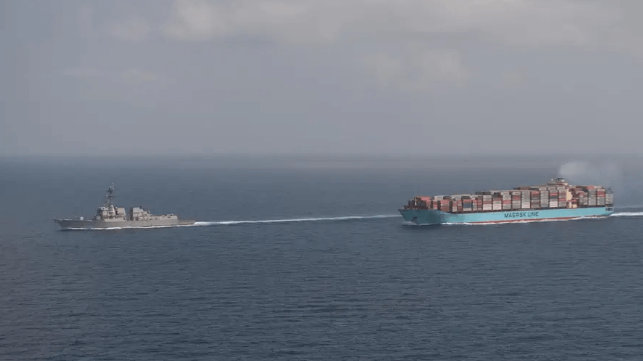
File image: The U.S.-flagged boxship Maersk Chicago participates in an exercise with a U.S. Navy destroyer in the Gulf of Aden, 2019 (USN file image)

Published Mar 18, 2025 10:43 PM by The Maritime Executive


At an annual general meeting held Tuesday, Maersk shareholders voted down an activist investor resolution that would have banned the company from shipping arms to Israel.  

Earlier this month, shareholder activist group Kritiske Aktionærer filed a proposal to stop number-two ocean carrier Maersk from shipping military cargoes to Israel. The motion was opposed by Maersk's board, and when it was put to a vote at the company's annual general meeting Tuesday, it did not pass. 

Maersk denies shipping weapons or ammunition to Israel. In a statement Tuesday, it noted that its U.S. subsidiary - Maersk Line Ltd. (MLL) - has never even filed a transportation plan to ship "classified or sensitive cargo, which includes weapons and ammunition." MLL is a U.S. Maritime Security Program (MSP) participant, and it operates U.S.-flagged vessels that carry federal cargoes, including the military assistance shipments that are a critical element of U.S. foreign policy. 

However, Maersk's critics have differing opinions about which cargoes could be considered "weapons." Investigative journalism group Danwatch has obtained bills of lading that appear to show that more than a dozen Maersk-owned ships carried thousands of tonnes of militarily-useful goods to Israel since the beginning of the Gaza conflict. In one example of a complete system delivery, one bill of lading appears to show that MLL shipped seven armor-equipped Heavy Expanded Mobility Tactical Trucks (HEMTTs) to Haifa in November 2023. While HEMTTs are cargo vehicles, they meet EU definitions for military equipment, and Israeli forces have used armored HEMTTs inside of Gaza for logistics and prisoner transport.

The tabloid Ekstra Bladet also identified nine bills of lading with HTS code 9306.90 (explosive munitions and parts thereof), four with HTS code 9305.91 (cannon parts), and 31 with HTS code 9306.30 (cartridge components). 

"The transport of cargo on behalf of the US government does not contain weapons or ammunition. These shipments contain military-related equipment and are derived from US policy under the US-Israeli security cooperation program," Maersk told Extra Bladet in response.

In its statement Tuesday, Maersk again denied transporting weapons to Israel and pushed back against "misrepresentations" about its business. 

"The [activist] campaign is spreading inaccurate allegations and has in some instances involved assumptions presented as documented facts and what looks like misleading information through twisting of publicly available data," said Maersk in a statement. "Unfortunately, we have also experienced vandalism and illegal, aggressive demonstrations on our premises and against our employees. This will not change our position or our business practice, guided by international standards." 

The company said that it has a strict policy of not shipping weapons or ammunition to active conflict zones, and that it complies with all international regulations. "We fully recognize our responsibility as a global logistics provider and that it is on us to always reinforce the internationally agreed responsible business practices – even more so when operating in areas of active conflict," the carrier said in a statement. 


DP World to Expand Port of Santos Capacity Linked to Deal with Maersk
Santos Brazil container terminal
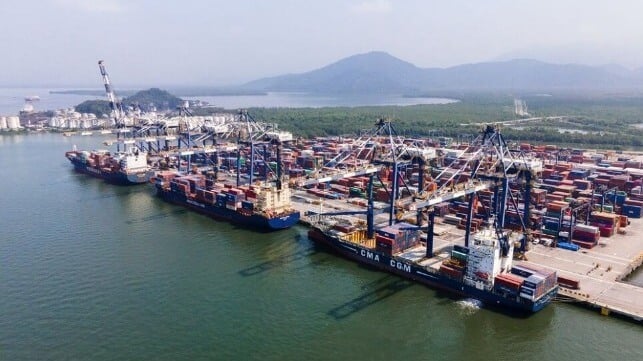
DP will increase capacity 50 percent in Santos, Brazil as Maersk expands services (DP World)

Published Mar 18, 2025 6:49 PM by The Maritime Executive


DP World signed a long-term strategic agreement with Maersk as part of its plans to expand maritime services at its terminal in the Port of Santos, Brazil. DP World operates one of Brazil’s largest private terminals at the Port of Santos and plans to increase capacity by 50 percent to support Maersk’s growth in Latin America.

Under the terms of the eight-year agreement, Maersk will introduce additional long-term services and maintain a minimum service level. In the first year, Maersk will launch six new services with eight weekly calls, increasing to seven services and 10 weekly calls in 2026 following DP World’s capacity expansion.

“This announcement is another strategic step for DP World in Brazil, reinforcing our presence at the Port of Santos, and accelerating new expansion opportunities in the country,” said Márcio Medina, Commercial Vice President at DP World in Brazil. He noted the agreement with  Maersk “not only allows us to expand our operational capacity for container handling but also ensures long-term aces to Brazil’s leading port and logistics hub.”

Currently, the terminal handles 1.4 million TEUs annually. To accommodate growing demand, DP World is investing R$450 million (US$79 million) to expand its container-handling capacity to 1.7 million TEUs by the end of 2026. The company also plans to invest an additional R$1.6 billion (US$280 million) to further increase capacity to 2.1 million TEUs by the end of 2027.

“This agreement with DP World secures service capacity for Maersk at the Port of Santos,” said Paulo Ruy, Regional Head of Terminal & Port Procurement for Latin America at Maersk. “By having this commercial agreement with DP World, we are able to meet the growing demand for container handling and enhance our service offerings, ensuring that we continue to provide end-to-end logistics solutions, in addition to our stand-alone products.”

DP World reports it set a new record for container-handling volume at the Port of Santos in 2024, surpassing 1.25 million TEUs – a 14 percent year-over-year increase. The growth was driven by expanded container operations and the introduction of new services. The company recently invested R$50 million (US$8.8 million) in advanced port equipment as part of its ongoing R$85 million (US$15 million) terminal expansion project, which will increase capacity to 1.7 million TEUs. Additionally, DP World said it has strengthened its network through a new agreement with Rumo, Brazil’s leading railway operator, to develop a new terminal for grain and fertilizer shipments, adding 12.5 million tons of operating capacity per year.

CUTS NOSE TO SPITE FACE

Trump's EPA Withdraws Permit from Proposed NJ Offshore Wind Farm

offshore wind farm
Trump's EPA was successful in withdrawing for review a permit granted the wind farm by the Biden administration (file photo)

Published Mar 17, 2025 3:13 PM by The Maritime Executive


Federal officials were successful in withdrawing for what is believed to be the first time an environmental permit granted by the Biden administration for an offshore wind farm. New Jersey’s proposed Atlantic Shores offshore wind farm project had been singled out by Donald Trump in his opposition to the industry and this latest development adds another hurdle to an already troubled project and potentially the industry.

Atlantic Shores which was proposed as a joint venture between Shell and EDF Renewables received its federal permitting including approval of its Construction and Operations Plan by the Bureau of Ocean Energy Management in October 2024. The plan calls for a two-phase project with a total capacity of 2.8 GW. The first phase, which would be in the southern part of the state near Atlantic City has consistently been reported to be in position to become New Jersey’s first offshore wind farm.

Donald Trump singled out the project during the 2024 presidential campaign and in February 2025 said he hoped the New Jersey project would be “dead and gone.” Among the presidential executive orders were steps to review the industry and its impact on the environment.

The Environmental Protection Agency filed a motion in February to remand the 2024 approval granted to Atlantic Shores for review. Friday, March 14, Environmental Appeals Court Judge Mary Kay Lynch granted the motion saying it was appropriate based on Trump’s Executive Orders.

Local opponents have been contending that the review of the project’s EPA air quality filing did not meet a number of procedural requirements. They allege that the air quality modeling for the EPA permit was not done properly. The permit only pertains to the pile driving operation to set the monopoles for the project and not its operations.

“Atlantic Shores is disappointed by the EPA’s decision to pull back its fully executed permit,” Atlantic Shores said in a brief statement. It emphasizes that “regulatory certainty is critical to deploying major energy projects.”

The project has already faced significant hurdles. Early in 2025, Shell said it was stepping back from its involvement in offshore wind energy and wrote off the value of its investment in Atlantic Shores. The project was also bid into New Jersey’s fourth wind solicitation but the state ended that round without selecting projects leaving Atlantic Shores without its necessary power agreements.

Local opponents celebrated Friday’s decision. They reported they have also written to the Interior Department and the National Oceanic and Atmospheric Administration asking them to reconsider the approvals granted during the Biden administration.

The American Clean Power Association warned that Friday’s decision “could chill investment in the U.S. for all types of infrastructure if a project permit is canceled for political reasons and not because of real impacts.” 

In the last weeks of the Biden administration, BOEM approved other offshore wind projects including SouthCoast Wind which would serve Massachusetts and Rhode Island, and the Maryland Offshore Wind project. It approved a total of 11 projects and set in motion reviews for others. Since taking office Trump has stalled the future reviews and with Friday’s decision concerns are being raised about the projects approved but not yet in construction. The concern is that the Trump administration will use other loopholes such as the EPA permit for Atlantic Shores to delay the approved projects.


Shots Fired as Pirates Board Tanker off Central African Coast

tanker
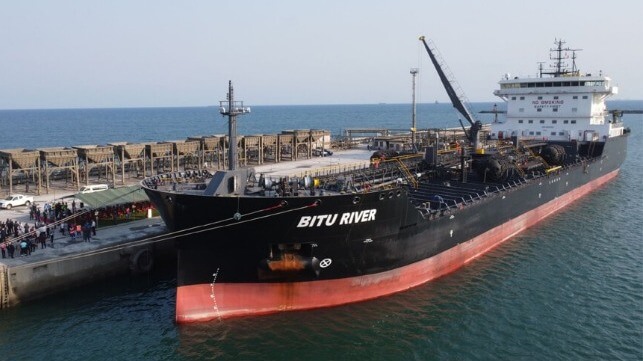
Bitumen tanker BITU River is being identified as the vessel that was boarded (Rubis Asphalt)

Published Mar 18, 2025 12:42 PM by The Maritime Executive


A bitumen tanker was briefly commandeered by pirates overnight with reports of shots fired. The indication is that the crew was uninjured and that the vessel is back underway after the boarders left the vessel.

The Maritime Domain Awareness for Trade – Gulf of Guinea (MDAT-GoG) first issued the alert saying that it had received a report that an unnamed tanker had been boarded approximately 40 nautical miles southeast of Santo Antonio do Príncipe, on the island of Príncipe in the island nation of São Tomé and Príncipe off the west coast of Central Africa. MDAT-GoG’s last report was that the “unauthorized persons” had cleared the vessel, and it was proceeding to Libreville in Gabon for refuge.

The vessel is being identified as the BITU River, a Panama-flagged bitumen tanker operated by Rubis Asphalt, a company that sources bitumen at the refinery and distributes it across West and Central Africa. The 15,500 dwt vessel was built in China in 2022 and is the fifth bitumen tanker in the company’s fleet. The ship is 475 feet (145 meters) in length and the company reported when the vessel was delivered that it would operate with a crew of 14.

AIS signals show the vessel had departed the anchorage at Lomé, Togo and was proceeding to Douala in Cameroon. The security reports said three persons boarded the vessel. It is unclear when the shots were fired, but the company security officer later told MDAT-GoG the pirates had departed. There was no indication if the vessel was robbed or if any crewmembers were kidnapped.

MDAT-GoG reported an incident in a similar location off São Tomé and Príncipe taking place on December 21 and December 22. In that incident the crew was able to secure itself in the citadel. Other recent incidents included an approach off Equatorial Guinea and a fishing boat being attacked off Gabon at the end of January. 

Martin Kelly, Head of Advisory at EOS Risk Group, wrote that this region is “the new stomping ground for pirates in West Africa.” He indicates that six vessels have been boarded since January 2024 off Equatorial Guinea and Gabon with 14 crewmembers kidnapped in three pirate attacks. 


Somali Pirates Suspected of Hijacking Another Yemeni Fishing Boat

fishing boat hijacked
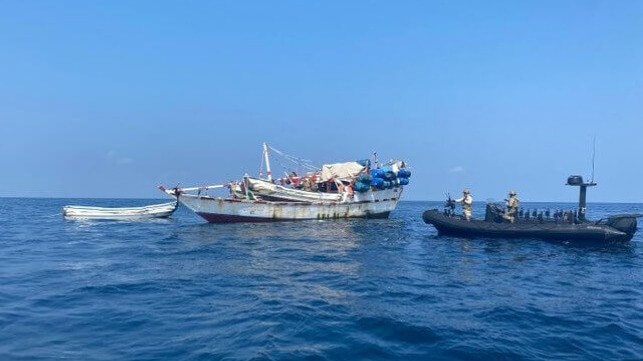
Atalanta reports it is monitoring a fishing boat that it suspects was hijacked by Somali pirates (Atalanta file photo)

Published Mar 17, 2025 4:10 PM by The Maritime Executive


Reports were received yesterday, March 16, of a Yemeni-flagged fishing boat that EUNAVFOR officials believe has been hijacked by Somali pirates. Operation Atalanta is involved as the authorities monitor the vessel and warn of the continued danger in the region.

The report indicates that seven hijackers are aboard the dhow. They are believed to have taken control of the vessel off Durdura, in the vicinity of Ely, which is on the northern coast of Puntland, a semi-autonomous region within Somalia and the same area where other vessels have been attacked.

Atalanta says there is a crew of eight Somali nationals aboard the vessel. It is monitoring the situation and coordinating with the Combined Maritime Forces and the Yemeni Coast Guard.

It is the second incident this year with another Yemeni fishing boat taken a month ago on February 17 and held for five days while the pirates robbed the vessel and its crew before fleeing. However, unlike the prior event which was labeled when it started as an armed robbery, this time Atalanta has classified the incident as a hijacking.

There also was an incident in December where pirates armed with AK-47s boarded a Chinese fishing boat and held up to 18 crewmembers. The Chinese embassy reported the vessel was freed in mid-January. 

The last vessel that Atalanta classified as hijacked was in May 2024 after a rash of incidents that started in late 2023 around the same time the Houthis in Yemen began attacking shipping. Most of the attacks have been against smaller fishing vessels, but Atalanta continues to warn of the regional danger. Based on the continuing dangers, the European Union at the end of 2024 extended the mandate for the Atalanta mission at least until early 2027.

Atalanta was formed in late 2008 and undertook its first patrols in 2009. To date, it reports it has assisted in the capture and conviction of 145 pirates.

ECOCIDE

Multiple Vessels Fouled at Keelung, Taiwan During Bunkering Fuel Spill

Keelung, Taiwan
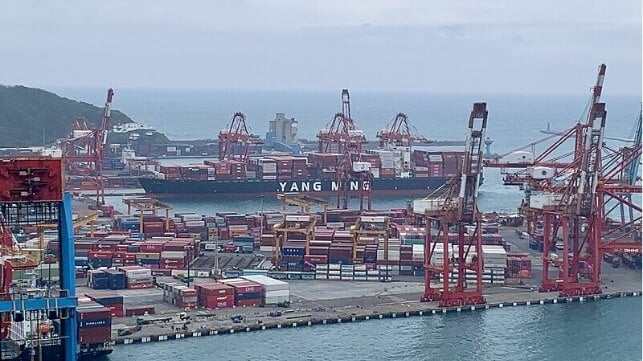
Berths in the container prot were contaminated by the bunkering oil spill (file photo by Heeheemalu - CC BY-SA 4.0)

Published Mar 18, 2025 3:20 PM by The Maritime Executive


Operations are resuming after a disruption at Taiwan’s northern port of Keelung due to an oil spill during a bunkering operation. According to the reports, four containerships, a cruise ship, and the port’s pilot boats were all fouled and required cleaning while the port also worked to contain the spill.

The spill occurred on March 16 while the regional containership Kanway Global was docked and refueling. According to the reports, the 24,500 dwt vessel arrived from another port in Taiwan and was refueling when the spill happened around 2200 local time on Sunday night. Built in 1998, the vessel is registered in Taiwan and has a capacity of 1,675 TEU.

Port officials said that booms were strung to contain the spill. Reports indicated that it was an overflow from the barge connection. The local environmental agency said as much as 100 liters of fuel spilled in the area of the container terminal and fouled multiple berths. 

Pictures showed crews out on Monday applying absorbent materials and mopping up the oil. At the same time, they were power-washing the hulls of multiple vessels that were coated in oil. The Taiwan International Ports Corporation which operates the port confirmed that departures were being delayed and that operations at the port were impacted.

Two TS Line vessels, TS Pusan and TS Surabaya, were in the impacted area as well as Yang Ming’s feeder YM Immense. Keelung is also a popular cruise port and the cruise ship Norwegian Sky was impacted by the spill.

The Kanway Global and the TS Surabaya remain in the port as of late on Tuesday. The cruise ship Norwegian Sky departed and was underway to Hong Kong while the TS Pusan had also been cleaned and permitted to depart.

Three pilot boats were also impacted by the oil. Reports said they would need to be dry docked to for cleaning.

Port officials said they were targeting completing the cleanup on Tuesday. They expected normal operations to resume in the port. Kanway Lines was reportedly being fined approximately US$10,000 for the incident. 


Top photo of Keelung port in 2024 by Heeheemalu - CC BY-SA 4.0


Good Samaritan Vessel Rescues 19 Fishermen After Vessel Fire off Chile

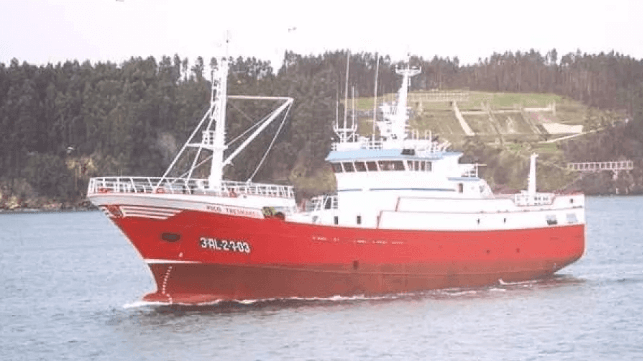
Pico Tresmares (file image courtesy Spanish Fisheries Ministry)

Published Mar 18, 2025 2:47 PM by The Maritime Executive


19 fishermen have been rescued from a raft in the South Pacific after their vessel caught fire and sank. 

The Galician longliner Pico Tresmares got under way from Vacamonte, Chile on February 23, bound for sea. On the morning of March 17, the vessel sustained an engine room fire at a position about 1,000 miles off the coast of La Serena, Chile. A nearby fishing vessel, the Playa Muino Vello, reported the fire to shipowner Pesquera Guadalquivir. The alert was passed to Spanish SAR authorities in Madrid.

The crew of the Pico Tresmares could not contain the rapidly-spreading fire, and were forced to abandon ship into their life rafts. The fishing vessel subsequently capsized and sank. 

A good Samaritan vessel, the longliner Avó Músico, responded to the scene. In stormy conditions, the longliner's crew rescued all 19 survivors from Pico Tresmares, and no injuries were reported. 

The survivors will be transferred to another fishing vessel operated by Pesquera Guadalquivir, according to Spanish media. 


Fisherman Rescued After 95 Days Adrift off Ecuador

Maximo Napa Castro (right) reunited with his brother Alberto (center) and received a hero's welcome on his return to shore in Peru (Alberto Napa Castro)
Maximo Napa Castro (right) received a hero's welcome on his return to shore in Peru (Alberto Napa Castro)

Published Mar 17, 2025 5:21 PM by The Maritime Executive


A 61-year-old Peruvian fisherman has been rescued after spending 95 days adrift at sea off the coast of Ecuador. He had been hanging on to life for months by eating whatever he could catch, and was in critical condition when found.

Maximo Napa Castro, 61, set off from the city of Marcona, Peru on December 7. He was planning to spend two weeks at sea to fish, and had supplies for the journey. 10 days into the trip, he encountered a storm and his skiff's engine failed, leaving him adrift. Without an EPIRB, he had no way to send a distress signal for help. He ran out of food and water, and ate insects, birds and a turtle in order to keep going; he relied solely on rainwater for his drinking water supply, when it was available at all. 

While he was adrift, his family held out hope that he might still be rescued, even as the days turned into weeks and months. "Every day is anguish for the whole family and I understand my grandmother’s pain, because as a mother, I understand her," said Napa's daughter, Ines Napa Torres, in a Facebook post. "We never thought we would go through this situation, I wouldn’t wish it on anyone.We will not lose hope, Dad, of finding you."

An Ecuadorian fishing patrol boat found Napa at last on March 11, adrift at a position about 600 nautical miles off the coast of Ecuador. He was severely dehydrated, and he was taken ashore in critical condition and delivered to a hospital in Paita, Peru; he was given IV treatment to nurse him back to health, and was discharged from the hospital on the 15th. He was flown to Lima for a joyous reunion with his mother and the rest of his family. 

Napa's family has complained that Peruvian authorities did too little to find the fisherman when he went missing. "It took three months of constant struggle for the entire family to search on our own, and even to the point of pleading with the authorities to continue the search," his sister Flor Napa told Diario Correo. "We didn't see the proper commitment to this, and I feel disappointed in the local and national authorities for not providing support in these cases."

The local authorities noted that Napa did not have an EPIRB. "I think it was a fortuitous event. Not having a radio beacon made the work a bit difficult," Paita naval base commander Jorge Calizaya told Ecuavisa. 


Fender Bender in Gibraltar Anchorage Renews Discussion on Use of Pilots

Gibraltar Bay
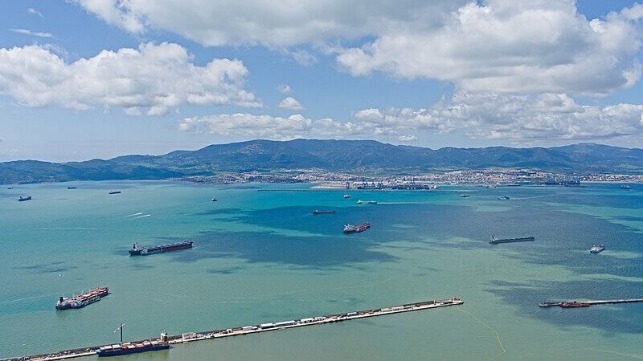
Gibraltar Bay is a popular stopping point for re provisioning and bunkering (Ymblanter - CC BY-SA 4.0)

Published Mar 19, 2025 12:56 PM by The Maritime Executive


Two vessels made contact in the Gibraltar anchorage early on Tuesday in similar circumstances to the 2022 incident which led to the loss of the cargo ship OS 35. While the government was quick to report the damage was minor, it renewed the questions about the use of pilots and the recommendations in the OS 35 report that highlighted that pilots would likely have prevented the incident.

Shortly after midnight on Tuesday, March 18, the Panama-flagged LNG carrier SM Kestrel was getting underway from the Western Anchorage. The vessel built in 2023 in Korea is part of the new Korea Line LNG subsidiary launched by SM Line. It is 114,000 dwt and 984 feet (300 meters) in length.

A spokesperson for the Gibraltar government confirmed to the news outlets that the LNG carrier “came in contact” with another vessel. They said there were no injuries and no significant damage to either vessel, but both were ordered to remain in the anchorage. Class, flag, and port inspectors were due to inspect both vessels.


The SM Kestrel made contact with the Panama-flagged Diamond Star II (57,700 dwt). The bulker had arrived in the anchorage on March 17. It was at anchor in the Western Anchorage, which is a busy part of Gibraltar Bay. Gibraltar has two anchorages, the Eastern which is used for provisioning and crew changes, and the Western where bunkering operations are conducted.

The Gibraltar-based charity the Environmental Safety Group issued a statement calling on the government to move forward with the implementation of the safety recommendations after the OS 35 incident.

The OS 35 was also maneuvering to leave the Western Anchorage in August 2022 and the vessel was encountering problems turning. As it got underway, it struck the bulbous bow and anchor of the Adam LNG carrier, which only suffered minor damage. However, the cargo ship started taking on water and was ultimately directed into another part of the bay so that it could be grounded. It was a total loss and it took more than a year to salvage the vessel.

Gibraltar’s regulations only require pilots for berthing and unberthing, and not for departing the anchorage. In the case of the OS 35, there also was no requirement for the master to advise Gibraltar’s VTS of the intended plan so the VTS could not realize the vessel was off-plan. The VTS only called the vessel when it became concerned.

The report on the loss of the OS 35 recommended that the Gibraltar Port Authority consider introducing compulsory pilotage for vessels departing the Western Anchorage. It also recommended the involvement of the VTS which could advise vessels on their departure plans. Short of these steps, it also called for the Gibraltar Pilots to highlight their availability for departures, and that they should make clear the process for requesting pilots for departures.

Government officials today told GBC news they were considering all options and exploring carrying out a wider independent navigation risk assessment. They said compulsory pilotage would be one of the issues considered. 

Because of its strategic location at the entrance to the Mediterranean, Gibraltar is a key port for many vessels. It is a busy bunkering port and a frequent stop for vessels for supplies and other services arriving from overseas or before they depart from the region. The Gibraltar Port Authority highlights that approximately 60,000 vessels transit the Strait of Gibraltar each year, with around 240 million gross tonnes of vessel calls per year at Gibraltar and its anchorages.
 

Top photo by Ymblanter - CC BY-SA 4.0


Australia Fines Bulker for Failing to Follow Safety Directions

bulker at dock
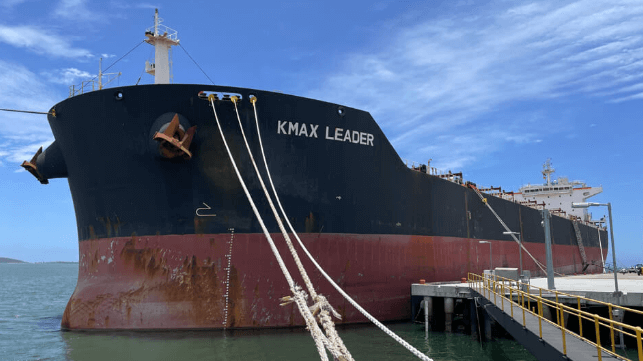
Australia fined the vessel after banning it due to safety and mainteance issues (AMSA)

Published Mar 17, 2025 6:50 PM by The Maritime Executive


A court in Australia sided with its maritime authorities and ordered the owners of a bulker to pay a fine as well as court costs for failing to follow safety directions. The fine comes after the Australian Maritime Authority (AMSA) last year banned the vessel from sailing to Australia also related to safety issues in 2023.

KMAX Leader, a Liberia-flagged bulk carrier, arrived at the Port of Gladstone in October 2023 reporting propulsion issues. Through the port agency, Universal Shipping Alliance, AMSA was advised the vessel would require eight to 10 days to complete repairs. Instead, the port and AMSA found themselves dealing with the ship for four months while two cyclones also impacted the area. The vessel finally left Australia in February 2024 under tow after engineers had repeatedly failed to resolve the mechanical problems.

AMSA now says, “The captain of the KMAX Leader and its Australian agent, Universal Shipping Alliance, failed to respond to and act on the issued direction, despite repeated requests.” After the vessel left the port under tow, AMSA slapped a 12-month ban on it from entering Australian waters.

“In this case, with a cyclone bearing down on the port, the consequences of not engaging a towage vessel to move the vessel out of the port, could have been catastrophic,” said AMSA Executive Director Operations Michael Drake. He warned that ignoring lawful directions from AMSA is not an acceptable option.

AMSA emphasizes that a failure to act on a direction is a serious violation of the Navigation Act 2012 and carries severe consequences. As such it went to court and now the Gladstone Magistrates Court agreed. A fine of A$63,000 (US$40,000) was imposed on the owner along with court costs for failing to comply with AMSA’s written direction.

Owned and managed from the Philippines, KMAX Leader was built in 2010 and became one of four ships AMSA barred from Australia during 2024. Three of the vessels, including KMAX Leader, were banned for maintenance issues while the fourth was banned due to improper storage of explosives and repeated violations by the shipping company. AMSA highlights during its 2023-24 financial year, it issued 57 directions to vessels and operators in relation to safety breaches, mechanical deficiencies, and maritime labor issues.

“We will not compromise on the safety of vessels and crew, or any potential threat to the community or environment,” said Drake.


Cargo Ship Stranded in UK’s Humber Estuary Refloated Sooner Than Expected

cargo ship refloated
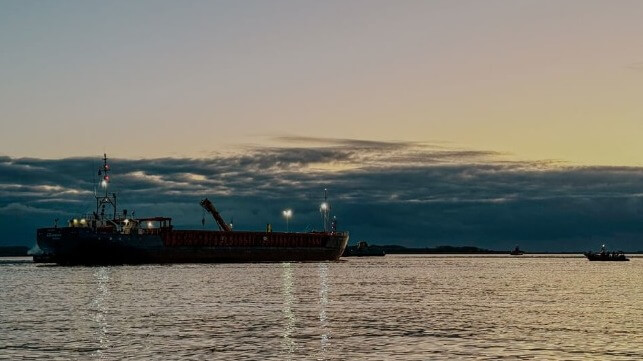
H&S Wisdom refloated at dusk on March 15 (Humber Rescue)

Published Mar 17, 2025 6:11 PM by The Maritime Executive


After two weeks and a lightering effort salvage crews were finally able to free a stranded Dutch short-sea cargo ship that was aground in the UK’s Humber Estuary. Officials had feared the vessel might be stuck till an April high tide.

H&S Wisdom (1,850 dwt) was inbound from Rotterdam with a load of steel when it became stranded on March 2 and as the tide went out she was sitting firmly in the mud. Shortly after the vessel grounded,  three efforts were tried to free it but were abandoned when it was clear it was too firmly wedged in the estuary. Reports called it a “navigational effort.”

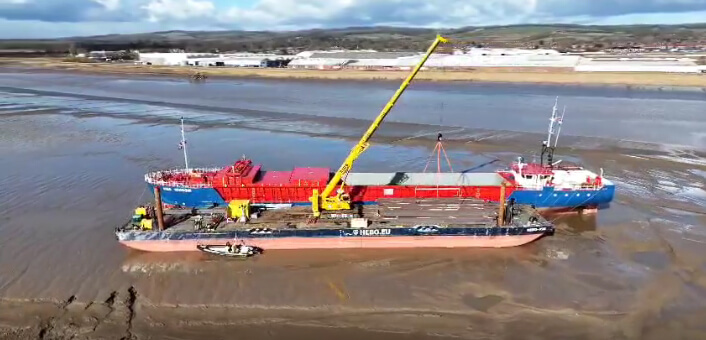
The crew remained aboard the vessel for two weeks while supplies were ferried to them from shore. At the same time, two barges were positioned alongside with a crane parked on one and the efforts began at offloading some of the cargo to prepare the ship for a new effort to free it. 


H&S Wisdom's cargo was removed to permit the refloating sooner than expected (Hebo Maritiemservice)


Humber Rescue’s volunteer crew reports it stood by last week and aided in ferrying surveyors to the vessel. 

Finally on Saturday, March 15, as the tide came in and with the aid of a tug, they got the vessel free and back into the channel. The 82-meter (269-foot) vessel built in 2002 and registered in the Netherlands was escorted by the tugs to a nearby pier for further surveys.

Residents who turned out to see the vessel told the BBC they would long remember when the cargo ship got stuck in the river.


UK Says with Fires Out, Focus is on Recovery and Pollution Retrieval

 allision between the containership Solong and the tanker Stena Immaculate

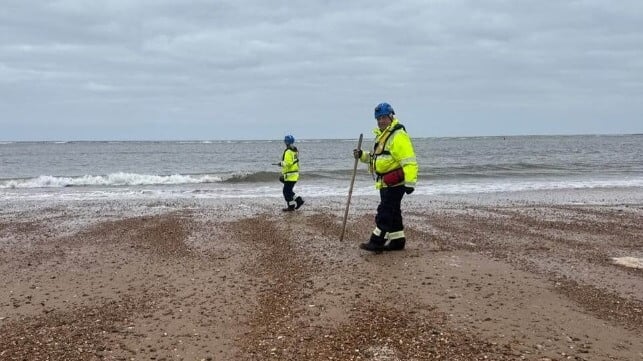
looking for plastics on UK shoreline
HM Coastguard retrieval underway along the shoreline (MCA)

Published Mar 19, 2025 3:18 PM by The Maritime Executive


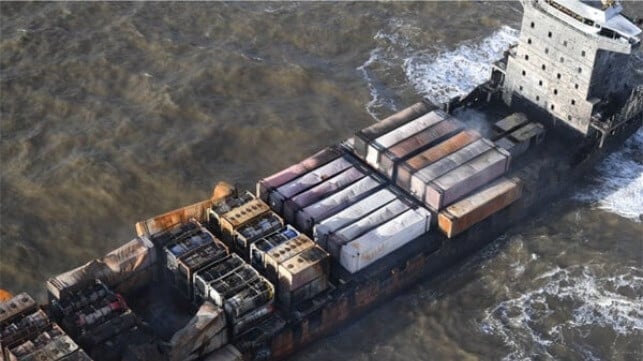
HM Coastguard reports that the response to the allision between the containership Solong and the tanker Stena Immaculate is being downgraded as it moves into the recovery phase. No longer classified as a “major incident,” the focus is on salvage while concern continues to rise about the pollution being discovered along the shoreline.

After more than a week, HM Coastguard reports the fires on board the Solong have been extinguished. Salvors are now accessing all parts of the vessel, which remains held in position on a tow line. Salvage teams had already been able to inspect the Stena Immaculate, which remains at anchor.

"Aerial surveillance flights continue to monitor both vessels and the retrieval operation,” said Chief Coastguard Paddy O'Callaghan. The organization is urging individuals to report sightings of debris while saying, “HM Coastguard will however continue to support the salvage and multiagency retrieval operations while keeping the overall situation under review.”

Wildlife organizations however are raising concerns saying it is a race against time to stop the spreading pollution from the incident. The first sighting of what has now been determined to be nurdles (plastic pellets) was reported on Sunday, March 16, and now according to the Royal Society for the Protection of Birds (RSPB) and others they have been found “washing up along miles and miles of the Norfolk coast, including on our nature reserve.”

Saying it is “deeply concerned,” the charity reports that the plastic pollution is currently mostly on the tidelines, but it fears it will spread inland. It highlights the nurdles, pellets the size of lentils, pose a significant risk to seabirds, which can mistake them for food. Further, over time they break down into microplastics.


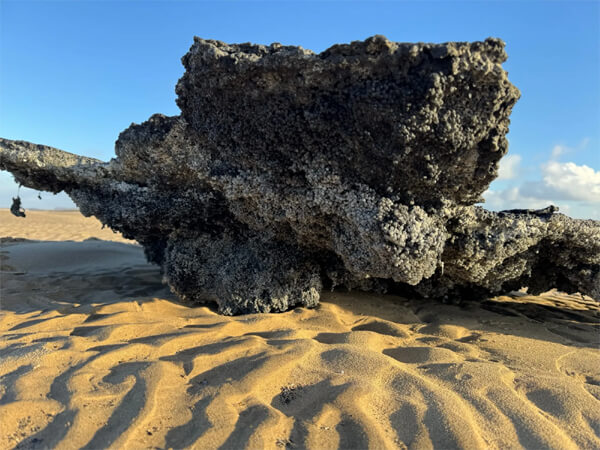
Among the debris are large clumps of charred nurdles (RSPB photo)


It reports that many of the pellets are loose but some were clumped together in larger debris as a result of the fires. These larger masses are washing ashore with the teams reporting they are charred and smelling of kerosene.

“We are also concerned about where more plastic debris may make landfall if it is not collected at sea,” said a spokesperson for RSPB. “Current modelling predicts it may end up at the RSPB nature reserve at Freiston Shore on the western side of The Wash, and at Holbeach. We are monitoring the situation closely and working with the authorities to help track the location of plastic debris.”

The owners of the vessel, Ernst Russ, said through a spokesperson that while there were nurdles aboard the Solong it does not believe any containers were lost overboard. It suggested that during the intense fires, some of the packaging might have opened and spilled some of its contents. It says it is “working proactively to mitigate any long-term impact on the marine environment” while liaising with the coastguard.


Plastic Pollution Washes Ashore as UK Continues Planning Vessel Salvage

burnt containership Solong
HM Coastguard is saying the pollution likely entered the water at the point of collusion (Havariekommando photo)

Published Mar 17, 2025 12:31 PM by The Maritime Executive


The first signs of pollution were reported by HM Coastguard in the water and washing ashore on Sunday, March 16, following the containership Solong hitting the anchored tanker Stena Immaculate. The Coastguard is saying the pollution likely entered the water at the point of collision on March 10 and that a retrieval operation has begun in the developing situation.

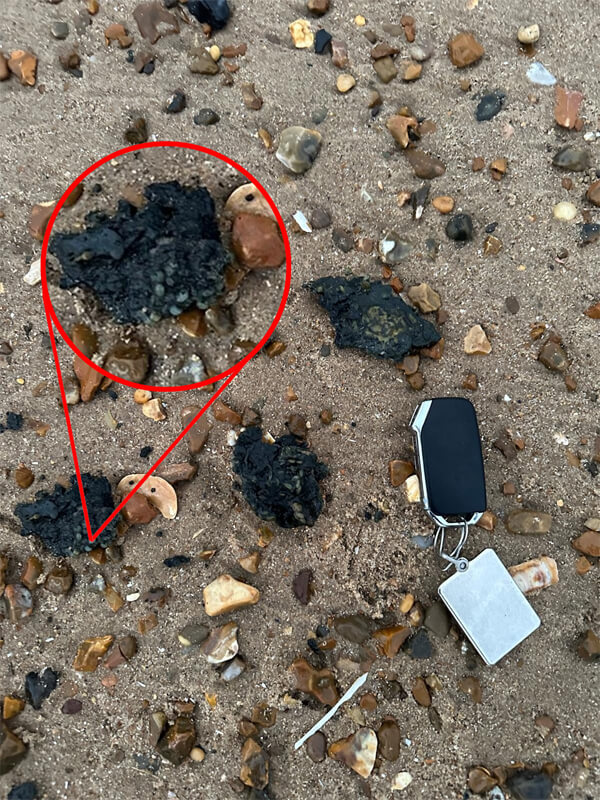
The RNLI (Royal National Lifeboat Institution) identified the pollution reporting on Sunday that a sheen had been spotted on the water. The Maritime and Coastguard Agency (MCA) said an aerial survey confirmed the pollution which has now been identified as plastic nurdles (small plastic pellets). Today, the Coastguard is reporting observers have found the first clumps of burnt pellets washing ashore at disparate locations along the shore between Old Hunstanton and Wells-next-the-Sea.

Nurdles are small pellets of plastic resin used in plastic production. They are sized between 1 and 5 mm and weigh less than a gram. The concern is that they pose a risk to wildlife and are especially challenging to clean up. Sri Lanka dealt with a large-scale clean-up effort in 2021 when the containership X-Press Pearl burnt and sank off Colombo and a large quantity of nurdles washed ashore. The International Maritime Organization (IMO) moved in 2023 for new recommendations on the transport of nurdles because of the pollution risks while the EU introduced new rules in 2024.


HM Coastguard released pictures of the burnt clumps on the beach. The said retrieval has started today.

News of the first pollution came after U.S. shipping company Crowley, which operated Stena Immaculate under charter for the U.S. government, reported salvage teams had found the damage was contained on the vessel. SMIT Salvage is handling the job and its teams reported that only one cargo tank and one ballast tank were breached when the vessel was hit.

Crowley reports there was a total of 220,000 barrels of Jet-A1 fuel aboard. They now believe that 17,515 barrels were lost in the fire or leaked after the vessel was hit. The remaining cargo and the vessel’s bunkers are reported to be secure. 

The company is crediting the crew of the Stena Immaculate with heroic actions as the fires were beginning. It said the crew had the presence of mind to activate fire monitors to provide boundary cooling water to the adjacent tanks.

The companies have warned that the salvage operation will be complex and that it will require time. Plans are being developed for both vessels and being reviewed with the MCA.  


Workers at BAE’s Osborne Naval Shipyard Australia Walkout in Wage Dispute

Australia shipyard workers on strike
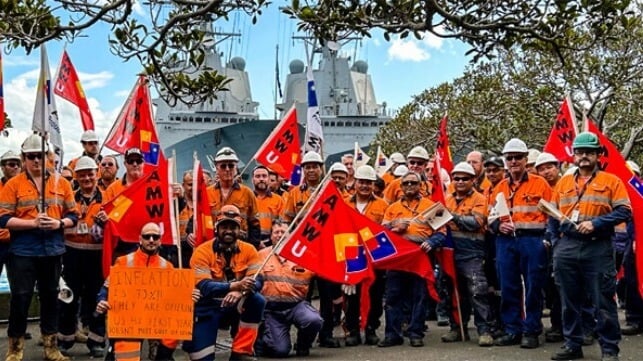
AMWU members are demanding a 30 percent wage increase from BAE Systems' Australian shipyard (AMWU)

Published Mar 19, 2025 2:17 PM by The Maritime Executive


Unions representing more than 500 workers at the Osborne Naval Shipyard in Adelaide, Australia began an industrial action as contract negotiations over wages stretched into an eighth month with no resolution in sight. The walkout comes at a critical time as the BAE Systems’ yard is preparing to move into full production of Australia’s new Hunter Class frigates as well as other major projects scheduled for 2025.

The Australian Manufacturing Workers’ Union (AMWU) reports that over 400 of its members walked out to demonstrate their frustration on Monday, March 17 during an all-hands meeting hosted by BAE Systems Maritime Australia Acting Manager Director Paul Berryman. They were joined by around 100 workers from the Australian Workers’ Union (AWU) and the Electrical Trades Union (ETU). 

A BAE spokesperson confirmed to the local media in Australia that the company is “negotiating an Enterprise Agreement that seeks to ensure improvements to wages and longer-term job security for our employees.”

The blue-collar workers at the shipyard have been undertaking stoppages during the last month. Negotiations for wage increases and other issues reportedly started in July 2024. AMWU says it is seeking a 30 percent wage increase on average over three years to “keep them in line with industry rates.” It reports that BAE Systems Australia is currently offering workers a 12 percent wage increase over three years.

“Workers at BAE are rightly angry that they are paid on average 20 percent less than other workers with the same skills in the same industry,” said AMWU SA Acting State Secretary Stuart Gordon.

The dispute comes at a critical time for the shipyard which is currently staffing up as it prepares to move from test modules to the full construction of the first of three Hunter Class frigates and a total of six in the program. In 2018, the Australian Government selected BAE Systems to deliver the Hunter program for the Royal Australian Navy.

The shipyard recently highlighted that it had added 47 apprentices joining the Hunter Class Frigate Program at the Osborne Naval Shipyard in Adelaide. It said it was part of its largest-ever intake of apprentices in the state.

“The future of the industry is built on attracting and retaining our skills and experience,” said Gordon. “We are the highly skilled tradespeople who are building the next generation of ships for the Australia Defence Force.”

In addition to the Hunter program, the union highlights the yard will also commence maintenance and upgrades mid-year on the Hobart-Class destroyers as part of the Defence Capability Enhancement Program. The workforce will also conduct work on Offshore Patrol Vessels (OPVs).  

BAE reports that it will continue to ramp up recruitment for the Hunter program with 400 new trades roles to be offered in 2025. Further, it says an additional 600 new roles will be offered across its maritime operations at Osborne.

The company reports it is continuing to negotiate in good faith. It said it would seek to hold the all-hands meeting in an effort to resolve the dispute.


French Dockworkers Suspend Plan for “Dead Port” Starting on March 18

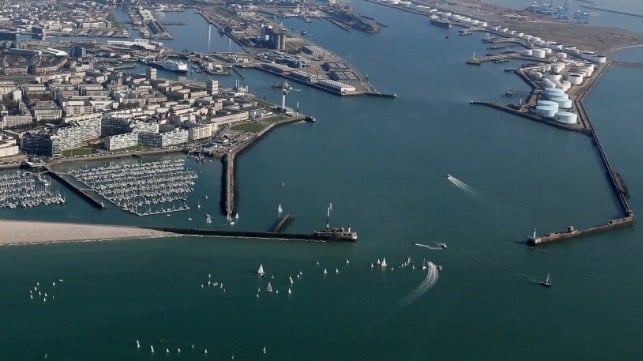
Le Havre, France
Unions had threatened to stop all activity in Le Havre and other ports for three days (file photo)

Published Mar 17, 2025 5:10 PM by The Maritime Executive


The unions representing French dockworkers at the major industrial ports said in an effort to ease tensions with the government it would suspend its plans for a “dead port” strike planned for March 18. The unions reported that government officials had been receptive in a recent meeting, and they hoped to make progress on a simmering dispute over reforms to France’s retirement policies.

Dockworkers and other port employees have been conducting a rolling series of strikes since January in a dispute that dates back to 2023 and the federal government’s plans for reforms in the national retirement project. The government of French President Emmanuel Macron pushed through controversial reforms in 2023 including raising the national retirement age from 62 to 64.

The unions are demanding that their industry be exempt from the changes to retirement. They insist it is a physically demanding profession that entitles them to special consideration.

The Federation National des Ports et Docks scheduled a strike for March 18 that was reportedly going to stop all activity in the ports of Le Havre and Rouen.  There were fears that it would include a suspension of the cross-channel ferry operations to England.

The job actions had varied since January ranging from four-hour stoppages to strikes ranging between one and three days. A prior action on February 27 stopped nearly all cross-channel ferry services for the day. The unions had vowed to intensify their actions in March with tomorrow’s strike to last for 72 hours.

After a meeting with representatives from the Prime Minster and key government agencies, the unions said the government was more receptive to talks and honoring its earlier promises. The unions had been arguing that the government was not responding to earlier commitments and not proposing additional talks till 2027.

The unions have scheduled a general meeting for March 25 to review the status of their efforts. Leaders while they were seeking to ease tensions it would be possible that they would initiate new industrial actions in April if the government does not respect its commitments to the dockworkers.