Wednesday, March 26, 2025


Soldiers can cope with killing


They train for it and they know it's part of the job. But one factor helps veterans cope with the reality of killing in the course of their duties


Norwegian University of Science and Technology

Veterans from Lebanon 

image: 

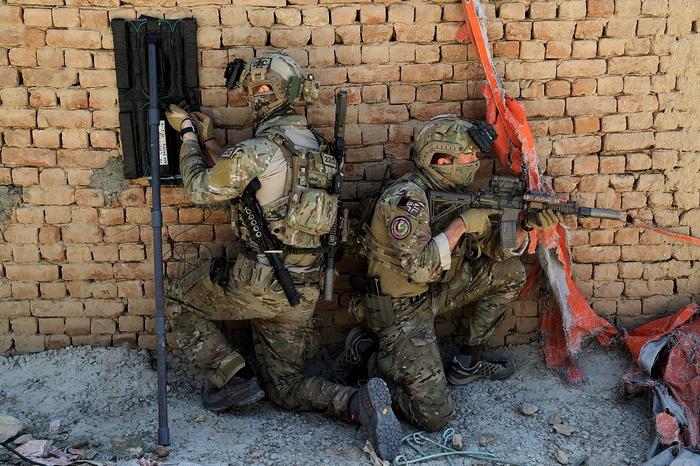
Veterans from Lebanon struggle more than veterans from Afghanistan after taking lives. The two missions were very different. Here, Norwegian naval special forces train in Afghanistan. 

view more 

Credit: Photo: Torbjørn Kjosvold, Norwegian Armed Forces.


Taking a person’s life is not automatically harmful to a soldier’s mental well-being if the circumstances justified it, according to a study of more than 14,600 soldiers.

“Killing another person does not in itself seem to be something that goes against human nature, and it doesn’t necessarily harm the mental health of the person who does it,” said Andreas Espetvedt Nordstrand, a Norwegian clinical psychologist.

Commander Nordstrand is the head of research and development at the Institute of Military Psychiatry, Norwegian Armed Forces – Joint Medical Services. In addition, he is an associate professor at the Norwegian University of Science and Technology (NTNU’s) Department of Psychology.

The results of a new study directly contradict previous theories that taking a person’s life is automatically detrimental to mental health. However, everything depends on the circumstances in which it takes place.

Studied all Lebanon and Afghanistan veterans

Nordstrand investigated the mental health of Norwegian veterans after they had completed their military service. He conducted this study with Professor Leif Edward Ottesen Kennair from the same department at NTNU and several other researchers.

These include war veteran Ronny Kristoffersen, who was himself shot in Afghanistan, and former chief psychiatrist of the Norwegian Armed Forces – now known from the Norwegian TV programme Kompani Lauritzen – Jon Reichelt. It is a comprehensive study.

“We studied every Norwegian Armed Forces veteran who had served in Lebanon and Afghanistan, and identified those who have killed in combat,” said Nordstrand.

The study included 10,605 Lebanon veterans and 4053 Afghanistan veterans, although only a small minority had killed someone. The researchers then investigated how the experiences during service had subsequently affected the soldiers’ mental health.

“We looked at PTSD, depression, insomnia, anxiety, alcohol consumption and quality of life,” Nordstrand said.

The results are striking – the difference between veterans from Lebanon and Afghanistan is huge.

The Lebanon veterans suffered more mental health problems

“Taking a life in combat was a key factor among the veterans who had served in Lebanon. The veterans who had killed someone in combat were more likely to experience mental health problems, increased alcohol consumption and reduced quality of life later on,” said Nordstrand.

But that was not the case for the veterans who had served in Afghanistan.

“For the Afghanistan veterans, taking a life had no subsequent impact on their mental well-being. We did not identify a trend in any of the variables we investigated,” said Nordstrand.

The researchers checked all the analyses to establish whether other exposure to trauma could explain the findings. The difference between the two veteran populations is striking.

Nordstrand believes the findings reveal something fundamental about human nature.

“There is a widespread belief in society that taking the life of another person goes against human nature, and that this will easily create what psychotraumatology refers to as ‘moral injuries’,” he said.

But that doesn’t appear to be the case.

“Our findings indicate that whether taking a life subsequently has a negative impact on mental health and quality of life is highly context-dependent,” emphasized Nordstrand.

Completely different situations for soldiers in Lebanon and Afghanistan

Lebanon and Afghanistan were very different missions, which may account for some of the difference.

In Lebanon, the soldiers’ mission was largely to calm tensions and ensure that peace was maintained. There was a risk of combat, but it was nowhere near as dangerous as in Afghanistan.

In Afghanistan, soldiers were much more likely to encounter combat situations with more aggressive opponents.

“Participating in a peacekeeping operation seems to make soldiers much more vulnerable to the aftermath of killing another person than soldiers involved in combat missions," Nordstrand said.

The expectations of the soldiers and their missions were very different.

"We believe this supports the view that it is primarily violations of group norms and mission guidelines that make actions like killing harmful,” he said.

If the mission entails a high risk of the enemy acting aggressively, there is more leeway and acceptance for taking a life.

The groups are more similar with regard to other traumatic experiences, such as being in life-threatening situations or witnessing something traumatic.

“But the Afghanistan veterans experience fewer problems from being in life-threatening situations, such as participating in combat. This is probably related to training and preparation, which provide mental resilience in high-stress situations and make it less likely that such experiences will negatively impact the soldiers afterwards.

Clear missions that establish norms

“We believe the findings show that we must be acutely aware of the rules of engagement, expectations, and the mission guidelines we set when sending soldiers on armed missions," he said.

And it doesn’t just apply to soldiers. The same is probably true for other areas where the government has a role in violence, such as the police.

"These factors collectively create group norms among the soldiers – norms that determine what they perceive as right or wrong. It is these group norms that are either violated or upheld if they find themselves in a situation where they have to kill,” explained Nordstrand.

If soldiers know and experience that it is acceptable to kill when the situation demands it, such experiences rarely become a problem. They are not left with a feeling of having done something wrong. At the same time, killing someone is very far removed from what most people in Norway experience, so soldiers are often particularly careful to ensure that the action occurred within the established group norms.

“The differences between the two groups of veterans in our study enable us to identify what creates protection against and the risk of negative consequences of taking a person’s life. The common factor here is the context in which it occurs. This applies to preparations, both physical and mental, and how society and networks engage with individuals who have killed when they eventually return to Norwegian society.”

Five years of research

Nordstrand started this project back in 2020, and although the data quickly provided clear answers, it still took five years for the article to be published.

“This is a sensitive topic, and the findings may be perceived as somewhat taboo. In civilized, humanistic societies, people often dislike the idea that taking a person’s life can be entirely unproblematic for soldiers, as long as it happens within the rules of war," he said. "We therefore took our time and ensured that we had solid evidence for the findings of the study and the interpretations of the results. I had several different statisticians thoroughly verify the findings.” 

Determined by mindset

Professor Leif Edward Ottesen Kennair joined the team to incorporate perspectives from anthropology and evolutionary psychology.

“Traditionally, there has been an argument that war is unnatural, that killing is wrong, and that we expect people to be harmed by it, regardless. I have been sceptical of this line of thought,” Kennair said.

He believes the results of the study confirm that the internal group norms, or ‘rules of engagement’, determine the long-term effects.

“The mindset with which soldiers approach a mission determines whether they expect, are prepared for and interpret the intense aspects of the role. If they are in war mode and fully aware of it, they will deal with it completely differently. They experience events and actions differently than if they are unprepared or have a peace mentality,” explained Kennair.

The well-known war veteran Ronny Kristoffersen contributed as a co-author and brought his personal combat experiences into the reflections on the findings.

Important to address

“I think it is important to bring evidence-based perspectives on this taboo subject into the public debate,” said Nordstrand.

Nordstrand said this is especially important during today's turbulent times, when many nations are increasing their military capabilities and there seems to be a greater risk of involvement in armed conflicts.

“Soldiers kill, and being able to do that is actually a key part of their job. The findings are a clear call to take both political and collective responsibility when sending soldiers on dangerous missions, ensuring that they do not feel as though they have done something that goes against the norms of the society they are part of,” Nordstrand said.


A canine patrol in southern Lebanon. 


In Afghanistan, there was a relatively high risk of engaging in combat.


In Lebanon, the soldiers' job was largely to calm tensions and ensure that peace was maintained. There was a risk of engaging in combat, but this risk was far lower than in Afghanistan. 

As long as the mission is clearly defined and it is accepted that it may involve taking lives, the psychological impact is usually manageable afterward.

Credit

Photo: Torbjørn Kjosvold, Norwegian Armed Forces.


Blurring the line between rain and snow: the limits of meteorological classification


University of Vermont
Reporting for the Mountain Rain or Snow science project 

image: 

Reporting the falling precipitation phase in The Mountain Rain or Snow science project. This project provided 40,000 observations across the United States.

view more 

Credit: Meghan Collins, Desert Research Institute


A new study led by the University of Vermont (UVM) uncovers a critical challenge in accurately classifying precipitation as rain or snow using surface weather data.

Published in Nature Communications, the research evaluates the performance of both traditional precipitation phase partitioning methods and advanced machine learning models, revealing that near-freezing temperatures create an inherent limitation in distinguishing between rain and snow, restricting the accuracy of these approaches.

Accurately identifying precipitation phase is critical for weather forecasting, hydrologic modeling, and climate research, with significant implications for transportation safety, air travel, infrastructure operations, and water resources management.

This is especially true in mountain regions, where accurate distinctions between rain and snow help natural resource managers to better predict and mitigate threats and challenges. While a storm consisting of mostly snowfall may benefit ski areas and water resources, a rain-dominated event may cause devastating flooding and infrastructure damage.

Due to the scarcity of direct rain and snow observations, most of which come from airports and rarely reflect the complex weather patterns of nearby mountain regions, scientists and forecasters rely on mathematical techniques that use weather data to estimate the precipitation phase.

These precipitation phase partitioning methods—thresholds, ranges, and statistical models—utilize data such as air temperature, humidity, and pressure. However, most of these methods only perform well in either cold or warm temperatures when snowfall or rainfall, respectively, are nearly certain. At temperatures near freezing, however, all traditional methods struggle to accurately predict rain and snow due to the meteorological similarity of the two phases.

This study figured out why.

“The challenge is at those temperatures near freezing, the air and wet bulb temperature distributions of rain and snow overlap heavily” said Dr. Keith Jennings, the study’s lead researcher.  “This means the traditional partitioning methods cannot consistently separate rain from snow. What surprised us is that the machine learning models did not perform much better. Even by using more data and complex mathematics, they are still trying to tease apart the same information, and they’re seeing rain and snow with almost the exact same meteorological properties.”

To perform this study, the Director of Research at UVM’s Water Resources Institute, Dr. Keith Jennings, partnered with scientists at Lynker, the Desert Resource Institute (DRI), the

Cooperative Institute for Research in the Atmosphere, the University of Nevada Reno, and Utah State University. They mined two unique datasets of precipitation phase: nearly 40,000 crowdsourced observations across the United States from the NASA-funded Mountain Rain or Snow participatory science project and over 17 million synoptic weather reports from across the Northern Hemisphere.

The research team used these datasets to evaluate different methods for classifying precipitation as rain, snow, or mixed. These techniques included a selection of high-performing traditional methods as benchmarks (temperature thresholds and a statistical model) and three machine learning (ML) models: random forest, XGBoost, and an artificial neural network (ANN).

While the ML models provided negligible improvements over the best benchmarks, increasing accuracy by up to 0.6%, they still struggled to correctly classify precipitation in the near-freezing range (1.0°C–2.5°C) and failed to consistently identify mixed precipitation and sub-freezing rainfall events.

The study uncovered a primary obstacle: the natural overlap in meteorological conditions between rain and snow makes classification difficult when solely relying on surface weather data. Despite advancements in machine learning, there is a limit to how well precipitation phase can be predicted with only these meteorological inputs.

Dr. Jennings suggests that researchers should switch their focus from marginally improving the inherently limited rain-snow partitioning methods using surface weather data to creating new techniques that assimilate novel data sources. These alternatives include crowd-sourced observations, such as those from the Mountain Rain or Snow project, weather radars, and satellite  precipitation products.

As climate change drives more frequent rain-on-snow events and alters precipitation patterns, balancing the risks to life, property, and ecosystem function will only become more difficult. However, leveraging multi-source data integration rather than relying on surface weather data alone may offer improvements.

If you want to volunteer your weather observing skills, sign up for Mountain Rain or Snow today. To get alerts on incoming storm events that researchers are studying in New England, text NorEaster to 855-909-0798.


Route 302 in Vermont after a rain-on-snow event in December 2023.

Credit

UVM Spatial Analysis Team


New science-backed tool helps select safer, more sustainable foodware and food packaging


The free Understanding Packaging (UP) Scorecard tool allows anyone to compare the environmental and human health impacts of their foodware and food packaging choices


Food Packaging Forum Foundation

UP Scorecard Preview 

image: 

Preview of the UP Scorecard tool. Easily compare the environmental and human health impacts of different foodware and food packaging options.

view more 

Credit: Single-Use Materials Decelerator (SUM'D)


(Zurich, Switzerland - March 26, 2025) The first fully complete version of the Understanding Packaging (UP) Scorecard is now available for use after four years of beta testing, user feedback, and iteration. Built by the Single-Use Material Decelerator, a collaboration of food service leaders, non-governmental organizations, and technical experts, this free, science-based online tool helps users comprehensively assess and compare foodware and food packaging for their impacts on human and environmental health to support informed decision-making.

The UP Scorecard applies standardized life cycle assessment methods and novel scoring approaches to measure the impacts of foodware and food packaging from production to disposal across six key metrics: plastic pollution, chemicals of concern, recoverability, climate impact, sustainable sourcing, and water use. These metrics are compiled into an aggregate score that makes it easy to compare the sustainability of foodware and food packaging products.

“Foodware and food packaging fulfill important functions,” said Etienne Cabane, Engagement Director at the Food Packaging Forum, which hosts the UP Scorecard. “They offer convenience to customers, allow for transportation, protect food from spoiling, and support communications and marketing. However, they also have significant human and environmental health impacts. The UP Scorecard helps users assess the complex landscape of foodware and food packaging options using a science-based approach to encourage more sustainable choices.”

“The UP Scorecard enables sustainable packaging decision-making by providing science-based, easy to understand scores across key categories,” said Sevrine Bethy, Head of Responsible Sourcing with Sodexo North America. “This allows users to prioritize action areas such as climate, health, or recoverability, understand trade-offs across categories, or consider the overall impact of packaging choices. Sodexo is pleased to support the tool's development and enable operators to navigate the complexities of packaging to make the best choices possible for our clients.” 

Unlike other life cycle assessment tools, the UP Scorecard takes into account chemicals of concern within foodware and food packaging materials. This metric has been improved in the new version of the UP Scorecard and now uses peer-reviewed data from the Food Packaging Forum that considers thousands of chemicals with known health hazards and evidence for consumer exposure or migration from food contact materials into food. With this information, the UP Scorecard uniquely helps the food service industry stay ahead of legislation while providing valuable knowledge for other stakeholders.

Other additions in the latest version include new materials, containers, geographic regions, and an interactive user guide as well as the ability to compare entire portfolios of products to each other. More information on all the new features and updates can be found in the UP Scorecard’s change log or the complete methodology.

__

The Single-Use Material Decelerator (SUM’D) is a passionate and dedicated team of leading food service companies, non-governmental organizations, and technical experts responsible for developing the UP Scorecard.

To stay up to date with the latest from the UP Scorecard, follow us on LinkedIn or Bluesky or subscribe to our newsletter.


Japanese researchers argue ChatGPT is ready to teach medical ethics


Hiroshima University
ChatGPT ethics education for medical programs 

image: 

Researchers argue that the adoption of LLMs into medical curricula can significantly contribute to the acquisition of moral knowledge and the cultivation of virtue, two main aspects of medical ethics.

view more 

Credit: Kanon Tanaka


Perhaps no profession has stricter ethical standards than medicine, and ethics is considered essential in the education of any respected medical school. A new essay by researchers at Hiroshima University (Japan) provides a framework for how Large language models (LLMs) like ChatGPT can be incorporated into ethics education for medical programs. The essay, which can be read in BMC Medical Education, argues that the adoption of LLMs into medical curricula can significantly contribute to the acquisition of moral knowledge and the cultivation of virtue, two main aspects of medical ethics.

LLMs have disrupted almost every industry including the medical industry. Every day, professional healthcare workers and even patients are relying on LLM tools to advise on diagnosis and treatment plans. One reason for the quick adoption is that they work, as LLMs are showing remarkable capabilities in diagnosing a medical condition from patient data.

While the importance of ethics is established in medicine, its education competes with other elements of a curriculum, and much like how the arts and physical education have been victims in public school systems, ethics takes a backseat to the time and resources dedicated to the teaching of basic medical knowledge and clinical skills. By acting as virtual teachers, LLMs, explain Sawai and his colleagues, can reduce the load on educators. Indeed, there is already evidence that LLMs show an impressive understanding of empathy that prepares students for the varied clinical situations they should anticipate in their careers.  

"Medical ethics education does not receive the same educational resources as other medical education and needs innovative solutions. We believe that LLMs are already in a position to supplement the instruction of medical ethics," said Hiroshima University Professor Tsutomu Sawai, one of the authors of the essay. He added that LLMs are a capable resource for teaching basic ethics principles and exposing students to scenarios that mimic real-life clinical situations.

However, the authors state explicitly that LLMs are far from replacing human instructors. Moreover, while LLMs may be suitable for the classroom, they are still not to be deployed in actual medical settings. The critical thinking required for a decision in the clinic demands diverse moral perspectives, and LLMs need more training in this regard. Ironically, training data for this purpose could come from the education settings proposed by the essay.

"LLMs have made remarkable progress in such a short time, and we feel they are ready to be used in by students," said Sawai. "But it is still too early to use them as definitive sources for medical ethics education."

Tsutomu Sawai is a professor (special recognition) in the Graduate School of Humanities and Social Sciences at Hiroshima University. Sawai is also affiliated with the Institute for the Advanced Study of Human Biology (ASHBi) at Kyoto University.

###

About Hiroshima University

Since its foundation in 1949, Hiroshima University has striven to become one of the most prominent and comprehensive universities in Japan for the promotion and development of scholarship and education. Consisting of 12 schools for undergraduate level and 4 graduate schools, ranging from natural sciences to humanities and social sciences, the university has grown into one of the most distinguished comprehensive research universities in Japan. English website: https://www.hiroshima-u.ac.jp/en