It’s possible that I shall make an ass of myself. But in that case one can always get out of it with a little dialectic. I have, of course, so worded my proposition as to be right either way (K.Marx, Letter to F.Engels on the Indian Mutiny)
Wednesday, April 16, 2025
U.S. Coast Guard Seeks Options for Another Small Icebreaker
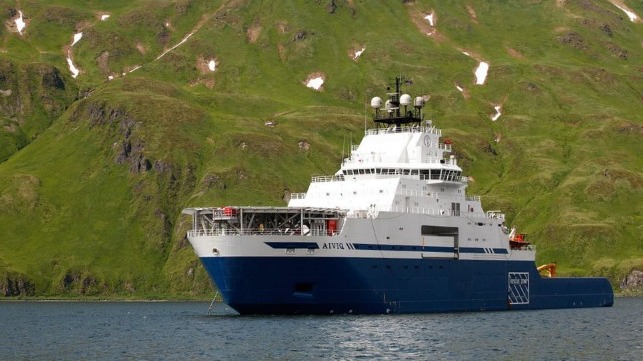
The U.S. Coast Guard recently bought one small icebreaker, and in a new RFI, it seeks options for another (File image courtesy Chouest)
The U.S. Coast Guard is asking industry for options to buy or build another off-the-shelf icebreaker design similar in size to the Aiviq (USCGC Storis) or Canada's Harry DeWolf-class.
On April 11, the Coast Guard published a request for information (RFI) seeking "existing vessels or production ready vessel designs" for a small icebreaker class with specific requirements:
- At most 360 feet in length, 78-foot beam and 23 feet of draft - Icebreaking capability of three feet thick at three knots - Range of 6,500 nautical miles - Endurance of 60 days - Flight deck and hangar for one helicopter
The type of vessel sought appears to align well with Canada's Arctic and Offshore Patrol Ship (AOPS), or Harry DeWolf-class, which meets all of these specifications. A vessel of this class would be smaller and less capable than the Coast Guard's medium icebreaker, USCGC Healy, or the service's long-delayed Polar Security Cutter (PSC).
The RFI indicates that the Coast Guard has an interest in moving swiftly, as it is seeking a yard that can deliver within three years of a contract award. This would require a rapid wind-up at a capable yard or an open slot on a hot production line. Only a few shipyards in the world have recent experience producing thick-hulled icebreaking vessels, and all are located outside of the United States.
The RFI could align with the goals of the ICE Pact, the joint icebreaker construction agreement that the Biden administration signed with Canada and Finland in 2024. In parallel with the ICE Pact, Canadian shipbuilder Davie proposed to use its expertise to open a yard in the United States to build icebreaking vessels - though this plan would require a longer timetable than the RFI's three-year maximum.
Philippines Says Chinese Sea Gliders Were Used for Covert Mapping
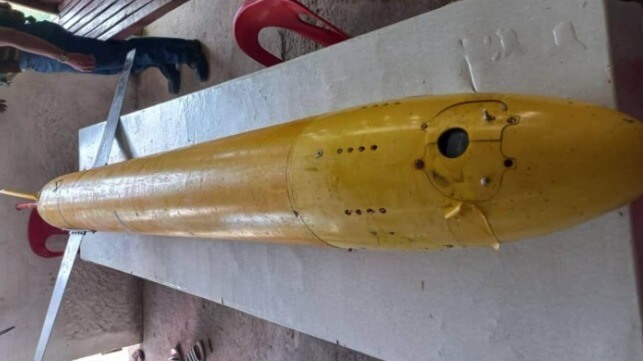
Suspected Chinese sea glider drone recovered in Masbate, 2024 (Philippine National Police)
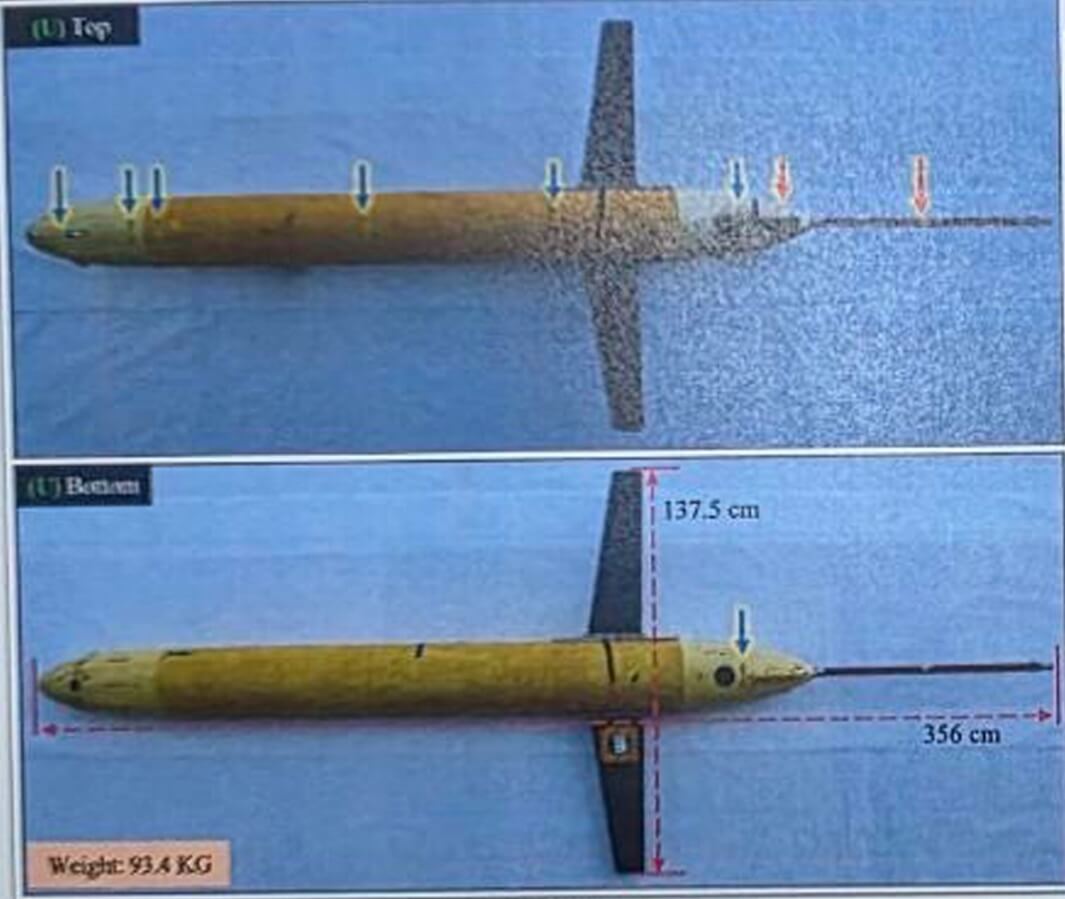
Between 2022 and 2024, Philippine fishermen found five suspicious seaglider drones in a variety of locations between Luzon and Mindanao. An American-assisted forensic review of the devices shows that they were designed to collect data that could be used for "underwater warfare," according to the Armed Forces of the Philippines.
In a press conference Tuesday, AFP spokesman Rear Admiral Roy Vincent Trinidad said that the devices were found in locations that are "important strategically in the defence and security not only of the country, but for international maritime navigation." Three were in the Taiwan Strait off Luzon; one was found off Masbate, near the center of the Philippines' internal waters; and one was found off Mindanao, the southern end of the archipelago. "Most likely, these were dropped by a mothership," he said.
Trinidad said that they were capable of collecting data "beyond navigation." The sensor package aboard could be used to measure bathymetry, water depth, salinity and temperature - all essential data for operating or hunting submarines. Jonathan Malaya, a member of the National Task Force for the Philippine Sea, told media that the drones were "in all likelihood deployed by China to map the Philippines' underwater terrain."
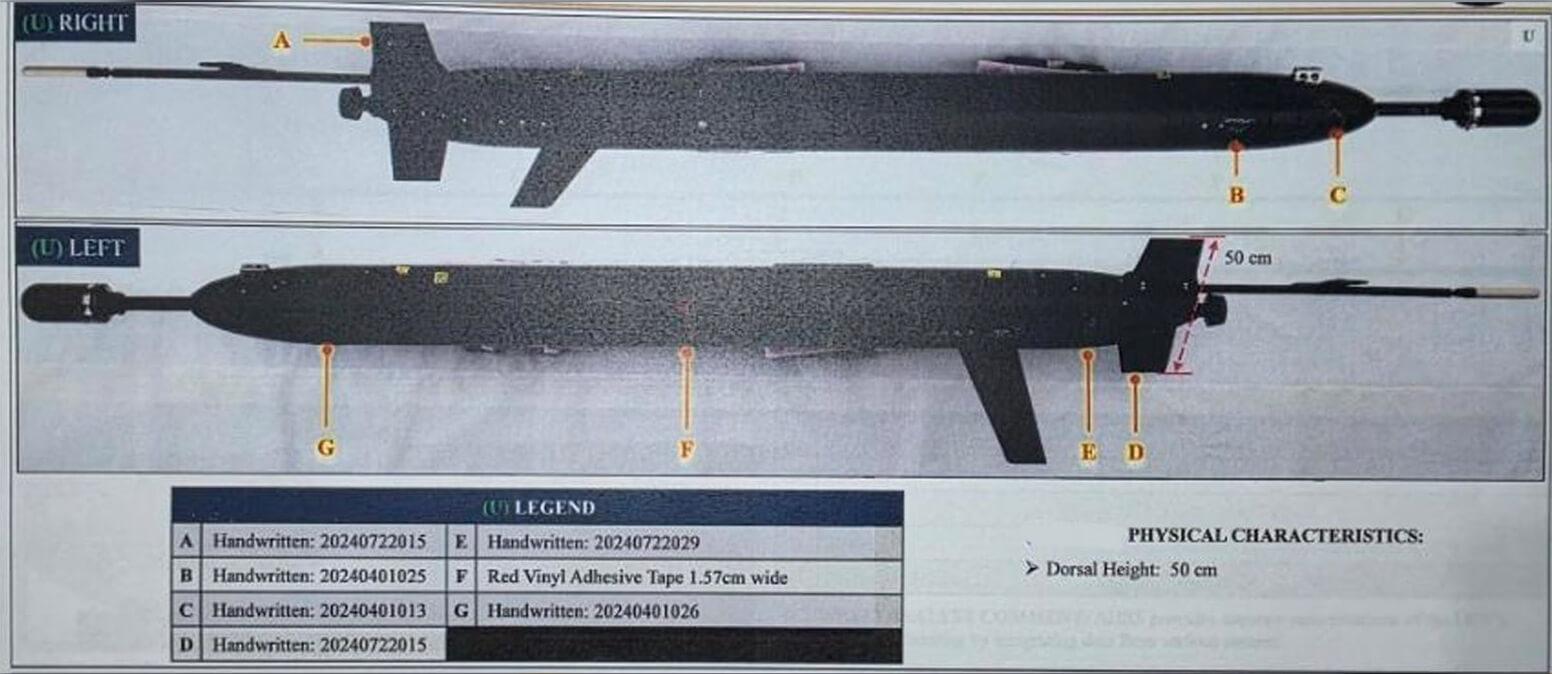
Out of the five drones, at least one had sent signals to China, based on a forensics exam of a cell SIM card found aboard the drone. "The last contact of the card was in mainland China," Trinidad said. Two drones also had Chinese markings.
Based on the evidence, Trinidad put the probability that the drones belong to China at about 55-80 percent. Malaya went further, and said that the forensic data "allowed us to conclusively determine that they are of Chinese origin."
Few nations make seaglider drones, and images of some of the devices displayed Tuesday appear similar to the Chinese-built "Sea Wing" (Haiyi) UUV developed by the Chinese Academy of Sciences, previously found in sensitive waterways in Indonesia in 2019-20. The AFP also displayed photos of an unusual all-black glider, fitted with larger protrusions fore and aft.
The reveal of the new forensic evidence comes just days ahead of the launch of annual U.S.-Philippine Balikatan defense drills. This year, 14,000 troops will participate, the majority from the United States. "It’s a defense plan being tested," Philippine Army Brigadier General Michael Logico told media.
In time for the exercise, Google Maps has adopted the Philippines' name for waters in its western exclusive economic zone, an area that is also claimed by China. Users of the Maps app will now find a marginal sea with a Philippine sovereign name - the West Philippine Sea - just off the coast of Luzon and Palawan. The decision has angered Chinese commentators, who would prefer to continue the use of the name "South China Sea" for the entire region.
U.S. Sanctions Chinese Refinery and Tankers Ahead of Talks with Iran
U.S. added five more tankers to the sanction list for involvement in the Iranian oil trade (file photo)
A day after Iran’s Foreign Ministry confirmed that indirect talks are underway with the United States, the Treasury Department moved to further increase the pressure targeting a Chinese customer of Iran’s oil and more tankers involved in the trade. It was the second time the U.S. has targeted a private, so-called “teapot refinery” in China.
Since declaring a campaign of “maximum economic pressure” on Iran, the Trump administration has now enacted six rounds of sanctions targeting Iranian oil sales. A month ago, the first private refinery in China was sanctioned along with a terminal operator.
Today’s action added a second Shandong Provence-based refinery, Shandong Shengxing Chemical Company, to the sanctions. OFAC reports the refinery has received “dozens of shipments of Iranian crude oil worth more than a billion dollars.” According to the statement, between March 2020 and January 2023, Shandong Shengxing sent more than $800 million in wire transfers to China Oil and Petroleum Company Limited (COPC), an IRGC-QF front company that aided in selling Iranian oil to China. COPC the U.S. says laundered billions of dollars through the U.S. financial system in support of the IRGC-QF, $108 million of which was seized by the U.S. Justice Department.
“Any refinery, company, or broker that chooses to purchase Iranian oil or facilitate Iran’s oil trade places itself at serious risk,” said Secretary of the Treasury Scott Bessent. “The United States is committed to disrupting all actors providing support to Iran’s oil supply chain, which the regime uses to support its terrorist proxies and partners.”
The action is also adding five tankers to the sanctions, including one flagged in Cameroon (Reston – 115,482 dwt) and four flagged in Panama (Bestla -306,206 dwt; Egret – 299,868 dwt; Nyantara – 113,033 dwt; and Rani – 107,123 dwt). According to the U.S., the vessels have been involved in ship-to-ship transfers with sanctioned tankers and shipped billions of dollars worth of Iranian oil, including to Chinese refineries. The U.S. also listed the associated shipping companies in Panama, Malaysia, Marshall Islands, and Hong Kong associated with these tankers.
The Islamic Republic News Agency yesterday reported that the Iranian Foreign Ministry expected a “second round of indirect talks with the United States” to take place in Oman on Saturday, April 19. Iran's Supreme Leader Ayatollah Ali Khamenei wrote on X that a first round of talks had already been executed.
The Trump administration says it will continue to pressure Iran into a new agreement. It has also increased the attacks on the Iranian-backed Houthis in Yemen all as part of the pressure campaign. However, it also confirmed that U.S. Middle East envoy Steve Witkoff spoke directly with Iranian Foreign Minister Abbas Araghchi. The White House termed the first discussions as "very positive” and “constructive."
Swedish Report Fails to Find Evidence of Sabotage by Chinese Bulker
Yi Peng 3 was accused of dragging its anchor to sabotage undersea communications cables (Swedish Accident Investigation Authority)
The Swedish Maritime Accident Investigation Board released the details of its observations aboard a Chinese bulker accused of damaging undersea cables saying it cannot determine sabotage. The agency participated in the ongoing efforts to investigate the Yi Peng 3 (75,121 dwt bulker registered in China) which was linked to the damage to two undersea communications cables.
The government agency that investigates accidents and incidents states that it “cannot be determined with certainty whether a Chinese ship intentionally damaged data cables in the Baltic Sea in November 2024.” It however also notes that its assessment does not prevent the Swedish Public Prosecutor’s Office from conducting a preliminary investigation into a suspected crime and that law enforcement authorities in several affected states are conducting criminal investigations into the incident.
In an 18-page presentation (online in Swedish) the board details its observations aboard the vessel. It however notes the limitations it was working under saying that the flag state normally leads the investigation and that the Chinese limited its access. They were not given an opportunity to access electronic evidence such as the surveillance images from the Voyage Data Recorder and limited crew interviews with interpreters and authorities present in the room.
The board concludes that there are “two alternative scenarios for the incident, one of which is that the ship deliberately released the anchor to cause damage to the bottom infrastructure during the voyage in the Baltic Sea. … The other alternative is that the anchor came loose because it was poorly secured or not at all.”
The crew asserted during the interviews that the release of the anchor was unintentional. Investigators pointed out that the vessel dragged its port anchor for 1.5 days or approximately 180 nautical miles. Among the points they highlight supporting a possible accidental release is weather conditions, which according to the logs on the ship were slightly worse than the Swedish authorities had believed. In an oncoming sea the report notes with extra force from the ship’s speed and bow hitting the sea, “could be sufficient to cause the anchor to start running out.”
They note the ship did not slow down saying it would have been natural to reduce speed to prevent risking damage to the ship or endangering the crew during the release. They also determined the anchor and a section of chain hit the seafloor leaving a mark. It then dragged and bounced across the floor.
During the examination of the ship, they noted a number of conditions such as the lack of marks on the windlass to indicate the brake had been applied. They could not determine if the anchor had been fully secured after the vessel departed Russia, but also noted a lack of damage to elements that might have been expected if the anchor broke free. They also noted that elements such as equipment covers might have been changed before they were permitted to board the ship.
It is not the first time the authorities have failed to find specific evidence of sabotage after the series of incidents in the Baltic region. In February 2025, the Swedish Prosecutor’s Office released the Navibulgar bulker Vezhen also saying it could not find evidence of sabotage. A commercial fishing trawler was also detained after another incident but released after only a few hours.
Baltic nations remain on high alert after a series of incidents and were successful in getting NATO to increase its assets in the region. Patrols have been increased while the nations plot new steps to safeguard their undersea infrastructure which they believe has become a target in a new style of war.
Piracy Incidents Spike Nearly 35% in Q1 Drive by Singapore Strait
IMB warns that while reduced the threat of piracy remains and is increasing around Singapore (file photo)
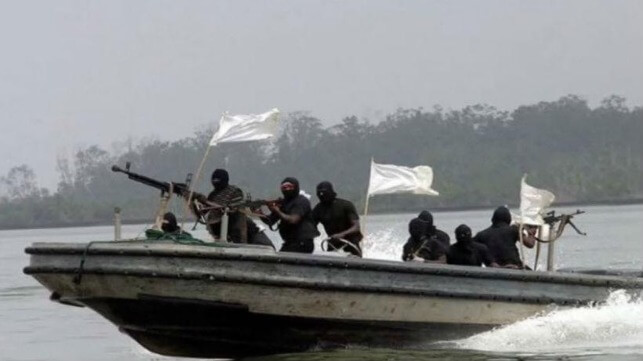
The ICC International Maritime Bureau (IMB) issued its quarterly report on global piracy warning of a rise in global piracy and armed robbery incidents driven by a spike in attacks in the Singapore Straits. Southeast Asia, and specifically the regions around the Singapore Strait has become the global hotspot warns the report while the figures show that globally piracy continues to decline.
The UK-based group which is often referred to as the anti-crime arm of the International Chamber of Commerce, added its voice to that of ReCAAP in Asia and private security firms which have all sounded an alarm about the spike in robberies on ships transiting the Singapore Strait. IMB calculates that 31 of the total of 45 incidents during the first quarter happened in Southeast Asia. The Q1 report highlights that 27 incidents were reported in the Singapore Straits compared to seven for the same period in 2024.
“The reported rise of incidents in the Singapore Straits is concerning,” said IMB Director Michael Howlett highlighting the urgent need to protect the safety of seafarers navigating these waters. “Ensuring the security of these vital routes is essential and all necessary measures must be taken to safeguard crew members.”
Raising additional concern is the fact that 92 percent of all vessels targeted in the Singapore Straits were successfully boarded. IMB says this includes nine bulk carriers and tankers over 100,000 deadweight tonnage in size. Further, it highlights that while most incidents were considered low-level opportunistic crimes, crewmembers were at great risk with guns reported in 14 incidents. In 2024, guns were reported in 26 incidents globally. Ten crew members were taken hostage in six separate incidents, two were threatened and one was reported injured.
Globally during the first quarter, IMB calculates 37 vessels were boarded, four were hijacked and four had attempted attacks. The threat to crew safety remains high with 37 crew members taken hostage, 13 kidnapped, two threatened and one injured. Also in three-quarters of the incidents (35), the ships were underway when the attacks took place.
While incidents are rising in Southeast Asia, the data also highlights that the number of reported incidents within the Gulf of Guinea continues to be at its lowest in nearly two decades.
IMB however warns the danger off West Africa is not over. All 13 crewmembers reported kidnapped during the quarter were taken in these waters. Two separate attacks resulted in kidnappings and a total of six incidents were reported in the first quarter of the year. In March, pirates hijacked a bitumen tanker southeast of Santo Antonio, in Sao Tome and Principe, kidnapping 10 crew members, while a fishing vessel south of Accra, Ghana, was boarded by armed pirates who kidnapped three crew members.
“While we welcome the reduction of incidents, the safety of crew members in the Gulf of Guinea remains at greater risk,” said Howlett. “It is essential to maintain a strong regional and international naval presence to address these incidents and ensure the protection of seafarers.”
Similarly, off the East Coast of Africa, the threat of Somali piracy also remains. Between February 7 and March 16, two fishing vessels and a dhow were hijacked off the coast of Somalia. In these incidents, 26 crew members were taken hostage, demonstrating the continued capabilities of Somali pirates. Reports indicate all crew have been released along with the vessels.
First “Suspicious Approach” of 2025 Reported in Gulf of Aden
Multiple small craft approached a bulker in the Gulf of Aden (file photo)
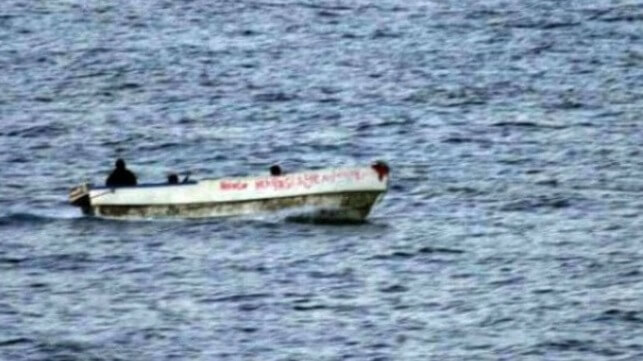
Authorities are investigating an incident that took place late on April 15 between an unidentified bulker and “multiple small craft” in the Gulf of Aden. The vessel reportedly was able to evade the small boats, but there are reports of shots fired before the small crafts left the vicinity.
It is unclear if the incident was pirates, the Houthis, the so-called Yemen Coast Guard, or others. The UK Maritime Trade Operation issued a warning about the incident which was the first since 2024. The Houthis in January suspended their attacks linked to the Gaza ceasefire but had recently warned they would resume attacks on ships linked to Israel. They have not commented on yesterday’s incident.
UKMTO reports the vessel was 100 nautical miles east of Aden, Yemen. The multiple small crafts followed the bulker for approximately two hours. The master reportedly altered course towards the Yemeni coast.
The report says that shorts were fired but security analysts Neptune P2P Group notes it is unclear if the shots came from the small craft. They note the shots could have been from security guards aboard the merchant ship.
While the incident could have been piracy, the analysts at Neptune note it is unusual for the pirates to operate with multiple crafts or as far east in the Gulf of Aden as this incident. They note it could have been the Yemen Coast Guard due to the vessel’s proximity to the coast or possibly fishermen. They note that local fishermen are known to carry guns to protect their equipment and fishing catch.
Neptune reports that over 20 fishing vessels as well as four commercial ships have been hijacked since Somali pirates retuned their attacks on ships in November 2023. While two fishing vessels were robbed earlier this year and a third taken hostage in late 2024, the attacks on commercial vessels stopped earlier last year after the Indian Navy and others intervened to rescue vessels that had been boarded by pirates.
The ICC International Maritime Bureau in its quarterly report yesterday, April 15, noted the recent attacks demonstrate the continued capabilities of Somali pirates. Recognizing this, the EU also extended its efforts in the region for two more years till early 2027.
UKMTO is advising vessels to use caution and report incidents while the authorities investigate to determine if it was pirates or other crafts attempting to approach the merchant ship.
World’s Largest LCO2 Carrier Launched as Capital Gas and Commercial Market
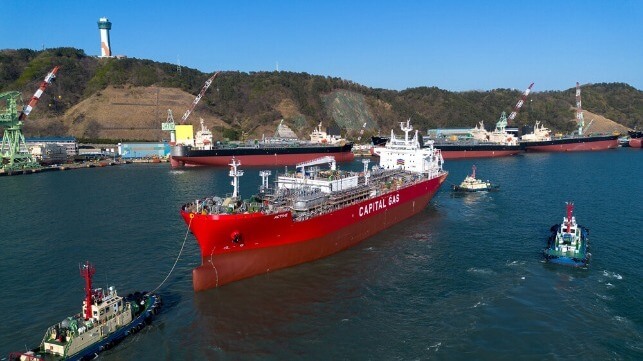
HD Hyundai floated the first large commercial LCO2 carrier which will be operated by Greece's Capital Gad (HD Hyundai)
The first large vessel designed to transport liquified carbon dioxide (LCO2) was launched in South Korea as the industry for the transport and storage of captured carbon begins to take shape. The vessels are being built for Greece’s Capital Maritime Group which in 2023 announced plans to expand into the developing market.
The launch took place at the HD Hyundai Mipo shipyard in Ulsan, South Korea. With a capacity to transport 22,000 cubic meters of liquified carbon dioxide, the vessels have about three times the capacity of the first LCO2 carriers. Norway’s Northern Lights project took delivery at the end of 2024 of two 7,500 cbm LCO2 carriers built in China and which are currently undergoing commissioning. They will operate in connection with the storage project started as a partnership between Equinor, Shell, and TotalEnergies.
Capital Gas Ship Management Corp. will be managing the four gas carriers being built in South Korea and will place them into the commercial market. The new company will be known as Capital Clean Energy Carriers.
The vessels will measure approximately 525 feet (159.9 meters) in length with a beam of approximately 90 feet (27.4 meters). The vessels are equipped with three “Bi-lobe type storage tanks” that can maintain a low-temperature environment of around -55 degrees Celsius. According to Hyundai, this allows it to stably transport various liquefied gas cargoes such as LCO2, liquefied petroleum gas (LPG), and ammonia (NH3).
The design also enhances the vessels’ environmental performance. They are fitted with Selective Catalytic Reduction systems to reduce Nox emissions. They can use shore power and have ice-resistant design technology (Ice Class 1C) which will improve navigation stability. Capital also reported in 2024 that it was exploring adding onboard carbon capture systems to the vessels.
The construction order was originally placed in 2023 for two vessels and later increased to four gas carriers. HD Hyundai reports the vessel will complete outfitting and trials for delivery at the end of this year. The others are set for delivery in 20026.
The companies cite data from Clarson Research to illustrate the potential market for LCO2 transport. The analysts have written to achieve carbon neutrality, more than six gigatons of carbon will need to be captured and stored annually by 2050. They estimate that 20 percent will need to be transported by sea for storage or reuse. It is estimated that 2,500 LCO2 carriers will be required to meet future demand.
Safety Panel Rules That Sewol Sinking Started With a Steering Failure
The latest investigation into the sinking of the South Korean ferry Sewol has concluded that the capsizing was initiated by a steering failure followed by a cargo shift, which the vessel had insufficient stability to survive.
On April 16, 2014, the ferry Sewol suddenly capsized and sank off Jindo-Gun, South Korea. Out of 476 people aboard, 304 were killed in the sinking, most of them high school students. The master of the vessel abandoned ship early without joining in the rescue, and he instructed the crew to tell passengers to stay in their cabins, potentially increasing the death toll. He was later convicted of murder by omission and is serving a life term in a Korean prison. Other members of the crew and one Korea Coast Guard officer were convicted of lesser offenses.
In an attempt to recover all human remains from the wreckage and investigate the cause of the disaster, Korean authorities hired Shanghai Salvage to raise the Sewol in one piece and move it to shore - the deepest wreck raising ever attempted. The recovery effort gave investigators unrivalled access to a sunken ship, intact, dry and resting on its side on a seaport quay.
In the latest review of the much-studied accident, the Korea Maritime Safety Tribunal determined that there was no evidence of an external collision, and it focused on factors internal to the vessel. Previous inquiries have already determined that the vessel was heavily overloaded, and that it was intrinsically topheavy due to owner-initiated modifications on the upper decks.
In a conclusion similar to a 2018 investigation, the panel determined that a solenoid valve failed on the No. 2 steering pump, causing a malfunction. The resulting hard turn caused Sewol to heel over; because the cargo aboard the vessel was not properly secured, it shifted to one side, adding to the heeling moment. The vessel lacked enough GM to overcome it, downflooded through hull penetrations, and capsized.
WWIII
North Korean Missile Shipments to Russia Continue, but May Have Peaked
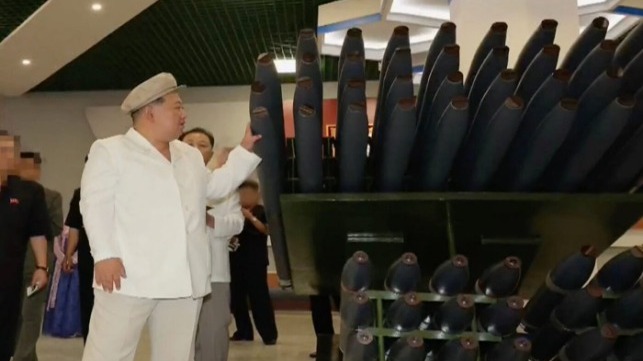
North Korean dictator Kim Jong Un examines rockets at a factory, Apr 2025 (KCNA via OSC)
North Korean exports of artillery ammunition to Russia, for use in its war against Ukraine continue. But volumes shipped in recent weeks have fallen back from previous peaks, suggesting that initial consignments may have come from stockpiles, now depleted, with more now being met directly from production.
The traffic between North Korea and Russia has been tracked by the Open Source Centre (OSC), led by James Byrne, formerly Director Open Source Analysis at the UK’s Royal United Services Institute for Defence and Security Studies. North Korean ammunition is shipped in containers from Raijin to the Russian ports of Danube and Vostochny in the Vladivostok area. By monitoring the four Russian flagged RO-RO container ships carrying the containers - MV Angara (IMO 9179842), Lady Mariia (IMO 9220641), Maya-1 (IMO 9358010) and Lady R (IMO 9161003) - then counting the containers on board and measuring volumes, OSC has been able to accurately gauge the number of artillery shells being shipped. All four of the Russian ships are US-sanctioned, and several have also been used for hauling military cargoes to and from Tartus in Syria.
MV Maya-1 has recently come off the Sea of Japan route, loaded cargo in China, transited the Suez Canal in February and conducted a turn-round in Kaliningrad, leaving on April 10 for an unknown destination. It has apparently been unimpeded whilst in transit or during its port calls, despite being sanctioned.
OSC tracked 64 trips by the four Russian ships between September 2023 and March 2025. Traffic peaked in January 2024, when seven cargoes were shipped. By March 2025, only three cargoes per month were being shipped. Over the entire period, the 64 sailings sighted shipped a calculated 15,809 containers, with each container likely to have held 224 boxes of 152mm artillery shells, or other loads made up of rockets, 122mm or mortar rounds. Using these figures, OSC estimates that up to 6 million shells might have been shipped to Russia by North Korea by the end of March 2025.
Once unloaded at the Russian ports, the containers are moved by train directly to Russia ammunition depots servicing the Ukrainian front line. The main receiving depot at Tikhoretsk, 60 miles south of Rostov, was attacked by Ukrainian drones on September 21, 2024, with an estimated 90% of the stockpile destroyed. In 2025, Ukraine is planning on producing 3000 of its own-design Bars, Peklo and R-360 Neptune missiles, the latter of which has a range of more than 600 miles, and all of which are capable of attacking Moscow
Ukrainian defense intelligence estimates that North Korea is providing half of the ammunition currently being consumed on the Ukrainian front line. Batches of the Korean ammunition have to be proofed and separate range tables drawn up, as the performance of the Korean ammunition is inconsistent and inferior to Russia’s own production. The North Korean shells are also prone to exploding in the breach, if loaded into barrels which are hot from high intensity fire missions.
Russia is also known to receive shipments of 122mm and 152mm ammunition shells from Iran, albeit in lesser volumes. Iranian exports have tended more towards the supply of drones and missiles. Iran ships weapons through the Caspian ports of Bandar-e Anzali and Amirabad to either Kaspiysk in Dagestan or the Volga-Don trans-shipment port at Olaya. On January 2 this year, Iranian social media images showed Iranian air defense and truck-mounted Fath-360 tactical ballistic missile systems (comparable in capability to the M142 HIMARS) at the dockside at Bandar-e Anzali prior to loading.
North Korea is Shipping Billions of Dollars' Worth of Arms to Russia
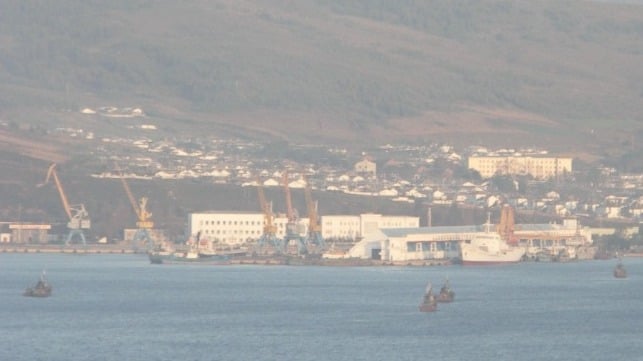
Port of Rajin, North Korea (Catriana Nicholson / CC BY SA 2.0)
North Korea has been a significant supplier of munitions to Russia for use in the conflict in Ukraine since 2022. This flow has included 152mm and 122mm artillery munitions, RPGs, and Grad rockets, critical for sustaining Russia's war effort. According to RUSI, by October 2023 an estimated 10,000 standard containers had been shipped. Now there are far more.
There have been multiple weapons transshipments from the DPRK’s port to Russia’s port in the Far East throughout 2023, 2024, and now 2025. The transportation was conducted through a sea lane between North Korea’s Rajin Port and the Dunai Military Facility in Russia, then rerouted via train through Tikhoretsk, not far from Rostov-on-Don and closer to the frontline.
According to NK Insight, satellite imagery shows that Rajin Port’s Pier 2 exported around 6,500 containers to Russia between June 2024 and February 2025. Recent analyses by Reuters and the Open Source Center indicate that the scale of arms shipments could be even larger than that: According to their findings, between September 2023 and March 2025, approximately 15,800 containers were transferred from Rajin Port in North Korea to the Russian ports of Dunai and Vostochny. Reuters made a conservative estimate that these shipments included of 4 to 6 million artillery shells, alongside other military supplies.
Based on NK Insights’ data for June 2024 to February 2025, and our evaluation based on the size and weight constraints of standard shipping containers, we estimate that the 6,500 containers shipped during this nine-month period may have contained approximately 400,000 RPG-7s, 200,000 Grad rockets, and 500,000 artillery munitions (assuming a mix of cargo). Drawing on our previous work on the North Korean arms trade, we estimate that the contents of these 6,500 containers would be worth approximately $3.25 billion.
In return for these weapons, North Korea likely receives advanced technology (possibly spy satellite and submarine warfare capabilities), luxury goods, and other needed commodities, including crude oil. This support is crucial for its nuclear program.
The shipment numbers are significant, and it is rightly believed that without North Korean munitions, Russia couldn’t keep up its high rate of consumption in the war in Ukraine. At the same time, North Korea is receiving oil by sea from Russia. Since the value of the exchange is so high for both sides, the relationship between Russia and North Korea is likely going to be stable in the short to medium term. This deepening alignment between Russia and North Korea has significant geopolitical implications for East Asia and the international order, potentially leading to a more combative North Korea.
Dr. Giangiuseppe Pili is an Assistant Professor in the Intelligence Analysis Program at James Madison University. He was previously a Research Fellow at Open Source Intelligence and Analysis at the Royal United Services Institute and is now a RUSI Associate Fellow (Proliferation and Nuclear Policy). He is a Senior Non-Resident Associate Fellow at NATO Defence College.
Cosimo Meneguzzo is an expert in business and economic analysis, as well as economic development. He has extensive experience consulting for private manufacturing and service companies, in addition to supporting public entities in policy formulation and implementation. He has founded innovative ventures and collaborated with research institutions and universities. His main publications focus on new technologies and the circular economy.
In a stunning move late on Wednesday, April 16, the U.S. Department of Interior announced it has ordered a stop to the construction of Equinor’s Empire Wind offshore wind farm. The project had been approved in 2024 and was underway. The move is drawing sharp criticism from New York State Governor Kathy Hochul and leaving the industry stunned.
Interior Secretary Doug Burgum posted a brief message on X writing that Interior in consultation with Commerce is “directing the Bureau of Ocean Energy Management (BOEM) to immediately halt all construction activities on the Empire Wind project until further review of information that suggest the Biden administration rushed through its approval without sufficient analysis.”
While the Biden administration did approve several projects late in its term, Empire Wind received approval for its Construction and Operations Plan in February 2024. The project also received its Clean Air Permit for construction in February 2024.
Norway’s Equinor acquired the Empire Wind lease area in 2017 and in June 2024, announced the execution of the Purchase and Sale Agreement (PSA) with the New York State Energy Research and Development Authority for Empire Wind 1 power for 25 years at a strike price of $155.00/MWh. The financial close for the project was completed in December 2024. The expected total capital investments, including fees for the use of the South Brooklyn Marine Terminal, Equinor reported would be approximately $5 billion including the effect of expected future tax credits. New York had issued its final approvals for the project in May 2024.
New York’s governor who has already been fighting with the Trump administration over congestion pricing for vehicles in Manhattan issued an angry statement saying the federal government should be supporting its efforts for affordable energy “rather than undermining them.”
“This fully federally permitted project has already put shovels in the ground before the President’s executive orders—it’s exactly the type of bipartisan energy solution we should be working on,” said Governor Hochul in her statement. “As Governor, I will not allow this federal overreach to stand. I will fight this every step of the way to protect union jobs, affordable energy, and New York’s economic future.”
The news site FreeBeacon obtained a copy of Burgum’s memorandum to the acting director of BOEM. In it, he contends that “serious issues” were raised on the approval for Empire Wind. He says it was rushed through without sufficient analysis or consultation among the relevant agencies.
Burgum also writes that he is directing BOEM to continue to review the federal wind permitting practices “to both existing and pending permits.”
Work had begun on the redevelopment of the site in Brooklyn which was to be used as the base of the wind farm during construction and its future maintenance operations. FreeBeacon reports rock work was scheduled to begin in the coming weeks at the offshore site along with other preparations. The wind farm was scheduled to provide power starting in 2027.
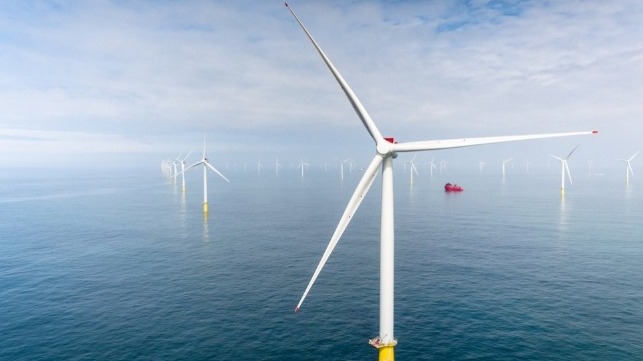
Empire Wind 1 and Empire Wind 2, both of which were approved in 2024, are located about 12 nautical miles south of Long Island, N.Y., and about 16.9 nm east of Long Branch, N.J. Together the projects would have a total capacity of 2,076 megawatts of renewable energy that BOEM estimated could power more than 700,000 homes each year.
Trump in January 2025 ordered a review of the leasing and permitting practices but most expected it would be a stop to future activity. The administration however also pulled the EPA permit for construction on a New Jersey project. There are several other projects currently in the construction phase. The Biden administration had approved a total of 11 offshore wind farms and left others in review at the end of its term.