Monday, April 21, 2025

EU employment reaches highest level since 2005 at the end of last year
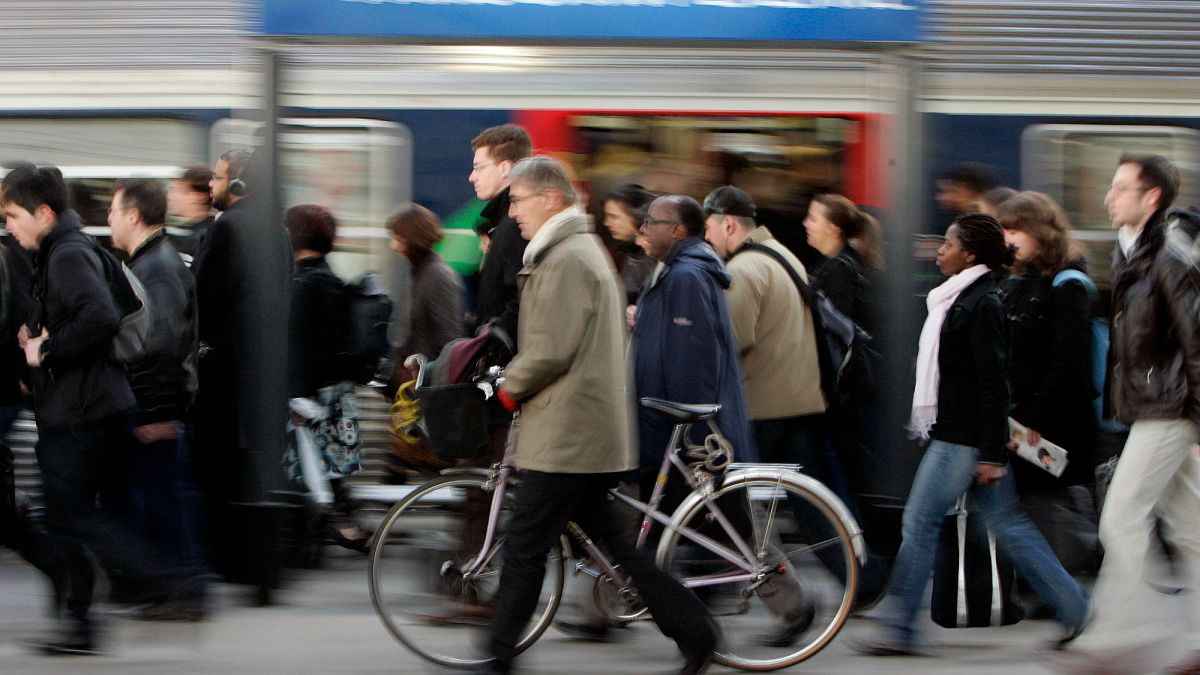
A commuter walks with his bike alongside a train at Paris' Saint Lazare station. 19 March 2009.
Copyright AP/FRANCOIS MORI
By Servet Yanatma
Published on 

The employment rate in the EU reached its highest level at the end of 2024, while the unemployment rate recently also came to a record low. Euronews Business takes a closer look at the labour market across Europe.

The EU employment rate reached its highest level on record in the fourth quarter of 2024, according to new data from the OECD.

Eight EU member states also recorded all-time highs during this period, dating back to when the OECD first began publishing data in 2005.

On the flip side, the unemployment rate fell to its lowest level in February 2025 since 2000, showing that fewer people in the EU are without a job.

That's also according to the latest labour statistics from the OECD, which run up to February for the unemployment indicator.

The EU employment rate stood at 70.9% in the final three months of 2024. Among the 24 EU member states included in the dataset, employment rates ranged from 62.2% in Italy to 82.3% in the Netherlands.

When including selected EU candidate countries, along with EFTA members and the UK, Iceland recorded the highest employment rate at 85.6%, while Turkey had the lowest at 55.2%.

Among Europe’s five largest economies, Germany recorded the highest employment rate at 77.6%, followed by the UK at 75%.

France’s employment rate in the final quarter of 2024 stood at 68.9%, falling below both the EU and OECD averages. Spain (66.3%) and Italy (62.2%) were among the four lowest in the dataset, alongside Greece and Turkey.

EU and 8 members hit the record in employment

Eight EU member states and candidate country Turkey all recorded their highest employment rates in the final quarter of 2024 — and the EU average also saw a record peak. The rates look at individuals aged 15–64 and are seasonally adjusted.

Record breaking countries include Germany, Czechia, Portugal, Slovakia, Belgium, Spain, Greece and Turkey — even though some saw only marginal increases.

The Netherlands holds the EU's only rate above 80%

Among the 24 EU member states listed (excluding Cyprus, Malta, and Romania), the Netherlands is the only one to have recorded an employment rate exceeding 80% since 2005. Iceland and Switzerland also surpassed the 80% mark during this period.

However, if the 20–64 age group is considered — as used by Eurostat — more countries may exceed the 80% threshold.

The largest year-on-year increases in employment rates were observed in Iceland (up 1.6 percentage points) and Greece (up 1.5 percentage points). The OECD attributed these gains to rising labour force participation.

EU unemployment rate falls to its lowest level in February 2025

According to the OECD, the EU unemployment rate fell to 5.7% in February 2025 — its lowest level since January 2000. The data covers individuals aged 15–64 and is seasonally adjusted.

Among the 24 EU member states, unemployment rates ranged from 2.6% in Poland to 10.4% in Spain — the only country to exceed the 10% mark.

Two Nordic countries report high unemployment rates

Among all countries in the dataset, Finland (9.2%) and Sweden (8.9%) had the highest unemployment rates after Spain, which topped the list.

Germany (3.5%) recorded the fourth-lowest unemployment rate overall, making it the best performer among Europe’s five largest economies, followed by the UK at 4.4% (based on January 2025 data).

Alongside Spain, France (7.4%) and Italy (5.9%) also recorded unemployment rates above the EU average.

The $3.56mn bribe behind Indonesia’s cooking oil crisis

OUTLAW PALM OIL

The $3.56mn bribe behind Indonesia’s cooking oil crisis
/ Unsplash - Nazarizal Mohammad
By bno - Jakarta bureau April 20, 2025

The latest corruption scandal in Indonesia has sent shockwaves through the nation, revealing a web of bribery involving high-ranking officials, leading business figures, and even the Chief Judge of the South Jakarta District Court, Muhammad Arif Nuryanta. The controversy surfaced during a period when cooking oil became scarce, starting in late 2021 and continuing into early 2022.

This shortage coincided with a dramatic rise in the price of crude palm oil (CPO), a major ingredient in cooking oil, which was exacerbated by global disruptions caused by Russia's invasion of Ukraine. Despite Indonesia being the world’s largest producer of CPO, the nation was not immune to the crisis, leading to widespread domestic shortages, as reported by Tempo.

In an attempt to address the issue, the government, under Trade Minister Muhammad Lutfi, introduced several measures, including the introduction of a retail price cap for packaged cooking oil through Trade Minister Regulation No. 1 of 2022. However, these policies failed to resolve the supply crisis. Further initiatives, such as a limited export ban and a domestic market obligation (DMO), also proved ineffective.

The Attorney General’s Office later revealed that several major palm oil firms had exploited the regulations. Well-known industry names—such as Wilmar Group, Musim Mas Group, and Permata Hijau Group—were accused of prioritising crude palm oil exports over fulfilling local needs, worsening the supply crisis. In June 2023, they were formally identified as corporate offenders, with the Public Prosecutor seeking fines and reparations for the considerable financial harm caused by their actions.

The financial implications were severe:

  • Wilmar Group was accused of causing losses amounting to IDR 8.5 trillion (approximately $505mn), with restitution set at IDR 11.88 trillion (approximately $705mn).

  • Musim Mas Group faced IDR 4.8 trillion (approximately $285mn) in losses, with restitution of IDR 4.89 trillion (approximately $290mn).

  • Permata Hijau Group's actions resulted in state losses of IDR 186bn (approximately $11mn), and losses in the household and business sectors totaling IDR 626bn (approximately $37mn).

Prior to these corporations being named as suspects, five individuals, including former senior government officials and employees from the companies involved had been convicted. These individuals, however, were acquitted by the court on the grounds that their actions, although proven, did not constitute a criminal offence.

The situation grew more severe when suspected interference within the judiciary came to light. Findings from the Attorney General’s Office pointed to a corruption scheme implicating Chief Judge Muhammad Arif Nuryanta, who was alleged to have received a bribe of IDR60bn (approximately $3.56mn) in exchange for dismissing legal charges against the three companies. The payment was reportedly coordinated by solicitors Marcella Santoso and Ariyanto, and eventually handed over by individuals linked to the Wilmar Group.

Bribery Chronology

Kompas reported the sequence of events in the bribery case, as narrated by the Director of Investigations at the Deputy Attorney General for Special Crimes, Abdul Qohar, during a press conference at the Attorney General’s Office on April 15 2025, as follows:

  1. Initial Discussions: The scheme began when lawyer Ariyanto and court clerk Wahyu Gunawan discussed the possibility of bribing a judge to help the corporate defendants in the cooking oil corruption case. Wahyu informed Ariyanto that the case could result in severe penalties for the defendants unless it was managed favourably.

  2. Preparing the Funds: Ariyanto, representing the corporate defendants, spoke with fellow lawyer Marcella Santoso, who confirmed that Wahyu could assist with the case. This information was relayed to Wilmar Group, represented by Muhammad Syafei.

  3. Contacting Judge Ali Muhtarom: Two weeks later, Wahyu reached out to Judge Ali Muhtarom, and Ariyanto instructed Marcella to prepare IDR20bn (around $1.1mn) to secure a favourable ruling.

  4. Meeting with Judge Nuryanta: The three — Ariyanto, Wahyu, and Judge Muhammad Arif Nuryanta — met at a seafood restaurant in Kelapa Gading, Jakarta. During this meeting, Judge Nuryanta indicated that a full acquittal would not be possible, but a dismissal was achievable. He also raised the amount required from IDR20bn to IDR60bn (around $3.56mn).

  5. Agreement and Delivery: Following this meeting, Wahyu informed Ariyanto about the new sum, which was subsequently agreed upon by Wilmar Group's representative, Muhammad Syafei. The funds, consisting of both US dollars and Singapore dollars, were to be delivered.

  6. Final Payment: Three days later, Muhammad Syafei contacted Marcella to inform her that the funds were ready. The money was handed over to Ariyanto in a parking area in the SCBD area of South Jakarta. Ariyanto then delivered the funds to Wahyu Gunawan’s residence in Cilincing, North Jakarta, where the money was ultimately passed to Judge Muhammad Arif Nuryanta. In return, the judge provided Wahyu with $ 50,000 (around IDR750mn). 

Current status and legal implications

The legal ramifications of the bribery are far-reaching. The Attorney General’s Office has now named Muhammad Syafei, Wilmar Group’s legal officer, as a suspect in the case. Syafei was questioned by investigators from the Special Crimes Division (Jampidsus) at the Attorney General’s Office on April 14, 2025, as reported by Reuters.

Meanwhile in their interview with BBC Indonesia, Indonesia Corruption Watch (ICW) has pointed out that corporations can be held legally accountable for such corruption under the Corruption Crime Act (UU Tipikor) No. 20 of 2001. The law allows businesses to be prosecuted if they benefit from illegal activities or fail to prevent such crimes. However, ICW researcher Muhammad Yassar noted that Indonesia's legal framework remains weak, as the Criminal Procedure Code (KUHAP) lacks clear provisions for prosecuting corporations. As of 2023, out of 898 corruption defendants, only three companies faced charges.

Legal experts also suggest that should the corporations be found guilty, they could face significant penalties, including fines and the revocation of their business licences. ICW also highlighted that bribery cases involving judges are an ongoing issue in Indonesia, with 29 judges implicated in such scandals since 2011.

Bribery and corruption in Indonesia are primarily governed by Law No. 31 of 1999 on the Eradication of Criminal Acts of Corruption, which was amended by Law No. 20 of 2001. This legal framework is further supported by provisions in the Indonesian Penal Code (KUHP) and the law establishing the Corruption Eradication Commission (KPK). Under these laws, individuals found guilty of corruption may face severe penalties, including life imprisonment, substantial fines amounting to billions of rupiah, and the confiscation of unlawfully obtained assets.

This latest scandal underscores the challenges Indonesia faces in combating high-level corruption and raises concerns about the effectiveness of its judicial and corporate oversight systems.


Indonesia and China pledge maritime cooperation amid South China Sea tensions

An Indonesian Coast Guard ship shadows a Chinese Coast Guard vessel in North Natuna waters, 25 October, 2024
Copyright AP Photo/Aaron Favila
By Oman Al Yahyai with AP
Published on 

Indonesia and China vow to strengthen maritime cooperation, including joint security efforts in the South China Sea, amid ongoing tensions over Beijing's activities near the Natuna Islands.

Indonesia and China have reaffirmed their commitment to maritime cooperation, vowing to strengthen joint efforts on security and safety in the contentious South China Sea, even as Indonesian unease lingers over Chinese activity near the Natuna Islands.

The pledge followed the inaugural joint meeting of foreign and defence ministers from both nations in Beijing, underscoring their intention to promote infrastructure development, mineral extraction and maritime security, the latter viewed as particularly significant amid Jakarta's concerns about Beijing's maritime assertiveness.

Last month, diplomats from France and Indonesia agreed to launch a new maritime security initiative aimed at promoting "peace and safety" across the Indo-Pacific waters, with military cooperation growing between the two nations in the past years. 

"We will enhance law enforcement and security cooperation to jointly combat transnational cooperation," said Chinese Foreign Minister Wang Yi, speaking alongside his Indonesian counterparts.


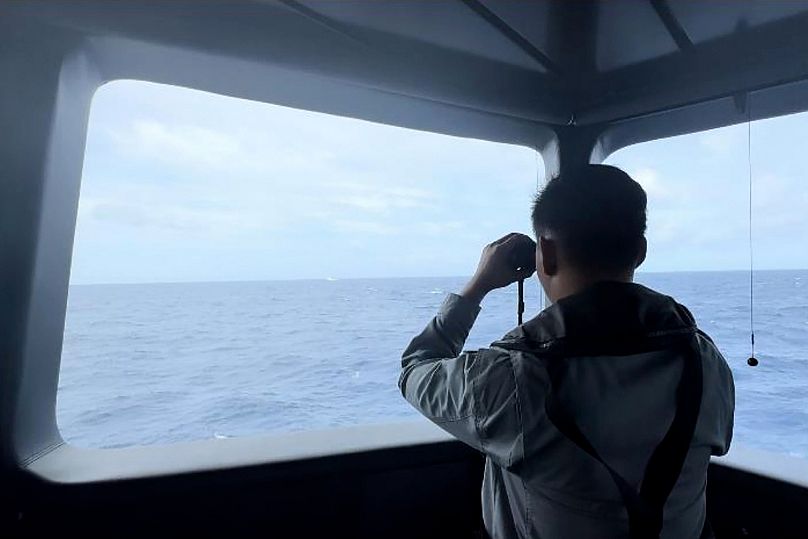
A member of Indonesia’s Maritime Security Agency monitors the movement of a Chinese coast guard vessel in the water of North Natuna Sea. 23 October, 2024

"We agreed that safeguarding peace and stability in the South China Sea is in line with the interests of all parties and we will set an example in maritime cooperation."

Although neither side explicitly mentioned the Natuna Islands, the sensitive area — part of Indonesia's exclusive economic zone but overlapping with China's sweeping "nine-dash line" claim — remains a flashpoint. 

Indonesia is not part of the broader territorial disputes involving six other countries, but its waters have been routinely breached by Chinese fishing boats, often escorted by Chinese coast guard vessels.

In response, Indonesia has stepped up maritime patrols and bolstered its military presence in the region. The recent memorandum of understanding signed between the two nations' coast guards aims to formalise maritime security collaboration.

China's southernmost claim lies within 370 nautical kilometres of Indonesia's economic zone, sparking repeated clashes. Indonesia has seized Chinese vessels operating in its waters, while local officials remain wary of Beijing's plans for joint development projects around the Natuna chain.

Despite ongoing tensions, economic ties between the two nations continue to strengthen. China has become Indonesia’s largest trading partner and investor, funding headline projects such as the Jakarta-Bandung high-speed rail and the Cirata floating solar plant in West Java.

Indonesian Foreign Minister Sugiono echoed his Chinese counterpart’s remarks, stating: "We also agreed to stand united against terrorism, violent extremism and cyberthreats. We share concern over the threat of transnational crime in the region that increasingly targets our nationals."

China's Defence Minister Dong Jun added that both sides had agreed to increase communication and conduct joint counterterrorism drills later this year.

Indonesia has also welcomed Chinese infrastructure investment under Beijing's Belt and Road Initiative, despite disputes over costs and timelines.

China has handled South China Sea disputes by addressing claims individually to avoid a united opposition, while also reversing earlier commitments such as its pledge not to militarise the artificial islands it controls.


China vows retaliation against countries supporting US-led trade isolation

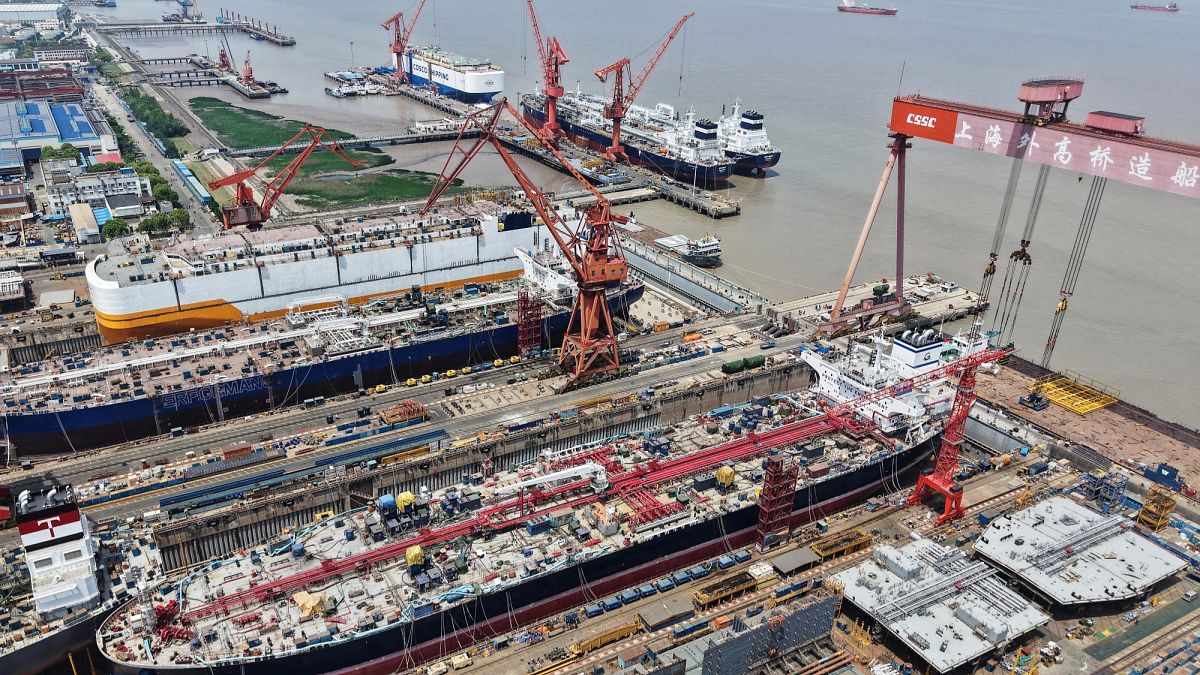
A view of ships under construction at the Shanghai Shipyard in in Shanghai, China, Sunday, April 20, 2025.
Copyright AP Photo
By Tina Teng
Published on 

Beijing has vowed to retaliate if other countries strike trade deals with the United States at the expense of China’s interests, in response to news that the Trump administration is pressuring trading partners to isolate China in negotiations.

Beijing has warned of retaliatory measures against countries that reach trade agreements with the United States at the expense of China’s interests, as other nations are dragged into the trade war between the world’s two largest economies.

In its latest response to the steeply increased US tariffs, China’s Ministry of Commerce said in a statement that Beijing “respects all parties' efforts to resolve their trade disputes with the US through equal consultation.” However, China will not accept any US-led trade deals that harm its interests and will “respond resolutely and reciprocally with countermeasures” to safeguard its rights and interests.

In the statement, China described the US tariffs as “unilateral bullying” in international trade, adding that “if international trade regresses to the law of the jungle where the strong prey on the weak, all countries will become victims.”

Last week, the Trump administration was reportedly planning to pressure US trading partners to limit deals with China in ongoing tariff negotiations. Countries with close trade ties to China may face so-called secondary tariffs.

Meanwhile, Chinese President Xi last week visited major trade partners in Southeast Asia, including Vietnam, Malaysia, and Cambodia, on his first overseas trip of the year. The visit signalled “China’s renewed push to reinforce regional stability and prosperity, and its determined support for regional economic integration as global protectionism and unilateralism continue to mount,” the state news agency Xinhua reported.

Non-tariff trade tensions

The tariff war appears to have reached a peak between the US and China, as both sides have indicated no further hikes. Thus far, the US has imposed a total of 145% duties on Chinese goods, while pausing reciprocal tariffs on other nations. China responded with 125% tariffs on US goods and has said it will “ignore” any further increases, calling them a “meaningless numbers game.” Trump has also signalled that no further tariff hikes are likely, citing concerns that additional measures would stall trade between the two countries.

However, the two sides have intensified their trade tensions through non-tariff means. China recently imposed export restrictions on a wide range of critical minerals, particularly targeting the US. A few days later, Trump signed an executive order to investigate imports of critical minerals, stating: “Critical minerals, including rare earth elements, in the form of processed minerals, are essential raw materials and critical production inputs required for economic and national security.”

Adding to the escalation, the Trump administration announced fees on Chinese-built vessels docking at US ports last Friday. The decision, revealed by the Office of the United States Trade Representative (USTR), follows a one-year investigation originally launched under the Biden administration.

While President Trump has repeatedly indicated that China will approach the US to make a trade deal, there is no clear indication from Beijing that an agreement is imminent.

Euro and gold soar as haven demand surges

Trade tensions between the US and China continued to unsettle global markets during Monday’s Asian session. While most Western stock exchanges remained closed for the Easter holiday, risk aversion again dominated market sentiment. Haven assets, such as gold and the euro, soared; meanwhile, the US dollar weakened further, and US stock futures extended losses.

As of 5:50 am CEST, gold futures at COMEX had surged 1.8% to $3,389 per ounce, while spot gold rose 1.4% to $3,376 per ounce—both marking new record highs. The EUR/USD pair surpassed 1.50 for the first time since November 2021. Other haven currencies, including the Japanese yen and the Swiss franc, also strengthened significantly against the dollar.

Scientists discover new colour ‘olo’ - and there’s a link to ‘The Wizard of Oz’

Copyright MGM-Warner Bros. - Canva

By David Mouriquand
Published on 21/04/2025 

A team of scientists claim to have discovered a new colour that no human has ever seen before. But what does ‘The Wizard of Oz’ have to do with this contested discovery?

Scientists claim they have discovered a new colour called ‘olo’.

The snag is that it’s only ever been witnessed by five people in the world – and cannot be seen by the naked eye.

Indeed, the colour, said to be a saturated shade of blue-green, cannot be seen without the help of stimulation by laser.

The researchers from UC Berkeley and the University of Washington had laser pulses fired into their eyes. This Oz Vision System technique, named in homage to the Emerald City in L. Frank Baum’s novel “The Wonderful Wizard of Oz” (and the subsequent 1939 film starring Judy Garland), can allow people to see beyond the normal gamut of colour perception.

The study, published in the journal Science Advances, states that when Oz laser signals are intentionally “jittered” by just a few microns (one millionth of a metre) subjects perceive the stimulating laser’s natural colour.

The Emerald City in 'The Wizard of Oz'MGM-Warner Bros.

There are three types of cone cells in the eye – S (short), L (long) and M (medium) - each one sensitive to different wavelengths of light. By stimulating only M cones, the five participants claim to have witnessed a blue-green colour that scientists have called "olo" - denoting the binary 010.

The paper read: “We name this new color ‘olo’. Subjects report that olo in our prototype system appears blue-green of unprecedented saturation, when viewed relative to a neutral grey background. Subjects find that they must desaturate olo by adding white light before they can achieve a colour match with the closest monochromatic light, which lies on the boundary of the gamut, unequivocal proof that olo lies beyond the gamut.”


The study's co-author, Professor Ren Ng from the University of California, has described the findings as "jaw-dropping".

“We predicted from the beginning that it would look like an unprecedented colour signal but we didn’t know what the brain would do with it,” said Professor Ng. “It was jaw-dropping. It’s incredibly saturated.”

Prof Ng told BBC’s Radio 4’s Today programme that olo was "more saturated than any colour that you can see in the real world".

"Let's say you go around your whole life and you see only pink, baby pink, a pastel pink," he said. "And then one day you go to the office and someone's wearing a shirt, and it's the most intense baby pink you've ever seen, and they say it's a new colour and we call it red."


While it does not fully capture the colour, the researchers shared an image of a turquoise square to give a sense of the hue:

Scientists say olo was best matched by this blue green colour square
Science Advances

However, they stressed that the colour could only be experienced through laser manipulation of the retina.

The claim of a new colour has been contested, however.

“It is not a new colour,” said John Barbur, a vision scientist at City St George’s, University of London. “It’s a more saturated green that can only be produced in a subject with normal red-green chromatic mechanism when the only input comes from M cones.”

The work, while a “technological feat”, has “limited value” according to Barbur.

The authors of the study disagree. They believe ‘Oz’ will help them delve into how the brain creates visual perceptions of the world. As reported by the BBC, it may also allow them to learn more about colour blindness or diseases that affect vision.

Well, there's no place like home... Sorry, no colour like olo.

Dorothy would be proud.
Read, think, act: Meet three booksellers guiding people through the climate crisis


Copyright FOLDE
By Lottie Limb
Published on 21/04/2025 -

From an old coal barge in Leeds, to picturesque Shaftesbury and radical Edinburgh, UK booksellers discuss bookselling during the climate crisis.

“Books are a comfort, they are a way of seeing things differently,” says Victoria Bonner, co-owner of Hold Fast bookshop in Leeds.

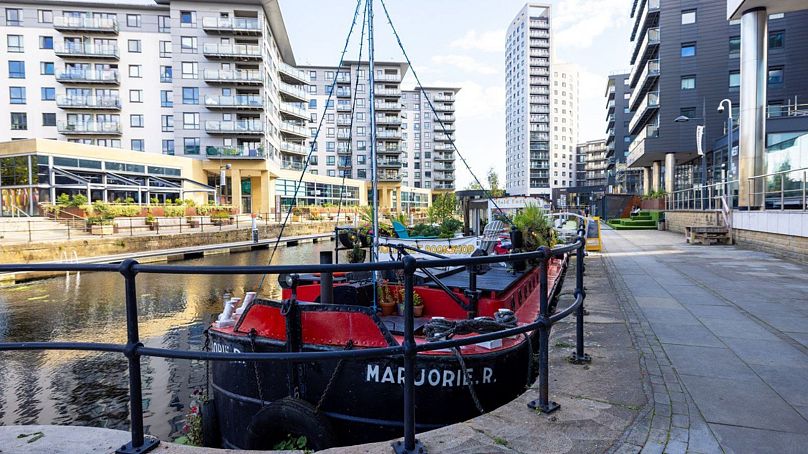
Her bookshop is on a boat - a former 1946 Yorkshire coal barge, to be precise. On the same stretch of waterway where it used to ferry coal, the hull is now laden with a variety of genres.

“At the moment there's just tonnes of really gorgeous books about nature, about gardening, about the planet and the oceans…” Victoria says. “It's so difficult not to have too many, to be honest, we could sink the boat with how many there are.”
RelatedNew year, new reads: Here are my favourite climate-related books from 2024

On the high street or waterway, bookshops are among the most comforting of public spaces. But like the books they hold, a good bookshop also expands our horizons - and better equips us for the challenges of the modern world. At a time of climate breakdown, they have a vital role to play.

From Leeds Dock to the cobbled streets of Dorset and Edinburgh, we spoke to booksellers about the joys and responsibilities of that job.


Matching the right book to the right person

At the simplest level, people need information. “A lot of what you come to online is clickbait, or it's nonsense, or it's strongly opinionated TikToks with no groundwork in reality,” says Victoria. “I think people want to look after the planet, but they don't always know where to start.”

‘Nature writing’ can be a narrow section in some bigger shops, but is given breathing room and space to mingle with other titles at independents. It is part of a rich ecosystem of environmental and climate books.


FOLDE - at the top of the iconic Gold Hill street in Shaftesbury, Dorset - focuses mainly on climate action, conservation, wildlife and land management, nature fiction and nature memoir, as well as books about the natural world for children.

“One of the really important roles of booksellers [is] to understand what a person is looking for and to match them to the book that sets them on a journey,” says co-founder Amber Harrison.

A “fiery and fact-laden” book would be an ill-suited guide to somebody searching for hope, for example. More fitting would be one that offers steps forward, from making personal changes to taking action within an organisation or lobbying at a higher level.

Alongside non-fiction, Victoria sees a special value in folklore and fairytales, “that encourage people to make connections with the land” - through stories that “for many years have been used as a way to protect the Earth.”

Hold Fast, in Leeds Climate Innovation District. Similar to folktales, waterways “seem to bring the countryside into the city because they move through both,” says Victoria.Hold Fast Bookshop
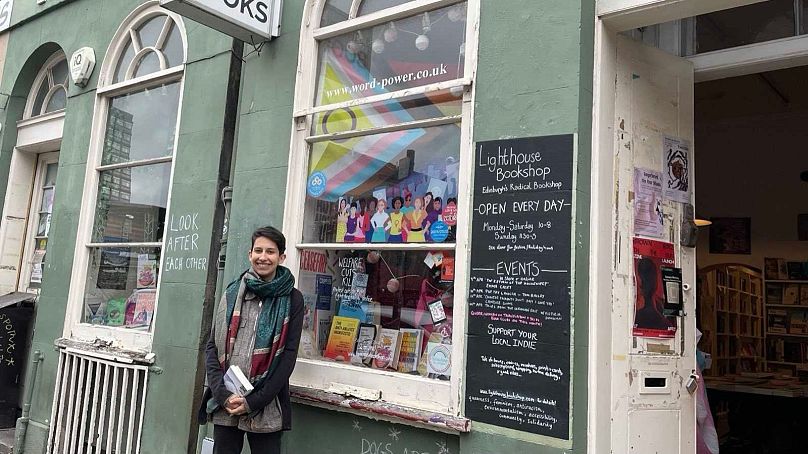
Jessica Gaitán Johannesson is the digital campaigns manager at Lighthouse, described as Edinburgh’s radical bookshop. “The way we see it, books are the starting points of action making and of change making,” she says.

“It's not enough with people reading climate fiction or books about environmental injustice. What do you do when you put the book down?” As a hub for grassroots organising, the shop connects people to groups they can join and actions they can take after reading a book that fires them up.
 

Organising the world with language

For Jessica, a bookseller’s role is to “push against this idea that the climate crisis can in any way be separate from all our other crises that we are living through at the moment.”

‘Radical’ comes from the word root, she notes. It entails going to the root of problems, rather than talking about superficial solutions.

Bookshop curation, reading lists, events and one-to-one conversations are ways of offering a deeper analysis and highlighting climate connections - seeing what resonates for individuals.
Jessica outside Lighthouse, Edinburgh's Radical Bookshop - "as much a hub of organising and activism and community connection as we are a bookshop."Lighthouse

Conversations can take books out of the neat categories that publishers put them in for ease of reference. While curating requires an adaptive approach, she says. “It's about people being able to find the right books that they're looking for. But also, maybe people being exposed to other kinds of books they might not otherwise have found.”

Lighthouse has a nature and environment section where they make sure that underrepresented writers are easy to find, since “nature writing by tradition has been very, very white and very middle class.”

“It's important to hold your values true,” says Victoria. “I think that's what people love about independent bookshops, every one of us is different.”

Hold Fast only sells vegan cookbooks, and travel books that don’t encourage flying. Visitors perusing its up-cycled shelves can also purchase oat milk chocolate.


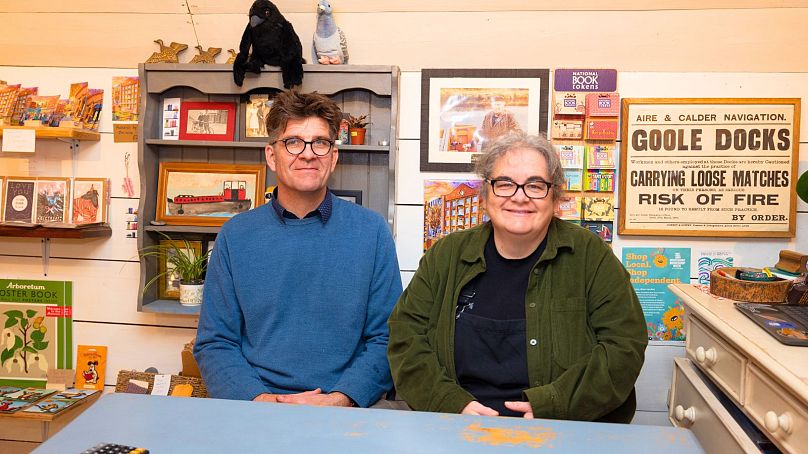
Chris and Victoria, owners of Leeds' much-loved floating bookshop.Hold Fast

FOLDE embodies its environmental values too. It runs on 100 per cent renewable energy, and is the first bricks and mortar bookshop in Europe to be certified as a B-corp, says Amber, who co-founded the shop after a 20-year career in sustainability in the IT and aviation industry.

But Lighthouse takes the remit of a climate-conscious bookshop a step further, by organising probing events and campaigning for a book trade free of fossil fuel investments.
 

From the shop to the digital sphere

Lighthouse is both the physical shop on West Nicholson Street, the digital space that the booksellers operate in, and an Edinburgh book fair they organise every year, says Jessica.

Online, they commission blogs from local climate justice organisers, and livestream events so they’re accessible to all. The inaugural Climate Fiction Prize shortlist is covered in a blog that contextualises the prize with historical works and links out to current climate campaigns.

Meanwhile, the Radical Book Fair, which Jessica programmes, has a unique emphasis on activism. Each panel of authors also includes at least one local organiser, further embodying Lighthouse’s ‘read, think, act’ mantra.

They also support the work of Fossil Free Books, a collective of book workers organising for an industry free of fossil fuel funding, many of whom are based in Scotland.

“The publishing industry is taking steps to reduce its impact on the climate so there are initiatives like Publishing Declares where organisations and publishers and booksellers can sign up to the sector's first declaration on climate change,” adds Victoria.

“There are some publishers who are starting to really think about the carbon footprint of the books that they produce, and that's really good to see.”


Demonstration in favour of cannabis legalisation takes place in Budapest

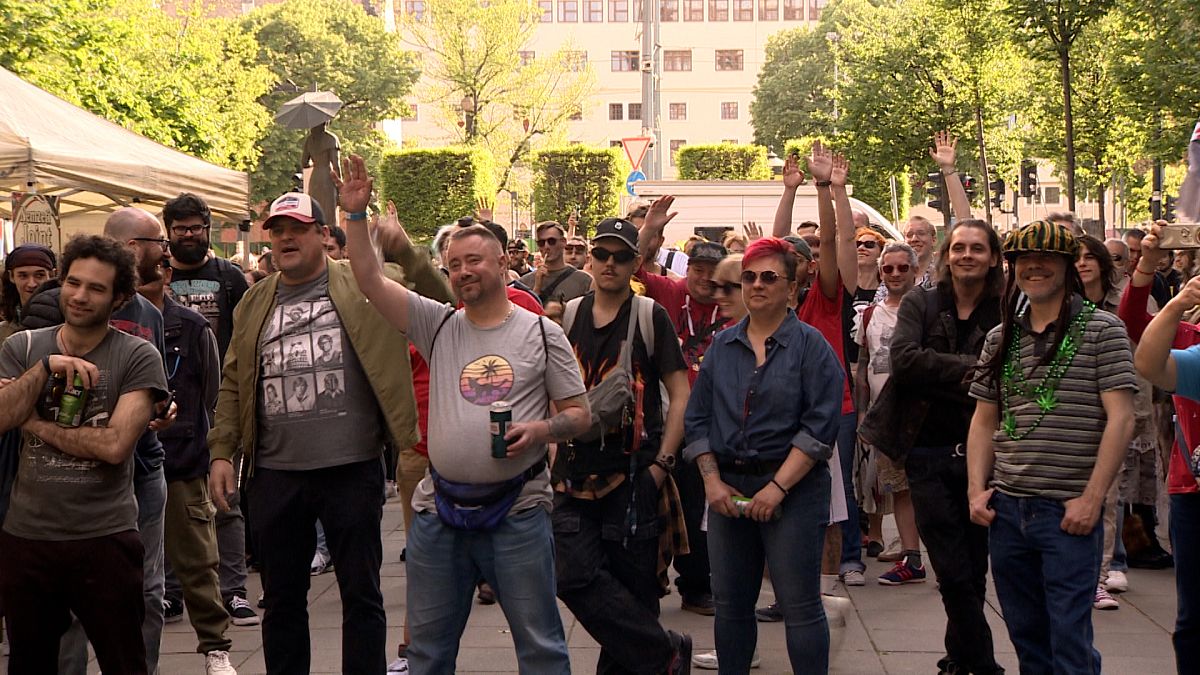
Demonstration on Madách Square in Budapest
Copyright Euronews/RF
By Gabor Kiss
Published on 

The event was held by Hungarian political party 'Two-Tailed Dog', with participants pointing out that alcohol has a far more serious negative effect and causes greater social harm than marijuana, the consumption of which is criminalised.

The Curia of Hungary, also known as the Supreme Court, has overturned the police's decision to ban the Hungarian Two-Tailed Dog Party (MKKP) from holding an event in capital Budapest's Madách Square.

At the Million Marijuana March event, MKKP co-chair Zsuzsanna Döme argued that alcohol and designer drugs cause much greater social harm, yet the government criminalises the usage of marijuana by young people.

Activists gave a presentation on an effective and smart approach to drug policies, illustrating the effects of various mind-altering drugs.

"Users are very demonised. There is no understanding of how they get there, but there is no safety net to help them," said one participant.

"It's a topic that we really don't talk about in the right way. It would be better to change it, even in small steps," added another young person at the event.

The Two-Tailed Dog Party is undertaking its 'drug war' in an unusual way: "We have targeted the addictions of our political, economic and cultural elites. As you can see here, power, public money, obscene language, pornography, alcohol, real estate, luxury, propaganda, fatty foods and, of course, the tovarish Putin," Ferenc Somody, a political candidate for the MKKP, explained to Euronews.

The police had banned the planned event, citing an amendment made to Hungary's Fundamental Law which tightened child protection policies and drug security.

On 14 April, the Hungarian parliament enshrined a zero tolerance policy towards drugs in the amendment. The country's Fundamental Law also states that the production, consumption, distribution and promotion of drugs is prohibited.

The MKKP has appealed the decision, arguing that the police's decision to ban marijuana was taken prior to the Fundamental Law's amendment. The Curia concluded that an event cannot be banned on the basis of a law that had not yet been adopted.

The Million Marijuana March, also referred to as the Global Marijuana March, is an event held all over the world. In many countries, the event is held on 20 April, a reference to the term 4:20, which is cannabis culture slang for marijuana consumption. The use of cannabis, which is considered by many to be less harmful than alcohol and tobacco, has been decriminalised or legalised in a growing number of countries in recent years.


Saab to open aerospace R&D hub in Budapest

Saab to open aerospace R&D hub in Budapest
Hungary is set to take delivery of four new Gripen fighter jets in 2025 and 2026. / bne IntelliNewsFeedly
By bne IntelliNews April 17, 2025

Swedish defence and aerospace group Saab will establish a flight development centre in Budapest. The new centre will support high-end research and engineering tied to Gripen fighter jet programme, which has underpinned Hungary's air defence for over two decades, Hungarian Foreign Minister Peter Szijjarto announced on April 16 in Linköping.

The announcement comes as Hungary prepares to expand its Gripen fleet from 14 to 18 aircraft by next year, enabling it to deepen its role in regional air policing missions to half a dozen other countries.

Hungary finalised a defence cooperation agreement with Sweden in February 2024, which included the purchase of four additional JAS-39 Gripen fighter jets and also the establishment of the facility by Saab.  

The deal marked a symbolic end to a prolonged diplomatic standoff over Sweden’s NATO accession, which Hungary had delayed ratifying for months. The true motifs remain unclear 14 months later.

The agreement was widely seen as a gesture to ease tensions and reset bilateral ties, while also reinforcing Hungary's military capabilities through continued reliance on Swedish-made aircraft

Hungary signed the lease contract with Sweden for the leasing of 14 Gripen fighter jets in 2001, which has been extended twice. The aircraft are expected to be fully transferred to Hungarian ownership by 2026.

Szijjarto said the initiative would not only bolster the country's technological capabilities but also place Hungary on the map as a player in Europe’s combat aircraft development landscape.

Hungarian jets already participate in protecting the airspace of Slovakia, Slovenia, Croatia and the Baltics, where Hungarian pilots will serve again from August.

"The geopolitical turbulence of our time has increased demand for advanced fighter jets and made NATO's eastern flank a critical zone," he said.

Saab's R&D centre is expected to provide new high-tech career opportunities for Hungarian engineers and contribute to the country's industrial modernisation, according to the minister.

LA REVUE GAUCHE - Left Comment: Search results for PERMANENT ARMS ECONOMY


Russia removes Taliban from terrorist list, acknowledging it as legitimate leadership of Afghanistan

Russia removes Taliban from terrorist list, acknowledging it as legitimate leadership of Afghanistan
The Kremlin has dropped its "terrorist organisation" designation for the Taliban, opening the way to normalise relations as it extends its influence in Central Asia. / bne IntelliNews
By bne IntelliNews April 17, 2025

Russia has formally removed the Taliban from its list of designated terrorist organisations, officially recognising it has the legitimate government of Afghanistan on April 17.

The removal of the terrorist label that has been place for two decades is an official recognition of a de facto policy that has been in place shortly after the Taliban seized back frontal of the country following the US chaotic withdrawal in 2021. While formally the government cannot deal with a terrorist organisation, Taliban leaders have been frequent visitors to Moscow and even sent a delegation to last year’s St Petersburg International Economic Forum (SPIEF), Russia’ premier investment forum.

The decision was handed down by Russia’s Supreme Court following a request from the Prosecutor General’s Office. It follows a legislative amendment signed into law by President Vladimir Putin in late 2024, which allows for the reclassification of entities if it can be demonstrated that they no longer engage in terrorist activities.

The Taliban, which returned to power in Afghanistan in August 2021 with a rapid military operation that crushed the US trained Afghan army, has maintained informal ties with the Russian government. Moscow has hosted Taliban delegations at a series of regional security and economic forums, despite not formally recognising the group as the legitimate government of Afghanistan.

By removing the terrorist designation, Russia is expected to clear the path for deeper diplomatic and commercial engagement. The move follows similar decisions already taken by Kazakhstan in December 2023 and Kyrgyzstan in September 2024, which share borders with Afghanistan and have both delisted the Taliban in recent years as part of a regional recalibration towards Afghanistan.

The Taliban government remains the subject of widespread international criticism, particularly for its restrictions on women’s rights and access to education. These policies have contributed to its continued isolation and the suspension of much foreign aid. Nonetheless, some states have pursued pragmatic ties with the group to ensure regional security and curb the influence of extremist offshoots such as Islamic State-Khorasan.

Relation in Central Asia have been improving dramatically in recent years as the region pulls together and deepens inter-state cooperation, a process that has been catalysed by the geopolitical clash between East and West. The presidents of the five ‘Stans have begun to cooperate in the so-called C5 format and act as one in international relations. As part of this increased unity they have also sought better relations with the Taliban, which is seen locally as the major source of regional instability.

​Uzbekistan has significantly deepened its engagement with the Taliban-led government and been a driving force in normalising ties, focusing on economic cooperation and regional stability. While Tashkent has not officially recognized the Taliban as Afghanistan's legitimate government, it has taken notable steps to strengthen bilateral ties, such as opening a multi-million dollar trading station on their shared border and restarted electricity exports to the country.


Sanctioned Balkan politicians step up lobbying of Trump administration

Sanctioned Balkan politicians step up lobbying of Trump administration
By Denitsa Koseva in Sofia, Clare Nuttall in Glasgow April 17, 2025

Ever since Donald Trump’s re-election to the US presidency, politicians from across Southeast Europe that have been put under US sanctions have stepped up their lobbying efforts. 

Individuals sanctioned for high-level corruption and/or ties to Russia are optimistic that Trump’s return to power meant a new US administration far more sympathetic towards their situations. 

Their hopes of securing a lifting of sanctions was further boosted when the US State Department confirmed earlier this week that Antal Rogan, a senior aide to Hungarian Prime Minister Viktor Orban, had been removed from the Treasury's sanctions list. 

Right-winger Orban is one of the European leaders most ideologically akin to Trump.

The decision to list sanctions on Rogan was made just three months after he was blacklisted under the Global Magnitsky programme for his alleged central role in systemic corruption.

Hungarian Foreign Minister Peter Szijjarto claimed the decision had been made in the final days of the Biden administration “out of pure spite”. 

After a conversation with his US counterpart Marco Rubio, Szijjarto commented: ”A completely new era has started in Hungarian-US relations, characterised by friendship and full agreement on the main issues.”

Hungarian officials are not the only ones in the region hopeful of a reset under Trump. 

Shortly after sanctions on Rogan were lifted, the leader of Bulgaria’s ruling Gerb party, Boyko Borissov, said he was certain two Bulgarian politicians, Gerb’s Vladislav Goranov and DPS – New Beginning leader Delyan Peevski, would be removed from the list of people sanctioned under the Magnitsky act.

“A time will come for him [Peevski] and Goranov [for] the truth to come out as it did for Hungary,” Borissov told a press conference broadcast on his Facebook page.

Borissov said he does not know when the two politicians will be removed from the Magnitsky list but that “a process on this is ongoing”.

As reported by bne IntelliNews, it has become increasingly evident that Bulgaria’s government depends on support from Peevski as the coalition behind it fractures. Gerb is looking to include his DPS – New Beginning in the government, but faces a backlash from anti-corruption protesters. 

In Bosnia & Herzegovina, Republika Srpska President Milorad Dodik has also stepped up his lobbying efforts in recent months. 

Dodik and his allies and family members have been sanctioned by the US for their “efforts to enrich themselves at the public’s expense” as well as “Dodik’s continued efforts to undermine the democratic and multiethnic framework that defines modern-day Bosnia and Herzegovina”, a US Treasury statement said on January 17 – three days before Trump’s inauguration. 

The Treasury had previously targeted individuals and entities close to Dodik with sanctions on November 6 – the same day the politician wore a red MAGA cap to host a cocktail reception celebrating Trump’s victory in the US presidential election. 

In January, Republika Srpska signed a contract with Zell & Associates International Advocates LLC, to work for the lifting of sanctions on Dodik and his family.

Another lobbying contract for Dodik was signed at the end of March with Rod Blagojevic, director of the RRB Strategies companies. According to Capital.ba news outlet, the brief for Blagojevic’s company was to spread among US officials the story that sanctions against Dodik were politically motivated.

Capital.ba has since reported in April that Dodik has signed a third contract, this time with the lobbying company Stokes Strategies LLC, also to lobby for the lifting of Magnitsky sanctions on him.

Pressure on Dodik is increasing after he was issued a prison sentence at the end of February and is also the subject of a travel ban – which he has repeatedly defied. A Bosnian state court has urged Interpol to issue an international arrest warrant for the controversial politician.  

Another politician believed to be hopeful of having US sanctions against him lifted was Albanian opposition leader Sali Berisha. 

Berisha, a former president and prime minister, was sanctioned for “corrupt acts”, as announced by former US secretary of state Antony Blinker in May 2021. 

He claimed the sanctions were introduced following lobbying by Albanian Prime Minister Edi Rama and billionaire philanthropist George Soros – a popular scapegoat for East European right-wing politicians. 

As reported by The New York Times, both Chris LaCivita, the co-manager of Trump’s re-election campaign, and Paul Manafort visited Albania in February, reportedly to help Berisha get the sanctions dropped. HuffPost reports that LaCivita’s team now includes Trump pollster Tony Fabrizio and Manafort associate Phil Griffin.

As for Dodik, Berisha’s campaign is under time pressure as he urgently needs the sanctions to be lifted before Albania’s May general election if he is to thwart a four consecutive victory for Rama’s Socialist Party.