Monday, April 21, 2025

Four House Dems in El Salvador to Secure Release of 'Wrongfully Deported' Abrego Garcia


"Trump and ICE are not above the law. Today it's Kilmar, but tomorrow it could be anyone," said Democratic Rep. Maxwell Frost of Florida.
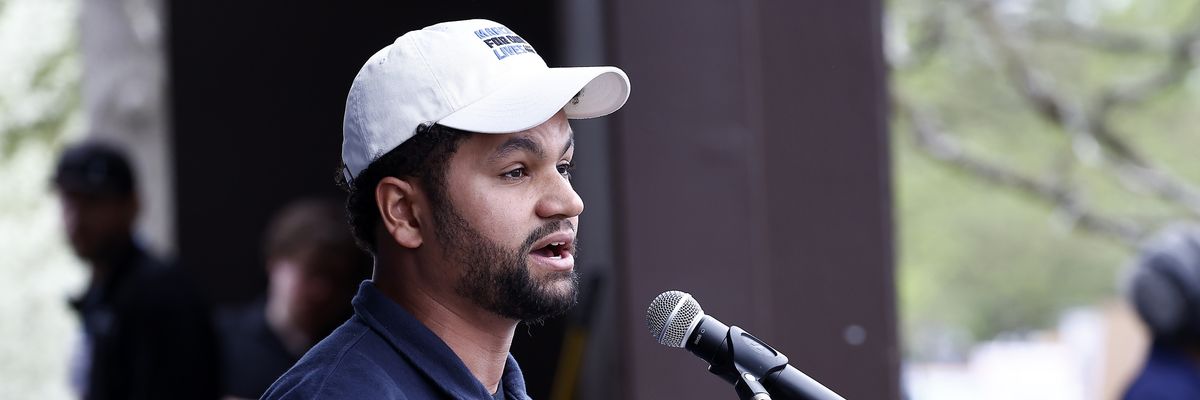


Rep. Maxwell Frost (D-Fla.) speaks during the Hands Off! day of action against the Trump administration and Elon Musk on April 5, 2025 in Washington, D.C.
(Photo: Paul Morigi/Getty Images for Community Change Action)

Eloise Goldsmith
Apr 21, 2025
COMMON DREAMS

Four Democratic lawmakers in the U.S. House of Representatives landed in the capital of El Salvador on Monday morning, kicking off a trip aimed at pressuring the Trump administration to comply with a recent Supreme Court ruling and facilitate the retrieval of a man who federal officials have admitted was wrongly sent to a Salvadoran megaprison in mid-March.

"Kilmar Abrego Garcia is being held illegally in El Salvador after being wrongfully deported," said Rep. Robert Garcia of California, one of the lawmakers in El Salvador, in a Monday statement. He added that the group is there to "to remind the American people that kidnapping immigrants and deporting them without due process is not how we do things in America."

Garcia, Maxwell Frost of Florida, Yassamin Ansari of Arizona, and Maxine Dexter of Oregon are traveling to El Salvador days after Democratic Sen. Chris Van Hollen of Maryland traveled there and successfully met with Abrego Garcia, a Maryland man who in 2019 received a ruling from an immigration judge that he could not be deported to his native El Salvador because he was at risk of gang persecution there.

Last week, Garcia and Frost said the purpose of the trip was to visit the megaprison, known as CECOT, and check on Abrego Garcia and others who were deported. Abrego Garcia is now being held at a different prison in Santa Ana, El Salvador, according to court filings from the U.S. Justice Department.

The Trump administration has attempted to paint Abrego Garcia, who has no criminal record in the United States, as dangerous, alleging that he is a member of the MS-13 gang. Abrego Garcia's family and lawyers maintain he is not a gang member.

U.S. President Donald Trump and "his administration are running a government-funded kidnapping program," Frost said of the administration's deportation of Abrego Garcia and others who were deported.

"Trump and ICE are not above the law," he added, referring to U.S. Immigration and Customs Enforcement. "Today it's Kilmar, but tomorrow it could be anyone."

Frost and Garcia had requested that the head of the U.S. House Committee on Oversight, Rep. James Comer (R-Ky.), grant them authorization to conduct an official congressional delegation, but Comer refused, meaning the trip will not be funded by the committee's budget.

Frost called the denial of the request "shameful" on X on Sunday evening. "Good thing I don't need Comer's permission to get on a plane," he wrote.

On March 15, the Trump administration of deported over 200 Venezuelans to El Salvador after invoking the Alien Enemies Act, a rarely used authority that gives the president broad powers to deport noncitizens. Several Salvadoran nationals were also deported under Title 8 removal orders.

The deportations by the Trump administration kicked off a fierce legal battle.

On Saturday, the Supreme Court intervened to prevent the deportation of more Venezuelan migrants to El Salvador under the Alien Enemies Act. Last month, the Supreme Court ruled that the White House can deport people under the law, but that migrants must be given an opportunity to contest their removals in court districts where they are being detained in the United States.
‘We don’t have an option not to fight’: How Black women are resisting


Errin Haines, 
Michigan Advance
April 21, 2025 


Attendees for a rally in Detroit for Vice President Kamala Harris’ presidential campaign wait for her to speak on Aug. 7, 2024 | Anna Liz Nichols

< This story was originally reported by Errin Haines of The 19th. Meet Errin and read more of her reporting on gender, politics and policy.

This column first appeared in The Amendment, a biweekly newsletter by Errin Haines, The 19th’s editor-at-large. Subscribe today to get early access to her analysis.


Where are the 92 percent?

That has been a persistent question since the presidential election, referring to the Black women who overwhelmingly organized and voted for Kamala Harris and then seemingly went dark after November 5. For many of them — who have largely rejected Donald Trump in his three campaigns for president — Harris’ loss felt like a betrayal, and another signal of disrespect from a democracy they have long worked hard to shape.

In the early days of the Trump administration, there have been feelings of anger, resolve, resignation and exhaustion among Black women and many other Americans frustrated with the president’s actions and the current political climate. Earlier this month, millions of protesters took to the streets in cities across the country to make their voices heard as Trump and ally Elon Musk have sought to dramatically remake the federal government, with consequences for real Americans.

The crowds were overwhelmingly White, not the typical makeup of other recent protest movements. Many of the Black women who have been among the leaders of such movements in the past decade, were noticeably — and intentionally — absent.

The Black women I talk to said they are being strategic, pragmatic and creative about what their resistance looks like now, preparing for a long fight ahead, and rejecting narratives that suggest their lack of visibility in this moment translates into inaction.

“People are paying more attention to what Black women are doing because of the impact we had in the election,” said Janai Nelson, president of the NAACP Legal Defense Fund. “We pointed people in the right direction and they did not follow. We may be out of sight to some people, but we’re not checked out by any stretch. The crisis in America is certainly not out of our minds.”

Within weeks of the election, a meme began to circulate of a group of Black women sitting on the roof of a building, sipping their beverages and watching the country burn. The message: Black women would do nothing to help if the democracy they’d tried to save went up in flames.

This month, another image quickly gained traction during the “Hands Off” protests: a photograph of White marchers filing past a restaurant while Black people having brunch looked on, unbothered.

While the idea that Black women deserve rest is showing up in organic social media content, it’s also part of a campaign of misinformation, said Esosa Osa, founder of Onyx Impact, a nonprofit dedicated to researching Black online communities and fighting harmful information that targets Black voters. Emphasizing Black women talking about rest can discourage others in this key Democratic voting bloc from engaging civically.

“We are seeing bad actors trying to influence and suppress Black engagement in a really targeted and hostile way,” Osa said. “We should be cautious of any narrative that’s just, ‘Black women won’t turn out or won’t engage civically.’ Those are the types of narratives that folks working against Black power would want to uplift and amplify. Just because you don’t see your Black friend at a protest doesn’t mean we’re not working or being strategic.”

A lot of that strategy is happening behind the scenes, said KimberlĂ© Crenshaw, who coined the term “intersectionality” and is a leading legal and civil rights scholar at UCLA and Columbia Law School. Crenshaw added that she has been skeptical of much of what she has seen online about Black women “resting.”

“I see a contrast between what’s being given to me on social media and what I’m seeing in the trenches,” Crenshaw said. “Are we tired? Yes. Are we heartbroken? Absolutely. Are we willing to roll over and let this … happen to us without hearing from us? I’m not seeing that, not in the circles I talk to. We don’t have an option not to fight.”

Nelson is among the Black women in the fight now, tapping into LDF’s long history of legal activism to make American democracy live up to its values. The group was among several civil rights organizations that filed a lawsuit earlier this month challenging Trump’s executive order calling for sweeping election changes.

Fatima Goss Graves, head of the National Women’s Law Center, said Black women are leading a lot of the strategy in this time, pointing to colleagues like Alexis McGill Johnson of Planned Parenthood; Melanie Campbell of the Black Women’s Roundtable, a network focused on the political and economic power of Black women; and SEIU President April Verrett. In February, Graves’ organization, a nonprofit advancing gender justice, filed a lawsuit challenging the president’s executive orders that take aim at diversity, equity and inclusion (DEI) initiatives.

Asked about this month’s protests, Graves said she was not surprised to see White Americans — who make up the majority of the federal workforce — as the main participants.

“The folks who usually come to the streets first are the ones who see the direct impact,” Graves pointed out. “You haven’t always seen groups like that in the streets. I actually feel good about Black women’s leadership at this time. They understand the assignment fully.”

And there are others, focused on building community, messaging to counteract negative narratives and protesting with the power of their purses.

Attendees for a rally in Detroit for Vice President Kamala Harris’ presidential campaign wait for her to speak on Aug. 7, 2024 | Anna Liz Nichols

In the days leading up to Trump’s joint address to Congress, an idea was launched by Black activists, organizers and strategists including Angela Rye, Leah Daughtry and Tamika Mallory to provide an alternative to the president’s speech: a marathon of online programming aimed at educating and empowering Black Americans impacted by the new administration.

“State of the People” streamed for 24 hours and has since evolved into a 10-city tour starting April 26 in Atlanta that will include mutual aid, political education and town halls.

“We have not stopped; we are focused on not just surviving, but making sure we don’t lose ground on what we have achieved as a people in this country,” said Campbell, one of the organizers of the State of the People effort. “This is designed to build a larger, intergenerational movement, showing the potential of long-term, sustained organizing on the ground and online.”

During the Lenten season, Jamal Bryant, pastor of the Atlanta-based mega congregation New Birth Missionary Baptist Church, called for a 40-day boycott of Target after the retailer announced it would scale back its DEI initiatives. The campaign came in the wake of the Trump administration’s executive orders calling for an end to such programs, which the president referred to as “radical and wasteful.” Black consumers, many of them women, make up nearly 9 percent of Target shoppers. While the full impact of the boycott is unclear, the company’s stock price has dropped, foot traffic to stores has slowed significantly and net quarterly sales decreased as a result.

Last month, 100 women did a “buy-in” at a Washington, D.C.-area Costco to show support for the store’s commitment to DEI as part of an annual summit organized by the Black Women’s Roundtable. Campbell said the gathering also included a day on Capitol Hill hosted by Angela Alsobrooks and Lisa Blount Rochester — the nation’s two Black women senators — focused on federal budget priorities including Medicaid, Medicare and Social Security.

Campbell said she has been part of different organizing efforts since the election and strategizing around protecting Black women’s leadership in this moment.

“Part of resistance is self-care,” Campbell said. “That does not have anything to do with not fighting, because we are. We said we were going to take some rest after November 5, but there was never any notion that we weren’t going to fight for our freedom in this country.”

Resistance to the Trump administration, including for Black women, is still taking shape. Campbell said she invites allies whom she felt left down by after the election to step up now. What is clear in this unprecedented moment is that it will not look like it has looked before.

Nelson said Black women’s roles now must be “very targeted, very pinpointed, because we are in a crisis unlike anything we have seen in modern history for Black women.”

“We’re taking it very seriously,” Nelson said. “To the extent people sense silence or reserve, those energies are being put to good use, just in a quiet way.”

When the moment is right, Graves predicted that Black women could also take their protest to the streets.

“That’s part of being a strategist,” she said. “We’ll know when it’s time for us to engage, and that’s OK.”
Fox reporter denies 'pumping stocks' after scoop on 'significant' White House trade deal


David McAfee
April 20, 2025 
RAW STORY

A veteran Donald Trump reporter Sunday denied "pumping" the stock market after dropping a "scoop" about a purported White House trade deal in the works.

FOX Biz senior correspondent Charles Gasparino, who reports on Trump often and earned the ire of MAGA when he recently reported that conservatives were wrong to suggest Trump outsmarted the world with tariffs, on Saturday took to social media to issue a breaking alert about the president's willingness to risk financial crisis in order to enact his biggest agenda items.

On Sunday, he turned his attention to a new scoop.

"Scoop: A Wall Street exec with ties to Trump White House says the word is that [Scott Bessent] is close to announcing a significant trade deal, likely to be with Japan," he reported. "Now I have not gotten this independently confirmed with the White House (it is Easter) and just from covering the trade drama, I must stress the situation is always fluid; what looks like a deal can unwind."

He added, "And timing is always suspect. That said the word from the White House is that they’re approaching a significant deal."

Richard Field, Director Institute for Financial Transparency, replied, "Incoming ... stock/bond market pump ...."

Gasparino then hit back, saying, "One day I’m pumping stocks, the next I’m bashing them. Can't win or maybe this guy didn’t read what I wrote."


Key Trump advisers prepare 'skeptical' report attacking IVF access


Krystina Alarcon Carroll
April 21, 2025 
RAW STORY


Baby (Shutterstock)

A “coalition of people want to see more babies born” in the U.S. — and President Donald Trump is takin note, according to a report from the New York Times.

The nation's birthrate in the United States has been falling since 2007 and Times reporter Caroline Kitchener called it, “A warning of a future in which a smaller workforce cannot support an aging population and the social safety net.” Adding, “If the birthrate is not turned around, [different groups] fear, the country’s economy could collapse and, ultimately, human civilization could be at risk.”

While on the campaign trail, Trump said he was going to make IVF cheaper and more accessible for Americans. Kitchener’s report claims, “Many in the movement have different reasons for wanting people to have more kids — and often disagree on how to get there.”

“I just think this administration is inherently pronatalist,” activist Simone Collins told the Times.

According to Kitchener’s report, “The Heritage Foundation has been researching the question for over two years and is preparing to release a report in the coming weeks on how it believes the administration and Congress should counter declining birth and marriage rates.”

She notes the foundation, “has also been prominent in efforts to shape what the White House might do on infertility and IVF. The group, which heralds its commitment to ‘protecting the unborn,’ is skeptical of the procedure.”

Emma Waters, a policy analyst at the Heritage Foundation, told the Times, “We need to channel the MAHA spirit and really dive deep into infertility. If the executive order’s goal is to increase access to infertility care, and keep costs down, the solution is not to push IVF for everyone.”

One approach Waters suggests includes “government funds to promote programs that educate women on their menstrual cycles and their ‘natural fertility,’ such as cycle-charting courses that many conservative Christian women use to try to prevent pregnancy without using birth control.”

However, The Times reports, there are medical associations that are skeptical of this approach.

These medical group claim the method is “‘political’ and not based in science.”

The report notes there is room for bipartisanship on this issue, “which brings together unlikely coalitions to push for better family policies or more funding for infertility issues.”
'You damn well know': David Hogg takes down Reince Priebus in deportation clash on ABC

David Edwards
April 20, 2025
RAW STORY


ABC/screen grab

Democratic National Committee Vice Chair David Hogg slammed former Republican National Committee Chair Reince Priebus for claiming that Kilmar Abrego Garcia, a wrongly deported Maryland man, was a known member of MS-13.

During a Sunday panel discussion on ABC, Priebus attacked Hogg for opposing some incumbent members of his own party in primary races.

"I mean, unfortunately, David, I'd have you removed from the party, because I think, number one, I think you're sincere," Priebus told Hogg. "I think you're right. The Democrats are a complete mess."

"You're traveling to El Salvador for MS-13 gang members. But here's the point," he continued. "I'm looking at someone, my vice chair at the RNC, taking $20 million for another effort. It's $20 million out of the DNC's pocket. You can't be on the board of the fishing and forest company and on Greenpeace at the same time."

"Let me push back against that," Hogg replied. "This was not an MS-13 gang member, and you damn well know that."

"Oh, come on!" Priebus exclaimed.

"He was not," Hogg stated.

"Okay, so keep defending this guy," the former RNC chair said. "You're just digging your own hole."

"This was wrong," Hogg said of President Donald Trump's deportation effort. "In America, we have due process, and we are a land of law and order. We are a land of law and order."

"And this administration is repeatedly showing time and time again they do not care about what the Supreme Court says, they do not care about the rule of law, and you cannot defend sending people to another country," he added.

Watch the video below from ABC or at the link. .

'The guy with all those bankruptcies': Trump's Easter Day swipe at 'businessmen' backfires


David McAfee
April 20, 2025 
RAW STORY


U.S. President Donald Trump gives a thumbs up as he returns to the White House from National Harbor following his address to the Conservative Political Action Conference (CPAC) annual meeting, on the South Lawn in Washington, D.C., U.S., February 22, 2025. REUTERS/Craig Hudson

Donald Trump on Sunday took a swipe at businessmen who criticize his signature policy, and observers immediately pounced on the purported irony.

Trump over the weekend posted the following statement on Truth Social: "THE BUSINESSMEN WHO CRITICIZE TARIFFS ARE BAD AT BUSINESS, BUT REALLY BAD AT POLITICS."

"THEY DON’T UNDERSTAND OR REALIZE THAT I AM THE GREATEST FRIEND THAT AMERICAN CAPITALISM HAS EVER HAD!" Trump then added.

On social media, experts and notable political observers were quick on the draw.

Gizmodo tech reporter Matt Novak posted a screenshot of Trump's quote and added, "I can't emphasize enough that all of these posts from Trump are real. He's such a f------ idiot."

Actor and producer Jon Cryer responded to Novak's quoting of Trump's new attack on businessmen who he says are bad at business, writing, "BUT I, THE GUY WITH ALL THOSE BANKRUPTCIES AND FRAUD CONVICTIONS, AM REALLY GOOD AT IT."

Republicans against Trump also chimed in, saying, "Ah yes, Mr. Six-Time Bankruptcy is here to lecture actual businesspeople—who correctly understand that tariffs will crush their businesses and raise prices for consumers—that they are the ones bad at business."

HuffPost reporter Yashar Ali also replied:

"So President Trump is saying that Elon Musk, his brother Kimbal Musk, Jamie Dimon, and Bill Ackman are bad at business?"


'Bad at business': Trump lashes out at 'businessmen' critics in 'unhinged' Easter comments

David McAfee
April 20, 2025
RAW STORY


U.S President Donald Trump gestures as he attends UFC 314 at the Kaseya Center, Miami Florida, U.S, April 12, 2025. REUTERS/Nathan Howard

Donald Trump on Easter lectured "businessmen who criticize" his policies.

The President of the United States took to his own social media network -- called Truth Social -- on Easter Sunday, first writing, "HAPPY EASTER. WE WILL, MAKE AMERICA GREAT AGAIN! DONALD J. TRUMP, PRESIDENT OF THE UNITED STATES."

Minutes later, Trump had a new message for his critics.

ALSO READ: 'Dictatorship, not a town hall': Families 'distraught' as MTG disruptors tased and jailed

He said, "THE BUSINESSMEN WHO CRITICIZE TARIFFS ARE BAD AT BUSINESS, BUT REALLY BAD AT POLITICS."

"THEY DON’T UNDERSTAND OR REALIZE THAT I AM THE GREATEST FRIEND THAT AMERICAN CAPITALISM HAS EVER HAD!" Trump then added.

Independent journalist Aaron Rupar Sunday called the holiday message "unhinged."


World sleeps, at different rates: Sleep deprivation trends


By Dr. Tim Sandle
April 20, 2025
DIGITAL JOURNAL


Passengers on the five-hour bus journey either use it to take in some of the sights of Hong Kong or get some much-needed sleep — © AFP Bertha WANG

The U.S. tops the list as the most sleep aid-dependent country, with medication sales projected to exceed $2 billion in 2025. The same survey finds that Switzerland holds the second spot in sleep aid dependency, with one of the highest sleep aid market annual growth rates, reaching 8 percent.

A research comes from Onebed, and it analyses the countries where people are most dependent on sleep aids, evaluating key metrics such as projected sleep aid sales for 2025, search volumes for sleep aid-related terms, sleep disorder prevalence and market annual growth rate.

Data was sourced from Google Keyword Planner, market and health reports on industry growth projections and sleep disorder prevalence. Each country was assigned a composite score based on these factors, with higher scores indicating a greater reliance on sleep aids.

This reveals the top ten to be:
U.S.
Switzerland
Australia
United Kingdom
New Zealand
Canada
Poland
Germany
Spain
Austria

The U.S. dominates the sleep aid market among all the countries analysed. Additionally, the U.S. records the highest sleep disorder prevalence, at 5.9 percent. Switzerland holds the second spot in sleep aid dependency, scoring 76 on the composite index. Switzerland’s sleep aid market has one of the highest annual growth rates among all the countries studied, reaching 8 percent.

Australia stands as the third-largest consumer of sleep aids, achieving a composite score of 73. Similar to the U.S., the country has the highest sleep disorder prevalence, with 5.9 percent of its population affected. The UK ranks fourth among countries where bedtime routines often include sleep aids, with a composite score of 63. The UK is also projected to experience one of the highest sleep aid market annual growth rates in 2025, at 6 percent.

New Zealand ranks fifth among countries where many rely on sleep aids to get through the night, achieving a composite score of 59. The country has the second-highest sleep disorder prevalence, at 5.4 percent. Canadian people are the sixth-largest consumers of sleep aids, with the country achieving a composite score of 58. Canada sees about 2,100 monthly searches on sleep aids and related topics per 100k people.

Poland secures the seventh spot in sleep aid dependency, with a composite score of 54. The country’s sleep aid market is projected to grow at a rate of more than 8 percent in 2025. Germany is the eighth among countries where sleep aids are the key to a full night’s rest. With expected sales of $411 million in 2025, it claims the highest revenue in the sleep aid market.

Spain ranks ninth among countries where sleep aids are widely used, with the market projected to grow by 5 percent annually. It shares a similar prevalence rate with Germany, with 5.2 percent of its citizens facing sleep disorders. Austria concludes the list of countries where sleep aids are widely used, achieving a composite score of 53. Similar to Germany, the country’s sleep aid market is expected to grow at an annual rate of 3 percent.
Cannabis terpenes can treat fibromyalgia pain

By Dr. Tim Sandle
April 20, 2025


Canada launched a long-awaited review of its cannabis regulations four years after legalizing its recreational use. — © AFP

Terpenes, derived from the Cannabis sativa plant, may be the basis of a medication for fibromyalgia and post-surgical pain relief. This is according to the University of Arizona Health Sciences.

According to lead scientist John Streicher: “Our research is showing that terpenes are not a good option for reducing acute pain resulting from an injury, such as stubbing your toe or touching a hot stove; however, we are seeing significant reductions in pain when terpenes are used for chronic or pathological pain.”

Moving onto the current research, Streicher says: “This study was the first to investigate the impact of terpenes in preclinical models of fibromyalgia and post-operative pain and expand the scope of potential pain-relieving treatments using terpenes.”

Terpenes are the compounds that give plants their aroma and taste. In some cases, these offer an alternative path to pain relief. In terms of the Cannabis plant, this is without the unwanted psychoactive side effects of tetrahydrocannabinol.

Specifically, four terpenes are of interest, found in moderate to high levels in Cannabis sativa: geraniol, linalool, beta-caryophyllene and alpha-humulene. The mechanism of action of these different terpenes is through the adenosine A2a receptor – a receptor that caffeine targets and blocks.

Each of the terpenes resulted in high levels of pain relief in mouse models of post-operative pain and fibromyalgia. Of the different substances, geraniol provided the most significant level of pain relief, followed by linalool, beta-caryophyllene and alpha-humulene.

Fibromyalgia is a chronic musculoskeletal disorder that affects up to 5% percent of the world’s population. In the U.S. alone this translates to around 4 million U.S. adults. The condition affects women more than men.

Post-surgical pain falls between acute pain and chronic pain. While it is usually short in duration, it involves physiological changes such as increased inflammation and sensitization of the body’s pain system that contribute to the pain.

Going forwards there is more to discover. There are hundreds of unique chemicals that plants make, including the Cannabis plant. Many of these chemicals are unknowns when it comes to their abilities to aid in human health, diseases and disorders.

The research has been published in the journal Pharmacological Reports. It is titled “Select terpenes from Cannabis sativa are antinociceptive in mouse models of post-operative pain and fibromyalgia via adenosine A2a receptors.”


Father’s mental health can impact children for years


Five-year-olds exposed to paternal depression are more likely to have behavioral issues in grade school, Rutgers Health researchers find


Rutgers University


In popular culture, dads are stoic, sensitive and strong. So powerful is the mystique of the happy dad that celebritiesjoke books – even hard seltzers – carry the label.


Real life is different. Fathers get down, sometimes debilitatingly. And as new research from Rutgers Health reveals, when paternal depression goes undiagnosed or unaddressed, the negative social and behavioral effects on children can persist for years.


In a study published in the American Journal of Preventive MedicineKristine Schmitz, an assistant professor of pediatrics at Rutgers Robert Wood Johnson Medical School (RWJMS), together with other researchers from RWJMS and from Princeton and Rider universities, reports that children exposed to paternal depression when entering kindergarten are far more likely to have teacher-reported behavioral difficulties and poor social skills at age 9.


“We need to consider depression in both parents, not just mothers,” said Schmitz. “Depression is treatable, and to support the whole family, pediatricians must start talking with dads about it and developing father-focused interventions that meet their needs.”


On average, between 8% and 13% of fathers in the United States will be affected by some form of depression during their child’s early years, and the prevalence increases to 50% when the mother is also experiencing postpartum depression. But few studies have focused on paternal depression beyond the postnatal period or explored links between fathers’ mental health and children’s behaviors.


To close this gap, Schmitz and colleagues analyzed data from the Future of Families and Child Wellbeing Study (FFCWS), a national birth cohort that randomly sampled births in 20 large U.S. cities from 1998 to 2000. The study continues to track changes in participants’ lives. 


Two FFCWS data points were key to Schmitz’s assessment: When the children were age 5, their fathers were screened for depressive symptoms in the past year; and when they were 9, the children’s teachers completed a survey that included behavioral assessments.


“Kindergarten entry is an important developmental milestone, and adversities faced at that time can lead to poorer engagement and behaviors in grade school that may persist or magnify through middle and high school,” the researchers wrote.


By comparing data from 1,422 fathers – 74% of whom lived with their children at least half of the time when the child was 5 – and their children, and controlling for sociodemographic factors and maternal depression, the researchers were able to map a clear link between paternal depression and child conduct.


For instance, kids whose fathers reported depressive symptoms, such as feeling sad, blue or depressed when they were age 5 were, by age 9, significantly more likely to exhibit restlessness, defiance and anger as well as present lower levels of cooperation and self-esteem.


Schmitz said several reasons could explain the connection. For one, depression has been found to lead to difficulty parenting and less emotional support for the child.  It can also cause conflict or other stress in the home.


Schmitz said no other population-based U.S. study has made such a definitive link between paternal depression and child behavior in school. The findings suggest that interventions to identify and support fathers with depressive symptoms, and their children, could help attenuate that link.


While paternal depression is connected to challenging child behaviors, there is reason for hope. Identifying and intervening early can help improve not only fathers’ well-being but also the well-being of the children, Schmitz said.


“As parents, we can model that when we struggle, we reach out and get help,” she said. “That’s a lesson children will carry for a lifetime.”


Explore more of the ways Rutgers research is shaping the future.


Tusi (a mixture of ketamine and other drugs) is on the rise among NYC nightclub attendees


Society for the Study of Addiction


Tusi”, also known as “tucibĂ­” or “pink cocaine”, is a drug concoction that emerged in Latin America and Europe within the past decade and is becoming increasingly popular in the USA.  A new study published in the scientific journal Addiction estimates that in 2024, 2.7% of electronic dance music-nightclub attending adults in New York City (NYC) used Tusi in the past year, with higher use among Hispanic people and people who use other drugs.  

Consumers often don’t understand what Tusi is when they take it.  Tusi is commonly confused with the 2C family of drugs – psychedelics – because it is a phonetic translation of “2C”. Tusi is also commonly called “tucibĂ­” or “tusibĂ­” (the phonetic translation of 2C-B, a particular type of psychedelic).  And it is also often called “pink cocaine” (“cocaina rosada” in Spanish).  All of these names have the potential to confuse people who use, who may believe they are taking a psychedelic drug or largely unadulterated cocaine. 

In fact, Tusi is a drug mixture that rarely contains 2C drugs and most commonly contains ketamine and MDMA (ecstasy), sometimes in combination with cocaine.  And therein lies the potential danger.

Lead author Dr Joseph Palamar, of NYU Grossman School of Medicine, explains: “People who use illicit drugs are often at risk of using drugs adulterated or even replaced by other drugs.  But Tusi puts people who use drugs at an even higher risk, partly because it is easily confused with two other types of drugs – 2C series or cocaine – and partly because Tusi is pretty much always a concoction of various drugs. This greatly increases the risk of adverse or unexpected effects.”

Tusi use in this study was determined by self-report.  The study surveyed a sample of 1,465 adults attending 124 electronic dance music events hosted by NYC nightclubs from January through November 2024.  Participants took a survey on an electronic tablet before entering the nightclub. The survey results were used to estimate prevalence of Tusi use among all people who attended an electronic dance music event at a NYC nightclub in 2024.

Ketamine/MDMA drug mixtures marketed as “tucibĂ­” or “pink cocaine” have been reported from Spain since about 2018.  In Latin America, drug checking programs in Argentina have been testing the contents of Tusi since at least 2019, in Uruguay since at least 2020, and in Columbia and Chile since at least 2021.  Systematic drug checking data focusing on Tusi have been lacking in the US.

-- Ends –

For editors:

This paper is available to read online on the Wiley Online Library for one month after the embargo has lifted (https://onlinelibrary.wiley.com/doi/10.1111/add.70069) or you may request an early copy from Jean O’Reilly, Editorial Manager, Addictionjean@addictionjournal.org.

To speak with lead author Dr Joseph Palamar, please contact him at the New York University Grossman School of Medicine by email (joseph.palamar@nyulangone.org).

Full citation for article: Palamar JJ, Abukahok N, Acosta P, Krotulski AJ, Walton SE, Stang B, and Cleland CM.  Tusi Use among the New York City Nightclub-Attending Population. Addiction. 2025. DOI: 10.1111/add.70069

Primary funding:  National Institute on Drug Abuse (NIDA) award numbers R01DA057289, R01DA060207, and P30DA01104.

Declaration of interests: Dr. Palamar has consulted for the Washington-Baltimore High Intensity Drug Trafficking Areas program. The authors have no potential conflicts to declare.

Addiction (www.addictionjournal.org) is a monthly international scientific journal publishing peer-reviewed research reports on alcohol, substances, tobacco, gambling, editorials, and other debate pieces. Owned by the Society for the Study of Addiction, it has been in continuous publication since 1884.