Friday, May 30, 2025


Nuclear power on the rise except in

UN watchdog's home, Austria

A glimpse inside the Zwentendorf Nuclear Power Plant in Austria
 Euronews Méabh Mc Mahon

By Méabh Mc Mahon
Published on 

In Austria - the home of the IAEA - the public rejected nuclear power in a referendum in the 1970s leaving a gigantic power plant that cost 1 billion euro to build to become the biggest training hub in Europe to study nuclear power.

From Belgium to Denmark, Bangladesh to Egypt, nuclear power is making a political and policy comeback and drew advocates from across the globe to the International Atomic Energy Agency's Vienna headquarters this week, though it remains less loved in the Austrian home of the UN agency.

With big tech looking at nuclear energy to power future AI operations and policymakers increasingly mulling the potential of small modular reactors – mini nuclear plants that could be factory-built and power a small town, the International Atomic Energy Agency has noticed more and more countries interested in its expertise.

That is why the Vienna-based nuclear watchdog invited representatives from across the globe to its headquarters this week for a convention to deep dive into the good, bad and ugly of what advocates call a very carbon-friendly fuel.

"At the IAEA, we're seeing a number of member states that have expressed interest in nuclear power for several reasons related to growing energy demands, climate change and other national considerations," Matthew van Sickle, a senior nuclear power engineer told Euronews.

The IAEA offers expertise to member states on all the main challenges from financing to human resources to communication strategies to garner public support.

The Zwentendorf referendum

But in Austria, where the IAEA has been based since it came about in 1957, a referendum in the 1970s resulted in the Austrian National Assembly passing a law prohibiting the use of nuclear energy in Austria.

The outcome was an outstanding win for participatory democracy, but a major loss for the Zwentendorf Nuclear Power Plant, which cost €1 billion to build and was ready to operate.

Situated in Lower Austria alongside the river Danube, today the plant has become a quirky Homer Simpson-inspired tourist attraction and the biggest nuclear training centre in the whole of Europe.

Peter Schinnerf, who works at the plant as a guide and trainer, told Euronews that the plant has more emotional than financial worth today. "This facility was never used," he said.

Since 2017, the plant has also been hosting the annual Shut Down festival - a massive techno festival attracting revellers from all across Austria and beyond.


No sign Russia is moving to restart Zaporizhzhia NPP, UN nuclear agency says
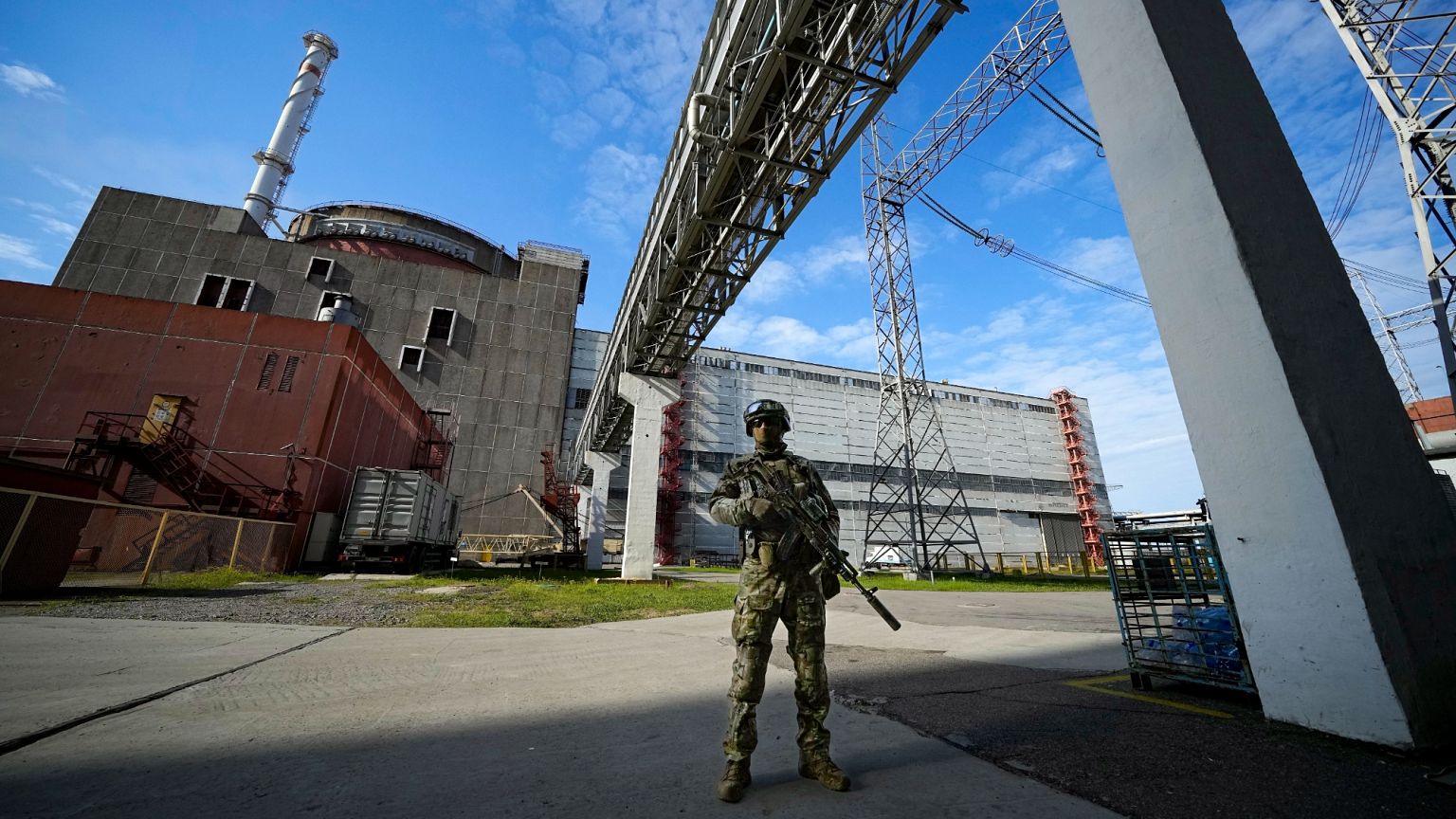
A Russian serviceman guards an area of the Zaporizhzhia Nuclear Power Station in territory under Russian military control, 1 May, 2022
Copyright AP Photo

By Gavin Blackburn with AP
Published on 

The plant has been held by Russia since the early days of the war following Moscow's full-scale invasion in February 2022, although it isn't producing power.

Inspectors from the UN nuclear watchdog say they haven't seen any signs of Russia moving to immediately restart the Zaporizhzhia nuclear power plant, an agency official has said after Greenpeace raised concerns about Moscow building power lines near the facility.

The Zaporizhzhia nuclear power plant, the largest such facility in Europe, has been a focus of concern for the International Atomic Energy Agency (IAEA) during the war in Ukraine amid fears of a potential nuclear catastrophe.

The plant has been held by Russia since the early days of the war following Moscow's full-scale invasion in February 2022, although it isn't producing power.


The city of Zaporizhzhia, about 440 kilometres southeast of the capital Kyiv, is held by Ukraine and attacks have occurred around the plant as the front line is close.

The IAEA rotates staff through the facility to check safety and offer its expertise.
This satellite photo from Planet Labs PBC shows Russian workers building pylons for electrical transmission lines in occupied territory just west of Mariupol, 15 April, 2025AP Photo

Power line construction

In a report released on Tuesday, Greenpeace said that satellite photos showed Russia had been building "an electricity high voltage power line" in Russia-held areas of the Donetsk and Zaporizhzhia regions.

"This is some of the first hard evidence of Russian moving ahead with its dangerous and illegal plans for restarting Ukraine and Europe’s largest nuclear plant at Zaporizhzhia," said Shaun Burnie, a nuclear specialist at Greenpeace Ukraine, in a statement.

An IAEA official said that the agency's inspectors hadn't seen any major changes at the Zaporizhzhia plant suggesting Russia was preparing for an imminent effort to restart it, after being asked about the Greenpeace report.

"What I can say is our teams continue to confirm there is no indication at the moment that there will be any active preparations for a restart of the plant now," the official said on condition of anonymity to discuss the IAEA's assessment.

Russia hasn't acknowledged the power line project. Ukraine sent a note to the IAEA and its membership on Wednesday raising concerns about the power line construction.

"These actions represent a blatant violation of international law and an infringement on Ukraine’s sovereignty," Ukraine said in its letter.

"The construction of this transmission line is a clear indication of the Russian Federation’s intent to initiate an unauthorized restart of the Zaporizhzhia Nuclear Power Plant — a facility that remains the sovereign property of Ukraine."

It added: "Any operation of the (plant) without explicit authorisation of the Ukrainian nuclear regulator is illegal and poses a direct and unacceptable threat to nuclear safety."

A global concern

Russia has suggested restarting the Zaporizhzhia plant in the past. IAEA Director General Rafael Grossi told journalists on Wednesday that the issue could be discussed on an upcoming trip he plans to make to Ukraine and possibly Russia.

"We are going to be continuing our discussions with both, in particular with the Russians on this idea of (the) restart of the plant," Grossi said.

"It is a matter that requires very careful consideration."

Zaporizhzhia's six reactors remain fuelled with uranium though they are in a so-called cold shutdown, meaning nuclear reactions have stopped.

However, the plant relies on external electricity to keep its reactor cool and power other safety systems. That external power has been cut multiple times in the war, forcing the plant to rely on on-site diesel generators.

Further complicating potentially turning the plant back on is the 2023 collapse of the Kakhova Dam on the Dnieper River.

The plant relied on water from the river for its reservoir, forcing workers there to dig wells.

"The plant lost its main source of cooling water, so the whole system cannot work as it was originally designed," the IAEA official said.

"The consumption of water is orders of magnitude higher (when the plant is operating) compared to cold shutdown. We don’t see any easy, quick fix for it."

The Zaporizhzhia plant has also been mentioned by US President Donald Trump as he's sought to reach a ceasefire deal between Russia and Ukraine.

In a March phone call with Zelenskyy, Trump suggested the US could own and run Ukraine's nuclear power plants and protect them from Russian attacks.

CAPITALI$M IS BORN IN THE BOURSE

Côte d’Ivoire launches West Africa’s first agricultural commodities exchange

After seven years in development, Côte d’Ivoire has launched West Africa’s first agricultural commodities exchange – the Bourse des Matières Premières Agricoles or BMPA.


Issued on: 30/05/2025 - RFI

Workers unload sacks of cashew nuts in a warehouse in Abidjan, Cote d'Ivoire. AFP - ISSOUF SANOGO

Officially opened on Wednesday 28 May in the Ivorian economic capital Abidjan, the exchange began formal trading on Friday, with the aim of bringing transparency, structure, and improved income to the region’s agricultural producers.

The exchange's symbolic launch was swift and promising: in just ten minutes, 89 tonnes of goods were traded, valued at nearly 31 million CFA francs – just under €50,000.

For now, the platform lists three key products – raw cashew nuts, cola nuts, and maize – chosen for their strategic importance to the national economy.

To mark the launch this week, the West African Economic and Monetary Union posted on X that the exchange "marks an historic turning point for the Ivorian agricultural sector."

Le mercredi 28 mai 2025 marque un tournant historique pour le secteur agricole ivoirien. En effet, le lancement officiel des activités de la Bourse des Matières Premières Agricoles de Côte d’Ivoire (#BMPA CI) s’est fait en marge de la 7ème édition du #SARA 2025 pic.twitter.com/BDzV0Pdc0p— BRVM (@BRVM_UEMOA) May 30, 2025
Transparent, regulated marketplace

The BMPA replaces informal trading practices with a regulated platform that reflects real-time supply and demand dynamics.

Côte d’Ivoire is the world’s top producer of both raw cashews and cola nuts, with over 1 million tonnes of cashews and 250,000 tonnes of cola nuts produced annually.

Maize also plays a central role in domestic food security.

Farmers deliver their crops to approved warehouses near production areas and receive warehouse receipts, which serve as transaction documents on the exchange.

Speaking to RFI, Raoul-Alex Zouzou, head of African Commodities Brokerage House (ACBH), explained: “With this receipt, producers will come and meet brokers to sell their produce online.”

“From the exchange platform, the broker – who is also in contact with manufacturers, processors and exporters – will offer these products to buyers.”

This system aims to stabilise seasonal supply fluctuations, especially in crops like cashews.

“Cashew nut production takes place over a short period,” Beh Soro told RFI, who heads the Ivorian inter-professional cashew nut organisation.

“As a result, we have an abundance during the harvest period. Capturing the stock during a period of abundance allows us to regulate the market and therefore sell later, when demand is more attractive for producers.”

How drones are transforming agriculture in Côte d'Ivoire

Infrastructure and operation

The BMPA is underpinned by certified warehousing regulations, overseen by the Warehouse Receipt Regulatory Authority (ARRE), offering a total storage capacity of 500,000 tonnes.

Financial transactions are managed by the National Investment Bank, acting under an affiliated Agricultural Settlement Bank.

Trading sessions are held Monday to Friday – from 10 am to midday GMT – with price changes per session limited at 10 to 15 percent, as a safeguard against market volatility.

Authorised brokers include West Africa Commodities Market, Raw Material Trading, and the ACBH, with participants ranging from smallholder farmers and cooperatives to exporters and investors.

African agriculture economies 'bright spot' in disappointing global economy


A regional milestone

The BMPA is not only a national achievement for Cote d'Ivoire, but a regional first within the West African Economic and Monetary Union.

It joins about 15 commodity exchanges across Africa – including those in Ethiopia, Rwanda, and Kenya.

Globally, there are approximately 125 exchanges, with South Africa’s being the largest, trading over €72 billion annually.

By providing transparent pricing, better access to markets, and a formal platform for transactions, the BMPA hopes to reduce dependency on international price-setting hubs like London or Kuala Lumpur and improve farmer incomes.

Challenges remain, however, including limited infrastructure, finance access, and awareness among stakeholders.

Yet the BMPA is a bold step forward – part of a broader strategy to modernise agriculture and empower local producers through market inclusion and economic resilience.

(This article was adapted from an original report on RFI's French service)


Zimbabwe's farmers push on as land grab compensation flounders


Issued on: 29/05/2025 -


In Zimbabwe, efforts are underway to revive the agriculture sector, which was devastated by the land reforms of the 2000s. The redistribution of land from white farmers to the black majority led to food shortages and abandoned farms, as many new landowners lacked farming expertise. Despite these challenges, some have successfully transformed their plots, driving hopes for recovery.


US Supreme Court lets Trump administration end legal protections for nearly 1 million immigrants

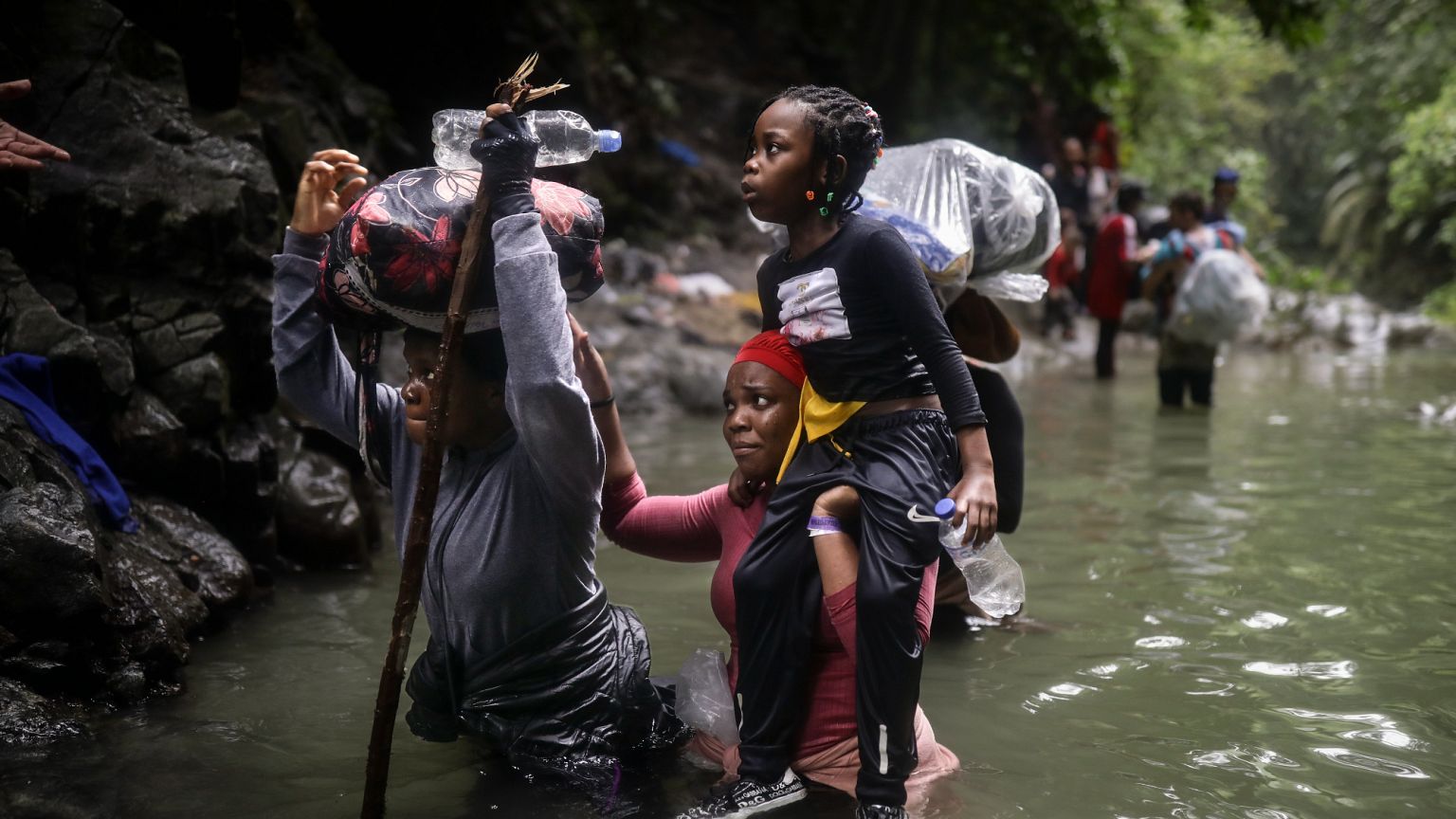
Haitian migrants wade through water as they cross the Darien Gap from Colombia to Panama in hopes of reaching the US, 9 May, 2023
Copyright AP Photo

By Gavin Blackburn with AP
Published on 

The administration filed an emergency appeal to the Supreme Court after a federal judge in Boston blocked the administration’s push to end the protection programme.

The US Supreme Court has again cleared the way on Friday for the Trump administration to strip temporary legal protections from hundreds of thousands of immigrants, pushing the total number of people who could be newly exposed to deportation to nearly 1 million.

The justices lifted a lower-court order that kept humanitarian parole protections in place for more than 500,000 migrants from four countries: Cuba, Haiti, Nicaragua and Venezuela.

The court has also allowed the administration to revoke temporary legal status from about 350,000 Venezuelan migrants in another case.

The administration filed an emergency appeal to the Supreme Court after a federal judge in Boston blocked the administration's push to end the protection programme.

Justice Ketanji Brown Jackson wrote in dissent that the effect of the high court's order is "to have the lives of half a million migrants unravel all around us before the courts decide their legal claims." Justice Sonia Sotomayor joined the dissent.

Jackson echoed what US District Judge Indira Talwani wrote in ruling that ending the legal protections early would leave people with a stark choice: flee the country or risk losing everything.

Talwani, an appointee of former President Barack Obama, found that revocations of parole can be done, but on a case-by-case basis.

Her ruling came in mid-April, shortly before permits were due to be cancelled. An appeals court refused to lift her order.

The Supreme Court's order is not a final ruling, but it means the protections will not be in place while the case proceeds. It now returns to the 1st US Circuit Court of Appeals in Boston.

The Justice Department argues that the protections were always intended to be temporary, and the Department of Homeland Security has the power to revoke them without court intervention.

The Trump administration claimed that Biden granted parole en masse, and the law does not require it to be ended on an individual basis.

Taking on each case individually would be a "gargantuan task," and slow the government's efforts to press for their removal, Solicitor General D John Sauer argued.

Biden used humanitarian parole more than any other president, employing a special presidential authority in effect since 1952.

Beneficiaries included the 532,000 people who have come to the US with financial sponsors since late 2022, leaving home countries fraught with "instability, dangers and deprivations," as attorneys for the migrants said.

They had to fly to the US at their own expense and have a financial sponsor to qualify for the designation, which lasts for two years.

The Trump administration's decision was the first-ever mass revocation of humanitarian parole, attorneys for the migrants said.


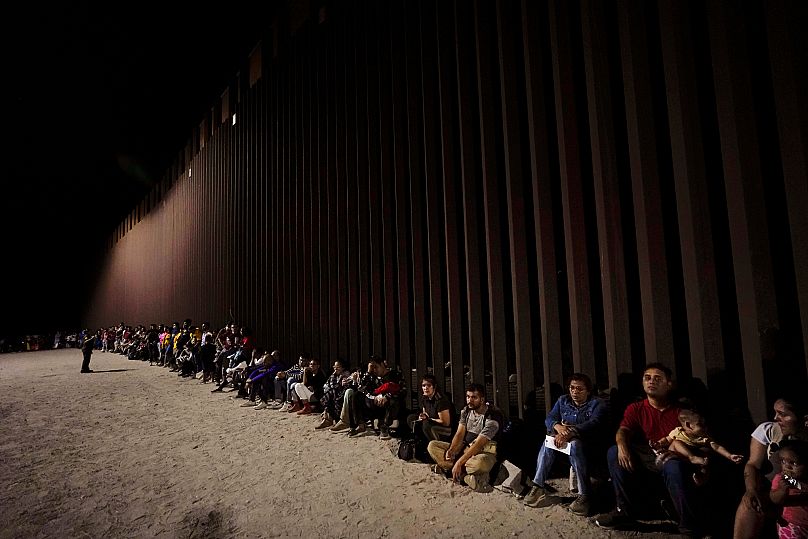
Migrants wait along the border wall with the United States after crossing from Mexico, 23 August, 2022AP Photo

They called the Trump administration’s moves "the largest mass illegalisation event in modern American history."

The case is the latest in a string of emergency appeals the administration has made to the Supreme Court, many of them related to immigration.

The court has sided against Trump in other cases, including slowing his efforts to swiftly deport Venezuelans accused of being gang members to a prison in El Salvador under an 18th-century wartime law called the Alien Enemies Act.

Trump promised on the campaign trail to deport millions of people and, after taking office, has sought to dismantle Biden administration polices that created ways for migrants to live legally in the US.

French international students rattled by Trump's US visa suspensions

President Donald Trump's administration's decision to suspend foreign student visa applications has French students preparing to study at American institutions reassessing their options.


Issued on: 30/05/2025 - RFI

Harvard University campus, in Cambridge, Massachusetts. AP - Steven Senne

United States Secretary of State Marco Rubio on 27 May ordered embassies and consulates to pause scheduling appointments for foreign student visas, pending new guidelines on vetting applicants' social media activity – to be issued in the "coming days".

Rubio has also revoked visas from students who led demonstrations critical of Israel's offensive in Gaza, under a law that allows the removal of individuals deemed to go against US foreign policy interests.

These moves come as part of a wider slew of unprecedented actions by Trump over the past few months against international students, which experts warn are likely to decrease enrolment in US institutions and could trigger a brain drain.

They also come despite Trump's proposals on the campaign trail last year to automatically give US residency cards to international students when they earn their diplomas, bemoaning that these graduates were leaving the US to build successful companies in China and India.

'I have an opinion on things'

"What worries me most is not so much not having my visa, but that it will be revoked during the year," Hadrien Coccoluto-Roussel, a second-year student at Sciences Po Paris, who is due to study in Washington next year, told French news agency AFP.

"We've seen students and researchers arrested and expelled... without any real reason, without any real access to the rights of defence," said the 19-year-old, who has previously participated in pro-Palestinian demonstrations.

He says that if he had anticipated a political offensive in the US against foreign students, he would not have requested it as the destination for his academic year abroad – a mandatory part of his course.

French pro-Palestine student protests not just a mirror of US

Martin, a student at Essec Business School, near Paris, has been accepted to a master's programme at the Ivy League school Columbia University, in New York.

Although he would find it hard to give up his "American dream," recent events have prompted him to ask himself whether he should.

"I'm still politicised, I have an opinion on things," he said, adding that the idea of living in a country that "muzzles freedom of expression" worries him a lot.

Sciences Po, one of France's most prestigious high education institutes, which specialises in social and political sciences, told AFP that its management is working "on all possible scenarios based on the status of the students concerned".

In 2023, 8,543 French students went to study in the US – up 24 percent compared to 1999 – according to the Open Doors report by the US-based Institute of International Education (IIE).


Harvard in the firing line

Over the past week, the Trump administration has sought to bar all foreign students from Harvard University.

The court filing gave Harvard 30 days to produce evidence showing why it should not be blocked from hosting and enrolling foreign students – who made up 27 percent of its student body in the 2024-25 academic year.

The White House has also stripped Harvard, among other elite institutions, of federal funding for research.

Harvard is the wealthiest university in the US, with an endowment valued at $53.2 billion (€46.7 billion) in 2024.

Trump has claimed the university is a hotbed of anti-Semitism and "woke" liberal ideology.
China 'agressively' targeted

On 28 May, Rubio heaped pressure on China, saying Washington will "aggressively revoke visas" for Chinese students, including those with connections to the Chinese Communist Party or studying in critical fields.

Beijing reacted in fury at the announcement, describing Trump's crackdown on international scholars as "political and discriminatory".

Young Chinese people have long been crucial to US universities, which rely on international students paying full tuition.

China sent 277,398 students to the US in the 2023-24 academic year – although for the first time more Chinese students went to India than the US, according to a State Department-backed report of the IIE.

Foreign ministry spokeswoman Mao Ning said Beijing had lodged its opposition with Washington.

Contingency plans

In light of the uncertainty, international schools and organisations have begun preparing contingency plans.

Jean-Bernard Adrey, director of TJ Global Services, an international education consulting agency which establishes partnerships between European and American universities, urged his contacts "not to panic" for the time being.

He said there is plenty of time left before the start of the next academic year in the US and that he hoped the problem will be resolved by then.

He added, however, that these "anxiety-inducing" decisions for students and their families risk tarnishing the reputation of American universities in the longer term and encouraging young people to turn to other destinations, such as the United Kingdom or Canada.

First US 'refugee scientists' to arrive in France in weeks, university says

The French Minister of Higher Education Philippe Baptiste also sought to reassure French and European students, promising "fallback solutions" for those who had planned to study in the United States next year and were unable to obtain a visa.

Meanwhile, US State Department spokeswoman Tammy Bruce encouraged prospective students to continue seeking visa appointments and said: "I would not be recommending that if this was going to be weeks or months."

On the legal front, US judge Allison Burroughs said on 30 May that she would issue a preliminary injunction that "gives some protection" to international students, while the legality of Trump's decision is debated.

(with newswires)

EU Commissioner Jessika Roswall expresses solidarity with LGBTQ+ community

Commissioner Jessika Roswall talking to The Europe Conversation.
Copyright Euronews


By Shona Murray & Jesse Dimich-Louvet
Published on 

In an interview with Euronews, EU Commissioner for the Environment and Water Resilience says "anyone who wants to join in solidarity with the LGBTQ community in Hungary should do so."

EU Commissioner for the Environment and Water Resilience, Jessika Roswall, says "anyone who wants to join in solidarity with the LGBTQ community in Hungary should do so."

She was responding to the Hungarian government's decision to ban Gay Pride parades, a decision that has been heavily condemned by a majority of EU member states including France, Germany and Spain.

"The European Union is built on values, which, of course, we all stand behind, and this is the pressure we are in this union of – one of the key things is built of this precious value of people's freedom and loving whoever they want to, or rule of law and all these things," Roswall told Euronews.

"So I stand, of course, behind that and I myself have been to many prides, only in Stockholm though," she added.


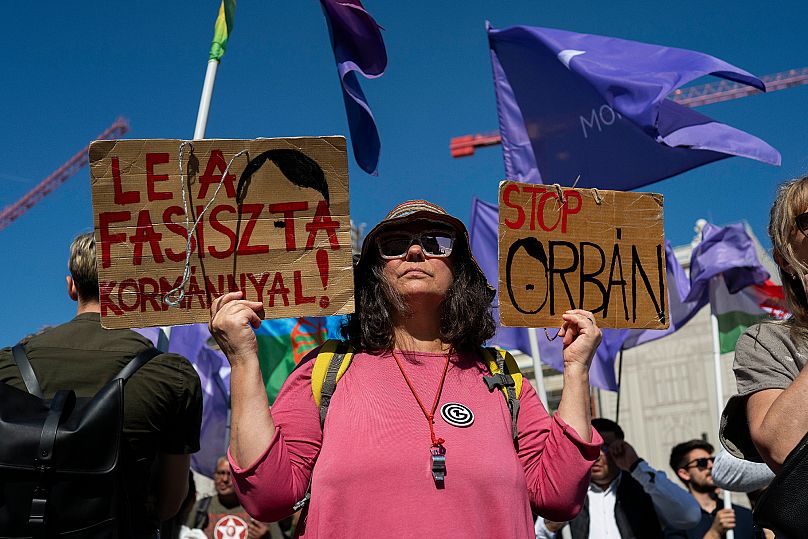
A woman holds a banner reading “Down with the fascist government” in protest against a new law banning LGBTQ+ Pride events in Budapest, 1 May, 2025AP Photo

Meanwhile, a European Commission source told Euronews that it's unlikely EU Commissioners will stand in solidarity with the LGBTQ+ community as it could be seen to "provoke" Hungary's Prime Minister Viktor Orbán and open the door to him accusing the EU of interfering in Hungarian affairs.

"I think it would play into Orbán’s hands were senior people from Brussels to turn up," the source said.


The legal position

However, law experts and some member states argue the European Commission is obliged to protect the rights and freedoms of EU citizens under Article 2 of the EU Treaty.

A group of 17 member states led by the Netherlands signed a declaration condemning the Hungarian decision.

We are "concerned by the implications of these measures on freedom of expression, the right to peaceful assembly, and the right to privacy," part of their statement read.

EU Commissioner of Justice and Rule of Law Michael McGrath has called freedom of assembly a fundamental right that must be protected.


Hungarian Prime Minister Viktor Orbán arrives at European Political Community summit in Tirana, 16 May, 2025AP Photo

He insisted that Pride marches do not constitute a threat to children, as the Hungarian parliament argued.

Meanwhile, Roswall says she does not want to make decisions for others but says that the issue is at the centre of her beliefs and the values of the 27-member bloc. 

"I don't tell people what to do, but that's what I truly believe in, and that is also the core of the European Union," she explained.

The Budapest Pride event is set to take place on 28 June in defiance of the new law, and while several MEPs have indicated their intention to attend, no European Commissioners have.


EU and six member states ratify UN treaty on high seas ahead of Nice summit

The European Union and six of its member states have ratified the treaty to protect the high seas, 10 days ahead of France hosting the UN Ocean Conference in Nice. However, the treaty is still far short of the 60 ratifications required for it to come into force.


Issued on: 29/05/2025 - 

The ocean plays a fundamental role in regulating the climate.
 Flickr / Creative Commons

Ratification of the treaty's text – first adopted in June 2023 after years of negotiations – was a "historic step towards protecting the world's oceans and preserving the delicate balance of our planet's ecosystem," said Costas Kadis, the European Union oceans commissioner.

Along with the EU, Cyprus, Finland, Hungary, Latvia, Portugal and Slovenia submitted their instruments of ratification to the United Nations, the European mission to the UN said in a statement.

France and Spain ratified the text earlier this year.

With the number of ratifications now standing at 29, Kadis called on all countries to follow suit – as the treaty is still far short of the 60 required for it to come into force.

Political pressure

The NGO High Seas Alliance hailed the ratifications as a "major step forward".

But treaty supporters "need to up the political pressure to reach 60 ratifications," its director Rebecca Hubbard said in a statement.

France is hosting the UN Ocean Conference from 9 to 13 June in Nice, and its "number one" priority is to obtain the ratifications needed, Jerome Bonnafont, the French ambassador to the UN, said this week
The landmark treaty aims to protect marine ecosystems, which are vital to humanity but under threat from multiple forms of pollution – in international waters covering almost half the planet.

It provides for the creation of marine protected areas where certain activities could be restricted, including fishing and mining – a move which will depend on other international organisations.

(with AFP)


Geopolitical Contest: India And China In The Indian Ocean

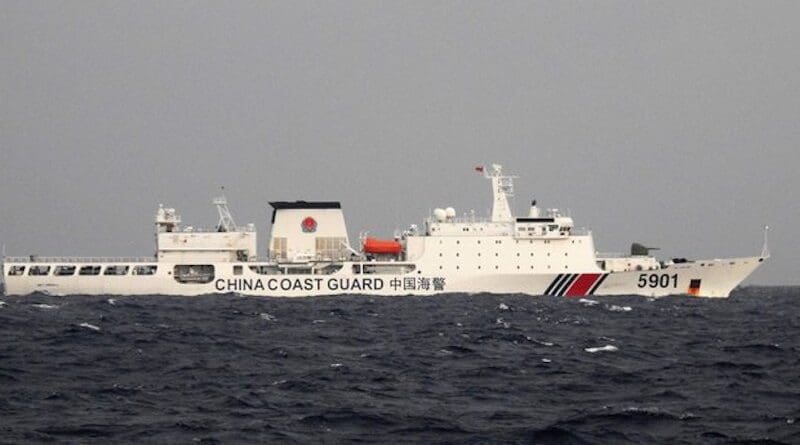
China's CCG 5901 is the world’s largest coast guard vessel. Photo Credit: The South China Sea Chronicle Initiative, RFA


By  and 

‘Whoever controls the Indian Ocean will dominate Asia, the destiny of the world will be decided on its waters.’


The words of American maritime strategist, Alfred Thayer Mahan rings true in contemporary world politics as the Indian Ocean is very active ocean, where many players are contesting to gain maritime influence.  

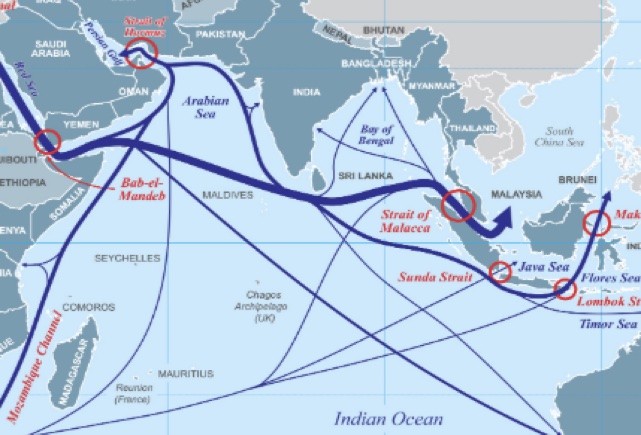
The Indian Ocean, recognized as the third-largest ocean in the world, has acquired growing strategic significance in contemporary global affairs. A major factor contributing to this importance is the network of vital trade routes that traverse the region. Notably, four out of the world’s seven most critical Sea Lines of Communication (SLOCs) pass through the Indian Ocean, often referred to as the “highways” of the modern global economy. This centrality in maritime trade and energy transportation has led to increasing interest from extra-regional powers—most prominently China—seeking to secure their strategic and economic interests in this geopolitically vital area.

‘Realism, a prevalent paradigm in international relations that emphasises the anarchic structure of the international system, the centrality of states, and the primacy of power and national interest, can be used to analyse the geopolitical competition between China and India in the Indian Ocean also. Within this perspective, both China and India can be understood as natural state actors engaged in the strategic pursuit of national security and power maximization in a region of considerable geostrategic significance.’

In recent years, the Indian Ocean Region (IOR)—and the Indian Ocean in particular—has emerged as a major strategic hotspot in global geopolitics. Although the region has long held strategic importance due to its role as a critical conduit for international trade and energy transportation, its relevance has increased significantly in the contemporary era.

This renewed focus is especially evident in China’s foreign policy, which has increasingly prioritized the Indian Ocean as a key area of strategic interest. Through various diplomatic, economic, and military initiatives, China has actively sought to expand its presence across the region. These efforts form part of a broader strategic vision aimed at securing maritime routes and projecting influence in the IOR.


China’s growing involvement in the Indian Ocean—whether through infrastructure development, political and cultural engagement, or military presence—has significantly altered the existing security architecture of the region. Much of this expanded influence stems from Beijing’s Belt and Road Initiative (BRI), which has facilitated China’s deeper penetration into the Indian Ocean Region (IOR). This increased presence has markedly intensified the longstanding strategic rivalry between India and China.

For India, the Indian Ocean holds immense strategic value. It is not only central to India’s national security but also critical to its economic interests and overall development. India has traditionally positioned itself as a net security provider in the region, working actively to uphold maritime stability and security.

Moreover, the implications of China’s presence in the Indian Ocean extend beyond India. Regional and global powers such as Japan, the United States, and Australia are also increasingly concerned, as the evolving dynamics have the potential to reshape the balance of power in the Indo-Pacific. These developments underscore the need for cooperative frameworks and strategic recalibrations to maintain peace, security, and a rules-based maritime order in the region.

China’s interest in the Indian Ocean

China’s interest in the Indian Ocean is not a recent development. Historical links between China and this maritime region can be traced back to the voyages of the famed Ming Dynasty Admiral Zheng He, who utilized key Sea Lines of Communication (SLOCs) in the Indian Ocean to reach parts of Africa and Asia. However, following this period of early maritime engagement, China remained largely absent from the region for an extended time.

In recent years, the Indian Ocean has once again gained prominence in China’s security and strategic calculus—primarily due to economic imperatives. As China continues to fuel its industrial and economic growth, the demand for natural resources and raw materials has increased substantially. Much of these resources, particularly energy supplies, originate from the Middle East and must be transported via the Indian Ocean.

China, often regarded as the world’s manufacturing hub, depends heavily on the uninterrupted flow of raw materials to sustain its production networks. These critical supplies traverse the Indian Ocean through strategic SLOCs. Notably, 75–80 percent of China’s energy imports are seaborne, and a significant portion of these shipments pass through the Indian Ocean. This dependence underscores the strategic importance of the region to China’s long-term economic and security interests.

China’s expanding Maritime Footprints

China initiated its naval deployment in the Indian Ocean in 2008, primarily as part of international anti-piracy operations in the Gulf of Aden. Since then, Beijing has steadily expanded its maritime footprint in the region. A major development in this trajectory was the launch of China’s first overseas military base in Djibouti in 2017, located strategically at the Horn of Africa.

However, this was only the beginning of China’s deeper engagement in the Indian Ocean Region (IOR). Through the development of key ports along what is often referred to as the “String of Pearls,” China has established a network of strategic maritime infrastructure. Many of these ports are situated near critical Sea Lines of Communication (SLOCs), raising concerns among regional and global observers about their underlying strategic intentions.

China currently has active port-related infrastructure projects in several IOR countries, including Sri Lanka, Bangladesh, Myanmar, Pakistan, Kenya, and Tanzania. A significant and increasingly observed trend is the potential “dual-use” nature of these ports—designed for commercial activities but capable of serving military functions when required. Analysts have expressed concerns that deep-water ports in countries such as Myanmar, Pakistan, Sri Lanka, and the Maldives could be repurposed for military use, further extending China’s strategic reach in the Indian Ocean.

Implications of increasing China’s influence

China’s maritime expansion in the Indian Ocean has significant and far-reaching implications for the region. One of the primary consequences is the potential transformation of the regional security architecture. As China increases its influence, it poses a strategic challenge to the traditional dominance of regional powers, which may lead to heightened tensions and strategic competition.

At the political level, China’s growing involvement in regional governance mechanisms and its efforts to shape rules according to its interests can raise concerns regarding the sovereignty of smaller nations. This influence is often perceived as undermining the independent decision-making capacity of states within the region.

From a military standpoint, China’s expansion—whether through the establishment of naval bases or agreements that provide access to military facilities—contributes to an emerging arms race. This development not only alters the regional balance of power but also increases the potential for conflict escalation.

Economically, a major area of concern is the so-called “debt trap” diplomacy, whereby infrastructure investments and loans extended by China lead to unsustainable debt burdens for recipient countries. This phenomenon has already been observed in several South and Southeast Asian nations and raises broader questions about economic dependency and strategic vulnerability.

Way forward for India

In the short term, India may respond to China’s growing presence in the Indian Ocean by enhancing its maritime military capabilities. However, such measures alone are unlikely to be sufficient in countering China’s long-term strategic ambitions. Therefore, India must adopt a comprehensive and forward-looking strategy that goes beyond immediate military responses.

This long-term approach should focus on strengthening diplomatic, economic, and strategic ties not only with South Asian nations but also with countries in Southeast Asia. Building resilient regional partnerships will be critical in creating a collective and coordinated response to China’s maritime expansion.

Additionally, India should take an active role in advocating for a free, open, and inclusive Indo-Pacific. By championing this vision on international platforms and through multilateral engagements, India can contribute to the establishment of a rules-based regional order that upholds sovereignty, freedom of navigation, and mutual respect among nations.

About Authors: 

  • Dr. Indu Krothwal, is a faculty of Political Science at Lovely Professional University, India with over one year of teaching experience in higher education. She completed her Ph.D. from LPU under Junior Research Fellowship (JRF). She holds Masters in Political Science from the University of Delhi. Her academic interests include International Relations, Security Studies and Diplomacy.
  • Dr. Hakim Singh, is a faculty of Political Science at Lovely Professional University, India with over three and a half years of teaching experience in higher education. He completed his Integrated M.Phil.-Ph.D. from department of Public Policy and Public Administration, Central University of Jammu, where he was awarded Junior Research Fellowship (JRF and SRF) for five years. His doctoral thesis focused on “Good Governance with Special Reference to JKPSGA, 2011.” Dr. Hakim holds a B.A., B.Ed., and a Master’s in Political Science from the University of Jammu. He also served as a teaching fellow at the Centre for Educational Studies, Central University of Jammu. His academic interests include Political Thought, Public Policy, and Public Administration, with a specific focus on the implementation of various governmental Acts, Programs, and Schemes.


Dr. Indu Krothwal

Dr. Indu Krothwal, Assistant Professor at department of Political Science, Lovely Professional University, India.