Nuclear power on the rise except in
UN watchdog's home, Austria

In Austria - the home of the IAEA - the public rejected nuclear power in a referendum in the 1970s leaving a gigantic power plant that cost 1 billion euro to build to become the biggest training hub in Europe to study nuclear power.
From Belgium to Denmark, Bangladesh to Egypt, nuclear power is making a political and policy comeback and drew advocates from across the globe to the International Atomic Energy Agency's Vienna headquarters this week, though it remains less loved in the Austrian home of the UN agency.
With big tech looking at nuclear energy to power future AI operations and policymakers increasingly mulling the potential of small modular reactors – mini nuclear plants that could be factory-built and power a small town, the International Atomic Energy Agency has noticed more and more countries interested in its expertise.
That is why the Vienna-based nuclear watchdog invited representatives from across the globe to its headquarters this week for a convention to deep dive into the good, bad and ugly of what advocates call a very carbon-friendly fuel.
"At the IAEA, we're seeing a number of member states that have expressed interest in nuclear power for several reasons related to growing energy demands, climate change and other national considerations," Matthew van Sickle, a senior nuclear power engineer told Euronews.
The IAEA offers expertise to member states on all the main challenges from financing to human resources to communication strategies to garner public support.
The Zwentendorf referendum
But in Austria, where the IAEA has been based since it came about in 1957, a referendum in the 1970s resulted in the Austrian National Assembly passing a law prohibiting the use of nuclear energy in Austria.
The outcome was an outstanding win for participatory democracy, but a major loss for the Zwentendorf Nuclear Power Plant, which cost €1 billion to build and was ready to operate.
Situated in Lower Austria alongside the river Danube, today the plant has become a quirky Homer Simpson-inspired tourist attraction and the biggest nuclear training centre in the whole of Europe.
Peter Schinnerf, who works at the plant as a guide and trainer, told Euronews that the plant has more emotional than financial worth today. "This facility was never used," he said.
Since 2017, the plant has also been hosting the annual Shut Down festival - a massive techno festival attracting revellers from all across Austria and beyond.
No sign Russia is moving to restart Zaporizhzhia NPP, UN nuclear agency says
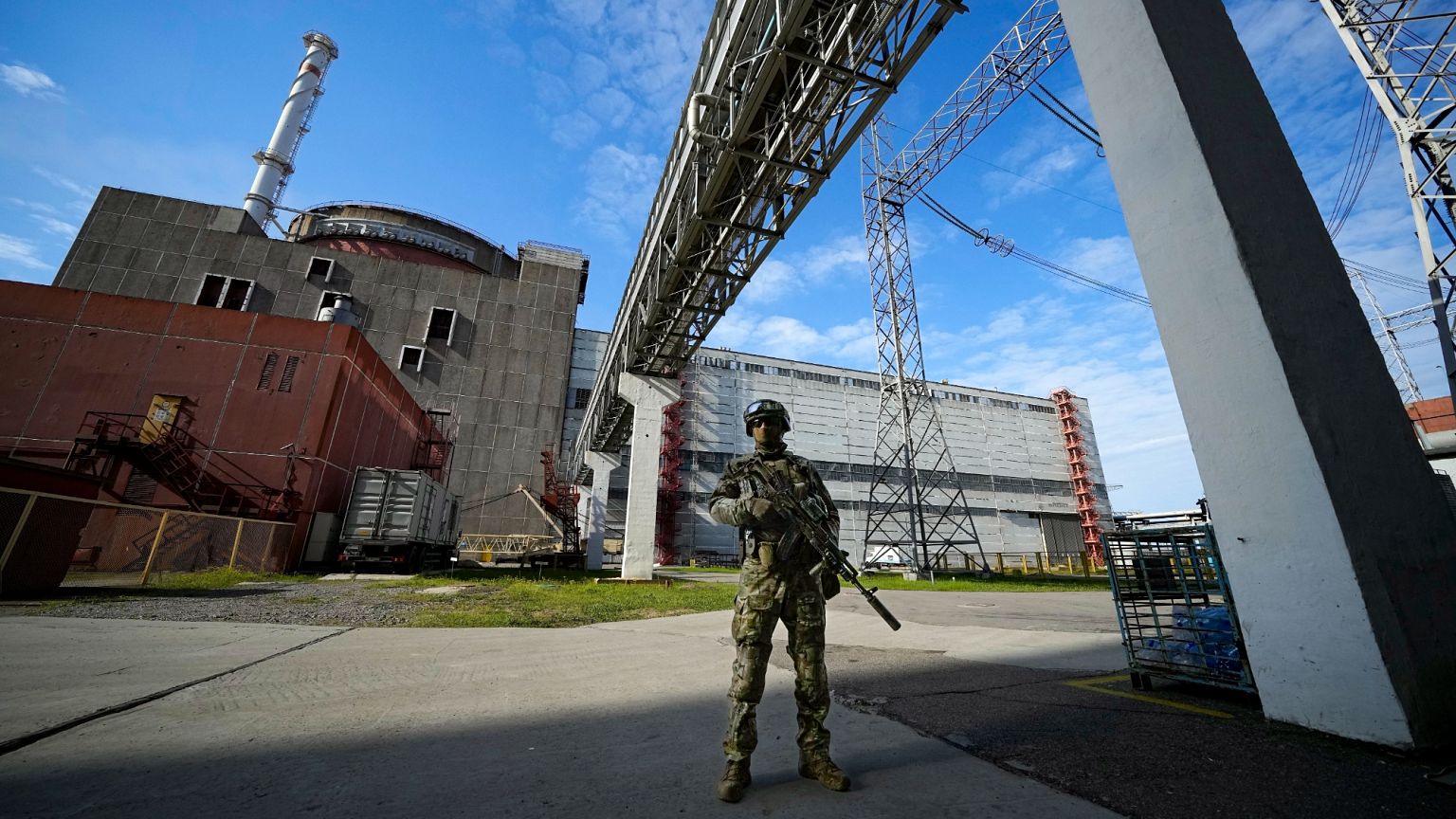
The plant has been held by Russia since the early days of the war following Moscow's full-scale invasion in February 2022, although it isn't producing power.
Inspectors from the UN nuclear watchdog say they haven't seen any signs of Russia moving to immediately restart the Zaporizhzhia nuclear power plant, an agency official has said after Greenpeace raised concerns about Moscow building power lines near the facility.
The Zaporizhzhia nuclear power plant, the largest such facility in Europe, has been a focus of concern for the International Atomic Energy Agency (IAEA) during the war in Ukraine amid fears of a potential nuclear catastrophe.
The plant has been held by Russia since the early days of the war following Moscow's full-scale invasion in February 2022, although it isn't producing power.
The city of Zaporizhzhia, about 440 kilometres southeast of the capital Kyiv, is held by Ukraine and attacks have occurred around the plant as the front line is close.
The IAEA rotates staff through the facility to check safety and offer its expertise.

Power line construction
In a report released on Tuesday, Greenpeace said that satellite photos showed Russia had been building "an electricity high voltage power line" in Russia-held areas of the Donetsk and Zaporizhzhia regions.
"This is some of the first hard evidence of Russian moving ahead with its dangerous and illegal plans for restarting Ukraine and Europe’s largest nuclear plant at Zaporizhzhia," said Shaun Burnie, a nuclear specialist at Greenpeace Ukraine, in a statement.
An IAEA official said that the agency's inspectors hadn't seen any major changes at the Zaporizhzhia plant suggesting Russia was preparing for an imminent effort to restart it, after being asked about the Greenpeace report.
"What I can say is our teams continue to confirm there is no indication at the moment that there will be any active preparations for a restart of the plant now," the official said on condition of anonymity to discuss the IAEA's assessment.
Russia hasn't acknowledged the power line project. Ukraine sent a note to the IAEA and its membership on Wednesday raising concerns about the power line construction.
"These actions represent a blatant violation of international law and an infringement on Ukraine’s sovereignty," Ukraine said in its letter.
"The construction of this transmission line is a clear indication of the Russian Federation’s intent to initiate an unauthorized restart of the Zaporizhzhia Nuclear Power Plant — a facility that remains the sovereign property of Ukraine."
It added: "Any operation of the (plant) without explicit authorisation of the Ukrainian nuclear regulator is illegal and poses a direct and unacceptable threat to nuclear safety."
A global concern
Russia has suggested restarting the Zaporizhzhia plant in the past. IAEA Director General Rafael Grossi told journalists on Wednesday that the issue could be discussed on an upcoming trip he plans to make to Ukraine and possibly Russia.
"We are going to be continuing our discussions with both, in particular with the Russians on this idea of (the) restart of the plant," Grossi said.
"It is a matter that requires very careful consideration."
Zaporizhzhia's six reactors remain fuelled with uranium though they are in a so-called cold shutdown, meaning nuclear reactions have stopped.
However, the plant relies on external electricity to keep its reactor cool and power other safety systems. That external power has been cut multiple times in the war, forcing the plant to rely on on-site diesel generators.
Further complicating potentially turning the plant back on is the 2023 collapse of the Kakhova Dam on the Dnieper River.
The plant relied on water from the river for its reservoir, forcing workers there to dig wells.
"The plant lost its main source of cooling water, so the whole system cannot work as it was originally designed," the IAEA official said.
"The consumption of water is orders of magnitude higher (when the plant is operating) compared to cold shutdown. We don’t see any easy, quick fix for it."
The Zaporizhzhia plant has also been mentioned by US President Donald Trump as he's sought to reach a ceasefire deal between Russia and Ukraine.
In a March phone call with Zelenskyy, Trump suggested the US could own and run Ukraine's nuclear power plants and protect them from Russian attacks.

No comments:
Post a Comment