Friday, July 25, 2025


Video: Iranian Helicopter Orders U.S. Warship to Change Course

USS Fitzgerald
Iran released video of its helicopter ordering the USS Fitzgerald to alter course (Tasnim News Agency - CC BY 4.0)

Published Jul 23, 2025 10:53 AM by The Maritime Executive


Iranian media is reporting an incident between a military helicopter and USS Fitzgerald that it says took place earlier today, July 23, in the Gulf of Oman. In the video, the Iranian helicopter can be heard instructing the Arleigh Burke-class Aegis guided missile destroyer to change course.

The media reports linked to Iran’s Third Navy Region of NEDAJA (Iranian Navy) are saying the U.S. warship was intercepted at approximately 1000 local time on July 23 as the vessel was entering Iranian-controlled waters. Iran says it responded by dispatching a navy helicopter, which passed over the warship and hovered nearby. It says “clear radio warnings to steer clear of Iranian monitored waters” were issued to the Fitzgerald.

Iran claims the Fitzgerald responded by telling the helicopter to leave the proximity. It says the U.S. warship threatened twice to “engage” the helicopter.


It is unclear how long the incident continued, but Iran claims that after repeated warnings, USS Fitzgerald changed course and continued in a southern direction. U.S. Central Command and the U.S. Navy have not yet acknowledged the incident.

Iranian media notes that the country has a long history of “encounters” in the area, ranging from the Persian Gulf to the Strait of Hormuz and the Gulf of Oman, with U.S. Navy warships. Iranian vessels and planes have been known to track U.S. vessels and, on occasion, harass the vessels. In the past, the U.S. has released videos of Iranian speedboats passing at close distances from American vessels.

 

U.S. Revokes Visas and Deports Over 100 Filipino Cruise Ship Crewmembers

Cruise ship arriving Norfolk, Virginia
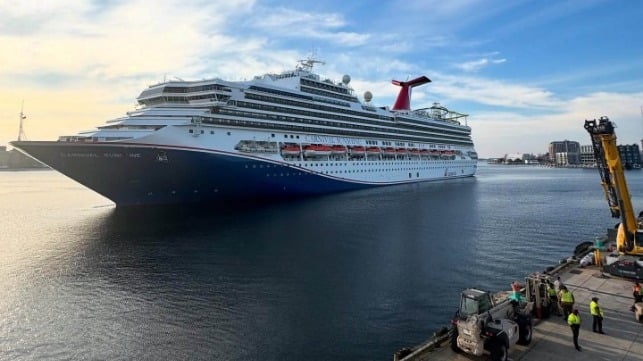
Crewmembers are being removed from the Carnival Sunshine each week when it docks in Norfolk says humanitarian groups (Cruise Norfolk file photo)

Published Jul 21, 2025 4:21 PM by The Maritime Executive


Two Filipino organizations supporting the country’s overseas workers in the United States staged a protest on Sunday, July 20, in Virginia to call attention to the “wrongful deportation” of Filipino nationals working as crewmembers on cruise ships. The groups contend that the efforts have been ongoing since April and involve more than 100 crewmembers rounded up in ports ranging from Norfolk, Virginia, to Port Canaveral, Florida.

The Pilipino Workers Center and the National Federation of Filipino American Associations contend that the individuals are being removed from their ships and deported without due process. During the event, they said crewmembers aboard the ships are now scared as the port arrivals have been met by U.S. Customs and Border Protection officers who remove the crewmembers in handcuffs frequently “without a shred of evidence.” Crewmembers report that the agents are confiscating and inspecting their cellphones, and at least several people have reportedly been accused of possessing child pornography.

The group said that a total of 21 crewmembers have been “falsely accused” from the Carnival Sunshine cruise ship, which is homeported in Norfolk. Without any formal charges, the groups report crewmembers are being told their 10-year work permit visa have been revoked, they have been deported, and told they are barred from entering the United States for 10 years. At least one individual was reportedly detained and released only to be seized and deported the following week. Some apparently have been questioned and permitted to return to their ship.

Reports began surfacing in the trade and local media in the Great Lakes area in July with reports that CBP had an “ongoing operation” in the region. Victory Cruise Lines, which operates two small ships on the Lakes, issued a statement saying it was cooperating with law enforcement and confirming that a few crewmembers had been removed. The media said it was a total of 13 individuals taken from the vessels Victory I and Victory II. Reports indicate that CBP has also removed crewmembers from Viking’s cruise ship operating on the Great Lakes as well as Pearl Sea Cruises.

The two groups said in Sunday’s demonstration that the effort, however, is much more widespread. They reported that as many as 80 Filipino crewmembers from Carnival’s cruise ships Mardi Gras and Carnival Vista were deported in April and May.

Reached for comment by the local media, Carnival Cruise Line also said it was cooperating with law enforcement while calling the action a “law enforcement matter.” It emphasized that the crewmembers receive training and education programs to ensure they follow internet and other safety guidelines.

The groups report that the deportations are being handled as “administrative actions.” None of the crewmembers have been arrested or faced criminal charges. The groups complain that there is no due process or formal evidence before the deportation and barring is imposed.

The effort is being linked to the wider effort by the Trump administration to crack down on illegal immigrants in the United States. 


Russian Security Temporarily Closes CPC Terminal in the Black Sea

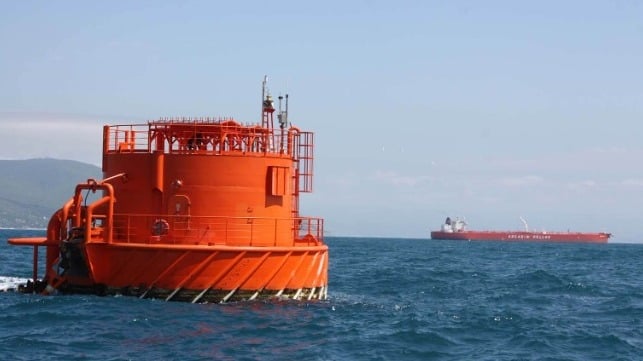
CPC single-point mooring buoy (CPC file image)

Published Jul 24, 2025 6:51 PM by The Maritime Executive


Russia has been tightening security at its main crude oil loading terminals, which must function in order for the Kremlin to pay for its ongoing war in Ukraine. This week, these precautionary measures briefly closed key oil ports in the Black Sea, affecting both Russian and Kazakh export volumes.

With no meaningful crude oil export pipeline capacity, Russia must ship its oil to its few remaining customers by sea, and there are only a few locations that are set up for loading deep-sea tankers. This makes them a prime target for Ukrainian sabotage. The Ust-Luga terminal in the Baltic has already encountered at least one apparent mine attack on an ammonia carrier alongside the pier, and seven other Russia-linked vessels have been hit by mysterious blasts since December. Ukraine's covert services are widely believed to be behind the apparent attacks. 

As a precautionary measure, President Vladimir Putin has ordered his internal security service - the FSB - to require preclearance for all inbound vessels to sweep for hazards. At least some ports are expected to implement dive inspections of ship hulls - a costly if thorough way to control the problem.

The decree essentially shut down the terminals at Novorossiysk, including the Caspian Pipeline Consortium (CPC)'s loading buoys south of the city. The CPC handles up to 1.5 million barrels per day of oil from Kazakhstan, accounting for more than one percent of the world's entire crude supply. As of Thursday, those terminals were back up and running again, according to Reuters. 

The security measures add one more layer of friction to a process that has become increasingly cumbersome for Russian oil exporters. With the approval of the EU's 18th sanctions round, the European version of the G7 price cap is now a floating rate derived from benchmark pricing, and it is low enough that it disqualifies the law-abiding Greek tankers that have been handling about half of Russia's oil. That will make it marginally more difficult for Russian exporters, who will have to rely even more heavily on the "shadow fleet" of under-the-radar tankers, which eschew Western insurance and class services. 

"The easiest way for Russia to steer clear of unpleasant surprises, including tanker explosions, would be to withdraw from Ukraine. Three and a half years into the war, that seems a vain hope," commented Atlantic Council senior fellow Elisabeth Braw, an expert on the shadow fleet. 

Chinese Carrier With Red Sea History Now Plans a Russian Arctic Route

NSR
An LNG carrier transits the NSR in the warm months (Rosatomflot file image)

Published Jul 24, 2025 11:19 PM by The Maritime Executive


A Chinese niche carrier that popped up in the Mideast market last year has reportedly added a container service from China to Europe via the Northern Sea Route - the Russian-controlled waterway north of Siberia. 

Sea Legend Shipping is a Chinese-controlled, Singapore-based line that emerged during the most intense phase of the Houthi blockade of the Red Sea. With escort support from China's PLA Navy, Sea Legend provided a rare container-shipping option for cargo from the Far East to regional ports in and around the Red Sea. The company advertised its hardening measures, including security guards, razor wire and steel shutters, and it emphasized that it operated Chinese-flagged ships. (The Houthis have pledged not to attack vessels linked to Russia or China.) An executive with the firm told Chinese media that as of January 2024, it was the only liner company operating weekly services to Red Sea regional ports. 

The Houthi blockade remains a serious problem, but Sea Legend is now ready to strike out on another bold venture: a service through the icy Northern Sea Route (NSR). Beginning this September, Sea Legend will start a new Arctic route that directly connects China with Northern Europe, delivering cargo from east to west in just 18 days. The current standard via the Cape of Good Hope route is about 30-50 days, according to Freightos, meaning that Sea Legend's route could realistically cut delivery times in half. For shippers, this is Sea Legend's main business proposition: faster  shipping times mean a faster and more responsive supply chain, making it easier to hit delivery deadlines, cut inventory costs and change product lineups. High-value, high-tech cargoes are high on the list of target markets, the company said. 

The time window for an NSR route is narrow; though Arctic warming has increased the amount of ice-free transit time each season, the route's suitability for general commercial use is seasonally limited, at least for now. The company plans only one voyage this year, according to Chinese outlet eWorldShip, and it has apparently booked up quickly. 

The Northern Sea Route's commercial development is a top priority for Russian President Vladimir Putin, who has assigned responsibility for its expansion to state nuclear agency Rosatomflot (operator of Russia's nuclear-powered icebreakers). Sino-Russian cooperation is a major driver of economic development on the route, both for shipping and for resource extraction. Chinese firms are key backers for the region's biggest projects, like Arctic LNG 2, the sanctioned liquefaction terminal on the Gulf of Ob. 

AI-generated music can move us more than human-composed music


Universitat Autonoma de Barcelona


Generative artificial intelligence (Gen AI) is transforming the world of creativity, and music is no exception. A study coordinated by the Neuro-Com Research Group from the UAB Department of Audiovisual Communication and Advertising, with the involvement of the RTVE Institute in Barcelona and the University of Ljubljana, Slovenia, and recently published in PLOS One, explores a key question: Can AI-generated music produce the same emotional responses as human-composed music in audiovisual contexts?
The research compared the reactions of people when watching videos accompanied by different types of music. During the experiment, 88 participants watched audiovisual clips with identical visuals, but three different sound conditions: music composed by humans, AI-generated music with complex and detailed prompt, and AI-generated music with a simple and less detailed prompt. While participants watched the clips, their physiological responses (such as pupil dilation, blinking and galvanic skin response) and their self-reported emotional reactions were measured.
The results of the experiment were revealing. The AI-generated music triggered greater pupil dilation, indicating a higher level of emotional arousal. The AI music created with sophisticated prompts caused more blinking and changes in the skin, associated with a higher cognitive load. Therefore, differences were observed in the impact caused by the music according to the complexity of the prompt used. Finally, at the emotional level, participants described AI-generated music as more exciting, although human music was perceived as more familiar.
These insights could have significant implications for the future of audiovisual production, particularly regarding the customisation of music to match visual narratives, resource efficiency in creative processes, and the possibility of fine-tuning the emotional impact of content with greater precision using automated tools.

Nikolaj Fišer, first author of the study, points out that “both types of AI-generated music led to greater pupil dilation and were perceived as more emotionally stimulating compared to human-created music”. This physiological response is commonly associated with higher levels of emotional arousal. The researcher also states that “our findings suggest that decoding the emotional information in AI-generated music may require greater cognitive effort.” This implies that, although AI is capable of producing emotionally powerful music, the way such music is processed by the human brain may differ in terms of mental load and emotional interpretation mechanisms—posing new challenges for designing effective sensory experiences in audiovisual media. This type of research opens new avenues for the study of the perception of sound stimuli generated by advanced algorithmic systems.

This study was conducted by Nikolaj Fišer, PhD student at the Universitat Autònoma de Barcelona (UAB) and the University of Ljubljana; Miguel Ángel Martín-Pascual from the RTVE Institute in Barcelona, Spain; and Celia Andreu-Sánchez, director of the Neuro-Com Research Group at the UAB.


Breakthrough robotic slip-prevention method could bring human-like dexterity to industrial automation 


University of Surrey


A breakthrough slip-prevention method has been shown to improve how robots grip and handle fragile, slippery or asymmetric objects, according to a University of Surrey-led study published in Nature Machine Intelligence. The innovation could pave the way for safer, more reliable automation across industries ranging from manufacturing to healthcare. 

In the study, researchers from Surrey’s School of Computer Science and Electronic Engineering demonstrated how their innovative approach allows robots to predict when an object might slip – and adapt their movements in real-time to prevent it. Similar to the way humans naturally adjust their motions, this bio-inspired method outperforms traditional grip-force strategies by allowing robots to move more intelligently and maintain a secure hold without simply squeezing harder. 

Dr Amir Ghalamzan, Associate Professor in Robotics and lead author of the study from the University of Surrey, said: 

“If you imagine carrying a plate that starts to slip, most people don’t simply squeeze harder – they instinctively adjust their hand’s motion by slowing down, tilting or repositioning to stop it from falling. Traditionally, robots have been trained to rely solely on grip force, which can be ineffective or even damaging to delicate items. 

“We’ve taught our robots to take a more human-like approach, sensing when something might slip and automatically adjusting their movements to keep objects secure. This could be a game changer for future automation, from handling surgical tools in healthcare and assembling delicate parts in manufacturing to sorting awkward packages in logistics or assisting people in their homes.” 

Working in collaboration with the University of Lincoln, Arizona State University, Korea Advanced Institute of Science and Technology (KAIST), and Toshiba Europe’s Cambridge Research Laboratory, the study is the first to demonstrate and quantify the effectiveness of trajectory modulation for slip prevention in both humans and robots.  

The findings show that a predictive control system powered by a learned “tactile forward model” allows robots to anticipate when an object is likely to slip, continuously analysing its planned movements.  

Researchers also demonstrated that the system works on objects and movement paths it wasn’t trained on, highlighting its potential to generalise effectively to real-world settings. 

Dr Ghalamzan added: 

“We believe that our approach has notable potential in a variety of industrial and service robotic applications, and our work opens up new opportunities to bring robots into our daily life. We hope our findings will inspire future research in this area and further advance the field of robotics.” 

[ENDS] 

Notes to editors 


Engineered yeast converts methanol into valuable compound α-farnesene at scale


Higher Education Press

Image 

image: 

Evolutionary engineering of Pichia pastoris for α-farnesene biosynthesis from methanol

view more 

Credit: Ziyun Gu1 , Tiantian Chai1 , Xiulai Chen1, a


Farnesene, a high-value chemical intermediate, has applications in fragrance and pharmaceutical synthesis as well as aviation fuel formulations. Microbial synthesis offers an economical and environment-friendly method to produce it. To reduce reliance on food-based feedstocks, researchers have now engineered novel microbial cell factories capable of utilizing methanol.

Employing systems metabolic engineering strategies, scientists optimized the key mevalonate pathway and enhanced downstream metabolism. Combing with adaptive laboratory evolution and mutagenesis methods, they improved tolerance to methanol and enhanced the production of α-farnesene.

The engineered strain, Pichia pastoris ccg3-8, achieved a yield of 3.28 g/L, establishing an effective strategy for the production of α-farnesene from methanol and providing a promising platform for the low-cost and sustainable biomanufacturing of isoprene-derived compounds.

The work entitled “Evolutionary engineering of Pichia pastoris for α-farnesene biosynthesis from methanol” was published on Systems Microbiology and Biomanufacturing (published on May 19, 2025).


Highly thermal conductive and electromagnetic shielding polymer nanocomposites from waste masks


Shanghai Jiao Tong University Journal Center
Highly Thermal Conductive and Electromagnetic Shielding Polymer Nanocomposites from Waste Masks 

image: 

  • Fabricating low-cost, high-performance, scalable polypropylene (PP)@graphene (G) nanocomposites from recycled PP fibers in waste masks by a simple electrostatic self-assembly hot-pressing method.
  • The resultant PP@G presents a high thermal conductivity of 87 W m-1 K-1 and a high electromagnetic interference shielding effectiveness of 88 dB (1100 dB cm-1).
view more 

Credit: Xilin Zhang, Wenlong Luo, Yanqiu Chen, Qinghua Guo, Jing Luo, Paulomi Burey, Yangyang Gao, Yonglai Lu, Qiang Gao, Jingchao Li, Jianzhang Li, Pingan Song.


A groundbreaking review in Nano-Micro Letters by Zhang, Gao, Song and co-workers from Beijing Forestry University, Nanjing Forestry University and University of Southern Queensland presents a closed-loop upcycling strategy that transforms COVID-era polypropylene (PP) mask waste into high-performance PP@G nanocomposites—delivering record thermal conductivity and electromagnetic shielding while cutting environmental impact and cost.

Why This Research Matters
• Overcoming Global Waste Crisis: > 950 billion masks (3.8 Mt) have been discarded since 2020; incineration releases dioxins, landfilling persists for centuries. The work converts this hazardous stream into strategic thermal-management and EMI-shielding feedstock.
• Enabling Next-Gen Electronics: High-power, high-density chips and 5G/6G modules demand lightweight, low-cost materials that simultaneously dissipate > 50 W m-1 K-1 of heat and block > 30 dB of EMI. PP@G surpasses both thresholds by 75 %, paving the way for greener data centers, EV powertrains and flexible wearables.

Innovative Design & Mechanisms
• Core-Sheath Nanostructure: Tannic-acid-decorated PP fibers (20 µm diameter) act as negatively charged “cores”; cationic PAE@GNP platelets (6 µm lateral size) electrostatically self-assemble into a continuous graphene “sheath” after 140 °C / 50 MPa hot-pressing, yielding meter-scale (1 m × 1 m) sheets.
• Aligned 3-D Phonon/Electron Highways: Face-to-face oriented GNPs create sub-100 K W-1 contact resistance—two orders of magnitude lower than random dispersions—enabling 87 W m-1 K-1 in-plane thermal conductivity and 893 S m-1 electrical conductivity at 66 wt % loading.
• Green & Scalable Process: Operates under atmospheric pressure, uses only water and food-grade tannic acid, and is fully compatible with roll-to-roll production—turning waste logistics into manufacturing assets.

Applications & Future Outlook
• Real-World Thermal Management: PP@G66 film cools 12 V LEDs by 60 °C versus commercial PI substrates; flexible PP@G heat-sinks outperform steel blocks in 1200-cycle on-off tests without delamination.
• EMI Shielding Champion: 88 dB total shielding effectiveness (1100 dB cm-1) at 800 µm thickness—> 2× higher specific SE than MXene, CNT or rGO composites—validated by Tesla-coil LED extinction and X-band radar tests.
• Circularity & Profit: Life-cycle assessment shows 3.47 MJ fossil-fuel saving and 2.53 kg CO2-eq reduction per kg vs landfill; techno-economic analysis projects $468 profit per ton of repurposed masks.
• Next-Gen Roadmap: Strategy is being extended to other fibrous plastic waste (PPE gowns, packaging films) and co-designed with 5G base-station, EV battery and aerospace thermal-EMI modules for 2026 pilot production.

Conclusions
By merging waste valorization with materials engineering, this work delivers a dual-function nanocomposite that turns pandemic pollution into a strategic resource—setting a new benchmark for sustainable thermal and EMI solutions in high-performance electronics while accelerating the transition to a circular economy.