Friday, July 25, 2025


Interview: TOTE's Jeff Vogel on Delivering America's New Training Ships
Hanwha Philly
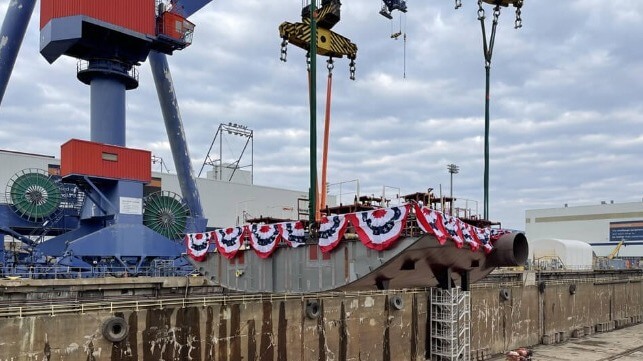
Image courtesy Philly Shipyard / Hanwha Philly

Published Jul 23, 2025 5:29 PM by The Maritime Executive


Shipbuilding in America is a costly enterprise, especially government shipbuilding. The extra requirements of a government shipowner add friction for a shipyard during construction, resulting in cost growth and delays. When it came time for the Maritime Administration to order a new generation of training ships, the agency decided to bring in a commercial shipowner to manage the project like a commercial order. To find out more about the success of this new model, TME spoke with TOTE Services' VP of Legal, Jeff Vogel, who was involved from the start. 

To start things off, do you want to tell me a little bit about yourself and your history in maritime?

I started my career as counsel at the Maritime Administration and was there for about eight years, leading maritime policy development and maritime support programs. I worked on everything from the Maritime Security Program to cargo preference and the Voluntary Intermodal Sealift Agreement. Then I returned to private practice and spent the last eight years as a Shareholder at Cozen O'Connor, representing companies from every corner of the U.S. maritime industry — U.S. flag vessel operators in international trade, Jones Act operators, and ports and marine terminal operators.

I've worked closely with TOTE Services for the past eight years, since the inception of the Vessel Construction Manager (VCM) concept, through the development of the National Security Mult-Mission Vessel (NSMV) and the delivery of the first two, with the exciting pending delivery of the third one. Many opportunities came out of that, so it really made sense to come in-house and take on this role as their new VP for Legal.

Can you tell us about the advantages of having an intermediary for the NSMV?

Coming from MARAD, I really saw some of the staffing and administrative challenges that the agency was facing. With the NSMV — which is something that I worked on at MARAD, really building the groundswell to get the authorization and appropriations — it was very clear that MARAD was not positioned to engage with a shipyard directly.

Policymakers were also looking at some of the challenges you have in traditional government shipbuilding: the cost overruns, the time overruns, the constantly changing requirements. There was a lot of conversation at the time asking, "Can't we have a commercial vessel manager come in and be a construction manager for MARAD?"

Ultimately, in 2017 there was a Congressional authorization that gave MARAD the direction to do just that. This was new—something that had never been thought of before. TOTE Services competed for the VCM contract with MARAD, and offered some very clear commercial solutions.

One of the big goals was to figure out how to remove some of the burdens that we see the government placing on our commercial shipyards or even our government shipyards, and put the shipbuilder in a position to get back to what they're good at, which is building ships.

The other aspect is to make sure that we don't get into those numerous changes to vessel design that plague so many government shipbuilding programs. We really stay focused on the design, agree on it up front, and once we get it to the yard, move ahead and build a ship and deliver on time. That's really what we've done.

For us, it's been a learning experience. But we've also realized that this is a model that's applicable across government shipbuilding. We're really excited for some of the other opportunities that we think are out there, whether it be Coast Guard icebreakers or recapitalization of the Ready Reserve Force or the Landing Ship Medium for the Marines.

Turning to the NSMVs themselves — I can't think of anything more exciting as a young man or woman thinking about attending a state maritime academy than seeing these new vessels that offer capabilities unlike any training ship that we've ever seen. A vessel that has practical application to your sailing career afterwards and is a ship that has these incredible capabilities and modern conveniences. These are the perfect recruitment assets as we think about the need to have more mariners for rebuilding the U.S. flag fleet.  We are already seeing that impact with increased enrollment at SUNY Maritime and Mass Maritime following the delivery of the first two NSMVs.

What are some of the deliverables that you could point to that have really marked this out as a success? On-time delivery, on-budget delivery, fewer challenges?

It's a model that has proven itself as being able to deliver on time, on budget, but also a model that really leverages commercial best practices in order to drive price down.

One of the things that really jumps out at me is when the concept of the NSMV was first floated and the design was being developed, it was taken to Naval Sea Systems Command (NAVSEA) and they were asked to estimate the build price. Their estimate was somewhere in the $700 million to $1 billion price range.

We've been able to deliver these vessels on time for an average of about $300 million. That to me is a huge selling point. 

This is also a great model for taking a purely commercial shipyard and turning them into a capable government shipyard. Philly Shipyard [before NSMV and Hanwha] had never really done any government work. They had never done any government ship construction. For them to come right in and be a prime contractor would have been a huge uphill battle.

With this acquisition model, you have somebody like TOTE Services - a deeply experienced government contractor - come in and serve as the prime contractor and manage the relationship with the government. Then we can use a more commercial subcontract with a shipyard, while passing down the mandatory terms under the prime contract. This allows us more flexibility in terms of ensuring that we're as commercial as possible.

As we've gone around and had conversations with other commercial yards who may be thinking about getting into government work, they're really excited about the VCM acquisition model. They love the idea of working on a commercial basis. They don't have to relearn everything from contracting to invoicing.

Is it fair to say that perhaps this model could help reduce some of the same issues for the Navy?

Absolutely. We've been having a lot of these conversations about whether this is something that ultimately could be used by the Navy for auxiliary vessels or combatants. I certainly think that there's room for that discussion. As we continue to develop, that's a direction that we could start moving in and creating some of those efficiencies.

I look at some of the opportunities that are out there in terms of transitioning the experience that we now have to some of the naval vessels. I certainly think that there's a lot of lessons learned that can be implemented on the Navy side.

How has the NSMV program's experience been with workforce availability?

We started that project right at the beginning of COVID. I think we had some expectations about workforce availability that changed as a result of COVID, as it did in a lot of industries. The shipbuilding industry has had some challenges in getting back to the manning levels that they previously had.

From our perspective, the shipyards are working at innovating and moving towards better recruitment tools. I think about some of the apprenticeship programs and the education that's being offered by a number of shipyards. Certainly that's an area that we've seen Philly Shipyard invest in throughout the life of this project and really build up their apprenticeship program.

We are also seeing more focus on vocational schools and the importance of that sort of education and recruiting early - not at graduation from high school, but recruiting as early as possible, getting in with the middle schoolers, early high schoolers, educating them on the opportunities that exist in shipbuilding and quite frankly, the significant economic opportunities that exist there. A lot of these jobs are extremely high paying. If you're a skilled welder or machinist, you can command salaries that you can't in other sectors. 

Part of it is also the demand signal. As soon as we start having some of these contracts come out - whether it be icebreakers or commercial orders under the SHIPS for America Act - it's going to incentivize those yards to come out and invest more in their workforce development. I think it's just a matter of time until we see a significant uptick in those workforce opportunities that we've really been working towards over the past few years.

There will be challenges in terms of finding senior level experienced ship fitters, machinists, specialized welders. We didn't make those investments over the past few decades. I don't want to sugarcoat it. But I think that the industry is willing to make the investments that are necessary to address those challenges. We'll be even more willing to do so once those contracts start arriving.

Can you tell us what you're hearing in D.C. right now about the prospects for the SHIPS Act?

This is the first time in my career where we've had bicameral, bipartisan agreement in Congress, together with agreement with the Administration, that we need to invest in the U.S. maritime industry. Now seeing things like the SHIPS for America Act, seeing the Executive Order on rebuilding our maritime industrial base put out, seeing a shipbuilding office within the Office of Management and Budget — the signals are there that regardless of what party you're in, whether you're in the Executive Branch or in Congress, there is strong interest in investing in the U.S. maritime industrial base.

From everything we're seeing, I am absolutely optimistic that we'll see all or significant parts of the SHIPS for America Act move. I know the Executive Branch is working diligently together with all the agencies of oversight in implementing the Executive Order as well.

It's the first time that I can say day in and day out there are people who are showing up just thinking about what the future of the U.S. maritime industry looks like. That, to me, is so exciting because when I was at MARAD, so many times we thought we were an agency on an island. We knew the importance of this industry, but others hadn't bought into it. That's not the case anymore. From top to bottom, folks are bought into it.

What kind of federal investment will this take?

We're talking about a huge investment. There's no doubt about it. I think it has to be truly a public-private partnership to get this thing done. We need to look at those operating differentials for U.S. flag and international trade. Obviously things like the Maritime Security Program have created the roadmap for government subsidies to help keep those vessels under the U.S. flag. But that's not going to be enough to get us to where we want to be as a true maritime powerhouse once again.

We have to look at a stronger differential subsidy through things like the Strategic Commercial Fleet in order to really be able to compete on some of those commercial cargoes.

What we're seeing emerge here between things like the SHIPS for America Act and the Executive Order on one side and things like the United States Trade Representative Section 301 action on the other is a stick and carrot approach. You have fees that are going to be collected for Chinese-built, Chinese-flagged, Chinese-owned vessels that may be calling the U.S. and taking those fees and, in my mind, reinvesting them directly into the U.S. maritime industry. That way you're not adding to the burden of other existing programs or the taxpayer burden.

Could you tell us a little bit about the opportunities that TOTE as a company sees in this, both as a vessel operator and as an intermediary between government and shipyards?

Absolutely. We view this as an unprecedented time of opportunity. For us, I covered the VCM quite a bit. From our perspective, all those platforms that we talked about before are a great opportunity for us to reinvest not only in the government fleet and in the commercial fleet, but in our domestic shipyards.

When we look at the SHIPS for America Act and the reinvestment that Senator Kelly and Senator Young and their House counterparts want to make, those create some tremendous opportunities for us. That public investment could match with the private investment that TOTE has always been willing to make in growing our profile in the U.S. maritime industry.

There's so much opportunity out here right now. We're talking about so much of the policy in the right way. But let's not talk about building icebreakers overseas. Let's focus on getting a contract from the Coast Guard - out through a Vessel Construction Manager model - to build icebreakers in the United States.

 

NYK Joins the Push for Bio-LNG in European Shipping

NYK
Courtesy NYK

Published Jul 23, 2025 10:43 PM by The Maritime Executive


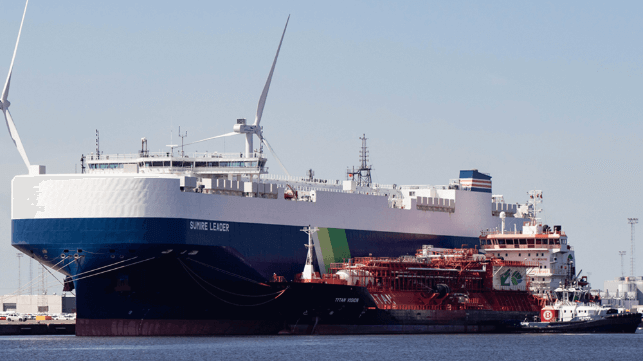
Japanese line NYK has begun using bio-LNG-credited fuel to regularly bunker its car carriers at Zeebrugge, reducing net greenhouse gas emissions for select vessels. So far, two NYK ships have received bio-LNG-credited fuel from diversified LNG supplier Titan Supply.

The physical fuel delivery is blended with conventional LNG, but is credited to the vessel as a biofuel by booking the attributes of other bio-LNG produced and used elsewhere. It is an ideal fuel for LNG vessel operators, as it requires no further technical modifications or training to begin using aboard a dual-fuel LNG ship. In addition to its environmental benefits, bio-LNG offers a way to comply with the EU Emissions Trading System (ETS), which treats biofuel as a zero-emissions fuel source.

NYK's biofuel purchases are ISCC EU certified as sustainable, traceable and carbon neutral. They contain methane that would otherwise be released to the atmosphere if not captured and burned, the carrier said. The same supplier is also used by NYK's joint-venture carrier UECC, which purchases mass-balanced bio-LNG from Titan for 95 percent of the bunkering of its dual-fuel LNG car carriers. (CMA CGM is also a prominent user of bio-LNG in Europe, but has its own supplier arrangements with a French utility.)

Bio-LNG is primarily methane, a far more potent greenhouse gas than CO2; the fuel's emissions profile increases quickly as the amount of the fuel that escapes into the atmosphere goes up. Leaks during production, distribution and use could "erase the sustainability benefits" of a bio-LNG value chain, the Maersk McKinney-Moller Center for Zero Carbon Shipping warned in an assessment last year. Securing an emissions improvement from bio-LNG requires "practicing excellence" in leak prevention during production and transport - a tough goal to achieve, the center warned. 

"We consider tightening of the regulations in the biogas industry as being of the utmost importance and urgency to ensure that new plants coming into operation have incorporated the right technology to be emissions-free," the Maersk Center concluded. 


Researchers Identify Wreck of Revolutionary War-Era British Frigate

Wessex wreck
Courtesy Wessex Archaeology

Published Jul 22, 2025 11:36 PM by The Maritime Executive


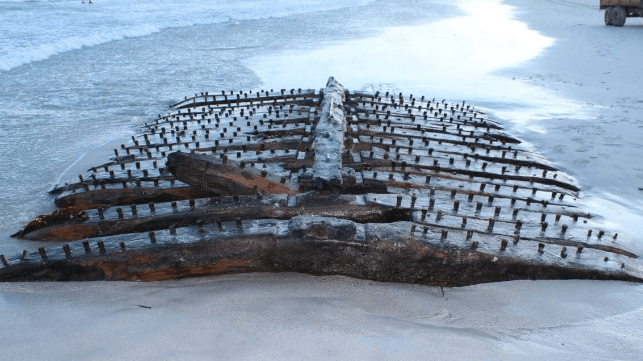
The wooden sailing vessel uncovered on the shores of the Orkney Islands last year has been identified as a Royal Navy frigate that played a small role in the American Revolutionary War

The wreck was discovered on a sandy beach at the northeast end of Sanday, one of the northernmost islands in the Orkneys. Shifting wind and wave patterns removed the sand that had covered the remains of the ship for centuries. Local residents  helped drag the surviving timbers off the sand with tractors, and professional archaeologists went about the task of preserving and examining the recovered wreckage. 

Hundreds of wrecks have gone down around the storm-wracked Orkneys, and it took time to narrow down just which ship this one might be. Wessex Archaeology was given the task of the analysis. Based on the tree rings in the wood, the team determined that the ship was built in the mid-1700s. By process of elimination, the team narrowed it down to the HMS Hind, a sixth-rate Royal Navy frigate built in 1749. 

Hind departed England for North America in 1758 during the Seven Years' War, and participated in the siege of French forces at Louisburg, Nova Scotia that summer. She continued throughout the campaign to remove French influence in the region, including the successful capture of Quebec the following year. During the Revolutionary War, she served as a convoy escort for British ships, the researchers found. After returning to the British Isles, she was converted to a transport ship, then sold into private hands in 1784. 

Renamed Earl of Chatham, the former frigate became a whaler in the North Atlantic trade, one of more than 100 whaling ships based out of London - a primary hub for the whale oil and whalebone trade in the late 1700s. The former frigate only lasted a year as a whaler: it wrecked in foul weather off of Sanday in 1785. Luckily, all crewmembers survived the ordeal. 

For now, the wooden wreckage has been placed in freshwater tanks at the Sanday Heritage Centre while the project sponsors consider a permanent solution, according to ABC. The National Heritage Memorial Fund (NHMF) and Historic Environment Scotland provided funding for the project.


CMA CGM Reflags Ship to Become Largest U.S.-Flagged Containership

US flag
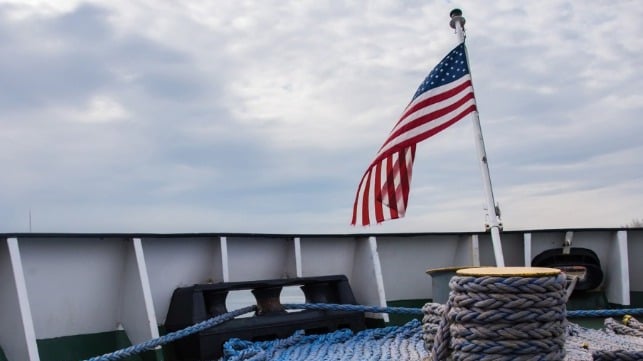
CMA CGM hoisted the U.S. flag today becoming the largest containership in the U.S. merchant marine (file photo)

Published Jul 24, 2025 3:16 PM by The Maritime Executive


CMA CGM is moving forward with its commitment to triple the size of its U.S.-flagged fleet as part of a $20 billion investment into its U.S. ship and logistics operations. Today, July 24, the company officially reflagged the first of four vessels it plans to move into the U.S. registry.

The CMA CGM Phoenix (115,000 dwt – 9,326 TEU) hoisted the U.S. flag in Charleston, South Carolina, in a ceremony to mark the completion of its transfer from Singapore to the U.S. registry. Built in 2013 by South Korea’s Daewoo Shipbuilding & Marine Engineering, the vessel had previously operated as the APL Phoenix. A Neo-Panamax containership measuring 1,079 feet (328 meters) in length, the company and the U.S. Maritime Administration (MARAD) are reporting that it has become the largest container vessel ever to sail under the U.S. flag.

“Adding the CMA CGM Phoenix into the U.S.-flagged fleet is a powerful move toward reclaiming America’s maritime strength,” said Acting Administrator of the Maritime Administration Sang Yi. “This is about more than ships; it’s also about jobs, trade, and economic strength and national security for Americans.”  

CMA CGM reports the vessel employs 42 American mariners, with 21 onboard at any given time, and members of two U.S. maritime unions. The ship is being deployed on the company’s service connecting the U.S. East Coast with Pakistan, India, and Sri Lanka.

According to the company, the CMA CGM Phoenix will be followed by three other vessels, each with a capacity of 9,300 TEU. When the transfers are completed, the company will have increased by 50 percent the number of American seafarers it employs. In addition, it highlights that the CMA CGM Phoenix will serve as a training platform for future officers. Two cadets will be aboard each voyage from the U.S. Merchant Marine Academy at Kings Point and the state maritime academies. 

Chairman and CEO of CMA CGM Group Rodolphe Saadé met with President Donald Trump in March, announcing the company’s plans to expand its role in the U.S. shipping industry. He committed the company to growing its U.S.-flagged fleet to 30 ships over the next four years. MARAD reports the CMA CGM Phoenix is the 11th U.S. flagged vessel in CMA CGM service. 

CMA CGM also owns APL (the former American President Lines), which it acquired in the 2016 acquisition of Neptune Orient Lines. APL is a niche brand today servicing the United States Government, providing its U.S. flag service, and its service to the Guam-Pacific trade. The company also plans to invest in growing its terminal operations and air freight base in the United States.

MARAD said the reflagging advances President Trump’s Executive Order of Restoring America’s Maritime Dominance. It reports, the current U.S.-flagged fleet consists of 189 vessels, including tankers, containerships, dry bulk carriers, vehicle carriers, and more. The order mirrors a bipartisan initiative in Congress that calls for the rebuilding of the American merchant marine.


CMA CGM in JV with TotalEnergies to Offer LNG Bunkering from Rotterdam

LNG bunkering containership
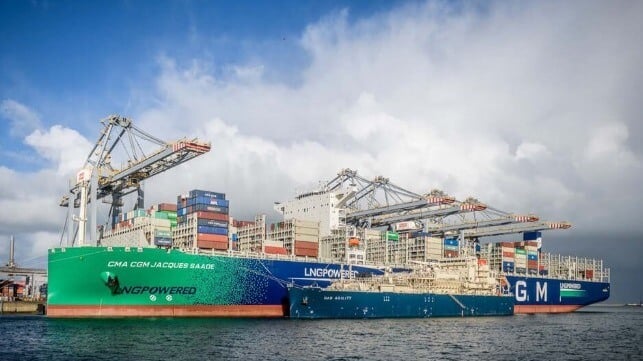
CMA CGM secured new LNG supplies through the innovative JV with TotalEnergies (CMA CGM)

Published Jul 23, 2025 7:17 PM by The Maritime Executive


CMA CGM is making a unique move, announcing it is forming a joint venture with TotalEnergies to launch an LNG bunkering and logistics operation based in Rotterdam. It is the first time a shipping company is partnering with an energy provider for LNG bunkering and a key step to support the French carriers’ growing fleet of LNG-fueled vessels.

The companies report they will position a new 20,000 cbm LNG bunker vessel in Rotterdam by the end of 2028. The new company, which will be jointly operated, will offer a complete logistics service, from reload access at the Gate terminal facility to LNG bunker deliveries. They will service a wide range of vessels operating in the Amsterdam, Rotterdam, and Antwerp region.

As part of the agreement, CMA CGM will be supplied with up to 360,000 tons of LNG per year starting in 2028 until 2040. CMA CGM and TotalEnergies have been working together for the past eight years since the first deal was signed to supply CMA CGM with 300,000 tons of LNG annually in Rotterdam. The companies also have a supply agreement for Marseille Fos in the south of France. The first LNG bunkering took place in 2020 in Rotterdam for CMA CGM and has expanded to fueling in Dunkirk and the Port of Marseille Fos.

CMA CGM has been a pioneer in the use of LNG, including the launch of its first large LNG-fueled vessel, CMA CGM Jacques Saadé (23,000 TEU) in 2020. The company reports that by 2029, it will have 123 vessels that are dual-fuel and operate on low-carbon fuels. It has also recently taken delivery of its first dual-fuel methanol vessels.

“We are proud to further contribute, alongside a partner like CMA CGM, to the development of an LNG bunkering supply chain in one of Europe’s leading port hubs. LNG is today the most mature and immediately available solution to reduce the environmental footprint of maritime transport. This strategic partnership not only strengthens our position as a major player in LNG bunkering but also illustrates the shared commitment of two leading French companies to actively support the energy transition,” said Patrick Pouyanné, Chairman and CEO of TotalEnergies.

The French companies said they are working together to accelerate the energy transition in the maritime sector. TotalEnergies reports it is the world's third-largest LNG player with a global portfolio of 40 MT per year in 2024.

One of the challenges remains the infrastructure to support the fuel transition. Companies have been working to increase the number of bunker vessels and expand the locations where alternative fuels are available. Other carriers such as Maersk have invested in the production capacity for alternative fuels, but CMA CGM is the first large carrier to expand into LNG bunkering operations.

Rotterdam boasts that it was the first port in Europe to establish LNG bunkering. The first ship-to-ship transfer took place in 2018, and by 2020, the service was fully available. The Gate terminal, a joint venture of Gasunie and Vopak, is the LNG import terminal in Rotterdam. Located on the Maasvlakte near the port entrance, the LNG terminal has three storage tanks, each with a storage capacity of 180,000 m3, making it possible to unload large amounts of LNG at once.


Puntland Refuses Somalia and Turkey’s Demands to Release Weaponry on Ship

cargo ship with military equipment aboard
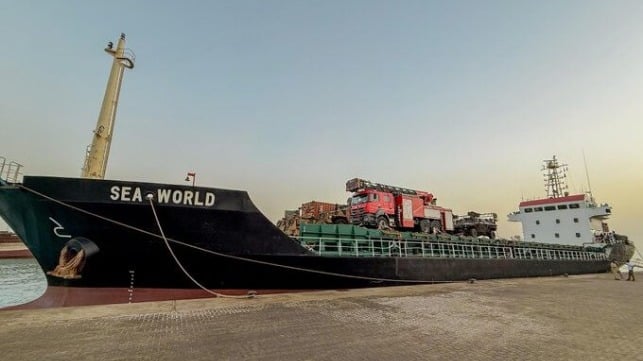
Sea World remains detained in Puntland with its cargo of military equipment (Jama Deperani, spokesperson for Puntland on X)

Published Jul 24, 2025 4:40 PM by The Maritime Executive


The standoff continues between the government of the semi-autonomous region of Puntland and the federal government of Somalia over a cargo ship loaded with Turkish weaponry that is being detained. The government of Puntland insists it is investigating the true ownership of the military hardware on the vessel, rejecting the calls by both the federal government of Somalia and Turkey to release the vessel and its cargo.

The federal government in Mogadishu issued its first public statement on the incident on Wednesday, July 23, five days after the vessel was seized, saying it “categorically denounces the hijacking and aggression against the Sea World vessel.” It said it was demanding the “immediate and unconditional release of the vessel,” while calling the actions of Puntland an “unlawful operation.”

Puntland contends the Sea World (13,000 dwt registered in Comoros) was “loitering for two days” off the coast, raising suspicions. Built in 1977, the vessel has a shadowy past, and Equasis lists both its owners and managers as unknown. Puntland reports it “apprehended” the vessel on July 18, acting on intelligence and fears after a group of young fishermen had already boarded the vessel. Puntland says it took control of the vessel, and after being contacted by Somali traders who claimed ownership of the cargo, it moved the ship to port for an investigation.


In a statement responding to the federal government, Puntland today, July 24, says the situation is “casting doubt on the true ownership of the cargo aboard the vessel. Pictures posted on social media show a variety of trucks and military equipment loaded aboard the vessel. The federal government asserts that the equipment is legal and destined for the TURKSOM Military Training Center operated by Turkey near Mogadishu. It said there is also commercial cargo on the ship owned by Somali traders.

Puntland reports it is looking into reports that some of the small arms on the vessel may have been looted in the port. Media reports show pictures of citizens handling machine guns, rifles, and pistols believed to have been taken from the ship.

“The Puntland Government continues its investigation into the vessel and the rightful ownership of its cargo to ensure that the military equipment does not fall into hands that might threaten Somalia’s security and stability,” a spokesperson for Puntland said in the government’s official statement. Observers note that the autonomous state and the federal government have been at odds, and this detention of the ship is likely politically motivated.


Greece Dispatches Salvage Tug for Rescues Off Yemen

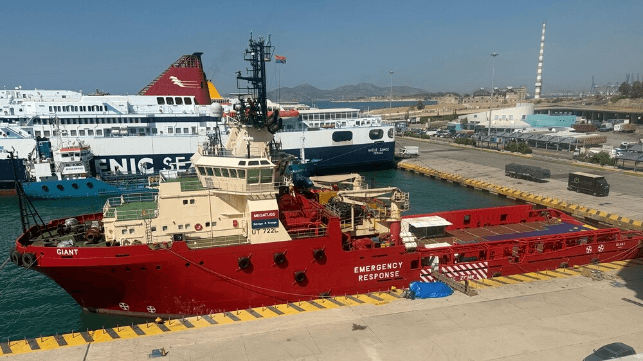
Tug Giant
Courtesy Ministry of Maritime Affairs and Insular Policy

Published Jul 24, 2025 5:45 PM by The Maritime Executive


Greek authorities are sending a salvage tug to fill a much-needed capacity gap in the southern Red Sea, where a resurgence of Houthi attacks - enabled by a sudden absence of naval forces - led to the loss of two Greek vessels in a month. 

Shipping Minister Vassilis Kikilias said Wednesday that the salvage tug Giant would be dispatched to the region to "protect and assist Greek-owned vessels and Greek seafarers." At present, there are no salvage assets in the region, and any rescue intervention must be provided by European tugs dispatched south through the Suez Canal or by Good Samaritans passing by. A Greek-led European naval intervention mission in the region, EUNAVFOR Operation Aspides, has three warship assets; none were in range to intervene during the recent attacks. 

"The Ministry of Shipping and Insular Policy supports this effort and the cooperation of the public with the private sector, always at this level - of safety, protection of human life and measures against marine pollution. All of this is extremely important and the heart of our policy," said Kikilias.

The vessel is being provided by the Hellenic Association of Tugboat Owners. Its president, Pavlos Xiradakis, told local media that the decision to dispatch the Giant was inspired by the incident aboard the tanker Sounion. When Sounion was attacked and set on fire in August 2024, it took weeks to get a tug on scene and get the blaze under control. 

"Now, we decided, seeing that the situation continues and worsens, to send this rescue vessel to the area," Xiradakis said. "Other flags are pushing sailors not to pass through the Red Sea with their ships. Our people are willing to go to this area, despite the prevailing situation, to assist and help fellow sailors who are there."

Giant is a 16,000-horsepower oceangoing tug with a bollard pull of 180 tonnes. It has advanced firefighting capabilities, accommodations for 40 responders or survivors, pollution response gear, and provisions for salvage towing. 

Kikilias has also announced a major 450 million euro investment in the Hellenic Coast Guard, which has been under pressure due to increased maritime migration. He said that the funds would be committed rapidly to acquire six patrol boats, ten high-speed pursuit boats, drones, and a "war room" for maritime domain awareness and operations, all on an expedited basis. 

"The men and women of the Coast Guard defend the security of our homeland every day. We have the obligation and duty to equip them with all the necessary means to protect our maritime borders," he said. "We have a lot of work ahead of us in the coming months and we will implement it in every possible way."


Livestock Carrier Detained and Released After Sailing Near Yemen

Houthi rebels
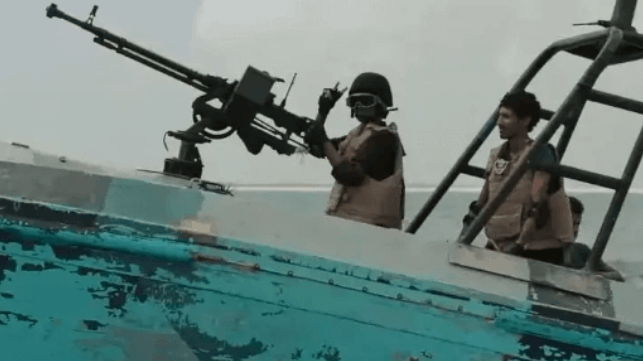
A wooden boat reportly intercepted the livestock carrier and reports indicate there was small arms fire (Yemeni Coast Guard)

Published Jul 24, 2025 12:17 PM by The Maritime Executive


A small livestock carrier was confronted and briefly detained as it was sailing near the Yemeni coast on July 24. The situation remains unclear, but security services are speculating it might have been intercepted by locals because of the position of the vessel instead of an attack by the Houthis.

The vessel named Merinos Livestock (2,200 dwt) departed Bossaso, Somalia, and indicated it was bound for Jeddah, Saudi Arabia, before turning off its AIS transmissions. The lack of an AIS signal may have contributed to the intercept, with some reports saying it took place with the Yemeni Coast Guard. The Houthis have not taken credit for the intercept, although they often take hours or days to acknowledge their activities.

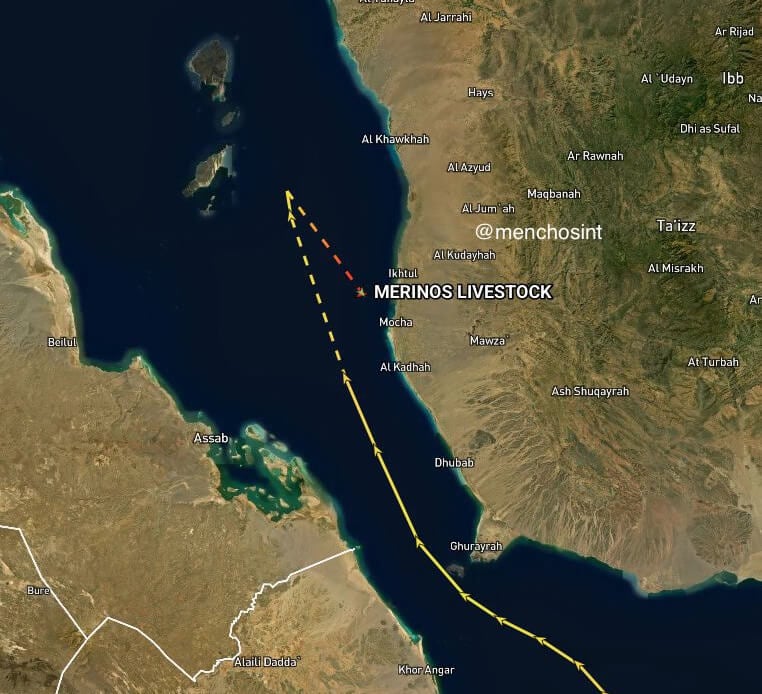
The vessel was reportedly underway east of the Hanish Islands, approximately 30 nautical miles northwest of Mocha, Yemen. A single wooden boat confronted the livestock carrier, and the reports indicate there was small arms fire. The vessel was ordered to turn to the Yemeni port, and tracking signals show it made a U-turn bound for Mocha. The last report to the UK Maritime Trade Operation was that the vessel was being detained by the Yemeni Coast Guard.

Reuters reports the vessel was held on “suspicion.” The report says the vessel was later released. 


Tracking on the Merinos Livestock (posted on X)


The Merinos Livestock is a converted cargo ship built in 1976 and now operating under the Comoros flag, managed by a Greek company. It would be a relatively easy target, with reports that it has a top speed of just 10 knots. It is 88 meters (289 feet) in length.

Details on the ship are shadowy, with the Equasis database not reflecting a port state inspection since 2023, shortly after it was renamed Merinos Livestock. Between 2016 and 2023, the vessel underwent 14 port state inspections, each of which listed deficiencies and, in several cases, resulted in detentions.


Israel Can Deliver Active Suppression of Houthi Attack Boats

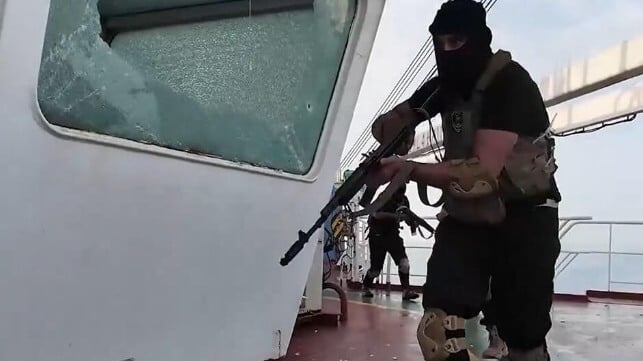
A Houthi small-boat commando team boards the bulker Magic Seas shortly before its sinking, 2025 (Houthi Military Media)

Published Jul 23, 2025 7:46 PM by The Maritime Executive


The Israeli attack mounted in the early hours of July 21, targeting port infrastructure in Hodeida, was conducted by drones, in contrast to previous Israeli attacks that employed manned aircraft.

Employing relatively light-payload drones means that the weight of ordnance that can be launched at targets is limited - considerably less than that of the heavy bombs which can be dropped from manned aircraft. But suitable for neutralizing many targets, missiles fired from drones can be delivered with greater accuracy, and the drone can loiter ready to attack until an optimal moment presents itself. Use of drones enables a persistent presence to be maintained, at minimal running cost and without risk to aircrews. The attack mode employed on July 21 therefore presents a viable alternative - and for some scenarios a better alternative - than dispatching an air armada of fighters, air defense suppression, tanker and surveillance platforms 1,250 miles down the Red Sea to the Yemeni coast and back.

Israel has not announced what equipment was used to mount the July 21 attack. It has in its inventory at least two medium range drones that could have carried out the task: the IAI Heron TP Eitan and the Elbit Systems Hermes 900 Kochav drones. Considering the Hermes 900, it could cruise 1,250 miles from base to target area, linger for 24 hours, and then return. It can use onboard standoff surveillance systems to loiter off and monitor potential targets. With a 450-kilogram payload, the Hermes 900 can carry a large number of missiles such as the Rafael Aerospike, able to attack moving targets at 30 km range instantly as attack parameters are met.

Thus it would be feasible for Israel to monitor the Houthi small boat and sea drone attack force in its bases, and to attack whenever hostile intent is detected. An aggressive stance such as this could complement (but be kept separate from) interceptions of incoming smuggled Houthi arms at sea. The latter mission has been conducted with increasing success by General Tareq Abdullah Saleh’s National Resistance Forces, as seen in early May and late June. General Tareq’s latest seizure has demonstrated that the Houthis are still dependent on Iranian-imported components for their more advanced drone and missile systems. As an armchair strategy for closing down the threat in the Red Sea, this has many holes, but rather fewer than reliance on naval defenses - and the hope that naval assets are in the right sea area at the right time to defend merchant traffic.

Local Yemeni sources have reported that during Israel’s July 21 drone attack, seven Houthi naval commandos were killed in a speedboat as they attempted to leave the port in Hodeidah for a routine mission. The team and the boat had been used in previous weeks to track, chase and attack commercial ships. After months of no apparent solution being in sight, this may be the first indication that a successful suppression strategy could be implemented.


Drilling Rig Crushes Tug on River Weser

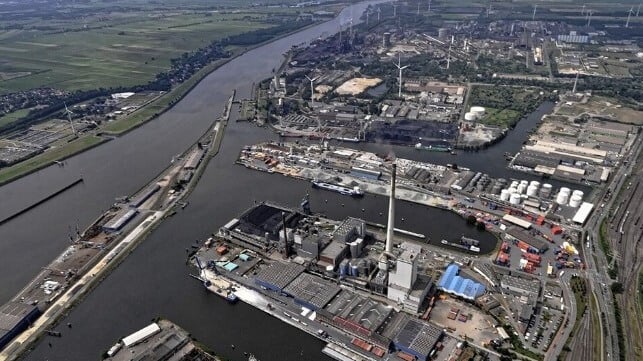
Bremen's industrial harbor (Ra Boe / CC BY SA 3.0)

Published Jul 24, 2025 3:52 PM by The Maritime Executive


[Brief] A harbor tug in Bremen was sunk by a small barge-mounted drill rig, which suddenly collapsed onto the towing vessel. 

On Wednesday evening, the tug Orca was assigned to tow a crane barge to a construction site in the harbor. It was operating on the River Weser near the AcellorMital steel plant when a rig derrick on the bow of the barge collapsed forward and smashed into the tugg.

The crew managed to escape and were not injured, but one individual on the barge sustained minor injuries, according to Bremen's fire department. First responders transported the victim away by boat for treatment.

Damage to the tug was so extensive that it sank to the bottom, releasing a small amount of fuel. Its mast and stack remained visible above the waterline. Oil booms have been deployed in an effort to contain the minor quantities of petroleum from the vessel's tanks, and salvage operations should be under way in a matter of days. 

Top Image: Ra Boe / CC BY SA 3.0


Poor Welding Caused Bulker to Lose its Rudder and Nearly Run Aground

bulker
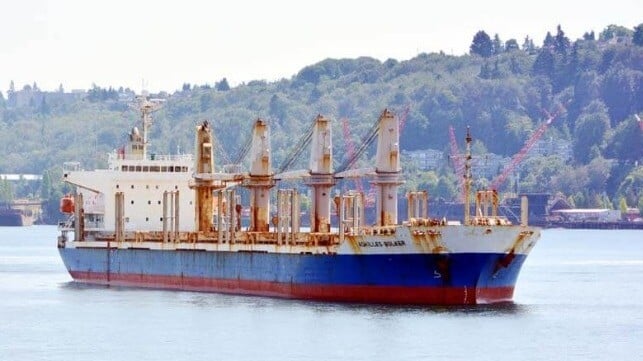
Poor maintenance work in 2021 caused the rudder pintle to fall off and ultimately the rudder, causing the bulker to nearly ground (Joe Mabel photo - CC BY-SA 4.0)

Published Jul 24, 2025 6:11 PM by The Maritime Executive


Investigators at New Zealand’s Transport Accident Investigation Commission (TAIC) released their final report on a July 2023 incident with the Achilles Bulker, reporting that poor welding during maintenance led to a series of failures that ultimately saw the vessel lose its rudder and nearly run aground. Divers had discovered the unusual circumstances reporting the vessel had lost its rudder, and now the investigators have pieced together the likely scenario with a warning to both shipyards and shipowners, operators, insurance providers, and classification societies.

The Achilles Bulker, 32,729 dwt and 580 feet (177 meters) in length, had gotten underway as normal on July 24, 2023, fully loaded and departing the Port of Tauranga, New Zealand, with a pilot aboard. The vessel, which was built in 2003, was managed from Taiwan. On board was a load of logs bound for China.

Shortly after clearing Tauranga Harbor, the bridge team reported the vessel was steering erratically and veering off course. As they attempted to steer it back on course, the ship shuddered, and there was a loud bang. The pilot took control of navigation, trying to get the vessel on course when a second, louder bang was heard. Unable to get the vessel back into the channel, the pilot struggled to slow the ship and ordered the crew to immediately drop both anchors.

Thirty minutes later, they reported the ship was stopped outside the channel. It had narrowly avoided grounding, with the reports indicating there was less than one meter of clearance under the keel. Divers inspecting the vessel were surprised to find its rudder was gone. They were able to recover the rudder two days later from the sea floor.

Inspectors were surprised to see that the rudder pintle was missing, and they concluded that it left the bottom of the rudder unsupported and allowed excess movement in the rudder system. They said the rudder broke off when the rudder palm fractured on both sides of the stock.

Reviewing the vessel’s records, they found that two years earlier, in 2021, during a routine dry docking, the rudder pintle assembly had been removed and later reinstalled. 

“It is virtually certain that the way the rudder pintle assembly was reinstalled did not ensure that the pintle would remain in place during normal shipboard operations,” TAIC writes in its report. “The way the rudder pintle was reinstalled meant that components used to secure the pintle in place failed, allowing the pintle to drop from the bottom of the rudder.”

TAIC concluded that the securing parts installed had weak, porous welds. After the ship was back in service, the welds failed due to vibration. The nut that retained the pintle as part of the assembly unwound itself, and at some undetermined point, the pintle dropped unnoticed from the casting and sank. At this point, TAIC concludes the rudder began experiencing unintended movement, adding to the stresses. Moving side-to-side and fore and aft, the forces were beyond the designed strength of the coupling plate (palm) at the top that joined the rudder to the solid shaft (stock) that connected to the internal steering mechanism. Fatigue cracks grew until the rudder finally fell off.

The vessel was repaired and returned to service. TAIC is now issuing a warning and calling for robust quality assurance procedures at the shipyard for the installation of a rudder pintle. It also notified the Maritime Safety Administration of China and says it will work with the International Maritime Organization to promote enhanced global standards for quality assurance of rudder systems during installation, maintenance, and repairs.
 

Top photo of the Achilles Bulker in 2022 by Joe Mabel -- CC BY-SA 4.0 license 


U.S.-Japan Tariff Deal Could Include Billions for U.S. Shipyards

File image courtesy Tomincal / CC BY SA 3.0

Published Jul 24, 2025 10:25 PM by The Maritime Executive


American shipbuilding is one of five strategic industrial sectors that stand to benefit from a massive foreign investment pledge from Japan. 

During the White House's tariff negotiations with the Japanese government over the last several months, Commerce Secretary Howard Lutnick proposed creating a multibillion-dollar Japanese investment package that would be directed by President Donald Trump. In exchange for the pledge and a loosening of Japan's limits on American imports, the U.S. would lower its tariffs on Japanese goods and cars. 

After Trump's review, the final agreed figure for the fund comes to $550 billion, with the U.S. government retaining 90 percent of the profits from the investments. If actualized, it would be the largest foreign investment in world history. It is also an unprecedented allocation of foreign resources for personal control by a U.S. president.

Trump's list of top industries for focused Japanese investment includes LNG, grid modernization, semiconductors, critical minerals production, pharmaceuticals, and commercial and defense shipbuilding - including both new yards and modernization of existing sites. Rumors of a possible joint Japanese-American shipyard investment fund have swirled for months, and the pledge would be more than enough to fully capitalize it (dwarfing Japan's $7 billion investment plan for reviving its own domestic shipbuilding industry).

The LNG component likely refers to the possibility of Japanese investment in the Alaska LNG pipeline and terminal project, a $44 billion undertaking that has been in planning for four decades. Trump announced earlier this week that Japan is “forming a joint venture with us in Alaska for the LNG."

The White House did not provide a timeline for the Japanese investments, nor a breakdown of the form of the funding. Treasury Secretary Scott Bessent told Bloomberg that the topline figure includes a combination of equity, loan guarantees and lending. Financial analysts suggest that a large share of the total would need to come from Japanese private-sector investment, which would ultimately be influenced by market factors outside of the control of either government; follow-through is not guaranteed. 

"Investment in the United States is ultimately a decision for Japanese companies to make, and the $550 billion figure is merely a government target," said economist Takahide Kiuchi of Nomura Research Institute in a client note. The pledge, he said, is "little more than a verbal commitment."

Japan's government may feel pressure if it does not follow the White House's directions. Bessent told Fox that "if the president is unhappy" at any point, the tariff rate could be raised back to 25 percent again. 

Top image: Tomincal / CC BY SA 3.0