Saturday, July 26, 2025


Cuban leader: ‘Everything for the people and with the people’
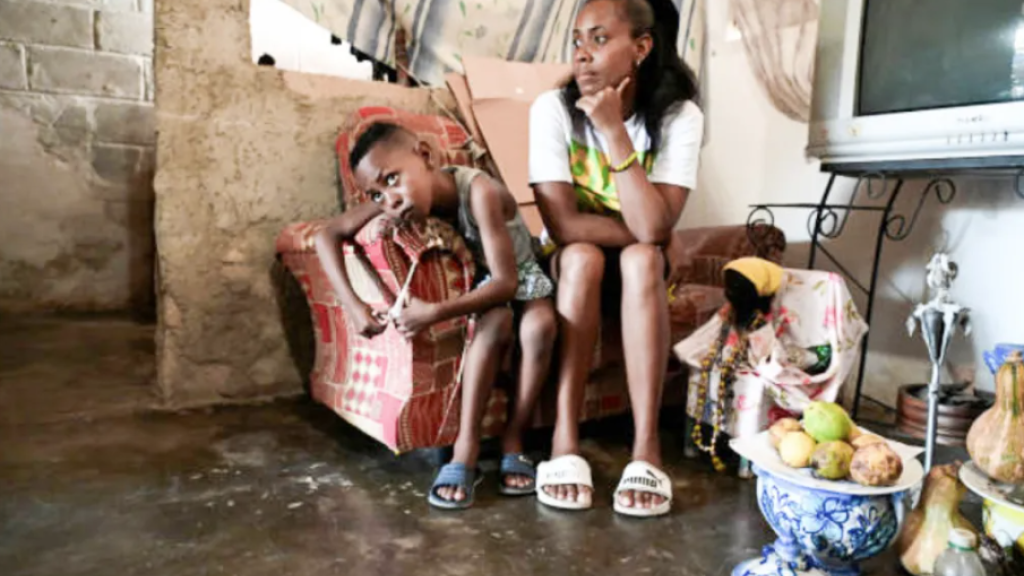

Diana Ruiz sits next to her son at their home in Havana on March 27, 2024. Shortages of food and medications, as well as long blackouts, have affected most of Cuba’s population in recent years.

First published in Spanish on Facebook. Translation, introduction and footnotes from World-Outlook.

The following essay was published on Facebook on July 18, 2025. The author, Ernesto Limia Díaz, is First Vice-president of the Writers Association of the National Union of Writers and Artists of Cuba (known as UNEAC, its Spanish-language acronym).

Limia Díaz’s essay is part of a public discussion that has swept Cuba over the last week. The debate broke out into the open in the aftermath of the resignation of Cuba’s Minister of Labor and Social Security, Marta Elena Feitó Cabrera on July 15.

Feitó Cabrera resigned after making contentious remarks at Cuba’s National Assembly, the country’s parliament, a day earlier. Her televised comments went viral on social media, causing a major uproar by the public and government officials alike.

World-Outlook published yesterday an article posted by the Cuban government reporting the response by the country’s president, Miguel Díaz-Canel Bermúdez, to Feitó Cabrera’s controversial remarks. In its introduction to that article, World-Outlook noted that the former minister told the National Assembly that “there are no beggars in Cuba, that the island’s beggars are faking poverty in search of easy money, and that those cleaning windshields on the streets or picking up rubbish from trash bins are actually collecting raw materials without paying taxes.”

In his essay, Limia Díaz draws out the challenges Cuban revolutionaries face today as they try to confront the impact of a severe economic crisis.

As Díaz-Canel noted in his July 15 remarks at the National Assembly, this crisis has led to major blackouts and food shortages and has intensified social problems such as begging and homelessness.

Limia Díaz acknowledges that this economic crisis is caused, to a large degree, by an intensifying U.S. economic war aimed at asphyxiating and overthrowing the Cuban Revolution. However, he focuses his essay on “the problems that, in my humble opinion, are within our means to solve as soon as possible.”

Among other important points, Limia Díaz notes that “we cannot ignore that formalizing a private economy presents challenges to the Cuban model. One thing we must be clear about: under socialism the blind laws of the market cannot govern ― or to be precise, the “blind” laws of those seers who control the market. Under socialism the market cannot dictate the trajectory, it must establish a harmonious relationship with the interests of society. Achieving this requires planning, audacity, control, and solidarity education.”

The UNEAC leader emphasizes the importance for revolutionaries of honesty and the ability to listen as essential qualities for drawing Cuba’s working people into the discussion on how to collectively find solutions to the serious social problems the Revolution faces today.

“The proliferation of technocrats, incompetent bureaucrats and employees without any social commitment ― sometimes resentful due to their own privations and dissatisfactions ― adds fuel to the embers of Yankee harassment,” Limia Díaz notes.

“Such a scenario demands that dialogue be encouraged and, along with it, listening. Exchange is the most effective way to bring all social forces together in our efforts to build a society with justice and social equality. Any forecast or response to popular requests and needs is subjected to ridicule on social networks by the legion of trolls at the service of the United States; in these times of cognitive warfare, I know only one antidote: the collective development of solutions.”

He also acknowledges that discussion on the issues he tackles has been building in Cuba for some time.

“I recently met the moderator of a group that appeared in WhatsApp during the pandemic. They took the name ‘Learning from Covid’’’, he says. “Since then, they have produced 153 observations. They are veterans and they are revolutionaries with sharp opinions. They are pained by the poverty that sprouts again, the instances of corruption, the inoculated germs of capitalism. Who isn’t?”

World-Outlook is publishing the following essay for the information of our readers. The headline and text below are from the original. Translation from Spanish, subheadings, and notes are by World-Outlook.


‘Everything for the people and everything with the people.’

Ernesto Limia Díaz

It turns out that leading in Cuba today is an extremely complex endeavor, because the parable of the loaves and fishes seems like a chimera when your neighbor diverts the waters that nourish your lagoons and hoards the wheat to deny you flour, or keeps you from acquiring the charcoal you need to bake the bread. Add to this the energy required to guard all assets from the crime that creeps in to act in the shadows, and from the warehouse pilferers who swarm in during a crisis.

Not a single one of our cadres or officials is imported, all of them are of very Cuban stock, and most of them were born among the humblest segments of our people. It is then worth asking ourselves why disagreement about their management is spreading.

A simplistic answer would be to attribute it to anti-Cuban campaigns; but the phenomenon has multiple variables, and some are in our hands. Undoubtedly, Yankee economic and financial harassment ― as we have already pointed out ― is the main obstacle to our development, an unwavering objective since the Eisenhower Administration’s Assistant Secretary of State, Lester Mallory, called for starving us to death in order to counter Fidel’s leadership.

That is the main cause of the blackouts, the shortages, the lack of medicines, the way that the daily life of all Cubans who live on this island can be overwhelming. Our Chancellor has been eloquent, with detailed information and data. Whoever denies this is stretching the truth and, even if unintentionally, becomes an accomplice.

Let us then focus this essay on the problems that, in my humble opinion, are within our means to solve as soon as possible.

In Cuba human beings are the first concern, and the quixotic selflessness fostered by the Revolution is what made possible that maxim of José de la Luz y Caballero,1 of justice being at the center of the moral universe in the breasts of women and men. Humanism and the sense of justice are the pillars of the sensibility of our communist militancy, of the revolutionaries, of the majority of our people.

‘More than a few have no concern for the pains of our people’

But let’s be realistic: today many people occupy responsibilities or work in business organizations, vital service centers, and state institutions, who are devoid of sensibility and, often, of scruples. We are not going to dwell on the causes, but the truth is that, infected by an extreme individualism expanded by neoliberal ideology ― we are not in a bubble or in a glass box ― more than a few out there can be found who have no sense of loyalty to the homeland or pride in having been born in this land. Needless to say, they have no concern for the pains and dissatisfactions of our people.

Another plague that mills around is ineptitude: the mediocre find two problems for every solution and, imbued with the slop of self-help books, need to show themselves as winners. No one who contradicts them will be safe. They surround themselves with like-minded people, and that concert will not produce a single polyphonic sound.

No one is deafer and more arrogant than a mediocre person, because they are not capable of assessing collective intelligence; for that reason, under the pretext of unity, they reward obedience over talent and creativity. Then come mistakes and more mistakes.

In terms of services to the population, many people are distressed because a simple task can take you to the gates of Dante’s hell. The problem is not that there are bureaucrats, the problem is the inefficient performance of a bureaucrat. When dissatisfaction becomes chronic and those affected become irate, or when a call from on high demands to rectify a blunder in any sphere of the country’s life, the Fidelista maxim “Never lie” loses meaning for the mediocre…

In the best of cases, they do not distort reality, but they hide information to that end, or they sow optimism based more on an illusion than on facts. They promise solutions. They make you believe that they are betting on the right horse, and it is only a matter of time. Years will go by, until one day they are knocked down by a fortuitous incident. Now a long time has passed; the damage is done…

We cannot ignore that formalizing a private economy presents challenges to the Cuban model. One thing we must be clear about: under socialism the blind laws of the market cannot govern ― or to be precise, the “blind” laws of those seers who control the market. Under socialism the market cannot dictate the trajectory, it must establish a harmonious relationship with the interests of society. Achieving this requires planning, audacity, control, and solidarity education.

It escapes no one that in recent years the social inequalities that disappeared in 1959 have widened. And despite the efforts of our Party and Government, we observe instances of poverty that are more painful ― and, at times, even humiliating ― the more ostentatious those who have had the opportunity to prosper with private businesses become.

When a private owner imposes abusive prices without paying attention to what their surroundings and the country suffer; when they evade their tax contribution; when they make a mockery of established constitutional, legal and financial provisions; when they act as a front man for foreign interests and lend themselves to the clandestine repatriation of the dollars that the country needs in order to preserve social programs that both he and his family enjoy, when they inoculate the germs of capitalism among our people.

If we do not combat these outcomes all along the line and do not present a financial, cultural and political design capable of articulating personal interests as part of those of the nation, we will be ceding space to neoliberal ideology, which is instinctive and grows wild as purslane.

Collective development of solutions

The proliferation of technocrats, incompetent bureaucrats and employees without any social commitment ― sometimes resentful due to their own privations and dissatisfactions ― adds fuel to the embers of Yankee harassment.

Such a scenario demands that dialogue be encouraged and, along with it, listening. Exchange is the most effective way to bring all social forces together in our efforts to build a society with justice and social equality. Any forecast or response to popular requests and needs is subjected to ridicule on social networks by the legion of trolls at the service of the United States; in these times of cognitive warfare, I know only one antidote: the collective development of solutions.

In the current conditions of the country ― and in an era people watch less and less television and there are more people outside the state sphere ― the exercise of popular power ― that is, the government of the people, or as the expression goes: “That is real power” ― requires us to rethink some methods of work and ideological education.

As heirs to the political capital of those who brought us here, the new generations of leaders must contribute their own legacy to the spiritual construction of consensus. Most do it every day of the year, from first light to midnight; but more than a few are separated from the base by an evil that has spread like a biblical plague: endless meetings.

Facing emergencies with this unproductive scourge often limits the necessary friction to measure the heartbeat of our people, and this generates emotional disconnection, a prelude to rejection. It cannot be ignored that this is intended to enshrine a matrix that points against decades of indissoluble ties between the people and their leadership, with two pronouns that in this case are disruptive: “you” and “us.”

Our dilemmas require effective political management. In 2019 Pope Francis expressed an idea that sheds light on this: “Politics is not the mere art of administering power, resources, or crises. Politics is not a mere search for efficiency, strategy, and organized action. Politics is a vocation of service, a lay ministry that promotes social friendship in order to build the common good. Only in this way does politics help the people become the protagonists of their history and prevent the so-called ‘ruling classes’ from believing that they are the ones who can settle everything. As in the famously exaggerated liberal adage, everything for the people, but nothing with the people. Doing politics cannot be reduced to techniques and human resources and the capacity for dialogue and persuasion; this cannot work by itself. The politician lives in the midst of the people and collaborates with this medium or others so that the people who are sovereign will be the protagonists of their history” (Pope Francis, 2019: 20-21).

That communion of ideas between Pope Francis, Fidel [Castro] and Raúl [Castro] marked the sympathy and admiration that characterized their ties, the affection and respect of the Supreme Pontiff for Cuba and its people.

These principles guide the daily actions of comrade Miguel Díaz-Canel; but the people perceive resistance within intermediate layers that hinder their will. The truth is that this “resistance” is not new: Fidel denounced it during the process of rectifying errors in the 80s2 and then when launching the battle of ideas in the 2000s. The problem is that with the virulence of Yankee harassment and the proliferation of corrosive tendencies, this becomes more visible.

Do not evade accountability with triumphalism

It is urgent to review the ways that popular control is exercised. The people want every government leader in a municipality or province to be accessible and to tackle their complaints and demands; they want cadres and administrative officials at the central level to interact more with the press and social spaces, to explain policies and jointly lay out the way forward; they want each deputy to systematically visit his constituents and parlay their distress to the Assembly, so they can be discussed in their sessions and so they can reject failed policies, so that they do not evade accountability with triumphalism or give vague explanations.

Parliament cannot become a spectacle. We have endured that in a sister country in the region, friendly fire resulting from unresolved internal quarrels ended up freezing basic funds for social development programs. We cannot afford that luxury, especially with the Yankees hoping to atomize us; however, it is true that there is not a surfeit in the Assembly of those who dot the i’s ― as the people say; although luckily, one of them is our president and first secretary of the Party.

As I have already suggested in previous essays, together with a new literacy campaign ― which should encompass a revolution in the methods of ideological work ― we need to deploy all our potentialities in terms of communication.

I recently met the moderator of a group that appeared in WhatsApp during the pandemic. They took the name “Learning from Covid.” Since then, they have produced 153 observations. They are veterans and they are revolutionaries with sharp opinions. They are pained by the poverty that sprouts again, the instances of corruption, the inoculated germs of capitalism. Who isn’t?

I share an idea expressed by them about the press: “Despite having good young journalists, we hope that there will be a change in the way they approach our problems, that they will not let their commitment to the Cuban reality pass them by, and that they do not settle for always standing behind the news that they did not create, that they adopted because it was exposed without fear in other media.”

They are right but resolving it is not only up to the media. It is a problem of the entire institution. “The prize for the contests should not be for the best ode, but for the best study of the conditions of the country in which you live. In the newspaper, in professorships, in the academy, a study of the real factors that affect the country must be carried out. Knowing them is enough, without blindfolds or ambiguities; for those who set a part of the truth aside, either by will or by oblivion, will fall in the long run because of the truth they lacked, which grows in negligence, and overthrows whatever rises without it. Solving the problem once you know its inner workings is easier than solving the problem without knowing them,” wrote the Apostle,3 and this concept should be taken as the basis of our communication (Martí, O.C., t. 6, 1975: 17-21).

I will end with an instructive example. A few days ago, I read an article published in Trabajadores4 about begging in Cuba in 2024, “The faces of silence scream.”5 I didn’t know it, no one spoke to me before about it. In my humble opinion, we should take it as a subject of analysis in the nuclei of the Party and the UJC [Union of Young Communists]; in the State and the Government at all levels; in work and study centers; in cultural and scientific institutions; between the peasantry and non-state forms of management. It’s a clarion call…

No one has ever done – or continues to do – what the Revolution has done to heal the wounds of the body politic. This is the aftermath of the Yankee resolve to have us surrender due to hunger and family and social problems.

As Trabajadores points out, the solutions demand a large dose of sensitivity, intelligence, empathy and respect. They ask questions: “How do you keep a mentally ill person stable in the face of a crisis in the supply of drugs? How is it possible for homeless people to mill around for months in cities’ downtowns, despite the established protocol? What is the best way to support those who do not fall into the category of indigent?” And a shocking call…: “If we turn a deaf ear and avert our eyes, everyday life will continue to crush these people, because, although it hurts to admit it, they are a sad seed that has germinated and grows robustly.”

An analysis of this type could have been the focus of the presentation by the Minister of Labor in the National Assembly. Her address would have been full of reflections and proposals ― the scope of which could have been State and private.

Some claim to be a ‘Fidelista,’ but they are not

From all of the above, I draw five conclusions:

1) We must launch an all-out internal battle against any expression of technocracy, bureaucracy and mediocrity, which bogs down the will of the country’s leadership, the performance of our economy and the daily life of the people.

2) We cannot give any breathing space to those seers who, betraying the interests of the nation, work to submit us to their will in the name of the laws of the market.

3) The family is the first and most important school of humanism and civility in society. Beyond the efforts in terms of policies ― that the country addresses as a priority ― there is an urgent need for educational actions focused on the dilemmas that corrode us.

4) A revolution that must confront the greatest imperial power in history and the globalization of neoliberalism at the same time cannot for a second neglect cultural and ideological education ― and our cadres are in the first row.

5) The pillars of all socialist politics are the consciousness of the people and their leading role in the search for solutions and their implementation. Whoever denies that role in word or deed undermines the ideology of the Revolution. They can claim to be a “Fidelista,” but they are not.

A maxim was prominent in everything that Fidel and Raúl did long before the assault on the Moncada and Carlos Manuel de Céspedes barracks: “Everything for the people and everything with the people.” Preserving that principle is our challenge as communists and revolutionaries.


Bibliography

Martí Pérez, José: Complete Works. Editorial de Ciencias Sociales, Havana, Cuba, 1975.

Holy Father Francis: “Address to a Group of the Pontifical Commission for Latin America.” Consistory Hall, Monday, March 4, 2019. In Pastoral Letter: “A Voice That Cries with Hope in the Desert, Episcopal Conference of El Salvador,” May 29, 2025.

  • 1

    José Cipriano de la Luz y Caballero (1800-1862) was a Cuban philosopher and educator, acclaimed by José Martí as “the father … the silent founder” of Cuban intellectual life of the 19th century.

  • 2

    The “Rectification Campaign” was a comprehensive process the Communist Party of Cuba initiated in 1986 to reverse the negative political consequences of economic planning and management policies modeled on those of the Stalinist regime in the Soviet Union. The Cuban leadership had adopted those policies in the early 1970s. By the early 1980s, this course had resulted in political demobilization and demoralization of layers of the working class in Cuba. Faced with this political disorientation, Cuban communists reached back to Ernesto Che Guevara’s arguments from the early days of the revolution — his criticism of the economic model of the Soviet Union and his proposals on how to build socialism in Cuba — ideas that had begun to be implemented in limited ways at that time.

    Rectification included steps to reduce social inequalities and privileged living conditions for those in the upper strata of the government, party, and army bureaucracies; cutbacks in administration and management personnel; a crackdown on corruption; increased reliance on volunteer construction brigades to build badly needed hospitals, day-care centers, and schools; and full-time volunteer labor contingents to tackle larger projects such as building roads, bridges, and factories.

    Rectification played a key role in the ability of the Cuban people to confront the devastating effects of the “Special Period,” triggered by the abrupt termination at the opening of the 1990s of long-standing development aid from and preferential trade relations with the countries of the former Soviet bloc. By 1996, through disciplined efforts, the decline in industrial and agricultural production had bottomed out. Soon shortages of food and other essentials, while still severe, began to ease.

    (For more information on rectification see also “Cuba’s Rectification Process: Two Speeches by Fidel Castro” in the magazine New International no. 6.)

  • 3

    Limia is referring here to José Martí — a revolutionary, poet, writer and journalist — who is Cuba’s national hero.  Martí founded the Cuban Revolutionary Party in 1892.

  • 4

    Trabajadores is the official newspaper of the Confederation of Cuban Workers (known by its Spanish-language acronym as CTC).

  • 5

    This article was published in Trabajadores on April 8, 2024. It reported that 3,690 people had been registered as homeless in Cuba between 2014 and 2023. The original in Spanish can be found here.


Jeremy Corbyn & Zarah Sultana (Britain): ‘It’s time for a new kind of political party. One that belongs to you.’


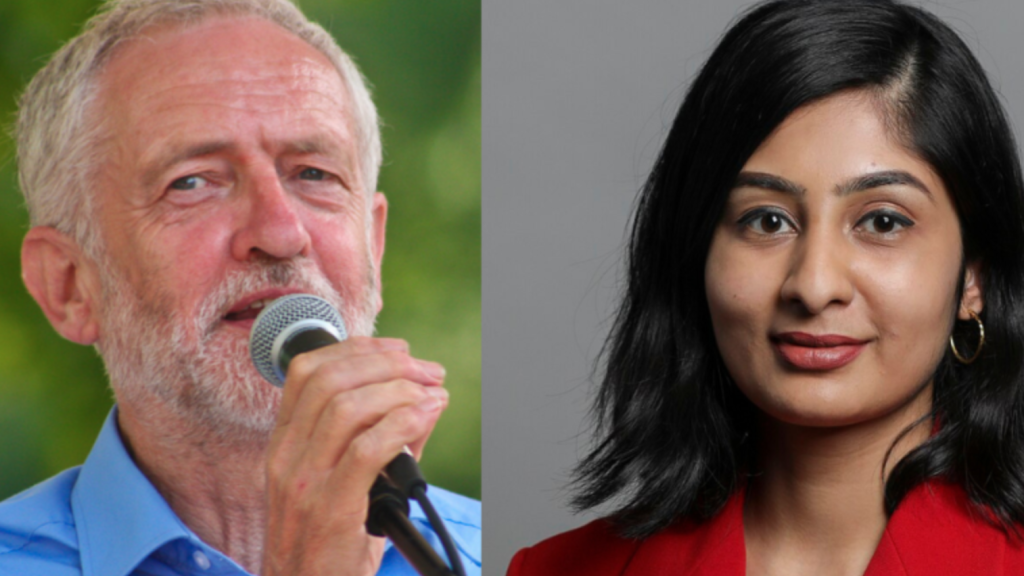
Jeremy Corbyn  Zarah Sultana

Two prominent left-wing British MPs, Jeremy Corbyn and Zarah Sultana, have issued a joint statement to announce they are setting up a new party. The statement, reproduced in full below, is from the new party's website yourparty.uk.


It’s time for a new kind of political party. One that belongs to you.

The system is rigged.

The system is rigged when 4.5 million children live in poverty in the sixth richest country in the world. The system is rigged when giant corporations make a fortune from rising bills. The system is rigged when this government says there is no money for the poor, but billions for war.

We cannot accept these injustices ― and neither should you.

We will only fix the crises in our society with a mass redistribution of wealth and power. That means taxing the very richest in our society. That means an NHS free of privatisation and bringing energy, water, rail and mail into public ownership. That means investing in a massive council-house building programme. That means standing up to fossil fuel giants putting their profits before our planet.

Meanwhile, millions of people are horrified by the government’s shameful complicity in genocide. We believe in the radical idea that all human life has equal value. That is why we defend the right to protest for Palestine. That is why we demand an end to all arms sales to Israel. And that is why we will carry on campaigning for the only path to peace: a free and independent Palestine. 

Our movement is made up of people of all faiths and none. The great dividers want you to think that the problems in our society are caused by migrants or refugees. They’re not. They are caused by an economic system that protects the interests of corporations and billionaires. It is ordinary people who create the wealth – and it is ordinary people who have the power to put it back where it belongs.

It’s time for a new kind of political party. One that is rooted in our communities, trade unions and social movements. One that builds power in all regions and nations. One that belongs to you.

Sign up at www.yourparty.uk to be part of the founding process, leading to an inaugural conference. At this conference, you will decide the party’s direction, the model of leadership and the policies that are needed to transform society. That is how we can build a democratic movement that take on the rich and powerful ― and win.

Real change is coming.

 Ukraine’s New Cabinet: Neoliberal Reforms Threaten Wartime Solidarity


Saturday 26 July 2025, by Vitaliy Dudin


Ukraine’s first government reshuffle since Russia’s full-scale invasion has brought Yulia Svyrydenko to power as Prime Minister, but this change offers little hope for ordinary Ukrainians facing wartime hardships. Rather than addressing critical shortages in defence resources and rising poverty, the new cabinet appears committed to accelerating neoliberal reforms that prioritise private capital over public welfare.

Key appointments include Oleksiy Sobolev, who will oversee both economic policy and environmental protection—a concerning merger that threatens to subordinate nature conservation to corporate interests. Meanwhile, former Finance Ministry official Denys Ulyutin’s appointment to social policy signals continued austerity measures. This analysis from a leading member of Ukraine’s Social Movement examines how the cabinet reshuffle represents not renewal, but an intensification of policies that risk deepening social inequality during the country’s most vulnerable period.

The government of Prime Minister Yulia Svyrydenko represents the Ukrainian elite’s familiar ineffectiveness in solving the people’s problems, combined with the forcing through of liberal reforms without proper discussion. The danger of adopting a new Labour Code will increase, as will the risks of the state losing valuable assets as a result of privatisation. Economy Minister Sobolev will be given environmental policy, likely to simplify corporate access to mineral resources. Such a step, together with blocking inspections (labour, environmental), will distance Ukraine from the EU. At the same time, the social sphere will be managed by someone from the Ministry of Finance, a department known for its commitment to cutting social spending according to International Monetary Fund (IMF) templates. The policy of such a government will inevitably lead to social stratification, excessive enrichment of the oligarchy and the inability to finance truly important things like defence and welfare.

On 17 July, Ukraine changed its government leadership for the first time since the beginning of the Russian invasion. But hardly anyone believes that the Cabinet of Ministers, headed by Prime Minister Yulia Svyrydenko, will be able to solve the most pressing problems of today: lack of defence resources, economic primitivisation, and the country’s depopulation. Much has been said about the new Prime Minister’s dependence on the Presidential Office. However, we would like to analyse the changes from a socio-political angle: what ideological priorities do the new government officials have and what should ordinary people expect?

Even More Capitalism?


Government policy will be set not just by bureaucrats, but by fanatical supporters of unbridled capitalist development – something directly opposed to the goal of preserving the country during war by putting all resources at the service of the state. Yulia Svyrydenko will likely squeeze the juices from the country and its people much more decisively for the prosperity of private capital:

her goal is to accelerate the sale of the wealth with which Ukraine is endowed, and the signing of the Subsoil Agreement in the USA was a vivid overture to this;

Ms Yulia will persistently promote the new Labour Code, which she developed as Economy Minister;

graduates of the Kyiv School of Economics [KSE - a prominent Ukrainian business school], which too generously valued her teaching, will have increasing influence. Last year, she earned over 3.1 million hryvnias [approximately €72,000] at this establishment, i.e. several times more than at her main job.

Under Yulia Svyrydenko’s tenure, the Ukrainian economy lost state control and reached a new level of dependence on foreign partners. She presented as a great victory the privatisation of the titanium giant – JSC "United Mining and Chemical Company" [Obyednana hirnycho-khimichna kompaniya], which strategically weakened Ukraine. She is responsible for industrial decline, the colossal scale of economically inactive population (12.5 million people), reduced social support for the unemployed and high levels of industrial injury (most deaths in Ukraine are not war-related). These indicators show labour market destabilisation and frankly unattractive working conditions. The dysfunctionality of labour inspections, which remain underfunded and rarely conduct control measures, deepens workers’ vulnerability.

And instead of dealing with these troubles in her new position, she will focus on endless reform, i.e. fulfilling obligations to business circles. It’s no surprise that her first step in her new status was announcing a one-year moratorium on business inspections (let’s clarify that such a moratorium formally operates anyway for the period of martial law according to the Cabinet resolution of 13.03.2022).

Two other KSE lecturers and adherents of turbo-neoliberalism have taken government positions: Oleksiy Sobolev (Minister of Economy, Environment and Agriculture) and Taras Kachka (Deputy Prime Minister for European and Euro-Atlantic Integration). The greatest threat to public interests comes from Mr Sobolev, who receives too many levers for promoting capital interests.

Nature for Sale

"Our main goal is to cancel as many regulations as possible" – this is how Oleksiy Sobolev described his main mission when he was Deputy Economy Minister. With his participation, the so-called Interdepartmental Working Group on Deregulation, by its own admission, conducted consultations on cancelling various rules only with business (they don’t care about the opinion of trade unions, who will be affected by the changes). He also participated in developing the Government Action Plan for Economic Activity Deregulation. Apart from purely caricature ideas like cancelling permits for healing or doing business in the exclusion zone [referring to the Chernobyl exclusion zone], there are also frankly dangerous ones like simplifying construction in nature reserves or water areas. Would the protagonists of deregulation themselves dream of living in a world where business can neglect the most basic environmental and social norms?

As a fierce opponent of any business inspections, Mr Oleksiy will bury hopes for strengthening labour inspections. Workers should not even hope that such a politician would want to expand the powers of the State Labour Service [Derzhpratsya], so that this service could counter employer tyranny. Let’s recall that the European Commission gave a low assessment to Ukraine’s European integration efforts in employment and social policy due to the lack of an effective system for monitoring compliance with labour rights. Since the minister listens exclusively to employers, the field of labour relations entrusted to him will move even further away from European standards worthy of emulation.

The transfer of the functions of the Ministry of Environmental Protection and Natural Resources under Oleksiy Sobolev’s wing directly threatens sustainable development interests. This will lead to obvious subordination of environmental policy to profitability considerations. This is probably being done to implement mineral extraction projects by US companies. It was the Ministry of Environment [Mindovkillya] that determined policy in the field of subsoil use and directed the activities of the State Service for Geology and Subsoil Use. Such a merger of ministries will mean a shift towards recognising natural wealth and land as commodities. And precisely O. Sobolev, given his significant experience in the investment sector, is the person for whom business benefits will come first. After all, a whole series of environmental organisations in their statement called these changes catastrophic.

Minimising Social Standards


A separate pain is the Ministry of Social Policy, Family and Unity, which will replace the previously existing Ministry of Social Policy [Minsotspolityka]. Instead of the completely empathy-deprived Oksana Zholnovych, who could compete even with Halyna Tretyakova in the number of scandalous statements, social policy will be managed by Denys Ulyutin, who was First Deputy Finance Minister. This department consistently opposes any expansion of social support and adheres to a course of strict austerity. Thanks to Mr Ulyutin, a Budget Declaration was pushed through, which froze all social standards for at least this year. Restraining the minimum wage at 8,000 hryvnias [approximately €186, or 30% of average wages] became one of the factors in the frightening growth of poverty, as masses of people can afford fewer and fewer goods due to the inflation spiral. Will this technocratic servant of the IMF care about the fate of pensioners, internally displaced persons or mothers? No less important is that MinFin and Ulyutin himself opposed filling the budget through additional taxation of bank income.

It has already become known that Denys Ulyutin was tasked with conducting an audit of all social benefits, and this will precede a review of payments towards their reduction. A threatening guideline for future transformations could be the recent phrase by ruling party MP Dmytro Hurin that "veterans should have no privileges".

It should be added that the person who drove the most dubious reforms of the last five years will not disappear from the Cabinet: in fact, Denys Shmyhal will head perhaps the most important body – the Ministry of Defence. According to legend, his task should be building elements of a war economy and increasing arms supplies. Although a war economy under these conditions can only be fiction, because it’s incompatible with such phenomena as selling off strategic assets (OKHK [United Mining and Chemical Company]) or depriving critical infrastructure workers of payments. After linking the Ministry of Strategic Industries’ [Minstratehprom] functionality to the MoD, there are grounds to assert that the defence industry sphere, where billions are spent, will become even more closed due to centralisation of flows and Shmyhal’s inability to interact with the public.

We face deteriorating living standards, liberal chaos in the economy and dismantling of social regulations, but at a much higher pace. The authorities have demonstrated an inability to draw conclusions from failures: a striking example is keeping the extremely irritating ministers of education and medicine, who are incompetent. Despite underfunding and incompetent experiments, ministers Oksen Lisovyy and Viktor Lyashko kept their positions. The most outraged should be precisely those working in the respective sectors, because they left the scandalous officials in their chairs, ignoring the opinions of nurses and teachers...

Change by Averting the Worst

In such a case, the Cabinet will not be a driver of development, but only of service to the elite. But in times of war, there can be no other good for the authorities than the good of the people, who bear the main burden. And only when the people see people in power who are concerned about their problems will the people be ready to do even more for the state.

Currently, the ruling class is not ready for sharp changes and is only capable of increasing the pace of controversial reforms to create the appearance of results. In the absence of elections, no one will let the people influence policy; instead, we face a struggle to preserve rights. The public should demand progressive changes, and their rejection will clearly demonstrate how futile are hopes for any improvements from changes in the composition of the Cabinet of Ministers.

Those ministers who most neglect public interests and lead elite lifestyles should receive maximum attention in the information field. It’s necessary to prove that their work (1) contributes to the enrichment of individuals; (2) harms the security and welfare of the people. The more people realise the inadequacy of officials to the scale of challenges – the more chances there are for implementing progressive policy in the future, when the restoration of competitive democracy becomes fact.

To bring closer breakthrough changes for strengthening defence and social cohesion, we need to stop adapting to the system of oligarchic capitalism. The reference point for such changes can be the statement-plan ["Zberegty krayinu, a ne oligarkhiv" - "Save the country, not the oligarchs"]. The state still has enough levers for Ukraine to become a truly independent and prosperous country.

21 July 2025

This article was originally published in Ukrainian on the progressive, ecosocialist and feminist website of “Sotsialnyy rukh”.

Translated into English for ESSF by Adam Novak

Attached documentsukraine-s-new-cabinet-neoliberal-reforms-threaten-wartime_a9101.pdf (PDF - 920.5 KiB)
Extraction PDF [->article9101]

Ukraine
You give us corruption, we give you revolution!
Free the Children! End the Starvation and Genocide!
Support the Russian-Ukrainian resistance against accelerating fascism worldwide
Ukrainian union leader comments on U.S. left
Ukraine at war, Ukraine in struggle...

Vitaliy Dudin is a member of Sotsialniy Rukh, Ukraine.

International Viewpoint is published under the responsibility of the Bureau of the Fourth International. Signed articles do not necessarily reflect editorial policy. Articles can be reprinted with acknowledgement, and a live link if possible.


Defying Putin’s 21st century gulag: How anti-war activists are using court to oppose Russia’s war on Ukraine


Opposition to war on trial

There are nine speeches in total, as well as two statements from people who appeared in court but made their statements elsewhere: from Kirill Butylin, who (as far as we know) was the first person to carry out a fire-bombing protest and put out a social media message; and from Savely Morozov, a young man from southern Russia who was eligible for conscription but who denounced the war at the conscription commission.

The first thing that struck me about these speeches was the deeply moral tone of many of these protesters, who have obviously been prepared to sacrifice an enormous amount just to make these speeches. Igor Paskar, for example, firebombed the office of the Federal Security Services where he lived and then stood there waiting to be arrested. He was detained and badly tortured. When he got to court, he said:

Do I regret what has happened? Yes, perhaps I’d wanted my life to turn out differently – but I acted according to my conscience, and my conscience remains clear.

He is now serving an eight-and-a-half years jail sentence.

The second thing that struck me is that they were addressed to the population, not to the government. Alexei Rozhkov firebombed a military recruitment centre where he lives. He was released from detention after an initial hearing — the unusual result of good work by his lawyers. Rozhkov then fled to Kyrgyzstan but was kidnapped, presumably by security forces, and returned to Russia for trial. He said:

I also have no doubt that millions of my fellow Russians, women and men, young and old, are opposed to the war too, and, like me, are convinced that the war is not a solution, but a dead end. But they have no way – without risking ending up behind bars – to do anything to be heard, to ensure their opinion was listened to.

Ukrainian artist Bohdan Ziza splashed blue and yellow paint — the colors of the Ukrainian flag — on government offices in Crimea, which has been occupied since 2014. He filmed himself doing it and saying: “I address myself above all to Crimeans and to Russians.” In court, he said his action “was a cry from the heart, from my conscience, to those who were and are afraid — just as I was afraid — but who also did not want, and do not want, this war.”

From pacifism to defeatism

The third thing that struck me about these statements was their very different starting points. On the central issue of the war, their views range from pacifist to defeatist. Sasha Skochilenko, an artist jailed in Saint Petersburg for writing anti-war messages on labels in a supermarket, was fortunately freed as a result of a prisoner exchange. When she was in court, she did not know she was going to be freed. She said:

I am a pacifist. Pacifists have always existed. It’s a certain creed of people who place the highest value on life. We believe every conflict can be resolved peacefully. I can’t bear to kill even a spider, frightened by the very thought of taking a life.

Alexei Gorinov, a very prominent political prisoner, also expressed himself in court very much in terms of pacifism, and quoted Lev Tolstoy.

In contrast, we have the attitude of Darya Kozyreva, a Saint Petersburg student jailed for laying flowers at the statue of Taras Shevchenko, a Ukrainian national poet. In court, she made clear that, for her, the central issue is Ukraine’s right to self-determination and clearly justified Ukrainians asserting that right by force of arms. She said the war is a criminal intrusion on Ukraine’s sovereignty, that Ukraine does not need a big brother, and that it will fight anyone who tries to invade.

Another example is Ruslan Siddiqi, an anarchist who tried to inflict tangible damage on the Russian armed forces by detonating bombs that derailed a train taking munitions to the front. He justified this as a military action on Ukraine's side, saying he thinks of himself as a partisan who should be classified as a prisoner of war.

The final example, who also made a very clear statement of hope for Russia's defeat, was 68-year-old Alexander Skobov. He was first detained in 1978, in Soviet times, tried for activity in the dissident movement and subjected to forcible psychiatric treatment. This year, 47 years later, he was again in court on charges related to what he said about the war. 

In court, he spelled out three principles of his political organisation, the Free Russia Forum: the unconditional return to Ukraine of all its internationally recognised territories occupied by Russia, including Crimea; support for all those fighting for this goal, including Russian citizens who joined the Ukrainian Armed Forces; and support for “armed resistance to this aggression on the battlefield and in the aggressor’s rear”, but excluding terrorist attacks on civilians.

Putin’s Russia: The 21st century gulag

Regarding the scale of repression in Russia, I propose we use the phrase “the 21st century gulag”, which I think is fully justified. Memorial: Political Prisoners Support, one of the main non-governmental organisations supporting political prisoners, has a list with more than 3000 names on it. The last time there were comparable numbers of political prisoners was in the mid 1970s under Leonid Brezhnev.

In addition to the people detained in Russia, there are many prisoners from the occupied territories of Ukraine. In their cases, there is a great deal of uncertainty about the numbers. The Kharkiv Human Rights Protection Group, in a submission to the International Criminal Court, identified more than 5000 civilian victims of “enforced disappearances” from the occupied territories. These people may be in detention or dead. In most cases their families do not know.

In 2023, two Ukrainian human rights groups, Zmina and the Center for Civil Liberties, compiled a list of 585 arrested civilians who were in detention or missing due to their political and civic activity in the occupied territories. This list included local government representatives, former military personnel, volunteers, activists and journalists.

The cases of political prisoners from Crimea are more known because of the strength of civil society organisations there. The Crimean Human Rights Group currently has a register of 265 of such prisoners, many from the Crimean Tatar community. Then, there are also thousands of civilian prisoners who have been moved from the so-called people’s republics of Donetsk and Luhansk. They were tried under very local arbitrary legal systems and transferred to the Russian prison system.

Solidarity with anti-war political prisoners

In the world we live in, with militarism and authoritarianism on the rise, the anti-war protests in Russia have international significance.

It is worth making a comparison: in Britain, which is very far from facing the sort of dictatorship that rules Russia, or even the threats to democracy that we see now in the United States, the criminalisation of anti-war protesters follows a very similar Kafkaesque ideological logic to what we see in Russia. Palestine Action, which organises direct action protests against arms deliveries to Israel, is threatened with a ban under anti-terror legislation. Singers who have denounced the genocide in Gaza are investigated by the police. The parallels with some Russian cases are striking.

What can be done in Western countries about these political prisoners? First, we can raise awareness, particularly in left-wing circles, where the influence of campism remains strong. By campism, I mean the idea that Russia is not really an imperialist power and does not deserve the same condemnation as the US or Israel.

Another thing is writing letters. It is very difficult to write letters from Western countries, which is a standard form of support for political prisoners. It is possible for Russian speakers, but in practice not for others. But we can send money to people who organise parcels and letters. Memorial is the biggest and most well-known. There is also OVD-info, which has been doing fantastic work over the past three years. And I have also already mentioned Solidarity Zonethe Crimea Human Rights Group and the Kharkiv Human Rights Protection Group, which has its roots in Memorial. These are all organisations that fully deserve our support.


Trump–Marcos Jr deal: A blow to the Philippines’ trade and economy, a sell-out to US economic and military interests


Trump Marcos Jr

[Editor’s note: Filipino socialist activist Merck Maguddayao, from the Partido Lakas ng Masa (Party of the Labouring Masses), will be speaking at Ecosocialism 2025, September 5-7, Naarm/Melbourne, Australia. For more information on the conference visit ecosocialism.org.au.]

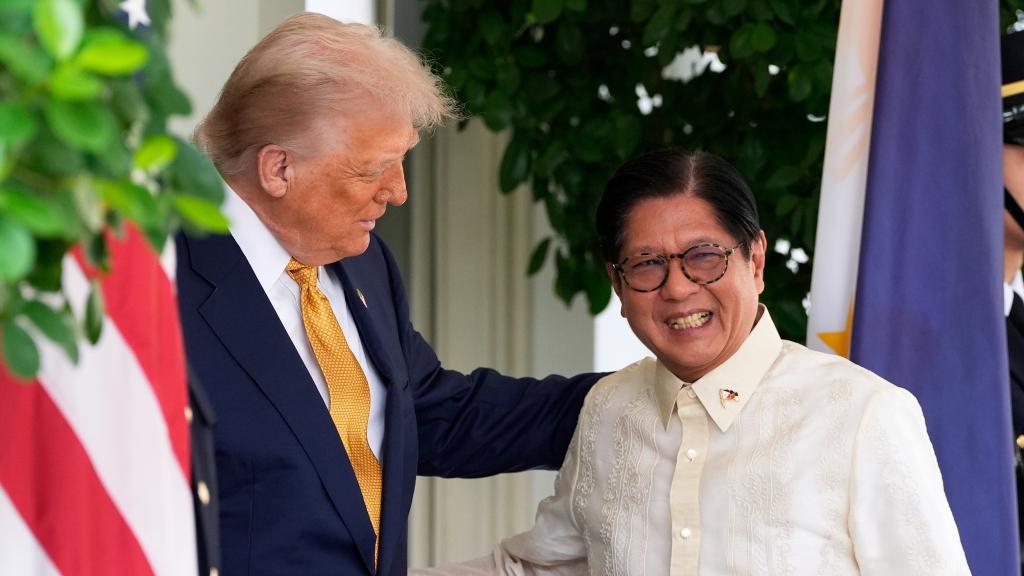
President Bongbong Marcos Jr’s recent meeting with US President Donald Trump in Washington on July 22 was focused on tariffs. However, it also involved military deals that seek to advance US imperialism’s agenda.

The tariff deal

The tariff deal is being hailed by Marcos Jr as a “success,” although several trade and economic experts warn it represents a major setback for the Philippines’ economy and sovereignty.

Until last year, Philippine exports to the US enjoyed 0% duties on electronics and only 5–10% on other goods under the rules of the World Treaty Organization (WTO). Now, under the agreement, there will be no tariffs on US products entering the Philippines, but Philippine exports to the US will be slapped with a 19% tariff (down 1% from Trump’s original 20%).

This is not a win for the country — it is a lopsided deal that rewards US suppliers while punishing Philippine exporters.

To illustrate: in 2024, the Philippines imported US$8.85 billion worth of US goods but exported US$12.12 billion worth of Philippine goods, creating a US$3.27 billion trade surplus. That advantage will vanish under the new tariffs that start on August 1 and which will hit all Philippine exports, including electronics, agriculture, garments, etc, making them uncompetitive against suppliers from Vietnam, Malaysia and Mexico.

Impact on electronics

Electronics is the Philippines main export, comprising 61% of the country’s total. The Philippines has a high import dependency on basic components compared to other Global South countries. Local assembly depends on imported wafers, chips and printed circuit boards (PCBs).

In contrast, manufacturing in South Korea, Taiwan, Malaysia and Thailand involves upstream components (including wafer fabrication, semiconductor foundry), midstream assemblies (advanced PCB production, high-value IC packaging) and finished products (smartphones, TVs, auto electronics, and network equipment).

While imports from the US will get cheaper under 0% tariff, exports will cost 19% more — wiping out cost savings and pushing US buyers to other countries. The deal will destroy our remaining competitiveness, and deepen our dependency as a low-value assembly hub on the lowest rung of global electronics production.

Other Philippine exports to the US market will also suffer from higher costs, leading to lower orders and job losses in rural and industrial sectors. This type of tariff deal showcases the government’s unwillingness and gross negligence towards improving the industrial and trade situation in the country.

The electronics industry (like other industries) in the Philippines receives no protection and support from the state. In the countries mentioned above, governments are involved in ownership, policy support and industrial planning. This allows for the kind of industrial development that we do not have — and will not have unless the state takes over major industries. Instead, we have an extreme neoliberal climate when it comes to industrial development.

Trump’s card

Trump is using the tariff card — he called it his “Liberation Day” plan — to balance the US’ trade deficits. His hidden agenda is to curtail China’s cheaper production of goods that compete with the US. The plan is to provide US finished products that are cheaper than rival companies from other countries, especially China.

US electronic components can freely enter the Philippines without tariff, and can therefore dislodge other suppliers because they are cheaper. Trump’s 0% tariff benefits US companies over rivals, especially from China, which is a global leader in the electronics sector.

On the other hand, under this deal, tariffs will kill the Philippines’ only competitive segment, even if it is mainly assembly, and ensure it remains a dependent assembly hub without its own upstream or midstream manufacturing processes.

The hidden agenda

The media has ignored the other agenda item in Marcos’ meeting with Trump. 

Talks also covered an expanded US–Philippine military partnership, including reaffirming the Mutual Defence Treaty of 1951, continuing the positioning of missiles and US military capabilities in the Philippines, undertaking intelligence sharing and cyber defence operations, and strengthening joint maritime and air exercises. There were also talks on the co-production of unmanned systems (aerial/drones, surface and ground vehicles) for military operations.

The US is pushing this to strengthen military-industrial supply chains in the Asia-Pacific, and to build up forward-production capability near strategic zones such as the South China Sea. This will involve partnerships with US companies (such as Lockheed Martin and General Atomics) and Philippine defence firms (such as the hitherto unknown United Defense Manufacturing Corporation or UDMC) to assemble or partially manufacture systems locally.

The UDMC is a Philippine defence contractor, which has been supplying weapons to the Philippine National Police, the Armed Forces of the Philippines (AFP), Coast Guards, and even international partners. It reportedly supplied weapons to the military dictatorship in Myanmar (Burma) during its campaign of genocide against the Rohingya people in 2017.

The Philippines’ defence modernisation program under the AFP’s Horizon 3 (2023-28) is the final phase of the program aimed at building a domestic defence base to reduce dependence on military imports. The US wants its reliable allies to co-produce and maintain equipment.

Constitutional red flag

Also missing from discussion is the issue of the constitutionality of the tariff deal. 

The deal was negotiated at the executive level without treaty ratification by the Senate or enabling legislation from Congress. Article VI, Section 28 (2) of the Philippine Constitution states: “The Congress may, by law, authorize the President to fix within specified limits, and subject to such limitations and restrictions as it may impose, tariff rates... and other duties or imposts...”

Tariff adjustments are a legislative power delegated to the President only under an enabling law covering tariff and customs code. An executive agreement is usually allowed for minor adjustments or agreements under an existing framework (for example the WTO), but cannot override tariff laws without legal basis.

The US-Philippine tariff deal is not only punitive but raises questions of national interests.

Conclusion

The tariff and military deals underscore the fact that the Marcos Jr government acts in the interests of the US, in the economic and military arenas. The military deal will convert the Philippines into a US proxy in the event of a war with China. 

These deals go against the Philippines’ interests and sovereignty.

A State of the Nation Address is scheduled for July 28. We should raise the US tariff and military deal as issues that demonstrate the government’s culpability in the worsening state of the country through its decision to convert us into an economic and military puppet of US imperialism.

Sonny Melencio is the Chairperson of Partido Lakas ng Masa.