Tuesday, August 05, 2025

Is identity-based rhetoric fuelling anti-immigrant violence in Europe?

Anti-immigration protests across England, Northern Ireland, Spain and Poland have grown more frequent – and in some cases violent – as far-right groups gain influence in communities grappling with housing shortages, unemployment and inequality.


Issued on: 04/08/2025 - RFI

Police scuffle with protesters during a demonstration outside the Britannia Hotel in Canary Wharf, London on 3 August. AFP - JUSTIN TALLIS

In England, the memory of last summer’s riots in Southport still lingers. The unrest began after three young girls were stabbed to death at a dance class in the seaside town on 19 July 2024.

The attack sparked violent protests that quickly spread to Northern Ireland, with riots breaking out in over a dozen towns and cities across the two nations of the United Kingdom.

Far-right activists were blamed for fuelling tensions by spreading false claims that the attacker was a Muslim asylum seeker.

The unrest, which lasted several days, saw far-right rioters attack police, shops, hotels housing asylum seekers and mosques, with hundreds of participants subsequently arrested and charged.

A year later, the same pattern is repeating. On Sunday 3 August, clashes broke out at protests outside hotels housing asylum seekers in Epping, Manchester, Newcastle and London. Far-right demonstrators clashed with anti-racism groups and local residents.

 Fifteen people were arrested.

In one such incident in Epping, a London suburb, anti-racism and refugee aid groups and residents opposed to the accommodation of asylum seekers in a local hotel had called for simultaneous rallies on Sunday, 3 August. Hundreds gathered from both sides under heavy police surveillance, following tensions at the site of the hotel the previous week.

On Saturday, a rally was held outside another hotel in Bowthorpe, near Norwich, according to UK media reports. On 21 July, several dozen people had demonstrated in Diss, in the east of England, to demand the closure of another hotel also housing asylum seekers.

UK fears new summer of unrest, year after Southport riots

A few weeks prior, on 9 June, the town of Ballymena in Northern Ireland erupted when two teenagers of Romanian origin were arrested on suspicion of sexually assaulting a young girl.

Foreign residents of the town were forced to hide in wardrobes and attics to escape the rioters, with some hanging signs outside their homes declaring that they were Filipino, not Eastern European. Some housing associations warned residents to leave their homes and secure their property.

Graffiti seen in Ballymena, Northern Ireland, where riots followed the arrest of two teenagers who requested a Romanian interpreter when they appeared in court. AFP - PAUL FAITH

A month later, on 9 July, similar scenes played out in Spain after a 68-year-old man was attacked in the town of Torre Pacheco in Murcia, in the southwest.

Rallies held on 19 July in more than 80 towns and cities in Poland on 19 July remained peaceful, but saw protesters marching under "Stop immigration" banners in protest at Europe-wide policies.

Poland’s border clampdown highlights EU tensions as leaders gather in London

"We are witnessing a deliberate erosion of the fundamental principles of democratic coexistence," according to Gemma Pinyol Jiménez, a professor at the faculty of political science and sociology at the Autonomous University of Barcelona.

To continue to regard these demonstrations as isolated events would be "to run the risk of missing the crux of the problem" – namely "the growing normalisation of hate speech and xenophobia," she said.

The chicken or the egg?


Identity-based rhetoric, generally promoted by the far right, has been present in Europe since the beginning of the twentieth century. But the return of frequent, large-scale and often violent demonstrations signals a resurgence in the popularity of these ideas. But are they the root cause of the riots, or a catalyst for pre-existing tensions?

According to Pinyol Jiménez, "growing inequality, economic anxiety and social fragmentation" are among the reasons why those affected see identity-based discourse as the answer to their situation.

She added that although they are not the only reason for the re-emergence of xenophobic violence, these positions "foster fear, advocate exclusion and give legitimacy to violent action". The migrant takes on the role of scapegoat and becomes "a danger rather than a human being".

"High housing prices, unemployment or precarious working conditions" make it easy to "blame immigrants for all the ills of society", says Zenia Hellgren, a sociologist at Barcelona's public university and a member of an interdisciplinary research group on immigration.

In the UK, the youth unemployment rate is around 14 percent, while in Spain it is higher than 24 percent. Both countries are also experiencing a major housing crisis.

From Washington to Warsaw: how MAGA influence is reshaping Europe’s far right

In the UK, successive governments have kept the idea of a migratory crisis smouldering for years, with far-right figures fanning the flames by playing on collective fears.

Islamophobic influencer Stephen Yaxley-Lennon – known as Tommy Robinson – has regularly used his X (formerly Twitter) account, with its 1.3 million followers, to declare his support for those demonstrating outside what he calls "migrant hotels" – although he is yet to make an appearance at the protests.

Nigel Farage, leader of the far-right Reform UK party, made his voice heard in the Epping protests by reposting misinformation about the police busing in counter-demonstrators.

The role of sectarianism

In Northern Ireland, the sectarianism that is an integral party of the country's history has a significant part to play in anti-immigration rhetoric, according to Jack Crangle, professor of modern history at Queen's University Belfast.

The hostility between Catholics and Protestants – republicans who identify as Irish and want to see Northern Ireland reunited with the Republic of Ireland, and loyalists who identify as British and support Northern Ireland remaining part of the UK, respectively – manifested as the 30-year ethno-religious conflict known as the Troubles, between the late 1960s and 1998.

While tensions between the two communities remain, this hostility "has gradually been directed towards a new 'Other' as immigration to Northern Ireland has increased" Crangle observed in an article entitled: Northern Ireland has a long history of immigration and diversity. And of racism.

The increase in anti-immigration and xenophobic rhetoric and activity on the part of certain loyalist movements, for whom Britishness is integral to their identity, has been documented for several years now.

On 10 July, a bonfire erected in the village of Moygashel as part of the annual loyalist celebrations of 12 July (commemorating the 1690 Battle of the Boyne in which Protestant King William of Orange defeated Catholic King James II) featured a boat full of black-skinned mannequins at the top of the pyre, accompanied by a sign reading "stop the boats".

Anti-migrant riots followed the assault of an elderly man by unknown persons in Torre Pacheco, Spain, 15 July. AFP - STRINGER

Historical imagery

In Spain too, history is invoked to support the arguments of those opposed to immigration.

Since its rise to prominence in 2019, the country's far-right Vox party has drawn on "the imagery of the Reconquista," according to Carole Viñals, senior lecturer at the University of Lille and a specialist in contemporary Spain – referring to the period from 718-1492 in which Christian kingdoms in the Iberian Peninsula fought to reclaim territories previously conquered by Muslim forces.

"They reject any attack on Spain's territorial unity," Viñals continued, "which [they say] is jeopardised by the influx of immigrants."

In the 2023 regional elections, Vox doubled its national score of 12.3 percent in the province of Murcia, reaching 26 percent in the municipality of Torre Pacheco – scene of July's unrest. The president of Vox in the region, José Ángel Antelo, is currently under investigation for inciting racial hatred in connection with the riots.

Pinyol Jiménez believes the violence observed in various parts of Europe since last summer needs to be viewed as a whole.

While she stresses the need to clamp down on hate speech, she says that above all European governments need to strengthen the welfare state, to respond to "the real needs of the population", if they want to see the "national preference" rhetoric brandished by the far right extinguished once and for all.

This article has been adapted from the original version in French.


No bones about it as star chef sets vegan milestone in French fine dining

Celebrated French chef Alain Passard has become the first three Michelin star chef in France to switch to an entirely plant-based menu, opening a new chapter in the world of luxury dining.


Issued on: 02/08/2025 - RFI
\
French chef Alain Passard poses in his restaurant L'Arpege in Paris, 22 July, 2025. For the first time in a three-star restaurant in France, Alain Passard is now serving exclusively plant-based cuisine, a sign of a still discreet but real turning point in haute gastronomy. AFP - BERTRAND GUAY

Since 21 July, 68-year-old chef Alain Passard has stopped serving meat, fish, dairy products and eggs at L'Arpège, his restaurant in the French capital's chic seventh district that he has run for nearly 40 years.

The only exception is honey that comes from the restaurateur's own beehives.

Passard said the switch had been in the pipeline for a year.

"There's light in this cuisine," he told AFP. "There are taste sensations that I've never experienced anywhere else."

L'Arpège used to be known as one of the leading rotisseries in Paris. It earned three Michelin stars in 1996, and has held the distinction ever since.

In 2001, Passard caused a stir in the rarefied world of French cuisine by dropping red meat from his menu and saying he would focus more on vegetables grown in his gardens.

The shift made him one of the first ambassadors of plant-based cuisine.
Culinary challenge

While Passard's new quest is motivated by environmental concerns, it is above all a culinary challenge.

The restaurant's updated menu includes mesclun praline with roasted almonds and melon carpaccio. Lunch costs €260.

Passard has no plans to become a vegan militant himself.

"I still eat a little poultry and fish," he said. "But I'm more comfortable with plants. They allow me to learn."

Fellow French chef Claire Vallée knows from experience that Passard enjoys a challenge.

"It requires a lot more preparation, knowledge and research," Vallée said of plant-based dishes. "It's quite a colossal task."

French chef Claire Vallée’s ONA is first vegan restaurant to win Michelin star

In 2016, she launched ONA – which stands for Origine Non Animale ("Non-Animal Origin") – thanks to crowdfunding from supporters and a loan from a green bank.

And in 2021, her vegan restaurant in southwest France won a Michelin star, the first for an establishment serving only animal-free products in France.The establishment closed in 2022, and the 45-year-old chef went on to open several pop-up restaurants.

Since then, no other French restaurant serving only animal-free products has been awarded a Michelin star.

'A major event'

Internationally, vegan haute cuisine is rare.


Eleven Madison Park in New York has kept its three stars after becoming exclusively vegan in 2021.

In the Netherlands, De Nieuwe Winkel's plant-based menu has earned it two Michelin stars.

Laurent Guez, a food critic for French newspaper Le Parisien and business daily Les Echos, said Passard's announcement was "a major event".

But he also warned that not a lot of chefs could excel in the art of high-end plant-based gastronomy.

"It's exceptional cuisine that not everyone can allow themselves to launch into," he said.

Michelin Guide unveils new stars for 68 restaurants in France

Michelin guide international director Gwendal Poullennec said he was "delighted" with the transition at L'Arpège, describing it as a "positive approach".

"We will continue to follow the evolution of L'Arpège, remaining faithful to our criteria," he told French news agency AFP.

Passard has given himself two years to take his kitchen skills to a new level.

Is he worried about losing his three stars?

"I've never thought about that," he said. "We're going to have to deliver. If we can maintain this level of quality, then I'm extremely confident."

(with AFP)
Gabon forest cave reveals clues about prehistoric central Africa

Lastourville (AFP) – In Gabon's sprawling forest, archaeologists dig for ancient clues that could unlock the secrets of how prehistoric humans lived and interacted in the changing landscape of central Africa.


Issued on: 05/08/2025 - RFI

Archaeologist Richard Oslisly leads a dig at Youmbidi Cave in eastern Gabon where unearthed vestiges of prehistoric human activity offer insight into central Africa's past. © Nao Mukadi / AFP

Two billion years ago, the eastern Gabonese region of Lastourville was covered by a vast ocean.

But that has long given way to dense forest and dolomite cliffs dotted with caves, within which scientists have unearthed traces of human life dating back to 25,000 years BC.

Off the beaten track even for archaeologists, the Youmbidi rock shelter, a cavern typical of those chosen by prehistoric humans to set up their homes, is the focus for French geoarchaeologist Richard Oslisly's team.

Among their finds is a stone tool from the Pleistocene era which could have been used for cutting or making fibres © Léa NKAMLEUN FOSSO / AFP

Among their finds: a stone tool which could have been used for cutting or making fibres dating to before 10,000 BC.

An arrowhead has also been unearthed, as has a collection of dolomite, quartz and jasper shards, cut up to 10,000 years ago by the cave's inhabitants.

World’s oldest prehistoric burial site discovered in South Africa

"The vast majority of research in Africa has taken place in open landscapes such as the Sahara, Sahel or Egypt," said Oslisly, who has spent 45 years working in central Africa.

"They said to me 'there's nothing in the forest' (but) I took up the challenge of finding out what was happening there," he added.

"We realise there is a very close relationship between man and nature in these forests, where people have lived for a very long time," Oslisly said.

Scientists have recorded 12,000 years of continuous human habitation in the Youmbidi cave © Nao Mukadi / AFP

The Youmbidi cave – where scientists have recorded 12,000 years of continuous human habitation – is an enticing spot for the archeologists.

"We don't know at all how these people lived, what their way of life was, what their names were, what their languages were," said Geoffroy de Saulieu from France's IRD Research Institute for Development.

"Our research will help us to know a little more," he added.

French cave findings suggest Europe’s first Homo sapiens arrived earlier than thought
Jigsaw puzzle

After a month of digging and careful sorting of every stone, charcoal remnant, bone and other treasure buried below the cave, the team has elements to help decipher the past.

Gabon's Lastourville region has dense forest and dolomite cliffs dotted with caves, within which scientists have unearthed traces of human life dating back to 25,000 years BC © Nao Mukadi / AFP


De Saulieu said it was like a jigsaw puzzle.

"You have to... gather the smallest clues, place them end to end to gradually reconstruct a whole universe that has disappeared and which is, nevertheless, at the origin of the way of life in central Africa today," said the expert, currently attached to the National Agency of National Parks of Gabon.

One of the oldest bits of pottery found in central Africa, which dated to more than 6,500 years ago, is among this year's finds.

Human-looking teeth that could allow DNA to be extracted in what would prove a significant leap in research have also excited archaeologists.

And, like all the artefacts, a bead likely made between 3,300 and 4,900 years ago from a snail shell also offers precious insight as a "very humble but beautiful witness" of the epoch in question.

A bead made from the shell of a giant African land is snail is among the discoveries that have excited archaeologists © Léa NKAMLEUN FOSSO / AFP

Dispelling stereotypical images of prehistoric Man, it suggests people had "real customs, a real civilisation and art of living," de Saulieu said.

The pottery "shows that these societies weren't immobile, they had launched themselves into technical innovations", he added.

The discoveries fan his fascination for the richness of "the social life which existed in the region's forests".

Archaeologists announce major Stone Age discovery in Morocco

Resilience

Glimpses into an ancient lost world can also be useful for tackling present-day challenges, the experts said.

During the Holocene period which dates back the past 12,000 years, "central Africa has experienced very significant changes in climate, hydrology and vegetation," said paleoclimatologist Yannick Garcin, also from the IRD and involved in the Youmbidi dig.

The hope is that the cave will unlock an understanding of "the resilience of human populations in the past and how they were able to adapt to climate changes that could have been drastic", he said.

Central Africa for that reason "deserves major development in terms of research", Oslisly argued.

The Gabon forest in central Africa was an unusual site for an archaeology dig, as most research in Africa is focused on the Sahara, Sahel or Egypt, says geoarchaeologist Richard Oslisly © Nao Mukadi / AFP


Understanding what happened in prehistoric times can help scientists today react to modern-day issues, he added.

"Good studies on the relationship between Man and the environment in the past will allow us to react better to the environmental changes that are ahead of us," he said.

Seven all-American products that are actually 'Made in Europe', set to be hit by US tariffs


Copyright AP Photo

By Una Hajdari
Published on 31/07/2025 - 


Trump’s tariffs are aimed at ostensibly boosting US production and fostering a “local for locals” sensibility. Except, it turns out that several American product staples are actually... "Made in Europe"?


US President Donald Trump has said that his tariff regime, which effectively places a higher tax on imports, aims to put “America first again, folks” and force companies to either move back or retain production inside the country.

Specifically, in an address to a joint session of Congress in March of this year, he said: “If you don’t make your product in America under the Trump administration you will pay a tariff — and in some cases a rather large one.”

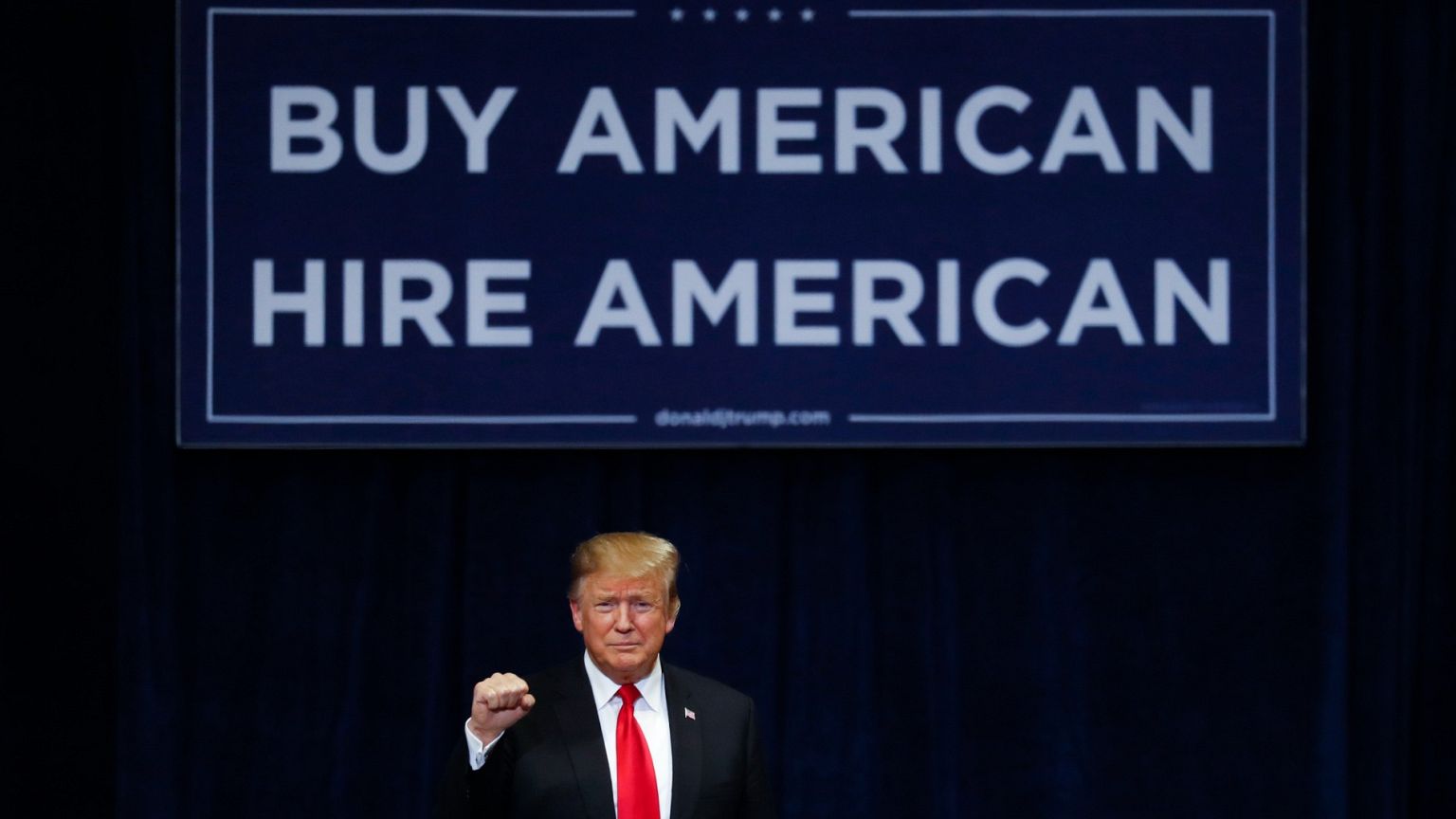
On Inauguration Day in January, he drove the message home with a blunt post on X: “Buy American and hire American."

Yet a lot of the products Americans might have grown accustomed to, and that have a strong brand identity in the US, are currently made in Europe.

This is particularly true for products that are produced by large multinational companies, who use the benefits of globalised markets — and in the EU’s case, previously free trade with the US — to move production elsewhere.

Related

The tariff threat is forcing some of America’s most familiar brands to choose between absorbing the tariff costs themselves and cutting into their own profits, passing them onto US consumers or uprooting sophisticated EU plants that took decades to build.

For now, most are stockpiling products in the US and tweaking prices while considering contingency plans for partial reshoring rather than shutting down their EU production lines.

Ahead of the tariffs going into force on Friday, we have compiled a list of all-American products that are entirely made in the EU and will be subject to the 15% levy that will come into force following the deal struck last weekend in Scotland between Trump and European Commission President Ursula von der Leyen.


1. John Deere 6R & 6M tractors

Made in: Mannheim, Germany

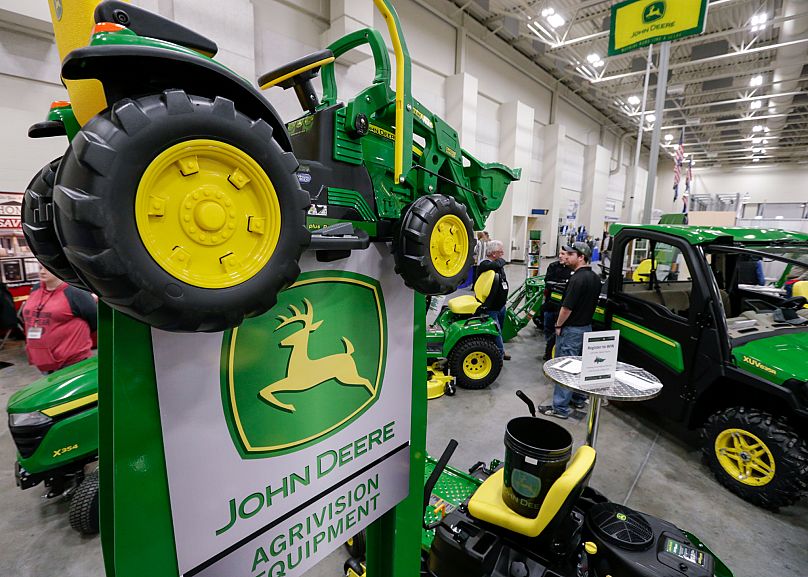
John Deere products, including a toy tractor on the sign, are on display at a home and garden trade show in Council Bluffs, Iowa. February 2018 Copyright 2018 The Associated Press. All rights reserved

In 2009, country crooner and Trump supporter Jason Aldean wrote a number-one hit song called Big Green Tractor, dedicated to the widely recognisable green and yellow John Deere — a staple of the US farm belt.

Trump is definitely aware that a big chunk of these agricultural workhorses are produced abroad since he threatened to slap the company with a 200% tariff during the election campaign in 2024 if it moved part of its production to Mexico.

The plant in Mannheim is the biggest Deere plant outside the US and even offers tours — if you are so inclined.


2. Viagra


Made in: Ringaskiddy, County Cork, Ireland

Both brand-name Viagra and Pfizer's generic version, Sildenafil citrate, are produced in Ireland. AP Photo 2017

Pfizer’s plant in County Cork was built in 1969 and has produced Viagra there since 1998. It still churns out nearly the entire global supply of trademarked Viagra pills and generic sildenafil.

Pharmaceuticals account for the overwhelming majority of exports from Ireland to the US, with some estimates claiming they encompass around 60%.

In February, the export volume went up by 450% as companies stockpiled and front-loaded products in anticipation of tariffs.


3. Ray-Ban Wayfarers and Aviators

Made in: Italy

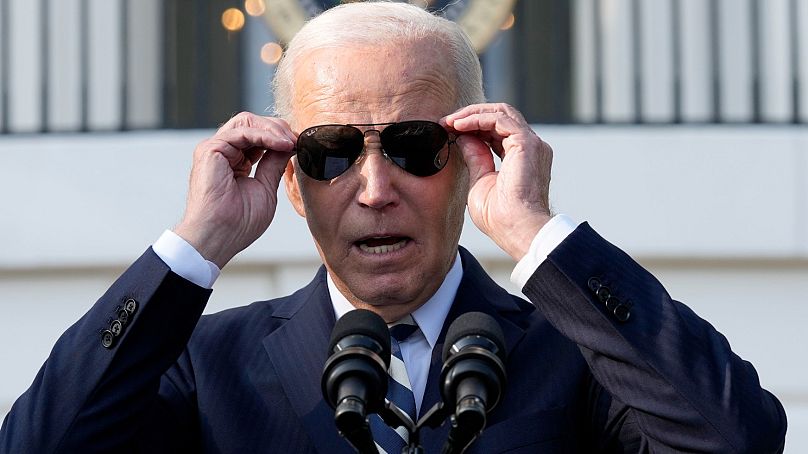
President Joe Biden puts on his Ray-Ban sunglasses as he speaks from the South Lawn of the White House in Washington in September 2024 AP Photo

While Ray-Ban Aviators were the preferred brand of Trump's much-maligned predecessor Joe Biden, Franco-Italian sunglasses giant EssilorLuxottica is the global industry leader in sunglasses production, and about half of its products — including products sold through or by Sunglasses Hut, Oakley and Target Optical — are sold in the US.

Ray-Bans were invented by Colonel John Macready of the US Army Air Corps to stop pilots’ eyes from frying at high altitude.

Would James Dean's trademark swagger make girls swoon if he did not peer at them from above the frames of his Wayfarers? Risky Business would be an entirely different movie if sock-sliding Tom Cruise was not donning black Wayfarers while doing it.

And neither would Cruise's other iconic role in Top Gun, where he wore Aviators.


4. Gillette razor blades


Made in: Łódź, Poland

American 100m record holder Tyson Gay is seen shaving his beard at a Gillette event in Boston in June 2012. AP Photo

Procter & Gamble claims that their Łódź cluster is the largest razor factory in the world, shipping to more than 100 countries.

The Polish facility does not produce exclusively for the US and exports to other countries as well, but the Procter & Gamble CEO said prices for US goods would increase as a result of the tariffs.

Disposable razors were invented in Boston by King C Gillette and popularised when the US Army issued every soldier with a Gillette razor in 1917, cementing their image as a staple of every American home.


5. Botox

Made in: Westport, County Mayo, Ireland

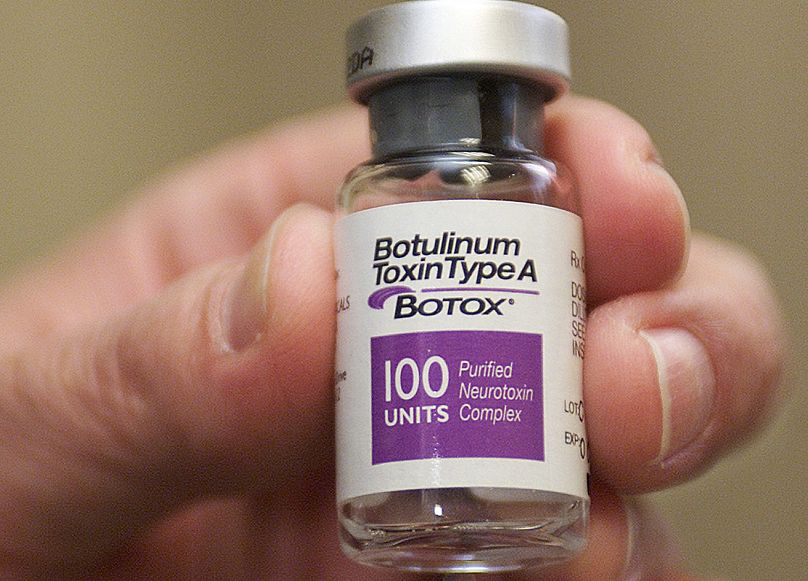
An old bottle of Botox produced by Allergan, before the company was bought by AbbVie. Damian Dovarganes/AP

The Irish Times claims the AbbVie campus in Westport produces the "world's entire supply" of Botox.

Invented in Los Angeles and beloved by glamorous Hollywood elites, it has become a staple of those wanting to postpone ageing and is not bothered by the frozen forehead look.

The US botox market is valued at around $4.8 million (€4.2m). AbbVie have announced a stateside investment to offset losses if tariffs stick.


6. Polaroid instant film

Made in: Enschede, Netherlands

Vintage Polaroid cameras on display in Boston in 2001. All Polaroid film cartridges are now produced in the Netherlands. PATRICIA MCDONNELL/AP2001

The only Polaroid film factory in the world is found in the Netherlands. Polaroids were a cult Cold War-era product in the US, used by families across the country to take instant snapshots of birthday parties and barbecues, as well as by artists such as Andy Warhol.

When the US company announced it was going to stop producing the film in 2008, enthusiasts stepped in and made sure a factory in the Netherlands would keep production going.

While these days most people get the "Polaroid" effect via built-in filters on their smartphones, hobbyists, hipsters and Gen Z-ers have reinvigorated the market which was valued at $300 million (€262.8m) in 2024.

7. Nicorette gum

Made in: Helsingborg, Sweden

Nicorette was the first anti-smoking product to sponsor a NASCAR team, as seen in this archive photo from 2005. AP Photo

In 1996, the FDA switched Nicorette gum — a chewing product laced with nicotine — from a prescription product to an over-the-counter staple, which has since become a staple of US drugstore aisles.

The product is familiar to anyone who saw their parents try to kick their smoking habit as it became increasingly uncool and impossible to do in American public spaces. These days, the company is promoting its Quikmist spray as a means to quit vaping.

To be fair, the Nicorette gum was invented in Sweden, but that certainly does not fade its mass-market appeal in the US.

Every pack of Nicorette still rolls off lines in Sweden but Haleon is scrambling to pilot a blister-pack in Georgia to protect its grip on the nicotine-gum aisle.


Vatican strikes solar farm deal to become the world’s first carbon neutral state

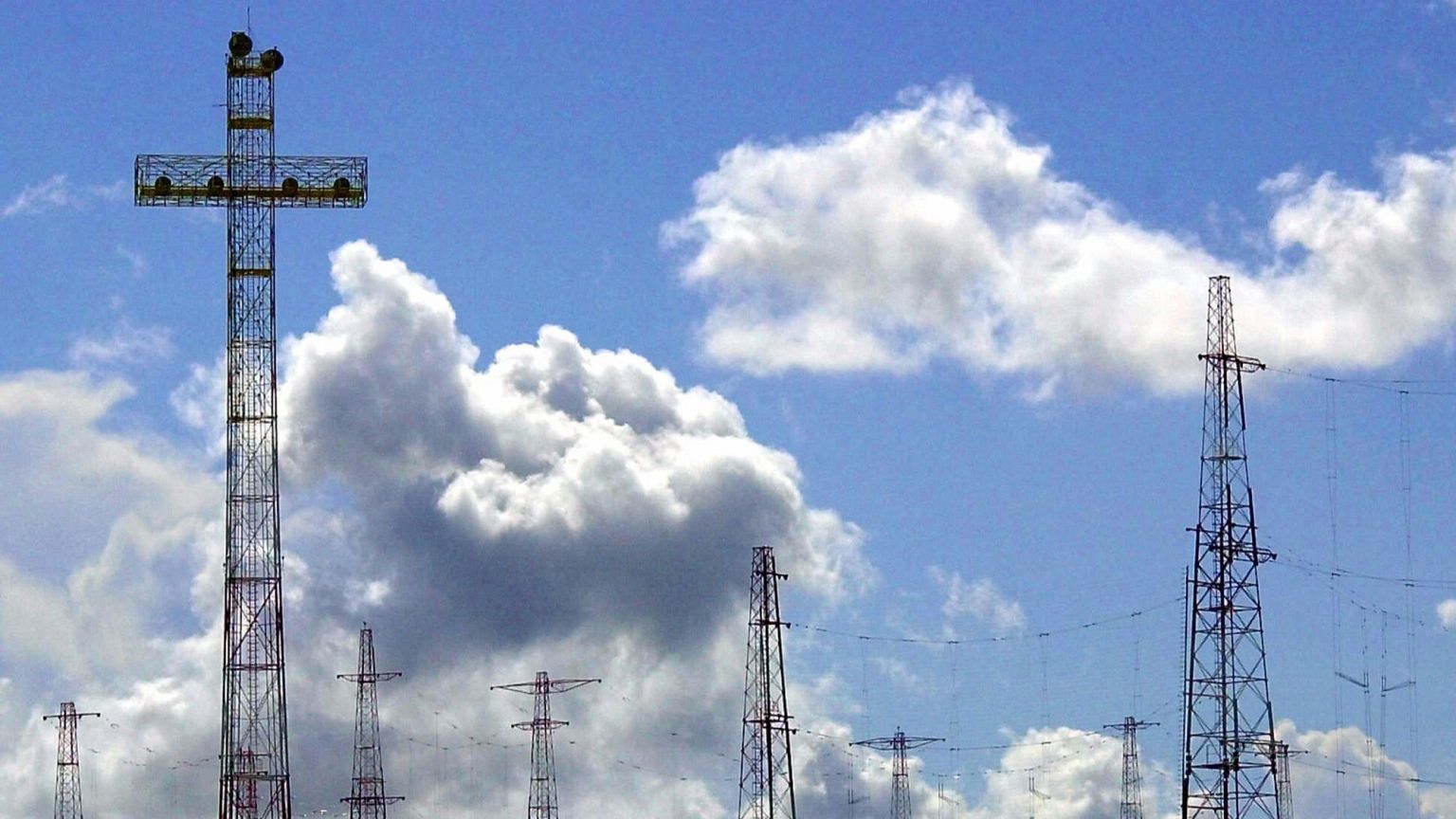
A view of the antennas of the Vatican Radio, which beams the Pope's words around the world, is seen in Santa Maria di Galeria, on the outskirts of Rome.
Copyright AP Photo/ Gregorio Borgia, File


By Nicole Winfield with AP
Published on 

A controversial radio site north of Rome is set to become a solar farm as the Vatican pushes its green transition.

Italy agreed Thursday to a Vatican plan to turn a 430-hectare field north of Rome, once the source of controversy between the two, into a vast solar farm. The Holy See hopes it will generate enough electricity to meet its needs and turn Vatican City into the world’s first carbon-neutral state.

The agreement stipulates that the development of the Santa Maria Galeria site will preserve the agricultural use of the land and minimise the environmental impact on the territory, according to a Vatican statement.

Further details weren’t released, but the Vatican will be exempt from paying Italian taxes to import the solar panels and won’t benefit from the financial incentives that Italians enjoy when they go solar.

Italy, for its part, can use the field in its accounting for reaching European Union clean energy targets. Any excess electricity generated by the farm beyond the Vatican’s needs would be given to the local community, officials said, speaking on condition of anonymity because the agreement was not public.

Vatican officials have estimated it will cost under €100 million to develop the solar farm, and that once it is approved by the Italian parliament, the contracts to do the work could be put up for bids.

Vatican foreign minister Archbishop Paul Gallagher signed the agreement with Italy’s ambassador to the Holy See, Francesco Di Nitto.

The Italian parliament must approve the arrangement since it has financial implications for the territory, which holds extraterritorial status in Italy.

Where will the Vatican's solar farm be located?

The Santa Maria Galeria site has long been the source of controversy because of electromagnetic waves emitted by Vatican Radio towers located there since the 1950s. The once-rural site, some 35 kilometres north of Rome is dominated by two dozen short- and medium-wave radio antennae that transmit news from the Catholic Church in dozens of languages around the globe.

Over the years, as the area became more developed, residents began complaining of health problems, including instances of childhood leukaemia, which they blamed on the electromagnetic waves generated by the towers. The Vatican denied there was any causal link, but cut back the transmissions.

In the 1990s, at the height of the controversy over the radio towers, residents sued Vatican Radio officials, claiming the emissions exceeded the Italian legal limit, but the court cleared the transmitter. In 2012, the Vatican announced it was cutting in half the hours of transmission from the site, not because of health concerns but because of cost-saving technological advances in internet broadcasting

Pope Francis last year asked the Vatican to study developing the area into a vast solar farm, hoping to put into practice his preaching about the need to transition away from fossil fuels and find clean, carbon-neutral energy sources.

Pope Leo XIV visited the site in June and affirmed that he intended to see Francis’ vision through. Leo has strongly taken up Francis' ecological mantle, recently using a new set of prayers and readings inspired by Pope Francis’ environmental legacy.


How Elon Musk, a social media powerhouse, boosted hard-right figures in Europe

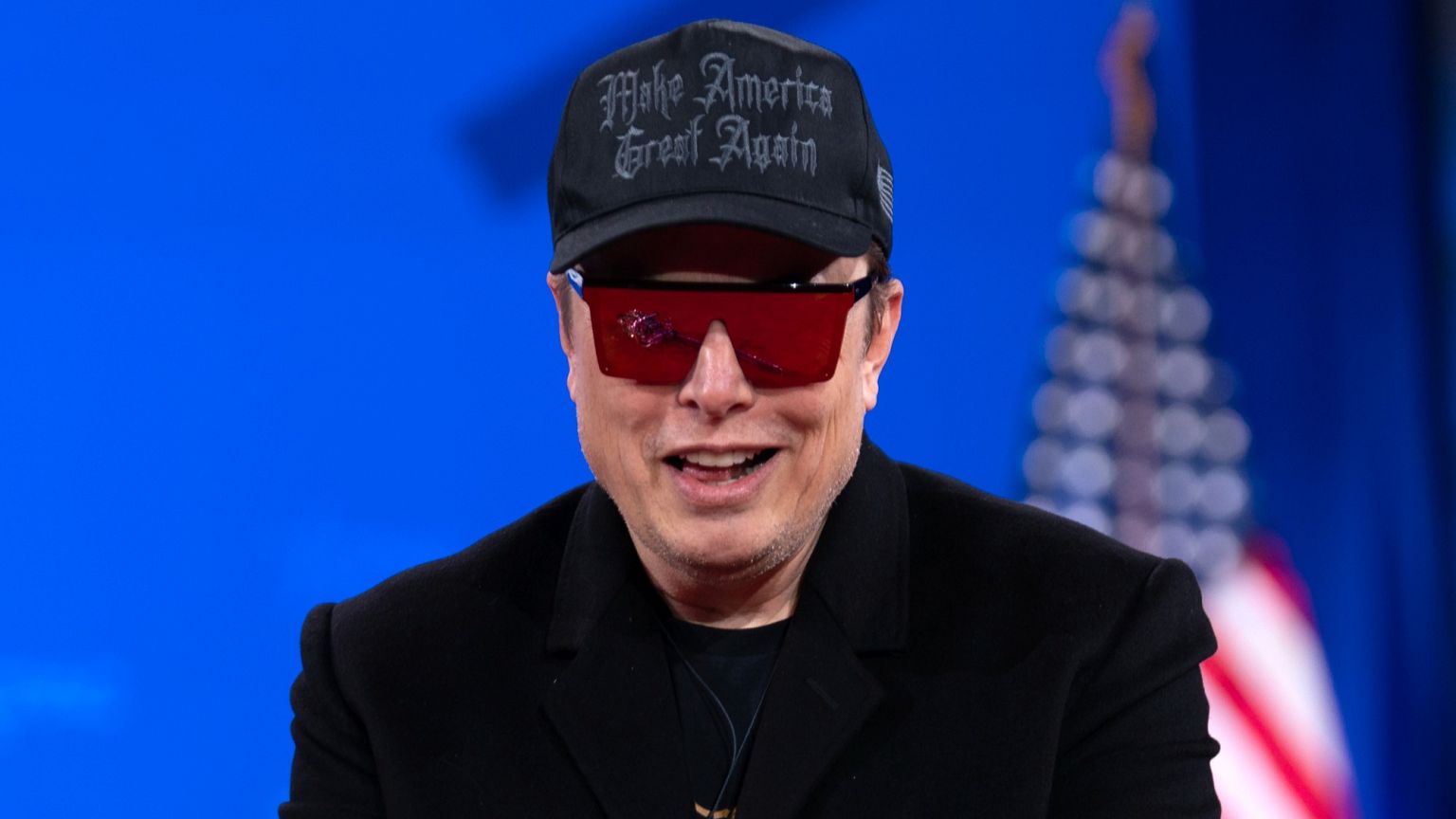
Elon Musk speaks at a conservative political convention in the US on Feb. 20, 2025.
Copyright Jose Luis Magana/AP Photo


By Euronews with AP
Published on 

Musk is a kingmaker on the platform he acquired in 2022, and European political figures have taken note.

Hard-right commentators, politicians, and activists in Europe have uncovered a secret to expanding their influence: engaging with Elon Musk.

Musk is a kingmaker on his social media platform X, formerly known as Twitter, which he acquired in 2022 for $44 billion (€38.2 billion). He has used his influence to cultivate hard-right politicians and insurgent activists across Europe.

A retweet or reply from Musk can lead to millions of views and tens of thousands of new followers, according to an Associated Press analysis of public data.

That fact has not been lost on influencers who have tagged Musk persistently, seeking a reply or a retweet. It has also fueled concerns in Europe about foreign meddling – not from Russia or China, but from the United States.

“Every alarm bell needs to ring,” Christel Schaldemose, a vice president of the European Parliament who works on electoral interference and digital regulation, told AP.

The Associated Press analysed more than 20,000 posts, which were compiled by Bright Data, over a three-year period from a sample of 11 European figures who had significant interactions with Musk and frequently promoted a hard-right political or social agenda.

These case studies are not meant to be representative of a broad universe; rather they showcase the ways in which Musk’s engagement can have an impact on local influencers that share his views.

Musk has sweeping power to direct attention on X

Since acquiring Twitter in October 2022, Elon Musk’s followers have more than doubled, to over 220 million. No other large account has shown such high or consistent growth.

The result: If Musk’s X account is his megaphone, it has gotten a lot bigger since he took over – a change that has global implications.

The accounts Musk has been promoting are part of a growing global alliance of nationalistic parties and individuals united in common cause to halt migration, overturn progressive policies, and promote an absolutist vision of free speech, which has rattled the foundation of a trans-Atlantic bond that guided US and European relations for over eight decades.

Several of the accounts AP analysed belong to people who have faced allegations of illegal behavior in their own countries.

Tommy Robinson, an anti-immigrant agitator in the United Kingdom, was sentenced in October to 18 months in prison for violating a court order blocking him from making libelous allegations against a Syrian refugee.

Bjoern Hoecke, a politician from Germany’s Alternative for Deutschland (AfD) party, was convicted last year of knowingly using a Nazi slogan in a speech.

Italian vice premier Matteo Salvini was acquitted in December of allegations he illegally detained 100 migrants aboard a humanitarian rescue ship

Among the others examined by AP: Alice Weidel, who helped lead Germany’s AfD party to its best electoral showing this year; Eva Vlaardingerbroek, a Dutch influencer known as the “shieldmaiden of the far-right”; Naomi Seibt, a German activist dubbed the “anti-Greta Thunberg” now living in what amounts to political exile in the US; Rubén Pulido and Foro Madrid, both associated with Spain’s populist Vox party; and Fidias Panayioutou, a politician from Cyprus who has also advocated for Musk’s companies.

These accounts collectively gained roughly five million followers from the time Musk took over Twitter in October 2022 through January of this year.

Most saw triple-digit percentage increases in their followers – as high as 920 per cent, or in one case of a tiny account exploding over that time, topping 6,000 per cent.

Even some accounts that grew more steadily on their own saw their follower counts sharply begin rising once Musk started interacting with them. Similarly, on days Musk interacted with a post, the number of views the account got soared – in most cases, accruing two to four times as many views, with a few seeing boosts 30 or 40 times their normal daily viewership.

More established players in Musk’s orbit – like Italian Prime Minister Giorgia Meloni, whose ruling Brothers of Italy party has neo-fascist roots – benefit less when Musk interacts with them on X, AP found.

Attention seekers know that getting Musk to engage can be transformative

Musk’s dominance creates a strong incentive for people to get Musk to engage with their content.

Naomi Seibt, a German climate skeptic, pinged Musk nearly 600 times over the past three years. Musk finally engaged in June 2024, when he asked her to explain why the AfD party is so controversial in Germany.

Since then, Musk has replied to, quoted or tagged Seibt more than 50 times, and her followers have grown by more than 320,000 since Musk took over the platform. On days Musk interacted with Seibt, her posts, on average, got 2.6 times as many views

“I didn’t intentionally ‘invade’ Elon’s algorithm,” Seibt told AP. “Obviously Elon has a lot of influence and can help share a message even with those who are usually glued to the legacy media, particularly in Germany”.

Musk’s online influence has real-world political and financial impact

Alice Weidel, who helps lead the AfD party, saw her daily audience surge from 230,000 to 2.2 million on days Musk interacted with her posts on X. After Musk hosted a livestream with Weidel on X, vice president JD Vance broke protocol and met her in Munich.

Weidel’s party, which is fighting a lawsuit to block the German government’s decision to designate it as an extremist group, went on to secure its best electoral showing ever.

Musk has also used X to advocate for the leader of Italy’s hard-right League party, Matteo Salvini. On days Musk interacted with Salvini’s account, average views were more than four times higher than usual.

Now serving as vice premier, Salvini has urged his government to move ahead with controversial contracts for Starlink and pushed back against European efforts to regulate content on X.

And Musk has a friend in Brussels: Fidias Panayiotou – a 25-year-old social media influencer from Cyprus. Before winning a surprise seat in the European Parliament last year, the Cypriot spent weeks on a quest to get Elon Musk to hug him.

In January 2023, his wish came true. Their embrace went viral.

Since taking office, Panayiotou has praised X on the floor of the European Parliament, pushed back against regulations that impact the platform, and credited Musk with sparking his call to fire 80 per cent of EU bureaucrats.

Musk, evidently, was pleased. “Vote for Fidias,” he wrote on X. “He is smart, super high energy and genuinely cares about you!”

The endorsement has been viewed 11.5 million times.

These hyper-realistic AI generated news anchors are fooling the internet


Copyright Images sourced from social media

By Estelle Nilsson-Julien
Published on 01/08/2025 

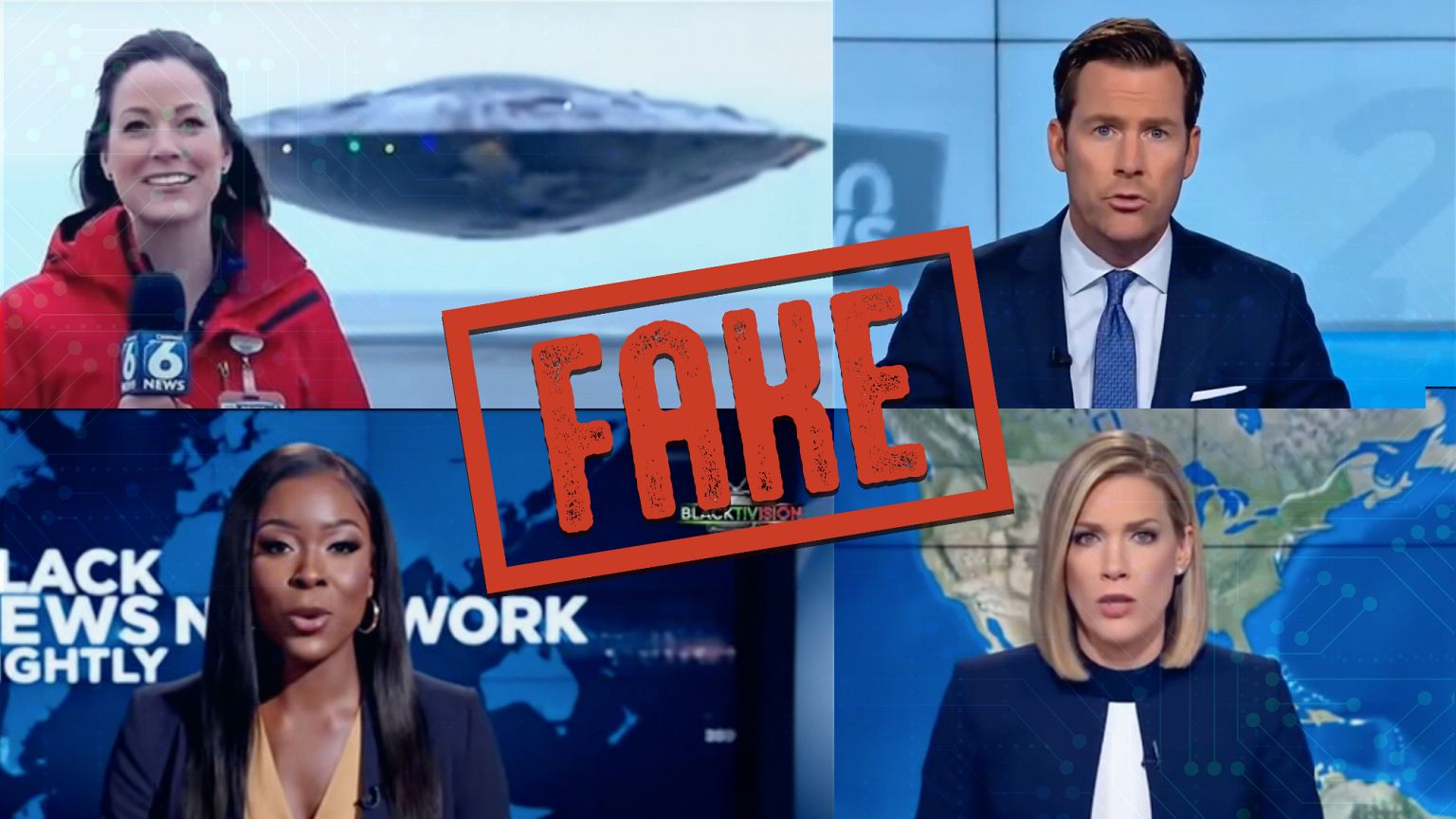
Anchors who appear to have the same enthusiasm, energy and diction as real newsreaders are actually AI-generated. What's more, they are spouting fake news.

"In a stunning move, Canada has declared war on the US", says a blonde American news anchor, in a video which has spread across social media from TikTok to X.

Looking straight into the camera, the anchor continues, "Let's go to Joe Braxton, who's live at the border."

But those who make it to the seven-second mark of the video bear the most chance of edging closer to the truth.
AI anchors on social media TikTok

"I am currently at the border, but there is no war", says the reporter before revealing, "Mum, Dad, I know this may look real, but it's all AI."

Although the anchors in these clips appear to display the same enthusiasm, energy and diction as many authentic newsreaders, they are generated by artificial intelligence (AI).

Many of these videos are created with Veo 3, Google's AI video generation software, which allows users to create advanced eight-second videos, syncing audio and video seamlessly.

Through this technology, users are prompting this software to make fake news anchors say crazy things.

How can you spot that these videos are fake?

A number of pointers can help online users decipher whether a video with a legitimate-looking TV anchor is real or not.

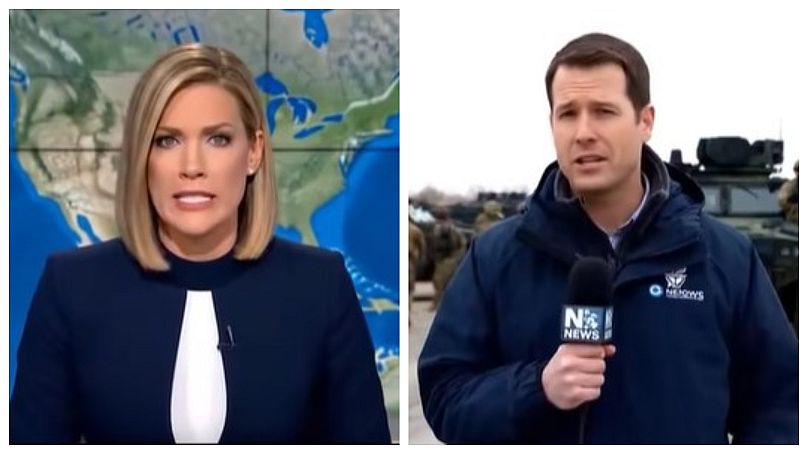
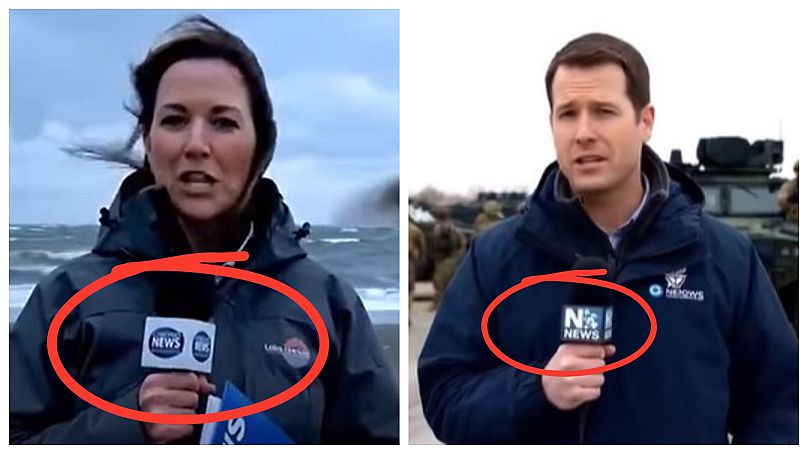
One tell-tale clue is the fact that in these videos, many of the "reporters" who appear to be out reporting on the field are holding the same mic, which has the generic term "NEWS" on it.

In reality, although many TV channels have the term "news" somewhere in their name (for instance, BBC News, Fox News or Euronews), no major channels are just called "News".
Fake AI anchors Image on left Ten Thousand Hours YouTube, image on right @wizardingnews

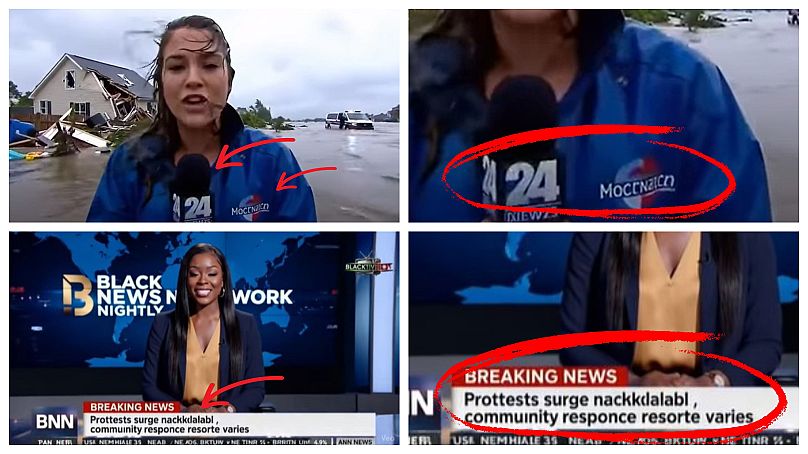
In other cases, the logos displayed on presenters' mics, notebooks, clothing, as well as in the background and on screen, are gibberish.

AI is not able to distinguish what makes a series of letters legible because it primarily focuses on visual patterns rather than on the semantic meaning of text. In turn, it frequently generates illegible text.
Videos of AI news anchors display inconsistencies Image on left, Ten Thousand Hours YouTube and on right from TikTok

This is because AI works on a prompt basis, so if an individual enters a prompt which does not specifically state which words should be included in the video it generates, the machine will generate its own text.

Deepfake news anchors used by states

An increasing number of authentic TV channels have been experimenting with AI newsreaders in recent years, either through fully AI-generated presenters or by asking real people to give sign-off authorisation for their image or voice.

In October, a Polish radio station sparked controversy after dismissing its journalists and relaunching this week with AI "presenters".

However, state actors have also been using AI anchors to peddle propaganda.

For instance, in a report published in 2023, AI analytical firm Graphika revealed that a fictitious news outlet named "Wolf News" had been promoting the Chinese Communist Party's interests through videos spread across social media, presented by AI-generated presenters.
When AI anchors bypass repressive censorship in dictatorships

Although AI anchors can increase the spread of fake news and disinformation, in some instances, they can free journalists who live in repressive regimes from the dangers of public exposure.

In July 2024, Venezuelan President Nicolas Maduro was re-elected in a harshly contested election, which was marred by electoral fraud, according to rights groups.

Following his re-election, Maduro — who has been in power since 2013 — further cracked down on the press, endangering journalists and media workers.

T
hese videos are presented by AI anchors Connectas, Operación Retuit

To fight back, journalists launched Operación Retuit (Operation ReTweet) in August 2024.

In a series of 15 punchy social media-style videos, a female and a male AI-generated anchor called "Bestie" and "Buddy" report on the political situation of Venezuela, sharing factual evidence.

Gandhi And Gekko: Will The Twain Meet? – OpEd

Mahatma Gandhi and Gordon Gekko grok


By 

Gandhi, the loincloth clad spartan Mahatma, said there’s enough in this world for everyone’s need but not enough for everyone’s greed. 


The amoral and flamboyant Gordon Gekko in the 1987 Oliver Stone classic movie Wall Street flipped the script, giving a more realistic assessment of an interconnected, fast-digitalizing, post Malthus world by valorizing greed – or effort, enterprise, ambition, drive, hunger, frontier spirit, if a better euphemism is needed. 

The point is, ladies and gentlemen, that greed—for lack of a better word—is good. Greed is right. Greed works. Greed clarifies, cuts through, and captures the essence of the evolutionary spirit. Greed, in all of its forms—greed for life, for money, for love, knowledge—has marked the upward surge of mankind”, said Gekko in the Teldar Paper shareholders speech. Un-ironically, the famous biography of Vincent Van Gogh, the Dutch painter, is titled Lust for Life. 

This ‘better word’, which covers the gamut between the sacred and the profane, from ideologies, religions, revolutionary ardor, sacrifice, altruism, is effectively similar to Churchill’s quip on democracy – deeply flawed, but better than what’s already already been tried, over and over again. 

Invisible Hand vs Clenched Fist

Adam Smith’s Invisible Hand and enlightened self-interest offers the most tangible incentives to people in the most identity-agnostic and value-neutral manner. Markets have been markedly proven to be better, more efficient, and unbiased equalizers and allocators than the motley Messiahs, or Marx, Marcuse, and Mao.

The invisible hand is always more impersonal, and by extension, equally capricious, rather than the selectively ruthless visible fist of the state. 


In the movie, there’s a memorable line by Bud Fox, the Charlie Sheen character, ‘I never realised how poor I was until I started making real money’. Money is different things to different people  – for the everyman it’s just an exchange token that guarantees well-being, and keeps penury and privation at bay. 

For the more well-off, it’s a tool to hedge the future and insure against any uncertainties. But once these thresholds are crossed, money and what it buys, is mainly a surplus gratification. Thorstein Veblen, the Norwegian economist who coined the term Conspicuous Consumption in 1903, described it as a signalling, filtration, segregation, and psychological fulfilment mechanism.

Life, Liberty, and the Pursuit of Happiness is all about charting a middle path between Gandhi & Gekko, which effectively means balancing between self-reliant sustainability and hyper consumption ‘you only live once’ carpe diem. Over emphasis on the latter, or just on material value maximization, often leads to a deadlock.

Travails of ‘Zero-Sum’

There’s a funny statement that even if you end up winning the rate-race you will still be a rat. Ever wondered why then the allure of it is so strong?

Fight or flight, winner-takes-it-all, victory or surrender mindset is deeply ingrained in human thinking. It is mainly due to the frequent outbreak of diseases, war, famines in the ancient times and the looming uncertainty associated with all facets of human existence. The best insurance policy for those lacking power and pelf was either guile, patronage, luck, or god. 

Anyone who has played monopoly board game as a child, written a highly competitive exam, participated in athletics, or been an Options trader, instinctively understands what a zero-sum game is – you gotta win, and you can only do it if somebody else loses. The fundamental flaw, however, is that life is way more complex than certain case-specific scenarios, and what’s narrowly applicable isn’t axiomatic. 

The smartest people everywhere follow Carlo Cippola’s definition of intelligent as someone who believes in win-win, mutually beneficial outcomes, or what David Ogilvy, the founder of the namesake advertising giant, said about only hiring people smarter than you to become a company of giants.

“Zero-sum thinking can be so problematic: It pinches perspective, sharpens antagonism and distracts our minds from what we can do with cooperation and creativity. People with a zero-sum mentality can easily miss a win-win”, writes Damien Cave, the New York Times Vietnam Bureau Chief.

In his book Bullshit Jobs, the anthropologist David Graeber identifies five types of professions: flunkies, goons, duct-tapers, box-tickers, and task-masters. 

Flunkies are those that hang-around someone important. Goons are enforcers or compliance departments that ensure you follow the rigmarole. Duct-tapers are hired when shit hits the fan, or to identify pain-points when there are none, or which they are not qualified to scour. 

In the words of Graeber, “box tickers are employees who exist only or primarily to allow an organization to be able to claim it is doing something that, in fact, it is not doing”.

Task-masters are often the number cruncher middle management with no skin-in-the-game and lack of subject matter expertise. 

Zero-sum thinking would be less rife in creative fields, science, research, or even say the roughneck world of real estate or mafia where trade-offs and compromises are a part of life. It would be more explicitly pronounced in fields where all value is contestable, abstract, subjective, and whether or not you rise up the ladder depends solely on your ability to partake in charades, performative art, and engaging in roleplay. This is the great paradox of boardroom bureaucracy.

The rise of a New Managerial class, as anticipated by James Burnham in the 1960s, which resembles Soviet urban mandarins a lot, would enhance the anger, envy, and malice associated with zero-sum thinking. On a treadmill, you ought to keep running, but you stay where you are.


New Dimension 

Robert M. Solow, the MIT economist, added a new third dynamic to economics, which is more consequential than land, labour, and capital – technology. 

The exponential growth through technology advancements and innovation, from the semiconductor revolution of the 1960s, to Windows and World Wide Web of the late 1990s, and the smartphone and social media revolution of the 2000s, have all played a critical role in magnifying growth and boosting production. 

The top rated companies in NASDAQ, FAANG( Facebook, Apple, Amazon, Netflix, Google) were all created in the past 20 years. 

Technology has the ability to widen the net of access, reduce inequality, and broaden people’s horizons. 

“Zero-sum thinking is crucial to understanding the politics and economics of America today”, writes Stefanie Stantcheva, Founder & Director, Social Economics Lab at Harvard University. 

“This way of thinking doesn’t just appear out of nowhere; it stems from people’s economic environment and experiences—not only their own, but also those of their families and even earlier generations”, she adds. 

Technology, access, abundance, and inclusive institutions have the power to break these recurring traumatic patterns of the inherited neuroticism and gradually instill new behaviours and modes of thinking.

  • The past is never dead. It’s not even past. All of us labor in webs spun long before we were born, webs of heredity and environment, of desire and consequence, of history and eternity. ~ William Faulkner 

Aditya Chaturvedi

Aditya Chaturvedi is a keen observer of geopolitics, with an avid interest in the intersection of society, politics, pop culture, technology, and history.