Monday, August 18, 2025


U.S. Renewable Energy Faces a Looming Workforce Crisis

  • The renewable energy sector, despite market growth, faces a significant talent gap across both white-collar and blue-collar positions that threatens its continued expansion.

  • The labor shortage is exacerbated by a lack of awareness regarding career paths in clean energy and a departure of experienced professionals to other industries.

  • Concrete solutions to the talent gap include forging strategic alliances with educational institutions, developing Registered Apprenticeship pathways, updating credential requirements, and rethinking recruitment strategies.

Despite a discouraging political climate and unprecedented uncertainty in the United States clean energy sector, low costs of wind and solar energy continue to drive growth of the domestic clean energy sector. However, while market forces continue to support the expansion of renewable energy capacity, the sector faces critical challenges extending beyond the antagonism of the Trump administration. 

The continued growth of solar and wind power risks being hampered by several mitigating factors, including (but not limited to) intensifying competition over increasingly scarce suitable land plots, stressed and volatile global supply chains, lengthy and unpredictable development processes, Complex and overlapping permitting processes, and a critical talent gap.

The renewable energy labor shortage has been years in the making, but is no less closer to resolution. The issue spans both white collar and blue collar positions, and threatens to kneecap progress in the booming sector. Between the years of 2011 and 2030, it is expected that global levels of installed wind and solar capacity will quadruple. Analysis from McKinsey & Company concludes that “this huge surge in new wind and solar installations will be almost impossible to staff with qualified development and construction employees as well as operations and maintenance workers.”

“It’s unclear where these employees will come from in the future,” the McKinsey report goes on to say. “There are too few people with specialized and relevant expertise and experience, and too many of them are departing for other companies or other industries.” 

The solar and wind industries are suffering from a lack of awareness of career paths and opportunities, despite their well-established presence in domestic markets. Emergent clean energies face an even steeper uphill battle. Geothermal energy, for example, is poised for explosive growth as one of vanishingly few carbon-free energy solutions with broad bipartisan support, but faces a severe talent gap and punishingly low levels of awareness in potential talent pools. 

But while the outlook is discouraging, industry insiders argue that it’s too soon to sound the alarms. In fact, a recent report from Utility Drive contends that “solutions to the energy talent gap are hiding in plain sight.” The article breaks down those solutions into four concrete approaches: building partnerships with educators, formulating Registered Apprenticeship pathways, updating credential requirements to reflect real-world needs, and rethinking stale recruitment strategies.

Targeting strategic alliances with educational institutions is a crucial strategy for creating a skilled workforce, particularly in emerging sectors like geothermal energy. Businesses can, for example, partner with and sponsor programs at community colleges, creating a pipeline for the next generation of skilled workers. Apprenticeships serve a similar purpose, encouraging hands-on learning outside of the classroom. Such apprenticeships can apply to white collar positions as well as blue collar roles.

“If we can figure out a way to educate the younger generation that you can actually have a career that you can be proud of and help solve a problem the world is facing, but also work in the extractive industry, I think that could go a long way,” said Jeanine Vany, executive vice president of corporate affairs for Canadian geothermal firm Eavor, speaking about the geothermal energy talent gap.

These approaches won’t solve the talent gap overnight – especially as political developments may discourage would-be jobseekers from placing their bets on a career in the renewables sector. But they will go a long way toward mitigating the issue.

“The clean energy transition depends on a workforce that can sustain it,” reports Utility Drive. “To meet the hiring challenges, employers will benefit from looking beyond the next position to fill and working toward a strategic, industry-wide vision for attracting talent.”

By Haley Zaremba for Oilprice.com

Trump Moves to Open 82% of Alaska’s Petroleum Reserve for Drilling

  • The Trump administration plans to double Alaska’s oil output and expand drilling across 82% of the National Petroleum Reserve-Alaska, reversing environmental protections.

  • Supporters cite economic benefits, energy independence, and Alaska’s reliance on oil revenue, while opponents warn of irreversible damage to Arctic ecosystems and Indigenous communities.

  • Environmentalists argue the move undermines global climate goals, with new projects potentially operating for decades beyond the 2050 net-zero target.


Since coming into office, United States President Donald Trump has doubled down on his “Drill, baby, drill” statement by opening federal land for licensing and encouraging oil and gas companies to increase production. One state Trump has set his sights on is Alaska, an area where oil operations have become increasingly more controversial in recent years due to concerns over environmental degradation.

President Trump hopes to double the quantity of crude moving through Alaska’s pipelines, as well as construct a giant gas project, U.S. Energy Secretary Chris Wright said during a tour of Prudhoe Bay oilfield in June. “Let’s double oil production, build the big, beautiful twin, and we will help energise the world and we will strengthen our country and strengthen our families,” stated Wright.

That same month, the Department of the Interior announced plans to repeal Biden-era restrictions on the licensing and development of the National Petroleum Reserve-Alaska, which was designated as a protected wildlife reserve. The agency argued that the Biden-era rule was inconsistent with the 1976 Naval Petroleum Reserves Production Act, which allowed for oil and gas leasing in the area.

“Congress was clear: the National Petroleum Reserve in Alaska was set aside to support America’s energy security through responsible development,” Interior Secretary Doug Burgum said in a statement. “The 2024 rule ignored that mandate, prioritising obstruction over production and undermining our ability to harness domestic resources at a time when American energy independence has never been more critical."

Following the initial announcement, the public was given the opportunity to comment, during which time around 250,000 people responded. However, in July, the Interior Department confirmed it would be revoking three documents that had been aimed at limiting drilling in the reserve, marking a win for President Trump, who has fought for the last seven months to encourage more drilling.

President Biden introduced the restrictions during his time in office to prioritise traditional Indigenous uses, as well as protect habitats for polar bears, caribou, and other wildlife, across around 3 million acres of the 23-million-acre reserve. Around half of the reserve had previously been restricted from oil development under the Biden and Obama administrations. However, the Trump administration now plans to open 82 percent of the reserve to gas and oil drilling.

The question of more drilling in Alaska is a complex one, as environmentalists and Indigenous communities are extremely concerned about the potential impact of the move on environmental and human health. However, the oil and gas industry has provided much of the state’s revenue for decades and could provide an economic boost for several years to come.

Alaska’s North Slope contains six of the 100 largest oil fields in the United States and one of the 100 largest natural gas fields, according to the U.S. Energy Information Agency. Alaska does not have a state sales tax or a personal income tax, as revenues from Alaska's oil and gas industry fund about half of the state government. In addition, since 1982, every eligible Alaskan resident has received an annual dividend based on the value of oil royalty revenue in the Alaska Permanent Fund. This has made oil operations extremely popular among much of Alaskan society.

Nevertheless, developing any new oil operations could cause irreparable damage to the environment and jeopardise the chances of achieving a global green transition. As part of its 2050 net-zero carbon emissions pathway, the International Energy Agency warned that no new oil and gas fields can be approved for development if the world hopes to achieve its climate aims. New oil and gas development threatens Arctic wildlife, undermines the rights of Alaska Natives, and puts one of the fastest-warming ecosystems on Earth at risk, according to opponents to the new move.

In 2023, the Biden administration approved the controversial Willow project, which is still under construction and is expected to come online in 2029. It could then be operational for over 30 years. This provides an idea of just how long an impact a new oil project has on the environment.

Andy Moderow, the senior director of policy at the Alaska Wilderness League, explained, “We’re not talking about oil next year. We’re talking about oil in 2050 and 2060 and beyond, when we need to move past it.” The projects “could easily be pumping oil when babies born today are retiring in a climate that’s not livable if that oil is not blocked”. 

While new fossil fuel projects could boost Alaska’s revenue, the state already has a strong oil fund that benefits its residents. Meanwhile, developing new projects could put the lives of native communities and wildlife at risk. While many governments around the world are discussing the most effective ways to transition to green, the removal of environmental restrictions in one of the world’s most vulnerable ecosystems seems at odds with international aims for climate progress. 

By Felicity Bradstock for Oilprice.com

AFRICA IS A COUNTRY

Kenya’s Clean Energy Drive Gains Momentum Alongside Oil Ambitions

  • Kenya aims for 100% renewable electricity by 2030, with nearly 90% of its current power from clean sources like geothermal, wind, hydro, and solar.

  • The country is preparing for commercial oil exports in 2026 while expanding solar adoption, rural electrification, and clean cooking initiatives.

  • New policies, private investment in grids, and major renewable projects are driving Kenya toward universal electricity access and reduced power losses.

Kenya has developed a strong renewable energy sector in recent years, as it aimed to diversify its energy mix beyond fossil fuels to boost its energy security. The launch of a national energy plan and the launch of a wide variety of renewable energy projects are expected to help achieve the country’s renewable energy aims, as the East African country also develops its oil production capacity.

Kenya began exporting crude oil in small quantities in 2019 and hopes to start commercial crude exports in 2026, following several development delays. The U.K. oil and gas firm Tullow Oil was unable to secure investors for the South Lokichar oilfield in the East African country after France’s TotalEnergies and London-listed Africa Oil withdrew from the project two years ago. This left Tullow on its own to find the financing needed to develop a pipeline to transport crude out of the landlocked northern region.

Tullow signed a terms agreement with Gulf Energy Ltd to sell all its working interests in Kenya for at least $120 million earlier this year and is expected to commence crude exports next year. The South Lokichar project is expected to produce between 60,000 and 100,000 bpd of crude, with an estimated 560 million barrels recoverable over 25 years. The Kenyan government also plans to launch an oil and gas exploration round for 10 blocks in September.

However, with the country’s oil industry in the nascent stage of development, Kenya is looking to continue developing its other energy sources to ensure its energy security. In 2018, Kenya set the goal of being 100 percent powered by renewable energy by 2020, a deadline that was later changed to 2030.

According to the International Energy Agency (IEA), Kenya is on track to achieve universal electricity access by 2030, supported by wider electrification, using clean energy sources. Electricity access increased from 37 percent in 2013 to 79 percent in 2023, with urban areas having achieved full access. This was driven by the government’s 2015 Last Mile Connectivity Project. Kenya is expected to connect a further 280,000 households countrywide by the end of the year.

The rapid advancement in access, particularly in rural areas of the country, has been supported by the development of off-grid solar power projects. Solar adoption has been widespread, with Kenya contributing almost three-quarters of all solar home system sales in East Africa in 2023, according to an IEA report from April. It is estimated that one in five Kenyan households now uses solar-powered mini-grids or standalone systems.

The IEA’s Deputy Executive Director, Mary Burce Warlick, stated, “Kenya is showing how the strategic deployment of clean energy technologies and electrification in end-use sectors can significantly improve the lives of millions of the most vulnerable people in the world.”

The Kenyan government recently launched a National Energy Policy, with input from the IEA and other stakeholders. The Draft National Energy Policy (NEP) 2025-2034 incorporates recommendations from the IEA Energy Policy Review. Renewable energy sources, including geothermal, hydro, wind and solar sources, account for almost 90% of power generation, compared to 50 percent in 2000. Kenya is also home to the Lake Turkana Wind Project, the largest wind farm on the African continent. Meanwhile, geothermal energy contributes around one-third of Kenya’s electricity generation capacity.

However, one challenge that must be overcome to transition to green is the ongoing burning of polluting fuels such as firewood, charcoal, and kerosene by millions of households, mainly in rural areas. The government aims to reduce this tendency through the rollout of its Kenya National Cooking Transition Strategy, which aims to achieve universal access to clean cooking by 2028.

Kenya also plans to modernise and expand its electricity grid, following the introduction of new regulations in 2024 to open transmission and distribution networks to private investment, to encourage competition, reduce costs and improve efficiency. In 2023, roughly 23 percent of power was lost in Kenya’s transmission network due to technical issues, theft, and billing problems. The introduction of smart grids and better management systems is expected to reduce these losses moving forward.

In March, Kenya launched a tender for 80 MW of solar power across two 40 MW projects in the south of the country. This follows the announcement by the French Development Agency in August 2024 that it planned to fund a 42.5 MW solar plant around 100 km northeast of Kenya's capital, Nairobi. According to the International Renewable Energy Agency, Kenya had 358 MW of solar power by the end of 2023. 

Meanwhile, in July, commercial banks, including the British International Investment, Norway’s Norfund, and the Dutch development bank FMO, bought into a $156 million financing deal for off-grid solar power in Kenya, investing in Sun King operations. This is expected to contribute to the sale of around 1.4 million solar home systems in rural areas across the country.  “What makes this work is that we collect small, steady and predictable payments from millions of customers,” said Sun King’s co-founder Anish Thakkar. 

By Felicity Bradstock for Oilprice.com


Natural Gas Could Be Angola’s Next Big Money Maker

  • Angola is increasingly focusing on natural gas development and exports as its oil production is expected to decline despite recent new oil project startups.

  • A recent major natural gas discovery offshore Angola by Azule Energy, a joint venture of BP and Eni, suggests significant untapped gas resources that could boost LNG exports and state revenues.

  • The launch of the New Gas Consortium (NGC) project, Angola's first non-associated gas development, is anticipated to be a crucial test for gas monetization in the country.

Angola is betting big on natural gas developments as a short-term increase in oil production is not expected to last despite the West African country leaving OPEC over capped production.  

Companies operating in Angola have recently started up two oil projects, but they have also begun to target non-associated offshore gas plays, hoping that a massive gas resource could be waiting to be tapped. 

Despite the recent oil project startups, Angola’s oil production is expected to drop to about 1 million barrels per day (bpd) in 2027, from over 1.1 million bpd now, officials at the national oil and gas agency ANPG have told Reuters.

At the same time, natural gas output is set to jump by 2030, per ANPG estimates.   

Increased gas output will raise Angola’s LNG exports as developers offshore Africa bet big on natural gas to export to Europe and Asia. 

A recent large gas discovery year could be one of many gas plays that could underpin a jump in LNG exports and state revenues from gas. 

Last month, Azule Energy, a joint venture of international majors BP and Eni, discovered a major natural gas reservoir offshore Angola in the first gas-targeting exploration well in the oil-producing country.

Initial assessments suggest gas volumes in place could exceed 1 trillion cubic feet, with up to 100 million barrels of associated condensate, Azule Energy said, adding that these results “confirm the presence of a working hydrocarbon system and open new exploration opportunities in the area.”

Azule Energy CEO, Adriano Mongini, commented:

“This is a landmark moment for gas exploration in Angola. Gajajeira-01 is the country’s first dedicated gas exploration well, and its success reinforces our confidence in the potential of the Lower Congo Basin.” 

More recently, Mongini told Reuters that “Given that Angola has a couple of prolific basins, I can imagine that we will be able to find much more reserves of gas.” 

BP’s EVP production & operations, Gordon Birrell, highlighted the Angola discovery and its potential on the Q2 earnings call.  

“Under the Azule brand, we had a discovery in Gajajeira in block 1/14, pretty close to shore, very developable. So West Africa remains an exciting area for us in terms of exploration,” Birrell told analysts.  

The exciting gas discovery comes as Angola struggles to materially boost oil production even after exiting OPEC in January 2024, following a spat with the OPEC and OPEC+ members about production quotas.  

Angola’s oil production peaked in 2008 at about 2 million bpd. Output has declined in recent years, due to underinvestment in offshore resources due to higher development costs, which have prompted many companies to overlook the African oil producer as an investment destination.

Azule Energy and TotalEnergies started up new oil projects last month, but these may not be enough to offset a decline in maturing fields. 

Azule Energy announced at the end of July the successful startup and first oil production from the Agogo FPSO. Combined, the Agogo and the Ndungu fields have estimated reserves of about 450 million barrels, with projected peak production of 175,000 barrels per day, produced via two FPSOs (Agogo and Ngoma).  

Also at the end of July, TotalEnergies launched oil production from the BEGONIA and CLOV Phase 3 offshore projects via subsea tiebacks to FPSOs to add a total of 60,000 barrels a day of new production. 

Still, Angola’s oil revenues have dropped this year due to falling oil prices. Revenues from oil declined by 4% from the first quarter to $5.6 billion in the second quarter, according to government data. LNG and gas exports meanwhile, earned $755 million in the second quarter.  

Now the BP-Eni Azule venture is close to launching first gas from the New Gas Consortium (NGC) project after completing early this year the Quiluma and Maboqueiro offshore platforms in a “significant step forward in Angola’s first non-associated gas development.” 

The NGC project is a joint venture between Azule Energy, Sonangol E&P, Chevron, and TotalEnergies. 

“Development of (NGC's) Quiluma and Maboqueiro fields, due to launch around end-2025, is the real litmus test for gas monetisation in Angola,” Jimmy Boulter, an analyst at Enverus, told Reuters.   

By Tsvetana Paraskova for Oilprice.com

Political comeback for Pierre Poilievre | Watch

IN CONSERVATIVE ALBERTA 
HE WAS A SAFE SEAT SHOO IN
HOWEVER... 

A record 214 people were on the byelection ballot


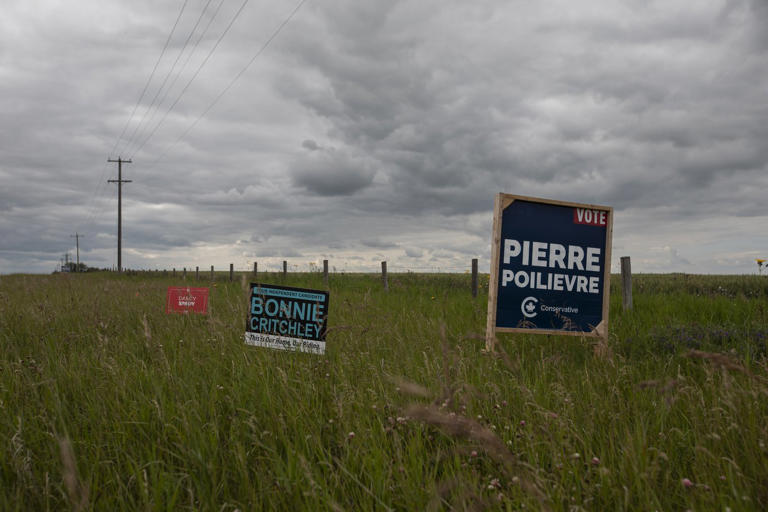
A campaign sign for independent candidate Bonnie Critchley next to signs for Pierre Poilievre and Darcy Spady in the riding of Battle River-Crowfoot in Camrose, Alta., on Tuesday, July 22, 2025. THE CANADIAN PRESS/Amber Bracken© The Canadian Press

CAMROSE — Conservative Leader Pierre Poilievre secured a seat in the House of Commons late Monday, winning a byelection in the rural Alberta riding of Battle River—Crowfoot.

He was leading with just over 80 per cent of votes in almost a third of polls 1 1/2 hours after voting closed.


A sign reminding people how to spell Pierre Poilievre on the ballot at the Battle River-Crowfoot byelection in Camrose on Monday Aug. 18, 2025. THE CANADIAN PRESS/Jason Franson© The Canadian Press

That means he has secured a seat in the House of Commons.

"Getting to know the people in this region has been the privilege of my life," Poilievre told a crowd at a victory party in Camrose, Alta.


The adapted ballot being used in the Battle River-Crowfoot federal byelection is seen at an advance polling station in Camrose, Alta., on Friday, Aug. 8, 2025. THE CANADIAN PRESS/Fakiha Baig© The Canadian Press

"In fact, I've had a hell of a lot of fun."

The riding was left vacant shortly after the spring general election, when Conservative Damien Kurek stepped down to make way for the party leader.

Poilievre had been elected in the Ottawa-area riding of Carleton seven straight times but lost in April to Liberal Bruce Fanjoy.

A record 214 people were on the byelection ballot, most of whom were part of a protest movement called the Longest Ballot Committee which is pushing for electoral reform to replace the first-past-the-post system.


The group also targeted the Carleton riding in the April general election, when there were 91 candidates on the ballot.

Because there were so many more candidates for Battle River—Crowfoot, voters were required for the first time ever to write the name of their preferred candidate on a blank ballot. Thick coil-bound, 32-page laminated booklets listing the candidates were available at voting stations.


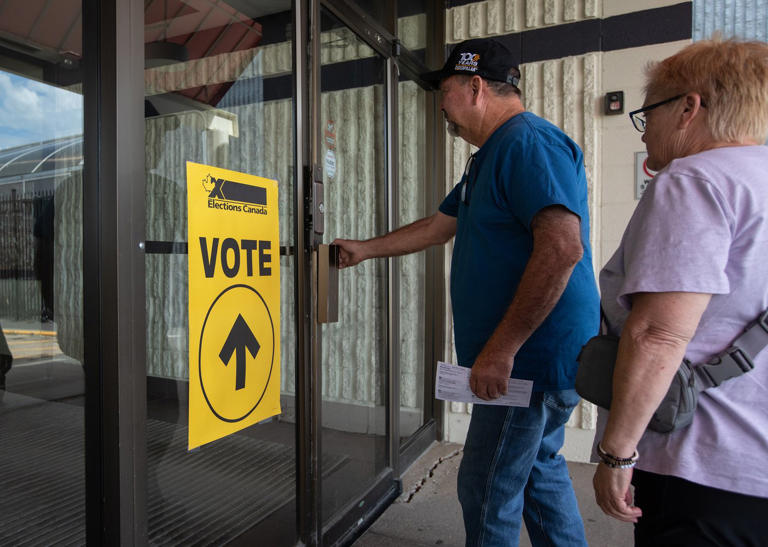
A voter casts their vote for the Battle River-Crowfoot byelection in Camrose, Alberta on Monday Aug. 18, 2025. Federal Conservative Leader Pierre Poilievre and a record 213 other candidates are vying to win a rural Alberta byelection. THE CANADIAN PRESS/Jason Franson© The Canadian Press

The sprawling eastern Alberta riding, stretching from Edmonton to Calgary, is considered one of the safest Conservative seats in the country. The Tory leader was widely expected to win by a large margin.


Voters head to the voting station for the Battle River-Crowfoot byelection in Camrose, Alberta on Monday Aug. 18, 2025. Federal Conservative Leader Pierre Poilievre and a record 213 other candidates are vying to win a rural Alberta byelection. THE CANADIAN PRESS/Jason Franson© The Canadian Press

Conservatives have won the riding in every election since 2004 with at least 80 per cent of the vote, said Julie Simmons, an associate professor with the University of Guelph in Ontario. The one exception was Kurek, who got 71 per cent of the vote in 2021 but won in April with 83 per cent.

Lori Williams, a political science professor at Mount Royal University in Calgary, said Poilievre needed to win the riding "decisively," as he faces a party leadership review in January.


Voters head to the voting station for the Battle River-Crowfoot byelection in Camrose, Alberta on Monday Aug. 18, 2025. Federal Conservative Leader Pierre Poilievre and a record 213 other candidates are vying to win a rural Alberta byelection. THE CANADIAN PRESS/Jason Franson© The Canadian Press

Poilievre was up against a few vocal challengers, including Independent candidate Bonnie Critchley, who was trailing a distant second in voting.

The military veteran described Poilievre as a parachute candidate who only wants to represent the riding for his political career.

Poilievre was born and raised in Calgary but has lived in Ottawa for the last two decades.


Pierre Poilievre supporters gather to wait for the results during the Battle River-Crowfoot byelection in Camrose, Alta., Monday, Aug. 18, 2025. THE CANADIAN PRESS/Jason Franson© The Canadian Press

Other candidates included Darcy Spady, from the energy sector, for the Liberals and Katherine Swampy, a former band councillor for Samson Cree Nation, who ran for the NDP.


Anaida Poilievre and Conservative Party Leader Pierre Poilievre celebrate the win during the Battle River-Crowfoot byelection in Camrose, Alta., Monday, Aug. 18, 2025. THE CANADIAN PRESS/Jason Franson© The Canadian Press

Also running was Libertarian Party candidate Michael Harris, who ran on a promise to push for a referendum on whether Alberta should separate from Canada.

This report by The Canadian Press was first published Aug. 18, 2025.

Fakiha Baig, The Canadian Press


New York's bleak travel advisory for Ontario urges Americans to 'protect' themselves

Story by Tomás Keating


As trade tensions and travel frictions continue between Canada and the U.S., New York health officials are closely monitoring Ontario's ongoing measles outbreak, and its travel warning remains in effect.

In April, the New York State Department of Health (NYSDH) flagged Ontario as a measles hotspot, delivering a blunt message: "Measles is only a car ride away!" The advisory urged Americans travelling north to protect themselves by checking their vaccination status, highlighting the risk of contracting the highly contagious virus during peak travel periods.

There's been a dramatic and prolonged surge in measles cases in Ontario over the past 10 months. According to Public Health Ontario, the outbreak began in October 2024, after a travel-related case in New Brunswick spread to Ontario. While New Brunswick declared its outbreak over in January 2025, Ontario and several other provinces have continued to report related cases, with the first confirmed cases in Ontario appearing in late October 2024.

As of August 12, 2025, Ontario has reported 2,362 measles cases (2,050 confirmed, 312 probable) linked to this outbreak, across 26 public health units. However, there were just more two cases from August 5, suggesting weekly counts may be slowing.

So far, 164 people (6.9%) have been hospitalized, including 12 admitted to the ICU. Most hospitalized patients were unvaccinated, particularly infants and children, with typical hospital stays lasting around three days. Tragically, one death has been reported in a premature infant with congenital measles and other medical conditions.

The NYSDH advisory emphasized how contagious measles is: "Around 90% of people who are exposed to a person with measles will become infected if they are not vaccinated. Because measles is so contagious, it easily crosses borders.

"The best way to protect against measles is to make sure you are up-to-date on immunization with the measles-mumps-rubella (MMR) vaccine."

This advisory is one of many cross-border travel warnings issued over the past few months. The most recent Canadian travel advisory for the U.S., updated July 31, 2025, maintains an overall risk level of "take normal security precautions" while highlighting ongoing concerns, including crime, electronic device searches by U.S. border agents, registration requirements for Canadians staying more than 30 days, visa rules, expedited removal, and more.

In addition, the U.S. passed the One Big Beautiful Bill Act on July 4, introducing new costs for certain non-immigrant visas. Some Canadians, including permanent residents and those entering for specific work or family reasons, must now pay a US$250 (about CA$345) visa integrity fee in addition to existing charges. The fee is expected to take effect on October 1, 2025, but most Canadian citizens travelling for short visits won't have to pay it. For those who do, refunds may be available if they meet strict departure requirements.

With Ontario still reporting new cases and New York keeping its warning in place, both sides of the border are urging travellers to stay cautious and up to date on their vaccines.


Trump’s controversial $250 visa fee could cost the US economy $11 billion as tourists stay away, research finds


Story by Kelly Rissman
AUGUST 15, 2025
The Independent


The U.S. is on track to lose $12.5 billion in international visitor spending this year, according to a May 2025 report (Getty Images)


Research suggests President Donald Trump’s new $250 “visa integrity fee” could cost the United States $11 billion — a much larger figure than the Congressional Budget Office previously estimated, according to a report.

The fee, packed in Trump’s so-called “Big, Beautiful Bill” that he signed into law last month, applies to all visitors traveling to the U.S. on a non-immigrant visa. The fee doesn’t apply to countries on the Visa Waiver Program, which includes most Western European nations and some Asian countries.

By 2034, the “visa integrity fee” would bring in more than $27 billion, the Congressional Budget Office estimated. Said differently, the office is predicting the U.S. will rake in $2.7 billion from 11 million foreign travelers paying the fee each year.

While the language of the law makes the fee sound like a win for the U.S. economy, it may actually become a major loss, as the cost could deter visitors. That loss could be as high as roughly $3.6 billion per year, or $11 billion in three years, according to a Tourism Economics analysis seen by Forbes.

A decline in travelers could lead to a dip in visitor spending and job losses in the tourism industry. In 2022, the travel and tourism industry contributed $2.3 trillion to the U.S. economy, according to the International Trade Administration.

The CBO appeared not to have taken these potential drops into account.

“By longstanding tradition, the Congressional Budget Office does not incorporate macroeconomic feedback effects into its traditional cost estimates,” a CBO spokesperson told Forbes. “We didn't specifically do a dynamic analysis of this provision.”

The Independent has reached out to the CBO for more information.

The fee, which will take effect in October, was introduced before the U.S. is set to host events which tend to draw large crowds from around the world, including the 2026 FIFA World Cup and the 2028 Summer Olympics.

Even before Trump’s mega-bill was passed international tourism was down.

The U.S. was the only country of the 184 economies analyzed by the World Travel & Tourism Council forecast to see international visitor spending decline in 2025, a May report found. At this rate, the U.S. is on track to lose $12.5 billion in international visitor spending this year, according to the report.

“This is a wake-up call for the U.S. government,” the organization’s CEO Julia Simpson warned in a statement. “The world’s biggest Travel & Tourism economy is heading in the wrong direction, not because of a lack of demand, but because of a failure to act. While other nations are rolling out the welcome mat, the U.S. government is putting up the ‘closed’ sign.”

Outside of Canada and Mexico, the United Kingdom, India, Brazil, Japan, and Germany comprised the top five countries with citizens that visited the U.S. this year as of May 2025, according to the International Trade Administration. Of these nations, the fee would only apply to citizens of Brazil and India, which could pack a punch to the U.S. economy.

In 2022, for example, Indian tourists visiting the U.S. generated around $13 billion, according to the International Trade Administration.


“Congress made the mistake of assuming that this worldwide visa integrity fee would not have a big impact on visitors from countries like India or Brazil,” Erik Hansen, senior vice president of government relations at the U.S. Travel Association, told Forbes. “This is the exact type of armchair public policymaking that is going to get us into a big mess.”

The Independent has always had a global perspective. Built on a firm foundation of superb international reporting and analysis, The Independent now enjoys a reach that was inconceivable when it was launched as an upstart player in the British news industry. For the first time since the end of the Second World War, and across the world, pluralism, reason, a progressive and humanitarian agenda, and internationalism – Independent values – are under threat. Yet we, The Independent, continue to grow.