Monday, August 25, 2025


Malaysia Fast-Tracks Investment in its Shipbuilding Sector

Tanjung Agas
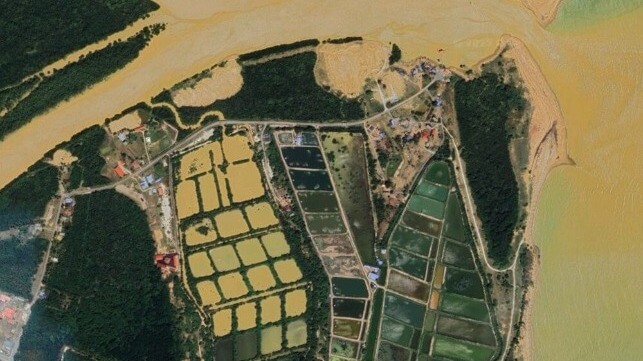
The Tanjung Agas area of Pekan, Malaysia (CNES, Airbus, Gebco, Maxar, Google)

Published Aug 24, 2025 10:39 PM by The Maritime Executive


Malaysia is doubling down on shipbuilding with two key investment milestones achieved last week. At the forefront is Malaysia’s Pahang State, which is betting big on maritime development. Last week, Pahang signed a lease agreement with Teroka Majubina Holdings for the development of the Tanjung Agas Hybrid Shipyard Complex in Pekan, a small town on Peninsular Malaysia’s east coast.

The $18 billion project will be implemented in three phases in an area covering 1,000 acres. The construction of the project is expected to begin in eight months. The first phase will involve developing a green vessel recycling facility; the second component will include a shipbuilding center, providing ship construction and maintenance services; and lastly, the third phase includes building oil and gas storage facilities.

“With the establishment of the shipyard complex, Pahang will emerge as a regional maritime hub, providing competitive services in shipbuilding, green ship recycling and oil and gas hub,” said Wan Rosdy, Head of Pahang State.

The state is also implementing a similar project in the Gebeng industrial area, the Kuantan Maritime Hub (KMH), located about 35 miles to the north of Pekan. The $500 million project is being developed by Muhibbah Engineering and is scheduled for completion in 2034.  

The KMH project covers a 500-acre site, with some parts reclaimed from the sea. The hub is expected to host industries ranging from commercial shipbuilding and ship repair to defense and technical training.

These flagship projects are important for Malaysia to retain a long-term standing in the global shipbuilding sector, according to the Malaysian Investment Development Authority’s CEO, Sikh Shamsul Ibrahim.

“Malaysia should always remain vigilant of rising competition from lower cost yards in neighboring economies such a Vietnam and Indonesia. We should start focusing on reducing reliance on foreign automation tools, by approaching local robotic manufacturing in Malaysia, which could build a whole new automated system integration to improve productivity in our shipbuilding landscape,” added Sikh Shamsul.

As of June, the authority said it has approved shipbuilding and ship repair sector investments worth over $230 million, showing sustained interest by the private sector to invest in the Malaysian shipyard sector.

To Take On a Bigger Role, Malaysia's MMEA Buys a Bigger Ship

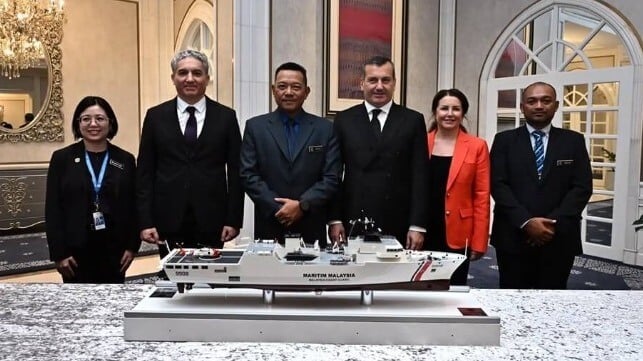
MMEA new patrol ship
Courtesy Jabatan Penerangan Malaysia

Published Aug 24, 2025 9:53 PM by The Maritime Executive


This month, the Malaysian Maritime Enforcement Agency (MMEA) held a keel laying ceremony for a new Multi-Purpose Mission Ship (MPMS) in Turkey. The event marked another milestone in the construction of MMEA’s largest vessel, with the steel-cutting ceremony held last month.

Construction is under way at Desan Shipyard after a memorandum of understanding with MMEA back in February. The signing of the construction contract followed in May, with the vessel scheduled for delivery in 2027. The construction project also involves cooperation with other Turkish defense industry companies such as Aselsan and Havelsan. The two companies will be involved in the installation of advanced weaponry, detection and communication systems.

The 99-meter-long vessel will serve deep sea operations lasting 28 days without resupply. It will have capacity for 70 crew members and additional room for 30 passengers. For surveillance and interdiction, it will be equipped with two unmanned aerial vehicles, four fast interceptor craft, a helicopter deck and detention compartments.

According to MMEA, the vessel will be deployed for surveillance in Malaysia’s Exclusive Economic Zone (EEZ), especially in the South China Sea. In the past few years, Malaysia’s EEZ has become a hotspot for illegal Ship-to-Ship (STS) oil transfers. This has mainly involved older ships carrying sanctioned Russian and Iranian oil, raising concerns about compliance, safety and pollution.

Recently, Malaysia has introduced new regulations with an aim to curb shadow fleet STS transfers. Some of the efforts include closing the notorious Tompok Utara anchorage and layup area near the Singapore Strait. However, MMEA emphasizes that it requires enhanced operational and patrolling capabilities to curb increased criminal activities in Malaysian waters.

Last year, the agency got a budgetary allocation of $159 million to procure new vessels and maintain existing ones. Almost half of this allocation - $82 million - went into the acquisition of the MPMS. Another $37 million went into the procurement of two New Generation Patrol Craft (NGPC).


Towards a New Data Sharing Regime: Structuring Supply Chain Data

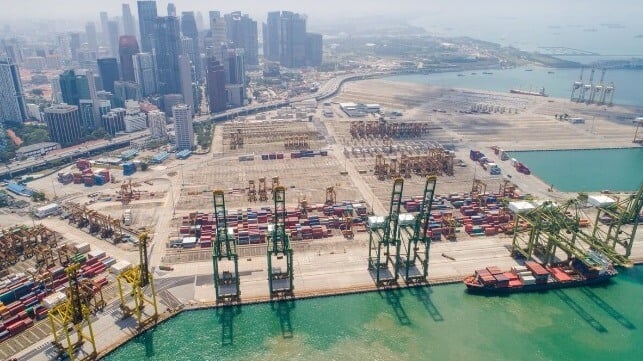
Singapore port terminal
PrimeImages / iStock

Published Aug 24, 2025 3:45 PM by Mikael Lind et al.


LONG READ


[By Mikael Lind, Wolfgang Lehmacher, Sandra Haraldson, Ernst Hoestra, Boris Kriuk, Richard van der Meulen, and Mark Scheerlinck]

Introduction: When Traditional Approaches Fall Short

Transport and logistics have always hinged on seamless coordination. Moving goods from point A to point B involves a complex web of actors, including shippers, freight forwarders, carriers, terminal operators, port authorities, customs officials, warehouse operators, and first-mile and last-mile delivery providers. Cargo is typically handed over in nodes from one controlling party to another. It is in these nodes that changes can be applied to the trajectory of the cargo. This requires collaboration. Traditionally, each participant has managed their role in isolation, sharing information only when necessary, primarily through bilateral channels.

This model has sustained the industry for decades, yet it increasingly reveals its limitations. In today’s volatile and interconnected world, where disruptions have shifted from exceptions to expectations, fragmented and linear information flows create blind spots, delays, inefficiencies, and fragility.

The solution transcends mere technological upgrades; it demands a fundamental reimagining of how we organize and interpret vast, disparate streams of supply chain data. Rather than scattered exchanges, what’s needed is a collaborative data-sharing regime that imposes order upon chaos, delivering shared visibility and situational awareness across the entire ecosystem. Such a framework empowers actors not just to be informed, but to act decisively, converting raw data into strategic insight. The result: enhanced coordination, resilience, and performance.

This is an ambition that the Virtual Watch Tower (VWT), a multi-stakeholder community co-creating a digital, federated architecture and solution as a public good, pursues in its approach to data sharing for better disruption and carbon footprint management.

The Inherent Limits of Traditional Data Sharing

In the traditional landscape, data exchanges are direct and narrowly focused, typically confined to transactions between two actors. A shipper updates a carrier. A carrier informs a forwarder. A terminal operator alerts a trucking company. Each communication serves immediate operational needs, with a transactional brevity that sacrifices holistic understanding.

This approach bears three critical shortcomings:

  • Fragmentation: Each participant sees only a sliver of the entire operation, isolated snapshots rather than a cohesive panorama.
  • Inefficiency: Data is redundantly transmitted across numerous bilateral links, leading to duplication and discrepancies.
  • Latency: In the face of natural disasters, strikes, congestion, system outages, or geopolitical shocks, actors struggle to access timely and comprehensive data, hampering coordinated responses.

The consequence is a fragmented patchwork of data streams, leaving stakeholders “starving for data but lacking insight.”

Embracing a Collaborative Data Sharing Regime

A transformative alternative lies in a Collaborative Decision-Making (CDM) approach. Instead of Actor #1 transmitting updates separately to Actors #2 and #3, data enters a shared, trusted pool accessible to all authorized participants (Figure 1). This shift from bilateral exchanges to an ecosystem-wide platform enables real-time shared visibility.
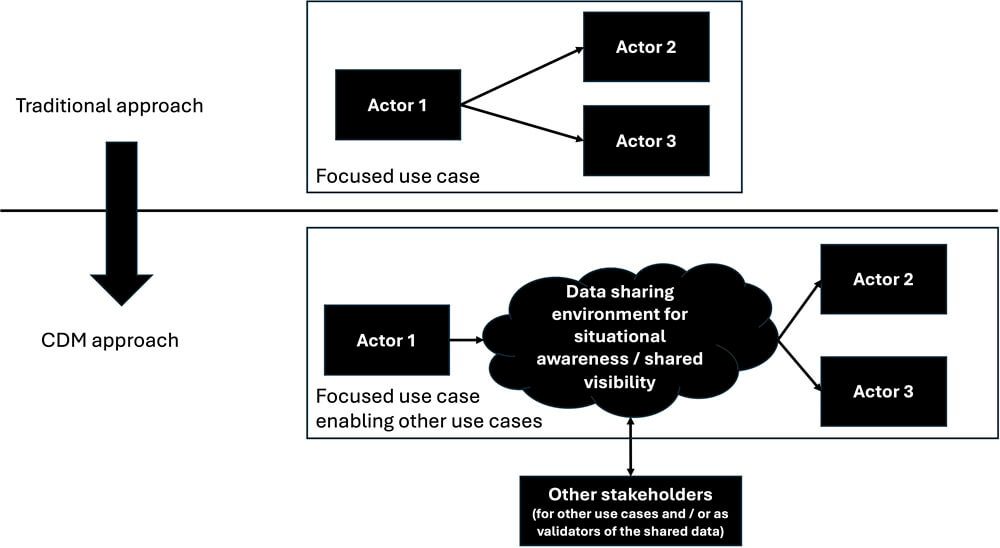
Figure 1: Fundamentals on Data Sharing: From bilateral to ecosystem-based data exchanges

This methodological leap unlocks profound benefits:

  • Unified situational awareness: Everyone views the same data, smoothing misalignments and fostering shared understanding.
  • Scalability: Data is shared once and consumed by many, eliminating inefficiencies.
  • Resilience: Early detection and coordinated response to disruptions become routine.
  • Trust and sovereignty: Each actor maintains control over their data, dictating access within an interoperable and fair framework.

In essence, collaboration brings clarity and meaning to the raw data flowing through supply chains.

A Four-Layer Framework to Bring Order and Insight

At the core of this new regime is a systematic model (Figure 2) that organizes fragmented information into three interlocking layers, which are wrapped within a fourth evolutionary layer that enables secure and trusted ecosystem-wide data sharing. Each layer enriches data with context and purpose, turning raw signals into orchestrated decisions.

This framework relies on establishing common semantics at each layer, ensuring that data shared between planning, progress, and analysis is coherent and interpretable by every actor. Only with agreed-upon definitions and structures can insights be generated and acted upon reliably across the supply chain.
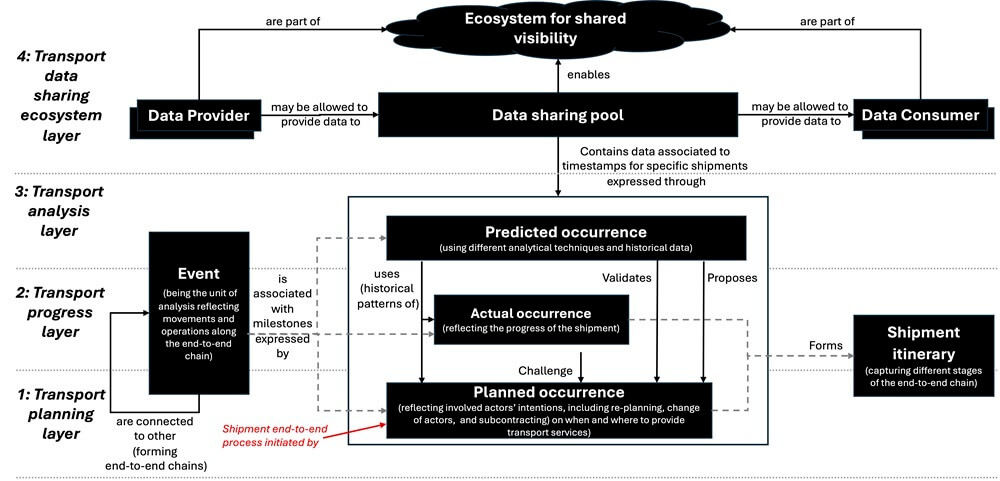
Figure 2: Layered data sharing framework

1. Transport Planning Layer – Sharing Intentions

The planning layer looks forward. It captures actors’ intentions, the planned container movements, vessel unloading, and truck dispatches, offering a dynamic view of expected operations. Shared plans enable proactive coordination: for example, a delay of a ship leads to a new plan and prompts terminal berth reallocation and trucking schedule adjustments. The value of the shared plans also depends on standardized representations of intentions and schedules.

2. Transport Progress Layer – Documenting What Has Happened

This layer logs real-time data, including timestamps of events such as “container loaded,” “vessel departed,” or “truck arrived at gate.” Leveraging Internet-of-Things (IoT) sensors and system signals, it constructs a reliable, shared timeline, replacing isolated updates with a common factual record. Documenting events requires agreed-upon event codes and timestamp formats.

3. Transport Analysis Layer – Illuminating Insights

Here, analytics and artificial intelligence (AI) synthesize data from planning and progress layers to simulate deviations, estimate delays, forecast arrivals, and even compute emissions. This layer distils streams of raw data into actionable insights, offering foresight, risk awareness, and performance metrics that anchor decision-making. Helpful analytical insights arise from consistently formatted and meaningful raw data.

4. Transport Data Sharing Ecosystem Layer – Wrapping and Enabling Across Layers

Surrounding and enabling these three layers is the data sharing ecosystem itself. This outer layer ensures that data flows securely, transparently, and with trust throughout the entire network. It enforces access controls and sovereignty policies, allowing each participant to determine who sees what, while supporting seamless interoperability and fairness. A trusted sharing environment must enforce semantic consistency as a basis for interoperability.

This ecosystem is not merely a container but a living framework that facilitates collaboration across planning, progress, and analysis, amplifying the value created within each layer and fostering resilient, coordinated supply chain networks.

Due to this systemic approach, the integrity of data management also enables a fully controlled Return Cycle, which, based on current Producer Responsibility rules, should be considered a major additional benefit.

How the Layers Synchronize: From Fragmentation to Elegance

Imagine a container moving from a factory in Asia to a warehouse in Europe:

  1. The planning layer captures the intended shipping schedule.
  2. As the shipment proceeds, the progress layer records the container’s loading onto a vessel and subsequent real-world events.
  3. The analysis layer continuously compares the shipping plan against actual progress, predicts delays, recalculates arrival times, and updates emissions estimates.

Throughout this cycle, the data sharing ecosystem secures and governs the data flow to the port, trucking company, and other parties downstream , ensuring that access and usage rights are respected while enabling authorized actors to consume and engage with the same accurate and timely information.

This orchestration transforms once fragmented, reactive data into a continuous, coherent, and actionable stream.

Trust Reinforced by Data Sovereignty

Fear of losing control has long stifled data sharing. This regime addresses such concerns head-on: sovereignty is preserved. Each actor defines what to share, with whom, and under which conditions, supported by distributed platforms such as federated systems and blockchain.

No single entity dominates; instead, information is structured and shared across the ecosystem with embedded permissions. Trust flourishes when fairness and transparency underpin data governance.

Why Action Is More Urgent Than Ever

Today’s supply chains generate unprecedented data volumes. Every scan, movement, and transaction emits digital signals. Yet without structure, this mass merely manifests as noise.

Simultaneously, global volatility, from pandemics to geopolitical tensions and climate events, demands swift, coordinated reactions. The solution IS NOT more data, but smarter, better-organized data.

The four-layer framework provides a roadmap, turning disjointed signals into shared understanding and transforming data chaos into resilient coordination.

Aligning Incentives for Sustainable Data Sharing

Incentives must align across participants for this model to succeed. The logical starting point is the shipper, whose inputs, like shipment itineraries and booking details, anchor the shared structure.

Operators, terminals, and carriers then contribute data as part of service fulfilment. This reciprocity creates mutual value: clarity generated by others enhances each actor’s operations.

Over time, structured data-sharing will evolve from a competitive advantage to an industry imperative.

Conclusion: From Data Fragmentation to Meaningful Coordination

The logistics sector has historically amassed an abundance of data but suffered from a paucity of shared understanding. Traditional fragmented approaches yield isolated signals that obscure the bigger picture.

What is required goes beyond technology: a fundamentally new way to structure, interpret, and act on existing data.

The collaborative four-layer model achieves this by:

  • Aligning plans: sharing intentions.
  • Anchoring progress: documenting reality.
  • Extracting meaning: illuminating insight.
  • Enabling trust: facilitating secure, sovereign data sharing across the ecosystem.

Together, these layers weave disconnected updates into a shared narrative, trusted and actionable by all participants.

A vital first step is cultivating shared situational awareness. Structured data enables actors to perceive the broader ecosystem and receive early alerts about emerging disruptions, such as delays, capacity shortages, or congestion, empowering proactive responses.

However, structure alone is insufficient. The value emerges when visibility translates into action: rebooking when capacity tightens, alternative routing amid congestion, and emissions calculators to align disruption management with sustainability goals. These services transform awareness into resilience.

The message is unequivocal: collaboration is not optional; it is essential—a vision lived by VWT. Only through collective order, insight, and trust can supply chains transcend fragmented data to achieve meaningful coordination, moving from reactive firefighting toward proactive, resilient logistics. By moving data towards a public good, VWT translates data-sharing into a solution that benefits all.

About the authors

Mikael Lind is the world’s first (adjunct) Professor of Maritime Informatics engaged at Chalmers and Research Institutes of Sweden (RISE). He is a well-known expert frequently published in international trade press, is co-editor of the first two books on Maritime Informatics and is co-editor of the book Maritime Decarbonization.

Wolfgang Lehmacher is a global supply chain logistics expert, partner at Anchor Group. The former director at the World Economic Forum, and CEO Emeritus of GeoPost Intercontinental, is an advisory board member of The Logistics and Supply Chain Management Society, ambassador F&L, and advisor Global:SF and RISE. He contributes to the knowledge base of Maritime Informatics and co-editor of the book Maritime Decarbonization.

Sandra Haraldson is Senior Researcher at Research Institutes of Sweden (RISE) and has driven several initiatives on digital collaboration, multi-business innovation, and sustainable transport hubs, such as the concept of Collaborative Decision Making (e.g. PortCDM, RailwayCDM, RRTCDM) enabling parties in transport ecosystems to become coordinated and synchronised by digital data sharing.

Ernst Hoestra is the CEO of Erasmus Enterprise, has 25 years of senior leadership experience at companies including TNT, Pitney Bowes, and Cycleon (now ReBound Logistics), where his team introduced game changing technology to facilitate global returns management processes. He is also an investor, advisor, board member, and lecturer in innovation, strategy, and entrepreneurship.

Boris Kriuk is Chief of AI at Strevio Limited, head of R&D at Sparcus Technologies Research Group, as an active member of Computer Vision Foundation, Association of Computing Machinery, honoured associate member at London Journal Press and Speaker at Computer Graphics Society, he has years of experience in AI for Logistics and Supply Chain research and innovation.

Richard van der Meulen is a global supply chain thought leader with 20+ years in international trade and logistics. As Vice President at Infor Nexus, he advances AI-powered cloud solutions and industry-wide collaboration. A frequent keynote speaker and strategist, he champions data sharing to enable resilient, digitally connected supply chains.

Mark Scheerlinck is co-founder of Chasqee BV, a young IT company creating innovative solutions for supply chain visibility and orchestration. As 4th generation in the port of Antwerp, with extensive experience in managing, creating and M&A of maritime supply chain companies, the practical experience is combined with vision and IT. A broad network in supply chain and ample experience as a speaker in EU context complement the drive to innovate.

The opinions expressed herein are the author's and not necessarily those of The Maritime Executive.
Hackers Disable Iranian Merchant Shipping Communications

iStock / Amgun

Published Aug 24, 2025 1:33 PM by The Maritime Executive

Iran International, the London-based media site covering Iranian affairs - which is constantly a target of the Iranian authorities - has carried claims that a hacking group has disrupted the communications of Iran’s merchant fleet. It reports that in a recent attack mounted by the cyber hacker group Lab-Dookhtegan, ship-to-shore communications of 39 tankers and 25 cargo ships belonging to the National Iranian Tanker Company (NITC) and the Islamic Republic of Iran Shipping Lines (IRISL) were disrupted. Neither NITC nor IRISL have acknowledged any operational impacts.

Little is known of the Lab-Dookhtegan group or its sponsorship, save that from its name it is Iranian-focused. The group carried out similar operations against Iranian shipping in March 2025, claiming to have disrupted the communications capabilities of 116 NITC and IRISL vessels. The attack in March coincided with Operation Rough Rider, during which US forces mounted an air offensive against Houthi targets in Yemen.

Lab-Dookhtegan claims to have carried out its attack by targeting communications services provided to NITC and IRISL by the Fanava Group, the net result being that the host’s Falcon cybersecurity system was breached and ship-to-shore communications and AIS services were disrupted.

The results claimed by Lab-Dookhtegan, about which very little is known, have been technically assessed as being credible by Cyberdome, an Israeli global maritime cybersecurity provider, which has examined the tactics, techniques, and procedures used by Lab-Dookhtegan.

Fanava is an IT and communications company based in Tehran, apparently privately owned. In addition to hosting wide area networks using VSAT satellite equipment, it also has a financial services subsidiary handling card payments. Fanava Group does not seem to appear on US, UK or EU sanctions lists.

In recent months, both the US and UK sanctioning authorities have gone beyond their listings of ships, brokers and owners to include those providing services to dark fleet operations. For example, in July the US Treasury listed ship manager Draco Buren for its role in loading Iranian containers onto ships leased by SeaLead, both Singaporean entities. Then on August 21, the US Treasury listed two Zhejiang port handling companies in Dongjiakou and Yangshan, DJK Oil Products and Yangshan Shengang, on the basis that they had handled Iranian crude cargoes. On the same day, the UK belatedly sanctioned a network of shipping services and commodity companies run by Mohammad Hossein Shamkhani, son of Ali Shamkani. Shamkani (senior) survived an Israeli attack during the 12-Day War and remains a senior security advisor to Supreme Leader Ali Khamenei.

The effectiveness of sanctions is dependent on the willingness of most entities to comply, in effect a form of community self-policing.

But it also relies on the effectiveness of enforcement action against the careless, and those deliberately seeking to circumvent the rules. The US Treasury’s OFAC imposed 12 civil penalties in 2024, issuing a total of $48.8 million in fines. So far in 2025, OFAC has issued seven fines totaling $235.9 million. The UK Treasury’s OFSI in contrast has taken four enforcement actions this year, levying a total of $1.04 million in fines, all directed against Russia/Ukraine-related breaches, none concerned with Iranian oil, and none directed against non-UK domiciles. Dr Helen Taylor, of the Spotlight on Corruption pressure group, described the UK sanctions regime as ‘all bark and no bite’.

The labored UK enforcement action in particular is unlikely to prove any obstacle to the fast-moving networks using front companies, Swiss lawyers, false identities and fictitious addresses which Iranian sanctions-busters are adept at developing. Seizure of valuable oil cargoes at sea is probably the only credible enforcement action, but will present diplomatic challenges and currently lacks a tested legal basis in international maritime law. Such considerations may come to the fore should US and EU3 snap-back sanctions be reintroduced, which is on the cards if Iran prevaricates in negotiations with the EU3, scheduled for August 25 in advance of the October JCPOA deadline.

? !


The US Navy Needs Frigates to Save Taiwan - But Doesn't Have Them

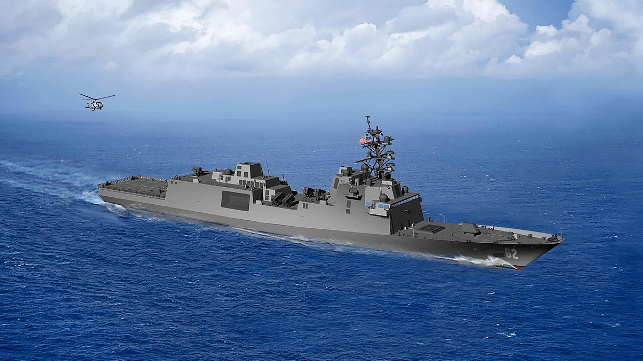
The future Constellation-class frigate (illustration courtesy Fincantieri)

Published Aug 24, 2025 6:01 PM by The Strategist


[By David Axe]

If China ever makes good on decades of threats and invades Taiwan, it could succeed or fail in the span of a few hours—the hours it would take to sail an invasion force across the Taiwan Strait and land troops on beaches or in ports.

A lot could go wrong for the Chinese. Bad weather could slow the crossing. Taiwanese missiles, mines and drones and US submarines could sink enough of the invasion fleet to disrupt the landing sequence, potentially buying time for American bombers, winging across the vast Pacific Ocean, to launch devastating barrages of anti-ship missiles. A depleted and confused landing force could be vulnerable to Taiwanese counterattack.

That’s why China might choose to slowly strangle Taiwan instead of knocking it out with a single swift blow. It’s the less risky approach—and the Taiwanese and their allies aren’t ready for it. Taiwanese and US forces are arming themselves for a short, decisive battle over the Taiwan Strait. They’re not arming themselves for a drawn-out maritime blockade that might play out across millions of square miles of lonely ocean.

Most alarmingly, the Americans have botched an effort to acquire a large flotilla of inexpensive frigates that would be ideal for convoy escort duty—the kind of duty that could break a Chinese blockade at acceptable cost.

To understand how a blockade might play out, the Center for Strategic and International Studies in Washington has run a series of realistic war games under different assumptions, reporting results last month. In some scenarios, Chinese forces interdict ships sailing toward Taiwan but don’t sink them—skirting the threshold of violence that might compel Taiwan’s allies, particularly the United States and Japan, to intervene.

In those scenarios, Chinese sailors seize more than 400 Taiwan-bound merchant ships—and Taiwan begins running out of food in two weeks and natural gas in 10 weeks. On the brink of collapse, ‘Taiwan would have to either make concessions to China sufficient to get China to cease its boarding campaign, escalate by using military force against Chinese forces in the exclusion zone or get the United States to intervene on its behalf,’ CSIS reported.

A US intervention risks drawing in Japan, too—and, as Chinese, Taiwanese, American and Japanese warships and warplanes tangle over the Pacific shipping lanes, violence is sure to break out. What follows, in several of CSIS’s scenarios, is a convoy war not dissimilar to the Battle of the Atlantic in World War II.

US warships and patrol aircraft shepherd merchant ships across the Pacific to Japan, where Japanese ships and planes join the effort, fighting through Chinese missile and torpedo attacks to offload the merchantmen in Taiwanese ports. After the initial shock, Taiwanese food and energy imports quickly return to pre-war levels—assuming, of course, Taiwan has hardened its energy grid before the blockade, stored excess oil, coal and natural gas and stocked spare parts.

But the campaign is extremely costly—especially for the US Navy, which bears the brunt of the effort in most of CSIS’s simulations. According to the think tank, a convoy war falling just short of a full-scale regional war could cost the Americans 34 warships, including two aircraft carriers, as well as hundreds of aircraft. Nearly 19,000 Americans die.

The sinkings amount to more than 10 percent of the overall US fleet, losses that would take decades to make good at current shipbuilding rates. Anticipating exactly this scenario, in 2014 the US Navy launched a new program meant to build a lot of missile-armed frigates, cheaply and fast.

In addition to battling enemy fleets on the high seas, the frigates would need to be capable of ‘independent operations,’ according to the US Navy’s 2017 industry solicitation. That’s naval speak for convoy escort duty.

The Constellation-class frigates wouldn’t exactly be expendable. But with a target price of $1 billion each and a displacement of just 7,000 tonnes, they would be much cheaper and easier to build than Arleigh Burke-class destroyers of nearly $3 billion and 10,000 tonnes. As recently as last year, the Constellation class was planned to peak at 58 ships, making it the second-most-numerous ship type in US service, after the Burkes.

If the US Navy fought a convoy war with a large flotilla of affordable Constellations, and if CSIS’s war games are predictive, the service would still lose a lot of ships. But the loss would sting much less—meaning the fleet could fight through its casualties, onward to eventual victory as more and more merchant ships arrived in Taiwanese ports.

But the Constellation program is in trouble. The design was supposed to be simple, inexpensive and easy to build at scale. Instead, it’s become complex, expensive and impossible to build at scale.

The type’s displacement has swelled by more than 700 tons as the navy has heaped boutique features onto a licensed Italian hull design. The frigate’s cost has risen by $300 million per ship, owing in part to a desperate labor shortage at American shipyards. After 11 years of work, the US Navy has paid for six of the ships—but doesn’t expect to deploy the first in class until 2029. That’s years later than the original plan.

It’s not for no reason that, in their budget proposal for 2026, fleet planners asked for zero additional Constellations. That’s a good sign the frigate program is drifting towards cancellation. There’s nothing in the works to replace it—and the US Navy is almost certain to sail into a possible convoy war without the cheap, easy-to-replace ships that were supposed to make the convoy war affordable for America.

‘Conducting convoys is a basic naval task, but the US Navy is out of practice because convoys have not been a priority mission since the end of the Cold War,’ CSIS warned. ‘Deprioritizing was appropriate for the immediate post–Cold War era, when prospective adversaries had weak naval fleets. It is not appropriate for the current great power era.’

But the US Navy is building ships like there isn’t a possible convoy war on the horizon. This must change. America needs frigates the way Taiwan needs free and navigable seas.

David Axe is a journalist and filmmaker in South Carolina, United States.

This article appears courtesy of The Strategist and may be found in its original form here

The opinions expressed herein are the author's and not necessarily those of The Maritime Executive


US Navy Looks for a Commercial Manager for Marine Corps' New Landing Ship

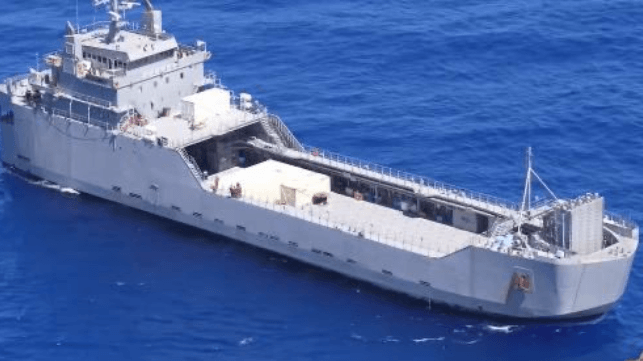
This variant of the U.S. Army's Besson-class will be the base design for the lead ship in the Landing Ship Medium program (IDF file image)

Published Aug 19, 2025 9:32 PM by The Maritime Executive


Naval Sea Systems Command (NAVSEA) is exploring the idea of hiring a vessel construction manager to handle the future Landing Ship Medium (LSM) program, the Marine Corps' new landing craft. It is the first time in recent memory that NAVSEA - the Navy's construction manager - will outsource this role to a third party. 

The idea of putting an intermediary between government owner and private shipbuilder was invented during the Maritime Administration's National Security Multi-mission Vessel program. MARAD hired TOTE Services as VCM, effectively making TOTE the prime contractor, and TOTE subcontracted the construction work to Philly Shipyard. With TOTE standing between MARAD and the yard, Philly was insulated from the paperwork, bid protests and change orders that accompany government shipbuilding projects. Philly has been completing the NSMV program on budget and schedule.

By contrast, all of the Navy's newbuild programs are behind schedule, some by years, according to Navy Secretary John Phelan. NAVSEA is known for strict requirements, and has been known to issue change orders; a VCM model raises the prospect of reduced friction between owner and yard, valuable if the Navy wishes to look at bids from smaller yards that have less experience with government contracting. 

The Landing Ship Medium is a small transport vessel for the Marine Corps, a connector to support the service's mobile anti-ship missile batteries in the islands and littorals of the Western Pacific. In the event of a Chinese invasion of Taiwan, LSMs would help specially-equipped Marine Corps units disperse, resupply and reposition within theater, without attracting as much attention as a full-size amphibious assault ship. 

In April, Naval Sea Systems Command announced that Bollinger will build a lead-ship LSM based on the U.S. Army's Besson-class landing ship, as adapted by Bollinger for export sale to the Israeli Navy. NAVSEA has bought the technical data packages for both Bollinger's Besson-class variant and Damen's LST-100 design, a popular landing ship used by several allied navies. 

According to the Navy's request for information, the vessel construction manager will take the supplied technical data package for the LSM, help pick yard(s) to build it, and make sure that the ships get built to specification. The delivery timeline is about 36 months per hull with an initial series of eight, plus options for more.


Ghana Adopts a New Fisheries Law to Curb IUU Fishing

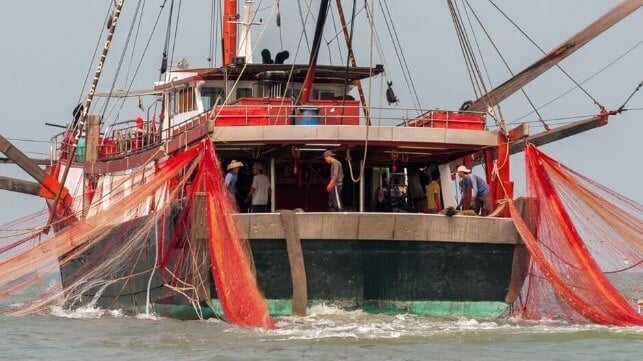
Trawler
Winhorse / iStock

Published Aug 24, 2025 3:59 PM by The Maritime Executive


In the past decade, the scourge of IUU (illegal, unregulated and unreported) fishing in West Africa has grown into a billion-dollar trade, leaving local livelihoods in peril. Poor fisheries governance has seen industrial trawlers encroach in areas designated for artisanal fishermen, which has become a major threat for small pelagic fish. In Ghana for instance, IUU fishing has been estimated to cost the country between $14.4 million and $23.7 million annually. In 2021, the European Union issued a yellow card to Ghana, a warning that the country could lose access to the lucrative European seafood market unless IUU fishing is tackled.

It is in this context that Ghana last week adopted a new fisheries and aquaculture law. The legislation was passed by the parliament in July and was signed into law by President John Dramani Mahama on August 19.

Ghana’s Ministry of Fisheries and Aquaculture said that the landmark law is part of a wider government effort to avoid sanctions in key global seafood markets. “The law is crucial in maintaining Ghana’s access to global markets, where seafood has become one of the country’s fastest-growing non-traditional exports,” noted the Ministry. Recent data from the Ministry indicate that Ghana’s seafood exports have reached more than $425 million annually.

The campaign group Environmental Justice Foundation (EJF), which has been tracking IUU fishing in Ghana, also lauded the law as a bold step of leadership in the region. The Act safeguards livelihoods of over 200,000 small-scale fishers and millions of Ghanaians who depend on artisanal fisheries.

A notable reform by the new law is the expansion of the inshore exclusion zone (IEZ), doubling in size from 6 to 12 nautical miles off the coast. The IEZ allows local fishermen space to fish without competition from industrial trawlers. In the past few years, traditional fishers have faced immense competition from Chinese-backed trawlers, especially with the rise of ‘saiko trade’ in Ghana’s fishing industry. Saiko trade was formerly a traditional barter trade system where bycatch was exchanged for farm produce. The trade later transformed, and now involves industrial trawlers transferring frozen stocks of bycatch to small canoe operators for onward sale.

The practice is fueling depletion of small pelagics such sardinella, traditionally caught by artisanal fishermen and a staple food for local communities. In the past 15 years, average annual income per artisanal canoe has dropped by as much as 40 percent, according to data by EJF. In addition, over 90 percent of small-scale fishers have reported declining catches.

Early this year, Ghana attempted to rein in the industrial trawlers, a move that saw the government suspend fishing licenses of four Chinese vessels. The vessels were accused of unauthorized transshipment at sea (saiko trading) among other violations. The four vessels include Meng Xin 10, Florence 2, Long Xiang 607 and Long Xiang 608. The fishing ban will last for one year.


Pirate Attacks on Fishermen are Underreported - And Deadly

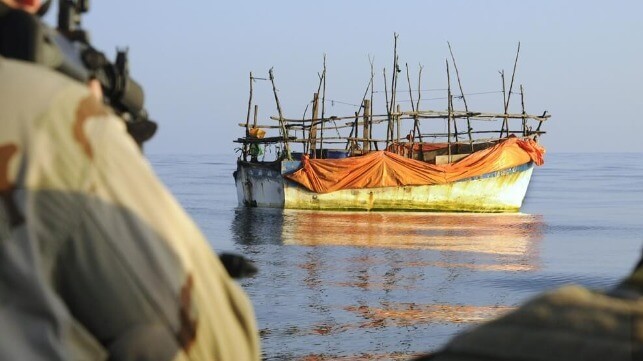
U.S. Coast Guard boarding team approaches a drifting fishing vessel in the Gulf of Aden (USN file image)

Published Aug 24, 2025 6:32 PM by Dialogue Earth


[By Bryan Peters and Letizia Paoli]

In late April 2018, about 40 nautical miles off Paramaribo, Suriname, what started as a routine day of fishing for 20 mostly Guyanese commercial fishers turned into a massacre.

A group of armed Surinamese pirates attacked their four vessels. The fishers were brutally beaten. Some were chopped with machetes. Others were burned with hot oil. All were forced overboard, some with heavy car batteries and other objects tied to their legs. The perpetrators fled with the fishers’ vessels, equipment and catch.

Only five survived. While three bodies were eventually recovered, twelve remain missing and are presumed dead. The attack sent a wave of fear through nearby fishing communities.

Prevailing assumptions about maritime piracy are often based on dramatic tales of high-seas hijackings of large commercial vessels. Our research has uncovered a different reality – one in which piracy often strikes closer to shore and disproportionately affects small-scale fishers, like those targeted off Suriname. These communities, largely absent from mainstream security discussions, are emerging as frequent and vulnerable victims.

Our inspiration to dig deeper

While the economic impacts of piracy have been examined, its harms to people and coastal communities are far less studied. When we looked at Nigerian piracy we found that fishers are increasingly becoming the victims and are suffering serious consequences.

Attacks on fishers made up 14% of all reported piracy incidents worldwide between 2003 and 2023, showed our preliminary analysis on the harms of piracy, as part of a project funded by Research Foundation – Flanders (Fonds Wetenschappelijk Onderzoek). While 14% may sound small, it is striking given the data was sourced from organizations that primarily track threats against commercial shipping: the International Maritime Bureau (IMB) and the US National Geospatial-Intelligence Agency (NGA).

Knowing that piracy often goes unreported, we had a hunch these numbers were just the tip of the iceberg. We decided to dig deeper.

However, our investigation hit two major roadblocks early on. First, there’s no consistent data tracking piracy incidents where fishers are the victims. Second, while some studies explore the link between fishing and piracy, most focus on why fishers become perpetrators, not victims. Except for a few studies in the Gulf of Guinea, Bangladesh and Southeast Asia, the experiences of fishers as victims have largely been overlooked.

Exposing the underreporting of attacks against fishers

To overcome these roadblocks, we combined the data from our preliminary work with incidents sourced from press reports for 2019 to 2023. Our results have recently been published in the journal Fish and Fisheries. During this period, 251 piracy incidents were identified globally in which 701 fishing vessels were targeted. Another 472 press reports identified piracy outbreaks targeting fishers without referencing specific incidents. One report noted 850 attacks on small-scale fishers off Atacames and Esmeraldas, Ecuador, between 2017 and 2021.

Of the 251 cases we identified, 201 were reported only by the press, while 27 appeared solely in incident reports from the IMB and the NGA. Twenty-three incidents were documented in both sources.

So piracy attacks on fishers appear to happen far more often than official reports suggest. And our numbers also likely underestimate the true scale of the problem (for example, because we only looked at English-language press reports).

Far-reaching consequences for victims and their communities

Our work confirms earlier case studies and shows that fishers – particularly small-scale fishers – suffer serious, direct harms from piracy.

Violence was prevalent in over half of the reported incidents, impacting 1,053 fishers. Twenty-seven incidents resulted in 66 fatalities, while 114 individuals were thrown overboard in 11 additional cases and are presumed dead. Physical assaults were reported in 64 further incidents, with over half classified as severe, involving gunfire, beatings or attacks with knives and machetes. Those who survived attacks suffered property losses, which were reported in 78% of incidents. Commonly stolen items included fish, outboard engines, fishing gear, navigation and communication equipment, mobile phones and personal belongings. In 37 incidents, entire vessels were taken. For small-scale fishers, losing equipment or vessels is devastating, as these are their main sources of livelihood.

Beyond the direct individual victims, piracy threatens the social and economic sustainability of communities that rely on small-scale capture fisheries and related activities like fish processing, gear manufacturing and repair, and market sales. Small-scale fisheries account for more than half of the world’s fish catch, primarily for local markets. These attacks, consequently, endanger food security, especially in Global South countries where seafood is a crucial source of nutrition.

What can be done to protect fishers?

The dominant narrative around piracy, focussed on harms to global shipping and other big business, prioritises commercial interests over human lives and highlights global economic disparities.

Urgent action is needed to change this, as attacks on fishers persist across many regions, with the human cost rising, especially in the Global South.

Improved data collection and further research are essential to develop a more comprehensive understanding of this issue. In regions where fishers are known to be targeted, governments and/or local academics could conduct in-depth case studies – as they would be better positioned to access law enforcement and other official data sources.

With improved data, systematic and empirical assessments of the harms of piracy – whether at the local, regional or global level – could become more feasible.

Using already available assessment tools, governments and researchers could identify, evaluate, rank and prioritise the harms associated with piracy against fishers. This would provide a robust evidence base to support policymakers in setting priorities and selecting the most appropriate interventions. Our earlier work on Nigerian piracy shows this is possible. While it may sound pessimistic, the reality is that piracy – like most crimes – is likely to persist. What we can do is target and try to reduce the most serious harms.

Until the issue is better understood, interim measures to protect those most at risk are needed. Since most attacks take place in territorial and internal water, we need to acknowledge that piracy is a local problem – one that requires a local response. Authorities must establish secure and inclusive mechanisms that encourage fishers to report all events, irrespective of severity, while addressing barriers such as fear of retaliation and distrust in government institutions. Increased proactive patrols and rigorous investigations of reported incidents is essential to signal governmental commitment to addressing piracy and to reduce the culture of impunity among perpetrators.

When governments are unwilling or unable to act, civil society and the private sector can play a crucial role. Informal reporting systems could be established by existing fishing cooperatives or NGOs supporting the sector. At a minimum, such systems would encourage fishers to report incidents or suspected pirate activity, even anonymously, allowing information and warnings to be shared with others in the community. This would help fishers make safer, more informed decisions about when and where to fish.

Inspiration could be taken from initiatives like the Caribbean Safety and Security Net (CSSN), a non-profit representing the Caribbean yachting community. CSSN allows affected yachters to submit reports through its website and issues warnings to help other yachters plan safer routes.

For small-scale fishers, the sea is already full of risks – extreme weather, uncertain catches, declining stocks, exploitation and economic pressure. Piracy and other forms of predation should not be among them.

Our findings make clear that a broader, more inclusive approach to maritime security is urgently needed – one that values all lives at sea, not just those tied to global trade. Protecting fishers means acknowledging their vulnerability, listening to their experiences, and investing in solutions tailored to the realities they face.

Bryan Peters is a PhD researcher at the KU Leuven Faculty of Law and Criminology in Belgium, focusing on the harms caused by maritime piracy. His research interests include blue crimes, organised crime, harm reduction, and crime prevention.

Letizia Paoli is professor of criminology and chair of the Department of Criminal Law and Criminology at the KU Leuven Faculty of Law and Criminology. Since the 1990s she has published extensively on organised crime, illegal drugs, doping and the related control policies. More recently, she has also researched the harms of crime, public perceptions of crime seriousness, as well as corporate and sports-related crime.

This article appears courtesy of Dialogue Earth and may be found in its original form here