Monday, August 25, 2025

21st  CENTURY ALCHEMY

Revolutionary ‘Breathing’ Crystal Could Transform the Clean Energy Industry

  • Scientists in South Korea and Japan created a man-made crystal (SrFe0.5Co0.5O2.5) that absorbs and releases oxygen repeatedly at moderate temperatures without breaking down.

  • The discovery could revolutionize clean energy by advancing solid oxide fuel cells, smart windows, and oxygen-based electronics.

  • Early tests show applications ranging from boosting electric vehicle range to dramatically improving building energy efficiency.

A new man-made crystal that can “breathe” oxygen may be a game changer for energy efficiency and the clean energy transition. The material is made from an oxide of strontium, iron, and cobalt, and when heated in a simple gas environment, the thin film crystal has been observed to release and then reabsorb oxygen, much like a human lung. Moreover, it can repeat the action over and over without breaking down. The potential applications of such a material are vast, and could be instrumental in the clean energy transition.

"It is like giving the crystal lungs and it can inhale and exhale oxygen on command," says Professor Hyoungjeen Jeen. Jeen, a physics professor at  Pusan National University in South Korea, co-authored the study along with Professor Hiromichi Ohta from the Research Institute for Electronic Science at Hokkaido University in Japan. Their remarkable findings of the crystal, which has the formula SrFe0.5Co0.5O2.5were published in a scientific paper in the journal Nature Communications earlier this month.

It is not unusual for natural substances to bond with and release oxygen, which is a highly reactive element. This is why oxygen is such a critical building block for human and plant life – it’s a relatively low-hanging fruit in evolutionary terms. But replicating such processes in science isn’t always easy. The process frequently degrades materials quickly, or requires extreme temperatures to cause the absorption or release, making such processes inconvenient for any potential commercial application. 

This is what makes this newest breakthrough so exciting – the oxygen absorption and release cycle is sustained without breaking down the crystal at moderate temperatures –  approximately 752 °F (400 °C). “This finding is striking in two ways: only cobalt ions are reduced, and the process leads to the formation of an entirely new but stable crystal structure,” Jeen explained. And, when oxygen is reintroduced, the original crystal structure is restored. 

“This tackles the challenge of operating in harsher conditions involving much higher temperatures for oxygen control, and replaces other materials used in this process that were too fragile to use repeatedly,” reports New Atlas.

Due to these characteristics, these man-made crystals could be extremely useful in technologies such as solid oxide fuel cells, which can be used to produce electricity from hydrogen with minimal emissions if oxygen is controlled. The solid oxide fuel cells could be instrumental in extending the range of electric cars, especially if they are able to operate at relatively low temperatures. 

The ability to control oxygen “also plays a role in thermal transistors—devices that can direct heat like electrical switches—and in smart windows that adjust their heat flow depending on the weather,” according to Phys.org. These smart windows can help to maintain indoor temperatures, greatly enhancing buildings’ energy efficiency. This could have an enormous impact on climate goals – at present, incredibly, buildings consume more energy than transportation and industry combined.The research team has already tested out the application of the crystal in smart windows. “They’ve found out that the material changes transparency based on its oxygen content, with the oxygen-rich version appearing less transparent while the oxygen-depleted version showing increased transparency,” reports Design Boom. The scientific team also foresees potential applications in electronics, including oxygen sensors and gas separation systems. 

"This is a major step towards the realization of smart materials that can adjust themselves in real time," says Professor Ohta. "The potential applications range from clean energy to electronics and even eco-friendly building materials."

For now, however, next steps for the scientific process are to continue to refine the crystals’ composition and processing methods to optimize performance and durability. The team is continuing to test different metal ratios to see if they can improve upon SrFe0.5Co0.5O2.5. 

By Haley Zaremba for Oilprice.com


Contract worker dies in Rio Tinto mine in Guinea

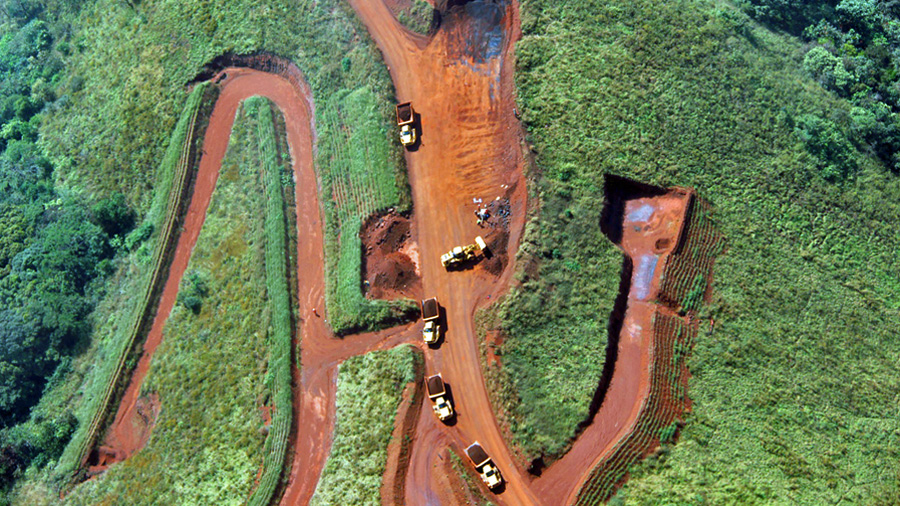
Simandou iron ore project. (Image courtesy of Rio Tinto Simandou)

A contract worker died following an incident in Rio Tinto’s SimFer mine site in Nzerekore, Guinea on Friday, the mining company said.

All activity at the SimFer mine site is currently suspended, the iron ore miner said in its statement on Saturday.

Incoming chief executive Simon Trott said he will be traveling to Guinea, and that measures will be taken to ensure the safest possible work environment.

“A thorough investigation will take place together with the relevant authorities to establish the causes of this tragic incident,” Rio Tinto chief executive Jakob Stausholm said.


Codelco approved to reopen two sections of El Teniente  copper mine

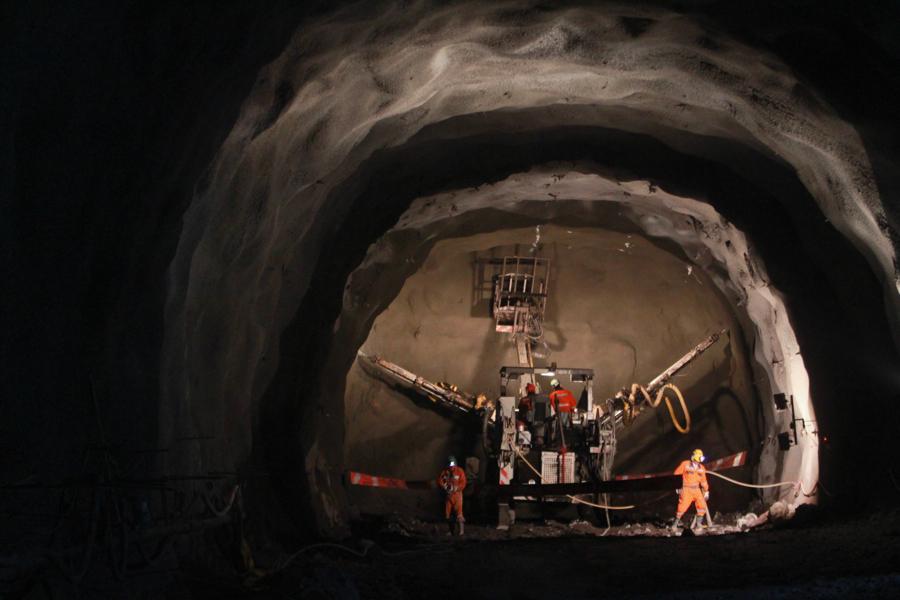
A snapshot of El Teniente’s underground dimensions. Credit: Codelco

Chilean miner Codelco on Sunday said mining regulator Sernageomin has approved the restart of the Andes Norte and Diamante divisions of its El Teniente copper mine, after an accident on July 31 that forced a suspension of operations.

Codelco added that the labor inspection office has still only approved a partial return to those units of the mine, and that operations at the Recursos Norte and Andesita sections remain closed.

(By Daina Beth Solomon)


Coast Guard Arrests Intoxicated MSC Boxship Captain After Ship Docks

containership docking
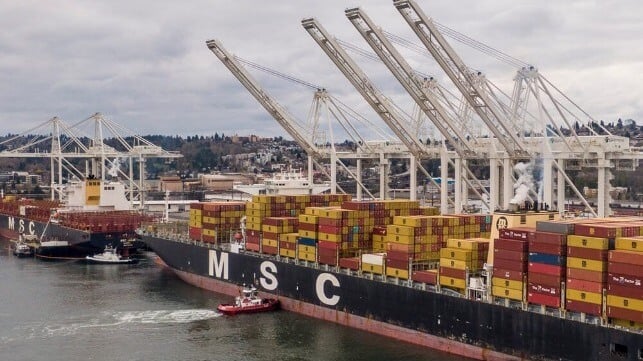
USCG arrested the captain after the vessel docked in Seattle (Northwest Seaport Alliance file photo)

Published Aug 23, 2025 4:26 PM by The Maritime Executive


The US Coast Guard arrested the master of a containership this week after the pilot guiding the ship to port reported the captain was exhibiting signs of intoxication. A field sobriety and breathalyzer test administered by the USC after the vessel docked found the captain was impaired more than six times the legal limit for commercial mariners.

The vessel, the MSC Jubilee IX, is a 108,770 dwt containership with a capacity of 8,800 TEU. The ship had arrived in the anchorage near Everett, Washington, coming from Busan, South Korea, with a stop in Vancouver, Canada. Built in 2008, the vessel, which is registered in Liberia, appears to have joined the MSC fleet in March 2025.

A Puget Sound pilot boarded the MSC Jubilee IX on August 20 to guide the ship to port in Seattle and reported to the US Coast Guard Sector Puget Sound that the vessel’s captain was exhibiting signs of intoxication. The pilot and first mate operated the vessel during the transit from an anchorage to Terminal 5 at the Port of Seattle without incident.

After the vessel docked, a Coast Guard boarding team and the Coast Guard Investigative Service boarded the ship and commenced a port state control examination. During the investigation, they administer the sobriety test.

The captain was arrested and transported to the King County Jail, where charges were referred to the King County Prosecutor for boating under the influence. 

The vessel was detained by the Coast Guard until a relief captain was identified and confirmed. The vessel was later cleared to resume operations and departed Seattle on August 22 for Prince Rupert, Canada, and a return trip to Yantian, China.

The incident is similar to a January 2024 arrest when the captain of another MSC containership, a Polish national commanding MSC Roshney V, was also detained after the pilot in Felixstowe in the UK also suspected the master was intoxicated. Tests revealed his blood alcohol level was nearly four times over the limit. The master pleaded guilty in a UK court and was given a suspended sentence and a small fine. He told the court he was sorry for his actions and that his career at sea was over.


Le Groupe ALMACO to Outfit Canadian Coast Guard’s Polar Max Icebreaker

ALMACO
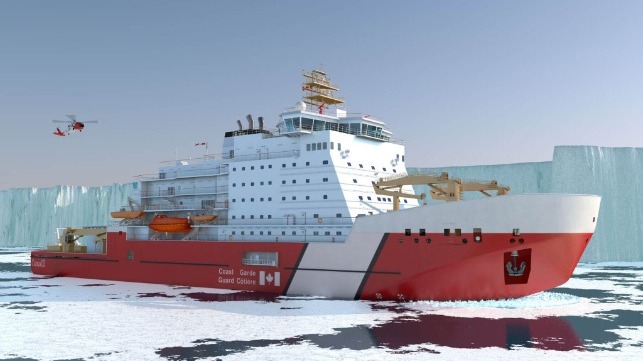
Polar Max Icebreaker, Helsinki Shipyard

Published Aug 23, 2025 2:24 PM by The Maritime Executive


[By: ALMACO]

Le Groupe ALMACO, a proudly Canadian subsidiary of ALMACO Group, today announced it has signed an over 100M CAD Engineering, Procurement and Construction (EPC) contract with Chantier Davie Canada Inc. (Davie), Canada’s premier shipbuilder, for the outfitting of the Polar Max Icebreaker – a flagship project under the National Shipbuilding Strategy (NSS) and a cornerstone of the Canadian Coast Guard’s (CCG) future fleet. The move supports Le Groupe ALMACO and Davie’s shared vision of building local capabilities and fostering long-term industrial growth in the Canadian marine sector.

Polar Max: a Unique Project Executed Across Continents
The execution plan for Polar Max is a truly international collaboration between Davie and ALMACO, spanning both Canada and Finland. The hull will be constructed at Davie-owned Helsinki Shipyard, with Le Groupe ALMACO delivering interior accommodation spaces and other essential areas during this stage. In parallel, in Québec, Davie’s skilled shipbuilders and Le Groupe ALMACO will lead the design, procurement, and fabrication of the 1,400-ton superstructure – the top part of the ship.

This dual-build approach not only leverages expertise across two continents but also accelerates the project timeline by allowing major work to proceed simultaneously in both locations and guarantee the timely delivery of the ship to the Government of Canada. Once the hull is transported from Finland to Canada, the superstructure will be integrated at Davie’s facility in Lévis, Québec. This approach follows a proven process, successfully used for the delivery of Combat Support Ship (CSS) Asterix to the Royal Canadian Navy (RCN). Work on the superstructure begins in late summer, with final integration and vessel delivery to Canada by 2030.

Expanding ALMACO Group’s Presence in Québec
To support the Polar Max project and to create a long-term presence, ALMACO is expanding its operations in Canada. ALMACO set up operations in Québec already in 2022 and will open a new Le Groupe ALMACO office in Québec City in September 2025.

Québec’s role in the Polar Max program further reinforces its position as a global shipbuilding hub, recognized for innovation, technical excellence, and a highly skilled workforce. In delivering the project, Davie and ALMACO intend to collaborate extensively with subcontractors across Québec and Canada’s broader shipbuilding industry, ensuring that expertise and economic benefits are shared nationwide. As part of this effort, ALMACO’s role in the Polar Max will generate new jobs in Québec, creating opportunities for local talent and driving long-term growth in the province’s advanced marine sector.

The company has launched a major recruitment program, combining the know-how of ALMACO’s Europe-based employees with the skills of Canadian professionals. Le Groupe  ALMACO is committed to employing local talent in all functions – from engineering and project management to manufacturing and other roles.

A Shared Commitment to Canada’s Maritime Future
“Working with Davie again is a proud moment for us,” said Vilhelm Roberts, Executive Chairman of the Board and Co-owner of ALMACO Group. “We’ve maintained a close relationship with their team ever since the Asterix Project, and this new contract confirms our shared ambition to deliver world-class vessels while growing local expertise and capacity. We’re not just outfitting a ship—we’re helping to build the future of Canadian shipbuilding together.”

“Polar Max is a once-in-a-generation project that demands the very best from every partner involved, said Davie co-owner and CEO, James Davies. “Our work with ALMACO on Asterix proved that when we combine their world-class expertise with Canadian ingenuity, we deliver faster, better and with greater impact. This is a lasting partnership which will not only help deliver Polar Max on time and to the highest standard – it will also create jobs and develop skills and industrial capability here in Canada.”

Davie is a key player in Canada’s National Shipbuilding Strategy. ALMACO is honoured to support this important national initiative and looks forward to continuing its collaboration with Davie on Polar Max, and beyond.

“This is great news that ALMACO has chosen Québec to expand its activities and partner with Davie on the Polar Max Icebreaker project. The National Shipbuilding Strategy continues to generate exciting opportunities for Canada’s shipbuilding industry, creating high-value jobs and strengthening our economy while advancing shipbuilding expertise in Québec and across the country,” said the Honourable Mélanie Joly, Minister of Industry and Minister responsible for Canada Economic Development for Québec Regions.

“The Polar Max project is an excellent example of how Canadian industry and international partners can collaborate to deliver world-class capabilities while creating good-paying jobs here at home. With ALMACO expanding its footprint in Québec, we can expect more skilled jobs, greater shipbuilding expertise, and a stronger, more resilient Canadian marine sector. As a key project under the National Shipbuilding Strategy, the Polar Max icebreaker will contribute to a more modern, capable Canadian Coast Guard fleet and secure long-term economic growth and shipbuilding capacity for our country,” said the Honourable Stephen Fuhr, Secretary of State for Defence Procurement, Canada.

“Davie’s leadership in the Polar Max project is a powerful driver of economic growth for Québec,” said Christopher Skeete, Minister for the Economy. “The collaboration between Davie and the ALMACO Group will generate business opportunities in both jurisdictions’ naval sectors. It will also consolidate Québec’s position as a shipbuilding hub, while recognizing the strategic importance placed on the Arctic in the 21st century.”

A Trusted Partnership Renewed
The Polar Max project represents a significant milestone in the long-standing collaboration between Davie and ALMACO Group. Their previous partnership to deliver the CSS Asterix to the Royal Canadian Navy in 2017 created lasting impact on the Canadian and international maritime industries. The Polar Max contract highlights the trust and shared commitment to delivering top-tier marine outfitting and advancing shipbuilding excellence in Canada.

Introducing Mobile Cabin Factory for Modular Cabins
A local “cabin factory” will be established in Québec. This facility, a first of its kind in Canada, will allow Le Groupe ALMACO to produce pre-fabricated modular cabins on site, significantly improving project logistics, efficiency, and quality assurance. The move supports Le Groupe ALMACO and Davie’s shared vision of building local capabilities and fostering long-term industrial growth in the Canadian marine sector.

The products and services herein described in this press release are not endorsed by The Maritime Executive.


Eastern Libya Set to Approve Turkey’s Mediterranean Gas Exploration Deal

TPAO drillship
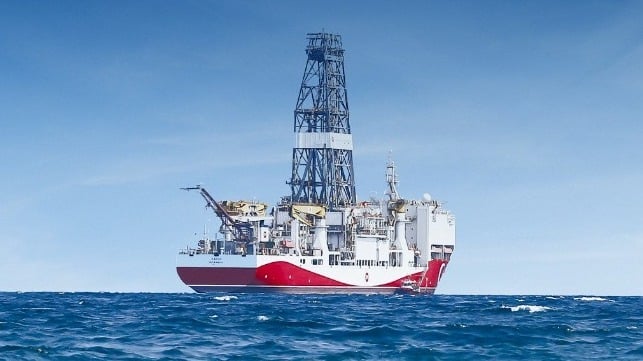
Drillship Fatih, just one of a growing fleet of Turkish offshore exploration assets (File image courtesy Turkii Petrolerii)

Published Aug 24, 2025 6:25 PM by The Maritime Executive


Turkey is poised to strengthen its exploration rights in the Mediterranean region. Reports have emerged that Libya’s eastern-based government is likely to approve a 2019 maritime pact, which allows Turkey to explore for oil and gas in Libyan waters. The agreement had only been signed by the Tripoli-based government in Western Libya, which has strong ties with Ankara.

However, the eastern side in Benghazi seems to have softened its opposition to Turkey. According to Bloomberg, the Parliament in Benghazi is expected to approve the maritime pact with Turkey in coming weeks. The approval will give Turkey unfettered access to Libyan waters, where the Turkish Petroleum Corporation (TPAO) is about to begin geological and geophysical surveys.

The ratification of the pact is seen as a major milestone for Turkey’s ongoing diplomatic efforts to unify Libya’s two rival governments. Early this week, the Turkish navy vessel TCG Kinaliada made a port visit in Tripoli. The vessel is also expected in Benghazi, an indication of the warming relations between Turkey and eastern Libya. The de facto leader of eastern Libya, Field Marshal Khalifa Haftar, has been at odds with the Tripoli government over control of Libya’s oil revenue. The possibility of the two sides reaching a consensus on the exploration rights offers a glimmer of hope to Libya’s stability.

But the prospect of enacting the Turkey-Libya pact is likely to exacerbate ongoing maritime disputes in the Eastern Mediterranean. The agreement opens up the expansive Libyan EEZ to exploration by Turkish vessels, an area that overlaps with maritime claims of Greece and Cyprus. Both countries accuse Turkey of wanting to control the disputed waters, known for significant oil and gas reserves.

The hydrocarbon blocks near the Greek island of Crete are among the most contested. In June, the Tripoli-based Libyan government objected to Greece’s tender call for hydrocarbon exploration south of Crete. The Libyan government argued that some of the areas in the region constitute its maritime zone.

It remains to be seen how energy politics in the Eastern Mediterranean will pan out, especially at a time Turkey appears to be gaining influence in the region. As Turkey pushes to become a regional energy hub, the Mediterranean Sea presents significant potential in achieving the ambition. Recently, Turkey bought two drillships, which will boost its exploration capacity in the Mediterranean region.


Malaysia Fast-Tracks Investment in its Shipbuilding Sector

Tanjung Agas
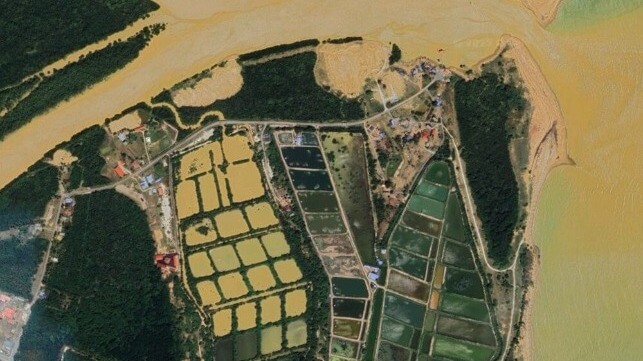
The Tanjung Agas area of Pekan, Malaysia (CNES, Airbus, Gebco, Maxar, Google)

Published Aug 24, 2025 10:39 PM by The Maritime Executive


Malaysia is doubling down on shipbuilding with two key investment milestones achieved last week. At the forefront is Malaysia’s Pahang State, which is betting big on maritime development. Last week, Pahang signed a lease agreement with Teroka Majubina Holdings for the development of the Tanjung Agas Hybrid Shipyard Complex in Pekan, a small town on Peninsular Malaysia’s east coast.

The $18 billion project will be implemented in three phases in an area covering 1,000 acres. The construction of the project is expected to begin in eight months. The first phase will involve developing a green vessel recycling facility; the second component will include a shipbuilding center, providing ship construction and maintenance services; and lastly, the third phase includes building oil and gas storage facilities.

“With the establishment of the shipyard complex, Pahang will emerge as a regional maritime hub, providing competitive services in shipbuilding, green ship recycling and oil and gas hub,” said Wan Rosdy, Head of Pahang State.

The state is also implementing a similar project in the Gebeng industrial area, the Kuantan Maritime Hub (KMH), located about 35 miles to the north of Pekan. The $500 million project is being developed by Muhibbah Engineering and is scheduled for completion in 2034.  

The KMH project covers a 500-acre site, with some parts reclaimed from the sea. The hub is expected to host industries ranging from commercial shipbuilding and ship repair to defense and technical training.

These flagship projects are important for Malaysia to retain a long-term standing in the global shipbuilding sector, according to the Malaysian Investment Development Authority’s CEO, Sikh Shamsul Ibrahim.

“Malaysia should always remain vigilant of rising competition from lower cost yards in neighboring economies such a Vietnam and Indonesia. We should start focusing on reducing reliance on foreign automation tools, by approaching local robotic manufacturing in Malaysia, which could build a whole new automated system integration to improve productivity in our shipbuilding landscape,” added Sikh Shamsul.

As of June, the authority said it has approved shipbuilding and ship repair sector investments worth over $230 million, showing sustained interest by the private sector to invest in the Malaysian shipyard sector.

To Take On a Bigger Role, Malaysia's MMEA Buys a Bigger Ship

MMEA new patrol ship
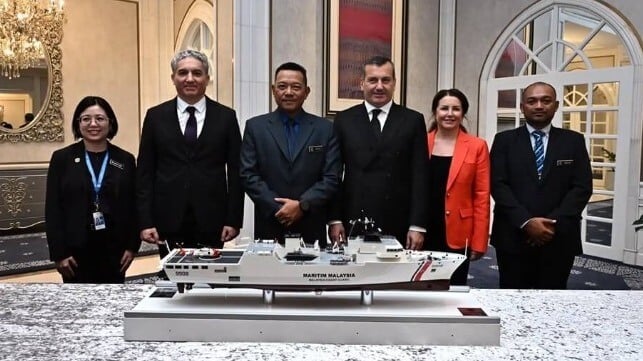
Courtesy Jabatan Penerangan Malaysia

Published Aug 24, 2025 9:53 PM by The Maritime Executive


This month, the Malaysian Maritime Enforcement Agency (MMEA) held a keel laying ceremony for a new Multi-Purpose Mission Ship (MPMS) in Turkey. The event marked another milestone in the construction of MMEA’s largest vessel, with the steel-cutting ceremony held last month.

Construction is under way at Desan Shipyard after a memorandum of understanding with MMEA back in February. The signing of the construction contract followed in May, with the vessel scheduled for delivery in 2027. The construction project also involves cooperation with other Turkish defense industry companies such as Aselsan and Havelsan. The two companies will be involved in the installation of advanced weaponry, detection and communication systems.

The 99-meter-long vessel will serve deep sea operations lasting 28 days without resupply. It will have capacity for 70 crew members and additional room for 30 passengers. For surveillance and interdiction, it will be equipped with two unmanned aerial vehicles, four fast interceptor craft, a helicopter deck and detention compartments.

According to MMEA, the vessel will be deployed for surveillance in Malaysia’s Exclusive Economic Zone (EEZ), especially in the South China Sea. In the past few years, Malaysia’s EEZ has become a hotspot for illegal Ship-to-Ship (STS) oil transfers. This has mainly involved older ships carrying sanctioned Russian and Iranian oil, raising concerns about compliance, safety and pollution.

Recently, Malaysia has introduced new regulations with an aim to curb shadow fleet STS transfers. Some of the efforts include closing the notorious Tompok Utara anchorage and layup area near the Singapore Strait. However, MMEA emphasizes that it requires enhanced operational and patrolling capabilities to curb increased criminal activities in Malaysian waters.

Last year, the agency got a budgetary allocation of $159 million to procure new vessels and maintain existing ones. Almost half of this allocation - $82 million - went into the acquisition of the MPMS. Another $37 million went into the procurement of two New Generation Patrol Craft (NGPC).


Towards a New Data Sharing Regime: Structuring Supply Chain Data

Singapore port terminal
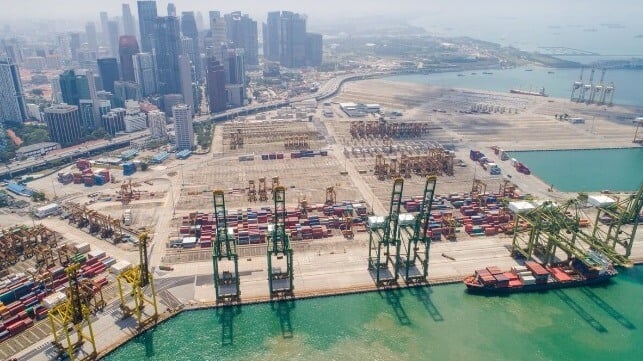
PrimeImages / iStock

Published Aug 24, 2025 3:45 PM by Mikael Lind et al.


LONG READ


[By Mikael Lind, Wolfgang Lehmacher, Sandra Haraldson, Ernst Hoestra, Boris Kriuk, Richard van der Meulen, and Mark Scheerlinck]

Introduction: When Traditional Approaches Fall Short

Transport and logistics have always hinged on seamless coordination. Moving goods from point A to point B involves a complex web of actors, including shippers, freight forwarders, carriers, terminal operators, port authorities, customs officials, warehouse operators, and first-mile and last-mile delivery providers. Cargo is typically handed over in nodes from one controlling party to another. It is in these nodes that changes can be applied to the trajectory of the cargo. This requires collaboration. Traditionally, each participant has managed their role in isolation, sharing information only when necessary, primarily through bilateral channels.

This model has sustained the industry for decades, yet it increasingly reveals its limitations. In today’s volatile and interconnected world, where disruptions have shifted from exceptions to expectations, fragmented and linear information flows create blind spots, delays, inefficiencies, and fragility.

The solution transcends mere technological upgrades; it demands a fundamental reimagining of how we organize and interpret vast, disparate streams of supply chain data. Rather than scattered exchanges, what’s needed is a collaborative data-sharing regime that imposes order upon chaos, delivering shared visibility and situational awareness across the entire ecosystem. Such a framework empowers actors not just to be informed, but to act decisively, converting raw data into strategic insight. The result: enhanced coordination, resilience, and performance.

This is an ambition that the Virtual Watch Tower (VWT), a multi-stakeholder community co-creating a digital, federated architecture and solution as a public good, pursues in its approach to data sharing for better disruption and carbon footprint management.

The Inherent Limits of Traditional Data Sharing

In the traditional landscape, data exchanges are direct and narrowly focused, typically confined to transactions between two actors. A shipper updates a carrier. A carrier informs a forwarder. A terminal operator alerts a trucking company. Each communication serves immediate operational needs, with a transactional brevity that sacrifices holistic understanding.

This approach bears three critical shortcomings:

  • Fragmentation: Each participant sees only a sliver of the entire operation, isolated snapshots rather than a cohesive panorama.
  • Inefficiency: Data is redundantly transmitted across numerous bilateral links, leading to duplication and discrepancies.
  • Latency: In the face of natural disasters, strikes, congestion, system outages, or geopolitical shocks, actors struggle to access timely and comprehensive data, hampering coordinated responses.

The consequence is a fragmented patchwork of data streams, leaving stakeholders “starving for data but lacking insight.”

Embracing a Collaborative Data Sharing Regime

A transformative alternative lies in a Collaborative Decision-Making (CDM) approach. Instead of Actor #1 transmitting updates separately to Actors #2 and #3, data enters a shared, trusted pool accessible to all authorized participants (Figure 1). This shift from bilateral exchanges to an ecosystem-wide platform enables real-time shared visibility.
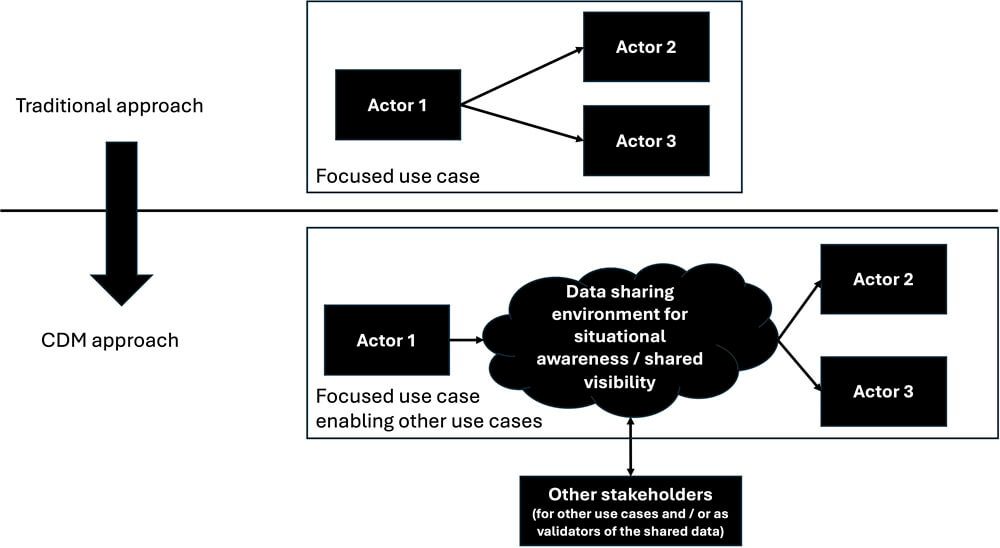
Figure 1: Fundamentals on Data Sharing: From bilateral to ecosystem-based data exchanges

This methodological leap unlocks profound benefits:

  • Unified situational awareness: Everyone views the same data, smoothing misalignments and fostering shared understanding.
  • Scalability: Data is shared once and consumed by many, eliminating inefficiencies.
  • Resilience: Early detection and coordinated response to disruptions become routine.
  • Trust and sovereignty: Each actor maintains control over their data, dictating access within an interoperable and fair framework.

In essence, collaboration brings clarity and meaning to the raw data flowing through supply chains.

A Four-Layer Framework to Bring Order and Insight

At the core of this new regime is a systematic model (Figure 2) that organizes fragmented information into three interlocking layers, which are wrapped within a fourth evolutionary layer that enables secure and trusted ecosystem-wide data sharing. Each layer enriches data with context and purpose, turning raw signals into orchestrated decisions.

This framework relies on establishing common semantics at each layer, ensuring that data shared between planning, progress, and analysis is coherent and interpretable by every actor. Only with agreed-upon definitions and structures can insights be generated and acted upon reliably across the supply chain.
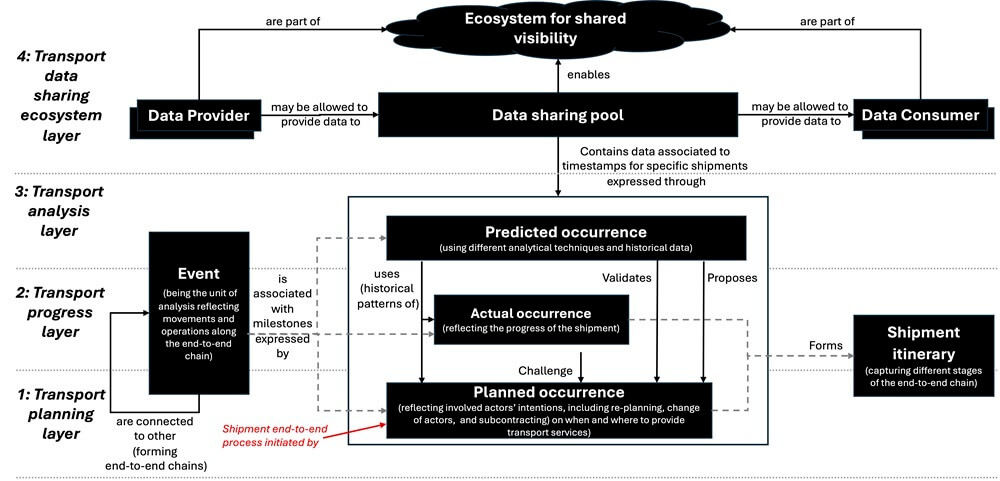
Figure 2: Layered data sharing framework

1. Transport Planning Layer – Sharing Intentions

The planning layer looks forward. It captures actors’ intentions, the planned container movements, vessel unloading, and truck dispatches, offering a dynamic view of expected operations. Shared plans enable proactive coordination: for example, a delay of a ship leads to a new plan and prompts terminal berth reallocation and trucking schedule adjustments. The value of the shared plans also depends on standardized representations of intentions and schedules.

2. Transport Progress Layer – Documenting What Has Happened

This layer logs real-time data, including timestamps of events such as “container loaded,” “vessel departed,” or “truck arrived at gate.” Leveraging Internet-of-Things (IoT) sensors and system signals, it constructs a reliable, shared timeline, replacing isolated updates with a common factual record. Documenting events requires agreed-upon event codes and timestamp formats.

3. Transport Analysis Layer – Illuminating Insights

Here, analytics and artificial intelligence (AI) synthesize data from planning and progress layers to simulate deviations, estimate delays, forecast arrivals, and even compute emissions. This layer distils streams of raw data into actionable insights, offering foresight, risk awareness, and performance metrics that anchor decision-making. Helpful analytical insights arise from consistently formatted and meaningful raw data.

4. Transport Data Sharing Ecosystem Layer – Wrapping and Enabling Across Layers

Surrounding and enabling these three layers is the data sharing ecosystem itself. This outer layer ensures that data flows securely, transparently, and with trust throughout the entire network. It enforces access controls and sovereignty policies, allowing each participant to determine who sees what, while supporting seamless interoperability and fairness. A trusted sharing environment must enforce semantic consistency as a basis for interoperability.

This ecosystem is not merely a container but a living framework that facilitates collaboration across planning, progress, and analysis, amplifying the value created within each layer and fostering resilient, coordinated supply chain networks.

Due to this systemic approach, the integrity of data management also enables a fully controlled Return Cycle, which, based on current Producer Responsibility rules, should be considered a major additional benefit.

How the Layers Synchronize: From Fragmentation to Elegance

Imagine a container moving from a factory in Asia to a warehouse in Europe:

  1. The planning layer captures the intended shipping schedule.
  2. As the shipment proceeds, the progress layer records the container’s loading onto a vessel and subsequent real-world events.
  3. The analysis layer continuously compares the shipping plan against actual progress, predicts delays, recalculates arrival times, and updates emissions estimates.

Throughout this cycle, the data sharing ecosystem secures and governs the data flow to the port, trucking company, and other parties downstream , ensuring that access and usage rights are respected while enabling authorized actors to consume and engage with the same accurate and timely information.

This orchestration transforms once fragmented, reactive data into a continuous, coherent, and actionable stream.

Trust Reinforced by Data Sovereignty

Fear of losing control has long stifled data sharing. This regime addresses such concerns head-on: sovereignty is preserved. Each actor defines what to share, with whom, and under which conditions, supported by distributed platforms such as federated systems and blockchain.

No single entity dominates; instead, information is structured and shared across the ecosystem with embedded permissions. Trust flourishes when fairness and transparency underpin data governance.

Why Action Is More Urgent Than Ever

Today’s supply chains generate unprecedented data volumes. Every scan, movement, and transaction emits digital signals. Yet without structure, this mass merely manifests as noise.

Simultaneously, global volatility, from pandemics to geopolitical tensions and climate events, demands swift, coordinated reactions. The solution IS NOT more data, but smarter, better-organized data.

The four-layer framework provides a roadmap, turning disjointed signals into shared understanding and transforming data chaos into resilient coordination.

Aligning Incentives for Sustainable Data Sharing

Incentives must align across participants for this model to succeed. The logical starting point is the shipper, whose inputs, like shipment itineraries and booking details, anchor the shared structure.

Operators, terminals, and carriers then contribute data as part of service fulfilment. This reciprocity creates mutual value: clarity generated by others enhances each actor’s operations.

Over time, structured data-sharing will evolve from a competitive advantage to an industry imperative.

Conclusion: From Data Fragmentation to Meaningful Coordination

The logistics sector has historically amassed an abundance of data but suffered from a paucity of shared understanding. Traditional fragmented approaches yield isolated signals that obscure the bigger picture.

What is required goes beyond technology: a fundamentally new way to structure, interpret, and act on existing data.

The collaborative four-layer model achieves this by:

  • Aligning plans: sharing intentions.
  • Anchoring progress: documenting reality.
  • Extracting meaning: illuminating insight.
  • Enabling trust: facilitating secure, sovereign data sharing across the ecosystem.

Together, these layers weave disconnected updates into a shared narrative, trusted and actionable by all participants.

A vital first step is cultivating shared situational awareness. Structured data enables actors to perceive the broader ecosystem and receive early alerts about emerging disruptions, such as delays, capacity shortages, or congestion, empowering proactive responses.

However, structure alone is insufficient. The value emerges when visibility translates into action: rebooking when capacity tightens, alternative routing amid congestion, and emissions calculators to align disruption management with sustainability goals. These services transform awareness into resilience.

The message is unequivocal: collaboration is not optional; it is essential—a vision lived by VWT. Only through collective order, insight, and trust can supply chains transcend fragmented data to achieve meaningful coordination, moving from reactive firefighting toward proactive, resilient logistics. By moving data towards a public good, VWT translates data-sharing into a solution that benefits all.

About the authors

Mikael Lind is the world’s first (adjunct) Professor of Maritime Informatics engaged at Chalmers and Research Institutes of Sweden (RISE). He is a well-known expert frequently published in international trade press, is co-editor of the first two books on Maritime Informatics and is co-editor of the book Maritime Decarbonization.

Wolfgang Lehmacher is a global supply chain logistics expert, partner at Anchor Group. The former director at the World Economic Forum, and CEO Emeritus of GeoPost Intercontinental, is an advisory board member of The Logistics and Supply Chain Management Society, ambassador F&L, and advisor Global:SF and RISE. He contributes to the knowledge base of Maritime Informatics and co-editor of the book Maritime Decarbonization.

Sandra Haraldson is Senior Researcher at Research Institutes of Sweden (RISE) and has driven several initiatives on digital collaboration, multi-business innovation, and sustainable transport hubs, such as the concept of Collaborative Decision Making (e.g. PortCDM, RailwayCDM, RRTCDM) enabling parties in transport ecosystems to become coordinated and synchronised by digital data sharing.

Ernst Hoestra is the CEO of Erasmus Enterprise, has 25 years of senior leadership experience at companies including TNT, Pitney Bowes, and Cycleon (now ReBound Logistics), where his team introduced game changing technology to facilitate global returns management processes. He is also an investor, advisor, board member, and lecturer in innovation, strategy, and entrepreneurship.

Boris Kriuk is Chief of AI at Strevio Limited, head of R&D at Sparcus Technologies Research Group, as an active member of Computer Vision Foundation, Association of Computing Machinery, honoured associate member at London Journal Press and Speaker at Computer Graphics Society, he has years of experience in AI for Logistics and Supply Chain research and innovation.

Richard van der Meulen is a global supply chain thought leader with 20+ years in international trade and logistics. As Vice President at Infor Nexus, he advances AI-powered cloud solutions and industry-wide collaboration. A frequent keynote speaker and strategist, he champions data sharing to enable resilient, digitally connected supply chains.

Mark Scheerlinck is co-founder of Chasqee BV, a young IT company creating innovative solutions for supply chain visibility and orchestration. As 4th generation in the port of Antwerp, with extensive experience in managing, creating and M&A of maritime supply chain companies, the practical experience is combined with vision and IT. A broad network in supply chain and ample experience as a speaker in EU context complement the drive to innovate.

The opinions expressed herein are the author's and not necessarily those of The Maritime Executive.