It’s possible that I shall make an ass of myself. But in that case one can always get out of it with a little dialectic. I have, of course, so worded my proposition as to be right either way (K.Marx, Letter to F.Engels on the Indian Mutiny)
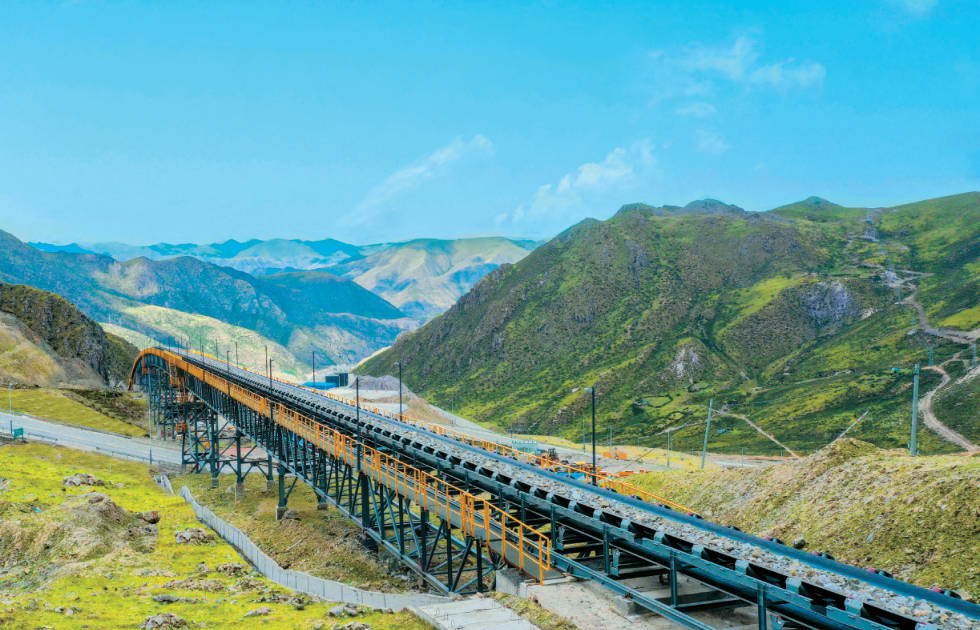
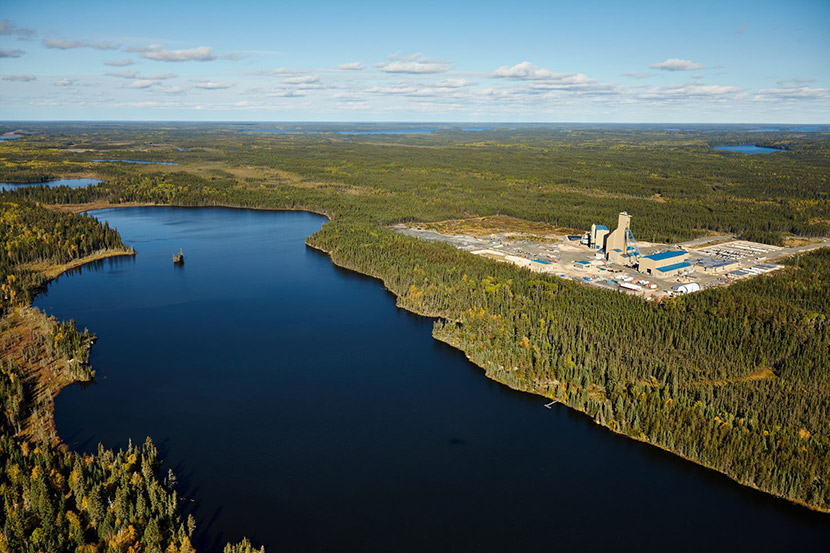
Zijin’s operations in DRC. Credit: Zijin Mining Group
China’s Zijin Mining Group Co., the world’s third-biggest metals miner by market value, said geopolitical confrontation and resource nationalism will pose challenges to its overseas projects.
“Global uncertainties have become unprecedented,” the copper-gold giant said after reporting record quarterly earnings. “The competition for critical minerals among major powers has entered a high-intensity confrontation phase” that could affect the company’s revenue, profits and new overseas projects, it said.
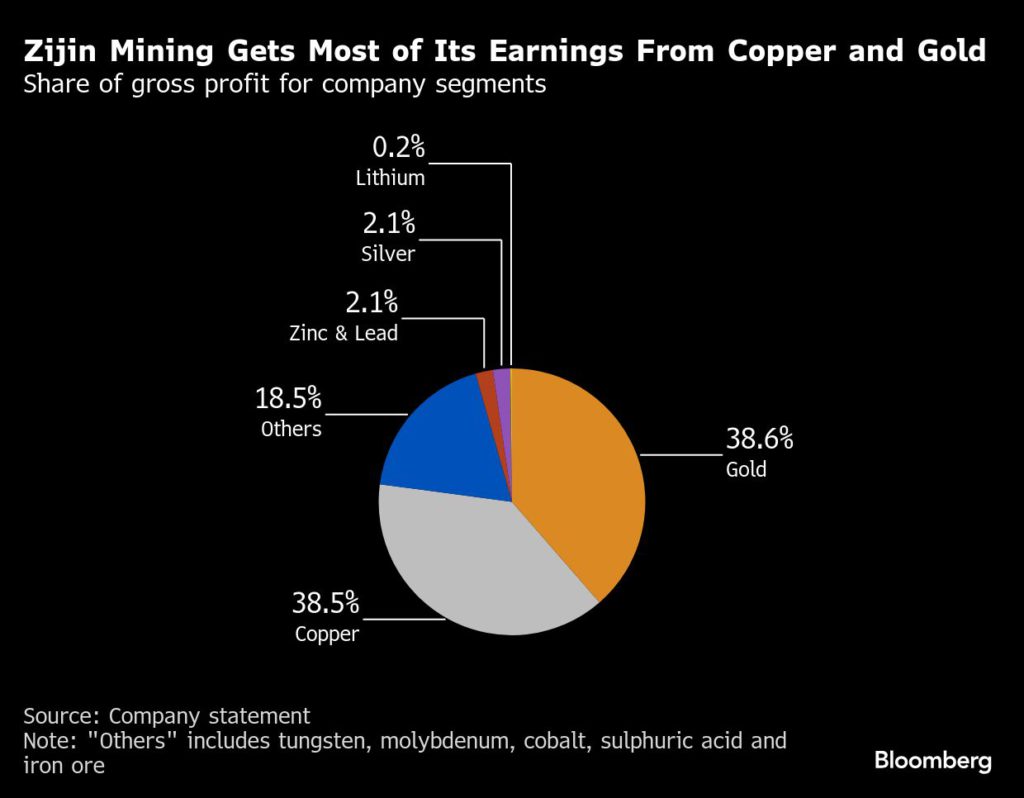
Zijin has become one of the world’s most important mining companies thanks to rapid growth — largely in Africa — and a focus on two lucrative metals, copper and gold. Its first-half net income went up 54% to 23.3 billion yuan ($3.3 billion) thanks to higher output and prices, and its shares rallied to a record in Hong Kong on Wednesday.
The US under President Donald Trump has begun a push to secure American control of resources around the world, with an eye to tackling China’s dominance. For example, a peace deal brokered by Trump between Rwanda and Democratic Republic of Congo was seen as a way to ease US access to the region’s mineral riches.
Critical minerals include a wide range of materials deemed vital to national security because of their important industrial or defense applications. But moves to reshape supply chains risk subjecting prices to volatility and supply disruption, as was the case with Trump’s introduction of copper tariffs earlier this year.
Zijin also highlighted other challenges for the mining industry, from rising costs to trade upheaval and nations seeking to protect their own resources. “Differences in politics, policies and laws among various countries and regions, as well as resource nationalism sentiments, may pose certain challenges to construction and production operations,” Zijin said.
The comments on geopolitics and jurisdictional risks offered a note of caution in an otherwise upbeat earnings report for Zijin, which is now valued at more than $80 billion — behind only Rio Tinto Group and BHP Group in the ranks of global metals miners. Its shares are up more than 75% this year.
On copper, Zijin noted “extremely strong demand resilience” in China, with apparent consumption rising more than 10% in the first half. Demand has been boosted in China by the country’s waves of investments in renewable energy and electrification.
The roll-out of US tariffs on copper, combined with low global inventories, “may trigger market volatility in the short term as trade flows are reshaped,” it said. Copper is up about 12% on the London Metal Exchange this year.
Zijin said its first-half copper output from mines that it owns or part—owns rose 9% from a year earlier to 566,853 tons.
(By Annie Lee)
From brown to green: Historical German lignite site converted to solar park
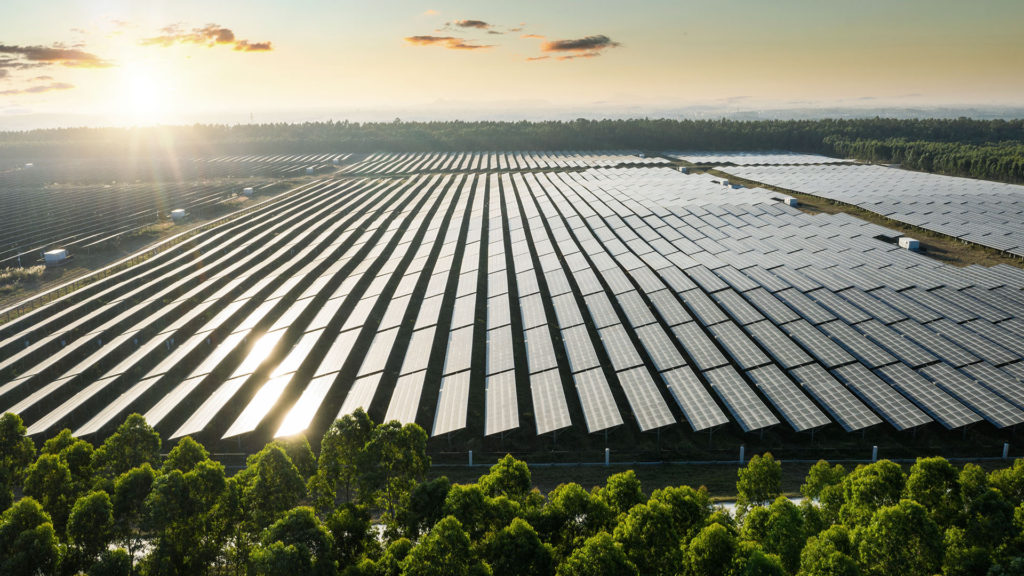
Solar park Harbke in Germany. Image from RP Global.
The construction of RP Global’s first German solar PV park has begun on one of Germany’s oldest lignite mining areas. The 50MWp solar project is located in Harbke, an historic location on the former East-West border.
In its first phase, the PV plant Harbke, located on the border between Saxony-Anhalt and Lower Saxony, will reach a capacity of 50 MWp. This is the first German project by RP Global, developed in collaboration with EPC MaxSolar.
Following completion of an extensive approval process, construction work has now begun on the former Wulfersdorf spoil tip in the district of Börde.
The Harbke PV plant is one of the most significant energy projects in the area. The district of Börde actively promotes the expansion of solar power and has been included in the ‘Global Sustainable Municipality nationwide’ initiative as one of five model municipalities.
The aim is to systematically integrate Agenda 2030 and its 17 global sustainability goals (SDGs) into administrative structures.
The solar park Harbke is being built on an area that has been shaped by humans for a long time and is already crisscrossed by two existing power lines. Thanks to this infrastructure, the electricity generated in future can be fed into the grid efficiently and without the need for additional power lines.
Harbke is of historical significance when it comes to energy production – lignite has been mined there for decades. After the Second World War, the open-cast mine was divided and used as an important source of energy on both sides of the border. Following a decision by the municipality of Harbke to repurpose the area, green electricity will now be generated there.
A special circumstance is being considered in the construction: access to the project site runs along the former border, the so-called “death strip”. The border strip, left behind by the GDR border guards in 1989 and better known as the “Kolonnenweg”, is a listed historical monument.
Rigorous precautions are therefore taken to preserve the historical elements when delivering the park components to the construction site, the company said, adding that an expansion of the project is in the works.
Rock Tech inks German renewable energy deal for lithium plant
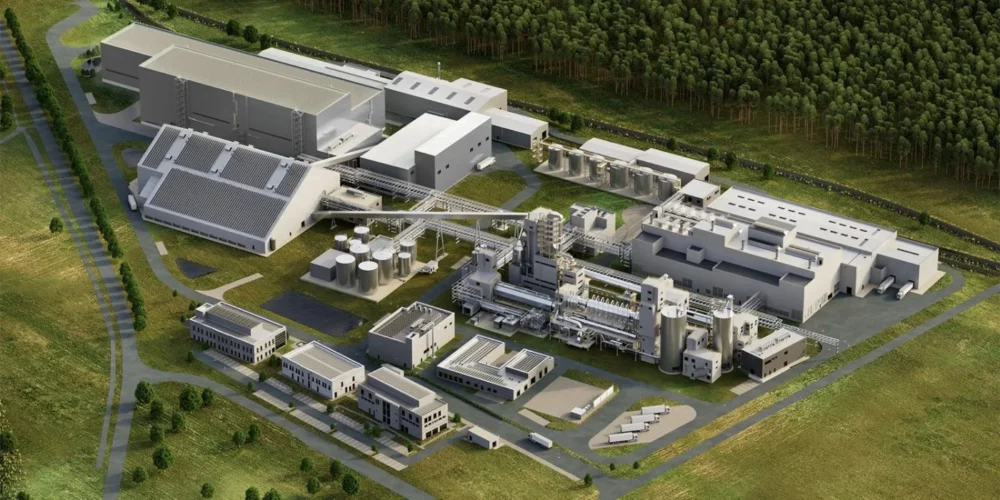
Rendering of Rock Tech’s Guben lithium converter. PHOTO: Rock Tech Lithium.
Rock Tech Lithium (TSXV: RCK) has secured a long-term supply of renewable energy from Germany’s ENERTRAG to power the company’s planned lithium hydroxide converter in Guben.
The companies inked the power supply agreement on Tuesday, in the presence of key government figures including Canadian Prime Minister Mark Carney and Katharina Reiche, Germany’s Federal Minister for Economic Affairs and Energy.
The agreement was signed during the German-Canadian critical minerals roundtable, where the countries formally announced a partnership focusing on the development of lithium and other critical minerals to break China’s monopolistic control in the supply chain.
Rock Tech’s proposed plant is designed to produce battery-grade lithium hydroxide, with an annual production capacity of 24,000 tonnes. The facility, situated on the German-Polish border, about 60 km away from Tesla’s plant in Grünheide, is slated for commissioning this year. First output is expected in 2026.
The converter project, the company notes, is recognized as a strategic initiative under the European Commission’s Critical Raw Materials Act and serves as a model for the decarbonization of European industry through cross-border cooperation. The concept also serves as a template for building a resilient supply chain for critical minerals in Canada.
Rock Tech Lithium traded 7.4% higher at $1.02 apiece by 1:50 p.m. ET, giving the company a market capitalization of $109.4 million.
Decarbonized supply chain
Regarding the ENERTRAG partnership, the Toronto-based lithium developer said it would provide “a sustainable and competitive electricity supply” with planning security for the converter’s operating costs.
A core element of the renewable energy initiative, it says, is the direct supply of electricity from new wind and photovoltaic plants in the neighboring Polish municipality of Gubin.
From the start of commissioning, a significant share of the converter’s electricity demand is to be covered by renewable sources. From 2030 onwards, at least 50% of the total electricity demand will be met by renewables, which the company says could lead to a 25% reduction in indirect CO2 emissions.
“With the planned direct supply of our converter with renewable energy, we are setting an important milestone for the sustainable and competitive production of lithium hydroxide in Europe,” Rock Tech Lithium CEO Mirco Wojnarowicz said in a news release.
“The partnership with ENERTRAG is an important example of how industry and energy producers can work together in a practical way to decarbonize the value chain. This not only creates planning security for our project but also contributes to achieving European climate targets,” he added.
In addition to the Guben converter, Rock Tech is also looking to build a similar facility in Red Rock, Ontario, which is expected to produce 32,000 tonnes of lithium carbonate equivalent using company and third-party feedstock.
Hudbay resumes operations in Snow Lake after evacuation orders lifted
Aerial view of Hudbay’s Lalor mine in Manitoba. Reference image by: Hudbay Minerals
Canadian mining company Hudbay Minerals on Wednesday said it has resumed operations in Snow Lake, Manitoba, following the decision made by the authorities to lift the mandatory evacuation order on August 22.
The company said that there has been no structural damage to its onsite surface infrastructure and facilities in Snow Lake.
Manitoba declared a state of emergency late in May and urged thousands of people in northern and eastern parts of the province to evacuate, as wildfires spread in central and western Canada.
Canada’s second-worst wildfire season on record has already burned 7.8 million hectares and could continue for weeks, federal government officials said last week.
The company added it has completed an infrastructure safety review, including inspection of the shaft, and restarted the underground electrical infrastructure, since lifting of the evacuation order.
Snow Lake operations is expected to reach full production levels by early September and Hudbay remains on track to achieve its 2025 annual forecast in Manitoba despite the wildfire impacts.
Lynas’ Mount Weld rare earths mine in Western Australia. (Image courtesy of Lynas Rare Earths.)
Australia’s Lynas Rare Earths warned of considerable uncertainty over the future of its heavy rare earths processing plant in Texas and also reported a steeper-than-expected drop in its annual profit on Thursday.
Lynas, the world’s largest rare earths producer outside China, said it is in negotiations with the US Department of Defence (DoD) to reach a mutually acceptable offtake agreement for production from the Texas-based Seadrift facility.
“While there can be no certainty that offtake agreements will be agreed, any offtake agreements would need to be on commercial terms acceptable to Lynas,” the miner said.
Lynas has been developing the facility under a contract with the US DoD, with plans to begin operations in fiscal 2026. However, the company indicated that construction of the plant may not move forward.
“We are big supporters of continued investment in development of outside-China’s supply chains,” CEO Amanda Lacaze told an investor call.
“But just remember … Lynas is the lynchpin of (the) outside-China supply chain, and it is important that policy development is done in such a way that continues to protect that, because, as I said before, development of new plants can be long and uncertain,” she said.
Her comments came after the US government last month agreed a multibillion dollar deal to become the top shareholder in Lynas’ biggest rival outside China, MP Materials, provide a floor price for its key rare earth product, and lend it $150 million to expand in heavy rare earths separation.
Lynas also wants to be involved with new rare earth magnet makers in the US and other countries outside China and is open to taking an equity stake.
“There are seven magnet projects coming to market in the US, many of which actually have some form of government funding, which de-risks them,” Lacaze said, adding there are probably more magnet projects in the US than in the rest of the world combined.
“We want to be able to participate either on an operational or a supply or an equity basis in this part of the supply chain,” she said.
The miner last month signed an agreement with Korea’s JS Link to develop a magnet facility in Malaysia where it has processing operations.
Lynas’ net profit after tax came in at A$8 million ($5.20 million) for the year ended June 30, a sharp decline from an A$84.5 million reported a year earlier.
The annual figure also missed the Visible Alpha consensus estimate of A$30.4 million.
Lynas attributed the drop in profit to depreciation costs from its Kalgoorlie and Mt. Weld facility expansion, noting that production at Kalgoorlie fell short of nameplate capacity.
It expects its fiscal 2026 capital expenditure to be around A$160 million.
The miner announced an A$750 million equity raising to “pursue new growth opportunities”. The new shares will be issued at A$13.25 apiece, a discount of 10% to Lynas’ close on August 27.
Its shares were placed on a trading halt ahead of the equity raising.
($1 = 1.5389 Australian dollars)
(By Shivangi Lahiri and Shruti Agarwal; Editing by Vijay Kishore, Sherry Jacob-Phillips and Sonali Paul)
Critical Metals, Ucore ink 10-year offtake deal to supply rare earths to US plant
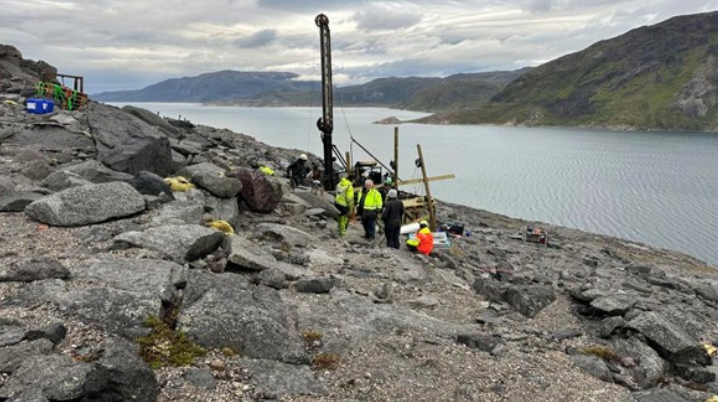
Drilling this month at the Tanbreez project in Greenland. Credit: Critical Metals
Critical Metals Corp. (Nasdaq: CRML) has signed a ten-year offtake agreement to supply heavy rare earth concentrate Ucore Rare Metal’s US processing facility.
Under the terms, Critical Metals expects to supply up to 10,000 metric tons of the concentrate annually from its Tanbreez project in Greenland, ranked one of the biggest rare earth projects in the world.
The deal connects the massive rare earth project with Ucore’s Department of Defense (DoD) funded processing facility in Louisiana—a key step toward reducing US reliance on foreign sources for heavy rare earths.
The concentrate, the company said, will be providing critical feedstock for high-purity rare earth oxides used in advanced tech and defense applications.
After hydro-metallurgical processing, the concentrate will be used as feedstock for Ucore’s rare earth element processing facility, which broke ground in May, in Alexandria, Louisiana and at Ucore’s facility in Kingston, Ontario.
The Louisiana facility will produce high-purity rare earth oxides from mixed rare earth carbonates or oxides, which Critical Metals expects to produce at Tanbreez. It aims to produce 2,000 tonnes per annum (tpa) of high-purity rare earth oxides next year, with the capacity expected to be scaled up to 7,500 tpa in 2028, the company said.
“Critical Metals Corp’s Tanbreez offers tremendous opportunities for Ucore given the significant concentration of heavy rare earths it contains, which are essential for our processing facility in Louisiana, and our downstream partners,” Ucore CEO Pat Ryan said in a statement.
“Both Critical Metals Corp and Ucore share a vision to lessen China’s grip of the rare earth ecosystem in the West, and we look forward to our partnership, positioning us both to meet the growing demand for rare earths while addressing national security challenges.”
“Securing this offtake provides Critical Metals Corp both with our first buyer and the flexibility to supply other US based rare earth facilities in the future, given the immense size of our Tanbreez deposit,” Critical Metals CEO Tony Sage added.
The deal was brokered by GreenMet, a Washington-based advisory firm acting as a conduit between private capital, government and critical minerals industry.
In an email to MINING.com, GreenMet CEO Drew Horn called the agreement “a landmark achievement and a powerful example of strategic partnerships building a resilient, domestic supply chain.”
Newmont plans sweeping job cuts in cost-cutting drive – report
Newmont (NYSE: NEM), the world’s largest gold miner, is preparing a major cost-reduction plan that could lead to thousands of job losses, Bloomberg reported on Wednesday, citing people familiar with the matter.
The Denver, Colorado-based miner is said to be targeting a reduction of as much as $300 per ounce in all-in sustaining costs (AISC). That would represent a cut of about 20% and bring Newmont closer in line with its lowest-cost peers.
Rising costs
Newmont’s costs have surged in recent years, climbing more than 50% over the past five years due to higher energy, labor, and material prices. The situation reportedly worsened following its $15 billion acquisition of Newcrest in 2023, which expanded the mining portfolio to about 20 operations, including copper assets.
In the second quarter of 2025, Newmont reported an AISC of $1,593 per ounce, nearly 25% higher than Agnico Eagle Mines, one of the industry’s lowest-cost producers. The Lihir mine in Papua New Guinea and the Cadia operation in Australia, both legacy Newcrest assets, continue to struggle with cost overruns and underperformance.
Job cuts, structural changes
According to Bloomberg, Newmont has already begun notifying staff of redundancies, with executives and division managers holding calls to discuss job cuts and other measures. Alongside workforce reductions, the miner is considering scaling back long-term incentives as part of the restructuring.
At the end of 2024, Newmont employed 22,200 people and had an additional 20,400 contractors. While the company has not disclosed how many positions may be eliminated, sources told Bloomberg the cuts could affect “thousands” of employees.
The miner has hired Boston Consulting Group to assist with the cost-cutting plan, though no final decisions have been announced. A Newmont spokesperson saidthe company is executing on a cost and productivity program launched earlier this year.
The cost-cutting push comes even as the gold sector is benefiting from record bullion prices. Gold reached an all-time high of $3,500 an ounce in April and has mostly traded above $3,300 since, lifting gold equities. Newmont’s stock has surged 95% year-to-date.
“The bigger challenge for Newmont was that all the Newcrest assets were at a tough part of their life-cycle,” Bloomberg Intelligence analyst Grant Sporre said.
“They were and are still under-producing versus their employee base and need a lot of sustaining capex to catch up.”
“Moves to reshape our structure reflect one of several steps we are taking in 2025 to reduce our cost base and improve productivity — positioning Newmont to deliver on our commitments to shareholders and partners across a range of gold price environments, and for the long-term success of the business,” Newmont said in a statement.
(With files from Bloomberg and Reuters)
Rio Tinto overhaul cuts to three units, axes execs, reviews mines
Simon Trott has reorganized the business into three main units. (Image: Simon Trott’s LinkedIn.)
Rio Tinto’s (ASX, LON: RIO) new chief executive Simon Trott has launched a sweeping overhaul of the miner’s structure, consolidating operations into three core divisions while placing several non-core assets under review.
Trott, who took the helm on Monday after leading the company’s iron ore business, said the restructuring would simplify Rio Tinto’s portfolio into iron ore, copper, and aluminium–lithium units.
Matthew Holcz has been appointed chief executive of iron ore, Rio Tinto’s biggest profit driver. The newly unified division will combine Western Australian operations with Iron Ore Company of Canada (IoC) and, once operational, the Simandou project in Guinea.
Some mineral assets are moving to a different portfolio for review. Richards Bay Minerals in South Africa, Canada’s iron and titanium operations, and US borates mines will be transferred to Chief Commercial Officer Bold Baatar, who will oversee a strategic assessment that could lead to sales.
Rio Tinto is merging its lithium business with aluminium under the leadership of French national Jérôme Pécresse, based in Montreal. That group will comprise Atlantic Operations Aluminium, Pacific Operations Aluminium, and Lithium.
Executives exit
The shake-up also brings leadership changes. Kellie Parker, the chief executive of Australia who played a key role in rebuilding Rio’s reputation after sexual assault claims and the 2020 destruction of a sacred Indigenous site, is leaving the company. Minerals head Sinead Kaufman, who had been considered for the top job, is also departing.
The revamp comes as Rio Tinto grapples with falling iron ore and lithium prices and rising costs. Its July half-year profit of $4.8 billion was the lowest since 2020 and 16% lower than a year earlier.
The minerals division under review has been under pressure. It generated $143 million in underlying earnings in 2024, down from $312 million in 2023, and remained cash-flow negative for two straight years as growth spending outpaced revenue. Borates, used in glass and industrial cleaners, and titanium dioxide, a pigment for paints and ceramics, have both faced weak demand and prices.
Analysts at RBC Capital Markets said the scope of the review appeared limited, noting they had expected possible divestments in aluminum, iron ore and lithium. They described the review of borates and titanium as “low-hanging fruit” in a portfolio facing competing demands for lithium investment.