Monday, September 01, 2025

Why Japan Still Can't Quit Fossil Fuels

  • Japan reached a new low in fossil fuel share for electricity generation, falling below 60% for the first time, driven by increased nuclear and solar power.

  • Despite progress in electricity generation, Japan's total energy consumption remains heavily reliant on imported fossil fuels, with dependence still above 80%.

  • Japan's offshore wind ambitions are facing significant setbacks due to global industry headwinds, including rising costs and project abandonments by major developers.


Japan marked a significant milestone in its journey toward net-zero in the first half of the year; for the first time ever, fossil fuels accounted for less than 60% in Japan’s electricity generation. 

However, dependence on oil, gas, and coal imports in the resource-poor G-7 economy remains above 80% of total energy consumption amid shifting energy policies and priorities after the Fukushima disaster of 2011. 

In the wake of the devastating earthquake, Japan closed all its nuclear reactors for years-long safety checks and inspections. The low-carbon energy source, accounting for about 30% of electricity output before 2011, was suddenly no longer available. The result was a spike in imports of LNG, oil, and coal, and in carbon emissions. 

In recent years, particularly following the 2022-2023 energy crisis, which led to a significant increase in Japan’s fuel import bill, the country has begun to reopen some of its nuclear reactors gradually. That has helped reduce the share of fossil fuels, along with a surge in solar capacity installations. 

Japan, which has a target to become a net-zero emissions economy by 2050, has realized that it will have to rely even more on nuclear power generation in the coming decades if it wants to reduce emissions and its huge dependence on fossil fuels. 

In the latest energy strategy, Japan will double down on nuclear, with gradual safe restarts of reactors, aiming to more than double the share of nuclear generation of total electricity output to 20% by 2040, from less than 10% now. 

The share of fossil fuels in Japan’s power supply slumped to the lowest on record in the first half of 2025, as nuclear and solar electricity generation is growing.  

Japan saw its utility-scale electricity supply from fossil fuels slump below 60% for the first time between January and June, according to data from clean energy think tank Ember cited by Reuters columnist Gavin Maguire.  

Japan’s dependence on oil, gas, and coal imports has dropped to 87% of total energy consumption from a high of 96% in 2012, after all nuclear reactors were closed, per data compiled by energy analyst John Kemp from the International Energy Agency’s (IEA) World Energy Balances report from 2024. Despite the decline, the share is still well above the 81% share pre-Fukushima.   

Nuclear power alone cannot help Japan reach net zero—the country will need increased solar and wind capacity and generation. 

Solar power deployment has been a success. Wind power, however, has lagged behind, with recent setbacks pouring cold water on Japan’s offshore wind ambitions. 

Solar is Japan’s largest source of low-carbon electricity, accounting for a 10% share of generation. It has grown fivefold from 2014 to 2024, according to data from Ember. 

Wind power, however, only reached 1% of generation in 2024 despite its massive potential, lagging behind the rest of the G7 where wind averaged 11% of total electricity generation, Ember notes.

Japan is looking to develop its offshore wind potential, but it has been struggling amid a challenging environment for the offshore wind sector globally in recent years.  

Japan has a plan to have offshore wind projects with a total capacity of 10 GW developed by 2030 and 30 GW-45 GW by 2040. The country has held three auctions to award capacity so far, but major developers have been reviewing their options in Japan amid headwinds in the sector globally, with surging costs and supply-chain delays. 

In a major blow to Japan’s offshore wind ambitions, Mitsubishi Corporation last week dropped plans to develop three offshore wind projects amid unexpected changes and rising challenges in the market. 

Mitsubishi has sought to adapt to the changes in the business environment by examining various options, including reassessment of costs, project schedule, and revenue. 

“However, after discussions among the partners, we have determined that establishing a viable business plan is not feasible given the current conditions,” the corporation said last week.

WIND TURBINE HEADWINDS ARE FROM TRUMP BANNING OFFSHORE WIND

Mitsubishi’s decision to abandon the projects in Japan comes amid rising headwinds to offshore wind development worldwide. 

Ørsted, the world’s biggest offshore wind project developer, warned in May of a continued challenging environment for the industry with mounting near-term headwinds globally.

By Tsvetana Paraskova for Oilprice.com


Baseload Capital Backs Japan’s Furusato in Geothermal Push

Baseload Capital has announced a strategic investment in Japan’s Furusato Netsuden, a geothermal developer and operator, in a move aimed at scaling community-based geothermal power generation and strengthening Japan’s energy security. The Stockholm-based geothermal investor is backing Furusato Netsuden to expand geothermal capacity across Japan, beginning with its Waita geothermal projects in Kumamoto Prefecture and building toward nationwide deployment.

Context

Japan holds the world’s third-largest geothermal potential at 23 GW but has developed less than 3% of that capacity, constrained by regulatory hurdles and cultural sensitivities around hot spring regions. The government’s Seventh Basic Energy Plan targets 1.5 GW of geothermal capacity by 2030, and the Green Transformation Strategy aims for net-zero emissions by 2050. Furusato Netsuden has pioneered the “Waita Model,” which integrates geothermal development with community benefits, land rights protection, and profit-sharing with residents—helping overcome local resistance to projects.

Details

  • Baseload Capital, backed by Google and Bill Gates’ Breakthrough Energy Ventures, will provide funding and international expertise to strengthen Furusato Netsuden’s portfolio.

  • Furusato currently operates the 2 MW Waita No. 1 plant and is constructing the 5 MW Waita No. 2 plant, scheduled for operation in 2026.

  • Future plans include developing 30 MW of additional capacity across Japan over the next decade.

  • The partnership is intended to create a scalable, locally rooted model for geothermal deployment, with potential global applications.




 

Russian Oil Giants Buckle Under Low Prices and Sanctions

  • Russian oil giants like Rosneft, Lukoil, and Gazprom Neft reported substantial profit declines in the first half of 2025 due to lower crude prices, Western sanctions, and adverse monetary policy.

  • The global crude oil oversupply, exacerbated by OPEC+ unwinding production cuts, is identified as a primary factor for the price weakness and reduced profitability.

  • Despite the financial challenges and pessimistic price forecasts, none of the mentioned Russian oil companies reduced their output in the reporting period, with some even reporting increases.

Russia’s oil giants are being squeezed from all sides—by falling crude prices, sanctions, and punishing interest rates—leaving first-half profits in freefall and exposing the limits of Moscow’s ability to shield its energy sector from global headwinds.

Rosneft, the country’s largest oil producer, reported a 68% decline in profits for the first six months of 2025 versus the same period of 2024, citing a global crude oil oversupply driven by OPEC+’s unwinding of production cuts. Chief executive Igor Sechin warned that the surplus could reach 2.6 million bpd in Q4 2025, prolonging price weakness into 2026. Sechin also criticized Russian monetary policy, arguing that the elevated key interest rate artificially strengthens the ruble, hurting exporters and eroding state revenues.

“The first half of this year was characterized by lower oil prices, primarily due to the overproduction of oil,” Sechin said in the company’s statement. “In addition, there was an expansion of discounts on Russian oil due to the tightening of EU and US sanctions restrictions and a significant strengthening of the ruble exchange rate, which negatively affected the financial results of all exporters.”

Even without sanctions, Western Big Oil also suffered lower financial results this year as prices remained stubbornly low despite repeated risks to supply related mostly to geopolitics. Forecasts, however, continue to see an overhang in supply with demand growth slowing down, which is affecting international prices and therefore company earnings results. OPEC is one of the few that do not foresee a glut in oil, which, one might argue, is only to be expected from an oil producers’ club and not to be taken too seriously.

Bloomberg reported last week that Russia’s number-two in oil, Lukoil, had also reported a sizable decline in first-half profits, at 51%, reportedly. However, there was no information about Lukoil’s January-June financial results on the company’s website.

Gazprom Neft, meanwhile, booked a profit drop of 54% for the first six months of the year, attributing it to higher taxes and, interestingly, a weaker, rather than stronger, ruble. Per the company, which is the oil-focused arm of state gas major Gazprom, the combination of headwinds had affected the profitability of its operations across both upstream and downstream businesses.

Novatek, the largest private gas producer in Russia, also suffered a dip in its profit for the first half of the year, but that was attributable more to its higher operating expenses, per its financial report, rather than any other factor, suggesting gas producers, and more specifically LNG producers, are somewhat insulated from the worst effects of Western sanctions. Of course, they also enjoy a much better demand outlook for their product, unlike oil producers.

Despite the lower prices for crude oil on global markets, however, none of the abovementioned companies reduced their output in the reporting period. In fact, some reported increases in output despite sanctions and rising interest rates. This would suggest demand for crude oil remains rather healthy in spite of the pessimistic forecasts. Yet, as Big Oil knows from experience, this is not being reflected in international prices and is affecting their financial figures.

According to Bloomberg, Russia’s flagship oil blend, Urals, traded at an average of $58 per barrel during the first half of the year, which was 13% lower than its average for the second half of 2024. It is worth noting, however, that per price data, Urals traded substantially above $60 per barrel for most of the time during the first half of this year.

The outlook for oil prices remains subdued. The latest evidence that the assumption of a glut is strong is that prices started this week with a decline, despite calls from France and Germany to impose secondary sanctions on countries buying crude from Russia. Normally, such news would prompt a rebound in oil prices, but it appears that traders either do not believe secondary sanctions will be implemented or they do not believe they will have much of an effect on the availability of Russian crude

There seems to be a good reason for the latter disbelief. Reuters reported on Friday that Russian oil exports to India were set to increase this month despite the United States’ secondary sanctions on the importing nation in the form of a 25% additional tariff on all Indian imports into the United States. Washington has accused India of “profiteering” from Russian oil imports.

“The tariffs are part of a broader trade discussion between India and the U.S., and given India’s increasing domestic refinery runs amid discounted Russian barrels, we don’t see India scuppering its Russian imports in meaningful volumes,” BNP Paribas analysts said in a note last week, in what sounds like a confirmation of what ING analysts called the oil market growing numb to sanction-related pressures on prices as focus remains exclusively on the expected glut.

By Irina Slav for Oilprice.com 

Gulf Countries Respond to U.S. Trade Pressure With Trillion Dollar Plans

Over the past decade, the Gulf Cooperation Council (GCC), comprising Saudi Arabia, Qatar, the UAE, Bahrain, Kuwait, and Oman, has advanced bold strategies to reshape its economies by reducing reliance on oil while developing new sectors like renewable energy, tourism, financial services, and digital innovation. Charting a course toward long-term economic resilience, these nations have launched sweeping infrastructure projects and enacted reforms designed to attract foreign investment. And it has worked swimmingly, so far. 

During his May 2025 tour of Riyadh, Doha, and Abu Dhabi, U.S. President Donald Trump announced investment pledges totaling over $2?trillion, according to the White House, while some outlets, such as Al?Monitor, reported figures nearing $3.2?trillion. These announcements included roughly $600?billion from Saudi Arabia, $1.2?trillion from the UAE, and $1.4?trillion from Qatar, though most remain at the memorandum-of-understanding stage.

Meanwhile, the Trump administration’s "Liberation Day" tariff, a baseline 10% customs duty on imports from all countries, including the GCC, has posed a modest headwind for regional exporters. 

Nonetheless, GCC states have responded proactively by deepening U.S. economic ties, scaling up their AI and data infrastructure, and doubling down on non?oil growth strategies—efforts that underscore their determination to build more diversified, stable, and climate-aligned economies.

These diversification efforts, coupled with the recent rollback of OPEC+ oil production cuts, are paying off, with the economies of the oil-rich monarchies thriving again. The World Bank has projected that the GCC economy will expand by 3.2% in 2025 and 4.50% in 2026, a significant rebound after growing at an anemic 1.7% clip in 2024 and just 0.3% in 2023. In contrast, the biggest Bretton Woods institution has forecast that the global economy will grow at a slower 2.3% clip in 2025, slowing to its weakest pace since 2008 outside of recessions, before a tepid recovery averaging 2.5 percent over 2026-27. This downward revision from earlier forecasts is attributed to heightened trade tensions, policy uncertainty, and the dampening effects on investment and consumer sentiment.

Here’s the GCC countries' outlook:

Saudi Arabia: the largest GCC economy is projected to continue on its recovery path, rising to 2.8% in 2025 and averaging robust growth of 4.6% in 2026-2027 after declining to 1.3% in 2023. Saudi Arabia is expected to post a healthy hydrocarbon GDP growth of 6.7% in 2026 and 6.1% in 2027, thanks to the phasing out of OPEC+ voluntary production cuts. Meanwhile, the kingdom’s non-oil GDP is expected to continue growing at a steady 3.6% rate between 2025 and 2027 as it pursues the Vision 2030 economic diversification agenda.

United Arab Emirates: Economic growth is expected to maintain its upward trajectory to hit 4.6% in 2025 before stabilizing at 4.9% in 2026 and 2027. The UAE’s non-oil sectors are expected to remain a key growth engine (4.9% growth in 2025), thanks in large part to ongoing governance improvements, targeted public investment and expanding external partnerships. Meanwhile, normalization of oil production levels is expected to support this ascending trend.  The UAE cut oil production multiple times in recent years, including a voluntary 144,000 bpd cut effective May 2023 and a further 163,000 bpd cut from January 1, 2024, to March 31, 2024.

Qatar: Economic growth is projected to decline slightly to 2.4% in 2025 from 2.6% in 2024, before accelerating to 6.5% in 2026-2027 thanks to the ongoing expansion of LNG capacity. Qatar is undertaking a major, multi-phase expansion of its North Field liquefaction plant to significantly increase its liquefied natural gas (LNG) production, aiming to boost capacity from its current 77 million tons per annum (mtpa) to 142 mtpa by 2030. The expansion, encompassing the North Field East (NFE) (first phase) and North Field South (NFS) projects, will add new trains to the existing facilities, with the final phase, North Field West (NFW), announced in February 2024, bringing the total to 142 mtpa. This expansion aims to provide a stable, low-cost supply of LNG to meet global demand, with significant portions expected to go to East Asian markets and Europe, a key transitional fuel for decarbonization

Meanwhile, Qatar is also expected to record strong non-hydrocarbon growth, particularly in services, tourism and education. Non-hydrocarbon growth is expected to be robust thanks to international investments and infrastructure upgrades.

Bahrain: Economic growth is predicted to stabilize at 3.5% in the current year after recording two years of decline. The improvement is driven by the completion of BAPCO refinery upgrades coupled with robust non-hydrocarbon growth supported by Bahrain’s Economic Vision 2030.  BAPCO refinery upgrades are part of the major Bapco Modernization Program (BMP) in Bahrain, which aims to increase refining capacity by 42% from 267,000 to 380,000 barrels per day (bpd) by upgrading the existing Sitra refinery. Key aspects of the BMP include improving energy efficiency, expanding the product slate by processing heavier crude components into high-value distillates, and meeting stringent environmental standards. The program involves introducing new high-conversion units, such as Resid Hydrocracking and VGO Hydrocracking units, and updating existing infrastructure and utilities. The BMP is considered Bahrain's largest energy investment and a significant step to enhance the competitiveness and efficiency of its refining operations.

Kuwait: Economic growth is expected to rebound to 2.2% in 2025, after contracting -2.9% in 2024 and -3.6% in 2023, mainly driven by the phase out of OPEC+ production caps and the expansion of non-hydrocarbon sectors supported by large infrastructure projects and credit growth. Kuwait’s economic growth is expected to remain stable at 2.7% over 2026-2027, with the long-term economic outlook pegged to the successful implementation of diversification and structural reforms.

Oman: Growth is expected to accelerate to 3% in 2025, 3.7% in 2026, and 4% in 2027 after expanding only 1.7% in 2024. The growth will be driven by a rebound in oil production, with oil GDP growth of 2.1% in 2025, along with solid non-hydrocarbon growth (3.4%) driven by robust growth in manufacturing, construction, and services. This growth aligns with the final year of the sultanate's Tenth Five-Year Plan, which aims for diversification and fiscal stability through measures like non-oil revenue generation. However, global economic uncertainties and oil price volatility remain potential risks, according to the IMF.

By Alex Kimani for Oilprice.com


Nippon Steel bets on $11B investment, tech transfer to lift US Steel profit


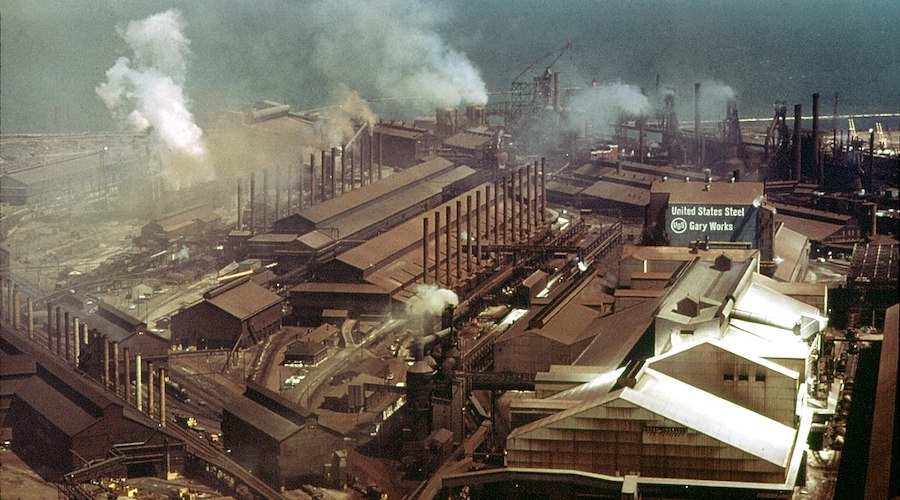
US Steel’s Gary Works in Gary, Indiana, the largest integrated mill in North America. (Archival image in the public domain from the US National Archives and Records Administration).

Japan’s Nippon Steel plans to increase profit at US Steel through an $11 billion investment and the transfer of its operational techniques and advanced technologies to expand capacity and add more high-grade products, a senior executive said.

Nippon Steel’s $14.9 billion acquisition of US Steel closed in June, ending an 18-month process that had been caught up in the shifting political landscape during the transition between the Biden and Trump administrations.

The investment, running through 2028, and transfer of expertise aim to lift US Steel’s annual profit contribution to 250 billion yen ($1.70 billion) as early as fiscal 2028, up from an expected 150 billion yen in 2026 and 80 billion this year.

“Real effects from the investment will appear after 2028,” Nippon Steel vice chairman Takahiro Mori told Reuters on Thursday, adding that profitability could even grow beyond 250 billion yen.

There are plans for a new hot-rolling mill at US Steel’s Mon Valley Works in Pennsylvania, the refurbishment of the No. 14 blast furnace at Gary Works in Indiana, and new electromagnetic steel sheet lines and other capacity expansions.

“We are looking to build a new mill from the greenfield,” Mori said, citing options like 3 million metric-ton electric arc furnaces, similar to the Big River 2 plant in Arkansas.

Mori, the lead negotiator on the deal and now chairman of US Steel, said the investment would raise US Steel’s domestic crude steel capacity to around 20 million tons from 17 million.

The acquisition also lifts Nippon Steel’s global annual crude steel capacity to 86 million tons, edging closer to its longer-term 100-million-ton target.

A detailed investment plan will be announced later this year as part of Nippon Steel’s new medium-term business strategy.

Nippon Steel said in July it would raise 500 billion yen through a subordinated loan to partially repay a 2 trillion yen bridging loan that funded the deal.

Mori said the steelmaker also has flexibility with hybrid financing and may consider convertible and corporate bonds.

“We’ll assess the optimal timing, interest rates, and whether yen or dollar denominations are preferable to pursue the best financing strategy,” he said, adding that equity financing was possible, but only within limits to avoid shareholder dilution.

US Steel would fund the $11 billion investment initially, with Nippon Steel stepping in if resources prove insufficient, Mori said.

He said that US Steel is assessing the impact of an August explosion at its Clairton plant in Pennsylvania, which could lower, although not significantly, the expected 80 billion yen profit contribution to Nippon Steel for the current year.

($1 = 147.3300 yen)

(By Yuka Obayashi, Katya Golubkova and Ritsuko Shimizu; Editing by Kirsten Donovan)


Column: A quiet revolution is unfolding in the mining sector


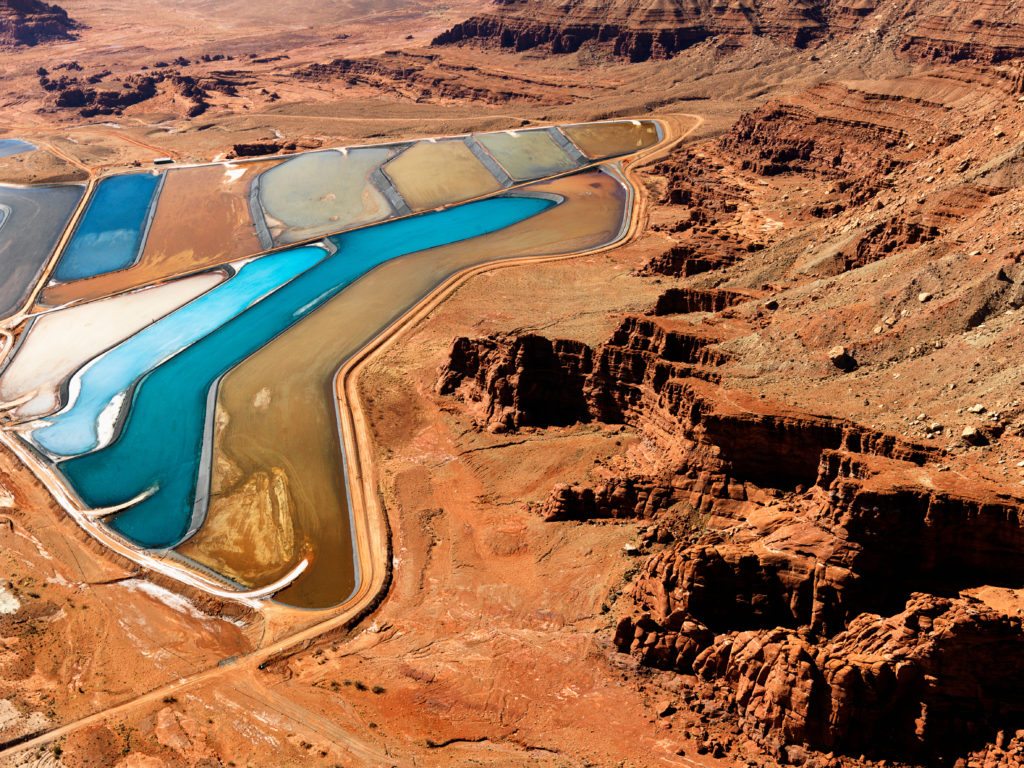
Tailings pond in rural Utah. Stock image.

The world is going to need a lot of copper and other critical metals if it is going to pivot away from fossil fuels. But can the mining industry deliver?

The challenges are huge. Ore grades at existing copper mines are steadily falling, big new discoveries are becoming rarer and development times can stretch up to a decade.

Part of the solution is to increase the efficiency of the mining process, which has historically been both highly polluting and wasteful.

Back to the future

The world dug up 650 million metric tons of copper between 1910 and 2010 but 100 million tons never made it to market, according to a 2020 research paper by Germany’s Fraunhofer Institute.

All that metal is still there lying in tailings ponds, a potentially massive resource awaiting the right technology to unlock it.

Rio Tinto has already successfully separated critical metals such as scandium and tellurium from waste streams at existing operations.

Others are now looking at ways to extract value from the vast legacy of past mining activity.

Hudbay Minerals, for example, is evaluating the potential for re-mining tailings at the Flin Flon site in Canada’s Manitoba. The mine closed in 2022, leaving nearly a century’s worth of minerals-rich waste.

Australia’s Cobalt Blue Holdings, which has been collaborating on the Flin Flon project, has also signed an agreement with the Mount Isa city council in Queensland to explore re-working pyrite tailings as a potential alternative source of sulphur once the town’s copper smelter closes.

These and many similar projects are still only at conceptual or pilot stage but India’s Hindustan Zinc is scaling up with a $438 million commitment to process 10 million tons per year of tailings at its Rampura Agucha mine, the world’s largest zinc mine.

Less waste

While miners are collectively reassessing the value of legacy waste, they are also working out how to produce less waste in the first place.

This comes with both economic and environmental upside. The mining industry currently generates over seven billion tons of tailings per year and the amount is rising as ore grades fall.

Much of the work in this area is incremental in nature. Glencore Technology, for example, has been steadily improving its ISAMill grinder to handle increasingly coarser particle sizes. The aim is to reduce the amount of ore grinding to save water and reduce tailings waste.

The company’s Albion Process for leaching can lift copper recovery rates to over 99% and reduce operating costs by up to a third, allowing development of complex ore-bodies that wouldn’t be viable with traditional technologies.

Others such as Allonnia, which describes itself as a bio-ingenuity company, are pioneering more revolutionary approaches.

The company’s D-Solve technology uses microbes to selectively extract impurities such as magnesium from concentrates.

Allonnia has just partnered with the Eagle nickel mine in the United States for an onsite unit to pilot technology that in laboratory tests can improve nickel grades by 18% and cut magnesium impurities by 40%.

Big tech meets old tech

The new overarching technology that can bind all these innovations together is artificial intelligence (AI).

Majors such as Rio Tinto and BHP are already using AI in autonomous haulage systems and to predict maintenance downtime rather than reacting to equipment failures.

Generative AI is the next big leap forward. BHP uses it in combination with “digital twin” technology, a real-time virtual replica of the mining process, at its South Australian copper mine and the giant Escondida mine in Chile.

GenAI models at Escondida “inform ore blasting and blending strategies, identify mine areas with challenging ore characteristics, and support the implementation of SAG mill model predictive control,” according to BHP.

US copper producer Freeport-McMoRan has partnered with consultancy group McKinsey to use AI to boost production at its North American operations, which were facing declining output due to mature mines and aging process technology.

Integrating traditional mining with data engineering allows for real-time adjustments to processing rates to handle variable ores. When AI was trialled at the Baghdad mine in Arizona, it led to a 5%-10% increase in copper production.

Rolling it out across the company’s other American operations is projected to lift output by 90,000 tons each year.

That’s equivalent to a new processing plant, which would come at a cost of over $1.5 billion and a timeline of eight to ten years for planning, construction and commissioning.

Future mining

Mining, it is often said, is a dirty business.

The proof lies in the billions of tons of sludge sitting in tailings ponds around the world. The consequence is public antipathy to new mine projects, which is one of the reasons it takes so long to build and commission a new one.

Mining has also been a highly inefficient business in the past. Too much mineral value has been either discarded as waste or simply left in the ground because the technology didn’t exist to treat such low-grade ore.

That’s changing as one of the world’s oldest industries rapidly modernizes, combining innovations in traditional processing with new technologies such as bio-engineering and AI.

This is a quiet revolution playing out in multiple laboratories, pilot plants and data centres around the world.

But the promise is one of a much cleaner and more efficient sector, which may just mean the world isn’t going to run out of copper after all.

(The opinions expressed here are those of the author, Andy Home, a columnist for Reuters.)

(Editing by Elaine Hardcastle)


Caterpillar warns tariff impact bigger than previously seen


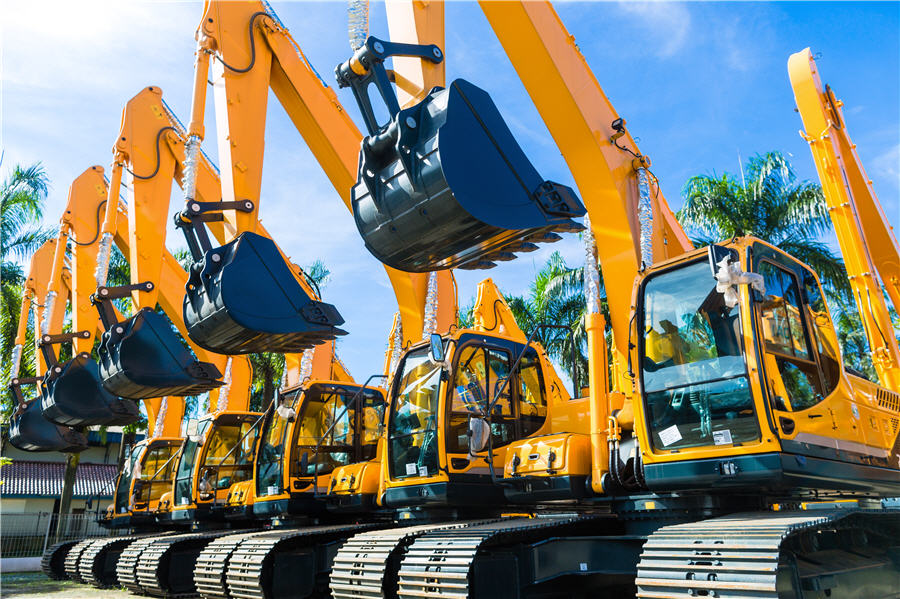
Stock Images.

Just three weeks after its last quarterly report, Caterpillar Inc. is warning investors it now expects tariffs to have an even greater impact on its business, costing it as much as $1.8 billion this year.

“While the company continues to take initial mitigating actions to reduce this impact, trade and tariff negotiations continue to be fluid,” the US manufacturer said Thursday in a regulatory statement.

Shares fell as much as 2.2% as of 9:31 a.m. Friday in New York.

The company is one of the world’s biggest makers of machinery for mining and construction. Tariffs already took a bite out of Caterpillar’s second-quarter results, with costs coming in at the top end of its estimated range disclosed in April.

Caterpillar now expects the net impact from incremental tariffs introduced this year to be $1.5 billion to $1.8 billion — including $500 million to $600 million in the third quarter. The annual range is higher than the company’s Aug. 5 guidance of $1.3 billion to $1.5 billion, which included as much as $500 million for the current quarter.

The main reason the Irving, Texas-based company revised its outlook is the Section 232 tariffs on steel and aluminum, Citigroup Inc. analyst Kyle Menges said in a research note.

Caterpillar said it expects full-year adjusted operating margin will be near the bottom of its target range, though the revised tariff estimate isn’t expected to affect the company’s outlook on sales and revenue provided in August.

“While tariff headwinds remain a challenge, we appreciate the proactive approach, likely leaving CAT better positioned than others taking longer to provide updates,” Baird Equity Research analysts wrote in a note to clients.

(By Doug Alexander)

D.E.I.

Energy exec tasked with speeding up project approvals in Canada


Dawn Farrell, former CEO of the Trans Mountain Pipeline and chancellor of Mount Royal University. Credit: Mount Royal University

Canada named senior energy industry executive Dawn Farrell on Friday to lead a new office designed to fast-track the review and approval of natural resources projects such as mines and pipelines, a process that can take a decade.

Prime Minister Mark Carney announced the major projects office earlier this year, saying streamlining will boost gross domestic product and help offset the damage from US tariffs.

Farrell, who was CEO of the Trans Mountain Pipeline from 2022 to 2024, and her team will identify projects in the national interest and help speed up their development. This should reduce the approval timeline for major projects to a maximum of two years, Carney’s office said in a statement.

For too long, the construction of major infrastructure has been stalled by arduous, inefficient approval processes, leaving enormous investments on the table.”

Farrell’s office will be based in Calgary, the capital of Canada’s oil patch.

Ottawa has yet to designate any projects as being of national significance.

In a statement, the Canadian Association of Petroleum Producers said Farrell’s appointment, and creation of the office, were “concrete steps towards making Canada an energy superpower and send a positive signal to industry and investors.”

As CEO of Trans Mountain, Farrell oversaw a multibillion dollar expansion of the pipeline’s capacity that was completed last year. She was CEO of utility company TransAlta from 2012 to 2021.

(By David Ljunggren; Editing by Richard Chang)


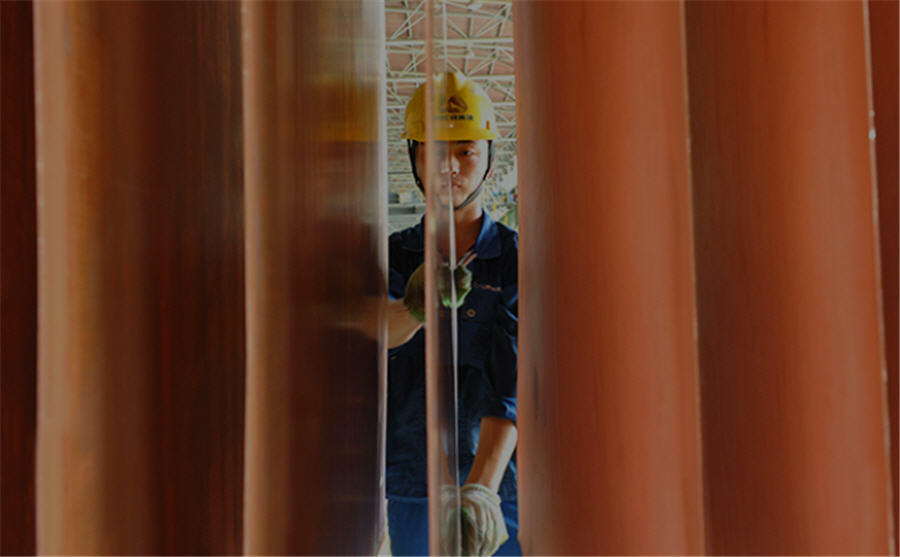
China copper smelters see decade-high profits despite challenges

 Image from Jianxi Copper

China’s major copper smelters delivered strong first-half earnings, amid a global squeeze on feedstock supply that has battered overseas rivals.

Jiangxi Copper Co., the country’s largest refined copper producer, saw net income jump to about 4.17 billion yuan ($585 million) in its strongest result since 2011. Yunnan Copper Co. reported record high earnings of 1.32 billion yuan.

The global copper industry has been facing cut-throat competition with too many firms bidding for not enough ore, crushing profitability and forcing some to the brink of closing down. But Chinese smelters, especially those with their own mines, have remained resilient as their output hit a succession of records in the first half, when prices of the metal climbed about 13%.

“For those with their own mines, the gains from higher copper prices have been significant,” said Zhao Yongcheng, an analyst at Benchmark Mineral Intelligence Ltd. “At current levels, there’s still a healthy profit margin relative to mining costs. In the smelting segment, losses haven’t been widespread, and revenues from sulfuric acid and other byproducts remain strong.”

Still, the momentum started to show signs of easing with output retreating in July, as Beijing began efforts to tackle excess production and reduce supply gluts across a range of sectors.

Risks loom for the rest of the second half. Spot treatment charges (TCs) — the fees smelters earn for processing ore into refined metal — remain deeply negative. In June, Chinese smelters agreed to set TCs at zero, a record low for term fees.

Chinese “smelter profits will inevitably come under pressure in the second half,” Zhao said. “But lucrative sulfuric acid sales have pulled their break-even TCs to close to zero. If plants are locked into a high proportion of long-term contracts, they can still ensure a degree of positive cash flow.”

(By Jessica Zhou)