Wednesday, September 03, 2025


SOUTH KOREA

Survivor of Sewol Sinking Arrested After Tussle Outside Gov't Office
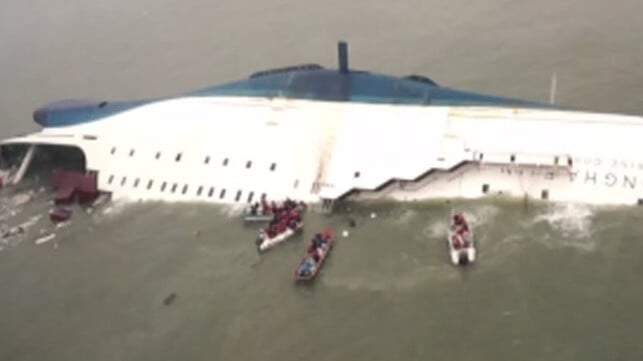
Korea Coast Guard
Korea Coast Guard file image

Published Sep 2, 2025 3:39 PM by The Maritime Executive


A man who claimed to be a survivor of the 2014 Sewol ferry sinking has been arrested outside a government office in Seoul after he demanded a meeting with the president's office. The man was allegedly in possession of a weapon in a public space, a chargeable offense in South Korea. 

On Tuesday, local police in Seoul said that they had arrested the man after he approached police officers outside of the ministry  of defense building in Seoul's Yongsan district. The building is currently the official residence of South Korean President Lee Jae-myung, and the man demanded to meet with the presidential office to petition for improved support for the survivors of the Sewol tragedy. 

The man scuffled with police for 20 minutes, and eventually officers used a taser to subdue him. He was given first aid for injuries sustained in the altercation, and was taken to a hospital for treatment. The authorities conducted and investigation and ultimately released him to return home. 

On April 16, 2014, the ferry Sewol was under way on a voyage to the southern resort island of Jeju. The majority of those aboard were high school students and their teachers on a school field trip, and there were several hundred teenagers on the ship out of a total of 476 passengers and crew. The ferry capsized unexpectedly, and 303 passengers died trapped inside, including 261 students. Many of the deceased obeyed crew instructions to remain in their cabins, even as crew members were seen on TV abandoning the sinking vessel. 

An investigation determined that Sewol was overloaded and under-ballasted on the casualty voyage; extensive structural modifications to her upper decks had reduced her GM, and the vessel capsized in a turn, then quickly sank. 

After a public campaign by the victims' families, the vessel was raised at great cost and transferred to the port of Mokpo for further analysis. In the political firestorm that followed, South Korean president Park Geun-hye's approval rating plummeted, damaging her prospects and eventually contributing to her ouster in 2016. Nine Korea Coast Guard officials were indicted in connection with the Sewol's certification and operation (though all were acquitted); the master received a sentence of life in prison for abandoning ship without his passengers. 

Students who survived the tragedy received extensive support, including 70 days of counseling and a special admissions program giving them privileged access to top universities. But in retrospective interviews with Korea Herald, survivors said that they are still haunted by the experience, and some still struggle with mental illness.  


Spill Temporarily Shuts Down a Tanker Mooring at the CPC Terminal

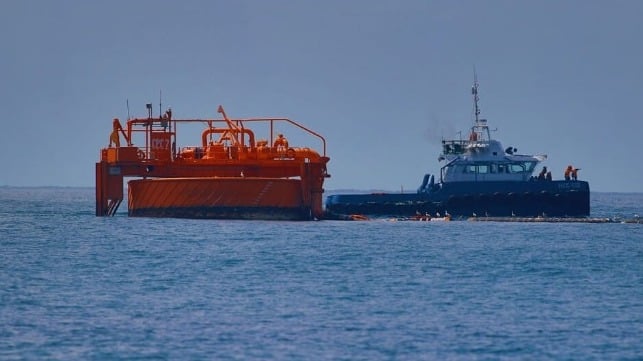
CPC SPM buoy (CPC file image)

Published Sep 2, 2025 4:58 PM by The Maritime Executive


A spill has been reported at the Caspian Pipeline Consortium offshore loading terminal near Novorossiysk, Russia, but accounts of its size and significance vary. 

On August 29, petroleum was released during loading operations at one of the CPC terminal's offshore mooring buoys (SPMs). Satellite imaging released by dissident news outlet Crimean Wind appears to suggest a slick measuring about 21 kilometers in length, extending eastward from the #2 SPM at the CPC site. The publication estimated the size of the release at 5-10 tonnes, equivalent to about 1,500-3,000 gallons.  

In a statement, the CPC operating consortium said that cleanup had been completed by August 30, and that post-remediation monitoring of air and water detected no excess in pollutant values. No shoreline contamination has been identified, and no sorbents were used for cleanup. Seawater monitoring continues on a twice-daily basis, using a third party laboratory; the total volume of the oil release has not been confirmed by the operator and remains under investigation. 

One of the terminal's SPMs was shut down after the spill, temporarily leaving only one mooring operational out of three. 

The CPC terminal is one of the world's most important oil facilities, handling more than one percent of the global crude supply. Though the loading port is located in Russia, little of the oil shipped through it is of Russian origin, as the pipeline's crude is produced in Kazakhstan by Western oil companies. Nonetheless, it has occasionally been affected by the ongoing war in Ukraine, including a drone strike attributed to Ukrainian forces in February.    


U.S. Sanctions Efforts to Blend Iranian and Iraqi Oil to Avoid Restrictions

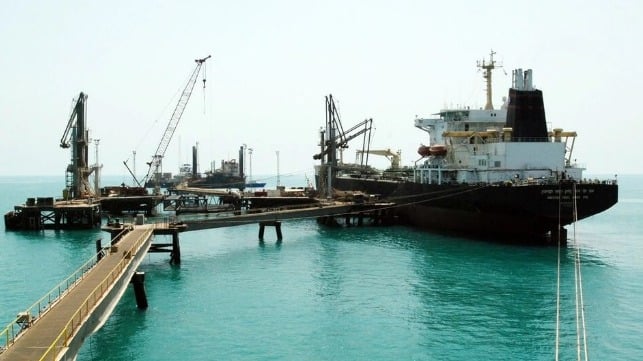
Basra Iraq oil terminal
Tankers at Iraq's Basra oil terminal has been linked to the effort to blend the oil to hide its origins (US Navy file photo)

Published Sep 2, 2025 5:09 PM by The Maritime Executive


US Sanctions Efforts to Blend Iranian and Iraqi Oil to Avoid Trade Restrictions


The United States, through its sanctions program, is increasing the pressure on the Iranian oil trade and the efforts to obfuscate the origins of the oil by blending. New sanctions announced on September 2 by the U.S. the U.S. Department of the Treasury’s Office of Foreign Assets Control (OFAC) targeted the business network of a UAE-based businessman, Waleed al-Samarra’I, and nine Liberian-flagged tankers, which the U.S. says have generated millions of dollars in oil revenue.

The network, the U.S. contends, operates primarily by covertly blending Iranian oil with Iraqi oil, which is then marketed intentionally as solely of Iraqi origin.  Based on conservative estimates, the U.S. says al-Samarra’i’s network generates around $300 million of value to both Iran and its partners annually.

Waleed Khaled Hameed al-Samarra’i, a citizen of both Iraq and St. Kitts & Nevis, runs a network of companies managing vessels that have been involved in the sale of Iranian oil to international markets. To smuggle the Iranian-origin oil, al-Samarra’i uses a group of vessels to blend Iranian and Iraqi oil at sea, via ship-to-ship transfers in the Arabian Gulf, and in Iraqi ports. U.S.-sanctioned vessels publicly affiliated with Iran’s shadow fleet are being employed to distance the network from direct interactions with the Iranian petroleum sector. The vessels also engage in other obfuscation techniques to hide their activities, such as unsafe ship-to-ship transfers at night, Automated Identification System (AIS) spoofing, and conspicuous gaps in AIS location reporting.

Al-Samarra’i relies on his two UAE-based companies, Babylon Navigation DMCC and Galaxy Oil FZ LLC, to manage his network’s operations.  The tankers, Adena, Liliana, Camilla, Delfina, Bianca, Roberta, Alexandra, Bellagio, and Paola, are Liberian-flagged but owned by several Marshall Islands-based shell companies, the U.S. reports.

It is the second time the U.S. has sanctioned a network it says is involved in the blending efforts. In July, it sanctioned the network of Salim Ahmed Said. The U.S. says these efforts are part of its commitment to “eliminating Iran’s pernicious influence on Iraq’s economy and upholding a campaign of maximum economic pressure on Iran.”

Experts highlight that Iran continues to look for methods of working around the U.S. sanctions on its oil industry.

The U.S. has also been putting pressure on Iraq to crack down on the tankers. In July, Iraqi officials released a list of tankers that they were barring from their oil operations, accusing them of being involved in the obfuscation efforts.

Trump Administration to Target SouthCoast Wind in War on Wind Power

CUTTING NOSE TO SPITE FACE

offshore wind farm
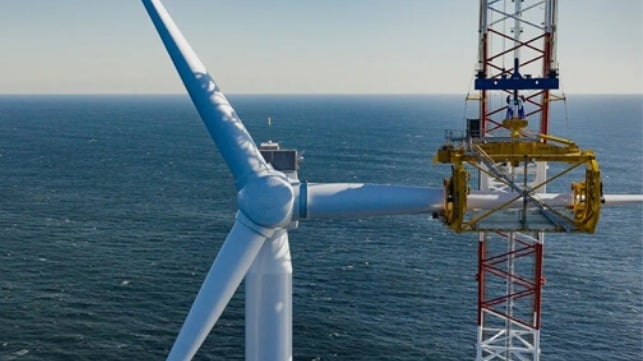
Trump administration is reconsidering construction permits for offshore wind farms

Published Sep 2, 2025 6:11 PM by The Maritime Executive


It was revealed in a court filing on Friday, August 29, that the Trump administration, through the Department of the Interior, plans to reconsider permits issued last year to the SouthCoast offshore wind project. It comes as the administration has sought to make good on Donald Trump’s opposition to “windmills” by issuing stop work orders, freezing new permits, reconsidering existing permits, and withdrawing tax credits and funding grants.

The Department of Justice filed a motion in a suit brought by the Town of Nantucket, Massachusetts, appealing the Bureau of Ocean Energy Management’s December 2024 approval of South Coast Wind as the nation’s 11th commercial-scale offshore wind energy project. The suit alleges flaws in the permitting process, saying that BOEN violated federal environmental law by approving the project without requiring the developer to properly mitigate harm from the efforts. 

Nantucket says it gave the project’s developers multiple opportunities to address the island’s concerns prior to filing suit on March 27. It alleges the approval “creates a dangerous precedent” that allows fossil fuel developers the opportunity to also fast-track projects and avoid safeguards. They contend the suit is to reinforce environmental and preservation laws.

The Department of Justice told the court on Friday that the suit “makes little sense” because it plans to formally move for reconsideration of the permit by September 18.  It is the same tactic DOJ and the Trump administration reported it is taking for Maryland’s first offshore wind project, which was also approved in 2024. They plan to file the reconsideration effort against the permits for US Wind’s Maryland wind farm project by September 12.

SouthCoast Wind is being developed by Ocean Wind North America, a joint venture between EDP Renewables and Engie. The project, which was then known as Mayflower Wind, won its lease in a December 2018 auction. The approved plan calls for the construction of up to 141 wind turbine generators and up to five offshore substation platforms with the potential to generate up to 2,400 MW. It would be located about 26 nautical miles south of Martha’s Vineyard and 20 nm south of Nantucket, Massachusetts.

The Town’s opposition is part of its broader efforts against the wind industry. They contend that if all the proposed projects were developed, there would be an estimated 743 wind turbines located off Nantucket’s coastline. A total of nine wind farm sites have been designated for the area.

The company filed a motion with the court opposing the government’s call for an extension while it pursues the effort to reconsider the permits. The motion says the effort is part of the government’s larger efforts to eliminate all offshore wind projects regardless of their impact.

The federal government has unleashed efforts on all fronts, including the president’s executive order to review the industry and freeze permitting. They briefly stopped work on the Empire Wind project in New York before it started offshore work, and now have stopped Resolution Wind in Massachusetts, which is 80 percent installed. Grants for port projects to support the industry have now been withdrawn, and the administration said it was launching a review of the offshore wind industry on the grounds of national security concerns. 

The governors of five states (Connecticut, Massachusetts, New Jersey, New York, and Rhode Island) issued a joint statement on September 1, calling on the administration to uphold the permits that have already been issued for offshore wind projects. The states had previously filed suit against the administration over the president’s executive order to review the industry.


Coast Guard Awards Contract to Begin Overhaul at Base Seattle

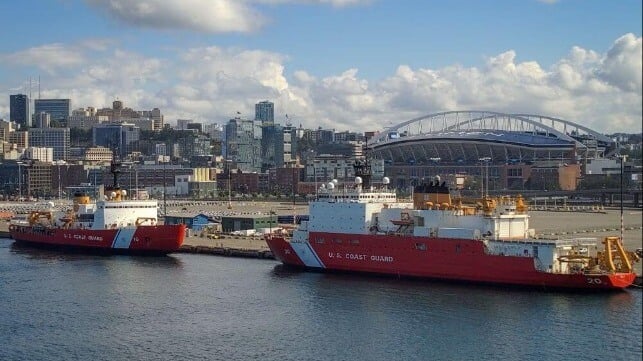
Icebreakers USCGC Healy and Polar Star at Terminal 46, Seattle, 2024 (USCG)

Published Sep 2, 2025 6:17 PM by The Maritime Executive


The U.S. Coast Guard has awarded a contract to start modernization works to prepare for homeporting its future Polar Security Cutters in Seattle. Whiting-Turner Contracting won an award worth about $140 million for the first phase of the project, to include construction of two large cutter berths and dredging of a slip to the depth required for the PSC hulls. 

The first phase (1A) will widen the slip between two berths, add upgraded utility installations, remove an existing building, and install waterfront stabilization structures. It will also see the renovation of Station Seattle's existing boathouse and small boat docks. 

After this phase and the next two are completed, Base Seattle will have four large cutter berths, enough to support a range of oceangoing vessels. In planning, the Coast Guard said that its preferred alternative is to acquire part of Terminal 46, just to the north of the base, and upgrade 1,000-plus feet of existing commercial wharfage to provide extra space for cutters. 

Seattle has been the home port for the service's medium and heavy icebreakers for years, and it benefits from the area's well-developed industrial base and the presence of a major shipyard nearby. It will continue to be the service's primary home port for icebreakers, with an exception for USCGC Storis, which will have a base of her own in Juneau.  

Coast Guard Base Seattle evolved organically as the service's needs grew in the region. After decades of berthing its cutters wherever there was space available along the commercial waterfront, the service acquired Piers 36 and 37 from the Army Corps of Engineers in 1966. That facility has been headquarters for Sector Puget Sound and Base Seattle ever since, and its infrastructure is aging. 

Base improvements have historically taken a back seat for the cash-strapped Coast Guard, which has long struggled to find funding to keep its shoreside infrastructure in working shape. After years of budget sequestration and deferred maintenance, the USCG received a major boost in the One Big Beautiful Bill Act, which provided a much-needed $4.4 billion for reconstructing shoreside facilities. USCG stations across the country can share a combined $2.8 billion appropriation for construction; Alaska is getting a congressionally line-itemed $300 million facility for USCGC Storis; the Coast Guard Yard is getting a new drydock for $500 million; and the service's enlisted bootcamp at Cape May is getting a $425 million revamp.

Shortly after announcing the Base Seattle contract award, the Coast Guard announced its first ever One Big Beautiful Bill expenditure, a smaller $15 million contract extension awarded to Whiting-Turner for pier renovation at Base Charleston in South Carolina. 


Investment Firm Carlyle Buys Altera Infrastructure Group’s FPSO Business

FPSO
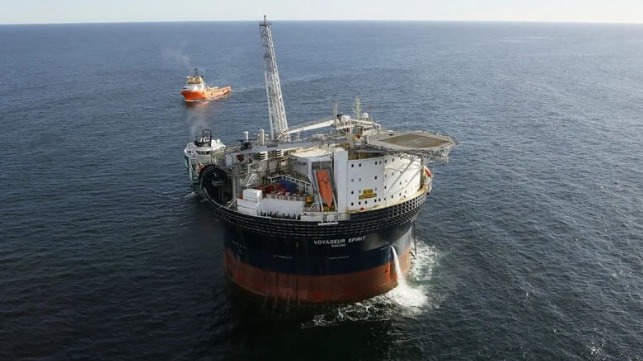
Altera is sellings its FPSO business to investor Carlyle Group (Altera Infrastructure)

Published Sep 2, 2025 6:40 PM by The Maritime Executive


Global investment firm Carlyle is jumping into the offshore energy sector reporting it has agreed to acquire the FPSO (Floating Production, Storage and Offloading) business from Altera Infrastructure Group, a leading offshore energy infrastructure company owned by Brookfield Asset Management’s private equity business. The investment group with $465 billion of assets under management has decided to enter the business due to the strong opportunities.

Altera currently has a fleet of six FPSOs deployed in Brazil, Dubai, and Cote d’Ivoire. It also has two FSOs operating off Cote d’Ivoire and in the Gulf of Thailand.

“This is a rare opportunity to acquire an established and high-quality FPSO business with a strong management team, operating track record and long-term cashflows,” said Bob Maguire, Co-Head of Carlyle International Energy Partners (CIEP). “This portfolio benefits from long-term contracts, strong FPSO market fundamentals, and exposure to world-class operators which position it well for success.” 

It is part of continuing efforts that have been reshaping the business of UK-based Altera Infrastructure. It reorganized through the US bankruptcy proceeding in late 2022. At the end of last year, it sold its  interests in Altera Shuttle Tankers, a fleet of 18 shuttle tankers in Brazil, Canada, and the North Sea, to Maistros Shiptrade, a company affiliated with the Angelicoussis Group.

The business being acquired by Carlyle includes ownership of the FPSOs and the FSO (Floating Storage and Offloading), which are underpinned by long-term contracts with major oil and gas companies. The portfolio includes the Petrojarl Kong FPSO and FSO Yamoussoukro, deployed in the Ivory Coast with Eni, which represents the first net-zero emission upstream project in Africa, the Piranema FPSO, as well as 50 percent of the Altera&Ocyan joint-venture asset Pioneiro de Libra FPSO, deployed in Brazil with Petrobras. Additionally, the business has a strong pipeline of future growth and redeployment opportunities.

Carlyle says it will support the Altera FPSO business through its sector-specific investment team. It promises available follow-on equity capital for accretive growth and M&A, building on the company’s track record in redeployments. 

MURDER ON THE HIGH SEAS

U.S. Military Eliminates 11 Drug Smuggling Suspects off Venezuela

Burning smuggling boat
Courtesy of the White House

Published Sep 2, 2025 8:48 PM by The Maritime Executive


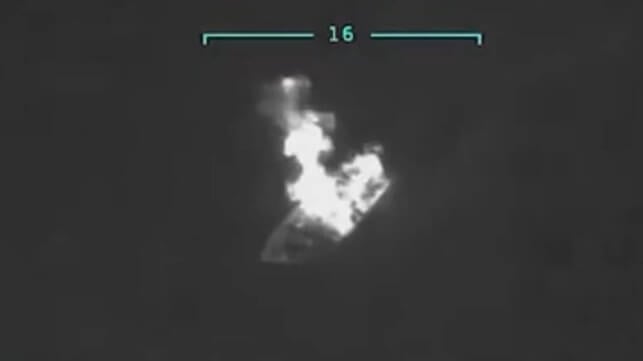
For the first time in years, the U.S. military has destroyed a suspected drug smuggling vessel and neutralized its crew, without conducting a law enforcement boarding. On Tuesday, the White House announced the elimination of 11 suspects who were allegedly transporting narcotics off the coast of Venezuela. 

"The president is going to be on offense against drug cartels and drug trafficking in the United States," Secretary of State Marco Rubio told reporters. "It destabilizes not just the country, but the entire Caribbean basin. These particular drugs were probably headed to Trinidad or some other country in the Caribbean."

In a statement on his social media platform, President Donald Trump said that he gave the orders to conduct a kinetic strike against "Tren de Aragua narcoterrorists" at a position in U.S. Southern Command. The strike occurred in international waters, resulting in 11 fatalities. 

"Please let this serve as notice to anybody even thinking about bringing drugs into the United States of America," Trump wrote.

The White House did not disclose if there were any survivors recovered for criminal prosecution, or if the drugs were retrieved from the scene of the interdiction. Historically, maritime smuggling intercepts have been handled by the U.S. Coast Guard using its law enforcement authority, with almost all suspects captured alive. 

The strike comes as the U.S. Navy and Marine Corps are surging assets into the southern Caribbean. According to Reuters, seven warships are in the vicinity of Venezuela or are on their way, bringing a combined force of 4,500 sailors and marines with them. 

The Trump administration considers the Venezuelan regime of dictator Nicolas Maduro to be illegitimate, and the White House has asserted links between Maduro and Tren de Aragua, which it has designated as a foreign terrorist organization. In April, the National Intelligence Council advised that Maduro's administration views Tren de Aragua as a threat, not a partner, and that the "Maduro regime probably does not have a policy of cooperating with [Tren de Aragua]."


Wreck of WWI U-Boat Raised From the Wadden Sea

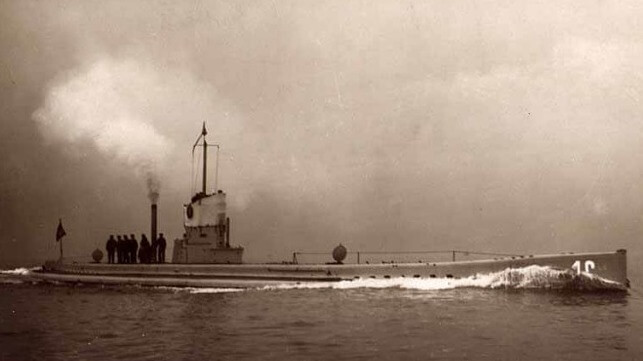
U-16 in the prewar period (public domain)

Published Sep 2, 2025 11:07 PM by The Maritime Executive


After a challenging salvage operation, the Dutch crane vessel Matador 3 has raised part of the German WWI-era submarine U16 from the waters off Germany's North Sea coast. It is unusual for a wreck of this vintage to be raised to the surface, but despite its rarity, the salvors do not have plans to preserve it.

U16 was built in 1911 and fought throughout World War I, sinking nearly 30 vessels and surviving about one dozen combat patrols. The vessel went down in 1919 off the coast of Scharhorn, a German-administered island at the mouth of the Elbe. At the time of the sub's loss, it was under way on  a delivery voyage to Britain, where it was to be handed over as part of Germany's postwar reparations. All crewmembers are believed to have survived the sinking. (A local historian, Jann M. Witt, told Tageblatt that it is likely that they scuttled their sub rather than hand it over to the British; another German sub met with the same fate earlier that year.) 

The wreck stayed at the bottom of the North Sea for more than 100 years before the decision was made to remove it. It has been surveyed more than once, and the latest visit was in 2023, when a vessel of the Federal Maritime and Hydrographic Agency (BSH) passed over the site. The sub's wreckage is within the Elbe federal waterway, according to NDR, and belongs to the Federal Directorate of Waterways and Shipping (WSV). It is not considered a protected war grave for legal purposes.  

The wreck's other half sits at a depth of about 60 feet of water, and is slated for removal this week, weather permitting. The wreckage itself is likely headed for demolition, despite the WSV's early attempts to find a new home for it. Parts of the sub may be preserved by German museums, but none have stepped forward to take the entirety of the wreck, NDR reports.

Madagascar receives skull of former king beheaded by French troops


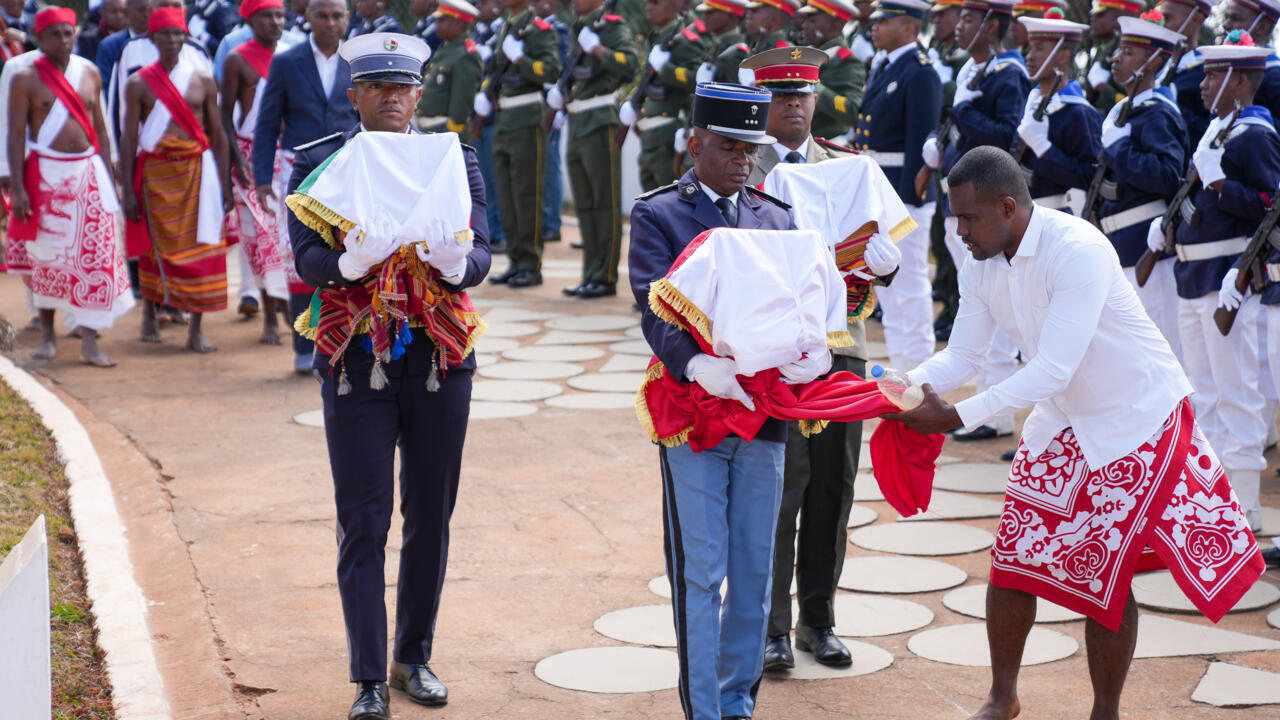
Madagascar on Tuesday held a ceremony to mark the return of three skulls belonging to men killed by French troops in 1897, including one believed to be that of a former king. The remains, which are expected to be buried later this week, had been taken to France as trophies and kept, until recently, in the national history museum archives.


Issued on: 02/09/2025 - 
By: FRANCE 24


One skull is believed to belong to King Toera of the Sakalava people, who was beheaded by French troops in 1897. © Mamyrael, AFP

Madagascar marked at a ceremony Tuesday the return from France of the skulls of three men killed by French troops 128 years ago, including one believed to be that of a decapitated king.

France handed over the skulls in Paris on August 27, in the first such restitution since it passed a law in 2023 facilitating the return of human remains seized during its colonial conquests.

They are believed to belong to King Toera of the Sakalava people, who was beheaded by French troops in 1897, and two of his warriors.

The remains arrived in Madagascar late Monday and were received at the airport by members of the Sakalava group dressed in traditional robes.

Held in three boxes draped with the flag of the Indian Ocean nation, they were driven through the capital Antananarivo to the city's mausoleum Tuesday, where they were welcomed by President Andry Rajoelina and a gathering of government and Sakalava dignitaries.

"If we want to move forward, we must know our past, our history," Rajoelina told the gathering.

"We are proud to have had a king and his soldiers who protected the nation," he said, praising a people who rose against French colonial troops "with courage and daring".

King Toera's great-grandson, the newly enthroned Sakalava king Georges Harea Kamamy, sprinkled water from the sacred Tsiribihina River to welcome home his ancestor's remains.

"We Sakalava are relieved. Today is a day of joy," Kamamy said.

He however regretted that the skulls were handed to Madagascar's government instead of the royal family.

Read more


Reunited with skeleton


The skulls will take a four-day, 800-kilometre (500-mile) journey by road to the west coast area of Menabe, where they are expected to be buried later this week.

France has in recent years sent back various artefacts taken during its imperial conquests. © Mamyrael, AFP


The skull believed to be the king's will rejoin the rest of his skeleton in a tomb in Ambiky, where he was killed in 1897.

"It is a source of pride and immense inner peace that my ancestor is back among us," a royal descendant and leader of the second Sakalava clan, Joe Kamamy, told AFP.

He hinted at disagreements within the royal family about the final resting place of the artefact.

"I have only one regret: that the skulls are not kept in Mitsinjo (in the centre-west), with the relics of the other (Sakalava) kings," he said.

Following the 1897 Ambiky massacre, the skulls were taken to France as trophies.

They were kept in Paris's national history museum alongside hundreds of other remains from Madagascar, which declared independence in 1960 after more than 60 years of French colonial rule.

France has in recent years sent back various artefacts plundered during its imperial campaigns.

Yet each return required special legislation, until parliament adopted the 2023 law simplifying the repatriation of human remains.

(FRANCE 24 with AFP)
France issues arrest warrant for Syria's Assad over 2012 bombing that killed two journalists

France on Tuesday issued arrest warrants for Syria's ousted president Bashar al-Assad and six other former officials for the 2012 bombing of the city of Homs that killed two journalists. Rights groups said the warrants pave the way for a trial in France for war crimes and crimes against humanity committed by Assad's regime.


Issued on: 02/09/2025 
By: FRANCE 24

US-born journalist Marie Colvin and freelance French photojournalist Remi Ochlik were killed in a rocket attack in the rebel Baba Amr neighbourhood of Homs on February 22, 2012.
 © Stephane de Sakutin, Sunday Times, AFP

French judicial authorities have issued arrest warrants for ousted Syrian president Bashar al-Assad and six other top former officials over the bombardment of a rebel-held city in 2012 that killed two journalists, lawyers said Tuesday.

Marie Colvin, 56, an American working for The Sunday Times of Britain, and French photographer Remi Ochlik, 28, were killed on February 22, 2012 by the explosion in the eastern city of Homs, which is being investigated by the French judiciary as a potential crime against humanity as well as a war crime.

British photographer Paul Conroy, French reporter Edith Bouvier and Syrian translator Wael Omar were wounded in the attack on the informal press centre where they had been working.

Assad escaped with his family to Russia after being ousted by Islamist rebels at the end of 2024 although his precise whereabouts have not been confirmed.

Other than Assad, the warrants notably target his brother Maher al-Assad who was the de facto head of the 4th Syrian armoured division at the time, intelligence chief Ali Mamlouk, and then-army chief of staff Ali Ayoub.

"The issuing of the seven arrest warrants is a decisive step that paves the way for a trial in France for war crimes and crimes against humanity committed by Bashar al-Assad's regime," said Clémence Bectarte, lawyer for the Paris-based International Federation for Human Rights (FIDH) and Ochlik's parents.

The FIDH said the journalists had clandestinely entered the besieged city to "document the crimes committed by Bashar al-Assad's regime" and were victims of a "targeted bombing".

"The investigation clearly established that the attack on the informal press centre was part of the Syrian regime's explicit intention to target foreign journalists in order to limit media coverage of its crimes and force them to leave the city and the country," said Mazen Darwish, lawyer and director of the Syrian Center for Media and Freedom of Expression (SCM).

Colvin was known for her fearless reporting and signature black eye patch which she wore after losing sight in one eye in an explosion during Sri Lanka's civil war. Her career was celebrated in a Golden Globe-nominated film, "A Private War".

(FRANCE 24 with AFP)