Monday, September 08, 2025


LSD shows promise for reducing anxiety, shows drugmaker's study
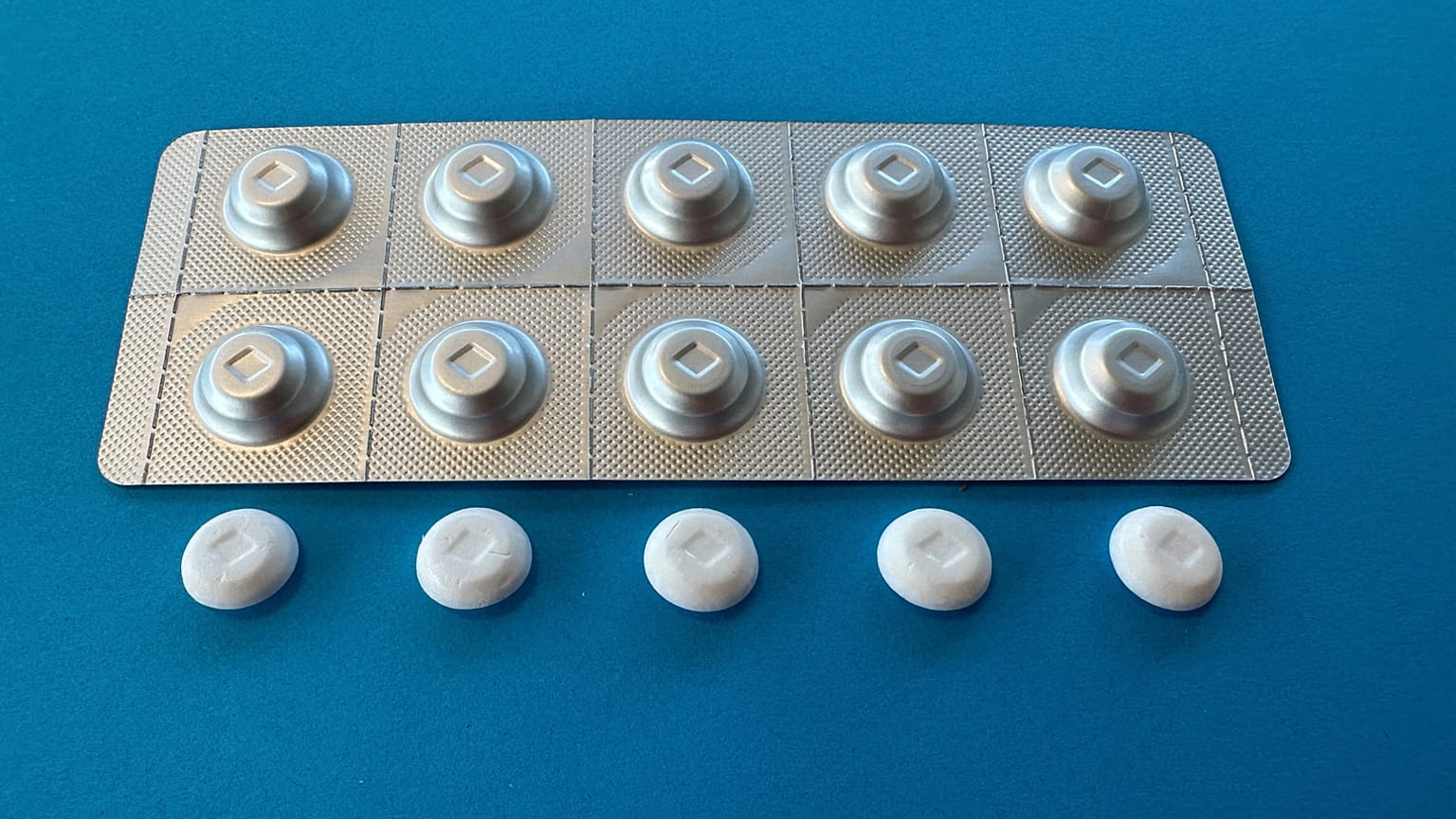
This photo provided by Catalent shows Catalent's MindMed's formulation of LSD.
Copyright Catalent via AP

By AP, Euronews
Published on  

The psychedelic drug LSD showed positive results for easing symptoms in people with generalised anxiety disorder, a recent study has shown.

LSD reduced symptoms of anxiety in a mid-stage recent study, paving the way for additional testing and possible medical approval of a psychedelic drug that has been banned in the US for more than half a century.

The results from drugmaker Mindmed tested several doses of LSD in patients with moderate-to-severe generalised anxiety disorder, with the benefits lasting as long as three months. The company plans to conduct follow-up studies to confirm the results and then apply for Food and Drug Administration approval.

Beginning in the 1950s, researchers published a flurry of papers exploring LSD's therapeutic uses, though most of them don't meet modern standards.

“I see this paper as a clear step in the direction of reviving that old research, applying our modern standards and determining what are the real costs and benefits of these compounds,” said Frederick Barrett, who directs Johns Hopkins University’s psychedelic centre and was not involved in the research.


Psychedelic research is rebounding

Psychedelics are in the midst of a popular and scientific comeback, with conferences, documentaries, books and medical journals exploring their potential for conditions like depression, anxiety and post-traumatic stress disorder.

The FDA has designated psilocybin, MDMA and now LSD as potential “breakthrough” therapies based on early results.

Still, the drugs have not had a glide path to the market.

Last year, the FDA rejected MDMA — also known as ecstasy — as a treatment for PTSD, citing flawed study methods, potential research bias and other issues.

The new LSD study, published by the Journal of the American Medical Association, addresses some of those problems.

MDMA, like many other psychedelics, was tested in combination with hours of talk therapy by trained health professionals. That approach proved problematic for FDA reviewers, who said it was difficult to separate the benefits of the drug from those of therapy.

The LSD study took a simpler approach: Patients got a single dose of LSD — under professional supervision, but without therapy — and then were followed for about three months.

The paper does not detail how patients were prepared for the experience or what sort of follow-up they received, which is crucial to understanding the research, Barrett noted.

“In many cases, people can have such powerful, subjective experiences that they may need to talk to a therapist to help them make sense of it,” he said.

Anxiety eased, but questions remain

For the study, researchers measured anxiety symptoms in nearly 200 patients who randomly received one of four doses of LSD or a placebo. The main aim was to find the optimal dose of the drug, which can cause intense visual hallucinations and occasionally feelings of panic or paranoia.

At four weeks, patients receiving the two highest doses had significantly lower anxiety scores than those who received placebo or lower doses. After 12 weeks, 65 per cent of patients taking the most effective LSD dose — 100 micrograms — continued to show benefits and nearly 50 per cent were deemed to be in remission. The most common side effects included hallucinations, nausea and headaches.

Patients who got dummy pills also improved — a common phenomenon in psychedelic and psychiatric studies — but their changes were less than half the size those getting the real drug.

The research was not immune to problems seen in similar studies.

Most patients were able to correctly guess whether they’d received LSD or a dummy pill, undercutting the “blinded” approach that’s considered critical to objectively establishing the benefits of a new medicine. In addition, a significant portion of patients in both the placebo and treatment groups dropped out early, narrowing the final data set.

It also wasn’t clear how long patients might continue to benefit.

Mindmed is conducting two large, late-stage trials that will track patients over a longer period of time and, if successful, be submitted for FDA approval.

“It’s possible that some people may need retreatment,” said Dr. Maurizio Fava of Mass General Brigham Hospital, the study's lead author and an adviser to Mindmed. "How many retreatments, we don’t know yet, but the long-lasting effect is quite significant".

Interest from the Trump administration

Health Secretary Robert F. Kennedy Jr. and other administration officials have expressed interest in psychedelic therapy, suggesting it could receive fast-track review for veterans and others suffering psychological wounds.

Generalised anxiety disorder is among the most common mental disorders, affecting nearly 3 per cent of US adults, according to the National Institutes of Health. Current treatments include psychotherapy, antidepressants and anti-anxiety drugs like benzodiazepines.

The possibility of using LSD as a medical treatment isn’t new.

In the 1950s and 1960s, more than 1,000 papers were published documenting LSD's use in treating alcohol addiction, depression and other conditions. But a federal backlash was in full swing by the late 1960s, when psychedelics became linked to counterculture figures like Timothy Leary, the ex-Harvard professor who famously promoted the drugs as a means to “turn on, tune in and drop out”.

A 1970 law classifying LSD and other psychedelics as Schedule 1 drugs — without any medical use and high potential for abuse — essentially halted U.S. research.

When a handful of nonprofits began reassessing the drugs in the 1980s and 1990s, they focused on lesser-known hallucinogens like MDMA and psilocybin, the main ingredient in magic mushrooms, to avoid the historic controversies surrounding LSD.

“LSD was right there in front of everybody, but Mindmed is the first company that actually decided to evaluate it,” Fava said.


LA REVUE GAUCHE - Left Comment: Search results for psychedelics


Cloud seeding, flash floods, and a thirsty city: The UAE’s fragile relationship with rain

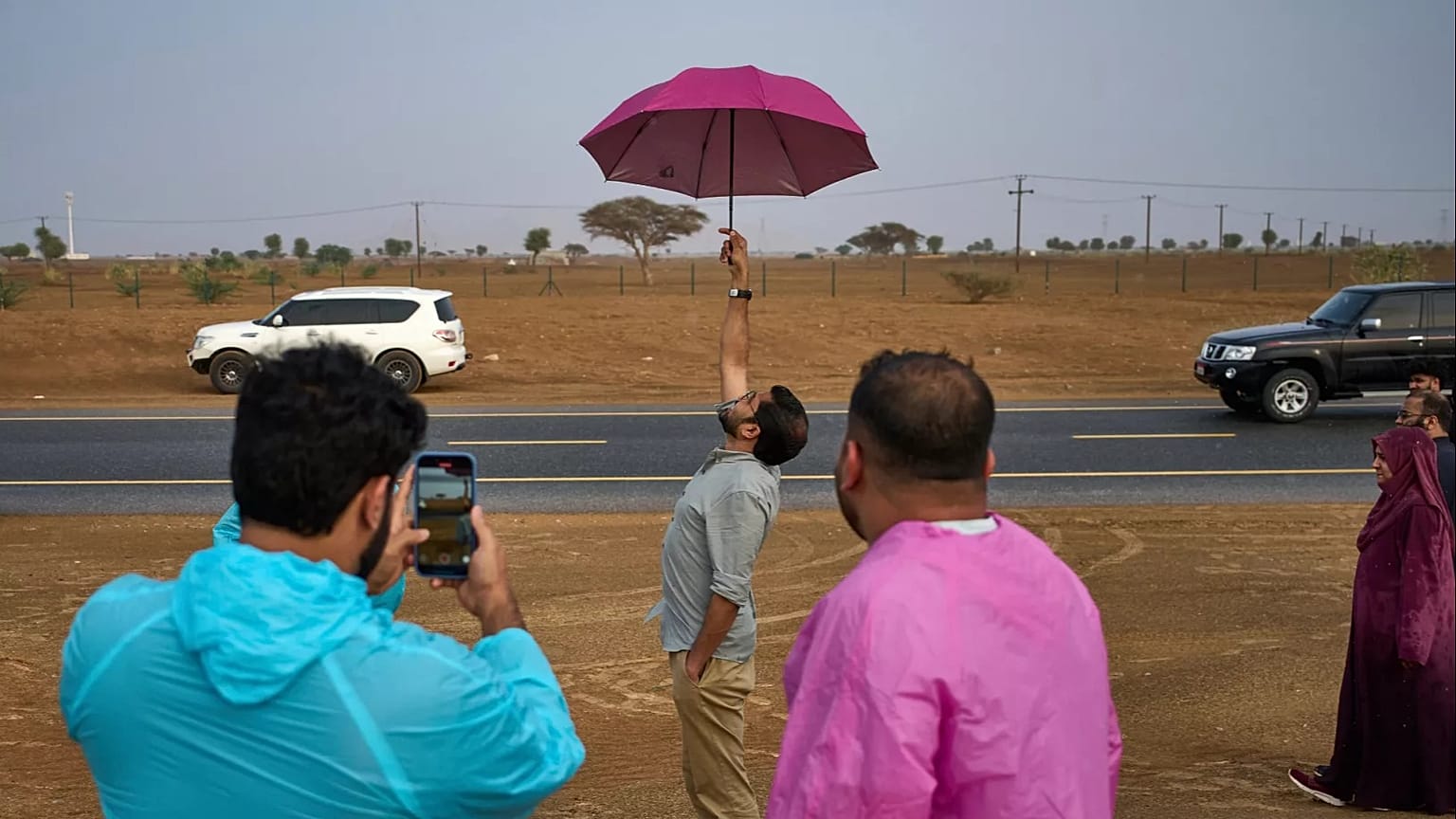
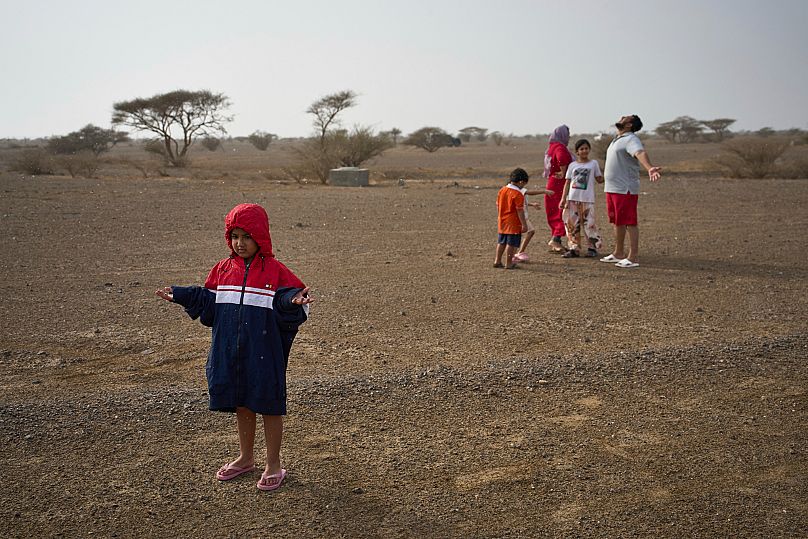
People stand in the rain as they chase rain showers at Fujairah, United Arab Emirates.
Copyright AP Photo/Fatima Shbair

By JON GAMBRELL with AP
Published on 

As the UAE grapples with water scarcity and flash floods, rain is both a blessing and a warning.

Outside of a mountain village in the northern outskirts of the United Arab Emirates, clouds on a recent weekend suddenly crowded out the white-hot sun that bakes this desert nation in the summer months. Fierce winds blew over planters and pushed a dumpster down the street.

And then came the most infrequent visitor of all: rain.

Rainfall has long fascinated the people of the Emirates. That includes both its white-thobed locals crowding into the deserts for any downpour and its vast population of foreign workers, many coming from homes in the Indian subcontinent who grew up with monsoon deluges.

But rain also carries with it promise and peril to the nation of seven sheikhdoms on the Arabian Peninsula.

With some 4 million people now estimated to be living in Dubai alone, compared to around 255,000 in 1980, pressure on water consumption continues. Meanwhile, as weather patterns change with global warming, the country saw the heaviest recorded rainfall ever last year, which disrupted worldwide travel and now has its leaders reconsidering how to build, as residents nervously look to the skies

“Out here, rain is almost like a firework event,” said Howard Townsend, an unofficial weather forecaster in Dubai with a Facebook following.

“It’s too hot to go outside. When you get a rain event, it’s like a blessing, a release.”

An ever-present thirst in a growing nation

The UAE, home to an estimated 10 million people, sits along both the Persian Gulf to its north and west and the Gulf of Oman to the east. The stone Hajar Mountains separate it from neighbouring Oman. Along the southern borders of the peninsula, monsoon rains can hit seaside areas of Oman and Yemen.

But the vast desert stretch of the peninsula, known as the Empty Quarter, has a weather pattern that keeps the clouds out.

That means little to no rain, sometimes for years at a time, in some areas. For the Emirates, that has meant relying heavily on some 70 water desalination plants to supply drinking water, as well as drip irrigation for plants that can rely on recycled wastewater. Dams have also been built in recent years to catch and store water runoff.

Even then, the UAE ranks seventh worldwide for being at risk for water scarcity, according to the World Resources Institute. Groundwater reservoirs have been known to be under pressure for years. The UAE has also been “cloud seeding” for years, flying aircraft to release chemicals into clouds to try to induce rain.

“Water is more important than oil,” Sheikh Mohammed bin Zayed Al Nahyan, the leader of the UAE and ruler of Abu Dhabi, reportedly said back in 2011.

That's particularly true in Dubai, where its booming population strains its roadways. The government-owned utility, the Dubai Electricity and Water Authority, reported producing 683.7 billion litres of water last year alone through desalination, with water demand continuing to grow alongside the city-state.

Yet Emirati government statistics suggest residents use around 550 litres of water per day, which is among the highest usage around the world.

Future flooding remains a concern

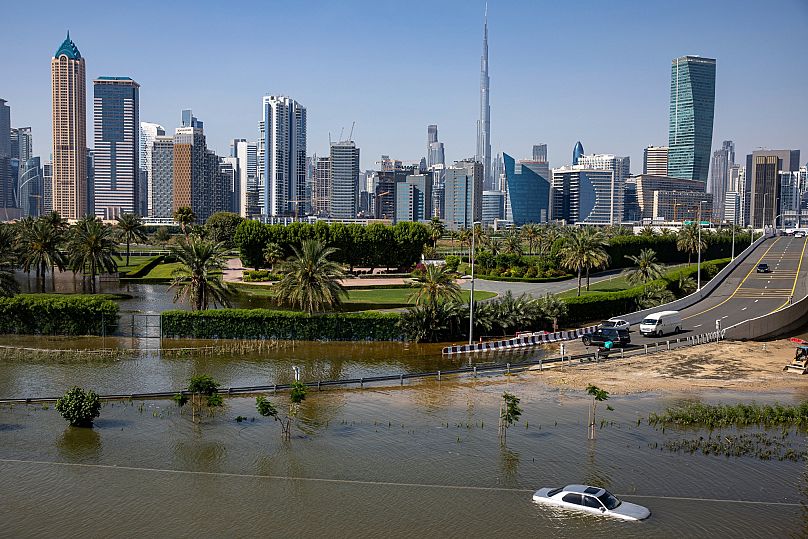
But for all the fascination with rain, there's fear now as well for many after the April 2024 floods that swept across Dubai. In one day, more rain fell than ever recorded since 1949, when the officials in what became the UAE first began taking statistics.

More than 142 millimetres of rainfall had soaked Dubai over 24 hours. An average year sees 94.7 millimetres of rain at Dubai International Airport, the world's busiest for international travel.

And while that might not seem like much to a major city elsewhere, Dubai's deserts could only take so much water. Meanwhile, its urban core had nowhere for the water to go.

An analysis later conducted by scientists associated with World Weather Attribution, which studies weather and its relationship to climate change, found 85 per cent of the population and 90 per cent of the city-state's infrastructure were “vulnerable to rising sea levels and extreme weather events.”

“It’s not a question of has the rain increased; it’s where has the rain to go?” Townsend said, something he called an increasingly pressing concern as Dubai builds further out into its desert outskirts.

An abandoned vehicle stands in floodwater caused by heavy rain with the Burj Khalifa in the background in April 2024. AP Photo/Christopher Pike, File

In the time since, government utility vehicles and ambulances increasingly sport snorkels to avoid water getting into their engines, something residents also have installed on their own vehicles. Insurance losses have been estimated to be as high as $4 billion (€3.42 billion).

Dubai's ruler, Sheikh Mohammed bin Rashid Al Maktoum, also announced an $8 billion (€6.8 billion) plan to build a massive rainwater drainage system for the city using underground tunnelling equipment.

The project represents “the largest rainwater collection project in a single system in the region,” Sheikh Mohammed said in a statement in June.

“The initiative will increase the capacity of the drainage network in the emirate by 700 per cent, ensuring the emirate’s readiness to face future climate-related challenges.”

But the rains can also bring joy to this desert.

Storm chasing in the Emirates

On a recent Saturday, Muhammed Sajjad Kalliyadan Poil looked to the skies in the eastern deserts of the UAE. Directly above him was a cumulonimbus cloud, looking rain-heavy and ready to drop. That was the one, he said.

Leading others, Kalliyadan Poil drove to the outskirts of Masafi, a village in the Hajar Mountains nestled between Fujairah and Ras al-Khaimah, two of the Emirates' seven sheikhdoms. He has grown famous over time as the “UAE Weatherman" on Instagram.

People stand in the rain as they chase rain showers in Fujairah, United Arab Emirates. AP Photo/Fatima Shbair

Kalliyadan Poil, like other Indians from Kerala on the trip, make up a large number of the foreign workers here in the Emirates. And their memories of home have them gather together to chase the weather on days like this.

As Kalliyadan Poil and his colleagues pulled up to an area against a mountain road under construction, the first drops fell on their windshield. He got out, standing in the sudden shower as others with him did the same.

“We come from an area where the rain is happening every day,” Kalliyadan Poil said. “When the drop hits us, I return back to my childhood.”


Turning point, apocalypse or renewal: what will the blood moon bring to Europe?

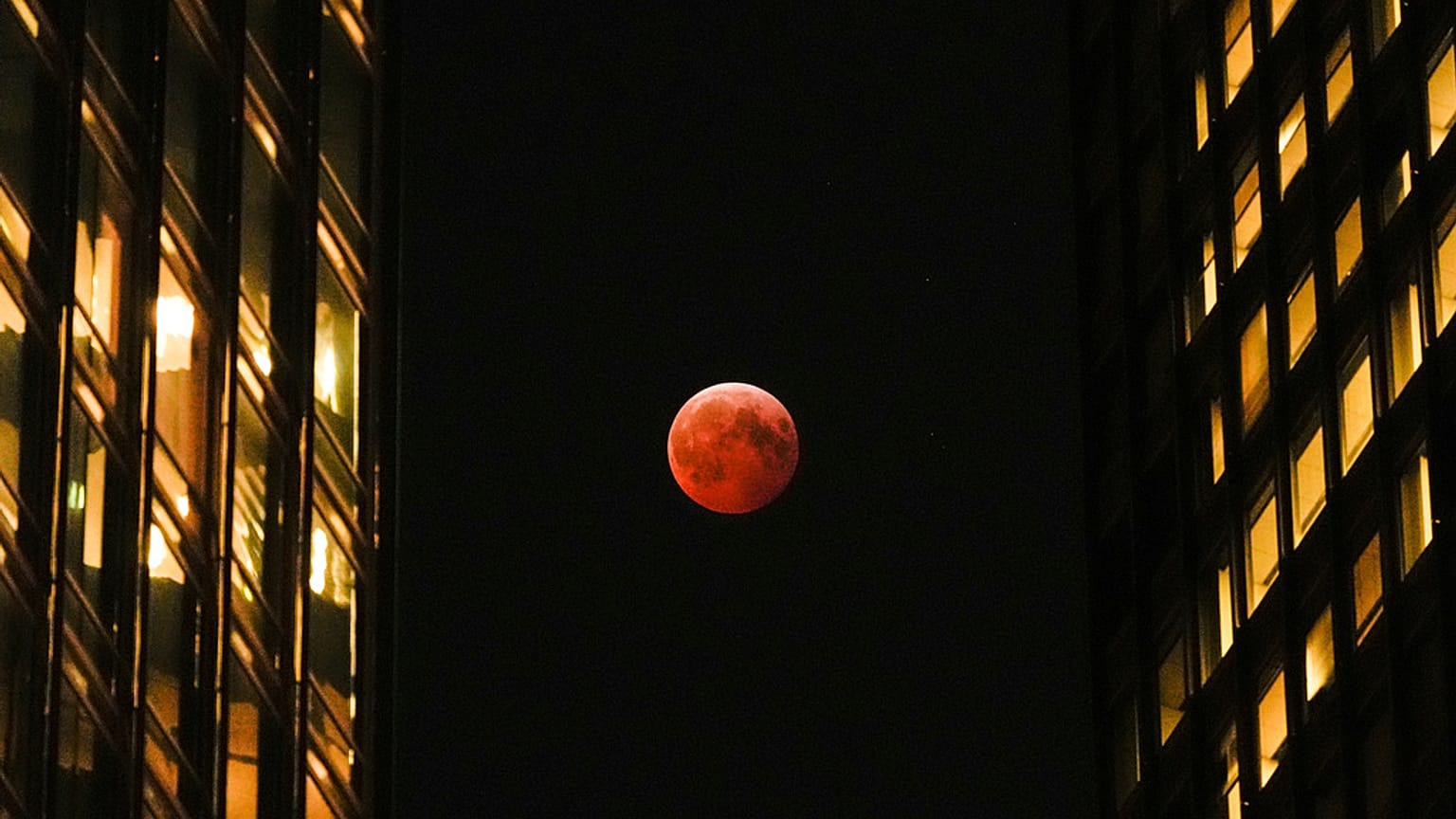
A total lunar eclipse, known as a "blood moon", between the skyscrapers in downtown Chicago, on Friday, 14 March 2025
Copyright Kiichiro Sato/Copyright 2025 The AP. All rights reserved

By Nela Heidner
Published on 

The moon has fascinated people since time immemorial. This weekend it's that time again: a blood-red full moon appears in the night sky.

The blood moon, otherwise known as a total lunar eclipse, has been surrounded by superstition for centuries - often with dark or apocalyptic connotations.

In many cultures - from Babylon to China to Central America - the blood moon was interpreted as a threatening sign: for the death of rulers, impending wars, natural disasters or "divine punishments".

In some African cultures, on the other hand, it is seen as a sign of "renewal". The Batammaliba, a West African ethnic group in Togo and Benin, interpret a lunar eclipse - especially a "blood moon" - as a symbolic battle between the sun and the moon. They try to resolve conflicts - and "reconcile the sun and the moon" - by creating peace in their communities.

For astronomers and astrologers of our time, this event is equally interesting - even if opinions are divided here again.

Longest lunar eclipse in years


On Sunday, we are now facing a total lunar eclipse - at around 82 minutes, the longest since 2022.

The Earth will be exactly between the sun and the moon. Its shadow will fall completely on the moon, darkening it. Only red-coloured light penetrates the Earth's atmosphere and falls refracted onto the moon - hence its reddish appearance and the popular term "blood moon".

Dr Florian Freistetter, an astronomer and science writer says from a scientific point of view, there is not much left to observe about the eclipses: "Astronomy has researched everything that can reasonably be researched in the last century. But that also means that I can enjoy the sight of an eclipse in peace without having to worry about science."

Keyword "science": In antiquity and the Middle Ages, astrology and astronomy were not separate - both were concerned with the observation of celestial bodies and existed side by side with their different interpretations. Astrology was practised from Babylon to Greece, India and the Arab world and was an integral part of medicine, philosophy, the church and politics.

The Age of Enlightenment brought about a turning point

This changed with the Age of Enlightenment, an era that lasted from around the 16th to the 18th century. It originated in Europe and later spread worldwide.

French philosopher René Descartes (1596-1650) played a key role in this intellectual movement, which above all declared reason to be the basis of thought: "I think, therefore I am". Astrology, which deals with the significance of the position of celestial bodies for earthly events, contradicted a view of nature in which there was nothing that could not be explained physically and therefore no longer fitted in with the dominant view of science.

Rousseau: an outdated image of women today

Incidentally, many Enlightenment thinkers, including Kant, Rousseau and Voltaire, also held the idea that women were inherently less rational and therefore better suited to the family and raising children. For Rousseau, women were primarily mothers and companions, not equal citizens.


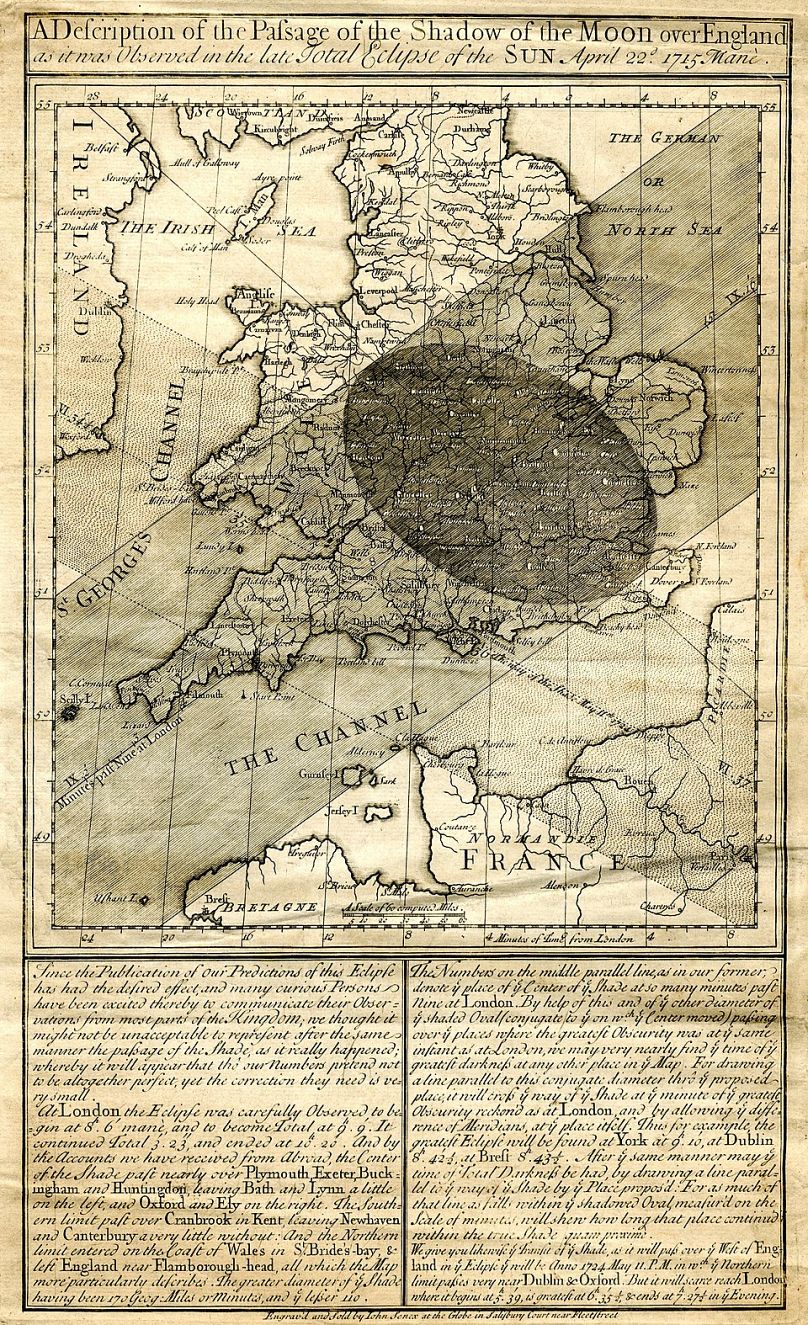
Image of the Moon’s shadow over England during a total solar eclipse on the morning of April 22, 1715. University of Cambridge, Institute of Astronomy Library (Edmond Halley, astronomer, mathematician, cartographer, geophysicist, and meteorologist, 1656–1742)

Dr. Gerhard Meyer, a qualified psychologist and researcher in the Department of Empirical Cultural and Social Research at his Institute for Frontier Areas of Psychology in Freiburg, explains that this was an era in which man's relationship with nature changed significantly. "The idea that the world can be understood as a machine that functions according to mechanical principles became dominant for science - with physics as a leading science."

At the same time, however, a parallel current emerged at the end of the 17th century: the age of Romanticism. Its followers rejected a mechanistic view of the world and were interested in the soul, the unconscious and also the invisible and only tangible.

Dr Meyer believes that astrology can be scientifically investigated, as "the underlying planetary movements are regular and predictable. The problem is the high complexity of the interrelationships." He hopes that artificial intelligence (AI) will help to better deal with this complexity in the future.

"Esoteric nonsense"

For the astronomer Freistetter, astrology is simply esoteric nonsense: "There is absolutely no reason why the whole thing should work and why the apparent position in the sky of a few spheres of rock, metal and gas millions of kilometres away should somehow say something about our personal lives and our future."

Astrology cannot work because it is completely inconsistent: "There are no astrological rules that say which celestial bodies play a role in the horoscope and which do not," emphasises Freistetter.


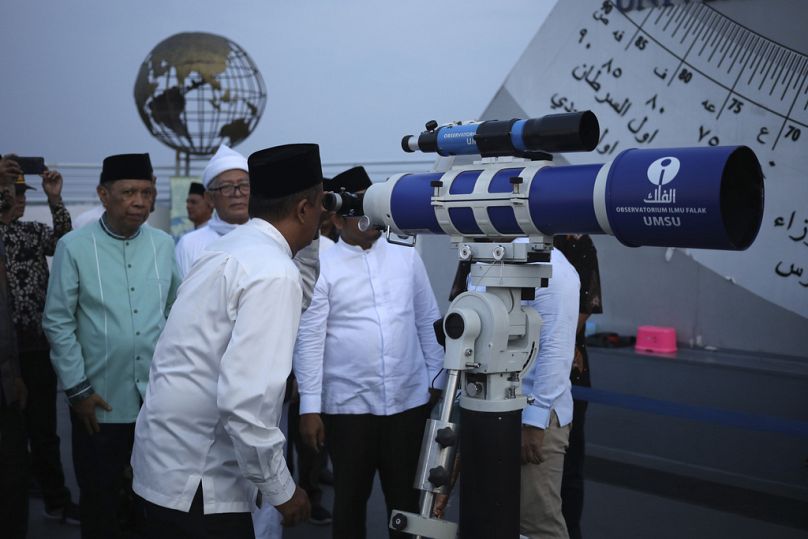
Islamic clerics look for the new moon that marks the beginning of Ramadan at the observatory of Muhammadiyah University in Medan, Indonesia. 10 March 2024 Binsar Bakkara/Copyright 2024 The AP. All rights reserved.

Silke Schäfer, one of the best-known astrologers in the German-speaking world, who runs her own astrology school, disagrees: "This is a classic statement that often comes from astronomers who only have a superficial knowledge of astrology."

The rules of astrology are by no means arbitrary, but are learnt step by step in comprehensive specialist studies. For Schäfer, this is a cultural heritage that has existed "for over 2000 years with a clearly structured system of symbols". The basis is the zodiac with its 12 signs, which are based exactly on the ecliptic, i.e. the orbit of the earth around the sun. "There are clearly defined planetary rulers, aspect angles (conjunction, square, trine, etc.) and house systems."

Astrology vs. astronomy

And why should this work?

"Astrology describes correlations of meaning, not causal mechanics," explains Schäfer. "The planets don't 'cause' anything in the physical sense, but reflect rhythms, cycles and archetypes that can be observed in nature, history and biography."

The principle of analogy should not be confused with the causal logic of physics.

Psychologist Markus Jehle from Berlin, author of several specialised books on astrology, goes one step further: "We use planetary data from NASA for our software and the calculations we make are highly precise." The astronomers would use their arguments again and again to attract attention.

"After all, you can also measure air temperature in Celsius and Fahrenheit, so it doesn't negate the accuracy of the other unit of measurement."

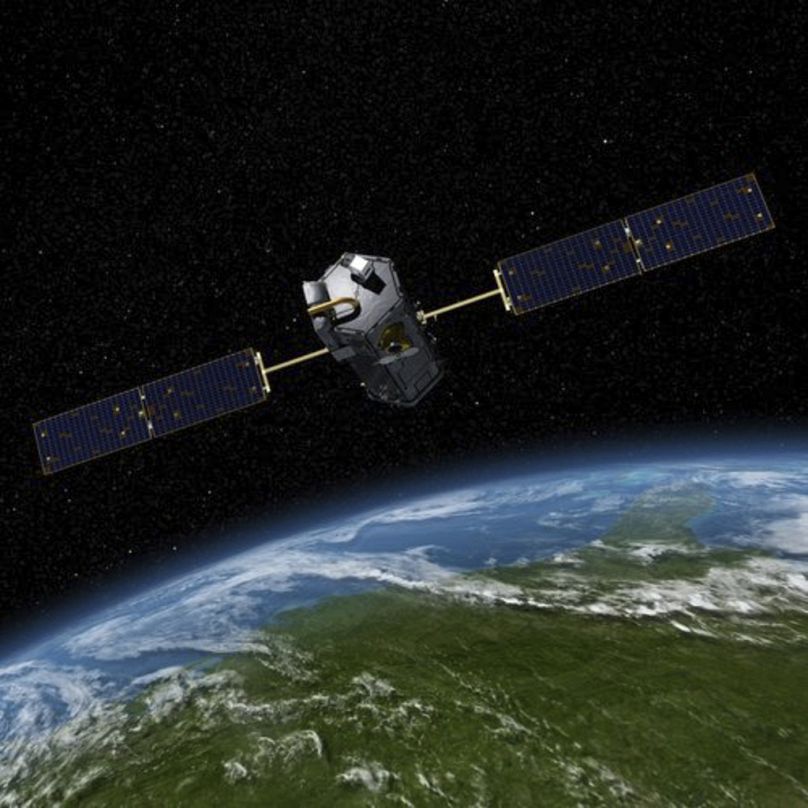
This artwork provided by NASA shows the Orbiting Carbon Observatory 2 (OCO-2).
This artwork provided by NASA shows the Orbiting Carbon Observatory 2 (OCO-2). AP/AP

Astronomers generally don't understand much about a "knowledge system of astrology", says Dr Mayer. "The ignorance here is on the part of the astronomers, because astrologers have known since ancient times that there is a precession of the vernal equinox: Astrology doesn't work with constellations, but with signs of the zodiac, which form a fictitious annual cycle divided into 30° sections."

Astrology is not a scientific experiment, adds Silke Schäfer, but a "hermeneutic", an art of interpretation. As with literary studies or psychotherapy, there are rules, but also room for interpretation.

"Instead of devaluing each other, it would be fruitful to recognise each other: Astronomy and astrology both deal with the heavens. Astronomy with the measurable facts, astrology with the meanings for us humans and evolution as a whole. The two complement each other and belong together. They always have."

France's ex-President Mitterand went to an astrologer

Are there any examples of contemporary politicians who have gone to astrologers? François Mitterrand, the longest-serving French president to date (1981-1995), regularly sought advice from Swiss astrologer Élizabeth Teissier - both on personal issues such as his health and on decisions relevant to the state, such as the Gulf War or the timing of the Maastricht referendum.

This Sunday, 7 September, the blood moon will be a total lunar eclipse that will be clearly visible in many parts of Europe. Some astrologers regard this event as a powerful full moon that can bring individual turning points. That which has had its day in life would clearly show itself so that it can be left behind. In their opinion, this has nothing to do with superstition.

For Dr Freistetter, eclipses are interesting and fascinating, but for a different reason: "Above all, it is an aesthetically impressive natural event and we are lucky to live on a planet where we can observe something like this. The Earth is in a unique position so that the sun and moon appear exactly the same size in our sky - coincidentally - and can therefore obscure each other."

One thing is certain: You can relax and enjoy this Sunday's lunar eclipse as a natural event: statistical studies show no connection between blood moons and (natural) disasters.


New marine survey reveals fragile ecosystems off Cyprus under threat from human activity

These mesophotic habitats act as biodiversity refuges.
Copyright Marine & Environmental Research (MER) Lab

By Rosie Frost
Published on 

A UK-funded expedition maps the hidden reefs of Akrotiri and Dhekelia, revealing fragile ecosystems already bearing the marks of human activity.

Until now, these depths were virtually unmapped. Through the UK government-funded MESOPHOS project, the Marine & Environmental Research (MER) Lab carried out the first exploration of what are known as mesophotic ecosystems at Akrotiri and Dhekelia, two areas of British Overseas Territory on the island of Cyprus.

These ecosystems sit 50 to 200 metres below the surface, where enough light penetrates for light-dependent organisms to survive but where it is too dim for more typical photosynthesis to occur. The term mesophotic literally means ‘middle light’.

They support unique communities of life that may serve as potential refuges for species from degraded coral reefs in shallower waters.

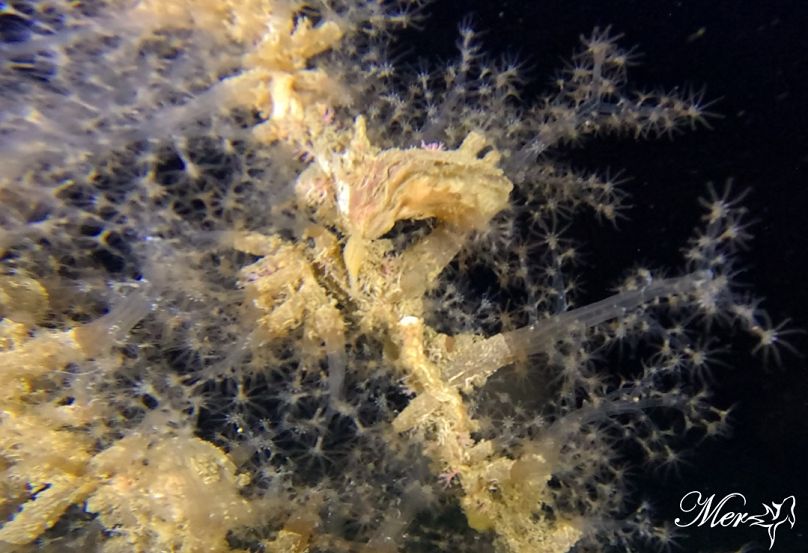
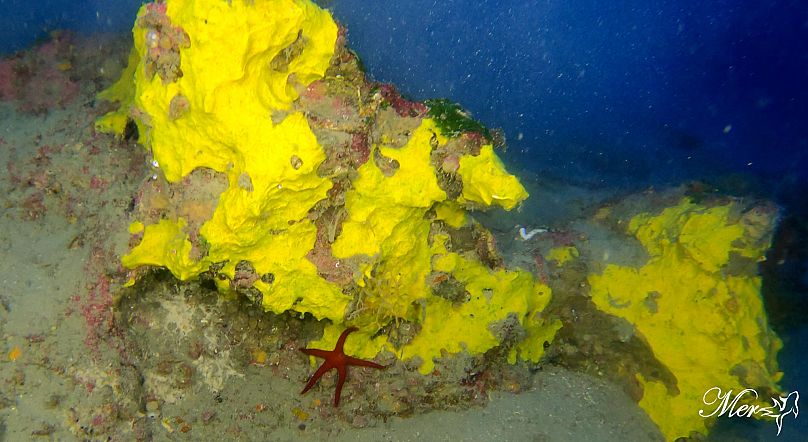
As these ecosystems are beyond scuba diving limits, the team surveyed over 32 sites with remotely operated vehicles, revealing vast areas of sponges, corals, anemones and other organisms that create habitats which support diverse marine life.


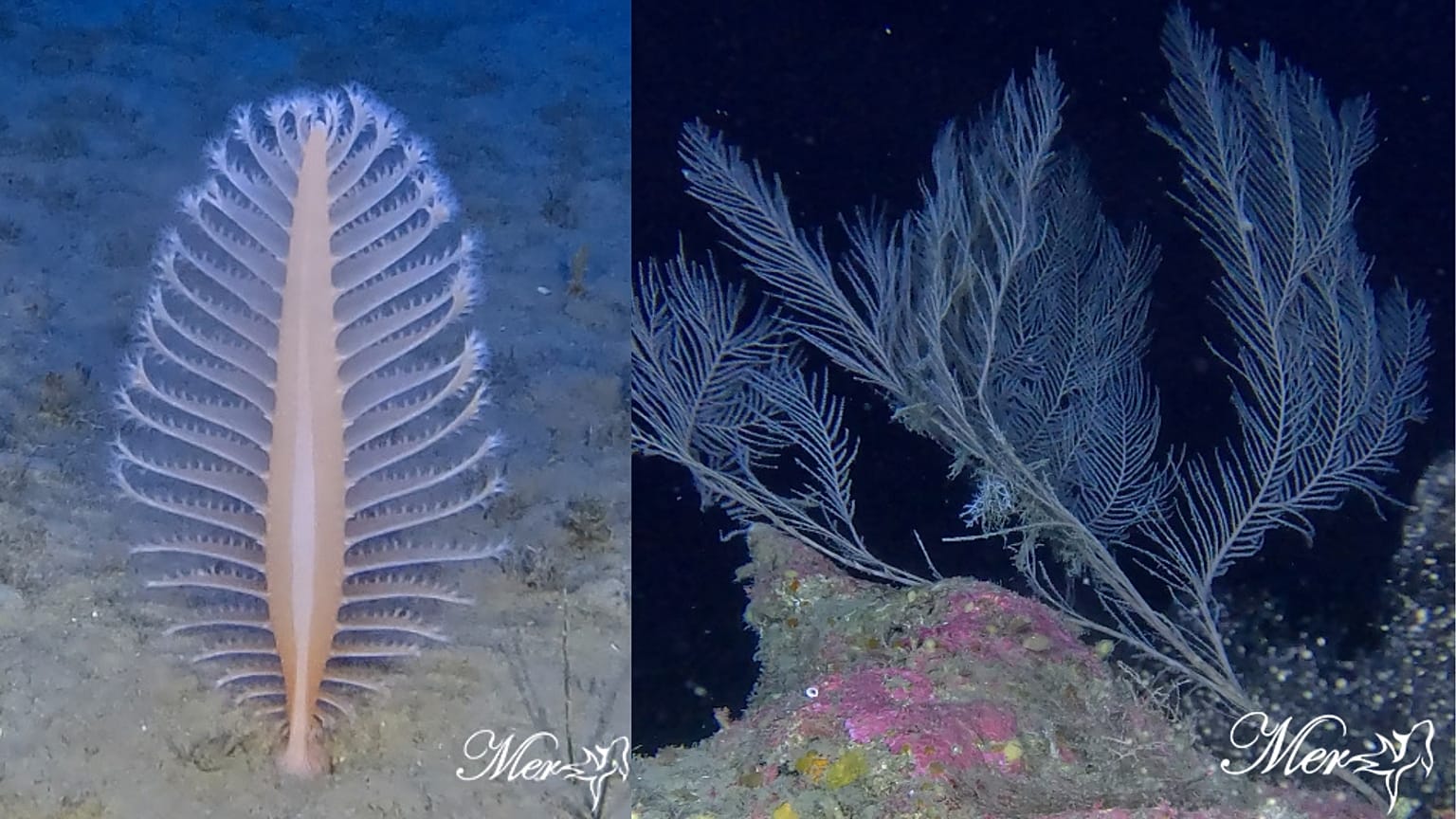
More than 200 species were recorded, including several not previously reported in Cyprus. Marine & Environmental Research (MER) Lab

More than 200 species were recorded, including several not previously reported in Cyprus. Particularly notable were fragile and slow-growing corals, such as gorgonians (Callogorgia verticillata), hydroid corals (Lytocarpia myriophyllum), soft corals, and sea pens, many of which are threatened or protected.

Human footprint clear even deep underwater

These mesophotic habitats act as biodiversity refuges, contributing indirectly to sustainable fisheries by strengthening the resilience of marine resources.

But, despite the depth of the surveyed area, the footprint of human activity was clear. The team found marine litter, including soft drink cans and lost fishing equipment known as ‘ghost gear’. They also saw evidence of bottom trawling, invasive species and coral death likely linked to ocean warming.

“The presence of human impacts at these depths is particularly concerning because habitats such as maerl beds, sponge grounds, and corals are extremely slow-growing and highly vulnerable,” Christina Michail, Biologist and Marine Biologist at the MER Lab, tells Euronews Green.

“Our surveys revealed clear marks from bottom trawling gear, alongside areas where sedimentation and disturbance had reduced both the abundance and diversity of marine life.”

Michail adds that the team’s findings show how even deep or less accessible habitats are not immune to human pressures.

Experts call for urgent protection of rare marine habitats

With MESOPHOS confirming the presence of these sensitive ecosystems and highlighting the pressures they already face, experts say urgent protection measures are needed.

The surveys revealed extensive assemblages of sponges, corals, anemones, and other benthic organisms. Marine & Environmental Research (MER) Lab

“We recommend the immediate protection of sensitive habitats such as maerl beds and coralligenous reefs from destructive fishing activities, particularly bottom trawling,” Michail explains.

“This must go hand in hand with mapping the spatial extent of these critical habitats to guide effective management, while long-term, systematic monitoring will be essential to evaluate progress and adapt measures where needed.”

Michail adds that these findings should also guide future research, encouraging similar surveys around Cyprus to build a more complete picture of these ecosystems and how vulnerable they are.


'The Eastern Shield': How Poland wants to defend its borders from invasion

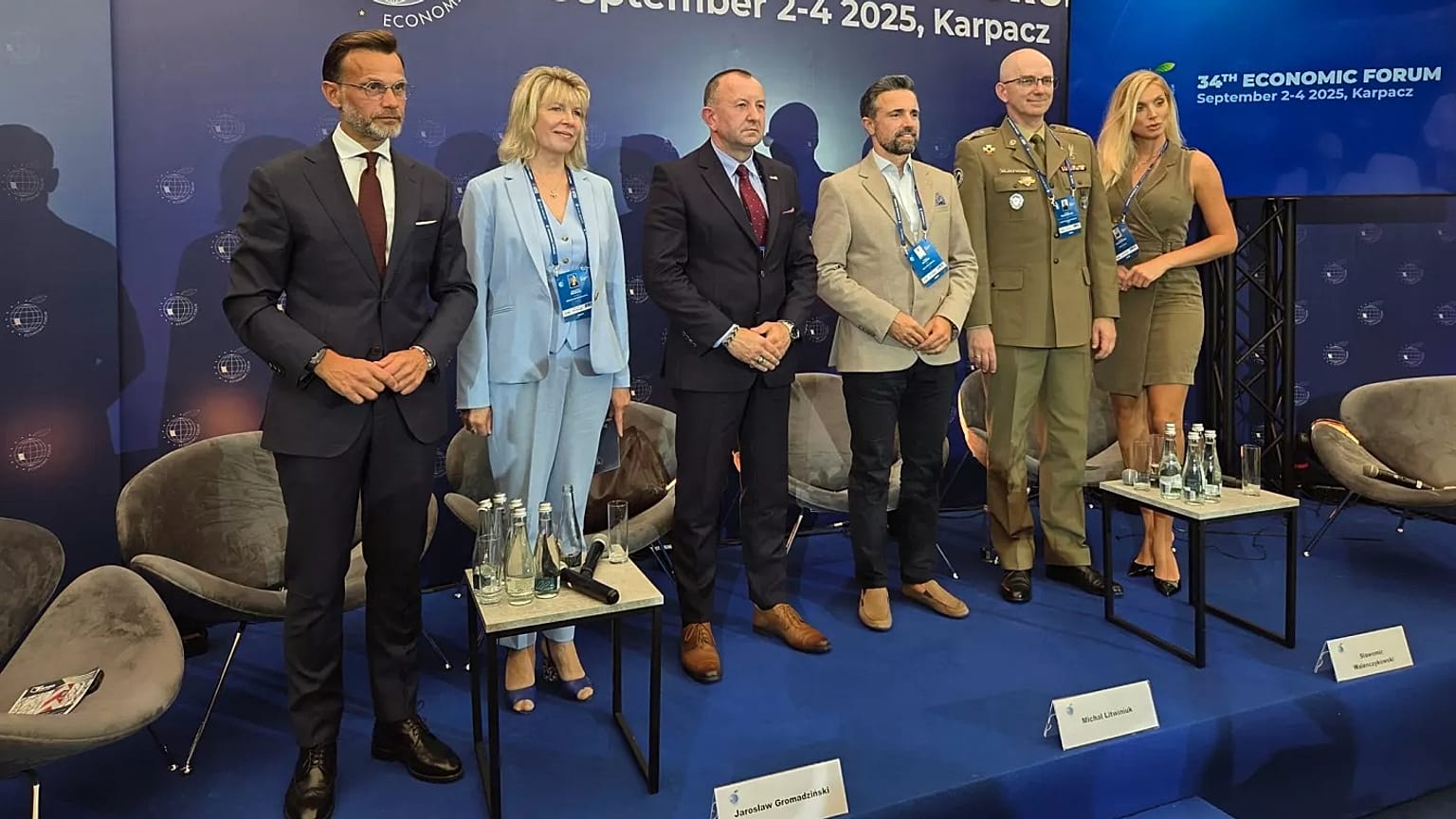
Participants in the debate "Shield East - assumptions and consequences" during the 34th Economic Forum, Karpacz 5.09.2025.
Copyright Jan Bolanowski, Euronews

By Jan Bolanowski
Published on 

"The Eastern Shield", a 700 km defense project near Poland's eastern border, aims to boost state resilience and protect against armed invasion. Experts, however, debate its effectiveness.

Poland, NATO's largest contributor in relative terms and beneficiary of the EU's SAFE (Security Action for Europe) program, which is designed to speed up defense readiness in Member States, is a key center for European and NATO defense. Amid ramped-up defense spending, experts in the country are debating how to best use Poland's resources to gear up for a potential armed invasion.

One of the current defense projects, known as "The Eastern Shield" is to consist of 700 km of defense installations near Poland's eastern border with Russia and Belarus. This is also the eastern border of NATO and the European Union.

This project is sometimes referred to as the 'Tusk Line', in reference to the famous French Maginot Line from the Second World War, built by France in the 1930s to deter invasion by Nazi Germany. However, experts argue that the idea of what the Eastern Shield is actually supposed to be is often misunderstood by the public.

You want peace, get ready for war

"The Eastern Shield is often mistakenly equated with a barrier on the border with Belarus itself, but these are in fact two different things. The shield is a complex project to increase the resilience of the state and its citizens," said Jacek Brzozowski, the local government's representative on the ground.

As he explained, the Eastern Shield project envisages investments in technical and digital infrastructure, but also the use of natural dams. At the same time, he stressed that the whole project is defensive in nature and is not geared towards aggression towards Russia and Belarus. However, he pointed out that these countries present a hostile attitude towards Poland and NATO as a whole, meaning that in order to maintain peace it is necessary to develop the potential for intimidation, according to the ancient maxim: "you want peace, get ready for war".

According to Brzozowski, we are currently living in a "pre-war" world and cannot afford to ignore threats. He recalled that in June 2024, a soldier was killed along the Belarusian border, which has been the site of a migration, security, and humanitarian crisis since 2021.

"This is the first such case since the Second World War. The situation is an emergency and the border is constantly patrolled by 11,000 soldiers and Border Guard officers," - he added.

A 'Death zone' 30 km from the border

Retired military officer and former Eurocorps commander General Jaroslaw Gromadzinski was critical of the Eastern Shield and the government's actions surrounding the program.

"The Eastern Shield is a purely political and PR project, it is a bag into which the government throws everything. In theory the aim is to prepare the eastern part of Poland for war, while in practice anti-tank trestles are being erected on the border. This looks nice on TV, but ut is simply a waste of money. The barriers on the border will be destroyed within 2-3 hours by an artillery attack. This, by the way, applies to the entire area within range of the enemy's conventional artillery, i.e. up to 30 km into the country. This will be a death zone where no troops should be stationed," - Gromadzinski said.

In his opinion, the most important objective of the Eastern Shield should instead be to ensure that troops in the zone up to 100 km from the border can manoeuvre, which means providing a logistical base in the whole area up to the Vistula River flowing through the middle of Poland.

Also important in his view is ensuring the safety of civilians through education and creating protective infrastructure. As a former soldier pointed out, "the military will cope, they will move in and out from under enemy fire, but the population stays put".

Fortifications will not stop a modern army

Colonel Slawomir Walenczynkowski from the General Staff of the Polish Army confirmed that Shield East should not be understood as a line of fortifications or fortifications like the French Maginot Line or Finland's Manerheim Line of 80 years ago.

"Today fortifications have no chance of stopping the enemy. It's about scanning his movement so that he moves where we want him to, because we can affect him with fire measures."

He added that the Eastern Shield goes far beyond Poland's border and even includes the modernization of bridges over the Vistula River to be able to support the weight of modern tanks stationed in western Poland. In addition, the program will also include a so-called "anti-shock system', a set of sensors to monitor activities in Belarus and Russia. This will buy time to act before an enemy offensive is launched, similar to what happened before the Russian invasion of Ukraine.

The colonel also defended the anti-tank barrages on the border itself. "Even if the trestles on the border are destroyed in two hours, they buy us those two hours of extra time to act," he argued.

A stream of money for local authorities

The Eastern Shield also brings in multi-billion dollar investments from the budget of the Ministry of Defense, PLN 10 billion (€2.4 billion) is to go towards it, and Poland may receive up to €20 billion in preferential loans under the European SAFE programme. A significant portion of these funds could go towards dual-use infrastructure, i.e. infrastructure needed by the armed forces in wartime, but performing civilian functions during peacetime.

Michał Litwiniuk, the mayor of Biała Podlaska, a city in Eastern Poland emphasized that the investment in his city's garrison amounts to around one billion zlotys and means a target of 6,000 jobs. "I am grateful to the state budget for the stream of support that flows not only towards Shield East, but also for civil protection," he said.

Professor Aleksandra Skrabacz of the Military University of Technology, however, said that military investment would not necessarily automatically translate into an improvement in the lot of local residents. She pointed out that tourism in Poland's eastern territories had been affected by the unsettled situation on the border, and that the local population might be hostile to having their civil liberties curtailed by military investments and operations in their area.

'We cannot wait for US troops'

Poland's Minister of National Defense, Władysław Kosiniak-Kamysz, has called the Eastern Shield the largest investment in NATO's eastern flank since 1945. Experts agreed that it was a project serving the interests not only of Poland, but of the entire EU and NATO. On the other hand, they argued that the key effort to defend the Polish border falls on the Polish public.

"Building infrastructure is less of a problem than building resilience. We cannot wait 2 weeks for American troops to defend us. The Americans will not defend us, they can help us to defend ourselves. This is our responsibility," argued Skrabacz.

At the same time, she quoted the results of a survey which shows that only 10-15 percent of Poles have declared their readiness to defend the country with arms in hand in the event of war. The majority plan to flee abroad or take care of their own family's safety. In her view, it is necessary to educate the public to take responsibility for the country.

"The resilience of the state and society is a logical fallacy. The state cannot exist without society. It is the people who come first," she argued.

Governor Jacek Brzozowski agreed that the most important thing is to prepare the population and teach the right procedures.

"Throughout our history, Poles have shown that the homeland was the most important thing for them and they were able to fight for it," the government representative argued.


Polls will show if Norway will continue to be a social welfare state or not?

Copyright (AP Photo/Kostya Manenkov)

By Sertac Aktan with AP
Published on 07/09/2025 -


The ruling centre-left bloc wants to keep it to fight inequality, while the right-wing opposition wants it scrapped. General elections will define the new system.

Norwegians are voting in a general election on Monday, with the future of the country's century-old wealth tax dominating the campaign among other issues.

There is expected to be a close outcome between the centre-left bloc led by the Labour Party of Prime Minister Jonas Gahr Støre, Norway’s leader for the past four years, and a right-wing bloc. Voting at polling places got underway Sunday and would run through Monday.

At stake is the social welfare regime, which other European countries have emulated as a comprehensive, universal model that provides tax-funded, publicly accessible services, including healthcare, free education, and income support.

The ruling centre-left bloc, led by Prime Minister Jonas Gahr Støre, wants to keep the tax to combat inequality. But the opposition on the right argues it harms entrepreneurs and is calling for it to be scrapped.

The debate has been fuelled by social media, inspiring many younger voters to oppose the tax. More than 4 million people are eligible to vote and some 310,000 young people are eligible for the first time, and voters with immigrant backgrounds account for 11.5% of the electorate

Official results will be announced on Tuesday, expected to be followed by weeks of coalition talks.

A levy of up to 1.1% on high assets

The wealth tax is a levy of up to 1.1% on assets and shares worth more than 1.76 million kroner (around €150,000), though there are various reductions and discounts, for instance, taking account of debt and property. Labour says that scrapping it would cost 34 billion kroner (€2.8 billion) per year.

The Progress Party, which leads the right-wing coalition, is calling for the wealth tax to be abolished, arguing that it is detrimental to the economy. Party leader Sylvie Listhaug argues that it penalises entrepreneurs who might have taxable stakes in valuable companies, but little real income.